
Female Pelvic Implants Market Size and Share
Market Overview
| Study Period | 2021 - 2032 |
|---|---|
| Market Size (2027) | USD 6.33 Billion |
| Market Size (2032) | USD 8.53 Billion |
| Growth Rate (2027 - 2032) | 6.15 % |
| Fastest Growing Market | Asia-Pacific |
| Largest Market | North America |
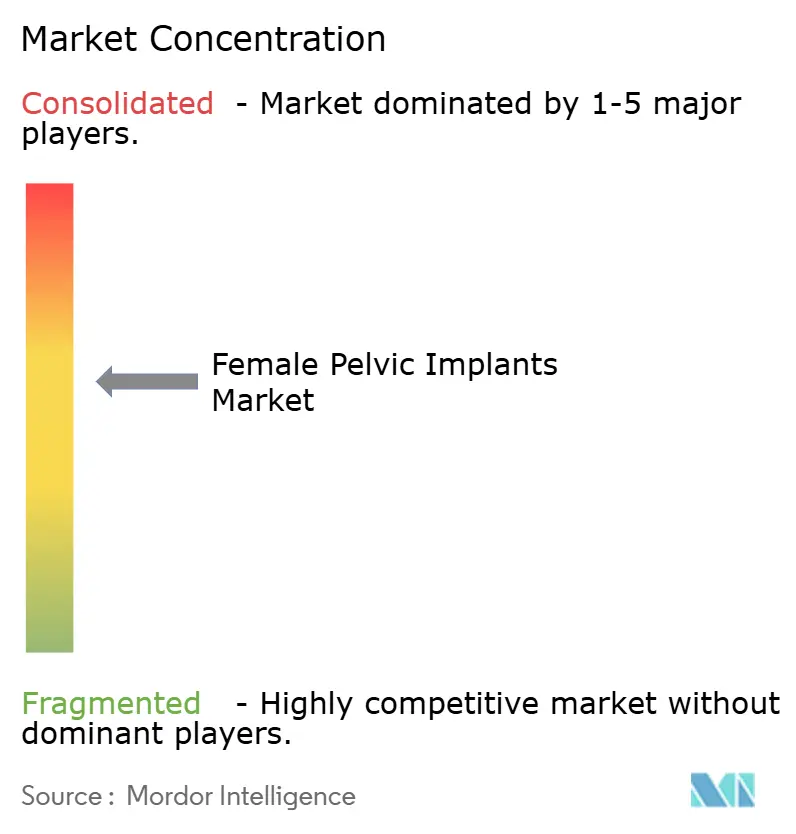
| Market Concentration | Medium |
Major Players *Disclaimer: Major Players sorted in no particular order Image © Mordor Intelligence. Reuse requires attribution under CC BY 4.0. | |
Female Pelvic Implants Market Analysis by Mordor Intelligence
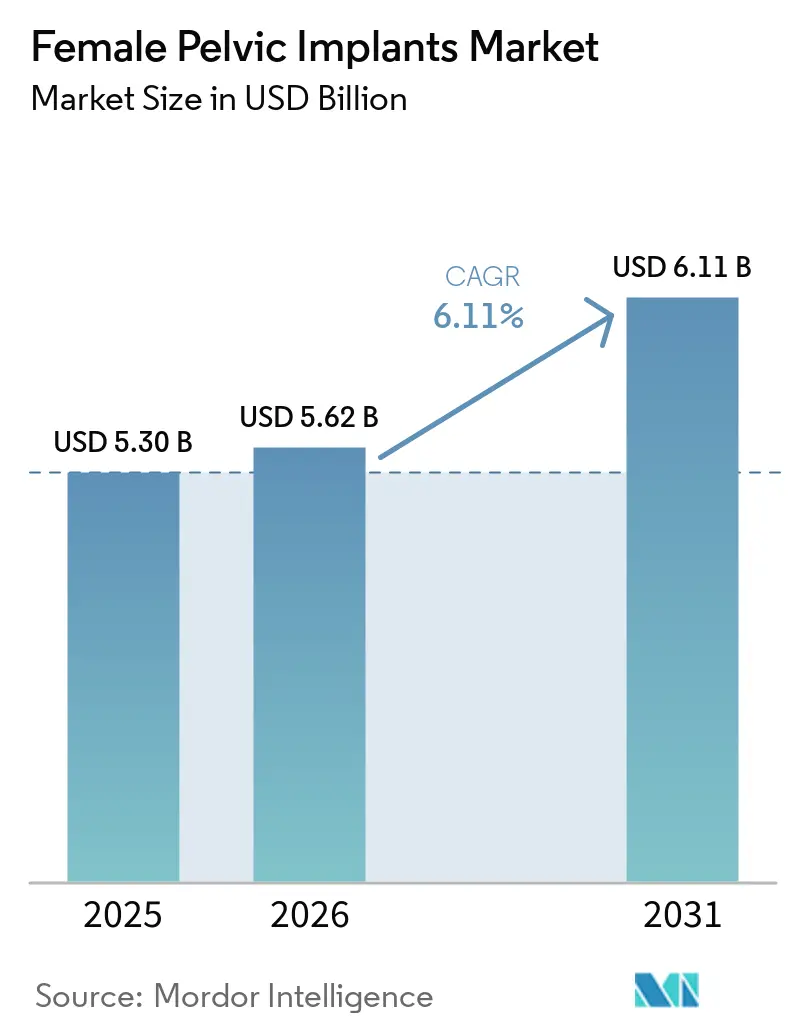
The Female Pelvic Implants Market size was valued at USD 5.96 billion in 2026 and is estimated to grow from USD 6.33 billion in 2027 to reach USD 8.53 billion by 2032, at a CAGR of 6.15% during the forecast period (2027-2032).
The female pelvic implants market serves women requiring surgical care for pelvic organ prolapse and stress urinary incontinence. Population aging and growth increase the number of potential patients even where age-standardized disease rates improve. A 2025 study reported 13.97 million incident pelvic organ prolapse cases globally in 2021, compared with 8.41 million in 1990. Selected women aged 80 years and older can undergo urogynecological surgery with low postoperative urinary retention, widening the treatable population. Outpatient care, stronger clinical evidence, and reimbursement support will shape how suppliers compete.
Key Report Takeaways
- By product type, vaginal mesh implants held 45.65% revenue share in 2026, while vaginal sling implants are projected to grow at an 8.54% CAGR through 2032.
- By material, polypropylene mesh accounted for 51.76% revenue share in 2026, while PVDF mesh is forecast to advance at a 7.87% CAGR through 2032.
- By indication, stress urinary incontinence held 72.65% revenue share in 2026 and is projected to record an 8.45% CAGR through 2032.
- By end user, hospitals accounted for 57.65% revenue share in 2026, while ambulatory surgical centers are forecast to grow at a 9.76% CAGR through 2032.
- By geography, North America held 42.43% revenue share in 2026, while Asia-Pacific is projected to expand at a 7.43% CAGR through 2032.
Note: Market numbers in this report are based on Mordor Intelligence's proprietary estimation framework, which combines nine months of actuals with Q4 projections for base year 2026.
Market Trends and Insights
Drivers Impact Analysis of Female Pelvic Implants Market*
| Driver | (~) % Impact on CAGR Forecast | Geographic Relevance | Impact Timeline |
|---|---|---|---|
| Rising Prevalence of Pelvic Organ Prolapse and Stress Urinary Incontinence | +1.90% | Global, strongest in South Asia, Andean Latin America, and Sub-Saharan Africa | Long term (≥ 4 years) |
| Increasing Adoption of Minimally Invasive Outpatient Procedures | +1.30% | North America and Europe, with spillover to core Asia-Pacific markets | Medium term (2-4 years) |
| Aging and Post-Menopausal Female Population | +1.10% | Global, strongest in Japan, Germany, Italy, and the United States | Long term (≥ 4 years) |
| Lightweight and Adjustable Implant Innovation | +0.80% | North America, the European Union, and Japan | Medium term (2-4 years) |
| Expanding Urogynecology Access and Reimbursement | +0.70% | North America and the European Union, with spillover to the GCC | Short term (≤ 2 years) |
| Postoperative Digital Monitoring and Personalized Patient Selection | +0.40% | North America and Western Europe | Medium term (2-4 years) |
| Source: Mordor Intelligence | |||
Rising Prevalence of Pelvic Organ Prolapse and Stress Urinary Incontinence
Pelvic organ prolapse and stress urinary incontinence create a durable clinical need for the female pelvic implants market. The absolute burden rises as the population grows and ages. A 2025 analysis reported that 11% of U.S. women undergo surgery for pelvic organ prolapse or urinary incontinence by age 79. It also reported that 29.2% of these patients subsequently require revision surgery. The European Association of Urology identified stress urinary incontinence as the most prevalent subtype in its mapping study, affecting 39.1% of respondents. New diagnoses and revision care together support procedure demand.
Increasing Adoption of Minimally Invasive Outpatient Procedures
Outpatient surgery is expanding an important care setting for the female pelvic implants market. The Centers for Medicare & Medicaid Services added 573 codes to the ASC Covered Procedures List in its 2026 final payment rule. This provides a stronger reimbursement basis for eligible outpatient procedures. Sling systems that support shorter procedures and same-day discharge are well positioned in this setting. Hospitals will remain important for complex repair and patients needing close monitoring. Suppliers need training, inventory, and reimbursement support that suit ambulatory surgical centers.
Aging and Post-Menopausal Female Population
Older women are a central patient group for the female pelvic implants market. Pelvic floor dysfunction affects 40-50% of postmenopausal women. A 2025 systematic review reported stress urinary incontinence in 25-55% of U.S. women older than 60. Evidence in women aged 80 years and older challenges the assumption that age alone excludes surgical eligibility. Japan, Germany, Italy, and the United States have age profiles that support future treatment demand. Clinical training and reimbursement policies can improve access for this group.
Lightweight and Adjustable Implant Innovation
Material selection is increasingly important in the female pelvic implants market. A 2025 review stated that pores larger than 1 mm and porosity of 50-70% can support vascularization and structural integrity. PVDF has drawn attention for its resistance to degradation after implantation. DynaMesh-SIS uses high-porosity PVDF monofilament for stress urinary incontinence procedures. The BioSynIRS trial reported no mesh-related adverse events in the biologic arm at 12 months. New materials require evidence that addresses both performance and long-term safety.
Restraints Impact Analysis of Female Pelvic Implants Market*
| Restraint | (~) % Impact on CAGR Forecast | Geographic Relevance | Impact Timeline |
|---|---|---|---|
| Mesh-Related Complications and Revision Risk | -1.10% | Global, strongest in North America and the European Union | Long term (≥ 4 years) |
| Regulatory Restrictions on Transvaginal POP Mesh | -0.90% | United States, United Kingdom, Canada, Australia, and selected European Union markets | Long term (≥ 4 years) |
| High Procedure Cost and Uneven Reimbursement | -0.60% | Asia-Pacific excluding Japan, the Middle East and Africa, and South America | Medium term (2-4 years) |
| Limited Specialist Training and Delayed Diagnosis | -0.40% | Global, strongest in South Asia, the Middle East and Africa, and Latin America | Long term (≥ 4 years) |
| Source: Mordor Intelligence | |||
Mesh-Related Complications and Revision Risk
Mesh erosion, chronic pelvic pain, dyspareunia, and infection continue to affect decision making in the female pelvic implants market. A 2025 review reported a 33% relapse rate for native-tissue repair. This leaves clinicians balancing recurrence risk against mesh-related complications. The FDA requires section 522 postmarket surveillance for mini-slings with novel technological characteristics. These requirements favor companies able to maintain long-term clinical follow-up. They also increase the importance of documented safety and biocompatibility.
Regulatory Restrictions on Transvaginal POP Mesh
The FDA has prohibited the sale of surgical mesh for transvaginal pelvic organ prolapse repair since 2019. Full-length mid-urethral slings for stress urinary incontinence remain distinct from that restriction. The European Union requires clinical evidence, device identification, and postmarket oversight under Regulation 2017/745. Its device-specific vigilance guidance covers urogynecological surgical mesh implants. These rules direct product development toward abdominal placement, mesh-free fixation, and biological graft options. They also make regulatory capability a more important competitive requirement.
*Our forecasts treat driver/restraint impacts as directional, not additive. The impact forecasts reflect baseline growth, mix effects, and variable interactions.
Female Pelvic Implants Market Segment Analysis
By Product Type:
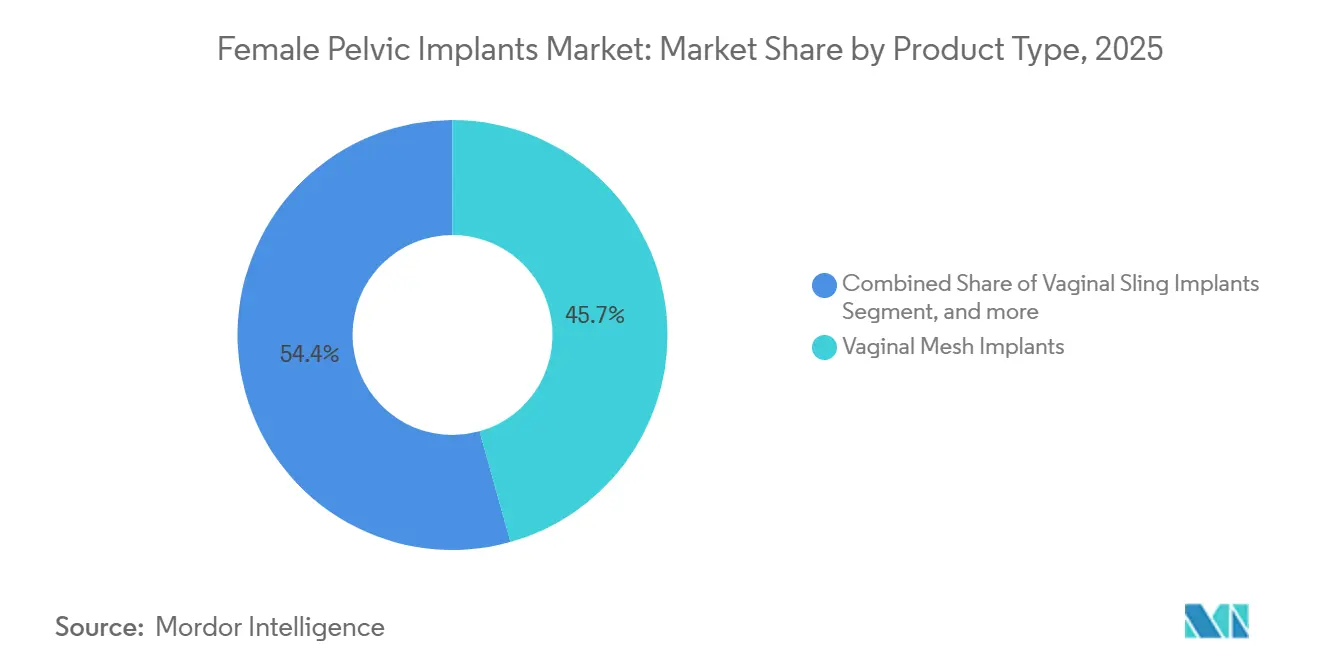
Established Mesh Volume and Faster Sling AdoptionVaginal mesh implants held 45.65% of the female pelvic implants market share in 2026. Their position reflects their established use in stress urinary incontinence procedures. Retropubic and transobturator designs remain clinically recognized options for selected patients. Vaginal sling implants are forecast to grow at an 8.54% CAGR through 2032. Single-incision systems fit the movement toward outpatient care.
Vaginal grafts serve pelvic organ prolapse reconstruction and complex repair. The female pelvic implants market size for grafts was not separately provided. Biologic and synthetic grafts meet different clinical needs. The BioSynIRS trial provides 12-month comparative evidence for multicompartment reconstruction[1]. Mesh-free anchoring products such as Promedon's Ancoris address apical repair without transvaginal mesh[2].

By Material:
Polypropylene Leads While PVDF Gains Clinical InterestPolypropylene mesh held 51.76% share in 2026. It benefits from established supply, clinical familiarity, and a lower cost profile. It remains common in high-volume sling programs. Research on coated polypropylene meshes suggests that material modification can improve implant-tissue interaction. Existing suppliers also benefit from completed regulatory and clinical documentation.
PVDF mesh is forecast to grow at a 7.87% CAGR through 2032. It is associated with greater resistance to degradation after implantation. Its cost premium can limit adoption beyond specialist centers. Biological grafts have a role in revision and complex multicompartment cases. Absorbable and composite materials require longer-term durability evidence before wider uptake.
By Indication:
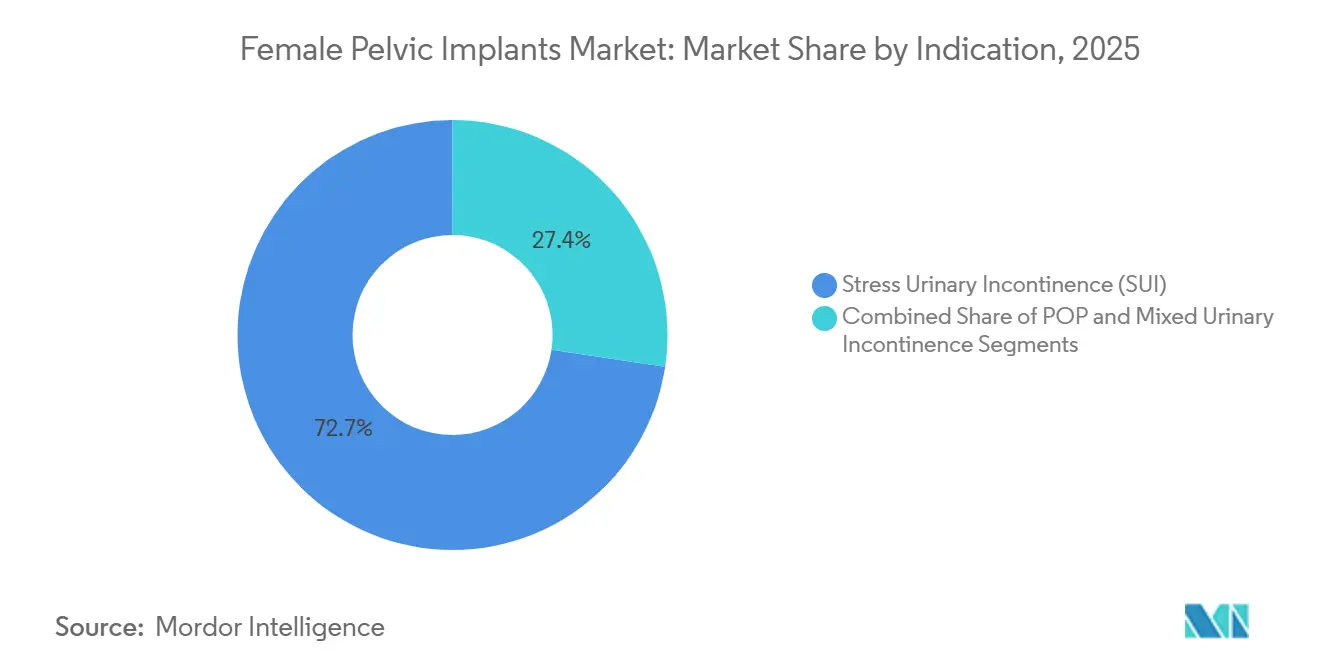
Stress Urinary Incontinence Combines Scale and GrowthStress urinary incontinence represented 72.65% of the female pelvic implants market in 2026 and is forecast to grow at an 8.45% CAGR through 2032. Its scale reflects broad eligibility for sling procedures. Reimbursement coverage in North America and Europe supports treatment access. The condition remains the most prevalent urinary incontinence subtype in the supplied mapping evidence. Better diagnosis and continued outpatient migration support growth.
Pelvic organ prolapse faces a more restrictive environment for transvaginal mesh. The FDA restriction has shifted practice toward laparoscopic sacrocolpopexy and native-tissue repair. Mixed urinary incontinence is a smaller but expanding indication. Implantable tibial nerve stimulation and sacral neuromodulation broaden available pelvic health options. Indication-specific evidence will remain central to adoption.
By End User:
Hospitals Retain Complex Care While ASCs ExpandHospitals accounted for 57.65% of the female pelvic implants market in 2026. They remain important for complex pelvic organ prolapse repair and patients with high clinical needs. They also support specialist teams that assess premium meshes and biological grafts. Inpatient monitoring continues to matter for selected procedures. These capabilities protect the hospital's role.
Ambulatory surgical centers are forecast to grow at a 9.76% CAGR through 2032. The female pelvic implants market size in this setting benefits from reimbursement expansion and same-day discharge preferences. These facilities favor predictable procedures and efficient product delivery. Specialty clinics add a third channel by combining diagnosis, rehabilitation, and surgery. Suppliers must meet different procurement and training requirements across each end-user setting.
Geography Analysis
North America Female Pelvic Implants Market
North America held 42.43% of the female pelvic implants market share in 2026. Favorable reimbursement, specialist capacity, and robotic surgical infrastructure support the region. The United States is the largest market. Boston Scientific and AUGS provide 2026 coding and reimbursement resources for pelvic floor care. The 2025 Gynecare TVT portfolio transfer to Caldera Medical also changed competition in the U.S. sling category.
Europe Female Pelvic Implants Market
Europe is the second-largest regional contributor. Germany, the United Kingdom, France, Italy, and Spain account for much of its revenue. Germany recorded the highest uterine prolapse disability-adjusted life year rate in the supplied 2025 evidence at 21.13 per 100,000. Regulation 2017/745 and the European vigilance guidance increase requirements for clinical evidence and follow-up.
APAC and South America Female Pelvic Implants Market
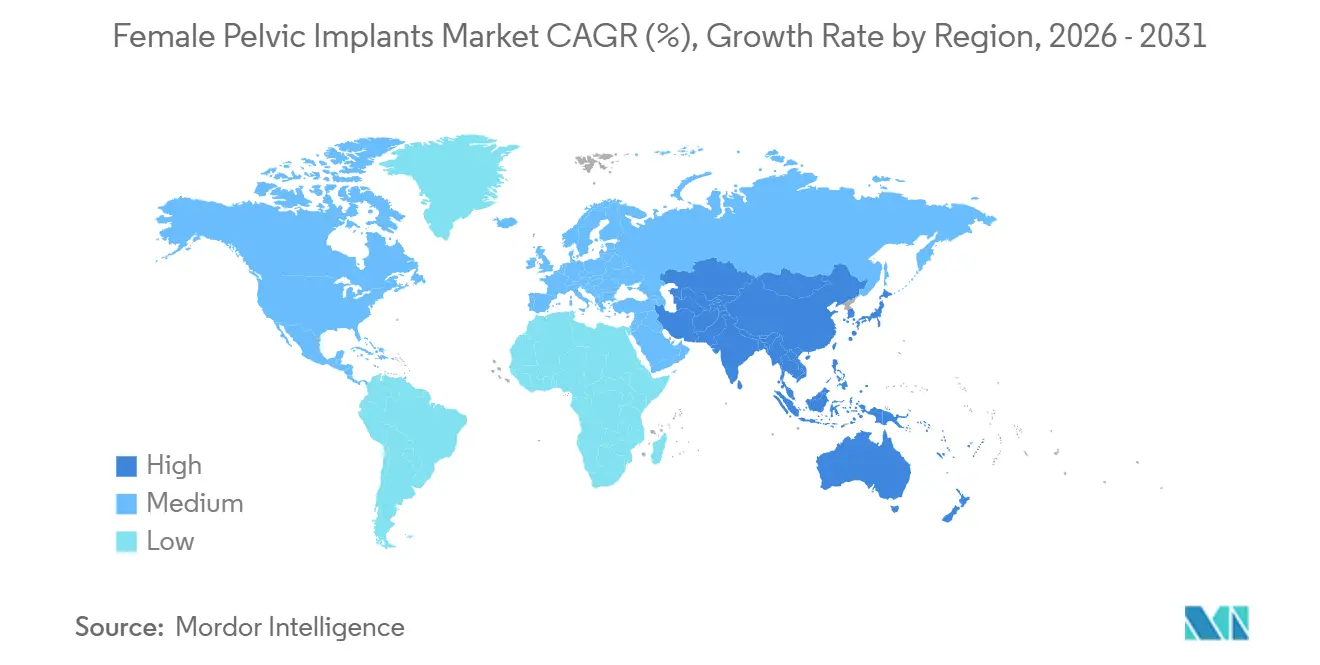
Asia-Pacific is forecast to grow at a 7.43% CAGR through 2032. Japan and South Korea benefit from aging populations and established clinical standards. China and India offer procedure growth as urban healthcare capacity expands. Social stigma, underdiagnosis, and limited rural specialist access remain barriers. South America has an emerging base supported by referral networks and Promedon's Argentine operations.
Competitive Landscape
The female pelvic implants market has moderate-to-high concentration among large medtech suppliers. Boston Scientific and BD hold leading positions, while Caldera Medical, Promedon, Neomedic International, and DynaMesh/FEG Textiltechnik are important specialist competitors. The supplied information does not disclose combined top-player revenue share. Large suppliers have an advantage in clinical follow-up, regulatory documentation, and broad sales support. Specialist companies compete through focused product portfolios and geographic reach.
Caldera Medical acquired Ethicon's Gynecare TVT family in March 2025. The transaction included TVT, TVT Exact, TVT-O, and TVT Abbrevo. Boston Scientific announced an agreement to acquire Valencia Technologies in January 2026[3]. The eCoin system adds implantable tibial nerve stimulation to its pelvic health portfolio. These moves increase the value of integrated physician education and reimbursement support.
DynaMesh differentiates through its PVDF product range. Promedon offers Calistar S, Splentis, Ancoris, and STEEMA DUAL TOT. FDA postmarket requirements and European vigilance rules raise entry requirements. Market leaders need evidence, clinical training, and support for outpatient facilities. Smaller suppliers need clear differentiation to secure specialist accounts.
Female Pelvic Implants Industry Leaders
-
Boston Scientific Corporation
-
Caldera Medical
-
Promedon Group
-
Johnson & Johnson Services, Inc.
-
Becton, Dickinson and Company
- *Disclaimer: Major Players sorted in no particular order
Female Pelvic Implants Market Companies Covered in this Report
- ABISS
- American Medical Systems
- B. Braun
- Betatech Medical
- Beckton Dickinson
- Boston Scientific
- Caldera Medical
- Cook Group
- Cousin Biotech
- DynaMesh / FEG Textiltechnik
- Dipromed
- Johnson & Johnson
- Neomedic International
- pfm medical
- Promedon Group
- P.M.I. GmbH
- THT bio-science
- UroCure
Recent Industry Developments in Female Pelvic Implants Market
- August 2026: BD completed enrollment in the PREVENT clinical trial evaluating Phasix Mesh for incisional hernia prevention in high-risk surgical patients.
- January 2026: Boston Scientific announced and subsequently completed the acquisition of Valencia Technologies, adding the eCoin implantable tibial nerve stimulation system to its pelvic health portfolio.
- January 2026: Promedon Group marked its 40-year milestone in 2025 and reaffirmed its women’s health focus through its pelvic floor product portfolio.
Global Female Pelvic Implants Market Report Scope
According to the report’s scope, female pelvic implants are medical devices used to support or repair pelvic organs affected by conditions such as prolapse or incontinence. They are designed to restore normal function and improve the quality of life.
The female pelvic implants market is segmented into product type, material, indication, end user, and geography. By product type, the market is segmented into vaginal mesh implants, vaginal sling implants, vaginal graft implants, and other product types. By material, the market is segmented into polypropylene mesh, PVDF mesh, biological grafts, and absorbable and composite materials. By indication, the market is segmented into pelvic organ prolapse (POP), stress urinary incontinence (SUI), and mixed urinary incontinence. By end user, the market is segmented into hospitals, ambulatory surgical centers (ASCs), and specialty clinics. By geography, the market is segmented into North America, Europe, Asia-Pacific, the Middle East and Africa, and South America. The report also covers the estimated market sizes and trends for 17 countries across major regions globally. The report offers values (USD) for all the above segments.
Segmentation Overview
| Vaginal Mesh Implants |
| Vaginal Sling Implants |
| Vaginal Graft Implants |
| Other Product Types |
| Polypropylene Mesh |
| PVDF Mesh |
| Biological Grafts |
| Absorbable and Composite Materials |
| Pelvic Organ Prolapse (POP) |
| Stress Urinary Incontinence (SUI) |
| Mixed Urinary Incontinence |
| Hospitals |
| Ambulatory Surgical Centers (ASCs) |
| Specialty Clinics |
| North America | United States |
| Canada | |
| Mexico | |
| Europe | Germany |
| United Kingdom | |
| France | |
| Italy | |
| Spain | |
| Rest of Europe | |
| Asia-Pacific | China |
| Japan | |
| India | |
| Australia | |
| South Korea | |
| Rest of Asia-Pacific | |
| Middle East and Africa | GCC |
| South Africa | |
| Rest of Middle East and Africa | |
| South America | Brazil |
| Argentina | |
| Rest of South America |
| By Product Type | Vaginal Mesh Implants | |
| Vaginal Sling Implants | ||
| Vaginal Graft Implants | ||
| Other Product Types | ||
| By Material | Polypropylene Mesh | |
| PVDF Mesh | ||
| Biological Grafts | ||
| Absorbable and Composite Materials | ||
| By Indication | Pelvic Organ Prolapse (POP) | |
| Stress Urinary Incontinence (SUI) | ||
| Mixed Urinary Incontinence | ||
| By End-User | Hospitals | |
| Ambulatory Surgical Centers (ASCs) | ||
| Specialty Clinics | ||
| Geography | North America | United States |
| Canada | ||
| Mexico | ||
| Europe | Germany | |
| United Kingdom | ||
| France | ||
| Italy | ||
| Spain | ||
| Rest of Europe | ||
| Asia-Pacific | China | |
| Japan | ||
| India | ||
| Australia | ||
| South Korea | ||
| Rest of Asia-Pacific | ||
| Middle East and Africa | GCC | |
| South Africa | ||
| Rest of Middle East and Africa | ||
| South America | Brazil | |
| Argentina | ||
| Rest of South America | ||
Key Questions Answered in the Report
What is the projected value of female pelvic implants by 2032?
The female pelvic implants market is forecast to reach USD 8.53 billion by 2032, growing at a 6.15% CAGR from 2027-2032.
Which product category is growing fastest?
Vaginal sling implants are projected to grow at an 8.54% CAGR through 2032.
Why are ambulatory surgical centers important?
They are forecast to grow at a 9.76% CAGR and benefit from outpatient reimbursement expansion.
Which indication has the greatest demand?
Stress urinary incontinence represented 72.65% of value in 2026 and is forecast to grow at an 8.45% CAGR.
What is the principal U.S. restriction on pelvic mesh?
The FDA prohibits surgical mesh for transvaginal pelvic organ prolapse repair, while full-length mid-urethral slings remain distinct.
Which region is growing fastest?
Asia-Pacific is forecast to expand at a 7.43% CAGR through 2032.