
Europe Ophthalmic Eye Dropper Market Size and Share
Market Overview
| Study Period | 2020 - 2031 |
|---|---|
| Base Year Market Size (2025) | USD 4.17 Billion |
| Market Size (2026) | USD 4.38 Billion |
| Market Size (2031) | USD 5.90 Billion |
| Growth Rate (2026 - 2031) | 6.11 % |
| Fastest Growing Market | Asia-Pacific |
| Largest Market | North America |
Major Players *Disclaimer: Major Players sorted in no particular order Image © Mordor Intelligence. Reuse requires attribution under CC BY 4.0. | |
Europe Ophthalmic Eye Dropper Market Analysis by Mordor Intelligence
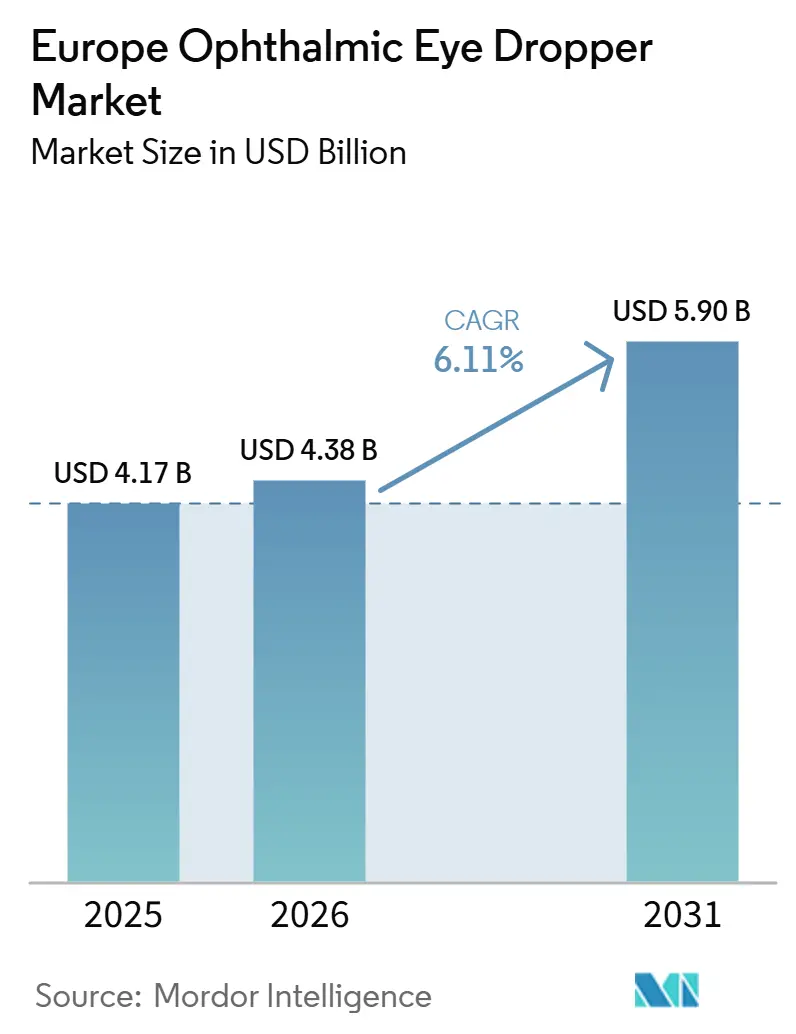
The Europe ophthalmic eye dropper market is projected to be USD 4.17 billion in 2025, USD 4.38 billion in 2026, and reach USD 5.90 billion by 2031, growing at a CAGR of 6.11% from 2026 to 2031. The Europe ophthalmic eye dropper market stands on durable demand because Europe has a large aging population and a high burden of chronic ocular conditions that require repeated topical treatment. The European Eye Epidemiology Consortium placed glaucoma cases in Europe at 12.3 million people in 2025, and 6.9 million of those cases remained undiagnosed, which keeps the future treatment pool materially open as screening improves. Dry eye management, post-surgical care, and the expected advance of specialty ophthalmic formulations are widening demand beyond routine glaucoma use and are raising the need for better dosing control and cleaner in-use performance. Competition in the Europe ophthalmic eye dropper market is therefore moving away from basic bottle supply and toward sterility assurance, ergonomic design, and formulation compatibility, especially in preservative-free formats. The Europe ophthalmic eye dropper market also has a clear premium pathway in connected adherence tools, as the registration of the GRANITE study in 2026 shows that digital support around drop administration is moving into formal clinical evaluation.
Key Report Takeaways
- By product type, preserved multi-dose eye droppers led with 46.38% revenue share in 2025, while unidose eye droppers are projected to expand at a 6.58% CAGR through 2031.
- By material, low-density PE (LDPE) held 49.72% share in 2025, while polypropylene (PP) is forecasted to grow at a 7.12% CAGR through 2031.
- By capacity, the ≤2.5 mL segment accounted for 41.26% share in 2025, while the 3-5 mL band is expected to record the fastest CAGR at 6.34% through 2031.
- By technology, preservative-free sterile-valve systems captured 52.84% share in 2025, while anti-microbial coated tips are projected to advance at a 7.86% CAGR through 2031.
- By geography, Germany held 42.19% share in 2025, while the United Kingdom is projected to expand at an 8.14% CAGR through 2031.
Note: Market size and forecast figures in this report are generated using Mordor Intelligence’s proprietary estimation framework, updated with the latest available data and insights as of January 2026.
Europe Ophthalmic Eye Dropper Market Trends and Insights
Drivers Impact Analysis*
| Driver | (~) % Impact on CAGR Forecast | Geographic Relevance | Impact Timeline |
|---|---|---|---|
| Rising Prevalence of Glaucoma and Dry Eye Disease | +1.4% | Europe-wide, highest concentration in Germany, UK, and Italy | Short term (≤ 2 years) |
| Shift Toward Home-Based Ophthalmic Care and Self-Administration | +1.0% | Germany, UK, France, with spillover to Spain and Rest of Europe | Medium term (2-4 years) |
| Preservative-Free Multi-Dose Adoption in Chronic Eye Care | +1.2% | Europe-wide, with faster clinical adoption in Western Europe | Short term (≤ 2 years) |
| EU Packaging Compliance Redesign Cycle | +0.7% | EU-specific, most acute in Germany, France, and Italy | Medium term (2-4 years) |
| Compatibility Demand from Biologic and Specialty Ophthalmic Formulations | +0.8% | Europe-wide, with early relevance in advanced therapy pipelines | Long term (≥ 4 years) |
| Smart Dosing and Micro-Dispensing Features in Premium Formats | +0.6% | Europe-wide, with stronger early clinical interest in Italy and the UK | Long term (≥ 4 years) |
| Source: Mordor Intelligence | |||
Rising Prevalence of Glaucoma and Dry Eye Disease
The Europe ophthalmic eye dropper market continues to benefit from a glaucoma patient base that already reached 12.3 million people in 2025 and is projected to rise to 13.6 million by 2040.[1]IAPB Vision Atlas, “Glaucoma Burden in Europe Projected to Exceed 13 Million by 2050,” IAPB Vision Atlas, visionatlas.iapb.org The treated pool still has room to expand because more than half of European glaucoma cases remained undiagnosed at referral, which means better screening can convert latent disease into active prescription demand.[2]C. Schweitzer et al., “Referral for Glaucoma Surgery and Types of Surgery in Different European Regions in 2025, the EURACCUR Study,” Graefe's Archive for Clinical and Experimental Ophthalmology, link.springer.com This matters because glaucoma therapy is not episodic and usually requires repeated, long-duration drop administration over many years. Each newly diagnosed patient therefore adds recurring device demand rather than a one-time purchase cycle, which gives the Europe ophthalmic eye dropper market a durable volume base. Chronic exposure concerns are also nudging prescribers toward preservative-free therapy in long-term use, which lifts the value of the dispenser format attached to each patient. Dry eye care reinforces the same demand pattern because long-use patients place high value on comfort, contamination control, and better instillation consistency.
Shift Toward Home-Based Ophthalmic Care and Self-Administration
The Europe ophthalmic eye dropper market is also being shaped by a shift from clinic-centered administration to home use, which moves design priorities toward ease of handling and repeatable dosing. Conventional bottles still perform poorly for many patients, and the underlying usability gap is important because poor instillation can reduce adherence and create unnecessary wastage. Gerresheimer states that its Ophthalmic Plus bottle requires 60% less actuation force than standard squeeze bottles, which directly addresses the dexterity limits of older patients who account for strong prescription growth in eye care.[3]Gerresheimer AG, “Ophthalmic Plus Eye Dropper,” Gerresheimer AG, gerresheimer.com This changes the competitive standard in the Europe ophthalmic eye dropper market because ergonomic performance is no longer a minor packaging feature and is becoming part of the clinical utility of the product. Suppliers that have already completed this work are better placed for tenders and preferred supply programs that now look beyond unit price alone.
Preservative-Free Multi-Dose Adoption in Chronic Eye Care
The Europe ophthalmic eye dropper market is moving further toward preservative-free multi-dose systems because chronic patients and prescribers are paying closer attention to ocular surface tolerance. Aptar Pharma states that its Ophthalmic Squeeze Dispenser platform has been validated across more than 500 market references, which shows how mature the tip-seal sterility approach has become for preservative-free eye drops. The shift is commercially important because preservative-free conversion changes the dispenser from a low-cost accessory into a critical part of the product’s sterility strategy. Adoption is still not frictionless because a change from preserved to preservative-free multi-dose packaging requires new compatibility work, stability testing, and filing updates. Demand from biologic and specialty ophthalmic formulations supports the same direction because these products place tighter controls on sterility, leachables, and dose reproducibility.
EU Packaging and Packaging Waste Compliance Redesign Cycle
The Europe ophthalmic eye dropper market now faces a regulation-led redesign cycle because Regulation (EU) 2025/40 entered into force in February 2025 and begins to apply from August 12, 2026. The regulation introduces recyclability requirements, recycled-content targets for applicable plastic packaging, and harmonized labeling rules that directly affect development choices around ophthalmic packaging. Primary pharmaceutical packaging has health and safety exemptions, but secondary and outer packaging still sit within a stricter design-for-recyclability framework. This matters for the Europe ophthalmic eye dropper market because producers, importers, and brand owners will carry Extended Producer Responsibility costs that increasingly reflect the recyclability profile of specific packaging formats. The main unresolved issue is that multi-component droppers remain difficult to recycle in household systems when bottle bodies, caps, valves, and membranes belong to different material streams.
Restraints Impact Analysis*
| Restraint | (~) % Impact on CAGR Forecast | Geographic Relevance | Impact Timeline |
|---|---|---|---|
| High Validation and Sterility Compliance Cost | -0.5% | Europe-wide, with the strongest pressure under EU GMP and EMA expectations | Short term (≤ 2 years) |
| Material-Drug Compatibility Constraints in Sensitive Formulations | -0.4% | Europe-wide, most acute in biologic and specialty formulations | Medium term (2-4 years) |
| Sustained-Release and Device-Based Substitution Pressure | -0.5% | Europe-wide, with earlier effect in high-value retinal therapy pathways | Long term (≥ 4 years) |
| Recyclability and Reprocessing Cost Burden | -0.3% | EU-specific, with the clearest effect under PPWR 2025/40 | Medium term (2-4 years) |
| Source: Mordor Intelligence | |||
High Validation and Sterility Compliance Cost
The Europe ophthalmic eye dropper market faces a real cost barrier because advanced dispenser platforms must clear demanding sterility and integrity expectations before they can support regulated ophthalmic products. Preservative-free multi-dose systems raise the bar further because the packaging itself becomes the main microbial defense during in-use periods. The burden is especially heavy for smaller drug sponsors because they often need access to already validated platforms rather than bespoke device programs. This favors incumbent providers with established technical files and repeatable regulatory support packages. The result is a Europe ophthalmic eye dropper market where innovation remains active, but platform diversity grows more slowly than clinical demand.
Material-Drug Compatibility Constraints in Sensitive Formulations
The Europe ophthalmic eye dropper market also faces tighter compatibility requirements as the formulation mix moves beyond standard small-molecule eye drops. LDPE remained the leading material in 2025, but advanced ophthalmic drugs are raising more questions around particulates, adsorption, residuals, and broader container interaction risk. Gerresheimer’s 2024 work on silicone oil-free ophthalmic syringe systems highlighted this sensitivity for advanced macromolecular products, and the same logic matters for multi-dose dropper formats. A shift toward COP or glass can improve the compatibility profile, but it also raises packaging cost and can be difficult to absorb in price-sensitive procurement systems. This cost tension is important because the Europe ophthalmic eye dropper market still relies heavily on reimbursement structures and hospital purchasing discipline in several countries. Over time, some of the highest-value ophthalmic therapies may even favor non-drop delivery routes, which would redirect part of the innovation pool away from topical containers.
*Our forecasts treat driver/restraint impacts as directional, not additive. The impact forecasts reflect baseline growth, mix effects, and variable interactions.
Segment Analysis
By Product Type: Unidose Growth Challenges the Multi-Dose Institutional Hierarchy
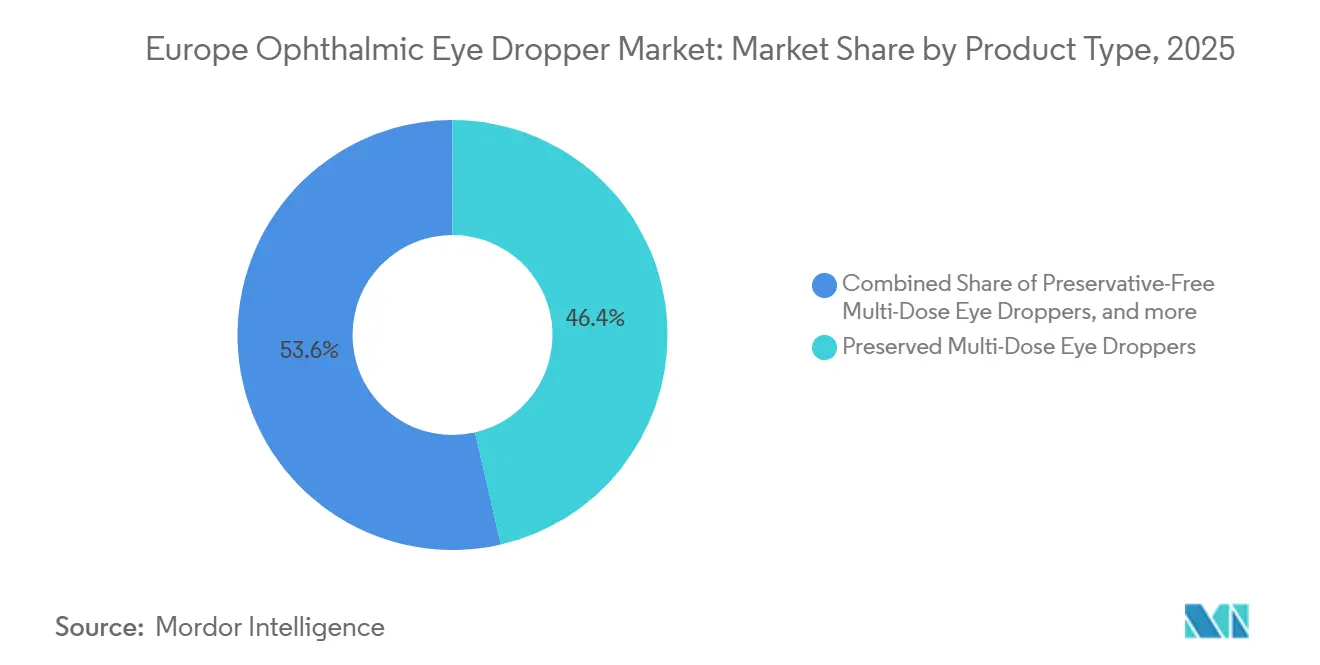
Preserved multi-dose eye droppers held 46.38% of the Europe ophthalmic eye dropper market share in 2025, which kept them in the lead because hospital and formulary channels still favored cost-efficient multi-dose presentations in major countries such as Germany and France. Preservative-free multi-dose formats are the transition segment in the Europe ophthalmic eye dropper market because they align better with chronic care needs and lower tolerance for repeated preservative exposure. The Europe ophthalmic eye dropper market for unidose eye droppers is projected to expand at a 6.58% CAGR through 2031, supported by cataract and LASIK pathways where single-use sterility remains clinically attractive. Unidose growth also reflects the fact that surgical and acute-care protocols value contamination control more than refill convenience.
Patients with dexterity limits are adding another push toward single-dose formats because easier handling can reduce failed instillation and lower the chance of secondary complications. The preserved format still benefits from reimbursement architecture in parts of Southern Europe where lower-cost options continue to receive stronger support. That pricing structure slows conversion even when clinical preference moves in the opposite direction. The Europe ophthalmic eye dropper industry therefore remains split between volume-led institutional demand and value-led chronic care migration, rather than moving in a straight line toward one format.



By Material: Polypropylene and Bio-Based Formats Pressure the LDPE Incumbent
Low-density PE retained 49.72% share in 2025, which kept it as the baseline material across much of the Europe ophthalmic eye dropper market because it remains low cost, familiar, and compatible with a broad set of conventional ophthalmic solutions. Its scale advantage still matters in a region where procurement discipline is strong and standard prescription therapies continue to dominate unit volumes. HDPE keeps a secondary role where higher moisture barrier properties are helpful, while glass remains relevant for formulations where polymer interaction risk is less acceptable. The Europe ophthalmic eye dropper market for polypropylene is projected to expand at a 7.12% CAGR through 2031 because lower leachable profiles are becoming harder to ignore as more sensitive drug classes move closer to commercialization. This leaves material choice more exposed to formulation science than in earlier generations of ophthalmic packaging.
Bio-based and compostable plastics still represent a small niche, but they matter strategically because Regulation (EU) 2025/40 strengthens the business case for more recyclable or circular material pathways. Scale-up is still limited by feedstock availability, so the shift is likely to stay selective in the near term rather than broad-based. In the Europe ophthalmic eye dropper industry, that means LDPE stays important by volume even as premium and compliance-sensitive programs diversify faster.
By Capacity: Small-Volume Formats Reflect Chronic Disease Economics
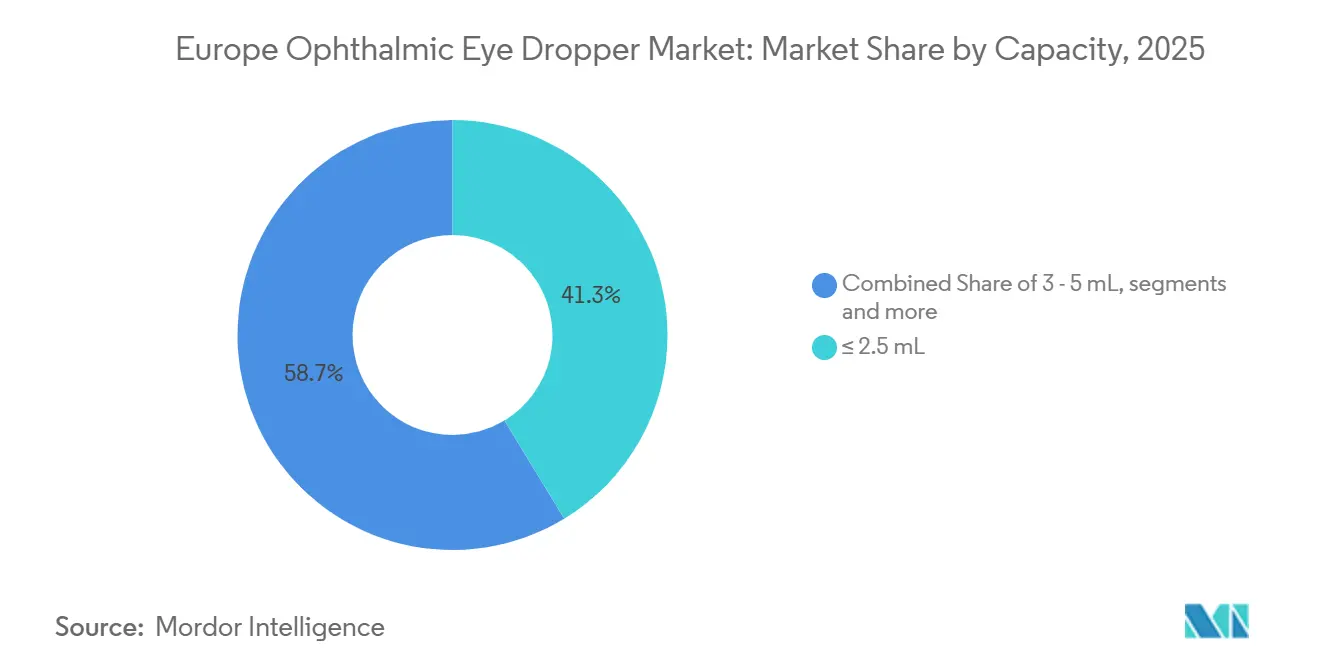
The ≤2.5 mL segment held 41.26% share in 2025, reflecting the common prescription format for glaucoma therapy in community pharmacy channels across Western Europe. This band fits the economics of chronic disease because it maps well to standard monthly treatment cycles for once-daily or twice-daily regimens. The Europe ophthalmic eye dropper market for the 3-5 mL segment is projected to grow at a 6.34% CAGR through 2031 as patients and prescribers look for longer refill intervals in stable chronic care. The same range is also important because it aligns with OSD-compatible bottles and with premium dispensing programs that seek a better balance between convenience and sterility.
Larger 6–10 mL and greater than 10 mL formats remain more relevant to institutional supply and over-the-counter lubrication products, where reduced fill frequency and lower per-drop cost carry more weight. Unit-dose formats below 1 mL are still closely tied to surgical and acute-care use where contamination prevention has priority over packaging economy. Their role should keep expanding where same-day cataract activity stays high, particularly in countries with established ambulatory pathways. Chronic prescription channels reward refill discipline, while procedural channels reward sterility and workflow simplicity.
By Technology: Sterile-Valve Systems Define the Premium Tier
Preservative-free sterile-valve systems held 52.84% of the technology segment in 2025, which shows that chemical-preservative elimination has already moved into the mainstream of the Europe ophthalmic eye dropper market. The Europe ophthalmic eye dropper market for anti-microbial coated tips is projected to rise at a 7.86% CAGR through 2031 because they offer a lower-cost route to better contamination control in home use. This makes them especially relevant in health systems that need a step-up option between preserved multi-dose formats and full sterile-valve platforms. Premium value in the Europe ophthalmic eye dropper market is therefore concentrating around technologies that improve sterility without making self-administration harder.
Controlled micro-dose systems are gaining strategic attention because conventional droppers still struggle to deliver consistent volumes in real-world patient use. Child-resistant and senior-friendly closures are also becoming more important because safety requirements must now coexist with usability for older patients who may have reduced grip strength. Connected droppers still represent a very small volume base, but the GRANITE study registration shows that adherence-linked packaging has moved beyond concept stage and into structured clinical evaluation. That keeps digital monitoring as one of the clearest premium technology pathways for the later years of the forecast period.
Geography Analysis
Germany accounted for 42.19% of the Europe ophthalmic eye dropper market share in 2025, which reflected its high glaucoma treatment base, supportive reimbursement setting for premium preservative-free formats, and strong pharmaceutical packaging footprint. Germany is likely to remain the largest national market through 2031 because its treated patient base is large enough to absorb faster growth elsewhere without losing leadership. France and Italy held meaningful secondary positions because both countries combine large ophthalmology networks with expanding interest in preservative-free multi-dose systems.
The United Kingdom is projected to expand at an 8.14% CAGR through 2031, giving it the fastest growth profile in the study geography. NHS glaucoma pathway changes are widening the number of patients managed in community settings, which supports steady growth in prescription drop volumes. A January 2026 study in the British Journal of Ophthalmology estimated that 1,020,000 UK adults aged 40 years and above were living with glaucoma, which supports the scale behind this trend. Post-Brexit procurement realignment also supports near-shore supply opportunities for manufacturers that can meet UK and EU compliance expectations in parallel.
The rest of Europe group remains the most mixed sub-region because patient access, reimbursement depth, and packaging sophistication vary widely across Benelux, the Nordics, Austria, and Central and Eastern Europe. Nordic markets and the Netherlands show stronger alignment with preservative-free use and proactive screening, which brings them closer to the Western European adoption curve. Central and Eastern European markets still rely more heavily on preserved multi-dose formats because price ceilings and reference pricing frameworks limit adoption of premium systems. Spain and the broader southern corridor should continue to grow, but their pace is likely to stay below the UK while reimbursement support for higher-specification droppers remains less consistent.
Competitive Landscape
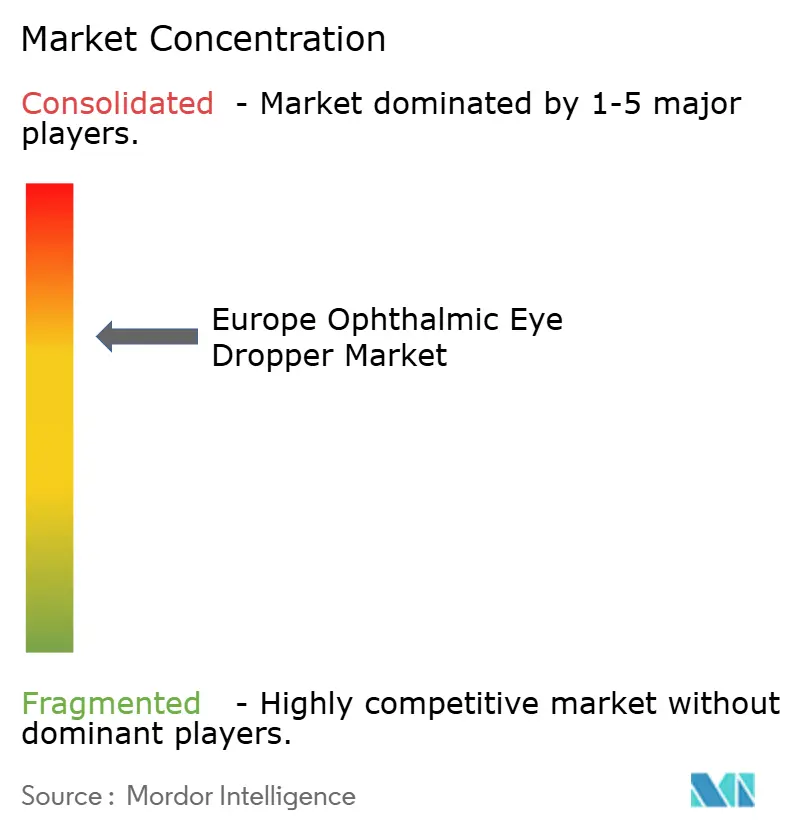
The Europe ophthalmic eye dropper market remains moderately concentrated at the premium technology tier, where a small group of specialized packaging companies continues to shape product standards for preservative-free multi-dose dispensing. The market is less concentrated in preserved multi-dose formats, where tender pressure and lower technical barriers keep pricing tighter and supplier diversity broader. This split matters because value capture in the Europe ophthalmic eye dropper market now sits more in validation depth and formulation compatibility than in simple bottle output. Companies that can support premium sterility claims and patient usability evidence are better placed than firms that compete only on standard plastic conversion.
Gerresheimer’s 2024 acquisition of Bormioli Pharma expanded its combined packaging reach and strengthened its position across both glass and plastic ophthalmic formats, which gives it wider coverage from standard bottles to advanced systems for sensitive formulations. Gerresheimer’s Ophthalmic Plus platform shows a parallel strategy centered on force reduction and patient usability, which is important in older glaucoma populations. Nemera’s certified circular-material positioning adds a different competitive angle because environmental readiness is becoming more relevant under the EU packaging rule set. These moves show that competition in the Europe ophthalmic eye dropper market is spreading across portfolio breadth, ergonomics, environmental readiness, and device-linked clinical utility.
The strongest open opportunities still sit in connected adherence tools, low-force self-administration formats, and material systems that can satisfy both recyclability pressure and higher formulation sensitivity. Suppliers that were early with compliance systems, traceability, and validated premium platforms should have a stronger position as procurement criteria widen beyond unit cost. The Europe ophthalmic eye dropper market therefore looks stable in its current leaders, but the advantage is likely to stay with companies that can convert packaging into a clinically differentiated component of therapy.
Europe Ophthalmic Eye Dropper Industry Leaders
AptarGroup, Inc.
Gerresheimer AG
Nemera
Berry Global Inc.
SCHOTT Pharma AG and Co. KGaA
- *Disclaimer: Major Players sorted in no particular order

Recent Industry Developments
- June 2026: Amcor plc announced a multi-million-dollar expansion of its healthcare packaging manufacturing facility in Sira, Karnataka, India, introducing advanced automated vision systems for ophthalmic containers and injectable vials. The investment supports growing demand across South Asia and strengthens Amcor's global ophthalmic packaging supply chain.
- June 2026: SCHOTT Pharma inaugurated expanded vial production lines in Lebanon, Pennsylvania, USA, through an investment exceeding USD 60 million, partially funded by BARDA. The expansion more than triples local capacity for high-value solutions and supports sterile RTU glass production for biologics and vaccines, strengthening supply chain resilience for ophthalmic biologics destined for European distribution.
- January 2026: AptarGroup, Inc. launched Beat the Blink, a novel ophthalmic delivery system designed to overcome the blink reflex through horizontal drop delivery, in an exclusive partnership with Bausch + Lomb. The system incorporates a tip-seal mechanism for preservative-free compatibility and a child-resistant design. Commercial availability is expected 24–36 months from development completion, marking AptarGroup's most significant eye care platform launch to date.


Europe Ophthalmic Eye Dropper Market Report Scope
According to the report’s scope, the ophthalmic eye dropper market comprises devices used to accurately dispense ophthalmic medications for the treatment and management of eye conditions such as glaucoma, dry eye disease, infections, allergies, and postoperative care. It includes multidose, preservative-free, and single-dose eye dropper systems used in clinical and home-care settings.
The European ophthalmic eye dropper market is segmented into product type, material, capacity, technology, and geography. By product type, the market is segmented into preserved multi-dose eye droppers, preservative-free multi-dose eye droppers, and unidose eye droppers. By material, the market is segmented into low-density PE (LDPE), high-density PE (HDPE), polypropylene (PP), glass (borosilicate & others), and bio-based / compostable plastics. By capacity, the market is segmented into ≤ 2.5 ml, 3 - 5 ml, 6 -10 ml, greater than 10 ml, and unit-dose (less than 1 ml). By technology, the market is segmented into preservative-free sterile-valve systems, anti-microbial coated tips, controlled micro-dose (≤ 15 µl), child-resistant / senior-friendly designs, and connected / digital-monitoring droppers. By geography, the market is segmented into North America, Europe, Asia-Pacific, the Middle East and Africa, and South America. The report also covers the estimated market sizes and trends for 17 countries across major regions globally. The report offers values (USD) for all the above segments.
| Preserved Multi-Dose Eye Droppers |
| Preservative-Free Multi-Dose Eye Droppers |
| Unidose Eye Droppers |
| Low-Density PE (LDPE) |
| High-Density PE (HDPE) |
| Polypropylene (PP) |
| Glass (Borosilicate & Others) |
| Bio-based / Compostable Plastics |
| ≤ 2.5 mL |
| 3 - 5 mL |
| 6 -10 mL |
| Greater than 10 mL |
| Unit-Dose (Less than 1 mL) |
| Preservative-free Sterile-Valve Systems |
| Anti-microbial Coated Tips |
| Controlled Micro-Dose (≤ 15 µL) |
| Child-Resistant / Senior-Friendly Designs |
| Connected / Digital-Monitoring Droppers |
| Germany |
| United Kingdom |
| France |
| Italy |
| Spain |
| Rest of Europe |
| By Product Type | Preserved Multi-Dose Eye Droppers |
| Preservative-Free Multi-Dose Eye Droppers | |
| Unidose Eye Droppers | |
| By Material | Low-Density PE (LDPE) |
| High-Density PE (HDPE) | |
| Polypropylene (PP) | |
| Glass (Borosilicate & Others) | |
| Bio-based / Compostable Plastics | |
| By Capacity | ≤ 2.5 mL |
| 3 - 5 mL | |
| 6 -10 mL | |
| Greater than 10 mL | |
| Unit-Dose (Less than 1 mL) | |
| By Technology | Preservative-free Sterile-Valve Systems |
| Anti-microbial Coated Tips | |
| Controlled Micro-Dose (≤ 15 µL) | |
| Child-Resistant / Senior-Friendly Designs | |
| Connected / Digital-Monitoring Droppers | |
| By Geography | Germany |
| United Kingdom | |
| France | |
| Italy | |
| Spain | |
| Rest of Europe |


Key Questions Answered in the Report
What is the 2026 value of Europe ophthalmic eye dropper market demand?
The market stands at USD 4.17 billion in 2025 to USD 4.38 billion in 2026 and is forecasted to reach USD 5.90 billion by 2031 at a 6.11% CAGR.
Which product format leads, and which one is growing fastest?
Preserved multi-dose eye droppers led with 46.38% share in 2025, while unidose eye droppers are projected to grow fastest at a 6.58% CAGR through 2031.
Which countries matter most in regional demand?
Germany led with 42.19% share in 2025, while the United Kingdom is projected to post the fastest growth at an 8.14% CAGR through 2031.
What technology is setting the premium standard in ophthalmic dispensers?
Preservative-free sterile-valve systems held 52.84% of the technology segment in 2025, which shows that in-use sterility without chemical preservatives has become the leading premium route.
Page last updated on:





