
Dry Ice Market Size and Share
Market Overview
| Study Period | 2022 - 2032 |
|---|---|
| Market Size (2027) | USD 1.57 Billion |
| Market Size (2032) | USD 2.21 Billion |
| Growth Rate (2027 - 2032) | 7.12 % |
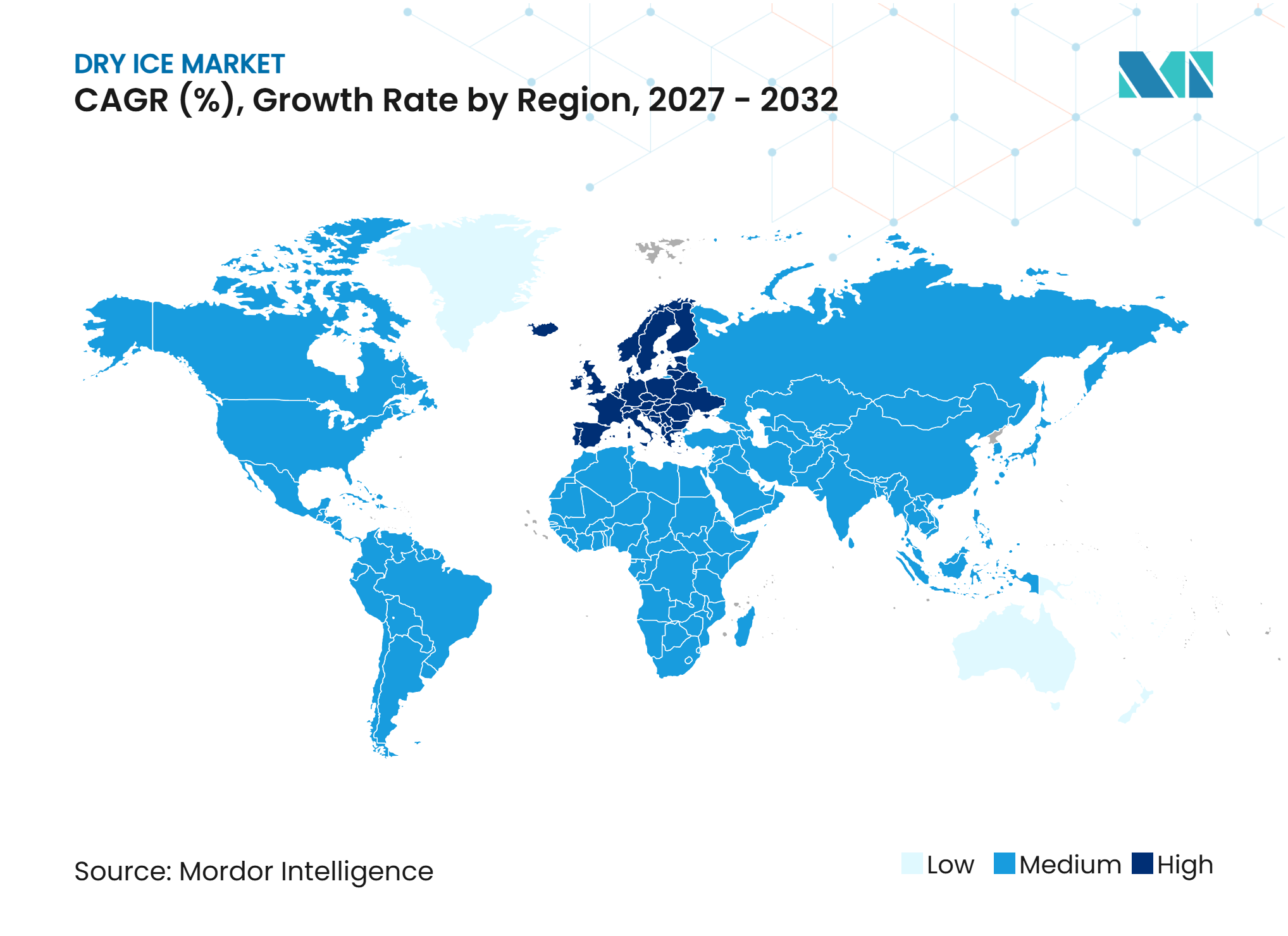
| Fastest Growing Market | Europe |
| Largest Market | Asia-Pacific |
| Market Concentration | Medium |
Major Players *Disclaimer: Major Players sorted in no particular order Image © Mordor Intelligence. Reuse requires attribution under CC BY 4.0. | |
Dry Ice Market Analysis by Mordor Intelligence
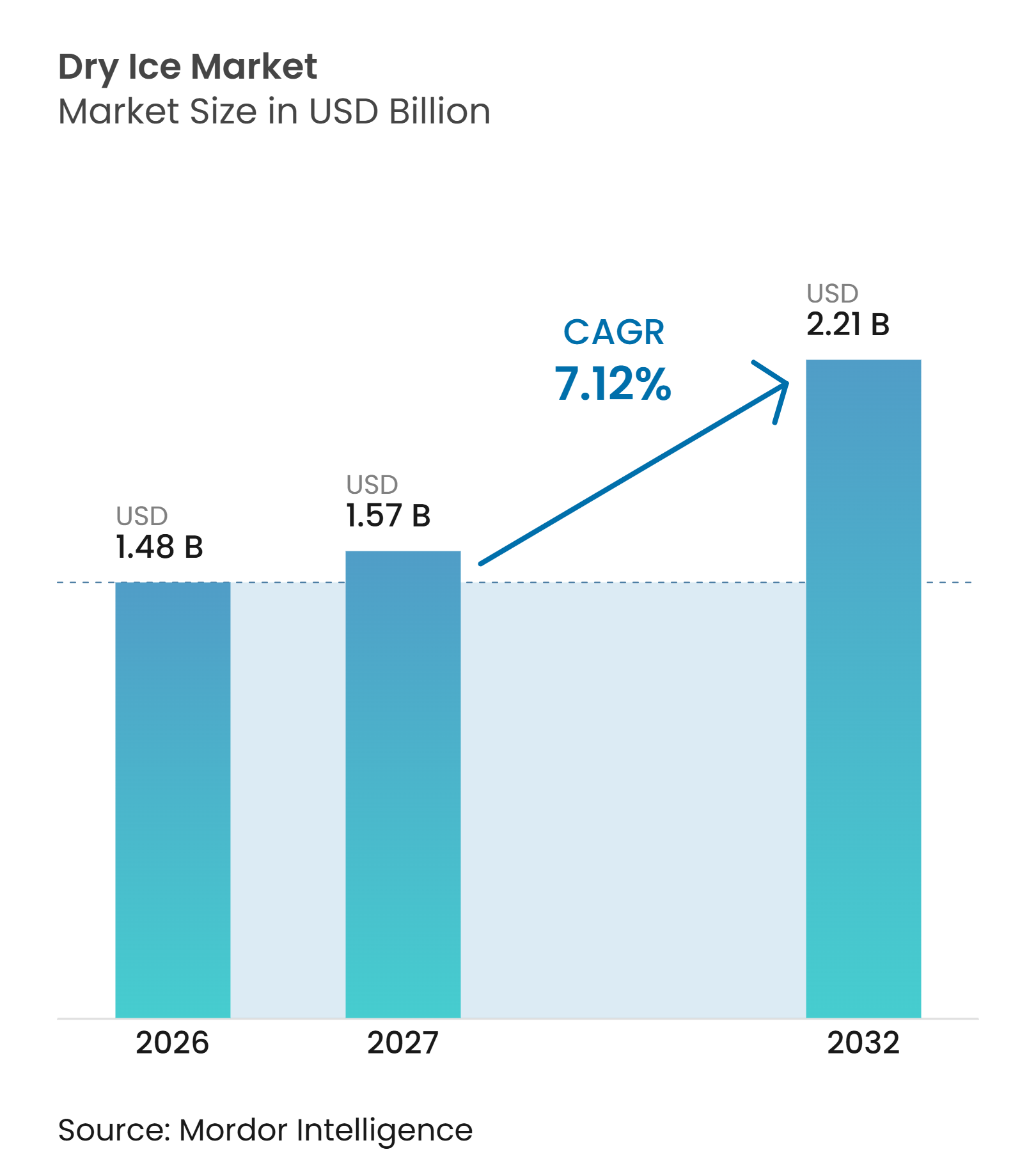
The dry ice market was valued at USD 1.48 billion in 2026 and is projected to grow from USD 1.57 billion in 2027 to USD 2.21 billion by 2032, registering a CAGR of 7.12% during 2027–2032. The market is expanding steadily, driven by increasing use of solid carbon dioxide as a cooling, freezing, and cleaning medium across industrial and commercial operations. Dry ice has gained importance due to its extremely low temperature, direct sublimation from solid to gas without leaving liquid residue, and suitability for processes requiring controlled thermal conditions. Continuous advancements in CO₂ recovery, purification, liquefaction, and dry ice manufacturing technologies are improving production efficiency and supporting the availability of consistent-quality products.
Key Report Takeaways
-
By type, Dry Ice Sliced held 41.45% of the dry ice market share in 2026, while Dry Ice Pellets are forecast to grow at a CAGR of 7.67% through 2032.
-
By application, Food and Beverages accounted for 41.24% of the dry ice market share in 2026, while Healthcare is projected to expand at a CAGR of 8.63% through 2032.
-
By geography, Asia-Pacific held 33.12% of the dry ice market share in 2026, while Europe is forecast to advance at a CAGR of 7.91% through 2032.
Note: Market numbers in this report are based on Mordor Intelligence's proprietary estimation framework, which combines nine months of actuals with Q4 projections for base year 2026.
Market Trends and Insights
Drivers Impact Analysis of Dry Ice Market*
| Driver | (~) % Impact on CAGR Forecast | Geographic Relevance | Impact Timeline |
|---|---|---|---|
| Growing demand for temperature-controlled food transportation | +1.5% | Global, with intensity in Asia-Pacific and North America | Medium term (2–4 years) |
| Increasing adoption of dry ice blasting for industrial cleaning | +1.2% | Global, led by North America and Europe | Medium term (2–4 years) |
| Expansion of frozen food processing and preservation | +1.0% | Asia-Pacific core (China, India, Japan), North America | Short term (≤ 2 years) |
| Rising demand from meat, seafood, and poultry processing industries | +0.8% | Asia-Pacific core, spill-over to South America and the Middle East, and Africa | Short term (≤ 2 years) |
| Technological advancements in dry ice manufacturing and pelletization | +0.6% | Global | Long term (≥ 4 years) |
| Expansion of carbon dioxide recovery and recycling infrastructure | +0.5% | Europe, North America | Long term (≥ 4 years) |
| Source: Mordor Intelligence | |||
Growing Demand for Temperature-Controlled Food Transportation
Growing demand for temperature-controlled food transportation is driving the market, as frozen food manufacturers, seafood exporters, and food distributors increasingly require reliable cooling solutions to maintain product quality during transit. The expansion of long-distance frozen food shipments and specialized distribution networks is increasing the use of dry ice in insulated packaging due to its ability to maintain low temperatures. For instance, in October 2025, Snowman Logistics commenced construction of a new temperature-controlled warehouse in Pune, India, under the Built-to-Suit (BTS) model developed by Whitecastle Infra. The facility, with a planned capacity of 5,900 pallets, is designed to serve the ice cream, dairy, meat, poultry, and seafood industries. Such investments in temperature-controlled logistics infrastructure are strengthening the supporting ecosystem for dry ice manufacturers by creating additional demand for specialized cooling and transportation solutions.
Increasing Adoption of Dry Ice Blasting for Industrial Cleaning
The increasing adoption of dry ice blasting for industrial cleaning is supporting the dry ice market, as manufacturers seek efficient, non-abrasive cleaning methods for maintaining production equipment, machinery, molds, and processing surfaces. Dry ice blasting uses solid CO₂ pellets propelled at high velocity to remove grease, adhesives, carbon deposits, and other contaminants without introducing moisture or leaving secondary abrasive residues. Its ability to clean complex geometries, delicate components, and hard-to-reach machinery without requiring extensive equipment disassembly is driving its integration into industrial maintenance operations. Additionally, the process minimizes cleaning-related downtime and reduces the need for chemical solvents and conventional abrasive materials, making it suitable for precision manufacturing and contamination-sensitive production environments.
Expansion of Frozen Food Processing and Preservation
Frozen food processing and preservation operations are increasingly incorporating rapid freezing, temperature reduction, and controlled cooling techniques. Growing production of frozen ready meals, processed vegetables, meat products, seafood, and frozen desserts is driving demand for efficient cooling solutions that help preserve product texture, quality, and shelf stability. Dry ice supports these operations through rapid heat absorption and moisture-free cooling, making it suitable for temperature-sensitive ingredients and specialized processing environments. Additionally, the modernization of food processing facilities and increasing adoption of advanced freezing technologies are encouraging manufacturers to integrate dry ice into production workflows, supporting demand for solid carbon dioxide across the frozen food processing industry.
Rising Demand from Meat, Seafood, and Poultry Processing Industries
Rising demand from meat, seafood, and poultry processing industries is driving the market. Dry ice is used in meat grinding, temperature reduction, portioning, and processing operations, while its rapid cooling properties support the handling of highly perishable seafood and poultry products. Increasing meat production, expansion of commercial poultry processing, and growing seafood processing activities are strengthening the need for reliable low-temperature processing solutions. For instance, according to India's Department of Animal Husbandry and Dairying, the country's meat production reached 10.50 million tons in 2024–25, with poultry contributing approximately 5.18 million tons[1]. The expansion of meat and poultry processing volumes is creating additional requirements for temperature management and preservation solutions, supporting demand for dry ice across protein processing operations.
Restraints Impact Analysis of Dry Ice Market*
| Restraint | (~) % Impact on CAGR Forecast | Geographic Relevance | Impact Timeline |
|---|---|---|---|
| Sublimation losses and limited inventory life | -0.5% | Global | Short term (≤ 2 years) |
| Occupational safety risks associated with CO₂ exposure | -0.3% | Global, particularly stricter in North America and Europe | Medium term (2–4 years) |
| Risk of pressure buildup in sealed storage containers | -0.2% | Global | Short term (≤ 2 years) |
| High capital investment in manufacturing infrastructure | -0.4% | Primarily Asia-Pacific and the Middle East, and Africa | Long term (≥ 4 years) |
| Source: Mordor Intelligence | |||
Sublimation Losses and Limited Inventory Life
Sublimation losses and limited inventory life restrain the growth of the dry ice market. Solid carbon dioxide continuously converts into gas when exposed to ambient temperatures, resulting in unavoidable product loss during storage, handling, and transportation. The rate of sublimation increases with inadequate insulation, frequent container opening, and prolonged exposure to ambient conditions, reducing the quantity of usable dry ice available to end users. These characteristics create challenges in maintaining inventory levels, planning bulk procurement, and managing product availability across geographically dispersed distribution networks. Manufacturers and distributors must maintain frequent replenishment cycles and invest in specialized insulated storage containers to minimize product losses, which increases operational complexity and limits the economic feasibility of maintaining large inventories for extended periods.
Occupational Safety Risks Associated with CO₂ Exposure
Occupational safety risks associated with CO₂ exposure restrain the growth of the dry ice market due to potential health hazards arising from carbon dioxide gas released during sublimation. Dry ice continuously converts into CO₂ gas, which can accumulate in enclosed or poorly ventilated storage facilities, transportation vehicles, and handling areas, displacing oxygen and creating hazardous working conditions. Exposure to elevated carbon dioxide concentrations can cause headaches, dizziness, breathing difficulties, and, in severe cases, unconsciousness or asphyxiation. As a result, dry ice manufacturers, distributors, and end users must implement adequate ventilation systems, CO₂ monitoring equipment, specialized handling procedures, and employee safety training.
*Our forecasts treat driver/restraint impacts as directional, not additive. The impact forecasts reflect baseline growth, mix effects, and variable interactions.
Dry Ice Market Segment Analysis
By Type:
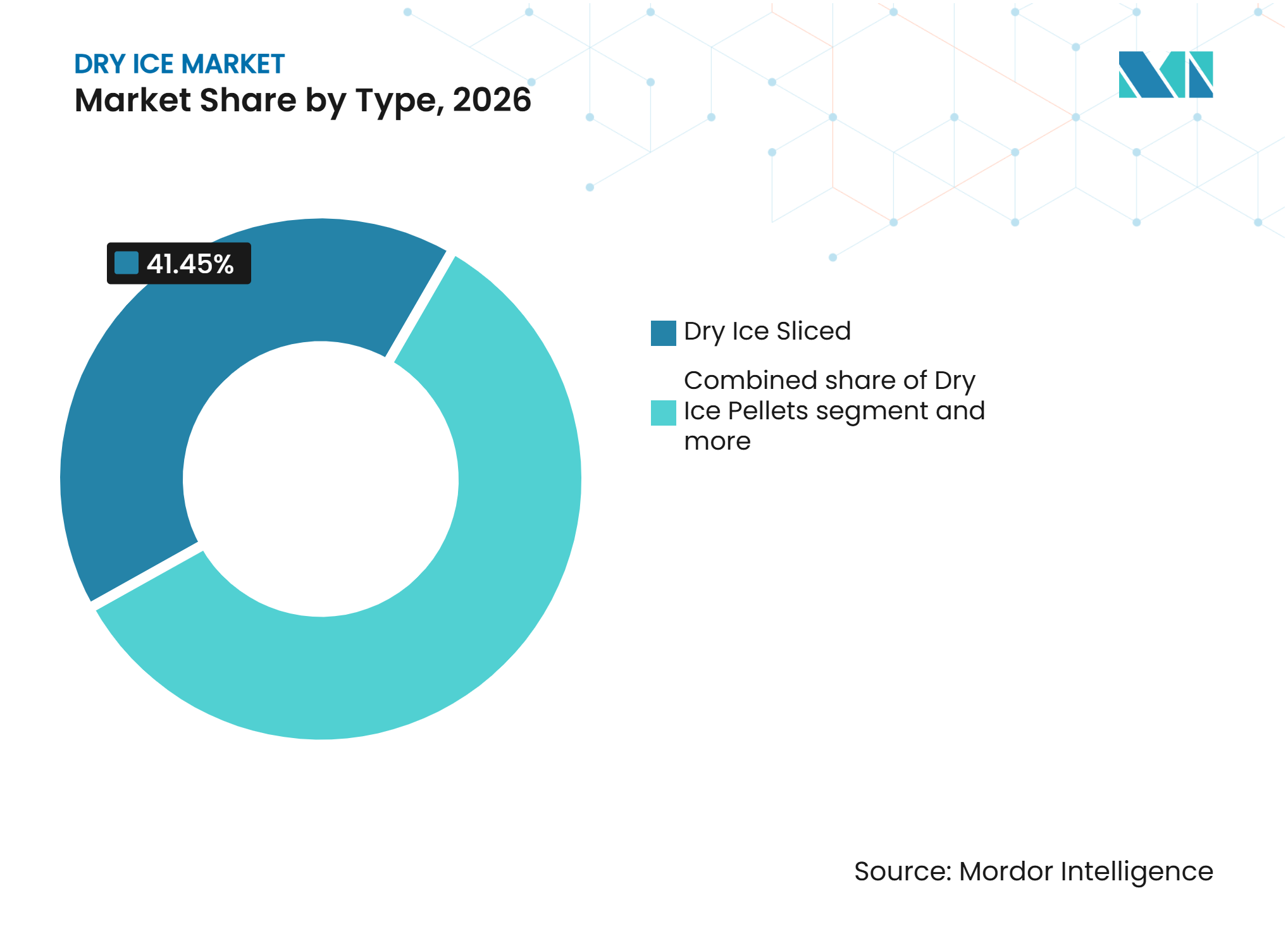
Sliced Format Anchors Volume; Pellets Drive the Growth CurveThe dry ice sliced segment accounted for 41.45% of the dry ice market in 2026, maintaining its leading position due to its standardized physical dimensions, ease of portioning, and flexibility in thickness customization. Its uniform geometry enables precise weight measurement, predictable sublimation rates, and consistent product sizing. The flat structure facilitates efficient stacking, packaging, and space utilization during storage and handling. The availability of customized slice dimensions allows buyers to procure products according to specific operational requirements, while the pre-cut format simplifies handling and eliminates additional shaping requirements.
The dry ice pellets segment is projected to register the fastest growth at a CAGR of 7.67% over 2027–2032, supported by increasing demand for standardized pellet dimensions, automated production capabilities, and precise material dispensing. Their cylindrical structure and availability in multiple diameters enable manufacturers to meet specific product specifications and maintain consistency across production batches. The pelletization process supports continuous manufacturing, allowing producers to optimize output volumes and maintain uniformity in product quality. Compatibility with automated feeding, metering, and dispensing equipment further improves operational efficiency and reduces manual intervention.



By Application:
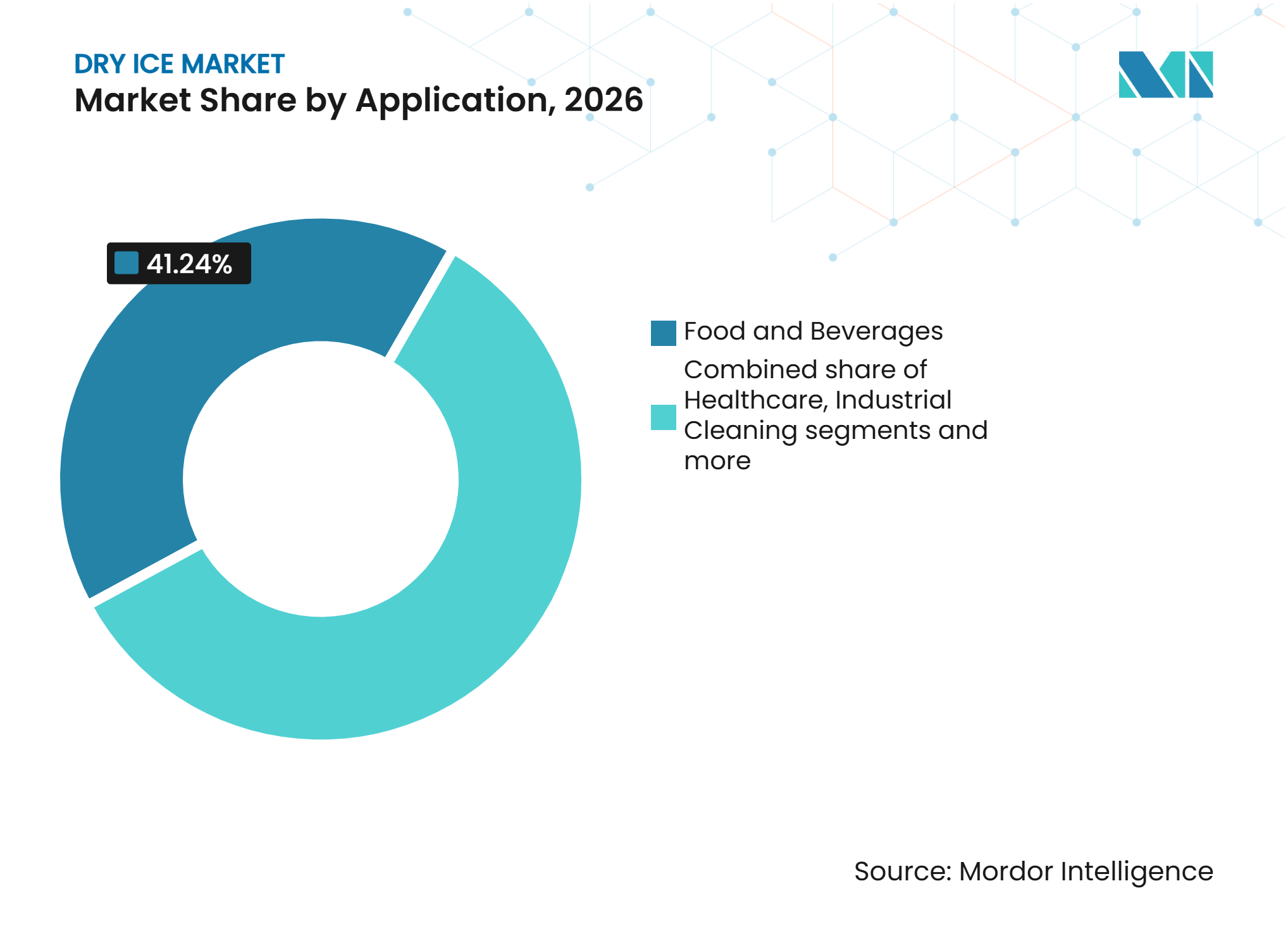
Food and Beverages Anchors Demand; Healthcare Sustains the Steepest GrowthFood and beverages held a 41.24% application share in 2026, supported by the increasing use of dry ice in food processing, rapid freezing, chilling, and preservation operations. Its ability to maintain extremely low temperatures without generating liquid residue makes it suitable for handling such products. The increasing use of rapid freezing techniques in food manufacturing is also strengthening demand for dry ice as a temperature-control medium. According to the United States Department of Agriculture (USDA), in 2025, United States cold-storage inventories as of December included approximately 1.27 billion pounds of frozen fruit, 2.02 billion pounds of frozen vegetables, and 1.12 billion pounds of frozen potatoes, highlighting the substantial scale of frozen food preservation activities and the associated need for reliable temperature-management solutions[2].
Healthcare is the fastest-growing application segment, projected to register a CAGR of 8.63% over 2027–2032, driven by increasing requirements for ultra-low-temperature handling of temperature-sensitive biological materials, pharmaceutical products, and clinical research specimens. The expansion of biotechnology research, development of advanced biologic therapies, and increasing transportation of specialized medical materials are strengthening the need for reliable cryogenic shipping solutions. Dry ice plays an important role in maintaining stable low-temperature conditions during transit, particularly for products requiring deep-frozen storage environments. The growing adoption of cell and gene therapies, expansion of clinical trial activities, and increasing cross-border movement of biological samples are creating additional requirements for specialized temperature-controlled packaging and transportation.

Geography Analysis
Asia-Pacific
Asia-Pacific holds the largest share of the dry ice market at 33.12% in 2026, supported by the region's scale in frozen food processing, expanding pharmaceutical cold-chain infrastructure, and increasing industrial adoption of solid carbon dioxide. The growing requirement for temperature-controlled handling of perishable products, combined with investments in food preservation and distribution infrastructure, is strengthening regional demand. The expansion of frozen food manufacturing and international food trade is also increasing the need for reliable low-temperature preservation solutions. According to the Japan Frozen Food Association, Japan's frozen food consumption reached approximately 3.03 million tons in 2025, compared with 2.92 million tons in 2024[3]. This growth reflects the increasing scale of frozen food production and consumption across the region, supporting demand for dry ice-based cooling and preservation solutions.
Europe
Europe is the fastest-growing regional market, projected to register a CAGR of 7.91% over 2027–2032, driven by increasing investments in pharmaceutical logistics, food processing technologies, and industrial cleaning solutions. The region's established manufacturing base and focus on production efficiency are encouraging the adoption of dry ice-based cleaning processes for equipment maintenance and surface treatment. The expansion of biotechnology research, specialized pharmaceutical distribution networks, and temperature-sensitive medical shipments is creating additional demand for low-temperature handling solutions. The growing adoption of automated manufacturing operations and the modernization of industrial facilities are further supporting the integration of dry ice technologies across regional industries.
North America, South America, and Middle East and Africa
North America maintains a significant presence in the dry ice market, supported by its established industrial gas infrastructure, extensive CO₂ production capabilities, and pharmaceutical distribution networks. The presence of specialized dry ice manufacturing facilities and established supply systems strengthens product availability and supports consistent industrial demand. South America is experiencing increasing market opportunities through its meat processing industry, seafood exports, and development of food preservation infrastructure, creating demand for specialized cooling solutions across export-oriented supply chains. The Middle East and Africa region is gradually expanding through investments in pharmaceutical distribution, food processing, and modern logistics infrastructure.
Competitive Landscape
Market Concentration

The dry ice market is moderately consolidated, with major players such as Linde plc, Air Liquide S.A., Messer SE & Co. KGaA, Air Products and Chemicals, Inc., and SICGIL Industrial Gases Limited maintaining strong competitive positions through their production capabilities, established CO₂ supply networks, and extensive distribution infrastructure. The competitive landscape includes integrated industrial gas companies and specialized dry ice manufacturers, with competition largely centered on production capacity, product quality, supply reliability, geographical reach, and customer service capabilities. Integrated gas companies that own or control upstream CO₂ recovery, purification, and liquefaction infrastructure can maintain greater supply continuity and pricing stability during periodic CO₂ shortages that constrain standalone distributors.
Leading companies are strengthening their market positions through investments in CO₂ recovery facilities, dry ice production capacity, storage infrastructure, and distribution networks. Their ability to integrate upstream carbon dioxide sourcing with downstream dry ice manufacturing provides operational advantages in managing raw material availability and meeting varying customer requirements. For instance, Linde operates across more than 80 countries and provides industrial gas and engineering solutions across food and beverage, healthcare, and manufacturing industries, while SICGIL has developed dedicated dry ice production, storage, and distribution infrastructure across India. Such investments enable established manufacturers to improve supply reliability, expand customer coverage, and strengthen their competitive positioning.
The competitive landscape is also characterized by increasing emphasis on production efficiency, CO₂ utilization, product customization, and supply chain resilience. Market participants are investing in automated pelletization systems, advanced production controls, and CO₂ recovery technologies to minimize raw material losses and improve manufacturing efficiency. The availability of different pellet sizes, block dimensions, and customized dry ice formats is becoming an important competitive factor, enabling suppliers to address varying customer specifications. Additionally, regional distribution partnerships, localized production facilities, and long-term CO₂ sourcing arrangements are gaining importance as companies seek to reduce transportation-related sublimation losses and improve delivery reliability.
Dry Ice Industry Leaders
-
Linde plc
-
Air Liquide S.A.
-
Messer SE & Co. KGaA
-
Air Products and Chemicals, Inc.
-
SICGIL Industrial Gases Limited
- *Disclaimer: Major Players sorted in no particular order
Dry Ice Market Companies Covered in this Report
- Linde plc
- Air Liquide S.A.
- Messer SE & Co. KGaA
- Air Products and Chemicals, Inc.
- SICGIL Industrial Gases Limited
- Continental Carbonic Products, Inc.
- Taiyo Nippon Sanso Corporation
- SOL Group
- Gulf Cryo Holding
- Cold Jet LLC
- Yara International ASA
- Reliant Holdings Ltd
- Premier Carbonic Pvt Ltd.
- Bhavani dry ice solutions pvt. ltd.
- ASCO Carbon Dioxide Ltd.
- Polar Ice Solutions, Inc.
- Osaka Gas Liquid Co., Ltd.
- Pro Trockeneis GmbH
- Iwatani Corporation
- Emory Dry Ice
Recent Industry Developments in Dry Ice Market
- September 2026: Gulf Cryo announced that it is on track to significantly expand its regional CO₂ production capacity from 700 metric tons per day (MTPD) to 1,300 MTPD by the end of 2026, equivalent to more than 470,000 metric tons annually.
- September 2026: Air Liquide Pacific opened a new Packaged Gases and Dry Ice facility in Darwin, Northern Territory, expanding local supply capabilities for customers across the region. The facility operates high-pressure cylinder filling for industrial and food-grade gases, including Argon, Nitrogen, Oxygen, and CO2.
- May 2026: Nippon Sanso launched a fully automated dry ice production and recovery facility in Köping to meet the demand for dry ice cooling solutions in the airline, food, pharmaceutical, and industrial cleaning sectors across the Nordic region.
Global Dry Ice Market Report Scope
Dry ice is the solid form of carbon dioxide (CO₂). Unlike regular ice, it does not melt into a liquid under normal atmospheric pressure; instead, it undergoes sublimation, turning directly from a solid into a gas. The Dry Ice Market is segmented by type, application, and geography. Based on type, the market is segmented into dry ice sliced, dry ice pellets, dry ice blocks, and others. Based on application, the market is segmented into food and beverages, storage and transportation, healthcare, industrial cleaning, and others. Based on geography, the market is segmented into North America, Europe, Asia-Pacific, South America, and the Middle East and Africa. For each segment, the market sizing and forecast have been done based on the value (in USD).
Segmentation Overview
| Dry Ice Sliced |
| Dry Ice Pellets |
| Dry Ice Blocks |
| Other Types |
| Food and Beverages |
| Storage and Transportation |
| Healthcare |
| Industrial Cleaning |
| Other Applications |
| North America | United States |
| Canada | |
| Mexico | |
| Rest of North America | |
| Europe | United Kingdom |
| Germany | |
| France | |
| Italy | |
| Spain | |
| Netherlands | |
| Poland | |
| Belgium | |
| Sweden | |
| Rest of Europe | |
| Asia-Pacific | China |
| Japan | |
| India | |
| Australia | |
| Indonesia | |
| South Korea | |
| Thailand | |
| Singapore | |
| Rest of Asia-Pacific | |
| South America | Brazil |
| Argentina | |
| Colombia | |
| Chile | |
| Peru | |
| Rest of South America | |
| Middle East and Africa | South Africa |
| Saudi Arabia | |
| United Arab Emirates | |
| Nigeria | |
| Egypt | |
| Morocco | |
| Turkey | |
| Rest of Middle East and Africa |
| By Type | Dry Ice Sliced | |
| Dry Ice Pellets | ||
| Dry Ice Blocks | ||
| Other Types | ||
| By Application | Food and Beverages | |
| Storage and Transportation | ||
| Healthcare | ||
| Industrial Cleaning | ||
| Other Applications | ||
| By Geography | North America | United States |
| Canada | ||
| Mexico | ||
| Rest of North America | ||
| Europe | United Kingdom | |
| Germany | ||
| France | ||
| Italy | ||
| Spain | ||
| Netherlands | ||
| Poland | ||
| Belgium | ||
| Sweden | ||
| Rest of Europe | ||
| Asia-Pacific | China | |
| Japan | ||
| India | ||
| Australia | ||
| Indonesia | ||
| South Korea | ||
| Thailand | ||
| Singapore | ||
| Rest of Asia-Pacific | ||
| South America | Brazil | |
| Argentina | ||
| Colombia | ||
| Chile | ||
| Peru | ||
| Rest of South America | ||
| Middle East and Africa | South Africa | |
| Saudi Arabia | ||
| United Arab Emirates | ||
| Nigeria | ||
| Egypt | ||
| Morocco | ||
| Turkey | ||
| Rest of Middle East and Africa | ||
Key Questions Answered in the Report
What is the projected size of the dry ice sector by 2032?
The dry ice market is projected to reach USD 2.21 billion by 2032, from USD 1.57 billion in 2027, at a 7.12% CAGR.
Which dry ice type holds the largest share?
Dry Ice Sliced is the largest type, accounting for 41.45% of revenue in 2026. Its use in food processing and cold-chain logistics supports this position.
Which dry ice type is growing fastest?
Dry Ice Pellets are forecast to grow at a 7.67% CAGR through 2032. Pelletizers are being developed for cold-chain and industrial cleaning applications.
What is the largest application for dry ice?
Food and Beverages is the leading application, with a 41.24% share in 2026. Frozen-food production and temperature-controlled delivery support demand.