
Drug Addiction Treatment Market Size and Share
Market Overview
| Study Period | 2021 - 2032 |
|---|---|
| Market Size (2027) | USD 17.96 Billion |
| Market Size (2032) | USD 25.29 Billion |
| Growth Rate (2027 - 2032) | 7.09 % |
| Fastest Growing Market | Asia-Pacific |
| Largest Market | North America |
| Market Concentration | Medium |
Major Players *Disclaimer: Major Players sorted in no particular order Image © Mordor Intelligence. Reuse requires attribution under CC BY 4.0. | |
Drug Addiction Treatment Market Analysis by Mordor Intelligence
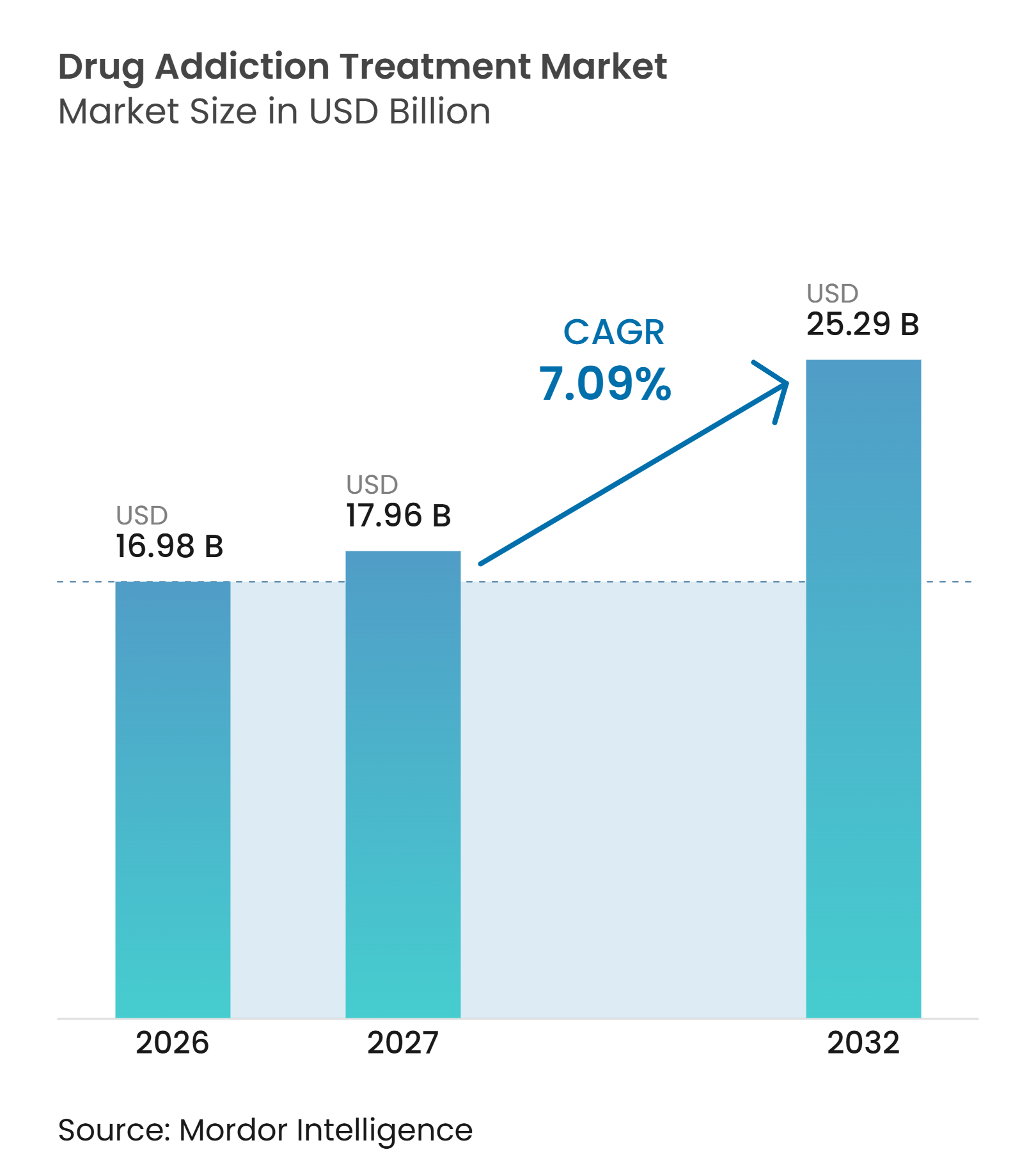
The Drug Addiction Treatment Market size is projected to expand from USD 16.98 billion in 2026 and USD 17.96 billion in 2027 to USD 25.29 billion by 2032, registering a CAGR of 7.09% between 2027 and 2032.
The drug addiction treatment market is moving from short, crisis-led episodes of care toward longer treatment pathways that combine medication, counseling, telehealth, and community services. In the United States, 44.6 million people aged 12 or older had a substance use disorder in 2025, including 26.0 million with a drug use disorder and 4.0 million with opioid use disorder. Of the 47.2 million people who needed substance use disorder treatment in 2025, 7.6 million received it, leaving a major treatment gap that supports demand for broader care delivery capacity. The drug addiction treatment market is also being shaped by permanent telehealth prescribing rules, growing demand for behavioral care for stimulant use disorder, and the expansion of long-acting medicines. Funding pressure on safety-net providers remains a material risk, particularly where treatment systems depend on public grants.
Key Report Takeaways
- By treatment type, medication-assisted treatment held 33.21% of the drug addiction treatment market share in 2026, while behavioral therapy is forecast to grow at an 8.16% CAGR through 2032.
- By addiction type, opioid addiction accounted for 36.01% of the drug addiction treatment market size in 2026, while stimulant addiction is forecast to expand at a 7.87% CAGR through 2032.
- By age group, adults (18-64 years) held 71.25% revenue share in 2026, while adolescents aged 12 to 17 are forecast to grow at an 7.98% CAGR through 2032.
- By treatment setting, outpatient treatment centers held 44.56% revenue share in 2026 and are forecast to grow at an 8.23% CAGR through 2032.
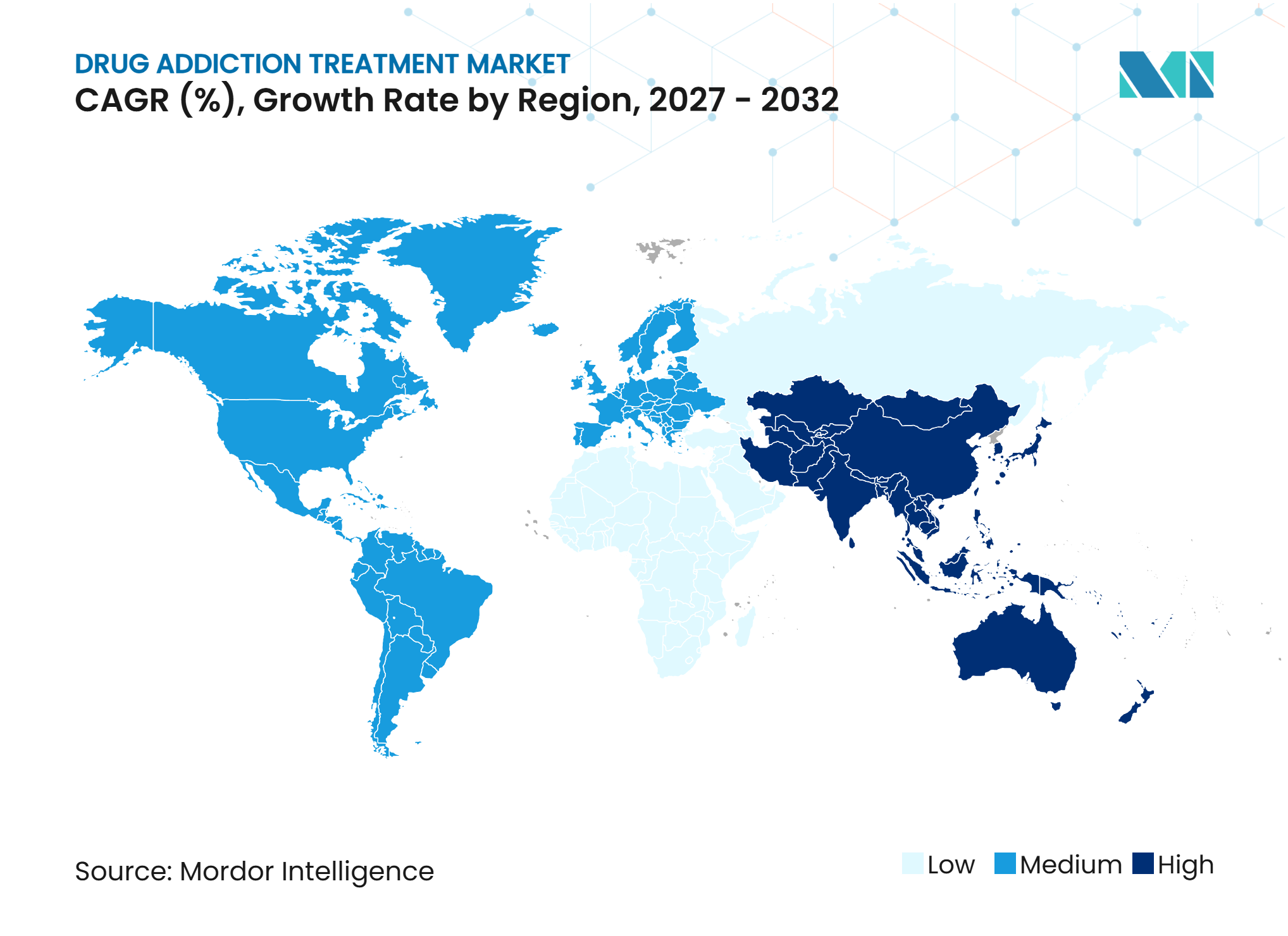
- By geography, North America held 41.04% revenue share in 2026, while Asia-Pacific is forecast to grow at an 8.02% CAGR through 2032.
Note: Market numbers in this report are based on Mordor Intelligence's proprietary estimation framework, which combines nine months of actuals with Q4 projections for base year 2026.
Market Trends and Insights
Drivers Impact Analysis of Drug Addiction Treatment Market*
| Driver | (~) % Impact on CAGR Forecast | Geographic Relevance | Impact Timeline |
|---|---|---|---|
| Rising Substance Use Disorder Prevalence and Overdose Burden | +2.0% | Global | Short term (≤ 2 years) |
| Growing Awareness and Acceptance of Addiction Treatment | +0.8% | North America and Europe | Medium term (2-4 years) |
| Public Funding and Insurance Parity Expansion | +1.2% | North America | Short term (≤ 2 years) |
| Telehealth and Digital Therapeutics Extending Treatment Access | +1.0% | Global | Short term (≤ 2 years) |
| Harm-Reduction and Community-Based Care Expansion | +0.7% | North America, Asia-Pacific, and the Middle East and Africa | Medium term (2-4 years) |
| Rapid-Initiation and Long-Acting Formulation Innovation | +0.9% | North America and Europe | Long term (≥ 4 years) |
| Source: Mordor Intelligence | |||
Rising Substance Use Disorder Prevalence and Overdose Burden
The drug addiction treatment market is supported by a changing pattern of substance use and a continuing overdose burden. In 2025, cannabis use disorder affected 19.3 million Americans and central nervous system stimulant use disorder affected 4.5 million, compared with 4.0 million people with opioid use disorder.[1] This pattern shifts demand toward services that can treat stimulant use disorder, for which no U.S. Food and Drug Administration-approved medicine is available. The American Society of Addiction Medicine identifies contingency management as the standard of care for stimulant use disorder, which places behavioral therapy at the center of service demand. Clinical drug testing in 2025 showed cocaine detection increased 13.5% and methamphetamine detection increased 4.5% nationally, while stimulants were detected at nearly twice the rate of fentanyl. The drug addiction treatment market, therefore, needs treatment models that can address opioid and stimulant use together, including behavioral care, medication where appropriate, and ongoing recovery support.
Telehealth and Digital Therapeutics Extending Treatment Access
The permanent federal telehealth rule gives the drug addiction treatment market a clearer basis for remote medication treatment programs. The rule allows eligible practitioners to prescribe buprenorphine through audio-video or audio-only telehealth without an initial in-person visit, subject to the final rule’s requirements. This approach can improve access for rural residents, veterans, people experiencing homelessness, and racial and ethnic minority groups that have faced barriers to formal treatment. A systematic review of 2025 found lower odds of relapse when remote interventions were added to in-person substance use disorder care, and also when remote care partly replaced in-person treatment. Remote programs can combine medication management, drug testing, counseling, peer support, and contingency management in one treatment pathway. The drug addiction treatment market can use this model to extend specialist capacity, although remote care does not eliminate the need for trained local clinicians and referral pathways.
Public Funding and Insurance Parity Expansion
Public coverage and insurance rules continue to influence who can enter and remain in the drug addiction treatment market. Medicaid Section 1115 substance use disorder waivers were associated with a 15.4% increase in methadone use in Virginia and a 5.2% increase in buprenorphine prescribing in Pennsylvania and Washington.[2] These results show that reimbursement design can change medication access when provider capacity is available. The American Medical Association has called for the removal of prior authorization for medications for opioid use disorder and for wider methadone access outside licensed opioid treatment programs.[3] At the same time, the reported withdrawal of USD 11.5 billion in COVID-era behavioral health grants during 2025 creates pressure for rural and low-income providers that depend heavily on public funds. The drug addiction treatment market is likely to favor operators with diverse payer relationships, while grant-dependent organizations may face limits on staffing and patient throughput.
Rapid-Initiation and Long-Acting Formulation Innovation
Long-acting medicines support the drug addiction treatment market by reducing the burden of daily medication adherence. Indivior reported that SUBLOCADE, a monthly buprenorphine injection, had 2025 net revenue guidance of USD 765 million to USD 785 million. A randomized study reported by the company found that 100-mg and 300-mg maintenance doses reduced opioid use from more than 43 instances per week at baseline to fewer than 3 by week 3, with the outcome sustained through week 38. Weekly and monthly injectable options also widen the range of treatment schedules available to patients and clinicians. Virginia Commonwealth University is developing nor-LAAM as a potential longer-interval injectable option, while early BIOPIN work examined a naltrexone implant designed to maintain therapeutic levels over 12 weeks. The drug addiction treatment market may benefit when providers can match medication schedules more closely to a patient’s clinical stability, transportation access, and need for monitoring.
Restraints Impact Analysis of Drug Addiction Treatment Market*
| Restraint | (~) % Impact on CAGR Forecast | Geographic Relevance | Impact Timeline |
|---|---|---|---|
| Stigma and Low Treatment-Seeking | -0.8% | Global | Long term (≥ 4 years) |
| Addiction-Specialist and Prescriber Shortages | -0.6% | North America, Asia-Pacific, and Middle East and Africa | Medium term (2-4 years) |
| Fragmented Reimbursement for Digital and Integrated Care | -0.4% | North America and Europe | Medium term (2-4 years) |
| Relapse, Non-Adherence, and Treatment Discontinuation | -0.5% | Global | Long term (≥ 4 years) |
| Source: Mordor Intelligence | |||
Stigma and Low Treatment-Seeking
Stigma remains a long-term restraint for the drug addiction treatment market because it affects recognition of need, screening, referral, and treatment acceptance. Among people who needed but did not receive substance use disorder treatment in 2025, 82.5% said they should handle their use on their own, and 41.4% feared what others would think. These views can delay entry into treatment until health, family, employment, or legal conditions become more severe. This suggests that expanded legal authority alone does not resolve clinical discomfort or bias among potential prescribers. The drug addiction treatment market needs lower-barrier community services and trusted referral routes to reduce the distance between recognizing a problem and receiving care.
Addiction-Specialist and Prescriber Shortages
Workforce scarcity constrains the drug addiction treatment market even in settings with insurance coverage and legal prescribing authority. The HHS Office of Inspector General reported that fewer than 1 in 5 Medicare enrollees with opioid use disorder received medication treatment, despite growth in the number of providers ordering buprenorphine.[4] The shortfall reflects the uneven location of addiction specialists and the limited capacity of many clinics to accept complex patients. A 2026 Medicaid fact sheet identified provider shortages and low reimbursement rates as major barriers to youth substance use disorder treatment. Research published in 2026 also found that providers differ in their views on which patients are suitable for telehealth buprenorphine care. The drug addiction treatment market will require workforce training, viable reimbursement, and clear clinical protocols if remote prescribing and integrated care are to scale safely.
*Our forecasts treat driver/restraint impacts as directional, not additive. The impact forecasts reflect baseline growth, mix effects, and variable interactions.
Drug Addiction Treatment Market Segment Analysis
By Treatment Type:
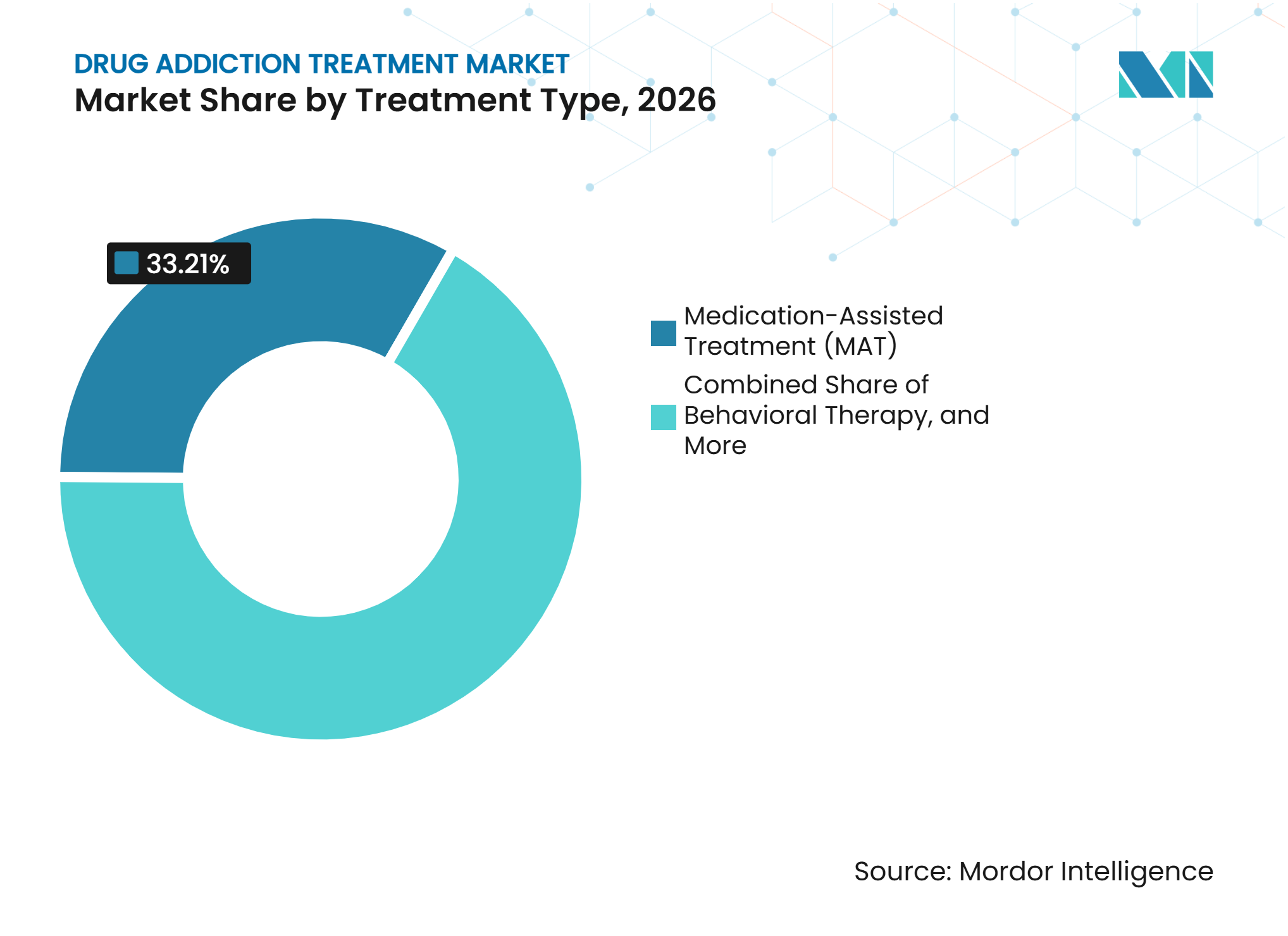
Medication-Assisted Treatment Holds the Largest Position While Behavioral Therapy Grows FasterMedication-assisted treatment held 33.21% of revenue in 2026, making it the largest treatment type in the drug addiction treatment market. Its position reflects established use of buprenorphine, methadone, and naltrexone for opioid and alcohol use disorders. Permanent telehealth prescribing rules can extend the reach of buprenorphine treatment without requiring the same level of facility expansion. Behavioral therapy is forecast to grow at an 8.16% CAGR through 2032, the fastest rate among treatment types. This growth is closely linked to stimulant use disorder, where behavioral interventions remain central because no approved pharmacotherapy is available. Contingency management and cognitive-behavioral therapy have a defined evidence base for cocaine and methamphetamine use disorders.
Counseling and support programs connect the broader care pathway through group support, peer coaching, and 12-step facilitation. These services can provide ongoing recovery support at a lower cost per patient than higher-acuity clinical settings. Detoxification remains an important entry point for medically supervised withdrawal, especially where opioid or alcohol withdrawal creates immediate safety concerns. Rehabilitation programs, including inpatient and residential care, serve patients with more severe clinical and social needs. These programs can receive higher revenue per treatment episode because they combine accommodation, clinical care, and support for co-occurring psychiatric conditions. Accreditation and quality requirements remain important for payer contracting across the drug addiction treatment industry.



By Addiction Type:
Opioid Treatment Maintains the Largest Base While Stimulant Care Gains DemandOpioid addiction accounted for 36.01% of the drug addiction treatment market share in 2026, supported by a large network of methadone clinics, buprenorphine prescribers, and naltrexone programs. The segment reflects many years of policy focus on opioid-related harms and medication access. Yet 623,000 of the 4.0 million Americans with opioid use disorder received medication for opioid use disorder in 2025. This gap shows that the existing treatment base does not meet the full level of clinical need. Stimulant addiction is forecast to grow at a 7.87% CAGR through 2032, the highest rate among addiction types. The increase in cocaine and methamphetamine detection during 2026 points to a caseload that will require a larger behavioral treatment workforce.
Cannabis treatment demand rises as access expands and problematic use becomes more visible among people with a predisposition to dependence. Prescription drug addiction and tobacco or nicotine addiction have established treatment options, including varenicline and nicotine replacement therapy for smoking cessation. Other substance categories include hallucinogens, inhalants, ketamine, and club drugs. These categories have a smaller current base but are receiving research attention as treatment approaches progress through clinical development. In August 2025, UNODC brought together Cambodia, China, Lao PDR, Myanmar, Thailand, and Viet Nam to address treatment for stimulant use disorders and community-based psychosocial support. The drug addiction treatment market will therefore require care pathways that respond to local drug supply conditions as well as established opioid treatment needs.
By Age Group:
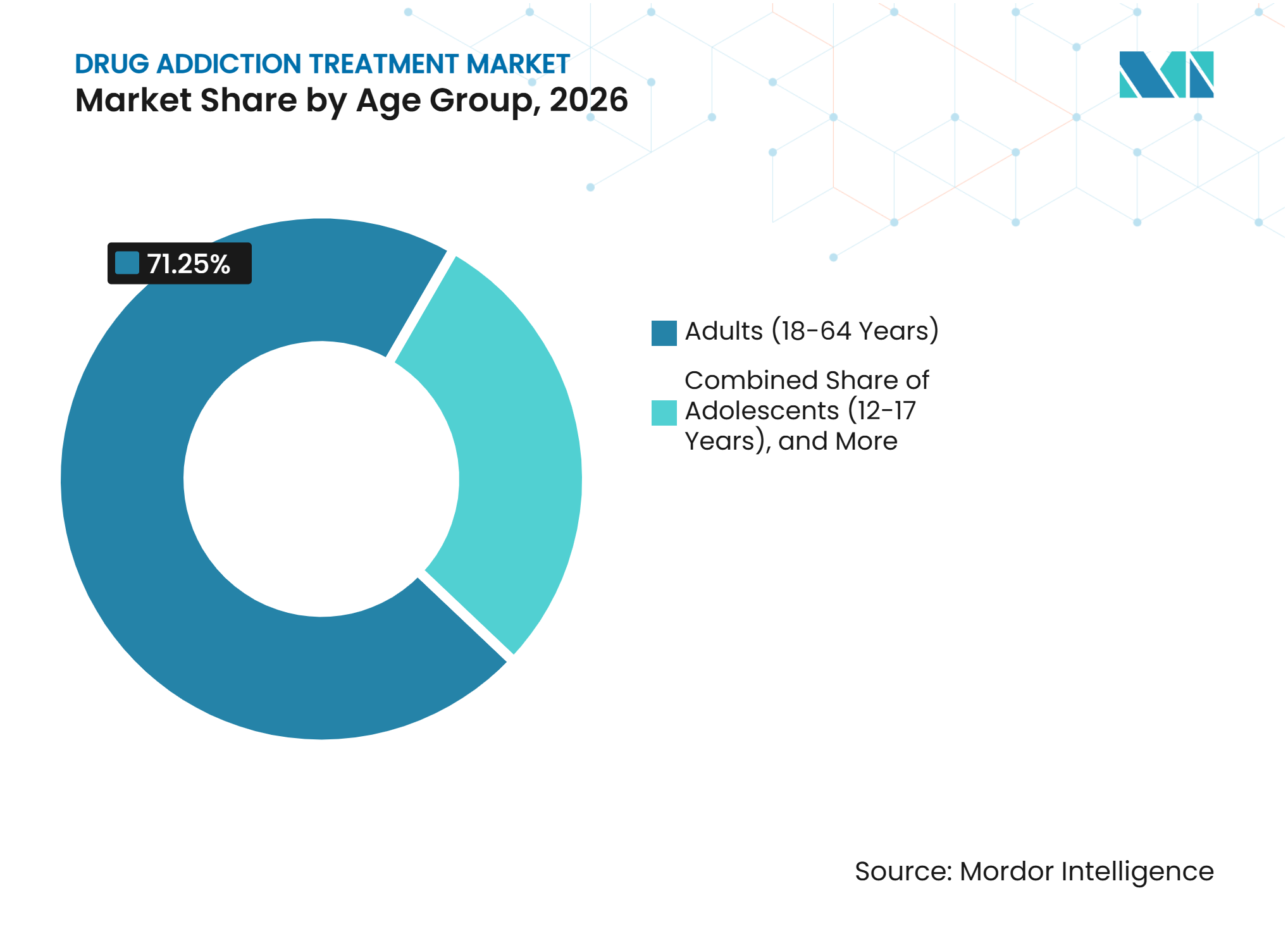
Adults Sustain Current Volume While Youth Care Becomes More FormalizedAdults aged 18 to 64 represented 71.25% of revenue in 2026, making them the core age group in the drug addiction treatment market. This position reflects the established medication treatment network, employer-supported behavioral health benefits, and Medicaid coverage available to working-age adults. Adults also make up a large share of people receiving formal services for opioid, alcohol, cannabis, and stimulant use disorders. Adolescents aged 12 to 17 are forecast to grow at 7.98% CAGR through 2032. In March 2026, ASAM and the Hazelden Betty Ford Foundation released the Adolescents and Transition-Aged Youth volume of The ASAM Criteria, the first dedicated clinical framework for youth substance use disorder care. The framework calls for developmentally appropriate assessment, family engagement, early intervention, and repeated review during care.
In 2025, 7.8% of adolescents aged 12 to 17 met substance use disorder criteria, while only 1 in 3 received outpatient treatment. Youth-focused clinical standards can help providers define services that qualify for dedicated reimbursement and improve referral practices. School-linked telehealth services and mobile crisis platforms may help programs reach adolescents before substance use causes more serious harm. These routes are particularly relevant for cannabis and stimulant use disorders, where exposure to fentanyl contamination can increase risk. The older population remains a smaller part of treatment demand, but polysubstance use involving opioids and benzodiazepines can create complex treatment needs. The drug addiction treatment industry must therefore maintain distinct clinical approaches for adolescents, adults, and older patients.

By Treatment Setting:
Outpatient Centers Lead Revenue and GrowthOutpatient treatment centers held 44.56% of revenue in 2026 and are forecast to grow at an 8.23% CAGR through 2032. This makes outpatient care both the largest and the fastest-growing setting in the drug addiction treatment market. Payers and public systems are favoring care models that can manage treatment episodes at a lower cost than residential or inpatient settings. Telehealth also allows outpatient programs to offer hybrid care that combines virtual medication visits with in-person testing, counseling, and referral services. Acadia Healthcare reported that it operated 178 comprehensive treatment centers serving 76,000 patients daily in 2025 and added 15 centers during the year. This footprint illustrates how outpatient networks can support treatment access at scale.
Residential rehabilitation remains important for people with co-occurring psychiatric conditions, severe social instability, or care needs that cannot be managed safely in an outpatient setting. Inpatient centers provide medical supervision during detoxification and acute stabilization, particularly for opioid and alcohol withdrawal. These settings require more intensive staffing and around-the-clock care. They also remain necessary when a patient’s medical, psychiatric, or housing conditions make routine outpatient attendance impractical. The drug addiction treatment market is not shifting entirely away from facility-based care because care intensity must match clinical need. Provider economics can differ sharply across settings because reimbursement, labor costs, and payer mix vary across outpatient, inpatient, and residential services.
Geography Analysis
North America
North America held 41.04% of revenue in 2026 and remained the largest regional base in the drug addiction treatment market. The United States accounts for much of this position through Medicaid, Medicare, private insurance, state block grants, and a large opioid treatment program network. The permanent telehealth rule can extend buprenorphine access into rural counties and populations with historically lower access to formal treatment. Canada has expanded supervised consumption and regulated drug supply pilots as part of its opioid response. Mexico has a less developed formal treatment system relative to its polysubstance use burden, which supports demand for community-based care investment.
Europe
Europe has state-funded substance use disorder networks in Germany, the United Kingdom, and France. The European Medicines Agency framework governs approval of new addiction medicines, including long-acting injectable options. The United Kingdom continues to invest in substance use treatment capacity through the National Health Service's long-term planning process. Scotland’s high drug mortality has increased pressure for rapid-access treatment services. Spain and Italy have expanded naloxone distribution and drug checking services that can provide lower-barrier entry into formal treatment. These services can connect people to counseling, medication, and continuing recovery support.
Asia-Pacific, Middle East and Africa, South America
Asia-Pacific is forecast to grow at an 8.02% CAGR through 2032, making it the fastest-growing geography in the drug addiction treatment market. UNODC reported that more than half of the world’s estimated opioid users live in Asia, equal to 1.2% of the regional population. Thailand is expanding community treatment and harm-reduction services through its Local Health Fund, while Malaysia broadened the scope of rehabilitation services in 2025. Myanmar’s illicit opium production and methamphetamine supply affect treatment demand across the Mekong subregion. India and China have large, undercounted populations with substance use disorder and are expanding public mental health frameworks. Middle East and Africa and South America remain smaller markets, although private healthcare growth in the Gulf and public health programs in Brazil and Argentina support selective treatment demand.
Competitive Landscape
Market Concentration
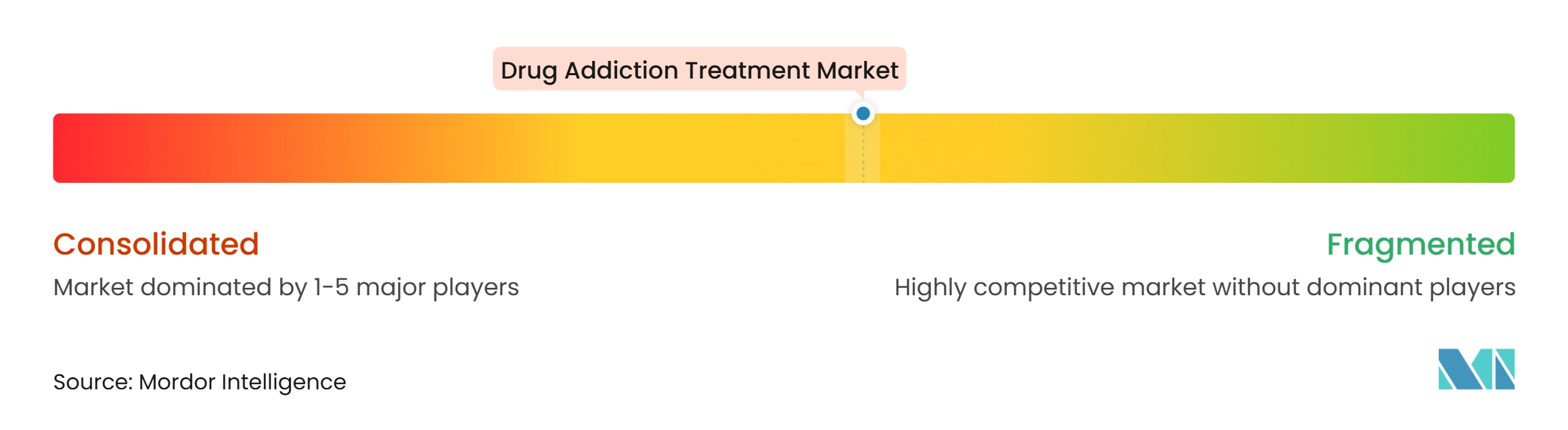
The drug addiction treatment market is moderately fragmented across pharmaceutical manufacturers, treatment providers, generic drug companies, and behavioral health specialists. Indivior has focused its strategy on the SUBLOCADE franchise after discontinuing INDV-2000 following a Phase 2 failure and returning INDV-6001 rights to Alar Pharmaceuticals in April 2026. The company also presented real-world SUBLOCADE data at the ASAM 2026 Annual Conference and continues to support awareness of long-acting treatment. These actions show a focus on reinforcing an established injectable product rather than broadening an early-stage pipeline.
Competition in long-acting buprenorphine includes Brixadi, which offers weekly and monthly injectable doses. December 2025 Brixadi prescribing information update reflects continued regulatory development in this treatment area. Teva, Hikma, Sandoz, Viatris, Cipla, and Dr. Reddy’s Laboratories compete in buprenorphine and naloxone products, where price is a key competitive factor. Generic competition can limit the pricing flexibility of branded medication-assisted treatment products. Product differentiation is therefore linked to dosing convenience, clinical evidence, payer access, and provider confidence. The drug addiction treatment market also includes opportunities for companies that can support medication adherence and integrate behavioral care with pharmacotherapy.
Among providers, Acadia Healthcare is expanding capacity and working with health systems to support referral networks. Acadia reported plans in 2026 to add 600 beds by year-end and to realize a USD 200 million embedded EBITDA opportunity from beds added during the prior 3 years. Its joint venture approach with health systems can reduce capital needs and support patient referral flows. The divestiture of Recovery Brands by American Addiction Centers in 2025 separated digital care navigation assets from direct clinical delivery. This transaction shows that digital lead generation and clinical care delivery can operate as separate business models. The drug addiction treatment market has room for adolescent outpatient care, behavioral therapy for stimulant use disorder, and opioid treatment programs that combine remote prescribing with structured monitoring.
Drug Addiction Treatment Industry Leaders
-
Alkermes plc
-
Camurus AB
-
Hikma Pharmaceuticals
-
Indivior PLC
-
Viatris Inc.
- *Disclaimer: Major Players sorted in no particular order
Drug Addiction Treatment Market Companies Covered in this Report
- Acadia Healthcare Company, Inc.
- Alkermes plc
- American Addiction Centers
- BayMark Health Services
- BHG Holdings, LLC
- Braeburn Inc.
- Camurus AB
- Cipla
- Crossroads Treatment Centers
- Ethypharm
- Hazelden Betty Ford Foundation
- Hikma Pharmaceuticals
- Indivior
- Orexo
- Pinnacle Treatment Centers
- Recovery Centers of America
- Rusan Pharma
- Teva Pharmaceutical Industries
- Titan Pharmaceuticals, Inc.
- Viatris
Recent Industry Developments in Drug Addiction Treatment Market
- April 2026: Indivior presented real-world evidence at the ASAM 2026 Annual Conference in San Diego, demonstrating SUBLOCADE’s effectiveness in supporting remission and reducing overdose-related outcomes, reinforcing monthly injectable buprenorphine as a standard-of-care option.
- December 2025: Indivior published randomized trial results reporting that SUBLOCADE 100-mg and 300-mg doses reduced opioid use from more than 43 instances per week at baseline to fewer than 3 by week 3, with results maintained through week 38.
- October 2025: Indivior launched the nationwide “Move Forward in Recovery” campaign to raise awareness of SUBLOCADE and long-acting injectables for moderate-to-severe opioid use disorder.
Global Drug Addiction Treatment Market Report Scope
As per the scope of the report, drug abuse treatment refers to the medical, psychological, and behavioral interventions used to help individuals overcome dependence on drugs and addictive substances. It aims to reduce substance use, manage withdrawal symptoms, prevent relapse, and restore physical and mental well-being.
The drug addiction treatment market is segmented by treatment type, addiction type, age group, treatment setting, and geography. By treatment type, the market includes medication-assisted treatment (MAT), behavioral therapy, counseling and support programs, detoxification programs, and rehabilitation programs. By addiction type, it covers opioid addiction, tobacco/nicotine addiction, cannabis addiction, prescription drug addiction, stimulant addiction, and other substance addictions. By age group, the market includes adolescents (12–17 years), adults (18–64 years), and the geriatric population (65+ years). By treatment setting, it includes inpatient treatment centers, residential rehabilitation centers, and outpatient treatment centers. Geographically, the market is segmented into North America, Europe, Asia-Pacific, the Middle East and Africa, and South America. Market size and forecasts are provided in terms of value (USD).
Segmentation Overview
| Medication-Assisted Treatment (MAT) |
| Behavioral Therapy |
| Counseling & Support Programs |
| Detoxification Programs |
| Rehabilitation Programs |
| Opioid Addiction |
| Tobacco/Nicotine Addiction |
| Cannabis Addiction |
| Prescription Drug Addiction |
| Stimulant Addiction |
| Other Addiction Types (Hallucinogens and Ketamine & Club Drug Addiction, Among Others) |
| Inpatient Treatment Centers |
| Residential Rehabilitation Centers |
| Outpatient Treatment Centers |
| Adolescents (12-17 Years) |
| Adults (18-64 Years) |
| Geriatric Population (65+ Years) |
| North America | United States |
| Canada | |
| Mexico | |
| Europe | Germany |
| United Kingdom | |
| France | |
| Italy | |
| Spain | |
| Rest of Europe | |
| Asia-Pacific | China |
| Japan | |
| India | |
| South Korea | |
| Australia | |
| Rest of Asia-Pacific | |
| Middle East and Africa | GCC |
| South Africa | |
| Rest of Middle East and Africa | |
| South America | Brazil |
| Argentina | |
| Rest of South America |
| By Treatment Type | Medication-Assisted Treatment (MAT) | |
| Behavioral Therapy | ||
| Counseling & Support Programs | ||
| Detoxification Programs | ||
| Rehabilitation Programs | ||
| By Addiction Type | Opioid Addiction | |
| Tobacco/Nicotine Addiction | ||
| Cannabis Addiction | ||
| Prescription Drug Addiction | ||
| Stimulant Addiction | ||
| Other Addiction Types (Hallucinogens and Ketamine & Club Drug Addiction, Among Others) | ||
| By Treatment Setting | Inpatient Treatment Centers | |
| Residential Rehabilitation Centers | ||
| Outpatient Treatment Centers | ||
| By Age Group | Adolescents (12-17 Years) | |
| Adults (18-64 Years) | ||
| Geriatric Population (65+ Years) | ||
| By Geography | North America | United States |
| Canada | ||
| Mexico | ||
| Europe | Germany | |
| United Kingdom | ||
| France | ||
| Italy | ||
| Spain | ||
| Rest of Europe | ||
| Asia-Pacific | China | |
| Japan | ||
| India | ||
| South Korea | ||
| Australia | ||
| Rest of Asia-Pacific | ||
| Middle East and Africa | GCC | |
| South Africa | ||
| Rest of Middle East and Africa | ||
| South America | Brazil | |
| Argentina | ||
| Rest of South America | ||
Key Questions Answered in the Report
What is the projected value of the drug addiction treatment market by 2032?
The drug addiction treatment market is forecast to reach USD 25.29 billion by 2032, growing at a 7.09% CAGR from 2027 to 2032.
Which treatment type leads drug addiction treatment revenue?
Medication-assisted treatment led with 33.21% revenue share in 2026, while behavioral therapy is forecast to grow fastest at an 8.16% CAGR through 2032.
Why are outpatient addiction treatment centers expanding?
Outpatient centers held 44.56% revenue share in 2026 and are forecast to grow at an 8.23% CAGR because they can combine lower-cost visits with telehealth and in-person services.
What addiction type has the highest growth outlook?
Stimulant addiction is forecast to grow at a 7.87% CAGR through 2032, supported by rising cocaine and methamphetamine detection and the need for behavioral care.
Which region is growing fastest for addiction treatment services?
Asia-Pacific is forecast to grow at an 8.02% CAGR through 2032, supported by high unmet treatment needs and growing public treatment programs.
How does telehealth affect opioid use disorder care?
Permanent federal telehealth rules support remote buprenorphine prescribing, which can extend treatment access to rural and underserved populations.