
Disposable EEG Electrode Market Size and Share
Market Overview
| Study Period | 2020 - 2031 |
|---|---|
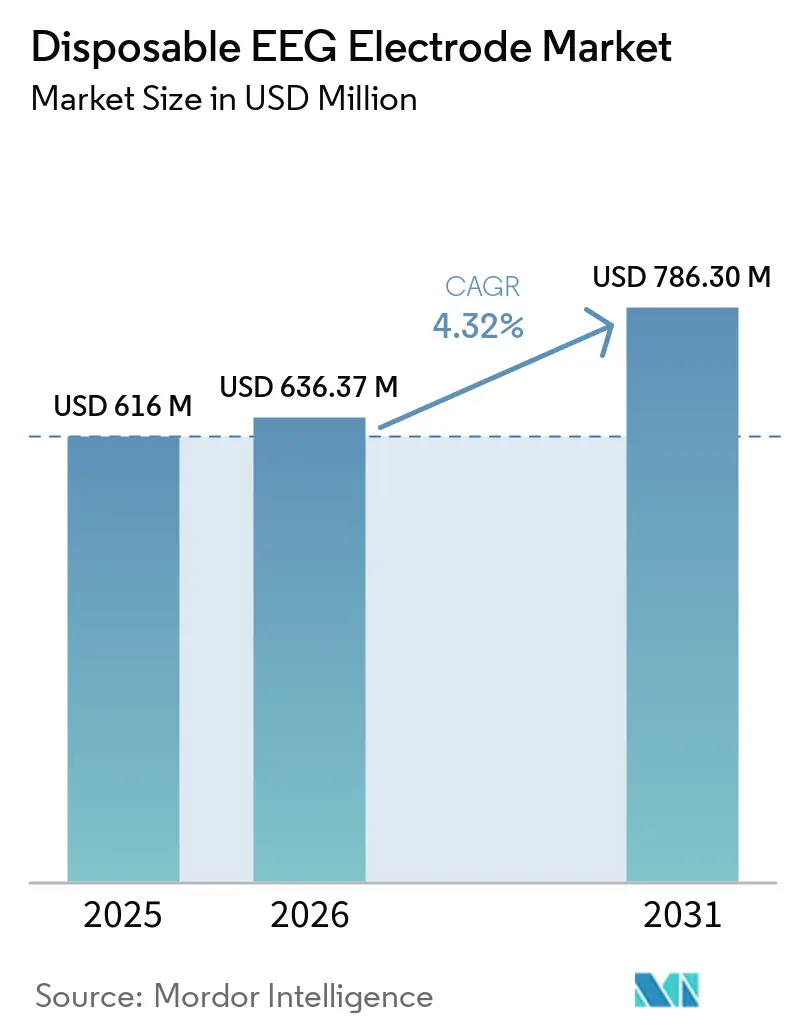
| Market Size (2026) | USD 636.37 Million |
| Market Size (2031) | USD 786.30 Million |
| Growth Rate (2026 - 2031) | 4.32 % |
| Fastest Growing Market | Asia-Pacific |
| Largest Market | North America |
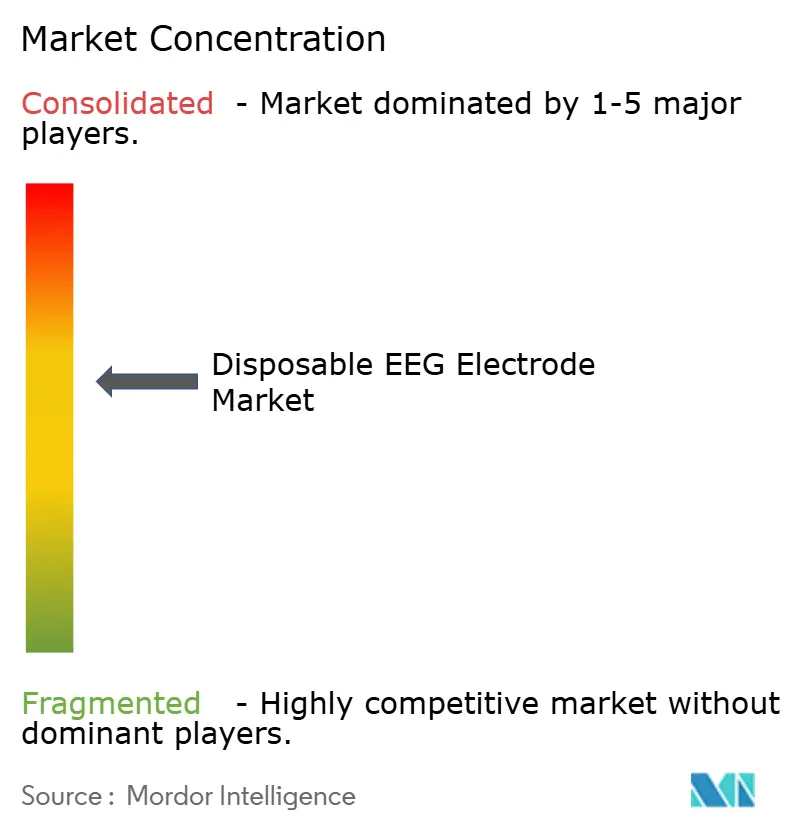
| Market Concentration | Medium |
Major Players *Disclaimer: Major Players sorted in no particular order Image © Mordor Intelligence. Reuse requires attribution under CC BY 4.0. | |
Disposable EEG Electrode Market Analysis by Mordor Intelligence
The Disposable EEG Electrode Market size was valued at USD 616 million in 2025 and is estimated to grow from USD 636.37 million in 2026 to reach USD 786.30 million by 2031, at a CAGR of 4.32% during the forecast period (2026-2031).
The move toward single-use formats is being shaped by infection-control rules, the expansion of neurological monitoring, and faster EEG deployment outside specialist departments. Growing use in emergency, intensive care, ambulatory, and home settings changes the required balance between signal quality, sterility, setup time, and patient usability. AI-enabled EEG systems also favor consistent recording conditions, which supports pre-gelled and integrated disposable configurations. Suppliers are responding through workflow-specific kits, point-of-care systems, and software-linked consumables rather than competing only on unit price. The Disposable EEG Electrode Market, therefore, has opportunities where clinical workflows require reliable application without reusable-electrode reprocessing.
Key Report Takeaways
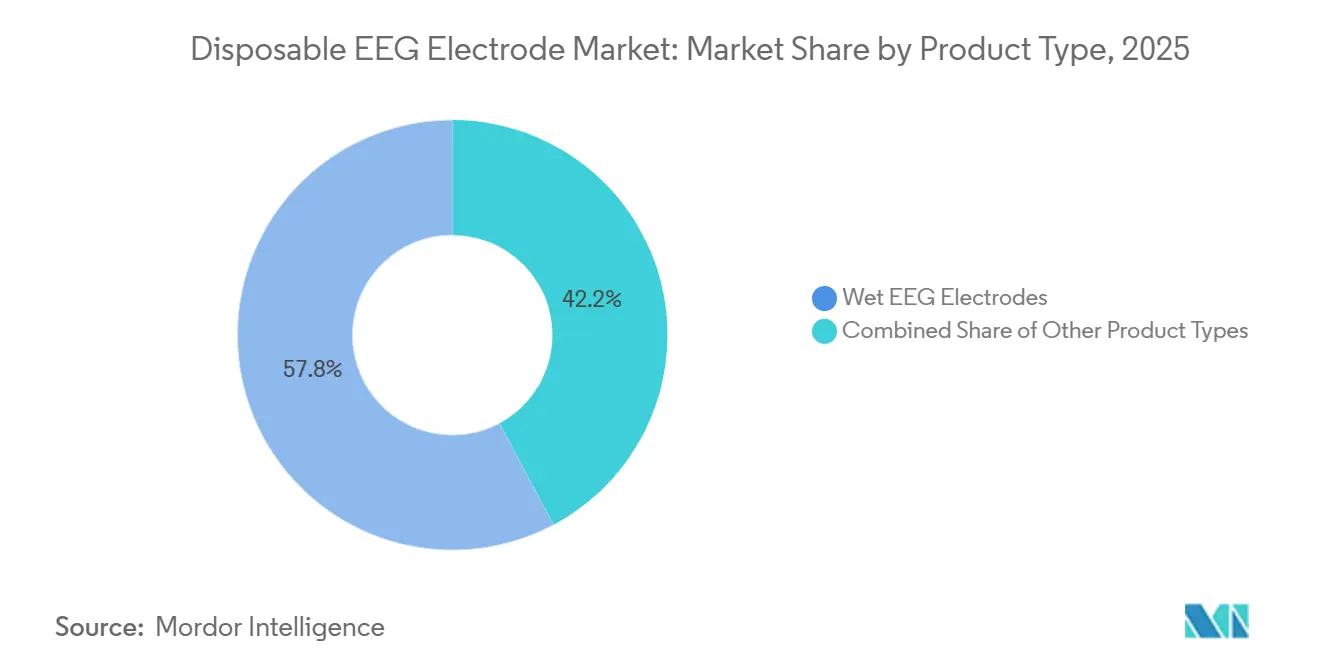
- By product type, wet EEG electrodes held 57.8% revenue share in 2025, while dry EEG electrodes are forecast to expand at a 5.3% CAGR through 2031.
- By material type, silver/silver chloride electrodes held 68.3% revenue share in 2025, while conductive polymer electrodes are forecast to expand at a 5.2% CAGR through 2031.
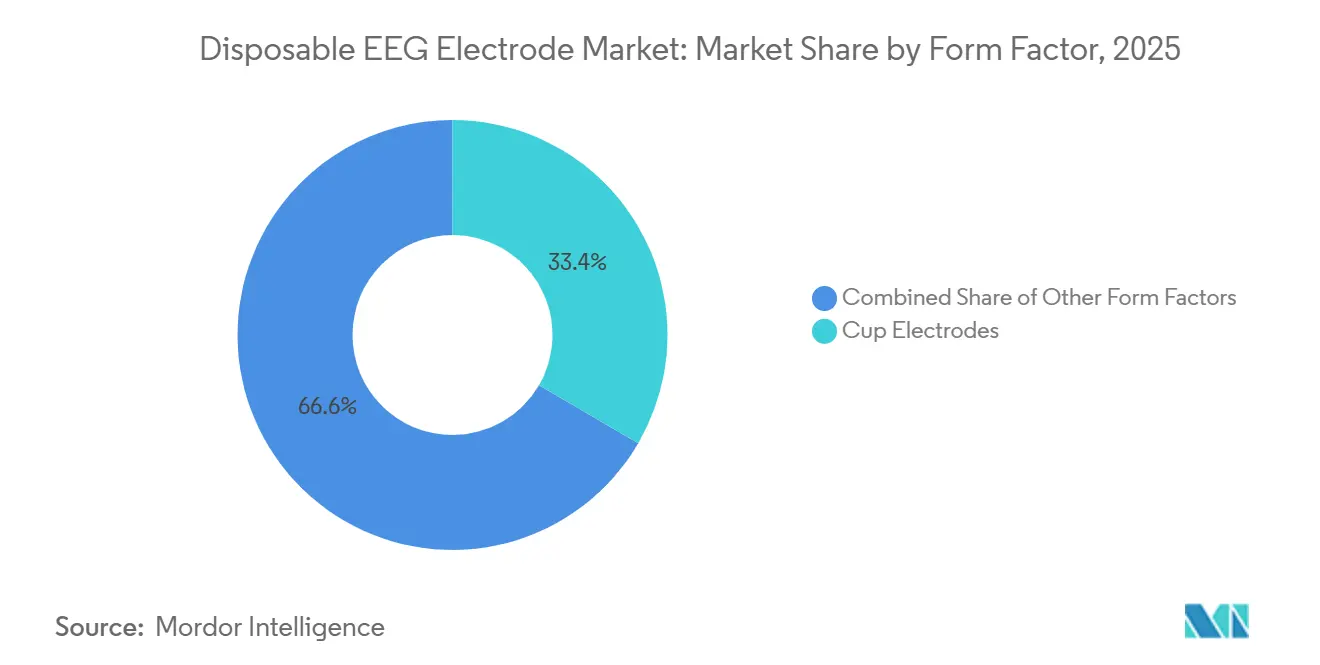
- By form factor, cup electrodes held 33.4% revenue share in 2025, while electrode arrays are forecast to expand at a 5.1% CAGR through 2031.
- By channel, multi-channel electrode arrays held 66.8% revenue share in 2025 and are forecast to expand at a 5.4% CAGR through 2031.
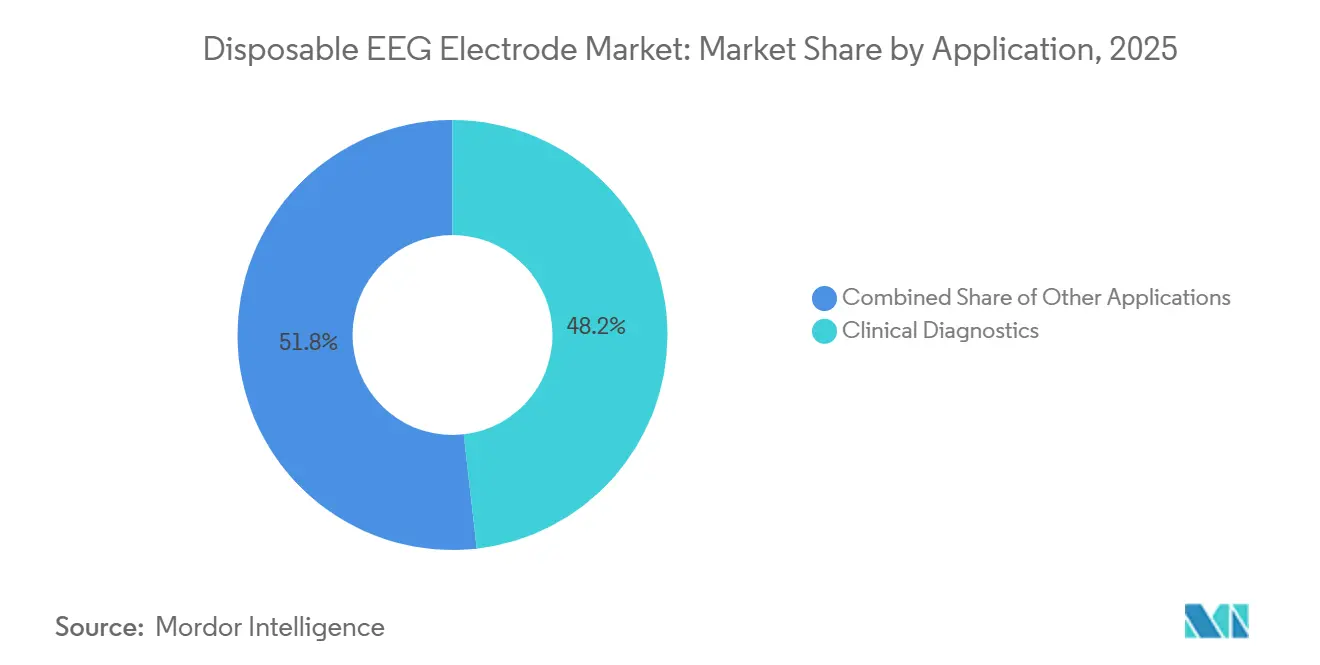
- By application, clinical diagnostics held 48.2% revenue share in 2025, while brain-computer interface applications are forecast to expand at a 5.5% CAGR through 2031.
- By end user, hospitals and neurology clinics held 57.6% revenue share in 2025, while home healthcare and remote monitoring providers are forecast to expand at a 5.9% CAGR through 2031.
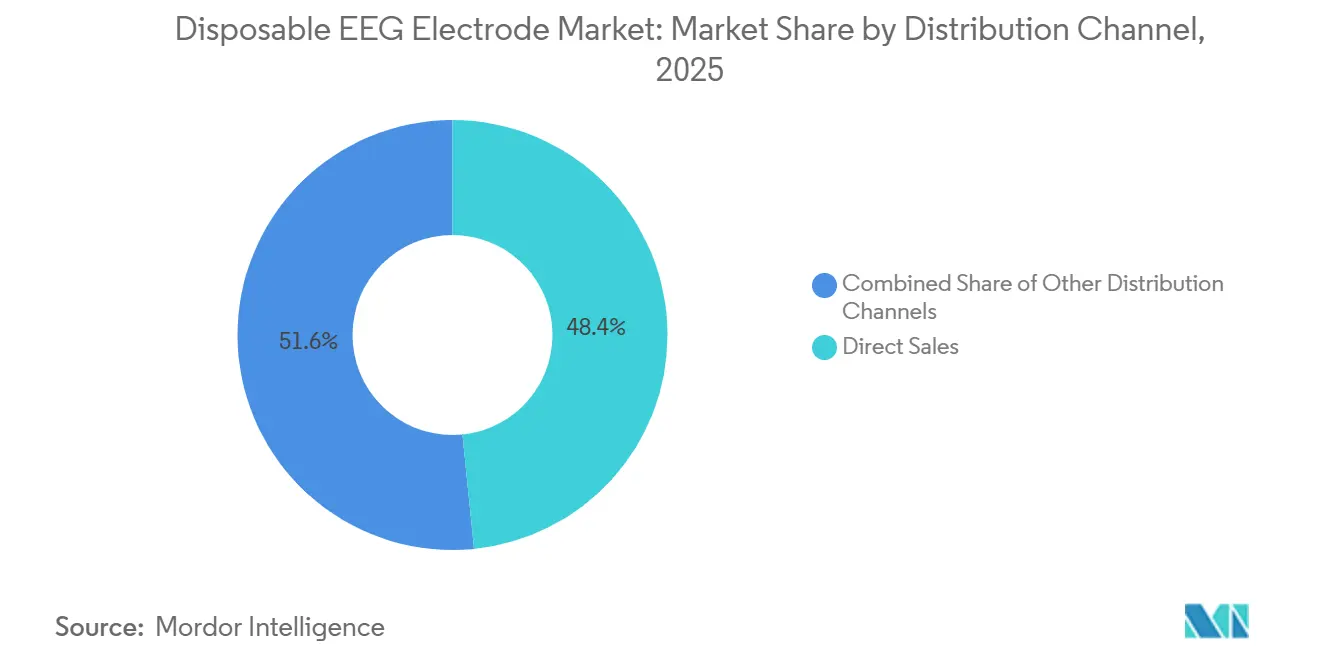
- By distribution channel, direct sales held 48.4% revenue share in 2025, while online and manufacturer stores are forecast to expand at a 5.6% CAGR through 2031.
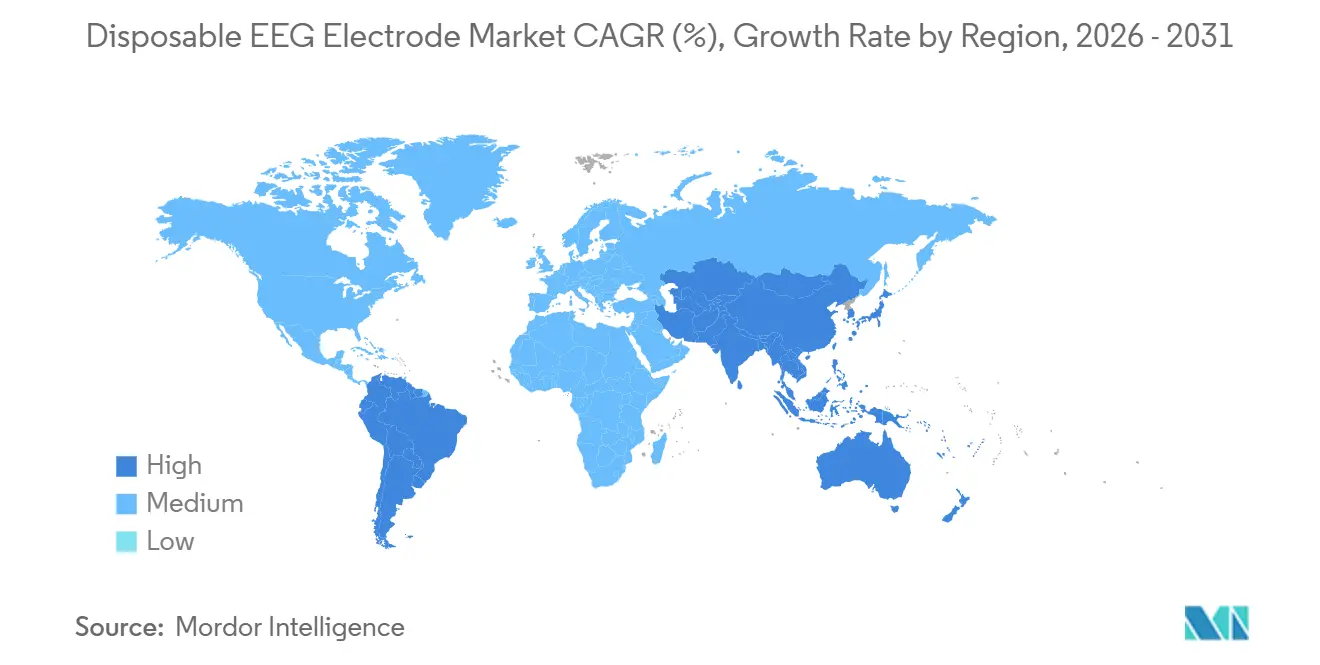
- By geography, North America held 42.7% revenue share in 2025, while Asia-Pacific is forecast to expand at a 5.8% CAGR through 2031.
Note: Market size and forecast figures in this report are generated using Mordor Intelligence’s proprietary estimation framework, updated with the latest available data and insights as of January 2026.
Global Disposable EEG Electrode Market Trends and Insights
Drivers Impact Analysis*
| Driver | (~) % Impact on CAGR Forecast | Geographic Relevance | Impact Timeline |
|---|---|---|---|
| Infection-Control Adoption of Single-Use Electrodes | +1.2% | Global, with concentration in North America and Europe | Short term (≤ 2 years) |
| Rising Neurological and Sleep-Disorder Monitoring Demand | +0.9% | Global, strongest in Asia-Pacific and North America | Long term (≥ 4 years) |
| Expansion of Point-of-Care and Ambulatory EEG | +0.7% | North America and Europe, with spillover to Asia-Pacific | Medium term (2-4 years) |
| Faster Setup Through Pre-Gelled and Integrated Electrode Systems | +0.5% | Global | Short term (≤ 2 years) |
| Disposable Electrode Integration With AI-Enabled EEG Workflows | +0.6% | North America and Europe, with early gains in Asia-Pacific | Medium term (2-4 years) |
| Contract-Based Procurement of Patient-Specific EEG Kits | +0.3% | North America, with spillover to Europe | Medium term (2-4 years) |
| Source: Mordor Intelligence | |||
Infection-Control Adoption of Single-Use Electrodes
Hospital infection-control policies are establishing a durable basis for demand in the Disposable EEG Electrode Market. The European Union Medical Devices Regulation[1]European Commission, “National Rules on Reprocessing of Single-Use Devices,” European Commission restricts the reprocessing of single-use devices under Article 17, and national rules continue to guide implementation across member states. These requirements move purchasing decisions beyond clinician preference and place more weight on documented hygiene processes. The Australasian College for Infection Prevention and Control issued a 2025 position statement that addresses the use of single-use devices in infection-prevention practice. This environment supports patient-specific electrode kits in acute and semi-critical care workflows. The Disposable EEG Electrode Market also requires standardized pouching, traceability, and disposal instructions from suppliers.
Rising Neurological and Sleep-Disorder Monitoring Demand
Neurological care needs are expanding the potential monitoring pool for the Disposable EEG Electrode Market. The World Health Organization[2]World Health Organization, “11 Million Lives Lost Each Year Urgent Action Needed on Neurological Care reported in 2025 that neurological conditions affect more than 3 billion people and account for more than 11 million deaths each year. The organization also reported that only 32% of member states had a national neurological policy, and only 25% included neurological services in universal health coverage benefit packages. These gaps limit access today, but they also create a need for wider diagnostic capacity as countries work toward the Intersectoral Global Action Plan on Epilepsy and Other Neurological Disorders 2022-2031. The World Health Organization states that around 50 million people live with epilepsy, with nearly 80% living in low- and middle-income countries. The Disposable EEG Electrode Market can support sleep studies, seizure monitoring, and outpatient neurological assessment with dependable consumables.
Expansion of Point-of-Care and Ambulatory EEG
Point-of-care and ambulatory EEG increase the number of settings that can use disposable electrodes. Natus launched BrainWatch in May 2025 for community, rural, and critical-care settings, where the system was designed for deployment in under 5 minutes, and it received FDA 510(k) clearance in December 2025 for an electrographic status epilepticus diagnostic indication. Pre-gelled and integrated systems reduce the preparation burden in emergency departments, intensive care units, and locations without specialist EEG laboratories. Patient-specific kits can also simplify supply arrangements because each procedure has a defined electrode count and package. As EEG moves into hospital-wide care areas, purchasing can shift from neurology-managed supply budgets to broader consumables agreements. The Disposable EEG Electrode Market benefits when suppliers present clear setup, traceability, and per-procedure value.
Disposable Electrode Integration With AI-Enabled EEG Workflows
AI-supported EEG analysis is creating a stronger link between signal acquisition and software performance in the Disposable EEG Electrode Market. Natus launched autoSCORE globally in March 2026, and the company said the tool was trained on 30,000 expertly labeled EEG recordings and cleared for routine, long-term, and ambulatory EEG studies. In August 2026, Ceribell received FDA 510(k) clearance for epileptiform abnormality detection and artifact-reduction functions in its cloud-based Neurology Portal. Research published in 2025 explains that AI EEG models depend on high-quality input data and careful attention to variability in recordings. Pre-characterized, single-use electrodes can help deliver more consistent contact conditions than formats exposed to repeated cleaning cycles. The Disposable EEG Electrode Market gains value when validated disposable formats are embedded in AI-linked EEG platforms.
Restraints Impact Analysis*
| Restraint | (~) % Impact on CAGR Forecast | Geographic Relevance | Impact Timeline |
|---|---|---|---|
| Higher Per-Procedure Cost Versus Reusable Electrodes | -0.8% | Emerging markets in Asia-Pacific, the Middle East and Africa, and South America, plus price-sensitive institutions globally | Long term (≥ 4 years) |
| Regulatory and Clinical Validation Complexity | -0.5% | Global, concentrated in North America and Europe | Medium term (2-4 years) |
| Electrode-Skin Impedance and Motion-Artifact Variability | -0.4% | Global | Long term (≥ 4 years) |
| Medical Waste and Silver-Containing Material Disposal Burden | -0.3% | North America and Europe | Medium term (2-4 years) |
| Source: Mordor Intelligence | |||
Higher Per-Procedure Cost Versus Reusable Electrodes
A visible per-procedure purchase cost remains a barrier for the Disposable EEG Electrode Market in price-sensitive settings. Hospitals and diagnostic centers that perform large volumes of neurological monitoring can see this cost accumulate across daily procedures. The issue is most acute in emerging markets, where reusable systems may have lower upfront supply costs and local alternatives can be less expensive. This creates different adoption conditions between facilities that prioritize infection control and labor efficiency and those focused mainly on procurement price. Bundled EEG kits and subscription-based supply programs can reduce ordering complexity, but their availability remains more established in North America and Western Europe. The Disposable EEG Electrode Market requires a clear workflow benefit and predictable supply terms in high-volume facilities with constrained budgets.
Regulatory and Clinical Validation Complexity
Regulatory and clinical validation requirements can slow the introduction of new electrode materials and formats. The FDA[3]U.S. Food and Drug Administration, “Premarket Notification 510(k),” U.S. Food and Drug Administrationuses 510(k), De Novo, and other pathways that require evidence appropriate to the device and its claimed use. Polymer-based, dry, and hybrid electrodes must also meet applicable biocompatibility and electrical safety expectations before clinical deployment can scale. Article 17 of the EU Medical Devices Regulationadds another compliance consideration for configurations connected to single-use device practices. Electrode-skin impedance, motion artifacts, and disposal requirements for silver-containing materials can affect product selection in regulated health systems. The Disposable EEG Electrode Market consequently favors incumbents with established Ag/AgCl portfolios while newer polymer and carbon-based designs build clinical evidence.
*Our forecasts treat driver/restraint impacts as directional, not additive. The impact forecasts reflect baseline growth, mix effects, and variable interactions.
Segment Analysis
By Product Type: Dry Electrodes Support Ambulatory and Home Use
Wet EEG electrodes accounted for 57.8% of the Disposable EEG Electrode Market share in 2025. Their position reflects established use in hospital laboratories and inpatient monitoring units, where trained technicians can apply conductive gel. Wet electrodes continue to set the signal-quality benchmark in controlled clinical workflows. Pre-gelled products improve the setup process while preserving the operating principles familiar to EEG staff. Needle electrodes serve intraoperative applications where scalp access is restricted. Patch and adhesive electrodes are useful for neonatal and pediatric monitoring where conventional cup placement may be impractical. Disposable caps, headbands, and accessories serve narrower requirements across research, acute care, and specialized monitoring.
Dry EEG electrodes are projected to record a 5.3% CAGR through 2031, making them the fastest-growing product category. Their growth reflects compatibility with home monitoring, ambulatory epilepsy assessment, and brain-computer interface use cases that require self-application. A 2025 study[4]Polymers, “Flexible and Washable PEDOT:PSS/PVA Fabric Dry Electrode for Long-Term EEG Signals Measurement,” MDPI reported that a PEDOT:PSS/PVA-coated fabric dry electrode achieved contact impedance and EEG signal quality comparable to Ag/AgCl wet electrodes after 10 washing cycles . This evidence supports the technical direction of dry wearable formats, but clinical adoption still depends on validation and regulatory clearance. Home use is likely to develop before widespread replacement of wet systems in complex diagnostic laboratories. The Disposable EEG Electrode Market can benefit from products that improve adhesion, instructions, and comfort for patients without a technician.



By Material Type: Ag/AgCl Retains the Clinical Base While Polymers Advance
Silver/silver chloride electrodes held 68.3% of market share in 2025. Their long clinical history, biocompatibility profile, and available manufacturing scale support continued use across established EEG procedures. Gel-assisted Ag/AgCl systems remain familiar to clinicians and are used as a reference point for signal performance. Gold electrodes serve select research and premium applications where material characteristics and longer-term use matter. Stainless steel electrodes address specialized settings, including some intraoperative procedures. Carbon-based materials are being examined for wearable electrodes because they can combine electrical performance with mechanical flexibility. These material choices give suppliers a way to tailor products to clinical, research, and portable monitoring requirements.
Conductive polymer materials are forecast to grow at a 5.2% CAGR through 2031. PEDOT:PSS-based designs can support stretchability, gel-free operation, and integration with textiles. These features enable electrode formats that are harder to create with conventional metal-foil designs. A 2025 study of MXene/PEDOT:PSS epidermal dry electrodes reported high conductivity and strain-insensitive performance for physiological signal monitoring. The development path for polymer materials is therefore tied to wearable monitoring and extended-use comfort. Suppliers still need biocompatibility evidence and suitable regulatory documentation before these materials can enter broad clinical use. The Disposable EEG Electrode Market can retain Ag/AgCl as its clinical base while polymer technologies expand into differentiated applications.
By Form Factor: Cup Electrodes Remain the Clinical Reference
Cup electrodes held 33.4% of global disposable EEG electrode sales in 2025. Their use is closely linked to the international 10-20 EEG placement system used in standard clinical recording montages. This relationship supports continued demand in neurology departments because alternative forms must demonstrate clinical equivalence in established workflows. Needle electrodes address intraoperative settings where ordinary scalp placement is not suitable. Patch and disk electrodes offer different attachment methods for neonatal, ambulatory, and focused monitoring applications. The diversity of form factors reflects the need to match electrode design to patient condition, recording duration, and care setting. It also reduces the likelihood that one design will displace every other category.
Electrode arrays are forecast to expand at a 5.1% CAGR through 2031. High-density recording needs in neurocritical care, intraoperative monitoring, rehabilitation, and brain-computer interface applications support this growth. Ceribell uses a 10-electrode headband array designed for rapid placement in critical care settings. Arrays reduce the time needed to place individual electrodes while preserving multi-site recording capability. Headbands, caps, and nets also fit research and consumer-facing brain-computer interface applications where self-application is important. The 2025 REVE foundation model was trained on 60,000 hours of EEG data from 92 datasets and 25,000 subjects, showing support for varied electrode layouts in model development. This work supports flexible layouts, although clinical users still need formats that fit validated care protocols.
By Channel: Multi-Channel Arrays Continue to Lead
Multi-channel electrode arrays held 66.8% of global disposable EEG electrode sales in 2025 and are forecast to grow at a 5.4% CAGR through 2031. This combination of leading share and leading growth reflects the need for spatial recording in clinical diagnostics. Epilepsy classification, seizure localization, neurocritical care, and many brain-computer interface applications require information from multiple recording sites. Point-of-care expansion does not remove the need for spatial information. Instead, it places multi-channel recording into settings such as emergency departments, intensive care units, and ambulatory care. The continuing role of multi-channel arrays creates a high barrier to replacement by simplified single-channel products. It also favors systems that reduce setup time without reducing the clinical value of the recording.
Single-channel electrodes remain relevant for narrower use cases. These include simplified burst-suppression monitoring, some depth-of-anesthesia applications, and emerging consumer wellness products. Their lower complexity can be useful when full diagnostic spatial sampling is not required. However, critical-care solutions are showing that portable systems can deliver multi-channel recording in settings previously associated with simpler monitoring. Ceribell’s 10-electrode headband is used in acute-care workflows that need faster placement and broader recording information. This pattern limits the scope for single-channel formats in higher-acuity diagnostic procedures. The Disposable EEG Electrode Market still has specialized roles for single-channel designs where simplicity has a clear clinical purpose.
By Application: Brain-Computer Interfaces Require Specialized Electrode Design
Clinical diagnostics held 48.2% of global disposable EEG electrode sales in 2025. EEG remains important in epilepsy diagnosis, sleep staging, and cognitive assessment across neurology outpatient settings. Neurocritical care and intraoperative monitoring also require dependable recording in acute and high-acuity cases. Single-use electrodes have a clear role where infection control and quick setup are important. Brain research and mapping applications create demand for research-grade products with specific spatial density and material requirements. Neurofeedback and neuromodulation monitoring are smaller application areas that are developing alongside digital therapeutic approaches. This broad application base keeps clinical diagnostics central to overall electrode demand.
Brain-computer interface applications are forecast to grow at a 5.5% CAGR through 2031. These applications require low impedance without gel, high channel density, biocompatibility, and reliable performance over extended wear periods. A 2025 article on neurological rehabilitation described the expanding role of brain-computer interfaces in rehabilitation care. A study published in 2025 also evaluated an EEG-based brain-computer interface for upper-limb motor rehabilitation after stroke. These clinical and research uses create a separate product requirement from routine diagnostic electrodes. BCI devices used in therapeutic settings require suitable medical-device oversight and performance validation. The Disposable EEG Electrode Market can serve this use case with dry materials, arrays, and patient comfort.
By End User: Home Healthcare Changes Product Requirements
Hospitals and neurology clinics held 57.6% of global disposable EEG electrode sales in 2025. Their leading position is reflected in inpatient EEG procedures, technologist availability, and the activity of epilepsy monitoring units. Diagnostic and sleep centers provide a second base of demand for routine and extended studies. Ambulatory surgical and outpatient centers are also using EEG in selected day-procedure and intraoperative settings. Academic institutes, research organizations, pharmaceutical companies, and contract research organizations require specialized electrode configurations for research work. These end users may specify materials or spatial density that differ from standard clinical products. Hospitals and clinics, therefore, remain the central channel for volume and validated clinical adoption.
Home healthcare and remote monitoring providers are forecast to expand at a 5.9% CAGR through 2031. This is the highest projected growth rate among the defined end-user groups. The growth reflects patient-centered care models and greater use of ambulatory EEG in home settings. Home-use disposable electrodes need stronger guidance for self-application, dependable adhesive performance, and packaging that helps patients place electrodes correctly. Individual pouches and color-coded placement aids can reduce reliance on a trained technician. Ambu offers its One Pack, One Patient Neuroline concept with procedure-specific electrode counts in a single-patient pouch. The Disposable EEG Electrode Market needs further adaptation of these formats for unsupervised home application.
By Distribution Channel: Online Procurement Gains Relevance
Direct sales held 48.4% of global disposable EEG electrode sales in 2025. This reflects the relationship-based procurement model used for hospital neurology consumables and contracted supply arrangements. Medical device distributors remain important for smaller clinics and diagnostic centers that do not have enough volume for direct contracts. Group purchasing organizations consolidate buying power across multi-facility health systems. Their role can support standardization on specific electrode types and influence the pace at which new formats enter hospitals. Direct channel relationships also help suppliers support product training and replenishment planning. These conditions keep direct sales important for conventional clinical accounts.
Online and manufacturer stores are forecast to grow at a 5.6% CAGR through 2031. Home-use demand, researcher purchasing, and telehealth programs that send consumables to patients support this channel. Online ordering can provide a simpler route for lower-volume replenishment and distributed patient care. At the same time, group purchasing standardization can apply pricing pressure to commodity electrode categories in hospital contracts. Suppliers may respond by linking electrodes to proprietary software or monitoring platforms that offer value beyond the consumable. This approach can preserve differentiation where product specifications alone are easy to compare. The Disposable EEG Electrode Market may place smaller distributors under pressure as manufacturers expand direct online engagement with faster-growing customer groups.
Geography Analysis
North America held 42.7% of global disposable EEG electrode sales in 2025. The region benefits from established hospital utilization, FDA clearance activity, and group purchasing arrangements that support disposable consumables. The United States is the primary source of regional demand because of its concentration of epilepsy monitoring units and broader acute-care infrastructure. Natus received FDA 510(k) clearance in December 2025 for a BrainWatch electrographic status epilepticus indication, supporting point-of-care EEG use in acute-care settings. The company also reported Medicare New Technology Add-on Payment eligibility with a maximum incremental payment of USD 913.9 per eligible patient for the solution. Canada and Mexico represent smaller but developing demand centers. Covenant Health published a 2025 policy covering standards for single-use medical devices, illustrating the infection-prevention focus in Canadian health care.
Europe is the second-largest regional market for the Disposable EEG Electrode Market. Germany, France, the United Kingdom, Italy, and Spain are the principal demand centers. Germany’s aging population supports neurological monitoring needs because the frequency of stroke, dementia, and Parkinson’s disease rises with age. EU Medical Devices Regulation requirements establish a strong compliance framework for single-use device practices across the region. This framework increases the operational importance of validated handling and reprocessing where reusable electrodes are used. France has favorable conditions for growth as awareness of neurological disorders and health care investment increase. Regional suppliers can differentiate by addressing compliance documentation, patient-specific packaging, and MRI-conditional product requirements.
Asia-Pacific is forecast to grow at a 5.8% CAGR through 2031, the fastest regional rate in the Disposable EEG Electrode Market. China supports regional volume growth through domestic production for local health care facilities and export markets. Japan’s focus on AI-integrated diagnostic systems supports demand for rapid neurological assessment in an aging population. India and South Korea offer growth potential through diagnostic infrastructure investment and advanced hospital technology adoption, respectively. Price sensitivity in lower-tier hospitals and some Southeast Asian markets remains a constraint because disposable products compete with lower-cost reusable alternatives. The Middle East and Africa and South America contribute smaller shares, with GCC countries, South Africa, Brazil, and Argentina providing key demand centers. Private hospital networks in Brazil and Argentina are important adopters of premium single-use electrode formats.

Competitive Landscape
The Disposable EEG Electrode Market is moderately consolidated among large clinical suppliers and specialized providers. Natus Medical and Ambu have broad product portfolios, established hospital relationships, and electrode offerings across cup, needle, patch, and cap formats. Ambu’s Neuroline portfolio includes single-use neurology products, patient-specific pouching, and MRI-conditional configurations. This product approach supports quality differentiation rather than competition based only on unit price. RhythmLink International, Cadwell Industries, SPES MEDICA, Brain Scientific, and Micromed compete in regional markets or defined clinical niches. Brain Products and BIOPAC Systems focus more strongly on research and brain-computer interface requirements. The presence of both integrated suppliers and specialists maintains choice across routine clinical, research, and portable monitoring applications.
Ceribell represents a different competitive model because it combines proprietary disposable headbands with AI-supported EEG software. The company reported FY2025 revenue of USD 89.1 million, up 36% from the prior year. Ceribell’s 2026 guidance is USD 114 million to USD 117 million, representing growth of 28% to 31% over 2025 revenue. In January 2026, the company received FDA Breakthrough Device Designation for a large-vessel occlusion stroke detection and monitoring solution using its existing 10-electrode disposable headband and a new AI-based algorithm. In August 2026, it received FDA clearance for algorithm enhancements in its cloud-based portal. These moves make the electrode part of an integrated diagnostic pathway and limit substitution within that workflow.
Competitive opportunities remain in self-applied home-monitoring formats, BCI-focused dry polymer arrays, and supply-chain systems that connect electrode inventory with EEG scheduling. Natus expanded its offering with the March 2026 global launch of autoSCORE, linking AI interpretation to routine, long-term, and ambulatory EEG studies. Ambu announced a share buyback program in May 2026 for up to DKK 300 million, equivalent to USD 44 million, under applicable EU safe-harbor provisions. Suppliers that offer a well-documented clinical product and a simple user workflow can compete effectively where point-of-care and home monitoring are expanding. The Disposable EEG Electrode Market does not have disclosed combined top-player market-share data that supports a precise concentration calculation. Its competitive structure is nevertheless consistent with a moderately consolidated top tier and active specialist participation. Company strategy is increasingly centered on validated workflows, software integration, and user-specific packaging.
Disposable EEG Electrode Industry Leaders
Ambu A/S
NIHON KOHDEN CORPORATION
Medtronic plc
Koninklijke Philips N.V.
B. Braun Melsungen AG
- *Disclaimer: Major Players sorted in no particular order

Recent Industry Developments
- August 2026: Ceribell received FDA 510(k) clearance for 2 advanced AI algorithm enhancements, Epileptiform Abnormality Detection and Artifact Reduction, integrated into its cloud-based Neurology Portal. These capabilities expand the clinical utility of the point-of-care EEG system for rapid, high-confidence EEG assessment in critical care and use the same proprietary disposable headband electrode as the signal acquisition interface
- August 2026: Ceribell entered into a new credit facility providing access to up to USD 60 million in committed capital, comprising a USD 30 million term loan and a USD 30 million revolving credit facility. The company raised its full-year 2026 revenue guidance to USD 114 million to USD 117 million, representing 28% to 31% growth over FY2025
- May 2026: Ambu A/S announced a share buyback program to repurchase shares for up to DKK 300 million, equivalent to USD 44 million, under EU Market Abuse Regulation safe-harbor provisions
- March 2026: Natus Medical Incorporated announced the global launch of the autoSCORE AI analysis tool. The FDA 510(k)-cleared and CE-marked tool supports routine EEG, long-term monitoring, and ambulatory EEG studies and was trained on 30,000 expertly labeled EEG recordings


Global Disposable EEG Electrode Market Report Scope
As per the scope of the report, disposable EEG electrodes are single-use neurodiagnostic devices designed to detect, record, and transmit the electrical activity of the brain during electroencephalography (EEG) procedures. These electrodes help minimize the risk of cross-contamination, improve patient safety, and ensure consistent signal quality across clinical, research, and monitoring applications. Disposable EEG electrodes are widely used in neurological diagnostics, sleep studies, neurocritical care, intraoperative monitoring, and emerging brain-computer interface applications due to their convenience, hygiene benefits, and compatibility with advanced EEG systems.
The disposable EEG electrode market is segmented by product type into wet EEG electrodes, dry EEG electrodes, needle EEG electrodes, patch and adhesive EEG electrodes, disposable EEG caps and headbands, and electrode accessories; by material type into silver/silver chloride, gold, stainless steel, conductive polymer, and carbon-based and other materials; by form factor into cup electrodes, needle electrodes, patch electrodes, disk electrodes, headbands, caps and nets, and electrode arrays; by channel configuration into single-channel electrodes and multi-channel electrode arrays; by application into clinical diagnostics, sleep studies, neurocritical care, intraoperative monitoring, brain-computer interface applications, and others; by end user into hospitals and neurology clinics, diagnostic and sleep centers, ambulatory surgical and outpatient centers, academic and research institutes, pharmaceutical and contract research organizations, and home healthcare and remote monitoring providers; by distribution channel into direct sales, medical device distributors, hospital group purchasing organizations, and online and manufacturer stores; and by geography into North America, Europe, Asia-Pacific, Middle East and Africa, and South America. The market report also covers the estimated market sizes and trends for 17 countries across major regions globally. For each segment, the market size and forecast are provided in terms of value (USD).
| Wet EEG Electrodes |
| Dry EEG Electrodes |
| Needle EEG Electrodes |
| Patch and Adhesive EEG Electrodes |
| Disposable EEG Caps and Headbands |
| Electrode Accessories |
| Silver/Silver Chloride |
| Gold |
| Stainless Steel |
| Conductive Polymer |
| Carbon-Based and Other Materials |
| Cup Electrodes |
| Needle Electrodes |
| Patch Electrodes |
| Disk Electrodes |
| Headbands, Caps and Nets |
| Electrode Arrays |
| Single-Channel Electrodes |
| Multi-Channel Electrode Arrays |
| Clinical Diagnostics |
| Sleep Studies |
| Neurocritical Care |
| Intraoperative Monitoring |
| Brain-Computer Interface Applications |
| Others |
| Hospitals and Neurology Clinics |
| Diagnostic and Sleep Centers |
| Ambulatory Surgical and Outpatient Centers |
| Academic and Research Institutes |
| Pharmaceutical and Contract Research Organizations |
| Home Healthcare and Remote Monitoring Providers |
| Direct Sales |
| Medical Device Distributors |
| Hospital Group Purchasing Organizations |
| Online and Manufacturer Stores |
| North America | United States |
| Canada | |
| Mexico | |
| Europe | Germany |
| United Kingdom | |
| France | |
| Italy | |
| Spain | |
| Rest of Europe | |
| Asia-Pacific | China |
| Japan | |
| India | |
| South Korea | |
| Australia | |
| Rest of Asia-Pacific | |
| Middle East and africa | GCC |
| South Africa | |
| Rest of Middle East and Africa | |
| South America | Brazil |
| Argentina | |
| Rest of South America |
| Segmentation by Product Type | Wet EEG Electrodes | |
| Dry EEG Electrodes | ||
| Needle EEG Electrodes | ||
| Patch and Adhesive EEG Electrodes | ||
| Disposable EEG Caps and Headbands | ||
| Electrode Accessories | ||
| Segmentation by Material Type | Silver/Silver Chloride | |
| Gold | ||
| Stainless Steel | ||
| Conductive Polymer | ||
| Carbon-Based and Other Materials | ||
| Segmentation by Form Factor | Cup Electrodes | |
| Needle Electrodes | ||
| Patch Electrodes | ||
| Disk Electrodes | ||
| Headbands, Caps and Nets | ||
| Electrode Arrays | ||
| Segmentation by Channel Configuration | Single-Channel Electrodes | |
| Multi-Channel Electrode Arrays | ||
| Segmentation by Application | Clinical Diagnostics | |
| Sleep Studies | ||
| Neurocritical Care | ||
| Intraoperative Monitoring | ||
| Brain-Computer Interface Applications | ||
| Others | ||
| Segmentation by End User | Hospitals and Neurology Clinics | |
| Diagnostic and Sleep Centers | ||
| Ambulatory Surgical and Outpatient Centers | ||
| Academic and Research Institutes | ||
| Pharmaceutical and Contract Research Organizations | ||
| Home Healthcare and Remote Monitoring Providers | ||
| Segmentation by Distribution Channel | Direct Sales | |
| Medical Device Distributors | ||
| Hospital Group Purchasing Organizations | ||
| Online and Manufacturer Stores | ||
| By Geography | North America | United States |
| Canada | ||
| Mexico | ||
| Europe | Germany | |
| United Kingdom | ||
| France | ||
| Italy | ||
| Spain | ||
| Rest of Europe | ||
| Asia-Pacific | China | |
| Japan | ||
| India | ||
| South Korea | ||
| Australia | ||
| Rest of Asia-Pacific | ||
| Middle East and africa | GCC | |
| South Africa | ||
| Rest of Middle East and Africa | ||
| South America | Brazil | |
| Argentina | ||
| Rest of South America | ||


Key Questions Answered in the Report
What is the projected value of the disposable EEG electrode sector by 2031?
The sector is projected to reach USD 786.3 million by 2031, from USD 636.4 million in 2026, at a 4.3% CAGR.
Which disposable EEG electrode product type is growing fastest?
Dry EEG electrodes are forecast to grow at a 5.3% CAGR through 2031 because they suit home, ambulatory, and self-applied monitoring.
Why are single-use EEG electrodes being adopted by hospitals?
Infection-control policies, patient-specific packaging, fast setup, and integration with point-of-care systems support adoption.
Which end user has the strongest projected growth for disposable EEG electrodes?
Home healthcare and remote monitoring providers are projected to grow at a 5.9% CAGR through 2031.
Which region is expected to grow fastest for disposable EEG electrodes?
Asia-Pacific is projected to grow at a 5.8% CAGR through 2031, supported by diagnostic infrastructure and regional production growth.
How do AI EEG systems affect electrode demand?
AI-supported systems need consistent signal acquisition, which favors validated pre-gelled, integrated, and proprietary disposable electrode formats.
Page last updated on:





