
Digital Pills Market Size and Share
Market Overview
| Study Period | 2020 - 2031 |
|---|---|
| Market Size (2026) | USD 6.20 Billion |
| Market Size (2031) | USD 11.16 Billion |
| Growth Rate (2026 - 2031) | 12.45 % |
| Fastest Growing Market | Asia-Pacific |
| Largest Market | North America |
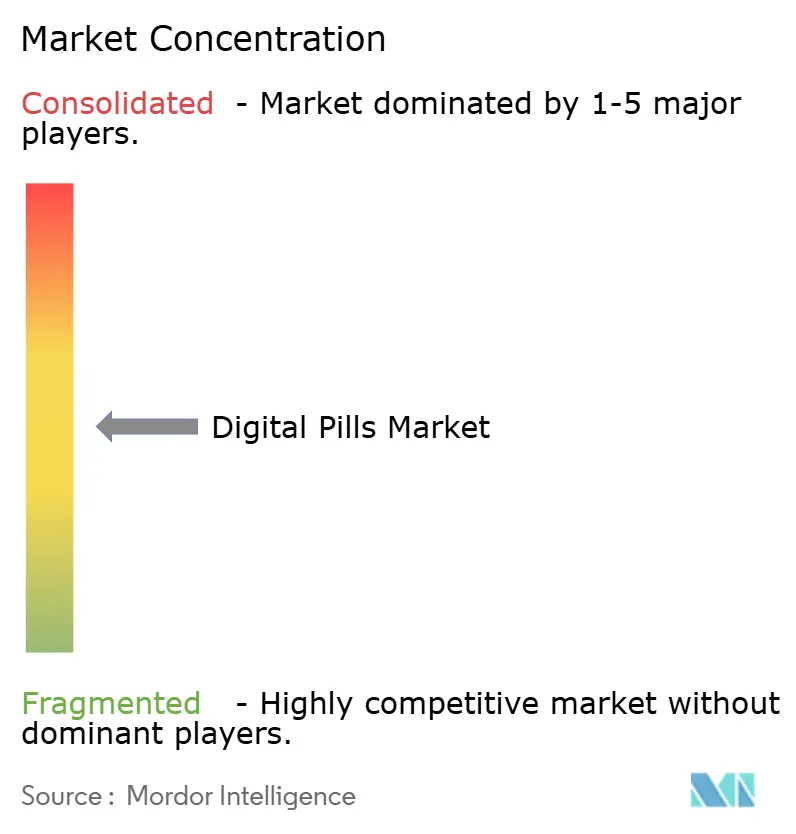
| Market Concentration | Medium |
Major Players *Disclaimer: Major Players sorted in no particular order Image © Mordor Intelligence. Reuse requires attribution under CC BY 4.0. | |
Digital Pills Market Analysis by Mordor Intelligence
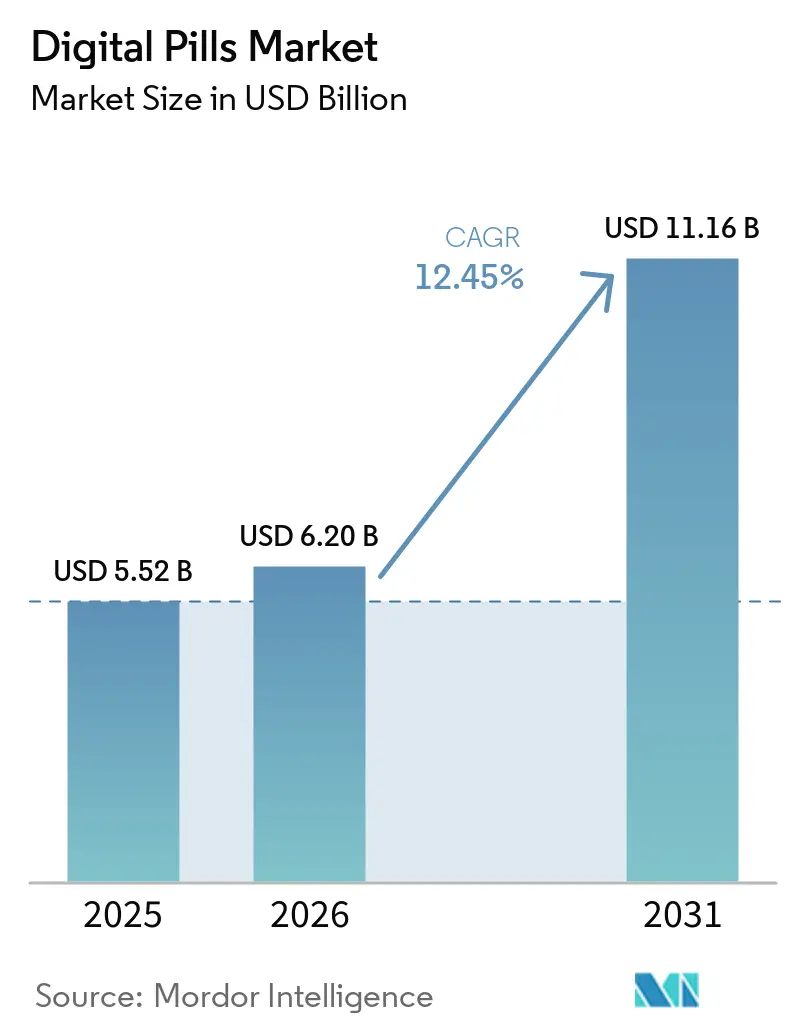
The Digital Pills Market size is expected to grow from USD 5.52 billion in 2025 to USD 6.20 billion in 2026 and is forecast to reach USD 11.16 billion by 2031 at 12.45% CAGR over 2026-2031.
The Digital pills market is supported by the need to verify medication intake beyond patient-reported information and enable less invasive gastrointestinal monitoring. The June 2026 classification of an ingestible gastrointestinal blood-detection capsule as a Class II device clarified the regulatory pathway for this type of diagnostic device. Commercial progress differs between diagnostic capsules and adherence systems, as capsule endoscopy has more established procedure reimbursement. The market offers opportunities for clinical programs that demonstrate patient outcomes, efficient care-team workflows, and payer value.
Key Report Takeaways
- By product type, capsules held 61.40% of revenue in 2025, while tablets are projected to grow at a 13.65% CAGR through 2031.
- By indication, medication adherence held 34.55% of revenue in 2025, while patient monitoring is projected to grow at a 14.51% CAGR through 2031.
- By disease, infectious diseases held 56.76% of revenue in 2025, while cardiovascular diseases are forecast to grow at a 12.95% CAGR through 2031.
- By end user, hospitals held 53.24% of revenue in 2025, while clinics are projected to grow at a 14.55% CAGR through 2031.
- By geography, North America held 42.45% of revenue in 2025, while Asia-Pacific is projected to grow at a 15.20% CAGR through 2031.
Note: Market size and forecast figures in this report are generated using Mordor Intelligence’s proprietary estimation framework, updated with the latest available data and insights as of January 2026.
Market Trends and Insights
Drivers Impact Analysis of Digital Pills Market*
| DRIVER | (~) % IMPACT ON CAGR FORECAST | GEOGRAPHIC RELEVANCE | IMPACT TIMELINE |
|---|---|---|---|
| Objective medication-adherence measurement | +2.8% | Global, with demand concentrated in North America and Europe | Short term (≤ 2 years) |
| Decentralized and hybrid clinical trials | +2.0% | Global, with early gains in North America and the EU | Medium term (2-4 years) |
| Regulatory precedent for ingestible event markers | +1.8% | North America and the EU, with spillover to the Asia-Pacific | Short term (≤ 2 years) |
| Remote monitoring in chronic therapy | +2.0% | Global, with primary relevance in North America and the Asia-Pacific | Medium term (2-4 years) |
| Pharmacy and care-team integration of dose-level data | +1.3% | North America and the EU | Long term (≥ 4 years) |
| Reusable reader and wearable form-factor innovation | +1.1% | Global | Medium term (2-4 years) |
| Source: Mordor Intelligence | |||
Expansion of Objective Medication-Adherence Measurement Drives Core Demand
The Digital pills market addresses a key clinical challenge, as providers often cannot confirm medication intake outside of directly observed settings. A 2026 randomized trial of the PrEPSteps intervention found 14% higher PrEP adherence over three months among participants using a digital pill system than among controls.[1] The findings showed that providers could combine ingestion records with interventions rather than use them only for recordkeeping. This also strengthened discussions with payers on treatment outcomes. The evidence also supported chronic therapies, where missed doses can affect treatment effectiveness. Digital adherence systems enabled care teams to identify missed-dose patterns earlier than periodic self-reporting. The Digital pills market may benefit when providers integrate this information into established patient-support processes. However, technology alone does not address access, trust, or treatment barriers.
Growth of Decentralized and Hybrid Clinical Trials Creates Sustained Pharma Demand
Drug developers need reliable records of when participants take study medication, particularly when trial visits occur less frequently. A 2026 review assessed 1,021 interventional trials registered from 2001 through 2025 that used wearable-derived data and identified broader use of device-based endpoints in drug development. Ingestible sensors provided time-stamped medication records that complemented other remote data sources.[2] These systems reduced reliance on patient recall and pill counts in decentralized and hybrid trial designs. The FDA posted cooperative agreement RFA-FD-26-012 in July 2026 for digital health technologies in drug and biologic clinical investigations. The opportunity provided USD 1.1 million in funding, anticipated two awards, and covered digital health endpoints and pediatric patient monitoring.
Regulatory Precedent for Ingestible Event Markers Reduces Market-Entry Risk
Regulatory clarity reduces uncertainty for companies developing ingestible devices. The FDA De Novo clearance for etectRx’s ID-Cap established a regulatory precedent for a standalone ingestible event marker used in adherence monitoring. This precedent helped later developers understand the evidence and controls that regulators may require. Since October 2023, medical cyber devices have also faced Software Bill of Materials requirements under FD&C Act Section 524B. The June 2026 final classification order for an ingestible gastrointestinal blood detection capsule expanded the FDA device taxonomy beyond adherence markers. The rule placed the device under 21 CFR 876.1390 and required 510(k) notification and special controls. These controls included clinical data, bench testing, software validation, and electromagnetic compatibility testing. The classification provided diagnostic developers with a more defined route to market.
Rising Demand for Remote Monitoring in Chronic Therapy Diversifies End-User Applications
Chronic disease care often requires support between appointments, creating a role for remote ingestion monitoring. A 2026 study of a wrist-worn receiver linked to the ID-Cap system reported a mean System Usability Scale score of 78.0 and a 93% correlation between system-recorded adherence and pill counts in a 30-day HIV PrEP trial. The findings showed that patients could use a wearable receiver with an ingestible sensor in a patient-facing program.[3] This design may reduce the need for repeated in-person confirmation of medication intake. A 2026 pragmatic randomized trial evaluated patient-centered digital adherence technology for tuberculosis treatment outcomes. The study added to evidence that digital adherence tools could be assessed in routine treatment settings, including resource-limited settings. Remote programs need reliable data transfer, informed consent, and clear processes for responding to missed doses. They must also avoid placing an unreasonable burden on clinicians or patients.
Restraints Impact Analysis of Digital Pills Market*
| RESTRAINT | (~) % IMPACT ON CAGR FORECAST | GEOGRAPHIC RELEVANCE | IMPACT TIMELINE |
|---|---|---|---|
| High total cost of sensor-enabled therapy | -1.5% | Global, with the greatest relevance in lower-income and emerging markets | Medium term (2-4 years) |
| Limited reimbursement and unproven outcomes at scale | -1.2% | North America and the EU, with spillover to the Asia-Pacific | Short term (≤ 2 years) |
| Dose-detection failure and data-latency risk | -0.8% | Global | Short term (≤ 2 years) |
| Patient consent, privacy, and workflow friction | -0.5% | Global, with particular relevance in GDPR-regulated EU markets | Medium term (2-4 years) |
| Source: Mordor Intelligence | |||
High Total Cost of Sensor-Enabled Therapy Limits Broad Adoption
Sensor-enabled therapy involves more than the sensor itself. It may require co-encapsulation, device provision, software services, regulatory compliance, and operational support. An analysis of prescription digital therapeutics identified policy and reimbursement approaches as critical to improving patient access. These additional components can increase treatment costs beyond those of the base medication. Consequently, initial adoption is more practical in use cases where adherence clearly affects outcomes or where reimbursement is already available. The Digital Pills Market has stronger near-term opportunities in applications with defined payment pathways.
Cost also influences competition between diagnostic capsules and adherence systems. Capsule endoscopy benefits from established gastrointestinal procedures across many care settings. In contrast, adherence platforms often require separate payer discussions because their service models include the device, software, and follow-up care. This difference may direct investment toward diagnostic applications with clearer revenue models. It may also slow the adoption of ingestion monitoring in therapies that could otherwise benefit from it. Lower-cost hardware and more efficient care processes could improve access, provided they maintain clinical reliability.
Limited Reimbursement and Unproven Outcomes at Scale Remain Structural Barriers
Coverage for prescription digital therapeutics and ingestible event markers varies by payer, plan, and location. A systematic review identified reimbursement uncertainty and inadequate administrative infrastructure as recurring barriers to provider adoption of prescription digital therapeutics. These challenges can make it difficult for providers to commit to a program before payment terms are clear. They also limit the number of patients who can contribute real-world outcomes data. The Digital Pills Market requires evidence that demonstrates value under routine care conditions, not only in controlled studies. However, fragmented coverage makes generating this evidence more difficult.
*Our forecasts treat driver/restraint impacts as directional, not additive. The impact forecasts reflect baseline growth, mix effects, and variable interactions.
Digital Pills Market Segment Analysis
By Product Type:
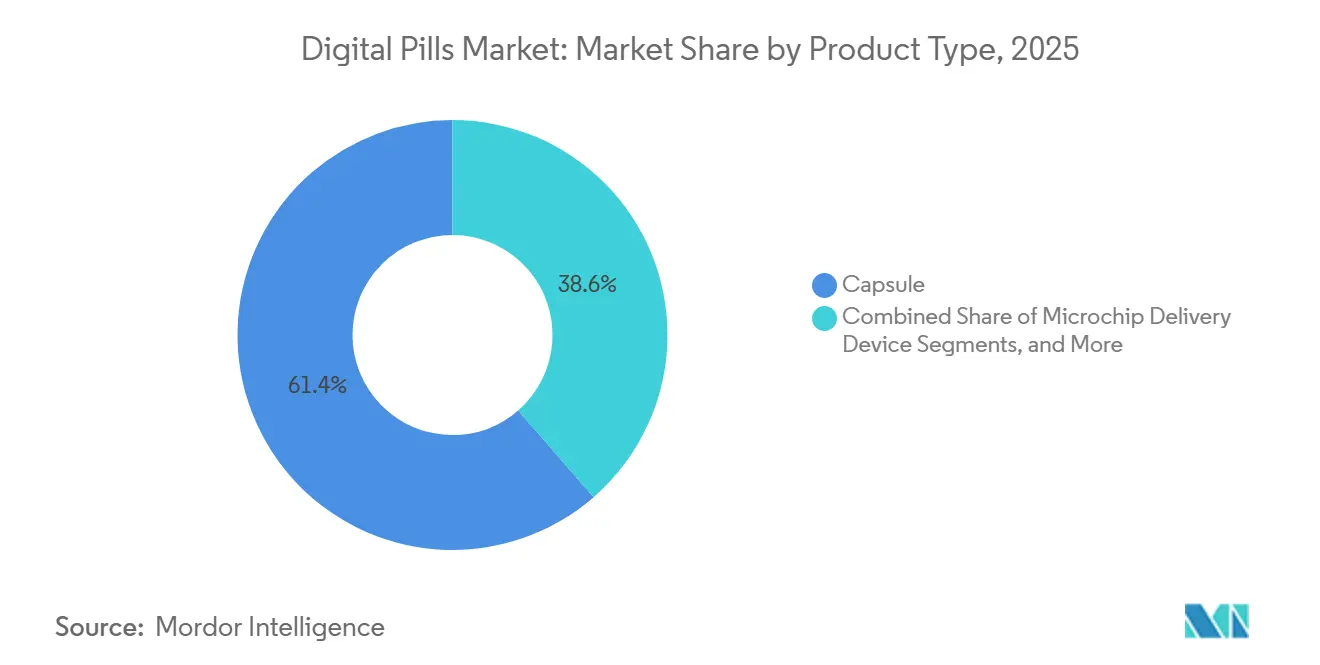
Capsules Lead Revenue While Tablets Gain Clinical Trial UseCapsules accounted for 61.40% of 2025 revenue, giving them the largest digital pills market share by product type. Their design allows sensors to be added to existing drug formulations without altering the active ingredient, reducing redevelopment requirements. Capsule endoscopy maintained an established role in gastrointestinal imaging, supported by reimbursement, with Fujifilm, Olympus, CapsoVision, AnX Robotica, and several Asian manufacturers participating in this segment. Microchip delivery devices remained an early-stage sub-segment, with commercial adoption for sustained-release and targeted gastrointestinal delivery expected beyond 2028.
The digital pills market size for tablets is projected to grow at a CAGR of 13.65% through 2031. Tablet-based ingestible event marker systems integrate sensors into conventional oral drug forms, as demonstrated by Abilify MyCite with aripiprazole. A 2026 study reported a Pearson correlation of 0.75 between system-detected ingestions and pill counts for a tablet-based digital pill system with a wristband receiver. Compatibility with blister-pack and strip-dispensing channels supports pharmacy-led adherence programs, although growth depends on demonstrating value for patients, pharmacies, and care teams.

By Indication:
Medication Adherence Leads While Patient Monitoring Broadens UseMedication adherence accounted for 34.55% of 2025 revenue and represented the leading application share. The segment addresses the need to verify whether patients take prescribed therapies, particularly where treatment outcomes depend on consistent dosing. A 2025 clinical study examined a real-time digital intervention supporting oral HIV pre-exposure prophylaxis adherence. Drug delivery, disease management, and other applications accounted for the remaining use cases, while adoption depended on reimbursement and care-team integration.
The digital pills market size for patient monitoring is projected to expand at a CAGR of 14.51% through 2031. Ingestible systems can capture gastrointestinal pH, transit, and temperature data in addition to ingestion events. AnX Robotica’s MotiliCap received FDA 510(k) clearance in May 2025 to assess gastric emptying, small bowel transit, and colonic motility. The system supports therapy management and gastrointestinal diagnostics, although providers require clear workflows to translate findings into clinical actions.
By Disease:
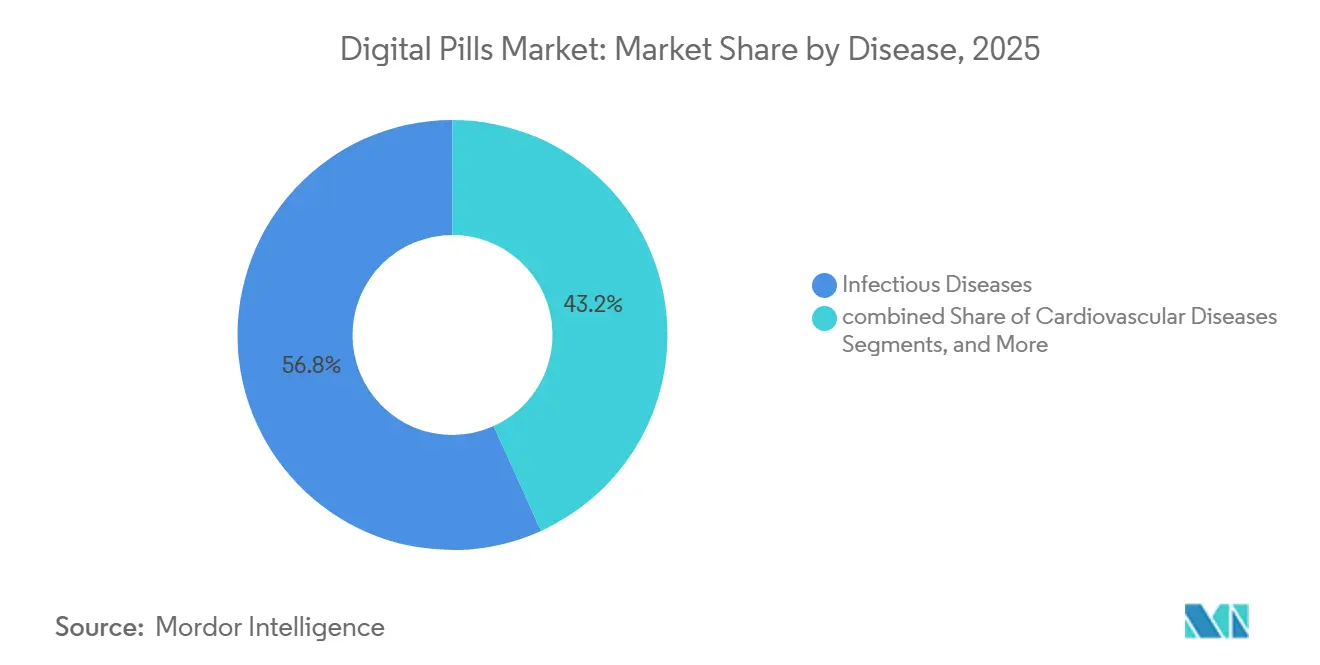
Infectious Diseases Hold the Largest Position While Cardiovascular Use AdvancesInfectious diseases accounted for 56.76% of 2025 revenue, representing the largest disease-level share in the digital pills market. Tuberculosis and HIV programs prioritized adherence monitoring because missed treatment can affect individual and public health outcomes. A 2026 pragmatic randomized trial evaluated digital adherence technology for tuberculosis treatment in a real-world setting, while a 2026 cost-effectiveness analysis of a smart pillbox intervention for oral HIV PrEP adherence in China reported a cost per QALY gained of USD 19,575, compared with a willingness-to-pay threshold of USD 31,200. Mental disorders, diabetes, and cancer also presented potential applications.
Cardiovascular diseases are forecast to expand at a CAGR of 12.95% through 2031. Hello Heart launched a connected pill box in April 2025 that combined pill tracking, blood pressure monitoring, and clinical information within its heart health platform. While the product is digital pill-adjacent rather than an ingestible sensor, it demonstrated the value of combining medication information with physiological monitoring. The RESPOND-AF study also examined notification-supported anticoagulation protocols in atrial fibrillation, indicating increasing use of integrated connected-care models.
By End User:
Hospitals Hold Revenue While Clinics Expand FasterHospitals accounted for 53.24% of 2025 end-user revenue and held the largest digital pills market share in this category. Their position reflects the availability of imaging systems, reader workstations, data platforms, and specialist workflows required for capsule endoscopy, particularly in tertiary and academic medical centers. Hospitals can also use adherence protocols in infectious disease services, potentially reducing direct observation requirements. CapsoVision received FDA clearance in January 2025 to continue remote ingestion of the CapsoCam Plus capsule under virtual clinical supervision, expanding access for patients unable to travel to clinical sites.
Clinics are forecast to grow at a CAGR of 14.55% through 2031. Ambulatory settings can implement lower-cost protocols aligned with chronic disease management, provided monitoring does not create unnecessary administrative burden. Clinic programs also require pharmacy integration to manage medication and ingestion data within routine care. The Office of the National Coordinator reported in 2025 that 75% of hospitals had integrated real-time prescription benefit information into electronic health record workflows, indicating progress in supporting infrastructure despite the early-stage adoption of ingestible sensors.
Geography Analysis
North America Digital Pills Market
North America held 42.45% of revenue in 2025, making it the largest regional market for digital pills. The region combines established FDA pathways, a developed capsule endoscopy base, and increasing focus on reimbursement for digital medicine. The American Medical Association’s Digital Medicine Payment Advisory Group supports coding and reimbursement considerations, while the United States remains central through ID-Cap clinical research programs involving VA hospitals, transplant clinics, and behavioral health centers. Canada contributes hospital-based demand for capsule endoscopy, while Mexico remains a smaller market with potential driven by the digitalization of chronic disease management.
Europe Digital Pills Market
Europe was the second-largest regional market in 2025. Germany, the United Kingdom, and France supported the clinical use of capsule endoscopy for gastrointestinal disorders, supported by established diagnostic practices. However, adherence systems faced varying market access requirements, while national approval processes extended commercialization timelines for new devices. GDPR requirements made consent, data management, and clear communication of privacy protections critical to implementation.
APAC, MEA and South America Digital Pills Market
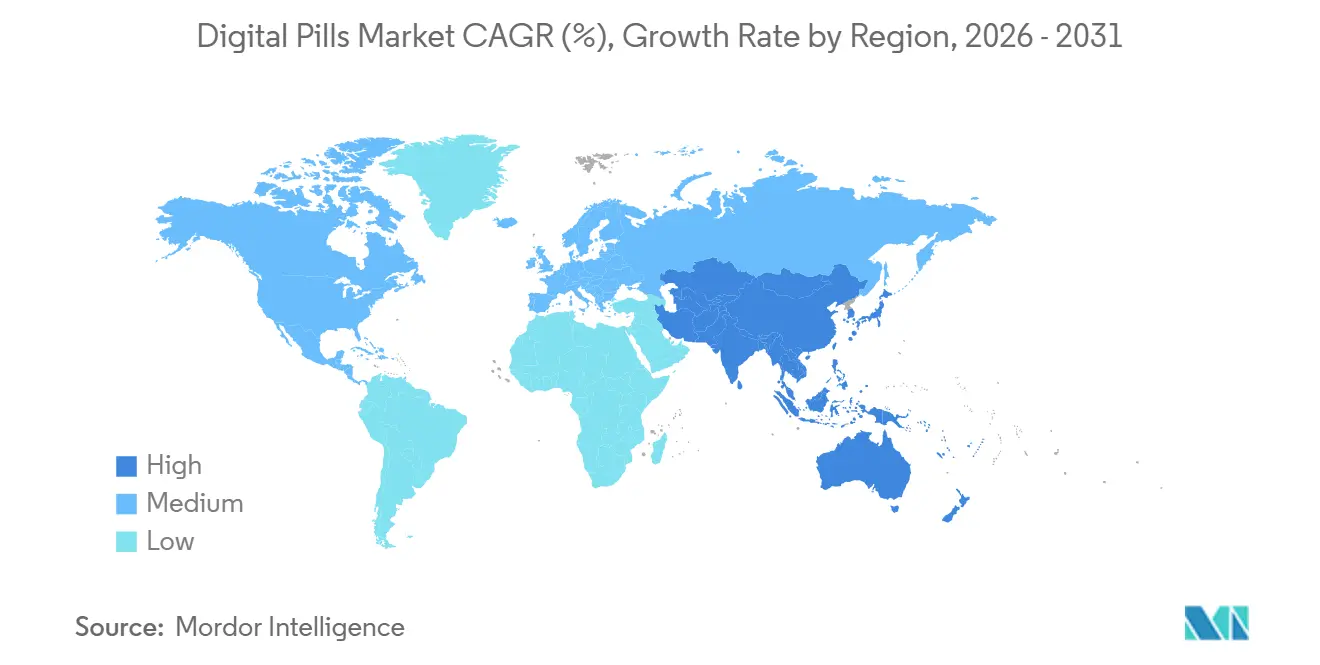
Asia-Pacific is projected to grow at a CAGR of 15.20% through 2031, the highest among all regions. Regulatory modernization, expanding diagnostic capacity, and the high burden of tuberculosis and hepatitis support regional growth. South Korea enacted the Digital Medical Device Act in January 2025, and by mid-2026, the CONNECT DTx platform had reached 42% of tertiary hospitals in the Seoul metropolitan area and recorded more than 3,300 cumulative prescriptions. China is developing channels for digital therapeutic products, while the Middle East and Africa and South America offer longer-term opportunities through healthcare modernization in the GCC and regulatory interest in Brazil.
Competitive Landscape
The Digital pills market is moderately fragmented, with capsule endoscopy and adherence monitoring exhibiting distinct competitive structures. Medtronic, Olympus, Fujifilm, and CapsoVision are established Western participants, while Jinshan Science and Technology, IntroMedic, and AnX Robotica compete through cost and product features. In May 2025, AnX Robotica received FDA 510(k) clearance for MotiliCap, addressing gastrointestinal motility assessment following the discontinuation of SmartPill. Competition in this segment depends on image quality, clinical utility, review time, and integration with gastroenterology workflows.
Adherence monitoring has a smaller group of validated platforms. etectRx’s ID-Cap is a cleared standalone ingestible event marker in the United States, differing from earlier drug-device combination digital pill products. The Digital pills market also includes companies with intellectual property in ingestible sensors, data analytics, and wearables. New entrants must establish clinical evidence, cybersecurity, patient experience, reimbursement, and provider adoption to scale successfully.
Companies are expanding software capabilities across established hardware platforms. In December 2025, CapsoVision submitted a 510(k) application for an AI-assisted reading module for CapsoCam Plus to improve the detection of clinically significant findings and reduce clinician review time. In March 2026, the company completed a USD 14 million private placement to support AI-enabled capsule development, a next-generation colon capsule, and the CapsoCam UGI pancreatic initiative.
Digital Pills Industry Leaders
-
Medtronic plc
-
Olympus Corporation
-
Otsuka Pharmaceutical Co., Ltd.
-
CapsoVision, Inc.
-
IntroMedic Co., Ltd.
- *Disclaimer: Major Players sorted in no particular order
Digital Pills Market Companies Covered in this Report
- AccuHealth Technologies
- AnX Robotica Corp.
- Bio-Images Research Ltd.
- CapsoVision, Inc.
- Check-Cap Ltd.
- Chongqing Jinshan Pharmaceutical Co., Ltd.
- Cosmo Pharmaceuticals
- etectRx, Inc.
- FUJIFILM
- Given Imaging Ltd.
- IntroMedic Co., Ltd.
- Jinshan Science and Technology (Group) Co., Ltd.
- Medispec Ltd.
- Medtronic
- Olympus
- Otsuka
- Pentax Medical
- Proteus Digital Health, Inc.
- RF Co., Ltd.
- Wision A.I.
Recent Industry Developments in Digital Pills Market
- July 2026: The FDA announced RFA-FD-26-012, a USD 1.1 million cooperative agreement to support the integration of digital health technologies, including ingestible sensors and actigraphy, into drug and biologic clinical investigations. The agency expected to grant two awards.
- June 2026: The FDA classified ingestible gastrointestinal blood detection capsules as Class II devices under 21 CFR 876.1390, requiring 510(k) notification and special controls, including clinical data, bench testing, software validation, and electromagnetic compatibility testing.
- March 2026: CapsoVision raised USD 14 million through a private placement to advance its AI-enabled capsule platform, next-generation colon capsule, and CapsoCam UGI pancreatic initiative.
- December 2025: CapsoVision received FDA 510(k) clearance for CE Deliver, a capsule endoscopy delivery device, expanding its capsule delivery platform beyond standard small-bowel visualization.
Global Digital Pills Market Report Scope
As per the scope of the report, a digital pill is a medication embedded with a tiny, swallowable micro-sensor that tracks whether and when a patient takes their prescription. Once swallowed, stomach fluid activates the sensor to send a signal to an external skin patch and mobile app.
The digital pills market is segmented by product type, indication, disease, end user, and geography. By product type, the market is segmented into tablets, capsules, and microchip delivery devices. By indication, the market is segmented into medication adherence, drug delivery, patient monitoring, disease management, and other indications. By disease, the market is segmented into cardiovascular diseases, mental disorders, infectious diseases, diabetes, cancer, and other diseases. By end user, the market is segmented into hospitals, clinics, home care settings, and other end users. By geography, the market is analyzed across North America, Europe, Asia-Pacific, the Middle East and Africa, and South America. The report also covers estimated market sizes and trends for 17 countries across major regions globally. The report offers market sizes and forecasts in terms of value (USD) for the above segments.
| Tablet |
| Capsule |
| Microchip Delivery Device |
| Medication Adherence |
| Drug Delivery |
| Patient Monitoring |
| Disease Management |
| Other Indications |
| Cardiovascular Diseases |
| Mental Disorders |
| Infectious Diseases |
| Diabetes |
| Cancer |
| Other Diseases |
| Hospitals |
| Clinics |
| Home Care Settings |
| Other End Users |
| North America | United States |
| Canada | |
| Mexico | |
| Europe | Germany |
| United Kingdom | |
| France | |
| Italy | |
| Spain | |
| Rest of Europe | |
| Asia-Pacific | China |
| India | |
| Japan | |
| Australia | |
| South Korea | |
| Rest of Asia-Pacific | |
| Middle East and Africa | GCC |
| South Africa | |
| Rest of Middle East and Africa | |
| South America | Brazil |
| Argentina | |
| Rest of South America |
| By Product Type | Tablet | |
| Capsule | ||
| Microchip Delivery Device | ||
| By Indication | Medication Adherence | |
| Drug Delivery | ||
| Patient Monitoring | ||
| Disease Management | ||
| Other Indications | ||
| By Disease | Cardiovascular Diseases | |
| Mental Disorders | ||
| Infectious Diseases | ||
| Diabetes | ||
| Cancer | ||
| Other Diseases | ||
| By End User | Hospitals | |
| Clinics | ||
| Home Care Settings | ||
| Other End Users | ||
| By Geography | North America | United States |
| Canada | ||
| Mexico | ||
| Europe | Germany | |
| United Kingdom | ||
| France | ||
| Italy | ||
| Spain | ||
| Rest of Europe | ||
| Asia-Pacific | China | |
| India | ||
| Japan | ||
| Australia | ||
| South Korea | ||
| Rest of Asia-Pacific | ||
| Middle East and Africa | GCC | |
| South Africa | ||
| Rest of Middle East and Africa | ||
| South America | Brazil | |
| Argentina | ||
| Rest of South America | ||
Key Questions Answered in the Report
What is driving growth in digital pills?
Objective medication records, decentralized research, regulatory clarity, and remote chronic-care use support adoption. The Digital pills market is forecast to grow at a 12.45% CAGR from 2026 to 2031.
Which digital pill product type has the largest share?
Capsules held 61.40% of revenue in 2025. Their position is supported by capsule endoscopy and the ability to add sensors around existing formulations.
What is the fastest-growing application for digital pills?
Patient monitoring is forecast to grow at a 14.51% CAGR through 2031. The application includes gastrointestinal monitoring as well as ingestion-related information.
Which end users are adopting digital pill systems most quickly?
Clinics are forecast to grow at a 14.55% CAGR through 2031. Their model can fit ambulatory chronic-care programs when pharmacy and care-team processes are in place.
Which region is growing fastest for digital pills?
Asia-Pacific is forecast to grow at a 15.20% CAGR through 2031. Regulatory modernization and expanding diagnostic infrastructure support its outlook.
What limits wider use of ingestible sensor systems?
Added treatment costs, uneven reimbursement, data reliability concerns, consent requirements, and workflow demands can limit adoption.