
Deoxyribonucleic Acid (DNA) Vaccines Market Size and Share
Market Overview
| Study Period | 2020 - 2031 |
|---|---|
| Market Size (2026) | USD 581.74 Million |
| Market Size (2031) | USD 822.92 Million |
| Growth Rate (2026 - 2031) | 7.18 % |
| Fastest Growing Market | Asia-Pacific |
| Largest Market | North America |
| Market Concentration | Medium |
Major Players *Disclaimer: Major Players sorted in no particular order Image © Mordor Intelligence. Reuse requires attribution under CC BY 4.0. | |
Deoxyribonucleic Acid (DNA) Vaccines Market Analysis by Mordor Intelligence
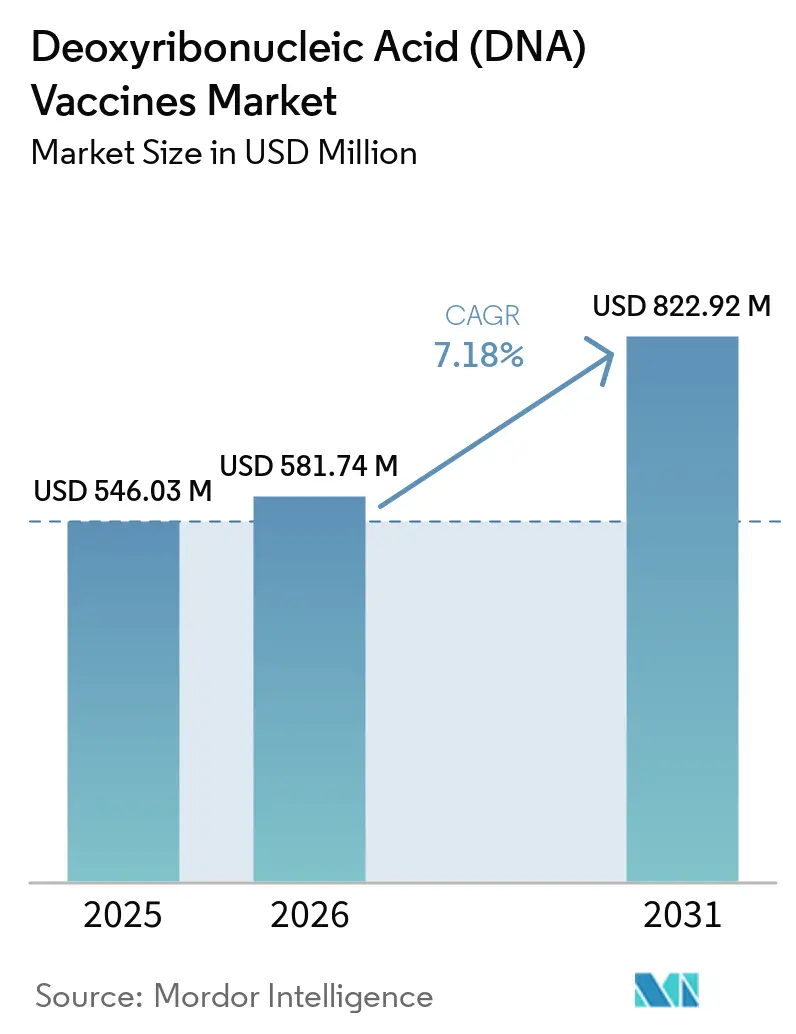
The Deoxyribonucleic Acid Vaccines Market size is expected to grow from USD 546.03 million in 2025 to USD 581.74 million in 2026 and is forecast to reach USD 822.92 million by 2031 at 7.18% CAGR over 2026-2031.
Thermal stability at 2 to 8°C can reduce distribution constraints in settings where ultra-cold systems remain limited. Reusable plasmid backbones can shorten development work when a new antigen sequence is required. The established animal vaccine base also gives human programs manufacturing and regulatory reference points. Cell-free DNA production is becoming more relevant because it can reduce turnaround time for personalized oncology candidates. The DNA vaccines market therefore depends on clinical validation, practical delivery methods, and the ability to turn platform advantages into approved products.
Key Report Takeaways
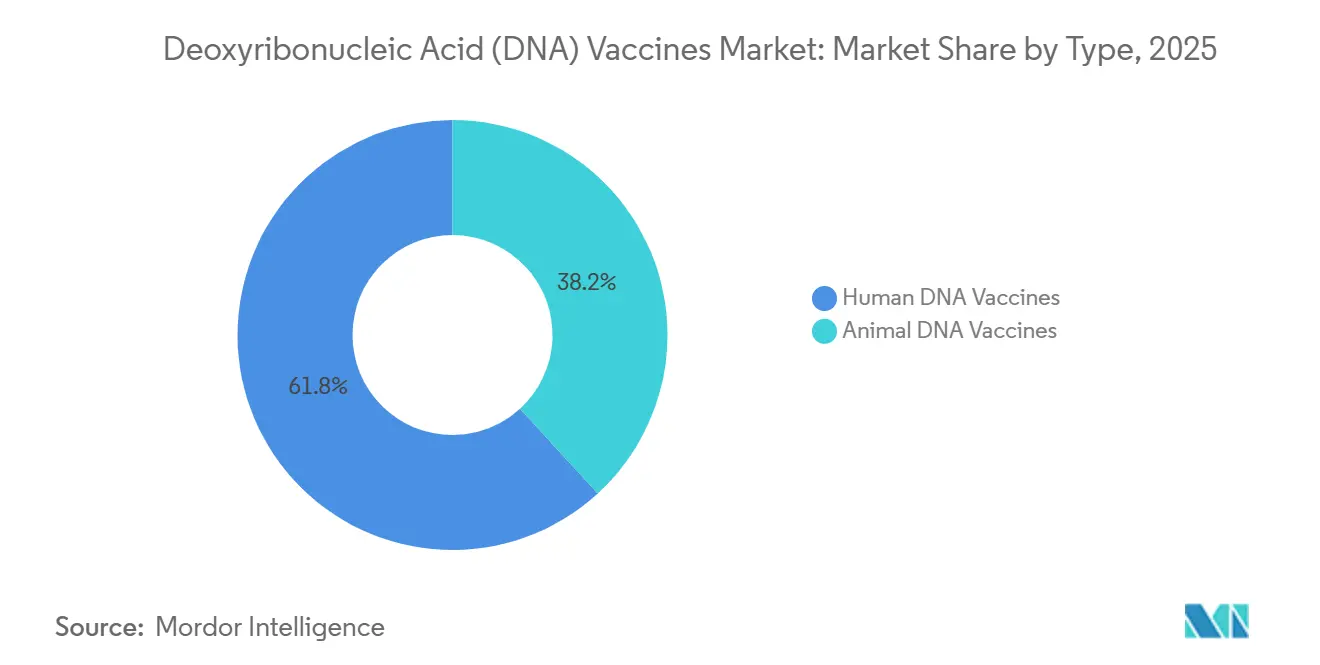
- By type, human DNA vaccines held 61.83% of the DNA vaccines market share in 2025, while the same segment is forecast to grow at an 8.51% CAGR through 2031.
- By vaccine purpose, prophylactic vaccines held 65.38% in 2025, while therapeutic vaccines are forecast to expand at a 9.07% CAGR through 2031.
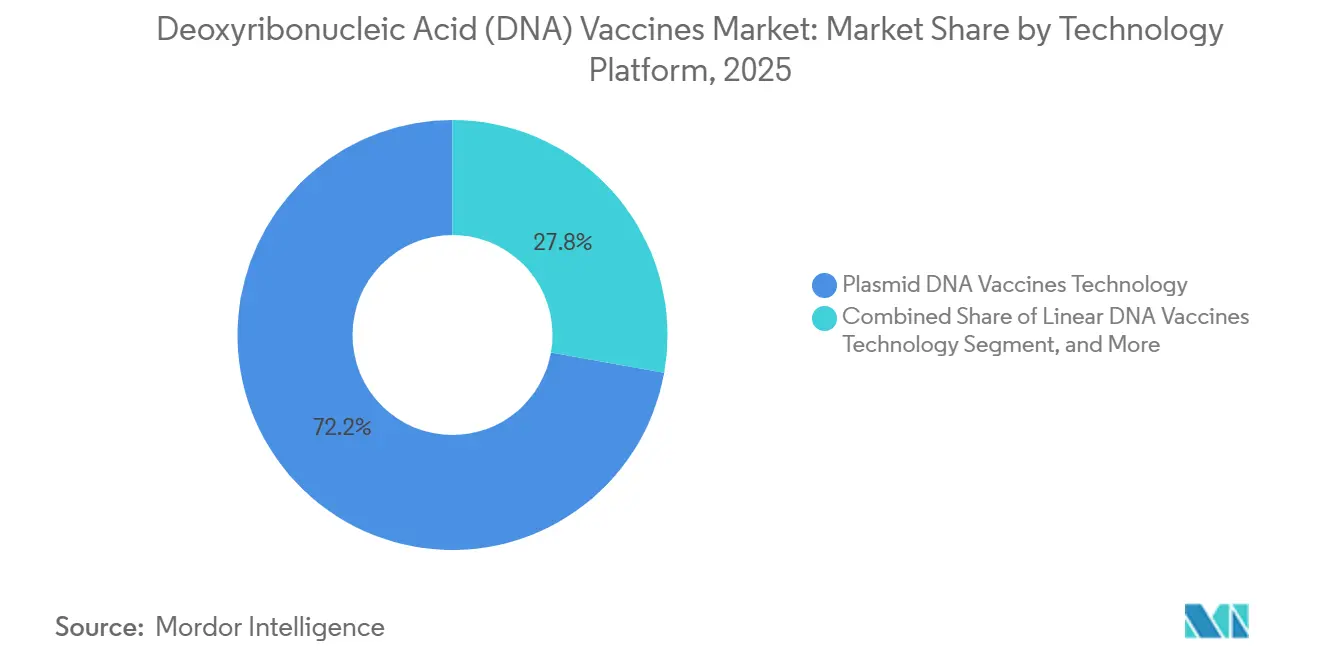
- By technology platform, plasmid DNA held 72.16% of the DNA vaccines market share in 2025 and is projected to grow at a 9.18% CAGR through 2031.
- By delivery method, electroporation held 55.63% of the DNA vaccines market share in 2025, while lipid and nanoparticle delivery is forecast to grow at an 8.82% CAGR through 2031.
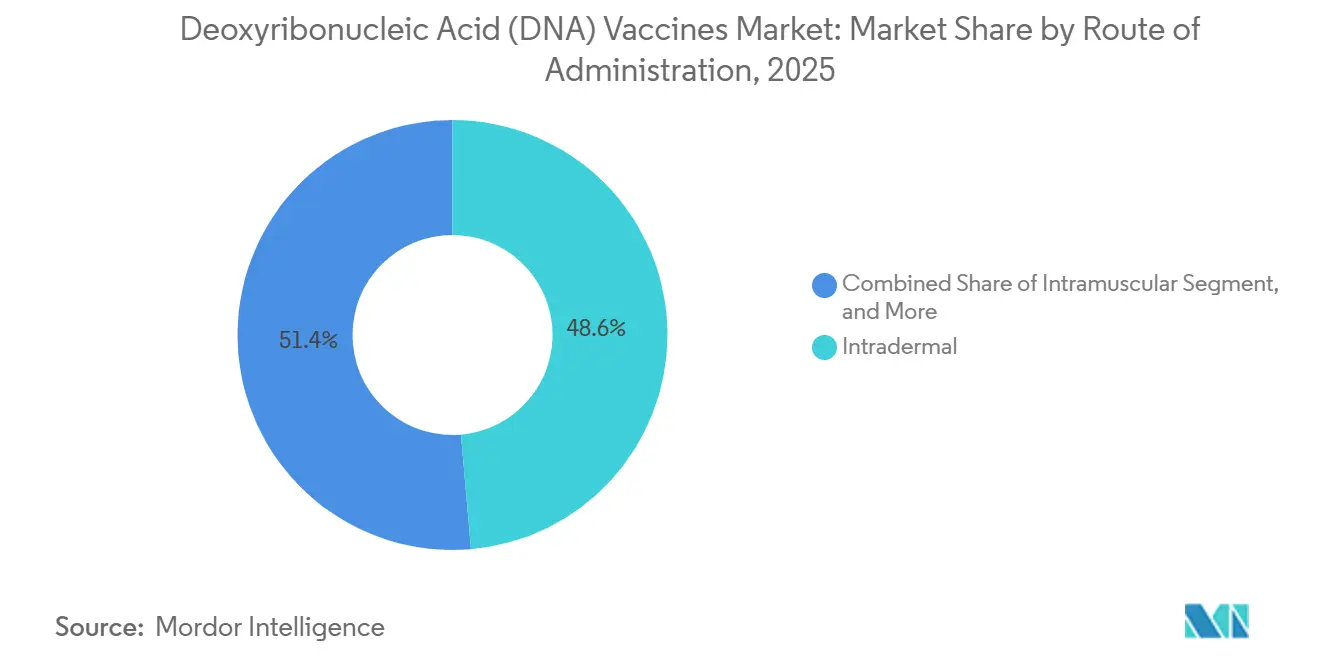
- By route of administration, intradermal delivery accounted for 48.63% of the DNA vaccines market size in 2025 and is forecast to expand at a 9.87% CAGR through 2031.
- By indication, infectious diseases accounted for 38.63% of the DNA vaccines market size in 2025, while oncology is forecast to grow at a 9.21% CAGR through 2031.
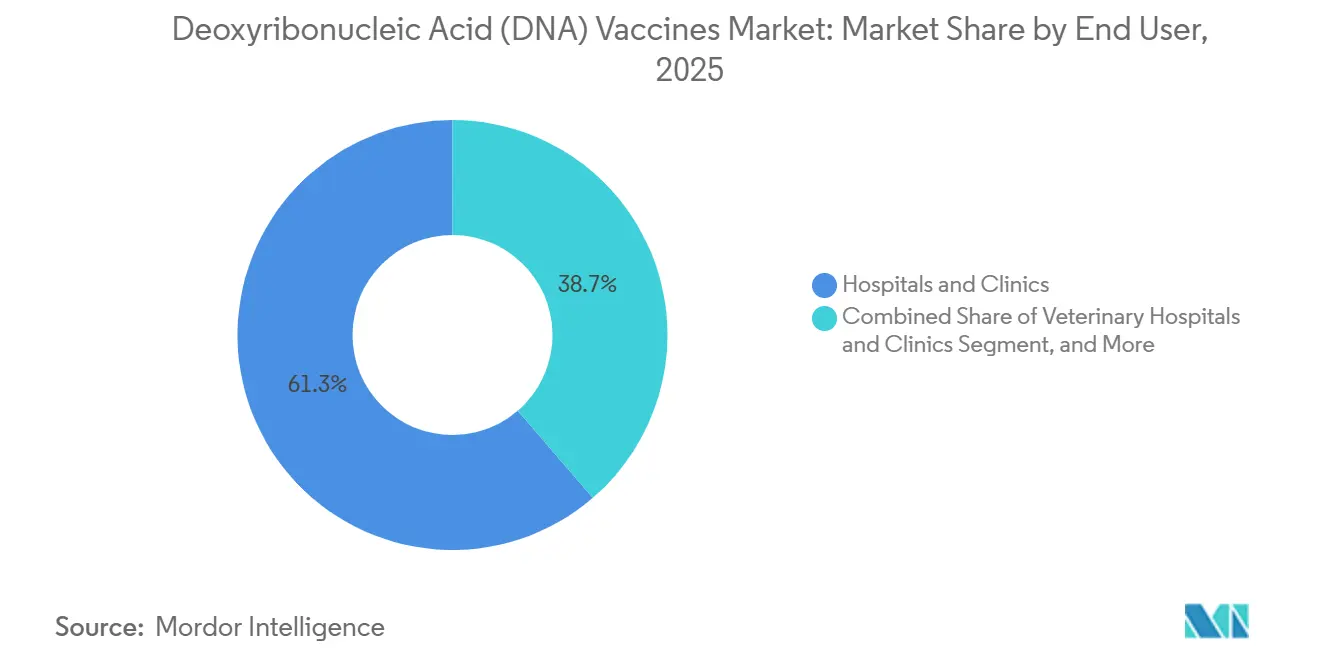
- By end user, hospitals and clinics held 61.32% of the DNA vaccines market share in 2025, while veterinary hospitals and clinics are forecast to grow at an 8.35% CAGR through 2031.
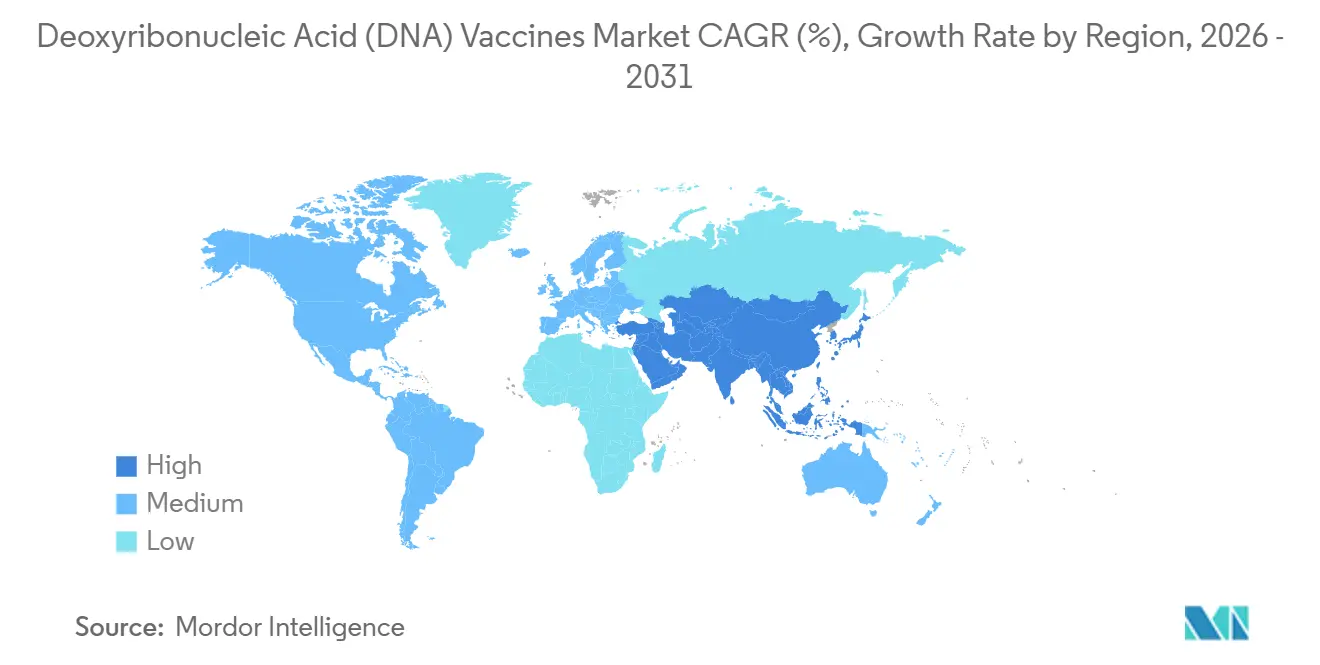
- By geography, North America commanded 38.12% of the DNA vaccines market in 2025; Asia-Pacific is forecast to register a 8.76% CAGR through 2031.
Note: Market size and forecast figures in this report are generated using Mordor Intelligence’s proprietary estimation framework, updated with the latest available data and insights as of January 2026.
Market Trends and Insights
Drivers Impact Analysis of Deoxyribonucleic Acid (DNA) Vaccines Market*
| Driver | (~) % Impact on CAGR Forecast | Geographic Relevance | Impact Timeline |
|---|---|---|---|
| Faster Response to Emerging and Re-emerging Pathogens | +1.1% | Global, with early demand in Sub-Saharan Africa, Southeast Asia, and the Middle East | Short term (≤ 2 years) |
| Growing Therapeutic Oncology and Personalized Vaccine Pipelines | +1.8% | North America and Europe, with later trial expansion in Asia-Pacific | Medium term (2-4 years) |
| Greater Demand for Stable, Scalable Vaccine Platforms | +1.3% | Global, with strong relevance in South and Southeast Asia and Sub-Saharan Africa | Medium term (2-4 years) |
| Expansion of Veterinary and Zoonotic Disease Prevention | +0.8% | North America, Europe, and Asia-Pacific | Short term (≤ 2 years) |
| Public-Private Funding for Pandemic Preparedness | +0.7% | Global, with funding centered in North America, Europe, and selected Asia-Pacific countries | Medium term (2-4 years) |
| Antigen-Design Reuse Across Variant and Pathogen Programs | +0.6% | Global | Long term (≥ 4 years) |
| Source: Mordor Intelligence | |||
Faster Response to Emerging and Re-emerging Pathogens
DNA vaccines can use a validated plasmid backbone with a newly selected antigen sequence, which can shorten the early design stage after a pathogen is genetically characterized. INOVIO moved from sequence selection to a first human dose in 82 days during the COVID-19 response. The INO-4500 Phase 1b study in 220 adults in Ghana reported measurable humoral and cellular responses after intradermal administration with electroporation.[1] This result supports continued development against pathogens such as the Lassa virus, where a rapid response platform may have practical value. The DNA vaccines market can also benefit when preparedness programs create reusable manufacturing and regulatory experience before an outbreak requires broad deployment. Lower temperature sensitivity than many mRNA products can further support use in areas with constrained cold-chain infrastructure.
Growing Therapeutic Oncology and Personalized Vaccine Pipelines
Therapeutic DNA vaccines are being developed to direct immune responses against tumor-specific mutations rather than to prevent an infection. A 2026 Phase 1 glioblastoma study reported vaccine-specific T-cell responses from a personalized DNA vaccine that targeted up to 40 spatially distributed neoantigens.[2] Research on neoantigen vaccines has also described the potential for durable T-cell immunity, although clinical benefit must be assessed in each program. Touchlight reported first patient dosing in the NEOVACC Phase I personalized lung cancer vaccine trial in July 2026 using its cell-free dbDNA platform.[3] Faster production may make patient-specific products more workable for tumors that progress quickly. This activity supports the 9.2% forecast CAGR for oncology within the DNA vaccines market.
Greater Demand for Stable, Scalable Vaccine Platforms
DNA vaccines in lyophilized form can remain stable under standard refrigeration, reducing the distribution burden for some programs. Cell-free production methods from Touchlight and LineaRx are designed to avoid bacterial fermentation and to shorten manufacturing cycles. Entos announced a USD 198.5 million partnership with the governments of Canada and Alberta in March 2025 to build an Edmonton facility designed for research and GMP manufacturing. The facility is planned to support the production of 10 million vaccine doses per year. Touchlight stated that its Hampton site has 11 manufacturing suites and an annual capacity of above 8 kg of DNA. These investments indicate that the DNA vaccines market is building supply capacity before large human product launches occur.
Expansion of Veterinary and Zoonotic Disease Prevention
Animal DNA vaccines provide a commercial record for a platform that is still seeking wider human adoption. Existing use in companion animals, horses, and aquaculture has created regulatory and manufacturing familiarity. The overlap between animal and human pathogen risks can also support funding for zoonotic disease programs. A 2025 study found that a lipid nanoparticle DNA vaccine against canine distemper generated neutralizing antibodies for more than 300 days in dogs. Touchlight and Ceva Animal Health entered a multi-year arrangement to develop and manufacture dbDNA animal health vaccines. Such agreements show that animal health can remain a revenue source and a practical development setting for the DNA vaccines market.
Restraints Impact Analysis of Deoxyribonucleic Acid (DNA) Vaccines Market*
| Restraint | (~) % Impact on CAGR Forecast | Geographic Relevance | Impact Timeline |
|---|---|---|---|
| Lower Human Immunogenicity With Conventional Injection | -0.8% | Global | Short term (≤ 2 years) |
| Electroporation-Associated Procedure Burden | -0.5% | Global, especially primary care settings outside specialist centers | Short term (≤ 2 years) |
| Limited Human Commercial Validation and Reimbursement Precedent | -0.7% | North America and Europe | Medium term (2-4 years) |
| Device-Vaccine Combination-Product CMC Complexity | -0.4% | North America and Europe | Medium term (2-4 years) |
| Source: Mordor Intelligence | |||
Lower Human Immunogenicity With Conventional Injection
Conventional intramuscular and subcutaneous injection has produced weaker immune responses for many human DNA vaccine candidates. Published clinical data have indicated that measurable responses may require a 2 mg DNA dose, compared with 30 to 100 μg doses for mRNA COVID-19 vaccines. DNA must reach the cell nucleus, and ordinary injection does not assist this process. Electroporation can improve cellular uptake, but it adds equipment and administration requirements. A 2025 preclinical study reported durable protection in mice after an LNP-formulated H5N1 plasmid DNA vaccine. LNP formulation may reduce this limitation, but it still requires clinical validation and a scalable manufacturing process for human programs.
Limited Human Commercial Validation and Reimbursement Precedent
The absence of an FDA-approved commercial human DNA vaccine leaves pricing, coverage, and formulary practices unsettled. INOVIO's BLA for INO-3107 is under FDA review with a target action date of October 30, 2026. The company reported that 81% of Phase 1/2 participants needed fewer surgeries after treatment than in the prior year. An orphan product approval would be important, but it would not automatically establish reimbursement practice for every DNA medicine. ZyCoV-D also showed that a product can reach the market after the peak of an acute public-health need, which can limit adoption. Developers in the DNA vaccines market will need to align clinical development, launch timing, and payer evidence with active disease burden.
*Our forecasts treat driver/restraint impacts as directional, not additive. The impact forecasts reflect baseline growth, mix effects, and variable interactions.
Deoxyribonucleic Acid (DNA) Vaccines Market Segment Analysis
By Type:
Human Programs Lead Revenue While Animal Products Provide Commercial ExperienceHuman DNA vaccines accounted for 61.83% of revenue in 2025. This position reflects clinical activity in HPV-related disease, infectious diseases, and oncology. The human segment includes programs for MERS-CoV, Lassa virus, Ebola, influenza, and cancer. Animal vaccines supplied the remaining revenue and remain the source of fully commercialized product experience for the platform. Products for canine melanoma, equine disease, and salmon aquaculture have provided a reference point for manufacturing and regulatory practice. This history helps developers explain how DNA-based products can be made and administered.
Human DNA vaccines are forecast to grow at an 8.51% CAGR from 2026 to 2031. VGX-3100 reported positive topline results from its China Phase III study in May 2026, including 207 participants at 22 tertiary hospitals and achievement of the primary endpoint. Fosun Wanbang obtained Greater China commercialization rights in January 2026 under a deal valued at CNY 800 million, equivalent to USD 113 million, in upfront and milestone payments plus double-digit royalties. These terms provide a useful commercial reference for the human DNA vaccines market in Asia-Pacific. Animal programs can move through shorter development pathways and face different evidence requirements. They are likely to remain an important near-term contributor while human products mature.

By Vaccine Purpose:
Therapeutic Candidates Are Expanding Faster Than Prophylactic ProgramsProphylactic vaccines accounted for 65.38% of revenue in 2025. Pandemic preparedness, infectious disease prevention, and the established animal health base supported that position. Therapeutic programs are forecast to grow at a 9.07% CAGR through 2031. Their growth is tied mainly to oncology programs that seek to stimulate responses against neoantigens. This use differs from prevention because each patient may need a distinct construct. It also creates different demands for manufacturing turnaround and clinical evidence.
Personalized therapeutic vaccines often require manufacturing from biopsy material to a finished dose in less than 4 weeks. The NEOVACC trial demonstrates how cell-free production is being used to address this operational need. Therapeutic programs for allergy and autoimmune disease remain early in development. The available input also identifies patient selection as a key issue for non-small cell lung cancer. Companion diagnostics could therefore be needed before therapeutic vaccines gain broad use. The DNA vaccines industry may see a higher-value product mix if oncology candidates establish meaningful clinical benefit. That opportunity still depends on response prediction, manufacturing consistency, and payer acceptance.
By Technology Platform:
Plasmid DNA Retains the Largest Base as Cell-Free Formats DevelopPlasmid DNA held 72.16% of the technology platform segment in 2025. Its share reflects established cGMP experience across bacterial fermentation-based manufacturing networks. Developers know the process expectations for plasmid products entering later clinical stages. Plasmid DNA is also forecast to grow at a 9.18% CAGR through 2031. The growth rate reflects the volume of clinical programs, especially in oncology and infectious diseases. It does not remove the need to improve delivery and simplify manufacturing.
Linear DNA and minicircle DNA are being developed as alternatives to conventional plasmids. They can address concerns related to antibiotic resistance markers and bacterial fermentation artifacts. Touchlight received an MHRA GMP license for cell-free dbDNA manufacturing in January 2025. Applied DNA Sciences completed its LineaDNA GMP facility buildout in January 2025. These platforms may give developers more manufacturing options as programs move into later studies. MIDGE vectors and DNA origami platforms remain preclinical and add to the longer-term technology range.
By Delivery Method:
Electroporation Leads Today While Lipid Nanoparticles Grow FasterElectroporation held 55.63% of delivery method revenue in 2025. Its position reflects clinical use with INOVIO's CELLECTRA platform and Ichor Medical Systems' TriGrid system. The method temporarily permeabilizes cell membranes to increase DNA uptake. A review available through the National Institutes of Health reported that electroporation can raise responses by 10 to 1,000 times relative to ordinary injection. PharmaJet's Tropis system also supports needle-free intradermal delivery for ZyCoV-D. Suction-based systems and liposome or polymer approaches serve smaller veterinary and early research uses.
Lipid and nanoparticle delivery is forecast to grow at an 8.82% CAGR through 2031. A 2024 study found stronger HPV-specific cellular responses in mice using SM-102 lipid nanoparticles than with electroporation, while naked plasmid injection showed minimal response. LNP approaches could allow administration without specialized electroporation equipment. This could widen the delivery setting from specialist centers to ordinary clinics. Ionizable lipids can also support immune activation and may reduce the dose requirement. Clinical performance in humans will determine whether this delivery shift changes the DNA vaccines market more broadly.
By Route of Administration:
Intradermal Delivery Holds Both Scale and GrowthIntradermal administration accounted for 48.63% of the route segment in 2025. It is also forecast to grow at a 9.87% CAGR through 2031. The skin contains Langerhans cells and dermal dendritic cells that can support immune activation. INOVIO's CELLECTRA 2000 is optimized for intradermal electroporation in active programs. ZyCoV-D also uses PharmaJet's Tropis intradermal needle-free system. These examples support intradermal delivery as an established route for DNA vaccine candidates.
Intramuscular administration remains familiar for biologic products and is relevant for LNP-based DNA vaccines. LNP products are commonly given intramuscularly in the mRNA setting. Subcutaneous delivery has a role in selected animal health programs. Oral and mucosal approaches remain preclinical and are not near-term commercial drivers. A move from electroporation to LNP delivery could allow intramuscular administration to regain share. The final route mix will depend on formulation results and the settings where products can be administered.
By Indication:
Infectious Diseases Lead While Oncology Has the Highest Growth RateInfectious diseases accounted for 38.63% of indication revenue in 2025. This segment includes COVID-19, HPV-related disease, Zika virus, MERS-CoV, influenza, and other pathogens. HPV-related programs are among the most advanced. INO-3107 is under FDA BLA review for recurrent respiratory papillomatosis. INO-4700 completed a Phase 2a study across 0.6 mg, 1 mg, and 2 mg dose levels, with findings on safety and immunogenicity published in 2025. Earlier programs on the Zika virus and influenza add breadth to the infectious disease base.
Oncology is forecast to grow at a 9.21% CAGR through 2031. Active programs cover glioblastoma, HPV-positive oropharyngeal cancer, non-small cell lung cancer, and cervical cancer. AACR 2026 data from the VB-C-03 trial reported measurable immunogenicity for VB10.16 with pembrolizumab in first-line HPV16-positive oropharyngeal cancer. Combination treatment with checkpoint inhibitors is, therefore, a central clinical approach for oncology DNA vaccine candidates. Veterinary diseases remain a distinct, commercially relevant indication group. Allergies and autoimmune conditions are earlier opportunities that may grow if T-cell modulation is validated in larger studies.
By End User:
Hospitals Lead Delivery While Veterinary Clinics Expand FasterHospitals and clinics accounted for 61.32% of end-user revenue in 2025. Current human programs often need electroporation equipment and trained staff. This makes institutional settings the practical delivery location for many candidates. Research institutes and academic centers remain important even if their direct revenue is lower. The Clatterbridge Cancer Centre, the Wistar Institute, and the University of Liverpool contribute early-stage work that supports future commercial programs. NEOVACC at Clatterbridge is a current example of this research role.
Veterinary hospitals and clinics are forecast to grow at an 8.35% CAGR through 2031. This reflects approved animal products and new collaborations between platform companies and animal health businesses. Government and public-health buyers can support preparedness procurement and national immunization work. Pharmaceutical and biotechnology companies also buy plasmid manufacturing services while developing proprietary candidates. This overlap can create closer links between CDMOs and product developers. The DNA vaccines industry is therefore likely to see more vertical integration as manufacturing capacity becomes a competitive requirement.
Geography Analysis
North America Deoxyribonucleic Acid (DNA) Vaccines Market
North America held 38.12% of the global DNA vaccines market in 2025. The region has a high concentration of clinical developers, plasmid CDMOs, and delivery technology suppliers. Canada and Alberta committed USD 198.5 million to Entos Pharmaceuticals' Edmonton manufacturing project in 2025. The planned site targets a capacity of 10 million vaccine doses per year. In the United States, INOVIO reported that pre-licensure inspections for INO-3107 were complete in its second-quarter 2026 update. Mexico remains a smaller participant, with activity centered on government health procurement rather than domestic product development.
Europe Deoxyribonucleic Acid (DNA) Vaccines Market
Europe is the second-largest regional market. The MHRA granted the first GMP license for cell-free enzymatic DNA production to Touchlight's Hampton facility in January 2025. INO-3107 has an EMA Orphan Drug designation and a UK Innovation Passport under the ILAP pathway. Germany, France, and Italy have established biologics manufacturing capabilities. NorthX Biologics is supporting Amarna Therapeutics as it prepares Nimvec AM510 for first-in-human studies expected by 2027. European developers and academic groups add to the region's clinical and manufacturing depth.
APAC, MEA and South America Deoxyribonucleic Acid (DNA) Vaccines Market
Asia-Pacific is forecast to grow at an 8.76% CAGR from 2026 to 2031. India established a key precedent through ZyCoV-D, the first approved human plasmid DNA vaccine, under the National Biopharma Mission. China adds momentum through VGX-3100 Phase III results and Fosun Wanbang's Greater China commercialization arrangement. Japan, Australia, and South Korea contribute to pipeline and clinical trial activity. The Middle East, Africa, and South America remain smaller markets. Thermal stability can support a longer-term opportunity in these locations as public-health systems expand.
Competitive Landscape
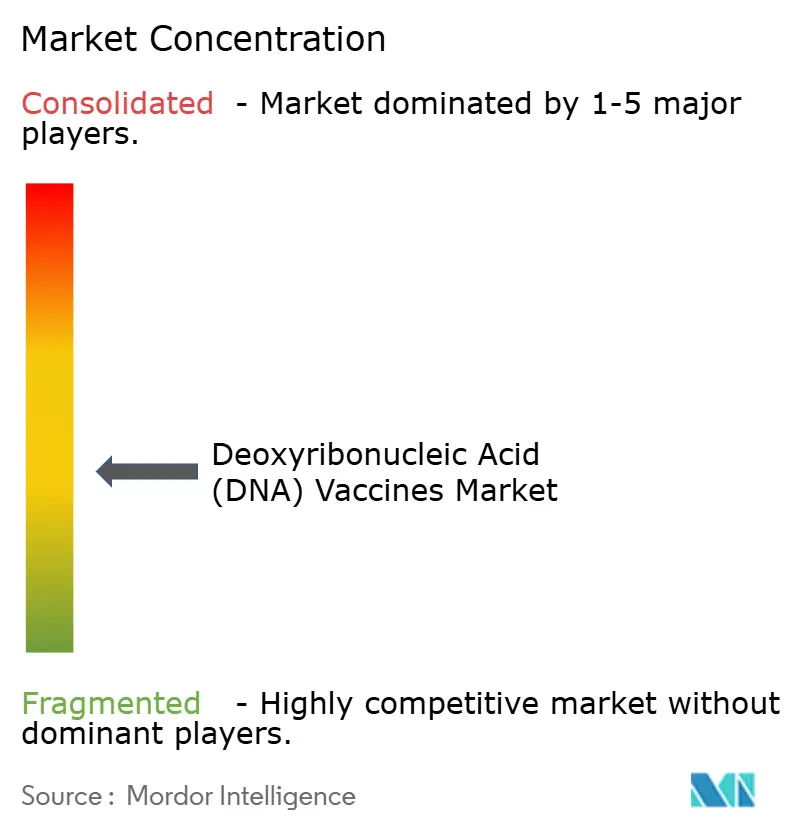
The DNA vaccines market remains fragmented, and no company controls the entire value chain. CDMOs such as Aldevron, NorthX Biologics, VGXI, and GeneOne Life Science serve developers with competing manufacturing approaches. Ichor Medical Systems and PharmaJet supply delivery technologies to more than one developer. Clinical-stage companies include INOVIO, Genexine, AnGes, Entos, and Takis Biotech. Their competition centers on antigen design, delivery systems, manufacturing access, and intellectual property. INOVIO's October 30, 2026, PDUFA date for INO-3107 is an important near-term milestone for the field.
Cell-free manufacturing is creating a separate source of competition to traditional plasmid CDMOs. Touchlight uses dbDNA manufacturing without bacterial fermentation and holds an MHRA GMP license. LineaRx is developing a PCR-based linear DNA alternative. Touchlight's partnership with Ceva Animal Health extends this approach into animal health. Aldevron opened an Innovation Center in Waltham in July 2025 for cell-free DNA, mRNA analytics, gene editing, and advanced therapy manufacturing. These moves show that manufacturing technology and scale are becoming central competitive factors.
Companion diagnostics and biomarker assays are a possible gap in therapeutic DNA vaccine development. They could help identify patients who are more likely to respond to personalized cancer vaccines. Developers also face the need to reduce device burden while maintaining immunogenicity. Partnerships with specialist manufacturers can lower these execution risks. The market concentration score is 3 out of 10 because the source material identifies a fragmented ecosystem with no top-player share or top-five combined share that would indicate concentrated control. The competitive position of each company will depend on approval progress, clinical evidence, delivery practicality, and manufacturing reliability.
Deoxyribonucleic Acid (DNA) Vaccines Industry Leaders
-
Boehringer Ingelheim Animal Health USA Inc.
-
Eurogentec S.A.
-
Takara Bio Inc.
-
Touchlight Genetics Ltd.
-
Zoetis Inc.
- *Disclaimer: Major Players sorted in no particular order
Deoxyribonucleic Acid (DNA) Vaccines Market Companies Covered in this Report
- Applied DNA Sciences, Inc.
- AnGes, Inc.
- AGC Biologics
- Aldevron LLC
- Boehringer Ingelheim Animal Health USA Inc.
- Eurogentec S.A.
- Enzene Biosciences Limited
- Entos Pharmaceuticals Inc.
- Genexine, Inc.
- GeneOne Life Science, Inc.
- INOVIO Pharmaceuticals, Inc.
- Ichor Medical Systems, Inc.
- LineaRx, Inc.
- NorthX Biologics AB
- PharmaJet, Inc.
- Takara Bio
- Touchlight Genetics Ltd.
- Takis Biotech S.r.l.
- VGXI, Inc.
- Waisman Biomanufacturing
- Zydus Lifesciences Limited
- Zoetis
Recent Industry Developments in Deoxyribonucleic Acid (DNA) Vaccines Market
- July 2026: Touchlight Genetics' cell-free enzymatic dbDNA platform enabled first patient dosing in the NEOVACC Phase I personalized lung cancer vaccine trial, led by The Clatterbridge Cancer Centre and University of Liverpool. The trial, funded by a GBP 2.66 million, equivalent to USD 3.4 million, Medical Research Council grant, targets 10 patients with advanced non-small cell lung cancer and is the first personalized cancer vaccine trial in the UK manufactured entirely through a cell-free DNA process.
- May 2026: VGX-3100 achieved positive topline results from its China Phase III trial. The trial enrolled 207 participants across 22 Chinese tertiary hospitals, met the primary efficacy endpoint with statistical superiority over placebo, and reported a favorable safety profile.
- January 2026: Fosun Wanbang secured exclusive Greater China commercialization rights for VGX-3100 from Beijing Dongfanglue Biomedicine. The arrangement included CNY 800 million, equivalent to USD 113 million, in combined upfront and milestone payments, plus double-digit sales royalties.
- December 2025: The FDA accepted INOVIO's BLA for INO-3107 under accelerated approval and set an October 30, 2026 target action date. The candidate targets adults with recurrent respiratory papillomatosis caused by HPV-6 and HPV-11.
Global Deoxyribonucleic Acid (DNA) Vaccines Market Report Scope
The deoxyribonucleic acid (DNA) vaccines market encompasses the research, development, production, and commercialization of vaccines that utilize genetically engineered DNA to stimulate an immune response. Unlike traditional vaccines, DNA vaccines introduce a plasmid containing the DNA sequence encoding a specific antigen directly into human or animal cells, prompting the body to produce the antigen and subsequently develop protective immunity. This market includes both human and animal health applications, driven by the technology's rapid development capabilities, high stability, and cost-effective manufacturing processes.
The deoxyribonucleic acid (DNA) vaccines market is segmented by type, vaccine purpose, technology platform, delivery method, route of administration, end user, and geography. By Type, the market is segmented into Human DNA Vaccines and Animal DNA Vaccines. By Vaccine Purpose, the market is segmented into Prophylactic DNA Vaccines, Therapeutic DNA Vaccines. By Technology Platform, the market is segmented into Plasmid DNA Vaccines Technology, Linear DNA Vaccines Technology, Minicircle DNA Vaccines Technology, Other DNA Constructs. By Delivery Method , the market is segmented into Electroporation, Needle-Free Injection, Suction-Based Delivery, Lipid and Nanoparticle Delivery, Liposome and Polymer Delivery, Other Delivery Methods. By Route of Administration, the market is segmented into Intradermal, Intramuscular, Subcutaneous, Oral and Mucosal, Other Routes of Administration. By Indication, the market is segmented into Infectious Diseases (COVID-19, Human Papillomavirus-Related Disease, Zika Virus Disease, MERS-CoV Infection, Influenza, Other Infectious Diseases), Oncology, Allergies and Autoimmune Conditions, Other Human Indications, Veterinary Diseases. By End User, the market is segmented into Hospitals and Clinics, Veterinary Hospitals and Clinics, Government and Public-Health Suppliers, Research Institutes and Academic Centers, Pharmaceutical and Biotechnology Companies. The geography segment is further divided into North America, Europe, Asia-Pacific, the Middle East and Africa, and South America. The report also covers the estimated market sizes and trends for 17 countries across major regions globally. The report offers the market size and forecasts in value (USD) for the above segments.
Segmentation Overview
| Human DNA Vaccines |
| Animal DNA Vaccines |
| Prophylactic DNA Vaccines |
| Therapeutic DNA Vaccines |
| Plasmid DNA Vaccines Technology |
| Linear DNA Vaccines Technology |
| Minicircle DNA Vaccines Technology |
| Other DNA Constructs |
| Electroporation |
| Needle-Free Injection |
| Suction-Based Delivery |
| Lipid and Nanoparticle Delivery |
| Liposome and Polymer Delivery |
| Other Delivery Methods |
| Intradermal |
| Intramuscular |
| Subcutaneous |
| Oral and Mucosal |
| Other Routes of Administration |
| Infectious Diseases |
| Oncology |
| Allergies and Autoimmune Conditions |
| Other Human Indications |
| Veterinary Diseases |
| Hospitals and Clinics |
| Veterinary Hospitals and Clinics |
| Government and Public-Health Suppliers |
| Research Institutes and Academic Centers |
| Pharmaceutical and Biotechnology Companies |
| North America | United States |
| Canada | |
| Mexico | |
| Europe | Germany |
| United Kingdom | |
| France | |
| Italy | |
| Spain | |
| Rest of Europe | |
| Asia-Pacific | China |
| Japan | |
| India | |
| Australia | |
| South Korea | |
| Rest of Asia-Pacific | |
| Middle East & Africa | GCC |
| South Africa | |
| Rest of Middle East & Africa | |
| South America | Brazil |
| Argentina | |
| Rest of South America |
| By Type | Human DNA Vaccines | |
| Animal DNA Vaccines | ||
| By Vaccine Purpose | Prophylactic DNA Vaccines | |
| Therapeutic DNA Vaccines | ||
| By Technology Platform | Plasmid DNA Vaccines Technology | |
| Linear DNA Vaccines Technology | ||
| Minicircle DNA Vaccines Technology | ||
| Other DNA Constructs | ||
| By Delivery Method | Electroporation | |
| Needle-Free Injection | ||
| Suction-Based Delivery | ||
| Lipid and Nanoparticle Delivery | ||
| Liposome and Polymer Delivery | ||
| Other Delivery Methods | ||
| By Route of Administration | Intradermal | |
| Intramuscular | ||
| Subcutaneous | ||
| Oral and Mucosal | ||
| Other Routes of Administration | ||
| By Indication | Infectious Diseases | |
| Oncology | ||
| Allergies and Autoimmune Conditions | ||
| Other Human Indications | ||
| Veterinary Diseases | ||
| By End User | Hospitals and Clinics | |
| Veterinary Hospitals and Clinics | ||
| Government and Public-Health Suppliers | ||
| Research Institutes and Academic Centers | ||
| Pharmaceutical and Biotechnology Companies | ||
| By Geography | North America | United States |
| Canada | ||
| Mexico | ||
| Europe | Germany | |
| United Kingdom | ||
| France | ||
| Italy | ||
| Spain | ||
| Rest of Europe | ||
| Asia-Pacific | China | |
| Japan | ||
| India | ||
| Australia | ||
| South Korea | ||
| Rest of Asia-Pacific | ||
| Middle East & Africa | GCC | |
| South Africa | ||
| Rest of Middle East & Africa | ||
| South America | Brazil | |
| Argentina | ||
| Rest of South America | ||
Key Questions Answered in the Report
What is driving DNA vaccines demand through 2031?
The category is forecast to grow at a 7.18% CAGR from 2026 to 2031, supported by stable storage, reusable plasmid designs, oncology programs, and animal health applications.
How large will DNA vaccines become by 2031?
The DNA vaccines market size is projected to reach USD 822.92 million by 2031, from USD 581.74 million in 2026.
Which DNA vaccine application is growing fastest?
Oncology is the fastest-growing indication, with a projected 9.21% CAGR through 2031, as personalized neoantigen programs advance clinically.
Why is lipid nanoparticle delivery important for DNA vaccines?
Lipid and nanoparticle delivery is projected to grow at an 8.82% CAGR because it may reduce dependence on electroporation equipment and improve practical delivery.
Which region has the highest projected growth for DNA vaccines?
Asia-Pacific is forecast to grow at an 8.76% CAGR from 2026 to 2031, supported by activity in India, China, South Korea, Japan, and Australia.