
Connected Medical Device Software Market Size and Share
Market Overview
| Study Period | 2020 - 2031 |
|---|---|
| Market Size (2026) | USD 12.95 Billion |
| Market Size (2031) | USD 25.32 Billion |
| Growth Rate (2026 - 2031) | 14.34 % |
| Fastest Growing Market | Asia-Pacific |
| Largest Market | North America |
| Market Concentration | Medium |
Major Players *Disclaimer: Major Players sorted in no particular order Image © Mordor Intelligence. Reuse requires attribution under CC BY 4.0. | |
Connected Medical Device Software Market Analysis by Mordor Intelligence
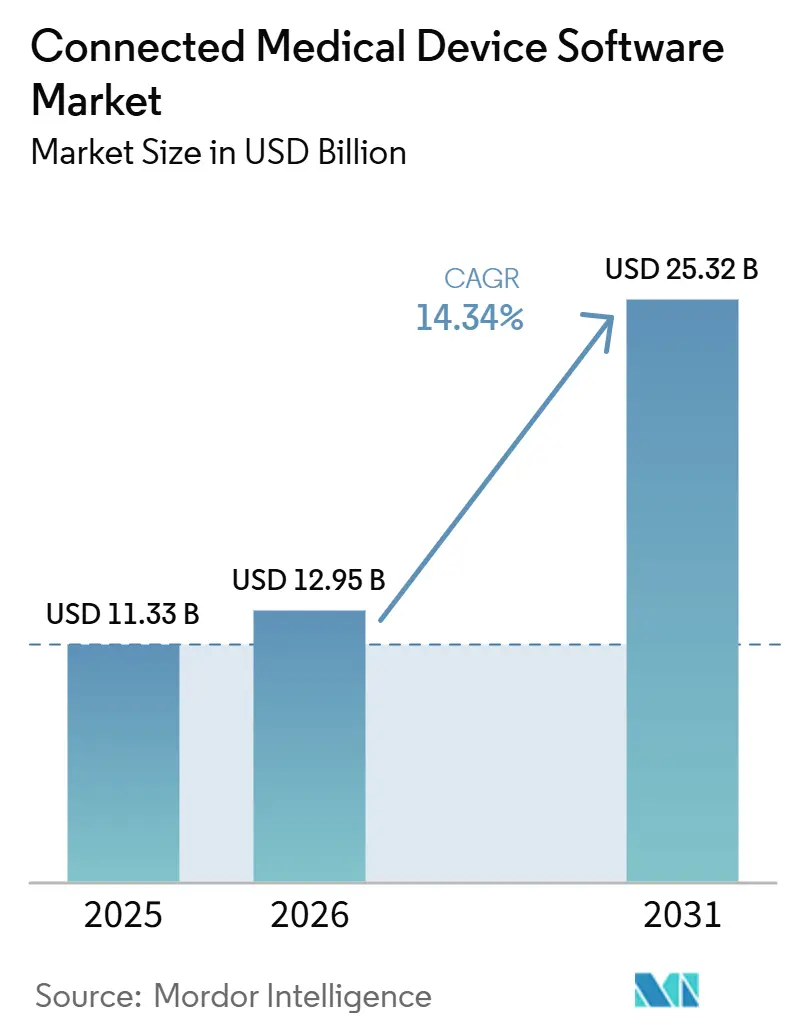
The Connected Medical Device Software Market size was valued at USD 11.33 billion in 2025 and is estimated to grow from USD 12.95 billion in 2026 to reach USD 25.32 billion by 2031, at a CAGR of 14.34% during the forecast period (2026-2031).
Growth rests on broader reimbursement for remote physiologic and therapeutic monitoring, stricter software requirements, and shortages of intensive care physicians and neurologists. These conditions are moving clinical oversight beyond conventional hospital settings and toward connected care channels. The FDA's February 2026 cybersecurity guidance places greater emphasis on software bills of materials and post-market maintenance for cyber devices. This makes continuous updates, security controls, and documented software processes more important in procurement decisions. It also favors suppliers that can maintain connected platforms over time rather than only sell medical hardware.
Key Report Takeaways
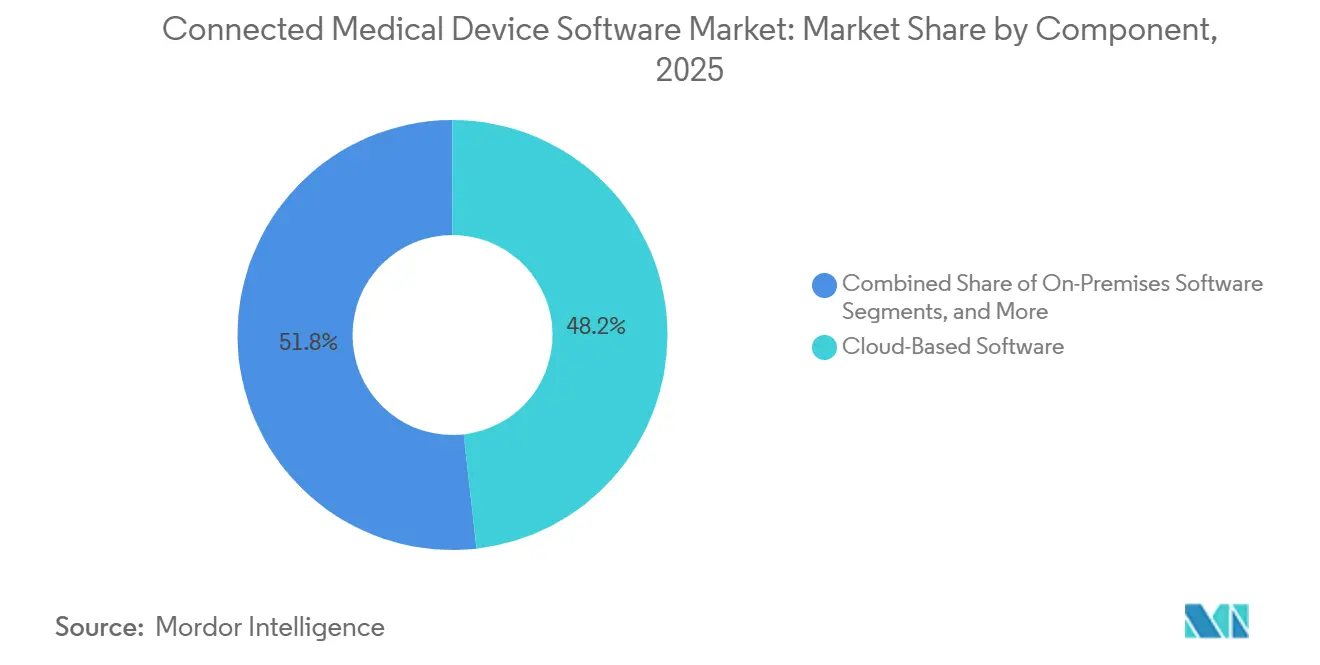
- By component, cloud-based software held 48.22% of the share of the connected medical device software market in 2025, while hybrid software is projected to grow at a 17.86% CAGR through 2031.
- By connectivity, wired connectivity held 57.68% of the share of the connected medical device software market in 2025, while wireless connectivity is projected to expand at a 19.67% CAGR through 2031.
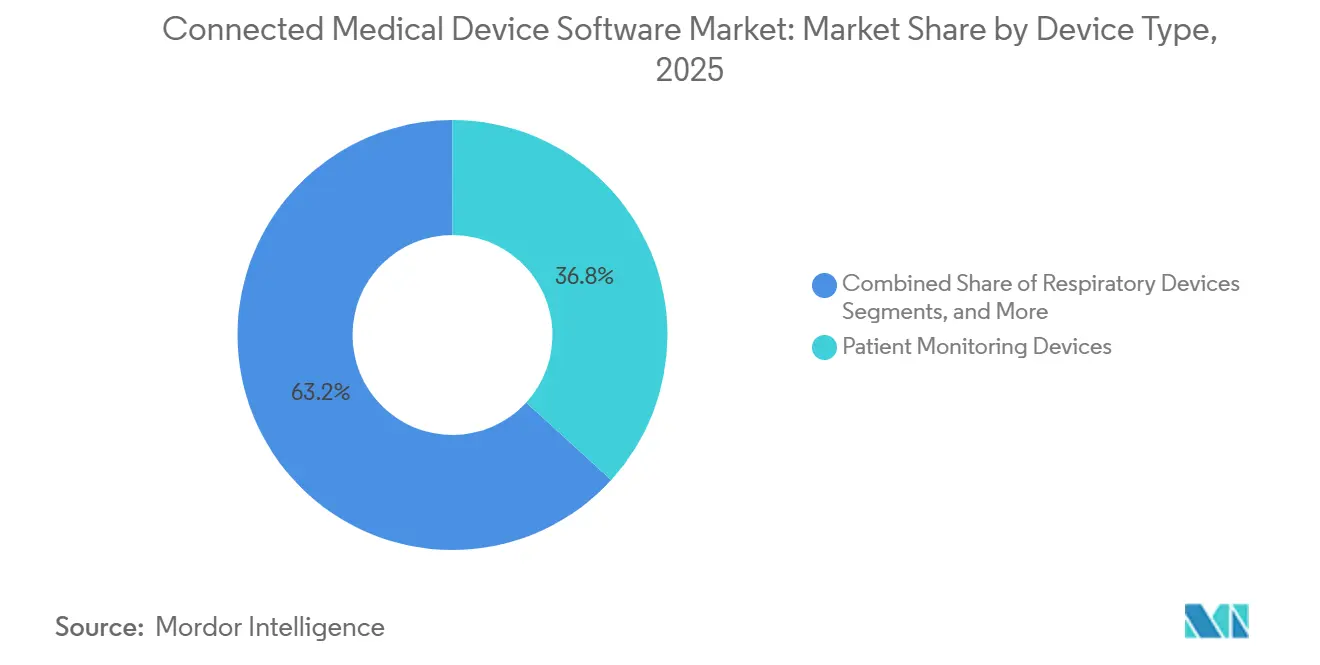
- By device type, patient monitoring devices held 36.78% of the share of the connected medical device software market in 2025, while wearable and home medical devices are projected to grow at an 18.35% CAGR through 2031.
- By application, continuous patient monitoring held 45.37% of the share of the connected medical device software market in 2025, while Tele-ICU and Tele-Stroke is projected to grow at a 19.45% CAGR through 2031.
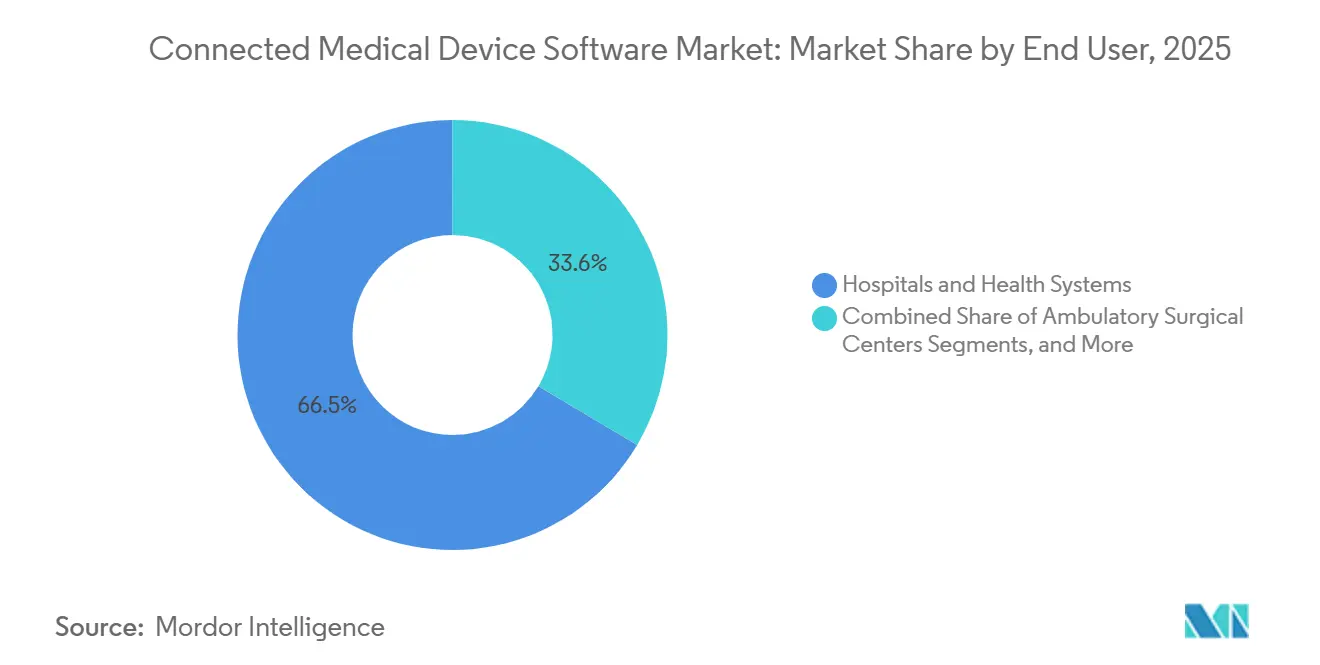
- By end user, hospitals and health systems held 66.45% of the share of the connected medical device software market in 2025, while home healthcare providers are projected to grow at a 17.45% CAGR through 2031.
- By geography, North America held 39.76% of the share of the connected medical device software market in 2025, while Asia-Pacific is projected to grow at an 18.56% CAGR through 2031.
Note: Market size and forecast figures in this report are generated using Mordor Intelligence’s proprietary estimation framework, updated with the latest available data and insights as of January 2026.
Global Connected Medical Device Software Market Trends and Insights
Drivers Impact Analysis*
| DRIVER | (~) % IMPACT ON CAGR FORECAST | GEOGRAPHIC RELEVANCE | IMPACT TIMELINE |
|---|---|---|---|
| Remote physiologic and therapeutic monitoring expansion | +3.5% | North America, Europe, and Asia-Pacific | Short term (≤ 2 years) |
| Interoperability and ehr integration requirements | +2.8% | Global, especially the United States, Germany, and South Korea | Medium term (2-4 years) |
| Home-based and decentralized care growth | +2.5% | North America, Europe, and Asia-Pacific | Short term (≤ 2 years) to Long term (≥ 4 years) |
| Cybersecurity-by-design requirements | +1.2% | North America and the European Union, extending to Asia-Pacific and Middle East and Africa | Medium term (2-4 years) |
| Ai-enabled predictive monitoring and workflow automation | +2.0% | Global, with strong activity in the United States, Japan, and South Korea | Medium term (2-4 years) |
| Device fleet complexity and vendor-neutral orchestration demand | +1.0% | North America, Europe, and large Asia-Pacific health systems | Medium term (2-4 years) |
| Source: Mordor Intelligence | |||
Expansion of Remote Physiologic and Therapeutic Monitoring
CMS finalized CPT codes 98975–98980 for remote therapeutic monitoring, anchoring software procurement cycles for connected device platforms and making reimbursement-driven demand a structural market feature. The FDA’s December 2025 TEMPO Digital Health Devices Pilot granted enforcement discretion on premarket requirements while generating real-world evidence. Dexcom entered as its first participant in July 2026, deploying an AI-powered glucose health program that integrated G7 and Stelo CGM data with contextual nutrition, sleep, and activity signals. Edwards Lifesciences’ May 2025 HePI algorithm clearance and June 2026 Respiration Rate algorithm clearance showed how vendors expanded software revenue by adding AI-enabled parameter detection to existing connected hardware.
Interoperability and Electronic Health Record Integration Requirements
EHR integration advanced from a procurement preference to a contractual mandate for hospital-grade connected device software, as ONC’s FHIR interoperability rules required certified EHR technology to support standardized API interfaces across US non-federal acute care hospitals. Germany’s hospital sector followed a similar path, with SAP and Fresenius announcing a January 2026 collaboration to build a sovereign European health ecosystem using HL7 FHIR interfaces and KHZG digitalization program funding. FHIR adoption weakened proprietary data moats, increasing margin pressure on vendors without cross-platform analytics differentiation. ISO/IEC 80001-1 remained the leading global compliance framework, while EU MDR Article 83 added post-market software surveillance obligations for European market access.
AI-Enabled Predictive Monitoring and Clinical Workflow Automation
AI shifted from single-algorithm features to unified inference platforms embedded in connected monitoring hardware, creating continuous clinical intelligence capabilities that required sustained software investment. Masimo received FDA 510(k) clearance in June 2026 for AI-enabled OIRD detection on its Radius VSM wearable continuous patient monitor, combining SET pulse oximetry with advanced pattern recognition for escalating clinical alarms. Medtronic unveiled Touch Surgery Aide in July 2026, an AI-native surgical compute platform built on NVIDIA Holoscan and TensorRT for real-time OR insights in the Hugo robotic surgery system. The FDA’s January 2026 CDS guidance clarified regulatory pathways for continuous physiologic data streams, while the EU AI Act classified related AI-enabled medical device software as high risk.
Growth of Home-Based and Decentralized Care
Home-based care became the fastest-growing deployment environment for connected device software, supported by CMS reimbursement incentives, post-acute discharge pressure, and proven clinical equivalence across chronic indications. ResMed received FDA clearance in December 2025 for Smart Comfort, an AI-enabled digital medical device trained on more than 100 million de-identified nights of sleep data to recommend personalized CPAP comfort settings for home AirSense 11 users. ResMed’s AirConnect Dx launch for NHS sleep services in May 2026 reduced OSA referral-to-diagnosis time by 90–97%, from 3–12 months to 8–21 days, while tripling diagnostic capacity using existing staff. South Korea’s DMPA, effective January 2025, and Japan’s DASH for SaMD 2 program enabled faster APAC market entry for connected home monitoring software.
Restraints Impact Analysis*
| RESTRAINT | (~) % IMPACT ON CAGR FORECAST | GEOGRAPHIC RELEVANCE | IMPACT TIMELINE |
|---|---|---|---|
| Fragmented legacy protocols and proprietary device architectures | -2.1% | Global, with greatest severity in multi-vendor hospitals in Asia-Pacific and South America | Medium term (2-4 years) |
| High integration, validation, and lifecycle-maintenance costs | -1.5% | Global, especially community hospitals and mid-tier health systems in North America and Europe | Medium term (2-4 years) to Long term (≥ 4 years) |
| Cybersecurity liability and patient-data privacy exposure | -1.3% | North America, the European Union, and maturing Asia-Pacific markets | Short term (≤ 2 years) to Medium term (2-4 years) |
| Alert fatigue, workflow misalignment, and clinician adoption barriers | -1.0% | Global, particularly high-acuity inpatient settings | Medium term (2-4 years) |
| Source: Mordor Intelligence | |||
Fragmented Legacy Protocols and Proprietary Device Architectures
The installed device base across most large health systems includes HL7 v2, DICOM, proprietary serial protocols, and newer FHIR-enabled APIs. This architectural disparity limits the ability of vendor-neutral middleware to resolve integration challenges. Germany's DigitalRadar assessment scored hospitals on connected device integration as a discrete digitalization metric, and published interim data indicated that a material share of surveyed facilities still relied on manual data transfer between bedside devices and clinical information systems. China's NMPA released YY/T 1406-2026 in March 2026, revising software risk management requirements and requiring manufacturers with legacy validation frameworks to conduct fresh assessments before maintaining connected product market authorizations.
High Integration, Validation, and Lifecycle-Maintenance Costs
Software validation under IEC 62304 remains a sustained obligation, as connected device software requires regression testing with every hardware update, OS patch, and clinical workflow revision rather than a one-time approval event. The FDA's February 2026 cybersecurity guidance introduced mandatory SBOM documentation for all cyber devices under Section 524B, adding dependency-tracking obligations that small manufacturers without dedicated software quality infrastructure struggle to absorb. Compliance requirements under IEC 62304 and ISO 14971 apply globally, while EU MDR Article 61 adds a distinct post-market clinical evidence layer for European market access.
*Our forecasts treat driver/restraint impacts as directional, not additive. The impact forecasts reflect baseline growth, mix effects, and variable interactions.
Segment Analysis
By Component: Cloud Platforms Lead While Hybrid Systems Gain Ground
Cloud-based software held 48.22% of the connected medical device software market in 2025. It supported multi-site deployment, centralized alarm normalization, and rolling software updates, aligning with post-market maintenance and security management needs. Persistent connectivity also supported continuous clinical data review and periodic reporting obligations in Europe. On-premises software remained relevant where data residency rules limited cross-border health-data transfers, while large health systems in Asia-Pacific favored local deployment under national privacy and data-control rules.
Hybrid software is forecast to grow at a CAGR of 17.86% from 2026 to 2031, the fastest rate among component types. It enables time-sensitive processing at the bedside or local edge while storing longitudinal information in the cloud for population-level analysis. Hospital procurement teams increasingly specify hybrid-capable platforms in requests for proposals. The connected medical device software market size for hybrid solutions is supported by the need for both rapid response and enterprise-wide data access.



By Connectivity: Wired Networks Remain Central While Wireless Monitoring Expands
Wired connectivity held 57.68% of the connected medical device software market in 2025. Intensive care units and operating rooms continued to depend on hardwired networks for continuous critical monitoring. These settings required dependable connections and limited unmanaged radio-frequency interference. The connected medical device software market continued to rely on wired networks where uninterrupted high-acuity monitoring was required.
Wireless connectivity is forecast to grow at a CAGR of 19.67% from 2026 to 2031. Wi-Fi 6E and private 5G deployments address latency and interference concerns that previously restricted wireless monitoring to lower-acuity uses. Hospitals are adopting hybrid connectivity models that retain wired backup paths for critical alerts. The connected medical device software market size for wireless connectivity grows as hospitals extend monitoring beyond fixed bedside locations.Patient monitoring devices held 36.78% of the connected medical device software market in 2025. Their position reflected widespread use in intensive care, telemetry, and general ward environments. Medtronic and GE HealthCare expanded their alliance in March 2026 to integrate Nellcor pulse oximetry, Microstream capnography, INVOS regional oximetry, and BIS brain monitoring with GE HealthCare monitoring platforms. The collaboration reduced interface complexity for health systems operating devices from both companies.
Wearable and home medical devices are forecast to grow at a CAGR of 18.35% from 2026 to 2031. Their growth follows broader clinical acceptance of ambulatory monitoring for arrhythmia, glucose management, and sleep-disordered breathing. The ZEUS Platform received FDA 510(k) clearance in May 2026 as AI- and machine-learning-enabled software that analyzes continuous ECG recordings from Zio monitors and generates arrhythmia reports with 99% physician agreement. The connected medical device software market size for wearable and home devices benefits from these expanding clinical applications.
By Device Type: Patient Monitoring Leads While Wearables Extend Care Beyond Hospitals
Patient monitoring devices held 36.78% of the connected medical device software market in 2025. Their position reflected widespread use in intensive care, telemetry, and general ward environments. Medtronic and GE HealthCare expanded their alliance in March 2026 to integrate Nellcor pulse oximetry, Microstream capnography, INVOS regional oximetry, and BIS brain monitoring with GE HealthCare monitoring platforms. The collaboration reduced interface complexity for health systems operating devices from both companies.
Wearable and home medical devices are forecast to grow at a CAGR of 18.35% from 2026 to 2031. Their growth follows broader clinical acceptance of ambulatory monitoring for arrhythmia, glucose management, and sleep-disordered breathing. The ZEUS Platform received FDA 510(k) clearance in May 2026 as AI- and machine-learning-enabled software that analyzes continuous ECG recordings from Zio monitors and generates arrhythmia reports with 99% physician agreement. The connected medical device software market size for wearable and home devices benefits from these expanding clinical applications.
By Application: Continuous Monitoring Leads While Tele-ICU and Tele-Stroke Grow Fastest
Continuous patient monitoring held 45.37% of the connected medical device software market in 2025. Its scale came from established bedside monitoring across acute care environments, with rising adoption in step-down units and general wards. Edwards Lifesciences added AI-enabled parameter detection to its HemoSphere platform through the HePI and Respiration Rate algorithms. This strategy expanded software capability without requiring the replacement of installed hardware.
Tele-ICU and Tele-Stroke are forecast to grow at a CAGR of 19.45% from 2026 to 2031. Non-metropolitan hospitals need specialist support when intensivists and neurologists are not available on site. Improved real-time biosignal transmission allows remote specialists to review connected patient data and guide local teams. The connected medical device software market size for Tele-ICU and Tele-Stroke grows with the need to extend specialist oversight across facilities.
By End User: Hospitals Anchor Demand While Home Healthcare Providers Grow Faster
Hospitals and health systems held 66.45% of the connected medical device software market in 2025. They aggregated large device fleets and set interoperability and cybersecurity requirements across multiple clinical departments. Stryker's March 2026 SmartHospital Platform combined ambient sensing, voice-enabled communication, and alarm filtering for this environment. The connected medical device software market remained centered on hospitals because they were the main buyers of multi-brand orchestration platforms.
Home healthcare providers are forecast to grow at a CAGR of 17.45% from 2026 to 2031. Post-acute care needs and chronic disease management require monitoring that continues after hospital discharge. Skilled nursing and long-term care facilities present an additional opportunity because they manage patients with significant cardiopulmonary needs. The connected medical device software market size for home healthcare providers rises as care delivery moves beyond acute hospital walls.
Geography Analysis
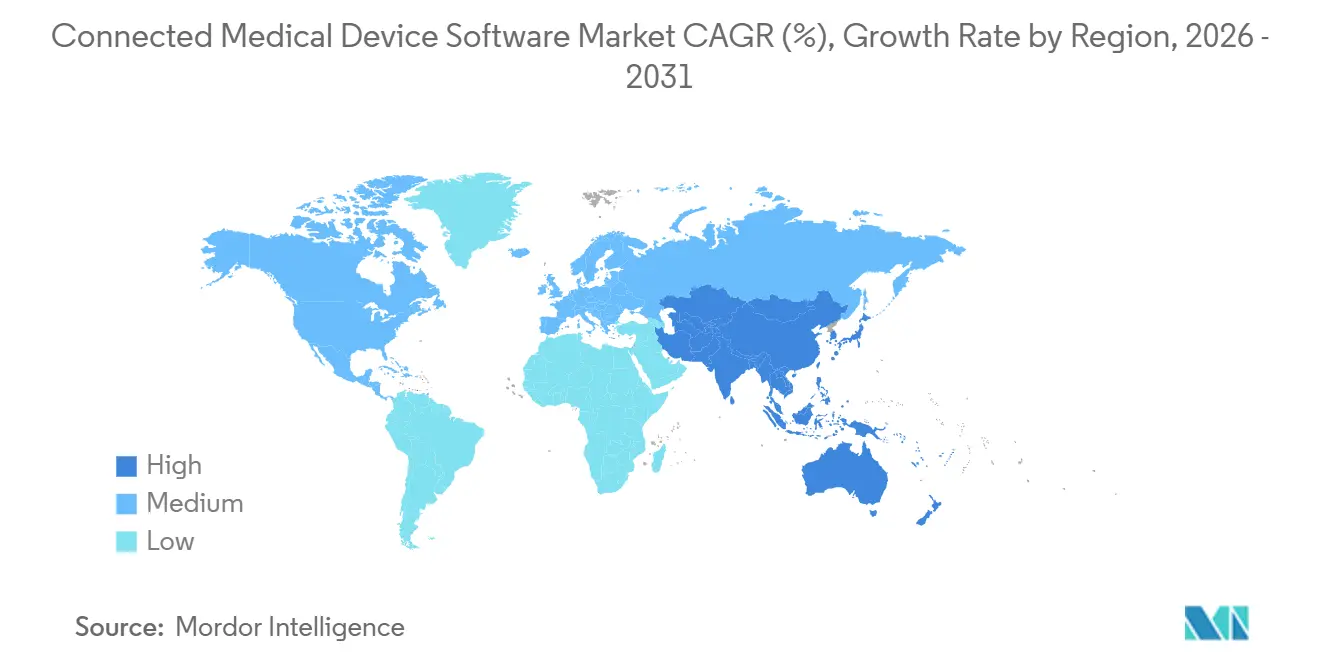
North America held 39.76% of the connected medical device software market share in 2025. The region benefited from established remote monitoring reimbursement, high hospital device density, and active FDA oversight of digital health. The TEMPO pilot supported real-world evidence collection for software-enabled connected devices. U.S. hospitals also had a growing base of FHIR-based data exchange and standardized interfaces. Europe held the second-largest regional position, with Germany influencing procurement through EU MDR requirements, hospital digitalization funding, and its digital health environment.
Asia-Pacific is forecast to grow at a CAGR of 18.56% from 2026 to 2031, making it the fastest-growing regional market. Major regional markets are advancing regulatory modernization alongside healthcare infrastructure investment. Japan's DASH for SaMD 2 program supports faster review pathways for eligible connected monitoring software. South Korea's Digital Medical Products Act is increasing the relevance of digital health support devices for hospital buyers. China's revised YY/T 1406-2026 software requirements create demand for updated validation documentation, while India's private hospital groups and Australia's hospital-at-home programs are expanding adoption.
The Middle East and Africa and South America remain earlier-stage regions in the connected medical device software market. Adoption is concentrated among private healthcare groups and major public hospital projects. In GCC countries, new hospital construction offers a simpler integration environment than legacy upgrades in North America and Europe. Saudi Arabia's Vision 2030 programs and UAE digital health mandates support connected monitoring deployments, while Brazil's digital health activity and South Africa's health system changes indicate longer-term public-sector demand.

Competitive Landscape
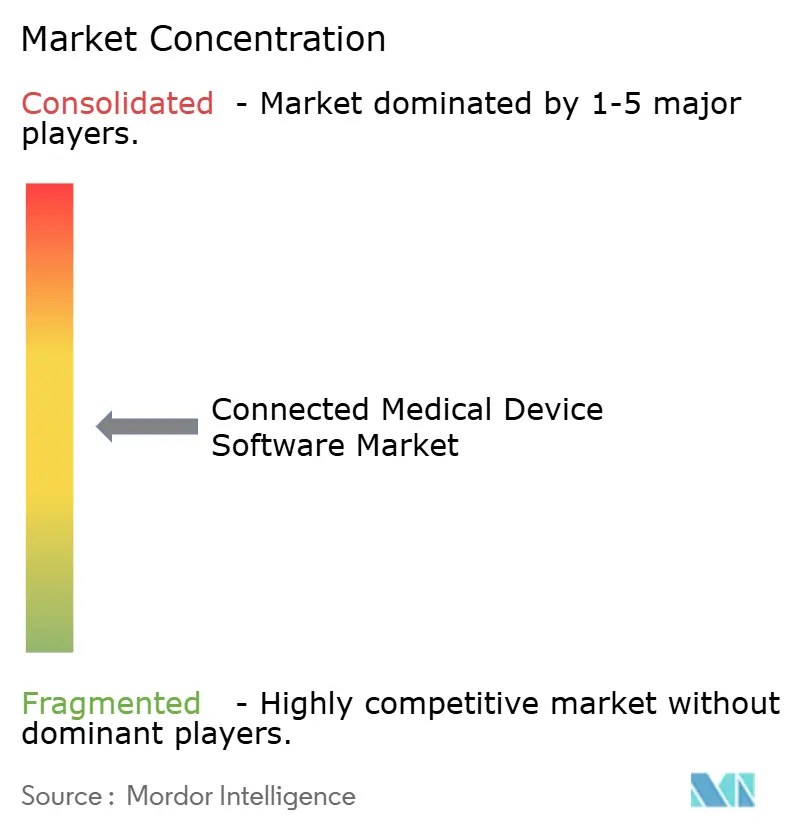
The connected medical device software market remains moderately concentrated at the platform level. Medtronic, GE HealthCare, Koninklijke Philips, ResMed, and Masimo operate across multiple device types and clinical applications. Below this group, the market is more fragmented, with specialized software suppliers, wearable-focused companies, and platforms linked to electronic health records. Larger suppliers compete by integrating devices, data, and workflows into broader care ecosystems, helping hospitals manage complex, multi-vendor fleets. This makes continued software investment a key competitive requirement, while specialized applications remain less concentrated as smaller developers focus on specific workflows or device categories.
Strategic developments in 2026 showed how leading companies were expanding these ecosystems. Stryker’s SmartHospital Platform combined Care.ai, Vocera, and Engage capabilities into a connected care offering. In March 2026, Medtronic and GE HealthCare expanded their global alliance to integrate several monitoring technologies with GE HealthCare platforms. In June 2026, GE HealthCare received FDA 510(k) clearance for MIM Contour ProtégéAI+ 2.0, including a Predetermined Change Control Plan for future AI model updates. These actions supported continuous product improvement, stronger data integration, and broader clinical utility, while showing how larger vendors combined regulatory, technical, and commercial capabilities.
Vendor-neutral fleet orchestration and predictive platforms for community hospitals, skilled nursing facilities, and home settings remain important competitive areas, as these settings often lack the technology resources to manage multiple systems independently. Electronic health record providers also increase competitive pressure by bringing device-generated data closer to established clinical workflows. Epic’s Aura diagnostic platform and Oracle Health device data streams can reduce the gap between EHR records and device outputs. Security standards are becoming a procurement filter, raising entry costs for smaller companies, while suppliers must offer cross-platform analytics instead of relying only on proprietary device connectivity.
Connected Medical Device Software Industry Leaders
GE HealthCare Technologies Inc.
Koninklijke Philips N.V.
Medtronic plc
Siemens Healthineers AG
Abbott Laboratories
- *Disclaimer: Major Players sorted in no particular order

Recent Industry Developments
- July 2026: Dexcom was named the first participant in the FDA’s TEMPO Digital Health Devices Pilot, integrating G7 and Stelo CGM data with nutrition, sleep, physical activity, and stress signals.
- July 2026: Medtronic unveiled Touch Surgery Aide at the Society of Robotic Surgery 2026 Annual Meeting, using NVIDIA Holoscan, CUDA, and TensorRT for real-time AI applications in Hugo RAS procedures.
- June 2026: GE HealthCare received FDA 510(k) clearance for MIM Contour ProtégéAI+ 2.0, including a Predetermined Change Control Plan for AI model updates across additional anatomical regions without a new submission.
- May 2026: iRhythm Technologies received FDA 510(k) clearance for the ZEUS Platform, K252859, enabling AI- and machine-learning-based analysis of continuous ECG recordings from Zio wearable monitors.
- May 2026: ResMed launched AirConnect Dx for NHS sleep services, reducing referral-to-diagnosis time by 90-97%, lowering retest rates to 0-7%, and tripling diagnostic capacity.
- March 2026: Stryker launched the SmartHospital Platform at HIMSS 2026, connecting care teams and device data through Care.ai sensors, Vocera Sync Badge communication, and Engage alarm filtering.


Global Connected Medical Device Software Market Report Scope
As per the scope of the report, connected medical device software is a digital programs that run on or connect to healthcare hardware, including Software as a Medical Device (SaMD), which performs standalone medical functions, and Software in a Medical Device (SiMD), which is embedded inside physical equipment.
The connected medical device software market is segmented by component, connectivity, device type, application, end user, and geography. By component, the market includes cloud-based software, on-premises software, edge-based software, and hybrid software. By connectivity, the market is segmented into wired connectivity, wireless connectivity, and hybrid connectivity. By device type, the market is categorized into patient monitoring devices, respiratory devices, infusion and drug delivery devices, diagnostic and imaging devices, cardiac and implantable devices, surgical and perioperative devices, wearable and home medical devices, and others. By application, the market includes continuous patient monitoring, remote physiologic monitoring, remote therapeutic monitoring, Tele-ICU and Tele-stroke, chronic disease management, medication adherence and optimization, early warning and deterioration detection, predictive maintenance and asset utilization, clinical research and real-world evidence, and others. By end user, the market is segmented into hospitals and health systems, ambulatory surgical centers, diagnostic and imaging centers, clinics and physician practices, home healthcare providers, skilled nursing and long-term care facilities, and others. By geography, the market is analyzed across North America, Europe, Asia-Pacific, the Middle East and Africa, and South America. The report also covers the estimated market sizes and trends for 17 countries across major regions globally. The report offers the market sizes and forecasts in terms of value (USD) for the above segments.
| Cloud-Based Software |
| On-Premises Software |
| Edge-Based Software |
| Hybrid Software |
| Wired Connectivity |
| Wireless Connectivity |
| Hybrid Connectivity |
| Patient Monitoring Devices |
| Respiratory Devices |
| Infusion and Drug-Delivery Devices |
| Diagnostic and Imaging Devices |
| Cardiac and Implantable Devices |
| Surgical and Perioperative Devices |
| Wearable and Home Medical Devices |
| Others |
| Continuous Patient Monitoring |
| Remote Physiologic Monitoring |
| Remote Therapeutic Monitoring |
| Tele-ICU and Tele-Stroke |
| Chronic Disease Management |
| Medication Adherence and Optimization |
| Early Warning and Deterioration Detection |
| Predictive Maintenance and Asset Utilization |
| Clinical Research and Real-World Evidence |
| Others |
| Hospitals and Health Systems |
| Ambulatory Surgical Centers |
| Diagnostic and Imaging Centers |
| Clinics and Physician Practices |
| Home Healthcare Providers |
| Skilled Nursing and Long-Term Care Facilities |
| Others |
| North America | United States |
| Canada | |
| Mexico | |
| Europe | Germany |
| United Kingdom | |
| France | |
| Italy | |
| Spain | |
| Rest of Europe | |
| Asia-Pacific | China |
| India | |
| Japan | |
| Australia | |
| South Korea | |
| Rest of Asia-Pacific | |
| Middle East and Africa | GCC |
| South Africa | |
| Rest of Middle East and Africa | |
| South America | Brazil |
| Argentina | |
| Rest of South America |
| By Component | Cloud-Based Software | |
| On-Premises Software | ||
| Edge-Based Software | ||
| Hybrid Software | ||
| By Connectivity | Wired Connectivity | |
| Wireless Connectivity | ||
| Hybrid Connectivity | ||
| By Device Type | Patient Monitoring Devices | |
| Respiratory Devices | ||
| Infusion and Drug-Delivery Devices | ||
| Diagnostic and Imaging Devices | ||
| Cardiac and Implantable Devices | ||
| Surgical and Perioperative Devices | ||
| Wearable and Home Medical Devices | ||
| Others | ||
| By Application | Continuous Patient Monitoring | |
| Remote Physiologic Monitoring | ||
| Remote Therapeutic Monitoring | ||
| Tele-ICU and Tele-Stroke | ||
| Chronic Disease Management | ||
| Medication Adherence and Optimization | ||
| Early Warning and Deterioration Detection | ||
| Predictive Maintenance and Asset Utilization | ||
| Clinical Research and Real-World Evidence | ||
| Others | ||
| By End User | Hospitals and Health Systems | |
| Ambulatory Surgical Centers | ||
| Diagnostic and Imaging Centers | ||
| Clinics and Physician Practices | ||
| Home Healthcare Providers | ||
| Skilled Nursing and Long-Term Care Facilities | ||
| Others | ||
| By Geography | North America | United States |
| Canada | ||
| Mexico | ||
| Europe | Germany | |
| United Kingdom | ||
| France | ||
| Italy | ||
| Spain | ||
| Rest of Europe | ||
| Asia-Pacific | China | |
| India | ||
| Japan | ||
| Australia | ||
| South Korea | ||
| Rest of Asia-Pacific | ||
| Middle East and Africa | GCC | |
| South Africa | ||
| Rest of Middle East and Africa | ||
| South America | Brazil | |
| Argentina | ||
| Rest of South America | ||


Key Questions Answered in the Report
What is the forecast for connected medical device software?
The connected medical device software market is USD 12.95 billion in 2026 and is forecast to reach USD 25.32 billion by 2031, at a 14.34% CAGR.
Which component is growing fastest in connected medical device software?
Hybrid software is forecast to grow at a 17.86% CAGR from 2026 to 2031 because it combines bedside processing with cloud-based longitudinal analysis.
Which connectivity type has the strongest growth outlook?
Wireless connectivity is forecast to expand at a 19.67% CAGR through 2031 as Wi-Fi 6E and private 5G support more mobile monitoring.
Which application is expanding fastest?
Tele-ICU and Tele-Stroke is forecast to grow at a 19.45% CAGR from 2026 to 2031, supported by shortages of intensivists and neurologists in non-metropolitan settings.
Which end user is the largest buyer of connected device software?
Hospitals and health systems held 66.45% share in 2025 because they manage large multi-vendor fleets and enterprise-wide software contracts.
Which region is growing fastest for connected device software?
Asia-Pacific is forecast to grow at an 18.56% CAGR through 2031 as major markets modernize digital health and software regulation.
Page last updated on:





