
Complement 3 Glomerulopathy (C3G) Treatment Market Size and Share
Market Overview
| Study Period | 2020 - 2031 |
|---|---|
| Market Size (2026) | USD 1.11 Billion |
| Market Size (2031) | USD 1.93 Billion |
| Growth Rate (2026 - 2031) | 11.75 % |
| Fastest Growing Market | Asia-Pacific |
| Largest Market | North America |
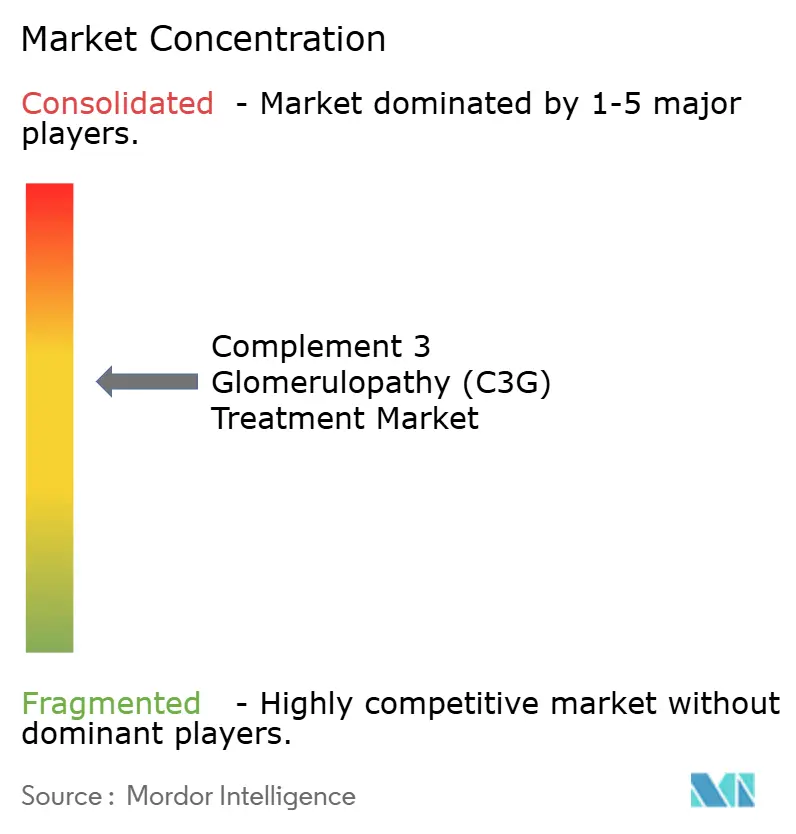
| Market Concentration | Medium |
Major Players *Disclaimer: Major Players sorted in no particular order Image © Mordor Intelligence. Reuse requires attribution under CC BY 4.0. | |
Complement 3 Glomerulopathy (C3G) Treatment Market Analysis by Mordor Intelligence
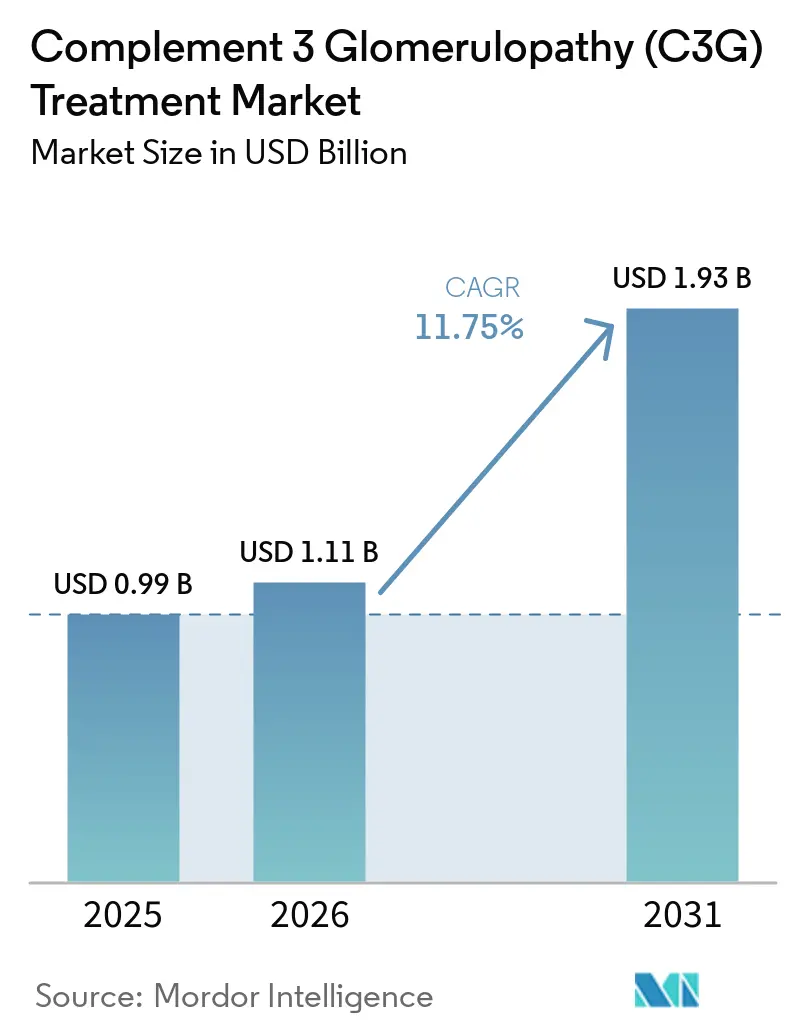
The Complement 3 Glomerulopathy (C3G) Treatment Market size was valued at USD 0.99 billion in 2025 and is estimated to grow from USD 1.11 billion in 2026 to reach USD 1.93 billion by 2031, at a CAGR of 11.75% during the forecast period (2026-2031).
The March 2025 approval of iptacopan and the July 2025 approval of pegcetacoplan changed care from broad, off-label immunosuppression toward therapies that directly target complement activity. The Complement 3 Glomerulopathy (C3G) treatment market now has a clearer route from diagnosis to treatment, although access still depends on specialist centers, vaccination, and reliable follow-up. North America remained the largest regional contributor in 2025, while Asia-Pacific is positioned for faster expansion as diagnostic and regulatory capacity develops. The Complement 3 Glomerulopathy (C3G) treatment market also draws investment across several targets in the complement pathway, which can widen future treatment choices. The small patient population, infection risk, and uneven access to biopsy and complement testing will continue to shape adoption.
Key Report Takeaways
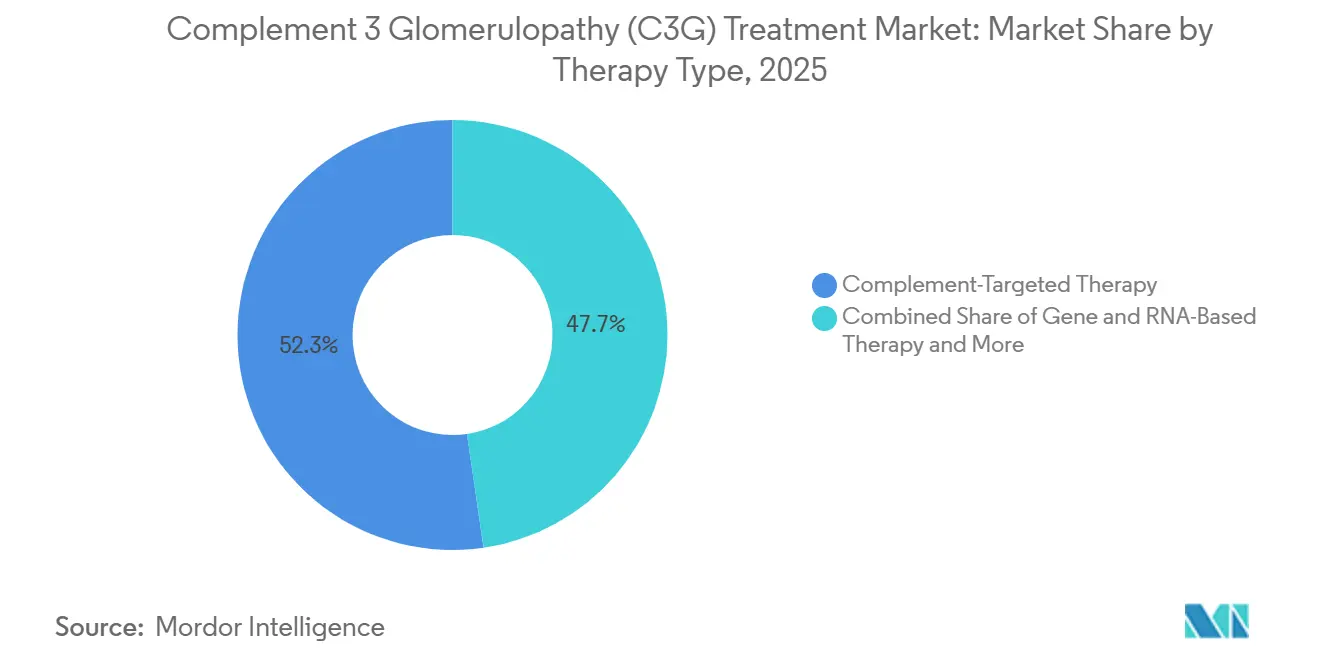
- By therapy type, complement-targeted agents held 52.31% of the Complement 3 Glomerulopathy (C3G) treatment market share in 2025, while the gene and RNA-based therapy segment is forecast to grow at a 13.58% CAGR through 2031.
- By disease subtype, C3 Glomerulonephritis held 66.24% share in 2025, while Dense Deposit Disease is forecast to grow at a 13.22% CAGR through 2031.
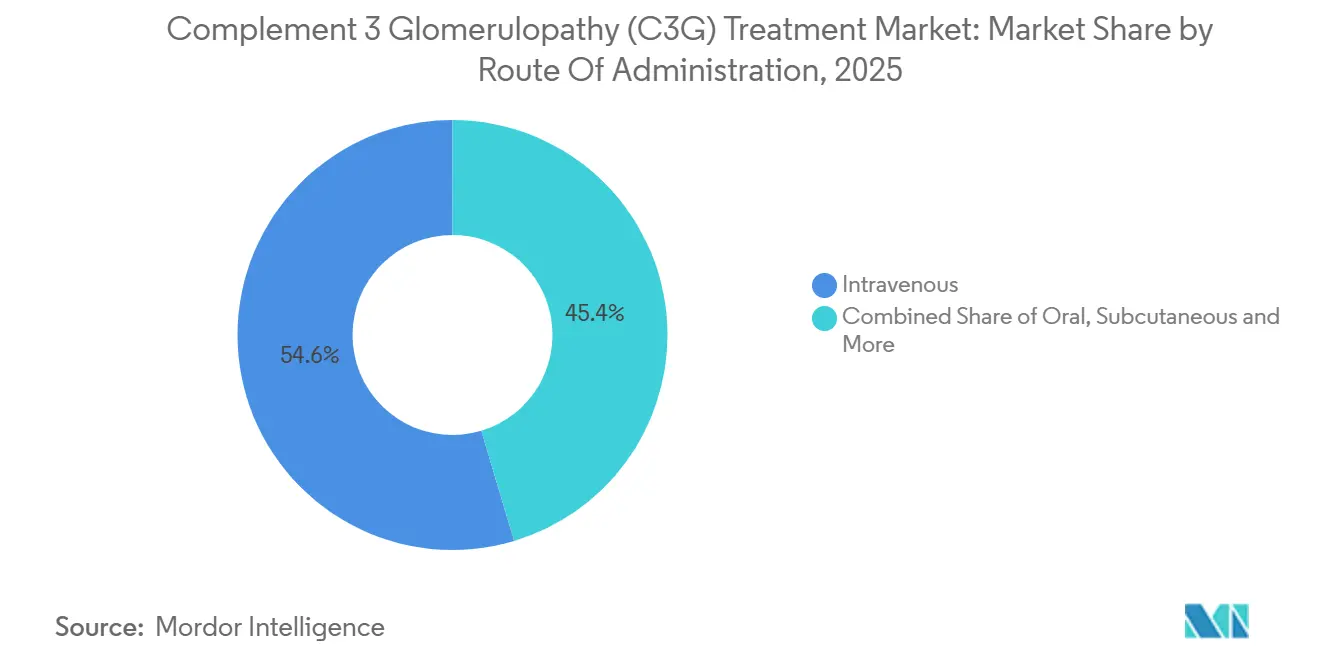
- By route of administration, intravenous administration held 54.64% share in 2025, while the oral route is forecast to grow at a 12.82% CAGR through 2031.
- By distribution channel, hospital pharmacies held 54.65% share in 2025, while online pharmacies are forecast to grow at a 12.95% CAGR through 2031.
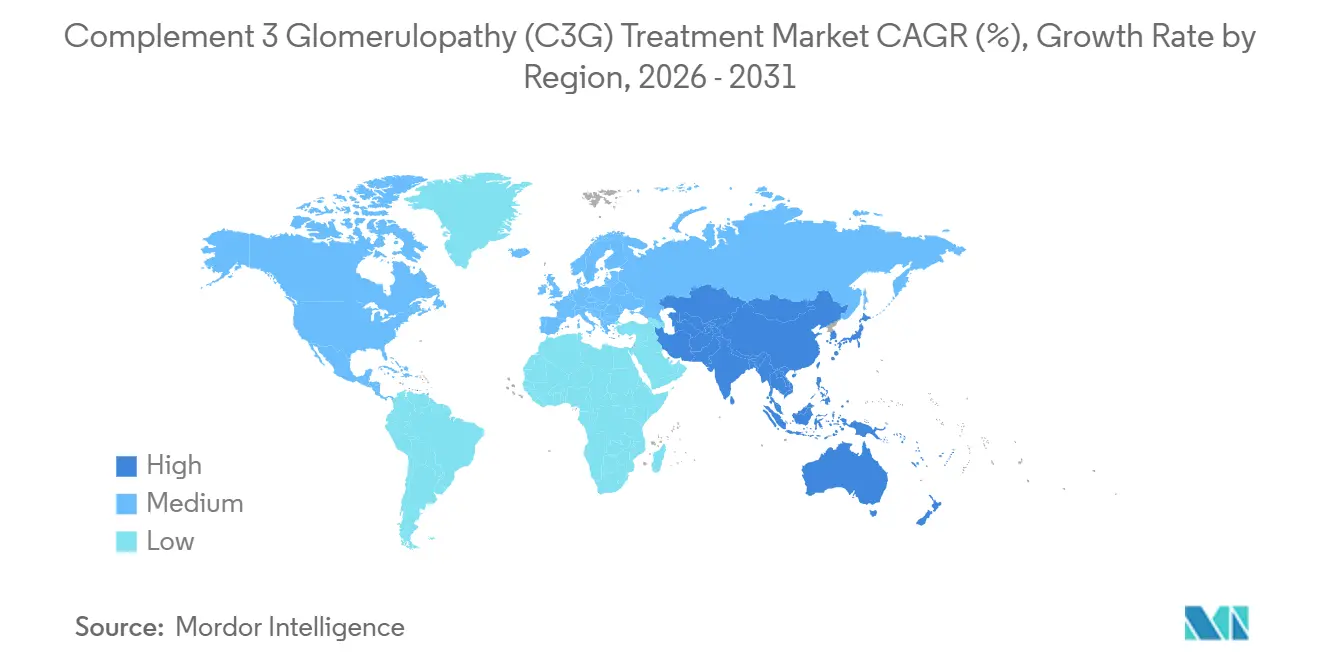
- By geography, North America held 42.61% share in 2025, while Asia-Pacific is forecast to grow at a 13.25% CAGR through 2031.
Note: Market size and forecast figures in this report are generated using Mordor Intelligence’s proprietary estimation framework, updated with the latest available data and insights as of January 2026.
Market Trends and Insights
Drivers Impact Analysis of Complement 3 Glomerulopathy (C3G) Treatment Market*
| Driver | (~) % Impact on CAGR Forecast | Geographic Relevance | Impact Timeline |
|---|---|---|---|
| Approval Of Targeted Complement Therapies | +3.2% | Global, with concentrated near-term effect in North America and Western Europe | Short term (≤ 2 years) |
| Expansion Of Biopsy, Complement Assay, And Genetic Testing | +1.6% | North America and Europe, with spillover to Japan and China | Medium term (2-4 years) |
| Use Of Integrated Renal Outcome Endpoints | +1.2% | North America and the EU, with global alignment through the KDIGO and ISN frameworks | Medium term (2-4 years) |
| Specialist Registry And Biobank Expansion | +0.8% | Europe, with global enrollment in more than 19 countries | Long term (≥ 4 years) |
| Post-Transplant Recurrence Management | +1.0% | North America and Europe, concentrated in high-volume transplant centers | Medium term (2-4 years) |
| Tissue-Targeted Complement Inhibition | +0.9% | Global | Long term (≥ 4 years) |
| Source: Mordor Intelligence | |||
Approval Of Targeted Complement Therapies And Renal Endpoints
The United States approved iptacopan in March 2025 and pegcetacoplan on July 28, 2025, giving patients with C3G 2 approved disease-specific options. Iptacopan reduced the 24-hour urine protein-to-creatinine ratio by 35.1% relative to placebo at 6 months in APPEAR-C3G[1]. In VALIANT, pegcetacoplan reduced UPCR by 68% at 26 weeks, and 71% of treated patients achieved complete C3c-staining clearance on kidney biopsy. The Complement 3 Glomerulopathy (C3G) treatment market benefits because proteinuria reduction has supported a more practical regulatory pathway for therapies in a very small patient population. The European Commission approved pegcetacoplan in January 2026 for adults and adolescents aged 12 years and older with C3G or primary IC-MPGN. This close timing between U.S. and European access reduces the usual launch gap for rare renal treatments and raises the value of outcome data for the Complement 3 Glomerulopathy (C3G) treatment market.
Expansion Of Diagnostic Testing And Registries
A C3G diagnosis relies on immunofluorescence staining, electron microscopy, and a complement biomarker assessment that can include AP50, CH50, serum C3, sC5b-9, Factor B, Ba, and Bb. Testing can also include C3 nephritic factor, anti-Factor H, and sequencing of complement-related genes, which helps clinicians identify the mechanism involved. KDIGO has called for composite panels that bring functional assays, activation fragments, autoantibodies, and integrated data together rather than depending on one marker. Mayo Clinic Laboratories offers a 15-gene panel that includes C3, CFH, CFHR1-5, CFB, and CFI for relevant complement disorders. Better testing can identify patients whose disease has been missed or classified incorrectly, expanding the diagnosed population available to the Complement 3 Glomerulopathy (C3G) treatment market. European registries also provide a longer record of disease characteristics and care patterns that can help clinicians and payers assess treatment use across countries.
Post-Transplant Care And Tissue-Targeted Approaches
C3G frequently returns after kidney transplantation because the underlying autoantibodies and genetic complement variants can remain after the transplant. In the NOBLE Phase 2 study, post-transplant patients receiving pegcetacoplan had a median UPCR reduction of 54.4% when baseline UPCR was at least 1,000 mg/g. Eighty percent of those patients achieved at least a one-order-of-magnitude reduction in C3c staining, while kidney function remained stable in the study[2]. Native-kidney and post-transplant enrollment in VALIANT supplied randomized evidence across both settings. The Complement 3 Glomerulopathy (C3G) treatment market can therefore reach a separate group of transplant nephrologists managing recurrent disease. Tissue-targeted approaches such as ADX-097 seek to concentrate complement inhibition in affected kidney tissue. They may lower the systemic safety burden for the Complement 3 Glomerulopathy (C3G) treatment market if clinical benefit is established.
Rising Use of Integrated Renal Outcome Endpoints
Regulators approved iptacopan and pegcetacoplan based on proteinuria reduction as a surrogate for long-term kidney survival. In the VALIANT trial, 49% of pegcetacoplan-treated patients achieved eGFR stabilization and a ≥50% reduction in urine protein-to-creatinine ratio (UPCR), compared with 3% on placebo. This composite endpoint is likely to shape Phase 3 trials for next-generation agents and set a competitive benchmark. KDIGO and the ISN emphasize that long-term registry data, including serial biopsy findings, should support short-term surrogate endpoints in real-world treatment decisions. Neither approval requires long-term post-marketing histology data, leaving tissue-level responses in real-world patients unclear. This evidence gap could affect reimbursement decisions in cost-conscious European markets.
Restraints Impact Analysis of Complement 3 Glomerulopathy (C3G) Treatment Market*
| Restraint | (~) % Impact on CAGR Forecast | Geographic Relevance | Impact Timeline |
|---|---|---|---|
| Ultra-Rare Patient Pool And Low Treatment Volume | -2.1% | Global | Short term (≤ 2 years) |
| Infection Risk And Vaccination Complexity | -1.4% | Global, most acute where specialist nephrology infrastructure is limited | Short term (≤ 2 years) |
| Fragmented Biopsy And Complement Testing | -1.0% | Middle East and Africa, South America, and developing Asia | Medium term (2-4 years) |
| Uncertain Long-Term Renal And Histologic Outcomes | -0.8% | Global | Long term (≥ 4 years) |
| Source: Mordor Intelligence | |||
Ultra-Rare Population And Fragmented Diagnosis
C3G affects 1-5 individuals per million people each year worldwide, which limits absolute treatment volume even as available therapies expand. Small trials can support approval when endpoints are persuasive, but they leave clinicians and payers with less long-term evidence than they may have for common kidney diseases. A fragmented diagnostic pathway compounds this issue in regions that lack coordinated biopsy, complement testing, and genetic services, slowing access to the Complement 3 Glomerulopathy (C3G) treatment market. Patients may remain on generic immunosuppression when the underlying complement mechanism is not established. The resulting gap is particularly important in developing Asia, South America, and parts of the Middle East and Africa, where specialist access and reimbursement systems remain uneven.
Infection Risk And Long-Term Evidence Gaps
Both approved therapies carry boxed warnings for serious infections caused by encapsulated bacteria, including Neisseria meningitidis, Streptococcus pneumoniae, and Haemophilus influenzae type b. Vaccination is required at least 2 weeks before treatment starts, and clinical teams must coordinate documentation, monitoring, and infection prevention. This requirement can delay treatment initiation in centers without established complement-inhibitor procedures. Current trials also place substantial weight on proteinuria reduction and short-term renal outcomes, while longer-term tissue response remains less certain. The Complement 3 Glomerulopathy (C3G) treatment market will depend on registries and routine-care studies to clarify durability and histologic outcomes. European payers may examine this evidence closely when determining coverage for the Complement 3 Glomerulopathy (C3G) treatment market.
*Our forecasts treat driver/restraint impacts as directional, not additive. The impact forecasts reflect baseline growth, mix effects, and variable interactions.
Complement 3 Glomerulopathy (C3G) Treatment Market Segment Analysis
By Therapy Type:
Complement-Targeted Agents Set The Current StandardComplement-targeted agents held 52.31% of the C3G treatment share in 2025. Their lead reflects the arrival of iptacopan and pegcetacoplan after a period when no approved disease-specific therapy was available. Supportive and renoprotective care remains important, including ACE inhibitors, angiotensin receptor blockers, and SGLT2 inhibitors. Immunosuppressive drugs such as corticosteroids, mycophenolate mofetil, and rituximab are still used because clinicians know these therapies, and they can cost less. Their role is changing because controlled long-term evidence for kidney preservation in C3G remains limited.
Gene and RNA-based therapy is the fastest-growing segment at a 13.58% CAGR from 2026 to 2031. This part of the Complement 3 Glomerulopathy (C3G) treatment industry is being developed around less frequent subcutaneous dosing, including quarterly or twice-yearly schedules. Arrowhead reported 90% mean serum Factor B knockdown after a single 400 mg ARO-CFB dose in its Phase 1/2a study[3]. SanegeneBio received FDA Orphan Drug Designation in October 2025 for SGB-9768, an RNAi therapy targeting complement C3 mRNA. Plasma therapy and tissue-targeted inhibitors remain smaller categories, but they can support patients who need bridging treatment or have specific autoantibody patterns.

By Disease Subtype:
C3GN Leads While DDD Builds FasterC3 Glomerulonephritis accounted for 66.24% of the Complement 3 Glomerulopathy (C3G) treatment market size in 2025. Its larger presence reflects its stated prevalence among C3G cases and its inclusion in the populations for both approved agents. VALIANT included adults and adolescents aged 12 years and older, which broadened the evidence base across C3GN patients. This segment benefits from more established clinical recognition and a direct link to the current approved treatment pathway. It will remain central to prescribing volume while diagnosis improves.
Dense Deposit Disease is forecast to grow at a 13.22% CAGR from 2026 to 2031. Its more aggressive clinical course can prompt earlier consideration of targeted therapy when clinicians identify its distinct complement profile. DDD is often associated with C3 nephritic factor positivity, dense intramembranous deposits, and earlier progression to end-stage renal disease. The Complement 3 Glomerulopathy (C3G) treatment industry is responding with programs that can address patients whose disease was less visible in earlier trials. Between 10% and 20% of older adults with C3G have an associated monoclonal paraprotein, which can require clone-directed treatment before or alongside complement inhibition. That sequence can delay treatment initiation for a subset of older patients.
By Route Of Administration:
Intravenous Care Leads As Oral Treatment GrowsIntravenous administration held 54.64% of the Complement 3 Glomerulopathy (C3G) treatment market size in 2025. This position reflects established intravenous use of cyclophosphamide, rituximab, calcineurin inhibitors, and off-label eculizumab. Intravenous care also remains practical for patients receiving treatment in closely monitored specialist settings. Its lead does not remove the resource demands of infusion capacity, nursing time, and clinic scheduling. Those demands support interest in routes that reduce facility visits.
The oral route is projected to grow at a 12.82% CAGR from 2026 to 2031, supported by iptacopan’s twice-daily regimen. The Complement 3 Glomerulopathy (C3G) treatment market can benefit when oral treatment avoids infusion infrastructure in outpatient nephrology settings. Subcutaneous pegcetacoplan supplies another option because patients can receive treatment at home without a clinic visit. The FDA-approved use model for pegcetacoplan supports patient-administered treatment, including use with an on-body injector. Oral and subcutaneous options still require vaccination records and clinical monitoring, so convenience does not remove safety procedures.
By Distribution Channel:
Hospital Pharmacies Retain The Largest RoleHospital pharmacies accounted for 54.65% of the Complement 3 Glomerulopathy (C3G) treatment market size in 2025. Their role is linked to vaccination logistics, monitoring requirements, and the specialist-led initiation process for complement inhibitors. Academic medical centers and subspecialty nephrology practices diagnose and manage much of the known C3G population. Hospital dispensing can therefore be the first point of access for both approved therapies. This position may be strongest during the early treatment period, when physician supervision is most intensive.
Online pharmacies are forecast to grow at a 12.95% CAGR from 2026 to 2031. Specialty pharmacy networks are adding adherence support, refill systems, home delivery, and services that suit therapies used outside the hospital. Retail pharmacies can also support oral iptacopan in settings where specialty capabilities are available. The Complement 3 Glomerulopathy (C3G) treatment market can shift toward nonhospital channels as maintenance care becomes more routine. European payer rules that require hospital dispensing for biologics and rare-disease products may slow that shift for pegcetacoplan.
Geography Analysis
North America Complement 3 Glomerulopathy (C3G) Treatment Market
North America held 42.61% of the Complement 3 Glomerulopathy (C3G) treatment market share in 2025. The United States accounted for most of this regional position because it had the largest diagnosed population, an early reimbursement response, and a high concentration of complement-specialist nephrology programs. Canada and Mexico have patients with C3G, but their specialist networks and diagnostic capacity are smaller. The January 2026 European approval of pegcetacoplan can reduce the usual lead time that U.S. launches have in rare renal diseases.
Europe Complement 3 Glomerulopathy (C3G) Treatment Market
Europe has an established diagnostic and research structure through the European Reference Network for Rare Kidney Diseases. The CompCure sub-registry had enrolled 350 patients with C3G or IC-MPGN from more than 20 countries by the end of 2025. The broader ERKReg registry includes more than 70,000 patients with rare kidney diseases across 24 European countries and can support local evidence generation, treatment planning, and payer discussions. Access will still vary because national benefit assessments in Germany, France, and the United Kingdom can determine the pace of use.
APAC, MEA and South America Complement 3 Glomerulopathy (C3G) Treatment Market
Asia-Pacific is forecast to grow at a 13.25% CAGR from 2026 to 2031. Expanding specialist nephrology units and regulatory reviews for iptacopan in Japan and China support the region’s position. A survey of Japanese nephrologists reported corticosteroid use in 64% of cases, ACEi or ARB use in 68%, and SGLT2 inhibitor use in 25%. SanegeneBio started a Phase 2 study of SGB-9768 in China in March 2025. The Complement 3 Glomerulopathy (C3G) treatment market will remain limited in the Middle East and Africa and South America by less-developed reimbursement and diagnostic systems. However, GCC countries, Brazil, and Argentina are increasing specialist interest.
Competitive Landscape
The Complement 3 Glomerulopathy (C3G) treatment market is moderately concentrated among approved products and more diverse across the clinical pipeline. Novartis and Apellis Pharmaceuticals, with Sobi as the European commercial partner, have the only approved agents. Both companies can protect their early position through orphan-drug exclusivity, routine-care evidence programs, and pediatric indication work. Novartis has registered the CHART-C3G noninterventional study to track iptacopan use in routine care. These actions focus on collecting evidence beyond controlled trials and supporting earlier patient identification.
Pipeline programs span Factor B, MASP-3, complement C3 mRNA, Factor B mRNA, tissue-targeted C3 inhibition, and recombinant complement regulators. Novo Nordisk completed its acquisition of rights to zaltenibart from Omeros in December 2025, paying USD 240 million upfront with potential total payments of USD 2.1 billion. The transaction gave Novo Nordisk a MASP-3 program without building the asset from early development. SanegeneBio’s SGB-9768 adds an RNAi approach that targets complement C3 mRNA and is in a Phase 2 study in China. This range of approaches gives the Complement 3 Glomerulopathy (C3G) treatment market several mechanisms that could compete on safety, dosing, and clinical response.
The Complement 3 Glomerulopathy (C3G) treatment market has open needs in DDD, children younger than 12 years, post-transplant recurrence, and patients with high C3 nephritic factor titers. ADX-097 is designed to target complement inhibition to affected glomeruli, which could address a key concern around systemic infection risk if later studies confirm benefit. Annual meningococcal vaccination verification and pharmacovigilance requirements create operational demands for all providers of complement inhibitors. Larger companies may have an advantage because they can support patient services, safety reporting, and specialist education.
Complement 3 Glomerulopathy (C3G) Treatment Industry Leaders
-
Novartis AG
-
Apellis Pharmaceuticals
-
Swedish Orphan Biovitrum
-
Alexion Pharmaceuticals
-
Kira Pharmaceuticals
- *Disclaimer: Major Players sorted in no particular order
Complement 3 Glomerulopathy (C3G) Treatment Market Companies Covered in this Report
- Alexion Pharmaceuticals
- Amgen
- Amyndas Pharmaceuticals
- Apellis Pharmaceuticals
- Arrowhead Pharmaceuticals
- AstraZeneca
- BioCryst Pharmaceuticals
- Eleva Biologics
- GlaxoSmithKline
- Kira Pharmaceuticals
- Novartis
- NovelMed Therapeutics
- Novo Nordisk
- Omeros Corporation
- Pfizer
- Q32 Bio
- Regeneron Pharmaceuticals
- Roche
- Sanofi
- Swedish Orphan Biovitrum
- Teva Pharmaceutical Industries
- Travere Therapeutics
Recent Industry Developments in Complement 3 Glomerulopathy (C3G) Treatment Market
- January 2026: The European Commission approved pegcetacoplan (ASPAVELI, Sobi) for adults and adolescents aged 12 and older with C3G or primary IC-MPGN, in combination with a renin-angiotensin system inhibitor or as monotherapy where RAS inhibitors are not tolerated, creating the first EU-labeled treatment for the indication and opening commercial access to Germany, France, the UK, Italy, and Spain.
- December 2025: Omeros Corporation and Novo Nordisk closed their asset purchase and license agreement for zaltenibart (OMS906), with Novo Nordisk paying USD 240 million upfront. Omeros was eligible to receive up to USD 2.1 billion in total payments including development and sales-based milestones, plus tiered royalties ranging from high single-digit to high-teens percentage on net sales, the largest C3G-related deal transaction to date.
Global Complement 3 Glomerulopathy (C3G) Treatment Market Report Scope
As per the scope of the report, complement 3 glomerulopathy (C3G) is a rare kidney disorder characterized by the abnormal accumulation of complement component C3 in the glomeruli, leading to inflammation and damage of the kidney’s filtering units. It results from dysregulation of the complement system, which plays a role in immune response and inflammation.
The complement 3 glomerulopathy (C3G) treatment market is segmented by therapy type into supportive and renoprotective therapy, including ACE inhibitors and angiotensin receptor blockers, sodium-glucose cotransporter-2 inhibitors, lipid-lowering therapy, and diuretics and blood pressure management; immunosuppressive therapy, including corticosteroids, mycophenolate mofetil, cyclophosphamide, rituximab, and calcineurin inhibitors; complement-targeted therapy, including factor B inhibitors, C3 and C3b inhibitors, C5 inhibitors, factor D inhibitors, MASP-3 inhibitors, C5aR1 antagonists, recombinant factor H therapies, dual-target complement inhibitors, and tissue-targeted complement inhibitors; plasma therapy; and gene- and RNA-based therapies. By disease subtype, the market is segmented into C3 glomerulonephritis and dense deposit disease. By route of administration, the market is segmented into oral, intravenous, subcutaneous, and other routes of administration. By distribution channel, the market is segmented into hospital pharmacies, retail pharmacies, online pharmacies, and other distribution channels. By geography, the market is segmented into North America, Europe, Asia-Pacific, the Middle East and Africa, and South America. The market report also covers the estimated market sizes and trends for 17 countries across major regions globally. For each segment, the market size and forecast are provided in terms of value (USD).
| Supportive and Renoprotective Therapy | ACE Inhibitors and Angiotensin Receptor Blockers |
| Sodium-Glucose Cotransporter-2 Inhibitors | |
| Lipid-Lowering Therapy | |
| Diuretics and Blood-Pressure Management | |
| Immunosuppressive Therapy | Corticosteroids |
| Mycophenolate Mofetil | |
| Cyclophosphamide | |
| Rituximab | |
| Calcineurin Inhibitors | |
| Complement-Targeted Therapy | Factor B Inhibitors |
| C3 and C3b Inhibitors | |
| C5 Inhibitors | |
| Factor D Inhibitors | |
| MASP-3 Inhibitors | |
| C5aR1 Antagonists | |
| Recombinant Factor H Therapies | |
| Dual-Target Complement Inhibitors | |
| Tissue-Targeted Complement Inhibitors | |
| Plasma Therapy | |
| Gene and RNA-Based Therapy |
| C3 Glomerulonephritis |
| Dense Deposit Disease |
| Oral |
| Intravenous |
| Subcutaneous |
| Other Routes of Administration |
| Hospital Pharmacies |
| Retail Pharmacies |
| Online Pharmacies |
| Other Distribution Channels |
| North America | United States |
| Canada | |
| Mexico | |
| Europe | Germany |
| United Kingdom | |
| France | |
| Italy | |
| Spain | |
| Rest of Europe | |
| Asia-Pacific | China |
| Japan | |
| India | |
| Australia | |
| South Korea | |
| Rest of Asia-Pacific | |
| Middle East and Africa | GCC |
| South Africa | |
| Rest of Middle East and Africa | |
| South America | Brazil |
| Argentina | |
| Rest of South America |
| By Therapy Type | Supportive and Renoprotective Therapy | ACE Inhibitors and Angiotensin Receptor Blockers |
| Sodium-Glucose Cotransporter-2 Inhibitors | ||
| Lipid-Lowering Therapy | ||
| Diuretics and Blood-Pressure Management | ||
| Immunosuppressive Therapy | Corticosteroids | |
| Mycophenolate Mofetil | ||
| Cyclophosphamide | ||
| Rituximab | ||
| Calcineurin Inhibitors | ||
| Complement-Targeted Therapy | Factor B Inhibitors | |
| C3 and C3b Inhibitors | ||
| C5 Inhibitors | ||
| Factor D Inhibitors | ||
| MASP-3 Inhibitors | ||
| C5aR1 Antagonists | ||
| Recombinant Factor H Therapies | ||
| Dual-Target Complement Inhibitors | ||
| Tissue-Targeted Complement Inhibitors | ||
| Plasma Therapy | ||
| Gene and RNA-Based Therapy | ||
| By Disease Subtype | C3 Glomerulonephritis | |
| Dense Deposit Disease | ||
| By Route of Administration | Oral | |
| Intravenous | ||
| Subcutaneous | ||
| Other Routes of Administration | ||
| By Distribution Channel | Hospital Pharmacies | |
| Retail Pharmacies | ||
| Online Pharmacies | ||
| Other Distribution Channels | ||
| By Geography | North America | United States |
| Canada | ||
| Mexico | ||
| Europe | Germany | |
| United Kingdom | ||
| France | ||
| Italy | ||
| Spain | ||
| Rest of Europe | ||
| Asia-Pacific | China | |
| Japan | ||
| India | ||
| Australia | ||
| South Korea | ||
| Rest of Asia-Pacific | ||
| Middle East and Africa | GCC | |
| South Africa | ||
| Rest of Middle East and Africa | ||
| South America | Brazil | |
| Argentina | ||
| Rest of South America | ||
Key Questions Answered in the Report
What is driving growth in the Complement 3 Glomerulopathy treatment market?
The USD 1.11 billion value in 2026 is supported by approved complement-targeted therapies, broader diagnostic activity, and interest in regimens that may reduce dosing frequency. Growth also depends on whether specialist centers can identify eligible patients and manage the required safety procedures.
Which treatment type led C3G care in 2025?
Complement-targeted agents led with 52.31% share in 2025. Their position reflects the availability of therapies that directly address complement activity, while supportive care and immunosuppression continue to serve patients in routine practice.
Which C3G subtype is growing fastest?
Dense Deposit Disease is forecast to grow at a 13.22% CAGR through 2031. Its severe course and distinct complement profile can increase the need for more focused diagnosis and earlier treatment planning.
Why do hospital pharmacies remain important for C3G therapies?
Hospital pharmacies held 54.65% share in 2025 because vaccination, treatment initiation, and monitoring are often coordinated through specialist care settings. These services remain important when complement inhibitors are started or patients need close clinical follow-up.
Which region is expected to grow fastest for C3G treatments?
Asia-Pacific is forecast to grow at a 13.25% CAGR from 2026 to 2031. Growth is linked to expanding specialist nephrology capacity, regulatory activity in Japan and China, and local clinical development programs.
What is the main safety consideration for approved complement inhibitors?
Serious infection risk requires vaccination at least 2 weeks before treatment and ongoing monitoring for infections caused by encapsulated bacteria. This requirement can make access harder in settings without established vaccination and monitoring procedures.