
Communicable Diseases Treatment Market Size and Share
Market Overview
| Study Period | 2020 - 2031 |
|---|---|
| Market Size (2026) | USD 36.77 Billion |
| Market Size (2031) | USD 50.47 Billion |
| Growth Rate (2026 - 2031) | 6.54 % |
| Fastest Growing Market | Asia-Pacific |
| Largest Market | North America |
| Market Concentration | Medium |
Major Players *Disclaimer: Major Players sorted in no particular order Image © Mordor Intelligence. Reuse requires attribution under CC BY 4.0. | |
Communicable Diseases Treatment Market Analysis by Mordor Intelligence
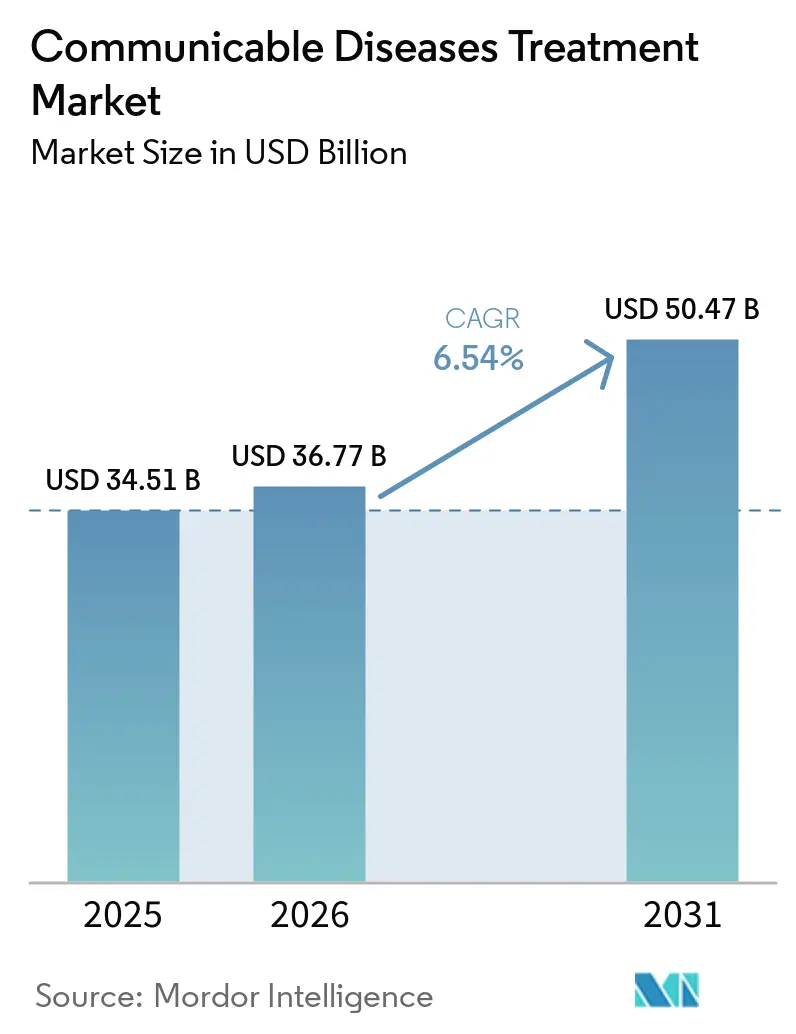
The Communicable Diseases Treatment Market size is expected to grow from USD 34.51 billion in 2025 to USD 36.77 billion in 2026 and is forecast to reach USD 50.47 billion by 2031 at 6.54% CAGR over 2026-2031.
Persistent treatment needs for HIV, viral hepatitis, resistant bacterial infections, fungal infections, and parasitic diseases support demand across the forecast period. The communicable diseases treatment market is also shaped by higher public-health preparedness spending after repeated outbreak events and by broader access to care in high-burden countries. Molecular testing allows clinicians to select therapies earlier, which supports the use of targeted agents when resistance or pathogen data are available. Long-acting injectables and biologics are changing how chronic infections are managed, shifting some care from daily self-administered treatment toward scheduled clinical administration. Companies with complementary diagnostic, therapeutic, and delivery capabilities are better placed to address these changes, while supply concentration and a limited antibacterial pipeline continue to create operational risks.
Key Report Takeaways
- By disease, HIV/AIDS held 36.31% of the communicable diseases treatment market share in 2025, while hepatitis A, B, C, D, and E are forecast to record the highest CAGR of 7.58% through 2031.
- By treatment class, antivirals accounted for 40.24% of the communicable diseases treatment market share in 2025, while immunotherapies and monoclonal antibodies are forecast to grow at an 8.22% CAGR through 2031.
- By route of administration, oral formulations held 68.14% of revenue in 2025, while injectables are forecast to expand at a 7.82% CAGR through 2031.
- By distribution channel, hospital pharmacies held 52.65% of revenue in 2025, while online pharmacies are forecast to advance at an 8.95% CAGR through 2031.
- By geography, North America held 36.61% of the market share in 2025, while Asia-Pacific is forecast to grow at an 8.25% CAGR through 2031.
Note: Market size and forecast figures in this report are generated using Mordor Intelligence’s proprietary estimation framework, updated with the latest available data and insights as of January 2026.
Market Trends and Insights
Drivers Impact Analysis of Communicable Diseases Treatment Market*
| Driver | (~) % Impact on CAGR Forecast | Geographic Relevance | Impact Timeline |
|---|---|---|---|
| Rising Burden of Viral, Bacterial, Fungal, and Parasitic Infections | +1.4% | Global | Short term (≤ 2 years) |
| Antimicrobial Resistance and Unmet Need for Novel Therapies | +1.1% | Global | Long term (≥ 4 years) |
| Public-Health Preparedness and Expanded Immunization Funding | +0.7% | Global, with APAC and MEA as primary beneficiaries | Medium term (2-4 years) |
| Molecular Diagnostics Enabling Earlier Treatment Selection | +0.8% | North America and Europe, with spillover to APAC | Medium term (2-4 years) |
| Small-Molecule, Biologic, and Long-Acting Therapy Innovation | +1.0% | North America and Europe, expanding to APAC | Long term (≥ 4 years) |
| Climate- and Mobility-Driven Expansion of Vector-Borne Disease Risk | +0.5% | APAC, MEA, and South America | Long term (≥ 4 years) |
| Source: Mordor Intelligence | |||
Rising Burden of Viral, Bacterial, Fungal, and Parasitic Infections
The scale and range of infections provide a stable treatment base for the communicable diseases treatment market. UNAIDS reported that 32.1 million people received antiretroviral therapy in 2025, while 78% of people living with HIV had access to treatment. The World Health Organization recorded 1.3 million hepatitis-related deaths in 2024 and stated that new HBV infections had declined only 32% since 2015. This progress remains well below the 95% reduction target for 2030, which keeps prevention, diagnosis, and treatment needs active in many health systems. Viral disease can also coexist with drug-resistant bacterial infection, increasing treatment complexity for hospitalized patients. These cases may require several medicines and longer admissions, supporting treatment demand even where generic products are widely used.
Antimicrobial Resistance and Unmet Need for Novel Therapies
Antimicrobial resistance supports demand for differentiated antibiotics and antifungals in the communicable diseases treatment market. The World Health Organization counted 90 antibacterial agents in clinical development in 2025, compared with 97 in 2023. Only 15 of these candidates met the organization’s innovation criteria, and only 5 targeted WHO critical pathogens. The World Health Assembly adopted the Global Action Plan on Antimicrobial Resistance 2026–2036, which sets a longer-term policy basis for antimicrobial development[1]. Many developers have limited resources, since 90% of companies active in antibacterial development employ fewer than 50 people. This leaves the pipeline sensitive to funding availability and supports acquisitions of specialized antimicrobial assets by larger companies.
Public-Health Preparedness, Immunization Funding, and Vector-Borne Disease Exposure
Public-health preparedness supports procurement of anti-infectives and vaccines across the communicable diseases treatment market. Gavi secured more than USD 9 billion for its 2026–2030 replenishment cycle and expanded the portfolio to include dengue, tuberculosis, HPV, and climate-sensitive diseases. The United States government committed in July 2026 to release USD 600 million in previously appropriated funding for Gavi for fiscal years 2025 and 2026[2]. This funding provides procurement visibility for manufacturers serving Gavi-eligible countries. Climate and population mobility also increase exposure to vector-borne infections in parts of APAC, MEA, and South America. A 2025 PNAS study attributed 18% of historical dengue incidence across 21 Asian and American countries to human-caused climate warming. Its projected rise in dengue incidence supports the need for treatment capacity and vaccine access in exposed regions.
Molecular Diagnostics and Long-Acting Treatment Innovation
Rapid molecular diagnostics are improving treatment selection in the communicable disease treatment market. A 2026 meta-analysis covering 51 studies and 14,675 participants associated molecular rapid testing for bloodstream infections with a 34% mortality reduction and a 3.79-day reduction in hospital stay. Faster pathogen identification can replace empirical broad-spectrum treatment with resistance-informed therapy. This allows clinicians to use narrower and more specialized agents when clinical results support that choice. CRISPR-based diagnostic platforms may further strengthen this workflow, particularly where rapid susceptibility data affect treatment decisions. Long-acting formulations add a second chance by reducing reliance on daily self-dispensing and increasing demand for clinic administration, cold-chain logistics, and trained providers.
Restraints Impact Analysis of Communicable Diseases Treatment Market*
| Restraint | (~) % Impact on CAGR Forecast | Geographic Relevance | Impact Timeline |
|---|---|---|---|
| Stringent Clinical, Regulatory, and Pharmacovigilance Requirements | -0.6% | Global | Medium term (2-4 years) |
| Stewardship and Low Commercial Return for Reserve Antibiotics | -0.4% | North America and Europe | Long term (≥ 4 years) |
| Concentrated Active-Pharmaceutical-Ingredient Supply | -0.5% | Global, APAC is most exposed | Long term (≥ 4 years) |
| Treatment-Access Friction from Counterfeits, Stockouts, and Diagnostic Gaps | -0.3% | MEA, South America, and APAC | Long term (≥ 4 years) |
| Source: Mordor Intelligence | |||
Clinical Requirements and Limited Commercial Returns for Reserve Antibiotics
Clinical evidence standards and post-marketing obligations create high entry costs for infectious disease developers. Accelerated approval can support therapies for areas of high unmet need, but developers still need confirmatory post-marketing studies. Regulatory review also requires rigorous pharmacovigilance and continuing benefit-risk assessment for anti-infectives with resistance implications. These needs place greater pressure on small and mid-sized developers that make up much of the antibacterial pipeline. Stewardship programs restrict the routine use of reserve antibiotics, which can reduce sales volumes even where an agent has high clinical value. The result is a longer commercial path that favors established companies able to spread clinical and regulatory costs across broader portfolios.
Concentrated API Supply and Uneven Treatment Access
Concentrated active pharmaceutical ingredient supply can disrupt pricing and product availability in the communicable diseases treatment market. Indian government data in March 2026 also indicated that dependence was 70% or more across critical API categories in fiscal years 2023–24 and 2024–25. These conditions create margin and supply risks for manufacturers that rely on concentrated input sources. Antibiotics for hospital-acquired infections and tuberculosis are particularly vulnerable because uninterrupted access is clinically important. Counterfeits, stockouts, and limited diagnostic availability add access barriers in parts of MEA, South America, and APAC, delaying appropriate care and limiting the benefit of new therapies.
*Our forecasts treat driver/restraint impacts as directional, not additive. The impact forecasts reflect baseline growth, mix effects, and variable interactions.
Communicable Diseases Treatment Market Segment Analysis
By Disease:
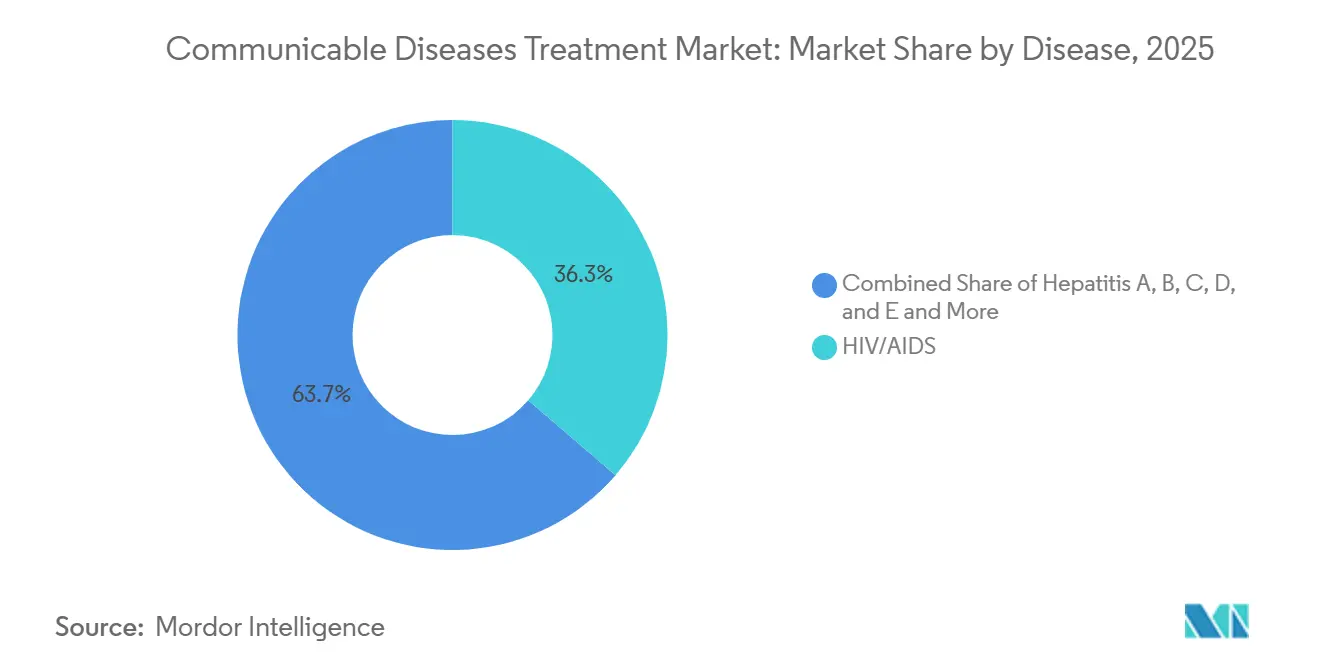
HIV/AIDS Retains Revenue Leadership While Hepatitis Supports Faster GrowthHIV/AIDS held 36.31% of revenue in 2025 and remained the largest disease segment in the communicable diseases treatment market. The segment is supported by high-value branded therapy and continued treatment expansion. UNAIDS reported that 32.1 million people were on antiretroviral therapy at the end of 2025. Long-acting injectable antiretroviral treatment can improve outcomes for people who have difficulty maintaining daily oral therapy. Final LATITUDE Phase III data released in February 2026 showed cumulative regimen failure of 22.8% for long-acting cabotegravir plus rilpivirine, compared with 41.2% for daily oral therapy among people with adherence challenges. This result supports the use of injectable regimens as an alternative for patients with persistent adherence barriers. International funding pressure remains important because sub-Saharan Africa accounts for more than 60% of people living with HIV. Any interruption in donor-backed programs could affect access and volume growth in the region.
Hepatitis A, B, C, D, and E is the fastest-growing disease segment, with a forecast CAGR of 7.58% through 2031. Chronic HBV represents a large, untreated population, even though treatment eligibility has expanded. The World Health Organization stated that fewer than 5% of people living with chronic HBV were receiving treatment in 2024, despite nearly 50% meeting the organization’s 2024 treatment criteria. Bepirovirsen achieved sustained HBsAg loss after treatment discontinuation in 20% of chronic HBV patients in Phase III trials. A functional cure would shift care from indefinite viral suppression toward finite treatment courses. Tuberculosis and malaria remain affected by procurement prices and donor funding constraints. Hospital-acquired infections retain clinical importance because multidrug-resistant organisms require high-acuity, premium-priced treatment. Respiratory syncytial virus, influenza, and herpesvirus infections provide stable demand through established antiviral use and developing antibody programs.

By Treatment Class:
Antivirals Lead Revenue While Immunotherapies and Monoclonal Antibodies Grow FasterAntivirals accounted for 40.24% of the communicable disease treatment market size in 2025. HIV and hepatitis portfolios support this leadership through branded products and high treatment volumes. Gilead Sciences reported total 2025 revenue of USD 29.4 billion and HIV product sales of USD 20.75 billion. Its HIV product sales increased 6% from 2024, reflecting demand in prevention and treatment[3]. Direct-acting antivirals for hepatitis C also sustain demand, including in lower-income settings where generic curative treatment is available at USD 60 per patient. Antibacterials and antifungals form the next major treatment block. Generic erosion affects established products, but resistant infections can support premium pricing for differentiated agents.
Immunotherapies and monoclonal antibodies are forecast to record an 8.22% CAGR through 2031. Clinical activity now extends across HIV, RSV, influenza, measles, and Bundibugyo virus disease. A Phase III study is evaluating teropavimab and zinlirvimab with lenacapavir against cabotegravir and rilpivirine for virologically suppressed adults with HIV-1. The broadening development base supports a larger role for antibodies in prevention and treatment. Vaccines also have a growing position in the treatment class landscape because public procurement can support volume. Gavi’s 2026–2030 program includes dengue and tuberculosis among the diseases receiving support. The communicable diseases treatment industry benefits when public funding provides clearer demand signals for manufacturers. Greater biologic use also increases the need for specialized production, distribution, and clinical administration.
By Route of Administration:
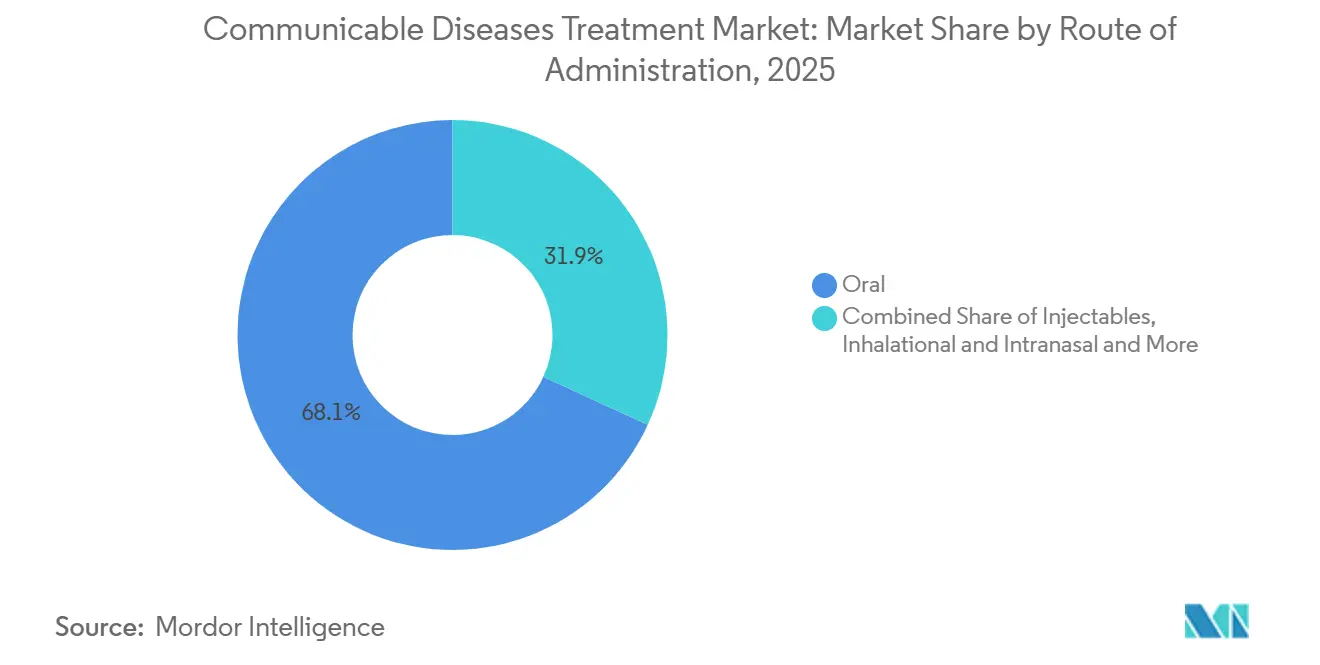
Oral Formulations Remain Predominant While Injectables Gain AcceptanceOral formulations held 68.14% of the communicable disease treatment market size in 2025. Daily oral regimens continue to serve HIV, hepatitis C, tuberculosis, malaria, and influenza treatment. Their convenience supports use in primary care and community-based programs. Generic hepatitis C medicines show how oral therapy can be extended after key patents expire. Curative direct-acting antiviral courses are available below USD 60 in selected low-income markets. Inhalational and intranasal products serve specific RSV and influenza needs. Topical and transdermal products remain relevant for superficial fungal and herpetic infections. Oral therapy retains a broad role because it can be scaled across diverse clinical settings without injection capacity.
Injectables are forecast to expand at a 7.82% CAGR through 2031. Long-acting HIV therapy is the main reason for this expansion. The U.S. Food and Drug Administration approved twice-yearly injectable lenacapavir for HIV prevention in June 2025. Evidence for cabotegravir and rilpivirine also supports monthly and every-2-month injectable treatment options. These products require reliable cold-chain systems, trained staff, and clinic infrastructure. Those requirements may delay uptake in lower-resource areas, but they create delivery opportunities for manufacturers and distributors. RSV monoclonal antibodies, including nirsevimab and RSM01 in development, add a pediatric prevention-related source of injectable demand.
By Distribution Channel:
Hospital Pharmacies Lead While Online Pharmacies ExpandHospital pharmacies held 52.65% of the communicable disease treatment market size in 2025. Their position reflects the need to manage parenteral anti-infectives, hospital-administered biologics, and complex antibiotic protocols. Inpatient antimicrobial stewardship also concentrates decisions on reserve antibiotics within hospitals. Treatment for carbapenem-resistant organisms and hospital-acquired infections carries a high unit value and a lower generic substitution risk. Hospital pharmacies have a continuing role in the administration and monitoring of biologics and monoclonal antibodies. The channel is therefore expected to retain a leading position even as other channels expand faster. Its clinical role is tied to high-acuity care rather than simple dispensing alone. This relationship supports durable demand across the communicable diseases treatment market.
Online pharmacies are forecast to grow at an 8.95% CAGR through 2031. Telemedicine and electronic prescribing support home delivery for chronic HIV and hepatitis treatment in North America and Europe. These services can reduce friction for patients who need regular refills and clinical oversight. Subscription-based dispensing may reduce missed refills for long-term therapy. Retail and chain pharmacies increasingly combine point-of-care antigen testing with early treatment access for respiratory and sexually transmitted infections. Other channels include supply systems run by nongovernmental organizations. These systems remain essential for subsidized antiretroviral and antimalarial treatment in MEA and South America. The communicable diseases treatment industry, therefore, requires both digital dispensing options and established public-health distribution systems.
Geography Analysis
North America Communicable Diseases Treatment Market
North America held 36.61% of revenue in 2025, making it the largest regional part of the communicable diseases treatment market. Reimbursement capacity, high spending on HIV and hepatitis care, and early adoption of new drug classes support its position. The June 2025 U.S. approval of twice-yearly lenacapavir showed the region’s ability to adopt a new HIV prevention approach. The accelerated approval of Hepcludex for HDV infection in May 2026 also illustrates the pace of product access for novel therapies. Canada and Mexico add treatment volumes through national antiretroviral programs and public procurement, Mexico’s higher out-of-pocket payments in selected anti-infective categories moderate spending per person. Pfizer reported USD 62.6 billion in 2025 revenue, with vaccines and infectious diseases among its key therapeutic platforms. This scale reflects substantial institutional activity in North American communicable disease portfolios.
EMEA and South America Communicable Diseases Treatment Market
Europe holds the second-largest regional position in the communicable diseases treatment market. Universal health coverage and national formularies support access to anti-infectives across much of the region. European Medicines Agency decisions can provide a path to launches across European Union member states. The agency accepted GSK’s marketing authorization application for bepirovirsen for chronic HBV in March 2026. Germany, France, and the United Kingdom account for much of the regional spending. Southern Europe has higher tuberculosis and HIV burdens than northern countries, which supports treatment volumes. The Middle East and Africa are supported by GCC health investment and South Africa’s donor-backed HIV program. Other MEA countries rely more heavily on Gavi and the Global Fund procurement for antiretroviral therapy and vaccines. South America, led by Brazil and Argentina, benefits from wider public-health coverage and preparedness stockpiles.
APAC Communicable Diseases Treatment Market
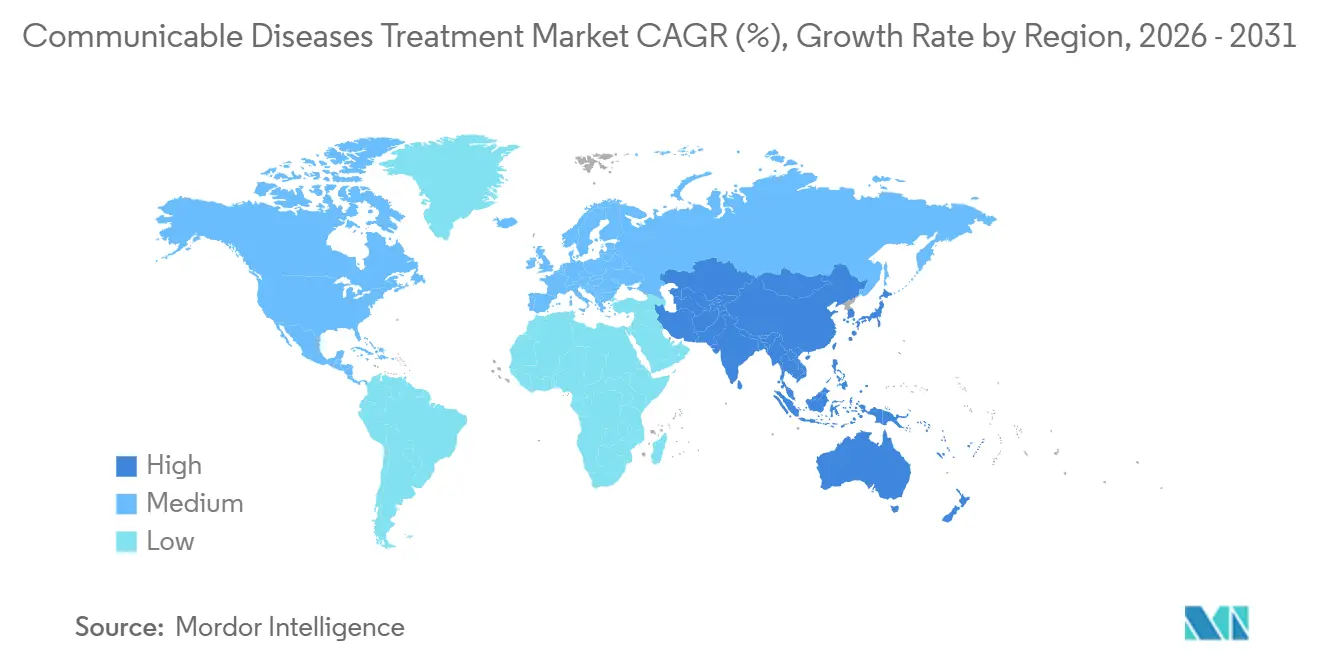
Asia-Pacific is forecast to grow at an 8.25% CAGR through 2031, the fastest regional pace in the communicable diseases treatment market. India and China face substantial burdens from tuberculosis, malaria, viral hepatitis, and HIV. India also supplies lower-cost medicines to many lower-income health systems. China’s centrally negotiated procurement frameworks have reduced prices while expanding treatment volumes. Japan provides a stable demand for antivirals and vaccines at premium price points. A 2025 PNAS study projected a 49% to 76% increase in dengue incidence by midcentury and identified 262 million people in areas where incidence could more than double. Gavi’s inclusion of dengue vaccine funding for 2026–2030 supports procurement potential in Southeast Asia.
Competitive Landscape
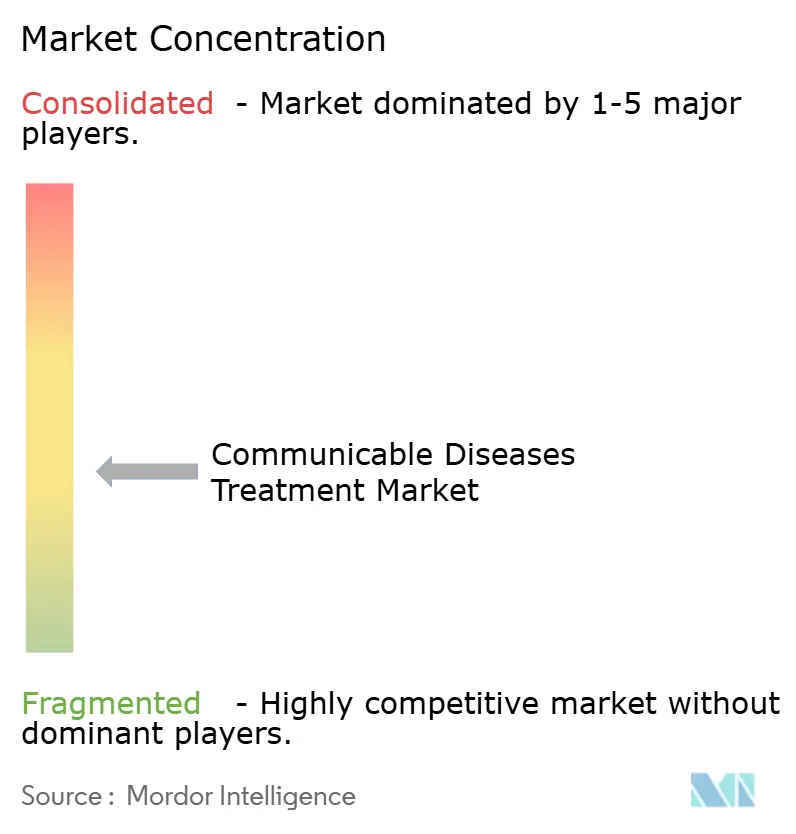
The communicable diseases treatment market has moderate concentration among leading global biopharmaceutical companies, while generic and regional suppliers create broad competition below the top tier. Gilead Sciences, GSK through ViiV Healthcare, and Pfizer hold important positions in HIV and hepatitis therapies. Merck & Co., Sanofi, and Johnson & Johnson have broad positions in vaccines and anti-infectives. Large companies are increasingly using acquisitions to strengthen their portfolios when internally developed antimicrobial assets are limited. Eli Lilly announced 3 acquisitions in May 2026 with a combined potential value of up to USD 3.83 billion, covering shingles vaccines, bacterial pathogen vaccines, and a nanoparticle vaccine platform. This action reflects the strategic value assigned to infectious disease capabilities. The communicable diseases treatment market favors companies that can combine development resources with global manufacturing and distribution capacity.
Merck completed its acquisition of Cidara Therapeutics and its antifungal drug-Fc conjugate platform. Asahi Kasei completed its EUR 780 million (USD 920 million) acquisition of Aicuris in April 2026, to advance its pharmaceutical strategy. These transactions target antiviral and antimicrobial capabilities where development pipelines are constrained. Merck’s CD388 program, obtained through Cidara, targets influenza A and B through a drug-Fc conjugate mechanism. This type of differentiated approach can support premium pricing under antibiotic and antiviral stewardship systems. White-space opportunities remain in functional-cure HBV therapy, therapies for drug-resistant candidemia and aspergillosis, and long-acting tuberculosis treatment. Smaller antibody developers are also building positions in RSV and measles prevention, where intellectual property and manufacturing requirements can limit rapid replication by vaccine-focused incumbents.
Cipla, Lupin, Viatris, and Sandoz use prequalification pathways to compete in HIV and hepatitis treatment in lower-income countries. Their presence increases price pressure on originator products and supports broad access to established therapies. ViiV Healthcare’s ownership changed in January 2026, when Shionogi increased its economic interest to 21.7% for USD 2.125 billion, and Pfizer exited. The transaction shows continuing institutional interest in HIV treatment revenues. Competitive success in the communicable diseases treatment market depends on durable clinical differentiation, supply reliability, affordability, and access to public procurement channels. Branded companies remain strong in novel long-acting and biologic therapies. Generic manufacturers remain central where treatment volumes depend on lower prices and public distribution. The available information does not provide a combined top-player share, so a concentration score cannot be calculated under the specified share-based method.
Communicable Diseases Treatment Industry Leaders
-
Pfizer Inc.
-
Gilead Sciences, Inc.
-
Merck & Co., Inc.
-
GSK plc
-
F. Hoffmann-La Roche Ltd
- *Disclaimer: Major Players sorted in no particular order
Communicable Diseases Treatment Market Companies Covered in this Report
- Abbvie
- AstraZeneca
- Bayer
- BioNTech
- Bristol-Myers Squibb
- Cipla
- Roche
- Gilead Sciences
- GlaxoSmithKline
- Johnson & Johnson
- Lupin
- Merck
- Moderna
- Novartis
- Pfizer
- Sandoz Group AG
- Sanofi
- Sun Pharmaceuticals Industries
- Takeda Pharmaceuticals
- Viatris
Recent Industry Developments in Communicable Diseases Treatment Market
- August 2026: SK bioscience submitted a Clinical Trial Application (CTA) to the South African Health Products Regulatory Authority (SAHPRA) to conduct a global pediatric Phase 1b trial of RSM01. RSM01 is an RSV preventive antibody candidate that SK bioscience licensed from the Gates Medical Research Institute in February 2026. This submission extends RSM01’s clinical development from adults to infants for the first time and reflects the company’s focus on RSV prevention across the MEA region.
- July 2026: The US government committed to releasing USD 600 million in previously appropriated funding for Gavi for fiscal years 2025 and 2026, stabilizing immunization financing for dengue, HPV, TB, and other priority vaccines in Gavi-eligible lower-income countries.
Global Communicable Diseases Treatment Market Report Scope
As per the scope of the report, communicable disease treatment refers to the medical interventions and strategies used to cure, manage, or control diseases caused by infectious agents such as bacteria, viruses, fungi, or parasites. The goal is to eliminate the infection, reduce transmission, and improve patient health through medications, therapies, and preventive measures.
The communicable diseases treatment market is segmented by disease into HIV/AIDS, influenza, hepatitis A, B, C, D, and E, tuberculosis, malaria, respiratory syncytial virus, human papillomavirus-related diseases, dengue, herpesvirus infections, fungal infections, hospital-acquired and healthcare-associated infections, and other diseases. By treatment class, the market is segmented into antivirals, antibacterials, antifungals, antiparasitic drugs, vaccines, immunotherapies, and monoclonal antibodies, and other treatment classes. By route of administration, the market is segmented into oral, injectable, inhalational, intranasal, topical, and transdermal. By distribution channel, the market is segmented into hospital pharmacies, retail and chain pharmacies, online pharmacies, and other distribution channels. By geography, the market is segmented into North America, Europe, Asia-Pacific, the Middle East and Africa, and South America. The market report also covers the estimated market sizes and trends for 17 countries across major regions globally. For each segment, the market size and forecast are provided in terms of value (USD).
Segmentation Overview
| HIV/AIDS |
| Influenza |
| Hepatitis A, B, C, D, and E |
| Tuberculosis |
| Malaria |
| Respiratory Syncytial Virus |
| Human Papillomavirus-Related Disease |
| Dengue |
| Herpesvirus Infections |
| Fungal Infections |
| Hospital-Acquired and Healthcare-Associated Infections |
| Other Diseases |
| Antivirals |
| Antibacterials |
| Antifungals |
| Antiparasitic Drugs |
| Vaccines |
| Immunotherapies and Monoclonal Antibodies |
| Other Treatment Classes |
| Oral |
| Injectables |
| Inhalational and Intranasal |
| Topical and Transdermal |
| Hospital Pharmacies |
| Retail and Chain Pharmacies |
| Online Pharmacies |
| Other Distribution Channels |
| North America | United States |
| Canada | |
| Mexico | |
| Europe | Germany |
| United Kingdom | |
| France | |
| Italy | |
| Spain | |
| Rest of Europe | |
| Asia-Pacific | China |
| Japan | |
| India | |
| Australia | |
| South Korea | |
| Rest of Asia-Pacific | |
| Middle East and Africa | GCC |
| South Africa | |
| Rest of Middle East and Africa | |
| South America | Brazil |
| Argentina | |
| Rest of South America |
| By Disease | HIV/AIDS | |
| Influenza | ||
| Hepatitis A, B, C, D, and E | ||
| Tuberculosis | ||
| Malaria | ||
| Respiratory Syncytial Virus | ||
| Human Papillomavirus-Related Disease | ||
| Dengue | ||
| Herpesvirus Infections | ||
| Fungal Infections | ||
| Hospital-Acquired and Healthcare-Associated Infections | ||
| Other Diseases | ||
| By Treatment Class | Antivirals | |
| Antibacterials | ||
| Antifungals | ||
| Antiparasitic Drugs | ||
| Vaccines | ||
| Immunotherapies and Monoclonal Antibodies | ||
| Other Treatment Classes | ||
| By Route of Administration | Oral | |
| Injectables | ||
| Inhalational and Intranasal | ||
| Topical and Transdermal | ||
| By Distribution Channel | Hospital Pharmacies | |
| Retail and Chain Pharmacies | ||
| Online Pharmacies | ||
| Other Distribution Channels | ||
| By Geography | North America | United States |
| Canada | ||
| Mexico | ||
| Europe | Germany | |
| United Kingdom | ||
| France | ||
| Italy | ||
| Spain | ||
| Rest of Europe | ||
| Asia-Pacific | China | |
| Japan | ||
| India | ||
| Australia | ||
| South Korea | ||
| Rest of Asia-Pacific | ||
| Middle East and Africa | GCC | |
| South Africa | ||
| Rest of Middle East and Africa | ||
| South America | Brazil | |
| Argentina | ||
| Rest of South America | ||
Key Questions Answered in the Report
What is the projected value of the communicable diseases treatment market by 2031?
The communicable diseases treatment market is forecast to reach USD 50.47 billion by 2031, from USD 36.77 billion in 2026, at a 6.54% CAGR.
Which disease area holds the largest revenue position?
HIV/AIDS held 36.31% of revenue in 2025, supported by antiretroviral treatment volumes and branded therapy demand.
Which treatment class is growing fastest?
Immunotherapies and monoclonal antibodies are forecast to grow at an 8.22% CAGR through 2031.
Why are long-acting HIV treatments important?
Long-acting cabotegravir plus rilpivirine produced a 22.8% cumulative regimen failure rate in a Phase III study, compared with 41.2% for daily oral therapy among patients with adherence challenges.
Which region is forecast to grow fastest?
Asia-Pacific is forecast to expand at an 8.25% CAGR through 2031, supported by disease burden, treatment access, and procurement expansion in India and China.
What is the leading restraint on new antimicrobial development?
The limited pipeline, high development obligations, and stewardship restrictions can reduce the commercial return on reserve antibiotics.