
Colonoscopy Bowel Preparation Drugs Market Size and Share
Market Overview
| Study Period | 2020 - 2031 |
|---|---|
| Market Size (2026) | USD 2.33 Billion |
| Market Size (2031) | USD 3.09 Billion |
| Growth Rate (2026 - 2031) | 5.83 % |
| Fastest Growing Market | Asia-Pacific |
| Largest Market | North America |
| Market Concentration | Medium |
Major Players *Disclaimer: Major Players sorted in no particular order Image © Mordor Intelligence. Reuse requires attribution under CC BY 4.0. | |
Colonoscopy Bowel Preparation Drugs Market Analysis by Mordor Intelligence
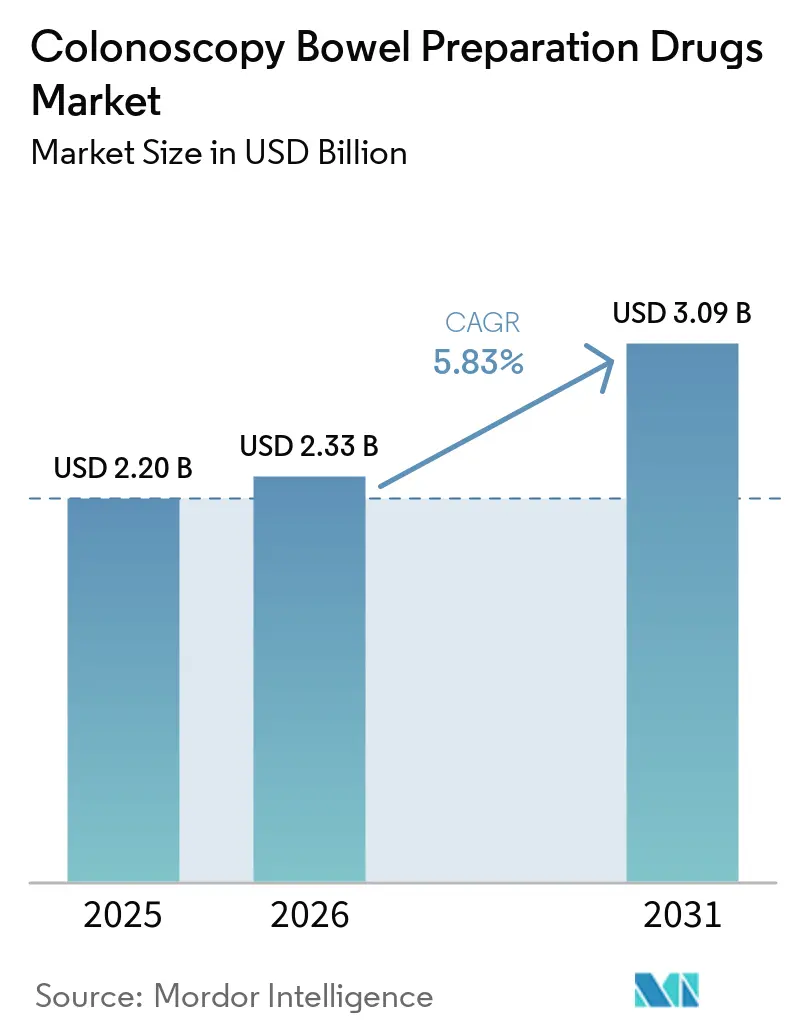
The Colonoscopy Bowel Preparation Drugs Market size is expected to grow from USD 2.20 billion in 2025 to USD 2.33 billion in 2026 and is forecast to reach USD 3.09 billion by 2031 at 5.83% CAGR over 2026-2031.
Screening programs are increasing the number of patients who need a colonoscopy, including people who first receive an abnormal result from a noninvasive test. The Colonoscopy Bowel Preparation Drugs Market also benefits when clinicians select lower-volume products that patients can complete more easily. Branded manufacturers are responding with tablets, ready-to-drink products, and digital instructions that support correct use. These features matter because inadequate preparation can delay a procedure and reduce the value of a screening appointment. Coverage gaps and safety limits for patients with kidney, cardiac, or electrolyte conditions continue to limit wider use of some newer products.
Key Report Takeaways
- By product type, polyethylene glycol preparations held 42.18% of the Colonoscopy Bowel Preparation Drugs Market share in 2025, while sodium picosulfate preparations are projected to grow at a 7.36% CAGR through 2031.
- By formulation volume, low-volume preparations held 53.46% of the Colonoscopy Bowel Preparation Drugs Market share in 2025, while ultra-low-volume preparations are forecast to grow at a 7.88% CAGR through 2031.
- By mechanism of action, isosmotic agents held 43.07% market share in 2025, while combination osmotic and stimulant agents are forecast to grow at a 7.62% CAGR through 2031.
- By distribution channel, retail pharmacies held 41.38% market share in 2025, while online pharmacies are forecast to grow at an 8.03% CAGR through 2031.
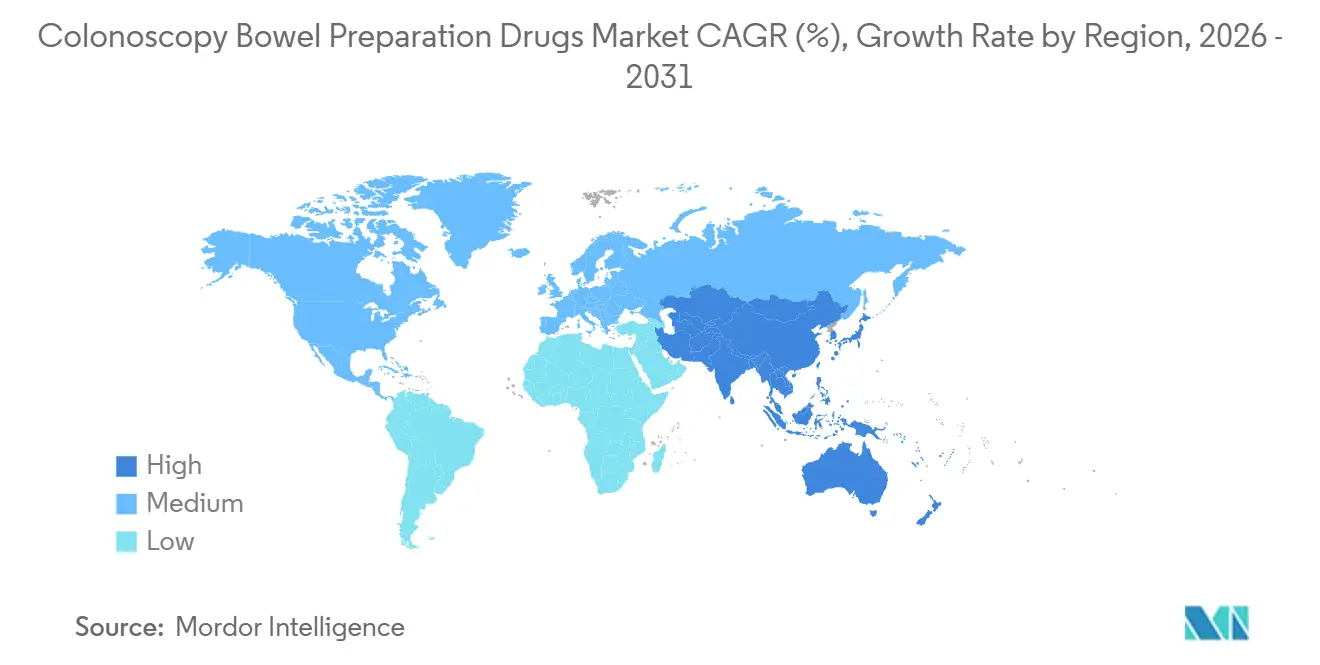
- By geography, North America held 37.23% market share in 2025, while Asia-Pacific is forecast to grow at a 7.87% CAGR through 2031.
Note: Market size and forecast figures in this report are generated using Mordor Intelligence’s proprietary estimation framework, updated with the latest available data and insights as of January 2026.
Market Trends and Insights
Drivers Impact Analysis of Colonoscopy Bowel Preparation Drugs Market*
| Driver | (~) % Impact on CAGR Forecast | Geographic Relevance | Impact Timeline |
|---|---|---|---|
| Rising Colorectal Cancer Screening Volumes | +1.5% | Global, with concentrated near-term impact in North America and APAC | Short term (≤ 2 years) |
| Shift Toward Low-Volume and Ultra-Low-Volume Preparations | +1.2% | North America and Europe, with spillover to APAC | Medium term (2-4 years) |
| Split-Dose Regimens Improving Cleansing Adequacy | +0.8% | Global | Medium term (2-4 years) |
| Patient Navigation and Digital Adherence Support | +0.6% | North America and Western Europe | Medium term (2-4 years) |
| Tablet-Based and Ready-to-Drink Formulation Adoption | +0.9% | North America and core APAC countries, including South Korea and Japan | Short term (≤ 2 years) |
| Personalized Preparation Selection for Comorbid Patients | +0.5% | Global, with high relevance in aging Europe and Japan | Long term (≥ 4 years) |
| Source: Mordor Intelligence | |||
Rising Colorectal Cancer Screening Volumes
Mandatory and voluntary colorectal cancer screening programs are increasing the demand for bowel preparation drugs in several health systems. The American Cancer Society projected 106,000 new colon cancer cases and 44,000 new rectal cancer cases in the United States during 2024.[1] A positive stool-based or blood-based screening result usually requires a follow-up colonoscopy, so broader use of noninvasive testing can still create preparation prescriptions. Japan’s structured screening approach and China’s colonoscopy-focused guidance give providers more predictable procedure volumes. National screening rules in Japan, China, and South Korea also give manufacturers clearer visibility on future demand. The Colonoscopy Bowel Preparation Drugs Market, therefore, remains connected to both direct colonoscopy screening and the follow-up pathway from other tests.
Lower-Volume, Tablet, and Ready-to-Drink Products
Updated U.S. consensus recommendations supported the use of a 2 L preparation for most patients and gave lower-volume approaches a clearer clinical role. This change supports prescribing patterns that already favored products with a smaller drinking burden. A 2025 Endoscopy comparison found that 1 L PEG-ascorbate produced better high-quality cleansing and adenoma detection than sodium picosulfate-magnesium citrate, while the latter retained a tolerability advantage.[2] Ready-to-drink liquids and tablets can make the dosing process simpler, especially when patients must divide treatment into 2 administrations. These products can carry higher prescription prices than legacy 4 L PEG products, which changes how procedure growth translates into revenue. The Colonoscopy Bowel Preparation Drugs Market is also gaining new tablet options in South Korea, where a 2026 trial evaluated a sodium picosulfate tablet with fewer tablets and lower sulfate content.
Split-Dose Regimens and Digital Adherence Support
The U.S. Multi-Society Task Force recommends split-dose administration for colonoscopy preparation regardless of the product selected. The recommendation supports a 90% adequate-preparation target for individual endoscopists and procedure units. A 2025 observational study found that low-volume, same-day regimens can meet adequacy expectations for afternoon procedures. Digital support can help patients follow dietary and dosing instructions without changing the drug itself. At the ACG 2025 Annual Meeting, the NavGI 360 implementation reported that cancellations, no-shows, and poor-preparation events declined from 27.5% to 21.8% by day 60. The Colonoscopy Bowel Preparation Drugs Market can benefit when preparation makers connect products with reminders, multilingual instructions, and scheduling support.
Preparation Selection for Patients With Comorbidities
Older patients and people with kidney disease, heart failure, or metabolic conditions need preparation choices that reflect their clinical risks. PEG-electrolyte solutions remain important because their isosmotic profile is more suitable for many patients who cannot use hyperosmotic options. A 2025 clinical review stated that patients with an estimated glomerular filtration rate below 30 mL/min/1.73 m² generally require careful selection of bowel preparation. This need preserves demand for higher-volume PEG products even as lower-volume products gain attention. It also leaves an unmet need for products that combine better tolerability with evidence in high-risk populations. The Colonoscopy Bowel Preparation Drugs Market has an opportunity where manufacturers can establish safer options for patients whose choices remain limited.
Restraints Impact Analysis of Colonoscopy Bowel Preparation Drugs Market*
| Restraint | (~) % Impact on CAGR Forecast | Geographic Relevance | Impact Timeline |
|---|---|---|---|
| Dehydration and Electrolyte Disturbances | -0.4% | Global, with greater relevance in elderly-heavy markets, including Japan and Europe | Short term (≤ 2 years) |
| Renal, Cardiac, and Metabolic Contraindications | -0.3% | Global, with the highest clinical management burden in North America and Europe | Long term (≥ 4 years) |
| Poor Tolerability of High-Volume Preparations | -0.3% | Global | Short term (≤ 2 years) |
| Reimbursement and Out-of-Pocket Cost Differences | -0.5% | North America | Medium term (2-4 years) |
| Source: Mordor Intelligence | |||
Safety Limits and High-Volume Tolerability
Fluid loss and electrolyte disruption remain important safety issues across bowel preparation products. FDA labeling for SUPREP advises caution for patients using medicines that affect kidney function and for patients vulnerable to fluid or electrolyte abnormalities. The 2025 consensus recommendations also discourage hyperosmotic regimens for people at risk of volume overload or electrolyte disturbances. These limits can narrow the use of some sodium picosulfate and sulfate-based options among older people. High-volume products avoid some risks for selected patients, but the required fluid intake can reduce completion and patient acceptance. The Colonoscopy Bowel Preparation Drugs Market must therefore balance lower volume and convenience against clinical suitability. Safety evidence for people with serious comorbidities remains central to the future uptake of newer products.
Coverage Gaps and Patient Cost Sharing
A 2025 Gastroenterology study of 2.59 million claims found cost sharing in 53% of commercial claims and 83% of Medicare Part D claims for bowel preparation drugs. Median out-of-pocket cost reached USD 60 for low-volume products under commercial plans, compared with USD 8 for high-volume alternatives in the study. This difference can steer patients toward older preparations even when a lower-volume option would be easier to complete. In February 2026, ASGE, ACG, and allied organizations asked the Centers for Medicare and Medicaid Services to clarify coverage for FDA-approved products without patient cost sharing. The outcome is particularly important for branded products with higher patient costs. For the Colonoscopy Bowel Preparation Drugs Market, uneven payment rules remain a direct barrier to broader use of the more convenient categories.
*Our forecasts treat driver/restraint impacts as directional, not additive. The impact forecasts reflect baseline growth, mix effects, and variable interactions.
Colonoscopy Bowel Preparation Drugs Market Segment Analysis
By Product Type:
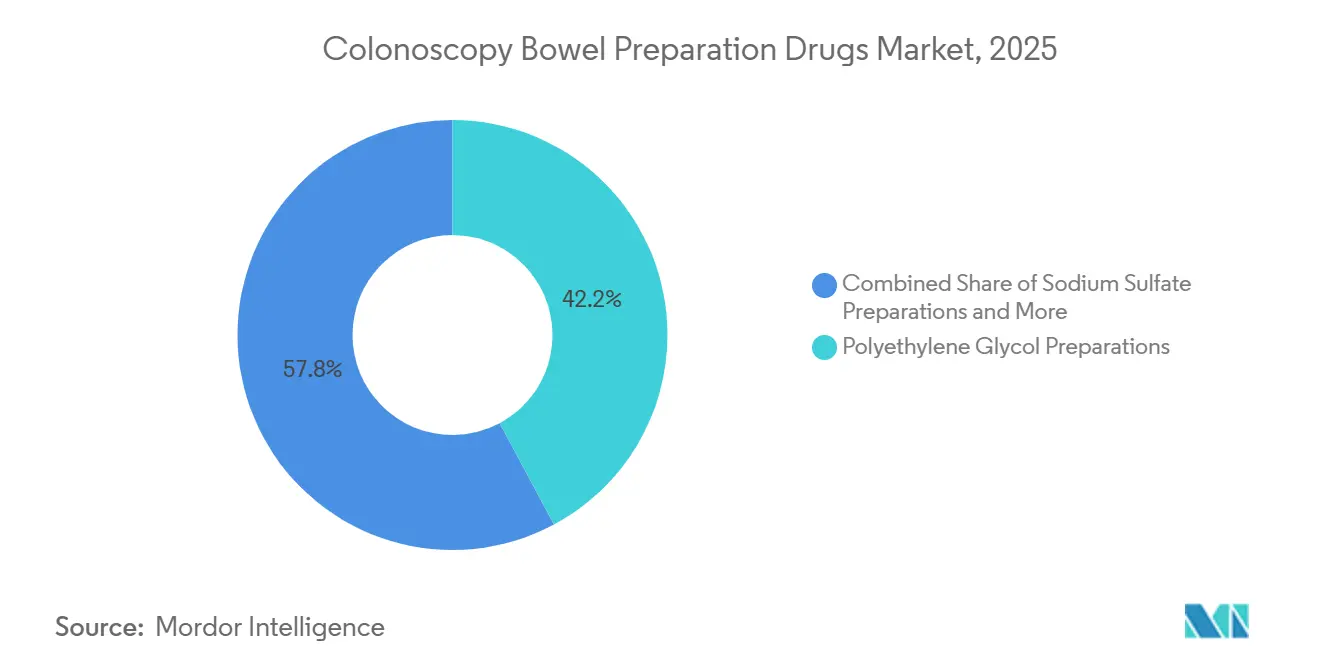
PEG Retains Its Clinical Base While Sodium Picosulfate GrowsPolyethylene glycol preparations led product-type sales, with 42.18% in 2025, within the Colonoscopy Bowel Preparation Drugs Market. Their position reflects the broad use of PEG-electrolyte products for elderly patients and people with renal impairment. Clinicians often select PEG when fluid shifts or electrolyte changes create a concern. This gives the category a stable base across routine and higher-risk procedures. Lower-volume PEG-ascorbate products have also extended the class beyond traditional 4 L formulations. A 2025 review found that 1 L and 2 L PEG-ascorbate regimens had noninferior efficacy to high-volume PEG-electrolyte solutions and improved compliance.[3] The product class consequently serves both patients who require its safety profile and patients seeking a smaller fluid burden. Sodium sulfate, magnesium citrate, and sodium phosphate products retain roles in narrower clinical situations. Sodium phosphate use remains limited where renal safety warnings affect prescribing. Bisacodyl and mannitol products are more often used as components of combination approaches.
Sodium picosulfate preparations are expected to advance at a 7.36% CAGR through 2031. Their appeal comes from low-volume liquids and tablets that can be easier for patients to take. Clenpiq and related combinations align with the preference for products that reduce the drinking burden. A 2026 randomized trial found that the DWJ1609 sodium picosulfate tablet was noninferior for cleansing and improved tolerability relative to a conventional oral sulfate tablet. The tablet required 20 tablets rather than 28 and contained 25% less sulfate in the reported comparison. These features can support adoption where preparation convenience is a major concern. However, sodium picosulfate products need careful selection for patients with renal, cardiac, or electrolyte risks. Their growth will depend on whether new formulations can preserve tolerability while strengthening safety evidence. The Colonoscopy Bowel Preparation Drugs Market benefits from this innovation, but it does not remove the clinical need for PEG.

By Formulation Volume:
Low-Volume Products Lead While Ultra-Low-Volume Options ExpandLow-volume preparations, defined as 2 L to less than 4 L, led formulation-volume sales, with 53.46% in 2025, within the Colonoscopy Bowel Preparation Drugs Market. This position followed a continuing move away from traditional 4 L protocols. The updated U.S. guidance stated that a 2 L split-dose regimen is sufficient for most patients. That recommendation supports low-volume products as a practical standard for many outpatient procedures. The category reduces the liquid amount while retaining familiar PEG and combination options. It also fits split-dose scheduling, which is now a routine recommendation. Yet payment policies can restrict patient access to these products. In the 2025 claims study, 61% of low-volume claims involved out-of-pocket costs, compared with 35% for high-volume products. This gap can slow a clinically supported shift in prescribing. Manufacturers and payers have a reason to address this gap because incomplete preparation can lead to canceled or repeated procedures.
Ultra-low-volume preparations, defined as less than 2 L, are forecast to record a 7.88% CAGR through 2031. This category includes 1 L PEG-ascorbate options and tablet-based preparations that require less direct fluid intake. These products address a common barrier, which is the difficulty of consuming a large volume of liquid. The 2025 Endoscopy study added support for 1 L PEG-ascorbate by reporting stronger high-quality cleansing than sodium picosulfate-magnesium citrate. Tablet products also avoid mixing requirements, which can reduce preparation complexity. High-volume preparations will remain necessary for some people with substantial comorbidities. Their role will therefore not disappear even as lower-volume options take more routine outpatient use. Procedure units also have an incentive to favor products that help them meet preparation-quality targets. Product choice will continue to depend on patient condition, affordability, and procedure timing. The Colonoscopy Bowel Preparation Drugs Market is moving toward lower-volume options without becoming a single-volume market.
By Mechanism of Action:
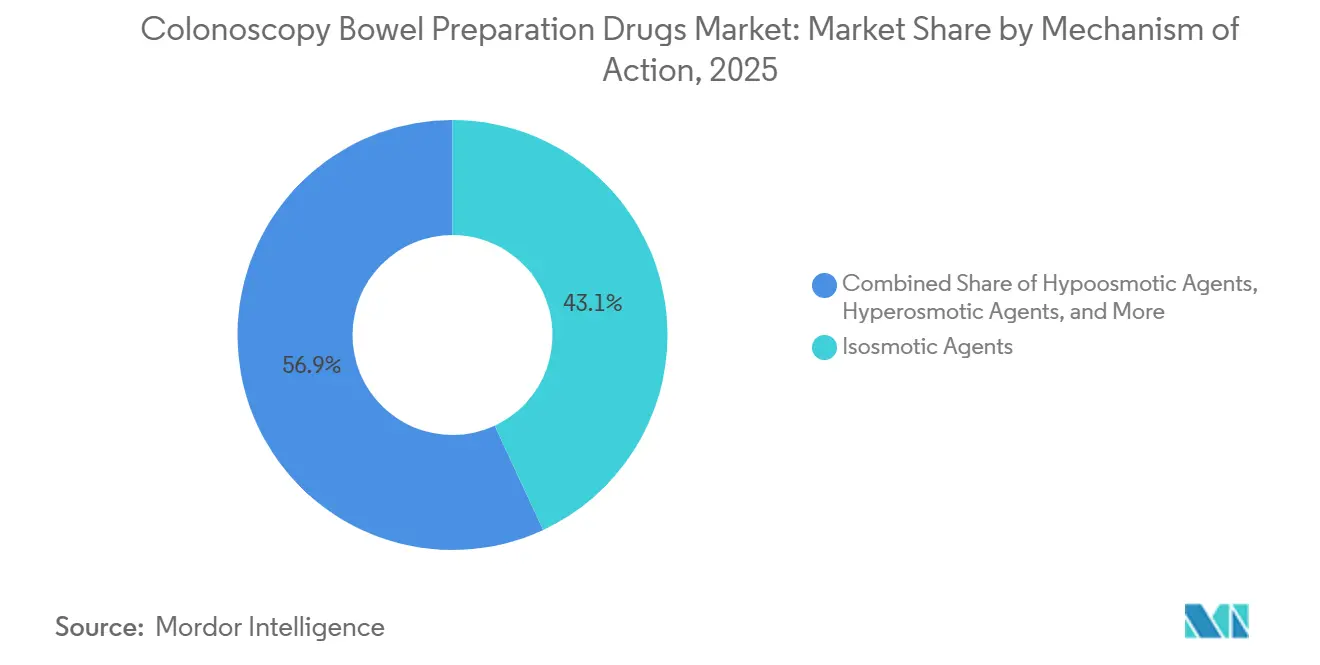
Isosmotic Products Lead as Combination Agents Gain UseIsosmotic agents led the mechanism-of-action sales, with 43.07% in 2025, within the Colonoscopy Bowel Preparation Drugs Market. PEG-electrolyte solutions form the core of this category. Their safety profile is especially relevant for patients with renal or cardiac impairment. This makes the category difficult to replace in higher-risk settings. The continuing growth of older patient populations also supports its clinical relevance. Isosmotic products provide a dependable option when alternatives create fluid or electrolyte concerns. Japan’s supply chain includes Macrogol 4000 active pharmaceutical ingredient production for intestinal cleansing products.[4] This infrastructure illustrates the established position of PEG-based preparations in hospital procurement. The category is likely to retain a base level of demand even when lower-volume alternatives grow faster. Its future rests on adapting the PEG platform to better patient convenience without losing its risk profile.
Combination osmotic and stimulant agents are forecast to grow at a 7.62% CAGR through 2031. These products commonly pair sodium picosulfate with magnesium citrate or magnesium oxide. The combination aims to provide effective cleansing with smaller volumes. This approach aligns with patient interest in products that are easier to complete. Novel tablet combinations seek to reduce the tablet burden compared with existing oral sulfate tablets. Mannitol-based products are also under clinical evaluation in Europe through the CLEARWAY Phase 3 study. Hyperosmotic sodium phosphate products remain constrained by safety warnings in regulated settings. The Colonoscopy Bowel Preparation Drugs Market will see more interest in dual-mechanism products, although patient risk screening will remain necessary. The Colonoscopy Bowel Preparation Drugs Market is likely to develop a more differentiated rather than a uniform mechanism mix.
By Distribution Channel:
Retail Remains the Main Outlet as Online Dispensing GrowsRetail pharmacies led distribution-channel sales, with 41.38% in 2025, within the Colonoscopy Bowel Preparation Drugs Market. Most preparation prescriptions are filled outside the hospital after a procedure has been scheduled. Retail pickup fits this process because patients often receive the prescription days or weeks before the procedure. The channel also serves patients whose preparation takes place at home. Its large position reflects established outpatient prescribing and dispensing habits. Pharmacies can also provide counseling on timing, hydration, and prescription collection. Hospital pharmacies hold an important secondary role in inpatient procedures and procedure centers. They are especially relevant where patients need supervised preparation or clinical monitoring. Other channels include specialty pharmacies and wholesale routes that support institutional purchasing. Retail pharmacy is likely to remain the principal route while providers maintain outpatient care models.
Online pharmacies are forecast to grow at an 8.03% CAGR through 2031. This is the fastest growth rate among the listed distribution channels. Online fulfillment can work well with telehealth-based scheduling and mail-order benefit designs. It can also reduce the need for patients to make a separate pharmacy visit after scheduling a colonoscopy. This model is useful when digital reminders are already part of preparation support. Online services may help patients obtain products that are less available at local outlets, but availability varies by plan and location. The channel does not eliminate the need for pharmacist counseling, especially for people with comorbidities. It may instead shift counseling toward phone, chat, and digital instructions. The Colonoscopy Bowel Preparation Drugs Market can gain through this channel when fulfillment is connected to reliable clinical guidance. Distribution strategies will need to account for insurer rules and prescription timing.
Geography Analysis
North America and LATAM Colonoscopy Bowel Preparation Drugs Market
North America led regional sales, with 37.23% in 2025, within the Colonoscopy Bowel Preparation Drugs Market. The region has high colonoscopy procedure use, established ambulatory endoscopy capacity, and a substantial branded-drug segment. The expansion of screening eligibility after the U.S. Preventive Services Task Force lowered the starting age, adding people to the potential screening population. The availability of premium low-volume and tablet formulations also shapes North American growth. Cost sharing remains a major concern because it can limit the use of those products. The 2025 claims analysis showed cost sharing in 83% of Medicare Part D claims and 53% of commercial claims. A February 2026 request to CMS sought clearer coverage guidance for FDA-approved bowel preparations. Canada and Mexico add regional volume, while the 2024 NTC015 licensing arrangement in Mexico points to broader Latin American distribution.[5] The direction of coverage policy will influence which formulations patients can practically access.
Europe Colonoscopy Bowel Preparation Drugs Market
Europe was the second-largest regional market in 2025. National reimbursement systems and European endoscopy guidance commonly support procurement of lower-cost generic PEG products. Germany, France, and the United Kingdom account for much of the region’s procedure volume. The United Kingdom’s bowel cancer screening program invites adults aged 50 to 74 for FIT testing every 2 years, with colonoscopy as the follow-up route. This process creates a regular stream of patients who may require preparation products after an abnormal test. Norgine has built a strong regional presence through gastroenterology relationships and preparation support materials. European labeling and post-market safety requirements are more consistent across markets than in many emerging regions. Norgine began the CLARITY Phase 3 pediatric Plenvu study across 5 European countries in February 2026. The region remains important both for current demand and for clinical evidence generation.
APAC, MEA and South America Colonoscopy Bowel Preparation Drugs Market
Asia-Pacific is expected to grow at a 7.87% CAGR through 2031, the fastest rate among regional segments. China’s 2024 colorectal cancer screening guidance formally recommends colonoscopy as a primary screening method. This supports the procurement of PEG products across public hospital systems. Japan’s screening structure creates a continuing pathway from fecal testing to follow-up colonoscopy. South Korea has become a center for tablet-form innovation, including sodium picosulfate combinations. Regional manufacturers represent the growing local focus on more convenient products. India is expected to expand as health coverage and diagnostic capacity develop. The Middle East, Africa, and South America remain smaller, but licensing partnerships can extend product access. The Colonoscopy Bowel Preparation Drugs Market in these areas will depend on local screening adoption, provider capacity, and product affordability.
Competitive Landscape
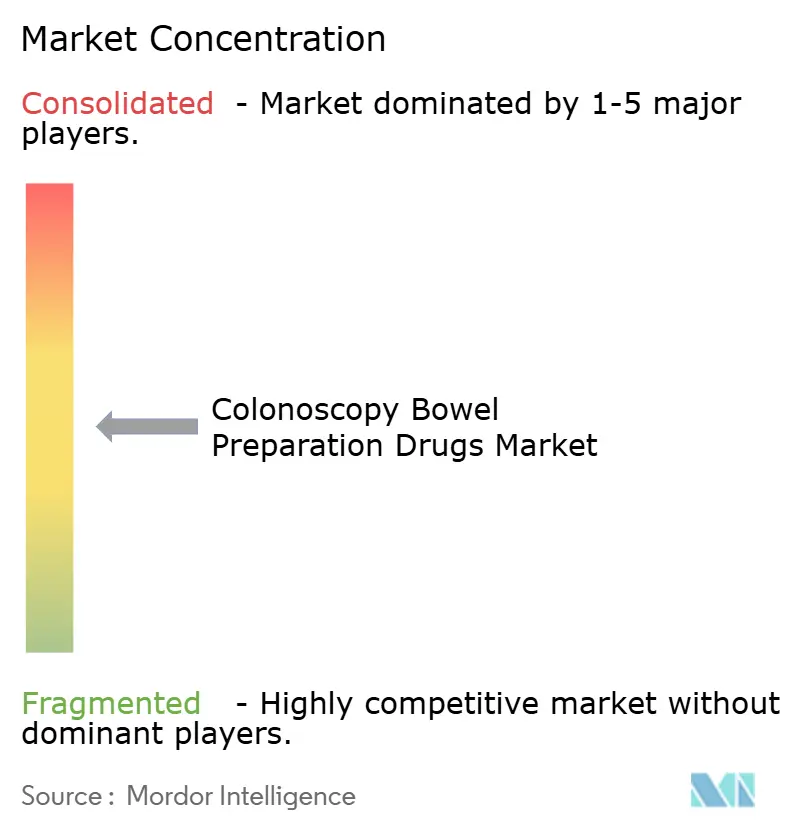
The Colonoscopy Bowel Preparation Drugs Market has a moderate concentration score of 5 because several specialist companies hold meaningful branded positions, but the supplied material does not establish a top-5 combined share of 60% or more. Ferring, Norgine, Azurity, and Salix are prominent branded participants in key regions. They compete on tolerability, reduced volume, clinical evidence, and adherence support rather than only on price. This approach matters because generic high-volume PEG products are already well established. Norgine uses the Plenvu app and multilingual preparation instructions to support patient adherence. These tools can make a product part of the provider’s workflow rather than a simple prescription. Azurity expanded its gastroenterology portfolio when it acquired Sebela’s bowel preparation franchise in November 2025. The transaction also brought more than 50 Sebela commercial and support employees to Azurity. Such moves show how commercial reach and patient support can matter alongside formulation design.
Generic entry is introducing more price pressure in tablet products. In May 2026, Lupin received FDA approval for sodium sulfate, magnesium sulfate, and potassium chloride tablets that are bioequivalent to Sutab. Lupin is eligible for 180-day generic drug exclusivity under its first-to-file status. The reference product had estimated U.S. annual sales of USD 132.8 million for the period cited by Lupin. This development creates a direct generic challenge for a premium tablet category. Branded suppliers may respond by reinforcing clinical evidence, patient programs, and payer relationships. The strongest product opportunity remains in patients with kidney disease, heart failure, or frailty, where lower-volume innovation has not fully resolved safety concerns. Companies that generate evidence in these groups could differentiate in a clinically important area. Digital preparation support offers another way to distinguish a branded product when payer access becomes harder.
Asian manufacturers are adding competitive pressure in public hospital procurement and convenient tablet products. Shenzhen Wanhe Pharmaceutical and Jiangxi Hengkang compete mainly through lower-cost PEG offerings in more price-sensitive channels. This pressure is strongest in the more standardized portion of the product range. NTC has pursued regional access through licensing, including its agreement with Chinoin for Mexico and Latin America. Competition in the Colonoscopy Bowel Preparation Drugs Market will continue to differ by geography because product reimbursement, generic access, and screening systems vary. The result is a competitive field with established branded leaders, generic entrants, and regional innovators.
Colonoscopy Bowel Preparation Drugs Industry Leaders
-
Azurity Pharmaceuticals, Inc.
-
Bausch Health Companies Inc.
-
Braintree Laboratories, Inc.
-
Ferring B.V.
-
Norgine B.V.
- *Disclaimer: Major Players sorted in no particular order
Colonoscopy Bowel Preparation Drugs Market Companies Covered in this Report
- Azurity Pharmaceuticals
- Bausch Health
- Bayer
- Beijing Podconley Pharmaceutical Technology and Development Co., Ltd.
- Braintree Laboratories, Inc.
- Eton Pharmaceuticals, Inc.
- Ferring Pharmaceuticals
- Fresenius
- Ipsen Pharma SAS
- Jiangxi Hengkang Pharmaceutical Co., Ltd.
- Norgine B.V.
- Pfizer
- Pharmbio Korea Co., Ltd.
- Salix Pharmaceuticals, Ltd.
- Sandoz Group AG
- Sebela Pharmaceuticals, Inc.
- Shenzhen Wanhe Pharmaceutical Co., Ltd.
- Sichuan Jianneng Pharmaceutical Co., Ltd.
- Takeda Pharmaceuticals
- Viatris
Recent Industry Developments in Colonoscopy Bowel Preparation Drugs Market
- May 2026: Lupin Limited received FDA approval for its ANDA for Sodium Sulfate, Magnesium Sulfate, and Potassium Chloride Tablets (1.479 g/0.225 g/0.188 g), a bioequivalent to Azurity Pharmaceuticals' Sutab. Lupin holds exclusive first-to-file status and is eligible for 180-day generic drug exclusivity.
- February 2026: Norgine Limited initiated the CLARITY Phase 3 multicentre, randomized study across Germany, Hungary, Italy, Poland, and Spain to evaluate Plenvu (NER1006) bowel cleansing efficacy, safety, and tolerability versus sodium picosulfate in pediatric patients aged 1 to under 18 years
- February 2026: ASGE, the American College of Gastroenterology, and allied colorectal cancer organizations formally wrote to the Centers for Medicare and Medicaid Services requesting clarification of coverage guidance to ensure all FDA-approved bowel prep medications meeting medical efficacy standards are covered without patient cost-sharing.
- November 2025: Azurity Pharmaceuticals completed the acquisition of Sebela Pharmaceuticals' bowel prep franchise, comprising two leading colonoscopy preparation therapies. More than 50 Sebela commercial and support employees joined Azurity, strengthening its gastroenterology commercial infrastructure and expanding its product portfolio to healthcare providers across the United States.
Global Colonoscopy Bowel Preparation Drugs Market Report Scope
The colonoscopy bowel preparation drugs market refers to the global market for pharmaceutical products used to cleanse the colon prior to colonoscopy and other lower gastrointestinal diagnostic or therapeutic procedures. These drugs are designed to remove fecal matter from the bowel, enabling clear visualization of the colonic mucosa and improving the accuracy and effectiveness of endoscopic examinations. The market comprises bowel cleansing agents manufactured and supplied by pharmaceutical companies, healthcare providers, and pharmacy distribution networks. It serves hospitals, clinics, ambulatory surgical centers, and other healthcare settings where colonoscopic procedures are performed.
The colonoscopy bowel preparation drugs market is segmented by product type, formulation volume, mechanism of action, distribution channel, and geography. By product type, it is further divided into polyethylene glycol preparations, sodium sulfate preparations, sodium picosulfate preparations, magnesium citrate preparations, sodium phosphate preparations, and other bowel preparation drugs. By formulation volume, it is segmented into high-volume preparations, 4 L or more; low-volume preparations, 2 L to less than 4 L; and ultra-low-volume preparations, less than 2 L. By mechanism of action, the market is segmented into isosmotic agents, hypoosmotic agents, hyperosmotic agents, combination osmotic and stimulant agents. Bydistribution channel, the market is segmented into hospital pharmacies, retail pharmacies, online pharmacies, others. The geography segment is further divided into North America, Europe, Asia-Pacific, the Middle East and Africa, and South America. The report also covers the estimated market sizes and trends for 17 countries across major regions globally. The report offers the market size and forecasts in value (USD) for the above segments.
| Polyethylene Glycol Preparations |
| Sodium Sulfate Preparations |
| Sodium Picosulfate Preparations |
| Magnesium Citrate Preparations |
| Sodium Phosphate Preparations |
| Other Bowel Preparation Drugs |
| High-Volume Preparations, 4 L or More |
| Low-Volume Preparations, 2 L to Less Than 4 L |
| Ultra-Low-Volume Preparations, Less Than 2 L |
| Isosmotic Agents |
| Hypoosmotic Agents |
| Hyperosmotic Agents |
| Combination Osmotic and Stimulant Agents |
| Hospital Pharmacies |
| Retail Pharmacies |
| Online Pharmacies |
| Others (Specialty Pharmacies, Wholesale Distributors, etc.) |
| North America | United States |
| Canada | |
| Mexico | |
| Europe | Germany |
| United Kingdom | |
| France | |
| Italy | |
| Spain | |
| Rest of Europe | |
| Asia-Pacific | China |
| Japan | |
| India | |
| Australia | |
| South Korea | |
| Rest of Asia-Pacific | |
| Middle East and Africa | GCC |
| South Africa | |
| Rest of Middle East and Africa | |
| South America | Brazil |
| Argentina | |
| Rest of South America |
| By Product Type | Polyethylene Glycol Preparations | |
| Sodium Sulfate Preparations | ||
| Sodium Picosulfate Preparations | ||
| Magnesium Citrate Preparations | ||
| Sodium Phosphate Preparations | ||
| Other Bowel Preparation Drugs | ||
| By Formulation Volume | High-Volume Preparations, 4 L or More | |
| Low-Volume Preparations, 2 L to Less Than 4 L | ||
| Ultra-Low-Volume Preparations, Less Than 2 L | ||
| By Mechanism of Action | Isosmotic Agents | |
| Hypoosmotic Agents | ||
| Hyperosmotic Agents | ||
| Combination Osmotic and Stimulant Agents | ||
| By Distribution Channel | Hospital Pharmacies | |
| Retail Pharmacies | ||
| Online Pharmacies | ||
| Others (Specialty Pharmacies, Wholesale Distributors, etc.) | ||
| By Geography | North America | United States |
| Canada | ||
| Mexico | ||
| Europe | Germany | |
| United Kingdom | ||
| France | ||
| Italy | ||
| Spain | ||
| Rest of Europe | ||
| Asia-Pacific | China | |
| Japan | ||
| India | ||
| Australia | ||
| South Korea | ||
| Rest of Asia-Pacific | ||
| Middle East and Africa | GCC | |
| South Africa | ||
| Rest of Middle East and Africa | ||
| South America | Brazil | |
| Argentina | ||
| Rest of South America | ||
Key Questions Answered in the Report
What is driving demand for colonoscopy bowel preparation drugs?
Higher colorectal cancer screening activity, follow-up colonoscopies after abnormal noninvasive tests, and wider use of lower-volume products are supporting demand.
What is the forecast growth rate for colonoscopy bowel preparation drugs?
The category is projected to grow at a 5.83% CAGR from 2026 to 2031, rising from USD 2.33 billion to USD 3.09 billion.
Which bowel preparation product type has the largest share?
PEG preparations led product-type sales with 42.18% share in 2025 because they remain important for many elderly and renally impaired patients.
Which formulation volume is growing fastest?
Ultra-low-volume preparations are projected to grow at a 7.88% CAGR through 2031, supported by 1 L options and tablet products.
Why do patients still face barriers to using low-volume preparations?
In a 2025 claims study, low-volume products had higher patient cost exposure than high-volume alternatives, which can influence the prescribed option.
Which region is expected to grow fastest?
Asia-Pacific is forecast to grow at a 7.87% CAGR through 2031, supported by screening guidance, hospital procurement, and product innovation.