
Chondroplasty Market Size and Share
Market Overview
| Study Period | 2020 - 2031 |
|---|---|
| Market Size (2026) | USD 2.06 Billion |
| Market Size (2031) | USD 2.86 Billion |
| Growth Rate (2026 - 2031) | 8.97 % |
| Fastest Growing Market | Asia-Pacific |
| Largest Market | North America |
| Market Concentration | Medium |
Major Players
*Disclaimer: Major Players sorted in no particular order Image © Mordor Intelligence. Reuse requires attribution under CC BY 4.0. |
|
Chondroplasty Market Analysis by Mordor Intelligence
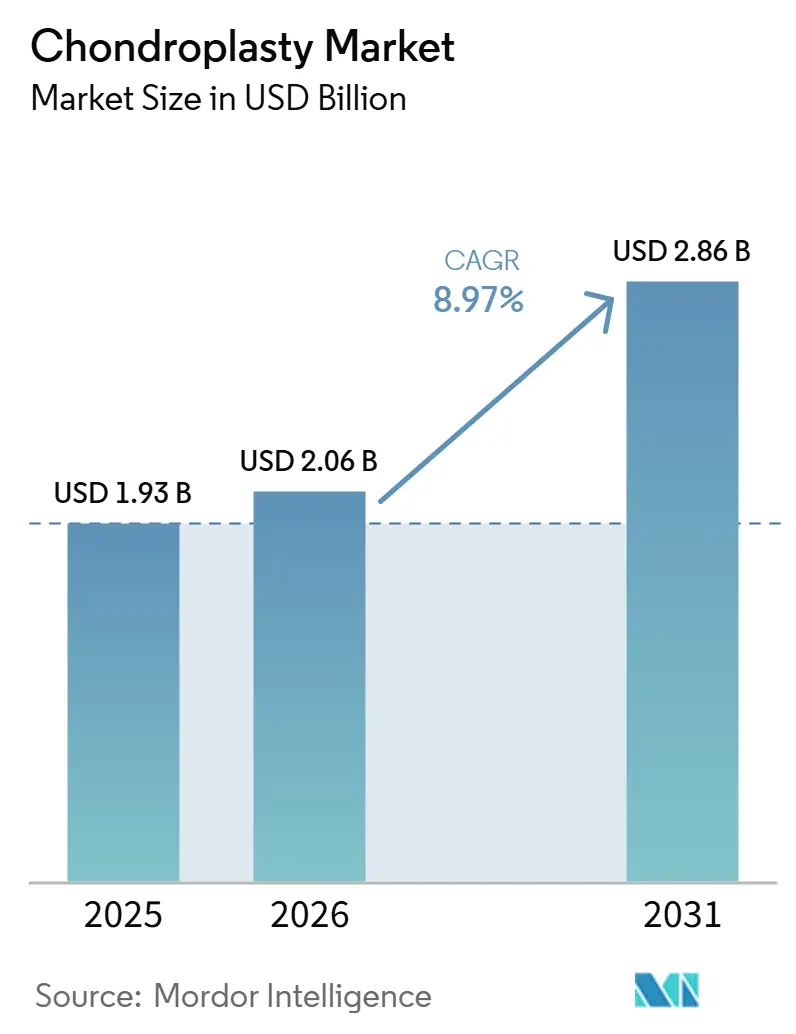
The Chondroplasty Market size is expected to grow from USD 1.93 billion in 2025 to USD 2.06 billion in 2026 and is forecast to reach USD 2.86 billion by 2031 at 8.97% CAGR over 2026-2031.
The chondroplasty market is supported by a growing burden of osteoarthritis, sports injuries, and post-traumatic cartilage damage that increases the need for treatment before joint disease reaches an advanced stage. Aging populations and higher obesity rates are increasing the number of patients who need joint-preserving treatment, while active middle-aged patients are creating demand for treatment that maintains mobility and work capacity. Procedures are also moving to outpatient settings, where providers seek lower costs, predictable case flow, shorter recovery periods, and instruments that can support efficient turnaround. Companies are aligning instruments and energy systems with biologic cartilage repair, which increases the role of chondroplasty in complex procedures that include defect preparation, margin treatment, and subsequent implant placement. Long-term repair durability and payment rules still limit the pace of adoption in parts of the chondroplasty market, particularly where facilities must justify premium equipment costs through consistent reimbursement and evidence of clinical value.
Key Report Takeaways
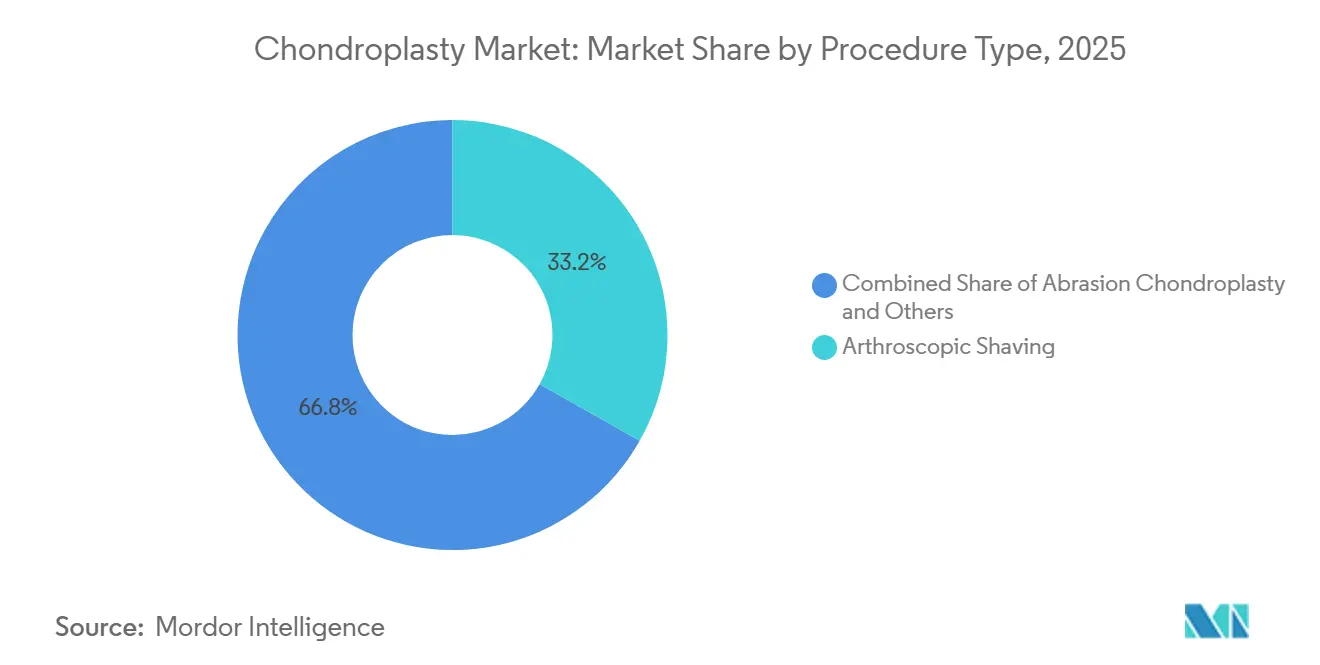
- By procedure type, arthroscopic shaving held 33.18% of the chondroplasty market share in 2025, while laser-assisted chondroplasty is forecast to grow at a 9.27% CAGR through 2031.
- By anatomy, the knee held 67.11% of revenue in 2025, while hip chondroplasty is forecast to grow at a 7.97% CAGR through 2031.
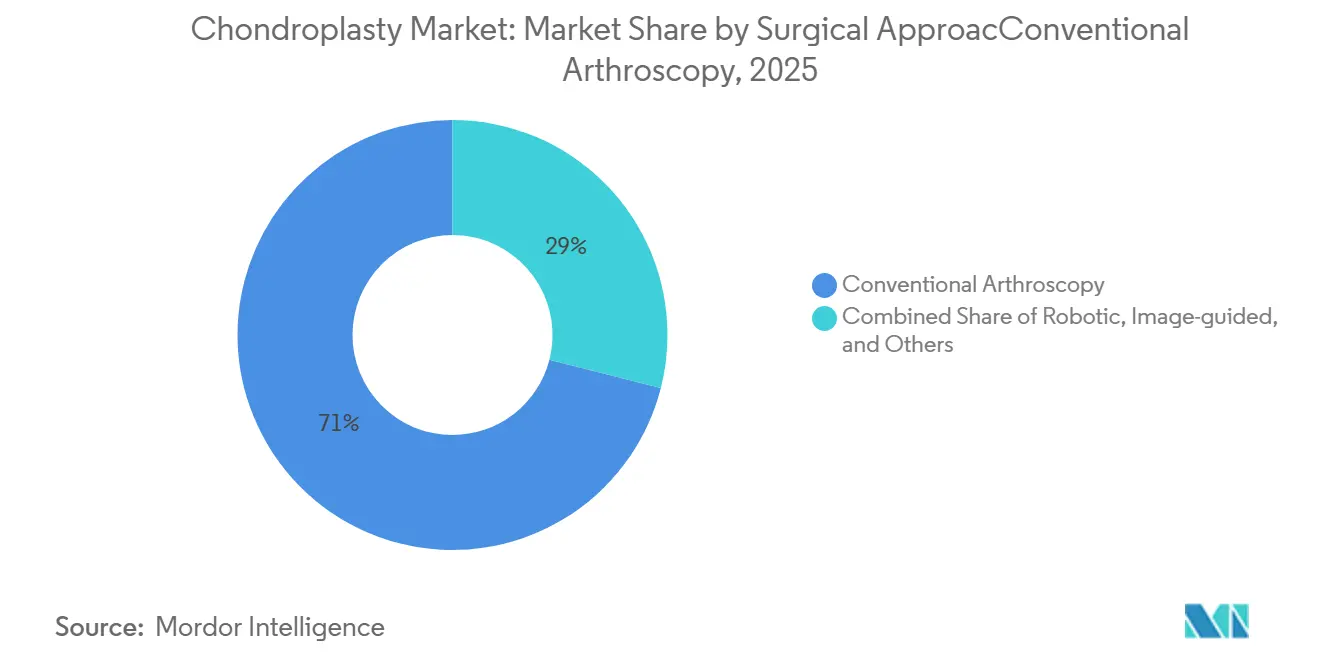
- By surgical approach, conventional arthroscopy held 71.03% of revenue in 2025, while robotic-assisted arthroscopy is forecast to grow at a 12.13% CAGR through 2031.
- By end user, hospitals held 58.12% of revenue in 2025, while ambulatory surgical centers are forecast to grow at a 9.12% CAGR through 2031.
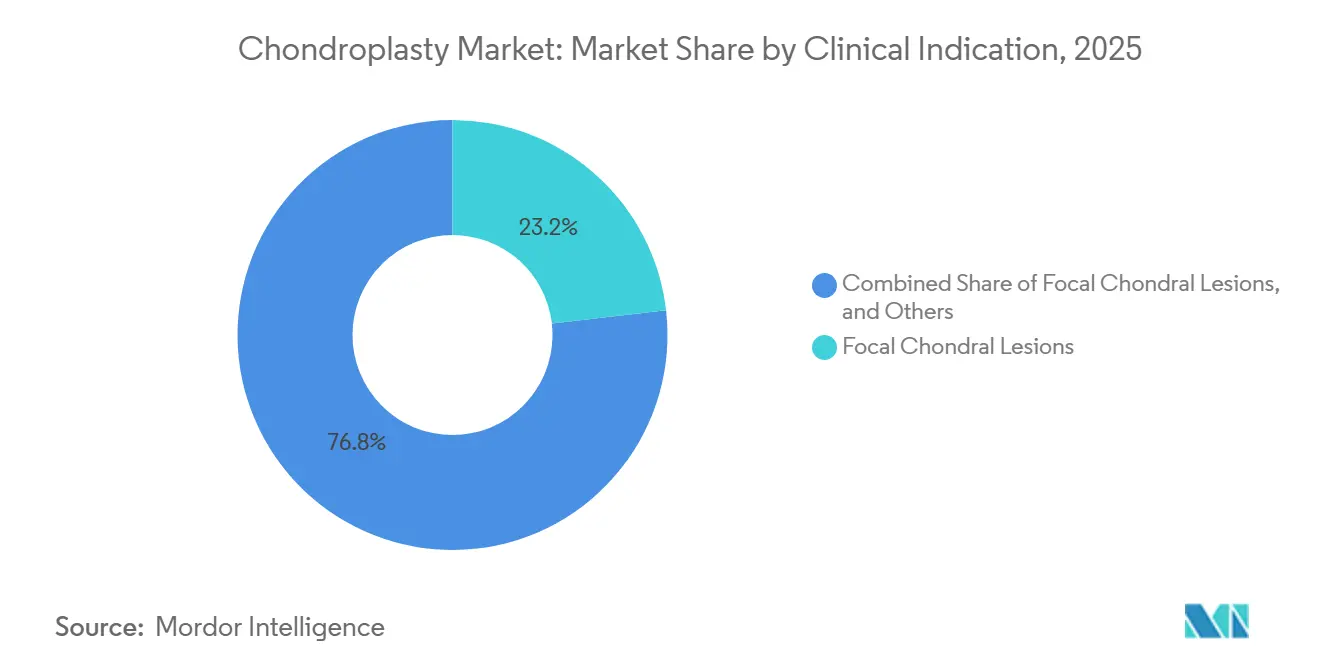
- By clinical indication, focal chondral lesions held 23.17% of revenue in 2025, while early-stage osteoarthritis is forecast to grow at a 8.76% CAGR through 2031.
- By distribution channel, direct sales held 56.23% of revenue in 2025, while group purchasing organizations and integrated delivery networks are forecast to grow at a 7.30% CAGR through 2031.
- By geography, North America held 39.67% of revenue in 2025, while Asia-Pacific is forecast to grow at a 8.23% CAGR through 2031.
Note: Market size and forecast figures in this report are generated using Mordor Intelligence’s proprietary estimation framework, updated with the latest available data and insights as of January 2026.
Global Chondroplasty Market Trends and Insights
Drivers Impact Analysis*
| Driver | (~) % Impact on CAGR Forecast | Geographic Relevance | Impact Timeline |
|---|---|---|---|
| Rising Burden of Osteoarthritis and Focal Cartilage Defects | +2.50% | Global, concentrated in APAC and North America | Long term (≥ 4 years) |
| Growth in Sports-Related Knee, Shoulder, and Hip Injuries | +1.80% | North America and Europe, with expansion to APAC | Medium term (2-4 years) |
| Shift Toward Joint Preservation and Minimally Invasive Arthroscopy | +2.20% | Global | Long term (≥ 4 years) |
| Expansion of Outpatient Orthopedic and Sports Medicine Capacity | +1.50% | North America primary, Europe secondary | Short term (≤ 2 years) |
| Procedure Standardization Through Depth-Controlled Microdrilling and RF Ablation | +0.90% | North America, Germany, and Japan | Medium term (2-4 years) |
| Surgeon Demand for Single-Stage, Off-the-Shelf Cartilage Repair Adjuncts | +0.80% | North America and Western Europe | Medium term (2-4 years) |
| Source: Mordor Intelligence | |||
Rising Burden of Osteoarthritis and Focal Cartilage Defects
A 2024 PLOS ONE study reported that osteoarthritis affected 607 million people worldwide, which is expanding the patient pool for cartilage debridement procedures. The disease burden is moving beyond older patients because incidence has increased within the 30-60 working-age population[1]Global, regional, and national burden of osteoarthritis from 1990 to 2021 and projections to 2035: A cross-sectional study for the Global Burden of Disease Study 2021." PLOS ONE, 2024. https://journals.plos.org/plosone/article?id=10.1371%2Fjournal.pone.0324296. The World Health Organization's 2024 osteoarthritis fact sheet identifies knee osteoarthritis as the most common form of the disease, with 365 million people affected globally. This pattern keeps the knee central to the chondroplasty market because knee cartilage defects are often treated during arthroscopic care. The expected increase in hip osteoarthritis cases also supports demand for hip procedures. The chondroplasty market, therefore, has a broader demand base than one dependent on isolated sports injuries.
Growth in Sports-Related Knee, Shoulder, and Hip Injuries
Sports and recreational activities continue to create a sustained flow of knee, shoulder, and hip injuries that can involve cartilage damage. A February 2025 study published by Healio identified 6,689,422 shoulder injuries in emergency department cases, and 45.84% were linked to sports and recreation. A 2025 analysis in Knee Surgery, Sports Traumatology, Arthroscopy reported knee pathologies in 75.50% of 9,432 German arthroscopy registry entries, with meniscal lesions requiring resection as the largest diagnosis group. These conditions are commonly managed alongside cartilage treatment in the same arthroscopic procedure. Injury rates are also increasing among people aged 45-64, which combines acute injury demand with early degenerative joint care. This age group is more likely to favor procedures that preserve joint function and delay replacement surgery.
Shift Toward Joint Preservation and Minimally Invasive Arthroscopy
Surgeons increasingly use chondroplasty as part of a joint-preservation plan rather than only as a standalone debridement procedure. It can prepare a cartilage defect for scaffolds, implants, or biologic adjuncts during the same intervention. A 2024 study in the Journal of Cartilage & Joint Preservation reported improved patient outcomes at 1-year and 2-year follow-up after arthroscopic debridement and chondroplasty for mild-to-moderate knee osteoarthritis. The study involved cartilage-loss areas of 2-9 cm² and patients with Kellgren-Lawrence grade 2-3 disease. Cartilage repair implants have also received increased attention on procedures that may delay arthroplasty. This development supports the chondroplasty market because surface preparation, defect sizing, and margin treatment use the same procedural ecosystem.
Expansion of Outpatient Orthopedic and Sports Medicine Capacity
Outpatient orthopedic care is becoming more important as providers and payers move suitable procedures away from inpatient settings. The 2026 payment rule added 573 codes to the ambulatory surgical center covered procedures list. It also removed 285 musculoskeletal procedures from the Medicare inpatient-only list, including 266 procedures that took effect in 2026. Orthopedics represented 68.00% of ambulatory surgical center volume in 2025, compared with 52.00% in 2018. This shift makes short, standardized arthroscopic procedures more practical for a wider range of facilities. The chondroplasty market benefits when outpatient centers use single-use instruments that fit predictable case flow and cost targets.
Restraints Impact Analysis*
| Restraint | (~) % Impact on CAGR Forecast | Geographic Relevance | Impact Timeline |
|---|---|---|---|
| Variable Long-Term Durability of Fibrocartilage Repair | -0.90% | Global | Long term (≥ 4 years) |
| Uneven Reimbursement and Payer Evidence Requirements | -1.30% | North America and Europe primary | Medium term (2-4 years) |
| Subchondral Bone Injury Risk From Inconsistent Debridement Depth | -0.60% | Global | Medium term (2-4 years) |
| Training, Case-Volume, and Capital-Equipment Barriers in Emerging Markets | -0.70% | APAC core, with expansion to MEA | Long term (≥ 4 years) |
| Source: Mordor Intelligence | |||
Variable Long-Term Durability of Fibrocartilage Repair
Chondroplasty can produce fibrocartilage rather than the hyaline cartilage found on healthy articular surfaces. Fibrocartilage does not provide the same long-term load distribution under repeated mechanical stress. A 2025 ISAKOS Congress abstract describing a 95-patient cohort reported reoperation rates of 31.80% for mechanical chondroplasty and 33.30% for radiofrequency ablation. The same cohort reported failure rates of 18.80% and 28.60%, respectively, at mean follow-up. These outcomes can limit confidence in chondroplasty as a definitive solution for some patients. The procedure may instead be used more often as a preparation step before scaffold-based or biologic cartilage repair.
Uneven Reimbursement and Payer Evidence Requirements
Payment rules can limit procedure revenue because chondroplasty is often bundled with larger arthroscopic procedures. This makes it non-separately billable in many cases and lowers the financial case for a standalone intervention. Payer code libraries can increase the risk of claim denials and recoupments for orthopedic groups. In the United States, reported denial rates on multiprocedure arthroscopy claims reached 30.00% under bundled coding logic. German payment rules have also reduced reimbursement for arthroscopic instrument costs, which can constrain the use of newer equipment. The chondroplasty market faces a slower adoption path for laser-assisted and robotic-assisted systems when facilities cannot match device costs with reliable payment.
*Our forecasts treat driver/restraint impacts as directional, not additive. The impact forecasts reflect baseline growth, mix effects, and variable interactions.
Segment Analysis
By Procedure Type: Arthroscopic Shaving Leads While Laser-Assisted Procedures Gain Use
Arthroscopic shaving accounted for 33.18% of 2025 revenue and remained the largest procedure type in the chondroplasty market. Its established role in cartilage debridement supports use across a large installed base of conventional arthroscopy systems. The technique fits familiar operating workflows and can be used with a range of supporting instruments. Laser-assisted chondroplasty is forecast to expand at a 9.27% CAGR through 2031, making it the fastest-growing procedure type. A 2025 meta-analysis published in Lasers in Medical Science reported shorter operating times and higher patient satisfaction for laser-assisted orthopedic procedures than conventional alternatives. Radiofrequency ablation also remains relevant for outpatient providers who seek predictable tissue treatment and short procedure times[2]Efficacy and safety of laser-assisted techniques in orthopedic surgery: a meta-analysis of randomized controlled trials." Lasers in Medical Science, Springer Nature, 2025. https://link.springer.com/article/10.1007/s10103-025-04416-9.
Abrasion chondroplasty, tissue removal, and debridement continue to be used with meniscal and ligament repair procedures. These procedures retain a steady place in the chondroplasty market because many cartilage defects are identified during related arthroscopic surgery. Patellar repair and meniscal repair chondroplasty serve narrower clinical needs, including patellar tracking disorders and meniscal flap tears. Their contribution is more incremental than that of the leading procedure types. Across the segment, surgeons are seeking improved control over tissue depth and surface preparation. This preference supports instruments with depth feedback or pressure-sensing features. It may reduce reliance on basic mechanical shaving while directing spending toward energy-based and laser systems. The chondroplasty market size for laser-assisted procedures is expected to rise as facilities place more weight on precision and workflow efficiency.



By Anatomy: Knee Procedures Remain Central While Hip Procedures Advance
The knee accounted for 67.11% of anatomy-segment revenue in 2025 and held the leading position in the chondroplasty market. Its position reflects the large global burden of knee osteoarthritis and the high number of knee sports injuries. Knee procedures also benefit from established arthroscopy pathways in hospitals and outpatient centers. Hip chondroplasty is forecast to grow at a 7.97% CAGR through 2031, ahead of other anatomy segments. Greater use of AI-assisted osteochondroplasty may improve confidence in cam-morphology correction during hip arthroscopy. More accurate resection can help surgeons avoid both incomplete correction and excessive bone removal.
Shoulder chondroplasty is associated with rotator cuff and labral pathologies that occur in sports-related injury care. Its procedure volume follows the continuing burden of shoulder injuries among active adults. Ankle chondroplasty serves patients with osteochondral talar lesions and is most relevant for younger and active patient groups. Wrist and elbow procedures address smaller populations, including elite athletes and workers in demanding manual roles. Small joints hold a smaller share of the chondroplasty market revenue but benefit from advances in miniaturized arthroscopy tools. Knee and hip procedures are expected to account for a larger share of biologic adjunct use as repair options develop. Manufacturers with anatomy-specific tips and depth-control features can be better aligned with this shift. The chondroplasty market can therefore see more value move toward specialized rather than general-purpose instruments.
By Surgical Approach: Conventional Arthroscopy Maintains Scale While Robotics Grows
Conventional arthroscopy held 71.03% of surgical-approach revenue in 2025 and formed the largest share of the chondroplasty market size for this segment. It is familiar to surgeons and is compatible with existing operating room infrastructure. Short procedure times also make it suitable for ambulatory surgical centers that need efficient room turnover. Robotic-assisted arthroscopy is forecast to grow at a 12.13% CAGR through 2031, the highest rate among the assessed segments. A 2025 review in PMC reported that robotic systems can support submillimeter motion precision and intra-articular mapping. These capabilities can improve planning and reduce variation in technically demanding procedures.
Image-guided arthroscopy offers navigation support in complex cases without the full capital requirement of a robotic platform. Open and mini-open chondroplasty address cases in which arthroscopic access remains difficult. Their share is likely to decline as visualization and arthroscopic access improve. As of 2025, no robotic or AI-assisted arthroscopy platform had full approval for general use in the United States. Regulatory timing will therefore influence adoption across the chondroplasty market. Ambulatory surgical centers are likely to prefer modular systems with manageable per-case costs. Manufacturers that design smaller systems for outpatient case volumes may have an advantage over providers of hospital-scale platforms. The chondroplasty industry is likely to place greater value on designs that match both clinical precision and facility economics.
By End User: Hospitals Lead While Ambulatory Surgical Centers Expand
Hospitals captured 58.12% of end-user revenue in 2025 and remained the largest setting in the chondroplasty market. They manage complex cases that can involve multiple pathologies, inpatient capacity, and specialist teams. Academic medical centers also concentrate surgeons who use newer cartilage treatment approaches. Ambulatory surgical centers are forecast to grow at a 9.12% CAGR through 2031. Their growth reflects payment policy, lower site-of-care costs, and the efficiency of outpatient orthopedic delivery. Orthopedic procedures accounted for more than 68.00% of ambulatory surgical center volume through 2025, which shows the importance of this care setting.
Orthopedic and sports medicine clinics represent a smaller but developing channel for the chondroplasty market. Some clinics are considering office-based arthroscopy when miniaturized direct-visualization devices are suitable. Academic and research institutes represent a small but important source of revenue for clinical evaluation of robotic and laser platforms. The other category includes military and veterans' health facilities that serve patients with sports-related cartilage damage. Hospitals are responding to outpatient competition by building their own orthopedic programs and entering ambulatory surgical center partnerships. This response reduces the distinction between the largest end-user groups. It also creates a more distributed procedure network across the chondroplasty market. Suppliers need to support both hospital purchasing processes and the operating needs of outpatient centers.
By Clinical Indication: Focal Lesions Lead While Early Osteoarthritis Broadens Demand
Focal chondral lesions accounted for 23.17% of clinical-indication revenue in 2025 and remained the leading indication in the chondroplasty market. These lesions have defined boundaries, measurable defect sizes, and established treatment expectations. Their clinical clarity has made them a core use case for arthroscopic cartilage treatment. Early-stage osteoarthritis is forecast to grow at a 8.76% CAGR through 2031. This reflects a wider use of chondroplasty in chronic and progressive disease rather than only discrete traumatic defects. A 2024 study in the Journal of Cartilage & Joint Preservation found improved patient-reported outcomes at 1-year and 2-year follow-up for patients with mild-to-moderate osteoarthritis undergoing arthroscopic debridement and chondroplasty.
Sports-related cartilage injury and post-traumatic cartilage damage form another important indication group. These cases benefit from the high activity levels of the affected patient population and their preference for joint preservation. Osteochondritis dissecans remains a smaller but established indication among adolescents and young adults. Arthroscopic treatment may be the first intervention before bone grafting or cartilage transplantation. Meniscal and chondral flap tears frequently overlap with meniscal repair and are often treated during the same procedure. The move from focal lesions toward early osteoarthritis expands the clinical role of the chondroplasty market. It brings more chronic disease patients into the procedure pathway. It also increases the importance of evidence that supports durable outcomes across varied cartilage conditions.
By Distribution Channel: Direct Sales Lead While Consolidated Purchasing Grows
Direct sales held 56.23% of distribution-channel revenue in 2025 and led the chondroplasty market. Orthopedic device sales depend heavily on surgeon education, hands-on training, and procedure support. These services can differentiate products beyond list price alone. Group purchasing organizations and integrated delivery networks are forecast to grow at a 7.30% CAGR through 2031. Their growth reflects hospital system consolidation and the use of collective procurement to manage device costs. Distributors remain important in mid-tier markets and in regions where building a direct sales team is less practical.
Growth in group purchasing can place pricing pressure on premium chondroplasty instruments. Standard contracts can narrow the scope for higher-priced laser or robotic disposables unless clinical outcomes clearly support their value. The other channel includes e-commerce and hybrid direct-to-ambulatory surgical center fulfillment. This channel is gaining relevance where outpatient centers create procurement systems outside group purchasing contracts. Manufacturers are responding with digital ordering, inventory tools, and packaging designed for ambulatory surgical centers. These capabilities improve operational fit for customers in the chondroplasty market. Faster fulfillment is becoming important alongside clinical performance and product quality. Distribution strategies will need to reflect both consolidated hospital buying and decentralized outpatient demand.
Geography Analysis
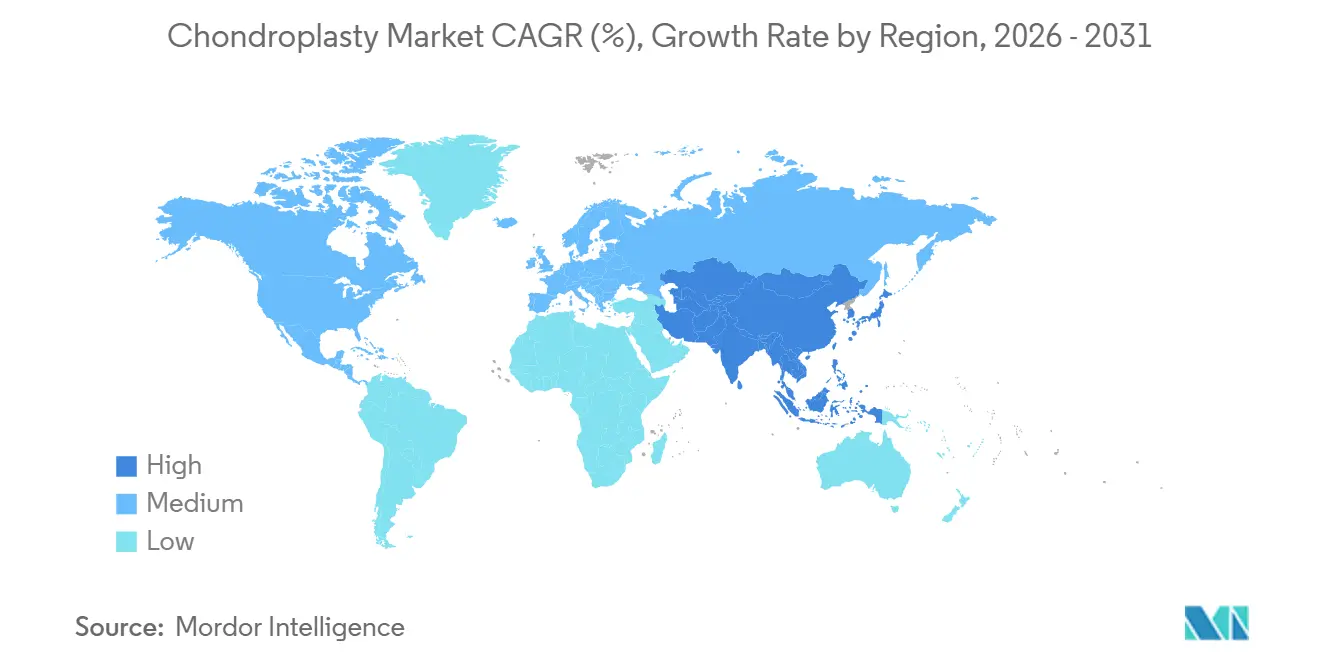
North America held 39.67% of revenue in 2025 and represented the largest geographic share of the chondroplasty market. The region has a mature reimbursement structure, high specialist density, and widespread use of orthopedic ambulatory surgical centers. In 2026, the removal of 266 musculoskeletal procedures from the Medicare inpatient-only list further supports outpatient case migration. The United States accounts for most regional revenue because it has a large installed base of radiofrequency ablation and laser systems. Vericel reported 30.00% year-on-year revenue growth for MACI to USD 56.40 million in the first quarter of 2026. This supports the broader joint-preservation pathway that includes surface preparation and cartilage treatment.
Europe remains an important regional contributor to the chondroplasty market, led by Germany, the United Kingdom, France, Italy, and Spain. Germany expanded its outpatient arthroscopy procedure list in January 2026, reducing reliance on inpatient treatment for knee arthroscopy. From July 2026, the country introduced a dedicated arthroscopy payment section with a 5.00% fee increase for relevant specialist procedures. The United Kingdom uses procurement frameworks and medical device access requirements that influence equipment adoption. France, Italy, and Spain have solid procedure volumes but use evidence-based coverage assessments that can slow uptake of premium devices. Poland and the Nordic countries are increasing their contribution as specialist capacity and private health investment develop.
Asia-Pacific is forecast to grow at a 8.23% CAGR through 2031 and is the fastest-growing region in the chondroplasty market. A 2024 PLOS ONE study reported 158 million prevalent osteoarthritis cases in East Asia in 2021, while high-income Asia-Pacific had the highest global age-standardized prevalence rate. Japan and South Korea are innovation-oriented markets that have complex reimbursement systems and active interest in regenerative care. China has advanced private hospitals in major cities, while wider adoption depends on regulatory approval and procurement catalog inclusion. India is centered on private hospitals in metropolitan areas, where price sensitivity and financing affect capital equipment placements. Middle East and Africa and South America are smaller regional contributors, with the Gulf Cooperation Council countries and Brazil as their primary access points. Medical tourism and private orthopedic hospital growth support demand in these emerging areas.

Competitive Landscape
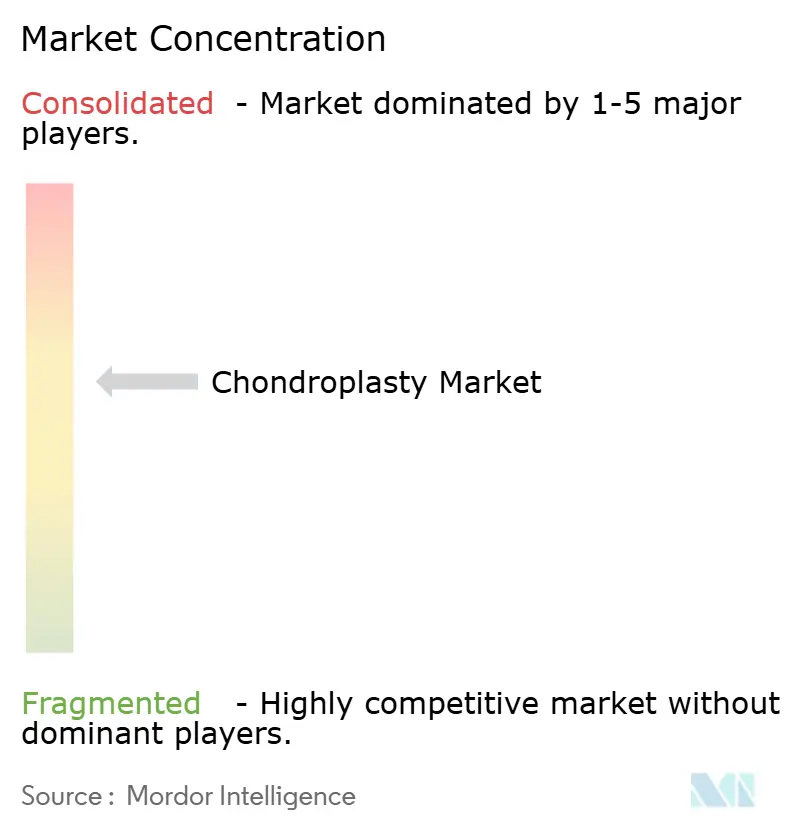
The chondroplasty market is moderately concentrated in arthroscopic instruments and energy devices. Arthrex, Stryker, Smith+Nephew, Zimmer Biomet, and CONMED are leading suppliers of arthroscopic shaving and radiofrequency ablation products. Competition is more fragmented in biologic adjuncts, where Vericel, Anika Therapeutics, Geistlich Pharma, Regentis Biomaterials, and Bioventus serve distinct product categories. Conventional arthroscopy has strong price pressure because differentiation is incremental, and group purchasing contracts influence purchasing decisions. Surgeon familiarity and training support product retention in this part of the chondroplasty market. Robotic and laser-assisted systems remain earlier-stage categories where clinical data and regulatory milestones can shape adoption.
Zimmer Biomet completed the acquisition of Monogram Technologies in October 2025 for an enterprise value of USD 168.00 million. The transaction added an AI-driven, CT-based, semi-autonomous total knee arthroplasty robotic system with FDA 510(k) clearance received in March 2025. The company expects to commercialize the technology with Zimmer Biomet implants by early 2027. Smith+Nephew obtained a new Category I CPT code for the CARTIHEAL AGILI-C Cartilage Repair Implant that becomes effective on January 1, 2027. This may reduce payer uncertainty and support structured cartilage repair protocols that include chondroplasty preparation. Smith+Nephew also published 5-year multicenter trial results for CARTIHEAL in April 2026. The results showed better overall KOOS outcomes than surgical standard care through 60 months for the reported patient groups[3]Smith+Nephew. "New data for CARTIHEAL AGILI-C Cartilage Repair Implant demonstrates superior pain relief and functional gains at 5-years." April 21, 2026. https://www.smith-nephew.com/en/news/2026/04/21/new-data-for-cartiheal-agili-c-cartilage-repair-implant.
Vericel held an estimated 57.80% share of the cartilage repair biologic segment in fiscal year 2025. Its MACI revenue grew by more than 20.00% for 3 consecutive years, and FDA approval of its Burlington manufacturing facility in March 2026 expanded production capacity. NuOrtho Surgical represents a smaller specialist competitor in radiofrequency ablation systems for knee chondroplasty. Smaller suppliers can build loyalty through focused clinical validation and procedure-specific support. No competitor currently combines depth-controlled microdrilling with single-use robotics at price points designed for ambulatory surgical centers. This leaves room for new solutions that combine precision with workable outpatient economics. The chondroplasty market is likely to remain competitive as large suppliers build technology portfolios and smaller firms focus on specific procedural needs.
Chondroplasty Industry Leaders
-
Stryker Corporation
-
Smith & Nephew plc
-
Arthrex, Inc.
-
Zimmer Biomet Holdings, Inc.
-
Johnson & Johnson
- *Disclaimer: Major Players sorted in no particular order

Recent Industry Developments
- April 2026: Smith+Nephew published 5-year multicenter RCT data for its CARTIHEAL AGILI-C Cartilage Repair Implant, demonstrating superior overall KOOS scores versus surgical standard of care, debridement and microfracture, at all timepoints up to 60 months. The results included better pain, function, and quality-of-life outcomes. Results were comparable in OA and non-OA subgroups, KL 0-3, which broadened the clinical relevance of the reported findings. The CARTIHEAL Implant is the only FDA-approved device for cartilage and osteochondral defects in patients with or without mild-to-moderate OA. The development supports the use of cartilage repair in patients whose treatment pathway may otherwise progress toward more invasive joint procedures.
- February 2026: Arthrex released the TightRope SB implant, the first all-suture soft-button device for ACL reconstruction to reach the United States market. The company reported that 2,000 implants had been used in procedures since launch. The product extends Arthrex's minimally invasive sports medicine platform in the knee. The knee is also the largest anatomical segment for chondroplasty instrumentation. The launch, therefore, strengthens Arthrex's presence among surgeons managing knee injury and joint-preservation cases. Its relevance is based on adjacent procedural use rather than on a direct chondroplasty product launch.


Global Chondroplasty Market Report Scope
As per the scope of the report, chondroplasty refers to surgical procedures and associated technologies used to repair, smooth, reshape, or remove damaged articular cartilage within joints to restore function, alleviate pain, and delay the progression of degenerative joint conditions. Chondroplasty procedures are commonly performed using arthroscopic, image-guided, robotic-assisted, and other minimally invasive techniques for the treatment of cartilage defects arising from sports injuries, trauma, osteoarthritis, and other musculoskeletal disorders.
The chondroplasty market is segmented by procedure type into Arthroscopic Shaving, Abrasion Chondroplasty, Radiofrequency Ablation Chondroplasty, Patellar Chondroplasty, Meniscal Repair Chondroplasty, Tissue Removal and Debridement, Laser-Assisted Chondroplasty, and Others; by anatomy into Knee, Shoulder, Hip, Ankle, Wrist and Elbow, and Other Small-Joint Anatomy; by surgical approach into Conventional Arthroscopy, Robotic-Assisted Arthroscopy, Image-Guided Arthroscopy, Open or Mini-Open Chondroplasty, and Others; by end user into Hospitals, Ambulatory Surgical Centers, Orthopaedic and Sports-Medicine Clinics, Academic and Research Institutes, and Others; by clinical indication into Focal Chondral Lesions, Osteochondritis Dissecans, Meniscal and Chondral Flap Tears, Early-Stage Osteoarthritis, Sports-Related Cartilage Injury, Post-Traumatic Cartilage Damage, and Others; by distribution channel into Direct Sales, Distributors, Group Purchasing Organizations and Integrated Delivery Networks, and Others; and by geography into North America, Europe, Asia-Pacific, Middle East and Africa, and South America. The market report also covers the estimated market sizes and trends for 17 countries across major regions globally. For each segment, the market size and forecast are provided in terms of value (USD).
| Arthroscopic Shaving |
| Abrasion Chondroplasty |
| Radiofrequency Ablation Chondroplasty |
| Patellar Chondroplasty |
| Meniscal Repair Chondroplasty |
| Tissue Removal and Debridement |
| Laser-Assisted Chondroplasty |
| Others |
| Knee |
| Shoulder |
| Hip |
| Ankle |
| Wrist and Elbow |
| Other Small-Joint Anatomy |
| Conventional Arthroscopy |
| Robotic-Assisted Arthroscopy |
| Image-Guided Arthroscopy |
| Open or Mini-Open Chondroplasty |
| Others |
| Hospitals |
| Ambulatory Surgical Centers |
| Orthopaedic and Sports-Medicine Clinics |
| Academic and Research Institutes |
| Others |
| Focal Chondral Lesions |
| Osteochondritis Dissecans |
| Meniscal and Chondral Flap Tears |
| Early-Stage Osteoarthritis |
| Sports-Related Cartilage Injury |
| Post-Traumatic Cartilage Damage |
| Others |
| Direct Sales |
| Distributors |
| Group Purchasing Organizations and Integrated Delivery Networks |
| Others |
| North America | United States |
| Canada | |
| Mexico | |
| Europe | Germany |
| United Kingdom | |
| France | |
| Italy | |
| Spain | |
| Rest of Europe | |
| Asia-Pacific | China |
| Japan | |
| India | |
| Australia | |
| South Korea | |
| Rest of Asia-Pacific | |
| Middle East and Africa | GCC |
| South Africa | |
| Rest of Middle East and Africa | |
| South America | Brazil |
| Argentina | |
| Rest of South America |
| By Procedure Type | Arthroscopic Shaving | |
| Abrasion Chondroplasty | ||
| Radiofrequency Ablation Chondroplasty | ||
| Patellar Chondroplasty | ||
| Meniscal Repair Chondroplasty | ||
| Tissue Removal and Debridement | ||
| Laser-Assisted Chondroplasty | ||
| Others | ||
| By Anatomy | Knee | |
| Shoulder | ||
| Hip | ||
| Ankle | ||
| Wrist and Elbow | ||
| Other Small-Joint Anatomy | ||
| By Surgical Approach | Conventional Arthroscopy | |
| Robotic-Assisted Arthroscopy | ||
| Image-Guided Arthroscopy | ||
| Open or Mini-Open Chondroplasty | ||
| Others | ||
| By End User | Hospitals | |
| Ambulatory Surgical Centers | ||
| Orthopaedic and Sports-Medicine Clinics | ||
| Academic and Research Institutes | ||
| Others | ||
| By Clinical Indication | Focal Chondral Lesions | |
| Osteochondritis Dissecans | ||
| Meniscal and Chondral Flap Tears | ||
| Early-Stage Osteoarthritis | ||
| Sports-Related Cartilage Injury | ||
| Post-Traumatic Cartilage Damage | ||
| Others | ||
| By Distribution Channel | Direct Sales | |
| Distributors | ||
| Group Purchasing Organizations and Integrated Delivery Networks | ||
| Others | ||
| By Geography | North America | United States |
| Canada | ||
| Mexico | ||
| Europe | Germany | |
| United Kingdom | ||
| France | ||
| Italy | ||
| Spain | ||
| Rest of Europe | ||
| Asia-Pacific | China | |
| Japan | ||
| India | ||
| Australia | ||
| South Korea | ||
| Rest of Asia-Pacific | ||
| Middle East and Africa | GCC | |
| South Africa | ||
| Rest of Middle East and Africa | ||
| South America | Brazil | |
| Argentina | ||
| Rest of South America | ||


Key Questions Answered in the Report
What is driving growth in chondroplasty procedures?
The procedure base is expanding because osteoarthritis, sports injuries, and post-traumatic cartilage damage are increasing demand for joint-preserving care. The chondroplasty market is forecast to grow at a 8.97% CAGR from 2026 to 2031. Aging populations, obesity, and the preference to preserve joint function before replacement surgery are widening the relevant patient base. The move toward earlier intervention also increases the importance of procedures that address cartilage damage before patients enter more advanced disease pathways.
Which procedure type leads chondroplasty revenue?
Arthroscopic shaving led procedure-type revenue with 33.18% in 2025. Laser-assisted chondroplasty is forecast to grow faster at a 9.27% CAGR through 2031. Arthroscopic shaving has an established role in debridement and works with the large installed base of conventional arthroscopy systems. Laser systems can attract interest where surgeons seek shorter operating times, precise tissue treatment, and a patient experience that supports the clinical case for more advanced equipment.
Why are ambulatory surgical centers important for chondroplasty?
Ambulatory surgical centers are forecast to grow at a 9.12% CAGR through 2031 because orthopedic procedures are moving toward lower-cost outpatient settings. They favor short, standardized procedures and single-use devices that can support consistent case flow, lower per-procedure costs, and efficient room turnover. This setting increases the value of instrument design, packaging, service, and inventory models that fit the operating needs of independent centers and hospital-affiliated outpatient facilities.
Which joint accounts for the largest share of chondroplasty procedures?
Knee procedures accounted for 67.11% of anatomy-segment revenue in 2025. The high burden of knee osteoarthritis and sports injuries supports this position. Knee arthroscopy also has established treatment pathways in hospitals and ambulatory surgical centers, supporting its continued role as the principal anatomy segment. Hip procedures are forecast to grow faster as AI-assisted osteochondroplasty and related arthroscopy workflows create more confidence in treating hip cartilage conditions.
What limits adoption of advanced chondroplasty technologies?
Payment bundling, inconsistent coverage, capital costs, and long-term durability concerns can slow adoption of laser-assisted and robotic-assisted systems. Providers also need adequate training, procedure volumes, and evidence of clinical value before they can justify investment in higher-cost platforms. These factors are especially important in emerging markets, where capital budgets, surgeon availability, and access to advanced equipment can limit adoption despite growing clinical demand.
Which region is growing fastest for chondroplasty?
Asia-Pacific is forecast to grow at a 8.23% CAGR through 2031. High osteoarthritis prevalence and expanding specialist capacity support regional demand. Japan and South Korea are innovation-oriented markets, while China and India offer growth through larger patient populations and expanding private hospital capacity. Adoption differs within the region because regulatory approvals, procurement rules, price sensitivity, and local financing options affect the ability of providers to introduce capital-intensive technology.
Page last updated on:





