
China Lime Market Analysis by Mordor Intelligence
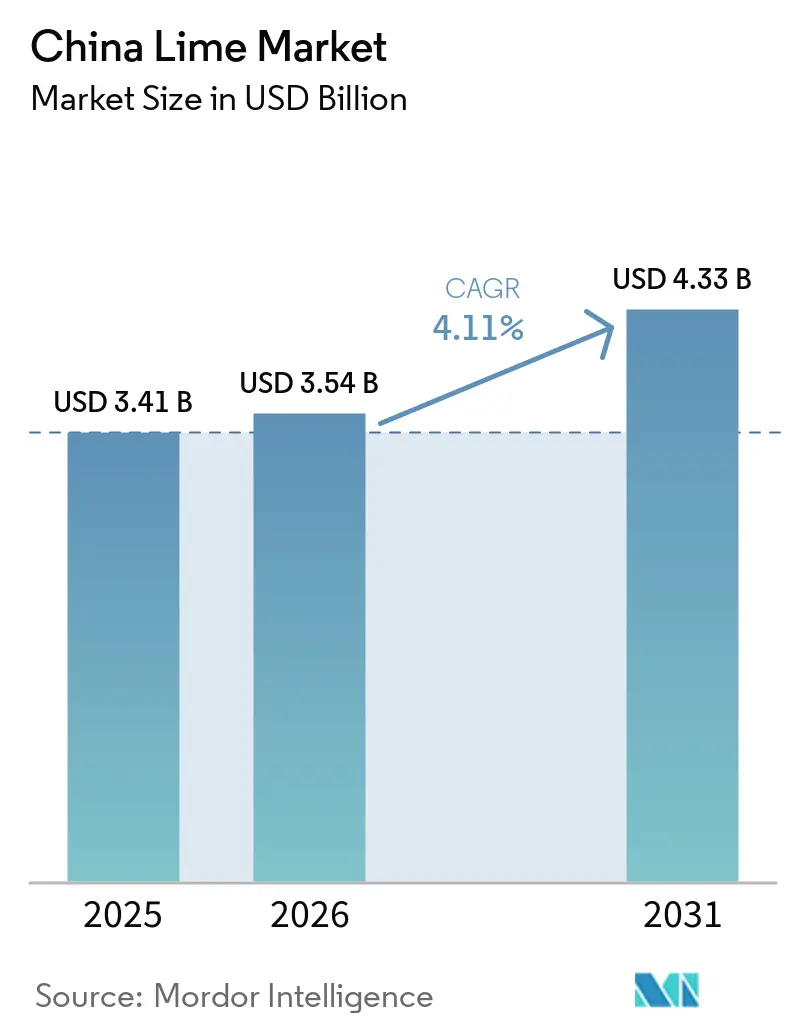
The China Lime Market size is projected to be USD 3.41 billion in 2025, USD 3.54 billion in 2026, and reach USD 4.33 billion by 2031, growing at a CAGR of 4.11% from 2026 to 2031. The China lime market is experiencing steady growth, reflecting a clear shift from traditional yellow lemons toward higher-value Tahiti and aromatic cultivars that command premium prices in beverages, nutraceuticals, and export channels. Key producing regions such as Chongqing’s Wanzhou District and Yunnan’s Weishan County are expanding green and aromatic lime cultivation, demonstrating how varietal upgrades can significantly enhance grower revenues. According to FAOSTAT data, China’s harvested area for lemons and limes increased from about 101,500 hectares in 2021 to more than 103,700 hectares in 2024, underscoring the expansion trend[1]Source: Food and Agriculture Organization, “Practical Aspects of Citrus Juice Processing,” fao.org. Downstream demand is closely tied to the ready-to-drink tea sector, the growing popularity of craft cocktails in urban centers, and the nutraceutical industry’s transition from synthetic to natural vitamin C sources. E-commerce platforms have strengthened cold-chain logistics, reducing spoilage and extending delivery reach into tier-2 and tier-3 cities, thereby opening new consumer markets for perishable lime shipments. Government conversion subsidies, such as the RMB 600 per mu (USD 85.71 per mu) high-grafting program in Changshou District, accelerate orchard renewal and consolidate fragmented plots, compressing the china lime market adjustment timeline to under seven years[2]Source: Ministry of Agriculture and Rural Affairs, “Drought Risk Assessment for Southern Jiangxi Citrus,” moa.gov.cn.
Key Report Takeaways
- By production base, Wanzhou District accounted for the majority of China's lime market share.
Note: Market size and forecast figures in this report are generated using Mordor Intelligence’s proprietary estimation framework, updated with the latest available data and insights as of January 2026.
China Lime Market Trends and Insights
Drivers Impact Analysis*
| Driver | (~) % Impact on CAGR Forecast | Geographic Relevance | Impact Timeline |
|---|---|---|---|
| Rapid penetration of high-yield Tahiti cultivars | +0.9% | Chongqing, Sichuan, Yunnan, and Guangxi | Medium term (2-4 years) |
| Rising demand from China's beverage and craft cocktail industry | +1.1% | National, with early gains in Beijing, Shanghai, Shenzhen, and Chengdu | Short term (≤ 2 years) |
| Expanding domestic nutraceutical and vitamin C supplement segment | +0.7% | National, concentrated in tier-1 and tier-2 cities | Medium term (2-4 years) |
| Growth of value-added lime derivatives | +0.5% | Guangdong, Jiangxi, and Fujian (processing hubs) | Long term (≥ 4 years) |
| Government programs promoting citrus acreage conversion | +0.6% | Chongqing, Sichuan, Guangxi, and Guizhou | Medium term (2-4 years) |
| E-commerce cold-chain upgrades enabling nationwide distribution | +0.8% | National, spill-over to remote tier-3 cities | Short term (≤ 2 years) |
| Source: Mordor Intelligence | |||
Rapid Penetration of High-Yield Tahiti Cultivars
Tahiti cultivars yield more than 40% fruit than legacy lines and crop year-round in subtropical microclimates, cutting orchard payback to under five years. Wanzhou authorities work with the Chinese Academy of Citrus Research to optimize germplasm and extend shelf life by up to fourteen days This performance shortens orchard payback periods and improves growers' profitability. Local authorities, working with research institutions, are focusing on optimizing germplasm and extending shelf life to support market expansion. Contract farming models have demonstrated that quality enforcement can lift farmers' incomes, while niche varieties such as finger lime highlight opportunities in ultra-premium markets. Together, these developments illustrate how varietal upgrades are reshaping the lime industry, offering growers improved returns and positioning China as a competitive supplier in both domestic and export channels. Hainan's industrial cultivation of finger lime in Qionghai exceeds 300 acres, with the fruit priced at RMB 600 to 700 per kilogram (USD 85 to USD 100). Known as 'citrus caviar,' its high value and EU export qualification highlight its potential in global high-end culinary markets[3]Source: Department of Agriculture and Rural Affairs of Guangxi, “Homepage,” nynct.gxzf.gov.c.
Rising Demand from Beverage and Craft Cocktail Industry
China’s beverage sector is driving strong demand for fresh lime, with ready-to-drink tea, craft cocktails, and bubble tea chains increasingly relying on natural fruit inputs. Bars in major cities emphasize authenticity by insisting on fresh lime juice, while large beverage companies have launched programs to source directly from producing regions, ensuring consistent quality standards. The craft beer segment and specialty tea chains are replacing synthetic flavor concentrates with fresh fruit, tightening supply chains, and rewarding reliable growers. This shift reflects consumer preferences for natural ingredients and premium experiences, positioning lime as a critical input across multiple beverage categories. The trend is projected to continue as urban consumers embrace healthier, fresher, and more authentic drink options.
Expanding Domestic Nutraceutical Vitamin C Segment
China’s nutraceutical industry is witnessing rising demand for citrus-derived vitamin C as formulators move away from synthetic sources to secure clean-label claims. Lime peel is particularly valued for its bioflavonoids, which enhance bioavailability and strengthen the appeal of whole-fruit extracts. This has created opportunities for companies to expand production of functional ingredients such as pectin and citrus-based supplements. In July 2024, the Chinese beverage company Mixue Bingcheng signed an agreement to invest approximately 150 million yuan (USD 20.6 million) in establishing a new lemon supply chain center in Anyue County, Sichuan. This investment in new facilities and processing capacity indicates confidence in long-term growth, with lime identified as a key raw material for health-oriented products. This trend aligns with growing consumer interest in natural wellness solutions and the industry's focus on innovation in functional foods and nutraceuticals.
Growth of Value-Added Lime Derivatives
The processing of lime residues is emerging as a valuable opportunity, with peel offering high-quality pectin suitable for jams, dairy stabilizers, and other applications. Integrated processing facilities are being developed to handle large volumes, supported by investments in cold storage and initial-processing lines that stabilize supply and pricing. Essential oils derived from lime command premium values compared to juice, and distillation processes are proving commercially viable for large-scale operations. These developments highlight the potential of biorefineries to maximize returns from every part of the fruit. By focusing on value-added derivatives, processors are diversifying revenue streams and strengthening the economic sustainability of lime cultivation and processing in China.
Restraints Impact Analysis*
| Restraint | (~) % Impact on CAGR Forecast | Geographic Relevance | Impact Timeline |
|---|---|---|---|
| Weather-induced production volatility | -0.6% | Guangxi, Hainan, Yunnan, and Fujian | Short term (≤ 2 years) |
| Citrus greening disease risk and phytosanitary costs | -0.8% | Guangdong, Guangxi, Fujian, and Jiangxi | Long term (≥ 4 years) |
| Logistics bottlenecks in remote mountainous orchards | -0.4% | Sichuan, Chongqing, Guizhou, and Yunnan | Medium term (2-4 years) |
| Fertilizer and farm-input price inflation | -0.3% | National | Short term (≤ 2 years) |
| Source: Mordor Intelligence | |||
Weather-Induced Production Volatility
China’s lime production faces significant risks from extreme weather events such as typhoons and droughts, particularly in regions like Guangxi and Yunnan. These conditions can sharply reduce annual output, creating volatility in supply and pricing. Irrigation deficits during critical growth stages further compound yield risks, leaving farmers vulnerable to climate exposure. Crop insurance coverage remains limited, forcing growers to rely on self-insurance, which discourages long-term investment in orchards and infrastructure. This lack of protection undermines confidence in expanding lime acreage and highlights the need for stronger risk management frameworks. Addressing weather-induced volatility will be essential for stabilizing production and ensuring sustainable growth in the lime sector.
Citrus Greening Disease and Phytosanitary Costs
Citrus greening disease, also known as Huanglongbing, continues to challenge lime cultivation in China due to the absence of resistant cultivars. Farmers face higher pesticide costs to manage outbreaks, which increases production expenses and reduces profitability. The disease has already impacted other citrus crops, raising concerns about potential spillover into lime-growing regions. This situation underscores the importance of phytosanitary measures, research into resistant varieties, and improved orchard management practices. Without effective solutions, disease pressure will remain a major constraint on expansion. Addressing these challenges is critical to safeguarding lime production and ensuring the long-term viability of the industry in China.
*Our forecasts treat driver/restraint impacts as directional, not additive. The impact forecasts reflect baseline growth, mix effects, and variable interactions.
Geography Analysis
Chongqing’s Wanzhou District plays a key role in China’s lime industry, serving as the country’s main hub for green lime cultivation and price leadership. The region benefits from strong government support, including procurement programs and infrastructure investments such as new rail connections that reduce market risks and improve distribution efficiency. These initiatives have strengthened local incomes and provided growers with stability, ensuring that lime production remains a reliable source of livelihood. By consolidating orchards and enhancing logistics, Wanzhou has positioned itself as the backbone of the national lime market, setting benchmarks for both production and pricing while supporting rural communities with sustainable growth opportunities.
Yunnan’s Weishan County has emerged as the fastest-growing lime-producing region in China, particularly known for its aromatic lemon varieties. The county’s high-altitude climate provides unique conditions that allow year-round flowering, complementing supply gaps from lower-elevation areas. This advantage has enabled Weishan to expand its role in the lime sector, contributing significantly to the overall fruit economy of the region. Local authorities and growers are focusing on scaling production while maintaining quality standards, positioning the county as a leader in varietal diversification. The combination of favorable climate, expanding cultivation, and rising demand ensures that Weishan continues to strengthen its influence in China’s lime market.
Hainan contributes to China’s lime industry by offering counter-seasonal production, supplying fruit during periods when other regions face shortages. The island is also recognized for its ultra-premium finger lime, which is used in fine dining and high-end culinary markets. Guangxi and Guizhou, though smaller in scale, are leveraging rural revitalization programs to expand cultivation of fragrant lemons and Tahiti limes. These provinces are positioning themselves as important second-tier contributors, complementing the larger production bases in Chongqing and Yunnan. Together, these regions diversify China’s lime supply, enhance resilience against seasonal fluctuations, and create opportunities for growers to tap into both mainstream and niche markets nationwide.
Competitive Landscape
Regional producers such as Chongqing Zhongxian Lemon Sci-Tech Development Co., Ltd., Yunnan Yingrui Citrus Industry Co., Ltd., and Guizhou Meitan Fruit Industry Co., Ltd. play a crucial role in lime cultivation. They collaborate directly with farmers to expand cultivation areas, enhance orchard management practices, and introduce new lime varieties. Cooperatives in regions like Wanzhou consolidate smallholder farmers, ensure minimum price guarantees, and provide technical training. These efforts stabilize grower incomes while aligning production with increasing demand from the beverage and nutraceutical industries. These stakeholders are integral to balancing farmer welfare with commercial competitiveness, forming the backbone of China's lime supply chain.
Companies such as Guangzhou Jiabao Agricultural Products Co., Ltd., Guangxi Lvzhi Agricultural Technology Co., Ltd., and Huanong Fresh Produce Holdings Co., Ltd. focus on enhancing value through processing, logistics, and technology adoption. Their investments include debittering techniques, concentrate production, drone spraying, and IoT sensor integration to improve efficiency and product quality. Additionally, cold-chain infrastructure and e-commerce platforms help reduce spoilage and expand market reach, benefiting orchards that adhere to strict traceability standards. These companies differentiate themselves through innovation and intellectual property, driving the evolution of China's lime industry from raw fruit sales to functional ingredients and premium derivatives.
Enterprises such as Sinocham Citrus Group Co., Ltd., Guangxi Nongken Group Co., Ltd., Guangxi Yexiang International Fruit Co., Ltd., and Hainan Xiangtai Agriculture Co., Ltd. focus on market expansion and international integration. They leverage rural revitalization programs, target premium niches like finger limes, and adopt export-oriented strategies to strengthen China's global position. By collaborating with major beverage companies and foodservice channels, they secure consistent demand and open new markets. Their emphasis on scaling production, maintaining quality, and building international partnerships underscores the importance of diversified stakeholders working together to ensure sustainable growth and competitiveness in China's lime market.
Recent Industry Developments
- February 2026: The Ministry of Agriculture and Rural Affairs (MARA) released the "No. 1 Central Document" for 2026, focusing on high-standard farmland development, soil quality improvement, and rural modernization. These initiatives are anticipated to boost the lime market due to its role in land rehabilitation and soil management systems.
- March 2025: China’s Ministry of Agriculture and Rural Affairs (MARA) has announced its 2025 agricultural subsidy program, including a "farmland soil protection subsidy" and expanded machinery and intercropping incentives. This is expected to boost agricultural lime demand as farmers receive financial support to improve soil health and productivity, driving growth in the lime segment.
- July 2024: Mixue Bingcheng signed an agreement to invest approximately 150 million yuan (USD 20.6 million) in establishing a new lemon supply chain center in Anyue County, Sichuan. This investment in new facilities and processing capacity indicates confidence in long-term growth, with lime identified as a key raw material for health-oriented products.


China Lime Market Report Scope
Lime is a small, green citrus fruit known for its tart and acidic juice. It is an excellent source of vitamin C. The health benefits of these fruits also rest in their fiber and phytochemicals. The lime peels are rich in limonene phytochemicals. The China Lime Market is segmented by Production (Volume), Consumption (Value and Volume), Import (Value and Volume), Export (Value and Volume) and Price Trend analysis. The report offers market size and forecasts in terms of value (USD) and volume (Metric Tons) for all the above segments.
China
| Production Analysis | Production Volume | |
| Area Harvested and Yield | ||
| Consumption Analysis (Value and Volume) | ||
| Trade Analysis (Value and Volume) | Import Market Analysis | Import Value and Volume |
| Key Supplying Markets | ||
| Export Market Analysis | Export Value and Volume | |
| Key Destinations Markets | ||
| Wholesale Price Trend Analysis and Forecast | ||
| Regulatory Framework | ||
| Logistic and Infrastructure | ||
| Seasonality Analysis | ||
| China | Production Analysis | Production Volume | |
| Area Harvested and Yield | |||
| Consumption Analysis (Value and Volume) | |||
| Trade Analysis (Value and Volume) | Import Market Analysis | Import Value and Volume | |
| Key Supplying Markets | |||
| Export Market Analysis | Export Value and Volume | ||
| Key Destinations Markets | |||
| Wholesale Price Trend Analysis and Forecast | |||
| Regulatory Framework | |||
| Logistic and Infrastructure | |||
| Seasonality Analysis | |||


Key Questions Answered in the Report
How large is the China lime market in 2026?
The China lime market size is USD 3.54 billion in 2026.
What is the forecast growth rate for China’s lime sector to 2031?
The market is set to grow at a 4.11% CAGR, reaching USD 4.33 billion by 2031.
Which region leads production of green lime in China?
Wanzhou District accounted for the majority of China lime market share in 2025.
What are the key risks facing lime growers?
Weather shocks, citrus greening disease, logistics gaps, and input price inflation collectively constrain growth.
Page last updated on:


 Your data is secure and never sold or shared.


