
Chili Pepper Market Size and Share
Market Overview
| Study Period | 2022 - 2032 |
|---|---|
| Market Size (2027) | USD 13.09 Billion |
| Market Size (2032) | USD 17.25 Billion |
| Growth Rate (2027 - 2032) | 5.68 % |
| Fastest Growing Market | Asia-Pacific |
| Largest Market | Asia-Pacific |
| Market Concentration | Low |
Major Players *Disclaimer: Major Players sorted in no particular order Image © Mordor Intelligence. Reuse requires attribution under CC BY 4.0. | |
Chili Pepper Market Analysis by Mordor Intelligence
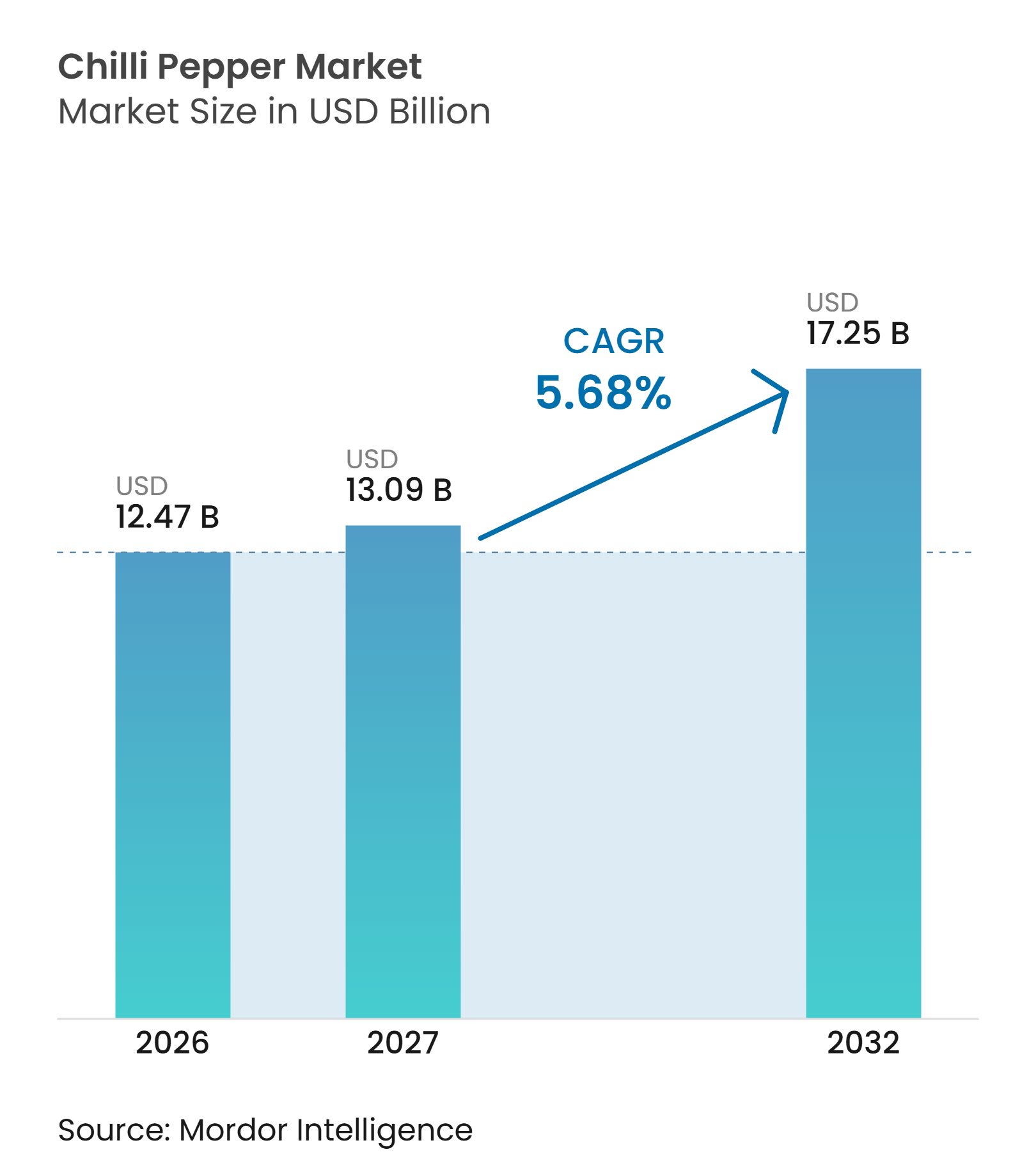
The chili pepper market size was valued at USD 12.47 billion in 2026 and is estimated to grow from USD 13.09 billion in 2027 to reach USD 17.25 billion by 2032, at a CAGR of 5.68% during the forecast period (2027-2032). The chili pepper market is supported by demand from packaged food manufacturers, foodservice operators, and retail brands that use fresh, dried, powdered, and extracted chili ingredients in sauces, snacks, seasonings, ready meals, and other prepared foods. Food manufacturers seek consistent heat levels, stable flavor profiles, defined particle sizes, and formats that support scaled production without disrupting existing processing lines or storage practices. Supply conditions remain a critical factor, as weather patterns, planting decisions, residue controls, and documentation requirements can influence ingredient availability, procurement costs, acceptable origins, and suppliers’ ability to meet customers’ production schedules.
Key Report Takeaways
- By variety, Jalapeno dominated the market with a share of 31.69% in 2026, while habanero is anticipated to register the fastest CAGR of 6.70% during 2027-2032.
- By form, whole dominated the market with a share of 34.61% in 2026, while powder is anticipated to register the fastest CAGR of 6.88% during 2027-2032.
- By distribution channel, food processing dominated the market with a share of 40.41% in 2026, while retail is anticipated to register the fastest CAGR of 6.95% during 2027-2032.
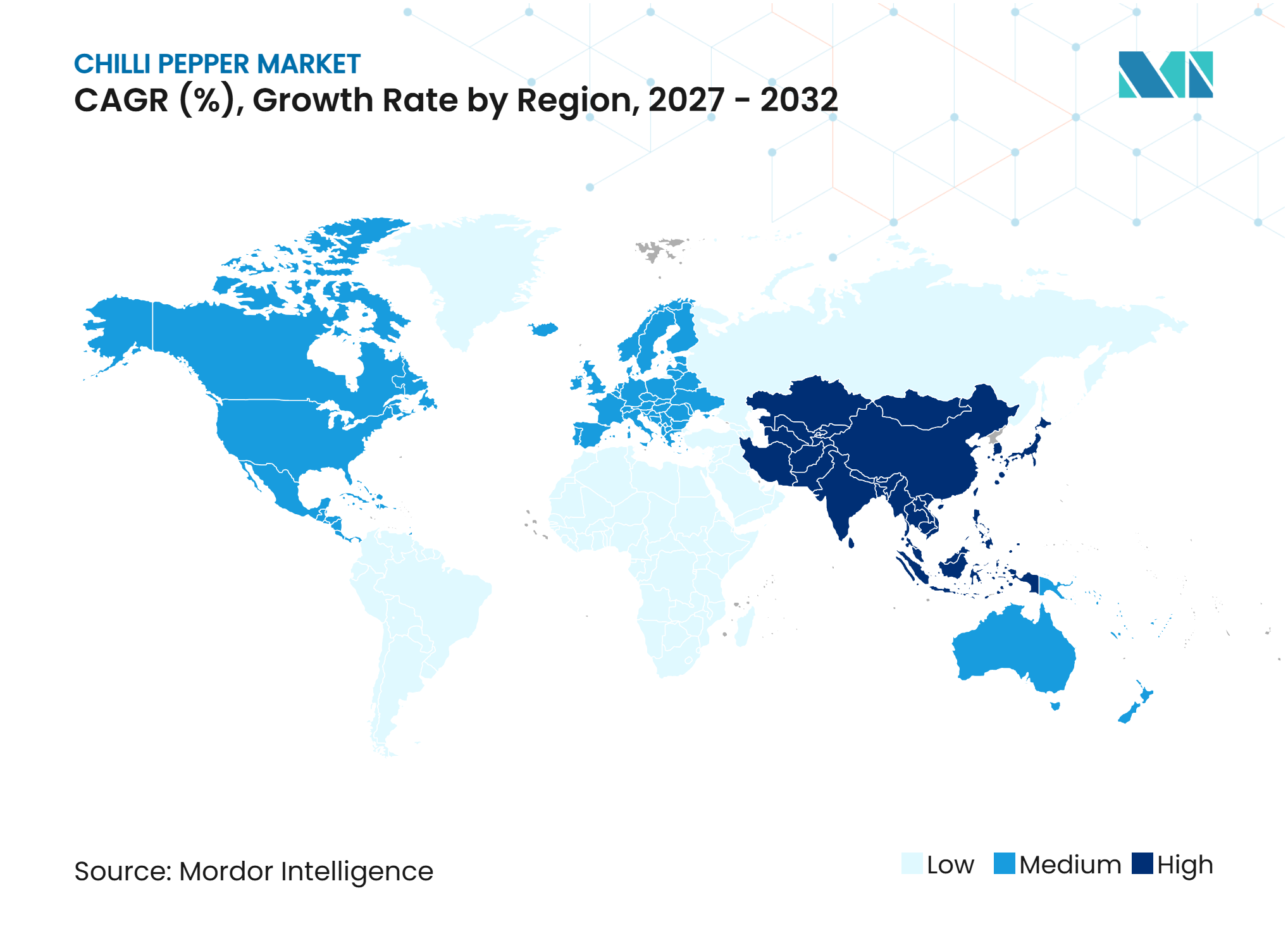
- By geography, Asia-Pacific dominated the chili pepper market with a share of 41.82% in 2026 and is also anticipated to register the fastest CAGR of 7.02% during 2027-2032.
Note: Market numbers in this report are based on Mordor Intelligence's proprietary estimation framework, which combines nine months of actuals with Q4 projections for base year 2026.
Market Trends and Insights
Drivers Impact Analysis of Chili Pepper Market*
| Driver | (~) % Impact on CAGR Forecast | Geographic Relevance | Impact Timeline |
|---|---|---|---|
| Rising consumer preference for spicy and flavourful food products | +1.2% | Global, with highest intensity in Asia-Pacific and North America | Medium term (2-4 years) |
| Demand for hot sauces, chili pastes and spicy condiments | +1% | North America, Asia-Pacific, Europe | Medium term (2-4 years) |
| Increasing consumption of packaged and convenience foods | +0.9% | Global, led by China, India, and the United States | Short term (≤ 2 years) |
| Rising demand from foodservice and restaurant chains | +0.8% | North America, Europe, and emerging Asia-Pacific urban markets | Short term (≤ 2 years) |
| Development of high-yielding and disease-resistant chili varieties | +0.6% | Asia-Pacific, especially India and China, with spillover to the Middle East and Africa | Long term (≥ 4 years) |
| Growing demand for natural food colours and flavouring ingredients | +0.7% | Global, with regulatory influence from the European Union and Codex Alimentarius | Medium term (2-4 years) |
| Source: Mordor Intelligence | |||
Rising Consumer Preference for Spicy and Flavorful Food Products
Growing consumer preference for spicy, flavorful foods is driving demand for chili peppers across household consumption, foodservice, and food processing applications. Chili peppers remain an essential ingredient in regional cuisines, adding pungency, color, and distinctive flavor to curries, sauces, marinades, snacks, and other food preparations. Regional variations in taste preferences also support demand for multiple chili varieties, including Jalapeño, Cayenne, and Habanero, as well as processed formats such as whole dried chilies and chili powder. According to a June 2026 report published on the Securities and Exchange Board of India’s (SEBI) official website, packaged chili accounted for 31% of India’s packaged pure spices market in fiscal 2025[1]. The prospectus identifies widespread regional use and frequent household consumption as key factors supporting the category. This highlights the established role of chili peppers in everyday cooking and supports continued demand for fresh and processed chili products.
Demand for Hot Sauces, Chili Pastes and Spicy Condiments
Growing demand for hot sauces, chili pastes, and spicy condiments is driving chili pepper consumption across household, foodservice, and food processing applications. Chili peppers serve as key ingredients in products such as chili garlic sauce, salsa, chutneys, marinades, dips, and seasoning blends, providing pungency, color, and distinctive flavor. The growing popularity of regional and international cuisines is encouraging consumers to explore chili-based condiments with varying heat levels and flavor profiles. Food manufacturers are also incorporating jalapeño, cayenne, and habanero varieties into value-added products to differentiate their offerings. This trend is increasing demand for fresh and processed chili peppers, particularly flakes, powder, and paste, which are essential raw materials for condiment manufacturing.
Increasing Consumption of Packaged and Convenience Foods
Rising consumption of packaged and convenience foods is driving demand for chili peppers as key flavoring ingredients in ready-to-eat meals, ready-to-cook products, packaged snacks, instant noodles, and processed food products. Food manufacturers use chili powder, flakes, pastes, and other chili-based ingredients to enhance pungency, color, and flavor while ensuring product consistency across production batches. According to a June 2025 assessment by the Ministry of Food Processing Industries (MoFPI), Government of India, organized consumer food industry sales grew by 13% during fiscal year 2025[2]. The assessment identified snacks, ready-to-eat products, and ready-to-cook products as key contributors to growth. Continued expansion of packaged food manufacturing is increasing chili pepper use in seasonings, spice blends, and processed food formulations, supporting demand in the chili pepper market.
Rising Demand from Foodservice and Restaurant Chains
Foodservice buyers require dependable quality, standardized flavor profiles, and year-round supply at high volumes. Restaurant menus increasingly feature Korean gochujang, Thai chili pastes, and Peruvian ají amarillo alongside established Mexican and Indian flavors. This expansion broadens sourcing requirements, as buyers may require multiple varieties, formats, and heat levels while expecting consistent specifications with every delivery. These requirements apply whether the product is used in a limited-time seasonal menu, a national restaurant chain, or a packaged food line associated with a recognizable cuisine. Consequently, companies with established relationships with growers and processors across multiple origins may gain a competitive advantage.
Restraints Impact Analysis of Chili Pepper Market*
| Restraint | (~) % Impact on CAGR Forecast | Geographic Relevance | Impact Timeline |
|---|---|---|---|
| Limited access to agricultural finance and modern farming technology | -0.6% | Asia-Pacific, including India, Indonesia, and Bangladesh, and sub-Saharan Africa | Long term (≥ 4 years) |
| Climatic variability and unpredictable weather conditions | -0.8% | Global, with acute exposure in India, Mexico, and China | Short term (≤ 2 years) |
| High labour costs and shortage of agricultural workers | -0.5% | China, India, and Southeast Asia | Medium term (2-4 years) |
| Stringent food safety, pesticide residue and quality compliance requirements | -0.4% | Global, with regulatory influence from the European Union, Japan, and the United States | Medium term (2-4 years) |
| Source: Mordor Intelligence | |||
Climatic Variability and Unpredictable Weather Conditions
Weather disruptions can constrain supply even when demand remains stable. According to an October 2025 statement by Kisan India, chili cultivation declined in parts of India during Kharif 2025 as growers shifted to alternative crops following a period of weak farmgate prices[3]. These developments can reduce harvest quality, tighten available supply, and create price volatility for processors and foodservice buyers that require specific varieties at predetermined times. This risk is particularly significant when procurement plans depend on fixed recipes, contract volumes, and deliveries to multiple plants or restaurant locations. The chili pepper market requires diversified sourcing, as reliance on a single growing region increases exposure to weather conditions, planting cycles, and local price fluctuations. Improved crop insurance, access to agricultural finance, disease-resistant varieties, and practical on-farm support could mitigate these risks over time.
Stringent Food Safety, Pesticide Residue and Quality Compliance Requirements
Food safety and quality requirements can alter trade flows and increase exporter costs. Japan requires enhanced documentation and traceability for capsicum imports under its residue-control framework. European regulations govern the permitted use of paprika oleoresin, also known as E160c, as a food additive in processed foods. The chili pepper market can favor suppliers that maintain testing, traceability, cold-chain controls, and audit-supporting records. These capabilities enable purchasers to assess lot quality, trace shipments across the supply chain, and respond to requests for additional evidence from destination markets. Smaller exporters may face a greater burden when they cannot absorb the costs of certification, documentation, laboratory testing, and corrective actions.
*Our forecasts treat driver/restraint impacts as directional, not additive. The impact forecasts reflect baseline growth, mix effects, and variable interactions.
Chili Pepper Market Segment Analysis
By Variety:
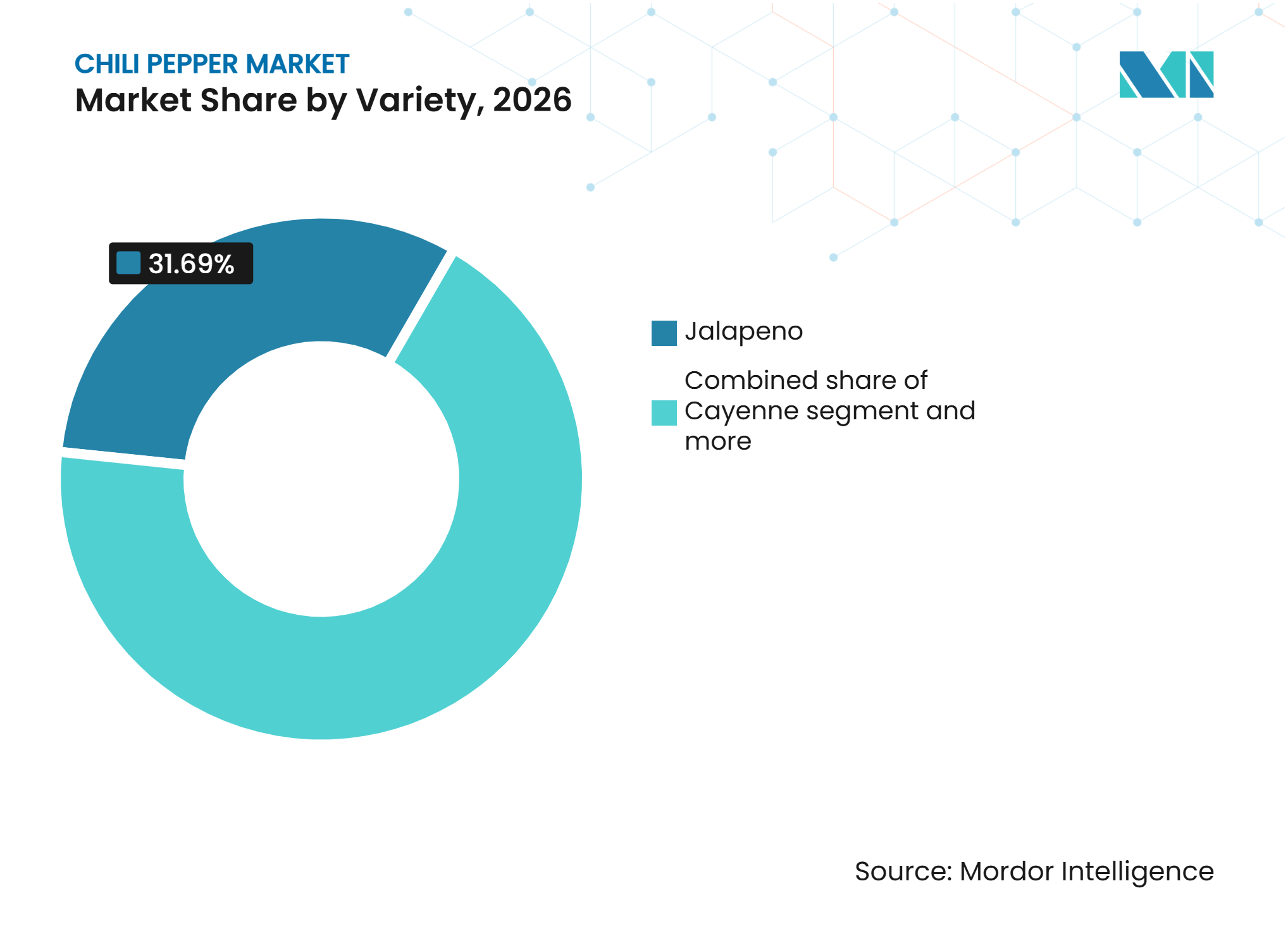
Jalapeño Leads as Habanero Closes the GapJalapeño accounted for 31.69% of the chili pepper market size in 2026. Its use in fresh, pickled, dried, and powdered applications supports demand from food manufacturers, restaurants, and retail spice buyers. Jalapeño holds an established position in North American Tex-Mex cuisine and is widely used in sauces, snacks, and meal kits. Its familiar flavor and moderate heat enable manufacturers to incorporate it into a broad range of product formats without limiting appeal to high-heat consumers. Its versatility across food preparations also supports its adoption in packaged condiments, frozen meals, and ready-to-eat products, strengthening its commercial importance across multiple distribution channels.
Habanero is expected to grow at a CAGR of 6.70% through 2032. Its fruity heat profile supports applications in sauces, snacks, and fusion products, where brands seek a more distinctive flavor profile. The variety allows product developers to position heat as part of a recognizable flavor rather than as a standalone claim. The chili pepper industry can leverage origin-led positioning to develop premium products while maintaining clear quality requirements for buyers. Its use in speciality hot sauces, spicy marinades, dips and premium seasoning blends also creates opportunities for manufacturers to target consumers seeking more intense and differentiated flavour experiences.



By Form:
Whole Form Leads, Powder Captures Processing ValueWhole chili accounted for 34.61% of the chili pepper market size in 2026. Foodservice and hospitality buyers use intact peppers for roasting, stuffing, pickling, and menu preparation. Whole formats also enhance the visual appeal of dishes in which the ingredient is intended to be seen as well as tasted. Flakes meet seasoning requirements in retail and foodservice applications, while paste supports back-of-house cooking and restaurant formulations. Oleoresin extracts, included in the other forms category, support demand for natural color and flavor ingredients that comply with food additive regulations.
Powder is forecast to grow at a CAGR of 6.88% through 2032. Food manufacturers use powder and flakes to standardize heat levels and control moisture in seasonings, coatings, and ready-meal sauces. These formats are compatible with automated production systems and simplify handling compared with fresh ingredients. Their longer shelf life, ease of storage and uniform distribution in food formulations further support adoption across large-scale food processing operations. Therefore, the chili pepper market requires stronger brand differentiation and quality control to protect value as export volumes increase.
By Distribution Channel:
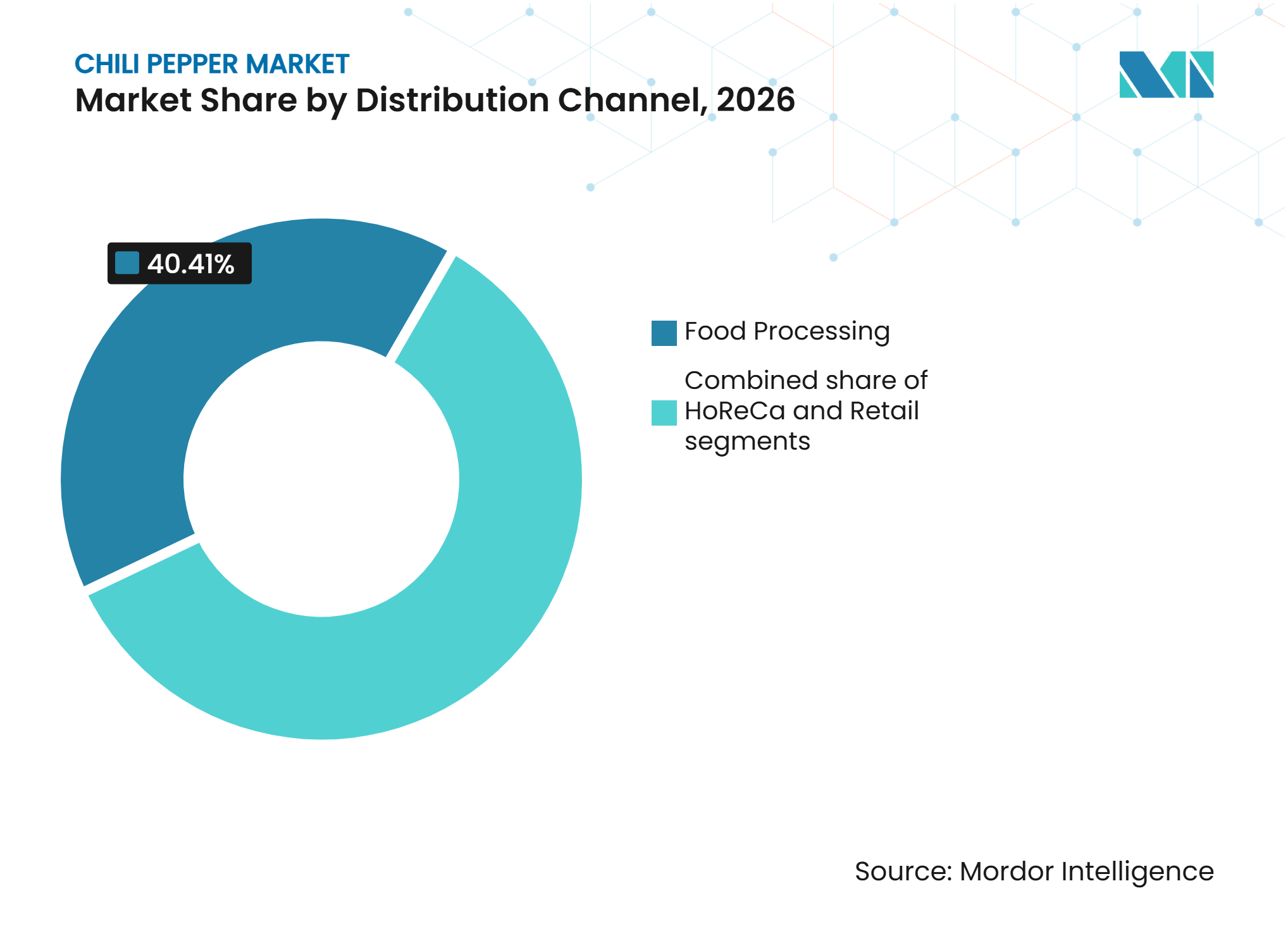
Food Processing Anchors While Retail AcceleratesFood processing holds a 40.41% share of the chili pepper market in 2026. This channel aggregates demand for dried, powdered, and oleoresin chili peppers from manufacturers of packaged foods, sauces, seasonings, and snacks. Year-round contracts and planned procurement help processors manage seasonal fluctuations in farm supply. Processing buyers also require defined specifications for color, moisture, flavor, and heat, as minor variations can affect finished products. The need for consistent raw material quality and uninterrupted ingredient supply further strengthens procurement from organized chili processors and large-scale food manufacturers.
The retail segment is forecast to grow at a CAGR of 6.95% through 2032. Consumers increasingly use retail channels to discover regional varieties and premium spice and condiment brands. Online listings enable smaller brands to communicate product origin, heat level, recipe applications, and ingredients before purchase. Products with single-origin, organic, or geographical identities can increase expectations for sourcing documentation and quality assurance. The chili pepper market is likely to reward brands that combine clear flavor information with packaging that communicates provenance and usage occasions. Wider availability through supermarkets, speciality grocery stores and e-commerce platforms also improves consumer access to differentiated chili products and encourages repeat purchases.

Geography Analysis
Asia-Pacific
Asia-Pacific holds 41.82% of the chili pepper market size in 2026 and grow at a CAGR of 7.02% through 2032. The region combines major production centers with rising demand for chili condiments, convenience foods, and processed ingredients. India remains a key contributor to global trade, although domestic price conditions and shifting planting decisions influence export supply. The region’s scale enables firms to meet local food demand while expanding export-oriented processing capacity. Asia-Pacific’s position also reflects its ability to support raw material production, processing, and consumer demand within the same broad region.
North America
North America has a mature retail and foodservice base for jalapeño, habanero, serrano, and poblano pepper varieties. Mexico supplies the United States and European buyers with a broad range of peppers that support restaurant, fresh food, and packaged food supply chains. Regional varieties maintain strong consumer recognition while supporting innovation in sauces, seasonings, snacks, bakery products, and dairy applications. Weather disruptions in Mexican growing regions remain a procurement concern. Buyers can mitigate this risk by qualifying multiple origins, maintaining consistent quality specifications, and developing supply plans that allow volume shifts without altering the heat level, flavor, or physical form required by customers.
Europe, South America, and the Middle East and Africa
Europe has well-established trade and processing networks, while South America, the Middle East, and Africa offer production diversity and expanding consumption opportunities. Spain and the Netherlands play key roles in the European pepper trade, with the Netherlands also serving as a processing and re-export hub. European buyers are increasingly adopting harissa, peri-peri, and Korean gochujang formats. European Union food additive regulations also remain a key compliance consideration for paprika oleoresin. Brazil, Argentina, Peru, Nigeria, Morocco, and South Africa offer regional varieties and alternative sourcing origins that strengthen supply resilience for international buyers. These countries also provide processors and branded companies with additional options for sourcing distinctive culinary profiles for specialty products.
Competitive Landscape
Market Concentration
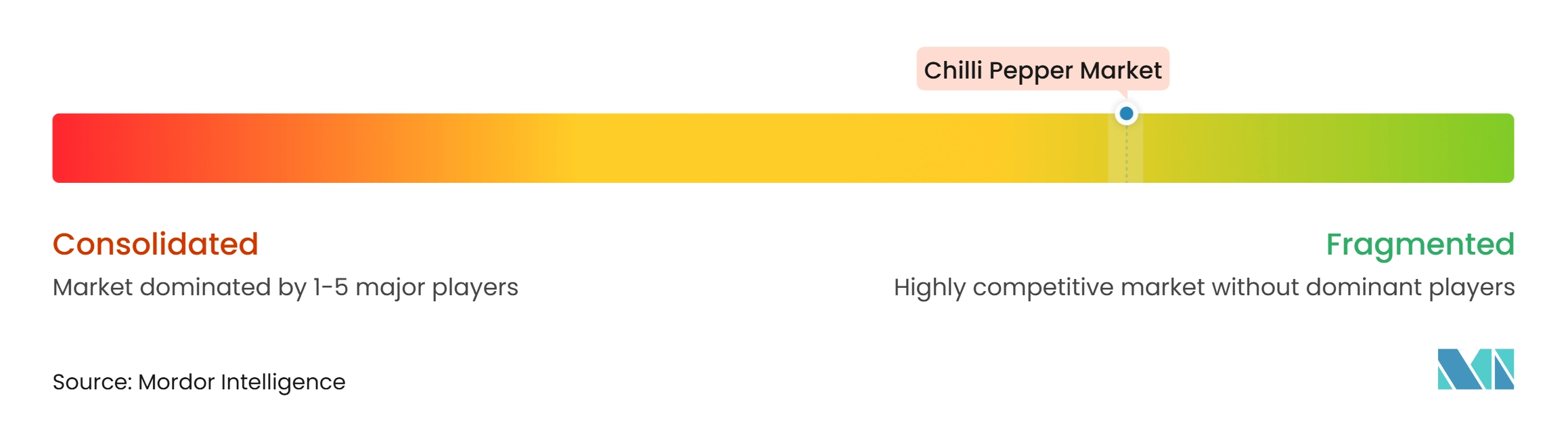
The chili pepper market is fragmented, with branded food companies, regional processors, ingredient specialists, exporters, and agricultural suppliers operating across different stages of the value chain. Ingredient specialists, including Synthite Industries, Plant Lipids, MANE Kancor, and Kalsec, compete in extracts, oleoresins, paprika ingredients, and natural color applications. In these segments, technical capabilities, formulation expertise, compliance documentation, and the ability to meet customer-defined specifications are critical. Regional companies, such as Conservas La Costeña and Goya Foods, maintain meaningful positions because local product familiarity, established distribution networks, and trusted recipes can be difficult for multinational brands to replicate.
Leading companies are using product innovation, tailored foodservice formats, and supply diversification to strengthen their market positions. In 2025, the Government of St. Kitts and Nevis acquired more than 100 acres for Tabasco pepper cultivation in partnership with the McIlhenny Company. These initiatives indicate that companies require both appealing finished products and reliable access to raw materials that meet quality, volume, delivery, traceability, and consistency requirements. As a result, companies must integrate branding and sourcing within their broader commercial strategies rather than treat them as separate functions.
Traceability and premium positioning are becoming increasingly important for suppliers serving developed markets, particularly where buyers require documented origins or clearly defined production standards. Buyers may pay a premium for products associated with a defined origin, organic practices, or reliable quality records; however, these claims also require verification. The chili pepper market remains accessible to regional firms because local sourcing knowledge, practical processing capabilities, targeted distribution, and a clear understanding of regional culinary preferences can be as important as global brand scale when buyers select suppliers.
Chili Pepper Industry Leaders
-
McCormick & Company, Inc.
-
Plant Lipids Private Limited
-
Conagra Brands, Inc.
-
B&G Foods, Inc.
-
Olam International Limited
- *Disclaimer: Major Players sorted in no particular order
Chili Pepper Market Companies Covered in this Report
- McCormick & Company, Inc.
- Jabs International Pvt. Ltd.
- Olam International Limited
- Synthite Industries Pvt. Ltd.
- Plant Lipids Private Limited
- Mane Kancor Ingredients Private Limited
- Kalsec Inc.
- Conagra Brands, Inc.
- B&G Foods, Inc.
- McIlhenny Company
- Conservas La Costena S.A. de C.V.
- MegaMex Foods, LLC
- Goya Foods, Inc.
- Badia Spices, LLC
- Frontier Co-op
- Penzeys, Ltd.
- Tapatio Foods LLC
- Huy Fong Foods Inc.
- Nani Agro Foods
- Everest Food Products Pvt. Ltd.
Recent Industry Developments in Chili Pepper Market
- December 2025: Byadgi introduced a collection of four chili products in the United States: Byadgi Chili Powder, Kashmiri Red Chili Powder, Indian Chili Powder, and Red Chili Flakes.
- May 2025: McCormick expanded its crushed pepper portfolio with Hatch Chile Pepper and Thai Style Chili Pepper. The new products were launched on the website, Amazon and in grocery stores across the United States.
- March 2025: The Government of St. Kitts and Nevis acquired over 100 acres for Tabasco pepper cultivation in partnership with McIlhenny Company.
Global Chili Pepper Market Report Scope
Chili pepper is the fruit of plants belonging to the Capsicum genus, widely cultivated for its pungent flavor, color, and culinary properties.
The chili pepper market is segmented by variety, form, distribution channel, and geography. By variety, the market is segmented into Jalapeno, Cayenne, Habanero, and other varieties. By form, the market is segmented into whole, flakes, powder, paste, and others. By distribution channel, the market is segmented into food processing, HoReCa, and retail (hypermarkets and supermarkets, grocery/convenience stores, online retail stores, and other distribution channels). Based on geography, the market is classified into North America, Europe, Asia-Pacific, South America, and the Middle East and Africa. The market forecasts are provided in terms of value (USD).
Segmentation Overview
| Jalapeno |
| Cayenne |
| Habanero |
| Other Varieties |
| Whole |
| Flakes |
| Powder |
| Paste |
| Others |
| Food Processing | |
| HoReCa | |
| Retail | Hypermarkets and Supermarkets |
| Grocery/Convenience Stores | |
| Online Retail Stores | |
| Other Distribution Channels |
| North America | United States |
| Canada | |
| Mexico | |
| Rest of North America | |
| Europe | Germany |
| United Kingdom | |
| Italy | |
| France | |
| Spain | |
| Netherlands | |
| Rest of Europe | |
| Asia-Pacific | China |
| India | |
| Japan | |
| Australia | |
| Indonesia | |
| Rest of Asia-Pacific | |
| South America | Brazil |
| Argentina | |
| Peru | |
| Rest of South America | |
| Middle East and Africa | South Africa |
| Saudi Arabia | |
| Rest of Middle East and Africa |
| By Variety | Jalapeno | |
| Cayenne | ||
| Habanero | ||
| Other Varieties | ||
| By Form | Whole | |
| Flakes | ||
| Powder | ||
| Paste | ||
| Others | ||
| By Distribution Channel | Food Processing | |
| HoReCa | ||
| Retail | Hypermarkets and Supermarkets | |
| Grocery/Convenience Stores | ||
| Online Retail Stores | ||
| Other Distribution Channels | ||
| By Geography | North America | United States |
| Canada | ||
| Mexico | ||
| Rest of North America | ||
| Europe | Germany | |
| United Kingdom | ||
| Italy | ||
| France | ||
| Spain | ||
| Netherlands | ||
| Rest of Europe | ||
| Asia-Pacific | China | |
| India | ||
| Japan | ||
| Australia | ||
| Indonesia | ||
| Rest of Asia-Pacific | ||
| South America | Brazil | |
| Argentina | ||
| Peru | ||
| Rest of South America | ||
| Middle East and Africa | South Africa | |
| Saudi Arabia | ||
| Rest of Middle East and Africa | ||
Key Questions Answered in the Report
What is the current size and future growth outlook of the chili pepper market?
The chili pepper market was valued at USD 12.47 billion in 2026 and is estimated to reach USD 13.09 billion in 2027. The market is projected to grow to USD 17.25 billion by 2032, registering a CAGR of 5.68% during 2027–2032.
Which variety held the largest share of the chili pepper market in 2026?
Jalapeno was the largest variety segment in 2026, accounting for 31.69% of chili pepper market.
Which form held the largest share of the chili pepper market in 2026?
Whole chili peppers dominated the form segment in 2026, accounting for 34.61% of market.
Which distribution channel dominated the chili pepper market in 2026?
Food Processing was the leading distribution channel in 2026, accounting for 40.41% of chili pepper market.