
Cellular Pathology Market Size and Share
Market Overview
| Study Period | 2020 - 2031 |
|---|---|
| Market Size (2026) | USD 12.74 Billion |
| Market Size (2031) | USD 19.54 Billion |
| Growth Rate (2026 - 2031) | 8.92 % |
| Fastest Growing Market | Asia-Pacific |
| Largest Market | North America |
| Market Concentration | Medium |
Major Players *Disclaimer: Major Players sorted in no particular order Image © Mordor Intelligence. Reuse requires attribution under CC BY 4.0. | |
Cellular Pathology Market Analysis by Mordor Intelligence
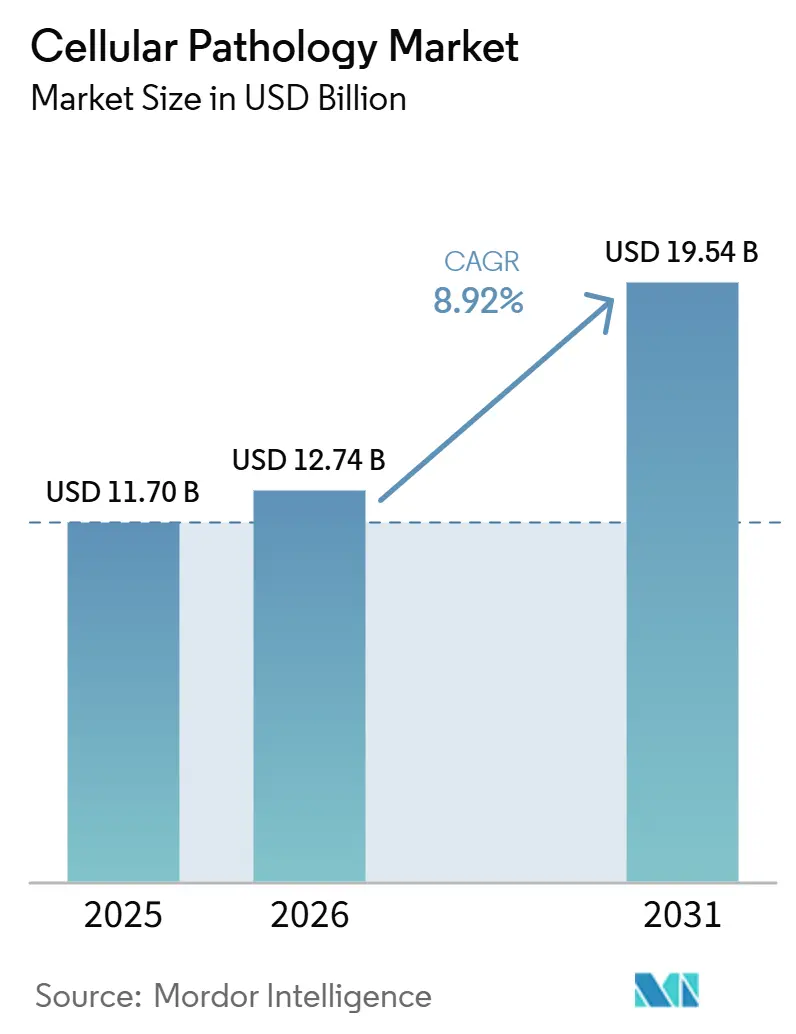
The Cellular Pathology Market size is expected to grow from USD 11.70 billion in 2025 to USD 12.74 billion in 2026 and is forecast to reach USD 19.54 billion by 2031 at 8.92% CAGR over 2026-2031.
The cellular pathology market is supported by a rising cancer burden and wider use of tissue examinations in clinical care. The World Health Organization recorded 20.6 million new cancer cases in 2024 and projected an annual incidence of 35 million cases by 2050.[1]World Health Organization, “Global Status Report on Cancer 2026: The Future We Choose Together,” World Health Organization, who.int Chronic conditions, including inflammatory bowel disease, autoimmune hepatitis, and IgG4-related disease, also require biopsy confirmation in many cases. This broadens demand beyond oncology without reducing cancer-related testing volumes. The cellular pathology market also benefits as laboratories adopt digital imaging, AI-assisted analysis, and remote reporting, although workforce shortages and data-management costs can slow implementation.
Key Report Takeaways
- By product and service, consumables held 61.23% of the cellular pathology market share in 2025, while instruments are forecast to grow at a CAGR of 9.87% through 2031.
- By technology, histopathology accounted for 42.95% of the cellular pathology market share in 2025, while digital pathology is forecast to grow at a CAGR of 10.54% through 2031.
- By application, clinical diagnostics held 58.16% of revenue in 2025, while drug discovery and development is forecast to grow at a CAGR of 9.83% through 2031.
- By indication, oncology accounted for 53.33% of revenue in 2025, while inflammatory and autoimmune disorders are forecast to grow at a CAGR of 10.23% through 2031.
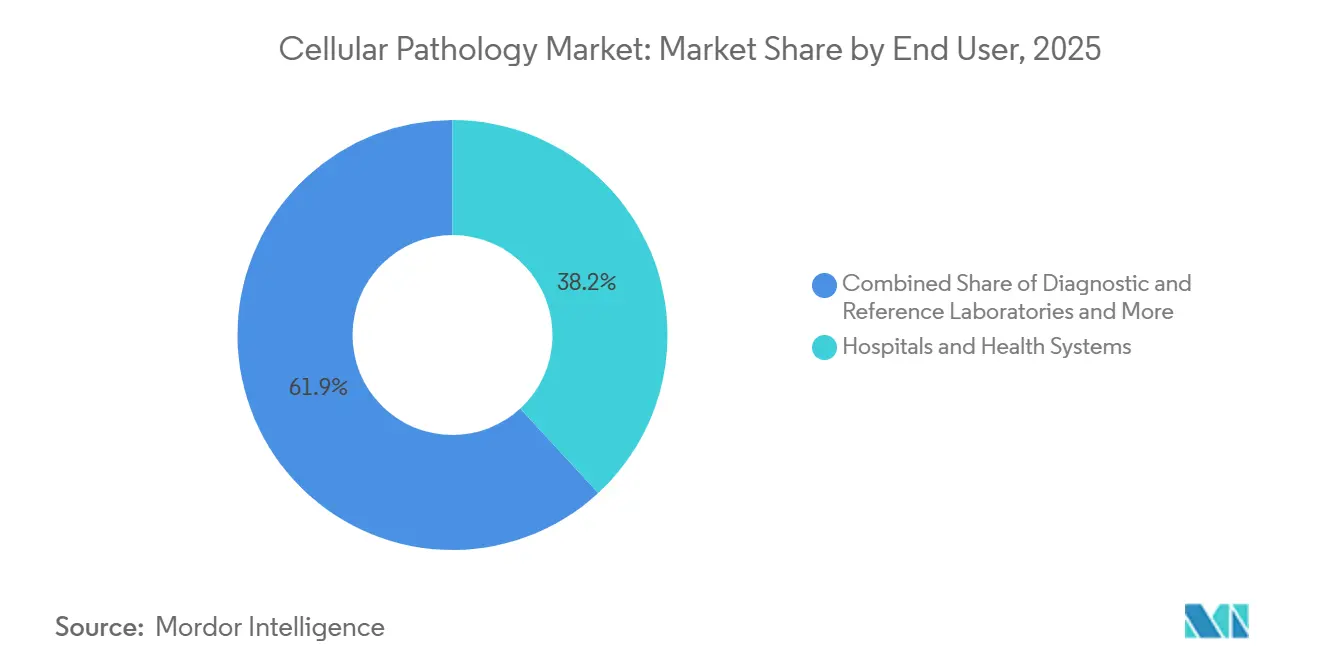
- By end user, hospitals and health systems held 38.15% of revenue in 2025, while specialty clinics and cancer centers are forecast to grow at a CAGR of 10.35% through 2031.
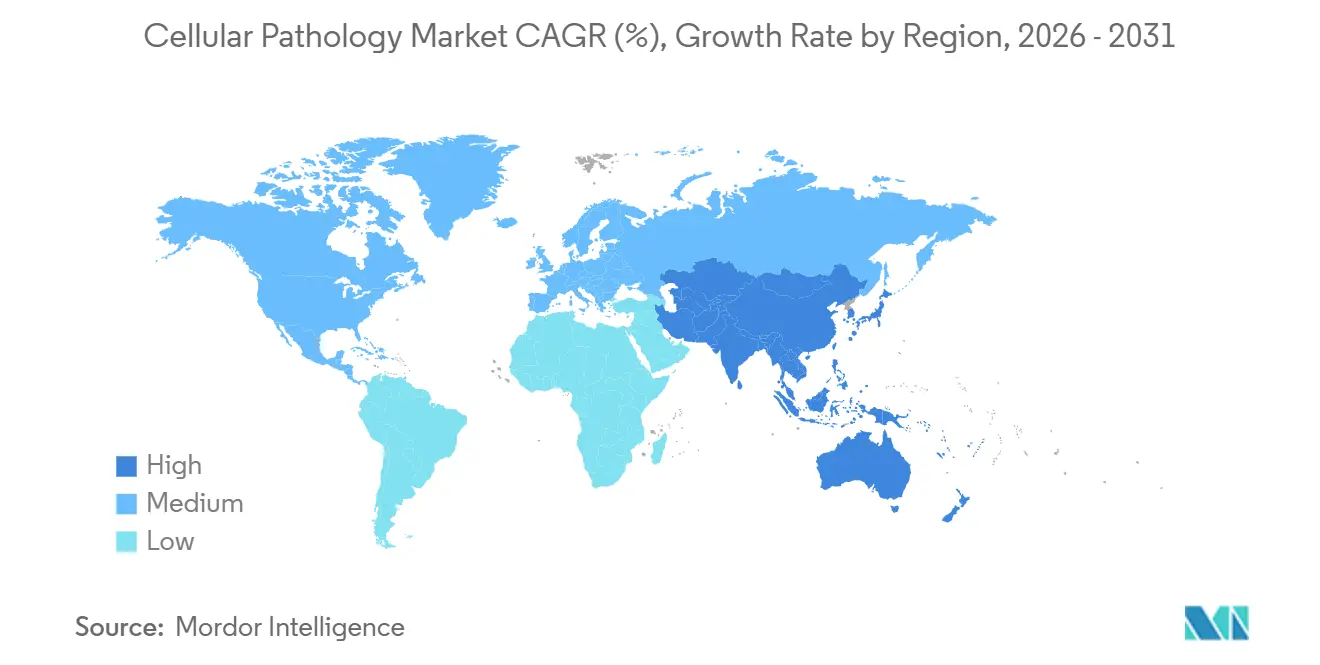
- By geography, North America accounted for 41.67% of the cellular pathology market share in 2025, while Asia-Pacific is forecast to grow at a CAGR of 10.72% through 2031.
Note: Market size and forecast figures in this report are generated using Mordor Intelligence’s proprietary estimation framework, updated with the latest available data and insights as of January 2026.
Market Trends and Insights
Drivers Impact Analysis of Cellular Pathology Market*
| Driver | (~) % Impact on CAGR Forecast | Geographic Relevance | Impact Timeline |
|---|---|---|---|
| Rising Cancer and Chronic-Disease Diagnostic Workloads | +2.1% | Global | Medium term (2-4 years) |
| Precision Oncology and Companion-Diagnostic Adoption | +1.7% | North America and Europe, with spillover to Asia-Pacific | Medium term (2-4 years) |
| Digital Pathology, AI, And Telepathology Adoption | +1.9% | Global, with rapid acceleration in Asia-Pacific | Long term (≥ 4 years) |
| Expansion Of Cancer Screening and Early-Diagnosis Programs | +1.0% | Asia-Pacific core, with spillover to Middle East and Africa | Long term (≥ 4 years) |
| Molecular Readouts from Limited Tissue Samples | +0.8% | North America and Europe | Medium term (2-4 years) |
| AI-Ready Cellular Pathology Data Generation from Routine Slides | +0.7% | Global | Long term (≥ 4 years) |
| Source: Mordor Intelligence | |||
Rising Cancer and Chronic-Disease Diagnostic Workloads
Cancer incidence continues to create demand for histological and cytological examinations across the cellular pathology market. IARC recorded 20.6 million new cancer diagnoses in 2024, and lung, female breast, and colorectal cancers were the largest incidence categories.[2]International Agency for Research on Cancer, “Global Cancer Statistics 2024: GLOBOCAN Estimates of Incidence and Mortality Worldwide for 34 Cancers in 186 Countries,” IARC, iarc.who.int Annual cancer incidence is projected to reach 35 million cases by 2050. Tissue assessment also supports diagnosis for rheumatoid arthritis, autoimmune hepatitis, primary biliary cholangitis, and IgG4-related disease. Higher screening coverage for these conditions can add slide volumes in histology and immunohistochemistry laboratories. National prevention programs that incorporate early detection can make pathology capacity a lasting part of public-health delivery.
Precision Oncology and Companion-Diagnostic Adoption
Companion diagnostics create recurring testing needs because treatment protocols specify a validated assay before therapy begins. In July 2026, Agilent received FDA approval for PD-L1 IHC 28-8 pharmDx with OPDIVO for esophageal squamous cell carcinoma, gastric, gastroesophageal junction, and esophageal adenocarcinoma indications. This was the 8th FDA-approved indication for the platform. FoundationOne CDx also gained FDA approvals in 2026 for Itovebi and TEPMETKO. These approvals place tissue-based biomarker evaluation further into cancer treatment pathways. The cellular pathology market therefore gains demand that is linked to treatment decisions rather than discretionary laboratory spending.
Digital Pathology, AI, and Telepathology Adoption
Digital pathology is changing the cellular pathology market by turning routine slides into clinical images that can be stored, reviewed, and analyzed across sites. Roche received FDA clearance for the VENTANA DP 600 scanner in January 2025, and Indica Labs received clearance for HALO AP Dx in December 2025. These clearances reduce the clinical uncertainty around primary digital diagnosis. Whole-slide imaging can also support remote reviews where specialists are not available on site. Professional guidance and laboratory validation processes can help hospitals move from pilot use toward standard clinical workflows. This makes software, image management, and connected reporting more important parts of laboratory purchasing decisions.
AI-Ready Cellular Pathology Data Generation from Routine Slides
Large laboratories increasingly view digitized archives as data resources for biomarker research and algorithm development. In May 2026, Roche agreed to acquire PathAI for USD 750 million upfront, with up to USD 300 million in milestone payments. The agreement includes PathAI's AISight platform and tissue-data capabilities. Tempus AI acquired Paige in August 2025 for USD 81.25 million, combining multimodal patient data with an FDA-cleared pathology application. These transactions show why access to large, digitized slide collections matters in the cellular pathology market. Laboratories without mature digital archives may increasingly refer complex AI-enabled assessments to specialized pathology networks.
Restraints Impact Analysis of Cellular Pathology Market*
| Restraint | (~) % Impact on CAGR Forecast | Geographic Relevance | Impact Timeline |
|---|---|---|---|
| High Capital and Total-Cost-of-Ownership Requirements | -1.2% | Global, particularly Middle East and Africa and South America | Short term (≤ 2 years) |
| Pathologist and Histotechnologist Shortages | -1.0% | Global, acute in rural North America, Middle East and Africa, and South Asia | Medium term (2-4 years) |
| Interoperability, Data-Storage, and Cybersecurity Burden | -0.7% | North America and Europe, emerging in Asia-Pacific | Medium term (2-4 years) |
| Pre-Analytical Variability and Tissue Scarcity in Multiplex Testing | -0.4% | Global, acute in emerging markets | Long term (≥ 4 years) |
| Source: Mordor Intelligence | |||
High Capital and Total-Cost-of-Ownership Requirements
Digital workflows require scanners, software licenses, information technology infrastructure, image storage, and maintenance support. High-throughput scanners can process more than 300 slides per hour, but their installation also requires laboratory information system validation, network upgrades, and calibrated displays. Hospitals assess these needs as a total cost of ownership rather than as a single equipment purchase. Lower reimbursement levels can make the initial investment difficult for hospitals in Sub-Saharan Africa and parts of South America. Early adopters also carry transition costs before higher digital volumes improve cost-per-case economics. These conditions can preserve conventional microscopy in mid-sized hospital networks.
Pathologist and Histotechnologist Shortages
The workforce shortage limits laboratory throughput but also increases interest in AI-assisted review tools. The HRSA projects a 7% decline in pathologist supply and a 16% rise in demand in the United States by 2037.[3]American Society for Clinical Pathology, “ASCP Deepens Commitment to Pathologist Workforce Development,” ASCP, ascp.org The available pipeline of 600 residents a year falls below the projected need of 700 to 840 pathologists annually. The 2026 pathology match report showed that 33% of general pathology residency positions went unfilled. Laboratory vacancies in anatomic pathology, cytogenetics, flow cytometry, and histology also remained above pre-pandemic levels. Suppliers that reduce review time can gain importance because laboratories are managing a persistent staffing constraint.
*Our forecasts treat driver/restraint impacts as directional, not additive. The impact forecasts reflect baseline growth, mix effects, and variable interactions.
Cellular Pathology Market Segment Analysis
By Product and Service:
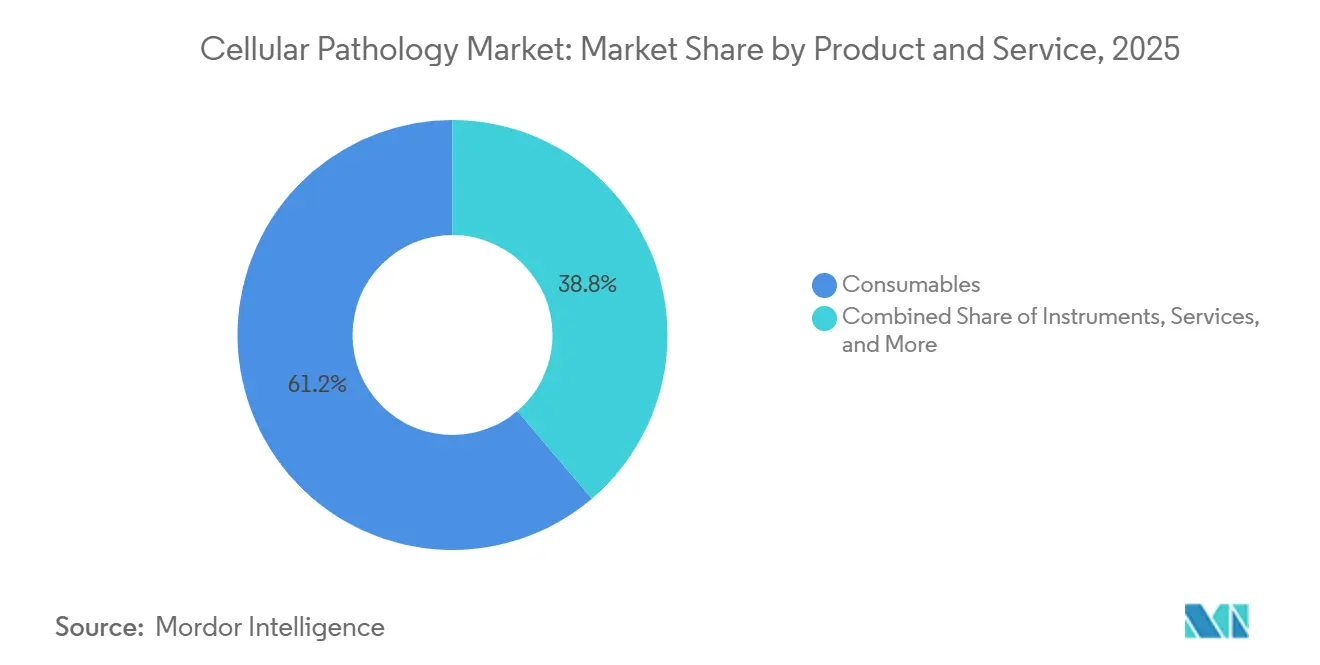
Consumables Support Routine Testing While Instruments Drive ReplacementConsumables held 61.23% of segment revenue in 2025. Reagents, antibodies, and diagnostic kits are used repeatedly in clinical and research workflows. Immunohistochemistry protocols often require specific validated antibody clones. This supports the use of branded consumables and limits substitution with unvalidated products. Instruments are projected to record a CAGR of 9.87% through 2031. The cellular pathology market size for instruments is supported by laboratories replacing conventional platforms with digital-ready systems.
FDA clearances have helped laboratories consider scanner purchases for primary diagnostic use. Roche's VENTANA DP 200 and DP 600, Epredia's E1000 Dx, Indica Labs' HALO AP Dx, and OptraSCAN's OS-Ultra were among systems cleared between December 2024 and July 2026. Software and image-management systems grow as scanners are deployed. Service contracts and remote reporting arrangements also add recurring revenue. ISO 15189 accreditation requirements reinforce the value placed on laboratory-quality consumables. The cellular pathology market continues to rely on consumables for volume while equipment renewal supports the next phase of growth.



By Technology:
Histopathology Remains Central While Digital Pathology ExpandsHistopathology held 42.95% of the technology-segment revenue in 2025. H&E staining and morphological review remain the standard first-line assessment for tissue-based cancer diagnosis. Immunohistochemistry remains important where treatment requires a companion diagnostic. Agilent's PD-L1 IHC 28-8 pharmDx had 8 FDA-approved indications by July 2026. Digital pathology is forecast to advance at a CAGR of 10.54% through 2031. This gives digital systems the strongest growth rate among technology categories.
Molecular pathology and AI-enabled pathology are also gaining relevance as testing becomes more biomarker-focused. Natera reported 54% year-over-year growth in oncology test volumes in the first quarter of 2026.[4]Natera, “Natera Announces Expansion in Austin, Creating What Is Believed to Be the Largest Sequencing Facility in the World,” Natera, natera.com Signatera CDx became the first FDA-approved companion diagnostic for molecular residual disease testing in oncology. Cytopathology, flow cytometry, and in situ hybridization retain specialized roles in hematological, reproductive, and other targeted workflows. Their clinical role remains important where alternative approaches are limited. Digital systems add new ways to manage and interpret cases without replacing the core value of tissue morphology. The cellular pathology market benefits when these technologies are used together in a single diagnostic pathway.
By Application:
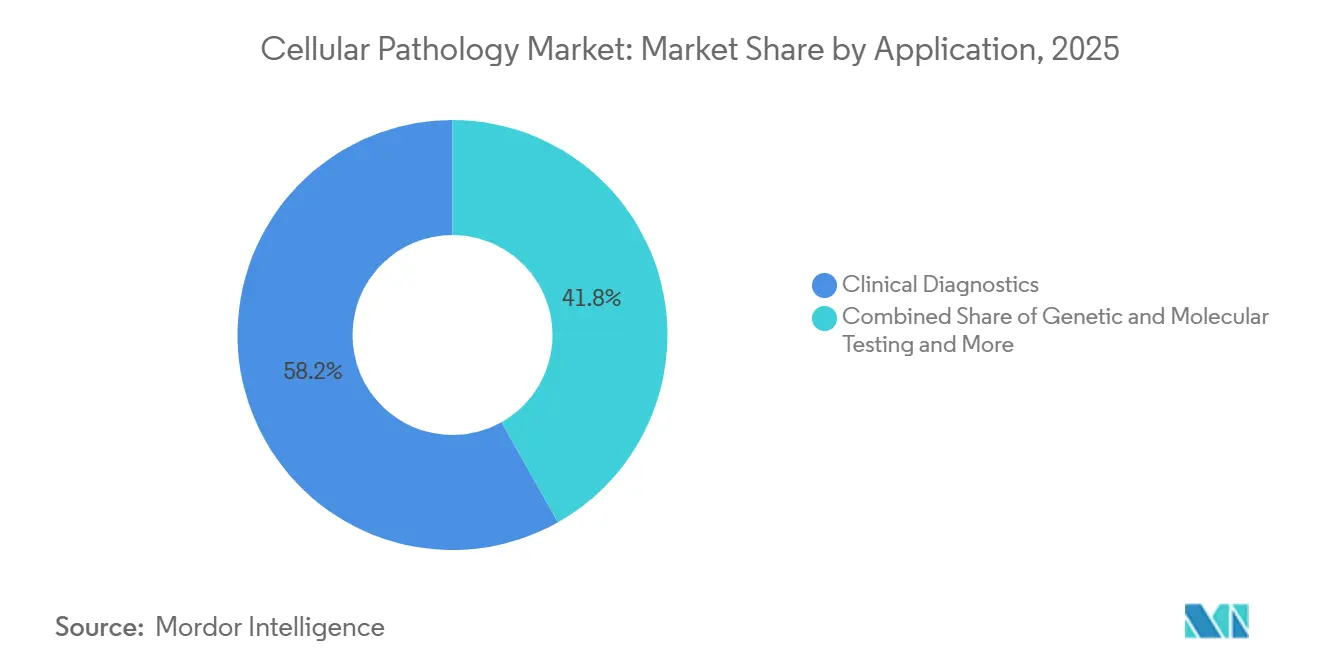
Clinical Diagnostics Provides Scale While Drug Discovery Grows FasterClinical diagnostics accounted for 58.16% of revenue in 2025. It supports malignancy confirmation, disease staging, and treatment selection. These uses have no broad non-tissue substitute in routine care. Drug discovery and development is forecast to grow at a CAGR of 9.83% through 2031. Tissue biomarker studies are becoming more common in oncology trials. The cellular pathology market size for drug discovery is also supported by demand for translational pathology services.
In March 2025, Proscia raised USD 50 million in Series C funding for AI-driven pathology. The company reported use by 16 of the top 20 global pharmaceutical companies for drug-discovery pathology workflows. Genetic and molecular testing expand as next-generation sequencing is conducted on formalin-fixed, paraffin-embedded tissue. Toxicology and safety assessment require detailed histopathological readouts in preclinical programs. Research, education, and training continue to provide a more stable base of laboratory demand. The cellular pathology market is therefore supported by both patient testing and pharmaceutical development work.
By Indication:
Oncology Leads Volume While Autoimmune Testing Gains MomentumOncology accounted for 53.33% of revenue in 2025. Companion diagnostics and greater biopsy activity support its position across solid tumors and hematological malignancies. Inflammatory and autoimmune disorders are forecast to grow at a CAGR of 10.23% through 2031. These conditions may require repeated tissue assessment for disease monitoring. Gastrointestinal disease also generates substantial histology volumes through colonoscopy-guided biopsy programs. The cellular pathology market remains closely tied to screening and treatment pathways for cancer.
Rheumatoid arthritis, inflammatory bowel disease, and lupus nephritis can require tissue assessments alongside other clinical evidence. This expands the range of nonmalignant work handled by pathology laboratories. Gastrointestinal screening programs can provide a steady flow of tissue samples. Neurological, gynecological, and infectious diseases add specialist testing volumes. Cervical pathology remains supported by the integration of cytology with HPV screening programs. These indications broaden demand without displacing oncology as the main source of cellular pathology market revenue.
By End User:
Hospitals Lead Current Demand While Specialty Centers ExpandHospitals and health systems held 38.15% of end-user revenue in 2025. They remain the primary setting for surgical biopsies, intraoperative frozen sections, and high-volume immunohistochemistry. Specialty clinics and cancer centers are forecast to grow at a CAGR of 10.35% through 2031. Their growth reflects the concentration of complex oncology care in multidisciplinary settings. Rochester Regional Health began a USD 20.90 million oncology and imaging expansion at its Unity campus in April 2026. The facility is scheduled for completion by the end of 2026.
The Genomic Testing Cooperative opened a precision oncology laboratory in Houston in March 2026. Diagnostic and reference laboratories are also extending their digital capabilities. Labcorp expanded its PathAI collaboration to deploy the AISight Dx platform across its anatomic pathology network. Pharmaceutical and biotechnology companies use tissue informatics for biomarker profiling and regulatory support. Contract research organizations use pathology to support clinical trial endpoints. This mix supports a broad end-user base for the cellular pathology market.
Geography Analysis
North America Cellular Pathology Market
North America held 41.67% of global revenue in 2025. The region benefits from extensive use of tissue-based companion diagnostics, established reimbursement for immunohistochemistry and molecular pathology, and academic medical centers that are adopting digital platforms. The United States has received several FDA clearances for whole-slide imaging systems since December 2024. Quest Diagnostics expanded oncology test access through OncoEMR Molecular Profiling Integration in July 2026. The service supports 4,700 clinicians across 1,600 community cancer locations.[5]Quest Diagnostics, “Quest Diagnostics Now the Largest Clinical Reference Lab to Extend Oncology Test Access Through OncoEMR MPI,” Quest Diagnostics, newsroom.questdiagnostics.com Canada and Mexico provide smaller but growing contributions through cancer-care investment and private laboratory expansion.
Europe Cellular Pathology Market
Europe is the second-largest regional contributor to the cellular pathology market. Germany combines precision oncology demand with an established in vitro diagnostics manufacturing base. The United Kingdom, France, Italy, and Spain account for much of the region's testing volume. NHS England's pathology consolidation program supports hub-and-spoke digital networks. The EU In Vitro Diagnostic Regulation affects validation and post-market obligations for companion diagnostics and digital pathology systems. These obligations favor vendors with established regulatory capabilities.
APAC, MEA and South America Cellular Pathology Market
Asia-Pacific is forecast to grow at a CAGR of 10.72% through 2031. Asia represented more than 50.7% of global cancer cases in 2024. China and India are expanding laboratory infrastructure and cancer screening capacity. Japan's pathology guidance supports the use of digital pathology images in diagnostic practice. South Korea and Australia remain advanced markets, while Indian laboratory development is extending into tier-2 and tier-3 cities. The markets in Middle East and Africa and South America are smaller, but PathAI's collaboration with A.C.Camargo Cancer Center in Brazil shows the growing interest in AI-enabled pathology in these regions.

Competitive Landscape
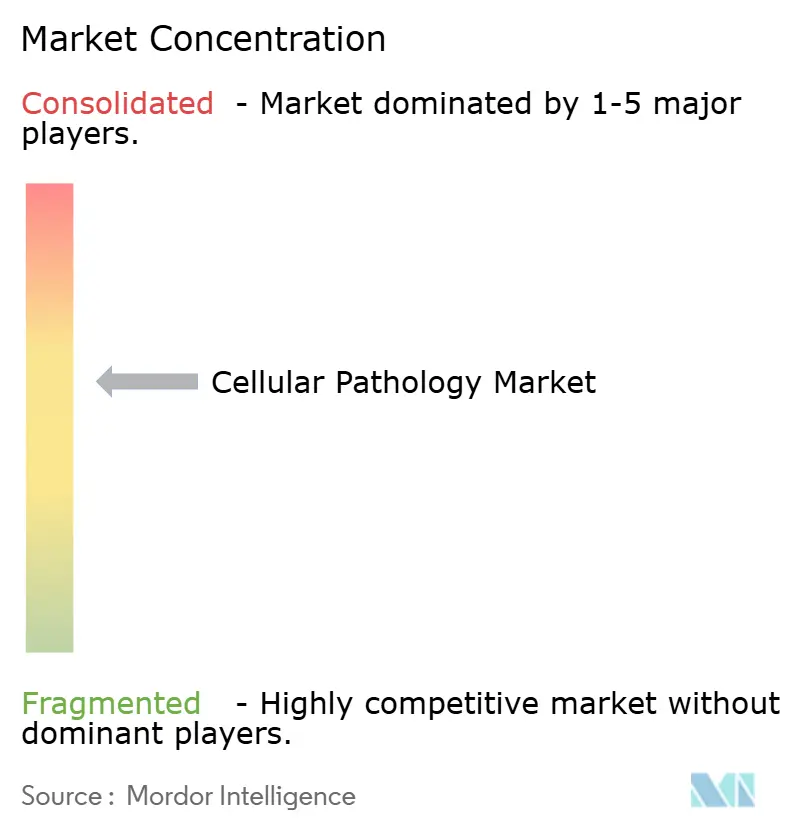
The cellular pathology market is moderately concentrated, with Danaher through Leica Biosystems, F. Hoffmann-La Roche, Thermo Fisher Scientific, and Agilent Technologies holding leading positions across instruments, consumables, and software. Competition is more fragmented in AI software and digital pathology platforms. Roche agreed to acquire PathAI for up to USD 1.05 billion in May 2026. Agilent completed its acquisition of Biocare Medical for USD 950 million in June 2026. Tempus AI acquired Paige in August 2025 for USD 81.25 million. These transactions are bringing AI capabilities into larger diagnostics portfolios.
Companies are expanding companion-diagnostic assay menus, acquiring AI platforms, and using local partnerships to enter the Asia-Pacific. Agilent's July 2026 approval for PD-L1 IHC 28-8 pharmDx added indications in upper gastrointestinal cancers. Roche's PathAI transaction adds a digital pathology platform and AI companion-diagnostic capabilities to its diagnostics business. Leica Biosystems agreed to acquire StatLab Medical Products in July 2026. The transaction extends Leica's reach into pre-analytical tissue processing and slide preparation. These moves can increase switching costs for laboratories seeking connected workflows.
White-space opportunities remain in biomarker discovery for biopharma, telepathology in emerging markets, and multiplex spatial proteomics. Regulation remains an important barrier because FDA pathways and the EU IVDR require evidence of clinical performance and post-market controls. Proscia has remained active in drug-discovery pathology rather than competing directly with larger clinical diagnostic suppliers. The cellular pathology market is likely to favor suppliers that can combine validated assays, digital tools, and laboratory workflow support. Independent specialists can still compete where they offer targeted capabilities for pharmaceutical research or complex case review.
Cellular Pathology Industry Leaders
Abbott Laboratories
Danaher Corporation
F. Hoffmann-La Roche Ltd.
Sysmex Corporation
Thermo Fisher Scientific Inc.
- *Disclaimer: Major Players sorted in no particular order
Cellular Pathology Market Companies Covered in this Report
- Abbott Laboratories
- Agilent Technologies
- Aiforia Technologies Plc
- Beckton Dickinson
- BioGenex
- Danaher
- Roche
- FUJIFILM
- Hamamatsu Photonics
- Hologic
- Indica Labs, LLC
- Koninklijke Philips
- NeoGenomics Laboratories
- OptraSCAN
- PathAI, Inc.
- PHC Holdings
- Proscia
- Sakura Finetek
- Sysmex
- Thermo Fisher Scientific

Recent Industry Developments in Cellular Pathology Market
- July 2026: Leica Biosystems, a Danaher company, entered into a definitive agreement to acquire StatLab Medical Products, a manufacturer of pre-analytical anatomic pathology consumables spanning tissue processing through slide preparation.
- July 2026: Agilent Technologies received FDA approval for PD-L1 IHC 28-8 pharmDx as a companion diagnostic for OPDIVO in esophageal squamous cell carcinoma, gastric, gastroesophageal junction, and esophageal adenocarcinoma. This was the 8th FDA-approved indication for the platform.
- June 2026: Agilent Technologies completed its acquisition of Biocare Medical for USD 950 million. Biocare generated more than USD 90 million in fiscal 2025 revenue and offers more than 300 specialized IHC, ISH, and FISH antibodies.
- May 2026: Roche entered into a definitive merger agreement to acquire PathAI for USD 750 million upfront, with up to USD 300 million in additional milestone payments. The deal includes the AISight digital pathology platform and AI companion-diagnostic development capabilities.
- May 2026: PathAI and A.C.Camargo Cancer Center announced a collaboration to deploy AI-enabled digital pathology across Brazil's national health system.


Global Cellular Pathology Market Report Scope
The cellular pathology market covers technologies, instruments, consumables, and services used to examine cells and tissue samples to identify, classify, and monitor diseases, with major applications in oncology and other chronic conditions. It includes laboratory systems and digital pathology platforms used in hospitals, diagnostic laboratories, and academic research centers. The market also supports workflows such as sample preparation, staining, imaging, interpretation, and data management.
The cellular pathology market report is segmented by product and service, technology, application, indication, end user, and geography. By product and service, it is further divided into instruments, consumables, software and image-management systems, and services. By technology, it is segmented into histopathology, cytopathology, immunohistochemistry, in situ hybridization, digital pathology, molecular pathology, flow cytometry, and AI-enabled pathology. By application, the market is segmented into clinical diagnostics, genetic and molecular testing, drug discovery and development, toxicology and safety assessment, research, education and training. By indication, the market is segmented into oncology, infectious diseases, inflammatory and autoimmune disorders, gastrointestinal diseases, neurological diseases, gynecological diseases, and others . By end user, the market is segmented into hospitals and health systems, diagnostic and reference laboratories, research laboratories and academic centers, pharmaceutical and biotechnology companies, contract research organizations, and specialty clinics and cancer centers. The geography segment is further divided into North America, Europe, Asia-Pacific, the Middle East and Africa, and South America. The report also covers the estimated market sizes and trends for 17 countries across major regions globally. The report offers the market size and forecasts in value (USD) for the above segments.
| Instruments | Microtomes and Cryostats |
| Tissue Processors | |
| Automatic Stainers | |
| Whole-Slide Imaging Scanners | |
| Pathology Workstations and Displays | |
| Consumables | Diagnostic Kits |
| Reagents and Antibodies | |
| Probes and Molecular Kits | |
| Software and Image-Management Systems | |
| Services |
| Histopathology |
| Cytopathology |
| Immunohistochemistry |
| In Situ Hybridization |
| Digital Pathology |
| Molecular Pathology |
| Flow Cytometry |
| AI-Enabled Pathology |
| Clinical Diagnostics |
| Genetic and Molecular Testing |
| Drug Discovery and Development |
| Toxicology and Safety Assessment |
| Research, Education and Training |
| Oncology |
| Infectious Diseases |
| Inflammatory and Autoimmune Disorders |
| Gastrointestinal Diseases |
| Neurological Diseases |
| Gynecological Diseases |
| Others |
| Hospitals and Health Systems |
| Diagnostic and Reference Laboratories |
| Research Laboratories and Academic Centers |
| Pharmaceutical and Biotechnology Companies |
| Contract Research Organizations |
| Specialty Clinics and Cancer Centers |
| North America | United States |
| Canada | |
| Mexico | |
| Europe | Germany |
| United Kingdom | |
| France | |
| Italy | |
| Spain | |
| Rest of Europe | |
| Asia-Pacific | China |
| Japan | |
| India | |
| Australia | |
| South Korea | |
| Rest of Asia-Pacific | |
| Middle East and Africa | GCC |
| South Africa | |
| Rest of Middle East and Africa | |
| South America | Brazil |
| Argentina | |
| Rest of South America |
| By Product and Service | Instruments | Microtomes and Cryostats |
| Tissue Processors | ||
| Automatic Stainers | ||
| Whole-Slide Imaging Scanners | ||
| Pathology Workstations and Displays | ||
| Consumables | Diagnostic Kits | |
| Reagents and Antibodies | ||
| Probes and Molecular Kits | ||
| Software and Image-Management Systems | ||
| Services | ||
| By Technology | Histopathology | |
| Cytopathology | ||
| Immunohistochemistry | ||
| In Situ Hybridization | ||
| Digital Pathology | ||
| Molecular Pathology | ||
| Flow Cytometry | ||
| AI-Enabled Pathology | ||
| By Application | Clinical Diagnostics | |
| Genetic and Molecular Testing | ||
| Drug Discovery and Development | ||
| Toxicology and Safety Assessment | ||
| Research, Education and Training | ||
| By Indication | Oncology | |
| Infectious Diseases | ||
| Inflammatory and Autoimmune Disorders | ||
| Gastrointestinal Diseases | ||
| Neurological Diseases | ||
| Gynecological Diseases | ||
| Others | ||
| By End User | Hospitals and Health Systems | |
| Diagnostic and Reference Laboratories | ||
| Research Laboratories and Academic Centers | ||
| Pharmaceutical and Biotechnology Companies | ||
| Contract Research Organizations | ||
| Specialty Clinics and Cancer Centers | ||
| By Geography | North America | United States |
| Canada | ||
| Mexico | ||
| Europe | Germany | |
| United Kingdom | ||
| France | ||
| Italy | ||
| Spain | ||
| Rest of Europe | ||
| Asia-Pacific | China | |
| Japan | ||
| India | ||
| Australia | ||
| South Korea | ||
| Rest of Asia-Pacific | ||
| Middle East and Africa | GCC | |
| South Africa | ||
| Rest of Middle East and Africa | ||
| South America | Brazil | |
| Argentina | ||
| Rest of South America | ||


Key Questions Answered in the Report
What is the projected value of the cellular pathology market by 2031?
The cellular pathology market is projected to reach USD 19.54 billion by 2031, from USD 12.74 billion in 2026, at an 8.92% CAGR.
What is driving cellular pathology demand?
Rising cancer incidence, tissue-based companion diagnostics, digital pathology adoption, and chronic-disease biopsy needs support demand.
Which product category leads cellular pathology revenue?
Consumables led with 61.23% of revenue in 2025 because reagents, antibodies, and diagnostic kits are used repeatedly in laboratory workflows.
Which technology is growing fastest in cellular pathology?
Digital pathology is forecast to grow at a 10.54% CAGR through 2031, supported by whole-slide imaging and AI-assisted workflows.
Which region is growing fastest for cellular pathology services and tools?
Asia-Pacific is forecast to grow at a 10.72% CAGR through 2031 as China and India expand laboratory capacity and cancer screening.
What limits wider adoption of digital pathology?
Scanner and information technology costs, image-storage needs, interoperability requirements, and shortages of pathologists and histotechnologists can slow adoption.
Page last updated on:





