
Bronchial Spasm Market Size and Share
Market Overview
| Study Period | 2020 - 2031 |
|---|---|
| Market Size (2026) | USD 4.52 Billion |
| Market Size (2031) | USD 6.16 Billion |
| Growth Rate (2026 - 2031) | 6.40 % |
| Fastest Growing Market | Asia-Pacific |
| Largest Market | North America |
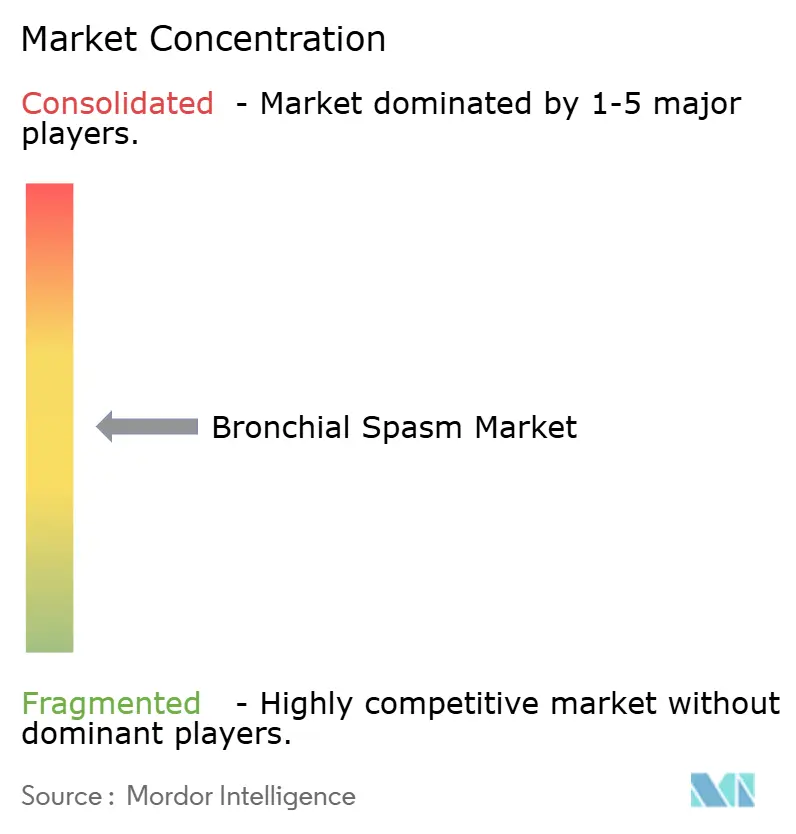
| Market Concentration | Medium |
Major Players *Disclaimer: Major Players sorted in no particular order Image © Mordor Intelligence. Reuse requires attribution under CC BY 4.0. | |
Bronchial Spasm Market Analysis by Mordor Intelligence
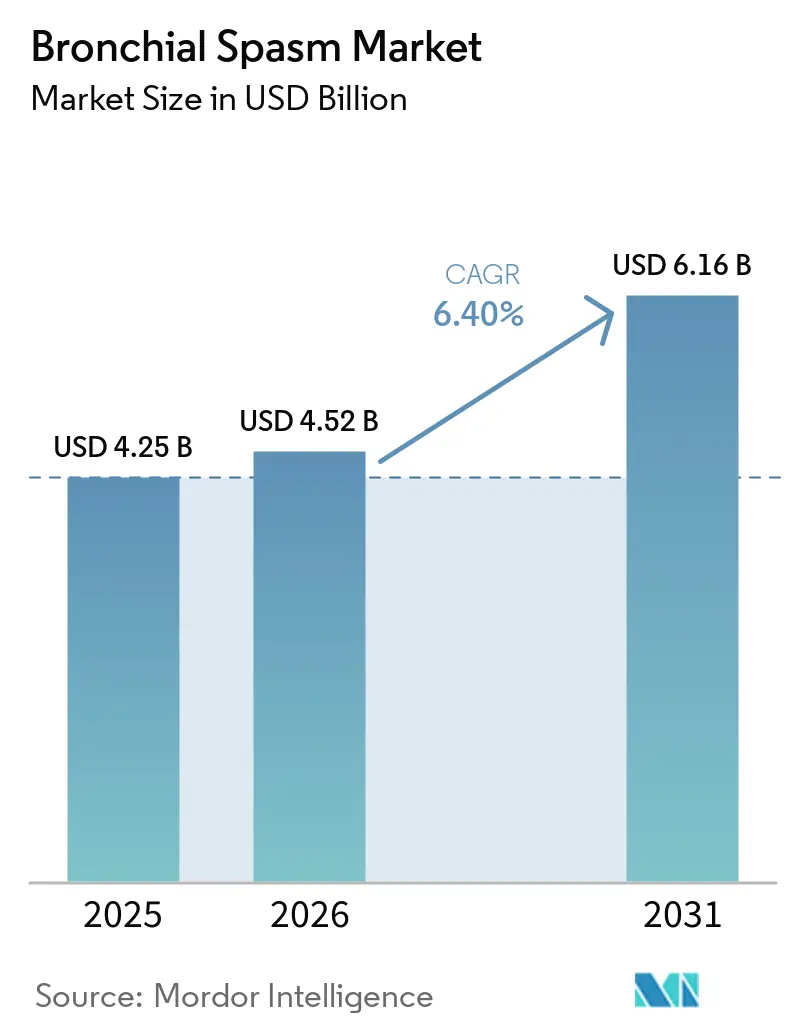
The Bronchial Spasm Market size was valued at USD 4.25 billion in 2025 and is estimated to grow from USD 4.52 billion in 2026 to reach USD 6.16 billion by 2031, at a CAGR of 6.40% during the forecast period (2026-2031).
The bronchial spasm market is supported by the growing burden of asthma and chronic obstructive pulmonary disease (COPD). The Global Burden of Disease 2025 study reported 569.2 million chronic respiratory disease cases and 4.2 million related deaths in 2024. The World Health Organization reported that asthma affected more than 262 million people globally and that COPD caused 3.4 million deaths in 2024. Market growth is supported by the adoption of combination inhalers, biologics, lower-emission devices, and generic medicines, alongside improving diagnosis, reimbursement, and treatment access in underserved markets.
Key Report Takeaways
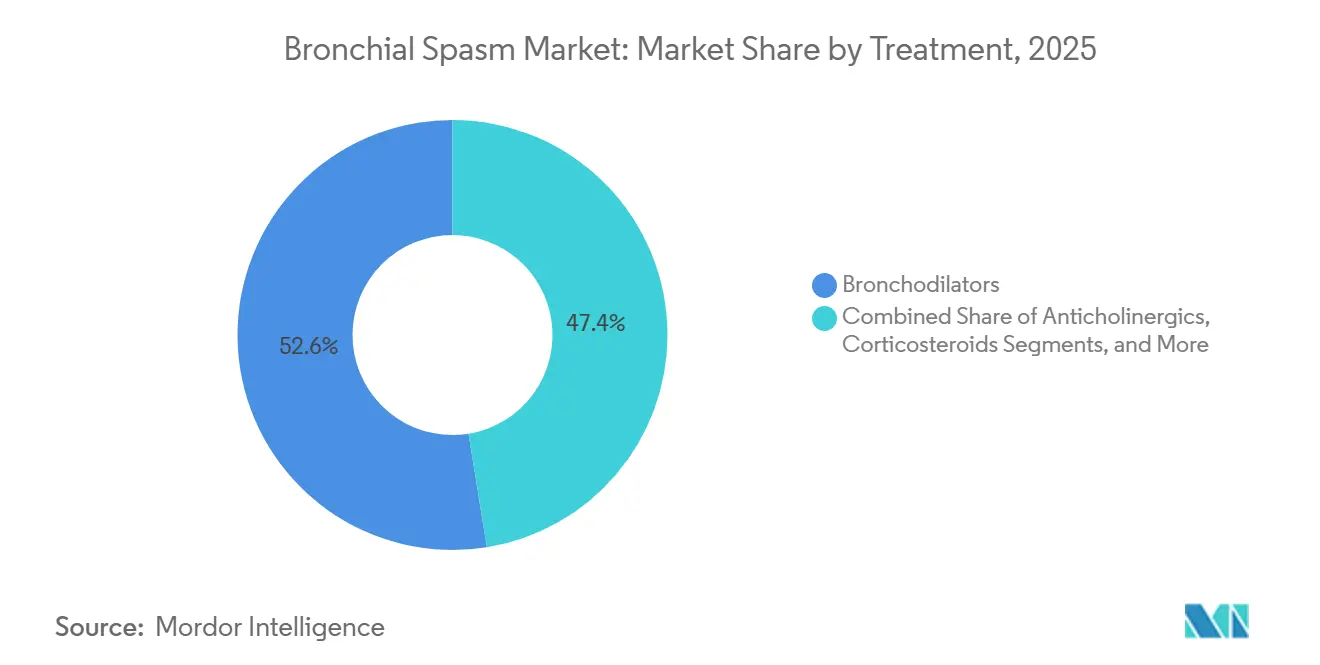
- By treatment, bronchodilators held 52.56% of the bronchial spasm market share in 2025, while corticosteroids are projected to grow at a 9.15% CAGR through 2031.
- By route of administration, inhalational delivery accounted for 47.76% of the bronchial spasm market share in 2025, while oral administration is projected to expand at an 8.80% CAGR through 2031.
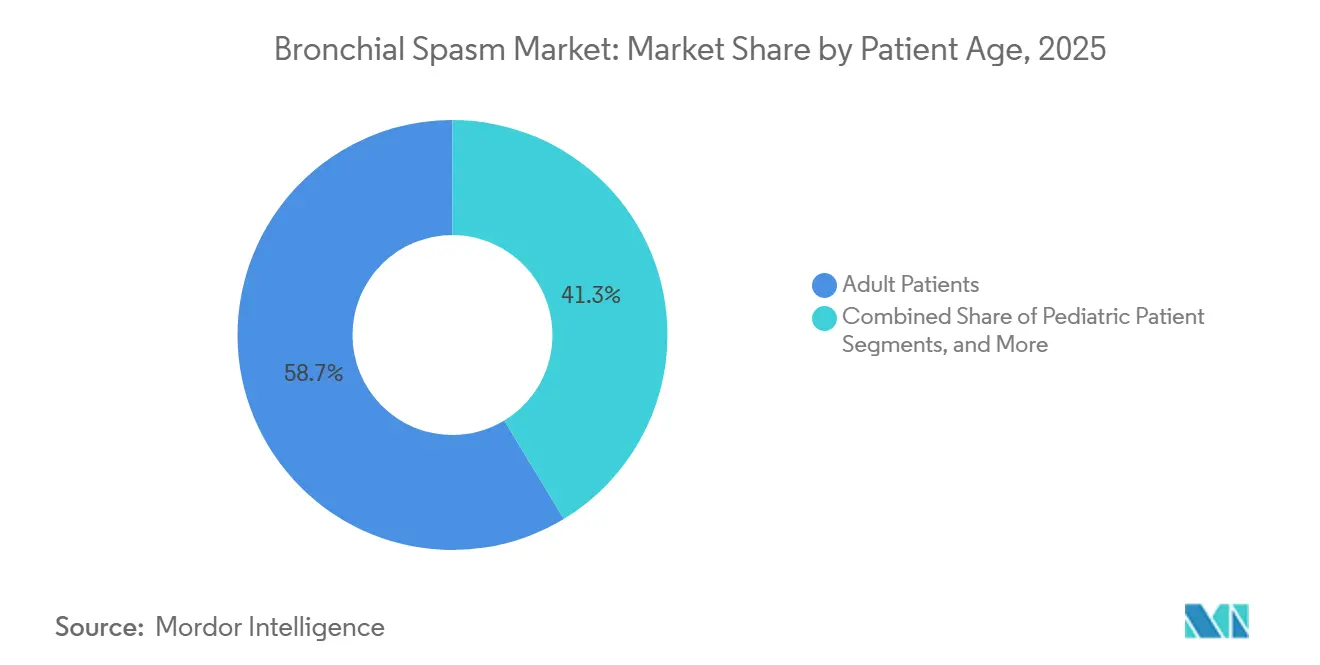
- By patient age, adult patients accounted for 58.66% of total treatment revenue in 2025, while pediatric patients are projected to grow at a 10.45% CAGR through 2031.
- By end user, hospitals held 62.88% of total treatment revenue in 2025, while homecare settings are projected to grow at a 9.56% CAGR through 2031.
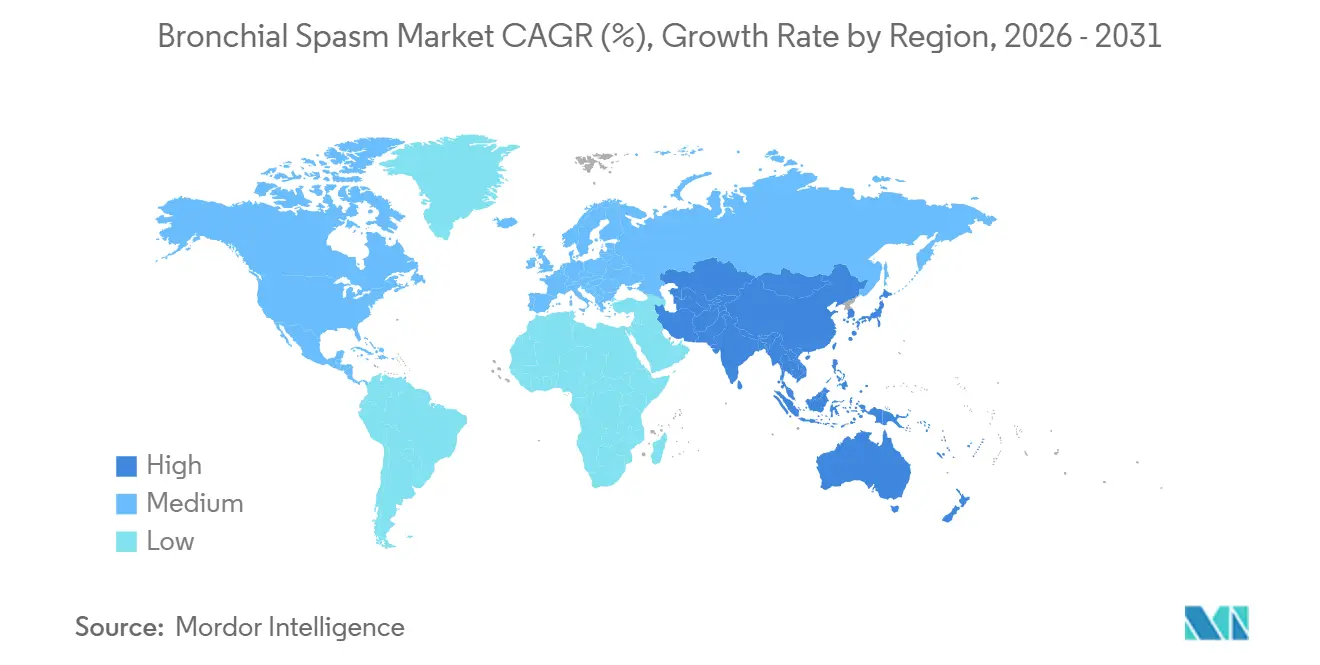
- By geography, North America held 42.44% of total treatment revenue in 2025, while Asia-Pacific is projected to expand at a 10.88% CAGR through 2031.
Note: Market size and forecast figures in this report are generated using Mordor Intelligence’s proprietary estimation framework, updated with the latest available data and insights as of January 2026.
Market Trends and Insights
Drivers Impact Analysis of Bronchial Spasm Market*
| DRIVER | (~) % IMPACT ON CAGR FORECAST | GEOGRAPHIC RELEVANCE | IMPACT TIMELINE |
|---|---|---|---|
| Rising asthma and COPD burden globally | +2.1% | Global | Long term (≥ 4 years) |
| Exposure to air pollution and occupational irritants | +1.3% | APAC, MEA, South America, Eastern Europe | Long term (≥ 4 years) |
| Combination and long-acting bronchodilator therapy | +1.4% | North America, Europe, APAC | Medium term (2-4 years) |
| Affordable generic inhaler supply | +0.9% | South Asia, South America, MEA | Medium term (2-4 years) |
| Diagnosis of severe and eosinophilic asthma | +0.8% | North America, Europe, Japan | Medium term (2-4 years) |
| Connected inhalers and home-based respiratory care | +0.8% | North America, Europe, Australia | Short term (≤ 2 years) |
| Source: Mordor Intelligence | |||
Rising Asthma and COPD Burden Creates a Durable Demand Floor
The bronchial spasm market benefits from sustained demand for long-term respiratory treatment. The World Health Organization stated in 2025 that more than 250 million people lived with asthma worldwide.[1]World Health Organization, “Chronic Obstructive Pulmonary Disease Fact Sheet,” World Health Organization, who.int. Essential inhaled medicines remained unavailable in more than two-thirds of pharmacies and hospitals in low- and middle-income countries, limiting treatment access. Improved case finding and disease registries can expand the treated patient base, while the WHO European Region reported that global COPD cases are projected to increase by 23% between 2020 and 2050.
Shift Toward Combination and Long-Acting Bronchodilator Therapy Lifts Average Revenue Per Patient
The bronchial spasm market is shifting toward combination therapies for patients requiring stronger symptom control. The KALOS and LOGOS Phase 3 trials, published in February 2026, showed that budesonide, glycopyrronium, and formoterol improved trough FEV1 by 76 mL versus dual ICS-LABA therapy and reduced severe exacerbations by 14%.[2]Global Initiative for Asthma, “Increasing Access to Inhaled Medicines for COPD and Asthma,” Global Initiative for Asthma, ginasthma.org. The American College of Chest Physicians issued a guideline on biologic management in severe asthma in January 2026, supporting structured treatment-switching decisions. These developments strengthen the commercial value of single-inhaler therapies that integrate medicines, device design, and clinical evidence.[3]American College of Chest Physicians, “Biologic Management in Severe Asthma for Adults,” CHEST Journal, chestnet.org.
Increasing Diagnosis of Severe and Eosinophilic Asthma Redefines Market Ceiling
Increasing recognition of severe and eosinophilic asthma is creating higher-value treatment opportunities within the bronchial spasm market. The 2025 CHEST guideline described the use of anti-IL-5 agents and IL-4 receptor antagonists for patients with severe asthma. Biomarker testing identifies patients with elevated eosinophils, FeNO, or IgE who may qualify for targeted therapies. Although these therapies address a smaller patient population, they support higher treatment value per patient and can reach patients faster through FDA Priority Review and EMA accelerated assessment pathways.
Greater Use of Connected Inhalers and Home-Based Respiratory Care Reshapes Adherence Economics
Connected inhalers and home-based care are gaining importance in the bronchial spasm market as poor adherence remains common in chronic respiratory conditions. In September 2025, Adherium reported that its iCARE study included up to 2,500 asthma and COPD patients across five Intermountain Health facilities using 4,000 Hailie Smartinhalers. The results showed strong adherence and sustained patient engagement. Device-generated data can help clinicians identify changes in medication use early, reduce acute episodes, and support payer evaluations of remote respiratory management.
Restraints Impact Analysis of Bronchial Spasm Market*
| RESTRAINT | (~) % IMPACT ON CAGR FORECAST | GEOGRAPHIC RELEVANCE | IMPACT TIMELINE |
|---|---|---|---|
| Inhaler-use errors and treatment-adherence gaps | -0.9% | Global, especially LMICs | Long term (≥ 4 years) |
| Safety concerns with corticosteroids and bronchodilators | -0.7% | Global | Medium term (2-4 years) |
| Pricing pressure from generic and tender-based procurement | -0.8% | Europe, South Asia, South America | Medium term (2-4 years) |
| Unequal availability of essential inhaled medicines | -0.7% | MEA, South-East Asia, South America | Long term (≥ 4 years) |
| Source: Mordor Intelligence | |||
Inhaler-Use Errors and Treatment-Adherence Gaps Suppress Therapeutic Outcomes
Inhaler technique errors and adherence gaps remained material constraints for the bronchial spasm market. A 2025 review of connected inhaler data found that high reliever use predicted COPD exacerbations, although routine care often missed these indicators. Incorrect use reduced the effectiveness of controller and rescue medicines, even when prescriptions were filled, leading to avoidable acute care utilization. Manufacturers and providers must support medicine access with patient education, device guidance, and appropriate follow-up.
Unequal Availability of Essential Inhaled Medicines Caps Geographic Expansion
Unequal availability of inhaled medicines limited the bronchial spasm market’s reach among high-burden populations. The Global Initiative for Asthma reported in 2025 that essential inhaled medicines remained unavailable across many low- and middle-income settings. In Nigeria, salbutamol originator brands cost 11.8 times the international reference price, while the lowest-priced generic cost 5.3 times the reference price. India’s Jan Aushadhi program demonstrated that government channels lowered inhaled bronchodilator costs for eligible patients; however, supply interruptions and regional access gaps persisted, keeping treatment demand below the level indicated by disease burden.
*Our forecasts treat driver/restraint impacts as directional, not additive. The impact forecasts reflect baseline growth, mix effects, and variable interactions.
Bronchial Spasm Market Segment Analysis
By Treatment:
Combination Therapies Gain Ground on a Bronchodilator-Dominant BaseBronchodilators held 52.56% of total treatment revenue in 2025, supported by their broad use in rapid symptom relief and long-term maintenance. Short-acting beta-2 agonists remain critical for acute bronchospasm management, while long-acting beta-2 agonists support maintenance regimens. Anticholinergics maintain an established role, particularly for COPD-associated bronchospasm. This broad treatment base drives demand across primary care, specialist care, and acute-care settings.
Corticosteroids are the fastest-growing treatment category, with this segment projected to expand at a 9.15% CAGR through 2031. Growth is supported by greater recognition of eosinophilic and T2-high asthma and the use of inhaled corticosteroids with targeted add-on therapies. The 2025 CHEST guideline issued by the American College of Chest Physicians includes anti-IL-5 therapies and IL-4 receptor antagonists for severe asthma management. Combination inhalers and biologics also increase the importance of clinical evidence, eligibility testing, and reimbursement support.



By Route of Administration:
Inhalational Dominance Persists but Systemic Routes Gain MomentumInhalational delivery accounted for 47.76% of total treatment revenue in 2025, supported by rapid onset and direct pulmonary delivery. Metered-dose inhalers and dry-powder inhalers remain the leading device formats. GSK stated that 300 million salbutamol metered-dose inhalers are dispensed each year globally. Manufacturers are also reducing the environmental impact of inhaler propellants. AstraZeneca received approval in 2025 for Trixeo Aerosphere in the United Kingdom using HFO-1234ze(E), a propellant with 99.9% lower global warming potential than current propellants.
Oral administration is projected to grow at an 8.80% CAGR through 2031, the fastest rate among routes in the bronchial spasm market. Demand is increasing for systemic treatments that target inflammatory pathways not addressed by inhaled therapies. Injectable biologics, included within this route category, are changing the treatment mix for severe asthma. Intravenous administration remains relevant in emergency and hospital settings, while nebulizer performance and aerosol quality standards continue to influence hospital purchasing decisions and device specifications.
By Patient Age:
Pediatric Growth Outpaces All Other Age CohortsAdult patients accounted for 58.66% of total treatment revenue in 2025, reflecting higher diagnosis rates and medicine spending among working-age and middle-aged adults. Older adults also contribute substantial treatment volume due to declining pulmonary function and a higher prevalence of comorbidities. Complex medication regimens can limit treatment options in geriatric care. Adults, therefore, remain the largest value group across routine inhaler use and advanced treatment pathways.
Pediatric patients are forecast to grow at a 10.45% CAGR through 2031, making this the fastest-growing age group in the bronchial spasm market. A 2025 study of FDA-approved ProAir Digihaler use in a pediatric inner-city population found that digital feedback improved inhalation technique. AstraZeneca received FDA approval for BREZTRI Aerosphere in April 2026, extending asthma eligibility to patients aged 12 years and older. Brazil incorporated benralizumab and dupilumab into its public health system in January 2025, covering patients aged 6-17 years with severe eosinophilic asthma.
By End User:
Hospital Anchored, Homecare AcceleratingHospitals held 62.88% of total treatment revenue in 2025 because they manage acute episodes and often initiate biologic therapy. Severe exacerbations may require emergency care, intensive monitoring, or specialist assessment. Hospitals also document treatment history required for payer authorization processes. Specialty clinics support spirometry, adherence counseling, and treatment-plan adjustments, while emergency departments and other acute-care facilities generate additional demand for rescue therapies.
Homecare settings are forecast to expand at a 9.56% CAGR through 2031 in the bronchial spasm market. Connected inhalers, remote monitoring, and less frequent biologic dosing can reduce clinic visits for stable patients. Adherium’s 2025 iCARE study supported remote monitoring across five Intermountain Health facilities. Home-based care enables medication-use monitoring between appointments and will gain importance where providers and payers support long-term care outside hospital settings.
Geography Analysis
North America Bronchial Spasm Market
North America held 42.44% of total treatment revenue in 2025, making it the largest regional contributor. The United States had 27 million asthma patients and nearly 10 million asthma attacks annually. AstraZeneca launched BREZTRI Aerosphere for asthma in the United States in July 2026, following FDA approval on April 28, 2026. Chiesi’s TRIMBOW was approved for the maintenance treatment of asthma in adults in May 2026.
Europe Bronchial Spasm Market
Europe was the second-largest region in the bronchial spasm market. Its healthcare systems provided broad access to respiratory treatments, although tendering and generic substitution pressured originator prices. The WHO European Region reported USD 20.7 billion in productivity losses from chronic respiratory diseases among people aged 30–74 years. Chiesi received European Commission authorization for its NEXThaler single-inhaler triple therapy for adults with asthma on July 31, 2026. Germany, the United Kingdom, France, Italy, and Spain accounted for a significant share of the region’s treatment volume.
APAC and South America Bronchial Spasm Market
Asia-Pacific is forecast to expand at a CAGR of 10.88% through 2031, the fastest growth rate in the bronchial spasm market. China and India are central to this growth due to their substantial respiratory disease burden. GSK’s Trelegy Ellipta received approval from China’s National Medical Products Administration for adult asthma on January 23, 2026. GSK stated that China had 46 million adults with asthma. India’s Jan Aushadhi program is expanding access to lower-cost inhalers, while Brazil’s 2025 public-system decisions and Chile’s December 2025 biologic coverage under GES broadened access in South America.

Competitive Landscape
The bronchial spasm market includes branded respiratory medicine companies and generic manufacturers. AstraZeneca, GSK plc, Boehringer Ingelheim, Chiesi Farmaceutici, and Sanofi competed through combination inhalers, biologics, and device systems. AstraZeneca stated that more than 6.8 million patients globally had been prescribed BREZTRI for COPD by 2025. The company expanded the product into U.S. asthma maintenance treatment in 2026. Chiesi strengthened its position through the May 2026 U.S. approval of TRIMBOW and the July 2026 European authorization of NEXThaler.
GSK advanced its respiratory portfolio through Trelegy Ellipta and lower-emission inhaler development. Trelegy Ellipta became the first single-inhaler triple therapy approved in China for the maintenance treatment of both asthma and COPD in January 2026. GSK also reported positive Phase 3 evidence in October 2025 for a low-carbon Ventolin metered-dose inhaler using HFA-152a propellant. The company expected the product to reduce per-unit greenhouse gas emissions by 92% if approved. Competition was therefore based on clinical positioning, device technology, and environmental product design.
Generic suppliers, including Cipla, Dr. Reddy’s Laboratories, Lupin, Zydus Lifesciences, Teva, Viatris, Hikma, and Sandoz, competed in mature medicine categories. Cipla received FDA approval for an AB-rated generic albuterol sulfate inhalation aerosol in April 2026. Generic supply improved affordability but created continued price pressure in established inhaler categories. The available material did not provide combined market shares for leading companies; therefore, a market concentration score could not be assigned using the stated share-based method.
Bronchial Spasm Industry Leaders
Pfizer Inc.
Novartis AG
AstraZeneca PLC
GSK plc
Merck & Co., Inc.
- *Disclaimer: Major Players sorted in no particular order
Bronchial Spasm Market Companies Covered in this Report
- Amphastar Pharmaceuticals
- AstraZeneca
- Boehringer Ingelheim
- Chiesi Farmaceutici
- Cipla
- Dr. Reddy’s Laboratories
- GlaxoSmithKline
- Hikma Pharmaceuticals
- Lupin
- Merck
- Nephron Pharmaceuticals Corporation
- Novartis
- Organon
- Pfizer
- Sandoz Group AG
- Sanofi
- Sun Pharmaceuticals Industries
- Teva Pharmaceutical Industries
- Viatris
- Zydus Lifesciences Limited

Recent Industry Developments in Bronchial Spasm Market
- July 2026: AstraZeneca launched BREZTRI Aerosphere in the United States for asthma maintenance treatment in patients aged 12 years and older; regulatory filings were under review in the European Union, Japan, and China.
- July 2026: Chiesi Group received European Commission authorization for NEXThaler, a medium-strength single-inhaler triple therapy for adult asthma maintenance treatment in the European Union.
- April 2026: Cipla received FDA approval for a generic albuterol sulfate inhalation aerosol equivalent to Ventolin HFA, while Amneal launched a generic version in the United States, expanding access to lower-cost rescue treatments.
- January 2026: China’s NMPA approved GSK’s Trelegy Ellipta for adult asthma maintenance treatment, making it the first single-inhaler triple therapy approved for asthma and COPD in China.
- October 2025: Chiesi USA announced FDA acceptance of its New Drug Application for TRIMBOW for asthma, marking the initial regulatory milestone before its May 2026 approval.


Global Bronchial Spasm Market Report Scope
As per the scope of the report, A bronchial spasm, or bronchospasm, is the sudden tightening of the smooth muscles lining the airways (bronchi) in the lungs. This abnormal contraction narrows the air passages, severely restricting airflow and making it difficult to breathe.
The bronchial spasm market is segmented by treatment, route of administration, patient age group, end user, and geography. By treatment, the market includes bronchodilators, short-acting beta-2 agonists, long-acting beta-2 agonists, anticholinergics, corticosteroids, combination therapies, and others. By route of administration, the market is segmented into inhalation, oral, and intravenous administration. By patient age group, the market is categorized into pediatric patients, adult patients, and geriatric patients. By end user, the market is segmented into hospitals, specialty clinics, home care settings, ambulatory surgical centers, and others. By geography, the market is analyzed across North America, Europe, Asia-Pacific, the Middle East and Africa, and South America. The report also covers the estimated market sizes and trends for 17 countries across major regions globally. The report offers the market sizes and forecasts in terms of value (USD) for the above segments.
| Bronchodilators | Short-Acting Beta-2 Agonists |
| Long-Acting Beta-2 Agonists | |
| Anticholinergics | |
| Corticosteroids | |
| Combination Therapies | |
| Others |
| Inhalational Administration |
| Oral Administration |
| Intravenous Administration |
| Pediatric Patients |
| Adult Patients |
| Geriatric Patients |
| Hospitals |
| Specialty Clinics |
| Homecare Settings |
| Ambulatory Surgical Centers |
| Others |
| North America | United States |
| Canada | |
| Mexico | |
| Europe | Germany |
| United Kingdom | |
| France | |
| Italy | |
| Spain | |
| Rest of Europe | |
| Asia-Pacific | China |
| India | |
| Japan | |
| Australia | |
| South Korea | |
| Rest of Asia-Pacific | |
| Middle East and Africa | GCC |
| South Africa | |
| Rest of Middle East and Africa | |
| South America | Brazil |
| Argentina | |
| Rest of South America |
| By Treatment | Bronchodilators | Short-Acting Beta-2 Agonists |
| Long-Acting Beta-2 Agonists | ||
| Anticholinergics | ||
| Corticosteroids | ||
| Combination Therapies | ||
| Others | ||
| By Route of Administration | Inhalational Administration | |
| Oral Administration | ||
| Intravenous Administration | ||
| By Patient Age | Pediatric Patients | |
| Adult Patients | ||
| Geriatric Patients | ||
| By End User | Hospitals | |
| Specialty Clinics | ||
| Homecare Settings | ||
| Ambulatory Surgical Centers | ||
| Others | ||
| By Geography | North America | United States |
| Canada | ||
| Mexico | ||
| Europe | Germany | |
| United Kingdom | ||
| France | ||
| Italy | ||
| Spain | ||
| Rest of Europe | ||
| Asia-Pacific | China | |
| India | ||
| Japan | ||
| Australia | ||
| South Korea | ||
| Rest of Asia-Pacific | ||
| Middle East and Africa | GCC | |
| South Africa | ||
| Rest of Middle East and Africa | ||
| South America | Brazil | |
| Argentina | ||
| Rest of South America | ||


Key Questions Answered in the Report
What is the forecast value of bronchial spasm treatment demand by 2031?
The bronchial spasm market is forecast to reach USD 6.16 billion by 2031, from USD 4.52 billion in 2026, at a 6.40% CAGR.
Which treatment category holds the largest share in bronchial spasm care?
Bronchodilators held 52.56% of revenue in 2025 because they are widely used for acute relief and maintenance treatment.
Which bronchial spasm treatment segment is growing the fastest?
Corticosteroids are projected to record the fastest treatment growth at a 9.15% CAGR through 2031, supported by severe asthma care and targeted therapies.
Which route of administration leads bronchial spasm treatment?
Inhalational delivery led with 47.76% share in 2025 because inhalers provide direct and rapid drug delivery to the lungs.
Which region will grow the fastest in bronchial spasm care?
Asia-Pacific is forecast to expand at a 10.88% CAGR through 2031, supported by large asthma populations and increasing treatment access.
Why are connected inhalers important for respiratory care providers?
Connected inhalers can identify poor medicine use, support adherence, and help providers manage patients outside hospitals.
Page last updated on:





