
Brazil Pet Treats Market Size and Share
Market Overview
| Study Period | 2021 - 2031 |
|---|---|
| Forecast Data Period | 2026 - 2031 |
| Base Year Market Size (2025) | USD 1.28 Billion |
| Market Size (2026) | USD 1.36 Billion |
| Market Size (2031) | USD 1.85 Billion |
| Growth Rate (2026 - 2031) | 6.37 % |
| Market Concentration | Medium |
Major Players *Disclaimer: Major Players sorted in no particular order Image © Mordor Intelligence. Reuse requires attribution under CC BY 4.0. | |
Brazil Pet Treats Market Analysis by Mordor Intelligence
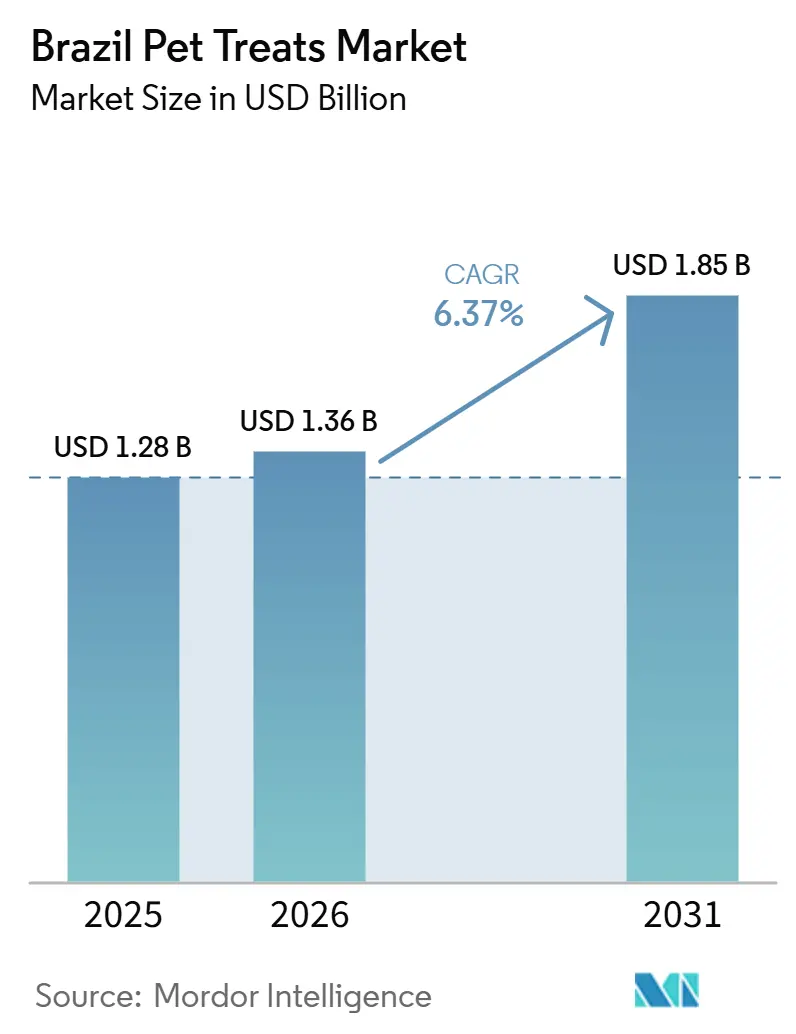
The Brazil pet treats market size is projected to grow from USD 1.28 billion in 2025 to USD 1.36 billion in 2026 and is forecasted to reach USD 1.85 billion by 2031, registering a CAGR of 6.37% during the forecast period 2026-2031. This growth is driven by a large companion animal population, increasing routine spending on pet care, and a shift in household perceptions of treats as part of daily feeding and care practices. Brazil's large-scale pet food manufacturing industry provides a strong production base for the pet treats market, supporting product innovation, distribution, and expansion across value-added pet nutrition categories. The purchase of pet treats has evolved beyond occasional rewards, with many pet owners associating treats with oral care, training, wellness benefits, and high-quality ingredients. Premium demand is particularly strong in the southeast region, where specialized retail networks and a higher concentration of veterinary services facilitate the adoption of dental, freeze-dried, and other premium formats. Additionally, the market benefits from abundant local access to poultry and beef by-products. However, factors such as tax pressures, inflation, and price sensitivity continue to influence brand strategies, channel distribution, and the rate of premium product adoption.
Key Report Takeaways
- By sub-product type, dental treats led the market, and Brazil pet treats market share accounted for 24.8% of the total in 2025, while freeze-dried and jerky treats recorded the highest projected CAGR at 7.4% between 2026 and 2031.
- By pet type, dogs held 70.9% of the Brazil pet treats market size in 2025, while cats recorded the highest projected CAGR at 9.2% between 2026 and 2031.
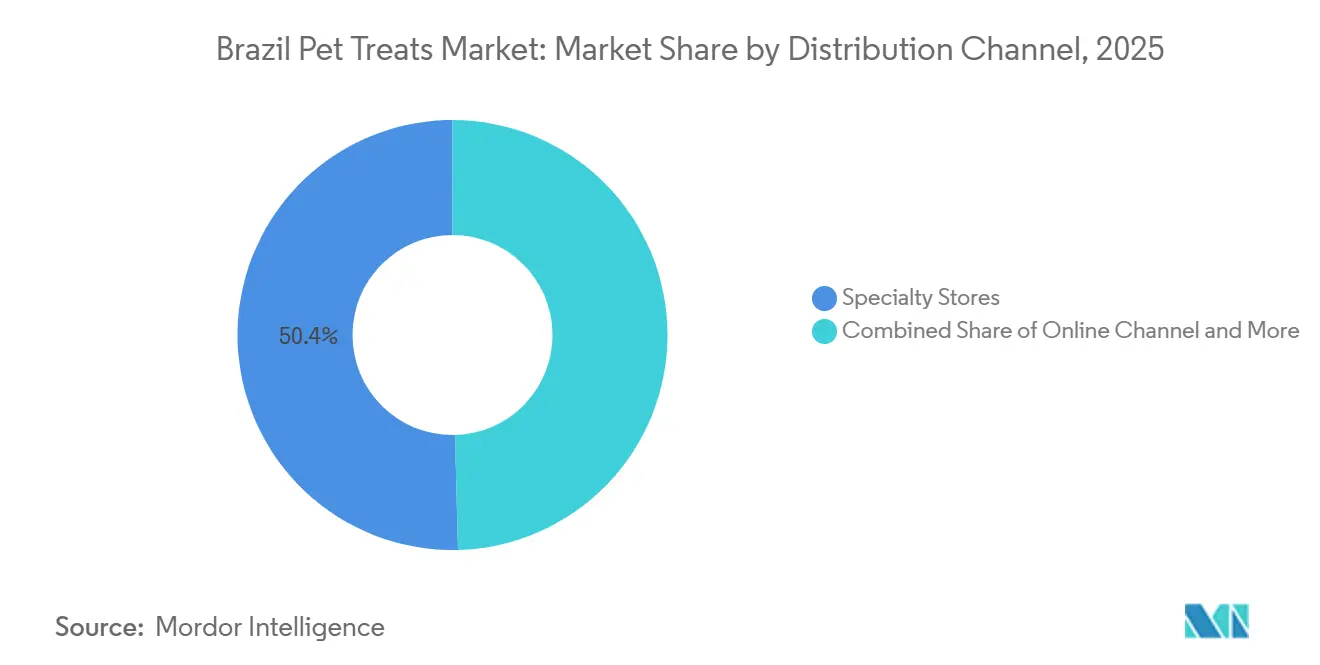
- By distribution channel, specialty stores accounted for 50.4% of the market in 2025, while the online channel advanced at the fastest projected CAGR of 7.2% between 2026 and 2031.
Note: Market size and forecast figures in this report are generated using Mordor Intelligence’s proprietary estimation framework, updated with the latest available data and insights as of January 2026.
Brazil Pet Treats Market Trends and Insights
Drivers Impact Analysis*
| Driver | (~) % Impact on CAGR Forecast | Geographic Relevance | Impact Timeline |
|---|---|---|---|
| Pet humanization and premium treat adoption | +1.8% | National, with highest intensity in São Paulo and Rio de Janeiro | Short term (≤ 2 years) |
| Rising demand for dental and functional benefits | +1.2% | National, concentrated in Southeast Brazil | Medium term (2-4 years) |
| Growth of e-commerce and omnichannel pet retail | +0.9% | National, with early gains in São Paulo, Curitiba, and Belo Horizonte | Short term (≤ 2 years) |
| Expansion of natural and clean-label formulations | +0.8% | National, concentrated in major metropolitan areas | Medium term (2-4 years) |
| Treats used more frequently in training and reinforcement | +0.6% | National, with urban and suburban households driving adoption | Medium term (2-4 years) |
| Veterinary recommendation supports repeat purchases | +0.7% | National, with clinics concentrated in Southeast and South regions | Long term (≥ 4 years) |
| Source: Mordor Intelligence | |||
Pet Humanization and Premium Treat Adoption
Increasing consumer demand for premium pet nutrition is supporting the growth of the Brazil pet treats market. Brazil continues to import premium dog and cat food despite having a well-established domestic pet food industry, reflecting consumers' willingness to purchase differentiated products offering specialized nutrition, functional benefits, and premium formulations. Between January and May 2024, Brazil imported USD 7.8 million worth of pet food from eight countries, highlighting sustained demand for imported pet nutrition products[1]Source: USDA FAS, “Paw-sitive Outlook for the Pet Food Industy in Brazil,” fas.usda.gov. The availability of imported and domestic premium offerings encourages manufacturers to expand portfolios with functional ingredients, natural recipes, and health-focused formulations. As consumers increasingly prioritize product quality, nutrition, and specialized pet care, demand for premium pet treats is anticipated to strengthen, supporting value growth in the Brazil pet treats market.
Rising Demand for Dental and Functional Benefits
Dental health remains a key driver of functional demand in the Brazil pet treats market. According to Farmina's 2025 dental launch communication, over 80% of dogs older than two years exhibit some level of periodontal disease. This creates a clear and compelling problem-solution dynamic for consumers and veterinary clinics. Veterinary endorsements play a significant role in fostering repeat purchases, as daily dental chews are positioned as preventive care rather than occasional treats. Once pet owners establish a daily oral care routine, they are likely to continue due to the ease and regularity of use. The same preventive approach is extending to treats designed for joint support, digestive health, and immune system care. Ingredients such as glucosamine, collagen, and prebiotics not only address specific health concerns but also support premium pricing. This integration of treats with broader nutritional management is becoming a consistent feature of the Brazil pet treats market, moving beyond short-term product trends.
Growth of E-Commerce and Omnichannel Pet Retail
The expansion of e-commerce and omnichannel retail is enhancing the accessibility and convenience of pet treat purchases in Brazil. Digital platforms enable pet owners to purchase treats alongside pet food and healthcare products through subscription services, personalized recommendations, and home delivery, encouraging repeat purchases and higher basket values. Omnichannel retail strategies further strengthen market penetration by integrating online platforms with physical stores, improving product availability and customer experience across urban and semi-urban markets. The growing adoption of digital commerce is also enabling manufacturers to expand the reach of premium and functional pet treats while leveraging consumer purchasing data to personalize product recommendations and promotional campaigns. As online retail continues to evolve, it is anticipated to remain a key channel supporting value growth in the Brazil pet treats market.
Expansion of Natural and Clean-Label Formulations
The increasing preference for natural and clean-label pet nutrition is driving demand for premium pet treats in Brazil as pet owners become more conscious of ingredient quality and product transparency. Consumers are increasingly seeking treats made with natural proteins, functional ingredients, and formulations free from artificial colors, flavors, and preservatives, prompting manufacturers to expand their portfolios with minimally processed and additive-free products. This trend is further supported by the continued premiumization of the Brazilian pet food industry, where manufacturers are investing in product innovation and higher-quality formulations to meet evolving consumer preferences. According to the Brazilian Association of Pet Industry (ABEMPET), sales of industrialized pet food reached BRL 40.8 billion (USD 7.6 billion) in 2024, accounting for 54.1% of the country's total pet market revenue, reflecting the strong demand for manufactured pet nutrition products and creating opportunities for premium, natural, and clean-label pet treats[2]Source: Brazilian Association of Pet Industry Companies, “General sector information,” abinpet.org.br.
Restraints Impact Analysis*
| Restraint | (~) % Impact on CAGR Forecast | Geographic Relevance | Impact Timeline |
|---|---|---|---|
| High tax burden raises shelf prices | -1.4% | National | Short term (≤ 2 years) |
| Price sensitivity slows premium penetration | -1.0% | National, most acute outside major metropolitan areas | Medium term (2-4 years) |
| Compliance and labeling costs burden smaller brands | -0.7% | National | Medium term (2-4 years) |
| Informal and unbranded offerings pressure branded sales | -0.8% | National, with higher informal share outside urban centers | Long term (≥ 4 years) |
| Source: Mordor Intelligence | |||
Price Sensitivity Slows Premium Penetration
Consumer price sensitivity continues to act as a significant restraint in the Brazil pet treats market, particularly outside major metropolitan areas. In 2025, the Brazilian pet sector generated BRL 77.96 billion (USD 13.3 billion) and recorded a nominal growth rate of 3.45%[3]Source: Pet Pack Journal, “Brazil pet statistics- Brazil’s pet market overview,” petpackjournal.com. However, this growth represented a real contraction when compared to the annual inflation rate of 4.26%. This economic environment prompts households to opt for private-label, multipack, or simpler treat options as premium products lose their perceived value advantage. The issue is more pronounced outside São Paulo and other large cities, where the density of specialty retail stores is lower, and consumer awareness of premium brands is less developed. Additionally, informal and unbranded products exacerbate the problem by passing formal compliance and significantly undercutting branded prices in regional markets. Consequently, the Brazil pet treats market faces a dual challenge: defending the value of premium products while educating consumers on the differences in quality, formulation, and safety.
Informal and Unbranded Offerings Pressure Branded Sales
The informal channel continues to divert spending from formal players in the Brazil pet treats market. Homemade, artisanal, and unregistered treats are commonly sold through social media platforms, pet fairs, and local informal networks, particularly in areas outside major urban centers. These products avoid the registration, labeling, and quality assurance costs incurred by formal brands, providing a price advantage for simpler formats like dried meat strips. This price advantage is most pronounced in the north and northeast regions, where formal specialty retail presence is limited, and consumer awareness regarding ingredient quality and contamination risks is less consistent. Regulatory enforcement at the state and municipal levels remains inconsistent, allowing informal suppliers to operate with lower overhead costs and minimal disruption. As a result, branded manufacturers face significant challenges in the Brazil pet treats market, where success relies on maintaining competitive pricing and educating consumers.
*Our forecasts treat driver/restraint impacts as directional, not additive. The impact forecasts reflect baseline growth, mix effects, and variable interactions.
Segment Analysis
By Sub Product Type: Dental Treats Lead as Functional Formulations Reshape the Category
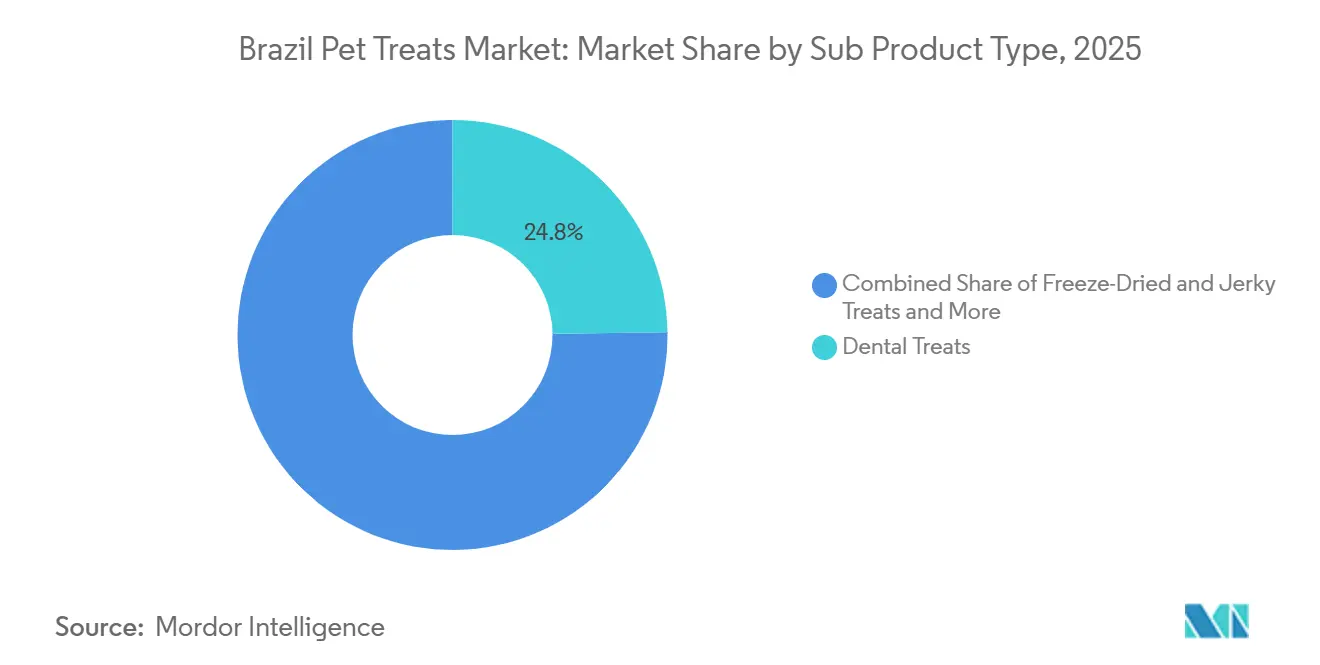
Dental Treats accounted for 24.8% of the Brazil pet treats market in 2025, making them the largest sub-product segment. Their market leadership is driven by their integration into daily pet care routines, as pet owners increasingly view these products as an essential component of oral hygiene rather than occasional rewards. According to Farmina, more than 80% of dogs aged two years and older experience some degree of periodontal disease, supporting sustained demand for dental treats and strengthening their adoption through veterinary recommendations and consumer awareness initiatives. Manufacturers have further expanded their product portfolios with breed- and life stage-specific variants, improving accessibility across different price points and consumer segments.
Freeze-Dried and Jerky Treats are projected to be the fastest-growing sub-product segment, registering a CAGR of 7.4% during 2026–2031. Growth is supported by increasing consumer preference for premium, clean-label, and minimally processed pet treats with high-protein formulations. Expansion of domestic production capacity is anticipated to improve product availability and affordability, enabling these products to reach a wider consumer base beyond premium urban retail channels. Meanwhile, crunchy treats continue to account for a significant share of everyday consumption due to their affordability, while soft and chewy treats remain popular for training and reward applications. Other treat categories, including functional and nutraceutical-style products, are gradually gaining traction as pet owners increasingly seek products that offer targeted health benefits.



By Pet Type: Dog Dominance Meets Rising Cat Category Momentum
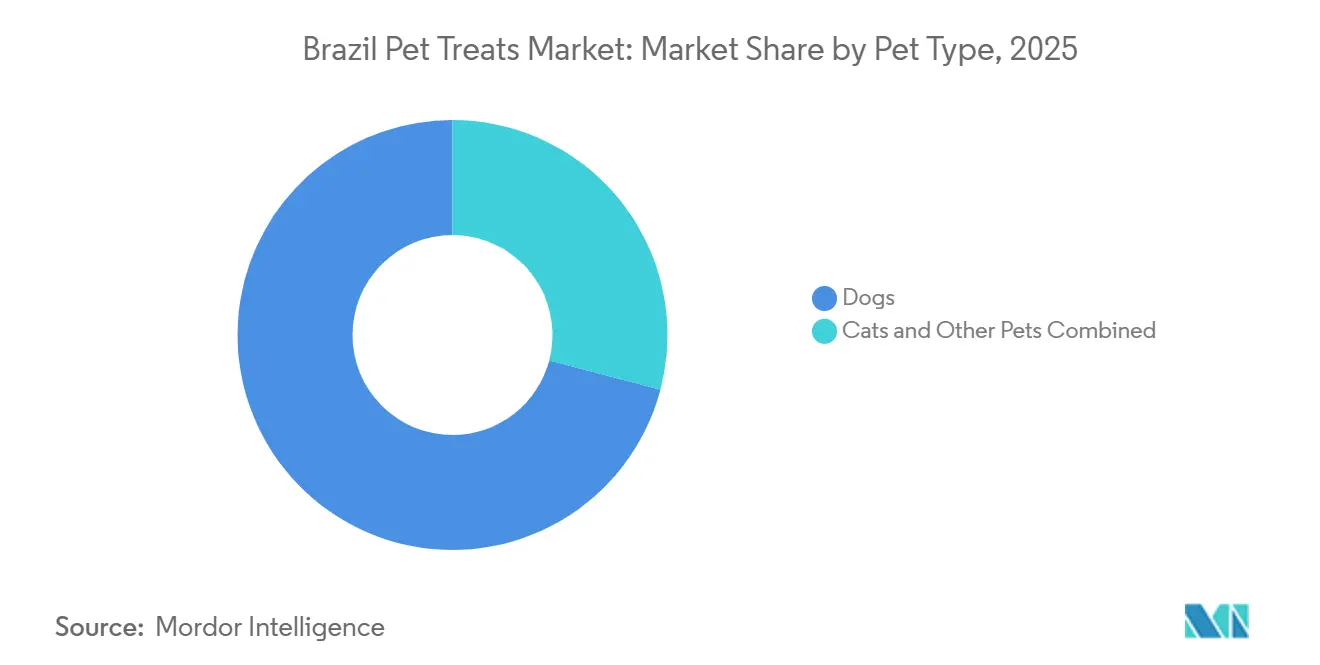
Dogs accounted for 70.9% of the Brazil pet treats market share in 2025, maintaining thier position as the largest pet type by a significant margin. The dog segment benefits from the widest product range in the Brazil pet treats market, including dental chews, training treats, freeze-dried formats, soft rewards, and functional wellness products. This extensive variety drives higher household spending, as owners have more occasions and reasons to purchase treats throughout the year. Additionally, dog owners are more influenced by veterinary recommendations, which accelerates the adoption of functional and premium products compared to less developed segments. As a result, the dog category serves as the primary revenue driver for both multinational and domestic brands.
Cats represent the fastest-growing pet type in the Brazil pet treats market, with a compound annual growth rate (CAGR) of 9.2% through 2031. The increasing popularity of urban apartment living and the perception of cats as lower-maintenance pets are driving faster feline adoption in major Brazilian cities, gradually shifting the focus of future category growth. PremieRpet’s acquisition and integration of Progato highlight the seriousness with which leading domestic players are approaching the cat segment. Cat treats require distinct characteristics in terms of flavor, moisture, and portion size, creating opportunities for differentiation through palatability engineering rather than simple product line extensions. Other pets remain a smaller segment of the Brazil pet treats market. However, specialty channels continue to support a stable niche among hobbyist pet owners, ensuring consistent demand within this category.
By Distribution Channel: Specialty Stores Lead While Digital Channels Surge
Specialty stores accounted for 50.4% of the Brazil pet treats market size in 2025, maintaining a significant lead over other distribution channels. These stores play a crucial role in the market as trained staff provide detailed explanations of functional claims, compare ingredient profiles, and guide pet owners toward repeatable use cases. According to data from Abinpet and Instituto Pet Brasil, small and medium-sized pet specialty shops represented 48.5% of all retail pet sales in 2024, generating BRL 36.6 billion (USD 6.3 billion), underscoring their importance in pet retail. PremieRpet’s emphasis on specialized distribution and veterinary engagement highlights how premium brands leverage this channel to build credibility. Additionally, the growth of larger specialty chains enhances the scale of this channel while retaining the advice-driven retail environment that supports the conversion of higher-value treats.
The online channel is the fastest-growing distribution route in the Brazil pet treats market, with a projected CAGR of 7.2% during 2026–2031. The increasing adoption of digital commerce is reshaping purchasing behavior by providing consumers with convenient access to a wider range of pet treats, including premium and specialized products. Online platforms eliminate physical shelf-space constraints, enabling emerging and niche brands to expand their national presence without extensive retail distribution networks. Subscription services, auto-replenishment options, and direct-to-consumer models further encourage repeat purchases by offering convenience and personalized shopping experiences, particularly when integrated with broader pet care services. While supermarkets, hypermarkets, convenience stores, and other offline channels continue to account for a significant share of value and impulse purchases, digital channels are increasingly preferred for premium pet treats due to their broader product assortment and ability to provide detailed product information and consumer reviews.
Geography Analysis
The southeast remained the leading region for premium consumption in the Brazil pet treats market in 2025, driven by São Paulo, Rio de Janeiro, and Minas Gerais. This region hosts the highest concentration of specialty pet retailers, veterinary clinics, and higher-income pet-owning households in the country. New product formats, functional claims, and premium price points typically gain traction here first due to advanced retail education and greater consumer willingness to pay. In January 2025, Mars opened a new distribution center in Extrema, Minas Gerais, to enhance supply to the South, Southeast, and Midwest regions, reflecting how major players are aligning logistics with premium demand. Similarly, Farmina established its South American distribution hub in Bragança Paulista, São Paulo, in September 2025, further solidifying the southeast’s position as the largest domestic demand center and an export platform.
The south is another key region in the Brazil pet treats market, with consumption patterns closely resembling those of the southeast. Paraná, Santa Catarina, and Rio Grande do Sul combine premium pet ownership, strong organized retail networks, and growing production infrastructure. Mars expanded its presence in this region by inaugurating a BRL 430 million wet food facility in Ponta Grossa, Paraná, in June 2025, enhancing production capabilities across the pet nutrition supply chain. Additionally, the Midwest and the interior of São Paulo are gaining importance as organized retail and digital access extend beyond the primary coastal metropolitan areas. PremieRpet’s participation in the SuperPet 2026 fair in Campinas highlighted the increasing focus on secondary-city demand and veterinary engagement.
The northeast and north regions represent the largest long-term volume growth opportunities in the Brazil pet treats market, despite lower premium penetration. Limited household incomes constrain demand for higher-priced products, and informal pet snack channels remain more prominent compared to the southeast. However, e-commerce platforms such as Petlove and Mercado Livre are bridging the physical access gap by offering premium assortments nationwide without requiring significant investments in physical stores. As pet ownership and urbanization continue to rise in secondary cities, treat demand is anticipated to grow, albeit with a delay compared to the southeast, resulting in a sequenced and regionally uneven growth trajectory.
Competitive Landscape
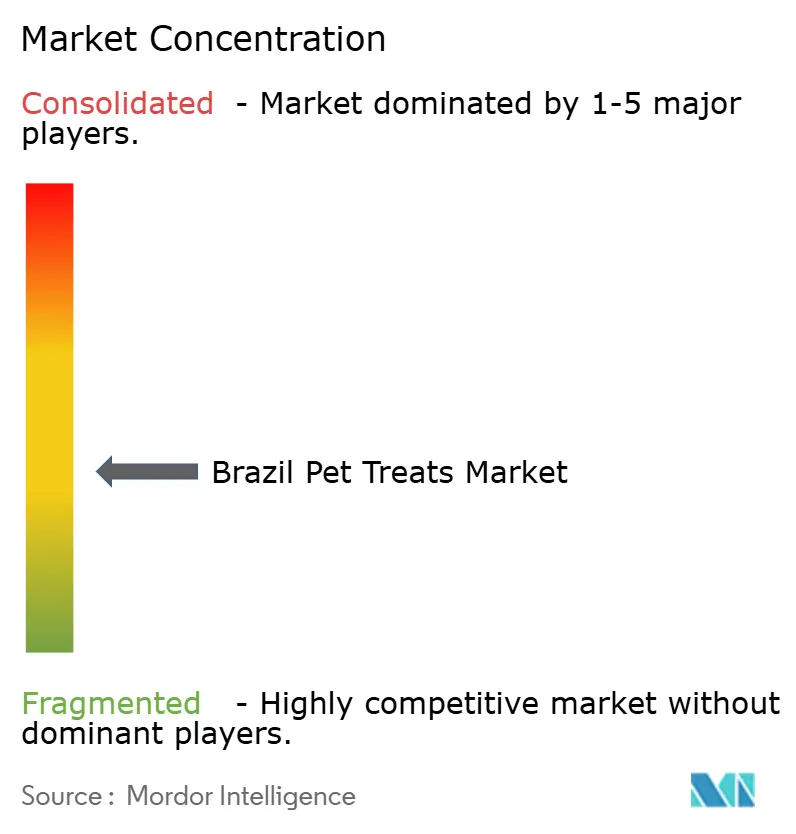
The Brazil pet treats market is moderately concentrated at the top, with fragmentation across the broader participant base. Mars, Incorporated and Nestlé S.A. hold leading positions due to their strong brand recognition and national distribution across specialty stores, mass retail, and digital channels. Mars further strengthened its position in January 2025 with the establishment of its Extrema distribution center, designed to support faster growth in treats and wet food across key regions. Domestic competitors, such as PremieRpet and BRF Pet, are also active, leveraging local scale, specialty relationships, and extensive manufacturing capabilities to maintain and expand their market presence. PremieRpet’s BRL 1.1 billion (USD 188 million) capacity expansion and BRF Pet’s 8% year-over-year growth in active clients during Q2 2025 highlight the robust competition within the domestic market.
A notable trend in the Brazil pet treats market is the increasing overlap between treat lines and functional nutrition. Farmina’s 2025 launch of 44 dental treat SKUs, including the Vet Life Dental Care range for veterinary applications, demonstrates how brands are focusing on building clinical credibility before scaling retail operations. This strategy supports premium pricing by shifting the narrative from indulgence to preventive care. Similar trends are evident in training treats, collagen-based formats, and other benefit-driven products aimed at fostering repeat demand through routine use. Opportunities remain significant in cat treats and multi-benefit functional formats, where no single player has yet established dominance at scale.
Retail consolidation is also reshaping bargaining power within the Brazil pet treats market. The merger of Petz and Cobasi to form União Pet has increased their influence across physical and digital specialty channels, enabling greater control over assortment, promotions, and private-label strategies. Additionally, digitally native platforms are gaining prominence by leveraging consumer data, subscription models, and direct engagement with repeat buyers. In the coming years, companies that integrate local sourcing, clinical positioning, and enhanced digital execution are anticipated to strengthen their market position more effectively than those relying solely on shelf presence.
Brazil Pet Treats Industry Leaders
Mars, Incorporated
Farmina Pet Foods
BRF Pet S.A. (BRF S.A.)
Nestlé Purina PetCare (Nestlé S.A.)
PremieRpet (Grandfood Indústria e Comércio S.A.)
- *Disclaimer: Major Players sorted in no particular order

Recent Industry Developments
- April 2026: PremieRpet sponsored the SuperPet 2026 fair in Campinas, São Paulo, as part of a deliberate strategy to expand brand presence and veterinary professional engagement beyond the major capitals. The move signals growing organized pet retail investment in Brazil's interior and an intent to capture premium treats demand in less saturated secondary markets.
- December 2025: Petz and Cobasi finalized their merger in December 2025, forming União Pet, the largest specialty pet retail group in Brazil, with a combined revenue of BRL 7.9 billion (approximately USD 1.35 billion). Digital sales represented 40.9% of total revenue, reflecting an 11.7% year-over-year growth, which has significantly driven the transition toward online treat purchasing. The merger strengthens buyer power across both physical and digital specialty channels.
- November 2025: In 2025, PremieRpet achieved Carbon Free certification, offsetting over 4,000 metric tons of CO₂ and planting more than 600 native trees. This milestone made it the first Brazilian pet food brand to attain full carbon neutrality under this standard. The certification applies to all products in the PremieR, GoldeN, VittA Natural, and Natoo lines, enhancing its appeal among environmentally conscious urban pet owners.
- January 2025: Mars has inaugurated a new distribution center in Extrema, Minas Gerais, with an investment of BRL 30 million (USD 5.1 million). The facility is designed to distribute over 70,000 metric tons of products annually, aiming to drive growth in the treats and wet food categories across Brazil's South, Southeast, and Midwest regions.


Brazil Pet Treats Market Report Scope
Pet treats are snack and reward products formulated for companion animals and are used for indulgence, training, oral care, and functional health support. The Brazil pet treats market is segmented by sub product type (Crunchy Treats, Dental Treats, Freeze-Dried and Jerky Treats, Soft and Chewy Treats, and Other Treats), by pet type (Dogs, Cats, and Other Pets), and by distribution channel (Convenience Stores, Online Channel, Specialty Stores, Supermarkets and Hypermarkets, and Other Channels), and by geography (Brazil). The market forecasts are provided in terms of value (USD).
| Crunchy Treats |
| Dental Treats |
| Freeze-Dried and Jerky Treats |
| Soft and Chewy Treats |
| Other Treats |
| Cats |
| Dogs |
| Other Pets |
| Convenience Stores |
| Online Channel |
| Specialty Stores |
| Supermarkets and Hypermarkets |
| Other Channels |
| By Sub Product | Crunchy Treats |
| Dental Treats | |
| Freeze-Dried and Jerky Treats | |
| Soft and Chewy Treats | |
| Other Treats | |
| By Pets | Cats |
| Dogs | |
| Other Pets | |
| By Distribution Channel | Convenience Stores |
| Online Channel | |
| Specialty Stores | |
| Supermarkets and Hypermarkets | |
| Other Channels |


Key Questions Answered in the Report
What is the forecasted value of Brazil pet treats by 2031?
The Brazil pet treats market is forecast to reach USD 1.85 billion by 2031, rising from USD 1.36 billion in 2026 at a 6.37% CAGR over 2026-2031.
Which sub product type leads sales in Brazil pet treats?
Dental Treats led in 2025 with a 24.8% share, supported by repeat use and strong veterinary relevance.
Why are dental and functional treats gaining traction in Brazil?
Owners increasingly use treats for oral care, joint support, digestive support, and training, and veterinary recommendations are helping these products become routine purchases.
What is the main challenge for premium treat brands in Brazil?
High taxes, inflation pressure, and consumer price sensitivity continue to limit premium penetration, especially outside major metro areas where informal alternatives are more common.
Page last updated on:





