
Brazil Pet Nutraceuticals Market Size and Share
Market Overview
| Study Period | 2021 - 2031 |
|---|---|
| Forecast Data Period | 2026 - 2031 |
| Base Year Market Size (2025) | USD 247.70 Million |
| Market Size (2026) | USD 267.70 Million |
| Market Size (2031) | USD 394.60 Million |
| Growth Rate (2026 - 2031) | 8.10 % |
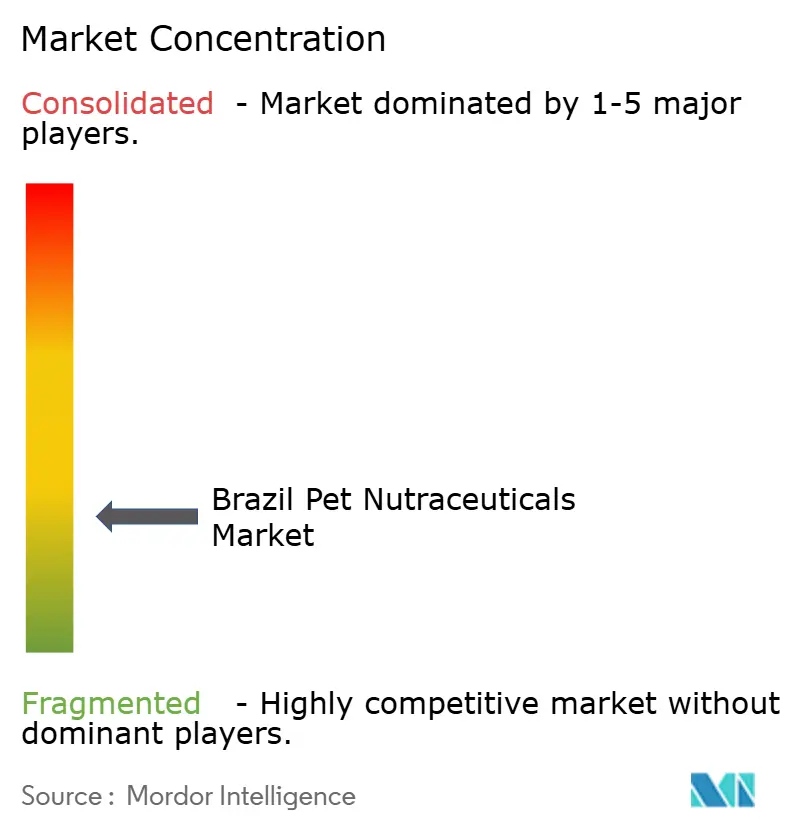
| Market Concentration | Low |
Major Players *Disclaimer: Major Players sorted in no particular order Image © Mordor Intelligence. Reuse requires attribution under CC BY 4.0. | |
Brazil Pet Nutraceuticals Market Analysis by Mordor Intelligence
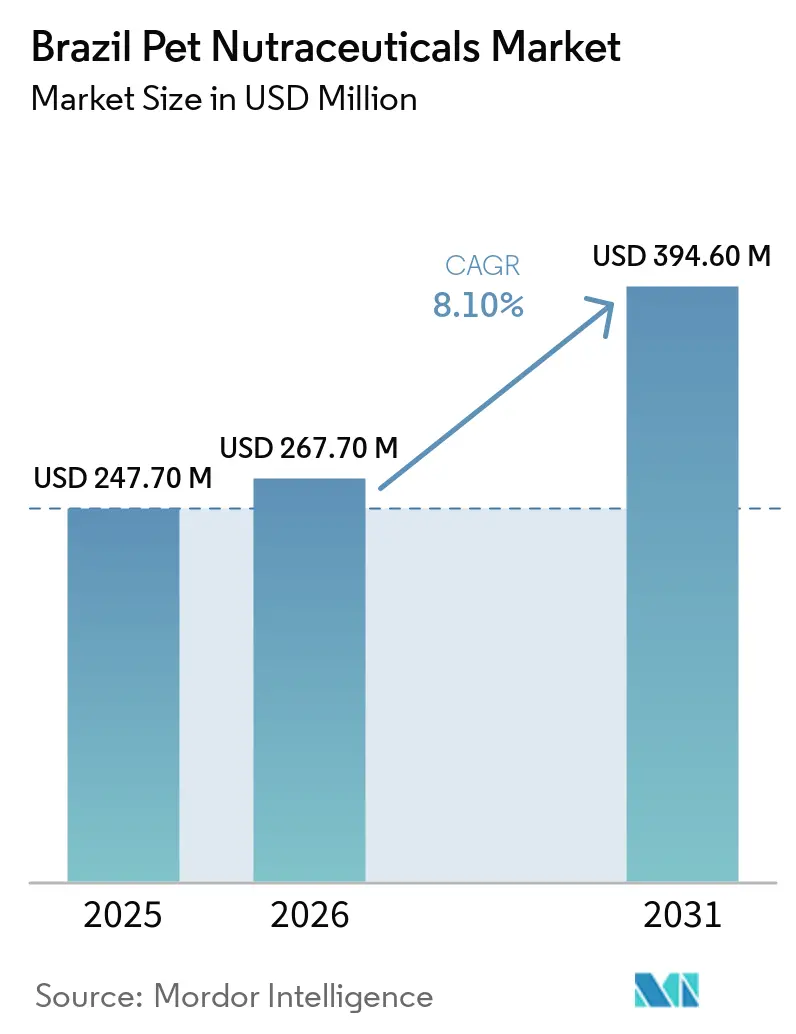
The Brazil pet nutraceuticals market size is anticipated to increase from USD 247.70 million in 2025 to USD 267.70 million in 2026 and reach USD 394.60 million by 2031, growing at a CAGR of 8.10% over 2026-2031. Brazil remains one of the largest pet markets globally. According to the United States Department of Agriculture (USDA), there are four pets for every five people in Brazil. Unlike China and the United States, most Brazilians do not use prepared pet food, highlighting significant growth potential in this segment. In 2024, the United States exported USD 9.0 million worth of dog and cat food to Brazil, supporting a broad consumer base and steady demand for preventive animal health products[1]. Smaller households and a higher emotional role for companion animals continue to support planned spending on wellness products, especially when owners want daily solutions that may prevent more costly treatment later. Veterinary guidance, broader digital access, and more localized product development are widening adoption across the Brazilian pet nutraceuticals market. Tax pressure on imported inputs and tighter compliance rules still limit price flexibility, which favors companies that can formulate, validate, and supply products locally.
Key Report Takeaways
- By sub-product, vitamins and minerals led the largest segment, with 26.9% of the Brazil pet nutraceuticals market share in 2025, and are the fastest-growing, forecast to grow at an 8.5% CAGR from 2026 to 2031.
- By pet type, dogs captured the largest share, 58.1% of the Brazil pet nutraceuticals market size in 2025, whereas cats recorded the fastest growth, with a projected CAGR of 12.1% through 2026 to 2031.
- By distribution channel, specialty stores held the largest share, accounting for 40.0% of the Brazil pet nutraceuticals market in 2025, whereas the online channel is the fastest-growing, with a 9.1% CAGR between 2026 and 2031.
Note: Market size and forecast figures in this report are generated using Mordor Intelligence’s proprietary estimation framework, updated with the latest available data and insights as of January 2026.
Brazil Pet Nutraceuticals Market Trends and Insights
Drivers Impact Analysis*
| Driver | (~) % Impact on CAGR Forecast | Geographic Relevance | Impact Timeline |
|---|---|---|---|
| Rising Pet Humanization and Preventive Wellness Spending | +2.1% | National, concentrated in Southeast and South | Medium term (2-4 years) |
| Veterinary Recommendation of Functional Ingredients | +1.4% | National, strongest in Southeast and Center-West | Medium term (2-4 years) |
| Premiumization of Soft Chews and Targeted Formulations | +1.2% | Southeast and South, with spillover to Northeast | Short term (≤ 2 years) |
| Expansion of E-commerce and Subscription Refill Models | +0.9% | Southeast and South, expanding to Northeast and Center-West | Short term (≤ 2 years) |
| Senior Pet Population Requiring Joint and Digestive Support | +0.7% | National, strongest in Southeast | Medium term (2-4 years) |
| Local Manufacturing and Formulation Localization | +0.5% | Southeast and South | Long term (≥ 4 years) |
| Source: Mordor Intelligence | |||
Rising Pet Humanization and Preventive Wellness Spending
Brazil is home to one of the largest pet populations in South America, with over 160 million pets. This includes dogs, cats, and other animals, which are regarded as members of Brazilian families, according to the latest survey by the Brazilian Association of Pet Product Industries[2]. During the same period, pet density per household increased, which shows that companion animals now play a larger role in family life and daily spending priorities. This change matters for the Brazil pet nutraceuticals market because preventive supplement use depends on owners choosing long-term wellness spending rather than waiting for acute illness. The category also benefits from buying habits that mirror human wellness routines, where probiotics, joint support, and calming products are used as part of regular care. That keeps demand more stable than impulse-led pet spending and supports broader adoption across the Brazil pet nutraceuticals market.
Veterinary Recommendation of Functional Ingredients
Veterinary advice remains one of the strongest purchase triggers in the Brazil pet nutraceuticals market, especially in joint, digestive, immune, and skin-related uses. Owners often accept daily supplementation more quickly when the product is introduced during a clinic visit and tied to a visible health need. National Health Surveillance Agency (ANVISA) approved measures in October 2024 that allow cannabis-based products for animals to be regularized and prescribed under controlled protocols, which widened the functional ingredient set available to licensed veterinarians.This matters because categories with clearer professional backing tend to move ahead of general wellness formulas that rely mostly on broad consumer messaging. Companies that build local clinical familiarity and direct veterinary relationships are therefore better placed to gain recurring demand in the Brazil pet nutraceuticals market.
Premiumization of Soft Chews and Targeted Formulations
Soft chews have become an important growth engine because they reduce the two most common compliance problems, taste rejection and administration difficulty. This has helped the Brazil pet nutraceuticals market move beyond basic tablets into more owner-friendly formats that fit daily routines. Premium delivery formats also support higher average selling prices because owners are often willing to pay more for products that are easier to use consistently. As a result, the category is shifting toward targeted formulas that combine functionality, convenience, and stronger perceived product value.
Expansion of E-Commerce and Subscription Refill Models
Digital distribution has changed how consumers discover and reorder supplements across the Brazil pet nutraceuticals market. According to the International Trade Association, Brazil continues to experience rapid e-commerce growth, and the sector reached USD 36.3 billion in revenue, including pet food, in 2025[3]. This matters because online channels can reach cities where dedicated pet specialty retail remains limited. Subscription refill models are also well-suited to daily-use categories such as probiotics, omega-3, and joint support, where reorder discipline shapes long-term outcomes. PIX-based payments and easier product comparison have reduced transaction friction and widened access to the Brazilian pet nutraceutical market beyond the largest metro areas.
Restraints Impact Analysis*
| Restraint | (~) % Impact on CAGR Forecast | Geographic Relevance | Impact Timeline |
|---|---|---|---|
| High Tax Burden on Imported Inputs and Finished Goods | -1.4% | National, intensified in the Northeast and the Center-West | Long term (≥ 4 years) |
| Regulatory Complexity Across the Ministry of Agriculture and Livestock (MAPA) And Brazilian Health Regulatory Agency / National Health Surveillance Agency (ANVISA) Requirements | -1.1% | National | Medium term (2-4 years) |
| Uneven Consumer Education Outside Major Urban Centers | -0.8% | Northeast, North, and rural Center-West | Medium term (2-4 years) |
| Limited Evidence-Based Standardization for Certain Claims | -0.5% | National | Long term (≥ 4 years) |
| Source: Mordor Intelligence | |||
High Tax Burden on Imported Inputs and Finished Goods
The Brazil pet nutraceuticals market still faces a cost disadvantage because many specialized active ingredients and finished products rely on imported supply. Industry bodies continue to describe tax pressure as the main structural barrier to faster premiumization across the category. That burden is heavier for smaller domestic brands, which usually have less room to offset import and compliance costs through scale. Senate discussions since 2024 have kept tax relief for the pet sector on the public agenda, which shows the issue remains unresolved at the policy level. Until the cost structure improves, price sensitivity will continue to limit the full reach of the Brazil pet nutraceuticals market.
Uneven Consumer Education Outside Major Urban Centers
Awareness of nutraceutical products falls outside major urban centers, which keeps the Brazil pet nutraceuticals market more concentrated than the country’s pet base would suggest. Consumers in secondary and interior cities often have fewer opportunities to learn about probiotic, mobility, and calming products through clinics or specialty stores. This means the barrier is not only price, but also product understanding and confidence in use. E-commerce helps with access, but digital shelves do not always explain benefits as clearly as a veterinarian or trained specialty retailer. Brands still need education-led selling models if they want adoption to spread more evenly across Brazil.
*Our forecasts treat driver/restraint impacts as directional, not additive. The impact forecasts reflect baseline growth, mix effects, and variable interactions.
Segment Analysis
By Sub Product: Vitamins and Minerals Anchors Revenue, and Drive Momentum
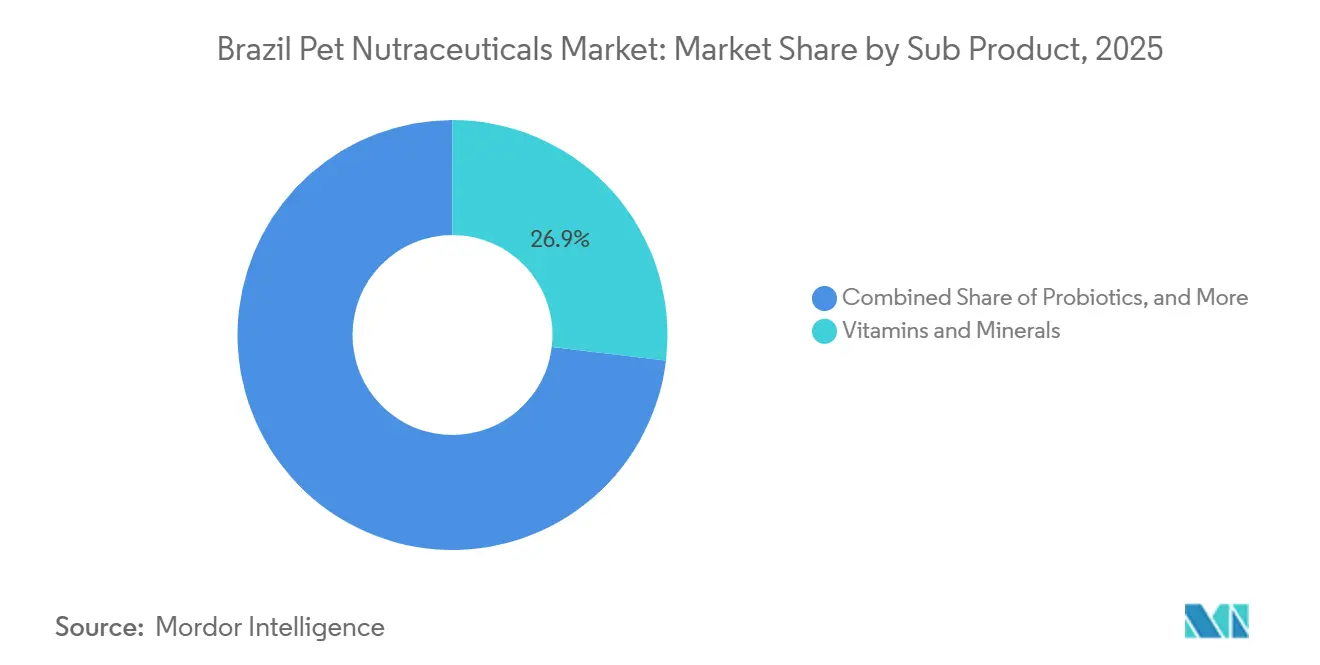
Vitamins and minerals dominated the Brazilian pet nutraceuticals market, holding the largest segment share of 26.9% in 2025. This segment is also projected to grow at the fastest rate, with a CAGR of 8.5% from 2026 to 2031. The market is growing due to increased pet humanization, greater awareness of preventive healthcare, and demand for products that enhance immunity, bone health, skin and coat condition, and overall wellness. Pet owners prefer functional nutrition solutions enriched with vitamins A, D, E, and B-complex, as well as minerals such as calcium, phosphorus, zinc, and selenium. These are incorporated into supplements, treats, and premium pet foods to address health needs across life stages. In April 2026, Purina relaunched its Pro Plan range in Brazil with formulations featuring functional ingredients targeting immunity, digestion, mobility, urinary health, and overall well-being, reflecting the market's preference for enriched pet nutrition products.
Omega-3 Fatty Acids also remain a strong part of demand, especially among owners seeking skin, coat, and heart support for senior pets. Calming and Behavioral Supplements, Skin and Coat Supplements, and Multivitamins continue to work as category entry points for owners who are still early in their preventive care journey. Over the forecast period, the segment is projected to move toward multi-benefit formulas that reduce the number of products owners need to administer each day. That should keep growth broad-based, while still leaving Joint and Mobility and digestive support at the center of the Brazil pet nutraceuticals market.

By Pet Type: Dogs Dominant, Cat Market Outpaces On Growth Rate
Dogs accounted for the largest market share, representing 58.1% of the Brazil pet nutraceuticals market in 2025, keeping them well ahead of all other pet types. This reflects both species scale and a longer clinical tradition of canine supplementation across joint, digestive, skin, and immune uses. According to World Population statistics, in 2025, Brazil had a dog population of 67.8 million, underscoring why most established SKUs remain dog-focused in formulation and dosage. Dogs generally visit veterinarians more frequently than other companion animals, leading to higher diagnosis rates of age-related conditions such as osteoarthritis, obesity, digestive disorders, and dermatological issues. This trend drives increased veterinarian-recommended use of nutraceutical supplements, supporting consistent demand for canine-specific products.
The cat segment is forecast to grow the most, with a projected CAGR of 12.1% from 2026 to 2031, making it the fastest-growing pet type in the Brazil pet nutraceuticals market. This faster feline growth is exposing a product gap because many supplements on the market still lean toward canine taste profiles, format choices, and dosage logic. Younger urban households are helping close that gap because cat ownership fits smaller homes and daily routines with less space. That supports future demand for cat-specific probiotics, calming products, immune support, and taurine-linked formulations. Small Mammals and Birds remain much smaller, but they add a long-tail opportunity in urban niches and university-centered consumer pockets. Taken together, pet type dynamics show that the Brazil pet nutraceuticals market is still dog-led today but is becoming more balanced as feline demand rises.
By Distribution Channel: E-Commerce Accelerates, and Hold Share
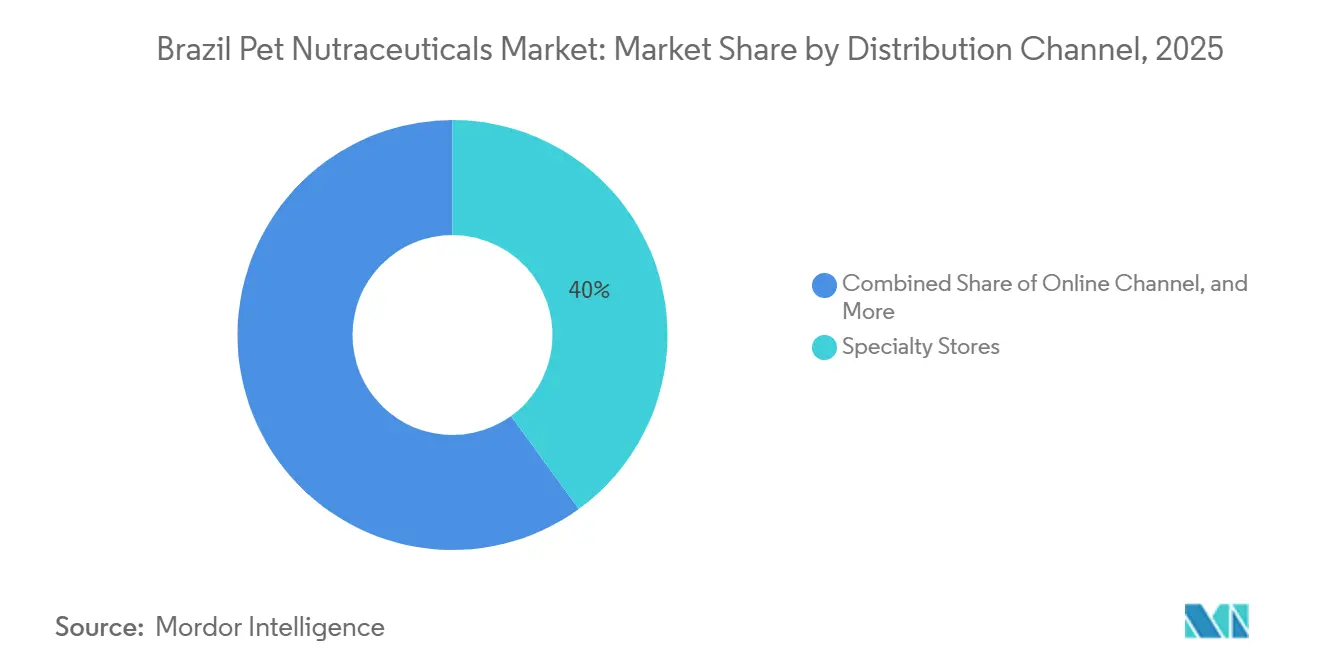
Specialty Stores held the largest share, contributing 40.0% to the Brazil pet nutraceuticals market in 2025, making them the largest retail route in the category. Their lead comes from trained staff, stronger category presentation, and the ability to convert advice into immediate purchase. Specialized stores often offer a wider range of premium, targeted nutraceutical products than mass retail channels. These products address specific needs such as joint health, digestive support, skin and coat care, and age-related wellness. The broader product selection enhances consumer trust and promotes repeat purchases through personalized recommendations.
The online channel is projected to be the fastest-growing channel, with a 9.1% CAGR between 2026 and 2031. The market is experiencing growth driven by rising e-commerce adoption, increased consumer preference for convenience, and the ability to compare products, prices, and reviews across brands. Online platforms offer access to a broader selection of specialized nutraceutical products, including breed-, age-, and condition-specific supplements, which are often unavailable in physical stores. Additionally, subscription-based purchasing options and home delivery services are enhancing customer retention and driving recurring purchases, particularly among pet owners who require long-term nutritional support for their pets.
Geography Analysis
The Southeast region held a significant share of the Brazil pet nutraceuticals market in 2025, establishing itself as the primary revenue center for the category. This region benefits from a dense veterinary infrastructure, a stronger presence of premium retail outlets, and a higher concentration of manufacturers and distributors. These factors create a synergistic effect, as product availability, clinic education, and consumer willingness to pay are more robust within this regional cluster. The South region also contributes significantly, supported by strong household purchasing power and a well-developed pet specialty retail network. Together, these two regions form the strongest base for premium products, new launches, and veterinary-driven adoption in the Brazil pet nutraceuticals market.
The Center-West region is the fastest-growing area, driven by increasing urbanization and rising household incomes linked to agribusiness-led local economies. E-commerce plays a critical role in this region, as digital channels provide access that physical retail networks have yet to achieve at scale. As online product availability improves, the Center-West region is beginning to exhibit purchasing behavior similar to that of the Southeast.
In the Northeast, urban growth in cities such as Fortaleza, Recife, and Salvador is driving broader demand. Education and veterinary access remain more influential than income levels alone in shaping market growth. In the North, logistical challenges and higher final consumer pricing continue to pose barriers compared to other regions. These trends indicate that the Brazil pet nutraceuticals market has significant potential for geographic expansion as digital access improves and veterinary education extends beyond the largest urban areas. The regional outlook remains positive, with the Southeast and South regions providing scale, while the Center-West, Northeast, and North regions offer opportunities for the next phase of growth.
Competitive Landscape
The Brazil pet nutraceuticals market remained fragmented in 2025, with the top five companies accounting for a smaller market share. Nestlé Purina and Mars, Incorporated formed the leading multinational tier, supported by a wide distribution reach and strong veterinary channel visibility. Vetoquinol S.A. stood out among domestic players for combining local operating knowledge with faster adaptation to Brazilian clinical and channel needs. Hill’s Pet Nutrition, Inc. also remained relevant where therapeutic nutrition and veterinarian recommendations matter most. This structure gives the Brazil pet nutraceuticals market a clear set of leaders, but it is not closed to specialized challengers.
Technology and direct engagement are also shaping competition. Farmina’s rollout of Farmina Genius AI gives the company a tool for data capture and more personalized pet care guidance, which can support better product matching and stronger owner retention. At the same time, white space remains visible in cat-specific formulations, secondary city distribution, and multi-benefit supplements that simplify daily use. That means large brands still have room to deepen their leadership, while focused specialists can expand by solving unmet needs more precisely. The Brazil pet nutraceuticals market therefore rewards scale, but it also leaves space for companies that can move faster on formulation, education, and veterinary trust.
An increasingly significant competitive factor is the growing focus on science-backed formulations and partnerships with veterinarians. Companies are allocating resources to clinical research, educational programs, and professional outreach efforts to enhance their credibility with veterinary practitioners, who play a key role in supplement recommendations. As pet owners become more knowledgeable and prioritize evidence-based health solutions, brands that can effectively demonstrate product efficacy, ingredient quality, and adherence to regulatory standards are positioned to achieve a competitive edge.
Brazil Pet Nutraceuticals Industry Leaders
-
Nestlé Purina PetCare
-
Vetoquinol S.A.
-
Hill’s Pet Nutrition, Inc.
-
ADM
-
Mars, Incorporated
- *Disclaimer: Major Players sorted in no particular order
Recent Industry Developments
- May 2026: DSM-Firmenich has inaugurated NextGen Itatiba, a pet nutrition premix facility in Itatiba, São Paulo, Brazil. The facility focuses on producing nutraceuticals for cats and dogs and serves as the company's main manufacturing and supply center for pet nutrition in South America.
- March 2026: Nestlé Purina inaugurated a BRL 2.5 billion (USD 473.5 million) wet pet food and nutrition factory, including nutraceuticals, in Vargeão, Santa Catarina, Brazil. The facility operates on 100% renewable energy and incorporates AI, robotics, and IoT systems for real-time quality monitoring. It also functions as an export hub for South America.
- May 2025: Mars, Incorporated has enhanced its distribution network in Brazil by opening a new distribution center in Extrema, Minas Gerais, with an investment of BRL 30 million (USD 5.5 million). This development is intended to drive growth in pet nutraceuticals, snacks, and wet food, in line with the company's strategy to expand supplementation products in the Brazilian market.
Brazil Pet Nutraceuticals Market Report Scope
Pet nutraceuticals are products made from food sources that offer health benefits beyond basic nutrition for animals, including dogs, cats, birds, and other pets. The Brazil pet nutraceuticals market report is segmented by sub-product (milk bioactives, omega-3 fatty acids, probiotics, proteins and peptides, vitamins and minerals, and other nutraceuticals), by pets (cats, dogs, and other pets), and by distribution channel (convenience stores, online channel, and more). The market forecasts are provided in terms of Value (USD) and Volume (Metric Tons).
| Vitamins and Minerals |
| Probiotics |
| Omega-3 Fatty Acids |
| Proteins and Peptides |
| Milk Bioactives |
| Other Nutraceuticals |
| Dogs |
| Cats |
| Other Pets |
| Convenience Stores |
| Online Channel |
| Specialty Stores |
| Supermarkets/Hypermarkets |
| Other Channels |
| By Sub Product | Vitamins and Minerals |
| Probiotics | |
| Omega-3 Fatty Acids | |
| Proteins and Peptides | |
| Milk Bioactives | |
| Other Nutraceuticals | |
| By Pet Type | Dogs |
| Cats | |
| Other Pets | |
| By Distribution Channel | Convenience Stores |
| Online Channel | |
| Specialty Stores | |
| Supermarkets/Hypermarkets | |
| Other Channels |
Key Questions Answered in the Report
What is the current value of the Brazil pet nutraceuticals market?
The Brazil pet nutraceuticals market stands at USD 267.70 million in 2026.
Which pet type is growing fastest in Brazil pet nutraceuticals market?
Cats are the fastest-growing pet type, with a projected 12.1% CAGR from 2026 to 2031.
Which sales channel is expanding fastest for pet nutraceuticals market in Brazil?
E-commerce is the fastest-growing channel, with a 9.1% CAGR from 2026 to 2031.
Which region offers the strongest future growth opportunity in Brazil?
Center-West offers the highest regional growth outlook helped by urbanization and stronger online access to premium products.