
Brachytherapy Seeds Market Size and Share
Market Overview
| Study Period | 2020 - 2031 |
|---|---|
| Market Size (2026) | USD 169.25 Million |
| Market Size (2031) | USD 238.40 Million |
| Growth Rate (2026 - 2031) | 7.09 % |
| Fastest Growing Market | Asia Pacific |
| Largest Market | North America |
| Market Concentration | Medium |
Major Players *Disclaimer: Major Players sorted in no particular order Image © Mordor Intelligence. Reuse requires attribution under CC BY 4.0. | |
Brachytherapy Seeds Market Analysis by Mordor Intelligence
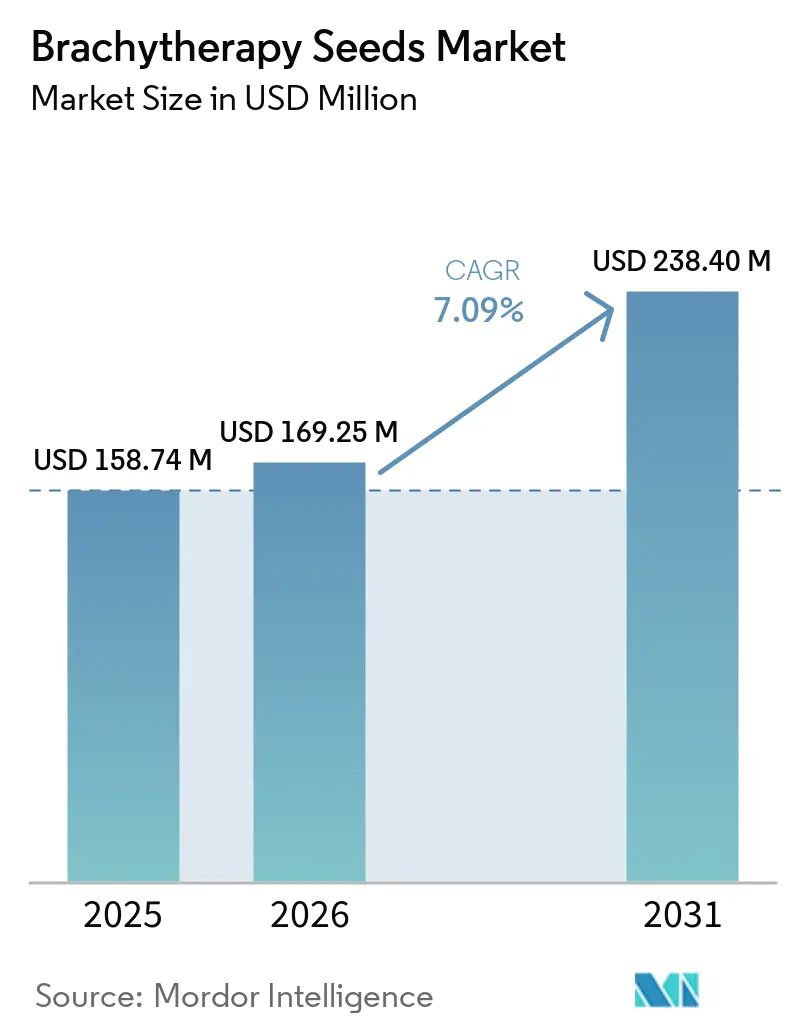
The Brachytherapy Seeds Market size is projected to be USD 158.74 million in 2025, USD 169.25 million in 2026, and reach USD 238.40 million by 2031, growing at a CAGR of 7.09% from 2026 to 2031.
Sustained clinical endorsement for low-dose-rate (LDR) seed implants in localized prostate cancer protects a core revenue stream even as stereotactic body radiation therapy (SBRT) and robotic prostatectomy encroach on case volumes. Isotope incumbency, particularly Iodine-125 (I-125), underpins predictable procurement cycles for North American and European hospitals, while format innovation—preloaded needles, stranded seeds, and collagen-embedded tiles—raises procedure efficiency and safety. Asian manufacturers have improved GMP production of I-125, Palladium-103 (Pd-103), and Cesium-131 (Cs-131) seeds, reshaping the competitive cost curve and accelerating adoption across Japan, China, and India. Workflow gains from Radioactive Seed Localization (RSL) in breast surgery and collagen-embedded Cs-131 tiles in neuro-oncology create diversified demand beyond prostate applications, yet supply-chain fragility for short-lived isotopes and rising quality-assurance (QA) obligations temper growth.
Key Report Takeaways
- By isotope type, I-125 accounted for 40.02% of the brachytherapy seed market share in 2025, and Cesium-131 (Cs-131) is projected to grow at a 9.41% CAGR through 2031.
- By seed configuration, loose seeds accounted for 35.67% of the brachytherapy seed market share in 2025, and stranded/linked seeds is projected to grow at a 10.41% CAGR through 2031.
- By application, prostate cancer generated 42.90% of 2025 revenues, whereas brain tumors are forecast to post the fastest 8.45% CAGR to 2031, lifted by Cs-131 collagen-tile adoption.
- By end user, hospitals accounted for 55.65% of the brachytherapy seed market share in 2025, and cancer centers/specialty clinics are projected to grow at a 9.65% CAGR through 2031.
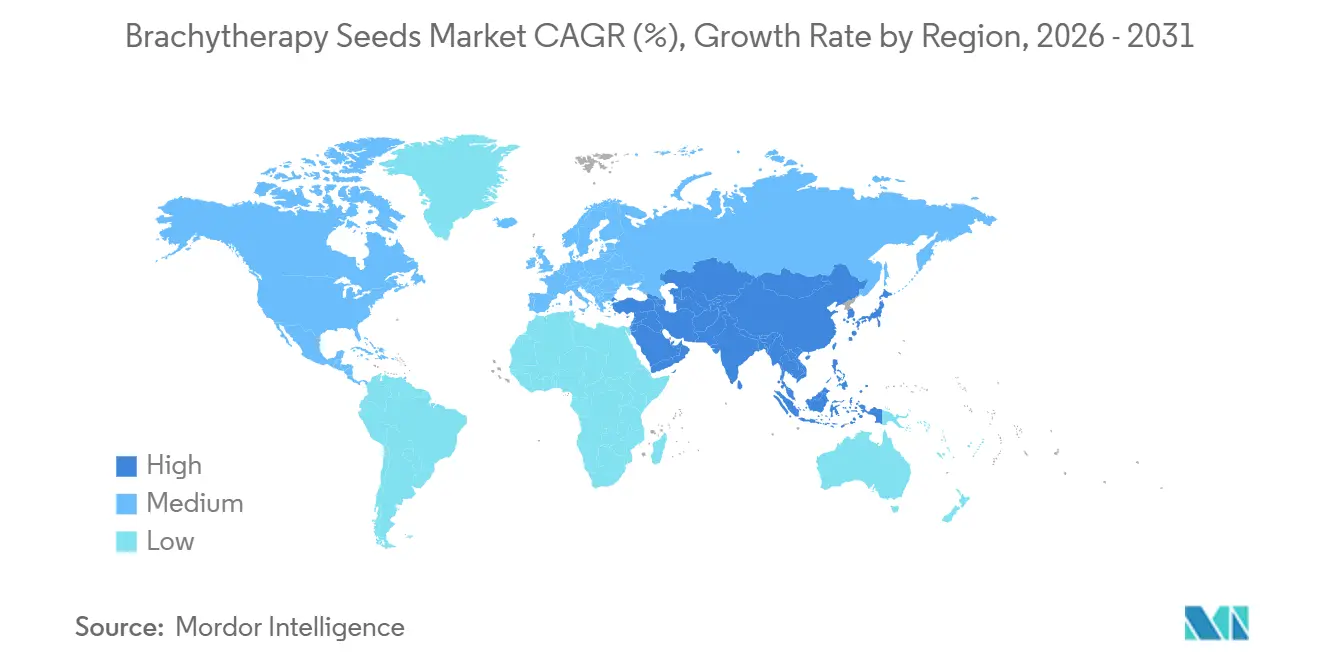
- By geography, North America led the market with 45.35% of 2025 revenue, whereas Asia-Pacific is expected to register the highest CAGR of 9.12% through 2031.
Note: Market size and forecast figures in this report are generated using Mordor Intelligence’s proprietary estimation framework, updated with the latest available data and insights as of January 2026.
Market Trends and Insights
Drivers Impact Analysis of Brachytherapy Seeds Market*
| Driver | (~) % Impact on CAGR Forecast | Geographic Relevance | Impact Timeline |
|---|---|---|---|
| Guideline-Backed Use in Localized Prostate Cancer | +2.1% | North America, Europe, APAC | Long term (≥ 4 years) |
| RSL Adoption in Breast Surgery | +1.3% | North America expanding to Europe & APAC | Medium term (2-4 years) |
| Cs-131 Neuro-Oncology Expansion | +1.2% | United States, Europe, APAC | Medium term (2-4 years) |
| Preloaded Needles and Stranded Seeds | +0.9% | Global, early uptake in North America & Japan | Short term (≤ 2 years) |
| North American installed base | +0.8% | United States and Canada | Long term (≥ 4 years) |
| 3D-Printed Templates in Asia | +0.7% | China, India, Southeast Asia | Medium term (2-4 years) |
| Source: Mordor Intelligence | |||
Guideline-Backed Use in Localized Prostate Cancer Sustains Core Demand
National Comprehensive Cancer Network (NCCN) and American Urological Association guidelines continue to list LDR implants as definitive monotherapy for low- and favorable-intermediate-risk prostate cancer, anchoring core procedure volumes [1]National Comprehensive Cancer Network, “Clinical Practice Guidelines in Oncology—Prostate Cancer,” nccn.org. The RTOG-9805 study showed an 8-year biochemical-failure rate of 8% with I-125 monotherapy at 145 Gy, matching radical prostatectomy outcomes with lower incontinence incidence. German reference centers such as Emmendingen report 90% cure rates across over 600 patients, highlighting the modality’s durability. Bundled German reimbursement of about EUR 19,560 (USD 21,100) per procedure sits well below typical SBRT or robotic surgery costs, preserving its attractiveness in value-based payment systems. Despite these strengths, urologists remain cautious amid SBRT’s five-fraction convenience, emphasizing the need for head-to-head long-term control data.
RSL Adoption in Breast Surgery Unlocks Adjacent Revenue Streams
Randomized controlled trials show that RSL with low-activity I-125 seeds improves patient satisfaction and eliminates same-day radiology appointments compared with wire localization [2]American Society for Radiation Oncology, “Guideline for Radioactive Seed Localization,” astro.org. The U.S. FDA cleared IsoAid’s diagnostic-activity seeds with 180-day sterility, enabling flexible block scheduling for breast centers and reducing OR overtime. Hospitals implementing RSL report smoother workflows and reduced anxiety-related cancellations, translating into faster room turnover and higher OR throughput. Scaling RSL, however, requires MRI-compatibility checks, seed accountability logs, and radiation-safety training—barriers for community centers lacking dedicated medical physicists.
Cs-131 Neuro-Oncology Expansion
Cs-131’s 9.7-day half-life enables rapid dose delivery, making it well-suited for aggressive brain tumors where swift local control is critical. GT Medical’s GammaTile, a collagen-embedded Cs-131 platform, achieved adoption at 535 U.S. sites by late 2025 and demonstrated a median overall survival of 27.3 months in high-grade gliomas, outpacing historical controls. Perspective Therapeutics sources Cs-131 from Russian reactors, but 2024 SEC filings reveal production interruptions due to sanctions and maintenance cycles, highlighting supply-chain concentration risk. Vertical integration raises entry barriers but amplifies geopolitical exposure.
Workflow and Safety Gains from Preloaded Needles and Stranded Seeds
Nuclear Regulatory Commission (NRC) event reports continue to spotlight seed leakage and misadministration, driving interest in preloaded or stranded delivery systems that lower occupational dose and prevent migration [3]U.S. Nuclear Regulatory Commission, “Event Notification Reports,” nrc.gov. IsoAid’s Secure Strand demonstrates 78% higher resistance to seed movement than standard strands, helping physicians meet post-implant dosimetry targets at first imaging. The Mick applicator allows surgeons to deploy up to 100 seeds without direct handling, thereby shortening anesthesia time and minimizing hand-dose exposure. Japanese centers cite the inability to resterilize preloaded cartridges as a barrier to in-house assay, prompting the development of automated non-sterile measurement stations. These innovations trade higher per-seed pricing for measurable QA and efficiency gains.
Restraints Impact Analysis of Brachytherapy Seeds Market*
| Restraint | (~) % Impact on CAGR Forecast | Geographic Relevance | Impact Timeline |
|---|---|---|---|
| SBRT and robotic surgery substitution | −2.3% | Global, most acute in United States | Short term (≤ 2 years) |
| Radioisotope supply-chain fragility | −1.1% | Global, pronounced in Japan & emerging markets | Medium term (2-4 years) |
| RSL compliance hurdles | −0.6% | North America & Europe | Medium term (2-4 years) |
| QA incidents and leakage reports | −0.4% | Global, regulatory scrutiny in United States & Japan | Short term (≤ 2 years) |
| Source: Mordor Intelligence | |||
Modality Substitution Erodes LDR Volumes Despite Cost Advantages
An ASCO 2025 cohort analysis found that LDR usage fell from 3.1% to 1.0% in Medicare populations between 2009 and 2021, while SBRT grew steadily. SBRT’s five-fraction regimen frees linear-accelerator capacity and minimizes patient travel, whereas LDR implants require OR block time, anesthesia, and post-implant CT dosimetry. The NRG/RTOG-0232 trial showed no difference in freedom from progression between brachytherapy plus external beam and brachytherapy alone, weakening the rationale for combination dosing that adds toxicity.
Toxicity findings from ASCENDE-RT, including 18% late grade-3 genitourinary events, reinforce risk-averse clinician attitudes. Without randomized evidence of superior long-term biochemical control, LDR prostate volumes risk further erodes.
Radioisotope Supply-Chain and Regulatory Handling Burdens Constrain Capacity
Most therapeutic isotopes are produced by a handful of aging research reactors. Perspective Therapeutics’ 2024 10-K cited shipment delays and inventory builds tied to Russian reactor outages, forcing higher working capital buffers. Japan’s nationwide 2023 survey found that only 18% of active I-125 centers could assay incoming seeds; 3 incidents of wrong-strength or inert seeds since 2017 undermined confidence and triggered calls for mandatory third-party calibration. NRC logs in the United States list Cs-131 leaks and Y-90 mis-administrations in 2025, fueling stricter documentation and escalating disposal costs. Emerging-market hospitals face compounded challenges: limited isotope import quotas, scarce ADCL facilities, and fewer radiation-safety officers, all of which slow new-site activation despite growing cancer incidence.
*Our forecasts treat driver/restraint impacts as directional, not additive. The impact forecasts reflect baseline growth, mix effects, and variable interactions.
Brachytherapy Seeds Market Segment Analysis
By Isotope Type:
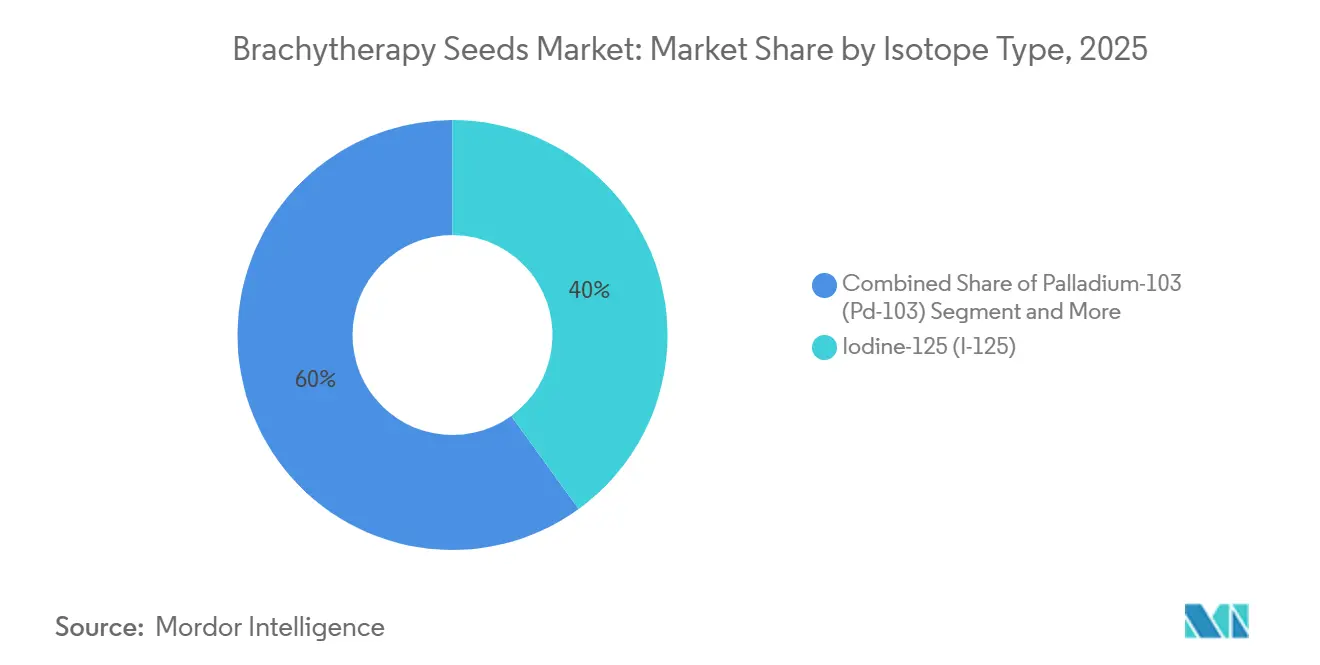
Cs-131 Adoption Accelerates While I-125 Holds Prostate StrongholdsCs-131 revenue is projected to expand at 9.41% CAGR to 2031, the fastest among isotopes, as GT Medical’s GammaTile platform moves from early adoption to routine use in high-grade glioma surgery at more than 535 U.S. and European centers. A systematic review reported a median overall survival of 27.3 months and a median progression-free survival of 8.8 months with Cs-131 implants, reinforcing its clinical edge in aggressive neuro-oncology settings. Interim ROADS data showed superior local control versus standard care, prompting trial expansion in recurrent glioblastoma and meningioma and positioning Cs-131 as a standard-of-care adjunct for tumors requiring rapid dose delivery.
I-125 still commanded 40.02% of the 2025 brachytherapy seeds market share but is forecast to slow as SBRT substitution trims prostate case volumes despite entrenched planning-software libraries, AAPM listings, and stable reimbursement codes. A phase II trial found no significant 5-year biochemical-failure difference among I-125, Pd-103, and Cs-131, implying that operator familiarity and logistics, not efficacy, drive isotope choice once equivalence is proven.



By Seed Configuration:
Preloaded Formats Trade Margin for EfficiencyLoose seeds still contributed 35.67% of 2025 revenues and will expand by 4.03% due to price sensitivity in community hospitals. Yet preloaded and stranded variants grow faster, propelled by safer staff dosimetry and shorter OR turnover. IsoAid supplies Mick-applicator-ready cartridges certified to ISO 13485 and the Medical Device Single Audit Program, easing tender compliance hurdles. Japanese surveys found 59 of 67 implanting centers unable to resterilize preloaded cartridges, illustrating that QA complexity stalls universal uptake. Polymer-encapsulated Pd-103 strings from CivaTech reduce needle count, curbing urethral trauma and post-void residuals; five-year data showed negligible late toxicity, supporting premium positioning.
Hospitals performing more than 200 prostate cases annually increasingly shift to stranded or preloaded systems, citing a 15-minute median reduction in theater time and a 22% cut in radiation technologist exposure. Despite higher acquisition costs, these formats shrink revision rates, indirectly safeguarding reimbursement margins tied to bundled case payments.
By Application:
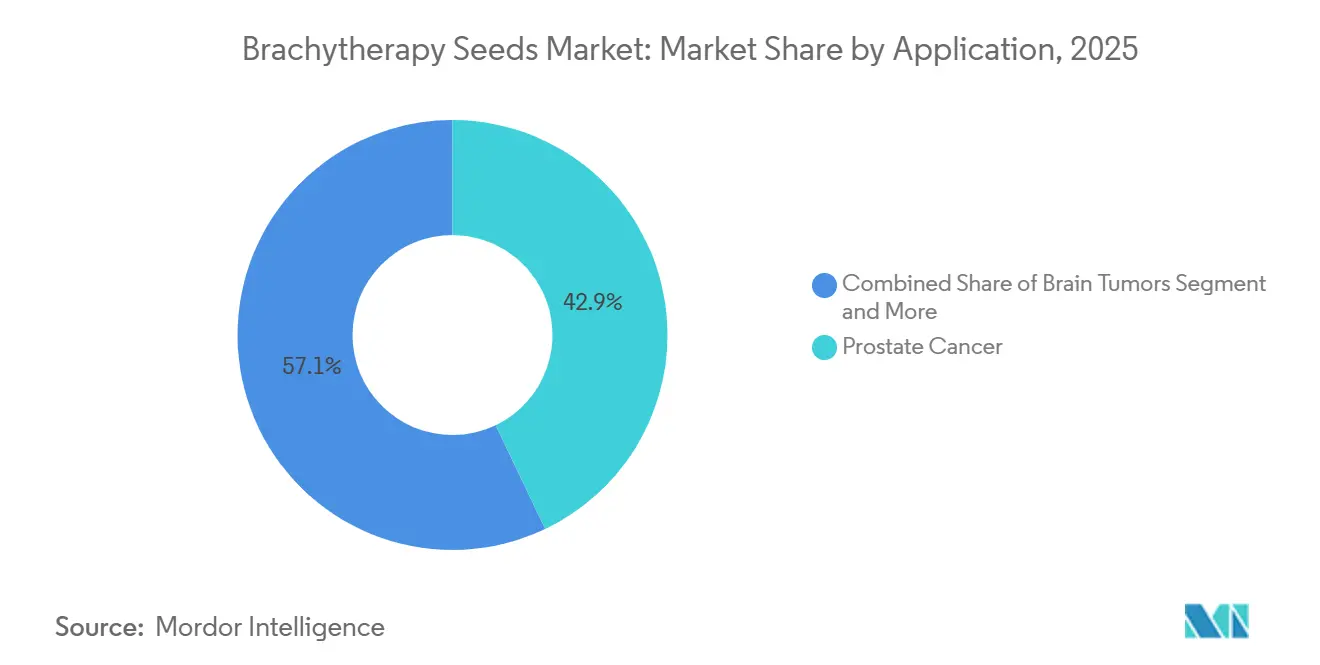
Prostate Faces Headwinds, Neuro-Oncology Leads GrowthProstate cancer sustained 42.90% of 2025 sales but faces CAGR deceleration to 5.67% amid SBRT substitution. Trials such as RTOG-9805 confirm oncologic parity with surgery, yet reimbursement parity has not neutralized scheduling convenience gaps. Conversely, collagen-tile Cs-131 implants have moved from investigational to guideline-consideration status for recurrent gliomas, unlocking an 8.8% CAGR niche that dilutes prostate dependence. Ocular brachytherapy with I-125 plaques secures a steady 4-6% segment, buoyed by Eye Physics’ exclusive seed-loading partnership with IsoAid, ensuring streamlined logistics for retinal-specialist hubs.
Lung and liver seed implants remain experimental. A 2025 study at Hebei General Hospital reported 89.41% local control with CT-guided lung implants but a 51.4% pneumothorax rate, which dampens widespread rollout.
By End User:
Hospitals Anchor Volume, Cancer Centers Drive InnovationHospitals accounted for 55.65% of 2025 shipments as operating-room integration and anesthesia coverage sustain the one-session treatment model. Multidisciplinary centers achieve 8-year biochemical control rates exceeding 90% and serve as regional referral hubs. Dedicated cancer centers and academic institutes—though smaller in volume—absorb Cs-131 tiles, Pd-103 polymers, and MRI-visible seed pilots, functioning as proof-of-concept incubators that downstream hospitals emulate once reimbursement crystallizes. Radiation-oncology staffing shortages remain a gating factor in Southeast Asia and parts of Latin America, moderating seed penetration despite rising cancer incidence.
Geography Analysis
North America and Europe Brachytherapy Seeds Market
North America retained 45.35% of 2025 spend, underpinned by 20-plus years of established treatment-planning software, ADCL calibration labs, and mature reimbursement. Yet ASCO data show LDR share shrinking below 1% of prostate treatments as SBRT surges, illustrating a secular decline in risk despite entrenched installed bases. Europe trails in share but hosts high-volume German, Spanish, and Italian reference sites that offer centralized seed-implant services to neighboring countries, partially offsetting mixed reimbursement climates in the United Kingdom and France.
APAC, LATAM and MEA Brachytherapy Seeds Market
Asia-Pacific is the fastest-growing region at a projected 9.12% CAGR to 2031. Japan legalized permanent I-125 implants only in 2003; over 70 institutes now perform the procedure, but only 18% conduct dosimetric assays, suggesting latent QA investment demand. China’s National Medical Products Administration fast-tracked domestic Cs-131 and I-125 seed registrations, while local firms use micro-beam plasma welding and silver-rod halogenation to minimize leakage and shorten two-week batch cycles—advantages that compress landed costs by up to 30% versus imports. India, South Korea, and Australia are experiencing mid-single-digit growth, constrained by radiotherapy workforce density. Latin America and Middle East-Africa remain nascent but could benefit from turnkey brachytherapy suites bundled with isotope supply contracts once regional regulatory harmonization advances.

Competitive Landscape
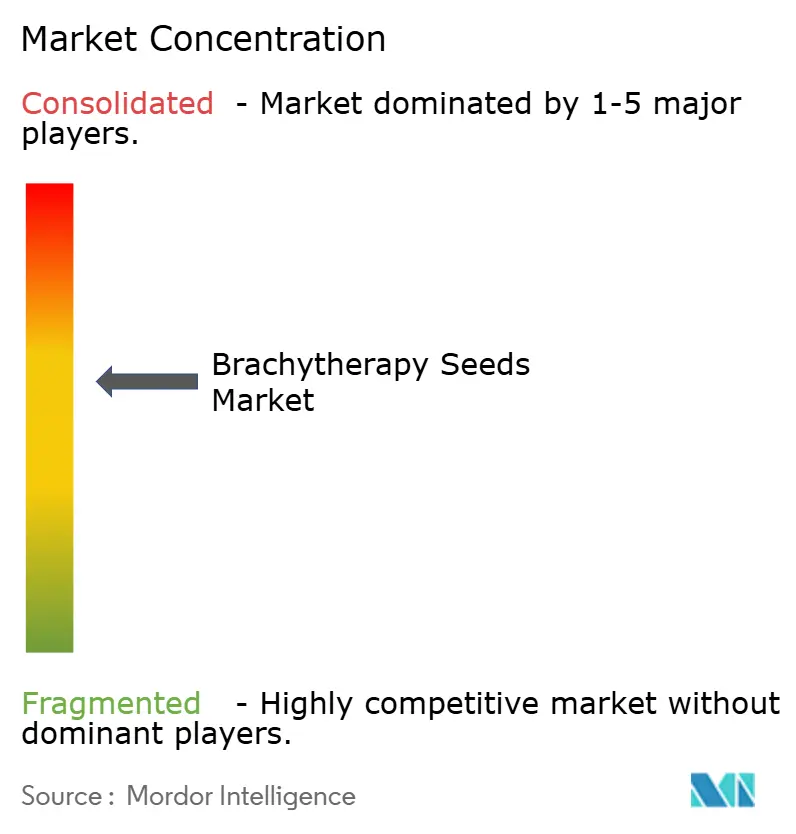
The brachytherapy seeds market exhibits moderate concentration. Eckert & Ziegler, IsoAid, Becton, Dickinson & Company (BD), and Perspective Therapeutics together accounted for the majority of combined revenue, drawing strength from ISO 13485 certifications, American Association of Physicists in Medicine (AAPM) registry listings, and in-house isotope processing. Eckert & Ziegler posted FY2025 group revenue of EUR 312 million (USD 337 million) and earmarked EUR 25 million for LDR seed capacity expansion to serve Asian demand.
IsoAid differentiates through vertical service bundling, full in-house loading, sterilization, and independent Accredited Dosimetry Calibration Laboratory assays, coupled with return-for-credit policies that reduce hospital inventory risk. Perspective Therapeutics faces revenue pressure from Cs-131 supply interruptions yet retains unique half-life advantages for neuro-oncology implants.
CivaTech Oncology’s polymer-encapsulated Pd-103 strings reduce needle count and migration, winning early adopters in U.S. academic hospitals. Chinese newcomers—Ningbo Junan, Shanghai GMS, Tianjin Said—leverage proprietary welding technologies to lower defect rates but still lack AAPM listings that open U.S. tenders. White-space innovation focuses on alpha-emitting radium-224 (Alpha Tau Medical) and bioabsorbable intracavity seed platforms (IsoAid’s IsoSphere) that could extend indications to partial-breast irradiation and head-and-neck salvage.
Brachytherapy Seeds Industry Leaders
Eckert & Ziegler BEBIG
IsoAid LLC
Becton, Dickinson and Company
Perspective Therapeutics
CivaTech Oncology
- *Disclaimer: Major Players sorted in no particular order
Brachytherapy Seeds Market Companies Covered in this Report
- BARC
- Beckton Dickinson
- Best Medical International
- BXTA
- CivaTech Oncology
- Eckert & Ziegler
- Eye Physics
- GT Medical Technologies
- IsoAid LLC
- Ningbo Junan Pharmaceutical Technology
- Perspective Therapeutics
- Shanghai GMS Pharmaceutical
- Theragenics
- Tianjin Said Biopharmaceutical

Recent Industry Developments in Brachytherapy Seeds Market
- February 2026: GT Medical extended ROADS trial enrollment by 150 patients after interim data showed superior Cs-131 GammaTile tumor control in recurrent glioblastoma.
- January 2026: IsoAid, LLC announced that the U.S. FDA has its low-activity I-125 seeds for RSL, packaged with 180-day sterility and shielded return canisters.
- September 2025: Eckert & Ziegler announced EUR 25 million plant expansion to meet Asia-Pacific LDR seed demand.


Global Brachytherapy Seeds Market Report Scope
As per the scope of the report, brachytherapy seeds are tiny radioactive pellets, roughly the size of a grain of rice, used in internal radiation therapy to treat localized cancers like prostate, breast, and cervical cancer. In permanent brachytherapy, these seeds are implanted directly into or near a tumor using thin, hollow needles, where they release a continuous, low dose of radiation over several weeks or months.
The brachytherapy seeds market is segmented by isotope type, seed configuration, applications, end users, and geography. Based on isotope type, the market is segmented into Iodine-125 (I-125), Palladium-103 (Pd-103), Cesium-131 (Cs-131), and Gold-198 (Au-198). By seed configuration, the market is segmented into loose seeds, stranded/linked seeds, and preloaded needles & cartridges. By applications, the market is segmented into prostate cancer, brain tumors, ocular tumors, head & neck, lung, liver, and other indications. By end users, the market is segmented into hospitals, cancer centers/specialty clinics, and academic and research institutes.
Geographically, the market is segmented into North America, Europe, Asia-Pacific, the Middle East & Africa, and South America. The market report also covers the estimated market sizes and trends for 17 countries across major regions globally. For each segment, the market size and forecast are provided in terms of value (USD).
| Iodine-125 (I-125) |
| Palladium-103 (Pd-103) |
| Cesium-131 (Cs-131) |
| Gold-198 (Au-198) |
| Loose Seeds |
| Stranded/Linked Seeds |
| Preloaded Needles & Cartridges |
| Prostate Cancer |
| Brain Tumors |
| Ocular Tumors |
| Head & Neck, Lung, Liver and Other Indications |
| Hospitals |
| Cancer Centers/Specialty Clinics |
| Academic and Research Institutes |
| North America | United States |
| Canada | |
| Mexico | |
| Europe | Germany |
| United Kingdom | |
| France | |
| Italy | |
| Spain | |
| Rest of Europe | |
| Asia-Pacific | China |
| India | |
| Japan | |
| South Korea | |
| Australia | |
| Rest of APAC | |
| Middle East & Africa | GCC |
| South Africa | |
| Rest of MEA | |
| South America | Brazil |
| Argentina | |
| Rest of South America |
| By Isotope Type | Iodine-125 (I-125) | |
| Palladium-103 (Pd-103) | ||
| Cesium-131 (Cs-131) | ||
| Gold-198 (Au-198) | ||
| By Seed Configuration | Loose Seeds | |
| Stranded/Linked Seeds | ||
| Preloaded Needles & Cartridges | ||
| By Application | Prostate Cancer | |
| Brain Tumors | ||
| Ocular Tumors | ||
| Head & Neck, Lung, Liver and Other Indications | ||
| By End User | Hospitals | |
| Cancer Centers/Specialty Clinics | ||
| Academic and Research Institutes | ||
| By Geography | North America | United States |
| Canada | ||
| Mexico | ||
| Europe | Germany | |
| United Kingdom | ||
| France | ||
| Italy | ||
| Spain | ||
| Rest of Europe | ||
| Asia-Pacific | China | |
| India | ||
| Japan | ||
| South Korea | ||
| Australia | ||
| Rest of APAC | ||
| Middle East & Africa | GCC | |
| South Africa | ||
| Rest of MEA | ||
| South America | Brazil | |
| Argentina | ||
| Rest of South America | ||


Key Questions Answered in the Report
How large will the brachytherapy seeds market be by 2031?
The brachytherapy seeds market size is projected to reach USD 238.40 million by 2031, growing at a 7.09% CAGR over 2026-2031.
Which isotope holds the largest share of global demand?
Iodine-125 maintains 40.02% share and benefits from entrenched planning software libraries and reimbursement codes.
Why is Asia-Pacific growing faster than other regions?
Regulatory liberalization in Japan, expanded GMP capacity in China, and broader cancer screening programs push Asia-Pacific toward a 9.12% CAGR.
What drives hospital preference for stranded or preloaded seeds?
These formats cut procedure time, lower staff radiation exposure, and improve post-implant dosimetry, outweighing their higher unit cost.
Page last updated on:





