
Bone Broth Protein Market Size and Share
Market Overview
| Study Period | 2022 - 2032 |
|---|---|
| Market Size (2027) | USD 0.48 Billion |
| Market Size (2032) | USD 0.7 Billion |
| Growth Rate (2027 - 2032) | 7.76 % |
| Fastest Growing Market | Asia-Pacific |
| Largest Market | North America |
| Market Concentration | Medium |
Major Players *Disclaimer: Major Players sorted in no particular order Image © Mordor Intelligence. Reuse requires attribution under CC BY 4.0. | |
Bone Broth Protein Market Analysis by Mordor Intelligence
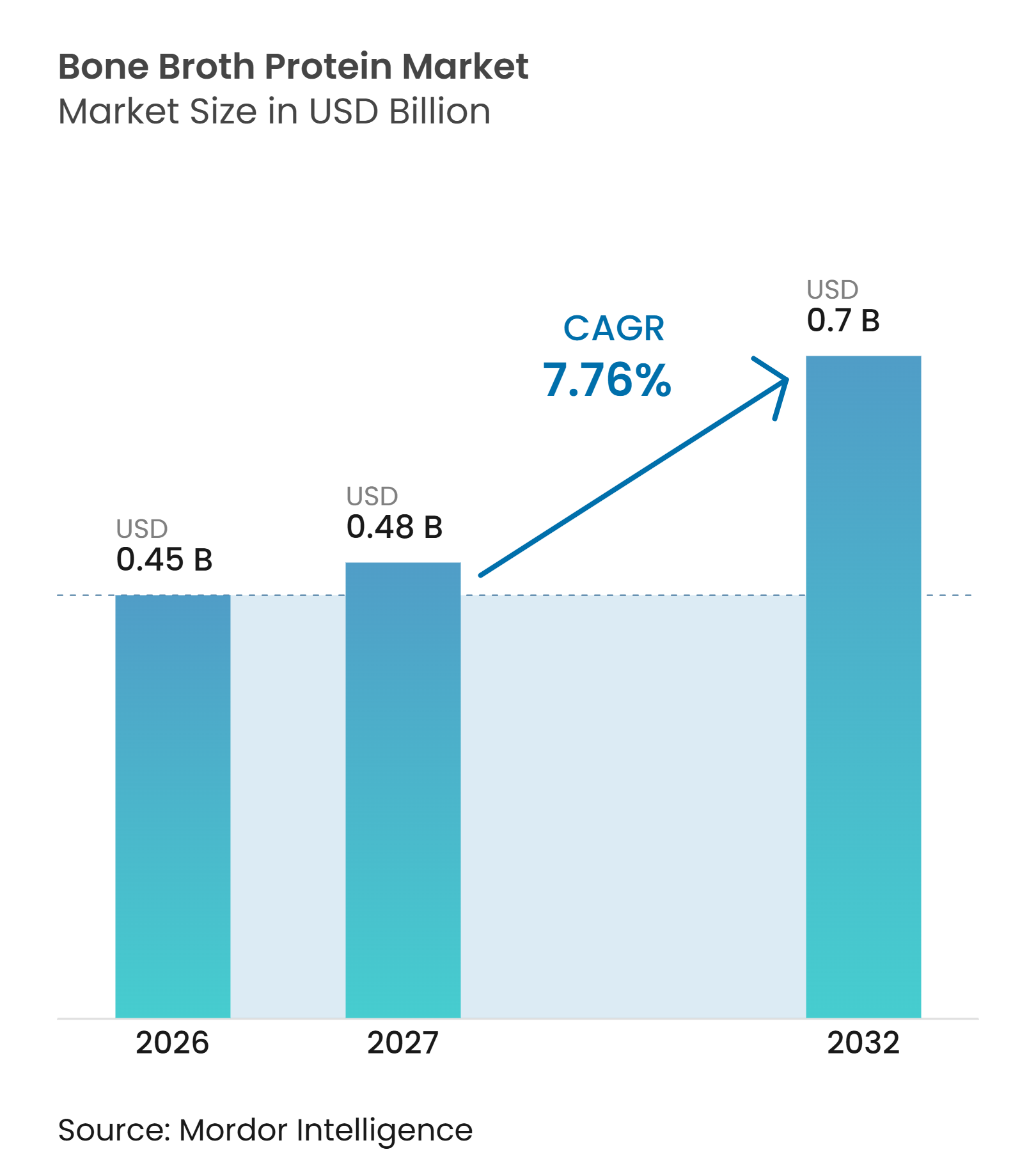
The bone broth protein market size is expected to grow from USD 0.45 billion in 2026 to USD 0.48 billion in 2027 and is forecast to reach USD 0.70 billion by 2032 at a 7.76% CAGR over 2027-2032. The bone broth protein market is benefiting from growing consumer interest in animal-derived protein, clean-label formulations, and convenient wellness-oriented nutrition. Manufacturers are expanding product offerings across diverse consumption occasions and formats to address evolving dietary preferences. Brands are strengthening their market positioning through ingredient transparency, responsible sourcing practices, product quality, and wider retail accessibility. Continued improvements in raw material sourcing, supply chain coordination, and manufacturing processes are supporting product consistency and consumer confidence. These developments are creating opportunities for market participants to strengthen their portfolios and expand their presence across the growing functional nutrition industry.
Key Report Takeaways
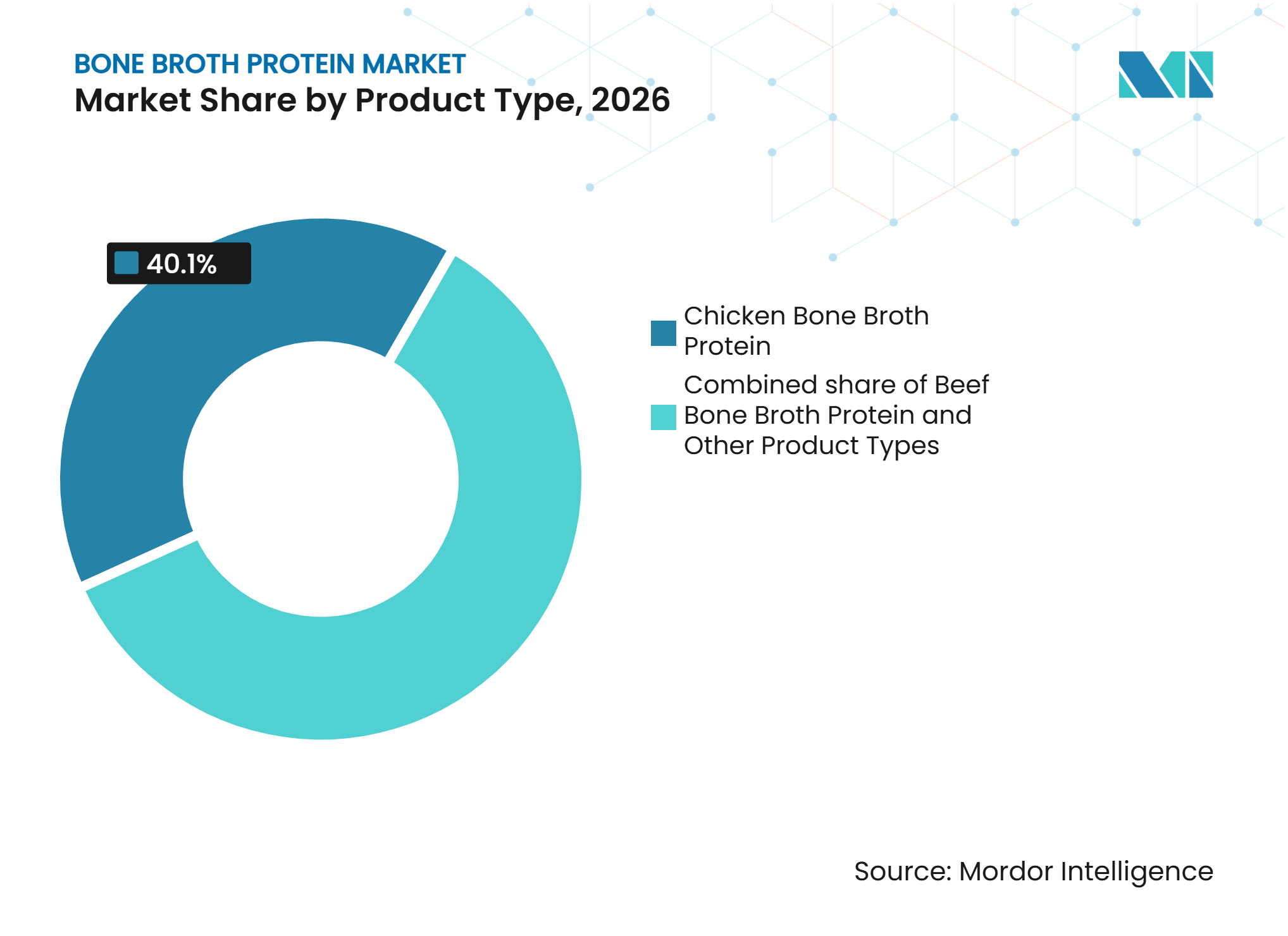
• By product type, chicken bone broth protein held 40.11% of the bone broth protein market share in 2026, while beef bone broth protein is forecast to expand at a CAGR of 9.12% through 2032.
• By nature, conventional products held 62.11% of the bone broth protein market share in 2026, while organic products are forecast to expand at a CAGR of 9.23% through 2032.
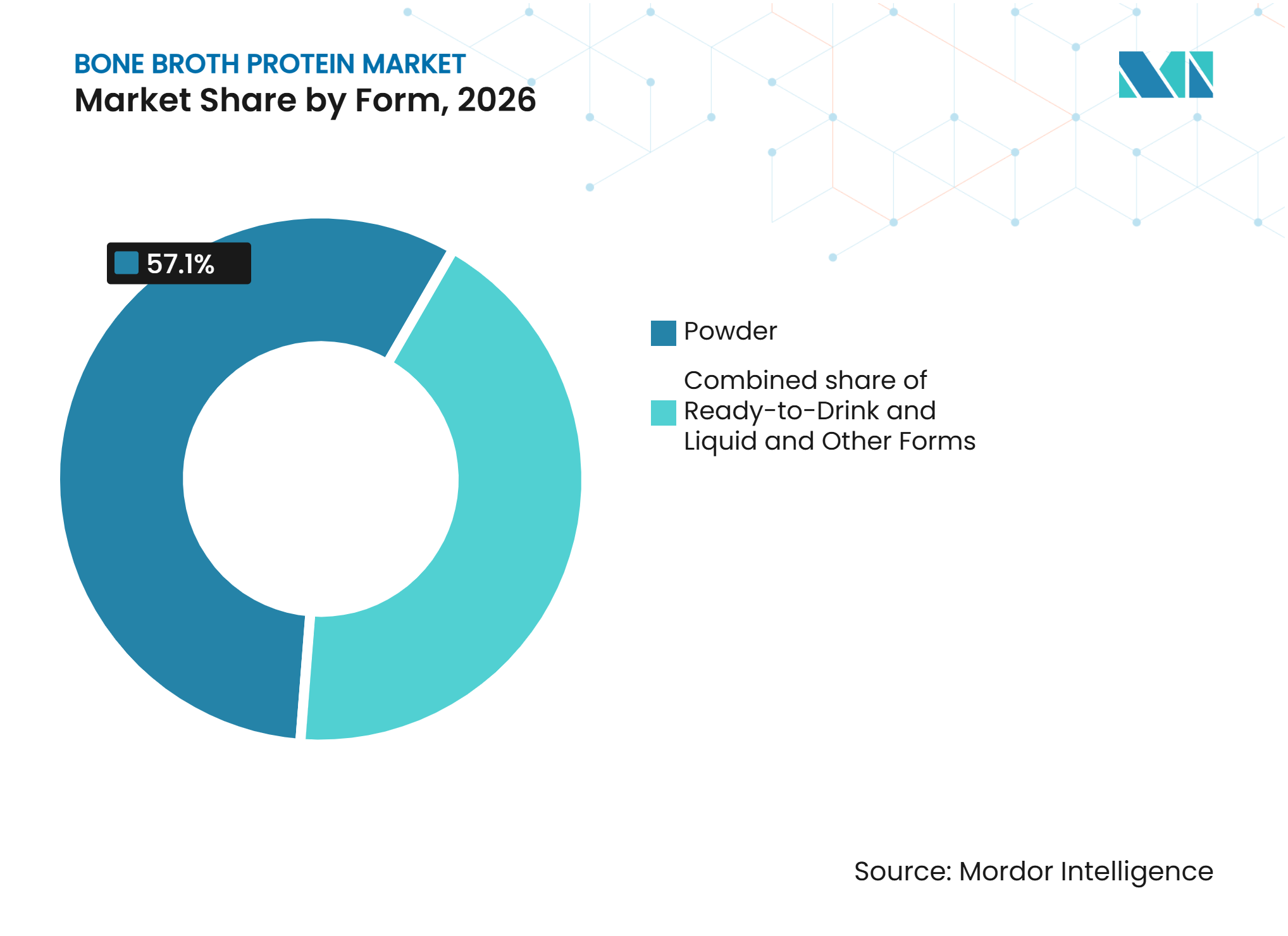
• By form, powder accounted for 57.11% of the bone broth protein market size in 2026, while ready-to-drink and liquid products are forecast to expand at a CAGR of 9.41% through 2032.
• By flavor, original held 46.12% of the bone broth protein market size in 2026, while other flavors are forecast to expand at a CAGR of 9.34% through 2032.
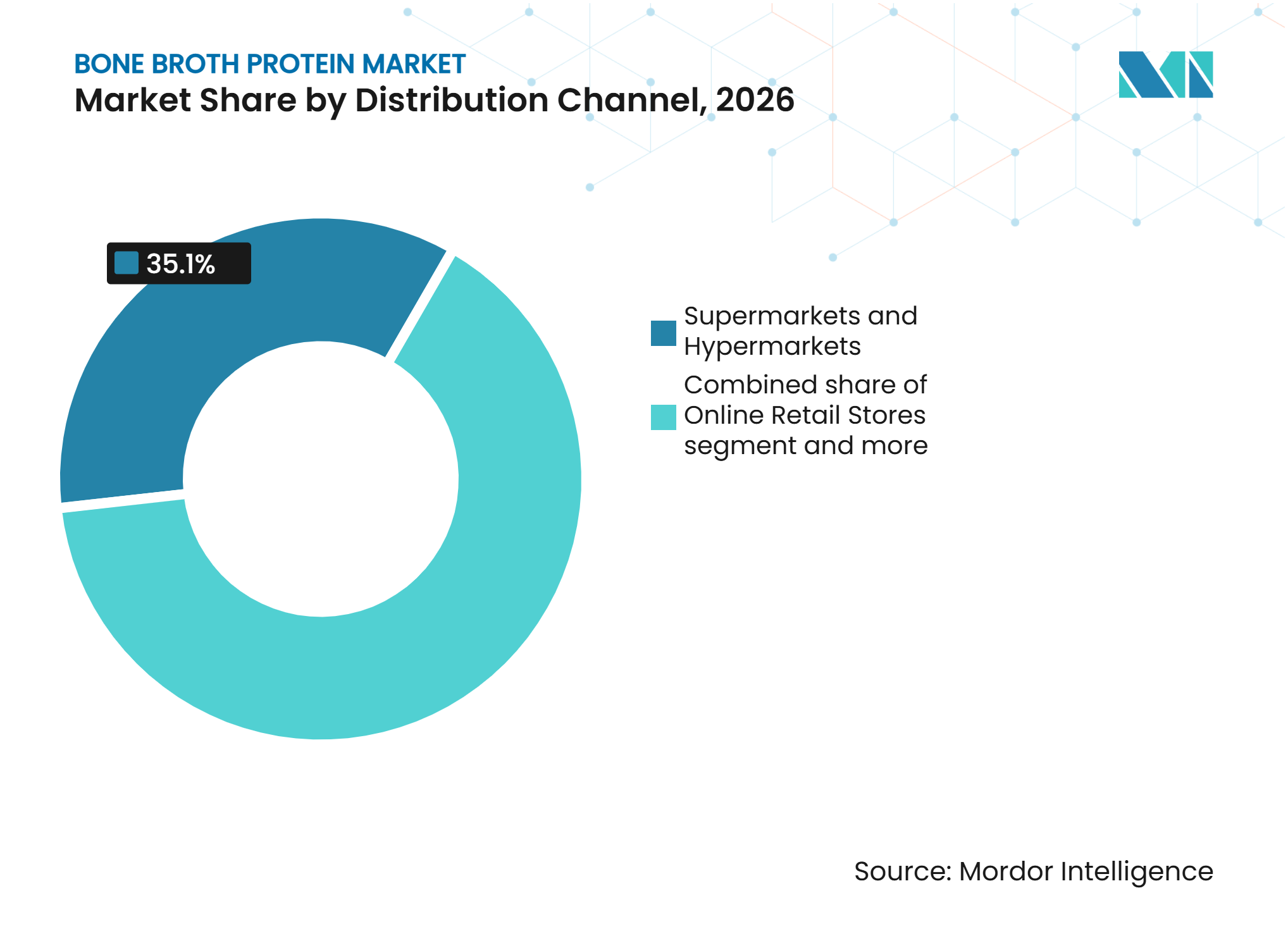
• By distribution channel, supermarkets and hypermarkets accounted for 35.12% of the bone broth protein market share in 2026, while online retail stores are forecast to expand at a CAGR of 9.21% through 2032.
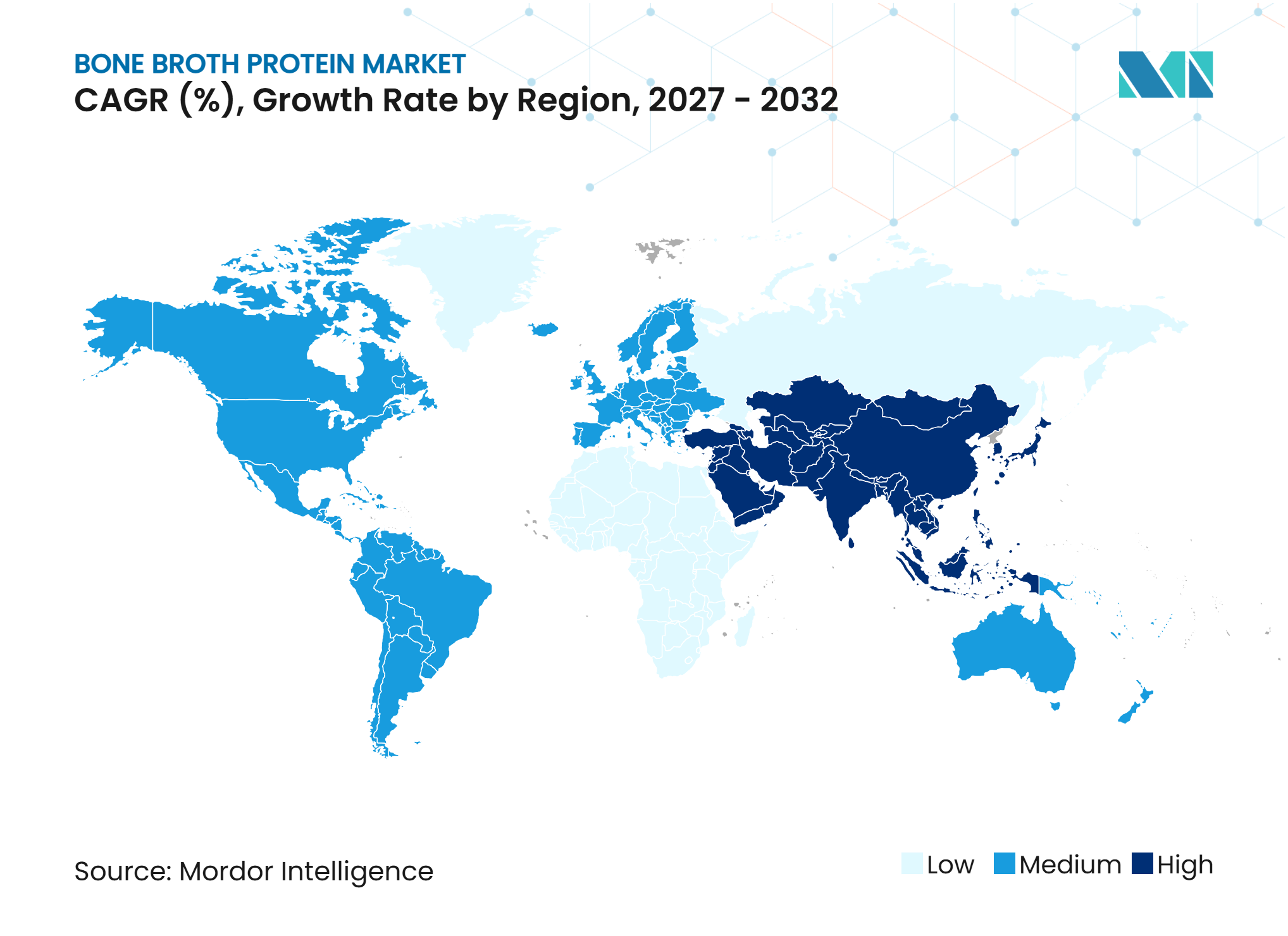
• By geography, North America held 37.12% of the bone broth protein market share in 2026, while Asia-Pacific is forecast to expand at a CAGR of 10.53% through 2032.
Note: Market numbers in this report are based on Mordor Intelligence's proprietary estimation framework, which combines nine months of actuals with Q4 projections for base year 2026.
Market Trends and Insights
Drivers Impact Analysis of Bone Broth Protein Market*
| Driver | (~) % Impact on CAGR Forecast | Geographic Relevance | Impact Timeline |
|---|---|---|---|
| Rising demand for collagen-rich functional nutrition | +2.1% | Global | Medium term (2-4 years) |
| Expansion of high-protein, paleo and keto consumption occasions | +1.3% | North America, Europe, Asia-Pacific | Medium term (2-4 years) |
| Growing adoption of convenient bone broth protein formats | +1.2% | Global | Short term (≤ 2 years) |
| Increasing consumer interest in gut health and joint-support nutrition | +1.4% | Global | Medium term (2-4 years) |
| Rising awareness of the nutritional benefits of bone broth protein | +0.8% | Asia-Pacific, Middle East and Africa | Long term (≥ 4 years) |
| Increasing preference for clean-label and minimally processed protein supplements | +0.9% | North America, Europe | Medium term (2-4 years) |
| Source: Mordor Intelligence | |||
Rising Demand for Collagen-Rich Functional Nutrition
The bone broth protein market is benefiting from rising consumer interest in collagen-rich functional nutrition and food-based collagen sources. For instance, in July 2026, according to the Collagen Stewardship Alliance, bone broth was preferred by 25% of collagen consumers, rising to 29% among consumers in the United States [1]. This highlights the relevance of bone broth within functional food and beverage offerings. Consumer interest in collagen-containing protein powders and ready-to-drink beverages is also encouraging manufacturers to diversify product formats. These preferences support the integration of collagen-rich ingredients into convenient nutritional products and expand the role of bone broth protein beyond traditional supplementation.
Expansion of High-Protein, Paleo and Keto Consumption Occasions
The expansion of high-protein, keto, and paleo dietary preferences is creating opportunities for the bone broth protein market. For instance, in 2025, according to the International Food Information Council, 23% of Americans followed a high-protein diet, while 5% adopted a ketogenic or high-fat diet and 2% followed a paleo diet during the past year [2]. These dietary patterns are increasing interest in animal-derived protein ingredients that complement protein-focused and low-carbohydrate nutrition. Supporting this demand, in January 2026, Hunter & Gather introduced grass-fed beef bone broth powder, which provides 15g of protein per serving and targets keto, paleo, and whole-food consumers. This product development reflects the growing alignment of bone broth protein offerings with diverse dietary preferences and everyday nutritional needs.
Growing Adoption of Convenient Bone Broth Protein Formats
Consumer interest in functional beverages is creating opportunities for convenient bone broth protein products. For instance, in June 2026, according to the Food Industry Association, 2,003 United States grocery shoppers reported being interested in functional benefits such as protein, hydration, energy, and digestive health when making beverage choices [3]. Reflecting this interest, in May 2026, marro introduced a sparkling ready-to-drink bone broth beverage. Each can contains 12g of protein, along with collagen, amino acids, and electrolytes, and is available in fruit-based flavors. The launch illustrates how manufacturers are adapting traditional bone broth into portable beverage formats, giving consumers more ways to incorporate bone broth protein into their daily routines.
Increasing Consumer Interest in Gut Health and Joint-Support Nutrition
Growing consumer awareness of digestive wellness and joint health is increasing interest in nutritional products that support gut function, mobility, and overall well-being. Consumers are paying greater attention to the relationship between dietary choices, digestive comfort, and long-term physical health. Bone broth protein is gaining relevance in this space because of its collagen and amino acid content, which are associated with connective tissue maintenance and joint support. Its functional positioning also appeals to consumers seeking nutritional options that complement active lifestyles and healthy aging. This growing focus on gut health and joint wellness is strengthening the role of bone broth protein in functional nutrition and expanding its use in daily dietary routines.
Restraints Impact Analysis of Bone Broth Protein Market*
| Restraint | (~) % Impact on CAGR Forecast | Geographic Relevance | Impact Timeline |
|---|---|---|---|
| High production and traceable-input costs | -1.3% | Global | Short term (≤ 2 years) |
| Inconsistent product composition and quality standards | -0.9% | Global | Medium term (2-4 years) |
| Limited acceptance among consumers avoiding animal-derived ingredients | -0.7% | North America, Europe | Medium term (2-4 years) |
| High sodium content in certain bone broth formulations | -0.5% | North America, Europe | Short term (≤ 2 years) |
| Source: Mordor Intelligence | |||
High Production and Traceable-Input Costs
High production and sourcing costs remain a challenge for the bone broth protein market, as manufacturing requires quality animal-derived raw materials, controlled extraction processes, and specialized processing facilities. The need to maintain consistent protein quality, product safety, and ingredient traceability adds further operational expenses. Sourcing premium inputs, such as grass-fed and organically raised animal materials, can increase procurement costs, while extended extraction, concentration, and drying processes increase energy and processing requirements. Manufacturers must also invest in supplier verification, quality testing, and batch-level documentation to maintain transparency across the supply chain.
Inconsistent Product Composition and Quality Standards
Variations in raw material quality, sourcing practices, and manufacturing processes create challenges in maintaining consistent product composition across the bone broth protein market. Differences in animal breeds, feed quality, processing conditions, and extraction methods can influence protein concentration, collagen content, amino acid profiles, flavor, and solubility. The absence of uniform product specifications and widely adopted quality benchmarks can also make it difficult for manufacturers to ensure consistency across batches and suppliers. These variations may affect product performance, consumer confidence, and brand reliability. Maintaining standardized production procedures, rigorous quality testing, and transparent ingredient documentation therefore remains important for manufacturers seeking to establish consistent product quality and strengthen market acceptance.
*Our forecasts treat driver/restraint impacts as directional, not additive. The impact forecasts reflect baseline growth, mix effects, and variable interactions.
Bone Broth Protein Market Segment Analysis
By Product Type:
Chicken Leads, Beef Protein Gains GroundChicken bone broth protein held 40.11% of the bone broth protein market share in 2026. Chicken-based bone broth protein holds a strong position due to its familiarity and versatility across food and nutritional applications. Its mild savory profile allows it to be incorporated into traditional broths, protein powders, and functional beverages. Chicken-derived ingredients also offer manufacturers flexibility in developing products for both culinary and wellness applications. Their established role in everyday cooking makes them familiar to consumers and provides an accessible way to introduce bone broth protein into regular diets. This versatility enables suppliers to cater to consumers seeking convenient protein options that fit naturally into their daily food and nutrition routines.
Beef bone broth protein is forecast to expand at a CAGR of 9.12% through 2032. Beef-based bone broth protein is often positioned as a premium offering due to its rich flavor profile and association with grass-fed sourcing. Its appeal is particularly strong among consumers who value animal-derived nutrition and transparent sourcing practices. The segment offers opportunities for brands targeting specialty retail and direct-to-consumer channels, where product quality and ingredient provenance can support premium positioning. Its growth is also supported by consumer interest in bovine-derived nutritional products. Maintaining reliable raw material supplies, consistent product quality, and accessible pricing will be important for sustaining demand and encouraging repeat purchases.



By Nature:
Conventional Anchors Volume, Organic Builds TrustConventional accounted for 62.11% of the bone broth protein market share in 2026. Conventional bone broth protein holds a significant position due to wider raw material availability, established retail distribution, and greater price accessibility. These products form the core of the market by serving consumers across grocery, pharmacy, and online retail channels. Their availability in various forms, including powders, broths, and food products, offers multiple options for incorporating bone broth protein into everyday diets. Conventional offerings also appeal to consumers who prioritize product affordability and nutritional value over specialized sourcing certifications. Clear ingredient information, consistent protein content, and reliable product quality remain important factors in maintaining consumer confidence and supporting the segment's broad market presence.
Organic is forecast to expand at a CAGR of 9.23% through 2032. Organic bone broth protein is gaining traction as consumers increasingly prioritize ingredient quality, responsible sourcing, and transparency in food production. Organic certification strengthens product appeal by providing assurance about sourcing and production practices. This creates opportunities for manufacturers to differentiate their offerings, build consumer confidence, and cater to shoppers seeking high-quality animal-derived nutrition. The growing preference for clean-label products and clearly documented ingredients further supports the segment's development across premium food and wellness categories.
By Form:
Powder Dominates, Ready-to-Drink Products Expand UsePowder accounted for 57.11% of the bone broth protein market in 2026. Bone broth protein powders maintain a strong market position due to their shelf stability, versatility, and ease of storage. Their adaptability allows consumers to incorporate them into a wide range of food and beverage applications, including hot drinks, smoothies, soups, and everyday recipes. Powder formats also provide manufacturers with flexibility in developing different flavors, pack sizes, and serving options to meet varied consumer preferences. Their lightweight packaging and suitability for direct-to-consumer distribution further support accessibility across retail and online channels. The ability to adjust serving quantities and preparation methods makes powders convenient for regular use, encouraging repeat purchases and supporting their position as the leading product format in the bone broth protein market.
Ready-to-drink and liquid products are forecast to expand at a CAGR of 9.41% through 2032. Liquid bone broth protein products are gaining relevance as consumers increasingly seek convenient nutritional options that require minimal preparation. Their ready-to-consume nature makes them suitable for busy lifestyles and supports consumption across different daily occasions. Liquid formats also provide manufacturers with opportunities to develop diverse flavors and functional beverage offerings that appeal to a broader consumer base. Their accessibility and ease of consumption help extend the use of bone broth protein beyond traditional meal preparation into everyday nutrition routines. Continued product innovation, appealing taste profiles, and wider retail availability are supporting the segment's growth and expanding consumer adoption.

By Flavor:
Original Maintains Familiarity, Other Flavors Broaden AppealOriginal held 46.12% of the bone broth protein market share in 2026. Original-flavored bone broth protein products maintain a strong market position due to their familiar savory taste and versatility across different applications. Their neutral flavor profile allows consumers to incorporate them into everyday meals, beverages, and recipes without significantly altering the taste. These products also appeal to consumers who prefer simple formulations with fewer added flavoring ingredients and sweeteners. Their suitability for both culinary use and nutritional supplementation enables manufacturers to reach a broad range of consumer preferences. This versatility and familiarity continue to support the popularity of original-flavored products in the bone broth protein market.
Other flavors are forecast to expand at a CAGR of 9.34% through 2032. Flavored bone broth protein products are expanding the category's appeal by offering a wider range of taste profiles and consumption occasions. Sweet, botanical, chocolate, and fruit-inspired flavors provide alternatives to traditional savory broth and help attract consumers with varied taste preferences. Flavor innovation also allows manufacturers to position bone broth protein across beverage, snack, and wellness applications. These offerings can make the ingredient more appealing for consumption throughout the day while supporting product differentiation. A broader flavor portfolio, combined with convenient formats and consistent nutritional quality, can strengthen consumer interest and encourage regular use of bone broth protein products.
By Distribution Channel:
Supermarkets Lead, Online Retail AcceleratesSupermarkets and hypermarkets accounted for 35.12% of the bone broth protein market share in 2026. Supermarkets and hypermarkets play an important role in the bone broth protein market by providing broad product visibility, convenient access, and opportunities for in-store discovery. Their established retail networks allow consumers to explore different brands, compare product formulations, and evaluate ingredient information before purchasing. Placement alongside soups, nutritional supplements, and health-oriented beverages also helps introduce bone broth protein to a wider customer base. Retail promotions, product sampling, and strategic shelf positioning can further encourage product trials and strengthen brand awareness. These advantages make supermarkets and hypermarkets an important distribution channel for expanding market reach and supporting consumer adoption.
Online retail stores are forecast to expand at a CAGR of 9.21% through 2032. Online retail is becoming an important distribution channel for bone broth protein products by providing brands with greater opportunities to communicate product benefits and reach targeted consumer groups. Digital platforms allow manufacturers to present detailed information about ingredients, nutritional content, preparation methods, and product applications, helping consumers make informed purchasing decisions. The convenience of home delivery and the availability of products across multiple online marketplaces also support accessibility and repeat purchases. Online channels are particularly valuable for emerging product formats that require greater consumer awareness and education. These advantages enable brands to expand their market presence, build direct relationships with consumers, and support the wider adoption of bone broth protein products.
Geography Analysis
North America
North America held 37.12% of the bone broth protein market share in 2026. North America holds a prominent position in the bone broth protein market due to its established protein-focused consumer base, developed nutritional supplement industry, and extensive online retail infrastructure. Growing interest in protein-rich diets and functional nutrition supports demand across food, beverage, and wellness applications. The region also offers manufacturers access to diverse distribution channels, including natural food retailers, supermarkets, pharmacies, and direct-to-consumer platforms. The presence of established wellness brands and food companies further strengthens product availability and market competition. Increasing consumer attention to ingredient transparency, nutritional value, and product quality is encouraging brands to differentiate their offerings and expand their reach.
Asia-Pacific
Asia-Pacific is forecast to expand at a CAGR of 10.53% through 2032. Asia-Pacific is emerging as a key growth region for the bone broth protein market, supported by the combination of traditional bone-based food consumption and increasing interest in modern protein and convenience products. Demand patterns vary across countries, reflecting differences in dietary habits, supplement usage, prepared food consumption, and beauty-focused nutrition. This creates opportunities for manufacturers to adapt their offerings through locally relevant flavors, pack sizes, and product formats. Partnerships with regional distributors and online retail platforms can also help brands improve market access and reach diverse consumer groups. Convenient products with clear nutritional positioning may further encourage trial and adoption among new consumers.
Europe, South America, and Middle East and Africa
Europe's bone broth protein market is supported by consumer interest in ingredient transparency, clean-label products, and high-quality food ingredients. Manufacturers can build on these preferences by strengthening production capabilities and expanding into related food categories. In South America, the market is at an earlier stage of development, with urban health-conscious consumers and digital retail channels creating opportunities to introduce bone broth protein products. In the Middle East and Africa, premium wellness retailers and imported nutritional products offer avenues to build category awareness and reach specialized consumer groups. Across these regions, market development depends on adapting products and distribution strategies to local dietary preferences and purchasing habits.
Competitive Landscape
Market Concentration

The bone broth protein market is moderately fragmented, with brands competing across nutritional supplements, direct-to-consumer products, ingredient solutions, and prepared food formats. Competition is shaped by product credibility, sourcing transparency, flavor, and access to retail and online distribution. Companies differentiate themselves through distinctive product formats, clear nutritional positioning, and reliable ingredient quality. Brand trust also influences purchasing decisions, as consumers consider product composition, protein content, and suitability for their dietary needs.
Product innovation is an important competitive strategy, allowing brands to expand beyond traditional broth and powder formats. Manufacturers are developing convenient beverages and functional food products to appeal to different consumption occasions. This diversification increases competition across nutritional supplements, beverages, and prepared foods. It also creates opportunities for specialized brands to reach consumers with varied preferences and usage requirements.
Manufacturing capabilities and distribution reach further influence competitive positioning. Established food companies can leverage broader distribution networks, while smaller specialists can focus on differentiated products, sourcing transparency, and closer relationships with consumers. Consistent product quality and reliable sourcing remain important for building brand credibility and encouraging repeat purchases. Overall, competition is shaped by the balance between wider market accessibility and premium, differentiated product positioning.
Bone Broth Protein Industry Leaders
-
Ancient Brands, LLC (Ancient Nutrition)
-
NOW Health Group, Inc. (NOW Foods)
-
Bluebird Provisions
-
Freja
-
Organika Health Products Inc. (Organika)
- *Disclaimer: Major Players sorted in no particular order
Bone Broth Protein Market Companies Covered in this Report
- Ancient Brands, LLC (Ancient Nutrition)
- NOW Health Group, Inc. (NOW Foods)
- Bluebird Provisions
- Freja
- Organika Health Products Inc. (Organika)
- Paleovalley
- Naked Whey, Inc. (Naked Nutrition)
- Natural Force
- Perfect Supplements, LLC
- Left Coast Performance
- Dr. Kellyann Products, LLC
- Planet Paleo
- PaleoPro
- BulkSupplements.com
- Prinova Group LLC (NutraBroth™)
- Nutra Food Ingredients
- International Dehydrated Foods, Inc. (IDF)
- NSI Group, LLC
- Protide
- Taranaki Bio Extracts (Butler)
Recent Industry Developments in Bone Broth Protein Market
- November 2026: Zoup! Specialty Products launched Functional Bone Broths, a range of organic chicken bone broths featuring protein, collagen, and functional ingredients targeting breakfast, hydration, and relaxation occasions.
- October 2026: Borough Broth entered the foodservice sector through a partnership with Natoora, introducing larger-format organic chicken and beef bone broths for professional kitchens.
- August 2026: LonoLife launched Protein Sips, a cold functional lemonade format containing collagen protein and prebiotic fiber, expanding its portfolio beyond traditional bone broth products.
Global Bone Broth Protein Market Report Scope
The bone broth protein market includes protein-rich products derived from animal bones, used in nutritional supplements, functional foods, and beverages. The market is segmented by Product Type (Chicken, Beef, and Other), Nature (Conventional and Organic), Form (Powder, Ready-to-Drink and Liquid, and Other Forms), Flavor (Original, Savory, Chocolate, and Other Flavors), Distribution Channel (Supermarkets and Hypermarkets, Pharmacies and Health Food Stores, Online Retail Stores, and Other Channels), and Geography (North America, Europe, Asia-Pacific, South America, and the Middle East and Africa). Market forecasts are provided in terms of value (USD).
Segmentation Overview
| Chicken Bone Broth Protein |
| Beef Bone Broth Protein |
| Other Product Types |
| Conventional |
| Organic |
| Powder |
| Ready-to-Drink and Liquid |
| Other Forms |
| Original |
| Savory |
| Chocolate |
| Other Flavors |
| Supermarkets and Hypermarkets |
| Pharmacies and Health Food Stores |
| Online Retail Stores |
| Other Distribution Channels |
| North America | United States |
| Canada | |
| Mexico | |
| Rest of North America | |
| Europe | Germany |
| United Kingdom | |
| France | |
| Italy | |
| Rest of Europe | |
| Asia-Pacific | China |
| India | |
| Japan | |
| Australia | |
| South Korea | |
| Rest of Asia-Pacific | |
| South America | Brazil |
| Rest of South America | |
| Middle East and Africa | South Africa |
| United Arab Emirates | |
| Rest of Middle East and Africa |
| By Product Type | Chicken Bone Broth Protein | |
| Beef Bone Broth Protein | ||
| Other Product Types | ||
| By Nature | Conventional | |
| Organic | ||
| By Form | Powder | |
| Ready-to-Drink and Liquid | ||
| Other Forms | ||
| By Flavor | Original | |
| Savory | ||
| Chocolate | ||
| Other Flavors | ||
| By Distribution Channel | Supermarkets and Hypermarkets | |
| Pharmacies and Health Food Stores | ||
| Online Retail Stores | ||
| Other Distribution Channels | ||
| By Geography | North America | United States |
| Canada | ||
| Mexico | ||
| Rest of North America | ||
| Europe | Germany | |
| United Kingdom | ||
| France | ||
| Italy | ||
| Rest of Europe | ||
| Asia-Pacific | China | |
| India | ||
| Japan | ||
| Australia | ||
| South Korea | ||
| Rest of Asia-Pacific | ||
| South America | Brazil | |
| Rest of South America | ||
| Middle East and Africa | South Africa | |
| United Arab Emirates | ||
| Rest of Middle East and Africa | ||
Key Questions Answered in the Report
What is the market size of bone broth protein?
The bone broth protein market is estimated to reach USD 0.45 billion in 2026 and USD 0.48 billion in 2027. It is projected to grow to USD 0.70 billion by 2032, registering a CAGR of 7.76% during 2027–2032.
Which product type leads bone broth protein sales?
Chicken bone broth protein leads with 40.11% share in 2026, supported by broad familiarity and flexible use across formats. Its familiar flavor profile also supports use in culinary and wellness-oriented products.
Which format is growing fastest?
Ready-to-drink and liquid products are forecast to expand at a CAGR of 9.41% through 2032 as convenience becomes more important. These formats help move consumption beyond home preparation and traditional powder routines.
Why are online retail stores important for bone broth protein brands?
Online retail stores is forecast to expand at a CAGR of 9.21% through 2032 and gives brands more room to explain ingredients, use occasions, and subscriptions. It also supports repeat ordering and direct customer relationships.