
Beetroot Juice Market Size and Share
Market Overview
| Study Period | 2021 - 2031 |
|---|---|
| Market Size (2026) | USD 356.85 Million |
| Market Size (2031) | USD 472.61 Million |
| Growth Rate (2026 - 2031) | 5.78 % |
| Fastest Growing Market | Asia-Pacific |
| Largest Market | North America |
| Market Concentration | Medium |
Major Players *Disclaimer: Major Players sorted in no particular order Image © Mordor Intelligence. Reuse requires attribution under CC BY 4.0. | |
Beetroot Juice Market Analysis by Mordor Intelligence
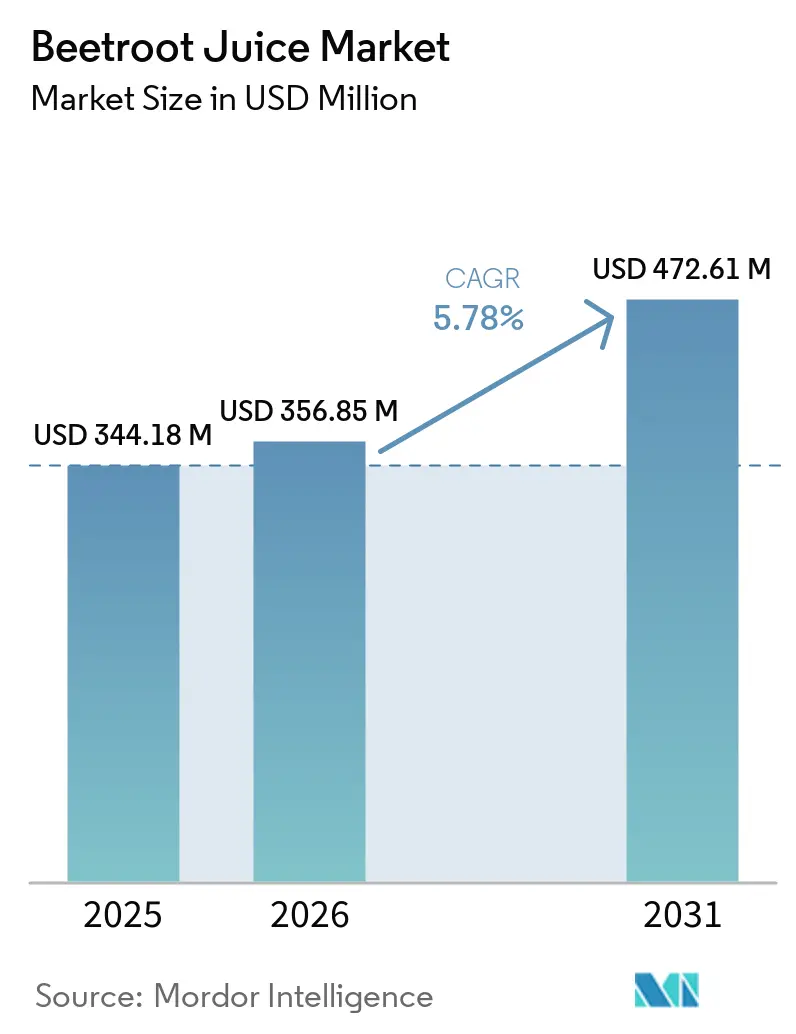
The beetroot juice market size is projected to expand from USD 344.18 million in 2025 and USD 356.85 million in 2026 to USD 472.61 million by 2031, registering a CAGR of 5.78% between 2026 and 2031. Clinical research has strengthened the category’s health positioning because a 2025 controlled trial reported lower systolic and diastolic blood pressure after nitrate-rich beetroot juice intake[1]. The beetroot juice market is also shaped by demand for recognizable ingredients, organic products, and cold-pressed formats. Product development is moving toward blended recipes that make beetroot more accessible to consumers who prefer a milder taste. Packaging choices are becoming more important as brands balance shelf life, refrigerated distribution, and retailer sustainability requirements. Competition for health-oriented beverage occasions is intensifying as probiotic drinks, fermented shots, and other plant-based products seek the same consumer.
Key Report Takeaways
- By product type, conventional juice held 65.78% of the beetroot juice market share in 2025, while organic juice is forecast to expand at a 7.25% CAGR through 2031.
- By juice type, regular juice accounted for 54.38% of the beetroot juice market size in 2025, while cold-pressed juice is projected to grow at a 6.58% CAGR through 2031.
- By juice format, pure juice held 68.22% of the market in 2025, while blended juice is forecast to advance at a 7.11% CAGR through 2031.
- By packaging type, bottles accounted for 78.64% of the market in 2025, while tetra packs are projected to expand at a 6.83% CAGR through 2031.
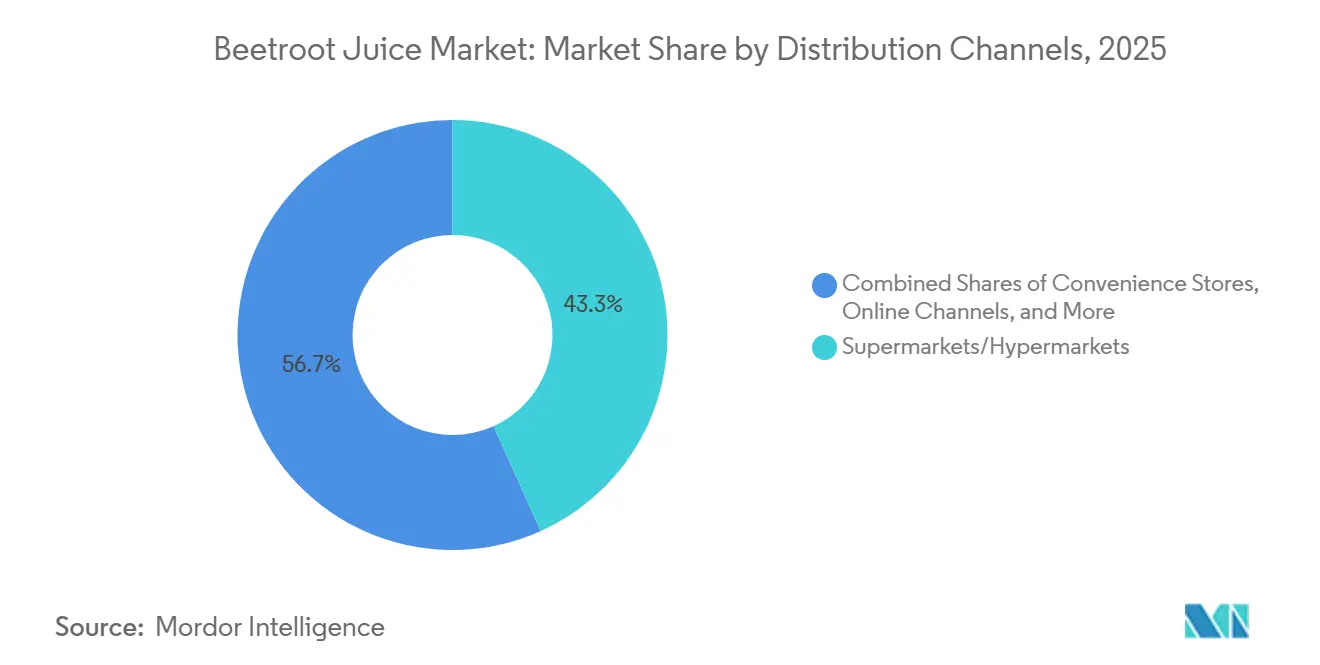
- By distribution channel, supermarkets and hypermarkets held 43.27% of the market in 2025, while online retail is forecast to grow at a 7.12% CAGR through 2031.
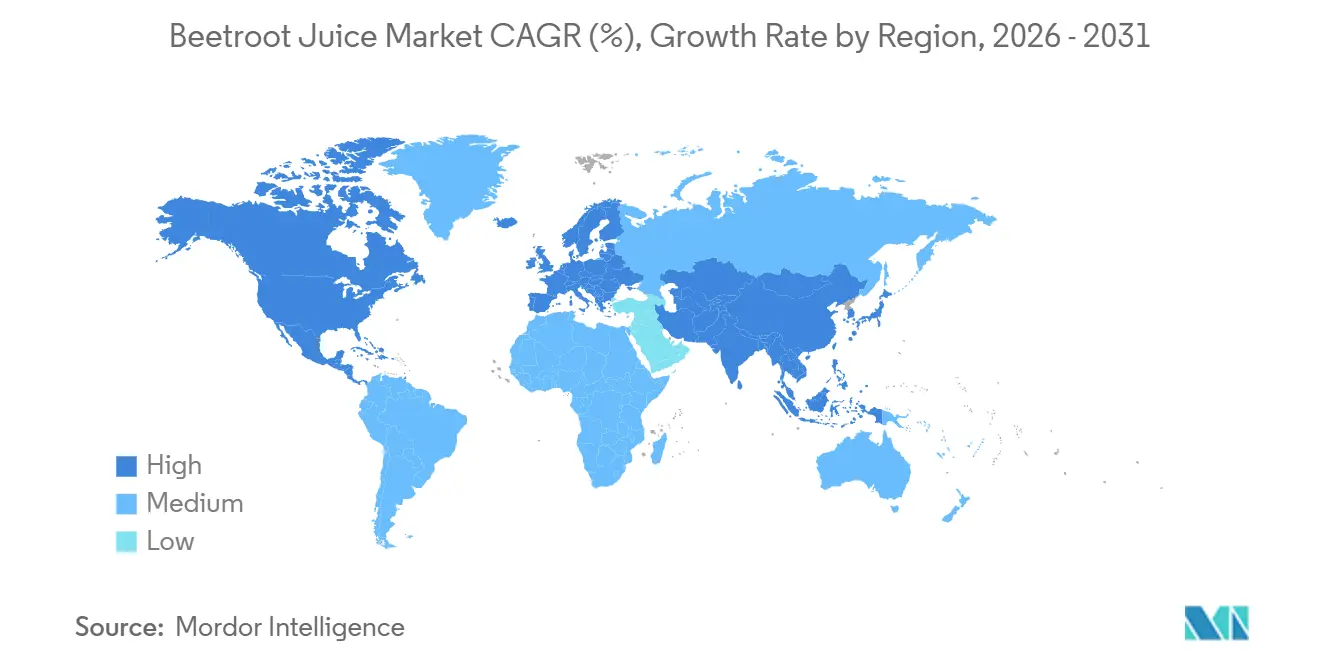
- By geography, North America held 45.69% of the market in 2025, while Asia-Pacific is forecast to expand at a 6.77% CAGR through 2031.
Note: Market size and forecast figures in this report are generated using Mordor Intelligence’s proprietary estimation framework, updated with the latest available data and insights as of January 2026.
Market Trends and Insights
Drivers Impact Analysis of Beetroot Juice Market*
| Driver | (~) % Impact on CAGR Forecasts | Geographic Relevance | Impact Timeline |
|---|---|---|---|
| Growing consumer focus on natural and functional beverages | +1.1% | Global | Medium term (2–4 years) |
| Increasing demand for heart and cardiovascular health beverages | +0.9% | North America and Europe, with rising uptake in Asia-Pacific | Long term (≥ 4 years) |
| Rising preference for clean-label and plant-based beverages | +0.8% | Global, strongest in North America and Western Europe | Medium term (2–4 years) |
| Expansion of organic and cold-pressed juice products | +0.8% | North America and Europe; nascent in Asia-Pacific | Medium term (2–4 years) |
| Increasing product innovation and functional ingredient blending | +0.6% | Global, early-stage in emerging markets | Short term (≤ 2 years) |
| Rising awareness of beetroot's nutritional and antioxidant properties | +0.5% | Global | Long term (≥ 4 years) |
| Source: Mordor Intelligence | |||
Growing Consumer Focus on Natural and Functional Beverages
Red beet offers dietary nitrates and natural ruby coloring, giving the beetroot juice market relevance in both wellness drinks and naturally colored beverage formulations. SVZ identified this combination as uncommon among single-ingredient vegetable juices in June 2026. This allows beetroot ingredients to appear in sports drinks, wellness shots, and immunity-oriented blends. European manufacturers also face pressure to reformulate products as consumer and regulatory attention turns toward alternatives to synthetic colors. Germany’s fruit juice association reported that vegetable juice consumption rose 10% in 2025 while fruit juice volumes fell 6%. The association named beetroot juice among the nutrition-related factors supporting vegetable juice demand.
Increasing Demand for Heart and Cardiovascular Health Beverages
Growing consumer awareness of the nutritional benefits of beetroot is increasing interest in beetroot juice as a functional beverage for cardiovascular and circulatory wellness. Beetroot is naturally rich in dietary nitrates, which the body can convert into nitric oxide, a compound associated with blood-vessel dilation and healthy blood flow. A 2025 double-blind, placebo-controlled study found that 140 mL of nitrate-rich beetroot juice with 14.00 mmol of nitrate reduced systolic blood pressure by a mean of 7 mmHg and diastolic blood pressure by a mean of 6 mmHg compared with placebo. The study also recorded a 461 nM increase in plasma nitrite. The University of Florida completed a dietary nitrate supplementation study in older adults with coronary artery disease in August 2025[2]. As consumers increasingly look for functional beverages that offer specific wellness benefits alongside refreshment, manufacturers are introducing beetroot juices, concentrated shots and blends positioned around heart health, circulation and overall vitality.
Rising Preference for Clean-Label and Plant-Based Beverages
Pure beetroot juice fits clean-label expectations because it can use a recognizable single ingredient without artificial colorants. The beetroot juice market can also address a gap between vegetable consumption and dietary recommendations through liquid vegetable formats. SVZ cited Eurostat data showing that 51.00% of the European Union population consumed vegetables at least once each day. This leaves an opportunity for products that make vegetable intake more convenient. The value of this proposition rises when products retain a simple ingredient list and clear nutrition communication. Brands using organic certification can further distinguish these products where buyers connect certification with ingredient transparency.
Expansion of Organic and Cold-Pressed Juice Products
Organic supply conditions are improving in ways that support the beetroot juice market and may reduce some cost pressure on certified products. Germany’s certified organic beetroot cultivation area increased by 46.80% in 2025, while harvest volumes increased by 74.60%. Organic production represented more than 50.00% of Germany’s total beetroot cultivation area. A 2024 university study found that high-pressure processing (HPP) at 600 MPa effectively preserved the physicochemical properties and nutritional profile of fresh beetroot juice while extending its refrigerated shelf life to up to 21 days. By maintaining product quality without relying on extensive thermal treatment, these processing conditions support the broader commercialization and retail availability of organic and cold-pressed beetroot juice products across mainstream retail channels.
Restraints Impact Analysis of Beetroot Juice Market*
| Restraint | (~) % Impact on CAGR Forecasts | Geographic Relevance | Impact Timeline |
|---|---|---|---|
| High perishability and limited shelf life of fresh juice | -0.5% | Global; acute in emerging markets with limited cold-chain infrastructure | Medium term (2–4 years) |
| Competition from other functional and vegetable-based juices | -0.4% | Global | Short term (≤ 2 years) |
| Processing and storage challenges affecting nutrient stability | -0.3% | Global, particularly in cold-chain-constrained markets | Long term (≥ 4 years) |
| Seasonal variations in beetroot availability and quality | -0.2% | Asia-Pacific and South America; moderate in Europe | Medium term (2–4 years) |
| Source: Mordor Intelligence | |||
High Perishability and Limited Shelf Life of Fresh Juice
Perishability limits the beetroot juice market in regions where affordable cold-chain systems are not widely available. A 2025 study published by the Royal Society of Chemistry found that betalain content in beetroot juice concentrate declined by 28.53% under ambient storage over 12 weeks. The same research recorded a 43.57% decline under accelerated storage conditions. A 2024 scientific publication also identified microbial contamination as a processing concern for beetroot juice. Fresh products therefore remain concentrated in premium urban areas with dependable refrigerated logistics. High-pressure processing can extend shelf life, but the capital requirement can limit access for smaller producers.
Competition from Other Functional and Vegetable-Based Juices
The beetroot juice market faces its closest competition from functional plant-based beverages rather than carbonated soft drinks. Probiotic sodas, kombucha, fermented vegetable shots, and soy-based drinks compete for consumers seeking health-oriented products. Kagome allocated an additional JPY 500.00 million, equivalent to USD 3.40 million, for advertising and sales promotion in the second half of 2026 as it sought to rebuild vegetable beverage value in Japan. Kagome identified demand moving toward soy milk and probiotic drinks as a recovery challenge. Blended products using turmeric, lion’s mane, or probiotics can broaden taste and benefit appeal while retaining beetroot as an ingredient. This places pressure on single-ingredient products to communicate their distinct clinical basis clearly.
*Our forecasts treat driver/restraint impacts as directional, not additive. The impact forecasts reflect baseline growth, mix effects, and variable interactions.
Beetroot Juice Market Segment Analysis
By Product Type:
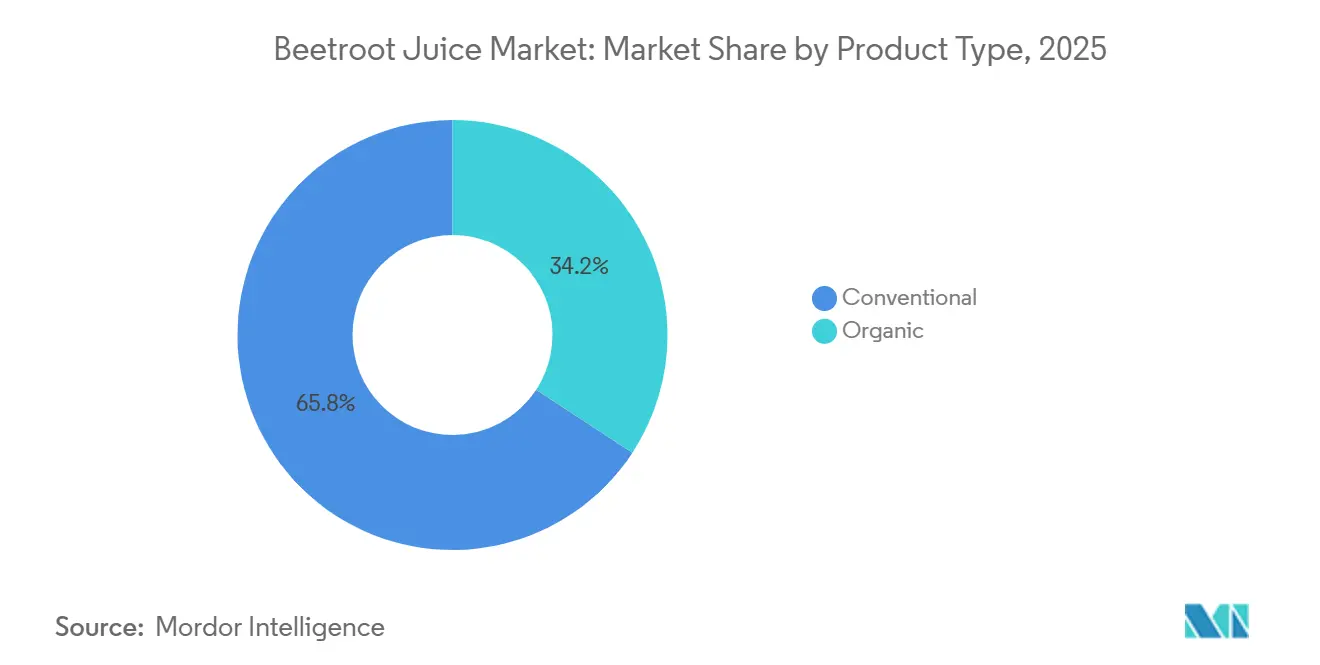
Organic Products Gain Premium DemandConventional juice held 65.78% of the beetroot juice market share in 2025 because it offers broad price accessibility and suits ambient distribution. Organic juice is forecast to grow at a 7.25% CAGR from 2026 to 2031. This difference points to stronger demand among repeat purchasers who value certification and ingredient provenance. Certified organic beetroot cultivation in Germany expanded during 2025, with area rising 46.80% and harvest volumes rising 74.60%. More than half of the country’s beetroot cultivation area was organic. Greater supply availability can help brands sustain certified offerings as demand expands.
Conventional products retain important advantages in logistics, price, and long-distance distribution. Their ambient format suits markets where cold-chain capacity is limited. Organic products can become more attractive as the price difference narrows and certification becomes more visible in retail assortments. European certification requirements and retailer expectations can influence access to premium shelves. The beetroot juice market can therefore support both formats through dual product portfolios. Conventional products can introduce new consumers to the category, while organic products can serve buyers seeking higher-value options. This pattern allows brands to address mainstream retail and specialist channels without abandoning either format.
By Juice Type:
Cold-Pressed Products Raise Quality ExpectationsRegular juice accounted for 54.38% of the 2025 category because it has established production economics and ambient shelf compatibility. Cold-pressed juice is expected to grow at a 6.58% CAGR from 2026 to 2031. Consumer interest in minimally processed products supports this growth. High-pressure processing at 600 MPa preserved the nutritional and physicochemical profile of fresh juice in the cited study[3]. The process also enabled a refrigerated shelf life of 21 days. This reduces the earlier trade-off between freshness claims and viable distribution.
Cold-pressed products are increasingly judged on processing performance rather than on artisanal messaging alone. Access to high-pressure processing capacity can lower a barrier for smaller brands that do not own specialized equipment. The category can use clean ingredient lists and preserved nutritional characteristics to support premium placement. Regular juice retains a role where ambient delivery, value pricing, and wider geographic reach matter most. The beetroot juice market remains suited to both approaches because consumers make different choices based on storage, price, and perceived quality. A clear format distinction can help retailers organize chilled and ambient assortments. Brands that rely on regular juice still need to communicate functional value in a credible manner.
By Juice Format:
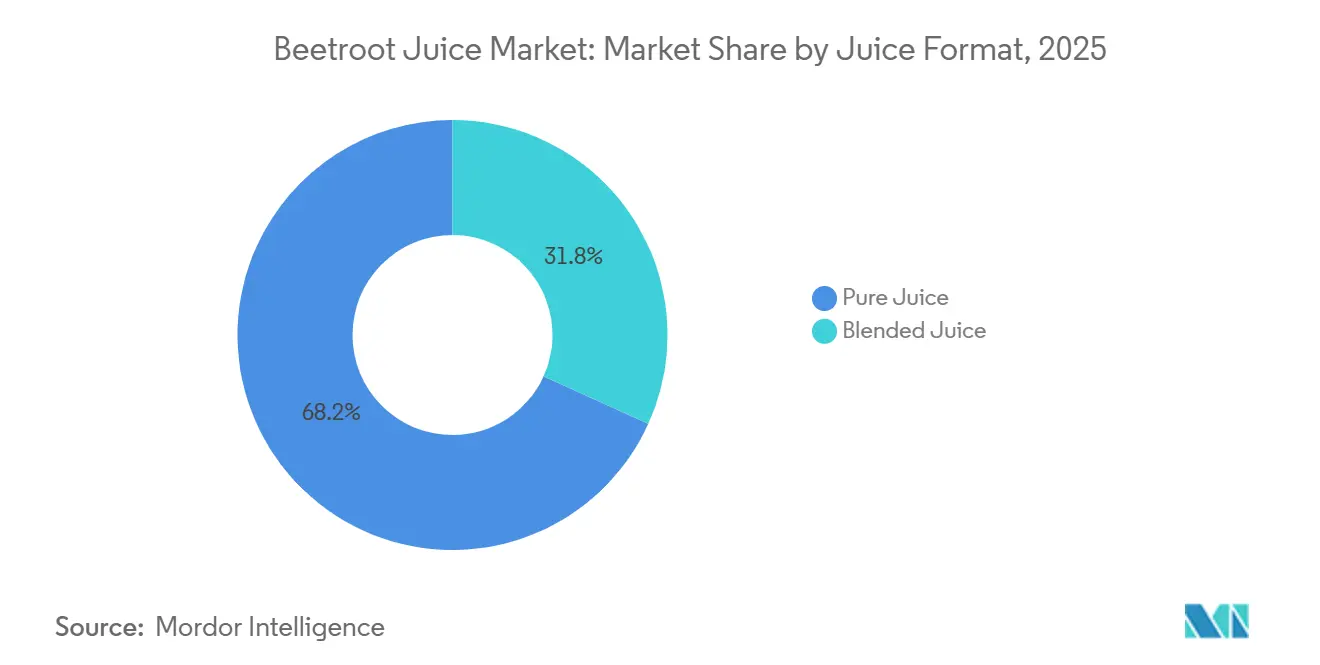
Blended Products Expand Consumer AccessPure juice held 68.22% of the market in 2025, reflecting demand from consumers who prioritize an undiluted beetroot product. Blended juice is projected to grow at a 7.11% CAGR from 2026 to 2031. Blends can reduce the earthy and astringent taste that limits trial among some consumers. They also allow manufacturers to combine beetroot with fruit or other functional ingredients. This format can make the beetroot juice more accessible to consumers who do not regularly buy vegetable juice. It can also create a familiar entry point for shoppers who prefer a softer flavor profile.
Blended products support extension into immunity, cognition, and gut health products without removing beetroot from the formulation. Ingredient combinations can help a brand present several consumer benefits in a single product. They may also support higher pricing in single-serve shots when added ingredients increase product complexity. Pure juice producers retain an advantage with buyers who want direct nitrate content and a simple label. Retailers, however, may favor blended products when those products provide a broader reason for purchase. This can place pressure on single-ingredient products competing for chilled shelf space. The segment therefore reflects a balance between functional purity and wider consumer appeal.
By Packaging Type:
Tetra Packs Support Ambient DistributionBottles held 78.64% of the beetroot juice market size in 2025 because they display the product’s natural color and support premium positioning. Tetra Packs are forecast to advance at a 6.83% CAGR from 2026 to 2031. Their ambient compatibility can lower logistics costs and reduce reliance on refrigerated handling. Tetra Pak launched a paper-based barrier for juice packaging with 92.00% renewable content in December 2025. The company reported a 43.00% lower carbon footprint than aluminum foil-based aseptic packaging, based on Carbon Trust verification.
Bottles remain important for chilled, premium, and visibly natural products. They can help a product signal freshness in health-focused retail environments. Tetra Packs offer a different advantage through shelf stability and simpler export logistics. This helps brands reach grocery, foodservice, and export settings where cold-chain costs are restrictive. The packaging decision can determine which parts of the beetroot juice market a product can enter. Ambient formats may support wider geographic distribution, while bottles continue to serve premium chilled shelves. Packaging development is therefore linked to both environmental messaging and channel access.
By Distribution Channel:
Online Retail Extends ReachSupermarkets and hypermarkets held 43.27% of distribution share in 2025 because they provide mainstream access through health-food and organic sections. Online retail is expected to grow at a 7.12% CAGR from 2026 to 2031. Digital channels allow brands to reach dispersed consumers without building a full physical retail network. Subscription models can also support repeat purchasing for routine wellness products. Online platforms provide space for product education, ingredient explanations, and direct consumer communication. These capabilities are useful in a category where clinical evidence and format differences require explanation.
Specialty stores and convenience outlets remain relevant for single-serve and sports nutrition products. Gyms, marathon events, and health clinics can also support targeted product discovery. Foodservice and medical nutrition retail are smaller channels but may gain relevance as health claims become more visible. The beetroot juice market can use online retail to test new products before seeking broader supermarket distribution. This approach can reduce the risk associated with a full retail launch. Physical stores still matter because they enable first-time trial and routine grocery purchase. A mixed channel strategy can therefore pair digital education with retail visibility.

Geography Analysis
North America Beetroot Juice Market
North America held 45.69% of the 2025 market, supported by health-food retail, established cold-chain systems, and consumer familiarity with functional beverages. The United States drives regional demand through natural grocery, pharmacy, and online direct-to-consumer channels. These channels can support chilled, organic, and clinically positioned products. Canada has emerging demand in urban natural food outlets. Mexico remains at an earlier stage because refrigerated logistics and premium price sensitivity can limit access. The region’s retail structure gives the Beetroot Juice Market an established base for premium products. It also allows specialized brands to reach consumers who already shop for wellness beverages.
APAC Beetroot Juice Market
Asia-Pacific is forecast to expand at a 6.77% CAGR from 2026 to 2031, making it the fastest-growing region. China, India, Japan, Australia, South Korea, and Vietnam offer growth potential through urbanization and higher health spending. Kagome is allocating JPY 500.00 million, equivalent to USD 3.40 million, in additional advertising and sales promotion during the second half of 2026 for its vegetable beverage category in Japan. Kagome Australia produces beetroot juice concentrate up to 50 brix from its Echuca facility. This production base can support regional supply as demand develops. India and China offer opportunities through e-commerce and organized retail, although awareness-building remains important.
EMEA and South America Beetroot Juice Market
Europe holds the second-largest regional position because the United Kingdom, Germany, the Netherlands, Sweden, and France have established organic food retail systems. Germany’s vegetable juice consumption rose 10.00% in 2025, while fruit juice volumes declined 6.00%. VDF German organic food and beverage sales increased 6.70% to EUR 18.23 billion, equivalent to USD 20.10 billion, in 2025. These conditions support demand for certified beetroot products and ambient formats. South America, the Middle East, and Africa remain earlier-stage areas. The United Arab Emirates and Saudi Arabia show the strongest early traction in the Middle East and Africa. The Beetroot Juice Market can expand in these areas as cold-chain and retail access improve.
Competitive Landscape
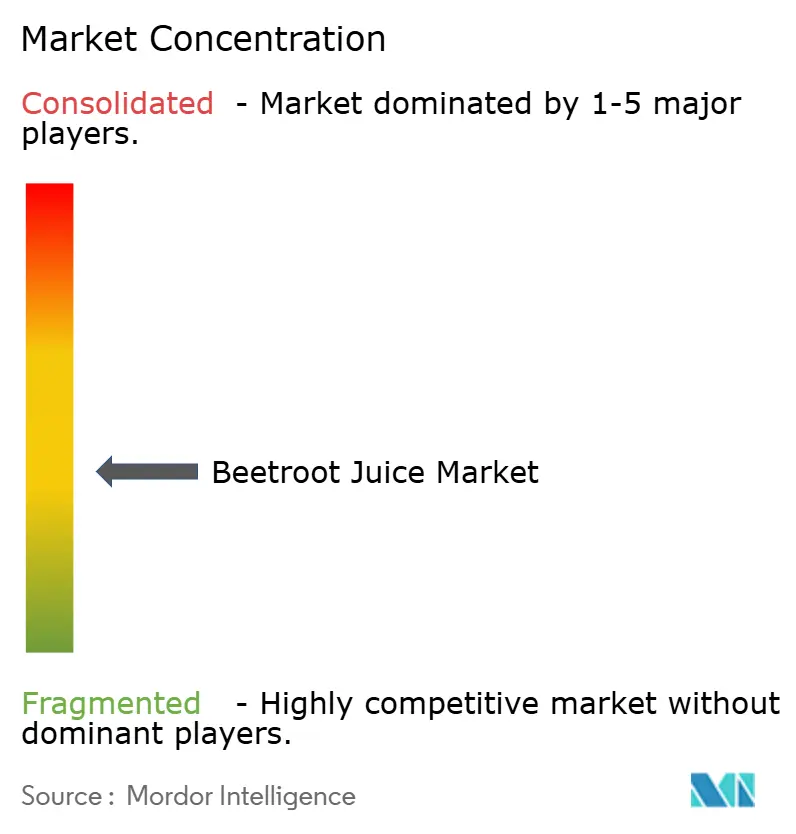
The beetroot juice market has a moderately consolidated structure where specialist producers, organic-focused independent brands, and sports nutrition brands operate without one company holding decisive authority. James White Drinks through Beet It, Biotta AG, G’s Fresh Beets through Love Beets, and Biona are relevant specialist brands in the category. Specialists compete through organic certification, research associations, and focused product formats. Broader beverage companies can enter through larger juice portfolios and established distribution systems. The two groups use different approaches to reach retailers and consumers. Specialist brands often need to invest more directly in consumer education, while larger companies can benefit from existing retail relationships.
Portfolio innovation is a central competitive tool in 2026. Brands can combine beetroot with probiotics, lion’s mane, ginger, or other ingredients to widen product appeal. These formulations can speak to consumers seeking several benefits from a single drink or shot. Cold-pressed processing is also used to support a premium position through product quality and refrigerated shelf life. Tetra Pak’s 2025 paper-based barrier launch shows how packaging suppliers are supporting an alternative route to ambient juice distribution. Kagome’s second-half 2026 spending plan shows continued competition for consumer interest within vegetable beverages. These moves show that formulation, processing, packaging, and promotion can each affect category visibility.
There is room for products linked to exercise performance and post-exercise recovery, where dietary nitrate research can support product communication. The 2025 controlled trial provides a scientific basis for discussing beetroot juice’s cardiovascular effects. Brands must communicate such evidence carefully and consistently with local requirements. Products with a clear clinical basis can stand apart from beverages that depend only on broad wellness associations. Organic certification and durable packaging can add further points of differentiation. The beetroot juice market can remain open to new entrants because no company has secured decisive control.
Beetroot Juice Industry Leaders
-
Biotta AG
-
Windmill Organics Limited (Biona)
-
Haus Rabenhorst O. Lauffs GmbH & Co. KG
-
James White Drinks Ltd
-
Nature’s Way Brands, LLC
- *Disclaimer: Major Players sorted in no particular order
Beetroot Juice Market Companies Covered in this Report
- Biotta AG
- Windmill Organics Limited (Biona)
- Peterson Farms, Inc. (Lakewood Organic)
- Haus Rabenhorst O. Lauffs GmbH & Co. KG
- James White Drinks Ltd
- G’s Fresh Beets Inc. (Love Beets)
- Kagome Co., Ltd.
- IMS Höllinger GmbH
- Purearth Limited
- Nature’s Way Brands, LLC
- Suja Life, LLC
- The Hain Celestial Group, Inc.
- PepsiCo, Inc.
- Starbucks Corporation (Evolution Fresh)
- Ocean Spray Cranberries, Inc.
- Bolthouse Farms
- Pomona Products Ltd
- Naturis
- The Berry Company
- Lidl Great Britain Limited
Recent Industry Developments in Beetroot Juice Market
- August 2026: Kagome committed an additional JPY 500.00 million, equivalent to USD 3.40 million, in second-half 2026 advertising and sales promotion to rebuild vegetable beverage category value following post-price-revision demand recovery challenges, targeting leakage toward soy milk and probiotic drinks.
- December 2025: Tetra Pak, in collaboration with García Carrión and the Don Simón brand, unveiled paper-based barrier technology for juice packaging. The Tetra Brik Aseptic 200 mL Slim Leaf had 92.00% renewable content and a 43.00% lower carbon footprint than aluminum foil-based aseptic packaging, based on Carbon Trust verification.
- April 2025: James White Drinks, the manufacturer of the Beet It brand, invested £250,000 in a new beetroot press at its Suffolk factory to expand production capacity. The new equipment is expected to enable the site to produce more than 1 million litres of organic beetroot juice annually, supporting the company’s response to strong demand for Beet It.
Global Beetroot Juice Market Report Scope
Segmentation Overview
| Conventional Juice |
| Organic Juice |
| Regular |
| Cold-Pressed |
| Pure Juice |
| Blended Juice |
| Bottles |
| Tetra Packs |
| Others |
| Supermarkets/Hypermarkets |
| Convenience/Specialty Stores |
| Online Retail Channels |
| Other Distribution Channels |
| North America | United States |
| Canada | |
| Mexico | |
| Rest of North America | |
| Europe | Germany |
| United Kingdom | |
| France | |
| Italy | |
| Spain | |
| Netherlands | |
| Sweden | |
| Poland | |
| Belgium | |
| Rest of Europe | |
| Asia-Pacific | China |
| India | |
| Japan | |
| Australia | |
| South Korea | |
| Vietnam | |
| Indonesia | |
| Rest of Asia-Pacific | |
| South America | Brazil |
| Argentina | |
| Chile | |
| Peru | |
| Colombia | |
| Rest of South America | |
| Middle East and Africa | United Arab Emirates |
| Saudi Arabia | |
| South Africa | |
| Nigeria | |
| Rest of Middle East and Africa |
| Product Type | Conventional Juice | |
| Organic Juice | ||
| Juice Type | Regular | |
| Cold-Pressed | ||
| Juice Format | Pure Juice | |
| Blended Juice | ||
| Packaging Type | Bottles | |
| Tetra Packs | ||
| Others | ||
| Distribution Channels | Supermarkets/Hypermarkets | |
| Convenience/Specialty Stores | ||
| Online Retail Channels | ||
| Other Distribution Channels | ||
| Geography | North America | United States |
| Canada | ||
| Mexico | ||
| Rest of North America | ||
| Europe | Germany | |
| United Kingdom | ||
| France | ||
| Italy | ||
| Spain | ||
| Netherlands | ||
| Sweden | ||
| Poland | ||
| Belgium | ||
| Rest of Europe | ||
| Asia-Pacific | China | |
| India | ||
| Japan | ||
| Australia | ||
| South Korea | ||
| Vietnam | ||
| Indonesia | ||
| Rest of Asia-Pacific | ||
| South America | Brazil | |
| Argentina | ||
| Chile | ||
| Peru | ||
| Colombia | ||
| Rest of South America | ||
| Middle East and Africa | United Arab Emirates | |
| Saudi Arabia | ||
| South Africa | ||
| Nigeria | ||
| Rest of Middle East and Africa | ||
Key Questions Answered in the Report
What is the projected size of the beetroot juice market by 2031?
The market is forecast to reach USD 472.61 million by 2031, growing at a CAGR of 5.78% from 2026 to 2031.
Which product type is growing fastest in beetroot juice?
Organic juice is the fastest-growing product type, with a projected CAGR of 7.25% through 2031.
Why is cold-pressed beetroot juice gaining demand?
Cold-pressed juice is projected to grow at a 6.58% CAGR, supported by demand for minimally processed products and high-pressure processing.
Which region leads beetroot juice sales?
North America held 45.69% of sales in 2025, supported by health-food retail and developed cold-chain distribution.