
Bamboo Charcoal Market Size and Share
Market Overview
| Study Period | 2021 - 2031 |
|---|---|
| Market Size (2026) | USD 19.91 Billion |
| Market Size (2031) | USD 28.22 Billion |
| Growth Rate (2026 - 2031) | 7.23 % |
| Fastest Growing Market | Asia-Pacific |
| Largest Market | Asia-Pacific |
| Market Concentration | Medium |
Major Players *Disclaimer: Major Players sorted in no particular order Image © Mordor Intelligence. Reuse requires attribution under CC BY 4.0. | |
Bamboo Charcoal Market Analysis by Mordor Intelligence
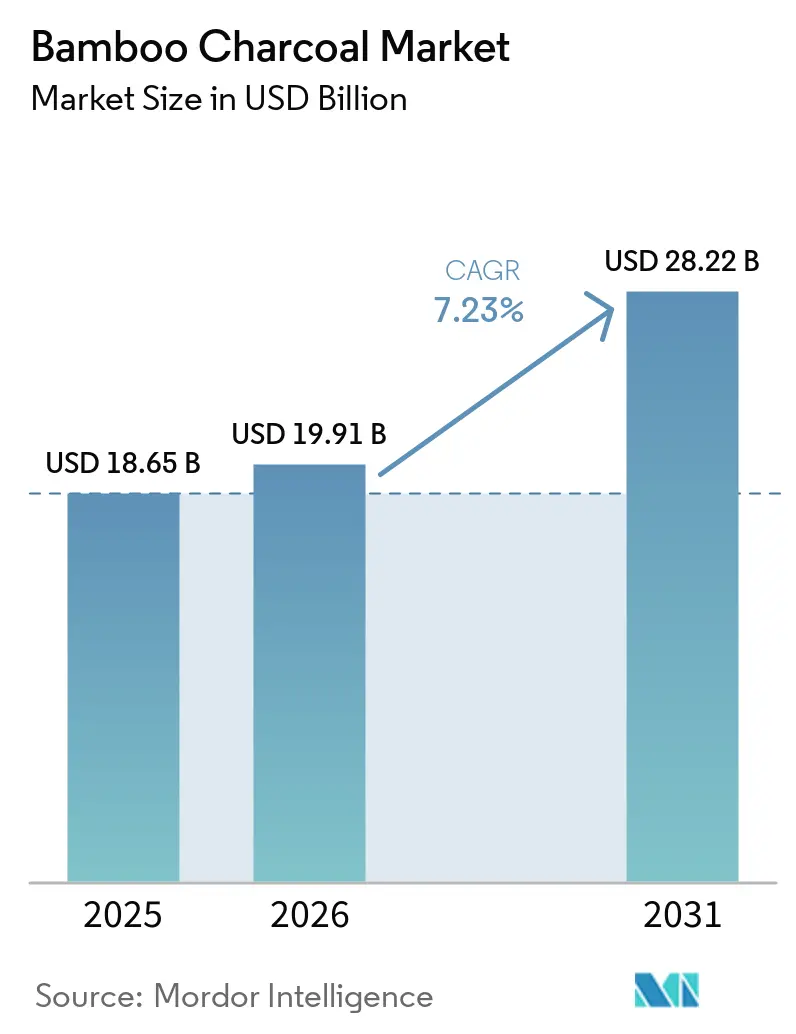
The bamboo charcoal market is expected to grow from USD 18.65 billion in 2025 to USD 19.91 billion in 2026 and reach USD 28.22 billion by 2031, at a CAGR of 7.23% during the forecast period (2026-2031). Demand is shifting toward renewable adsorbents as buyers address emissions-reporting and environmental requirements. Air and water treatment applications are generating recurring demand from industrial and municipal end users. Growing consumer interest in naturally sourced personal care and household products is also expanding demand beyond traditional deodorizing applications. Government initiatives supporting bamboo processing are improving feedstock availability and encouraging investment in processing facilities across major producing regions. E-commerce platforms are broadening access to smaller consumer products, while certification gaps and competition from established activated carbon suppliers remain significant constraints.
Key Report Takeaways
- By raw material, Moso bamboo held 62.45% of revenue in 2025, while Phyllostachys pubescens is expected to record the highest projected CAGR at 7.87% through 2031.
- By application, deodorization accounted for 37.76% of revenue in 2025, while water purification and treatment is expected to record the highest projected CAGR at 7.94% through 2031.
- By density, high-density bamboo charcoal held 55.12% of revenue in 2025, while low-density products are expected to record the highest projected CAGR at 7.77% through 2031.
- By end use, residential use held 45.07% of revenue in 2025, while industrial use is expected to record the highest projected CAGR at 8.13% through 2031.
- By geography, Asia-Pacific accounted for 35.23% of revenue in 2025 and is expected to record the highest projected CAGR at 8.05% through 2031.
Note: Market size and forecast figures in this report are generated using Mordor Intelligence’s proprietary estimation framework, updated with the latest available data and insights as of January 2026.
Global Bamboo Charcoal Market Trends and Insights
Drivers Impact Analysis*
| Driver | (~) % Impact on CAGR Forecast | Geographic Relevance | Impact Timeline |
|---|---|---|---|
| Rising Demand for Renewable and Low-Carbon Adsorbents | +1.8% | Global | Long term (≥ 4 years) |
| Expansion of Air and Water Purification Applications | +1.6% | APAC core, North America and Europe | Medium term (2-4 years) |
| Growth in Natural Personal Care and Wellness Products | +1.1% | North America, Europe and APAC | Medium term (2-4 years) |
| Government Support for Bamboo Processing and Biomass Utilization | +0.9% | APAC, China, India, ASEAN and South America | Long term (≥ 4 years) |
| E-Commerce Expansion for Consumer Deodorizing and Filtration Products | +0.7% | Global, with early gains in North America, Japan and South Korea | Short term (≤ 2 years) |
| Source: Mordor Intelligence | |||
Rising Demand for Renewable and Low-Carbon Adsorbents
Industrial buyers in the water treatment, pharmaceutical, and food processing sectors are assessing adsorbent specifications against sustainability commitments in the bamboo charcoal market. The market benefits as renewable materials gain inclusion on approved vendor lists historically dominated by coal-derived activated carbon. Bamboo cultivation captures atmospheric carbon before pyrolysis converts the biomass into a stable, carbon-rich material. Research published in 2026 found that N-doped bamboo-derived biochar provides selective carbon dioxide capture for advanced adsorption applications. Procurement teams also consider the emissions intensity of purchased inputs in Scope 3 reporting. Consequently, they have a financial incentive to evaluate renewable adsorbents alongside established performance and cost criteria.
Expansion of Air and Water Purification Applications
Air and water purification represent major functional applications within the bamboo charcoal market, supporting recurring replacement demand. Regulatory requirements are strengthening demand, as treatment purchases are often necessary to achieve compliance. Under optimized KOH-urea activation conditions, advanced bamboo charcoal achieved a dichloromethane adsorption capacity of 610.90 mg/g. This performance supports its use in industrial volatile organic compound control applications, particularly in solvent-intensive operations. Bamboo charcoal-embedded composite filters are also being incorporated into residential and commercial heating, ventilation, and air conditioning products in China and India. Replacement filters can generate repeat demand, distinguishing them from one-time purchases of consumer deodorizing bags.
Growth in Natural Personal Care, Wellness, and E-Commerce Products
Personal care brands use bamboo charcoal in oral care, skincare, and haircare products, expanding the bamboo charcoal market through functional consumer goods. The market also reaches consumers through deodorizing bags, refrigerator absorbers, and shoe deodorizers sold through online channels. These channels increase the visibility of sustainability-focused alternatives among consumers who may not actively seek such products.
The European Union’s Directive 2024/825 will take effect on September 27, 2026, and will restrict vague environmental claims in consumer communications. This requirement will favor brands that can substantiate feedstock origin and product-related claims. Subscription-based replenishment offerings may improve sales visibility, although undifferentiated sellers may face margin pressure in online channels.
Government Support for Bamboo Processing and Biomass Utilization
Public programs are expanding beyond plantation support to invest in bamboo processing capacity, strengthening the supply base for the bamboo charcoal market. These initiatives can reduce raw material volatility for companies operating in the bamboo charcoal market. Maharashtra is slated to issue the Bamboo Industry Policy 2025 in December 2025, which proposes a 5–7% bamboo biomass blending requirement for thermal power plants. The policy also aims to attract INR 50,000 crore (USD 5,232 million) in sector investments over 10 years. China’s three-year Bamboo Instead of Plastics Action Plan seeks to improve bamboo utilization efficiency by 20% by 2025. Such measures can strengthen the supply base and increase confidence in long-term industrial supply arrangements.
Restraints Impact Analysis*
| Restraint | (~) % Impact on CAGR Forecast | Geographic Relevance | Impact Timeline |
|---|---|---|---|
| Competition from Coal-Based Activated Carbon and Synthetic Adsorbents | -1.5% | Global, most acute in North America and Europe industrial procurement | Long term (≥ 4 years) |
| Limited Consumer Awareness and Inconsistent Certification | -0.7% | Europe, North America and MEA | Medium term (2-4 years) |
| Feedstock Age, Moisture, and Species Traceability Gaps | -0.5% | APAC supply zones and global supply chains | Medium term (2-4 years) |
| Source: Mordor Intelligence | |||
Competition from Coal-Based Activated Carbon and Synthetic Adsorbents
Coal-based activated carbon suppliers benefit from scale, regeneration infrastructure, and extensive performance documentation, which can limit conversion to bamboo charcoal. These advantages remain important in utility, pharmaceutical, and gas purification contracts. Therefore, the bamboo charcoal market must compete on verified performance in addition to renewable feedstock credentials. Synthetic adsorbents, including metal-organic frameworks and functionalized silica, also serve specialized purification applications. Their presence intensifies competition in premium applications where low contamination levels are critical. Buyers may continue to use incumbent materials when suppliers do not clearly document regeneration data, certifications, and long-term supply consistency.
Limited Consumer Awareness, Certification, and Traceability Gaps
Inconsistent quality standards can create friction in consumer and institutional purchasing decisions in the bamboo charcoal market. ISO 21626-1 outlines general physical and chemical requirements for bamboo charcoal briquettes.[1]British Standards Institution, “BS ISO 21626-1 Bamboo Charcoal Part 1 Generalities,” British Standards Institution, bsigroup.com However, the standard does not cover activated bamboo charcoal variants or all application-specific requirements for pharmaceutical- and food-grade procurement. Feedstock age, moisture content, species selection, and carbonization conditions can materially influence adsorption performance. Research has shown that bamboo biochar produced at 900°C achieved a surface area of 1,305.91 m²/g and tetracycline adsorption capacity of 298.93 mg/g. Suppliers with incomplete provenance records may face challenges in securing long-term contracts that require evidence of ESG compliance or organic certification.
*Our forecasts treat driver/restraint impacts as directional, not additive. The impact forecasts reflect baseline growth, mix effects, and variable interactions.
Segment Analysis
By Raw Material: Moso Bamboo Maintains Scale While Other Species Gain Attention
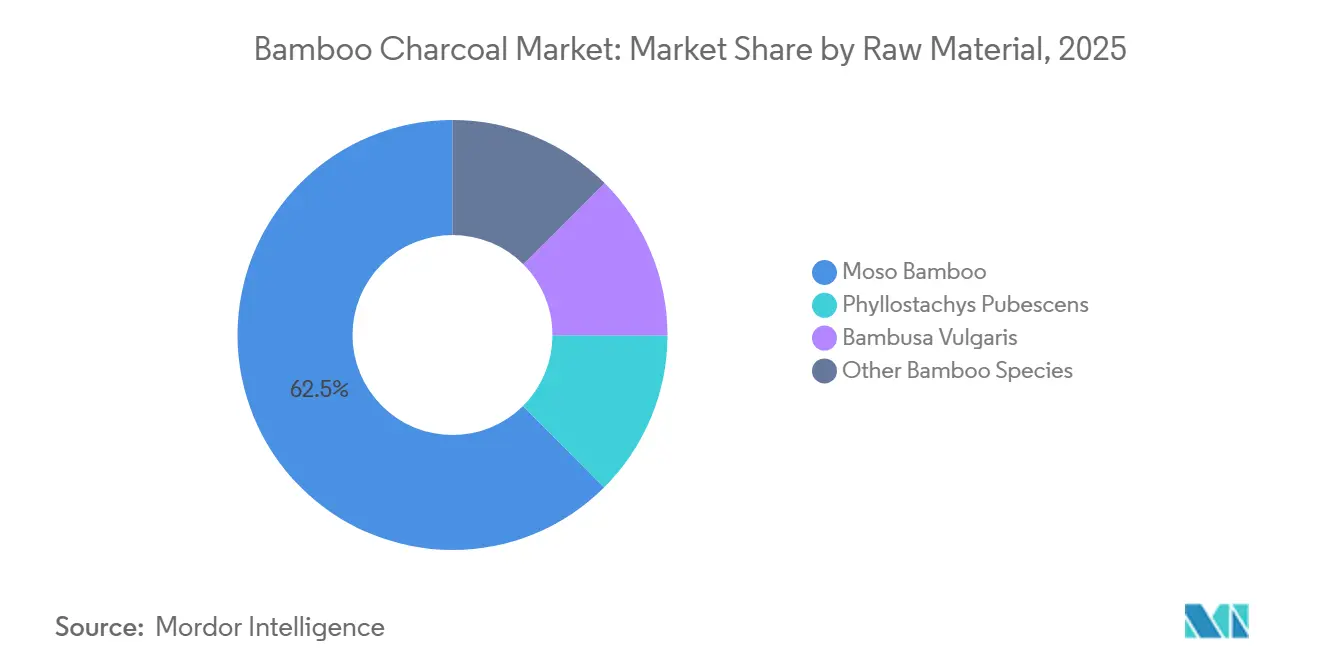
Moso bamboo accounted for 62.45% of the bamboo charcoal market share in the raw material segment in 2025. Its strong position reflects high plantation yields, established carbonization practices, and well-developed processing infrastructure across China, Japan, and Vietnam. Producers have also calibrated many production processes to the cellulose, lignin, and moisture characteristics of Moso bamboo, making it more complex for existing facilities to switch to alternative species. Bambusa vulgaris and other species hold smaller shares but remain important in Southeast Asian regions with limited Moso bamboo plantations. These species support feedstock diversification for producers seeking more resilient sourcing strategies.
Phyllostachys pubescens is projected to grow at a CAGR of 7.87% through 2031, the fastest rate among raw materials. Its pore structure is relevant for building-environment products designed for formaldehyde removal. A 2026 study reports that Bambusa bambos-derived charcoal achieved a methylene blue adsorption capacity of 18.8 mg/g and carbon purity of 94.94%.[2]Journal of Bamboo and Rattan, “Environmental Absorption by Carbon Derived from Bambusa bambos,” Journal of Bamboo and Rattan, doi.org These findings indicate that non-Moso species can support applications requiring defined adsorption performance. A broader species mix can also reduce exposure to disease and drought risks in areas with concentrated Moso bamboo cultivation. However, this shift is likely to remain gradual, as each species requires process-specific optimization.



By Application: Deodorization Leads While Water Treatment Builds Demand
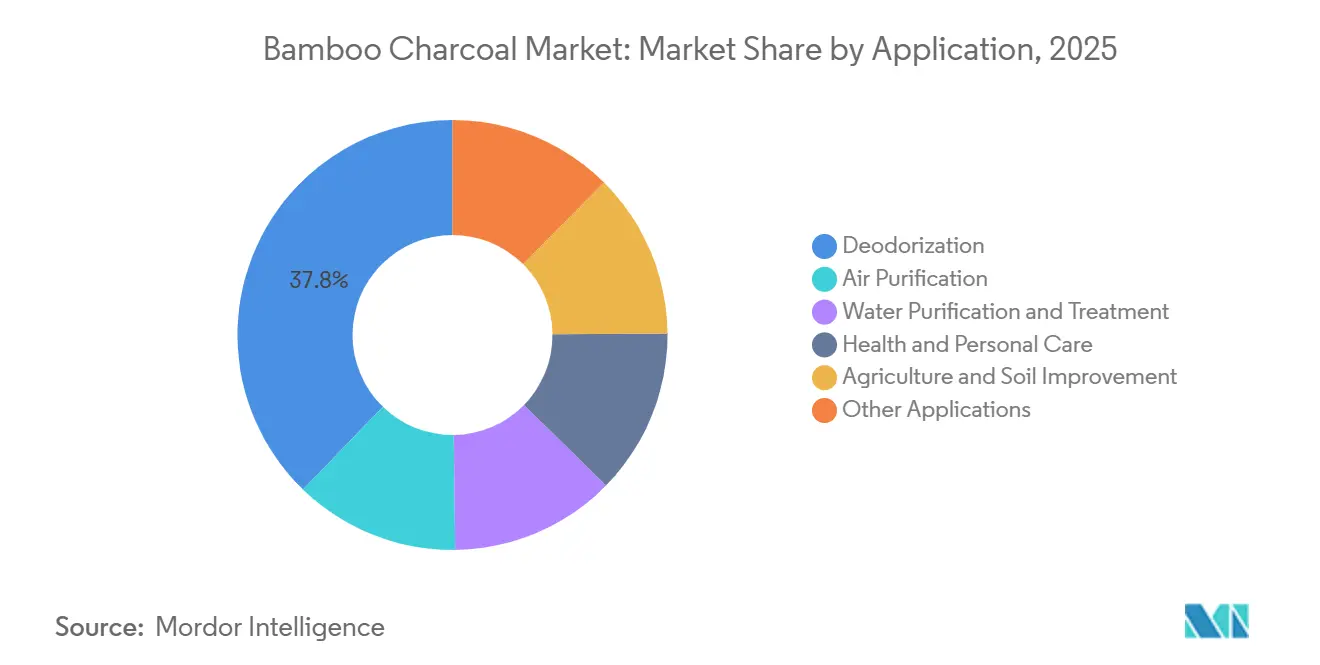
Deodorization accounted for 37.76% of the bamboo charcoal market size by application in 2025. Consumer use across Japan, South Korea, and North America supports the broad installed base for bamboo charcoal products. This category has a shorter product development cycle than regulated treatment applications. In contrast, air purification, agriculture and soil improvement, personal care, and food-related applications depend on distinct demand drivers. Urban air quality requirements support demand for air purification, while consumer preferences for natural ingredients drive personal care applications. Agricultural users are also evaluating bamboo charcoal as a soil amendment with carbon-retention potential.
The water purification and treatment segment is forecast to grow at a CAGR of 7.94% through 2031. Demand from household filtration and industrial wastewater treatment supports this outlook, as treatment systems require repeat purchases and compliance-driven investments. Household point-of-use systems and industrial wastewater treatment applications are both contributing to demand growth. Environmental compliance makes industrial treatment procurement less discretionary than many consumer purchases. A Malaysian industry study found that all surveyed producers of bamboo-derived activated carbon supplied the water treatment and air purification sectors. The same study reported that 66.7% of producers served food processing and pharmaceutical clients. In Japan, carbon-credit frameworks may provide an additional source of value for agricultural soil applications.
By Density: High-Density Products Support Industry While Low-Density Formats Expand
High-density products accounted for 55.12% of the bamboo charcoal market share in the density segment in 2025. Industrial filtration columns, fuel substitution, and metallurgical applications require structural integrity and consistent calorific performance. Medium-density products serve residential deodorizing and light industrial filtration applications, enabling distributors to reduce stock-keeping unit complexity while addressing multiple end-use requirements. High-density production requires tightly controlled processing conditions and higher capital investment, which can provide established suppliers with a degree of margin protection.
Low-density bamboo charcoal is projected to grow at a CAGR of 7.77% through 2031. Lightweight formats support applications such as air-purifying bags, textile-integrated layers, and personal care products. Taiwan Paiho’s BamCoalTex integrates sub-micron bamboo charcoal particles into polyester insulation fiber and reported CLO warmth values of 2.43 to 2.95 in its 2025 product disclosure. Lower shipping weight can improve direct-to-consumer fulfillment economics. Feedstock grade and moisture control continue to determine the density formats that producers can reliably supply.
By End Use: Residential Demand Provides Scale While Industrial Use Grows Faster
Residential end use accounted for 45.07% of revenue in 2025, representing the largest share among end-use categories. Consumer adoption of deodorizing and air-purifying products supports this scale across Asia-Pacific, North America, and Europe. Commercial buyers, including hotels, offices, and specialty retailers, seek odor management products and may use bamboo charcoal products to support sustainability-focused property positioning. However, residential demand for mature deodorizing applications in the Asia Pacific may face slower replacement growth. Producers are responding by expanding consumer product portfolios into personal care and health-related applications.
Industrial end use is projected to grow at a CAGR of 8.13% through 2031. Investments in wastewater treatment infrastructure in China and India are creating a durable source of demand in the bamboo charcoal market. Stricter volatile organic compound controls and growing soil remediation requirements also support industrial applications. In its FY2025 annual report, Tantech Holdings reported consumer purification and deodorization products alongside agricultural and energy sales channels. This product and channel mix demonstrates that established producers can serve both consumer and industrial customers. Construction materials and energy applications also remain relevant within the smaller other end-use category.
Geography Analysis
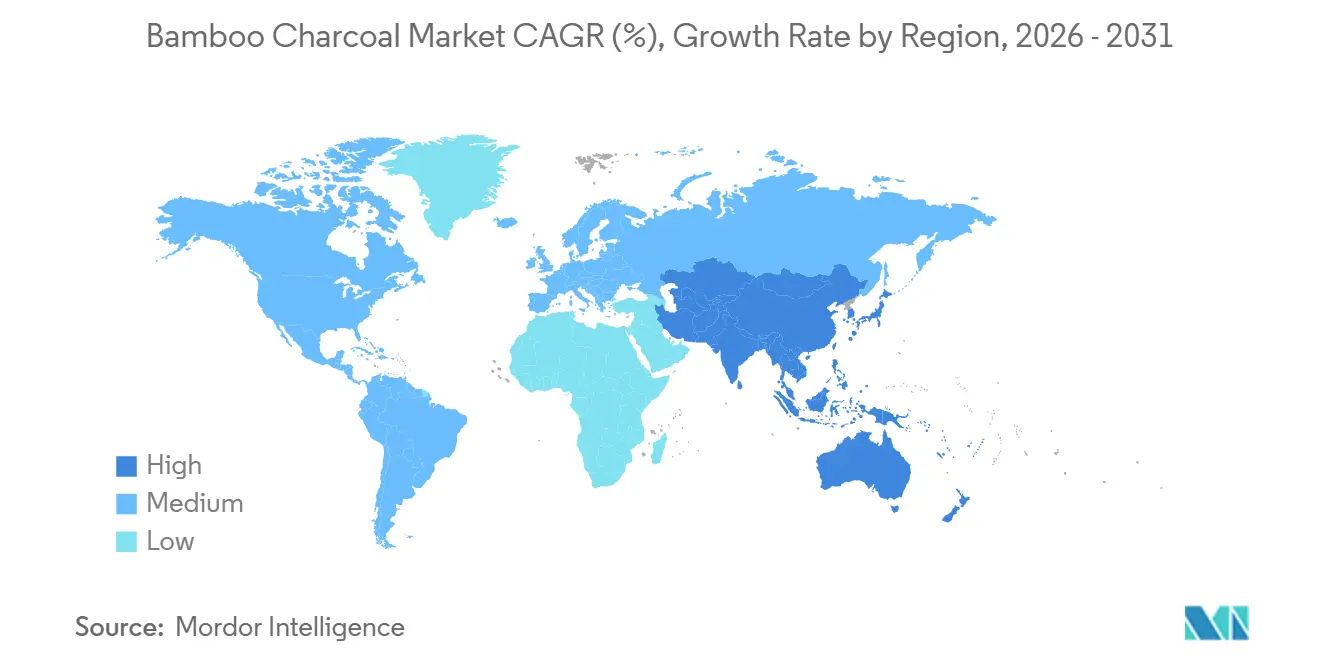
Asia-Pacific accounted for 35.23% of revenue in 2025 and is forecast to grow at 8.05% CAGR through 2031. The region combines substantial bamboo feedstock with concentrated production and consumption systems that anchor the bamboo charcoal market, while China remains a production center, with clusters in Zhejiang, Fujian, and Sichuan located near Moso plantation areas. Producers in these areas supply domestic industrial demand and export customers in North America, Japan, and Europe. India is expanding its bamboo value chain through processing and biomass investments.
Assam approved fiscal incentives in April 2026 for a USD 1.20 billion bamboo-to-biomethanol facility. The project supports a larger regional bamboo supply chain, with potential benefits for adjacent charcoal producers, while Japan has higher average selling prices because of its water purification tradition and sophisticated wellness products segment. North America and Europe are primarily importing regions where sustainability rules and consumer preferences guide bamboo charcoal market demand. Directive 2024/825 can favor suppliers with documentation that supports environmental claims.
South America and the Middle East and Africa remain smaller revenue areas within the bamboo charcoal market. Brazil's commercial agriculture sector is evaluating bamboo-derived biochar for soil amendment uses. Argentina's Misiones province attracted USD 2.50 million for a bamboo-derived activated carbon and biochar facility in June 2026. The facility targets initial capacity of 600-800 tonnes of activated carbon each year for regional bamboo charcoal market customers. Research on Colombia's Guadua angustifolia identified activated carbon potential comparable to Moso-derived materials. Water infrastructure and specialty consumer demand offer longer-term opportunities in the Middle East and Africa.

Competitive Landscape
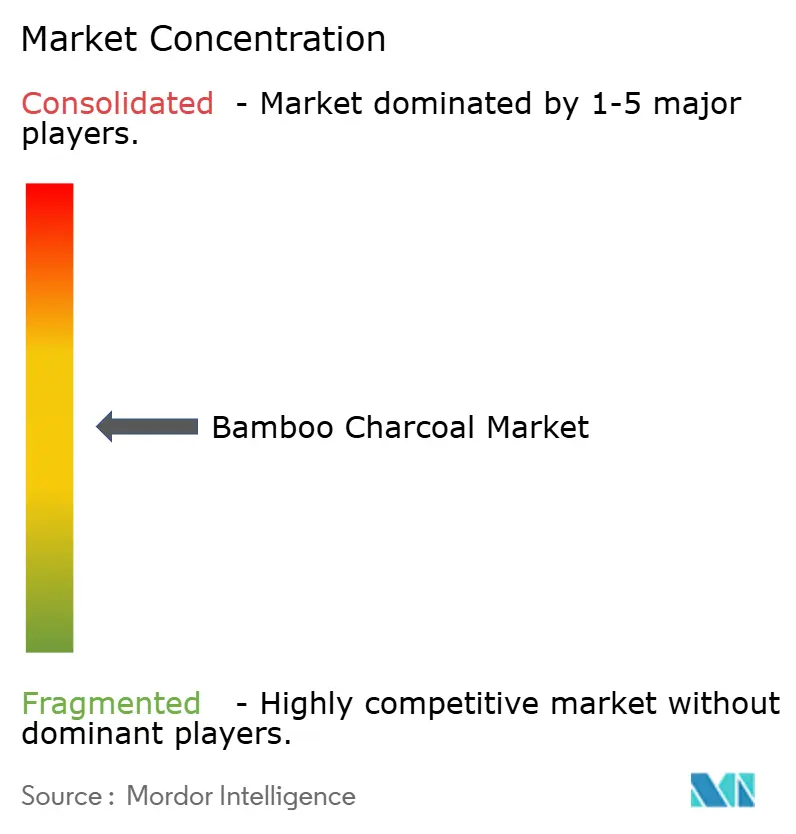
The bamboo charcoal market is moderately fragmented across industrial and consumer applications. Key Chinese manufacturers include Tantech Holdings Ltd., Quzhou Modern Carbon Industry Co., Ltd., Jiangshan Luyi Bamboo Charcoal Co., Ltd., and Fujian Guangze Qingsheng Charcoal Industry Co., Ltd. These companies compete based on production scale, processing capabilities, and proximity to feedstock sources in Zhejiang and Fujian. In contrast, Moso Natural and PearlBar focus more strongly on consumer-facing positioning in North America and Europe. Their strategies prioritize product claims, certifications, and targeted sales channels rather than price-based competition in the bamboo charcoal market.
Tantech Holdings filed its FY2025 annual report in May 2026, outlining its strategy to establish a U.S. subsidiary and register trademarks. This initiative supports the company’s efforts to connect Chinese production capacity with consumer distribution channels in North America. Companies that control plantation sourcing and carbonization processes can enhance material traceability across the bamboo charcoal market. FSC-certified sourcing, compliance with ISO 21626-1, and water-treatment certifications can help suppliers meet institutional requirements. These capabilities can facilitate access to premium retail channels and support longer-term supply contracts. Vertical integration can also reduce exposure to variations in feedstock quality.
The key competitive opportunity in the bamboo charcoal market lies at the intersection of industrial performance and consumer-facing quality assurance. Suppliers that demonstrate filtration performance while building trusted consumer brands can address multiple revenue streams. Although smaller consumer brands continue to face relatively low entry barriers, they often lack the supply security of larger producers. Industrial buyers typically require evidence of regeneration durability and consistent feedstock documentation, increasing the value of controlled production processes and verified application testing.
Bamboo Charcoal Industry Leaders
Moso Natural
Nara Tanka Industries Co., Ltd.
Quzhou Modern Charcoal Industry Co., Ltd.
Jiangshan Luyi Bamboo Charcoal Co., Ltd.
PearlBar
- *Disclaimer: Major Players sorted in no particular order

Recent Industry Developments
- April 2026: The Government of Assam approved a landmark fiscal incentive package for the world’s first industrial-scale bamboo-to-biomethanol facility. Novel Biofuels and infrastructure originator ACTUAL are developing the facility, which has a total project value of USD 1.20 billion. The facility will produce 1,400 kiloliters of biomethanol per day using sustainably harvested bamboo sourced from Assam’s smallholder farming communities and is expected to commence operations by 2030. This development represents Asia’s largest single government endorsement of bamboo biomass valorization and indicates a structural increase in upstream bamboo supply chain investment, benefiting adjacent regional charcoal producers.
- June 2026: Argentina's Misiones province attracted USD 2.50 million in private investment for the region's first dedicated bamboo-derived activated carbon and biochar production facility, with initial capacity targeting 600-800 tonnes of activated carbon annually. The project is positioned to serve growing demand from soil remediation and water treatment sectors in South America, reducing the region's import dependency for bio-adsorbent materials.


Global Bamboo Charcoal Market Report Scope
Bamboo charcoal is a highly porous, sustainable carbon material made by heating mature bamboo at high temperatures (600–1,200°C) in low-oxygen kilns.
The bamboo charcoal market is segmented by raw material, application, density, end-use industry, and geography. By raw material, the market is segmented into moso bamboo, phyllostachys pubescens, bambusa vulgaris, and other bamboo species. By application, the market is segmented into deodorization, air purification, water purification and treatment, health and personal care, agriculture and soil improvement, and other applications. By density, the market is segmented into high density, medium density, and low density. By end-use industry, the market is segmented into residential, commercial, industrial, and others. By geography, the market is segmented into Asia Pacific, North America, Europe, South America, the Middle East and Africa. The report also covers the bamboo charcoal market size and forecasts for the bamboo charcoal market in 15 countries across major regions. For each segment, the market sizing and forecasts have been done on the basis of value (USD).
| Moso Bamboo |
| Phyllostachys Pubescens |
| Bambusa Vulgaris |
| Other Bamboo Species |
| Deodorization |
| Air Purification |
| Water Purification and Treatment |
| Health and Personal Care |
| Agriculture and Soil Improvement |
| Other Applications |
| High Density |
| Medium Density |
| Low Density |
| Residential |
| Commercial |
| Industrial |
| Others |
| Asia-Pacific | China |
| India | |
| Japan | |
| South Korea | |
| ASEAN Countries | |
| Rest of Asia-Pacific | |
| North America | United States |
| Canada | |
| Mexico | |
| Europe | Germany |
| United Kingdom | |
| France | |
| Italy | |
| NORDIC Countries | |
| Rest of Europe | |
| South America | Brazil |
| Argentina | |
| Rest of South America | |
| Middle East and Africa | Saudi Arabia |
| South Africa | |
| Rest of Middle East and Africa |
| By Raw Material | Moso Bamboo | |
| Phyllostachys Pubescens | ||
| Bambusa Vulgaris | ||
| Other Bamboo Species | ||
| By Application | Deodorization | |
| Air Purification | ||
| Water Purification and Treatment | ||
| Health and Personal Care | ||
| Agriculture and Soil Improvement | ||
| Other Applications | ||
| By Density | High Density | |
| Medium Density | ||
| Low Density | ||
| By End Use | Residential | |
| Commercial | ||
| Industrial | ||
| Others | ||
| By Geography | Asia-Pacific | China |
| India | ||
| Japan | ||
| South Korea | ||
| ASEAN Countries | ||
| Rest of Asia-Pacific | ||
| North America | United States | |
| Canada | ||
| Mexico | ||
| Europe | Germany | |
| United Kingdom | ||
| France | ||
| Italy | ||
| NORDIC Countries | ||
| Rest of Europe | ||
| South America | Brazil | |
| Argentina | ||
| Rest of South America | ||
| Middle East and Africa | Saudi Arabia | |
| South Africa | ||
| Rest of Middle East and Africa | ||


Key Questions Answered in the Report
What is the projected value of bamboo charcoal by 2031?
The bamboo charcoal market is forecast to reach USD 28.22 billion by 2031, growing at a 7.23% CAGR from 2026. Growth is linked to renewable adsorbent demand, water and air treatment needs, consumer products, and government support for bamboo processing. Industrial adoption depends on performance documentation, reliable sourcing, and certifications that meet procurement requirements for treatment and filtration applications.
Which bamboo charcoal raw material held the largest share?
Moso bamboo led the raw material segment with 62.45% of revenue share in 2025. Its established plantation base and carbonization compatibility support dependable supply, although producers are also assessing other species to reduce sourcing concentration.
Which application is growing fastest through 2031?
Water purification and treatment is forecast to grow at 7.94% CAGR through 2031. Household filtration and industrial wastewater treatment support this outlook, because treatment systems require repeat purchasing and compliance-driven investment.
Which region is growing fastest through 2031?
Asia-Pacific is forecast to grow at 8.05% CAGR through 2031 and held 35.23% of revenue in 2025. China provides production scale, while India is increasing bamboo value-chain investment and Japan supports higher-value purification and wellness applications.
Page last updated on:





