
Aneurysm Clips Market Size and Share
Market Overview
| Study Period | 2021 - 2032 |
|---|---|
| Market Size (2027) | USD 118.27 Million |
| Market Size (2032) | USD 157.38 Million |
| Growth Rate (2027 - 2032) | 5.88 % |
| Fastest Growing Market | Asia-Pacific |
| Largest Market | North America |
| Market Concentration | Medium |
Major Players *Disclaimer: Major Players sorted in no particular order Image © Mordor Intelligence. Reuse requires attribution under CC BY 4.0. | |
Aneurysm Clips Market Analysis by Mordor Intelligence
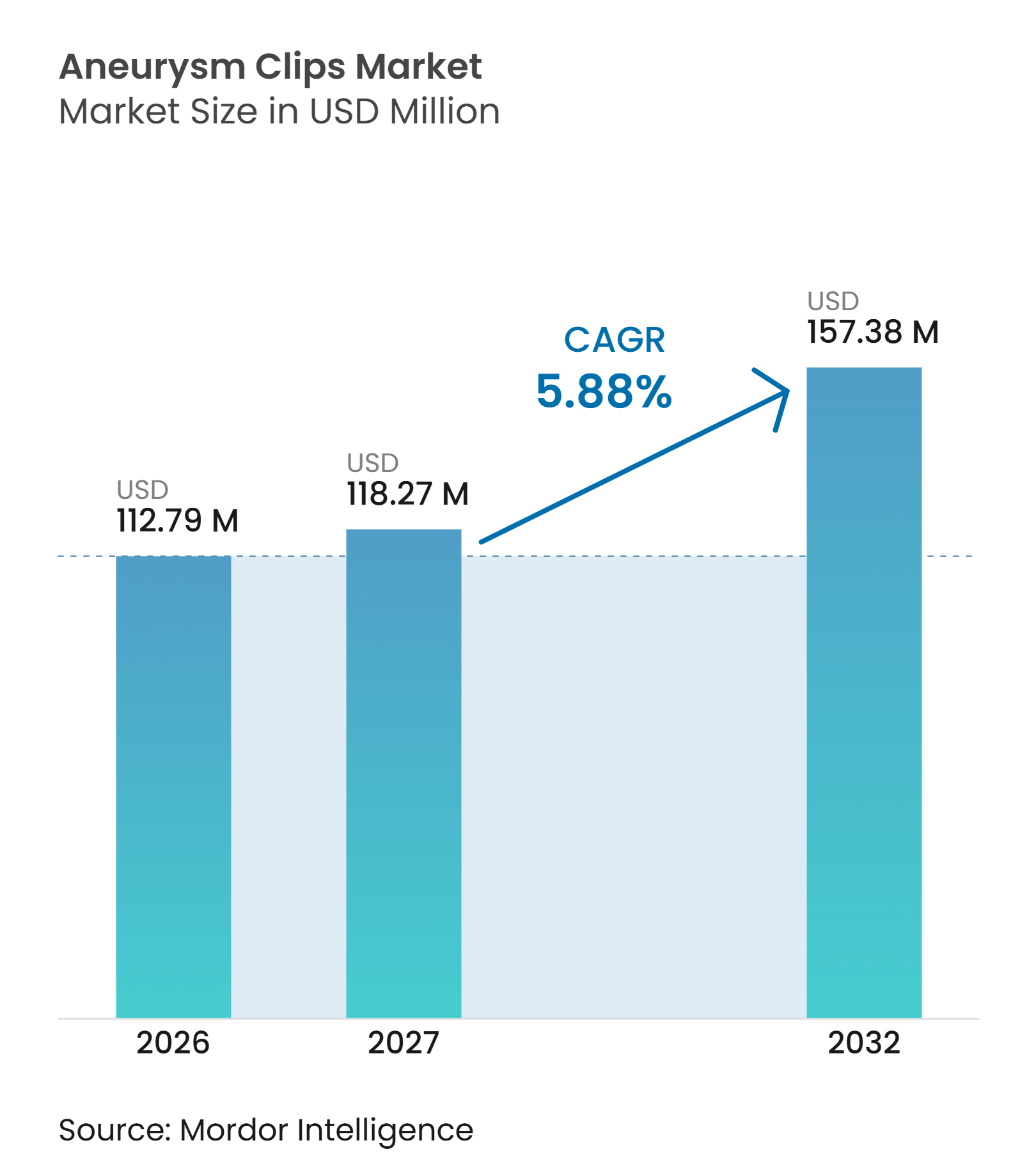
The Aneurysm Clips Market size is projected to be USD 112.79 million in 2026, USD 118.27 million in 2027, and reach USD 157.38 million by 2032, growing at a CAGR of 5.88% from 2027 to 2032.
The aneurysm clips market continues to serve cases in which permanent anatomical closure is preferred, particularly where aneurysm shape or location limits catheter-based treatment. A 2025 evidence review found that unruptured intracranial aneurysms affected 5.4% of the assessed population, with higher odds associated with age, female sex, hypertension, and smoking. Wider use of CTA, MRA, and DSA can therefore increase referrals for treatment planning at neurovascular centers. The aneurysm clips market also benefits from demand for MRI-compatible materials and from the concentration of difficult procedures at specialized programs. Endovascular technologies remain an important constraint, but clinical evidence continues to support clipping for selected complex aneurysms.
Key Report Takeaways
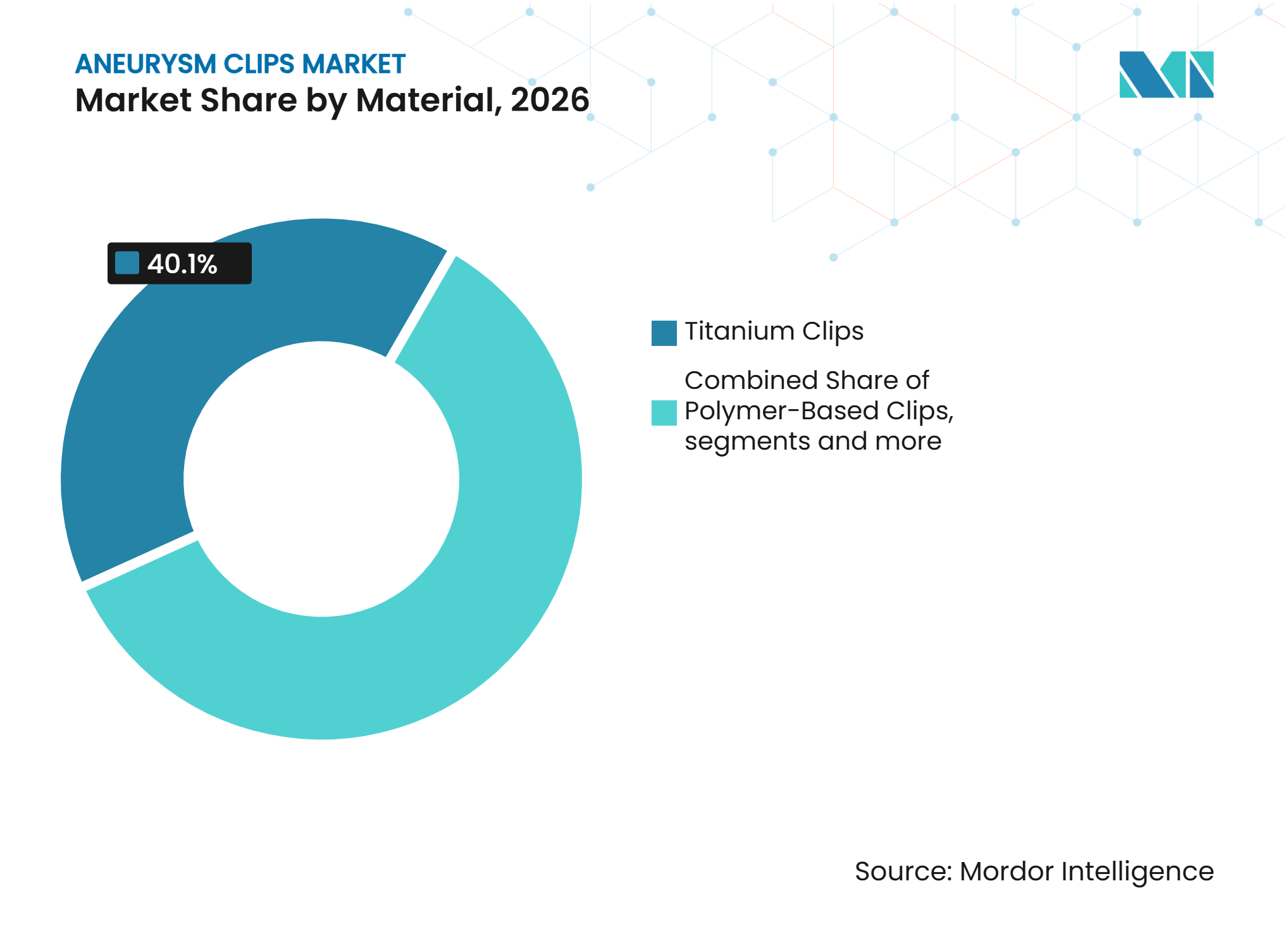
- By material, titanium clips held 40.14% of the aneurysm clip revenue share in 2026, while polymer-based clips are forecast to grow at a 6.21% CAGR through 2032.
- By device modality, permanent clips accounted for 52.53% of the aneurysm clip revenue share in 2026, while temporary clips are expected to grow at a 7.25% CAGR through 2032.
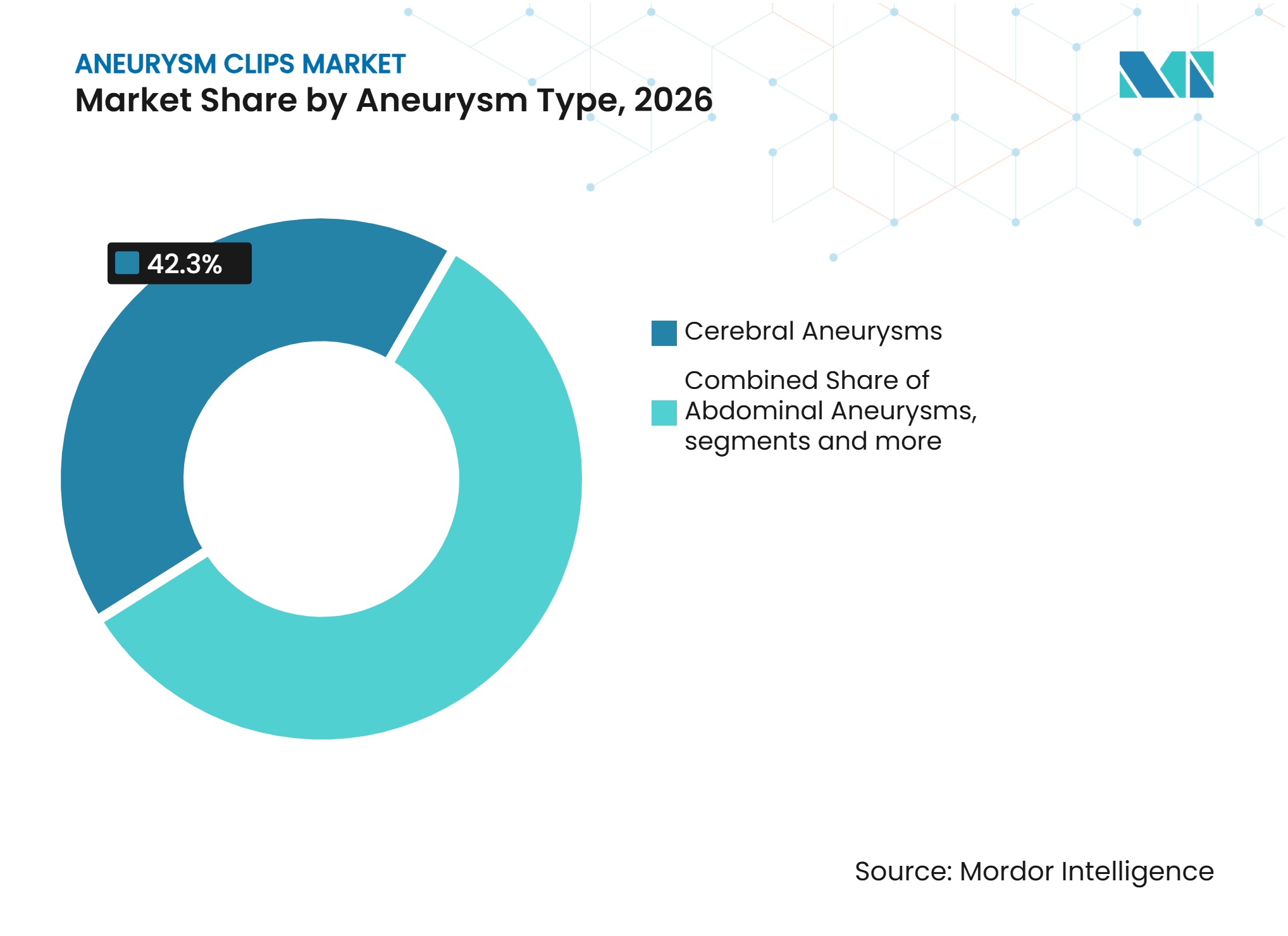
- By aneurysm type, cerebral aneurysms accounted for 42.26% of revenue in 2026, while abdominal aneurysms are anticipated to grow at a 6.82% CAGR through 2032.
- By end-user, hospitals held 43.14% of revenue in 2026, while specialty neurosurgery centers and clinics are expected to grow at a 7.73% CAGR through 2032.
- By geography, North America held 47.42% of revenue in 2026, while Asia-Pacific is projected to grow at an 8.26% CAGR through 2032.
Note: Market numbers in this report are based on Mordor Intelligence's proprietary estimation framework, which combines nine months of actuals with Q4 projections for base year 2026.
Market Trends and Insights
Drivers Impact Analysis of Aneurysm Clips Market*
| Driver | (~) % Impact on CAGR Forecast | Geographic Relevance | Impact Timeline |
|---|---|---|---|
| Rising Detection of Intracranial Aneurysms Through CTA, MRA, and DSA | +1.4% | Global, with highest imaging penetration in North America, Europe, and Asia-Pacific | Short term (≤ 2 years) |
| Titanium and MRI-Compatible Clip Adoption | +1.3% | Global, with strongest demand in North America and Europe | Medium term (2-4 years) |
| Persistent Clipping Demand for Complex and Wide-Neck Aneurysms | +1.0% | Global, especially high-volume centers in North America, Europe, and Japan | Long term (≥ 4 years) |
| Expansion of Neurosurgical Infrastructure in Asia-Pacific | +0.9% | China, India, Southeast Asia, and the Middle East and Africa | Medium term (2-4 years) |
| Growth in Microsurgical Training and High-Volume Neurovascular Centers | +0.6% | North America, Europe, and East Asia | Long term (≥ 4 years) |
| Patient-Specific Clip Planning Using Three-Dimensional Imaging and Mixed Reality | +0.4% | North America, Europe, Japan, South Korea, and Australia | Medium term (2-4 years) |
| Source: Mordor Intelligence | |||
Rising Detection of Intracranial Aneurysms Through CTA, MRA, and DSA
Expanding access to CTA and MRA is increasing the number of diagnosed aneurysms that reach clinical assessment. A 2025 review of 304,848 subjects reported a 5.4% prevalence of unruptured intracranial aneurysms and identified age, female sex, hypertension, and smoking as independent predictors.[1]These factors are relevant to screening and referral programs in countries with established brain-health services. Silent MRA reduces radiation and contrast exposure, and a 2025 study reported its diagnostic value for unruptured intracranial aneurysms.[2] Earlier identification can bring patients to surgical consultations before aneurysms become more difficult to manage. The aneurysm clips market gains from this broader treatment pipeline, especially when imaging identifies anatomy that needs microsurgical review.
Titanium and MRI-Compatible Clip Adoption
ASTM F2503 MR-conditional labeling supports postoperative imaging protocols where MRI is required. Aesculap’s YASARGIL system includes more than 320 clip designs and 55 applier configurations in titanium and Phynox, allowing hospitals to match materials and geometry to case requirements.[3] The aneurysm clips market is also shaped by planning tools that help surgeons prepare for difficult vascular anatomy. A 2025 mixed-reality simulator study distinguished levels of clipping skill among 40 participating neurosurgeons at international courses. These tools can support training and more deliberate use of temporary clips during complex procedures.
Persistent Clipping Demand for Complex and Wide-Neck Aneurysms
The aneurysm clips market retains a defined role in wide-neck, fusiform, large-caliber, and other complex aneurysms. A 2025 meta-analysis of 139,485 patients reported higher complete occlusion with clipping at midterm follow-up and a lower retreatment rate than endovascular coiling. For anterior communicating artery and middle cerebral artery aneurysms, published evidence continues to compare clipping favorably with coiling in selected cases. A randomized 2025 comparison also found that flow diversion was not superior to coiling for wide-neck ophthalmic aneurysms below 10 mm. This leaves a durable role for fenestrated, angled, and bayonet clip designs. The aneurysm clips market therefore depends increasingly on specialized product configurations rather than routine saccular aneurysm cases.
Expansion of Neurosurgical Infrastructure in Asia-Pacific
China’s ChTUIA prospective registry enrolled patients from 83 regional neurological centers to develop management protocols for unruptured aneurysms. Japan’s JR-NET 4 registry recorded 24,037 cerebral aneurysm treatments within its neuroendovascular cohort, showing a high-density clinical environment for aneurysm care. The aneurysm clips market can benefit when infrastructure supports both open and endovascular treatment options. Training remains important because clipping requires specialized microsurgical proficiency. Mixed-reality navigation has also shown improved spatial instrument guidance in a 2024 clinical investigation of 14 middle cerebral artery clipping cases.
Restraints Impact Analysis of Aneurysm Clips Market*
| Restraint | (~) % Impact on CAGR Forecast | Geographic Relevance | Impact Timeline |
|---|---|---|---|
| Shift Toward Endovascular Coiling, Flow Diversion, and Intrasaccular Devices | -0.5% | Global, with greatest impact in Europe and East Asia | Short term (≤ 2 years) |
| High Procedural Complexity and Dependence on Specialist Neurosurgeons | -0.2% | Global, especially the Middle East and Africa, South America, and smaller Asian cities | Long term (≥ 4 years) |
| MRI Documentation Risk for Legacy and Unidentified Clips | -0.2% | North America and Europe | Medium term (2-4 years) |
| Procurement Pressure and Declining Unit Volumes in Mature Markets | -0.1% | China and Western Europe | Medium term (2-4 years) |
| Source: Mordor Intelligence | |||
Shift Toward Endovascular Coiling, Flow Diversion, and Intrasaccular Devices
The shift toward endovascular therapy is the main structural restraint on the aneurysm clips market. In a propensity-matched analysis of centers in Eastern China, endovascular treatment was used for 90% of unruptured aneurysm patients between 2018 and 2022. However, the available evidence does not show that newer endovascular options replace clipping in every complex presentation. In mature settings, purchasing rules and compliance costs can also limit unit revenue even when procedure volumes remain stable. The aneurysm clips market consequently faces a case mix that favors fewer but more complex procedures with more specialized clip configurations.
High Procedural Complexity and Dependence on Specialist Neurosurgeons
Aneurysm clipping requires experienced neurovascular surgeons, operating room support, and intensive perioperative resources. This dependence can restrict the aneurysm clips market in regions where imaging access grows faster than specialist workforce capacity. The 2025 simulator validation at international neurosurgical courses showed that mixed-reality training can differentiate novice, intermediate, and expert skill levels. Such systems are still concentrated in academic centers that can fund simulation and navigation infrastructure. MRI protocols also create a challenge for legacy or unidentified clips that lack complete MR-conditional documentation. European medical device requirements can favor manufacturers with robust technical files and post-market evidence, while making replacement decisions more demanding for hospitals.
*Our forecasts treat driver/restraint impacts as directional, not additive. The impact forecasts reflect baseline growth, mix effects, and variable interactions.
Aneurysm Clips Market Segment Analysis
By Material:
Titanium Leads While Polymer Clips Address MRI Artifact ReductionTitanium accounted for 40.14% of the aneurysm clips market by material in 2026. Its position reflects non-ferromagnetic properties, established surgical use, and MR-conditional classification under ASTM F2503. Stainless steel remains relevant where MRI follow-up is less frequent. Phynox and cobalt-alloy options continue to serve cases that require resilient geometry or complex fenestration.
Polymer-based clips are forecasted to grow at a 6.21% CAGR through 2032. The aneurysm clips market size for this material category is tied to the aim of eliminating MRI artifacts rather than making a minor improvement to metal performance. Biocompatibility requirements under ISO 10993 add development work for new polymer products. Those requirements may also raise barriers for suppliers that enter this category later.



By Device Modality:
Permanent Clips Lead While Temporary Clips Gain from Complex ProceduresPermanent clips accounted for 52.53% of the aneurysm clip revenue share by device modality in 2026. Every clipping procedure requires permanent closure of the aneurysm neck, and difficult cases can require several clips. The permanent category benefits from this requirement for definitive occlusion. It also benefits from minimally invasive microsurgical approaches that remain relevant in selected cases.
Temporary clips are expected to grow at a 7.25% CAGR through 2032. Their use during parent artery control is associated with difficult dissection, risk of intraoperative rupture, and surgeon preference. The aneurysm clips market may see higher temporary clip use per procedure as referrals move toward specialty programs.
By Aneurysm Type:
Cerebral Aneurysms Anchor Demand While Abdominal Cases GrowCerebral aneurysms represented 42.26% of the aneurysm clips market by aneurysm type in 2026. This position follows the close link between clip systems and intracranial neurovascular surgery. Posterior communicating, anterior communicating, and middle cerebral artery aneurysms are important locations for microsurgical treatment. Thoracic aneurysms contribute a smaller revenue base and can involve hybrid open-endovascular procedures. Peripheral aneurysms remain a specialized indication where endovascular access is limited.
Abdominal aneurysms are forecasted to grow at a 6.82% CAGR through 2032. A 2025 propensity score-matched registry analysis found lower 7-year reintervention rates and rupture risk with open surgical repair than EVAR among standard-risk patients. Open repair can be selected for younger patients and anatomically difficult cases. The aneurysm clips market remains relevant where hostile neck anatomy and endoleak risk complicate stent-graft treatment.

By End-User:
Hospitals Lead While Specialty Centers Concentrate Complex CareHospitals held 43.14% of end-user revenue in 2026. Their role includes emergency care for ruptured aneurysms and planned procedures that need hybrid suites, ICU support, and intraoperative monitoring. Ambulatory surgical centers contribute a smaller base where local rules permit outpatient neurosurgery. Research and academic institutes generate limited demand through simulation, validation, and training.
Specialty neurosurgery centers and clinics are forecasted to grow at a 7.73% CAGR through 2032. These programs combine neurosurgery and neuroradiology capabilities and receive referrals from wider geographic areas. Higher procedure volumes help surgeons preserve proficiency across varied clip designs. The model can also extend beyond private hospital networks as public health systems develop specialist capacity.
Geography Analysis
North America
North America held 47.42% of the aneurysm clip revenue share in 2026. The region benefits from dense neurovascular center networks, reimbursement for microsurgical procedures, and replacement demand for MRI-compatible systems. The U.S. regulatory classification for aneurysm clips is Class II under 21 CFR 882.5200. North American demand is expected to remain substantial through 2032, although its global weight may decline as Asia-Pacific expands.
Europe
Europe remains significant because Germany, the United Kingdom, and France maintain established neurovascular programs. German hospitals continue to provide clipping alongside endovascular therapy as part of broader vascular neurosurgery services. The aneurysm clips market in the region is influenced by the EU MDR 2017/745 framework. This framework favors suppliers with well-documented materials and post-market evidence. It can also speed the replacement of legacy clips without MR-conditional documentation. A 2024 Germany-wide analysis found that endovascular and surgical approaches continued to coexist at the national scale.
Asia-Pacific, Middle East, Africa, and South America
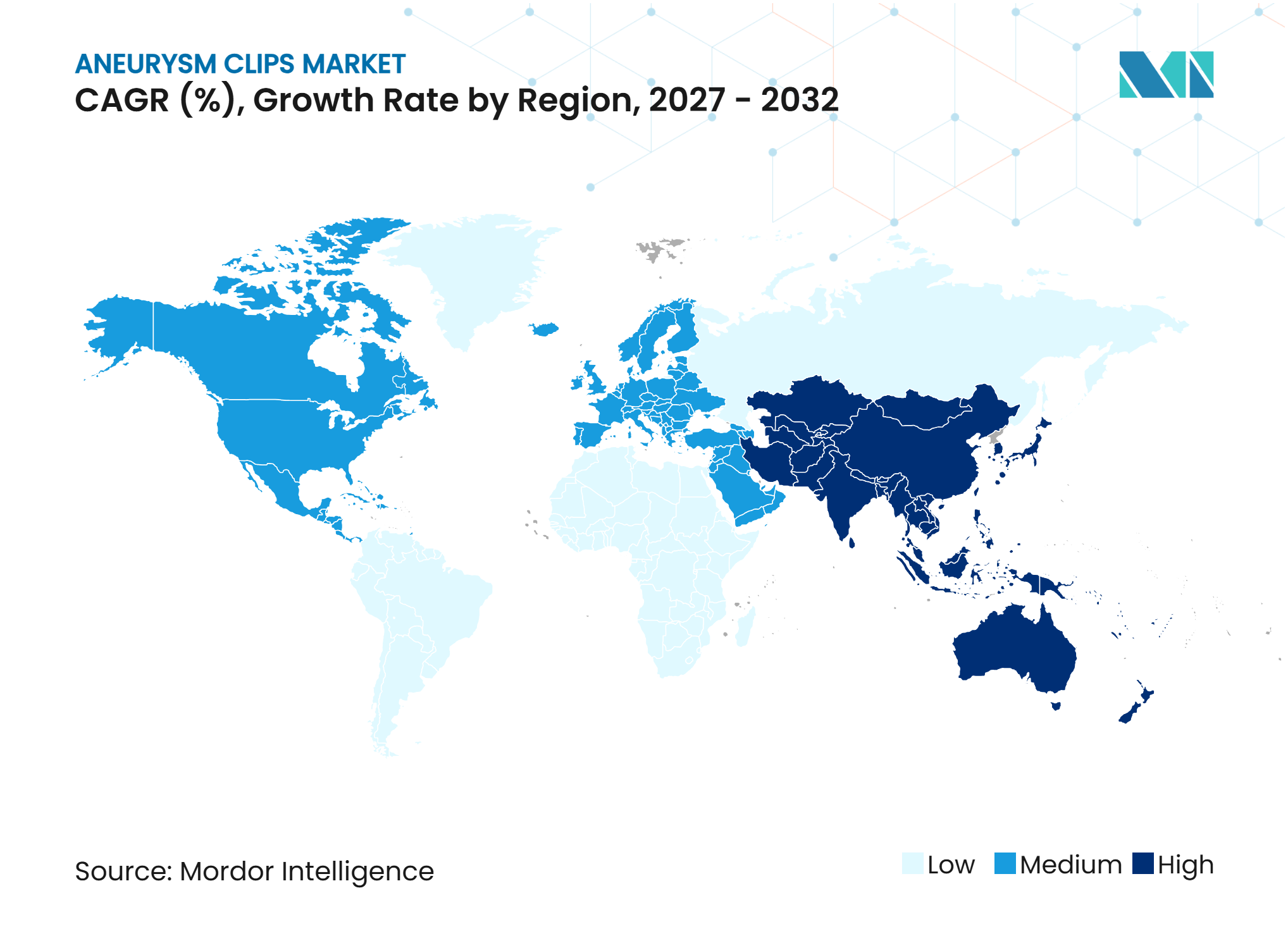
Asia-Pacific is projected to grow at an 8.26% CAGR through 2032, the fastest regional rate in the aneurysm clips market. China combines a large clinical base with changing procurement conditions and a need for local manufacturing strategies. Japan’s JR-NET 4 registry included 60,354 neuroendovascular procedures and 24,037 cerebral aneurysm treatments. These figures show a high-density treatment setting where complex anatomy can still support surgical clipping. South Korea is adding treatment options, which reinforces a mixed-modality approach to aneurysm care. The Middle East, Africa, and South America remain earlier-stage opportunities that depend on workforce development and specialist infrastructure.
Competitive Landscape
Market Concentration
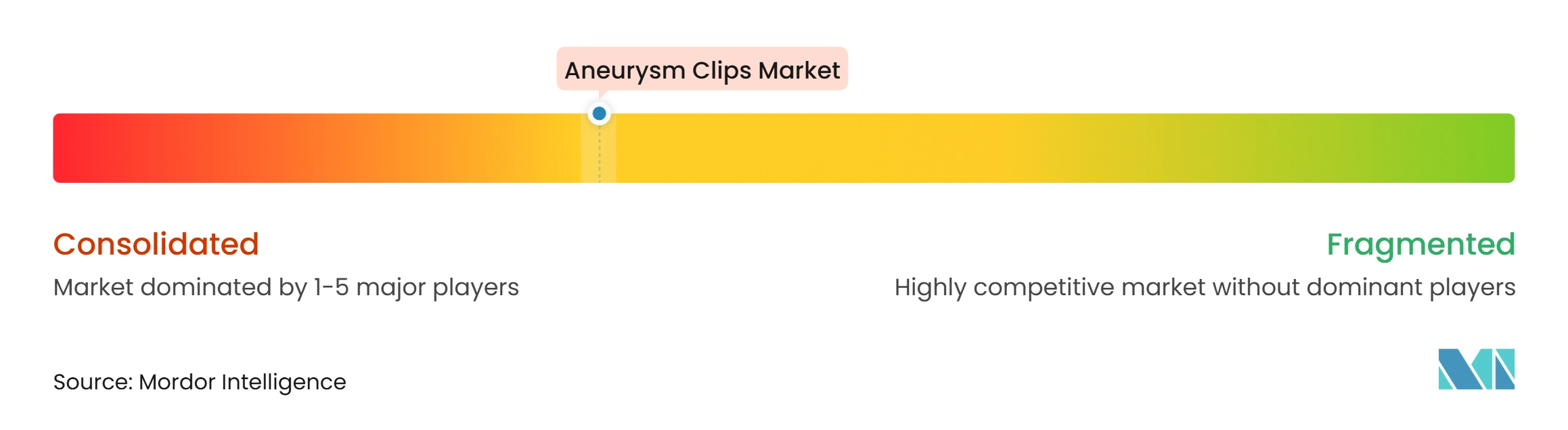
The aneurysm clips market is moderately concentrated around established technology platforms and clinical validation. B. Braun’s Aesculap division offers the YASARGIL platform with more than 320 clip designs in more than 80 countries. This scale supports its premium position in mature markets. MIZUHO Corporation, KLS Martin Group, Peter Lazic GmbH, adeor medical AG, evonos GmbH, and Rebstock Instruments GmbH compete through clip geometry, materials, applier ergonomics, and relationships with surgeons. Medtronic and Stryker participate through broader neurosurgical ecosystems that can connect clip offerings with navigation, access, and other procedural equipment. No combined market share for the leading suppliers was provided, so the available information does not support a quantified concentration calculation.
Strategic competition in the aneurysm clips market is centered on materials, procedural tools, and portfolio depth. Fraunhofer IPT’s MR-Clip development program with Peter Lazic GmbH targets a fully artifact-free fiber-reinforced plastic clip. The program addresses a remaining imaging need for centers that require postoperative MRI surveillance. Aesculap continues to use its broad YASARGIL design portfolio to cover standard and complex clip placement requirements. Product differentiation is also linked to fenestrated designs, clip applier systems, and MR-conditional documentation. These areas matter because complex referrals often require a specific geometry rather than a standard clip.
Medtronic completed its acquisition of Scientia Vascular for USD 550 million in June 2026. The acquisition adds guidewires and catheters to Medtronic’s neurovascular access and therapy portfolio. It gives the company a larger role across the workflow used for hemorrhagic and ischemic interventions. This move strengthens competition from integrated neurovascular suppliers around hospitals and specialty centers. It may also increase the value of bundled procedural relationships even where clip systems remain clinically necessary. The aneurysm clips market, therefore, remains competitive on both specialized clip features and the ability to support the full neurovascular care pathway.
Aneurysm Clips Industry Leaders
-
MIZUHO Corporation
-
B. Braun SE
-
Peter Lazic GmbH
-
Integra LifeSciences Corporation
-
Rebstock Instruments GmbH
- *Disclaimer: Major Players sorted in no particular order
Aneurysm Clips Market Companies Covered in this Report
- Abbott Laboratories
- Acandis
- adeor medical AG
- B. Braun
- Boston Scientific
- Cerenovus
- Evonos
- Inomed Medizintechnik
- Integra LifeSciences
- KLS Martin Group
- Medtronic
- MicroVention
- MIZUHO Corporation
- Penumbra
- Peter Lazic GmbH
- RauMedic
- Rebstock Instruments GmbH
- Stryker
- Terumo
- YKD Medical
Recent Industry Developments in Aneurysm Clips Market
- June 2026: Medtronic plc completed its acquisition of Scientia Vascular for USD 550 million, integrating the Utah-based company’s neurovascular guidewires and catheters into Medtronic Neurovascular. The transaction strengthens Medtronic’s procedural access capabilities across both hemorrhagic aneurysm and ischemic stroke neurovascular workflows, and management described it as enabling “every neurovascular procedure to start with Medtronic”.
- March 2026: Medtronic announced its definitive agreement to acquire Scientia Vascular for USD 550 million, with the strategic rationale of building a complete neurovascular access-to-therapy portfolio that complements its existing clip, coil, and intrasaccular product lines.
- September 2025: B. Braun SE fully acquired True Digital Surgery (TDS), integrating digital robotic-assisted 3D surgical microscopy and exoscope technology into its Aesculap neurosurgical division. The acquisition positions B. Braun to offer integrated digital visualization and clip systems within a single procedural workflow, targeting high-volume neurovascular centers transitioning away from conventional optical microscopes.
Global Aneurysm Clips Market Report Scope
According to the report’s scope, the aneurysm clips market refers to the global medical devices segment focused on surgical clips used in neurosurgery to occlude cerebral aneurysms and prevent rupture or rebleeding. These clips are typically made of biocompatible metals such as titanium or cobalt alloys and are applied during microsurgical clipping procedures as a definitive treatment for intracranial aneurysms.
The aneurysm clips market is segmented into material, device modality, aneurysm type, end-user, and geography. By material, the market is segmented into titanium clips, polymer-based clips, stainless steel clips, and other materials. By device modality, the market is segmented into permanent aneurysm clips and temporary aneurysm clips. By drug class, the market is segmented into cerebral aneurysms, abdominal aneurysms, thoracic aneurysms, and peripheral aneurysms. By end-user, the market is segmented into hospitals, specialty neurosurgery centers/clinics, ambulatory surgical centers, and research institutes and academic institutes. By geography, the market is segmented into North America, Europe, Asia-Pacific, the Middle East and Africa, and South America. The report also covers the estimated market sizes and trends for 17 countries across major regions globally. The report offers values (USD) for all the above segments.
Segmentation Overview
| Titanium Clips |
| Polymer-Based Clips |
| Stainless Steel Clips |
| Other Materials |
| Permanent Aneurysm Clips |
| Temporary Aneurysm Clips |
| Cerebral Aneurysms |
| Abdominal Aneurysms |
| Thoracic Aneurysms |
| Peripheral Aneurysms |
| Hospitals |
| Specialty Neurosurgery Centers/Clinics |
| Ambulatory Surgical Centers |
| Other End Users (Research Institutes and Academic Institutes, among others) |
| North America | United States |
| Canada | |
| Mexico | |
| Europe | Germany |
| United Kingdom | |
| France | |
| Italy | |
| Spain | |
| Rest of Europe | |
| Asia-Pacific | China |
| Japan | |
| India | |
| Australia | |
| South Korea | |
| Rest of Asia-Pacific | |
| Middle East and Africa | GCC |
| South Africa | |
| Rest of Middle East and Africa | |
| South America | Brazil |
| Argentina | |
| Rest of South America |
| By Material | Titanium Clips | |
| Polymer-Based Clips | ||
| Stainless Steel Clips | ||
| Other Materials | ||
| By Device Modality | Permanent Aneurysm Clips | |
| Temporary Aneurysm Clips | ||
| By Aneurysm Type | Cerebral Aneurysms | |
| Abdominal Aneurysms | ||
| Thoracic Aneurysms | ||
| Peripheral Aneurysms | ||
| By End-User | Hospitals | |
| Specialty Neurosurgery Centers/Clinics | ||
| Ambulatory Surgical Centers | ||
| Other End Users (Research Institutes and Academic Institutes, among others) | ||
| By Geography | North America | United States |
| Canada | ||
| Mexico | ||
| Europe | Germany | |
| United Kingdom | ||
| France | ||
| Italy | ||
| Spain | ||
| Rest of Europe | ||
| Asia-Pacific | China | |
| Japan | ||
| India | ||
| Australia | ||
| South Korea | ||
| Rest of Asia-Pacific | ||
| Middle East and Africa | GCC | |
| South Africa | ||
| Rest of Middle East and Africa | ||
| South America | Brazil | |
| Argentina | ||
| Rest of South America | ||
Key Questions Answered in the Report
What is the projected value of the aneurysm clips market by 2032?
The aneurysm clips market is forecasted to reach USD 157.38 million by 2032, increasing from USD 112.79 million in 2026 to USD 118.27 million in 2027 at a 5.88% CAGR.
Why are temporary aneurysm clips growing faster than permanent clips?
Temporary aneurysm clips are forecasted to grow at a 7.25% CAGR because referrals increasingly involve difficult procedures that need controlled parent artery occlusion.
Which region is expected to grow fastest through 2032?
Asia-Pacific is projected to record an 8.26% CAGR through 2032. Growth reflects expanding neurovascular infrastructure, specialist training, and high clinical treatment volumes in China, India, Japan, and South Korea.
Who uses aneurysm clips most often?
Hospitals led end-user revenue with 43.14% in 2026. Specialty neurosurgery centers and clinics are expected to grow at 7.73% CAGR.