
Amniotic Products Market Size and Share
Market Overview
| Study Period | 2021 - 2032 |
|---|---|
| Market Size (2027) | USD 2.22 Billion |
| Market Size (2032) | USD 3.96 Billion |
| Growth Rate (2027 - 2032) | 12.26 % |
| Fastest Growing Market | Asia-Pacific |
| Largest Market | North America |
| Market Concentration | Medium |
Major Players *Disclaimer: Major Players sorted in no particular order Image © Mordor Intelligence. Reuse requires attribution under CC BY 4.0. | |
Amniotic Products Market Analysis by Mordor Intelligence
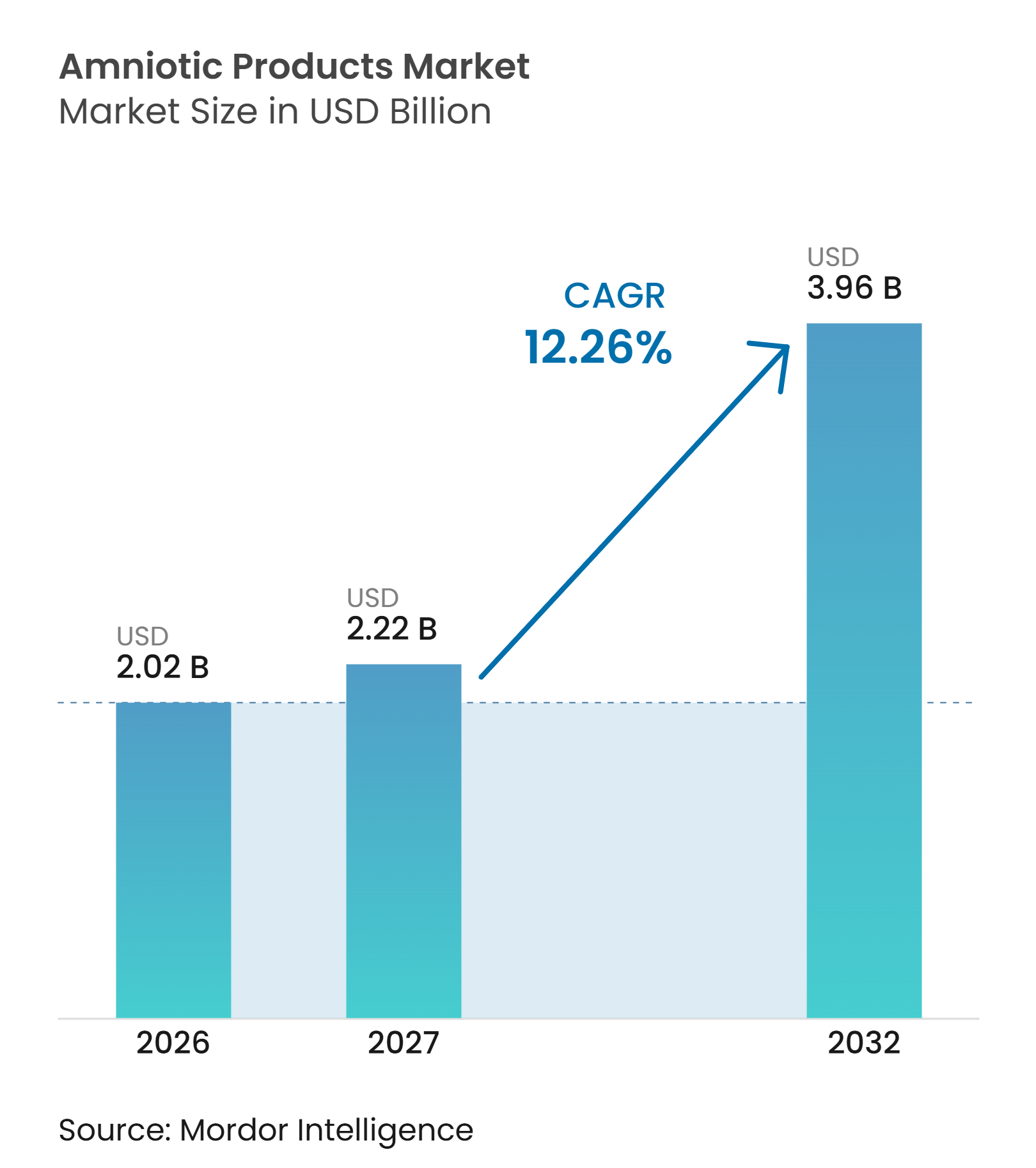
The Amniotic Products Market size is expected to increase from USD 2.02 billion in 2026 to USD 2.22 billion in 2027 and reach USD 3.96 billion by 2032, growing at a CAGR of 12.26% over 2027-2032.
Demand is supported by chronic wound care, ophthalmology, and orthopedic practice, where clinicians use tissue-derived biologics to support healing. The 2025 International Diabetes Federation atlas reported that more than 828 million adults had diabetes in 2024, creating a large patient base with wound-healing needs. Room-temperature preservation is widening access because it reduces reliance on cold-chain storage. The amniotic products market is also changing as reimbursement policy directs manufacturers toward stronger clinical evidence and a wider mix of applications. Companies with credible clinical data, regulated product pathways, and distribution access are better placed to manage the shift in the amniotic products market.
Key Report Takeaways
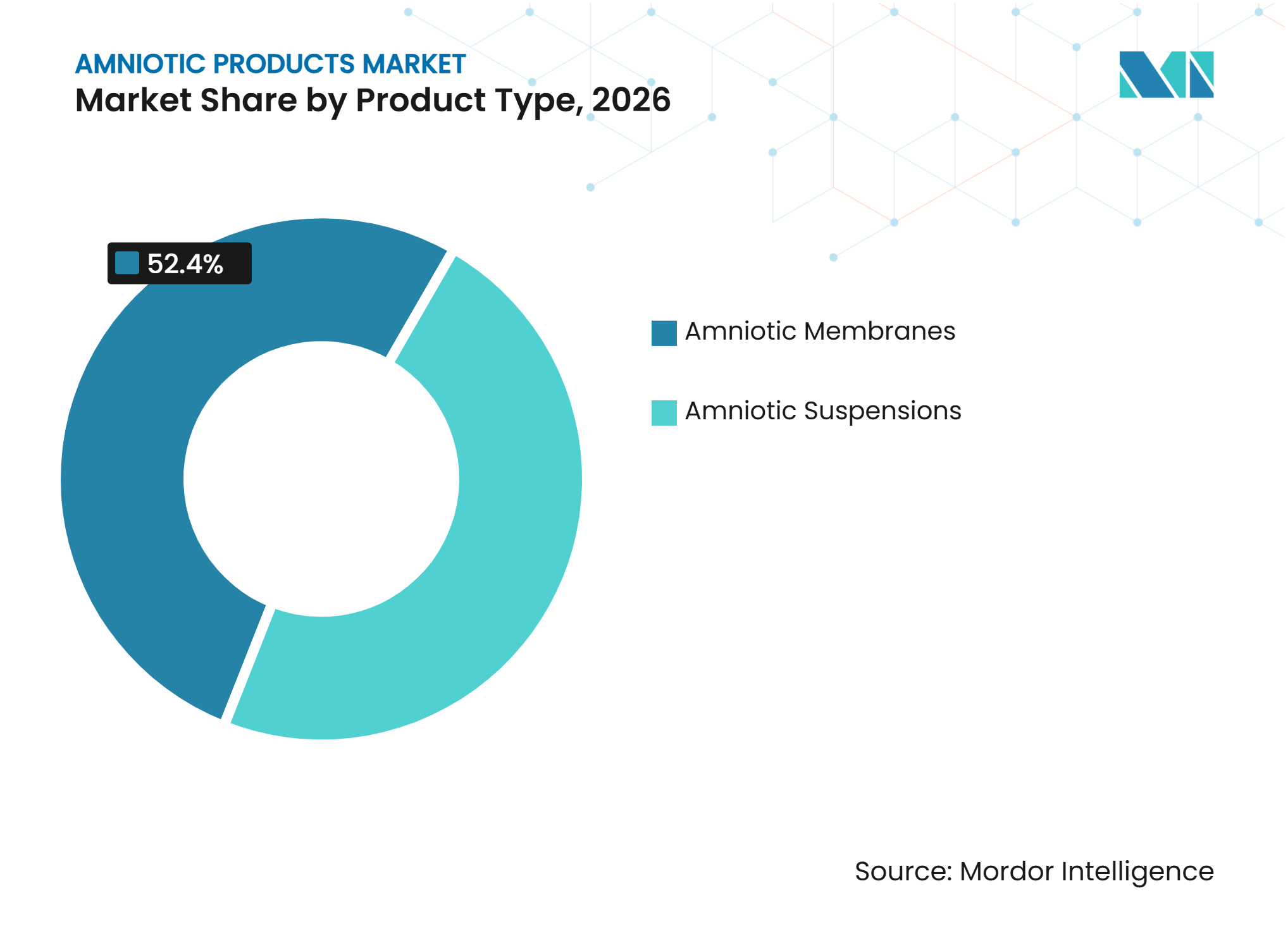
- By product type, amniotic membranes held 52.35% of the amniotic products market share in 2026, while amniotic suspensions are projected to grow at a 13.23% CAGR through 2032.
- By application, wound care accounted for 43.42% of revenue in 2026, while orthopedics and sports medicine are forecast to expand at a 14.26% CAGR through 2032.
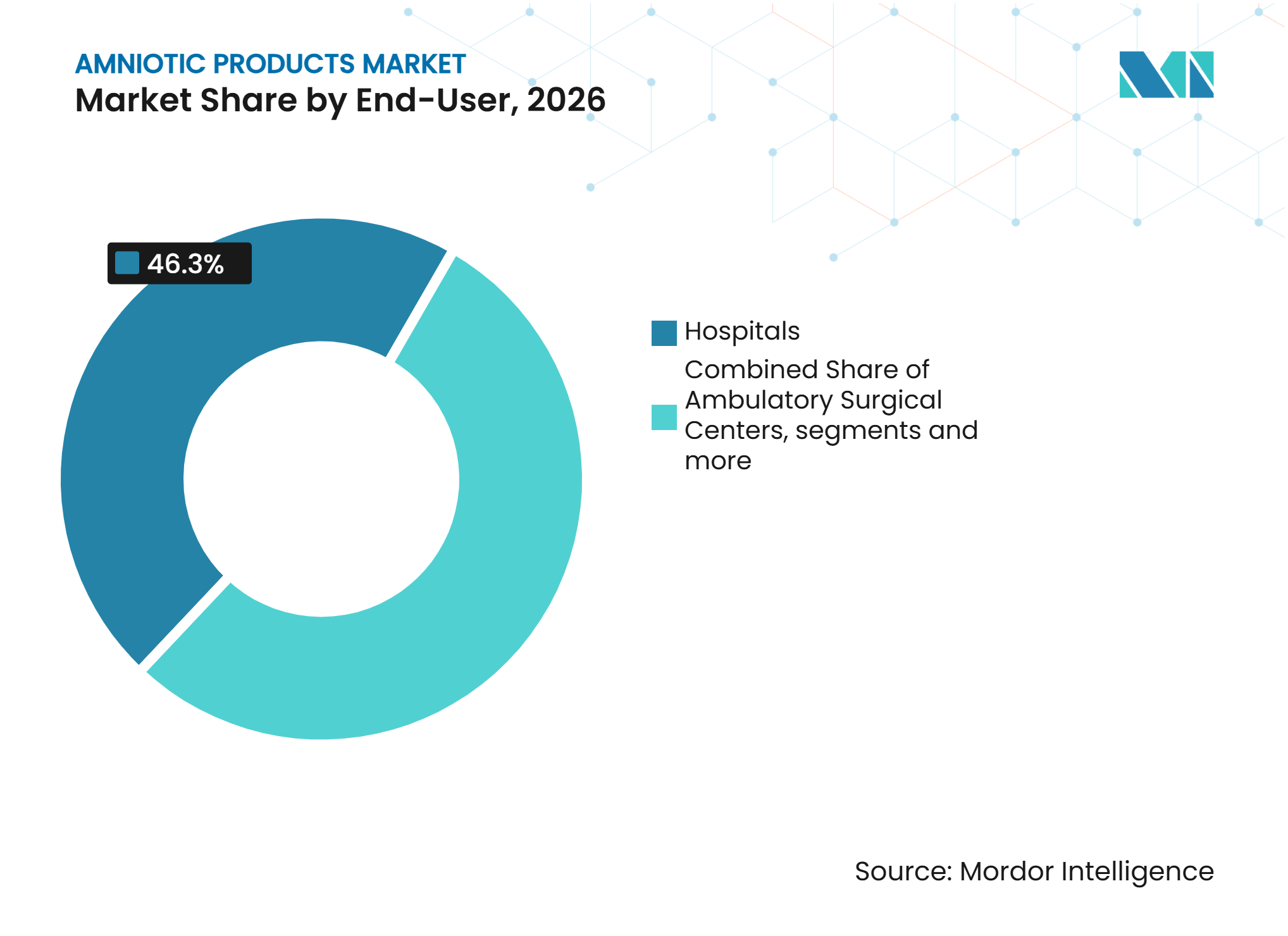
- By end-user, hospitals held a 46.32% revenue share in 2026, while orthopedic and sports medicine clinics are projected to grow at a 13.84% CAGR through 2032.
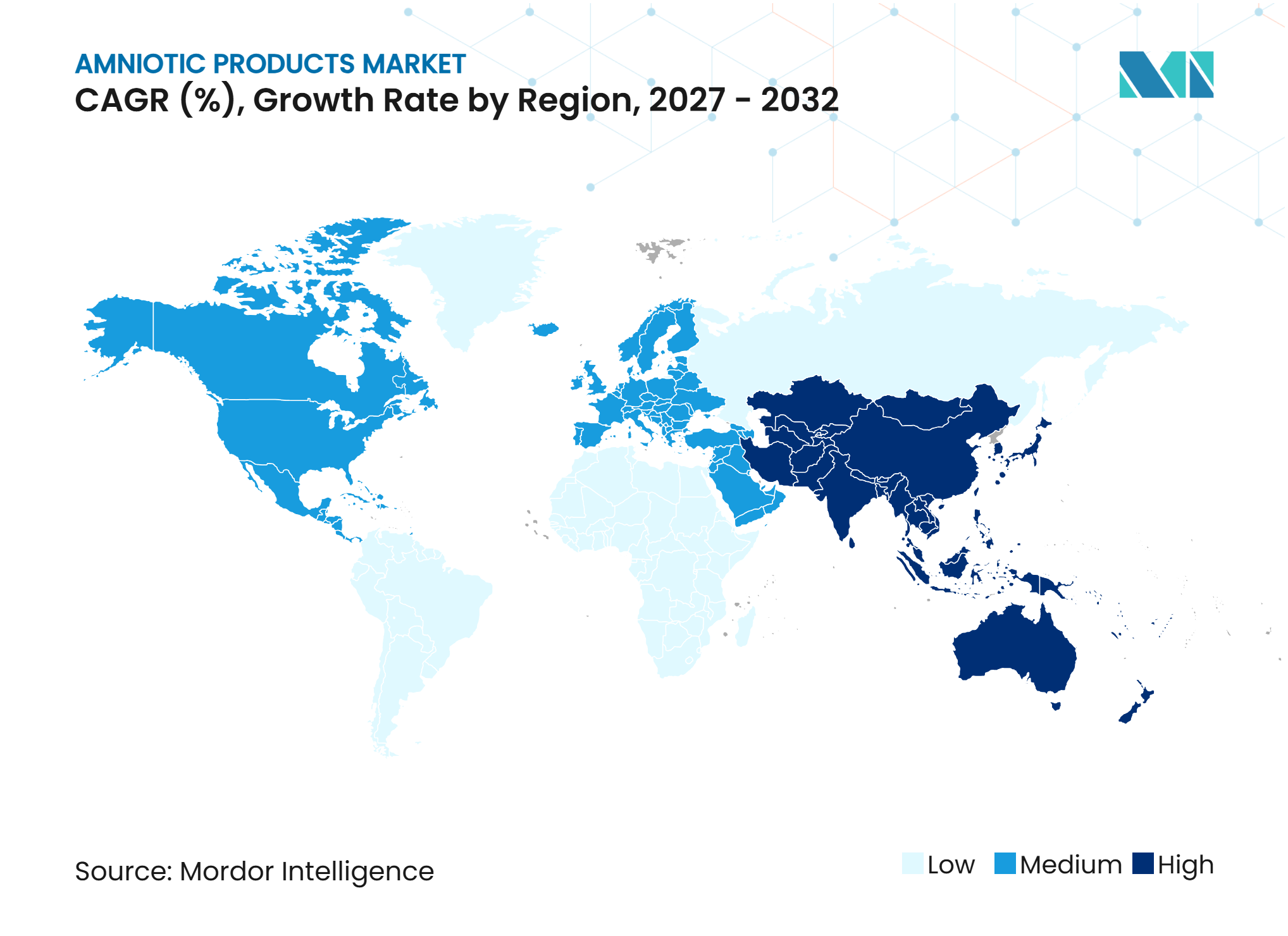
- By geography, North America accounted for 47.52% of revenue in 2026, while Asia-Pacific is expected to grow at a 15.33% CAGR through 2032.
Note: Market numbers in this report are based on Mordor Intelligence's proprietary estimation framework, which combines nine months of actuals with Q4 projections for base year 2026.
Market Trends and Insights
Drivers Impact Analysis of Amniotic Products Market*
| Driver | (~) % Impact on CAGR Forecast | Geographic Relevance | Impact Timeline |
|---|---|---|---|
| Rising Chronic Wounds and Diabetic Foot Ulcers | +2.8% | Global, concentrated in North America, South and East Asia, MEA | Long term (≥ 4 years) |
| Adoption of Regenerative Medicine | +2.3% | North America, Europe, APAC core | Medium term (2-4 years) |
| Rising Burn Injuries, Traumatic Wounds, and Surgical Volumes | +1.4% | APAC, MEA, South America, spill-over to North America | Long term (≥ 4 years) |
| Use in Ophthalmic and Orthopedic Procedures | +1.8% | Global, with early gains in North America, Japan, South Korea, Germany | Medium term (2-4 years) |
| Room-Temperature Preservation and Distribution Economics | +1.2% | APAC, MEA, South America | Short term (≤ 2 years) |
| Demand for Multi-Layer and Application-Specific Grafts | +1.1% | North America, Europe | Medium term (2-4 years) |
| Source: Mordor Intelligence | |||
Rising Prevalence of Chronic Wounds and Diabetic Foot Ulcers
The amniotic products market draws sustained demand from people with diabetes who develop difficult-to-heal ulcers. The International Diabetes Federation reported that more than 828 million adults lived with diabetes globally in 2024.[1] The same body of evidence indicated that diabetic foot ulcers affect 6.3% of adults with diabetes each year, with North American rates reaching 13.0%. These cases often require treatment beyond standard dressings when healing does not progress. A 2026 Phase 1 trial reported the safety and healing potential of freeze-dried human amniotic membrane allograft gel for diabetic foot ulcers.[2] A 2025 systematic review also found that human amniotic membrane could support closure of lower-extremity diabetic and venous ulcers more effectively than standard care alone.
Expanding Adoption of Regenerative Medicine
Regenerative medicine is moving amniotic products from isolated procedures toward broader clinical pathways. A 2025 review described the role of amniotic membrane in dermatology, orthopedics, and ophthalmology, including its scaffold, growth-factor, anti-inflammatory, and extracellular-matrix properties.[3] This supports a more evidence-based approach to product selection within the amniotic products market. Hospital purchasing teams can therefore assess these products through formularies and group purchasing arrangements instead of relying only on individual physician orders. This buying pattern favors manufacturers that can document outcomes, quality systems, and reliable supply. It also makes broad hospital access more important for companies seeking scale in the amniotic products market.
Increasing Use in Ophthalmic and Orthopedic Procedures
Ophthalmology and orthopedics are widening the clinical role of amniotic products beyond wound care. A 2025 retrospective analysis of 144 treated eyes reported corneal staining improvement after use of decellularized dehydrated amniotic membrane for ocular surface disease. The study noted that multi-layer constructs needed 48 to 72 hours of pressure patching for dissolution and the intended regenerative effect. In severe knee osteoarthritis, a 2025 randomized trial found that amniotic tissue injections delivered pain relief and functional improvement comparable to corticosteroid injections at 6 weeks. The amniotic-treatment group maintained improvement beyond that period, while the corticosteroid group declined. This durability may support adoption in sports medicine practices that are concerned about repeated corticosteroid use.
Improved Room-Temperature Preservation and Distribution Economics
Room-temperature formats can help the amniotic products market reach facilities without ultralow-temperature storage. A 2025 paper on lyophilized amniotic membrane reported that the material could be stored at room temperature for extended periods while retaining structural characteristics comparable to fresh tissue. This can simplify procurement for hospitals and surgical sites that lack specialized freezer infrastructure. It can also reduce distribution barriers in Asia-Pacific, the Middle East and Africa, and South America. China issued T/CIET 1377-2025, a technical specification for wet-state biological amniotic membrane used in ophthalmology. Higher manufacturing standards can support more consistent product development and clinical adoption in the amniotic products market.
Restraints Impact Analysis of Amniotic Products Market*
| Restraint | (~) % Impact on CAGR Forecast | Geographic Relevance | Impact Timeline |
|---|---|---|---|
| High Product, Processing, and Preservation Costs | -2.2% | Global, most pronounced in APAC and South America | Long term (≥ 4 years) |
| Regulatory and Reimbursement Uncertainty | -2.4% | North America, spill-over to Europe | Medium term (2-4 years) |
| Donor-Tissue Availability and Geographic Collection Imbalance | -1.3% | MEA, South America, Rest of APAC | Long term (≥ 4 years) |
| Product Potency Variability and Limited Comparability of Clinical Evidence | -1.1% | Global | Medium term (2-4 years) |
| Source: Mordor Intelligence | |||
Regulatory and Reimbursement Uncertainty
The 2026 Medicare reimbursement change is a direct challenge for wound care products in the amniotic products market. CMS replaced the ASP-plus-6% approach with a unified USD 127.14 per cm² rate for skin substitute products. Organogenesis reported that clinician uncertainty and changed purchasing behavior after the policy change contributed to a significant year-over-year revenue decline in the first quarter of 2026. CMS withdrew its late-2025 proposal to limit coverage to 18 skin substitute products, but scrutiny of billing practices remains. The FDA's current good tissue practice requirements and the American Association of Tissue Banks accreditation add operating demands for smaller manufacturers.
High Product, Processing, and Preservation Costs
Amniotic products require tissue procurement, processing, preservation, packaging, and sterility validation before clinical use. These steps create a cost base that can limit access in price-sensitive healthcare systems. Hospitals in emerging markets may select lower-cost synthetic alternatives when reimbursement does not support amniotic products. This restricts use outside specialized wound centers and high-volume surgical settings. The burden is greater for injectable suspensions that require extensive clinical development. Organogenesis stated that its ReNu program included Phase 3 trials with 594 participants across 2 studies and that FDA biologics license application fees were USD 4.682 million in 2025.
*Our forecasts treat driver/restraint impacts as directional, not additive. The impact forecasts reflect baseline growth, mix effects, and variable interactions.
Amniotic Products Market Segment Analysis
By Product Type:
Membranes Retain Scale While Suspensions Extend Injectable UseAmniotic membranes held 52.35% of the amniotic products market share in 2026, supported by established use in wound, ocular, and surgical care. Cryopreserved membranes have historically been priced at a premium because their processing preserves viable cells and growth factors. Dehydrated membranes offer longer shelf life and ambient storage, which suits office settings and locations with cold-chain constraints.
Suspensions are projected to grow at 13.23% CAGR through 2032, the fastest product-type rate in the amniotic products market. Injectable delivery allows orthopedic and sports medicine clinicians to use the product without the placement steps required for membrane grafts. A Phase 3 study of ReNu, sponsored by Organogenesis and completed in November 2025, enrolled 594 participants and evaluated safety in knee osteoarthritis.


By Application:
Wound Care Holds Volume While Orthopedics Gains MomentumWound care accounted for 43.42% of revenue in 2026, making it the largest application. Chronic diabetic and venous ulcers continue to support the clinical need for biologic healing products in the amniotic products market. Ophthalmology remains an important specialized application because the amniotic membrane is a widely available biologic carrier for limbal stem cell transplantation.
Orthopedics and sports medicine are forecasted to grow at a 14.26% CAGR through 2032, the fastest application rate in the amniotic products market. Osteoarthritis prevalence and concerns about repeated corticosteroid injections are supporting interest in amniotic suspension allografts. The clinical case rests on safety, function, and durability rather than on convenience alone.
By End-User:
Hospitals Lead While Specialist Clinics ExpandHospitals held a 46.32% revenue share in 2026 because complex wound care, burn treatment, and surgical reconstruction remain concentrated in tertiary settings. Hospital systems can also use formulary processes to standardize product selection across clinicians and care sites. Manufacturers that secure institutional contracts can gain more predictable volume during reimbursement changes. This structure favors established suppliers with quality documentation, clinical evidence, and reliable fulfillment.
Orthopedic and sports medicine clinics are projected to expand at a 13.84% CAGR through 2032. The rise of suspension injections supports this move toward outpatient care in the amniotic products market. Clinicians can administer injections under ultrasound guidance without the facility infrastructure needed for surgical membrane placement. Ambulatory surgery centers are also receiving more orthopedic and ophthalmic procedures as outpatient delivery expands.


Geography Analysis
North America
North America held a 47.52% revenue share in 2026, supported by reimbursement pathways and a concentration of specialized wound, orthopedic, and ophthalmic care sites. The United States has a mature supplier base that includes MIMEDX Group, Organogenesis Holdings, BioTissue Holdings, and TissueTech. This concentration supports clinical evidence generation and established distribution. The January 2026 CMS reform has disrupted wound care purchasing decisions. Manufacturers are responding by increasing attention to orthopedic and ophthalmic uses that operate under different coverage frameworks.
Europe and Asia-Pacific
Europe is the second-largest regional area, with Germany, the United Kingdom, and France driving demand. Germany’s statutory insurance framework has been relatively receptive to biologic dressings for chronic wound care. Asia-Pacific is the fastest-growing region, with regional revenue projected to advance at a 15.33% CAGR through 2032. Population aging, healthcare investment, and domestic manufacturing development are contributing to growth in the amniotic products market. Japan is a commercially important Asia-Pacific market because it has a Class IV medical device designation for amniotic allografts. China’s import restrictions on foreign amniotic tissue products encourage local manufacturers to build production capacity. China also published T/CIET 1377-2025 for ophthalmic wet-state biological amniotic membrane.
Middle East and Africa and South America
The Middle East and Africa and South America remain smaller revenue areas, but burn injuries and healthcare investment support demand. Room-temperature-stable products are better suited to these regions because they reduce cold-chain dependence.
Competitive Landscape
Market Concentration
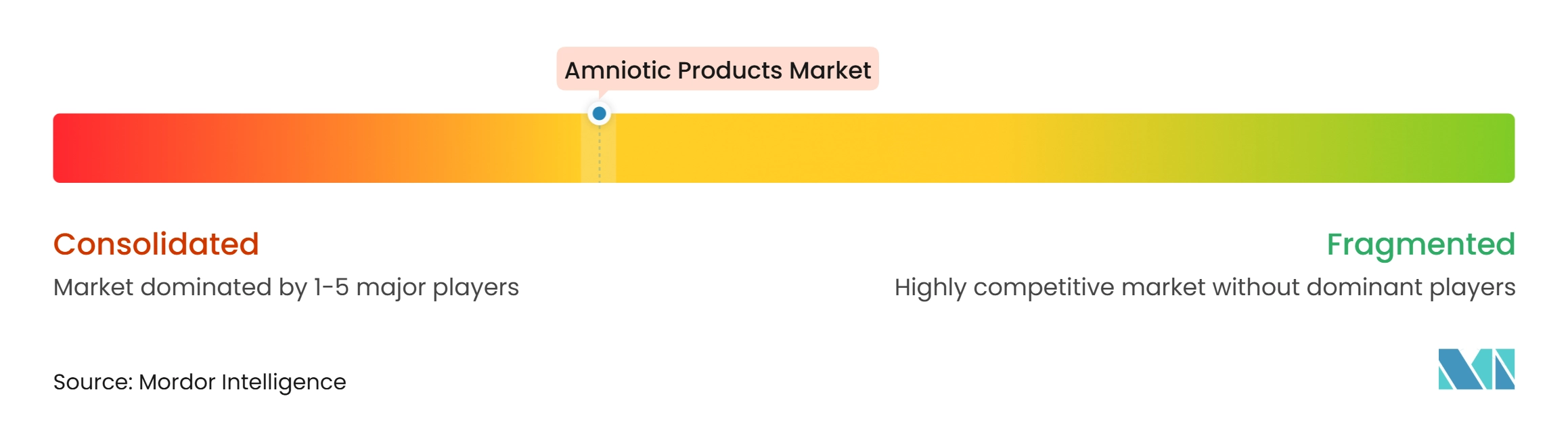
The amniotic products market is moderately concentrated, with companies competing through portfolio breadth, clinical evidence, regulatory progress, and focused application expertise. MIMEDX reported that an Agency for Healthcare Research and Quality assessment identified EPIFIX as having the most randomized controlled trials and the lowest overall study bias among evaluated skin substitutes. This evidence base can influence payer review and hospital formulary decisions. Organogenesis is pursuing a rolling biologics license application for ReNu in 2026, which could set its suspension product apart from Section 361 HCT/P competitors.
BioTissue Holdings completed the divestiture of its Surgical and Wound Care business to BioStem Technologies in January 2026, including the Neox and Clarix product lines. The company retained manufacturing responsibilities and shifted its commercial focus toward interventional ocular therapies. In June 2026, BioTissue received FDA 510(k) clearance for Catalyze, a resorbable particulate wound dressing derived from human amniotic membrane and umbilical cord extracellular matrix. These actions show a move toward application focus and regulated product development.
Smaller companies such as Lucina BioSciences, Merakris Therapeutics, StimLabs, NuVision Biotherapies, and Surgenex compete through application-specific products and rapid clinical deployment. Integra LifeSciences competes through its AmnioExcel line and established surgical distribution channels. The amniotic products industry continues to reward suppliers that can support claims with consistent clinical evidence. Companies with 510(k) clearances or biologics license applications may be more resilient as the HCT/P framework changes. The amniotic products market also leaves room for specialized suppliers in injectable hip osteoarthritis, pediatric burn care, and multi-layer ophthalmic products.
Amniotic Products Industry Leaders
-
MIMEDX Group, Inc.
-
Smith+Nephew plc
-
Organogenesis Holdings Inc.
-
Integra LifeSciences Holdings Corporation
-
Stryker Corporation
- *Disclaimer: Major Players sorted in no particular order
Amniotic Products Market Companies Covered in this Report
- Amnio Technology
- Applied Biologics LLC
- BioTissue Holdings, Inc.
- Celularity Inc.
- Corza Medical
- Integra LifeSciences
- LifeCell International
- Lucina BioSciences, LLC
- Merakris Therapeutics, Inc.
- MIMEDX Group, Inc.
- Next Biosciences
- NuVision Biotherapies Ltd.
- Organogenesis
- Skye Biologics
- Smith+Nephew plc
- StimLabs LLC
- Stryker
- Surgenex LLC
- TissueTech, Inc.
- VIVEX Biologics
Recent Industry Developments in Amniotic Products Market
- June 2026: BioTissue Holdings received FDA 510(k) clearance (K253204) for Catalyze, a resorbable particulate wound dressing derived from human amniotic membrane and umbilical cord extracellular matrix (ECM). The product targets acute and chronic wound management in clinical settings and expands BioTissue's portfolio as a manufacturing partner to BioStem Technologies following the January 2026 business divestiture.
- January 2026: BioTissue Holdings completed the divestiture of its Surgical and Wound Care business to BioStem Technologies, including exclusive rights to the Neox and Clarix amniotic product lines. BioTissue's surgical sales team transferred to BioStem, while BioTissue retained manufacturing responsibilities and redirected its commercial strategy toward interventional ocular therapies.
- January 2026: CMS implemented a flat, unified reimbursement rate of USD 127.14 per cm² for skin substitute products in Medicare, replacing the previous ASP-plus-6% framework. The change was driven by Medicare spending on skin substitutes rising from USD 500 million in 2020 to USD 15 billion in 2025, materially impacting revenue trajectories for wound care-oriented amniotic manufacturers, including MIMEDX and Organogenesis, in 2026.
Global Amniotic Products Market Report Scope
According to the report’s scope, the amniotic products market refers to the global healthcare segment focused on medical products derived from amniotic membranes, fluid, and tissues. These products are widely used in wound healing, ophthalmology, orthopedics, and regenerative medicine, leveraging the natural anti‑inflammatory, anti‑scarring, and growth‑promoting properties of amniotic tissue.
The amniotic products market is segmented into product type, application, end-user, and geography. By product type, the market is segmented into amniotic membranes and amniotic suspensions. The amniotic membranes segment is further segmented into cryopreserved membranes and dehydrated membranes. By application, the market is segmented into wound care, ophthalmology, orthopedics and sports medicine, and other applications. By end-user, the market is segmented into hospitals, ambulatory surgical centers, ophthalmology clinics and eye hospitals, orthopedic and sports-medicine clinics, and other end-users. By geography, the market is segmented into North America, Europe, Asia-Pacific, the Middle East and Africa, and South America. The report also covers the estimated market sizes and trends for 17 countries across major regions globally. The report offers values (USD) for all the above segments.
Segmentation Overview
| Amniotic Membranes | Cryopreserved Membranes |
| Dehydrated Membranes | |
| Amniotic Suspensions |
| Wound Care |
| Ophthalmology |
| Orthopedics and Sports Medicine |
| Other Applications |
| Hospitals |
| Ambulatory Surgical Centers |
| Ophthalmology Clinics and Eye Hospitals |
| Orthopedic and Sports-Medicine Clinics |
| Other End-Users |
| North America | United States |
| Canada | |
| Mexico | |
| Europe | Germany |
| United Kingdom | |
| France | |
| Italy | |
| Spain | |
| Rest of Europe | |
| Asia-Pacific | China |
| Japan | |
| India | |
| Australia | |
| South Korea | |
| Rest of Asia-Pacific | |
| Middle East and Africa | GCC |
| South Africa | |
| Rest of Middle East and Africa | |
| South America | Brazil |
| Argentina | |
| Rest of South America |
| By Product Type | Amniotic Membranes | Cryopreserved Membranes |
| Dehydrated Membranes | ||
| Amniotic Suspensions | ||
| By Application | Wound Care | |
| Ophthalmology | ||
| Orthopedics and Sports Medicine | ||
| Other Applications | ||
| By End-User | Hospitals | |
| Ambulatory Surgical Centers | ||
| Ophthalmology Clinics and Eye Hospitals | ||
| Orthopedic and Sports-Medicine Clinics | ||
| Other End-Users | ||
| By Geography | North America | United States |
| Canada | ||
| Mexico | ||
| Europe | Germany | |
| United Kingdom | ||
| France | ||
| Italy | ||
| Spain | ||
| Rest of Europe | ||
| Asia-Pacific | China | |
| Japan | ||
| India | ||
| Australia | ||
| South Korea | ||
| Rest of Asia-Pacific | ||
| Middle East and Africa | GCC | |
| South Africa | ||
| Rest of Middle East and Africa | ||
| South America | Brazil | |
| Argentina | ||
| Rest of South America | ||
Key Questions Answered in the Report
What is driving demand for the amniotic products market?
Chronic wounds, diabetic foot ulcers, ophthalmic procedures, and orthopedic care are supporting demand. The market value is forecasted to grow from USD 2.02 billion in 2026 to USD 2.22 billion in 2027 and to reach USD 3.96 billion by 2032, at 12.26% CAGR from 2027 to 2032.
Which amniotic product type is growing fastest?
Amniotic suspensions are projected to grow at 13.23% CAGR through 2032 because injectable formats fit orthopedic and sports medicine practices.
Which application is the largest for amniotic products?
Wound care was the largest application in 2026 with 43.42% revenue share, supported by the need to manage chronic ulcers.
Which region has the strongest growth outlook?
Asia-Pacific is projected to grow at a 15.33% CAGR through 2032, supported by healthcare investment, aging populations, and manufacturing development.