
Adenoid Cystic Carcinoma Market Size and Share
Market Overview
| Study Period | 2020 - 2031 |
|---|---|
| Market Size (2026) | USD 194.46 Million |
| Market Size (2031) | USD 268.56 Million |
| Growth Rate (2026 - 2031) | 6.67 % |
| Fastest Growing Market | Asia-Pacific |
| Largest Market | North America |
| Market Concentration | Medium |
Major Players *Disclaimer: Major Players sorted in no particular order Image © Mordor Intelligence. Reuse requires attribution under CC BY 4.0. | |
Adenoid Cystic Carcinoma Market Analysis by Mordor Intelligence
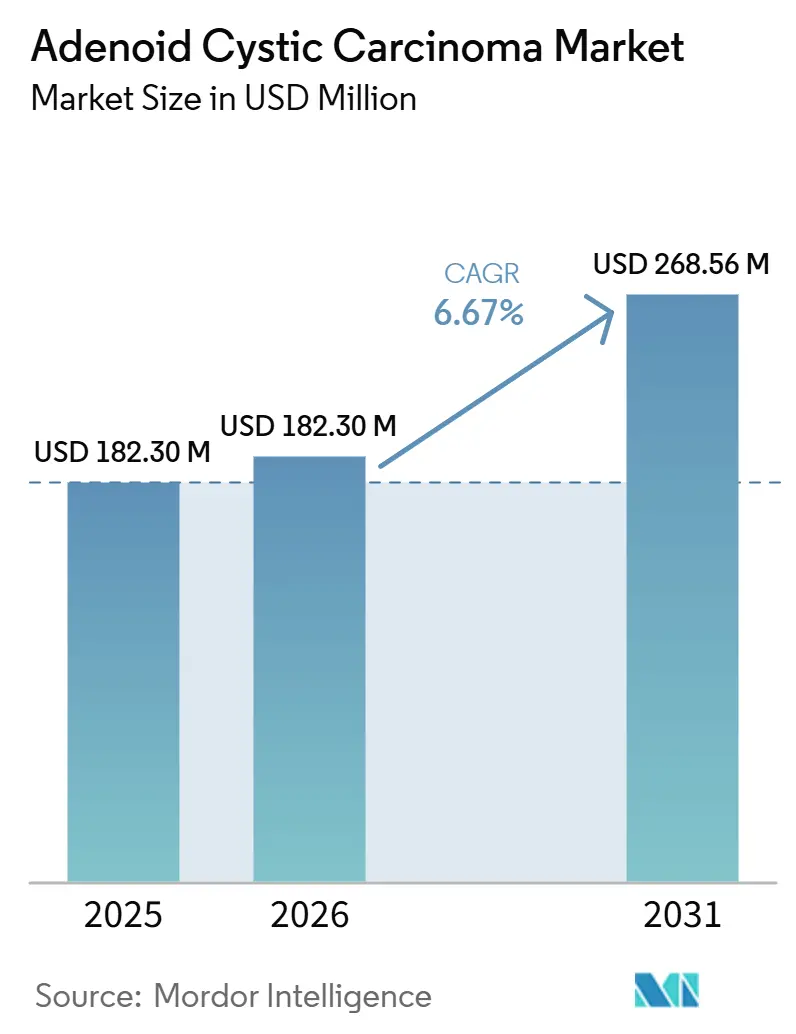
The Adenoid Cystic Carcinoma Market size is expected to grow from USD 182.30 million in 2025 to USD 194.46 million in 2026 and is forecast to reach USD 268.56 million by 2031 at 6.67% CAGR over 2026-2031.
The market is expanding in a setting where no FDA or EMA-approved systemic therapy exists for any ACC indication, which means current revenue still comes from off-label care, clinical trial access, and supportive treatment pathways. The Adenoid cystic carcinoma market also reflects the burden of a very rare disease, with global incidence estimated at 3 to 4.5 cases per million people and a prevalent patient pool of 200,000 worldwide, which keeps the addressable base limited while preserving a clear unmet need in advanced disease.[1]Rahouma M., “Epidemiological Study of Adenoid Cystic Carcinoma and Its Outcomes, Insights from the SEER Database,” Cancers, pmc.ncbi.nlm.nih.gov A major reason the opportunity remains commercially important is that MYB oncogene overactivation appears in more than 90% of tumors, and new RNA-targeting approaches are now giving the field a more direct way to address a target that had long remained difficult to drug. The Adenoid cystic carcinoma market is also being shaped by wider use of molecular profiling, orphan drug incentives, and subtype-based development strategies that are improving the odds of earlier approval pathways for biomarker-driven assets. Competitive activity remains fragmented, but the field is moving away from broad TKI use toward more selective MYB, B7-H4, and NOTCH-oriented approaches, which may reset prescribing and reimbursement patterns once the first approved therapy reaches the market.
Key Report Takeaways
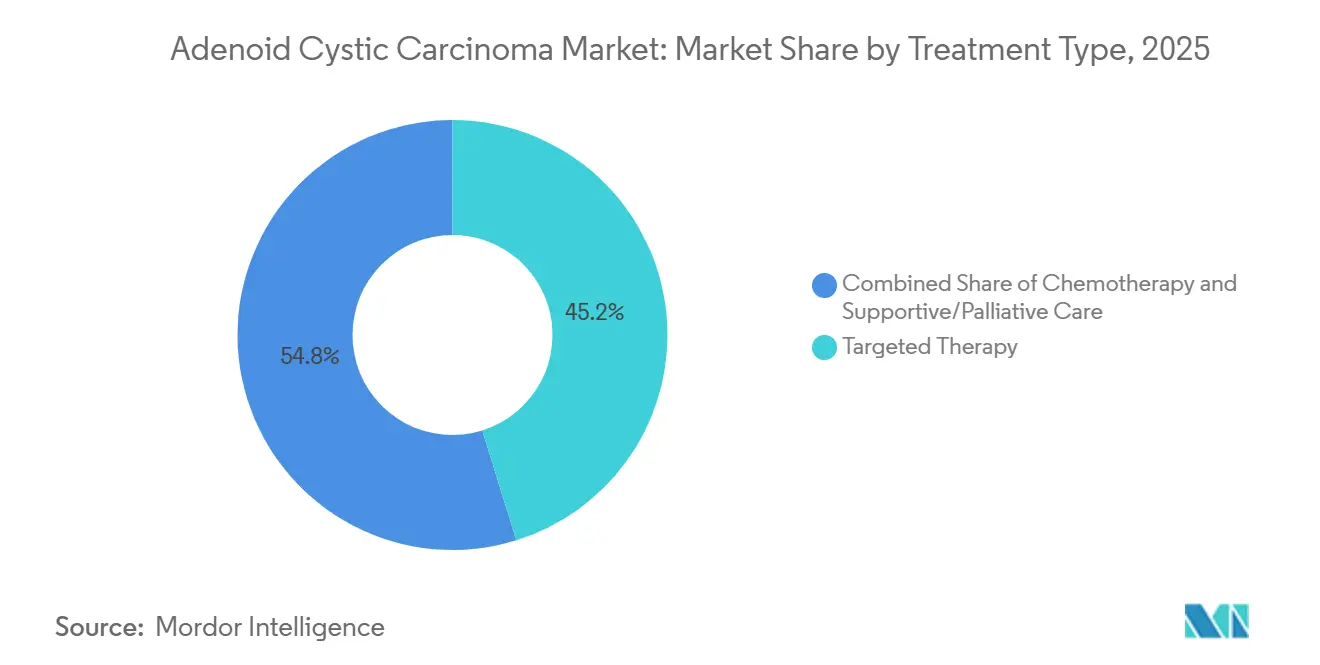
- By treatment, targeted therapy held 45.18% revenue share in 2025 and is projected to expand at 8.59% CAGR through 2031.
- By drug class, TKIs held 41.38% share in 2025, while monoclonal antibodies, including ADCs, are projected to record the fastest 8.26% CAGR through 2031.
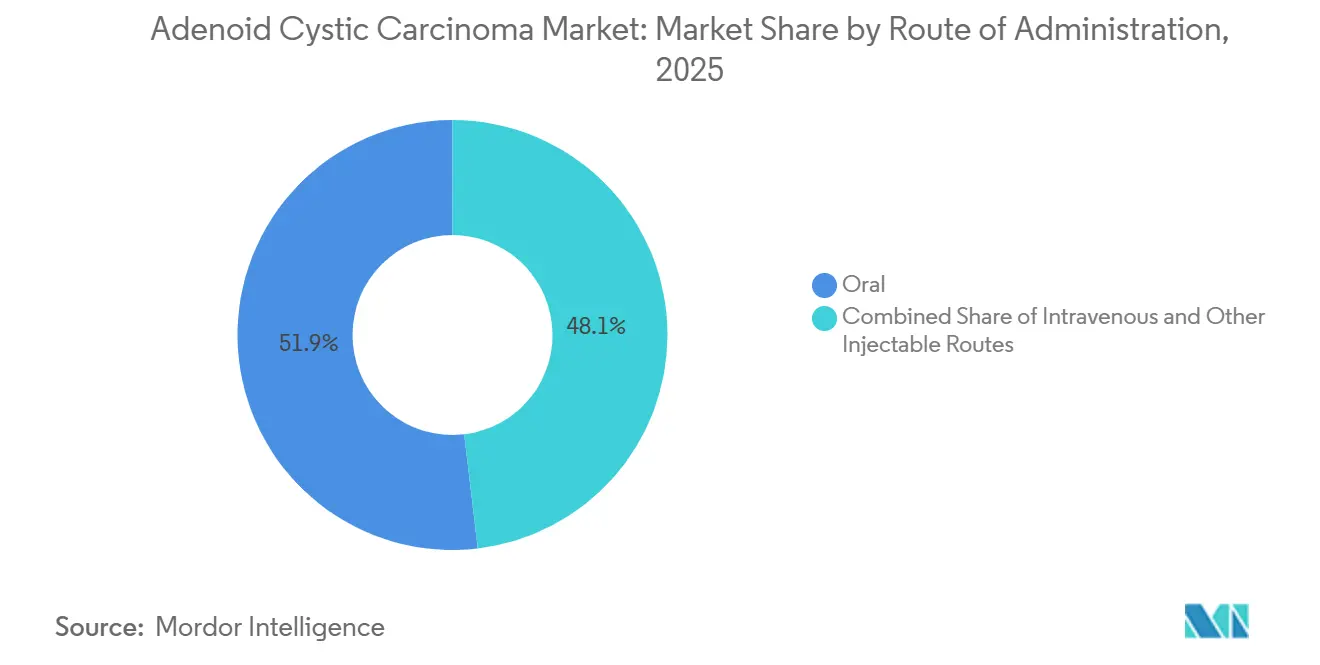
- By route of administration, oral therapies held 51.87% share in 2025, while intravenous therapies are projected to advance at 8.36% CAGR through 2031.
- By distribution channel, hospital pharmacies held 55.15% share in 2025, while specialty pharmacies are projected to grow at 7.97% CAGR through 2031.
- By geography, North America held 43.18% share in 2025, while Asia-Pacific is projected to record the fastest 8.03% CAGR through 2031.
Note: Market size and forecast figures in this report are generated using Mordor Intelligence’s proprietary estimation framework, updated with the latest available data and insights as of January 2026.
Global Adenoid Cystic Carcinoma Market Trends and Insights
Drivers Impact Analysis*
| Driver | (~) % Impact on CAGR Forecast | Geographic Relevance | Impact Timeline |
|---|---|---|---|
| Rising Unmet Need in Advanced and Recurrent Disease | +1.9% | Global | Short term (≤ 2 years) |
| Increasing Use of Molecular Profiling for Patient Stratification | +1.5% | North America & EU, spill-over to APAC | Medium term (2-4 years) |
| Expansion of Biomarker-Driven Pipeline Activity | +1.4% | Global | Medium term (2-4 years) |
| Durable Demand for Surgery and Radiation in Localized Disease | +0.7% | Global | Long term (≥ 4 years) |
| Adoption of Decentralized and Tissue-Sparing Diagnostics | +0.6% | North America & Europe | Medium term (2-4 years) |
| Source: Mordor Intelligence | |||
Rising Unmet Need in Advanced and Recurrent Disease
The Adenoid cystic carcinoma market continues to draw support from the large treatment gap in advanced and recurrent disease. Clinical documentation for the ZANACC Phase 2 program notes that 50% of ACC patients who undergo surgery and adjuvant radiotherapy eventually develop recurrent or metastatic disease. Yet, no regulatory body has approved a systemic treatment for that population.[2]ClinicalTrials.gov, “ZANACC, Phase 2 Non-randomized Single Arm Study Evaluating Zanzalintinib in Patients With Recurrent or Metastatic Adenoid Cystic Carcinoma of the Head and Neck,” ClinicalTrials.gov, That gap sustains demand across targeted therapy, chemotherapy, and supportive care at the same time, rather than shifting revenue from one treatment type to another. MYB overactivation in more than 90% of tumors has remained difficult to address because transcription factors lacked conventional binding pockets, but RNA-targeting small molecules are now creating a more direct clinical route for this disease biology. Recurrent disease is also prolonged by the natural history of ACC, which often advances slowly and keeps patients within treatment pathways for years. Perineural invasion further extends demand because it frequently leaves positive margins even after technically complete resection, which returns patients to repeat local treatment and later systemic management.
Increasing Use of Molecular Profiling for Patient Stratification
The Adenoid cystic carcinoma market is also benefiting from a clearer molecular taxonomy that is changing how patients are classified and monitored. A 2024 study on sinonasal ACC described at least 3 therapeutically distinct molecular groups, which included MYB-fusion-positive, MYBL1-fusion-positive, and non-canonical-fusion disease, each with different target relevance and clinical behavior. A retrospective 2025 cohort analysis of 182 ACC specimens found that MYB and NOTCH co-mutations were linked to higher recurrence risk, and NOTCH1 activation was associated with solid-pattern histology in 50.5% of cases.[3]PMC, “Decoding the Genomic Landscape of Adenoid Cystic Carcinoma, A Retrospective Cohort Study of MYB Family Alterations, NOTCH Pathway Activation, and Clinical Outcomes,” PubMed Central, pmc.ncbi.nlm.nih.gov That shift from histopathology alone toward subtype-based molecular selection expands demand for testing and creates a companion diagnostics layer that has been limited in ACC so far. Regulatory signals are reinforcing this shift because emiltatug ledadotin received Breakthrough Therapy Designation in ACC-1, while REM-422 and RGT-61159 received orphan or expedited development support based on subtype-focused clinical evidence. Better stratification is also likely to improve surveillance intensity and clinical trial matching in specialist centers.
Expansion of Biomarker-Driven Pipeline Activity
The Adenoid cystic carcinoma market entered 2026 with a broader and more specialized pipeline than at any earlier point in the disease area. Active programs now span oral MYB inhibitors, MYB mRNA degraders, B7-H4-directed ADCs, NOTCH pathway inhibitors, and c-Kit-targeted constructs, reflecting a clear move toward biomarker-based development. At ASCO 2026, REM-422 reported a 43% overall response rate and 100% disease control in biomarker-positive patients, while RGT-61159 reported an 84.6% disease control rate with durable MYB target engagement across 39 evaluable patients. Multiple proof-of-concept signals at the same time are increasing the chance of licensing discussions and larger company participation. Preclinical AACR 2025 data also showed synergistic anti-tumor activity when RGT-61159 was combined with NOTCH inhibitors in ACC models, which supports longer treatment line potential and broader future protocol design. This deeper pipeline is likely to make competitive timelines more compressed than they were in the TKI era.
Adoption of Decentralized and Tissue-Sparing Diagnostics
The Adenoid cystic carcinoma market is also being supported by less invasive diagnostic methods that may bring more patients into specialist treatment pathways. A 2025 Oral Oncology study found that cell-free DNA levels correlated with treatment futility in ACC and could act as a complementary monitoring tool for patients receiving investigational systemic therapies. A 2024 study also showed that circulating MYB transcript detection from blood had high sensitivity in distinguishing metastatic disease from no-evidence-of-disease states. An ASCO 2026 abstract extended that direction by exploring methylation-based liquid biopsy for ACC subtyping from blood, which suggests that non-invasive molecular classification may move beyond major research centers over time. Tissue-sparing approaches can reduce delays that currently keep eligible patients outside trial enrollment and targeted treatment pathways. They also fit the needs of a rare cancer setting where repeated tissue collection is often difficult.
Restraints Impact Analysis*
| Restraint | (~) % Impact on CAGR Forecast | Geographic Relevance | Impact Timeline |
|---|---|---|---|
| No Approved Systemic Standard of Care | -2.0% | Global | Short term (≤ 2 years) |
| Limited Eligible Patient Pool for Commercialization | -1.5% | Global | Long term (≥ 4 years) |
| Low Biomarker Testing Penetration Outside Major Centers | -0.9% | APAC, MEA, South America | Medium term (2-4 years) |
| High Cost and Access Friction for Novel Targeted Therapies | -1.1% | Emerging markets, global | Long term (≥ 4 years) |
| Source: Mordor Intelligence | |||
No Approved Systemic Standard of Care
The Adenoid cystic carcinoma market still lacks the basic commercial anchor that most oncology categories use to build pricing, coverage, and prescribing patterns. No FDA or EMA-approved systemic treatment exists for ACC, so revenue still comes from off-label prescribing, supportive care, and clinical trial channels rather than an established commercial product base. That creates a difficult environment for payers and formulary committees because there is no approved comparator for pricing and no formal standard to anchor reimbursement reviews. Published evidence also underscores this weak foundation, as conventional chemotherapy, immune checkpoint inhibitors, and most TKIs have generally shown response rates that rarely exceeded 20% across larger ACC series, with no durable population-level remissions documented. Orphan drug incentives can improve development economics, but they do not remove the need for convincing comparative evidence when companies enter pricing and health technology assessment discussions. The practical effect is a slower commercial scale-up even when promising Phase 1 or Phase 2 data emerge.
Limited Eligible Patient Pool for Commercialization
The Adenoid cystic carcinoma market is also constrained by a very small eligible population, which keeps commercial reach narrow even when clinical need is clear. This limitation becomes even more important if the first approved agents carry biomarker restrictions such as MYB-fusion-positive or B7-H4-high disease. A SEER analysis of 5,150 patients also showed meaningful geographic variation in survival within the United States, with poorer outcomes in the Western region than in the Northeast, which points to uneven concentration of specialist expertise even in a high-income market. That pattern suggests that early revenue will remain concentrated in the United States and Western Europe before broader center development supports wider uptake. It also means that access, referral systems, and testing penetration matter almost as much as drug efficacy in shaping near-term sales conversion.
*Our forecasts treat driver/restraint impacts as directional, not additive. The impact forecasts reflect baseline growth, mix effects, and variable interactions.
Segment Analysis
By Treatment: Targeted Therapy Leads Both Share and Growth
Targeted therapy held 45.18% of the Adenoid cystic carcinoma market share in 2025, which made it the largest treatment segment in the period. Its lead came from growing off-label use of investigational kinase inhibitors, especially multi-target anti-angiogenic agents such as lenvatinib and cabozantinib, in advanced or recurrent disease. The segment is also set to record the fastest 8.59% CAGR through 2031, which reflects pipeline momentum more than approved product penetration. The Adenoid cystic carcinoma market is therefore leaning toward targeted care even before a formal label expansion has taken place.
Chemotherapy still plays a role for rapidly progressing disease, especially through platinum-based regimens, but its function remains largely palliative. Published clinical series noted that objective response rates for chemotherapy rarely exceeded 20%, and no standard backbone produced durable control across the population.[4]Stawarz K., “Current Landscape and Future Directions of Therapeutic Approaches for Adenoid Cystic Carcinoma of the Salivary Glands,” Oncology Letters, spandidos-publications.com Supportive and palliative care remains stable because ACC often progresses slowly and requires long periods of symptom management. The Adenoid cystic carcinoma industry also continues to generate treatment spending before approvals because Phase 2 combinations such as lenvatinib with pembrolizumab in recurrent or metastatic salivary gland cancer are building off-label use around ACC cohorts. As oral MYB-targeting agents move closer to potential approval, targeted therapy is likely to extend its lead further within the forecast period.



By Drug Class: TKIs Hold Revenue, ADCs Redefine the Competitive Horizon
TKIs held 41.38% of drug class revenue in 2025, which placed them at the top of the class mix even though the strongest future momentum lies elsewhere. Monoclonal antibodies, including ADCs, are projected to deliver the fastest 8.26% CAGR through 2031 as B7-H4 and c-Kit directed constructs move through expansion cohorts. The Adenoid cystic carcinoma market has relied on TKIs because they were the most accessible off-label systemic option, even without biomarker-selected label guidance. That base remains meaningful, but the field is increasingly measuring value through deeper biological selection rather than physician habit alone.
Emiltatug ledadotin gave the clearest example of this shift when 55.6% of ACC-1 patients experienced tumor shrinkage in Phase 1 dose-expansion cohorts, a result that helped support FDA Breakthrough Therapy Designation for the asset. Cytotoxic drugs still occupy an entrenched but declining place because they are generally used after other options have been exhausted. The remaining category also includes GSK-3β inhibitors, with elraglusib reporting a 6.4-month median progression-free survival in recurrent or metastatic salivary gland cancers that included ACC. The Adenoid cystic carcinoma market is likely to see ADCs challenge the TKI revenue lead as Phase 2 readouts arrive later in the forecast window. That transition would also push the class mix toward more subtype-defined treatment use.
By Route of Administration: Oral Routes Lead Today, IV Gains as ADCs Mature
Oral administration accounted for 51.87% of segment revenue in 2025, which made it the leading route in current ACC care. The current lead reflects ongoing use of oral multi-target TKIs and the entry of oral MYB-targeting candidates such as REM-422 and RGT-61159 into clinical development. Both programs reported tolerable safety at recommended Phase 2 dose levels, which supports oral delivery as a practical format for long-term management in heavily pre-treated patients. The Adenoid cystic carcinoma market still favors oral dosing today because it fits long treatment duration and outpatient use.
Intravenous therapy is set to record the fastest 8.36% CAGR through 2031 as ADC and monoclonal antibody programs mature. That shift matters commercially because IV treatment tends to keep patients inside hospital or infusion center networks for longer periods. It also slows the move toward simple retail dispensing because monitoring, administration, and adverse event management stay centralized. Injectable subcutaneous or intramuscular options remain modest for now because no leading ACC-specific program has established that route. The Adenoid cystic carcinoma industry could still see some future movement here if companies pursue more convenient formulations of novel antibody therapies.
By Distribution Channel: Hospital Pharmacies Anchor Revenue, Specialty Pharmacies Accelerate
Hospital pharmacies held 55.15% of revenue in 2025, which kept them as the primary distribution channel in ACC treatment. Their lead reflects the strong role of infusion center care, institutional dispensing, and trial enrollment through specialist oncology centers. Specialty pharmacies are projected to expand at 7.97% CAGR through 2031 as oral MYB-targeting agents move closer to commercialization and require structured distribution with ongoing monitoring. The Adenoid cystic carcinoma market therefore remains tied to institutional care today, even as future oral launches may widen non-hospital fulfillment.
Retail and online pharmacies still account for smaller shares because ACC therapies usually involve high clinical monitoring needs and multidisciplinary coordination. That makes specialist center ecosystems more suitable than broad retail networks for many patients. The first approved oral therapy will likely force a strategic choice between convenience and tighter pharmacovigilance. The Adenoid cystic carcinoma market may favor specialty pharmacy rollout first because rare oncology products often require compliance-oriented patient support and controlled monitoring programs. Several investigational agents already use restricted distribution requirements for safety monitoring, which makes specialty pharmacy expansion a logical next step in the channel mix.
Geography Analysis
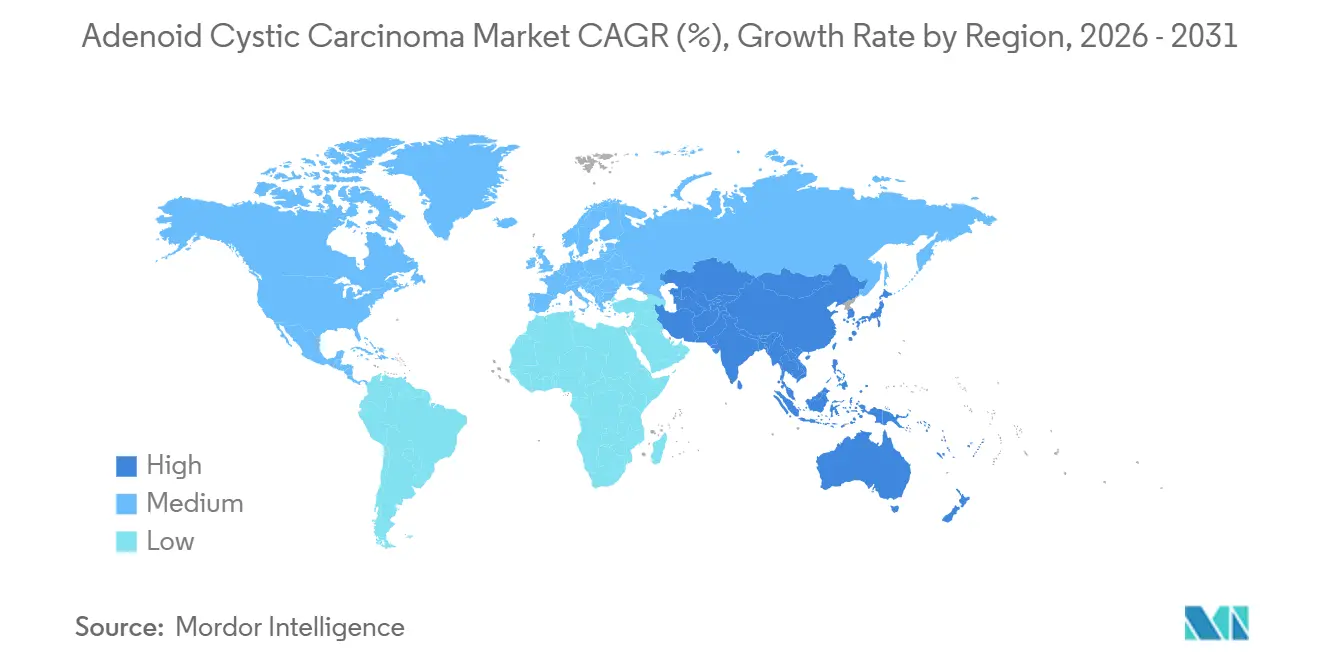
North America accounted for 43.18% of the Adenoid cystic carcinoma market size in 2025, which made it the largest regional contributor. The region benefits from the concentration of National Cancer Institute designated cancer centers, dedicated salivary gland tumor programs, and early use of NGS-based profiling in rare cancers. The FDA also remains central to development momentum, with orphan and expedited designations supporting assets such as RGT-61159 and REM-422.[5]Rgenta Therapeutics, “Clinical Trials for RGT-61159,” Rgenta Therapeutics, rgentatx.com Canada adds support through publicly funded rare disease pathways, although reimbursement review timing can delay uptake versus the United States. Mexico still contributes at a lower level because specialist oncology infrastructure remains concentrated in major cities.
Europe stands as the second largest regional market because Germany, the United Kingdom, France, Italy, and Spain host dense networks of academic hospitals that manage a large share of the continent's rare salivary gland cancer burden. The EMA orphan framework supports this position by offering 10 years of exclusivity, fee reductions, and protocol assistance for qualifying therapies. Reimbursement remains the main gating issue because agencies such as NICE and IQWiG depend on comparative clinical evidence that is difficult to generate in a rare and slow-recruiting disease setting. France and Italy are also helping expand the evidence base through participation in multicenter ADC studies, including the emiltatug ledadotin program.
Asia-Pacific is projected to record the fastest 8.03% CAGR through 2031, and the Adenoid cystic carcinoma market size in the region is being supported by better diagnostics, stronger rare disease policy frameworks, and greater clinical trial capacity. Japan is leading that shift, and in March 2026 the country approved darolutamide with goserelin for androgen receptor positive salivary gland cancer based on the DISCOVARY Phase 2 trial, which reported a 45.2% objective response rate and a 13.1-month median progression-free survival. China is also increasing its role through rare disease policy updates and larger ACC-specific studies such as the Phase 2 HG146 trial that began in December 2024 and planned to enroll 140 patients. The Adenoid cystic carcinoma market remains smaller in the Middle East and Africa and in South America because biomarker testing and patient identification are still limited outside select centers in South Africa, Brazil, and GCC countries. Those regions are more likely to see gradual expansion as sponsors use new trial sites to speed rare cancer recruitment and as rare disease access policies become more established.

Competitive Landscape
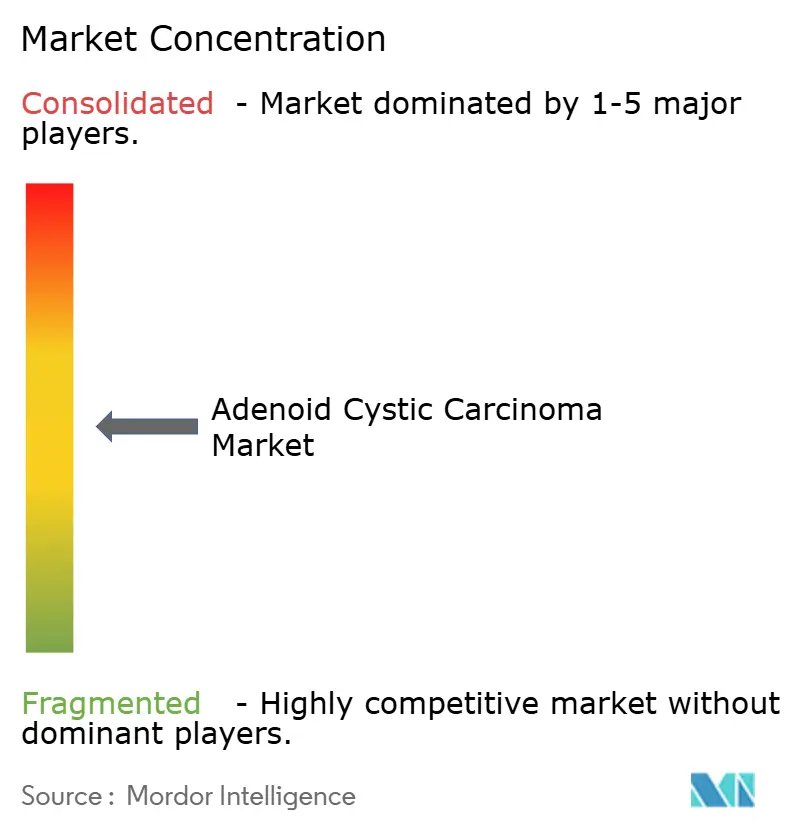
The Adenoid cystic carcinoma market is highly fragmented because no company had an approved systemic product in 2026, and revenue remained spread across off-label kinase inhibitors, supportive care, and trial access channels. Competitive positioning is therefore defined more by clinical proof of concept and regulatory traction than by commercial scale. The Adenoid cystic carcinoma market is being shaped mainly by clinical-stage biotechnology companies, while larger pharmaceutical participants are entering through partnerships, combination studies, or targeted platform programs. This structure makes first approval especially important because the first company to secure an FDA or EMA label in ACC will likely set the initial benchmarks for pricing, reimbursement, and physician reference use. That first mover advantage is stronger here than in larger oncology categories because the disease still lacks any approved systemic anchor.
The Adenoid cystic carcinoma market is now organized around 3 main strategy patterns: MYB-pathway targeting, B7-H4-directed ADC development for ACC-1, and NOTCH inhibition for NOTCH-mutant or solid-pattern disease. Rgenta and Remix illustrate the race within MYB-centered development, with RGT-61159 using a splicing modulation approach and REM-422 using poison-exon mediated MYB mRNA degradation. Patent position also matters because RNA-splicing and linker-payload platforms may define future exclusivity windows if these programs advance. Mersana has strengthened its ADC position through Breakthrough Therapy Designation for emiltatug ledadotin in aggressive ACC-1, which gives it a timeline advantage in FDA engagement.
The Adenoid cystic carcinoma market still has meaningful open space in combination treatment design and in companion diagnostic development. AACR 2025 data showing synergy between RGT-61159 and NOTCH inhibitors in ACC models points to a possible second wave of combination protocols if early monotherapy data continue to mature. Another strategic move is the launch of subtype-specific trials such as the Phase 2 study of puxitatug samrotecan in aggressive ACC-1, which directly targets patients with NOTCH mutations or p63-low and B7-H4-high profiles. The current landscape also rewards companies that secure orphan incentives early because seven years of exclusivity in the United States can create a strong regulatory moat once an approval is achieved. Late entrants will likely need clearer biomarker selection, better safety, or stronger durability to displace the earliest approved therapy. Until then, the field will remain fast-moving in development terms but commercially diffuse in actual revenue capture.
Adenoid Cystic Carcinoma Industry Leaders
Actuate Therapeutics, Inc.
Amgen Inc.
Ayala Pharmaceuticals
Elevar Therapeutics
Eli Lilly and Company
- *Disclaimer: Major Players sorted in no particular order

Recent Industry Developments
- May 2026: Remix Therapeutics presented Phase 1/2 ARIA study results for REM-422, a first-in-class MYB mRNA degrader, at the ASCO Annual Meeting in Chicago. The biomarker-positive cohort achieved a 43% overall response rate and 100% disease control rate, with responses exceeding one year and several patients approaching two years on treatment, establishing proof-of-concept for MYB mRNA degradation as a viable therapeutic mechanism in recurrent or metastatic ACC.
- May 2026: Rgenta Therapeutics presented Phase 1a/b clinical data for RGT-61159, an oral MYB splicing modulator, at ASCO 2026. The trial reported an 84.6% disease control rate in 39 evaluable patients, with dose-dependent MYB mRNA reductions, 3 partial responses, 2 confirmed, and a favorable safety profile that supported once-daily oral administration.
- April 2026: M.D. Anderson Cancer Center initiated a Phase 2 trial, NCT07162480, of puxitatug samrotecan, AZD8205, a B7-H4-directed ADC, specifically in aggressive ACC-1 patients with NOTCH mutations or p63-low and B7-H4-high molecular profiles, targeting 28 patients on a 21-day IV dosing cycle with estimated primary completion in December 2029.
- March 2026: Japan's Ministry of Health, Labour and Welfare approved darolutamide combined with goserelin for androgen receptor positive salivary gland cancer, marking the world's first hormone therapy approved for any salivary gland malignancy, based on the DISCOVERY Phase 2 trial, which reported 45.2% objective response rate and 13.1 months median progression-free survival across 12 Japanese facilities.


Global Adenoid Cystic Carcinoma Market Report Scope
The Adenoid Cystic Carcinoma (ACC) treatment market refers to the global landscape of therapies developed to manage this rare and aggressive cancer. It is defined by the pursuit of innovative approaches beyond conventional surgery and radiation, focusing on targeted therapies, immunotherapies, and angiogenesis inhibitors. The market is driven by unmet medical needs, ongoing clinical trials, and precision medicine strategies aimed at improving survival and reducing recurrence. Despite its niche size, the ACC treatment market is steadily growing as biotech and pharmaceutical companies invest in novel solutions.
The adenoid cystic carcinoma market is segmented by treatment, drug class, route of administration, distribution channel, and geography. By treatment, it is further divided into chemotherapy, targeted therapy, and supportive/palliative care. By drug class, it is segmented into cytotoxic drugs, tyrosine kinase inhibitors, monoclonal antibodies, and other drug classes. By route of administration, the market is segmented into oral, intravenous, and other injectable routes. By distribution channel, the market is segmented into hospital pharmacies, retail pharmacies, specialty pharmacies, and online pharmacies. The geography segment is further divided into North America, Europe, Asia-Pacific, the Middle East and Africa, and South America. The report also covers the estimated market sizes and trends for 17 countries across major regions globally. The report offers the market size and forecasts in value (USD) for the above segments.
| Chemotherapy |
| Targeted Therapy |
| Supportive/Palliative Care |
| Cytotoxic Drugs |
| Tyrosine Kinase Inhibitors |
| Monoclonal Antibodies |
| Other Drug Classes |
| Oral |
| Intravenous |
| Other Injectable Routes |
| Hospital Pharmacies |
| Retail Pharmacies |
| Specialty Pharmacies |
| Online Pharmacies |
| North America | United States |
| Canada | |
| Mexico | |
| Europe | Germany |
| United Kingdom | |
| France | |
| Italy | |
| Spain | |
| Rest of Europe | |
| Asia-Pacific | China |
| Japan | |
| India | |
| Australia | |
| South Korea | |
| Rest of Asia-Pacific | |
| Middle East and Africa | GCC |
| South Africa | |
| Rest of Middle East and Africa | |
| South America | Brazil |
| Argentina | |
| Rest of South America |
| By Treatment | Chemotherapy | |
| Targeted Therapy | ||
| Supportive/Palliative Care | ||
| By Drug Class | Cytotoxic Drugs | |
| Tyrosine Kinase Inhibitors | ||
| Monoclonal Antibodies | ||
| Other Drug Classes | ||
| By Route of Administration | Oral | |
| Intravenous | ||
| Other Injectable Routes | ||
| By Distribution Channel | Hospital Pharmacies | |
| Retail Pharmacies | ||
| Specialty Pharmacies | ||
| Online Pharmacies | ||
| By Geography | North America | United States |
| Canada | ||
| Mexico | ||
| Europe | Germany | |
| United Kingdom | ||
| France | ||
| Italy | ||
| Spain | ||
| Rest of Europe | ||
| Asia-Pacific | China | |
| Japan | ||
| India | ||
| Australia | ||
| South Korea | ||
| Rest of Asia-Pacific | ||
| Middle East and Africa | GCC | |
| South Africa | ||
| Rest of Middle East and Africa | ||
| South America | Brazil | |
| Argentina | ||
| Rest of South America | ||


Key Questions Answered in the Report
What is the 2031 outlook for adenoid cystic carcinoma treatment revenue?
The category is forecast to reach USD 268.56 million by 2031 from USD 194.46 million in 2026, with 6.67% CAGR over 2026-2031.
Why is targeted therapy leading ACC treatment demand?
Targeted therapy held 45.18% share in 2025 and is also the fastest-growing treatment segment at 8.59% CAGR because off-label kinase inhibitor use is already established and MYB-focused agents are moving forward.
Which region is expanding the fastest in ACC treatment?
Asia-Pacific is projected to grow at 8.03% CAGR through 2031, supported by stronger rare disease frameworks, better diagnostics, and growing clinical trial activity.
Why are hospital pharmacies still the main channel for ACC therapies?
Hospital pharmacies held 55.15% share in 2025 because ACC care remains centered in specialist institutions, infusion centers, and trial-driven treatment settings.
What is changing the pipeline for ACC most quickly?
The biggest shift is the move from broad off-label TKI use to biomarker-based programs such as MYB mRNA degraders, MYB splicing modulators, and B7-H4 directed ADCs.
What is the main barrier to faster commercial adoption in ACC?
The absence of any approved systemic standard of care remains the main hurdle because it limits payer reference points, slows reimbursement decisions, and keeps revenue tied to off-label or trial-based use.
Page last updated on:





