
5G Remote Surgery System Market Size and Share
Market Overview
| Study Period | 2021 - 2032 |
|---|---|
| Market Size (2027) | USD 3.06 Billion |
| Market Size (2032) | USD 11.63 Billion |
| Growth Rate (2027 - 2032) | 30.55 % |
| Fastest Growing Market | Asia-Pacific |
| Largest Market | North America |
| Market Concentration | Medium |
Major Players *Disclaimer: Major Players sorted in no particular order Image © Mordor Intelligence. Reuse requires attribution under CC BY 4.0. | |
5G Remote Surgery System Market Analysis by Mordor Intelligence
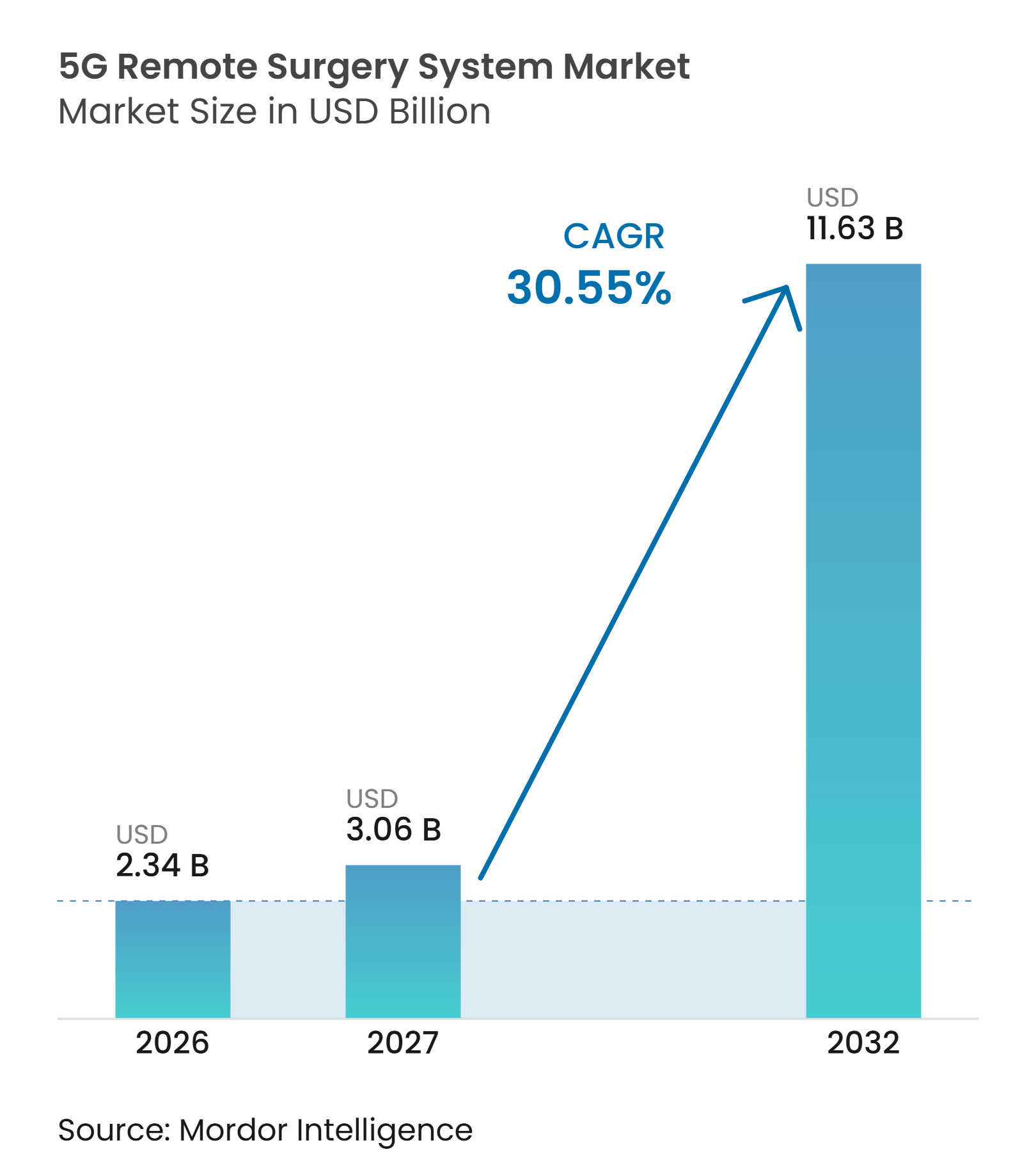
The 5G Remote Surgery System Market size was valued at USD 2.34 billion in 2026 and is estimated to grow from USD 3.06 billion in 2027 to reach USD 11.63 billion by 2032, at a CAGR of 30.55% during the forecast period (2027-2032).
Commercial adoption is becoming more viable as tele-operated surgical platforms, standalone 5G hospital networks, and standardized operating protocols advance simultaneously. In May 2025, MicroPort MedBot received National Medical Products Administration approval for Toumai, making it the first commercially authorized tele-operated robotic platform. The platform has supported nearly 400 documented procedures and demonstrated interprovincial latency below 50 ms. Technical guidance published in June 2025 established requirements for surgical-grade networks, cybersecurity, and fail-safe controls, providing hospitals with a clearer framework for deployment planning. The 5G remote surgery system market presents a significant access opportunity, as 5 billion people still lack safe and affordable surgical care. However, high capital requirements, liability considerations, and reimbursement limitations remain key barriers to adoption.
Key Report Takeaways
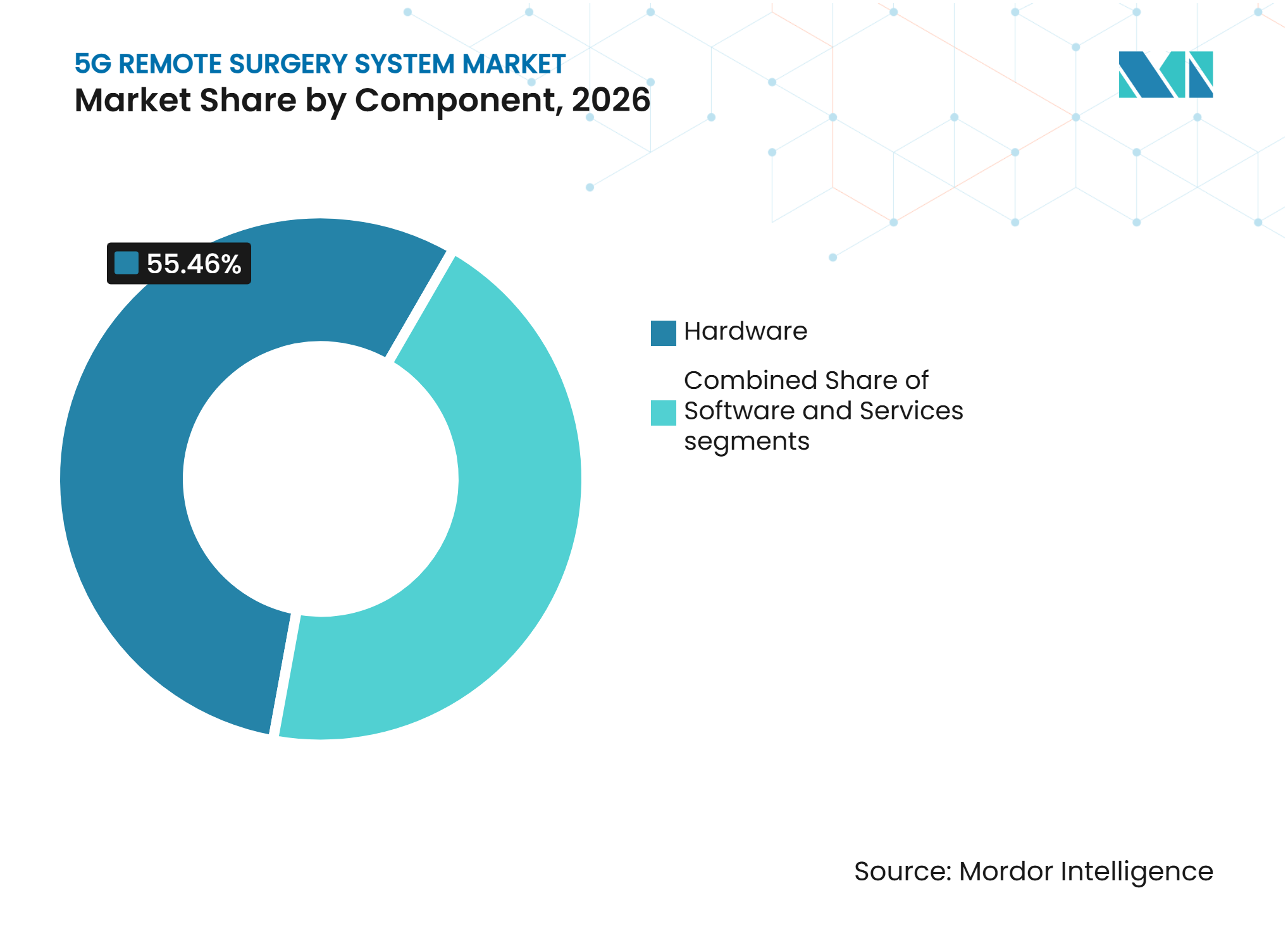
- By component, hardware held 55.46% of revenue in 2026, while services recorded the highest projected CAGR at 32.22% through 2032.
- By connectivity, non-standalone 5G held 66.89% of revenue in 2026, while standalone 5G recorded the highest projected CAGR at 35.45% through 2032.
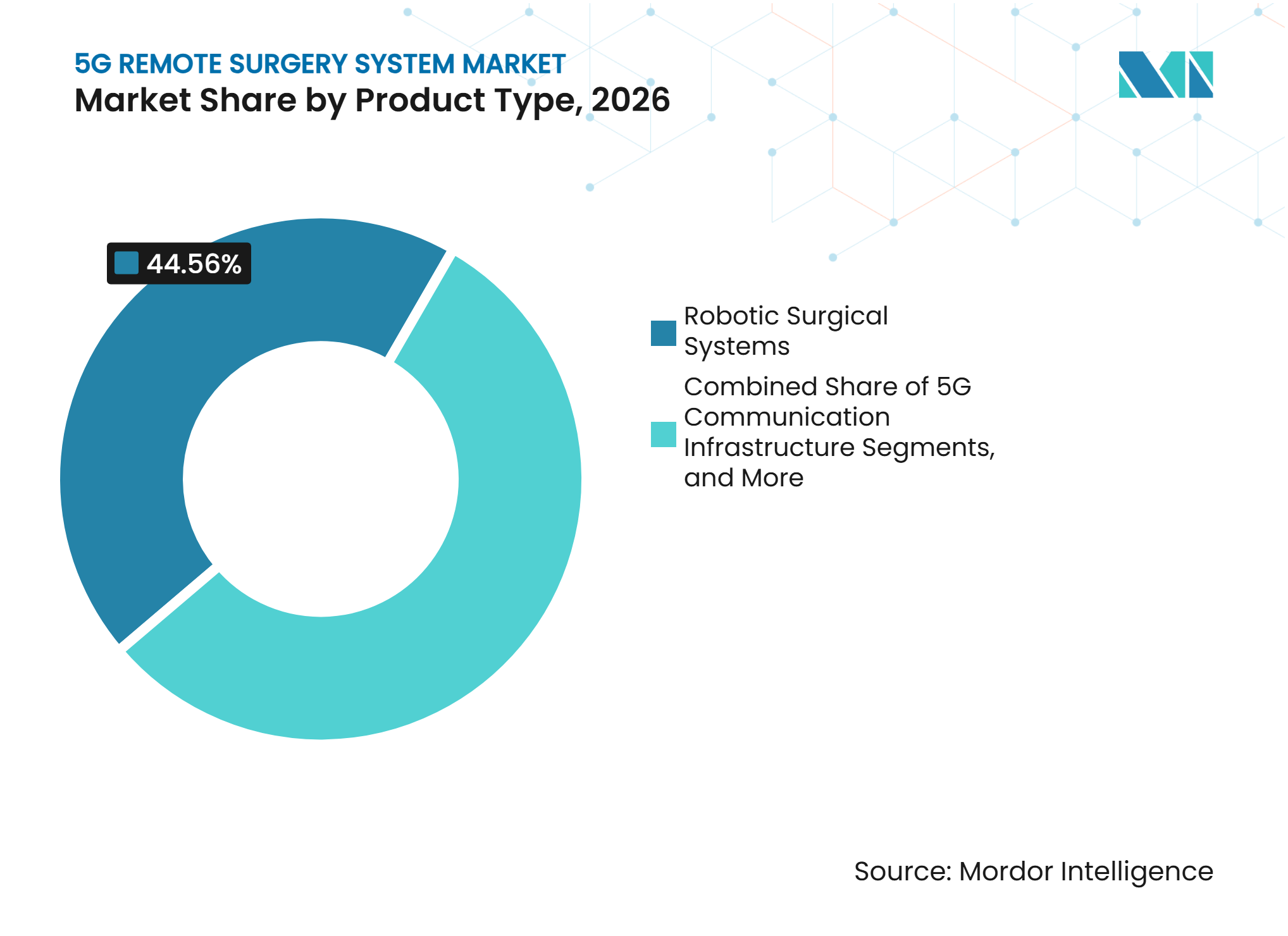
- By product type, robotic surgical systems held 44.56% of revenue in 2026, while 5G communication infrastructure recorded the highest projected CAGR at 33.45% through 2032.
- By application, orthopedic surgery held 36.67% of revenue in 2026, while neurosurgery recorded the highest projected CAGR at 34.55% through 2032.
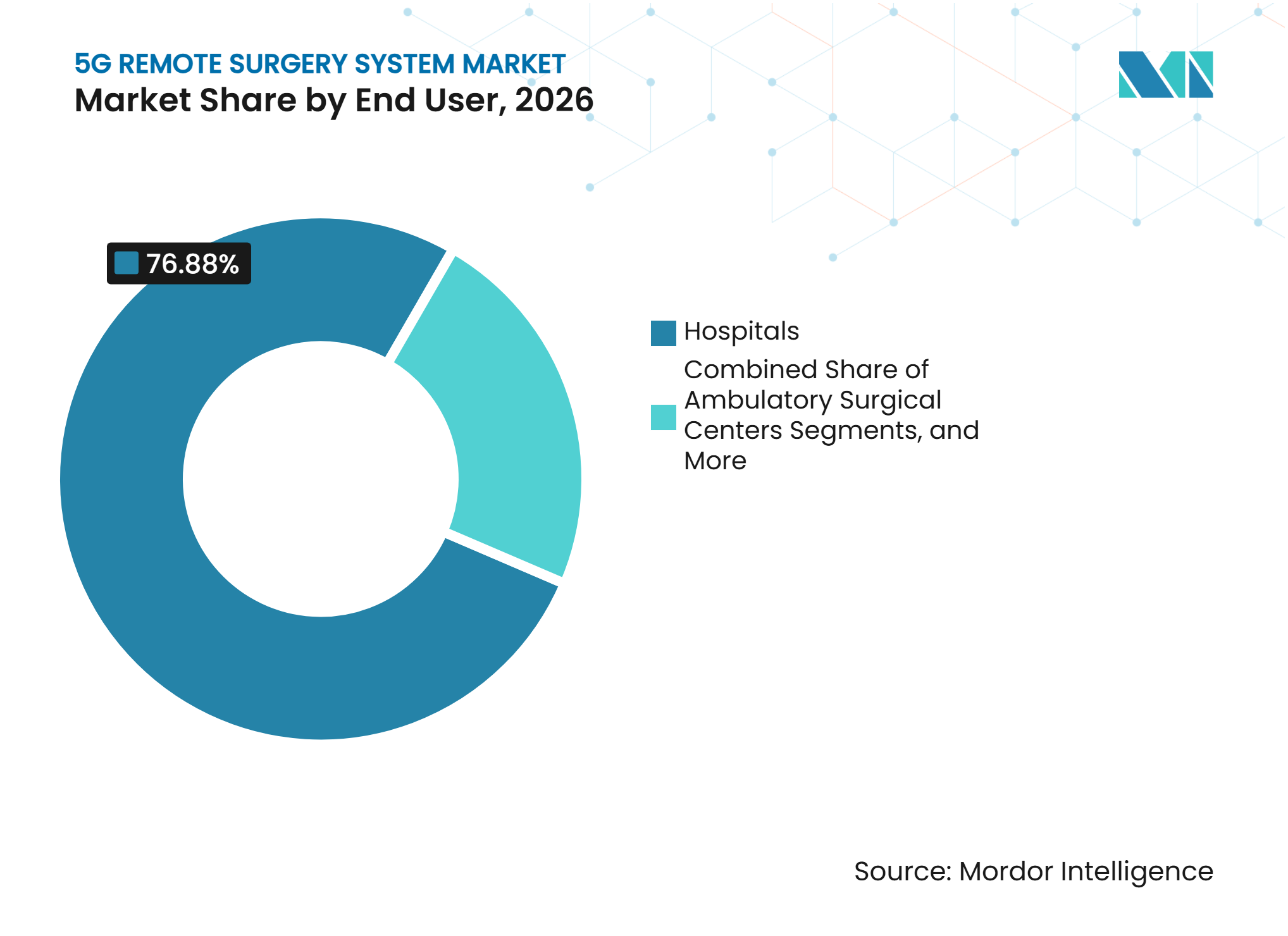
- By end user, hospitals held 76.88% of revenue in 2026, while ambulatory surgical centers recorded the highest projected CAGR at 33.67% through 2032.
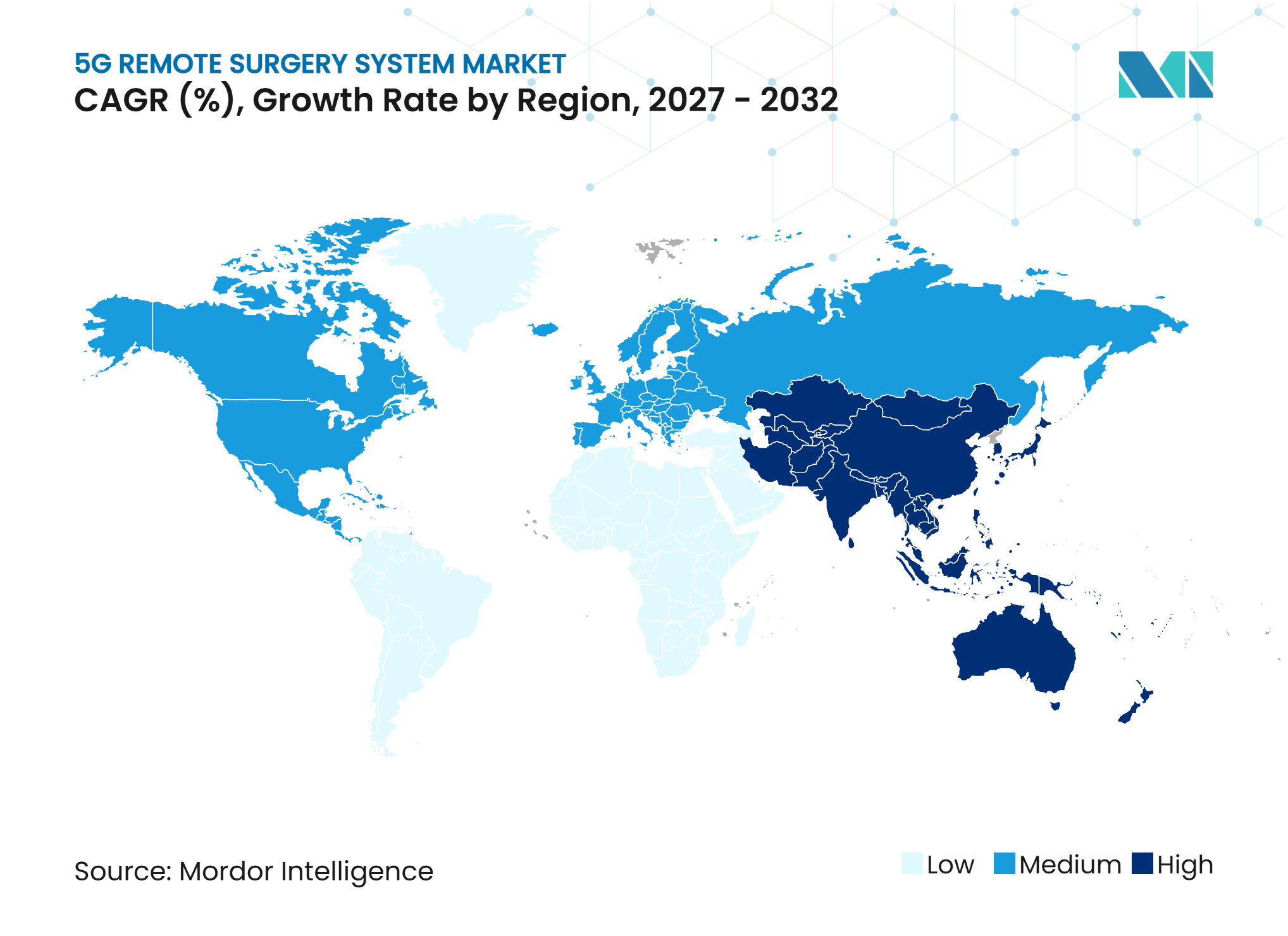
- By geography, North America held 41.23% of revenue in 2026, while Asia-Pacific recorded the highest projected CAGR at 35.34% through 2032.
Note: Market numbers in this report are based on Mordor Intelligence's proprietary estimation framework, which combines nine months of actuals with Q4 projections for base year 2026.
Market Trends and Insights
Drivers Impact Analysis of 5G Remote Surgery System Market*
| Driver | (~) % Impact on CAGR Forecast | Geographic Relevance | Impact Timeline |
|---|---|---|---|
| Rising need for specialist surgical access in underserved areas | +6.5% | Global, with early gains in rural North America, Sub-Saharan Africa, and remote Asia-Pacific regions | Long term (≥ 4 years) |
| Expansion of robotic-assisted surgery | +8.5% | Global, concentrated in North America, Europe, and East Asia | Medium term (2-4 years) |
| Growth in cross-regional surgical collaboration | +3.2% | Asia-Pacific core, with spillover to the Middle East, Africa, South America, North America, Japan, and Western Europe | Medium term (2-4 years) |
| Increasing 5g standalone and private network deployment | +4.8% | Global, with concentration in North America, Europe, East Asia, and OECD countries | Short term (≤ 2 years) and |
| Increasing surgical procedure volumes from aging populations | +8.5% | Global, concentrated in North America, Europe, and East Asia | Medium term (2-4 years) |
| Emergence of remote surgery as a hospital capacity-extension model | +3.2% | Asia-Pacific core, with spillover to the Middle East, Africa, South America, North America, Japan, and Western Europe | Medium term (2-4 years) |
| Source: Mordor Intelligence | |||
Rising Need for Specialist Surgical Access in Underserved Areas
More than one-third of U.S. counties lack access to a surgeon, while 5 billion people globally lack safe and affordable surgical care. Many low-income countries have fewer than one trained surgeon per 100,000 people, creating significant gaps in specialist care. The 5G remote surgery system market supports hub-and-spoke care models where clinical sites have reliable, surgical-grade connectivity. In June 2025, an FDA-approved investigational device exemption trial connected a surgeon in Florida with a patient in Angola, over 11,000 km away, for a robotic prostatectomy. The procedure demonstrated that distance is no longer the sole barrier to remote surgical support when adequate network infrastructure and clinical safeguards are in place.[1] In August 2025, WHO and the Society of Robotic Surgery launched an investment and governance initiative to improve access to virtual care and telesurgery in low- and middle-income countries.[2]
Expansion of Robotic-Assisted Surgery
The 5G remote surgery system market benefits from the growing number of robotic platforms entering regulated clinical use. Medtronic received U.S. Food and Drug Administration clearance for Hugo robotic-assisted surgery in urologic procedures in December 2025. The company subsequently received clearance for Hugo in general surgery in November 2026, covering procedures that account for 3.5 million annual surgeries in the United States. CMR Surgical received FDA clearance for Versius Plus in December 2025 and reported that more than 45,000 patients across 30 countries had received treatment by March 2026. Hospitals operating more than one robotic platform require connectivity and software that function across devices rather than systems designed for a single manufacturer. This shift supports demand for network infrastructure and middleware that integrate multiple surgical platforms without disrupting established clinical workflows.
Growth in Cross-Regional Surgical Collaboration and Hospital Capacity Extension
The 5G remote surgery system market is supported by programs that connect specialist centers with hospitals that have limited local expertise. These programs generate clinical records and safety data that support regulatory submissions and hospital procurement decisions. SS Innovations reported 205 documented telesurgeries by October 2026, including cardiac procedures, strengthening the evidence base for remote surgical operations. In October 2026, Stryker announced an equity investment of USD 400 million in CMR Surgical, along with a U.S. commercial agreement and an option to acquire the remaining equity. The partnership reflects demand for broader robotic surgery portfolios that support multi-site programs. Hospitals can use these arrangements to extend specialist capacity while keeping patient-side care close to local communities.
Increasing Standalone 5G Deployment and Surgical Procedure Volumes
Standalone 5G reduces key network constraints because it does not depend on 4G LTE for control-plane signaling and supports network slicing for dedicated bandwidth. Oulu University Hospital launched a private standalone 5G network in February 2025, demonstrating deployment within an operational hospital environment. Aretaieio University Hospital in Athens also deployed a private standalone 5G network in July 2026. The 5G remote surgery system market also benefits from procedure demand associated with aging populations and increasing joint-replacement activity. Osteoarthritis affected 528 million people globally, while hip and knee replacement rates increased across OECD reporting countries. Hospital networks can use remote surgical capabilities to connect specialist surgeons with sites managing these growing procedure volumes.
Restraints Impact Analysis of 5G Remote Surgery System Market*
| Restraint | (~) % Impact on CAGR Forecast | Geographic Relevance | Impact Timeline |
|---|---|---|---|
| High capital and implementation costs | -3.5% | Global, most acute in emerging markets, ambulatory surgical center settings, and multi-jurisdiction procedures | Long term (≥ 4 years) |
| Unresolved cross-border liability and credentialing requirements | -1.8% | Global, with higher compliance burdens in | Medium term (2-4 years) |
| Network failure, latency and jitter risk | -1.6% | North America and Europe and greater exposure in regions with early standalone 5G coverage | Short term (≤ 2 years) |
| Cybersecurity, data-privacy and operational-continuity risk | -2.5% | Global, concentrated in North America, Europe, and East Asia | Medium term (2-4 years) |
| Source: Mordor Intelligence | |||
High Capital and Implementation Costs
Complete remote surgery deployment requires a robotic platform, a private 5G network, edge computing capabilities, and clinical training. These requirements create significant cost barriers for smaller hospitals, rural health systems, and ambulatory surgical centers. A robotic surgical console costs USD 1 million to USD 2.5 million, excluding instrument, service, and infrastructure expenses. Multivendor facilities may incur additional costs when different platforms require network upgrades. Uneven reimbursement arrangements and fragmented cross-border physician licensing rules also limit the 5G remote surgery system market. WHO's 2025 initiative recognizes the need for coordinated investment and governance, although many health systems remain at an early stage of implementation.
Cybersecurity, Data-Privacy, and Operational-Continuity Risk
A remote surgery session transmits data through the robotic connection, hospital network, and 5G access and core networks. Each component can introduce operational failures, service interruptions, or cybersecurity risks. The 2025 technical guidelines identify mutual authentication, end-to-end encryption, and distributed denial-of-service protection as core controls. The guidelines classify third-party network infrastructure as potentially hostile, increasing the need for rigorous testing and continuous monitoring. A five-year validation of the hinotori system showed that virtual private network reconnection following a simulated failure took 5 to 11 seconds. Hospitals therefore require automatic standby procedures and fallback operating configurations before the 5G remote surgery system market can scale.
*Our forecasts treat driver/restraint impacts as directional, not additive. The impact forecasts reflect baseline growth, mix effects, and variable interactions.
5G Remote Surgery System Market Segment Analysis
By Component:
Services Layer Gains Revenue MomentumHardware accounted for 55.46% of 5G remote surgery system revenue in 2026, reflecting the upfront investment required for robots, network equipment, and clinical systems. Hardware remains essential because every remote procedure depends on surgical platforms and reliable hospital-side connectivity. Services are forecast to grow at a CAGR of 32.22% through 2032 as managed networks, training, software support, and service agreements become recurring operational requirements.
In December 2025, Moon Surgical activated 5G connectivity across its Maestro installed base and introduced Maestro Insights, a cloud-based analytics service. Software updates, network operations, and training support create recurring revenue opportunities throughout a clinical program's lifecycle. Bouygues Telecom's Bordeaux University Hospital project received EUR 11.4 million (USD 12.50 million) in Connecting Europe Facility funding and is designed to support at least 10 connected health applications from 2027.



By Connectivity:
Standalone 5G Displaces Legacy ArchitectureNon-standalone 5G accounted for 66.89% of connectivity revenue in 2026 because early hospital deployments relied on existing 4G LTE infrastructure. While this architecture enabled initial connectivity, it offers less control over latency and bandwidth than standalone networks. Standalone 5G is forecast to grow at a CAGR of 35.45% through 2032, the highest growth rate within the connectivity segment.
Five-year hinotori validation found that Sub6 standalone 5G achieved 100 ms round-trip latency under simulated 1 Gbps congestion, while non-standalone configurations showed greater jitter and less stable frame delivery. Fine motor accuracy declines beyond 120 ms, making consistent network performance clinically important. Private standalone deployments in Finland and Greece indicate that hospitals are integrating this capability into advanced clinical infrastructure.
By Product Type:
Infrastructure Investment Accelerates Beyond Robotic PlatformsRobotic surgical systems held 44.56% of 5G remote surgery system revenue in 2026, making them the largest product category. These systems serve as the central clinical platform and typically represent the largest equipment investment in remote surgery programs. Telemedicine platforms, surgical imaging systems, network security systems, and accessories comprise the remaining product base.
5G communication infrastructure is forecast to expand at a CAGR of 33.45% through 2032 as hospitals invest in dedicated surgical connectivity. In February 2025, the NHK Foundation validated 8K video transmission over local 5G between Tokyo and Osaka, achieving 250 ms total latency with no reported perceptible delay. Redundant communication paths, automatic failover, and virtual private network encryption remain essential for reliable remote clinical operations.

By Application:
Orthopedic Volume Anchors Revenues, Neurosurgery AcceleratesOrthopedic surgery held 36.67% of 5G remote surgery system revenue in 2026, supported by the rising burden of musculoskeletal diseases. Osteoarthritis affected 528 million people worldwide, while hip and knee replacement volumes increased across all OECD reporting countries. General, urological, cardiovascular, gynecological, and thoracic procedures also contribute to the broader application mix.
Neurosurgery is forecast to grow at a CAGR of 34.55% through 2032, the highest growth rate among applications in the 5G remote surgery system market. By mid-2026, SS Innovations reported 22 documented cardiac telesurgeries using SSi Mantra. In September 2025, Remedy Robotics completed fully remote neurointerventional procedures at Unity Health Toronto and secured USD 62 million to support clinical trials, with reported procedures taking nearly half the time of the current standard.
By End User:
Hospitals Dominate, Ambulatory Surgical Centers Redefine the Growth PathHospitals held 76.88% of 5G remote surgery system revenue in 2026 because they serve as deployment sites and hub facilities in multi-site care models. Large referral hospitals can support the specialist teams, technical staff, and clinical governance required for remote procedures. Through 2025, NTT DOCOMO, Medicaroid, and Kobe University conducted more than 30 remote engineering validation sessions using the hinotori system.
Ambulatory surgical centers are forecast to grow at a CAGR of 33.67% through 2032. These centers can serve as patient-side sites when they have a robotic cart, appropriate staff, and a reliable 5G connection to a specialist hub. A 2025 survey found that surgical robotics, telehealth, and patient engagement tools each accounted for 25% of ambulatory surgical center operators' responses regarding their largest technology investments.
Geography Analysis
North America
North America held 41.23% of 5G remote surgery system revenue in 2026, supported by the high use of robotic surgery, active regulatory engagement, and mature telecommunications infrastructure. In June 2025, the FDA granted an investigational device exemption for a transcontinental robotic trial connecting Florida and Angola over 11,000 km. Healthcare providers in the United States are adopting private 5G networks, creating a foundation for hospital-based connectivity programs. More than one-third of U.S. counties lack a surgeon, strengthening the business case for linking remote care sites with specialist hubs.
Asia-Pacific
Asia-Pacific is forecast to expand at a CAGR of 35.34% through 2032, representing the fastest regional growth rate in the 5G remote surgery system market. China has combined public 5G deployment with state hospital participation in multicenter telesurgery programs. In June 2026, a Beijing-to-Shantou gastrointestinal tumor procedure used latency of 30 to 40 ms, with local team handover possible within 1 second. Japan's hinotori validation showed that Sub6 standalone 5G consistently met the 100 ms threshold under its Remote Surgery Guidelines. Article 20 of Japan's Medical Practitioners Act still requires an on-site licensed physician, while India, South Korea, and Australia are building hospital 5G capabilities for future clinical programs.
Europe, Middle East, and South America
Europe is developing private standalone 5G capacity in hospitals across Finland, Greece, France, and Italy, with several projects supported through the Connecting Europe Facility. This part of the 5G remote surgery system market is moving from pilot infrastructure toward hospital-based clinical use. The United Kingdom completed its first long-distance teleoperated prostatectomy in March 2026, while Toumai received a CE Mark in June 2026 for commercial use in Europe. Kuwait and Angola participated in the WHO and Society of Robotic Surgery initiative that began in August 2025, while Angola hosted the FDA-authorized transcontinental trial from the United States. Brazil and Argentina are building hospital 5G capacity, and private-network deployment will influence commercial adoption across South America.
Competitive Landscape
Market Concentration
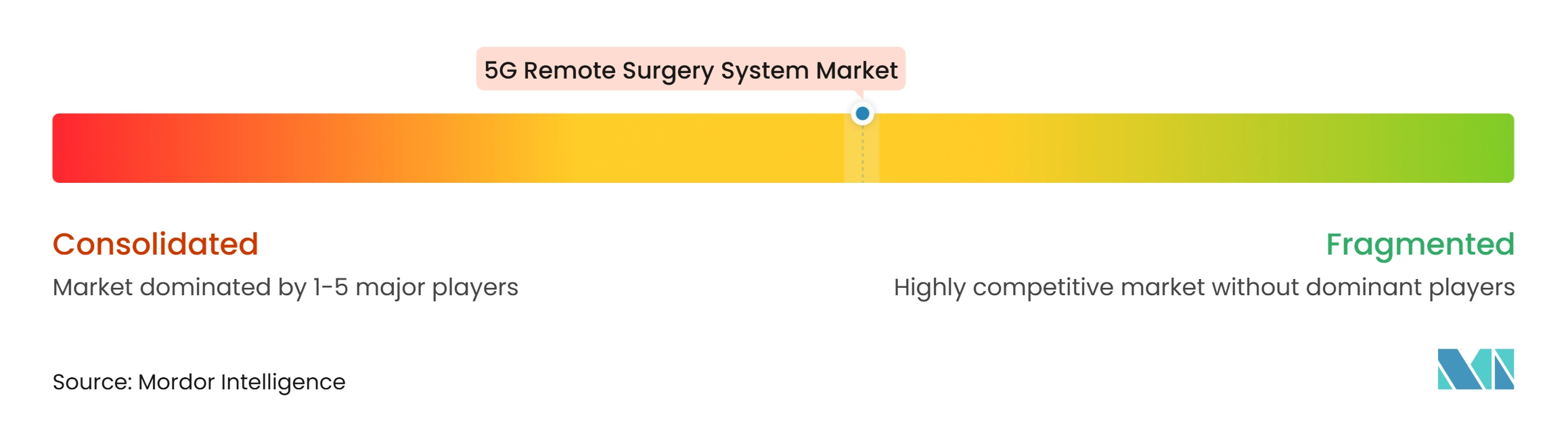
The 5G remote surgery system market has a moderately concentrated structure at the system level, while network infrastructure is becoming more consolidated. Established robotic surgery companies are adding 5G capabilities, while telecommunications providers supply the connectivity and middleware required for multi-site programs. Stryker invested USD 400 million in CMR Surgical in October 2026 and secured an option to acquire the remaining equity, along with a U.S. commercial agreement for the Versius portfolio. This development increases the focus on multi-specialty robotic platforms that support broader clinical programs.
SS Innovations reported 205 documented telesurgeries by October 2026, including the longest-distance cardiac telesurgery at 20,000 km, strengthening its clinical experience in cardiac procedures. The market also includes suppliers of imaging systems, software, network security solutions, and hospital connectivity infrastructure. Medtronic is building AI and robotics capabilities through its London digital center and has expanded Hugo clearances across urologic and general surgery.
In July 2025, Intuitive Surgical demonstrated transatlantic da Vinci 5 telesurgery, with surgeons located more than 4,000 miles apart exchanging instrument control and force feedback on a tissue model. Technical guidelines published in 2025 are shaping procurement decisions by establishing expectations for cybersecurity, resilience, and connected-device interoperability. Telecommunications providers can hold an advantage once a hospital program is operational, as replacing surgical-grade infrastructure can be difficult.
5G Remote Surgery System Industry Leaders
-
SS Innovations International Inc.
-
Medicaroid Corporation
-
Intuitive Surgical Inc.
-
Medtronic PLC
-
CMR Surgical Limited
- *Disclaimer: Major Players sorted in no particular order
5G Remote Surgery System Market Companies Covered in this Report
- Asensus Surgical
- Avatera Medical
- CMR Surgical Limited
- EndoQuest Robotics Inc.
- Galen Robotics Inc.
- Globus Medical
- Huawei Technologies
- Intuitive Surgical
- Johnson & Johnson
- Karl Storz
- Medicaroid Corporation
- Medtronic
- Siemens Healthineers
- SS Innovations International Inc.
- Stryker
- Vicarious Surgical Inc.
- Zimmer Biomet
Recent Industry Developments in 5G Remote Surgery System Market
- November 2026: Globe Business provided private network infrastructure for the Philippines’ first interregional robotic surgery, connecting hospitals in Pampanga and Cotabato City across 1,400 km. The SSi Mantra 3.0 system enabled simultaneous bilateral remote surgeries with network response times as low as 0.76 ms and 3D/4K video transmission outside public internet traffic.
- November 2026: Medtronic received FDA clearance for the Hugo RAS system for general surgery, including cholecystectomy, gastric bypass, ventral hernia repair, inguinal hernia repair, and appendectomy. These procedures accounted for 3.5 million annual surgeries in the United States and represented more than half of U.S. soft-tissue procedures.
- October 2026: Stryker announced a USD 400 million strategic equity investment in CMR Surgical. The agreement included an exclusive option to acquire the remaining equity and a U.S. commercial agency agreement for the Versius portfolio.
- October 2026: SS Innovations demonstrated live cardiac telesurgery between Barcelona and Bengaluru, spanning 12,000 km, using the SSi Mantra system and SSi MantrAsana console. The company reported the completion of 205 telesurgeries.
Global 5G Remote Surgery System Market Report Scope
As per the scope of the report, a 5G remote surgery system is a medical setup that uses fifth-generation (5G) wireless networks to let a surgeon operate a surgical robot on a distant patient in real time. High bandwidth and ultra-low latency carry 3D video and control signals so the surgeon can guide robotic instruments from another room, city, or country.
The 5G remote surgery system market is segmented by component, connectivity, product type, application, end user, and geography. By component, the market includes hardware, software, and services. By connectivity, the market is segmented into standalone 5G and non-standalone 5G. By product type, the market is categorized into robotic surgical systems, 5G communication infrastructure, telemedicine and remote command platforms, surgical imaging and visualization systems, surgical accessories and instruments, network security and redundancy systems, and other product types. By application, the market is segmented into general surgery, urological surgery, orthopedic surgery, cardiovascular surgery, neurosurgery, gynecological surgery, thoracic surgery, and other surgery types. By end user, the market is segmented into hospitals, ambulatory surgical centers, specialty clinics, academic and research institutions, and other end users. By geography, the market is analyzed across North America, Europe, Asia-Pacific, the Middle East and Africa, and South America. The report also covers the estimated market sizes and trends for 17 countries across major regions globally. The report offers market sizes and forecasts in terms of value (USD) for the above segments.
Segmentation Overview
| Hardware |
| Software |
| Services |
| Standalone 5G |
| Non-Standalone 5G |
| Robotic Surgical Systems |
| 5G Communication Infrastructure |
| Telemedicine and Remote-Command Platforms |
| Surgical Imaging and Visualization Systems |
| Surgical Accessories and Instruments |
| Network Security and Redundancy Systems |
| Other Product Type |
| General Surgery |
| Urological Surgery |
| Orthopedic Surgery |
| Cardiovascular Surgery |
| Neurosurgery |
| Gynecological Surgery |
| Thoracic Surgery |
| Other Surgery Types |
| Hospitals |
| Ambulatory Surgical Centers |
| Specialty Clinics |
| Academic and Research Institutions |
| Other End Users |
| North America | United States |
| Canada | |
| Mexico | |
| Europe | Germany |
| United Kingdom | |
| France | |
| Italy | |
| Spain | |
| Rest of Europe | |
| Asia-Pacific | China |
| India | |
| Japan | |
| Australia | |
| South Korea | |
| Rest of Asia-Pacific | |
| Middle East and Africa | GCC |
| South Africa | |
| Rest of Middle East and Africa | |
| South America | Brazil |
| Argentina | |
| Rest of South America |
| By Component | Hardware | |
| Software | ||
| Services | ||
| By Connectivity | Standalone 5G | |
| Non-Standalone 5G | ||
| By Product Type | Robotic Surgical Systems | |
| 5G Communication Infrastructure | ||
| Telemedicine and Remote-Command Platforms | ||
| Surgical Imaging and Visualization Systems | ||
| Surgical Accessories and Instruments | ||
| Network Security and Redundancy Systems | ||
| Other Product Type | ||
| By Application | General Surgery | |
| Urological Surgery | ||
| Orthopedic Surgery | ||
| Cardiovascular Surgery | ||
| Neurosurgery | ||
| Gynecological Surgery | ||
| Thoracic Surgery | ||
| Other Surgery Types | ||
| By End User | Hospitals | |
| Ambulatory Surgical Centers | ||
| Specialty Clinics | ||
| Academic and Research Institutions | ||
| Other End Users | ||
| By Geography | North America | United States |
| Canada | ||
| Mexico | ||
| Europe | Germany | |
| United Kingdom | ||
| France | ||
| Italy | ||
| Spain | ||
| Rest of Europe | ||
| Asia-Pacific | China | |
| India | ||
| Japan | ||
| Australia | ||
| South Korea | ||
| Rest of Asia-Pacific | ||
| Middle East and Africa | GCC | |
| South Africa | ||
| Rest of Middle East and Africa | ||
| South America | Brazil | |
| Argentina | ||
| Rest of South America | ||
Key Questions Answered in the Report
What is the projected value of the 5G remote surgery system market by 2032?
The sector is projected to reach USD 11.63 billion by 2032, from USD 3.06 billion in 2027, at a 30.55% CAGR.
Which connectivity model is growing fastest in remote surgery systems?
Standalone 5G is projected to grow at a 35.45% CAGR through 2032 because it can provide more consistent bandwidth and latency control.
Why are hospitals the leading end users of remote surgery systems?
Hospitals held 76.88% of revenue in 2026 because they provide the specialist teams, technical support, and governance needed for multi-site surgical programs.
Which application is expected to grow fastest through 2032?
Neurosurgery is forecast to grow at a 34.55% CAGR through 2032, supported by demand for highly precise and reliable remote procedures.
What are the main barriers to wider deployment of remote surgery systems?
High equipment and implementation costs, cross-border credentialing limits, cybersecurity requirements, and network continuity risks remain key barriers.
Which region is growing fastest for 5G-enabled remote surgery?
Asia-Pacific is forecast to grow at a 35.34% CAGR through 2032, supported by hospital 5G investment and multi-center telesurgery programs.