
Household Cleaners Market Size and Share
Market Overview
| Study Period | 2021 - 2031 |
|---|---|
| Market Size (2026) | USD 170.47 Billion |
| Market Size (2031) | USD 213.76 Billion |
| Growth Rate (2026 - 2031) | 4.63 % |
| Fastest Growing Market | Europe |
| Largest Market | Asia Pacific |
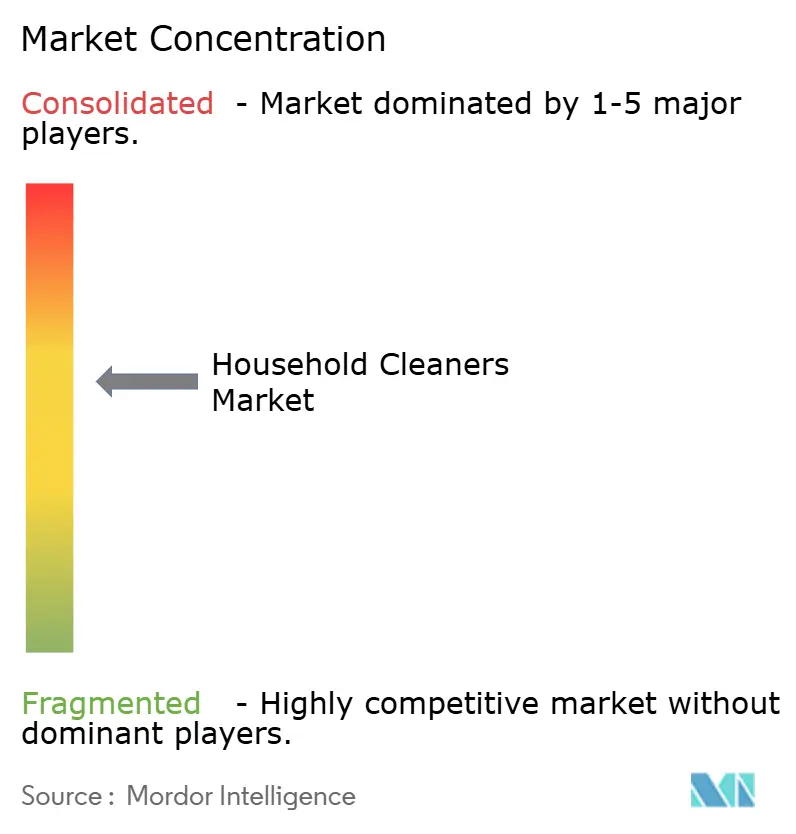
| Market Concentration | Medium |
Major Players *Disclaimer: Major Players sorted in no particular order Image © Mordor Intelligence. Reuse requires attribution under CC BY 4.0. | |
Household Cleaners Market Analysis by Mordor Intelligence
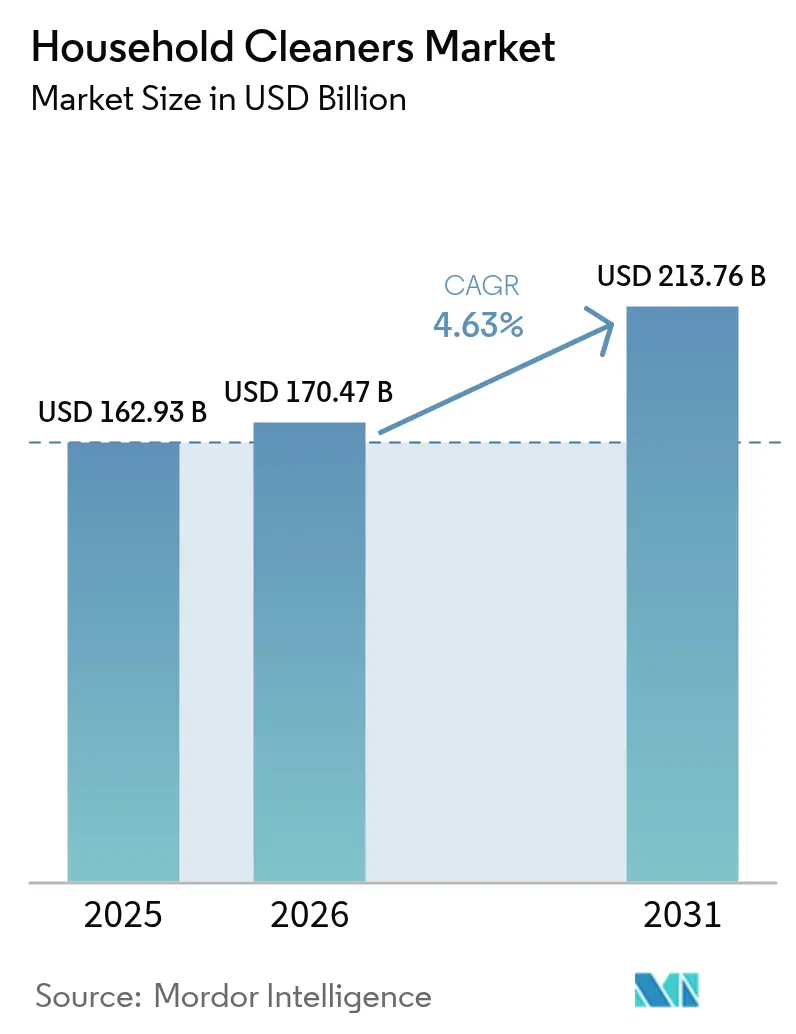
The household cleaners market size in 2026 is estimated at USD 170.47 billion, growing from 2025 value of USD 162.93 billion with 2031 projections showing USD 213.76 billion, growing at 4.63% CAGR over 2026-2031. The pandemic heightened hygiene awareness, ensuring essential cleaning items remain staples on shopping lists, even amidst tighter household budgets. This trend is further bolstered by rising health concerns, notably malaria and dengue. For instance, the World Health Organization reported in 2023 that the Western Pacific region saw approximately 1.75 million malaria cases, with Nigeria alone representing 30.9% of global malaria deaths[1]. Moreover, leading brands are now incorporating probiotic and plant-based formulas, meeting both efficacy and sustainability demands, allowing premium brands to maintain their price points. While Asia-Pacific leads in volume demand, Europe is making swift strides, propelled by stringent biodegradability laws favoring concentrated, low-impact surfactants. The rise of online retailers, subscription models, and smart home devices is not only ensuring predictable replenishment cycles but also strengthening consumer-brand loyalty.
Key Report Takeaways
- By product type, laundry care accounted for 62.58% of the household cleaners market share in 2025, while dishwashing products recorded the highest projected CAGR at 6.08% through 2031.
- By form, liquids led with 38.12% revenue share in 2025; powders are forecast to expand at a 6.15% CAGR to 2031, driven by value-seeking shoppers in emerging economies.
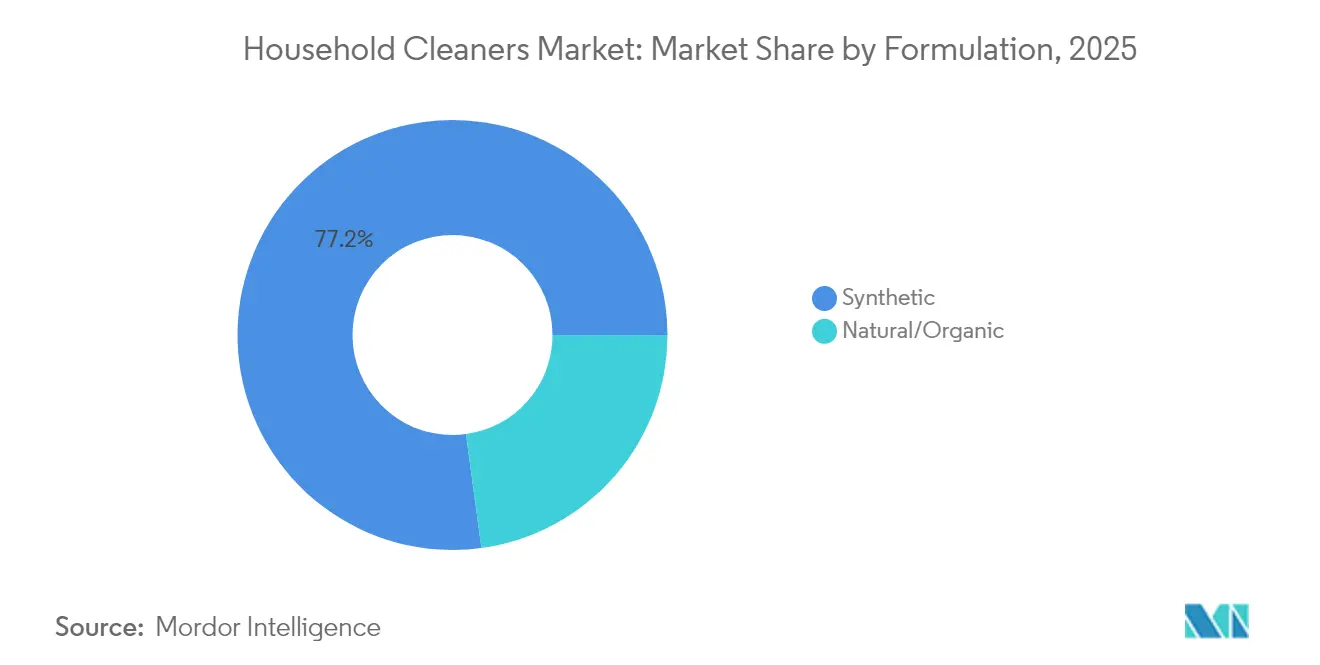
- By formulation, synthetic offerings retained a 77.15% share in 2025, but natural/organic products are growing at a 6.39% CAGR as eco-labels gain trust.
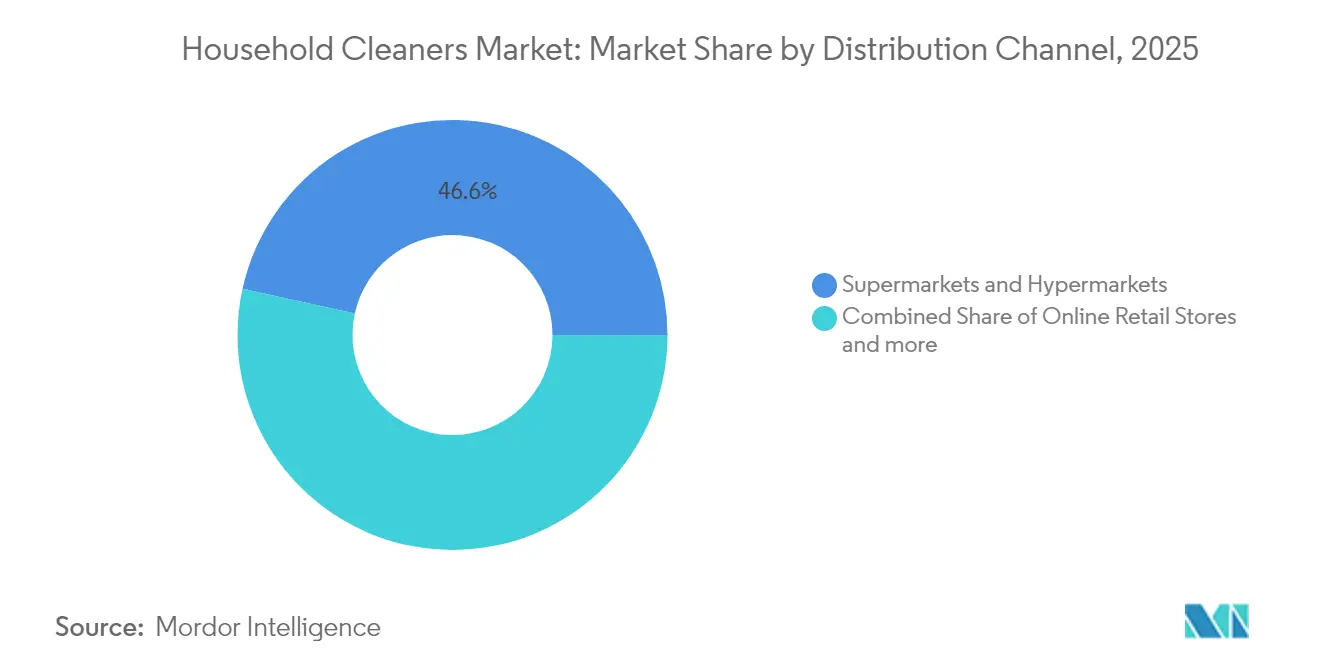
- By distribution channel, supermarkets and hypermarkets accounted for 46.55% of the household cleaners market size in 2025, while online retail is projected to advance at a 6.27% CAGR through 2031.
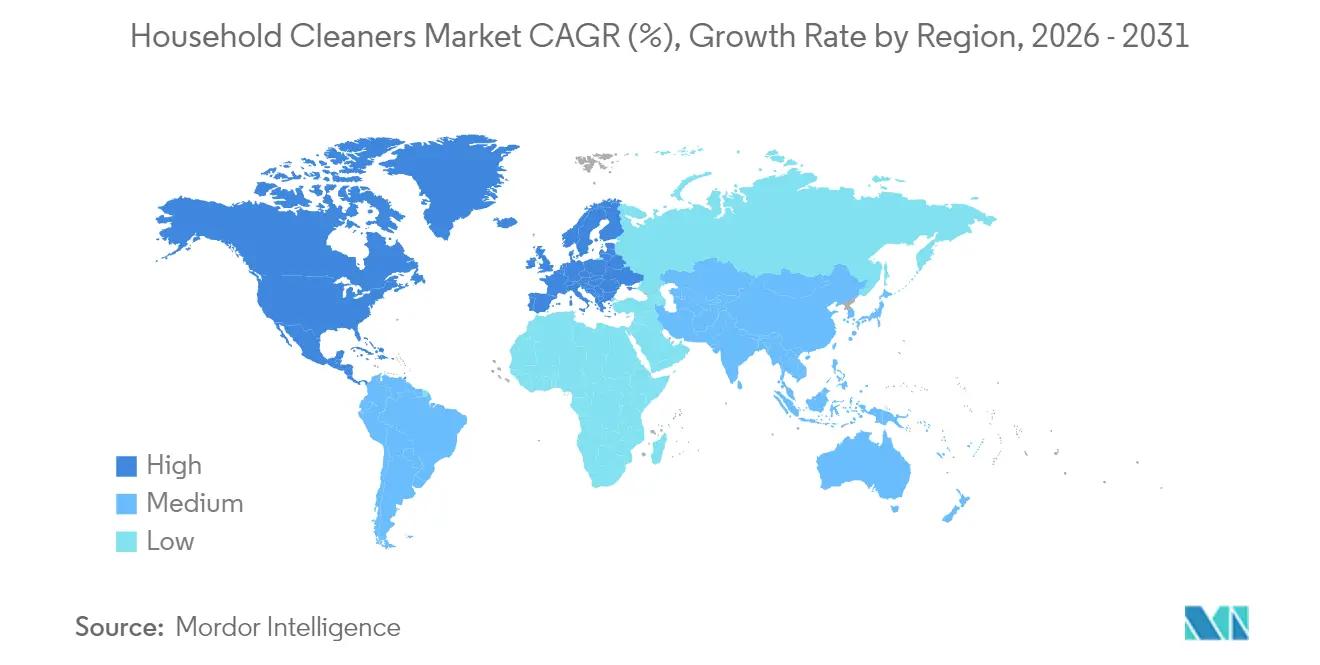
- By geography, Asia-Pacific commanded a 30.92% share in 2025; Europe exhibits the quickest regional CAGR at 6.03% to 2031, thanks to regulatory tailwinds.
Note: Market size and forecast figures in this report are generated using Mordor Intelligence’s proprietary estimation framework, updated with the latest available data and insights as of 2026.
Market Trends and Insights
Drivers Impact Analysis of Household Cleaners Market*
| Driver | (~) % Impact on CAGR Forecast | Geographic Relevance | Impact Timeline |
|---|---|---|---|
| Heightened hygiene and sanitation awareness | +1.2% | Global, with peak impact in Asia-Pacific and North America | Medium term (2-4 years) |
| Demand for eco-friendly and sustainable products | +0.9% | Europe and North America core, expanding to Asia-Pacific | Long term (≥ 4 years) |
| Product innovation and specialty cleaners | +0.8% | Global, led by developed markets | Medium term (2-4 years) |
| Technological integration in cleaning devices | +0.6% | North America and Europe, with gradual Asia-Pacific adoption | Long term (≥ 4 years) |
| Public health campaigns and awareness drives | +0.7% | Global, government-led initiatives | Short term (≤ 2 years) |
| Premiumization trend | +0.5% | Developed markets, urban centers in emerging economies | Medium term (2-4 years) |
| Source: Mordor Intelligence | |||
Heightened hygiene and sanitation awareness
Post-pandemic hygiene consciousness fundamentally altered consumer cleaning behaviors. This behavioral shift extends beyond immediate pandemic concerns, as 85% of consumers indicate they will maintain heightened cleaning practices long-term. As of July 2025, the Centers for Disease Control and Prevention highlighted that 2.3 billion people worldwide still lack access to basic handwashing facilities with soap and water at home. This underscores significant market expansion opportunities, particularly in developing regions.[2]. Moreover, healthcare facility protocols increasingly influence household cleaning standards, with professional-grade disinfectants gaining traction in residential applications. Furthermore, the WHO's guidelines on sanitation and health reinforce the critical role of cleaning products in disease prevention, supporting sustained demand growth across all product categories.
Demand for eco-friendly and sustainable products
Environmental consciousness drives accelerating demand for sustainable cleaning solutions, with the U.S. Environmental Protection Agency's Safer Choice program certifying nearly 2,000 products that meet stringent health and environmental criteria. Along the same line, the 2024 updates to the Safer Choice Standard introduced enhanced packaging sustainability requirements and new energy efficiency criteria, creating competitive advantages for compliant manufacturers. European markets lead this transition, with the EU Ecolabel criteria revision emphasizing concentrated products and plant-based ingredients to reduce environmental impact. Moreover, Ecocert's natural cleaning product certification allows manufacturers to market globally with two labeling levels: 'Ecodetergents' (maximum 5% synthetic ingredients) and 'Ecodetergents made with Organic' (minimum 95% natural ingredients, minimum 10% organic). Furthermore, consumer willingness to pay premium prices for environmentally responsible products sustains higher margins while driving innovation in bio-based formulations.
Product innovation and specialty cleaners
Innovation cycles accelerate as manufacturers differentiate through specialized formulations and delivery mechanisms, with Unilever's April 2025 launch of Cif Infinite Clean probiotic cleaning spray exemplifying the bioscience revolution in home care. The company's ground-breaking bioscience initiatives leverage natural microorganisms to enhance cleaning efficacy while reducing chemical dependency. Patent activity in toilet bowl cleaner formulations demonstrates ongoing research and development investment, with biodegradable pad systems and effervescing compositions addressing both performance and environmental concerns. Additionally, specialty applications gain traction as consumers seek targeted solutions for specific cleaning challenges, moving beyond generic all-purpose formulations. The integration of antimicrobial technologies becomes particularly relevant as healthcare-associated infection prevention drives demand for products with proven pathogen elimination capabilities. Innovation timelines compress as digital consumer feedback loops enable rapid product iteration and market testing.
Technological integration in cleaning devices
Governments, health organizations, and nonprofits globally have intensified education on the importance of effective cleaning practices as a frontline defense against infectious diseases, creating heightened demand for cleaning products across categories such as dishwashing, laundry care, surface care, and toilet care. For example, nonprofit initiatives like the Hope and Comfort Hygiene Hub in Massachusetts distribute millions of hygiene products annually to address hygiene insecurity and promote health and dignity in vulnerable populations, reinforcing the societal value of accessible cleaning essentials. The U.S. Environmental Protection Agency, for instance, encourages safer household product initiatives that spur manufacturers to prioritize health-conscious and green formulations. These awareness efforts align closely with product developments in 2024 and 2025 that combine efficacy with sustainability and sensory appeal. Clorox has introduced innovations like the Lavender and Jasmine Scented Bleach (September 2024), while Pine-Sol’s Cherry Blossom Scent Multi-Surface Cleaner (February 2025) and Branch Basics’ all-purpose natural concentrate reflect consumer demand for natural, multi-functional, and eco-friendly cleaning solutions, encouraged greatly by ongoing hygiene education campaigns.
Restraints Impact Analysis of Household Cleaners Market*
| Restraint | (~) % Impact on CAGR Forecast | Geographic Relevance | Impact Timeline |
|---|---|---|---|
| Intense market competition | -0.8% | Global, particularly acute in mature markets | Short term (≤ 2 years) |
| Environmental regulations on packaging waste | -0.6% | Europe and North America, expanding globally | Medium term (2-4 years) |
| Environmental and health concerns | -0.5% | Global, consumer-driven in developed markets | Long term (≥ 4 years) |
| Stringent regulatory requirements | -0.7% | Europe and North America core, Asia-Pacific following | Medium term (2-4 years) |
| Source: Mordor Intelligence | |||
Intense market competition
Market saturation in developed regions intensifies competitive pressures, with private-label alternatives capturing an increasing share from branded manufacturers through aggressive pricing strategies. The Federal Trade Commission's antitrust enforcement activities, including the Amazon case alleging monopolistic behavior in online retail, highlight competitive concerns that affect household cleaner distribution channels. Similarly, Turkish Competition Authority findings reveal high market concentration among major retailers, creating buyer power dynamics that pressure supplier margins and limit pricing flexibility. Along the same line, promotional intensity escalates as manufacturers compete for shelf space and consumer attention, eroding profitability across the value chain. Furthermore, digital disruption enables new entrants to bypass traditional distribution channels, challenging established players' market positions. The commoditization of basic cleaning functions forces manufacturers to invest heavily in innovation and marketing to maintain differentiation.
Environmental regulations on packaging waste
The U.S. Environmental Protection Agency's National Strategy to Prevent Plastic Pollution aims to eliminate plastic waste from land-based sources by 2040, directly impacting cleaning product packaging design and material selection. PFAS regulations affect 863 consumer products, including household cleaners, with 20 states adopting policies to prohibit PFAS in food packaging and expanding restrictions to other consumer applications. Moreover, the EPA's 2024 updates to Safer Choice packaging requirements mandate higher recycled content levels, increasing material costs and supply chain complexity. Extended Producer Responsibility regulations require manufacturers to plan for product disposal at production, develop appropriate disposal systems, and educate consumers on recycling practices. Thus, compliance costs escalate as regulatory frameworks evolve, particularly affecting smaller manufacturers with limited resources for regulatory adaptation and sustainable packaging development.
*Our forecasts treat driver/restraint impacts as directional, not additive. The impact forecasts reflect baseline growth, mix effects, and variable interactions.
Household Cleaners Market Segment Analysis
By Product Type:
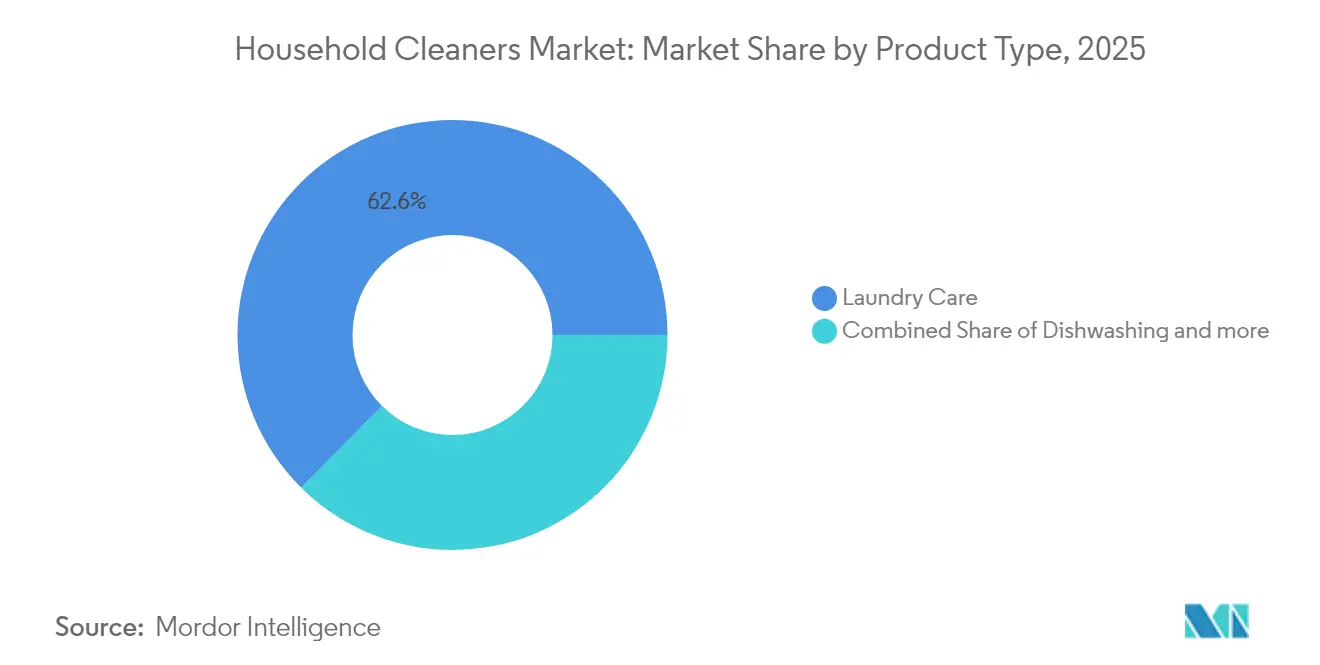
Laundry Care Dominance Faces Dishwashing DisruptionLaundry Care commands 62.58% market share in 2025, reflecting its essential role in household maintenance and the category's broad product portfolio spanning liquid detergents, powder formulations, and specialty additives. Dishwashing emerges as the fastest-growing segment at 6.08% CAGR through 2031, driven by convenience innovations like single-use pods and concentrated formulations that simplify usage while reducing packaging waste. Surface care and toilet care segments maintain steady growth trajectories, supported by increased hygiene awareness and specialized product development for targeted cleaning applications.
The powder detergent resurgence in developing markets contrasts with liquid dominance in developed regions, as Chemical and Engineering News reports that powders lead by volume globally despite liquids' value share advantage. Unilever's January 2024 introduction of laundry sheets represents mass market innovation that addresses sustainability concerns while maintaining cleaning efficacy. Thus, the dishwashing segment benefits from premiumization trends as consumers invest in specialized formulations for different surface types and soil conditions, while regulatory compliance factors influence product development, with EPA Safer Choice certifications becoming increasingly important for market access and consumer acceptance.

By Form:
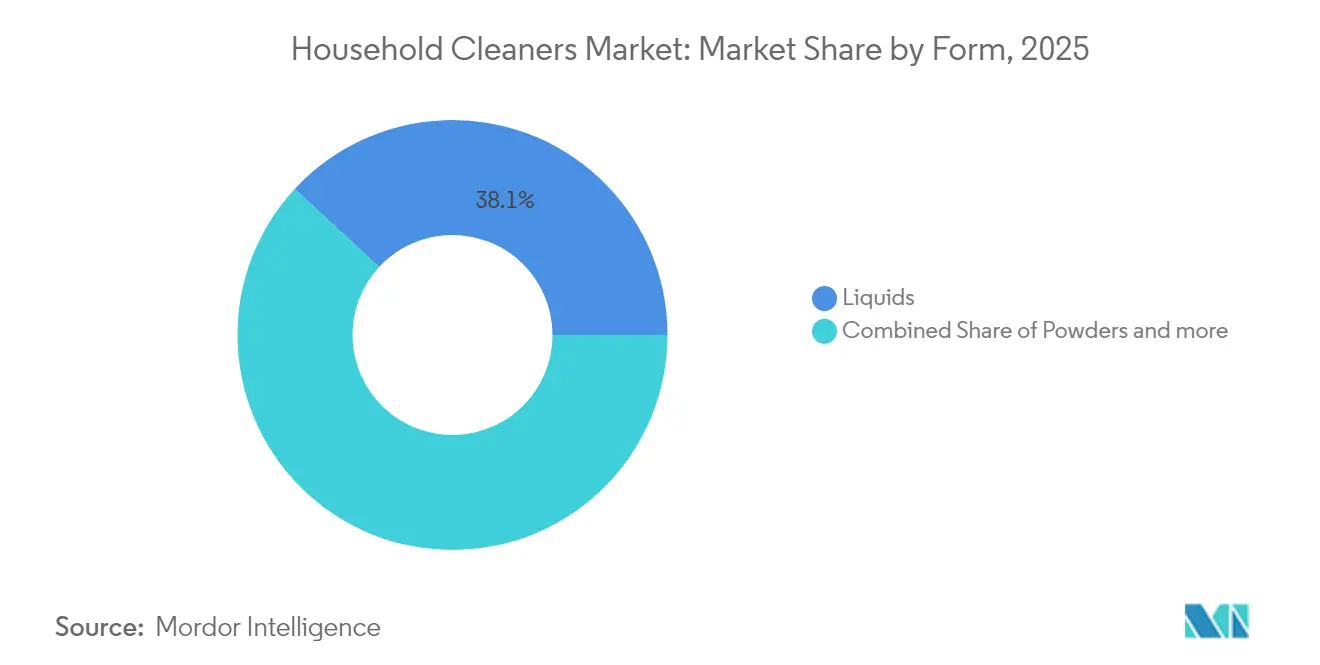
Powder Renaissance Challenges Liquid LeadershipLiquids maintain a 38.12% market share in 2025, supported by consumer preference for convenience and ease of use in developed markets. However, Powders experience remarkable growth at 6.15% CAGR through 2031, driven by cost advantages in emerging economies and environmental benefits from reduced packaging requirements. The powder revival reflects economic pressures in developing regions where consumers prioritize value over convenience, particularly as appliance ownership increases and enables effective powder usage.
Bars and other alternative forms capture niche segments focused on specific applications or environmental considerations. The form preference varies significantly by geography, with powders remaining popular in Africa, India, and parts of Europe where economic factors outweigh convenience considerations. Procter & Gamble's research indicates similar market shares by value between liquids and powders globally, though powders lead in volume terms. Innovation in powder formulations addresses traditional limitations such as dissolution rates and residue concerns, making them more competitive with liquid alternatives. The 2% annual growth projection for powdered detergents reflects increasing appliance ownership in developing countries and sustained cost advantages over liquid formulations.
By Formulation:
Natural/Organic Surge Disrupts Synthetic DominanceSynthetic formulations dominate with 77.15% market share in 2025, leveraging established supply chains and proven performance characteristics across diverse cleaning applications. Natural/Organic alternatives accelerate at 6.39% CAGR through 2031, reflecting consumer willingness to pay premiums for environmentally responsible products and health-conscious formulations, which is driving the growth in the number of organic products. For instance, according to the Bundesanstalt für Landwirtschaft und Ernährung, as of December 2024, a total of 109,567 products in Germany carried organic labels. This was another increase compared to the previous year (102,170). This growth trajectory positions natural products to capture increasing market share as sustainability concerns intensify and regulatory frameworks favor bio-based ingredients.
The transition toward natural formulations faces technical challenges in matching synthetic performance while maintaining cost competitiveness. European markets lead natural product adoption, supported by regulatory frameworks that encourage sustainable ingredient sourcing and restrict harmful chemical usage. ECOS's sustainability initiatives, including 100% renewable energy usage and zero waste certification, demonstrate the operational commitments required to compete in the natural segment. Plant-based formulations gain traction as manufacturers develop bio-based alternatives that match synthetic performance while reducing environmental impact. The natural segment's premium positioning enables higher margins that offset increased ingredient costs and specialized manufacturing requirements.
By Distribution Channel:
Online Retail Transforms Traditional CommerceSupermarkets and Hypermarkets maintain a 46.55% market share in 2025, leveraging established consumer shopping patterns and the tactile nature of cleaning product selection. Additionally, the growing number of supermarket and hypermarket stores is further supporting the segment's growth. For instance, as of March 1, 2025, there were 1,454 Sainsbury stores in the United Kingdom. Online Retail Stores surge at 6.27% CAGR through 2031, driven by subscription services, bulk purchasing convenience, and the integration of smart home technologies that enable automated replenishment. Convenience stores and other retail channels serve specific geographic and demographic segments with tailored product assortments.
The digital transformation accelerates during pandemic-driven behavioral changes, with consumers embracing online purchasing for essential household items. Amazon's alleged monopolistic practices in online retail, including anti-discounting strategies and forced bundling with fulfillment services, highlight the competitive dynamics shaping digital distribution channels. Subscription models are gaining popularity as consumers seek convenience and cost savings through automated delivery services. The online channel's growth benefits from data analytics that enable personalized product recommendations and targeted marketing campaigns. Traditional retailers invest in omnichannel strategies to compete with pure-play digital platforms while maintaining their physical presence advantages.
Geography Analysis
APAC Household Cleaners Market
Asia-Pacific held 30.92% of category value in 2025, anchored by the scale of China and India, rising middle-class incomes, and rapid urbanization that elevates hygiene priorities. Manufacturers localize production to skirt import duties and respond quickly to scent and packaging preferences unique to each sub-region. Retail infrastructure modernizes via discount chains and e-commerce super-apps, expanding product reach beyond tier-one cities. Government sanitation campaigns, particularly in India, lift penetration of branded cleaners in rural districts previously reliant on bar soap.
Europe Household Cleaners Market
Europe is the fastest-growing territory, advancing at a 6.03% CAGR toward 2031 as the EU Detergents Regulation’s biodegradability clause reshapes procurement toward greener inputs. Consumers routinely scrutinize label disclosures, rewarding transparent brands with repeat purchases and word-of-mouth advocacy. Concentrated pods and water-free tablets lower transport emissions, aligning with corporate net-zero pledges and unlocking retailer preferential shelf plans. The household cleaners market size for Europe is on track, buoyed by premium pricing architectures that offset modest volume growth.
The Americas and MEA Household Cleaners Market
North America benefits from entrenched brand loyalty and high per-capita consumption, ensuring baseline stability even in economic slowdowns. EPA Safer Choice revisions push formulators to excise contentious preservatives, raising reformulation costs but differentiating compliant SKUs on the shelf. South America and the Middle East and Africa show mixed prospects; currency volatility and fragmented logistics hinder rapid scale-up, yet urban migration and retail formalization create long-term upside. Regional joint ventures and micro-distribution partnerships help multinationals manage political risk while gaining local insights.
Regulatory Landscape
Household cleaners sit at the intersection of chemical safety, labeling, and environmental compliance, with requirements that vary by geography and by the claims made on packaging. In the European Union, Regulation (EU) 2026/405 on detergents and surfactants was adopted in February 2026, repealing Regulation (EC) No 648/2004 and updating requirements that affect formulation, information disclosure, and market surveillance for household detergents. EU market access is also shaped by aligned obligations under REACH (substances management) and CLP (classification and labeling), which affect ingredient selection, hazard communication, and reformulation timelines.
In the United States, compliance obligations depend on intended use and on-pack or marketing claims. EPA Safer Choice, updated in August 2024, tightened requirements affecting product and packaging design for participating brands, including higher expectations around packaging sustainability and restrictions on intentionally added PFAS in primary packaging. Separately, cleaning products that make pest-mitigation claims can fall under FIFRA as pesticides, triggering EPA registration requirements and shaping how disinfecting and antimicrobial claims are substantiated and marketed.
Competitive Landscape
The global household cleaners market is moderately consolidated and primarily driven by major multinational corporations, including Procter & Gamble (P&G), Unilever, Reckitt Benckiser, SC Johnson & Son, Inc., The Clorox Company, and Henkel AG & Co. KGaA. These industry leaders leverage their extensive brand portfolios, vast distribution networks (spanning physical retail and growing e-commerce platforms), and robust research and development capabilities to maintain and expand their market shares. A central strategy for growth is continuous product innovation focused on efficacy, convenience, and health-consciousness. For example, in 2025, P&G launched Tide Power PODS with Downy, offering 50% more cleaning power than their original liquid detergent, and the Cascade Platinum Plus pods, designed to eliminate the need for pre-rinsing dishes. P&G also introduced innovations in 2024, such as the Mr. Clean Magic Eraser Ultra Foamy and Magic Eraser Ultra Thick, addressing the need for powerful and convenient multi-surface cleaning solutions. Concurrently, Unilever introduced the Home Care innovation Persil Wonder Wash (also known as OMO/Surf Excel), a liquid laundry detergent specifically engineered for rapid, short-cycle washes (as quick as 15 minutes) and cold washes, in response to consumer demand for speed and energy efficiency.
Another critical growth strategy is a strong emphasis on sustainability and ingredient transparency. Companies are increasingly investing in the development of eco-friendly, natural, and organic products with biodegradable ingredients and sustainable, often refillable, packaging to appeal to environmentally conscious consumers. In a significant move in April 2025, Unilever launched Cif Infinite Clean, an all-in-one cleaner that uses pioneering bioscience technology and probiotics to offer a longer-lasting clean, available with 'Re-load' packs that reduce plastic waste. SC Johnson continues its focus on this area, highlighting in its 2024 report that over 99% of Windex PET bottles in North America are made from post-consumer recycled (PCR) resins.
Beyond innovation, major players also engage in strategic portfolio management and geographical expansion. In July 2024, Reckitt Benckiser announced plans to offload a portfolio of non-core home care brands by the end of 2025 (now called "Essential Home," including Air Wick and Cillit Bang) to sharpen its focus on its high-growth health and hygiene power brands, such as Lysol and Harpic. Mergers, acquisitions, and strategic partnerships (such as Unilever's collaboration with Samsung on laundry solutions) are also common tactics to expand product lines and improve operational efficiencies. Smaller, niche players specializing in green cleaning solutions, such as Seventh Generation and Method (owned by SC Johnson), continue to gain market share, further driving the competitive dynamics. Overall, the market is highly dynamic, driven by urbanization, increased disposable incomes, and the growth of e-commerce, forcing companies to continuously adapt their strategies to evolving consumer preferences.
Household Cleaners Industry Leaders
-
Henkel AG & Co. KGaA
-
Reckitt Benckiser Group plc
-
Procter & Gamble Co.
-
Unilever plc
-
S. C. Johnson & Son Inc.
- *Disclaimer: Major Players sorted in no particular order
Household Cleaners Market Companies Covered in this Report
- Procter & Gamble Co.
- Reckitt Benckiser Group plc
- Unilever plc
- Henkel AG & Co. KGaA
- S. C. Johnson & Son Inc.
- Colgate-Palmolive Co.
- The Clorox Company
- Church & Dwight Co. Inc.
- Kao Corporation
- McBride plc
- Vikara Services Pvt. Ltd. (The Better Home)
- Seventh Generation Inc.
- Ecover (Werner & Mertz)
- Method Products PBC
- 3M (Home Care Division)
- The Libman Company
- Amway Corp.
- Godrej Consumer Products Ltd.
- Betco Corporation
- Sodasan GmbH
Market Opportunities and Future Outlook
Manufacturing and supply-chain investments are expanding capacity and changing the cost and availability of key inputs, creating room for both multinational and regional brands across laundry and broader home care portfolios. In May 2026, Unilever completed a EUR 174 million upgrade at its Port Sunlight site, including an automated distribution center to support next-generation Persil capsule production, which reinforces the move toward compact, premium formats that are more complex to manufacture and distribute. Large-scale capacity additions in emerging markets, including Hayat Kimya commissioning a detergent facility in Mersin, Turkey (over USD 50 million investment; 230,000 tonnes annual capacity) and Summit Household Solutions commencing operations at an Ota, Ogun State plant in Nigeria (7,000 tonnes annual capacity for detergents and sanitizers), also support localized production strategies that reduce import dependence and improve service levels.
Upstream integration and portfolio reshaping are also opening new competitive pathways. In February 2026, Dangote announced plans for a 400,000-tonne annual capacity Linear Alkyl Benzene (LAB) plant within the Dangote Refinery complex, targeting detergent feedstock supply for the African market, which can change surfactant sourcing dynamics and support regional detergent scaling. On the demand and channel side, private-label and platform-driven expansion is supported by capital deployment such as Argos agreeing in April 2026 to acquire a majority stake in RELEVI, a European private-label homecare producer, while First Quality announced a USD 300 million investment in March 2026 to build a detergent production facility in Archbold, Ohio for its retailer brands business. These moves raise expectations for speed-to-market and cost-to-serve, while increasing the emphasis on differentiation through performance claims, format innovation, and sustainability-linked packaging choices.
Recent Industry Developments in Household Cleaners Market
- July 2026: Henkel updated Purex liquid laundry detergent formulas and packaging, including bottles incorporating 50% recycled plastic. The update aligns mainstream laundry with tighter packaging sustainability expectations while refreshing value-tier brands with new performance cues and a more visible sustainability message.
- April 2026: Unilever relaunched Persil laundry capsules with a new 4-chamber design featuring Nano-Power and Nano-Sense technologies and introduced new Persil Ultimate Ultra Stain Removal variants (Non-Bio and Bio). The relaunch keeps premiumization moving in laundry through format complexity and differentiated claims that can support higher price points and trade-up behavior.
- September 2024: The Clorox Company introduced a Lavender and Jasmine Scented Bleach. Scent-led line extensions in core disinfecting categories show how brands defend shelf space and loyalty by pairing functional cleaning credentials with sensory benefits that help premium and mid-tier SKUs stand out.
Household Cleaners Market Report Scope and Research Methodology
Market Definition and Coverage
For this methodology, the household cleaners market is the revenue generated from consumer cleaning products used inside homes to clean laundry, dishes, toilets, and household surfaces, across offline and online retail channels.
Scope exclusions: We exclude professional janitorial chemicals bought mainly for commercial facilities and industrial cleaning uses.
Segments Covered in This Report
- By Product Type
- Dishwashing
- Laundry Care
- Surface Care
- Toilet Care
- By Form
- Liquids
- Powders
- Bars
- Others
- By Formulation
- Synthetic
- Natural/Organic
- By Distribution Channel
- Supermarkets & Hypermarkets
- Convenience Stores
- Online Retail Stores
- Other Retail Channels
- By Geography
- North America
- United States
- Canada
- Mexico
- Rest of North America
- South America
- Brazil
- Argentina
- Colombia
- Chile
- Venezuela
- Rest of South America
- Europe
- United Kingdom
- Germany
- France
- Italy
- Spain
- Sweden
- Belgium
- Poland
- Netherlands
- Rest of Europe
- Asia-Pacific
- China
- Japan
- India
- Thailand
- Singapore
- Indonesia
- South Korea
- Australia
- New Zealand
- Rest of Asia Pacific
- Middle East and Africa
- South Africa
- Nigeria
- Egypt
- Morocco
- Turkey
- Rest of Middle East and Africa
- North America
Data Sources, Market Sizing, and Validation
Desk Research
Desk research was used to set the starting structure for the model and to lock in consistent definitions for household-use cleaning products. We reviewed public statistics and reference materials such as the US Bureau of Labor Statistics CPI series (relevant cleaning categories), UN Comtrade trade statistics for soaps and cleaning preparations, World Bank macro indicators, and guidance or recalls posted by agencies such as the US EPA and the European Chemicals Agency.
We also used company annual reports, investor presentations, and earnings transcripts to understand category performance and pricing actions, along with trade association releases and reputable press coverage to check how demand shifted after hygiene-related events. In a few cases, paid subscriptions that track company financials, news, patents, and shipment-level trade flows were used to cross-check product coverage and value-chain assumptions. These sources are illustrative, and we relied on additional public references to collect, validate, and clarify data points.
Primary Interviews and Surveys
Primary work was used to pressure-test the sizing logic and to close gaps that are hard to see in public data, especially around mix shifts between laundry care, dishwashing, toilet care, and surface care. We spoke with brand owners, contract manufacturers, ingredient and packaging participants, and retail and distribution contacts across major consuming regions, so regional pricing and channel behavior were not assumed in isolation.
Distribution of primary research fieldwork respondents
| Company type | Respondent position | Region |
|---|---|---|
| Top tier: 33% | CXOs: 14% | APAC: 41% |
| Mid tier: 51% | Functional/Unit leaders: 40% | EMEA: 32% |
| Smaller Players: 16% | Managers: 46% | Americas: 27% |
Market-Sizing & Forecasting
Sizing starts with a top-down build where category consumption is reconstructed using household spend patterns, key trade and production signals for cleaning preparations, and region-level splits that are validated through interviews. When the demand pool has been framed, it is then reconciled with selective bottom-up approximations such as sampled retail price points, typical pack sizes, and supplier and channel checks to see if implied volumes and values make sense.
Key inputs used in the model include the share of spend moving between offline and online retail, inflation and price-index movement for relevant cleaning categories, penetration of liquid versus powder formats, shifts between synthetic and natural-leaning formulations, and regional household and urbanization trends that affect usage frequency. Where coverage is uneven, gaps are handled by using proxy indicators from nearby categories and then adjusting with expert feedback so the final totals stay realistic.
Forecasts use scenario analysis supported by short-run smoothing on pricing and demand indicators, and then are aligned to the direction confirmed in primary discussions. Assumptions on price per unit are refreshed by tracking typical retail price ladders and mix changes, rather than carrying a flat ASP across the forecast years.
Data Validation & Update Cycle
Outputs are checked in multiple steps so the numbers do not rely on one data stream. We compare totals against independent signals such as price-index direction, trade value trends, and company-reported category commentary, and any large variances are reviewed before the model is finalized.
If an assumption looks out of line, analysts re-check definitions, redo currency conversions for the same timing window, and re-contact sources to confirm whether a mix shift or channel change explains the movement. Reports are refreshed annually, with interim updates when material events occur, and a final pre-delivery scan is completed so clients receive the most current view.
Mordor Intelligence's Household Cleaners Market Estimate Compared With Other Published Estimates
Published market values for household cleaners often do not match because the market boundary and the year-to-year pricing logic differ, even when the product names look similar. Exchange rates and inflation can also shift reported USD values when sources update at different points in the year.
The spread below is mainly explained by refresh cadence and currency timing, along with how average selling prices are moved forward when pack sizes and channel mix change. In this approach, the annual re-check and conversion window used by Mordor Intelligence is treated as a first-order input rather than an afterthought.
Benchmark comparison
| Source | Market Size | Gaps in Research Methodology |
|---|---|---|
| Mordor Intelligence | USD 170.47 B (2026) | |
| Regional Consultancy A | USD 48.23 B (2025) | Uses a narrower product scope that reads closer to surface and toilet cleaners, with limited inclusion of laundry care and dishwashing, which compresses the addressable value. The estimate is also anchored to a single base-year snapshot, so mix-driven ASP changes are not fully carried into the total. |
| Industry Publisher B | USD 40.10 B (2025) | Focuses on a smaller set of sub-categories (for example, surface, glass, and toilet bowl cleaners), which excludes several household cleaner baskets that households buy frequently. Its long forecast window can also dilute near-term price and currency effects when values are presented in USD. |
Looking across the figures, the main drivers of difference are scope choices and update timing, not arithmetic. When the market is tied to clear household-use categories, price ladders are refreshed with observed retail movement, and totals are checked against independent signals, the resulting number is easier to trace and repeat year after year.
Key Questions Answered in the Report
What is the current value of the household cleaners’ market?
Global sales reached USD 170.47 billion in 2026 and are on pace to hit USD 213.76 billion by 2031.
Which product segment is growing fastest?
Dishwashing cleaners are expanding at a 6.08% CAGR through 2031, outpacing all other product categories.
Why are natural and organic cleaners gaining share?
Consumer demand for eco-labels and health-oriented ingredients is pushing natural formulas to a 6.39% CAGR, narrowing the gap with synthetics.
How are online channels affecting distribution?
Online retail, including subscription programs, is rising at a 6.27% CAGR and is projected to account for about one-quarter of category sales by 2031.
Which region shows the highest future growth?
Europe leads future expansion with a 6.03% CAGR, driven by stringent biodegradability laws and premium product preferences.
What is the main regulatory challenge facing manufacturers?
Expanding packaging-waste rules and PFAS bans require costly material substitutions and create compliance hurdles, especially for smaller brands.