
Yerba Mate Market Size and Share
Market Overview
| Study Period | 2022 - 2032 |
|---|---|
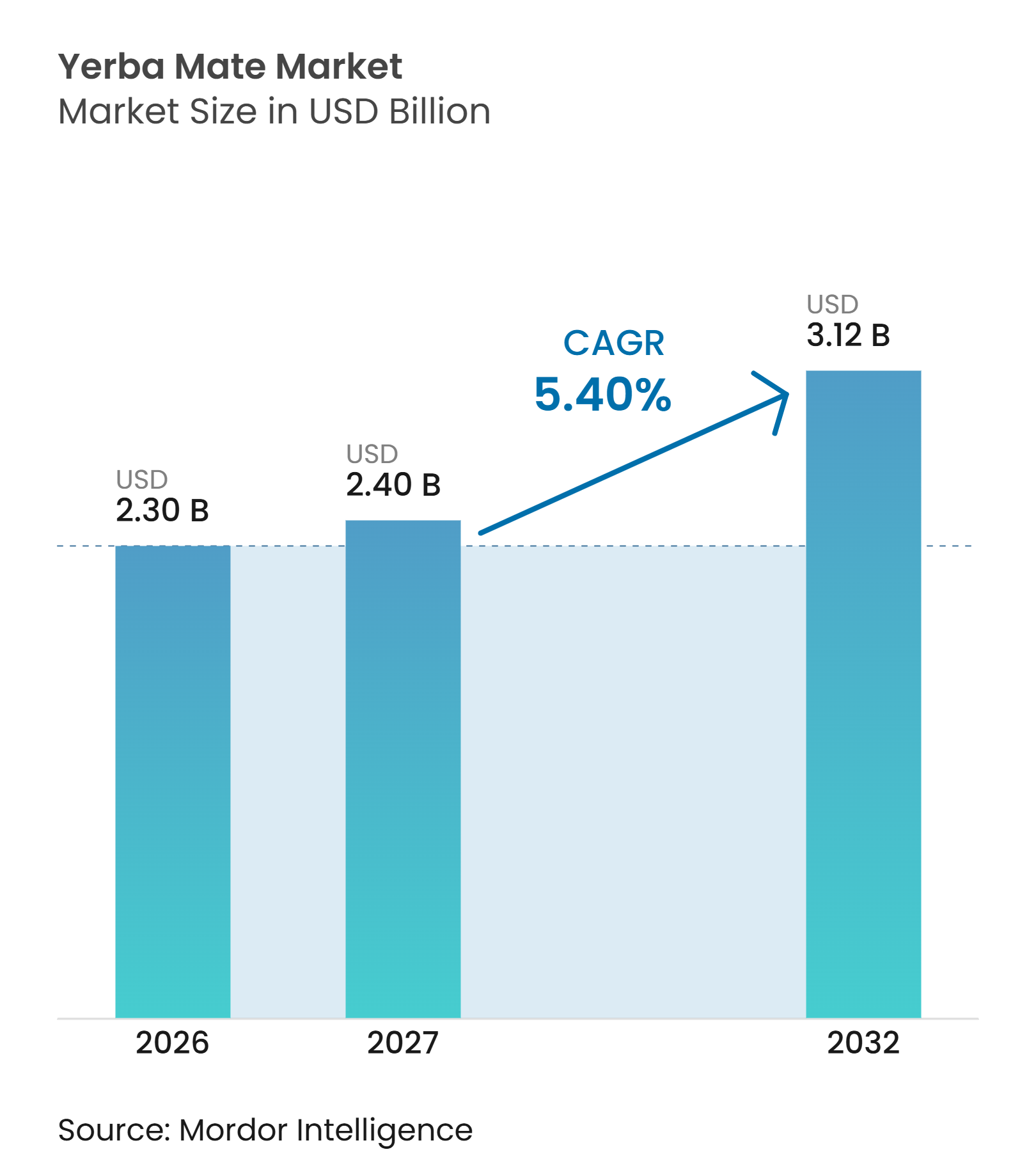
| Market Size (2027) | USD 2.40 Billion |
| Market Size (2032) | USD 3.12 Billion |
| Growth Rate (2027 - 2032) | 5.40 % |
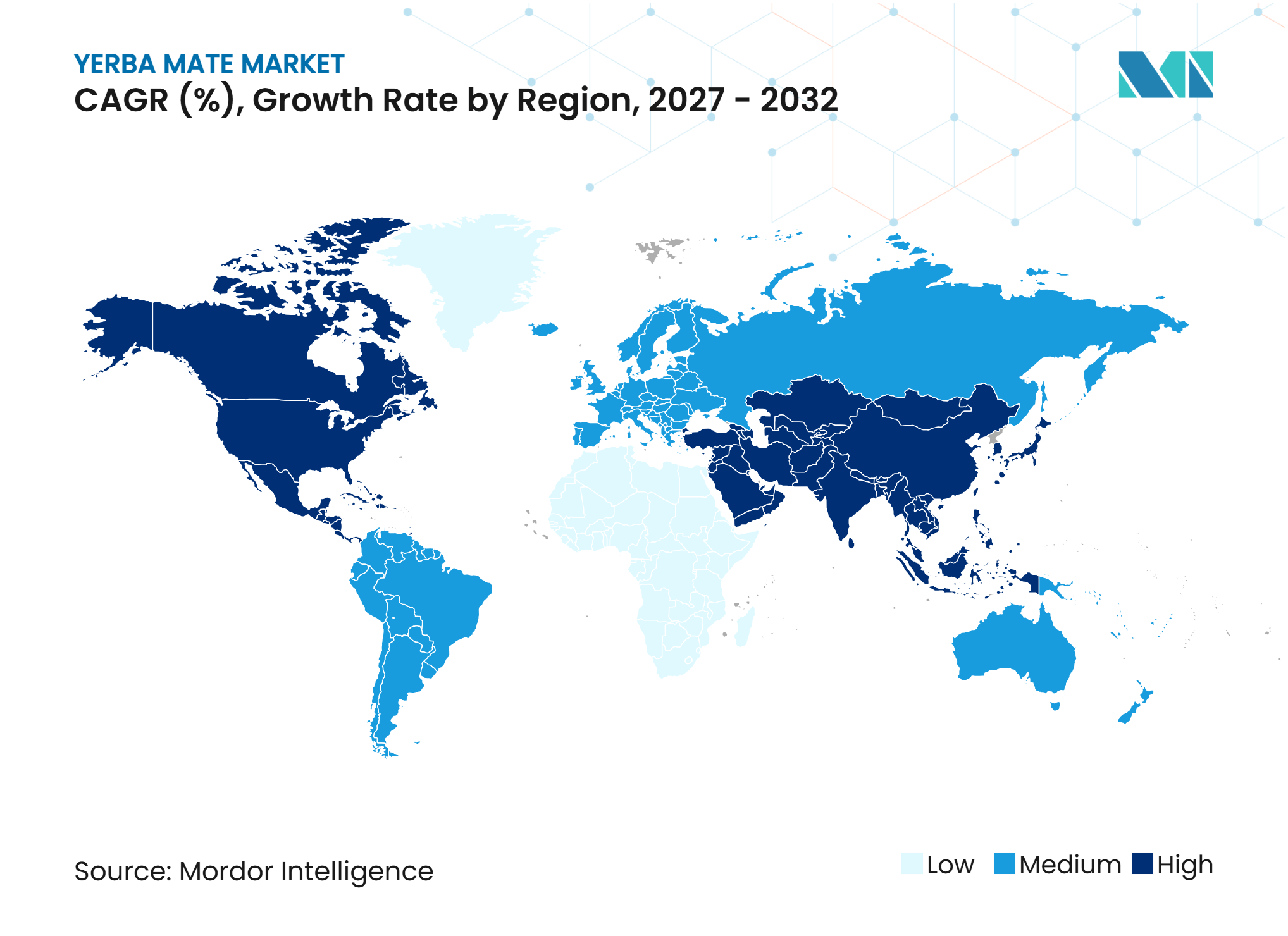
| Fastest Growing Market | Asia-Pacific |
| Largest Market | South America |
| Market Concentration | Medium |
Major Players *Disclaimer: Major Players sorted in no particular order Image © Mordor Intelligence. Reuse requires attribution under CC BY 4.0. | |
Yerba Mate Market Analysis by Mordor Intelligence
The yerba mate market size is expected to grow from USD 2.30 billion in 2026 to USD 2.40 billion in 2027 and is forecast to reach USD 3.12 billion by 2032 at a 5.40% CAGR over 2027-2032. The yerba mate market is expanding beyond its traditional South American consumer base, supported by growing demand for convenient beverages and functional drink applications. Traditional loose-leaf yerba mate remains central to consumption, while ready-to-drink products are increasing accessibility through supermarkets, convenience stores, and online retail channels. Strong export performance from Argentina reflects rising international demand, although production remains vulnerable to weather conditions and the economic challenges faced by small-scale growers. Companies with established distribution networks are better positioned to convert growing consumer awareness into repeat purchases, particularly through ready-to-drink offerings.
Key Report Takeaways
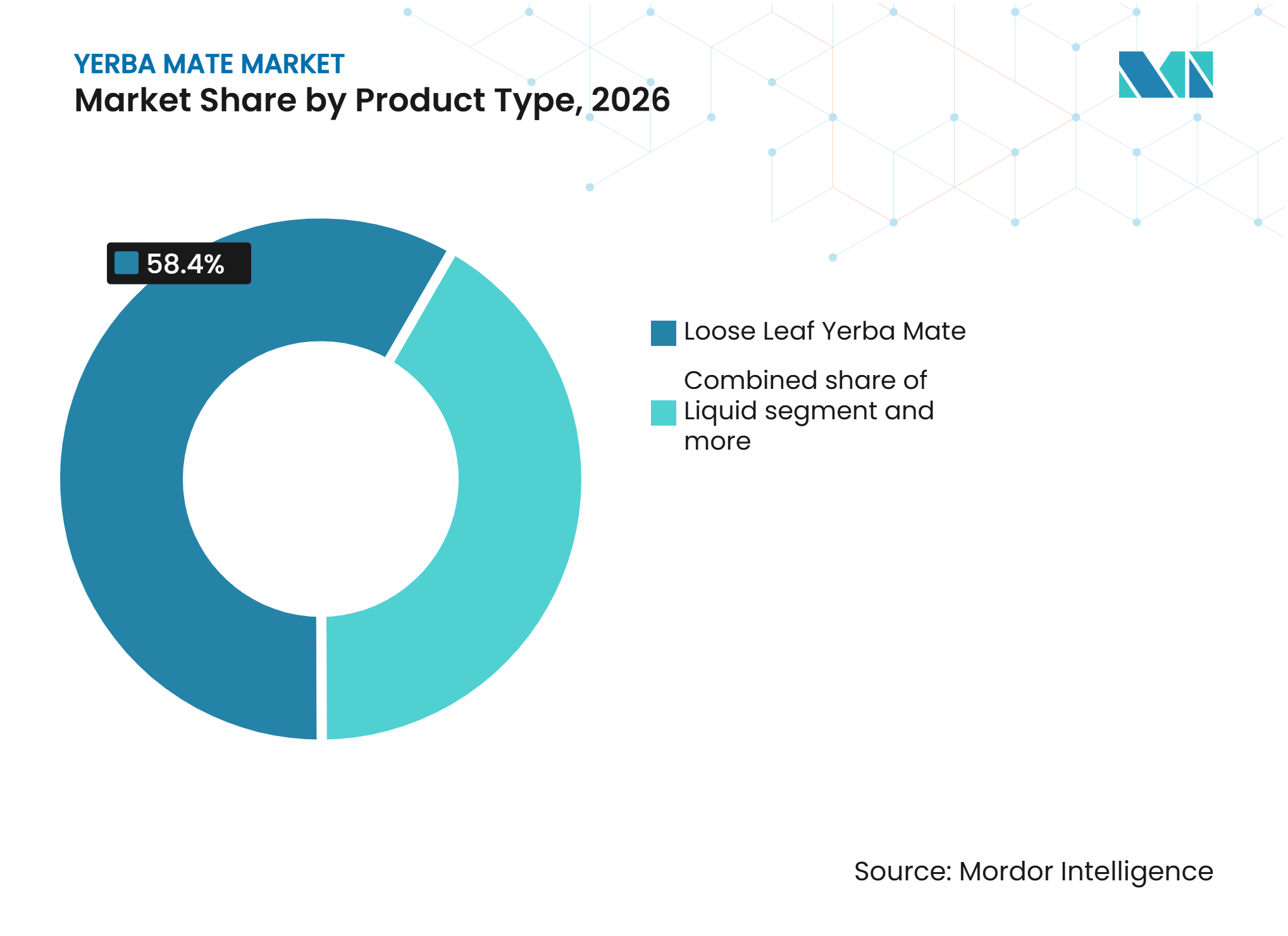
- By product type, loose leaf held 58.41% of the yerba mate market share in 2026, while liquid is forecast to expand at a 7.23% CAGR through 2032.
- By nature, conventional yerba mate held 78.23% of the yerba mate market share in 2026, while organic is forecast to expand at a CAGR of 6.83% through 2032.
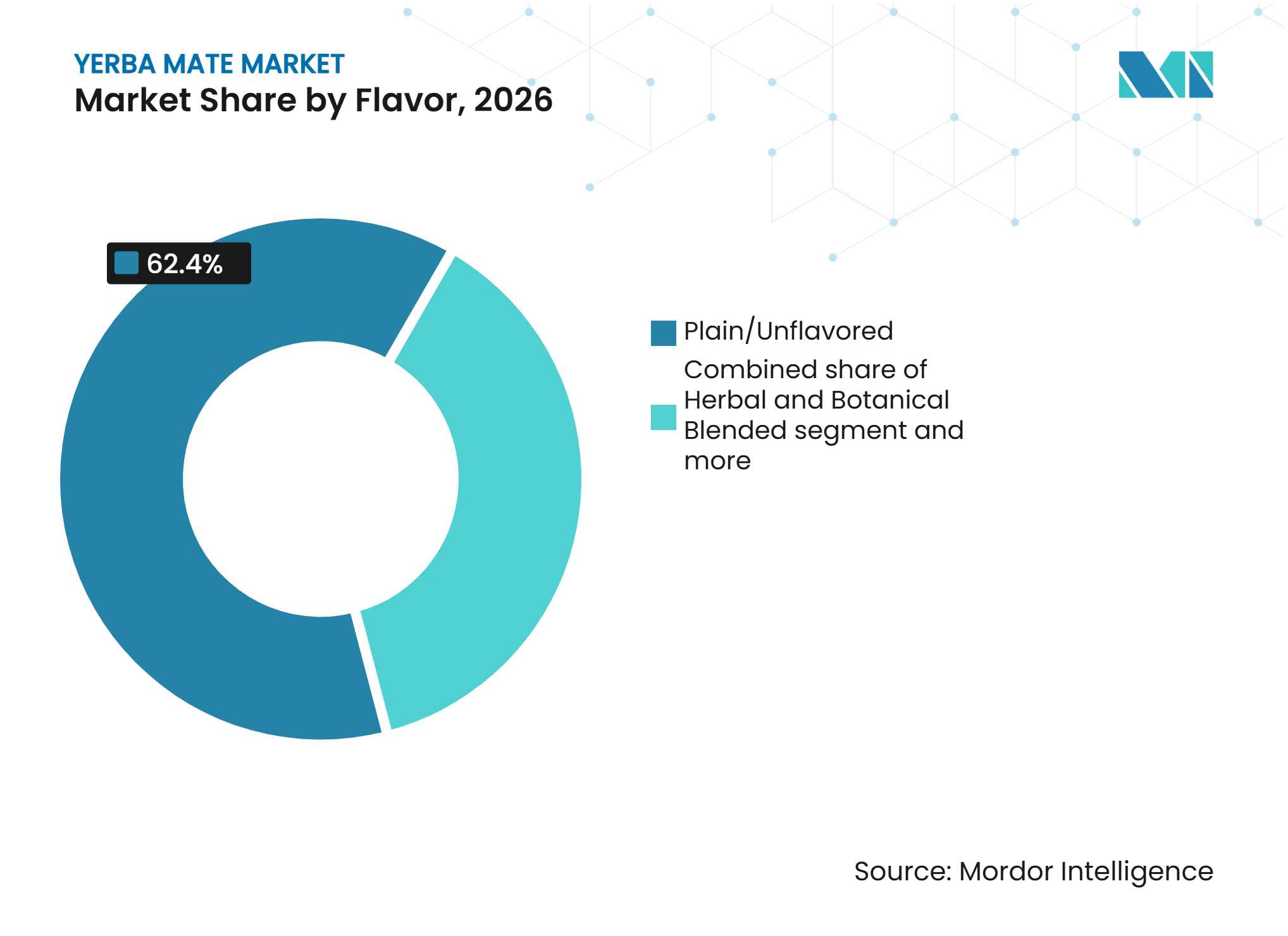
- By flavor, plain/ unflavored yerba mate held 62.41% of the yerba market share in 2026, while herbal and botanical blended are forecast to expand at a CAGR of 7.52% through 2032.
- By packaging type, pouches held 55.67% of the yerba mate market share in 2026, while PET bottles are forecast to expand at a CAGR of 8.01% through 2032.
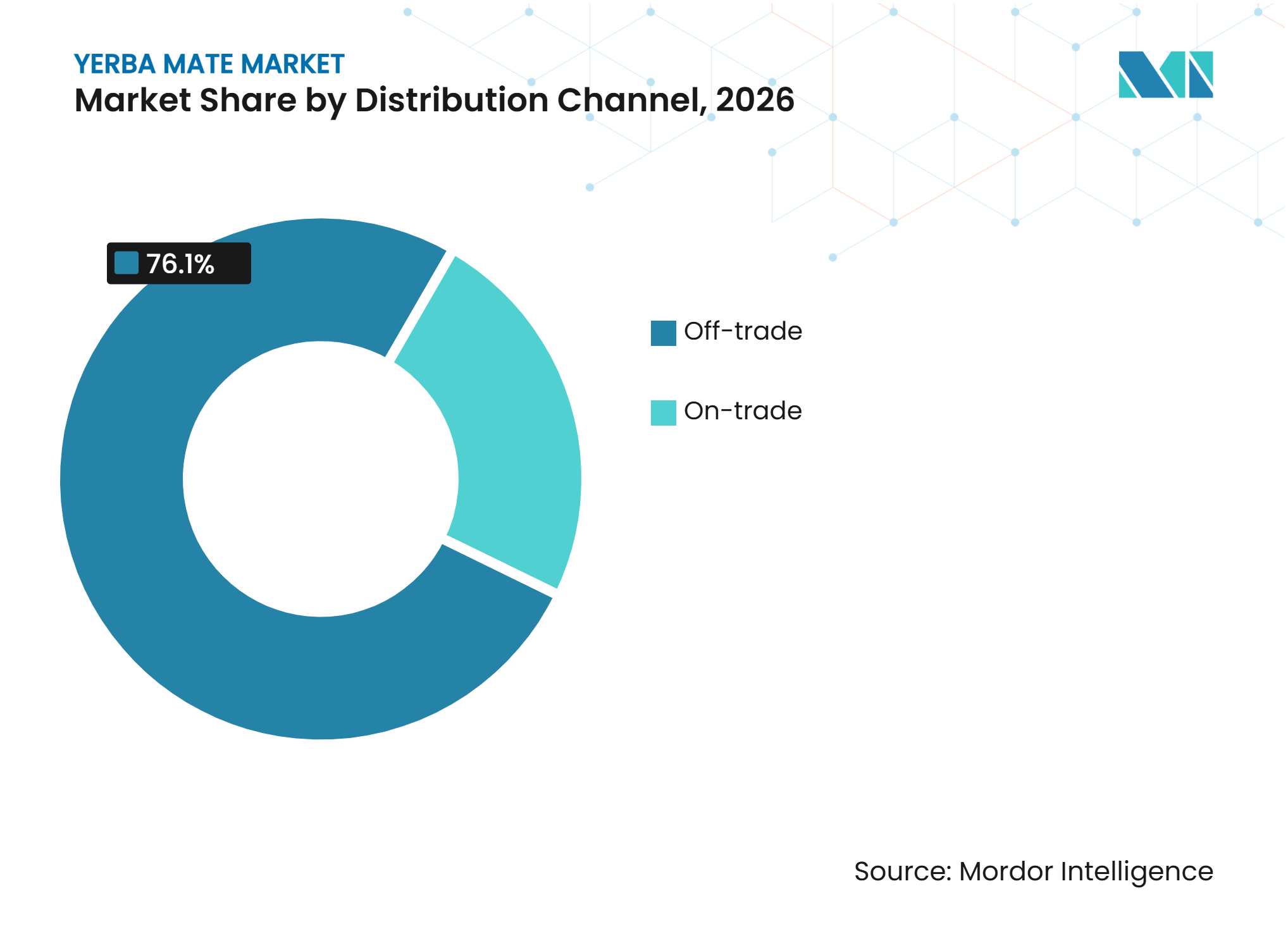
- By distribution channel, off-trade held 76.14% of the yerba mate market share in 2026, while on-trade is forecast to expand at a CAGR of 7.21% through 2032.
- By geography, South America held 36.12% of the yerba mate market share in 2026, while Asia-Pacific is forecast to expand at a CAGR of 9.11% through 2032.
Note: Market numbers in this report are based on Mordor Intelligence's proprietary estimation framework, which combines nine months of actuals with Q4 projections for base year 2026.
Market Trends and Insights
Drivers Impact Analysis of Yerba Mate Market of Yerba Mate Market*
| Driver | (~) % Impact on CAGR Forecast | Geographic Relevance | Impact Timeline |
|---|---|---|---|
| Rising demand for natural caffeine alternatives | +1.5% | Global, led by North America and Europe | Medium term (2-4 years) |
| Growing application of yerba mate in functional and fruit-enriched beverages | +1.2% | North America, Asia-Pacific, and Europe | Medium term (2-4 years) |
| Increasing Adoption of Yerba Mate in Energy Drinks and Sports Nutrition | +1.0% | Global | Long term (≥ 4 years) |
| Expansion of ready-to-drink and convenient yerba mate formats | +0.8% | North America and Europe | Medium term (2-4 years) |
| Expanding applications of yerba mate in functional beverage formulations | +0.6% | Global, with early gains in the United States and Germany | Long term (≥ 4 years) |
| Rising demand for yerba mate-based blended and flavored beverages | +0.5% | Asia-Pacific and Europe, with early gains in Japan and South Korea | Short term (≤ 2 years) |
| Source: Mordor Intelligence | |||
Rising Demand for Natural Caffeine Alternatives
Yerba mate is gaining traction as a botanical caffeine alternative, driven by growing interest in natural energy and functional beverage applications. For instance, in September 2025, according to the webinar held by the National Institute of Yerba Mate (INYM) and the Argentina Trade and Investment Agency, the United States yerba mate market was valued at USD 722.7 million in 2025 and is projected to reach USD 1.3 billion by 2035 [1]. The webinar highlighted opportunities across ready-to-drink beverages, instant blends, functional drinks, supplements, and other formats, indicating the expansion of yerba mate beyond traditional infusion consumption. Millennials, Gen Z consumers, fitness-oriented buyers, and health-conscious consumers seeking alternatives to conventional energy drinks represent key demand segments.
Growing Application of Yerba Mate in Functional and Fruit-Enriched Beverages
The development of functional and fruit-enriched beverages is creating opportunities to expand yerba mate applications beyond traditional tea and infusion formats. For instance, in 2026, researchers from the Universidade Tecnológica Federal do Paraná (UTFPR), Brazil, published a study in Scientia Agricola evaluating 9 formulations of yerba mate infusion enriched with jaboticaba juice, with and without carbonation. The study, involving 62 untrained participants, found that the formulation containing 60% yerba mate infusion and 40% jaboticaba achieved the highest overall acceptance score of 6 out of 9. Additionally, the carbonated formulation containing 65% yerba mate and 35% jaboticaba received a purchase-intention score of 4 out of 5, indicating that participants might buy the beverage [2]. This research demonstrates the potential to develop fruit-enriched, carbonated beverage products using yerba mate.
Increasing Adoption of Yerba Mate in Energy Drinks and Sports Nutrition
The development of yerba mate-based sports beverages is expanding its applications beyond conventional tea and infusion products. For instance, in April 2025, researchers affiliated with the University of Buenos Aires (UBA) and Argentina's National Scientific and Technical Research Council (CONICET) developed an isotonic sports drink incorporating yerba mate extract. The sensory evaluation involved 117 participants, with approximately 56–60% rating the tested formulations above 7 on a 9-point acceptance scale. The study also reported a 2.7–3.7-fold increase in total polyphenol content compared with the control formulations [3]. These findings demonstrate the potential to incorporate yerba mate into sports hydration beverages, extending its applications into the sports-nutrition category.
Expansion of Ready-to-Drink and Convenient Yerba Mate Formats
The growing availability of ready-to-drink yerba mate beverages is making the product more accessible to consumers by extending it beyond traditional tea and infusion formats into convenient, familiar beverage occasions. These products allow consumers to purchase yerba mate in portable, pre-packaged formats without the need for traditional preparation, enabling its consumption in various settings, including workplaces, travel, and outdoor activities. The expansion of branded ready-to-drink products is also increasing the importance of attractive packaging, wider retail distribution, and consistent product replenishment. This creates opportunities for traditional yerba mate producers to expand their market presence through co-packing, licensing, and distribution partnerships.
Restraints Impact Analysis of Yerba Mate Market of Yerba Mate Market*
| Restraint | (~) % Impact on CAGR Forecast | Geographic Relevance | Impact Timeline |
|---|---|---|---|
| Climate-Sensitive and Geographically Concentrated Cultivation | -1.2% | South America, led by Argentina and southern Brazil | Long term (≥ 4 years) |
| Competition from Coffee, Tea, and Other Caffeinated Beverages | -0.8% | Global, led by North America and Europe | Short term (≤ 2 years) |
| Smallholder Bargaining Imbalances and Raw-Material Price Transmission Challenges | -0.5% | South America, led by Misiones, Argentina | Medium term (2-4 years) |
| Regulatory Compliance and Restrictions on Health and Functional Claims | -0.4% | Europe and North America | Medium term (2-4 years) |
| Source: Mordor Intelligence | |||
Climate-Sensitive and Geographically Concentrated Cultivation
The Yerba Mate Market remains highly dependent on production concentrated in Argentina and southern Brazil, making raw material availability vulnerable to regional weather conditions and climate variability. Changes in temperature and rainfall patterns can affect the suitability of growing areas, potentially influencing crop development, productivity, and the consistency of green leaf supply. Climate-related pressures may also increase the need for cultivation practices that protect yerba mate plants from excessive heat and other environmental stresses. Agroforestry systems incorporating shade cover offer a potential adaptation approach by helping reduce temperature stress and herbivory while maintaining crop productivity. However, implementing these systems requires investment, technical guidance, and support for farmers
Competition from Coffee, Tea, and Other Caffeinated Beverages
Competition from established caffeinated beverages, particularly coffee and conventional tea, creates challenges for the expansion of the Yerba Mate Market. These products benefit from strong consumer familiarity, established consumption habits, widespread retail availability, and well-developed distribution networks. Coffee remains a preferred choice for consumers seeking an energy boost, while traditional tea attracts consumers through its variety of flavors, preparation methods, and established daily consumption occasions. Yerba mate manufacturers must therefore compete not only on caffeine content and functional benefits but also on taste, convenience, pricing, and product accessibility. The availability of alternative ready-to-drink teas, energy drinks, and other plant-based caffeinated beverages further increases competition for shelf space and consumer attention.
*Our forecasts treat driver/restraint impacts as directional, not additive. The impact forecasts reflect baseline growth, mix effects, and variable interactions.
Yerba Mate Market Segment Analysis
By Product Type:
Convenience Reshapes a Tradition-Dominated CategoryLoose-leaf accounted for 58.41% of the yerba mate market share in 2026, as traditional preparation remains entrenched in Argentina, Brazil, Uruguay, and Paraguay. The dominance of loose-leaf yerba mate in traditional consumption markets supports the continued demand for conventional packaged formats. Consumers in major producing countries, particularly Argentina, continue to follow established preparation practices using a gourd and bombilla, maintaining the relevance of loose-leaf products in household consumption. Argentina's export performance also reflects continued demand for conventional yerba mate products in international markets. Loose-leaf yerba mate benefits from established retail distribution networks, consumer familiarity, and long-standing consumption habits.
Liquid is projected to expand at a CAGR of 7.23% through 2032. Ready-to-drink yerba mate products eliminate the need for traditional preparation and offer convenience across refrigerated retail, convenience stores, and sports-related consumption settings. The commercial performance of established brands demonstrates the growing importance of this format within the category. Wider retail availability and effective distribution networks also play an important role in improving product accessibility and supporting sales. In addition, standardized yerba mate extracts offer manufacturers opportunities to develop liquid beverages, dietary supplements, and cosmetic ingredients with defined caffeine and polyphenol content and solubility characteristics.



By Nature:
Organic Certification Shapes Export AccessConventional held 78.23% of the yerba mate market share in 2026. Conventional yerba mate products maintain a strong market position due to their established pricing, broad availability, and consumer familiarity across South America. Traditional consumption patterns support consistent demand for conventional products, while existing supply chains are well equipped to handle large-scale leaf sourcing, drying, milling, and packaging. This established production and distribution infrastructure allows manufacturers to serve price-sensitive consumers without incurring the additional costs associated with organic certification. Conventional producers can also participate in export markets by meeting demand for traditional taste profiles, competitive pricing, and reliable supply volumes.
Organic is forecast to expand at a CAGR of 6.83% through 2032. Organic certification supports access to premium export markets by enabling yerba mate producers to meet established requirements for organic production, product traceability, and supply-chain documentation. Regulations such as the United States National Organic Program and European Union organic standards make compliance an important consideration for suppliers targeting certified organic retail channels. Meeting these requirements involves maintaining documentation, traceability systems, and certification processes across the supply chain. Larger and vertically integrated producers may be better positioned to manage these requirements by distributing audit and administrative costs across higher production volumes.
By Flavor:
Botanical Blends Extend Reach Beyond the Traditional CorePlain/unflavored accounted for 62.41% of the yerba mate market share in 2026. Unflavored yerba mate products continue to benefit from consumer preference for the familiar bitterness and green-leaf aroma associated with traditional mate. This flavor profile remains closely connected to established consumption habits across South America and supports demand for conventional products. Unflavored varieties also align with customary preparation methods and established packaging formats, allowing leading processors to maintain consistent product offerings without frequent reformulation. Their continued presence preserves the cultural connection between yerba mate and its traditional consumer base. Exporters can also use these products to serve overseas consumers who prefer authentic taste profiles and familiar preparation practices.
Herbal and botanical blended are forecast to expand at a CAGR of 7.52% through 2032. Flavored yerba mate blends can make the product more appealing to consumers who are unfamiliar with its traditional taste. Combining yerba mate with ingredients such as citrus, berries, mint, and other botanicals creates opportunities to develop more accessible flavor profiles for ready-to-drink beverages and other product formats. These blends allow manufacturers to introduce yerba mate through familiar taste experiences while retaining its caffeine-based positioning. This can help the product compete across consumption occasions where consumers also consider tea, sparkling beverages, and energy drinks. Botanical combinations further support seasonal launches, limited-edition products, and targeted retail offerings.

By Packaging Type:
Pouches Retain Scale as PET ExpandsPouches held 55.67% of the yerba mate market share in 2026. Pouches remain an important packaging format for yerba mate because they align with traditional loose-leaf consumption practices across major South American markets. These packs are convenient for household use and fit established retail purchasing habits, particularly in countries where consumers regularly prepare mate using traditional methods. Their continued demand also reflects the strong position of loose-leaf products within regional consumption. Traditional processors can use existing filling equipment, packaging capabilities, and distribution networks to supply these formats efficiently. Pouches are particularly relevant in Argentina, Uruguay, Paraguay, and southern Brazil, where customary preparation remains an important occasion for consumption.
PET bottles are forecast to expand at a CAGR of 8.01% through 2032. PET bottles support the expansion of ready-to-drink yerba mate products by offering convenient packaging for immediate consumption and placement in refrigerated beverage sections. They also allow manufacturers to introduce fruit-flavored and botanical varieties that appeal to consumers unfamiliar with traditional loose-leaf products. Packaging regulations in markets such as the European Union are increasing the importance of recycled-content planning and material recovery. As a result, manufacturers must consider shelf appeal, transportation, recyclability, and regulatory compliance when selecting packaging formats. Cans, sachets, and stick packs also provide alternatives for single-serve beverages and wellness-oriented products.
By Distribution Channel:
Off-Trade Holds the Base as Online Trade Broadens AccessOff-trade accounted for 76.14% of the yerba mate market share in 2026. Off-trade remains important for yerba mate distribution, with supermarkets and hypermarkets serving as primary retail outlets for routine purchases. These stores provide traditional loose-leaf brands with broad visibility across South American markets and support repeat purchases by offering familiar products alongside everyday grocery items. Specialty retail further supports distribution in North America, particularly for organic, functional, and differentiated yerba mate products. Physical retail shelves also allow consumers to compare flavors, product formats, and pack sizes, helping brands build awareness among new buyers. Consequently, off-trade channels continue to serve both established consumers seeking traditional products and new consumers exploring yerba mate, making retail availability and in-store product visibility important factors in brand performance.
On-trade is forecast to expand at a 7.21% CAGR through 2032. On-trade is expanding yerba mate's market reach by allowing manufacturers to connect with consumers beyond established retail networks. E-commerce platforms, brand websites, and subscription services provide opportunities to reach international buyers, support product education, and encourage repeat purchases. These channels also allow consumers to access a wider range of specialty products, including organic varieties, flavoured blends, and convenient formats. Direct online sales can help smaller manufacturers introduce new flavours and product formats, understand consumer preferences, and build brand awareness without relying entirely on large supermarket chains.
Geography Analysis
South America
South America held 36.12% of the yerba mate market share in 2026. South America holds a significant position in the yerba mate market, supported by deep-rooted consumption traditions and Argentina's established role as a major producer and exporter. The region benefits from long-standing expertise in cultivation and processing, as well as consumer preferences, which support domestic demand and international trade. Argentina's export activity provides access to overseas markets, while domestic consumption continues to be supported by traditional retail channels and familiar product formats. Key export destinations, including Syria, Chile, and Spain, further demonstrate the reach of Argentine yerba mate across international markets.
Asia-Pacific
Asia-Pacific is expected to expand at a CAGR of 9.11% through 2032. Asia-Pacific offers opportunities for yerba mate market expansion, driven by growing interest in natural caffeine sources and functional beverages. Japan and Australia have established specialty beverage retail channels that can introduce traceable botanical ingredients and premium yerba mate products to consumers familiar with specialty tea and wellness-oriented beverages. China also presents opportunities due to its established tea consumption culture and familiarity with diverse tea-based products. Meanwhile, markets such as Indonesia, Thailand, and the Philippines offer emerging opportunities through expanding e-commerce channels and wider access to specialty beverages.
North America, Europe, and Other Regions
North America represents an established nontraditional market for yerba mate, driven primarily by the growing availability of ready-to-drink products in the United States. Brand recognition, direct-store distribution, and expanding retail availability have helped manufacturers introduce yerba mate to consumers beyond traditional South American markets. Europe also offers growth opportunities driven by demand from diaspora communities and growing interest in botanical beverages, although manufacturers must meet applicable requirements for organic certification, product labeling, and functional claims. In the United Kingdom, the introduction of yerba mate-based wellness shots demonstrates the ingredient's expansion into product formats beyond traditional tea and specialist retail. Across these regions, yerba mate competes with coffee, conventional tea, and energy drinks for similar consumption occasions, making clear product positioning important for building consumer awareness
Competitive Landscape
Market Concentration
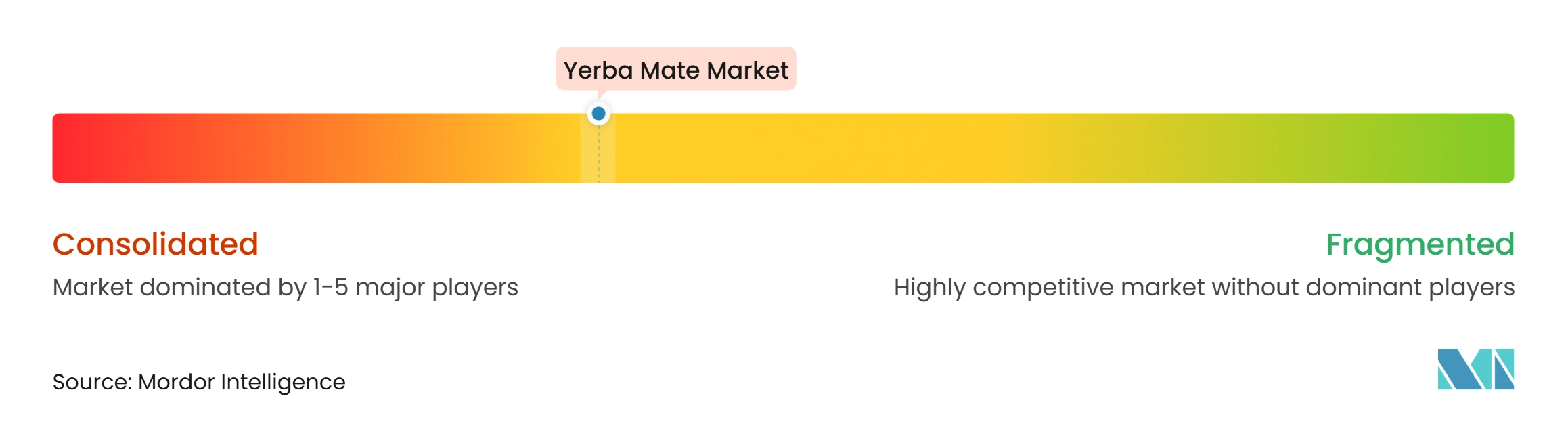
The Yerba Mate Market is moderately fragmented, with competition spread across traditional leaf processors, ready-to-drink beverage brands, and specialized ingredient manufacturers. Each group competes through different capabilities, including agricultural sourcing, processing expertise, brand recognition, product innovation, and distribution networks. Traditional Argentine processors, such as Establecimiento Las Marías and CBSé, maintain their market positions through established brands, access to green leaf, processing infrastructure, and strong regional distribution. Their operations are closely linked to conventional loose-leaf consumption and export markets. Competition within this group largely depends on raw material procurement, production efficiency, product quality, and relationships with retailers and distributors. Familiar taste profiles, established consumer preferences, and widespread retail availability further support their positions.
Maintaining reliable green leaf supplies and coordinating with growers, mills, and distributors remain important for meeting domestic and international demand. Ready-to-drink beverage brands compete through distribution coverage, flavor innovation, brand positioning, and access to convenience and mainstream retail channels. Yerba Madre has established a strong position in the United States ready-to-drink yerba mate segment through its retail presence and diversified product portfolio. Its introduction of additional flavours, including fruit-based varieties, demonstrates the importance of product innovation in attracting new consumers while retaining yerba mate as the core ingredient. Competition in this category depends on manufacturers' ability to secure retail placements, maintain product availability, support promotional activities, and introduce new offerings. Companies with established distribution partnerships and greater investment capacity may have advantages in expanding their retail presence. Traditional bulk processors, however, may need to develop additional capabilities in beverage formulation, packaging, branding, and channel management to compete more effectively in this segment.
The premium extract segment provides another competitive avenue by serving sports nutrition, nutraceutical, and cosmetic applications. Brazilian processors and ingredient manufacturers are developing standardized yerba mate extracts with defined caffeine and polyphenol characteristics to meet formulation requirements. These ingredients allow manufacturers to serve specialized applications without depending entirely on consumer-facing beverage brands. Competition in this segment increasingly involves extraction capabilities, product standardization, technical documentation, and compliance with market-specific regulatory requirements. Scientific substantiation and consistent ingredient specifications are particularly important for manufacturers targeting functional and health-oriented applications.
Yerba Mate Industry Leaders
-
Cooperativa Agrícola de la Colonia Liebig Ltda. (Playadito)
-
Establecimiento Las Marías S.A.C.I.F.A. (Taragüi)
-
Establecimiento Santa Ana S.A. (CBSé)
-
La Cachuera S.A. (Amanda)
-
Molino San Miguel (AMSA S.A.) (San Miguel)
- *Disclaimer: Major Players sorted in no particular order
Yerba Mate Market Companies Covered in this Report
- Cooperativa Agrícola de la Colonia Liebig Ltda. (Playadito)
- Establecimiento Las Marías S.A.C.I.F.A. (Taragüi)
- Establecimiento Santa Ana S.A. (CBSé)
- La Cachuera S.A. (Amanda)
- Molino San Miguel (AMSA S.A.) (San Miguel)
- Productores de Yerba Mate de Santo Pipó S.C.L. (Piporé)
- Cordeiro y Cía. S.R.L. (Verdeflor)
- Cooperativa Agrícola Mixta de Montecarlo Ltda. (Aguantadora)
- Molinos Río de la Plata S.A. (Cruz de Malta)
- Kraus S.A. (Kraus)
- Cooperativa Yerbatera Andresito Ltda. (Andresito)
- Gerula S.A. (Romance)
- Yerbatera Misiones S.R.L. (Nobleza Gaucha)
- Cooperativa Agrícola Río Paraná Ltda. (Titrayju)
- Eno Bronstrup S.A. (Selecta)
- Lauro Raatz S.A. (Lauro Raatz)
- Agro Industrial Ruvicha (Ruvicha)
- Barão Indústria e Comércio de Erva Mate e Chás S.A. (Barão)
- Indústria Ervateira Bonetes Ltda. (Bonetes)
- Triunfo do Brasil Ltda. (Triunfo)
Recent Industry Developments in Yerba Mate Market
- August 2026: Saint James launched Saint James Yerba Mate, its first product extension beyond the existing iced tea portfolio. The new organic, ready-to-drink beverage line is available in Mango Passionfruit, Raspberry Lemon, and Strawberry Tangerine flavors, with 150 mg of natural caffeine per bottle. The company initially made the products available through Amazon and its website and plans to expand retail distribution through Kroger and Albertsons.
- February 2026: Yerba Madre introduced new yerba mate products and expanded its portfolio across loose-leaf, bottled, canned, sparkling, and convenience-oriented formats. Key launches included Unsweetened Original Yerba, the brand's first ready-to-drink product to carry the Regenerative Organic Certified seala refreshed sparkling beverage range; and new flavors such as Strawberry Kiwi, Cherry Sublime, and Mango Fuego. The company also expanded its retail presence across natural, conventional, mass, club, and convenience channels.
Global Yerba Mate Market Report Scope
The yerba mate market includes products derived from the leaves of Ilex paraguariensis, consumed as traditional loose-leaf infusions and in powdered, liquid, and other convenient formats. These products are used in traditional beverages, ready-to-drink products, and functional beverage applications. The market is segmented by Product Type (Loose Leaf Yerba Mate, Powder, Liquid, and Other Yerba Mate Products), Nature (Organic and Conventional), Flavor (Plain/Unflavored, Fruit-Flavored, Herbal and Botanical Blended, and Other Flavors), Packaging Type (Pouches, Boxes, PET Bottles, and Others, including Cans, Sachets, and Stick Packs), Distribution Channel (On-Trade and Off-Trade), and Geography (North America, Europe, Asia-Pacific, South America, and the Middle East and Africa). For each segment, market forecasts are provided in terms of value (USD).
Segmentation Overview
| Loose Leaf Yerba Mate |
| Powder |
| Liquid |
| Other Yerba Mate Products |
| Organic |
| Conventional |
| Plain/Unflavored |
| Fruit-Flavored |
| Herbal and Botanical Blended |
| Other Flavors |
| Pouches |
| Boxes |
| PET Bottles |
| Other Packaging Type |
| On-trade | |
| Off-trade | Supermarkets and Hypermarkets |
| Specialty Stores | |
| Convenience Stores | |
| Foodservice and Cafes | |
| Other Distribution Channels |
| North America | United States |
| Canada | |
| Mexico | |
| Rest of North America | |
| Europe | United Kingdom |
| Germany | |
| France | |
| Italy | |
| Spain | |
| Rest of Europe | |
| Asia-Pacific | China |
| Japan | |
| India | |
| Australia | |
| Indonesia | |
| South Korea | |
| Rest of Asia-Pacific | |
| South America | Brazil |
| Argentina | |
| Rest of South America | |
| Middle East and Africa | South Africa |
| Saudi Arabia | |
| Rest of Middle East and Africa |
| By Product Type | Loose Leaf Yerba Mate | |
| Powder | ||
| Liquid | ||
| Other Yerba Mate Products | ||
| By Nature | Organic | |
| Conventional | ||
| By Flavor | Plain/Unflavored | |
| Fruit-Flavored | ||
| Herbal and Botanical Blended | ||
| Other Flavors | ||
| By Packaging Type | Pouches | |
| Boxes | ||
| PET Bottles | ||
| Other Packaging Type | ||
| By Distribution Channel | On-trade | |
| Off-trade | Supermarkets and Hypermarkets | |
| Specialty Stores | ||
| Convenience Stores | ||
| Foodservice and Cafes | ||
| Other Distribution Channels | ||
| By Geography | North America | United States |
| Canada | ||
| Mexico | ||
| Rest of North America | ||
| Europe | United Kingdom | |
| Germany | ||
| France | ||
| Italy | ||
| Spain | ||
| Rest of Europe | ||
| Asia-Pacific | China | |
| Japan | ||
| India | ||
| Australia | ||
| Indonesia | ||
| South Korea | ||
| Rest of Asia-Pacific | ||
| South America | Brazil | |
| Argentina | ||
| Rest of South America | ||
| Middle East and Africa | South Africa | |
| Saudi Arabia | ||
| Rest of Middle East and Africa | ||
Key Questions Answered in the Report
What is the forecast growth rate for yerba mate market through 2032?
The market is forecast to expand at a CAGR of 5.40% from 2027 to 2032, reaching USD 3.12 billion by 2032.
Which yerba mate product type is growing fastest?
Liquid is forecast to expand at a CAGR of 7.23% through 2032, supported by ready-to-drink retail formats.
Why is organic yerba mate gaining importance?
Organic is forecast to expand at a CAGR of 6.83%, supported by traceability and certification requirements in premium export channels.
What is driving ready-to-drink yerba mate sales?
Wider store distribution, flavor innovation, sports marketing, and convenience-channel placement are increasing trial and repeat purchase.