
X-linked Hypophosphatemia Market Size and Share
Market Overview
| Study Period | 2020 - 2031 |
|---|---|
| Market Size (2026) | USD 0.96 Billion |
| Market Size (2031) | USD 1.43 Billion |
| Growth Rate (2026 - 2031) | 8.22 % |
| Fastest Growing Market | Asia-Pacific |
| Largest Market | North America |
| Market Concentration | High |
Major Players *Disclaimer: Major Players sorted in no particular order Image © Mordor Intelligence. Reuse requires attribution under CC BY 4.0. | |
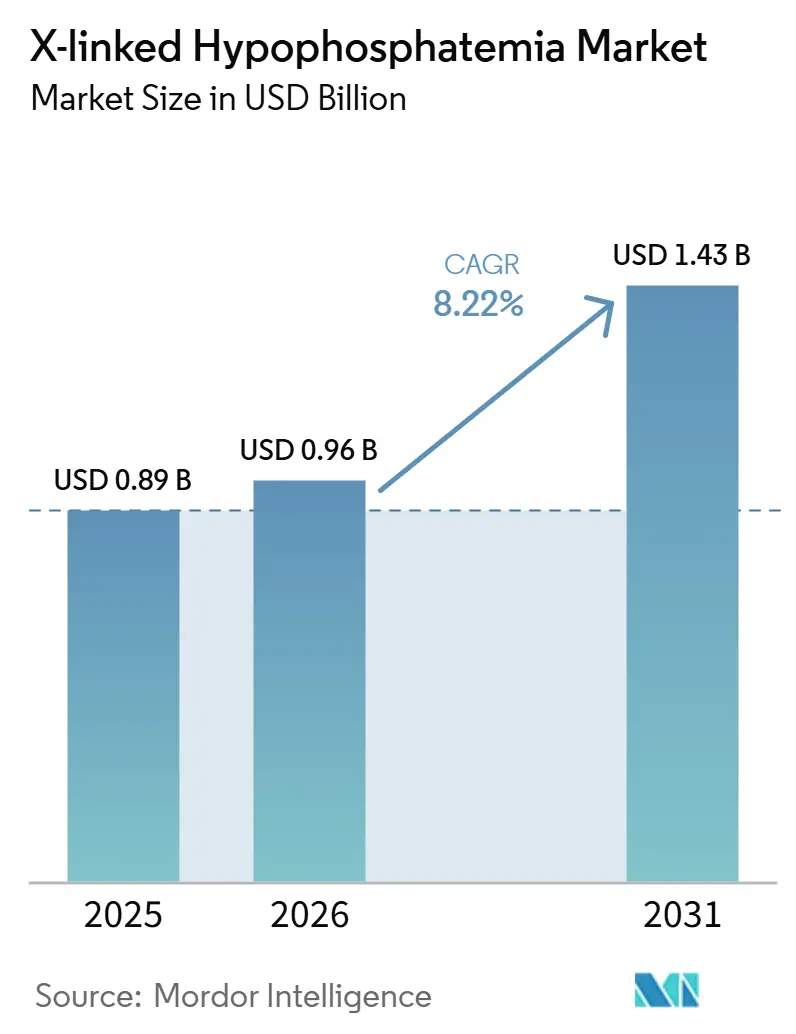
X-linked Hypophosphatemia Market Analysis by Mordor Intelligence
The X-linked Hypophosphatemia Market size is projected to expand from USD 0.89 billion in 2025 and USD 0.96 billion in 2026 to USD 1.43 billion by 2031, registering a CAGR of 8.22% between 2026 to 2031.
The X-linked hypophosphatemia market is supported by the broader adoption of targeted treatment across pediatric and adult care. Burosumab remains the only approved targeted therapy, while conventional phosphate and active vitamin D treatments continue to support patients with limited access to biologics. Broader diagnosis, earlier treatment, and adult reimbursement decisions are expanding the treated patient base. The Kyowa Kirin and Ultragenyx collaboration continues to shape competition, although newer antibodies and genetic approaches could alter treatment choices after the forecast period.
Key Report Takeaways
- By treatment type, burosumab held 68.88% of the X-linked hypophosphatemia market share in 2025 and is projected to grow at a CAGR of 9.15% through 2031.
- By route of administration, subcutaneous treatment accounted for 74.34% of the X-linked hypophosphatemia market size in 2025, while oral treatment is projected to expand at a CAGR of 10.80% through 2031.
- By age group, adults aged 18 years and older held 59.76% of the X-linked hypophosphatemia market share in 2025, while adolescents aged 13–17 years are projected to grow at a CAGR of 11.45% through 2031.
- By end user, pediatric endocrinology centers accounted for 45.88% of the X-linked hypophosphatemia market size in 2025, while adult endocrinology and metabolic bone clinics are projected to grow at a CAGR of 8.56% through 2031.
- By geography, North America accounted for 39.89% of the X-linked hypophosphatemia market size in 2025, while the Asia-Pacific region is projected to grow at a CAGR of 9.58% through 2031.
Note: Market size and forecast figures in this report are generated using Mordor Intelligence’s proprietary estimation framework, updated with the latest available data and insights as of January 2026.
Market Trends and Insights
Drivers Impact Analysis of X-linked Hypophosphatemia Market*
| DRIVER | (~) % IMPACT ON CAGR FORECAST | GEOGRAPHIC RELEVANCE | IMPACT TIMELINE |
|---|---|---|---|
| Expanding genetic and biochemical diagnosis | +1.2% | Global, with accelerated gains in North America and Western Europe | Medium term (2-4 years) |
| Earlier pediatric intervention with FGF23 inhibition | +1.5% | Global, with early gains in Japan, the United States, and EU infant approved markets | Short term (≤ 2 years) |
| Growing adult recognition and label expansion | +1.8% | North America and Europe, with effects in Asia-Pacific and the Middle East and Africa | Medium term (2-4 years) |
| Burden reduction from avoided surgery and complications | +0.9% | Global, particularly high income health systems | Medium term (2-4 years) |
| Long term registry and real world evidence supporting adoption | +0.7% | Global, with an early evidence base in North America and the United Kingdom | Long term (≥ 4 years) |
| Family cascade screening enabled by phex testing | +0.6% | Primarily North America and Europe | Medium term (2-4 years) |
| Source: Mordor Intelligence | |||
Expanding Genetic and Biochemical Diagnosis
Rare disease gene panel testing can confirm XLH before patients enter long treatment pathways, supporting demand in the X-linked hypophosphatemia market. An Italian pediatric study estimated mean annual XLH prevalence at 1.78 per 100,000 registered patients, within the European registry range of 1.07 to 4.8 per 100,000. Molecular testing identified a pathogenic PHEX variant in 88.7% of clinically diagnosed patients in a multicenter testing program.[1]Leanne M. Ward et al., “Real World Effectiveness of Burosumab Across Age Groups,” Journal of Clinical Endocrinology & Metabolism, academic.oup.com This confirmation can move patients from clinical suspicion to specialist referral and treatment planning. Family cascade testing can also identify undiagnosed relatives, while better access to sequencing and telemedicine may extend these pathways beyond major specialist centers.
Earlier Pediatric Intervention With FGF23 Inhibition
The European Commission approved burosumab for infants aged 1 month to 1 year in the EU and EEA on July 21, 2026. The BUR-CL207 Phase 1/2 study supported the decision and extended orphan market exclusivity to February 2030. Earlier treatment may reduce the skeletal burden that later requires orthopedic care. A 3-year disease monitoring program involving 139 children and adults reported improvements in biochemical markers, patient-reported outcomes, and physical performance with burosumab. Real-world evidence also links treatment to monitoring for nephrocalcinosis, an important complication in this patient group. These findings support treatment decisions focused on clinical outcomes across childhood rather than short-term phosphate correction alone.
Growing Adult Recognition and Label Expansion
Clinicians may overlook adults with XLH because enthesopathy, osteomalacia, and chronic pain can resemble more common musculoskeletal conditions. The U.S. Food and Drug Administration approved revised Crysvita dosing for adults on May 14, 2026. The update permits escalation to 0.5 mg/kg every 2 weeks and then to 1.0 mg/kg every 2 weeks when serum phosphorus remains below the normal range.[3]National Library of Medicine, “A First in Human Study of KK8123 in Adults With X-linked Hypophosphatemia,” ClinicalTrials.gov, clinicaltrials.gov A United Kingdom study found that burosumab improved serum phosphate, bone biochemistry, and health-related quality of life in adults, with high treatment persistence. International consensus recommendations published in 2025 call for structured care during the transition from pediatric to adult services. These changes create a clearer care route for adults who were previously undertreated.
Burden Reduction From Avoided Surgery and Complications
The X-linked hypophosphatemia market benefits when clinicians and payers consider the wider cost of untreated skeletal and dental disease. Australian pediatric data reported fewer planned orthopedic procedures for limb deformity correction among children receiving burosumab. Repeated osteotomies, dental procedures, and renal monitoring can create a substantial long-term care burden for patients treated only with conventional therapy. NICE recommended burosumab for adults with XLH in August 2024 after assessing its value for NHS commissioning. This decision recognized the relevance of long-term complications in treatment assessment. The X-linked hypophosphatemia market has an opportunity where specialist teams can demonstrate the clinical and practical value of earlier intervention.
Restraints Impact Analysis of X-linked Hypophosphatemia Market*
| RESTRAINT | (~) % IMPACT ON CAGR FORECAST | GEOGRAPHIC RELEVANCE | IMPACT TIMELINE |
|---|---|---|---|
| High annual biologic cost and reimbursement friction | -1.4% | Global, most acute in Asia-Pacific, the Middle East and Africa, and middle income economies | Long term (≥ 4 years) |
| Diagnostic delay and specialist scarcity | -0.9% | Global, with the highest impact in South America, the Middle East and Africa, and rural Asia-Pacific | Medium term (2-4 years) |
| Limited long term evidence across adolescence and adulthood | -0.6% | North America and Europe, where payer scrutiny is highest | Long term (≥ 4 years) |
| Low cost conventional phosphate and active vitamin d therapy | -0.7% | Asia-Pacific, the Middle East and Africa, South America, and restricted European settings | Long term (≥ 4 years) |
| Source: Mordor Intelligence | |||
High Annual Biologic Cost and Reimbursement Friction
High biologic costs continue to restrict access in the X-linked hypophosphatemia market, particularly in countries without established public reimbursement. NHS Wales cited a United Kingdom list price of GBP 3,000 per vial for burosumab. Canada’s Drug Agency reported an incremental cost-effectiveness ratio of USD 1,680,920 per quality-adjusted life year for adults and concluded that the treatment was not cost-effective at standard thresholds without a price reduction. Confidential discounts and prolonged reimbursement negotiations can delay access after approval, while conventional treatment remains a lower-cost option where biologic funding is unavailable.
Diagnostic Delay and Specialist Scarcity
Diagnostic delays continue to limit timely access to appropriate care in the X-linked hypophosphatemia market. A United Kingdom population-based study found that clinicians recorded rickets, genu varum, and low serum phosphate before diagnosis in fewer than 20% of cases. A 2025 global analysis found that children without a family history received a diagnosis at an older age than those with known familial disease. Concentration of specialist metabolic bone services in tertiary urban centers can leave rural patients in India, Brazil, and Sub-Saharan Africa with advanced deformities before specialist treatment, while limited adolescent and adult evidence can increase payer scrutiny in North America and Europe.
*Our forecasts treat driver/restraint impacts as directional, not additive. The impact forecasts reflect baseline growth, mix effects, and variable interactions.
X-linked Hypophosphatemia Market Segment Analysis
By Treatment Type:
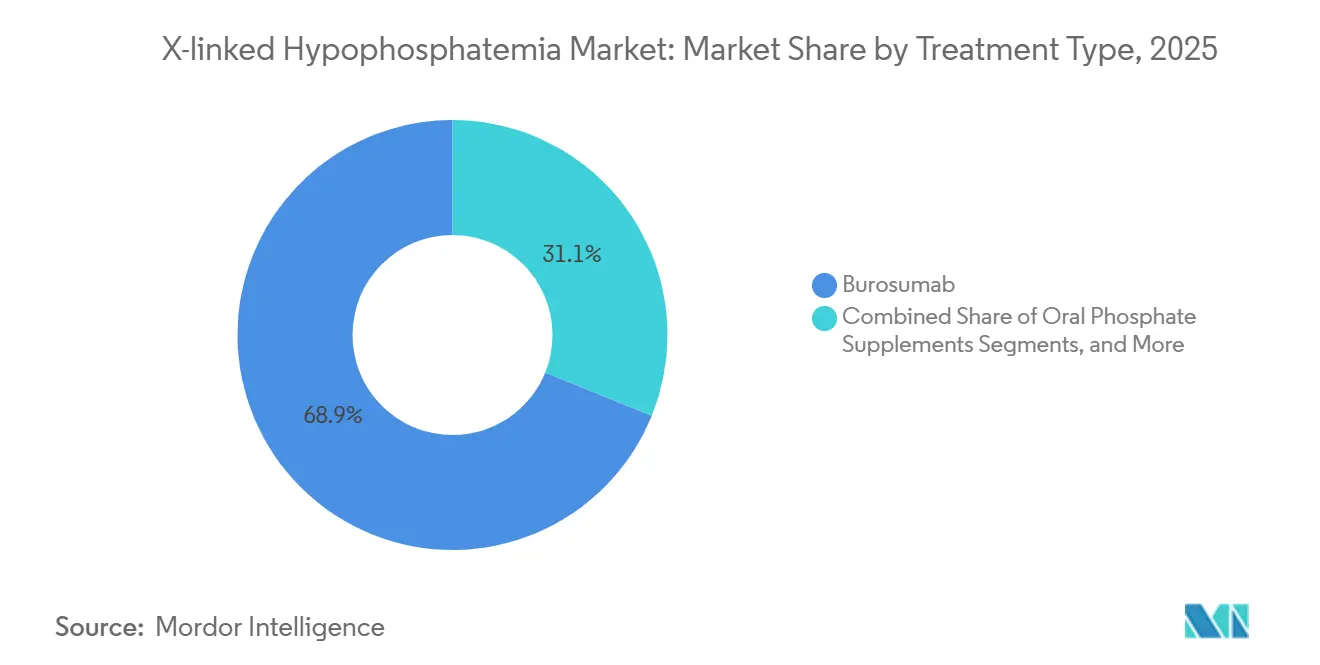
Targeted Therapy Leads Current Treatment DemandBurosumab held 68.88% of the treatment type segment in 2025 and is projected to expand at a CAGR of 9.15% through 2031. Its leadership reflected its position as the only approved targeted therapy for XLH. Ultragenyx reported USD 481 million in global Crysvita revenue in fiscal 2025, a 17% increase from 2024, and USD 275 million from the United States and Canada royalty component.
Oral phosphate supplements and active vitamin D analogs remained relevant where reimbursement restricted biologic use, though long-term conventional treatment carried renal risks such as nephrocalcinosis and hypercalciuria. Orthopedic and supportive care remained necessary for patients with established skeletal deformities. Kyowa Kirin’s next-generation subcutaneous candidate, KK8123, entered a Phase 1/2 dose-escalation study in adults in October 2024, with an estimated completion date of May 2028. Early-stage gene transfer and minicircle DNA approaches indicated continued investment beyond antibody-based treatment.



By Route of Administration:
Subcutaneous Care Is Established While Oral Therapy Grows FasterSubcutaneous treatment held 74.34% of the route of administration segment in 2025. Its position reflected Crysvita’s established subcutaneous regimen and the revised adult dosing options approved in May 2026. Self-administration programs helped reduce clinic visit burden for families and adult patients, while intravenous and perioperative support retained limited roles in acute hospital and surgical settings.
Oral treatment is projected to grow at a CAGR of 10.80% through 2031, supported mainly by phosphate supplement formulations. Interest in oral treatment also reflects the potential development of future small-molecule FGF23 pathway modulators. No approved oral FGF23-targeted therapy is currently available, so oral conventional treatment will remain important where biologic access is restricted.
By Age Group:
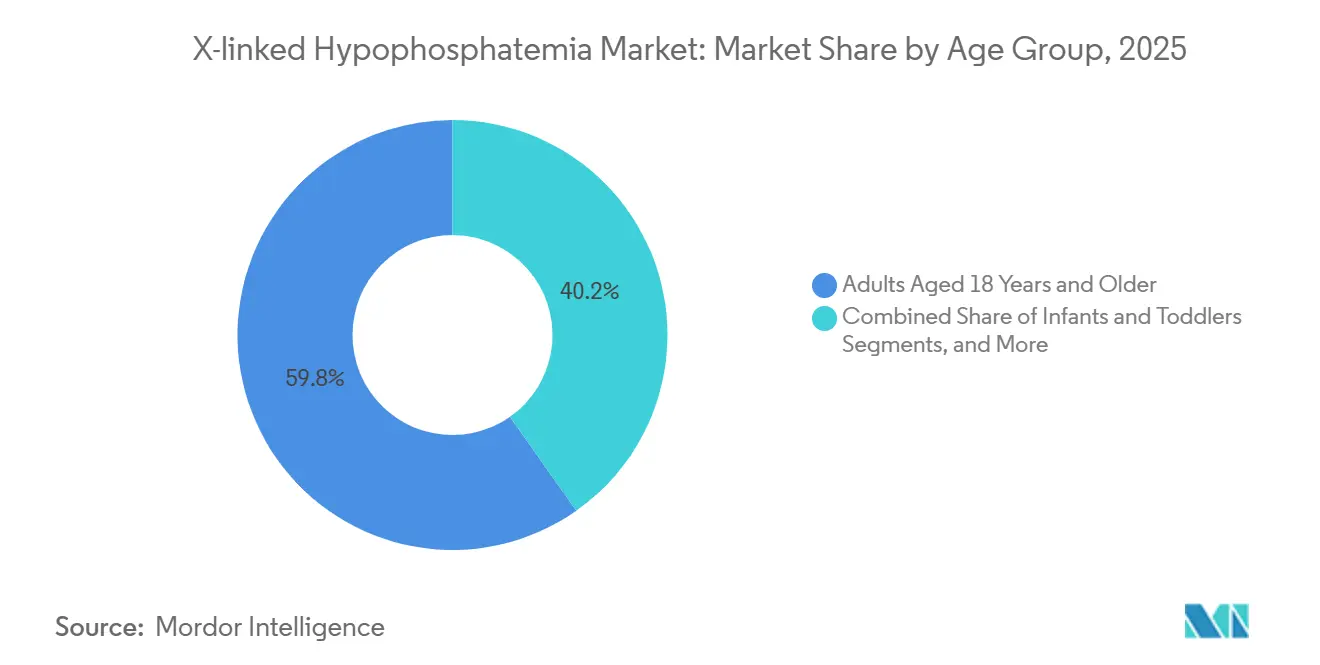
Adults Hold the Largest Base While Adolescents Expand FasterAdults aged 18 years and older held 59.76% of the age group segment in 2025. Many adults received conventional care during childhood and later became eligible for targeted treatment. Real-world and Italian data reported nephrocalcinosis, persistent pain, mobility limitations, improved serum phosphate levels, and better clinical outcomes in adults receiving burosumab.
Adolescents aged 13–17 years are projected to grow at a CAGR of 11.45% through 2031. This group can face treatment interruptions during the transition from pediatric to adult care, which a 2025 international clinical practice guideline identified as an important period for continuous management. Infants, toddlers, and children aged 1–12 years are largely treated through pediatric endocrinology services, while dedicated transition pathways can help retain adolescents in care.
By End User:
Pediatric Centers Lead While Adult Clinics Gain GroundPediatric endocrinology centers held 45.88% of the end user segment in 2025. These centers remained the primary starting point for diagnosis and Crysvita prescribing across North America, Europe, and Japan. Adult endocrinology and metabolic bone clinics are projected to grow at a CAGR of 8.56% through 2031, supported by adult access and reimbursement decisions in the United States, the United Kingdom, Canada, and continental Europe.
Nephrology clinics supported long-term monitoring for patients with nephrocalcinosis and prior phosphate treatment, while orthopedic hospitals managed skeletal deformity correction. Dental and craniofacial centers addressed spontaneous dental abscesses and enamel hypoplasia associated with PHEX-related disease. Genetic medicine centers took a larger role in initial diagnosis, and homecare settings may expand as self-administration becomes more common.
Geography Analysis
North America X-linked Hypophosphatemia Market
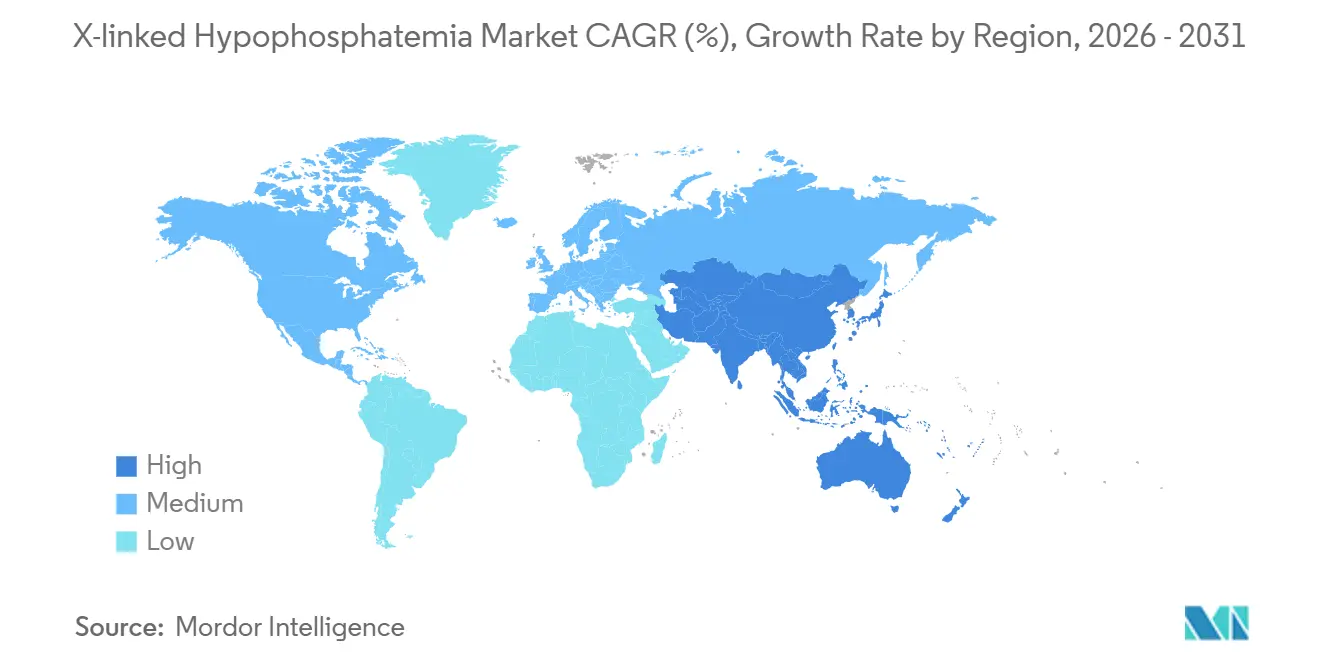
North America held 39.89% of the global X-linked hypophosphatemia market in 2025, supported by the United States, which had the longest-standing burosumab approval and a broad pediatric indication covering patients from 6 months of age. Specialty pharmacy distribution supported access after physician initiation. Ultragenyx reported USD 275 million in Crysvita royalty revenue from the United States and Canada in fiscal 2025. In May 2026, Ontario, British Columbia, Saskatchewan, Alberta, and the federal Non-Insured Health Benefits program began publicly funding burosumab for eligible adults, while Mexico contributed less due to limited specialist infrastructure.
Europe X-linked Hypophosphatemia Market
Europe is the second-largest geographic area for the X-linked hypophosphatemia market, with burosumab reimbursed for pediatric and adult patients in France, Germany, Italy, Spain, and the United Kingdom. NICE recommended burosumab for adults in August 2024 and required NHS commissioning within 3 months. The July 2026 European Commission decision extended treatment eligibility to infants aged 1 month to 1 year. Adult reimbursement still lagged in several Southern and Eastern European countries, while compassionate use remained an access route in some settings.
APAC, MEA and South America X-linked Hypophosphatemia Market
Asia-Pacific is projected to grow at a CAGR of 9.58% through 2031, supported by Japan’s established reimbursed XLH program and Kyowa Kirin’s Crysvita prefilled syringe launch there on November 19, 2025. South Korea and Australia added to the regional opportunity, while a Phase 4 study in Chinese children reported that burosumab corrected serum phosphorus and improved clinical outcomes. The Middle East and Africa and South America represented smaller emerging areas, with access shaped by specialist capacity and public funding. Brazil served as a regional commercial base, while wider access in Argentina and other countries relied on expanded access programs, leaving meaningful geographic variation across the X-linked hypophosphatemia market.

Competitive Landscape
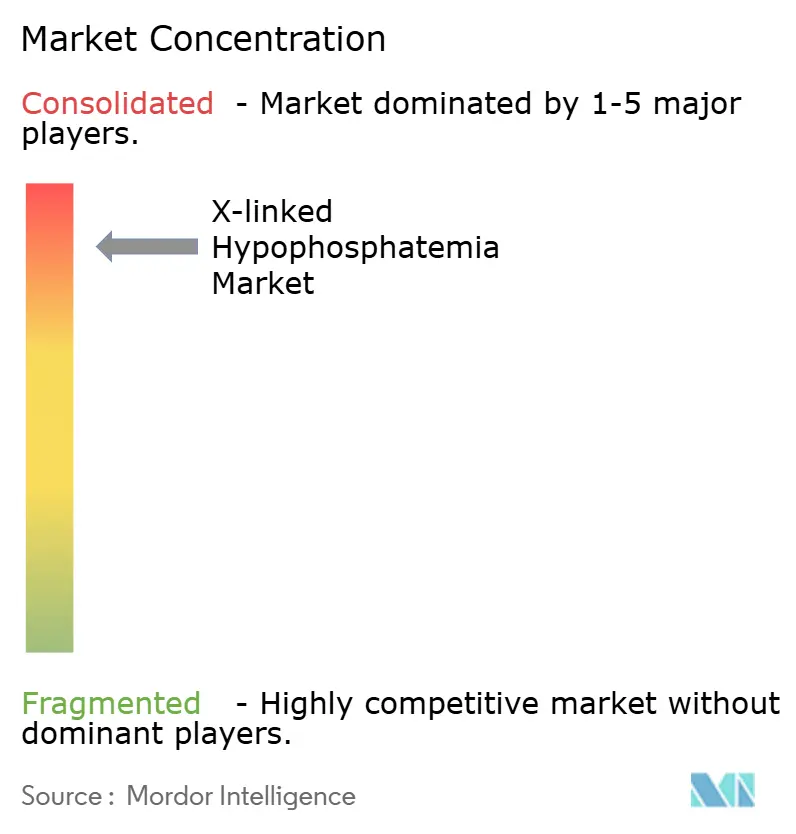
The X-linked hypophosphatemia market remained highly concentrated, as the Kyowa Kirin and Ultragenyx collaboration provided the only targeted therapy, Crysvita. Kyowa Kirin recorded sales in Japan and Europe and received royalties from the United States and Canada, while Ultragenyx commercialized Crysvita directly in Latin America and selected markets. Kyowa Kirin reported FY2025 revenue of JPY 496.8 billion. Crysvita continued to support manufacturing investments in Japan, while conventional phosphate and calcitriol or alfacalcidol products lacked the same targeted treatment profile where burosumab was available.
Kyowa Kirin advanced KK8123 through a Phase 1/2 adult study as a potential successor therapy. The company also launched a prefilled Crysvita syringe in Japan in November 2025 to support easier self-administration. Ultragenyx reported USD 481 million in Crysvita revenue for fiscal 2025 and guided to USD 500-520 million for 2026. The company also reduced its headcount by 130 employees to support profitability in 2027, highlighting efforts by established suppliers to protect access, delivery, and future development.
Gene therapy research may create a longer-term alternative to repeated antibody treatment. Oral targeted treatment remained an unmet clinical need, as no approved oral FGF23 therapy existed. Regulatory pathways for rare diseases may favor well-characterized successor treatments. Pipeline activity had not yet changed Crysvita’s dominance in the X-linked hypophosphatemia market.
X-linked Hypophosphatemia Industry Leaders
F. Hoffmann-La Roche Ltd.
Novartis AG
Pfizer Inc.
Ascendis Pharma A/S
Chiesi Farmaceutici S.p.A.
- *Disclaimer: Major Players sorted in no particular order
X-linked Hypophosphatemia Market Companies Covered in this Report
- Alexion Pharmaceuticals, Inc.
- Amgen
- Ascendis Pharma A/S
- AstraZeneca
- Bayer
- Chiesi Farmaceutici
- Daiichi Sankyo
- Eli Lilly and Company
- Roche
- Inozyme Pharma, Inc.
- Ipsen Pharma SAS
- Kyowa Kirin
- Kyowa Kirin Holdings B.V.
- Mitsubishi Tanabe Pharma
- Novartis
- Pfizer
- Regeneron Pharmaceuticals
- Sanofi
- Swedish Orphan Biovitrum AB
- Takeda Pharmaceuticals
- Ultragenyx Pharmaceutical Inc.

Recent Industry Developments in X-linked Hypophosphatemia Market
- July 2026: The European Commission expanded Crysvita’s XLH indication to infants aged 1 month to 1 year, backed by BUR-CL207 Phase 1/2 trial data, and extended EU orphan market exclusivity to February 2030.
- May 2026: The US FDA approved flexible biweekly adult dosing for Crysvita, allowing escalation to 0.5 mg/kg and then 1.0 mg/kg every two weeks when serum phosphorus remained below normal.
- May 2026: Ontario, British Columbia, Saskatchewan, Alberta, and the federal Non-Insured Health Benefits program began funding burosumab for eligible adults with XLH.


Global X-linked Hypophosphatemia Market Report Scope
As per the scope of the report, X-Linked Hypophosphatemia (XLH) is a rare, inherited genetic disorder characterized by low blood phosphorus levels, abnormal bone softening (rickets or osteomalacia), and excessive renal phosphate wasting.
The X-linked hypophosphatemia market is segmented by treatment type, route of administration, age group, end user, and geography. By treatment type, the market includes burosumab, oral phosphate supplements, active vitamin D analogs, combination conventional therapy, orthopedic and supportive interventions, and emerging gene, cell, and nucleic acid therapies. By route of administration, the market is segmented into subcutaneous, oral, and intravenous and perioperative support. By age group, the market is categorized into infants and toddlers, children aged 1–12 years, adolescents aged 13–17 years, adults aged 18 years and older, and transition-age patients. By end user, the market is segmented into pediatric endocrinology centers, adult endocrinology and metabolic bone clinics, nephrology clinics, orthopedic hospitals, dental and craniofacial centers, genetic medicine centers, and homecare settings. By geography, the market is analyzed across North America, Europe, Asia-Pacific, the Middle East and Africa, and South America. The report also covers the estimated market sizes and trends for 17 countries across major regions globally. The report offers the market sizes and forecasts in terms of value (USD) for the above segments.
| Burosumab |
| Oral Phosphate Supplements |
| Active Vitamin D Analogs |
| Combination Conventional Therapy |
| Orthopaedic and Supportive Interventions |
| Emerging Gene, Cell, and Nucleic-Acid Therapies |
| Subcutaneous |
| Oral |
| Intravenous and Perioperative Support |
| Infants and Toddlers |
| Children Aged 1-12 Years |
| Adolescents Aged 13-17 Years |
| Adults Aged 18 Years and Older |
| Transition-Age Patients |
| Paediatric Endocrinology Centres |
| Adult Endocrinology and Metabolic-Bone Clinics |
| Nephrology Clinics |
| Orthopaedic Hospitals |
| Dental and Craniofacial Centres |
| Genetic-Medicine Centres |
| Homecare Settings |
| North America | United States |
| Canada | |
| Mexico | |
| Europe | Germany |
| United Kingdom | |
| France | |
| Italy | |
| Spain | |
| Rest of Europe | |
| Asia-Pacific | China |
| India | |
| Japan | |
| Australia | |
| South Korea | |
| Rest of Asia-Pacific | |
| Middle East and Africa | GCC |
| South Africa | |
| Rest of Middle East and Africa | |
| South America | Brazil |
| Argentina | |
| Rest of South America |
| By Treatment Type | Burosumab | |
| Oral Phosphate Supplements | ||
| Active Vitamin D Analogs | ||
| Combination Conventional Therapy | ||
| Orthopaedic and Supportive Interventions | ||
| Emerging Gene, Cell, and Nucleic-Acid Therapies | ||
| By Route of Administration | Subcutaneous | |
| Oral | ||
| Intravenous and Perioperative Support | ||
| By Age Group | Infants and Toddlers | |
| Children Aged 1-12 Years | ||
| Adolescents Aged 13-17 Years | ||
| Adults Aged 18 Years and Older | ||
| Transition-Age Patients | ||
| By End User | Paediatric Endocrinology Centres | |
| Adult Endocrinology and Metabolic-Bone Clinics | ||
| Nephrology Clinics | ||
| Orthopaedic Hospitals | ||
| Dental and Craniofacial Centres | ||
| Genetic-Medicine Centres | ||
| Homecare Settings | ||
| By Geography | North America | United States |
| Canada | ||
| Mexico | ||
| Europe | Germany | |
| United Kingdom | ||
| France | ||
| Italy | ||
| Spain | ||
| Rest of Europe | ||
| Asia-Pacific | China | |
| India | ||
| Japan | ||
| Australia | ||
| South Korea | ||
| Rest of Asia-Pacific | ||
| Middle East and Africa | GCC | |
| South Africa | ||
| Rest of Middle East and Africa | ||
| South America | Brazil | |
| Argentina | ||
| Rest of South America | ||


Key Questions Answered in the Report
What is the value of the X-linked hypophosphatemia market in 2026?
The X-linked hypophosphatemia market is valued at USD 0.96 billion in 2026 and is forecast to reach USD 1.43 billion by 2031.
What is driving demand for XLH treatment?
Earlier diagnosis, pediatric treatment access, adult reimbursement, and specialist care pathways support treatment demand.
Which therapy leads XLH treatment?
Burosumab led treatment type with 68.88% share in 2025 and is projected to grow at a CAGR of 9.15% through 2031.
Why is adult XLH care becoming more important?
Adults held 59.76% of the age group segment in 2025, and new reimbursement and dosing decisions are widening access.
Which region is growing fastest for XLH care?
Asia-Pacific is projected to grow at a CAGR of 9.58% through 2031, supported by Japan and expanding regional access.
What limits access to burosumab?
High therapy costs, reimbursement delays, diagnostic delay, and limited specialist availability can restrict access.
Page last updated on:





