
Wolff Parkinson White Syndrome Market Size and Share
Market Overview
| Study Period | 2020 - 2031 |
|---|---|
| Market Size (2026) | USD 1.34 Billion |
| Market Size (2031) | USD 1.72 Billion |
| Growth Rate (2026 - 2031) | 5.22 % |
| Fastest Growing Market | Asia-Pacific |
| Largest Market | North America |
| Market Concentration | Medium |
Major Players *Disclaimer: Major Players sorted in no particular order Image © Mordor Intelligence. Reuse requires attribution under CC BY 4.0. | |
Wolff Parkinson White Syndrome Market Analysis by Mordor Intelligence
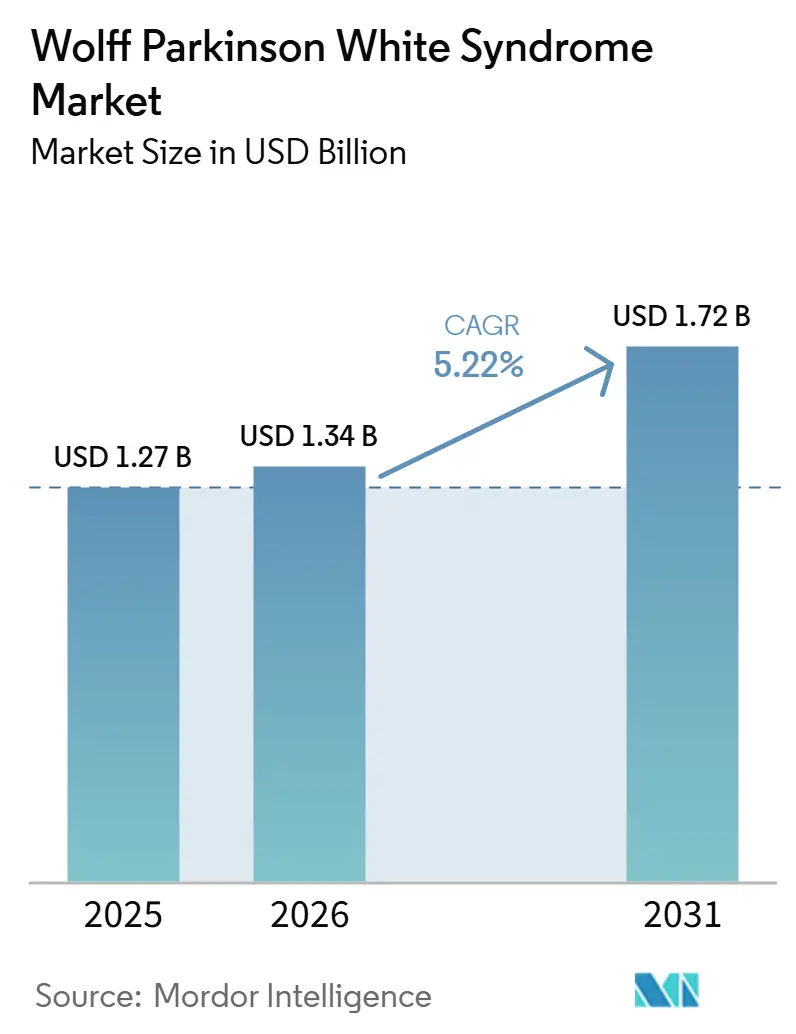
The Wolff Parkinson White Syndrome Market size is projected to be USD 1.27 billion in 2025, USD 1.34 billion in 2026, and reach USD 1.72 billion by 2031, growing at a CAGR of 5.22% from 2026 to 2031.
The Wolff-Parkinson-White syndrome market includes diagnostic testing, electrophysiology procedures, catheter ablation, medications, and supporting rhythm-management devices used to identify and treat abnormal accessory pathways. The condition affects an estimated 0.1% to 0.5% of the population, with an annual reported incidence of 5 to 6 cases per 100,000 people in China and 3 to 4 cases per 100,000 people in the United States. Diagnosis commonly occurs between the ages of 10 and 30, and the condition occurs more frequently in males, supporting demand for earlier diagnosis and curative treatment among younger patients. Wider screening of neonates, athletes, pilots, military personnel, and other occupational groups is increasing cardiology referrals, while rising catheter ablation adoption, wider use of 3D mapping, and expanding electrophysiology capacity in emerging healthcare systems are shaping market growth.
Key Report Takeaways
- By type, Type A held 58.88% of the Wolff-Parkinson-White syndrome market share in 2025, while Type B is forecast to grow at an 8.15% CAGR through 2031.
- By diagnosis, resting electrocardiography accounted for 44.34% of revenue in 2025, while electrophysiology study is projected to expand at a 6.80% CAGR through 2031.
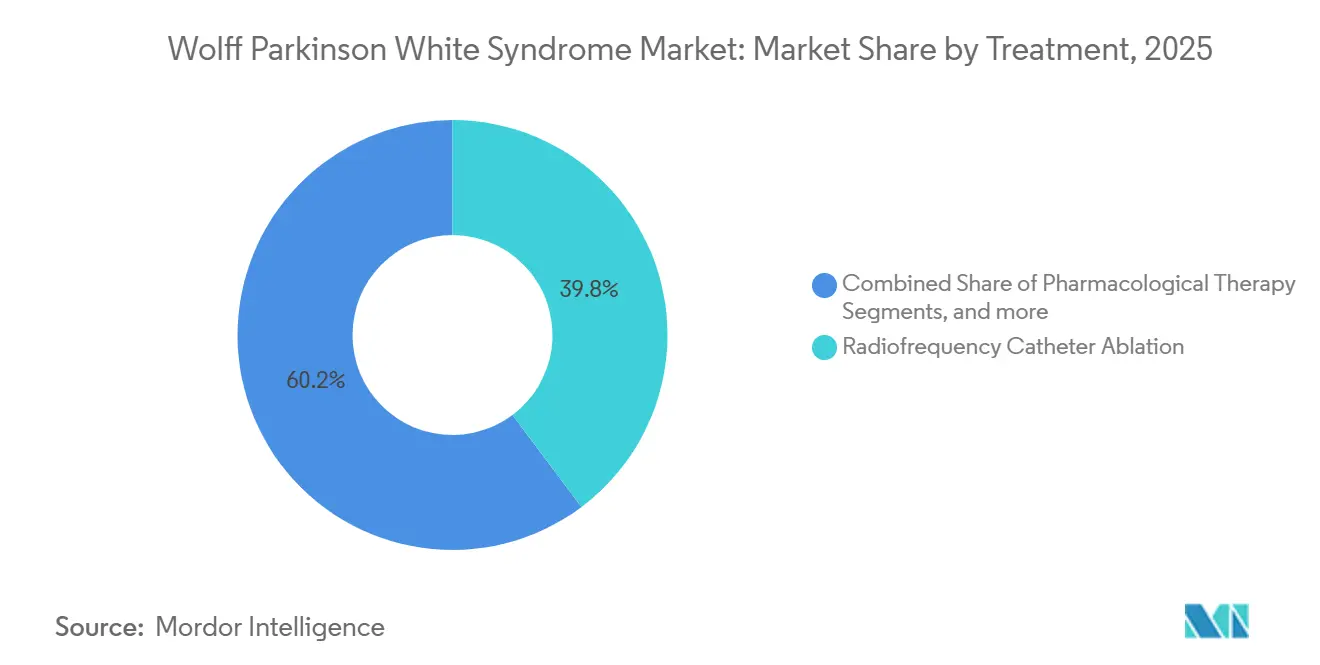
- By treatment, radiofrequency catheter ablation accounted for 39.76% of revenue in 2025, while cryoablation is projected to record a 6.45% CAGR through 2031.
- By patient demographics, adults aged 18 to 64 years accounted for 35.88% of revenue in 2025, while neonates and infants are projected to advance at a 7.56% CAGR through 2031.
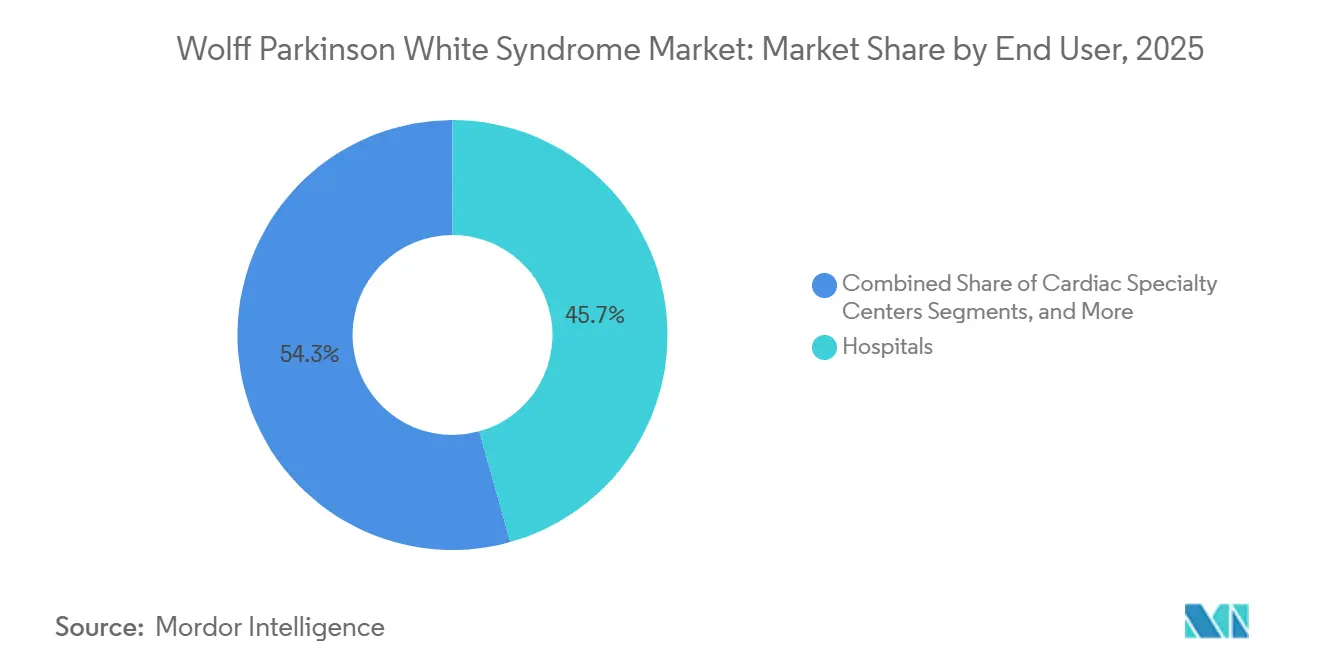
- By end user, hospitals accounted for 45.67% of revenue in 2025, while academic and research institutions are projected to grow at a 6.88% CAGR through 2031.
- By geography, North America held 39.89% of revenue in 2025, while Asia-Pacific is projected to expand at an 8.58% CAGR through 2031.
Note: Market size and forecast figures in this report are generated using Mordor Intelligence’s proprietary estimation framework, updated with the latest available data and insights as of January 2026.
Global Wolff Parkinson White Syndrome Market Trends and Insights
Drivers Impact Analysis*
| DRIVER | (~) % IMPACT ON CAGR FORECAST | GEOGRAPHIC RELEVANCE | IMPACT TIMELINE |
|---|---|---|---|
| Broader ECG and arrhythmia case finding | +1.1% | Global | Short term (≤ 2 years) |
| First-line shift toward curative catheter ablation | +1.4% | North America and Europe | Medium term (2-4 years) |
| 3D mapping, high-density mapping, and fluoroscopy reduction | +0.7% | Global | Medium term (2-4 years) |
| Expansion of electrophysiology capacity in emerging markets | +0.8% | Asia-Pacific, Middle East and Africa, and South America | Long term (≥ 4 years) |
| Occupational and competitive-sport risk screening | +0.5% | North America, Europe, and Asia-Pacific | Short term (≤ 2 years) |
| Earlier pediatric and congenital-heart-disease case finding | +0.6% | Global | Medium term (2-4 years) |
| Source: Mordor Intelligence | |||
First-Line Shift Toward Curative Catheter Ablation
Clinicians increasingly use catheter ablation as a first-line curative option for symptomatic patients, rather than reserving it for drug-refractory cases. Clinical guidance supports catheter ablation as a Class I treatment option for symptomatic Wolff-Parkinson-White syndrome, encouraging earlier referrals to electrophysiology specialists. A study of 1,239 patients reported a 94.2% acute procedural success rate, a 0.32% complete atrioventricular block rate, and a 2.42% recurrence rate after radiofrequency ablation.[1]A. Smiley and E. Dhaliwal, “Risk Stratification and Management of Arrhythmias in Patients with Wolff-Parkinson-White Syndrome,” Annals of Medicine and Surgery, journals.lww.com. These outcomes strengthen the clinical and economic case for earlier intervention, while the Wolff-Parkinson-White syndrome market benefits as providers consider prophylactic ablation for asymptomatic patients with high-risk accessory pathway features. A systematic review also found that prophylactic catheter ablation reduced arrhythmia recurrence compared with conservative management, with a reported risk ratio of 0.27 and a 95% confidence interval of 0.09 to 0.82.
Broader ECG and Arrhythmia Case Finding
Greater use of ECG screening is increasing the identification of patients with previously undetected Wolff-Parkinson-White patterns. Resting ECG remains the standard entry point because it is widely available, relatively low cost, and can identify the characteristic delta wave. Screening programs among athletes, military personnel, pilots, and professional drivers can detect patients before serious rhythm-related events occur. Wearable devices and mobile ECG tools may support early identification, but clinicians still require formal cardiology assessment and conventional testing to confirm diagnosis, sustaining demand for resting ECG, ambulatory monitoring, exercise testing, echocardiography, and electrophysiology study services.
3D Mapping, High-Density Mapping, and Fluoroscopy Reduction
High-density 3D electroanatomical mapping is becoming increasingly important in complex accessory pathway procedures. These systems help physicians locate pathways near sensitive structures, including the atrioventricular node and His bundle. Multi-electrode mapping catheters can improve the characterization of difficult parahisian and posteroseptal pathways, where treatment precision is critical for safety. A study of fluoroscopy-free ablation for right-sided accessory pathways reported a 97% acute success rate and an 89% long-term success rate, supporting the Wolff-Parkinson-White syndrome market shift toward mapping platforms that improve procedural guidance, reduce radiation exposure, and support consistent workflows.[2]P. Wackel, “Wolff-Parkinson-White Syndrome: Diagnostic and Management Challenges,” Cleveland Clinic Journal of Medicine, ccjm.org.
Expansion of Electrophysiology Capacity in Emerging Markets
The expansion of electrophysiology services across Asia-Pacific, the Middle East, and South America supports long-term procedural growth. Asia-Pacific is projected to grow at a CAGR of 8.58% through 2031 as hospitals add electrophysiology infrastructure and expand specialist training capacity. China benefits from a growing domestic device manufacturing base, including MicroPort Scientific and Shanghai MicroPort EP MedTech, while India is becoming an important center for catheter-based cardiac care as hospital networks expand beyond major metropolitan areas. Medical travel from Bangladesh, Nepal, and Sri Lanka supports procedure volumes at cardiac centers in Chennai, Delhi, and Mumbai, and the Asia Pacific Heart Rhythm Society continues to support specialist development through fellowship and leadership programs, with its 19th Scientific Session scheduled to take place in Busan, Korea, in October 2026.
Restraints Impact Analysis*
| RESTRAINT | (~) % IMPACT ON CAGR FORECAST | GEOGRAPHIC RELEVANCE | IMPACT TIMELINE |
|---|---|---|---|
| High procedure cost and uneven reimbursement | -1.4% | Global, particularly Middle East and Africa and South America | Medium term (2-4 years) |
| Electrophysiologist and ep-lab capacity shortage | -1.0% | Asia-Pacific, Middle East and Africa, and South America | Long term (≥ 4 years) |
| Risk-benefit uncertainty in asymptomatic patients | -0.8% | North America and Europe | Medium term (2-4 years) |
| Under-coding and low visibility of wpw-specific revenue | -0.5% | Global | Short term (≤ 2 years) |
| Source: Mordor Intelligence | |||
High Procedure Cost and Uneven Reimbursement
High catheter ablation costs can limit access in regions where reimbursement policies do not clearly cover Wolff-Parkinson-White syndrome as a standalone indication. Procedure costs include mapping-system use, single-use catheters, electrophysiology laboratory staffing, anesthesia, and post-procedure monitoring. In the United States, broader supraventricular tachycardia procedure codes can cover ablation, creating uncertainty for hospitals evaluating expensive mapping platforms. Cryoablation systems often cost more than standard radiofrequency systems, while varied reimbursement practices across Europe affect hospital purchasing decisions and patient access.
Electrophysiologist and EP-Lab Capacity Shortage
A shortage of trained electrophysiologists continues to constrain procedure volumes in several regions, as electrophysiology laboratories prioritize high volumes of atrial fibrillation and other arrhythmia cases. Referral delays remain significant in emerging markets with limited specialist coverage. Training an independent electrophysiologist can take 4 to 5 years, limiting any near-term capacity expansion. Robotic navigation may support selected complex cases, but high capital costs and workflow training requirements limit adoption; Stereotaxis received FDA approval for its MAGiC catheter in January 2026 for cardiac mapping and endocardial lesion creation in eligible patients.
*Our forecasts treat driver/restraint impacts as directional, not additive. The impact forecasts reflect baseline growth, mix effects, and variable interactions.
Segment Analysis
By Type: Type A Commands Revenue Share, Type B Closes the Mapping-Assisted Gap
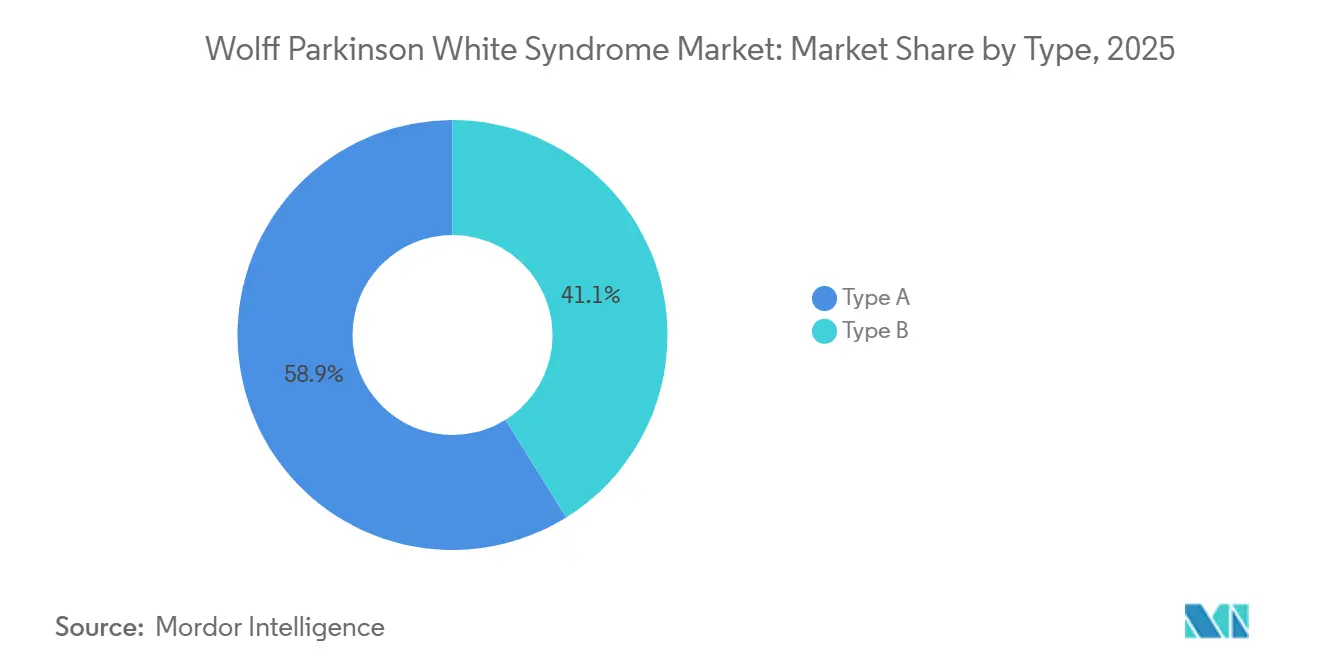
Type A accounted for 58.88% of the Wolff-Parkinson-White syndrome market share in 2025. Its lead reflected the clinical burden of left-sided accessory pathways, often located along the left lateral and posteroseptal mitral annulus. Clinicians commonly treated these pathways through transseptal or retrograde aortic access. Standard radiofrequency ablation eliminated left-lateral pathways in more than 90% of cases, making Type A a key demand source for catheters and mapping consumables.
Type B is projected to grow at a CAGR of 8.15% from 2026 to 2031. This segment includes right-sided pathways, such as parahisian and posteroseptal forms, which can be more complex due to their proximity to key conduction tissue. Fluoroscopy-free electroanatomical mapping reported a 97% acute success rate for right-sided accessory pathway ablation. Open-window mapping can reduce fluoroscopy time and radiofrequency delivery duration, while cryoablation can improve safety near the His bundle.


By Diagnosis: Resting ECG Anchors Detection, EP Study Fuels Risk-Driven Demand
Resting electrocardiography represented 44.34% of diagnostic revenue in 2025. It remained the primary diagnostic tool due to wide use in general cardiology, primary care, occupational health, and emergency settings. ECG findings helped identify pre-excitation and guide further assessment, supporting the Wolff-Parkinson-White syndrome market size for diagnostic services. AI-assisted interpretation may support delta-wave detection, but formal clinical review remains necessary.
Electrophysiology study is expected to grow at a CAGR of 6.80% through 2031. Clinicians increasingly use it for risk stratification in athletes, pilots, and other high-risk occupational groups. Prophylactic ablation following electrophysiology assessment reduced arrhythmia recurrence in asymptomatic patients, while reported complications stood at 1%, including pneumothorax and access-site complications. Holter monitoring, stress testing, and echocardiography remain important for additional assessment, including structural conditions such as Ebstein’s anomaly.
By Treatment: RFA Sustains Dominance, Cryoablation Scales Rapidly from a Narrow Procedural Base
Radiofrequency catheter ablation accounted for 39.76% of treatment revenue in 2025. It remained the established treatment option due to operator familiarity and mature hospital infrastructure. A 1,239-patient study reported 94.2% acute procedural success for radiofrequency ablation. Its broad use across pathway locations and age groups supports continued demand for radiofrequency generators, ablation catheters, mapping systems, and related consumables.
Cryoablation is projected to expand at a CAGR of 76.45% from 2026 to 2031. Its use is concentrated in pediatric patients and pathways near the atrioventricular node or His bundle. Cryoenergy allows test freezing before creating a permanent lesion, providing a safety advantage in sensitive areas. A 12-year pediatric study found comparable effectiveness for cryoablation and radiofrequency ablation in septal accessory pathways, with cryoablation showing a stronger safety profile in children.

By Patient Demographics: Working-Age Adults Lead Volume, Neonates and Infants Drive Fastest Incremental Demand
Adults aged 18 to 64 years accounted for 35.88% of revenue in 2025. This group remained an important treatment population due to occupational clearance, athletic participation, symptom burden, and the desire to avoid long-term antiarrhythmic therapy. Working-age adults also had better access to specialist cardiology services through employer-supported insurance or established referral systems. The Wolff-Parkinson-White syndrome market benefited from demand for definitive rhythm control.
Neonates and infants are projected to grow at a CAGR of 7.56% through 2031. Expanded congenital heart disease screening and improved pediatric ECG assessment supported earlier recognition of high-risk cases. A 30-year registry study found that 30% of pediatric cases were diagnosed during infancy and reported life-threatening arrhythmic events in asymptomatic children, including infants and neonates. Catheter ablation is becoming more feasible as procedural methods and catheter designs improve.
By End User: Hospitals Command Volume, Academic Institutions Accelerate Next-Generation Protocol Adoption
Hospitals accounted for 45.67% of end-user revenue in 2025. Their position reflected access to catheterization laboratories, emergency departments, inpatient cardiology services, and electrophysiology fellowship programs. Hospitals also managed a significant share of high-acuity referrals. This concentration gave them a central role in purchasing mapping systems, ablation catheters, imaging equipment, and procedural support services.
Academic and research institutions are expected to grow at a CAGR of 6.88% through 2031. These institutions often adopt robotic navigation, high-density mapping, and algorithm-supported pathway localization before broader use in community settings. Their clinical studies and peer-reviewed outcome data can influence technology adoption across electrophysiology centers. Cardiac specialty centers and ambulatory surgical centers are also gaining a larger role in lower-complexity ablation procedures.
Geography Analysis
North America accounted for 39.89% of the Wolff-Parkinson-White syndrome market share in 2025. The United States led the region, supported by reimbursement coverage, electrophysiology laboratory density, and clinical guideline adoption that sustained procedure volumes. Established cardiology referral pathways included catheter ablation for symptomatic patients. In January 2026, Stereotaxis received FDA approval for its MAGiC catheter for cardiac mapping and endocardial lesion creation, and the first U.S. commercial procedures using the catheter were announced in April 2026. Canada contributed through academic health-sciences centers, while Mexico expanded through private healthcare investment in major cities.
Europe remained an important regional base for electrophysiology care and device adoption. Germany, the United Kingdom, and France recorded high procedure volumes and operated established electrophysiology laboratories, while Italy and Spain contributed through experienced single-center programs. European Medical Device Regulation requirements raised evidence and certification standards for manufacturers, favoring suppliers with strong post-market surveillance and regulatory compliance capabilities. Abbott received CE Mark for the TactiFlex Duo Ablation Catheter, Sensor Enabled, in January 2026, supporting its position in the European electrophysiology device field.
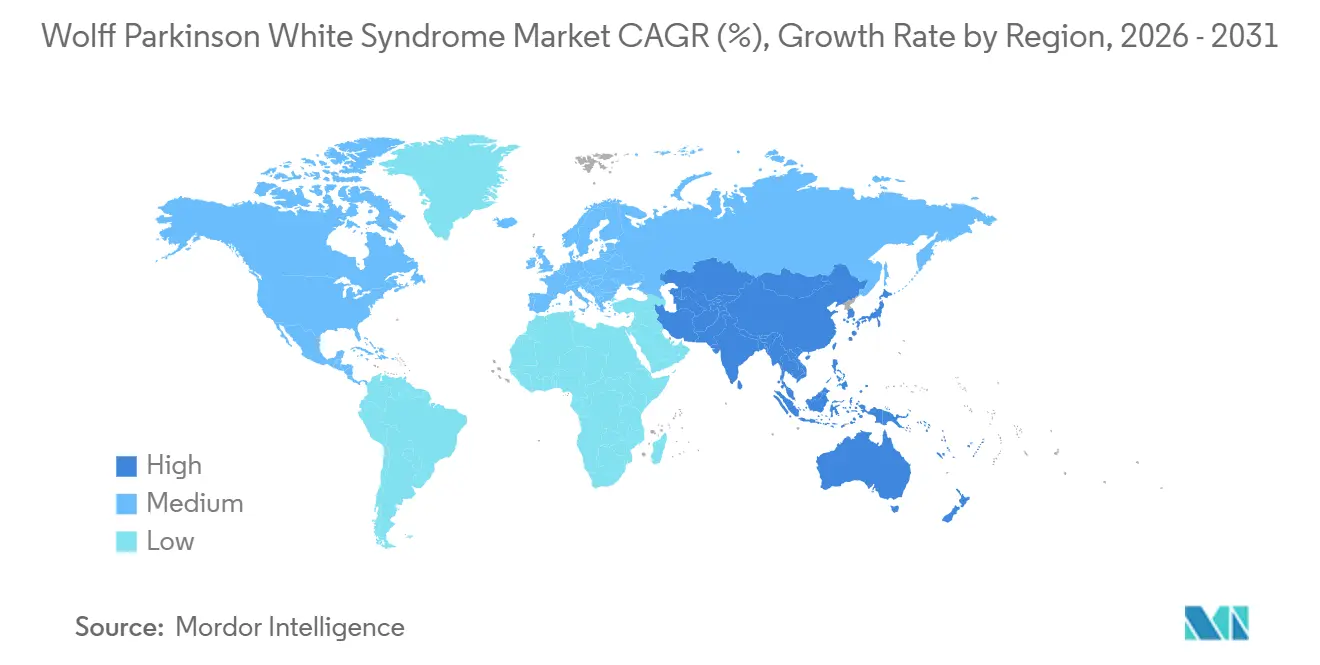
Asia-Pacific is projected to record the fastest regional growth at an 8.58% CAGR through 2031. China is the largest Asia-Pacific country opportunity, supported by domestic catheter producers and wider cardiac-care infrastructure, while India increased electrophysiology capacity through government and private hospital investment. Japan, South Korea, and Australia support the regional total through mature specialist programs and early adoption of advanced mapping tools. The Asia Pacific Heart Rhythm Society’s 19th Scientific Session in Busan in October 2026 reflects the region’s expanding professional network. The Middle East and Africa show uneven development, with Gulf Cooperation Council countries investing in tertiary cardiac care while access remains limited across much of Sub-Saharan Africa. South America is led by Brazil and Argentina, while referral networks continue to route many patients from secondary cities to established urban electrophysiology centers.

Competitive Landscape
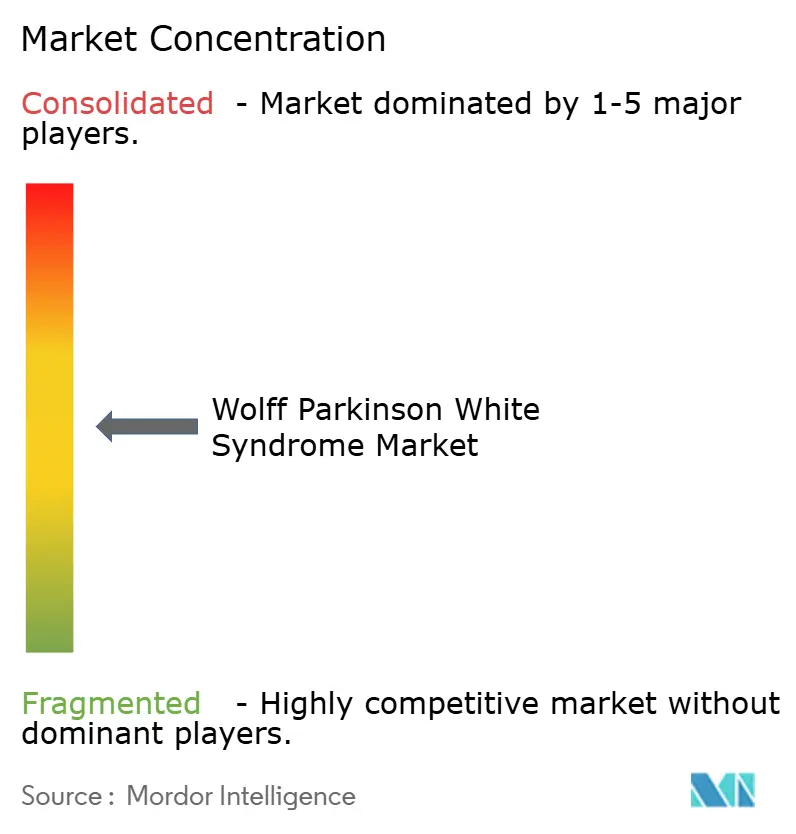
The Wolff-Parkinson-White syndrome market remained moderately concentrated in high-value mapping and catheter platforms. Abbott, Medtronic, Boston Scientific, and Johnson & Johnson held strong positions through integrated mapping, generator, and catheter portfolios. These companies competed by linking proprietary catheters with mapping consoles and procedural workflows, increasing hospital switching costs after platform adoption. Demand for lower fluoroscopy exposure, better pathway localization, and safer workflows in pediatric and complex anatomy cases continued to shape competition.
Johnson & Johnson’s CARTO 3 platform was used with catheter technologies such as VARIPULSE and OMNYPULSE. Medtronic expanded its Affera mapping and ablation platform with Sphere-9 and Sphere-360 catheter technologies, while Boston Scientific combined its Opal HDx mapping platform with Farapulse and Faraflex catheter technologies. These platform combinations supported long-term purchasing relationships with hospitals and electrophysiology centers. Abbott’s 2026 European CE Mark for the TactiFlex Duo catheter added a dual-energy focal ablation option to its portfolio.
Stereotaxis targeted complex supraventricular tachycardia cases involving congenital heart disease and difficult anatomy. The company announced the first U.S. commercial MAGiC procedures in April 2026 after FDA approval. Algorithm-supported localization also emerged as a competitive focus, helping vendors improve consistency in pathway mapping across operators. European Medical Device Regulation requirements may raise development and maintenance costs for smaller suppliers, supporting continued concentration among established companies with broader regulatory and clinical evidence resources.
Wolff Parkinson White Syndrome Industry Leaders
Boston Scientific Corporation
Koninklijke Philips N.V.
Medtronic plc
Siemens Healthineers AG
Abbott Laboratories
- *Disclaimer: Major Players sorted in no particular order

Recent Industry Developments
- April 2026: Stereotaxis completed the first U.S. commercial procedures with its MAGiC Magnetic Interventional Ablation Catheter, supporting advanced ablation options relevant to the Wolff Parkinson White Syndrome market.
- April 2026: Adagio Medical Holdings reported positive FULCRUM-VT pivotal study results for its vCLAS cryoablation system, reinforcing innovation in ablation technologies relevant to the Wolff Parkinson White Syndrome market.
- April 2026: Boston Scientific presented clinical data for its Farapulse Pulsed Field Ablation Platform and advanced the FARADIGM global IDE trial, supporting next-generation ablation approaches relevant to the Wolff Parkinson White Syndrome market.


Global Wolff Parkinson White Syndrome Market Report Scope
As per the scope of the report, Wolff-Parkinson-White (WPW) syndrome is a congenital heart condition featuring an extra electrical pathway that causes rapid heartbeats. You are born with this extra connection, which lets electrical signals skip the heart's natural delay node and trigger early contractions.
The Wolff-Parkinson-White syndrome market is segmented by type, diagnosis, treatment, patient demographics, end user, and geography. By type, the market includes Type A and Type B. By diagnosis, the market is segmented into resting electrocardiogram, ambulatory and Holter monitoring, exercise stress testing, electrophysiology study, and echocardiography and structural heart assessment. By treatment, the market is categorized into radiofrequency catheter ablation, cryoablation, pharmacological therapy, electrical cardioversion, surgical ablation and other surgery, and artificial pacemaker and adjunctive rhythm management. By patient demographics, the market is segmented into neonates and infants, children and adolescents, adults aged 18-64 years, adults aged 65 years and older, and male patients and female patients. By end user, the market is segmented into hospitals, cardiac specialty centers, ambulatory surgical centers, academic and research institutions, and emergency and acute care facilities. By geography, the market is analyzed across North America, Europe, Asia-Pacific, the Middle East and Africa, and South America. The report also covers the estimated market sizes and trends for 17 countries across major regions globally. The report offers the market sizes and forecasts in terms of value (USD) for the above segments.
| Type A |
| Type B |
| Resting Electrocardiogram |
| Ambulatory and Holter Monitoring |
| Exercise Stress Testing |
| Electrophysiology Study |
| Echocardiography and Structural-Heart Assessment |
| Radiofrequency Catheter Ablation |
| Cryoablation |
| Pharmacological Therapy |
| Electrical Cardioversion |
| Surgical Ablation and Other Surgery |
| Artificial Pacemaker and Adjunctive Rhythm Management |
| Neonates and Infants |
| Children and Adolescents |
| Adults Aged 18-64 Years |
| Adults Aged 65 Years and Older |
| Male Patients and Female Patients |
| Hospitals |
| Cardiac Specialty Centers |
| Ambulatory Surgical Centers |
| Academic and Research Institutions |
| Emergency and Acute-Care Facilities |
| North America | United States |
| Canada | |
| Mexico | |
| Europe | Germany |
| United Kingdom | |
| France | |
| Italy | |
| Spain | |
| Rest of Europe | |
| Asia-Pacific | China |
| India | |
| Japan | |
| Australia | |
| South Korea | |
| Rest of Asia-Pacific | |
| Middle East and Africa | GCC |
| South Africa | |
| Rest of Middle East and Africa | |
| South America | Brazil |
| Argentina | |
| Rest of South America |
| By Type | Type A | |
| Type B | ||
| By Diagnosis | Resting Electrocardiogram | |
| Ambulatory and Holter Monitoring | ||
| Exercise Stress Testing | ||
| Electrophysiology Study | ||
| Echocardiography and Structural-Heart Assessment | ||
| By Treatment | Radiofrequency Catheter Ablation | |
| Cryoablation | ||
| Pharmacological Therapy | ||
| Electrical Cardioversion | ||
| Surgical Ablation and Other Surgery | ||
| Artificial Pacemaker and Adjunctive Rhythm Management | ||
| By Patient Demographics | Neonates and Infants | |
| Children and Adolescents | ||
| Adults Aged 18-64 Years | ||
| Adults Aged 65 Years and Older | ||
| Male Patients and Female Patients | ||
| By End User | Hospitals | |
| Cardiac Specialty Centers | ||
| Ambulatory Surgical Centers | ||
| Academic and Research Institutions | ||
| Emergency and Acute-Care Facilities | ||
| By Geography | North America | United States |
| Canada | ||
| Mexico | ||
| Europe | Germany | |
| United Kingdom | ||
| France | ||
| Italy | ||
| Spain | ||
| Rest of Europe | ||
| Asia-Pacific | China | |
| India | ||
| Japan | ||
| Australia | ||
| South Korea | ||
| Rest of Asia-Pacific | ||
| Middle East and Africa | GCC | |
| South Africa | ||
| Rest of Middle East and Africa | ||
| South America | Brazil | |
| Argentina | ||
| Rest of South America | ||


Key Questions Answered in the Report
What is the projected value of the Wolff-Parkinson-White syndrome market by 2031?
The Wolff-Parkinson-White syndrome market is projected to reach USD 1.72 billion by 2031, from USD 1.34 billion in 2026, at a 5.22% CAGR.
What treatment is most widely used for Wolff-Parkinson-White syndrome?
Radiofrequency catheter ablation led treatment revenue with a 39.76% share in 2025 and remains the established curative procedure for many eligible patients.
Why is cryoablation growing quickly for Wolff-Parkinson-White syndrome?
Cryoablation is projected to grow at a 76.45% CAGR through 2031 because it can provide an added safety margin near the atrioventricular node and His bundle.
Which region is growing fastest for Wolff-Parkinson-White syndrome care?
Asia-Pacific is expected to record the fastest growth, with an 8.58% CAGR through 2031, supported by expanding electrophysiology capacity and cardiac-care infrastructure.
What is the main test used to identify Wolff-Parkinson-White syndrome?
Resting electrocardiography is the main initial test and accounted for 44.34% of diagnostic revenue in 2025.
Which end users account for the largest demand for Wolff-Parkinson-White syndrome procedures?
Hospitals led end-user revenue with a 45.67% share in 2025 because they provide catheter laboratories, emergency care, inpatient cardiology, and specialist referral services.
Page last updated on:





