
Vodka Seltzer Market Size and Share
Market Overview
| Study Period | 2021 - 2031 |
|---|---|
| Market Size (2026) | USD 8.51 Billion |
| Market Size (2031) | USD 13.38 Billion |
| Growth Rate (2026 - 2031) | 9.48 % |
| Fastest Growing Market | Asia-Pacific |
| Largest Market | North America |
| Market Concentration | Low |
Major Players *Disclaimer: Major Players sorted in no particular order Image © Mordor Intelligence. Reuse requires attribution under CC BY 4.0. | |
Vodka Seltzer Market Analysis by Mordor Intelligence
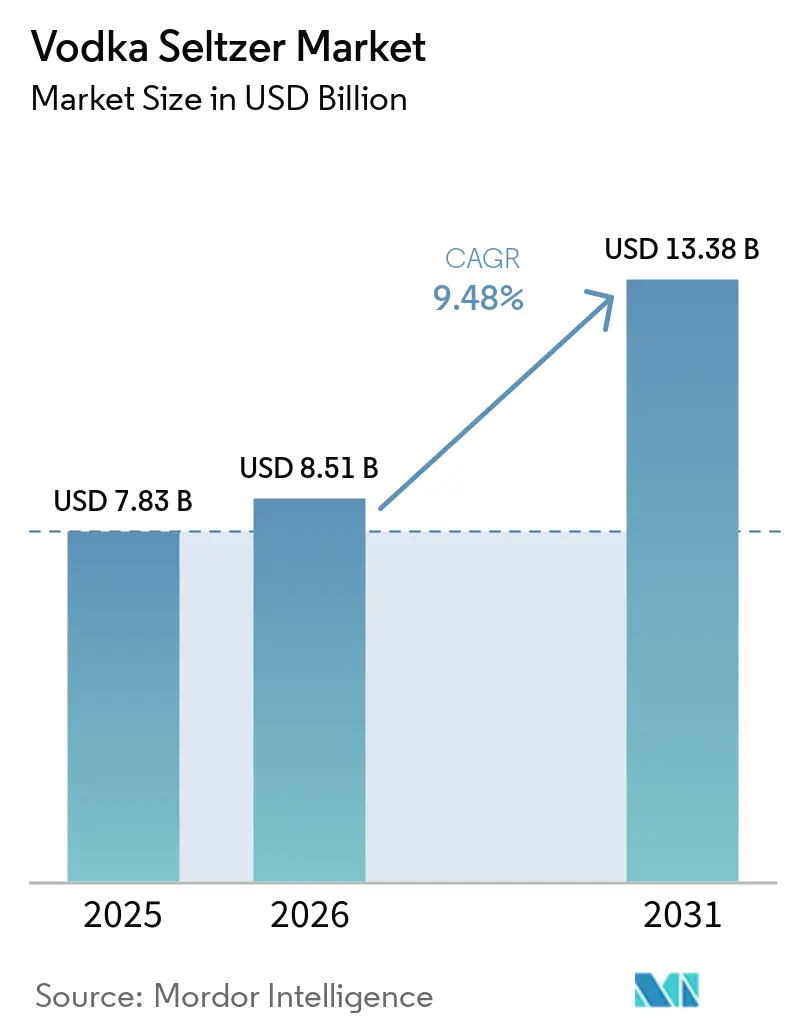
The vodka seltzer market size was valued at USD 7.83 billion in 2025 to USD 8.51 billion in 2026, and is forecast to reach USD 13.38 billion by 2031 at a 5.39% CAGR over 2026-2031. The category is shifting toward spirit-based ready-to-drink products as consumers seek a recognizable vodka base, convenient formats, and familiar flavor profiles. This shift allows established spirits suppliers to retain consumers who are reducing their consumption of traditional spirits while creating opportunities for brands with clearer ingredient and flavor propositions. Product launches increasingly combine low-calorie positioning with premium flavor technology, making formulation, pricing, and distribution more important than broad flavor proliferation. Retailers are also narrowing assortments, requiring brands to deliver high shelf velocity, maintain a focused core range, and provide a clear reason for repeat purchases rather than relying on a large flavor portfolio that can dilute inventory turns and weaken the clarity of the consumer offer.
Key Report Takeaways
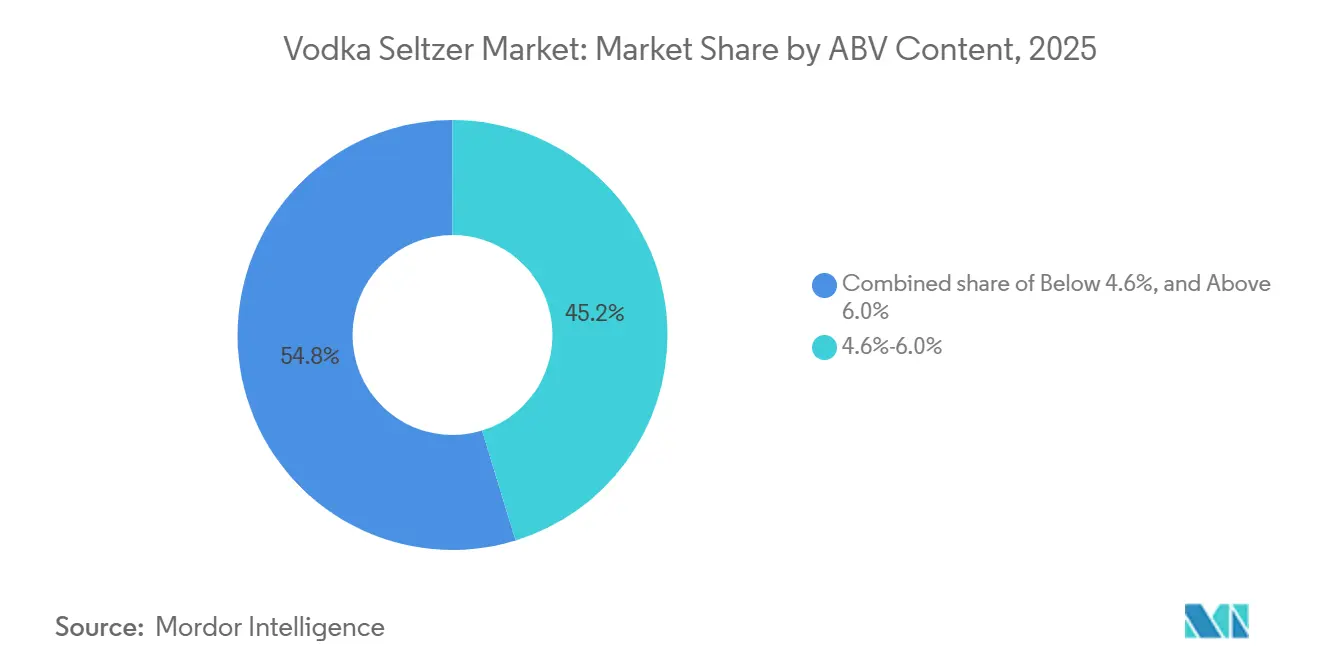
- By ABV Content, 4.6%-6.0% led the vodka seltzer market with a share of 45.24% in 2025 and is anticipated to register the fastest CAGR of 9.73% during 2026-2031.
- By flavour, fruit flavours retained 41.35% share in 2025, whereas classic flavours is forecast to expand at a 10.25% CAGR through 2031.
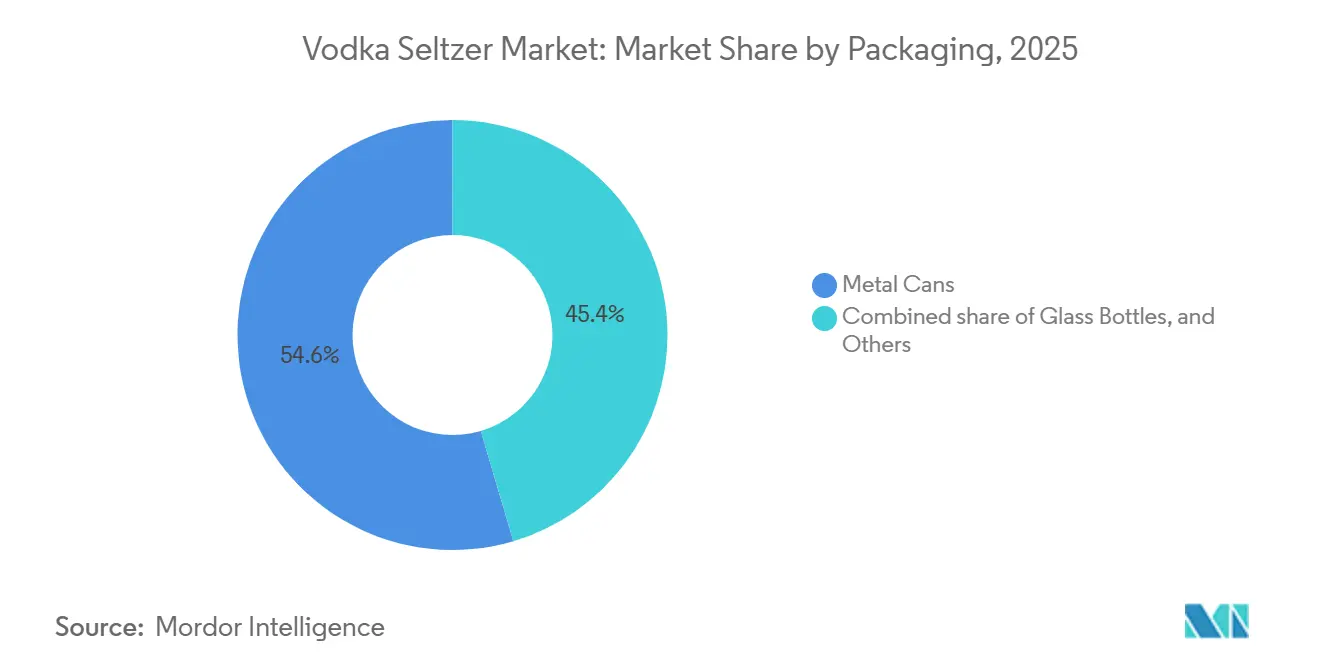
- By packaging, metal cans retained 54.57% share in 2025, and forecast to expand at 9.63% CAGR through 2031.
- By distribution channel, off-trade led with share of 62.45%, whereas on-trade is forecast to expand at 10.03% through 2031.
- By geography, North America led the vodka seltzer market in 2025 with a 37.12% share, while Asia-Pacific is projected to advance at a 10.64% CAGR through 2031.
Note: Market size and forecast figures in this report are generated using Mordor Intelligence’s proprietary estimation framework, updated with the latest available data and insights as of January 2026.
Market Trends and Insights
Drivers Impact Analysis of Vodka Seltzer Market*
| Driver | (~) % Impact on CAGR Forecast | Geographic Relevance | Impact Timeline |
|---|---|---|---|
| Rising consumer preference for RTD alcoholic beverages | +2.8% | Global | Short term (≤ 2 years) |
| Demand for convenient single-serve alcoholic beverages | +1.1% | North America and Europe | Short term (≤ 2 years) |
| Availability across retail and consumption occasions | +1.0% | North America and Asia-Pacific | Medium term (2-4 years) |
| Expansion of flavor innovation | +1.5% | Global | Medium term (2-4 years) |
| Demand for low-calorie and low-sugar alcoholic beverages | +1.3% | North America, Europe, and Australia | Short term (≤ 2 years) |
| Rising preference for clean-label and simple-ingredient formulations | +0.8% | North America and the European Union | Long term (≥ 4 years) |
| Source: Mordor Intelligence | |||
Rising Consumer Preference for RTD Alcoholic Beverages
Consumer demand is shifting toward spirit-based RTDs, and vodka remains a recognizable base for this transition. The vodka seltzer market benefits from this shift by offering a ready-mixed serve that allows consumers to retain the identity of the spirit. Consumers can move away from malt-based alternatives while maintaining the portability and simple format that initially drove hard seltzer adoption. This reduces the need for brands to change the core drinking occasion when introducing a spirit-based product. Flavor and convenience remain key purchase considerations, so product quality alone cannot secure repeat purchases. Brands must combine a clear vodka proposition with accessible flavors and dependable availability across occasions where consumers seek a quick serve. This trend supports the vodka seltzer market by positioning the format as an additional consumption choice within spirits rather than a temporary replacement for existing products. It also allows producers to use RTDs to address occasions that may not suit a full-strength pour, a bartender-prepared drink, or a large multi-serve package.
Demand for Convenient Single-Serve Alcoholic Beverages
Single-serve formats are a key driver of vodka seltzer demand, offering portability, convenience, consistent serving sizes, and ready-to-consume products without preparation. In September 2024, the International Wine and Spirits Research (IWSR) reported that the share of 355 ml RTD cans in the United States increased from 7% to 69% over five years, driven by strong consumer demand for single-serve formats[1]. The organization also noted that single-serve canned RTDs have enabled brands to expand into locations such as sports venues, concerts, and beaches, where glass bottles are typically restricted. Therefore, the growing adoption of single-serve cans and convenient multipack formats supports vodka seltzer consumption by making products easier to purchase, transport, store, and consume across both at-home and out-of-home occasions.
Expansion of Flavor Innovation
Flavor development is shifting from a strategy centered on a large number of SKUs to one focused on distinct occasions and more disciplined releases. Limited releases can attract retailer attention and give consumers a reason to revisit an established brand, particularly when the product connects with a recognizable season, sport, or social activity rather than relying on flavor novelty alone. High Noon launched Transfusion Vodka Seltzer in April 2026 as its first limited-edition release, combining grape, lime, and ginger with a golf-focused campaign. Suntory Global Spirits took a different approach with its national launch of -196 in the United States, highlighting its Freeze Crush Infusion process and whole-fruit treatment. These approaches show that the vodka seltzer market can use both lifestyle associations and manufacturing methods to differentiate products that otherwise share a similar format.
Demand for Low-Calorie and Low-Sugar Alcoholic Beverages
A low-calorie and low-sugar positioning gives vodka seltzer brands a direct way to address consumers seeking to moderate their alcohol and calorie intake. This proposition is strongest when products clearly state their alcohol, calorie, carbohydrate, and sugar content. Kraft Heinz and Barrel One Collective introduced Crystal Light Vodka Refreshers in 2025, with each 12-ounce can containing 3.8% ABV, 77 calories, zero carbohydrates, and zero sugar. This type of offering expands vodka seltzer beyond a conventional party drink and positions it for more controlled social occasions, where consumers may want a flavored alcoholic beverage while managing the quantity they consume. It also increases the importance of taste, as low-calorie claims are less effective when consumers perceive the product as a compromise. The vodka seltzer market can benefit when brands combine transparent nutrition information with a credible vodka base and easy-to-understand flavors.
Restraints Impact Analysis of Vodka Seltzer Market*
| Restraint | (~) % Impact on CAGR Forecast | Geographic Relevance | Impact Timeline |
|---|---|---|---|
| Stringent alcohol regulations and restrictions on sales and marketing | -0.9% | Global, particularly United States state-level and European Union | Medium term (2-4 years) |
| High taxation and excise duties on alcoholic beverages | -1.1% | United States, European Union, and Japan | Short term (≤ 2 years) |
| Competition from non-alcoholic and low-alcohol alternatives | -0.8% | North America and Europe | Medium term (2-4 years) |
| Fragmented alcohol distribution and market-access regulations | -0.6% | United States state-by-state, South America, and Middle East and Africa | Long term (≥ 4 years) |
| Source: Mordor Intelligence | |||
Stringent Alcohol Regulations and Restrictions on Sales and Marketing
Spirit-based vodka seltzers face regulations that do not always apply to malt beverages. In many United States jurisdictions, retailers cannot sell distilled spirits through grocery or convenience stores, limiting access to key impulse-purchase locations. Federal labeling and advertising requirements also add review steps and require additional planning from producers. These regulations increase lead times and compliance costs, particularly for smaller brands with limited regulatory resources. While the same rules can support quality and authenticity claims, the vodka seltzer market continues to face a structural access disadvantage when competing with products distributed through more open channels.
High Taxation and Excise Duties on Alcoholic Beverages
Excise tax treatment creates a direct pricing challenge for spirit-based vodka seltzers. The United States applies federal excise taxes to distilled spirits under a framework that differs from beer and malt beverages. This difference can reduce brand margins when companies keep prices stable, or it can widen the price gap when they pass costs on to consumers. As a result, brand owners must decide whether to prioritize volume, margin protection, or a premium price position in each channel. Japan’s alcohol tax reform is scheduled to take effect in October 2026. It will raise RTD excise rates while also increasing taxes on economy beer categories. European Union minimum excise structures add another layer of variation, as member states can apply higher national rates from January 2022[2]. Therefore, the vodka seltzer market must carefully balance product quality and price positioning, especially in regions where consumers can easily shift to lower-ABV, malt-based, or private-label alternatives.
*Our forecasts treat driver/restraint impacts as directional, not additive. The impact forecasts reflect baseline growth, mix effects, and variable interactions.
Vodka Seltzer Market Segment Analysis
By ABV Content:
Mid-Strength Tier Anchors Volume and GrowthThe 4.6%-6.0% ABV tier accounts for 45.24% of revenue in 2025 and is projected to expand at a CAGR of 9.73% through 2031. This band combines a lighter drinking proposition with a clear vodka-led experience, making the product feel more substantial than a flavored sparkling beverage without reaching the strength of a conventional canned cocktail. It also gives consumers a product suited to casual social occasions without the higher alcohol content associated with many canned cocktails. The segment’s leadership makes it the key reference point for portfolio design, pricing, and pack formats, as brands that miss this range may struggle to meet the expectations set by the category’s best-known products.
The below-4.6% tier serves a more specific consumption occasion. Virginia Distillery Co launched Kinda Light Vodka Seltzer at 2.5% ABV in June 2026 for consumers who want to extend social occasions while reducing alcohol intake. Crystal Light Vodka Refreshers also sits below the leading tier at 3.8% ABV and adds a low-calorie, zero-sugar positioning. These products can attract consumers who manage both alcohol and calorie intake without leaving the category completely, giving suppliers a way to retain demand that might otherwise shift to no-alcohol products or other moderation-led alternatives. Products above 6.0% ABV address another adjacent occasion, but they compete more directly with canned cocktails and stronger flavored malt beverages.

By Flavor:
Fruit Leads Volume While Classic Profiles Drive GrowthFruit flavors account for 41.35% of revenue in 2025, securing the largest position within the vodka seltzer market. Their broad appeal provides an accessible entry point for consumers who seek light, approachable refreshment from RTDs, particularly when brands aim to encourage trial among shoppers who are familiar with vodka but do not regularly purchase ready-to-drink products. Tropical and exotic profiles can expand shelf interest by aligning with globally inspired beverage preferences. Diageo applied this approach with Cîroc Colada RTD, while Suntory's -196 variety pack includes Yuzu and Lemon and Grapefruit and Cherry combinations. Herbal and botanical profiles address a smaller, more premium audience that seeks complexity rather than sweeter flavor profiles.
Classic vodka-lemon, vodka-grapefruit, and vodka-lime profiles are projected to register a 10.25% CAGR through 2031. This trend indicates that experimentation can drive initial purchases, while familiar serves can support repeat purchases. Consumers can understand these profiles without lengthy explanations of ingredients or occasions, enabling the products to perform across casual at-home consumption, organized social events, and bar settings where menu descriptions must remain simple. This simplicity helps brands operate across retail, bars, restaurants, and casual social settings. It also gives operators a stable product set for scaling production volumes and strengthening retailer discussions.
By Packaging:
Metal Cans Lead Convenience-Led ConsumptionMetal cans account for 54.57% of packaging revenue in 2025 and grow at a 9.63% CAGR through 2031. This format aligns with the portable, single-serve consumption pattern of vodka seltzers. Cans support multiple pack sizes, chilled displays, and quick purchase occasions with minimal handling. Breckenridge Distillery uses 4-packs for individual flavor preferences and 8-pack variety formats for group consumption and trial occasions. Aluminum also aligns well with recycling expectations and meets the practical requirements of retail and outdoor settings. These attributes make cans a packaging choice that supports both consumer convenience and supplier distribution efficiency.
Glass bottles remain relevant for premium presentation, on-premise service, and gifting occasions. However, their weight and breakage risk make them less suitable for convenience outlets and outdoor consumption. Smaller formats, including pouches and PET bottles, serve festivals and niche outdoor settings. However, these alternatives have not matched the broad shelf presence, portability, or recycling profile of metal cans. Packaging regulations in Europe may place greater emphasis on recyclability and recycled content over the forecast period, adding a compliance consideration to a decision already shaped by cost, shelf presentation, transport, and consumer convenience. This trend gives aluminum an additional long-term advantage as suppliers plan for evolving packaging requirements.
By Distribution Channel:
Off-Trade Provides Scale While On-Trade Builds OccasionsOff-trade channels account for 62.45% of distribution revenue in 2025. Liquor stores, supermarkets, and specialty alcohol retailers support the category’s take-home and impulse-purchase model. Specialty retailers are particularly valuable for new brands because they offer wider assortments, knowledgeable staff, and a stronger environment for product discovery. This makes them an effective bridge between limited launches and broader placement through high-volume retail chains. They also provide a practical early route for brands that need to explain a premium vodka proposition, build staff familiarity, and collect early feedback before entering mainstream chains. On-trade channels are forecast to expand at a 10.03% CAGR through 2031, making them the fastest-growing distribution route. Bars, restaurants, nightclubs, and sports venues can convert trial into more regular consumption occasions.
High Noon used a tour campaign in 2026 to build a connection between its Transfusion launch and a defined social setting. Suntory also positioned -196 as a premium vodka seltzer with a clear flavor technology story that can work across both retail and on-premise settings. These approaches show why channel strategy and occasion strategy must align, as a product promoted around a sport, hospitality setting, or meal occasion requires distribution that makes it available when that use case is most relevant. E-commerce also provides a route for newer brands to reach consumers when access to physical shelf space is limited. Gallo’s 2025 move of High Noon distribution in California to Reyes Beverage Group reflects the importance of active route-to-market management.
Geography Analysis
North America Vodka Seltzer Market
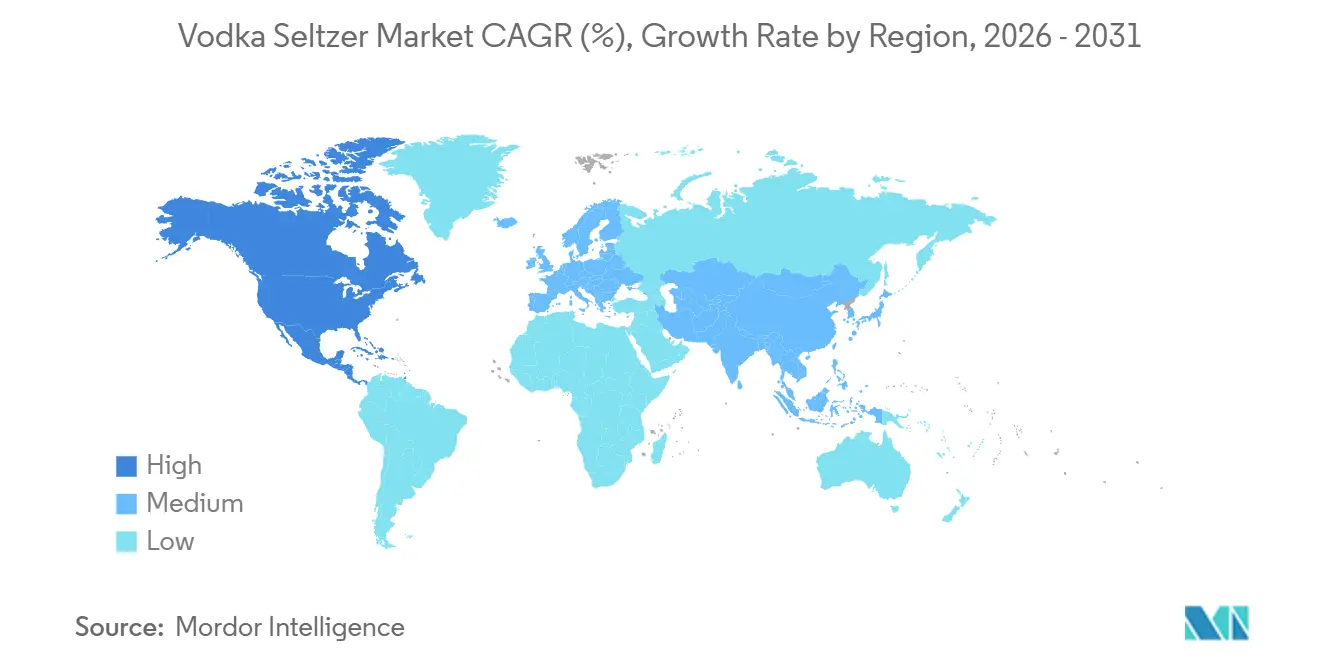
North America accounted for 37.12% of vodka seltzer revenue in 2025, making it the largest regional market. The United States serves as the category’s primary commercial base, supported by its well-established spirits distribution system and extensive retail network. In June 2025, the United States Alcohol and Tobacco Tax and Trade Bureau (TTB) stated that each state has the authority to regulate the production, sale, and distribution of alcohol within its borders[3]. As state and local requirements vary significantly, brands must adopt locally adaptable route-to-market strategies. Established brands benefit from distributor access and occasion-specific marketing, while regional brands can build momentum through disciplined state coverage. Carbliss reached 4.2 million cases across 22 states in 2025, demonstrating that selective geographic expansion can generate meaningful velocity without an immediate national rollout. Canada offers an additional growth path as consumers adopt RTDs across more on-premise occasions.
Europe Vodka Seltzer Market
Europe presents a varied vodka seltzer market environment, as consumer preferences, retail access, and alcohol taxes differ significantly across countries. The United Kingdom serves as a practical launch market for United States-origin brands because its retail structure and younger consumers support low-calorie RTDs. DRTY's shift from the hard seltzer description to vodka seltzer in 2024 highlighted the value of clearly identifying the spirit base. High Noon has also used vodka soda positioning in the United Kingdom, where the hard seltzer label has less cultural relevance. Germany, the Netherlands, France, and Poland provide additional urban growth opportunities for low-ABV, fruit-led RTDs.
APAC Vodka Seltzer Market
Asia-Pacific is forecast to grow at a CAGR of 10.64% through 2031, the fastest rate among the regions in the vodka seltzer market. Japan combines a large RTD consumer base with process-led innovation that global producers can later apply internationally. This makes the country a key market for developing flavor, processing, and packaging approaches before adapting them to other markets. Suntory's -196 illustrates this link, as the brand uses a Japanese-developed Freeze Crush Infusion process for its United States launch. Australia is another adoption market where the alcohol base affects tax treatment and formulation economics. China, India, South Korea, Indonesia, Thailand, and Singapore offer longer-term potential as urban consumers gain access to modern retail and new drinking occasions.
Competitive Landscape
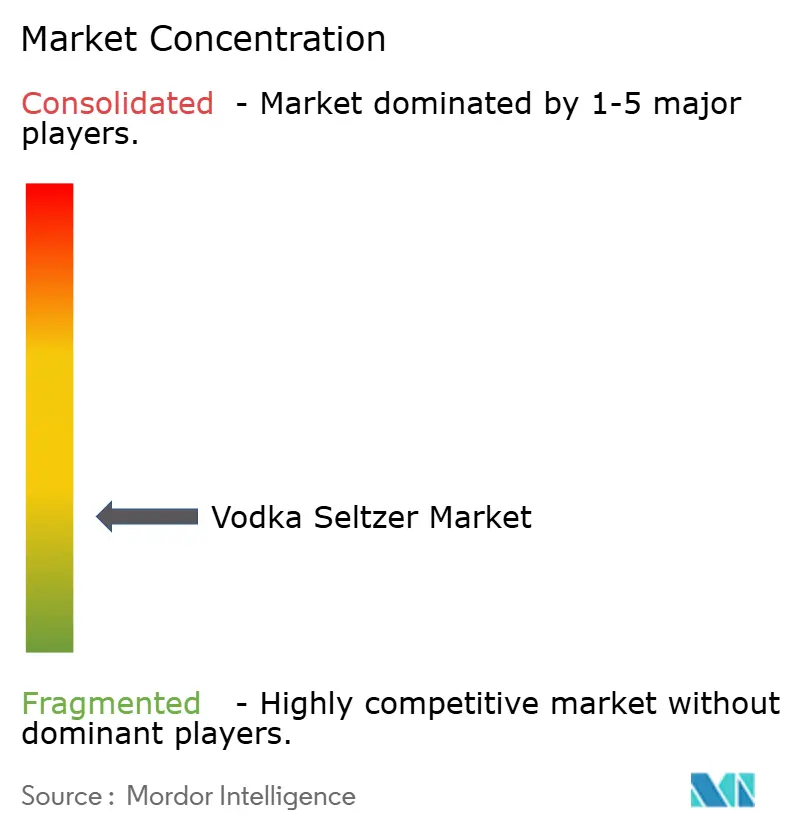
The market concentration in the vodka seltzer market is low, and no single player holds durable volume leadership. The market demonstrates that the smaller challengers can scale rapidly when the products are aligned with consumer occasions and distribution requirements. This divergence indicates that size alone does not secure growth once a brand reaches broad awareness, as shoppers and retail buyers continue to respond to a product’s fit for specific occasions and the brand’s ability to maintain a focused proposition. Carbliss also showed that a focused regional strategy can build meaningful demand before nationwide expansion. The competitive balance favors companies that combine a clear vodka proposition, a streamlined product portfolio, and strong distributor relationships. The vodka seltzer market remains open to challengers, but they need sufficient operational discipline to convert early interest into repeat purchases and dependable retail velocity.
Large beverage companies are using acquisitions and portfolio investments to strengthen their RTD positions. Suntory Global Spirits has also adopted a manufacturing-led approach by promoting its Freeze Crush Infusion technology in the -196 range. High Noon followed a different strategy when it introduced Transfusion as a limited release linked to golf and the PGA Tour. Several competitive routes shape the vodka seltzer industry, including acquisitions, process technology, targeted lifestyle partnerships, and close control of distribution. Alternatives outside the core vodka seltzer format also influence competition. No-alcohol RTDs and higher-ABV canned cocktails can serve similar social occasions and may attract consumers who prioritize either moderation or higher alcohol content, pressuring vodka seltzer brands to clearly communicate why their balance of flavor, alcohol level, and convenience is preferable.
Food companies, wellness brands, and non-alcoholic beverage companies can enter the category by using vodka as a familiar base and a recognized route to adult consumers. Formula approval and labeling requirements can slow new product entry, particularly for spirit-based RTDs in the United States. This creates some protection for brands that have already built compliant products, distributor relationships, and a stable retail presence, as new entrants cannot replicate their experience with reviews, documentation, and channel requirements as quickly as they can develop a new flavor or packaging concept. However, shelf-space pressure means established companies must also defend their core products from private-label alternatives and lower-priced malt-based competitors.
Vodka Seltzer Industry Leaders
-
High Noon
-
Diageo plc
-
Molson Coors Beverage
-
Anheuser-Busch
-
Suntory Holdings Limited
- *Disclaimer: Major Players sorted in no particular order
Vodka Seltzer Market Companies Covered in this Report
- High Noon
- Diageo plc
- Molson Coors Beverage
- Suntory Holdings Limited
- Anheuser-Busch
- Boston Beer Company
- Cutwater Spirits
- Mark Anthony Group
- White Claw Seltzer Works
- Mighty Swell
- Kirkland Signature
- Canteen Spirits
- Kirin Brewery
- Volley
- Ashland Hard Seltzer
- Playboy Spirits
- Breckenridge Distillery
- Lake Hour
- Stateside Brands
- La Dolce Vodka Seltzer
Recent Industry Developments in Vodka Seltzer Market
- July 2026: Breckenridge Distillery, a subsidiary of Tilray Brands, launched Breck Vodka Seltzer in four flavors: Lime, Grapefruit, Peach, and Tropical. The product has 5% ABV and is available at Colorado retailers in 4-pack formats priced at USD 11-13.99 and 8-pack variety formats priced at USD 18.99-19.99. The company plans national retail expansion for fall 2026. The launch marks Tilray's direct entry into the premium craft vodka seltzer segment.
- April 2026: High Noon, a Gallo brand, launched Transfusion Vodka Seltzer, its first limited-edition “drop” release. The product combines vodka with grape, lime, and ginger and contains 4.5% ABV. It is available nationwide in single-flavor six-packs priced at USD 14.99. High Noon supported the launch through a collaboration with Good Good Golf and PGA Tour campaign activations under the “It's Fusion Time” banner.
- May 2026: Diageo launched 100 ml mini canned cocktails in the United States under The Cocktail Collection brand. The lineup includes Ketel One Vodka Espresso Martini, with 20.1% ABV, and Cosmopolitan, with 18.3% ABV, priced at USD 4.99 per individual can. The products target premium on-premise and hosting occasions through a portioned, single-serve format.
Global Vodka Seltzer Market Report Scope
Vodka seltzer is a ready-to-drink alcoholic beverage that combines vodka with carbonated or seltzer water and typically includes fruit, citrus, or botanical flavors. Brands generally position it as a light, refreshing alternative to traditional cocktails and other alcoholic beverages.
The vodka seltzer market is segmented by ABV content, flavour, packaging, distribution channel, and geography. By ABV content, the market is segmented into below 4.6%, 4.6-6.0%, and above 6.0%. By flavours, the market is segmented into fruit flavours, tropical and exotic flavours, herbal and botanical flavours, and classic flavours. Based on packaging, the market is segmented into metal cans, glass bottles, and others. By distribution channel, the market is segmented into On-Trade and Off-Trade (liquor stores/specialty alcohol retailers and other retail channels). Based on geography, the market is classified into North America, Europe, South America, Asia-Pacific, and the Middle East and Africa. The market forecasts are provided in terms of value (USD).
Segmentation Overview
| Below 4.6% |
| 4.6%-6.0% |
| Above 6.0% |
| Fruit Flavours |
| Tropical and Exotic Flavours |
| Herbal and Botanical Flavours |
| Classic Flavours |
| Metal Cans |
| Glass Bottles |
| Others |
| On-Trade | |
| Off-Trade | Liquor Stores / Specialty Alcohol Retailers |
| Other Retail Channels |
| North America | United States |
| Canada | |
| Mexico | |
| Rest of North America | |
| Europe | Germany |
| United Kingdom | |
| Italy | |
| France | |
| Spain | |
| Netherlands | |
| Poland | |
| Belgium | |
| Sweden | |
| Rest of Europe | |
| Asia-Pacific | China |
| India | |
| Japan | |
| Australia | |
| Indonesia | |
| South Korea | |
| Thailand | |
| Singapore | |
| Rest of Asia-Pacific | |
| South America | Brazil |
| Argentina | |
| Colombia | |
| Chile | |
| Peru | |
| Rest of South America | |
| Middle East and Africa | South Africa |
| Saudi Arabia | |
| United Arab Emirates | |
| Nigeria | |
| Egypt | |
| Morocco | |
| Turkey | |
| Rest of Middle East and Africa |
| By ABV Content | Below 4.6% | |
| 4.6%-6.0% | ||
| Above 6.0% | ||
| By Flavour | Fruit Flavours | |
| Tropical and Exotic Flavours | ||
| Herbal and Botanical Flavours | ||
| Classic Flavours | ||
| By Packaging | Metal Cans | |
| Glass Bottles | ||
| Others | ||
| By Distribution Channel | On-Trade | |
| Off-Trade | Liquor Stores / Specialty Alcohol Retailers | |
| Other Retail Channels | ||
| By Geography | North America | United States |
| Canada | ||
| Mexico | ||
| Rest of North America | ||
| Europe | Germany | |
| United Kingdom | ||
| Italy | ||
| France | ||
| Spain | ||
| Netherlands | ||
| Poland | ||
| Belgium | ||
| Sweden | ||
| Rest of Europe | ||
| Asia-Pacific | China | |
| India | ||
| Japan | ||
| Australia | ||
| Indonesia | ||
| South Korea | ||
| Thailand | ||
| Singapore | ||
| Rest of Asia-Pacific | ||
| South America | Brazil | |
| Argentina | ||
| Colombia | ||
| Chile | ||
| Peru | ||
| Rest of South America | ||
| Middle East and Africa | South Africa | |
| Saudi Arabia | ||
| United Arab Emirates | ||
| Nigeria | ||
| Egypt | ||
| Morocco | ||
| Turkey | ||
| Rest of Middle East and Africa | ||
Key Questions Answered in the Report
What is the current size and future growth outlook of the vodka seltzer market?
The vodka seltzer market was valued at USD 7.83 billion in 2025 and is estimated to reach USD 8.51 billion in 2026. The market is projected to grow to USD 13.38 billion by 2031, registering a CAGR of 9.48% during the forecast period (2026-2031).
Which ABV content segment accounted for the largest share of the vodka seltzer market in 2025?
The 4.6%-6.0% ABV segment held the largest market share, accounting for 45.24% of the market in 2025.
Which flavour segment dominated the vodka seltzer market in 2025?
Fruit flavours dominated the market with a 41.35% share in 2025.
Which packaging type held the largest share of the vodka seltzer market in 2025?
Metal cans were the leading packaging format, accounting for 54.57% of total market revenue in 2025.
Which distribution channel led the vodka seltzer market in 2025?
The off-trade channel held the largest share, accounting for 62.45% of the market in 2025.
Which region accounted for the largest share of the vodka seltzer market in 2025?
North America was the leading regional market, representing 37.12% of revenue in 2025.