
Viral Antigens Market Size and Share
Market Overview
| Study Period | 2020 - 2031 |
|---|---|
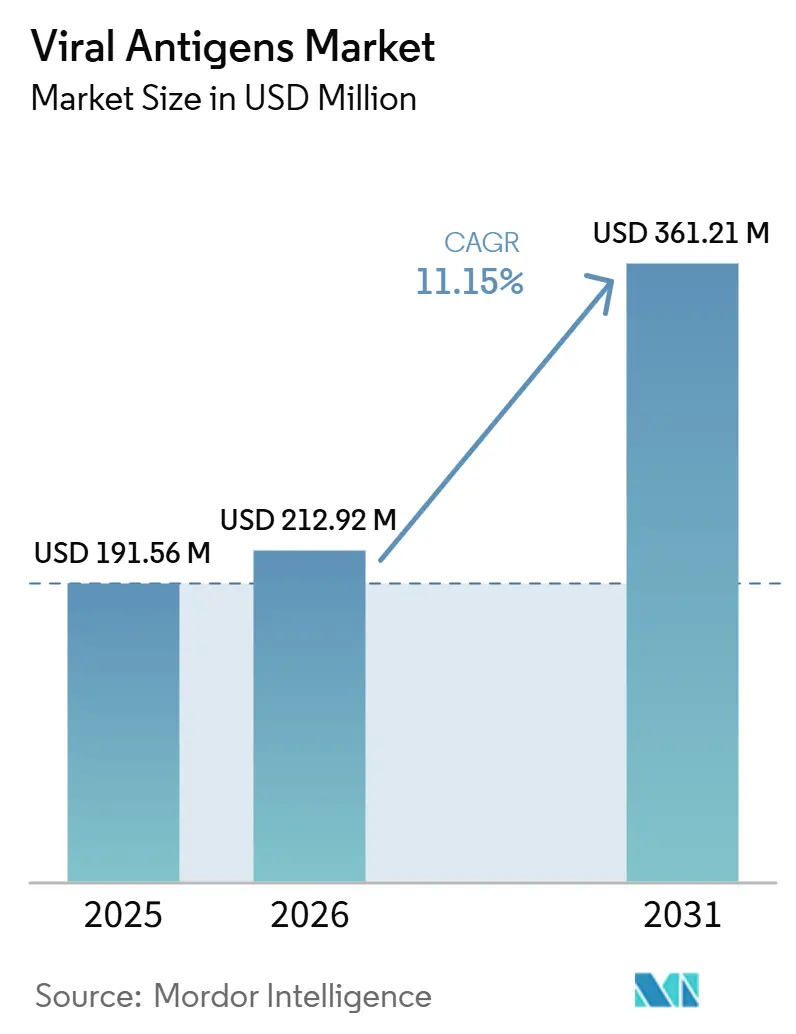
| Market Size (2026) | USD 212.92 Million |
| Market Size (2031) | USD 361.21 Million |
| Growth Rate (2026 - 2031) | 11.15 % |
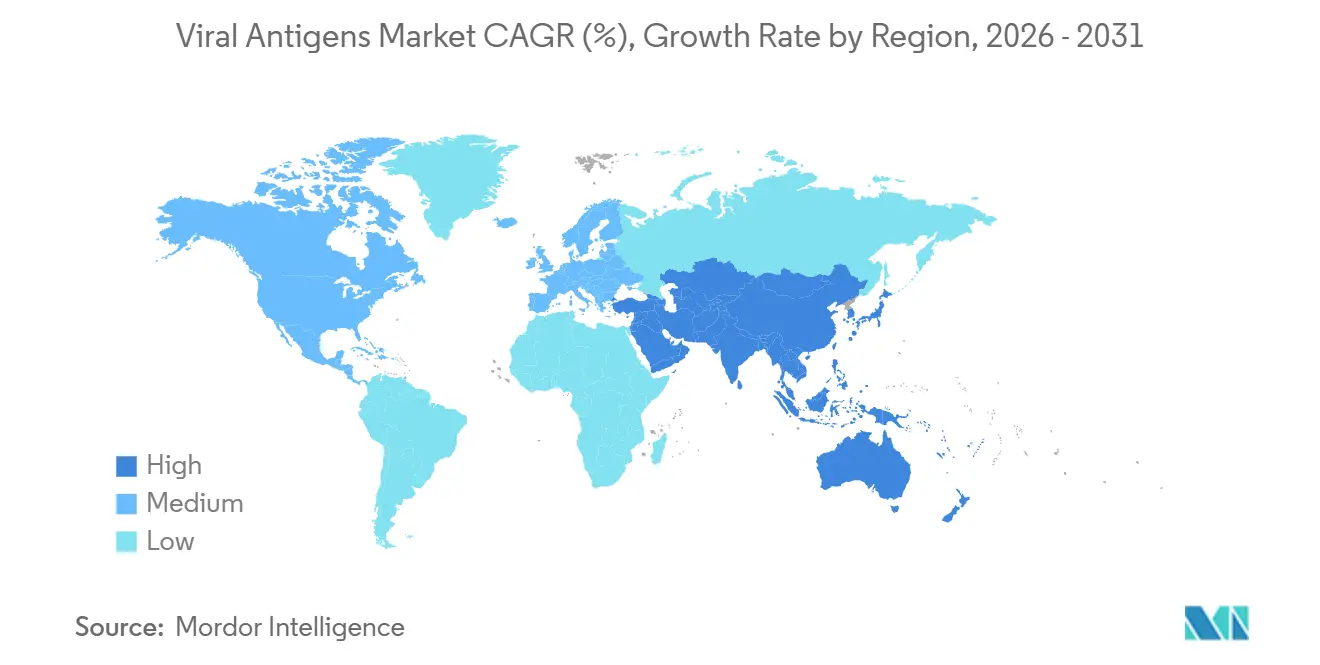
| Fastest Growing Market | Asia-Pacific |
| Largest Market | North America |
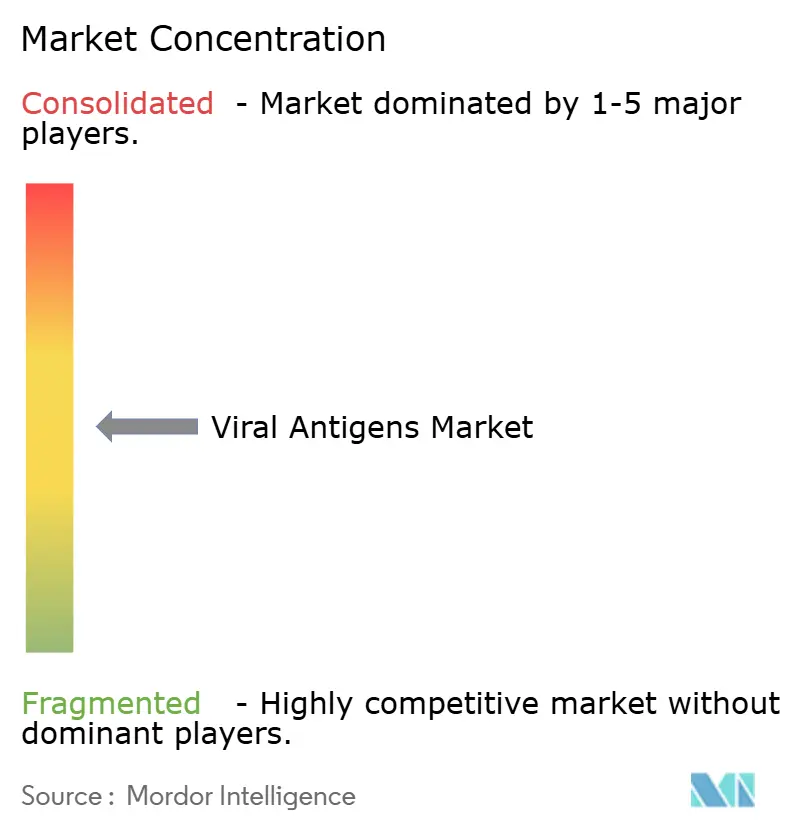
| Market Concentration | Medium |
Major Players *Disclaimer: Major Players sorted in no particular order Image © Mordor Intelligence. Reuse requires attribution under CC BY 4.0. | |
Viral Antigens Market Analysis by Mordor Intelligence
The viral antigens market size was valued at USD 191.6 million in 2025 and estimated to grow from USD 212.9 million in 2026 to reach USD 361.2 million by 2031, at a CAGR of 11.2% during the forecast period (2026-2031). Demand in the viral antigens market continues to build on stronger disease surveillance, routine diagnostic standardization, and a wider base of vaccine and biopharma testing activity. Buyers now place greater weight on traceability, reproducibility, and documentation, which favors suppliers with validated quality systems and scalable recombinant manufacturing capabilities. Purchasing patterns are also becoming more recurring because external quality assessment programs and quality-control workflows require repeated antigen procurement beyond outbreak-driven spikes. The commercial mix is gradually shifting toward higher-value custom, recombinant, and GMP-grade products as pharmaceutical and biotechnology programs expand their use of viral controls and assay reagents. Competitive strategy in the viral antigens market therefore centers on speed to launch, broader pathogen coverage, and stronger regulatory support files, which raises the barrier for smaller catalog suppliers.
Key Report Takeaways
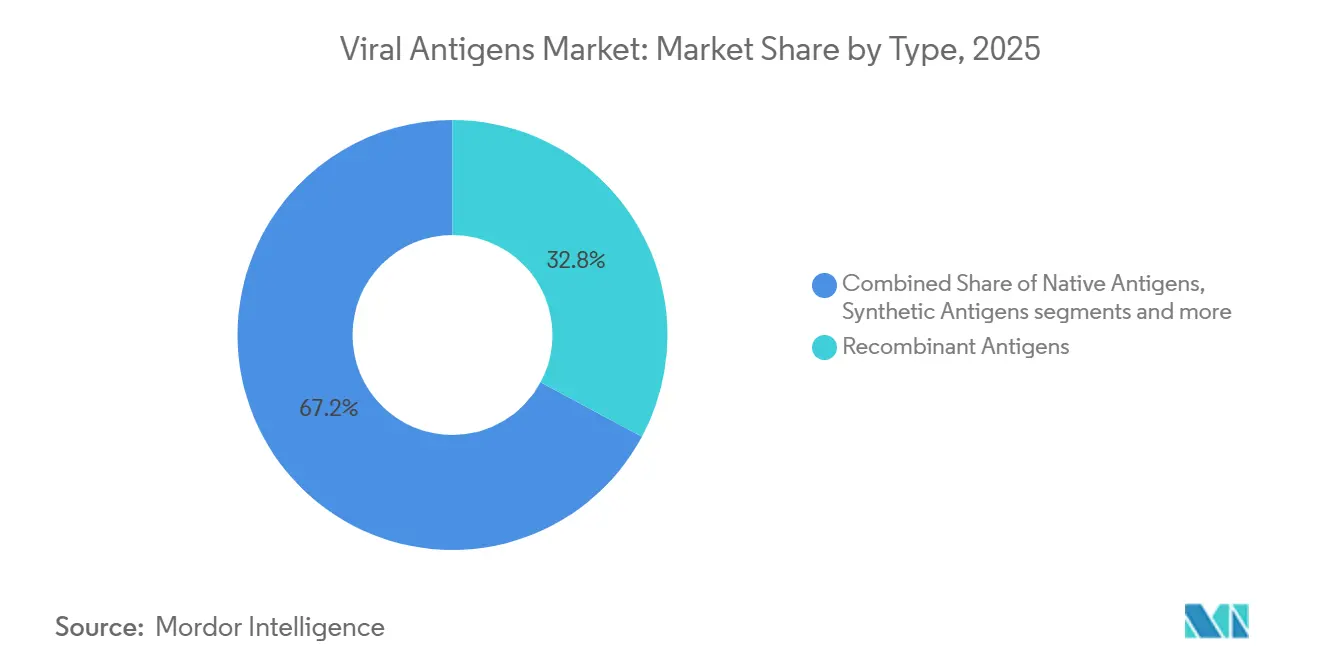
- By type, recombinant antigens held 32.8% of the viral antigens market share in 2025, and recombinant antigens also recorded the highest projected CAGR at 11.8% through 2031.
- By virus type, the influenza virus accounted for 24.7% of revenue in 2025, while the dengue virus is forecast to expand at an 11.6% CAGR through 2031.
- By application, diagnostics accounted for 42.5% of the viral antigens market size in 2025, while vaccine development is projected to grow at the fastest CAGR of 11.7% through 2031.
- By end user, research and diagnostic laboratories held a 33.6% share in 2025, while pharmaceutical and biotechnology companies are expected to post the highest CAGR at 11.4% through 2031.
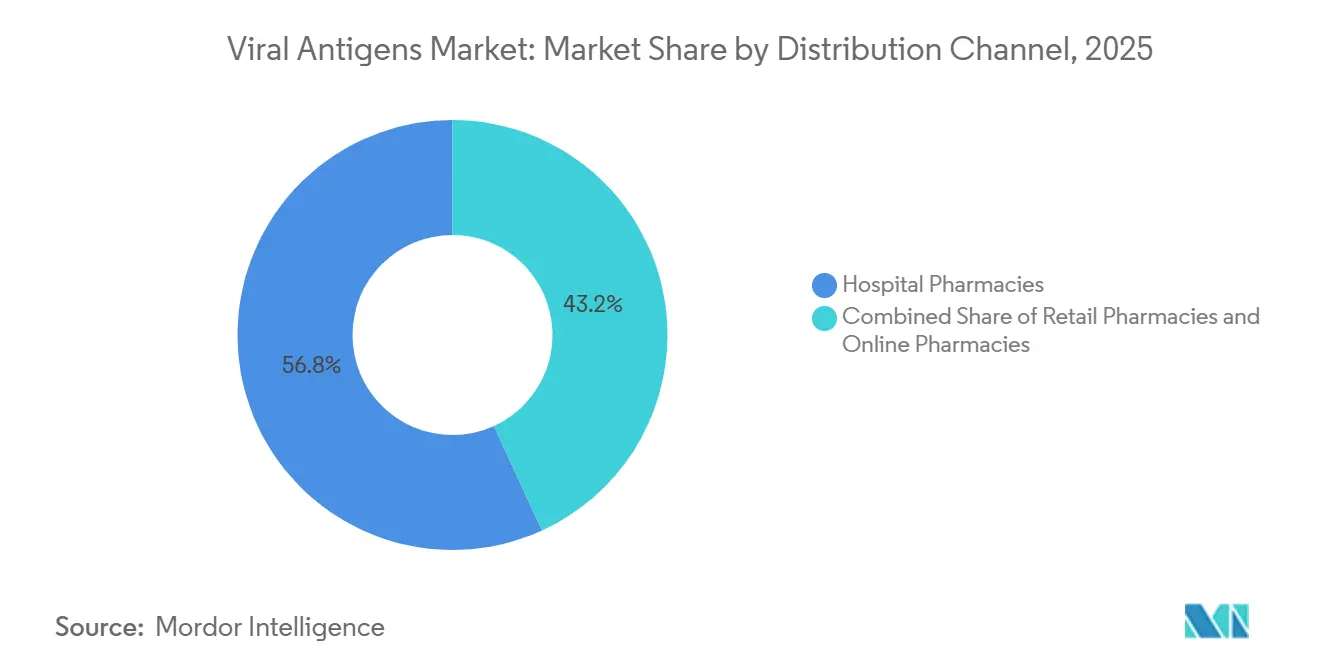
- By distribution channel, hospital pharmacies led with 56.8% of revenue in 2025, while online pharmacies are projected to grow fastest at a 12,50% CAGR through 2031.
- By diagnostic method, ELISA captured 30.8% of revenue in 2025, while immunoassays are forecast to advance at the highest CAGR of 12.23% through 2031.
Note: Market size and forecast figures in this report are generated using Mordor Intelligence’s proprietary estimation framework, updated with the latest available data and insights as of January 2026.
Market Trends and Insights
Drivers Impact Analysis of Viral Antigens Market*
| Driver | % Impact on CAGR Forecast | Geographic Relevance | Impact Timeline |
|---|---|---|---|
| Rising Need for High-Throughput Viral Serology and QC Testing | +3% | Global, concentrated in North America and Europe | Medium term (2-4 years) |
| Expansion of Recombinant Antigen Platforms for Diagnostics and Vaccine R&D | +3.2% | Global, with early leadership in North America, the EU, and China | Long term (≥ 4 years) |
| Growing Testing Volume for Seasonal and Emerging Viral Threats | +2.1% | APAC core, with spillover to South America and the Middle East and Africa | Short term (≤ 2 years) |
| Shift Toward Multiplex and Syndromic Viral Panels | +1.5% | North America and the EU, with early gains in South Korea and Japan | Medium term (2-4 years) |
| Regulatory Push for Traceable and Well Characterized Reference Antigens | +1.2% | Global, with highest compliance uptake in North America, the EU, and Japan, and growing uptake in China and India | Long term (≥ 4 years) |
| Growth of Outsourced Antigen Manufacturing and Custom Bioreagent Supply | +1% | Global, with outsourcing concentration in North America and the EU, and emerging hubs in India, South Korea, and China | Medium term (2-4 years) |
| Source: Mordor Intelligence | |||
Rising Need for High-Throughput Viral Serology and QC Testing
Clinical laboratories have expanded serology testing volumes since 2024 because post-pandemic surveillance systems have stayed active instead of winding down. This shift supports the viral antigens market by creating steadier demand for standardized antigens used inside assays and in quality-control materials. External quality assessment programs also add a recurring purchase cycle because labs need repeat supplies for panel preparation and proficiency testing. Microbix commercialized its recombinant SARS-CoV-2 nucleocapsid antigen in January 2026 for proficiency testing and external quality assessment use across more than 30 countries. Once a recombinant reference antigen is built into an accredited quality program, customers tend to avoid switching because a replacement requires revalidation and internal review. That pattern gives early suppliers in the viral antigens market a more durable revenue base than suppliers exposed only to episodic outbreak purchasing.
Expansion of Recombinant Antigen Platforms for Diagnostics and Vaccine R&D
Recombinant antigens have become the preferred format for many assay developers because they improve batch consistency and reduce biosafety complications linked to native sourcing. This preference is widening the premium layer of the viral antigens market, especially where buyers need targeted epitopes, scalable expression, and stronger documentation. The same trend is visible in vaccine research, where developers need precise antigen variants for binding studies, neutralization work, and assay control design. Sino Biological launches recombinant antigens for the 2026-2027 Northern Hemisphere influenza vaccine strains in March 2026, within weeks of strain selection, showing how speed and readiness affect commercial positioning.[1]Source: Sino Biological, Inc., “Sino Biological Lanza Antígenos Para Las Cepas De La Vacuna Contra La Gripe Del Hemisferio Norte 2026-2027,” Sino Biological press material carried by Bolsamania, bolsamania.com Suppliers that can support glycosylated and non-glycosylated expression options are better placed to serve both high-sensitivity diagnostic uses and routine quality-control applications. The result is a viral antigens market that increasingly rewards flexible production platforms rather than simple catalog breadth alone.
Growing Testing Volume for Seasonal and Emerging Viral Threats
Seasonal respiratory testing and the spread of vector-borne infections continue to widen antigen demand across several use cases. The viral antigens market is seeing this most clearly in dengue, where public health systems are weighing faster and lower-cost testing routes for broad access. India reported 289,235 dengue cases in 2023 and 233,519 cases in 2024, while policy discussions on NS1 rapid diagnostic test use continue because cost-effectiveness models showed an 80% to 90% reduction versus ELISA-based testing in primary health centers.[2]Source: Kulkarni et al., “Assessing the Readiness of Rapid Diagnostic Tests for Integration into the National Dengue Control Strategy of India,” Discover Public Health, springer.com That creates a clear opening for suppliers that can offer affordable recombinant dengue antigens suited to rapid immunoassay formats. Influenza also keeps procurement active because annual strain change forces recurring updates in antigen portfolios used by vaccine developers and assay manufacturers. In newer buying regions, the viral antigens market has less legacy supplier lock-in, so pricing, delivery speed, and usable documentation can matter more than long-standing relationships.
Shift Toward Multiplex and Syndromic Viral Panels
Hospitals and laboratories are gradually moving from single-pathogen workflows toward broader viral panels that can test multiple targets in one run. In the viral antigens market, that shift matters because multiplexed immunoassay designs require antigens with tighter control over conjugation behavior, signal balance, and platform compatibility. Native formats often do not fit those needs as easily as engineered recombinant proteins. This creates a more specialized demand layer for panel-ready antigen bundles rather than stand-alone catalog items. Suppliers that can package matched multi-target panels with stable performance profiles are likely to gain an advantage with advanced diagnostic developers. The change does not eliminate demand for traditional antigen formats, but it does move a greater share of value toward custom configuration and technical support.
Restraints Impact Analysis of Viral Antigens Market*
| Restraint | % Impact on CAGR Forecast | Geographic Relevance | Impact Timeline |
|---|---|---|---|
| Batch Variability and Cold-Chain Sensitivity of Biological Inputs | -1.20% | Global; most acute in South America and MEA with limited cold-chain infrastructure | Long term (≥ 4 years) |
| Narrow Buyer Base and Long Validation Cycles in Diagnostics | -0.90% | Global; concentrated in regulated markets (North America, EU) | Medium term (2–4 years) |
| Substitution Risk from Nucleic Acid and Protein-Free Assay Designs | -0.80% | North America and Europe, where molecular diagnostic infrastructure is mature; emerging early in South Korea and Japan | Long term (≥ 4 years) |
| Price Pressure in Commodity Antigen Catalog Products | -0.70% | Global; most pronounced in APAC and South America where price-sensitive procurement dominates | Short term (≤ 2 years) |
| Source: Mordor Intelligence | |||
Batch Variability and Cold-Chain Sensitivity of Biological Inputs
Cold-chain dependence remains a meaningful operational limit for the viral antigens market, especially for native biological inputs and temperature-sensitive recombinant formats. Even minor transport deviations can reduce immunoreactivity and trigger lot failures, which then disrupt downstream diagnostic kit production. A 2024 study in Vaccine showed that cold-chain inequity continues to affect biological product performance and access in lower-resource settings.[3]Source: Aimee Talbot, Tania F. de Koning-Ward, and Daniel Layton, “Left Out in the Cold, Inequity in Infectious Disease Control Due to Cold Chain Disparity,” Vaccine, doi.org That problem also raises working-capital pressure because manufacturers and kit developers keep larger safety stocks when input stability is uncertain. The burden is not only logistical, because characterization and reference material expectations continue to tighten under global biological standardization frameworks. As a result, the viral antigens market still faces uneven adoption across geographies where refrigeration, validation capacity, and supply-chain visibility are less reliable.
Narrow Buyer Base and Long Validation Cycles in Diagnostics
The buyer base in the viral antigens market is relatively narrow because the highest-value purchases come from IVD manufacturers, reference laboratories, and vaccine developers. These customers usually qualify a new antigen source through long bridging studies before they are willing to move contracts. Once an antigen is built into a cleared or approved diagnostic product, supplier replacement becomes difficult because revalidation, regulatory review, and internal testing add time and cost. The WHO report published in July 2026 reinforces the importance of commutability, traceability, and reference standard quality, which can lengthen qualification pathways for new suppliers. That environment favors established vendors that already have documentation depth and prior commercial acceptance. It also slows share gains for smaller entrants in the viral antigens market even when their technical performance is competitive.
*Our forecasts treat driver/restraint impacts as directional, not additive. The impact forecasts reflect baseline growth, mix effects, and variable interactions.
Viral Antigens Market Segment Analysis
By Type:
Recombinant Formats Lead While Niche Types Retain Specialized RolesRecombinant antigens led this segmentation with 32.8% share in 2025, and they are also projected to grow at the fastest 11.8% CAGR through 2031. This performance keeps recombinant formats at the center of the viral antigens market because many buyers now prioritize consistency, purity, and better control over antigen design. Diagnostic kit manufacturers value the ability to define target epitopes more precisely, especially when assay sensitivity and reproducibility are tied to regulatory submissions. Biopharma and vaccine programs also prefer recombinant inputs when they need scalable production and cleaner process control across multiple development stages. These factors support both volume growth and premium pricing for recombinant formats.
Native antigens still serve an important role where conformational presentation remains critical, including selected serology uses for hepatitis and herpes simplex virus testing. Their commercial position is stronger in legacy workflows that are already validated and less exposed to immediate redesign pressure. Synthetic antigens are gaining interest in targeted peptide applications and rapid test strip development, where a defined sequence can be more useful than a full protein structure. Inactivated and live attenuated antigens remain tied more closely to vaccine development and research settings, where familiar immunogenic profiles continue to matter. Across the viral antigens market, the real divide is increasingly between standardized recombinant scale products and specialized formats that remain useful in narrower technical contexts.
A second layer within recombinant products is the production-host split between bacterial systems and more complex cell-based expression platforms. Bacterial expression remains attractive for simpler non-glycosylated targets because it supports lower-cost supply and faster throughput. In contrast, insect-cell and mammalian systems matter when buyers need native-like folding or glycosylation, particularly for enveloped virus proteins with stricter performance requirements. That production mix is reshaping procurement because some customers now request paired antigen versions for different assay steps rather than a single universal input. The viral antigens industry therefore gains value not only from selling more recombinant material, but from matching format and expression host to each downstream use.
This trend also raises the importance of documentation, analytical characterization, and lot release discipline. Suppliers that can explain concentration, purity, and functional performance with clear files are better placed in regulated accounts. Traceability has become a stronger purchasing factor as global biological reference expectations tighten. That gives larger recombinant suppliers an advantage, even when smaller firms can produce technically sound proteins. In the viral antigens market, type leadership is therefore supported as much by manufacturing discipline as by molecular design.



By Virus Type:
Influenza Anchors Demand While Dengue Posts the Fastest ExpansionInfluenza virus antigens accounted for 24.7% of revenue in 2025, making influenza the largest virus-type segment in the viral antigens market. This leadership reflects the annual reformulation cycle that renews demand from vaccine manufacturers, clinical laboratories, and assay developers. Influenza remains commercially important because antigenic drift compresses the timeline between strain selection and procurement needs. Suppliers that cannot update portfolios quickly risk losing an entire seasonal cycle. That timing pressure keeps influenza a dependable volume segment even when other virus categories attract more growth attention.
The March 2026 launch of recombinant influenza antigens linked to the 2026-2027 Northern Hemisphere vaccine strains shows how quickly suppliers must move after official recommendations are released. Coronavirus antigens continue to generate demand through surveillance, mucosal immunity research, and proficiency testing rather than through the emergency surge pattern seen earlier. HIV and hepatitis antigens remain supported by screening programs, occupational health testing, and blood-bank related workflows. FDA reclassification of qualitative hepatitis B virus antigen assays to Class II, effective in October 2025, lowers the pathway burden for new diagnostic developers and can support broader activity in hepatitis-linked product development. Herpes simplex virus and Zika virus occupy smaller positions, but they remain relevant in specialty testing settings where suppliers can defend niche demand with targeted catalogs.
Dengue virus is the fastest-growing virus-type segment, with the viral antigens market size for dengue projected to rise at an 11.6% CAGR through 2031. The growth case is structural because it rests on broader surveillance, wider same-day testing needs, and public health demand in endemic regions rather than on a short-term spike. India’s active evaluation of NS1 rapid diagnostic test use highlights how lower-cost formats can expand access at scale. Suppliers that can align performance with rapid immunoassay use may gain faster entry in dengue than in mature respiratory categories. This is one reason the viral antigens market is shifting some strategic focus toward tropical disease coverage.
Portfolio breadth is also becoming more valuable at the virus-type level. Reference laboratories and larger institutional buyers often prefer a single supplier that can cover multiple pathogen classes with usable documentation. That preference reduces qualification workload and can increase average order size. It also favors vendors that combine mainstream respiratory and blood-borne targets with smaller emerging-virus catalogs. In the viral antigens industry, breadth across virus types can therefore strengthen retention even when only a few targets drive most revenue.
By Application:
Diagnostics Hold the Largest Share While Vaccine Development Grows FastestDiagnostics retained 42.5% of revenue in 2025, giving this application the largest position in the viral antigens market. High testing volumes across hospitals, reference laboratories, and point-of-care settings continue to support a broad base of routine antigen demand. Diagnostic use also tends to require relatively standardized antigen specifications, which helps established suppliers maintain repeat business. This creates a dependable demand floor because recurring clinical workflows are less volatile than outbreak-led emergency purchases. For many suppliers, diagnostics still provides the volume backbone that supports investment in broader product portfolios.
Vaccine development is projected to expand at the fastest 11.7% CAGR through 2031. That growth reflects increasing demand for structural antigen variants, binding-domain proteins, neutralization assay controls, and other specialized inputs used across vaccine research programs. The viral antigens market benefits here because vaccine developers often need multiple antigen versions during candidate screening, optimization, and analytical validation. These requirements are more complex than standard diagnostic catalog sales, which lifts the value per customer relationship. The result is a growing overlap between research-grade innovation and regulated supply expectations.
Research and development remains another important application because academic virology groups and government-supported surveillance labs need access to broad pathogen panels and flexible order sizes. Their purchasing behavior differs from routine diagnostics because specifications may change with study design or outbreak focus. Therapeutic use is still a smaller share, but it is gaining relevance as viral antigen-linked immunotherapy and processing workflows continue to develop. This keeps the application mix in the viral antigens market more diverse than a diagnostics-only view would suggest. It also means suppliers must balance scale products with technically specialized requests.
The boundary between diagnostics and vaccine development is becoming less rigid. Developers increasingly use diagnostic-grade antigen preparations as controls and reference inputs in adjacent assay workflows. That crossover expands the useful demand base for well-characterized antigens beyond traditional IVD accounts. It also rewards suppliers that can maintain quality discipline while serving several application pathways from one production platform. In the viral antigens market, application growth is therefore being shaped by both routine testing volume and the deeper technical needs of vaccine programs.
By End User:
Laboratories Lead Procurement While Pharma and Biotech Raise Growth IntensityResearch and diagnostic laboratories held 33.6% of revenue in 2025, making them the largest end-user group in the viral antigens market. Their position reflects broad routine purchasing across multiple pathogens, formats, and order sizes. These buyers support steady volume because they run recurring testing programs and often replenish standard antigen catalogs on a regular basis. At the same time, laboratories can be price-sensitive on commodity antigens, especially when volumes are high and assay formats are mature. This pushes suppliers to balance technical quality with cost discipline.
Pharmaceutical and biotechnology companies are projected to post the fastest CAGR at 11.4% through 2031. Their growing role signals that premium demand is rising faster than routine commodity demand in the viral antigens market. These customers require higher documentation standards, stronger process control, and in many cases GMP-aligned supply for quality-control and development work. They also tend to order for more specialized uses, including biomanufacturing checks, vaccine pipeline assays, and advanced therapeutic programs. As a result, revenue quality can improve even if total customer counts stay concentrated.
Hospitals remain a critical customer group because infectious disease management still depends on reliable antigen-enabled testing workflows in many settings. Academic and government research institutes add another stable layer of demand through surveillance, outbreak response preparation, and grant-funded virology work. These institutions may not always match pharma pricing, but they support category breadth across many virus targets. Their presence helps the viral antigens market stay diversified across public health, research, and clinical channels. It also ensures continued demand for smaller-volume, less standardized products.
Veterinary clinics are smaller in current revenue terms, but they represent a useful expansion path as zoonotic surveillance grows. Suppliers with flexible product adaptation can extend human-diagnostic antigen capabilities into animal health use cases with limited reformulation. This is especially relevant where avian influenza and coronavirus surveillance programs overlap with public health priorities. Companies that serve both human and veterinary demand can build a better hedge against swings in any single testing category. In the viral antigens industry, end-user growth is therefore moving toward a more mixed profile, with laboratories anchoring volume and pharma and biotech lifting value growth.
By Distribution Channel:
Hospital Pharmacies Control Current Demand While Online Procurement Gains GroundHospital pharmacies accounted for 56.8% of revenue in 2025, which made them the leading distribution route in the viral antigens market. Their large share reflects centralized procurement models where integrated laboratories source reagents through institutional contracts and preferred supplier lists. This setup gives established vendors strong visibility once they are approved inside the system. It also makes entry harder for smaller companies that lack tender experience or distribution support. In practice, hospital pharmacy leadership reinforces the advantage of larger suppliers with broader compliance and logistics capabilities.
Retail pharmacies hold a smaller role and mainly support point-of-care and clinic-linked antigen kit access where local testing formats are sold outside large institutional channels. Their importance is higher in markets where rapid diagnostic products have a stronger commercial retail presence. However, they do not shape the core procurement pattern of the viral antigens market as strongly as hospitals and laboratory-focused supply routes. The main commercial value still sits in organized institutional purchasing. That is why contract access and stocking reliability remain central competitive points.
Online pharmacies and digital procurement platforms are projected to grow at the fastest 12.5% CAGR through 2031. This trend matters because smaller laboratories increasingly prefer faster ordering, better inventory visibility, and simpler access to specialized catalog items. The viral antigens market is likely to see more demand flowing through digital channels where buyers compare documentation, lot information, and shipping readiness before price alone. That gives responsive suppliers a chance to build share without relying only on legacy distributor networks. The online channel also helps newer pathogen categories reach smaller research users more efficiently.
Digital procurement changes more than order placement. It creates a clearer record of transaction timing and product interest, which can help suppliers detect emerging demand patterns earlier. Companies that invest in searchable catalogs, documentation completeness, and transparent stock status can improve customer conversion. Those that remain dependent on offline distribution may lose visibility with smaller institutional accounts. In the viral antigens market, channel growth is therefore linked not only to convenience, but also to better commercial intelligence and customer reach.
By Diagnostic Method:
ELISA Remains the Core Format While Immunoassays Advance with AutomationELISA held the largest share at 30.8% in 2025, so it remains the leading diagnostic method in the viral antigens market. Its position reflects long-standing use in clinical and research settings where sensitivity, quantification, and broad standardization remain important. ELISA-grade viral proteins also form a mature demand class that many suppliers can produce at scale. That combination supports stable volume even in a more competitive pricing environment. For many buyers, ELISA continues to serve as the practical baseline for antigen-based serology.
Immunoassays are forecast to grow at the fastest 12.2% CAGR through 2031. This includes lateral flow, chemiluminescence, and automated immunoassay systems that are taking a larger share of routine laboratory work. The viral antigens market benefits from that shift because these platforms still need antigen inputs, but the required performance profile is often more exacting than in manual ELISA workflows. Suppliers must pay closer attention to conjugation chemistry, stability, particle interaction, and platform-specific behavior. Growth in this segment, therefore, tends to favor vendors that can support application-specific engineering.
Other methods retain smaller but important positions. Hemagglutination still matters in influenza characterization and selected quality-control workflows where its practical value remains intact. Radioimmunoassay survives in limited research use where precision requirements continue to justify its narrower footprint. Immunofluorescence and immunoperoxidase staining remain relevant when tissue-level antigen localization is required rather than bulk signal measurement. These categories may not drive the largest revenue blocks, but they help keep the viral antigens market technically diverse.
Antigen-based kits combine several method formats into ready-to-use products and remain especially relevant in emerging markets where ease of use and rapid turnaround are critical. Dengue, HIV, and hepatitis testing volumes support this route because buyers often prioritize field practicality and straightforward deployment. That creates continued demand for antigens formatted for kit compatibility rather than for open-system laboratory assembly alone. Suppliers that can support both component supply and kit-oriented needs have a wider addressable base. In the viral antigens market, method evolution is therefore additive rather than purely disruptive, with ELISA holding scale and newer immunoassays raising growth.
Geography Analysis
North America Viral Antigens Market
North America held 39.6% of the viral antigens market share in 2025, which kept it as the largest regional contributor. The region benefits from a dense network of reference laboratories, strong public health surveillance activity, and a regulated IVD manufacturing base that requires well-characterized antigen inputs. Buyers in the United States place high value on traceability, documentation, and reproducible manufacturing, which supports larger established suppliers. Canada adds stable demand through national laboratory activity, while Mexico supports incremental need in dengue and other infectious disease testing categories. This combination gives the viral antigens market in North America a broad demand base across clinical, public health, and regulated manufacturing use.
Europe Viral Antigens Market
Europe remained the second-largest region in 2025 and continues to be supported by strong laboratory infrastructure and active academic virus research. Germany and the United Kingdom serve as key regional hubs for IVD development and procurement. Regulatory discipline in Europe pushes customers toward suppliers with stronger technical files and dependable quality systems, which can accelerate share concentration among larger vendors. That makes the viral antigens market in Europe less open to unqualified entrants, even when product demand is healthy. The region therefore remains attractive, but success depends heavily on documentation strength and commercial reliability.
APAC Viral Antigens Market
Asia-Pacific is forecast to record the fastest growth at 11.6% CAGR through 2031. The region benefits from expanding dengue surveillance in India, Indonesia, Thailand, and the Philippines, along with stronger domestic biomanufacturing activity in China and established influenza monitoring in Japan. India is especially important because the debate around broader use of dengue NS1 rapid diagnostics could unlock sizable volume demand for low-cost antigen formats. Many buyers in the region are also less tied to legacy supply relationships, which can create room for new entrants with competitive pricing and practical delivery timelines. That makes Asia-Pacific the main growth engine for the viral antigens market over the forecast period.
South America and MEA Viral Antigens Market
South America accounted for a smaller 2025 revenue base, but Brazil and Argentina remain the leading demand centers because of their public health laboratory networks and tropical disease testing needs. Brazil is especially important for dengue-linked procurement because same-day triage tools can serve high-burden settings with limited infrastructure depth. The Middle East and Africa are still earlier-stage markets, with demand concentrated in GCC healthcare systems and South Africa’s more established laboratory environment. Cold-chain limitations continue to restrain broader penetration in several African markets, which makes stable and easier-to-handle product formats more commercially attractive. Across both regions, the viral antigens market is present and growing, but product usability, logistics, and affordability remain more decisive than in mature markets.

Competitive Landscape
The viral antigens market is moderately consolidated, with large suppliers holding an advantage through scale, wider pathogen coverage, and stronger regulatory documentation. Merck KGaA, Thermo Fisher Scientific, and Bio-Rad Laboratories compete as broad portfolio providers across several antigen types and end-user groups. Their position is strengthened by the ability to pair manufacturing depth with quality systems that larger diagnostic and biopharma customers expect. This gives them a stronger footing in regulated accounts where supplier switching is slow and validation work is expensive. The market is not closed to specialists, but entry is harder when customers require broad technical support and dependable release documentation.
Specialist suppliers such as Sino Biological and The Native Antigen Company compete by moving quickly and covering niche pathogen needs that broader players may address more slowly. Sino Biological’s March 2026 influenza antigen launch shows how timing can work as a competitive tool when suppliers must align quickly with updated strain demand. Microbix also strengthens its position in January 2026 by commercializing a recombinant SARS-CoV-2 antigen for proficiency testing and quality assessment programs, which helps it extend beyond its long native antigen heritage. Thermo Fisher Scientific launches the Gibco CHOvantage GS Cell Line Development Kit in April 2026, which supports faster biologics and recombinant production workflows that are relevant to antigen manufacturing scale-up. These moves show that competition in the viral antigens market is driven by platform depth, launch speed, and expansion into higher-value technical services.
Another competitive shift is coming from adjacent quality-control and manufacturing service providers. As biopharma testing becomes more complex, buyers increasingly value suppliers that can support characterization, contamination control, and process validation alongside antigen supply. ViruSure’s August 2025 launch of a GLP-validated viral contamination test for biopharmaceutical manufacturing shows how neighboring technologies can influence supplier expectations in this space. That does not directly replace antigen vendors, but it raises the standard for what technical partnership can look like. In the viral antigens market, competitive strength is therefore expanding from product catalog size alone toward a wider mix of manufacturing reliability, documentation quality, and adjacent workflow support.
Large players also benefit from the fact that customer validation cycles are long. Once a supplier is embedded in a cleared diagnostic workflow or a tightly documented biopharma program, replacement is difficult and often delayed. This creates a natural retention advantage for incumbents with established accounts. At the same time, specialists still have room to win where speed, custom response, or coverage of emerging pathogens matters most. The viral antigens market remains competitive, but it rewards credibility and execution more than simple price competition.
Viral Antigens Industry Leaders
Thermo Fisher Scientific Inc.
Bio-Rad Laboratories, Inc.
Creative Diagnostics
Microbix Biosystems Inc.
Aalto Bio Reagents Ltd.
- *Disclaimer: Major Players sorted in no particular order
Viral Antigens Market Companies Covered in this Report
- Aalto Bio Reagents Ltd.
- Abbott Laboratories
- Beckton Dickinson
- bioMérieux
- Bio-Rad Laboratories
- Bio-Techne
- Cepheid
- Creative Diagnostics
- Danaher
- DiaSorin
- Roche
- LGC Group
- Merck
- Microbix Biosystems Inc.
- ProSpec-Tany TechnoGene Ltd.
- QuidelOrtho
- Randox Laboratories
- Sino Biological, Inc.
- The Native Antigen Company Ltd.
- Thermo Fisher Scientific

Recent Industry Developments in Viral Antigens Market
- July 2026: Bio-Rad Laboratories launched the Vericheck ddPCR Kit portfolio, compatible with its QX700 platform, for biopharma quality-control workflows including replication-competent virus testing and residual host-cell DNA quantification in cell and gene therapy development. The launch directly expands antigen-adjacent QC product demand among pharmaceutical and biotechnology end users.
- April 2026: Thermo Fisher Scientific launched the Gibco CHOvantage GS Cell Line Development Kit, enabling biologics developers to achieve protein titers of ≥7 g/L in fed-batch cultures and establish stable pools within four weeks. The platform accelerates commercial-scale recombinant antigen and biologics manufacturing, reducing development timelines for vaccine developers.
- April 2026: WHO Expert Committee on Biological Standardization adopted a comprehensive revision of its recommendations for WHO International Biological Reference Standards, introducing expanded commutability and metrological traceability requirements and incorporating COVID-19 pandemic lessons including fast-track IBRS establishment procedures for public health emergencies.
- March 2026: Sino Biological launched a broad portfolio of recombinant antigens for the 2026-2027 Northern Hemisphere influenza vaccine strains, including the HA trimer A/Missouri/11/2025 (H1N1) with purity ≥90% verified by SEC-MALS, within weeks of WHO selecting new H3N2 and B/Victoria reference viruses, demonstrating speed to market as a competitive differentiator in the influenza antigen segment.


Global Viral Antigens Market Report Scope
| Native Antigens |
| Recombinant Antigens |
| Synthetic Antigens |
| Inactivated Antigens |
| Live Attenuated Antigens |
| Other Types |
| Antigen-Based Diagnostic Kits |
| Immunoassays |
| ELISA |
| Hemagglutination |
| Radioimmunoassay |
| Immunofluorescence |
| Immunoperoxidase Staining |
| Electron Microscopy |
| Other Diagnostic Methods |
| Influenza Virus |
| Coronavirus |
| Human Immunodeficiency Virus |
| Hepatitis Virus |
| Herpes Simplex Virus |
| Dengue Virus |
| Zika Virus |
| Other Virus Types |
| Diagnostics |
| Vaccine Development |
| Research and Development |
| Therapeutic Use |
| Other Applications |
| Research and Diagnostic Laboratories |
| Pharmaceutical and Biotechnology Companies |
| Hospitals |
| Academic and Government Research Institutes |
| Veterinary Clinics |
| Other End Users |
| Hospital Pharmacies |
| Retail Pharmacies |
| Online Pharmacies |
| North America | United States |
| Canada | |
| Mexico | |
| Europe | Germany |
| United Kingdom | |
| France | |
| Italy | |
| Spain | |
| Russia | |
| Rest of Europe | |
| Asia-Pacific | China |
| India | |
| Japan | |
| South Korea | |
| Australia | |
| Rest of Asia-Pacific | |
| South America | Brazil |
| Argentina | |
| Rest of South America | |
| Middle East and Africa | GCC |
| South Africa | |
| Rest of Middle East & Africa |
| By Type | Native Antigens | |
| Recombinant Antigens | ||
| Synthetic Antigens | ||
| Inactivated Antigens | ||
| Live Attenuated Antigens | ||
| Other Types | ||
| By Diagnostic Method | Antigen-Based Diagnostic Kits | |
| Immunoassays | ||
| ELISA | ||
| Hemagglutination | ||
| Radioimmunoassay | ||
| Immunofluorescence | ||
| Immunoperoxidase Staining | ||
| Electron Microscopy | ||
| Other Diagnostic Methods | ||
| By Virus Type | Influenza Virus | |
| Coronavirus | ||
| Human Immunodeficiency Virus | ||
| Hepatitis Virus | ||
| Herpes Simplex Virus | ||
| Dengue Virus | ||
| Zika Virus | ||
| Other Virus Types | ||
| By Application | Diagnostics | |
| Vaccine Development | ||
| Research and Development | ||
| Therapeutic Use | ||
| Other Applications | ||
| By End User | Research and Diagnostic Laboratories | |
| Pharmaceutical and Biotechnology Companies | ||
| Hospitals | ||
| Academic and Government Research Institutes | ||
| Veterinary Clinics | ||
| Other End Users | ||
| By Distribution Channel | Hospital Pharmacies | |
| Retail Pharmacies | ||
| Online Pharmacies | ||
| Geography | North America | United States |
| Canada | ||
| Mexico | ||
| Europe | Germany | |
| United Kingdom | ||
| France | ||
| Italy | ||
| Spain | ||
| Russia | ||
| Rest of Europe | ||
| Asia-Pacific | China | |
| India | ||
| Japan | ||
| South Korea | ||
| Australia | ||
| Rest of Asia-Pacific | ||
| South America | Brazil | |
| Argentina | ||
| Rest of South America | ||
| Middle East and Africa | GCC | |
| South Africa | ||
| Rest of Middle East & Africa | ||


Key Questions Answered in the Report
What is the projected value of the viral antigens market by 2031?
The viral antigens market is projected to reach USD 361.2 million by 2031, rising from USD 212.9 million in 2026 at an 11.2% CAGR.
Which product type leads viral antigens demand?
Recombinant antigens led by type with 32.8% share in 2025 and are also expected to post the fastest growth at 11.8% CAGR through 2031.
Which virus category is growing fastest in viral antigens?
Dengue virus antigens are projected to grow the fastest at an 11.6% CAGR through 2031, supported by stronger surveillance and rapid testing demand in endemic regions.
Why are recombinant antigens gaining wider adoption?
They offer better batch consistency, easier scalability, and stronger control over target epitopes, which helps both diagnostic developers and vaccine programs.
Which region leads the viral antigens business today?
North America led with 39.6% share in 2025 because of its dense reference laboratory base, active surveillance systems, and regulated IVD manufacturing demand.
What is changing competition among viral antigen suppliers?
Competition is shifting toward faster launches, stronger documentation, broader pathogen coverage, and support for quality-control and biopharma workflows rather than catalog size alone.
Page last updated on:





