
Vietnam Two-Wheeler Express Delivery Service Market Size and Share
Market Overview
| Study Period | 2019 - 2031 |
|---|---|
| Forecast Data Period | 2026 - 2031 |
| Base Year Market Size (2025) | USD 0.35 Billion |
| Market Size (2026) | USD 0.44 Billion |
| Market Size (2031) | USD 1.35 Billion |
| Growth Rate (2026 - 2031) | 25.05 % |
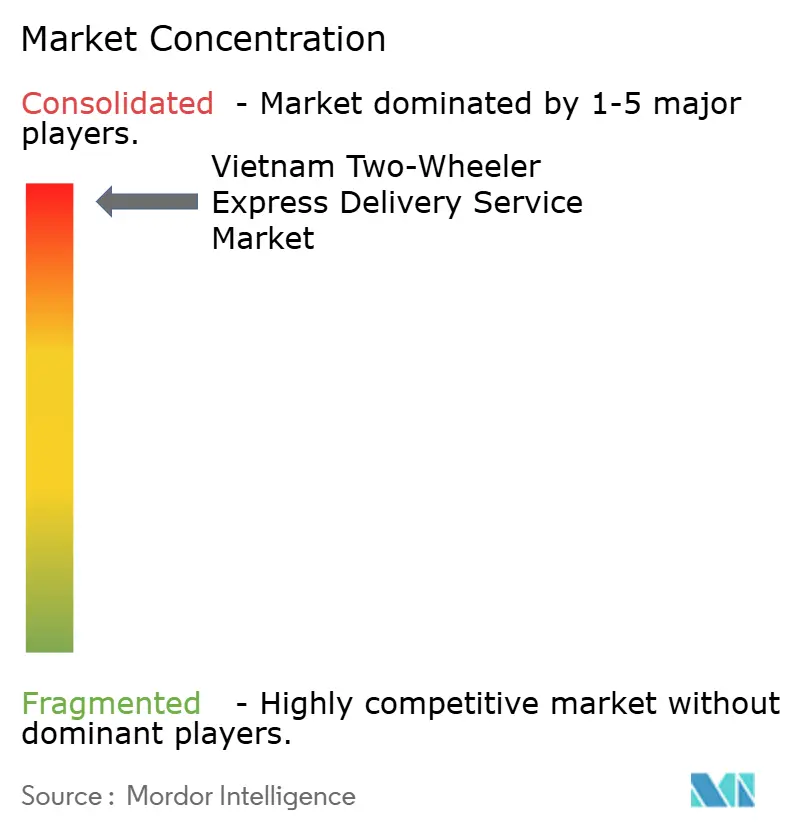
| Market Concentration | High |
Major Players *Disclaimer: Major Players sorted in no particular order Image © Mordor Intelligence. Reuse requires attribution under CC BY 4.0. | |
Vietnam Two-Wheeler Express Delivery Service Market Analysis by Mordor Intelligence
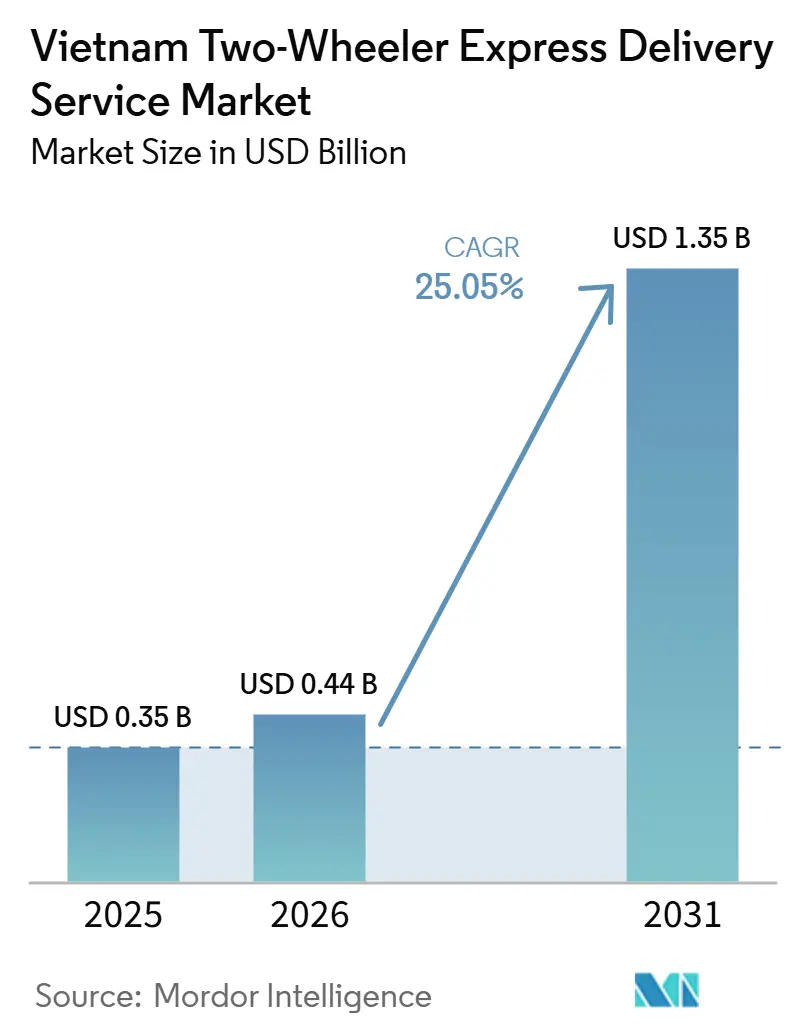
The Vietnam two-wheeler express delivery service market size was valued at USD 0.35 billion in 2025 and estimated to grow from USD 0.44 billion in 2026 to reach USD 1.35 billion by 2031, at a CAGR of 25.05% during the forecast period (2026-2031). The Vietnamese two-wheeler express delivery service market is expanding on the back of dense urban demand, rising order frequency, and the ability of two-wheelers to keep delivery times workable in heavily congested city corridors. E-commerce growth, app-based ordering habits, and wider digital payment use are increasing dispatch volumes and making fast, low-cost local delivery a daily consumer utility rather than an occasional service. The Vietnamese two-wheeler express delivery service market is also shifting from basic rider availability toward service quality, route efficiency, and fleet modernization, especially as city rules push operators toward electric vehicles. Ho Chi Minh City’s larger combined urban footprint after the 2025 administrative merger has strengthened the case for dense, high-frequency delivery networks inside a single large jurisdiction. The Vietnamese two-wheeler express delivery service market now offers the clearest room for growth where platforms can combine speed, electrified fleets, and stronger operating discipline across grocery, and parcel flows.
Key Report Takeaways
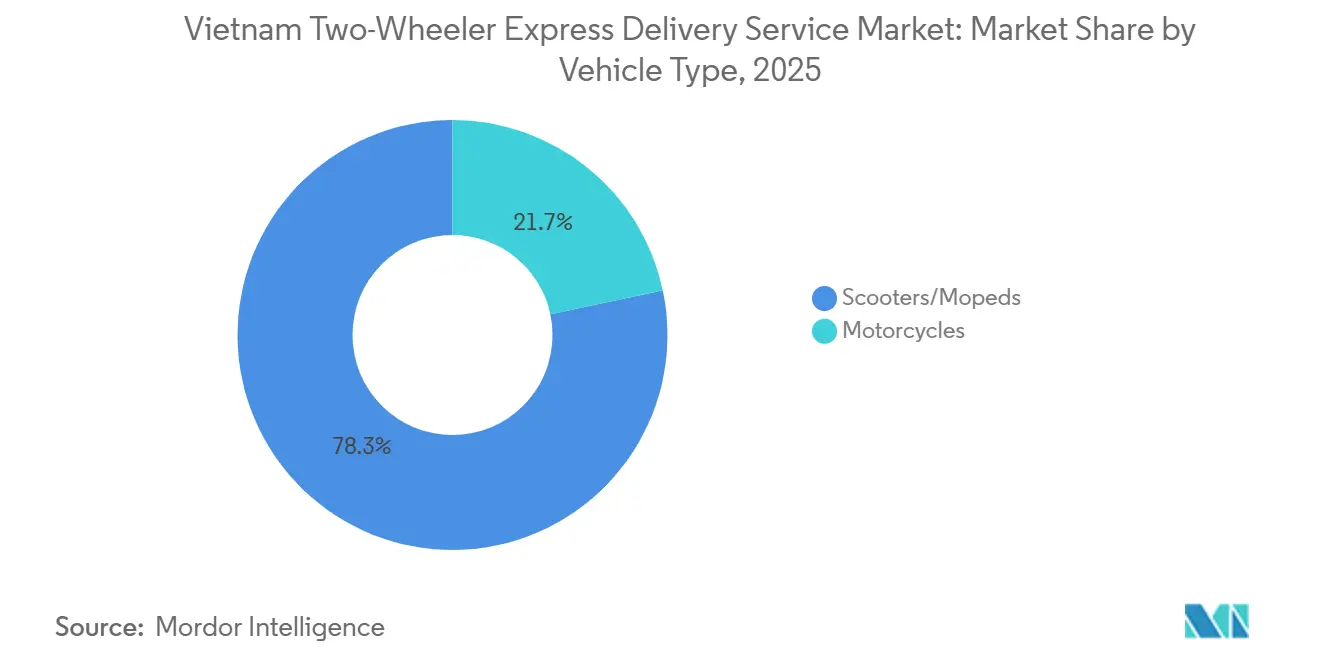
- By vehicle type, scooters and mopeds accounted for 78.32% share of the Vietnamese two-wheeler express delivery service market size in 2025 and are projected to grow at a 25.11% CAGR through 2031.
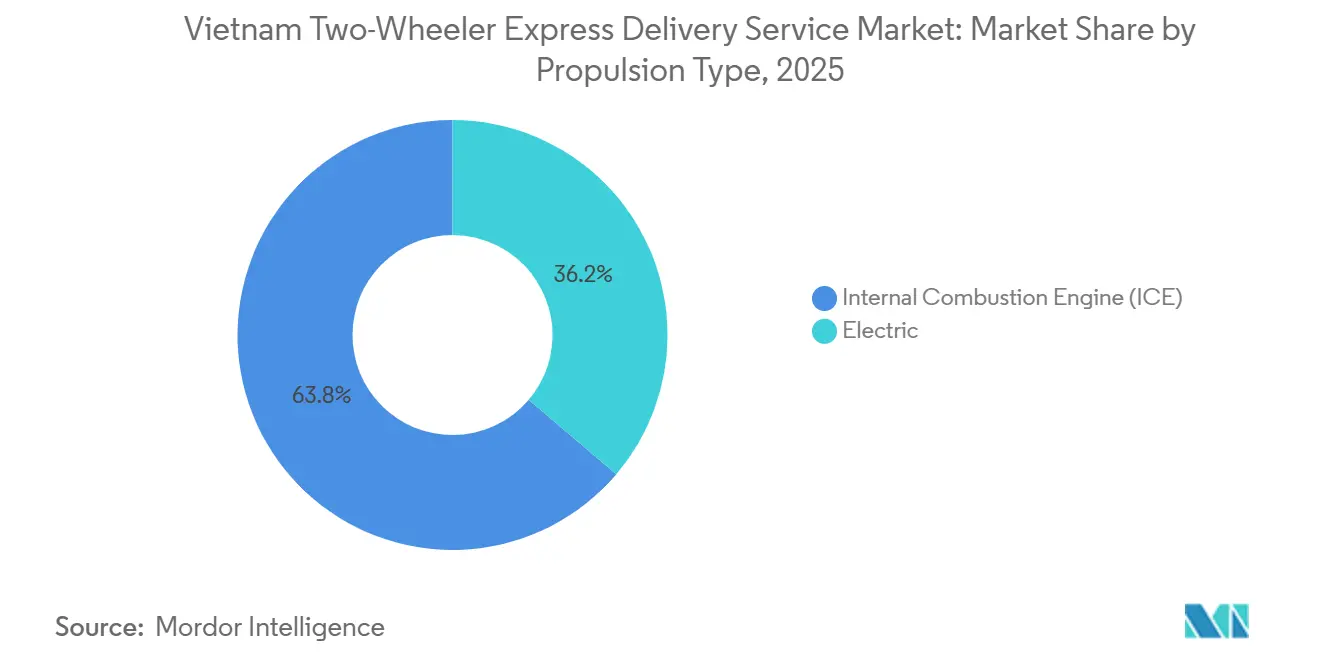
- By propulsion type, ICE-powered vehicles held 63.78% of the Vietnamese two-wheeler express delivery service market share in 2025, while electric two-wheelers are projected to record the fastest CAGR at 48.62% through 2031.
- By geography, Ho Chi Minh City accounted for 27.24% share of the Vietnamese two-wheeler express delivery service market size in 2025 and is projected to advance at a 25.27% CAGR through 2031.
Note: Market size and forecast figures in this report are generated using Mordor Intelligence’s proprietary estimation framework, updated with the latest available data and insights as of January 2026.
Vietnam Two-Wheeler Express Delivery Service Market Trends and Insights
Drivers Impact Analysis*
| Driver | (~) % Impact on CAGR Forecast | Geographic Relevance | Impact Timeline |
|---|---|---|---|
| Growth in E-Commerce and Digital Retail | +4.5% | Ho Chi Minh City and Hanoi | Medium term (2–4 years) |
| Urban Traffic Congestion Favors Two-Wheeler Deliveries | +4.2% | Ho Chi Minh City, Hanoi, Da Nang | Short term (≤ 2 years) |
| Shift Toward Electric Vehicle (EV) Delivery Fleets | +3.9% | Ho Chi Minh City and Hanoi | Medium term (2–4 years) |
| Rising Consumer Demand for On-Demand Logistics | +3.6% | Da Nang and Binh Duong | Short term (≤ 2 years) |
| Technology Integration and Super-App Adoption | +3.4% | Hanoi, Ho Chi Minh City | Short term (≤ 2 years) |
| Growing B2B Express Logistics Demand | +3.0% | Ho Chi Minh City, Hanoi, Binh Duong, Dong Nai | Medium term (2–4 years) |
| Source: Mordor Intelligence | |||
Growth in E-Commerce and Digital Retail
The rapid growth of online shopping in Vietnam is the primary driver of the two-wheeler express delivery market. Consumers increasingly demand faster fulfillment, pushing e-commerce platforms to rely heavily on motorcycle couriers. This volume of digital transactions provides a steady, growing baseline of demand for logistics operators. The expansion of digital retail has also encouraged new market entrants and increased investment in last-mile delivery infrastructure. As more consumers shift their purchasing habits online, the frequency and variety of deliveries continue to rise, covering categories from electronics to daily essentials. This broadening scope of e-commerce activity reinforces the long-term demand outlook for two-wheeler express delivery services in Vietnam.
Urban Traffic Congestion Favors Two-Wheeler Deliveries
Major Vietnamese cities like Hanoi and Ho Chi Minh City experience severe daily traffic congestion that limits the effectiveness of larger delivery vehicles. Two-wheelers navigate dense, narrow urban corridors more efficiently, making them a practical option for express fulfillment. Their ability to avoid traffic bottlenecks helps ensure time-sensitive deliveries meet service-level agreements. The structural layout of Vietnamese cities, characterized by narrow streets and densely populated residential areas, further reinforces the operational advantage of motorcycle-based delivery. As urban populations continue to grow and city centers become more congested, the relative efficiency of two-wheelers over larger vehicles is expected to increase. This makes motorcycle couriers a durable and practical solution for urban last-mile logistics in the foreseeable future.
Shift Toward Electric Vehicle (EV) Delivery Fleets
Government sustainability targets and corporate environmental goals are driving the adoption of electric motorbikes across the logistics sector. Platforms are partnering with EV manufacturers to transition their fleets, reducing long-term fuel and maintenance costs. This shift also reduces urban carbon emissions and aligns with the preferences of environmentally conscious consumers. Beyond cost and environmental benefits, the transition to electric fleets is increasingly supported by improvements in battery technology and the gradual expansion of charging infrastructure in urban areas. Logistics operators that adopt EVs early are better positioned to comply with anticipated regulatory requirements and avoid future disruptions. This proactive approach to fleet electrification is becoming a strategic consideration for platforms seeking operational stability and long-term cost efficiency.
Rising Consumer Demand for On-Demand Logistics
Urban consumers are increasingly willing to pay premium rates for fast, on-demand delivery services, particularly for groceries and more. This behavioral shift has made express delivery an expected standard for daily retail transactions rather than an added convenience. As a result, delivery platforms must continuously optimize their fleets to support point-to-point courier fulfillment. The normalization of on-demand delivery has also expanded the range of goods consumers expect to receive quickly, moving beyond other items like pharmaceuticals, personal care products, and household items. This diversification of delivery categories increases the overall volume of express shipments and creates new revenue opportunities for logistics platforms. As consumer expectations continue to rise, the ability to offer reliable, fast delivery across a broad range of product categories is becoming a key competitive differentiator.
Restraints Impact Analysis*
| Restraint | (~) % Impact on CAGR Forecast | Geographic Relevance | Impact Timeline |
|---|---|---|---|
| High Driver Turnover and Labor Instability | -1.1% | National; concentrated in Hanoi and Ho Chi Minh City | Short term (≤ 2 years) |
| Price Competition and Compressed Profit Margins | -0.8% | National; most acute in provinces with limited EV infrastructure | Short term (≤ 2 years) |
| Tightening Municipal Traffic Regulations | -0.7% | National; highest impact outside tier-1 cities | Short term (≤ 2 years) |
| Fuel Cost Volatility and Rising Operational Expenses | -0.5% | Ho Chi Minh City, Hanoi, and tier-2 urban centres | Medium term (2–4 years) |
| Source: Mordor Intelligence | |||
High Driver Turnover and Labor Instability
Express delivery platforms face high rider turnover due to intense competition, fluctuating commission structures, and limited employment benefits. Drivers frequently switch between platforms in pursuit of short-term bonuses, disrupting operational consistency and increasing onboarding costs. Growing dissatisfaction over platform fees also raises the risk of organized labor actions that can temporarily disrupt delivery networks. The absence of formal employment protections for gig workers further compounds labor instability in the sector. Without access to benefits such as health coverage or income guarantees, drivers are more likely to exit the workforce during periods of low demand or unfavorable commission changes. This structural vulnerability makes it difficult for platforms to maintain a reliable and experienced driver base, which in turn affects service quality and customer satisfaction.
Price Competition and Compressed Profit Margins
The presence of multiple well-funded competitors and aggressive local startups has led to sustained price competition across the industry. Platforms are compelled to spend heavily on consumer discounts and driver incentives to maintain market share. This pricing environment compresses profit margins and makes long-term financial sustainability difficult, particularly for smaller logistics operators. Prolonged price competition also limits the ability of platforms to invest in operational improvements, technology upgrades, and fleet expansion. Smaller operators with limited capital reserves are especially vulnerable, as they lack the financial buffer to sustain losses over extended periods. Over time, this dynamic may lead to market consolidation, with larger platforms absorbing or displacing smaller competitors that cannot maintain profitability under persistent pricing pressure.
*Our forecasts treat driver/restraint impacts as directional, not additive. The impact forecasts reflect baseline growth, mix effects, and variable interactions.
Segment Analysis
By Vehicle Type: Scooters And Mopeds Anchor Urban Delivery Economics
Scooters and mopeds held 78.32% share in 2025, giving them the dominant position in the Vietnamese two-wheeler express delivery service market because they fit dense city traffic and short-haul dispatch patterns well. The segment is also projected to post a 25.11% CAGR through 2031, which keeps this vehicle class at the center of platform fleet planning over the forecast period. Motorcycles equipped with cargo boxes have become the preferred choice for parcel operators due to their capacity to transport larger and heavier loads. These vehicles are particularly effective for business-to-business shipments, postal services, and spare parts logistics, where payload capacity remains a critical factor.
Major urban centers, particularly Hanoi and Ho Chi Minh City, prioritize delivery speed and accessibility over payload volume. Dense populations and heavy traffic in these cities make scooters and mopeds essential to efficient last-mile logistics operations. Scooters provide strong urban maneuverability, enabling couriers to navigate narrow lanes, congested districts, and high-density office complexes efficiently. This allows faster pickups and drop-offs compared to larger motorcycles. Their ability to access areas that are difficult for larger vehicles to reach reinforces their role as a critical component of Vietnam’s urban delivery ecosystem, especially for city-center deliveries.


By Propulsion Type: ICE Retains Scale, Electric Rewrites the Cost Equation
ICE-powered vehicles retained 63.78% share in 2025, so they still formed the largest operating base in the Vietnamese two-wheeler express delivery service market even as regulation and cost pressures began shifting the long-term direction. ICE-powered motorcycles remain the preferred option for deliveries involving heavier loads over longer distances. These vehicles suit Vietnam's varied terrain, including suburban and rural areas where road conditions can differ significantly. In urban areas, courier operators use ICE scooters to transport documents and lighter parcels, as they offer agility and efficiency on congested city streets.
Electric two-wheelers are projected to grow at a 48.62% CAGR through 2031, which makes them the fastest-rising propulsion segment in the Vietnamese two-wheeler express delivery service market size outlook. Electric two-wheelers offer significantly lower energy and maintenance costs than gasoline-powered counterparts. Lower charging costs and minimal mechanical upkeep generate tangible savings for courier operators. Their lower total cost of ownership makes electric vehicles an attractive option for operators seeking to optimize expenses. Electric scooters perform well in busy urban areas, where short delivery routes and frequent stops are common. These attributes make them suitable for document deliveries, courier tasks, and lightweight parcel distribution. Their quiet operation also helps reduce noise pollution in densely populated areas, aligning with broader urban sustainability goals.
Geography Analysis
Ho Chi Minh City accounted for 27.24% share in 2025 and is projected to expand at a 25.27% CAGR through 2031, which keeps it as the largest provincial contributor to the Vietnamese two-wheeler express delivery service market. Its position is tied to its role as the country’s main commercial center and to the July 2025 merger with Binh Duong and Ba Ria-Vung Tau, which created a jurisdiction of nearly 14 million residents across 6,772 km square. That larger urban base gives delivery networks a wider and denser service area inside one administrative framework. The city’s 2026 ICE ban for delivery fleets is the strongest local policy shift in the country and is forcing faster electrification than in any other province. Ho Chi Minh City, therefore, combines the largest current base with one of the clearest cost and regulatory transitions within the Vietnamese two-wheeler express delivery service market.
Hanoi remained the second major center for the Vietnamese two-wheeler express delivery service market, supported by a large planned permanent resident base and a distinct urban consumption pattern. Significant annual congestion losses and high logistics costs as a share of GDP sustain demand for app-based delivery among both households and businesses. The city's EV transition schedule, which requires a defined share of platform fleet electrification within the near term, is pushing operators to upgrade infrastructure and fleet mix earlier than in many other provinces. Nearby industrial provinces such as Bac Ninh, Hung Yen, and Vinh Phuc add a second ring of demand, where both B2B replenishment and consumer parcel traffic are increasing.
Da Nang, Binh Duong, Dong Nai, and Can Tho formed the second tier of geographic demand in the Vietnamese two-wheeler express delivery service market, each with a different traffic source and service profile. Da Nang functions as the central coast delivery hub, while Can Tho acts as the main gateway to the Mekong Delta. Binh Duong and Dong Nai stand out for industrial and manufacturing activity that adds steady B2B delivery flows to consumer last-mile volumes. Emerging provinces such as Thanh Hoa, Thai Nguyen, Quang Ninh, Ninh Binh, and Hue still have lower absolute volumes, but stronger smartphone use and wider e-commerce adoption are gradually expanding the geographic frontier beyond the traditional Hanoi and Ho Chi Minh City axis.
Competitive Landscape
The competitive landscape of the Vietnamese two-wheeler express delivery service market is undergoing rapid transformation, with multinational and domestic companies competing for market share amid growing e-commerce demand. In densely populated urban areas such as Hanoi and Ho Chi Minh City, two-wheelers navigate heavy traffic more efficiently than cars. This operational efficiency has made the on-demand express logistics market a key component of Vietnam's digital economy. Regulatory pressures, including anticipated urban restrictions on internal combustion engine motorbikes, are pushing the industry toward a green transition.
Green SM (GSM) and Grab Holdings Limited are competing to capture user loyalty and establish industry pricing benchmarks. Backed by Vingroup, Green SM has expanded rapidly by deploying a fully electric VinFast fleet, which allows it to offer lower fares and gain market share. Grab, an established market player, relies on its super-app ecosystem, digital payments, and data security to maintain user retention. Grab's localized user-trust strategies serve as a primary defense against Green SM's capital-intensive expansion.
Be Group JSC and Ahamove are strengthening their positions by focusing on localized delivery models. Be Group leverages its domestic application to offer competitive pricing and flexible subscription bundles targeting price-sensitive segments such as students. This approach has allowed Be Group to establish a profitable niche amid broader market consolidation. Ahamove focuses on logistics, serving both consumer and business-to-business delivery needs. Through vehicle partnerships to transition to electric motorbike fleets, Ahamove is positioning itself to comply with Vietnam's evolving green regulations.
Vietnam Two-Wheeler Express Delivery Service Industry Leaders
Grab Holdings Limited
Be Group JSC
Green SM
Ahamove
- *Disclaimer: Major Players sorted in no particular order

Recent Industry Developments
- April 2026: Grab unveiled the "Grab Intelligence Layer" at its annual GrabX product showcase. This new feature introduced enhanced order-batching algorithms to the Vietnamese delivery ecosystem, aiming to meet the 20-minute delivery targets set to rival competitors such as Green SM.
- June 2025: Ahamove entered into a strategic alliance with Selex Motors to procure 1,000 electric delivery vehicles. This partnership is designed to strengthen Ahamove’s delivery operations by integrating environmentally friendly vehicles into its fleet, supporting global sustainability trends, and addressing the increasing demand for green logistics solutions.


Vietnam Two-Wheeler Express Delivery Service Market Report Scope
The scope of the report includes Vehicle Type (Scooters/Mopeds and Motorcycles), Propulsion Type (Internal Combustion Engine (ICE) and Electric), and Province (Ho Chi Minh City (HCM), Ha Noi, Vung Tau, Quang Ninh, Binh Duong, Dong Nai, and More).
| Scooters/Mopeds |
| Motorcycles |
| Internal Combustion Engine (ICE) |
| Electric |
| Ho Chi Minh City (HCM) |
| Ha Noi |
| Vung Tau |
| Quang Ninh |
| Binh Duong |
| Dong Nai |
| Bac Ninh |
| Da Nang |
| Thanh Hoa |
| Thai Nguyen |
| Vinh Phuc |
| Can Tho |
| Hung Yen |
| Phu Thọ |
| Ninh Binh |
| Hue |
| Others |
| By Vehicle Type | Scooters/Mopeds |
| Motorcycles | |
| By Propulsion Type | Internal Combustion Engine (ICE) |
| Electric | |
| By Province | Ho Chi Minh City (HCM) |
| Ha Noi | |
| Vung Tau | |
| Quang Ninh | |
| Binh Duong | |
| Dong Nai | |
| Bac Ninh | |
| Da Nang | |
| Thanh Hoa | |
| Thai Nguyen | |
| Vinh Phuc | |
| Can Tho | |
| Hung Yen | |
| Phu Thọ | |
| Ninh Binh | |
| Hue | |
| Others |


Key Questions Answered in the Report
What is the 2031 outlook for Vietnam's two-wheeler express delivery services?
The Vietnam two-wheeler express delivery service market is projected to reach USD 1.35 billion by 2031 from USD 0.44 billion in 2026, growing at a 25.05% CAGR over 2026-2031.
Why do two-wheelers remain critical for urban delivery in Vietnam?
Dense traffic in Hanoi and Ho Chi Minh City makes two-wheelers more effective for short-distance dispatch, and that keeps them central to grocery and parcel fulfillment.
Which propulsion type is growing the fastest?
Electric two-wheelers are projected to grow at a 48.62% CAGR through 2031 as city mandates, lower operating costs, and platform support programs accelerate adoption.
Which city contributes the most to demand?
Ho Chi Minh City was the largest geographic segment in 2025 with a 27.24% share and is projected to grow at a 25.27% CAGR through 2031.
What are the main operating risks for delivery platforms?
Fuel price volatility, cash-on-delivery overhead, and the cost of meeting EV transition rules remain the main near-term pressures on margins and fleet management.
Page last updated on:





