
Veterinary Leptospirosis Treatment Market Size and Share
Market Overview
| Study Period | 2020 - 2031 |
|---|---|
| Market Size (2026) | USD 0.9 Billion |
| Market Size (2031) | USD 1.20 Billion |
| Growth Rate (2026 - 2031) | 5.94 % |
| Fastest Growing Market | Asia-Pacific |
| Largest Market | North America |
| Market Concentration | Medium |
Major Players *Disclaimer: Major Players sorted in no particular order Image © Mordor Intelligence. Reuse requires attribution under CC BY 4.0. | |
Veterinary Leptospirosis Treatment Market Analysis by Mordor Intelligence
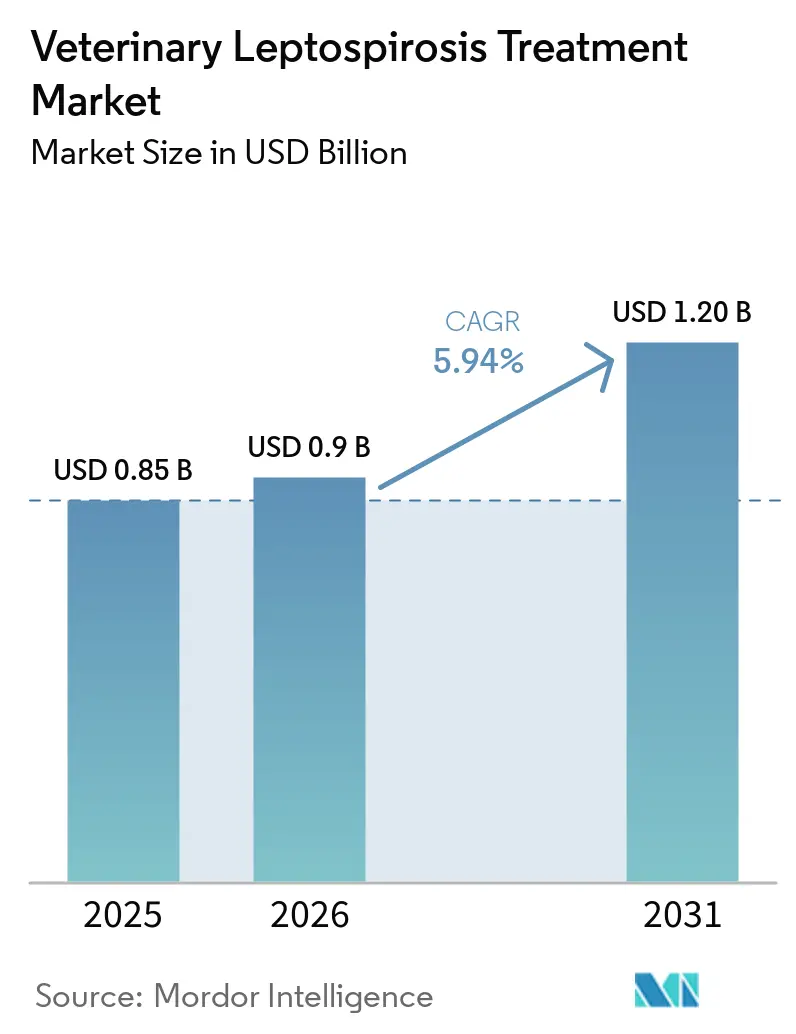
The Veterinary Leptospirosis Treatment Market size is projected to expand from USD 0.85 billion in 2025 and USD 0.9 billion in 2026 to USD 1.20 billion by 2031, registering a CAGR of 5.94% between 2026 to 2031.
Veterinarians in flood-prone regions are addressing the rising incidence of diseases exacerbated by climate-driven flooding. They are transitioning from annual to biannual boosters and stockpiling antibiotics in preparation for the monsoon season. With stricter antimicrobial-resistance regulations limiting access to fluoroquinolones, practitioners are adopting the use of older antibiotics in combination with supportive renal protocols, driving increased demand for adjunctive therapies. Companion-animal owners are streamlining care into fewer, higher-value visits, often bundling leptospirosis boosters with wellness panels.
Key Report Takeaways
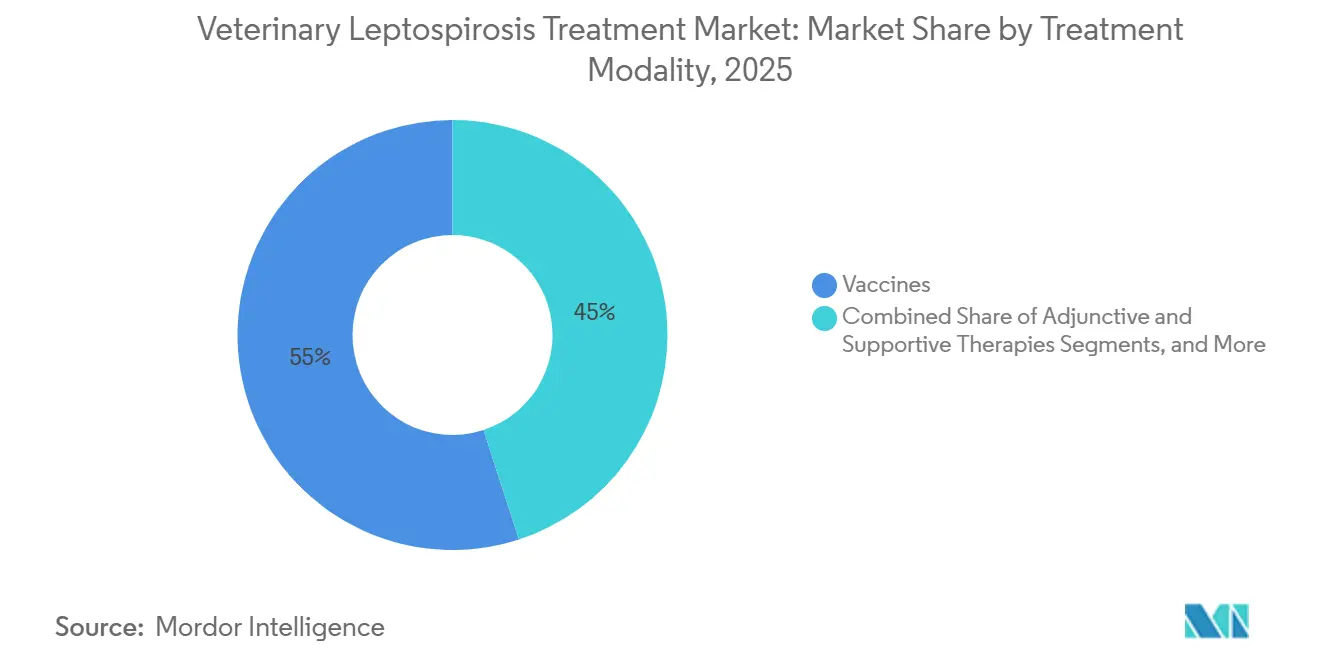
- By treatment modality, vaccines held 55.0% of the veterinary leptospirosis treatment market share in 2025, while adjunctive and supportive therapies are advancing at a 6.25% CAGR to 2031.
- By animal species, companion animals accounted for 48.0% of the veterinary leptospirosis treatment market size in 2025, whereas the livestock segment is projected to expand at a 7.96% CAGR through 2031.
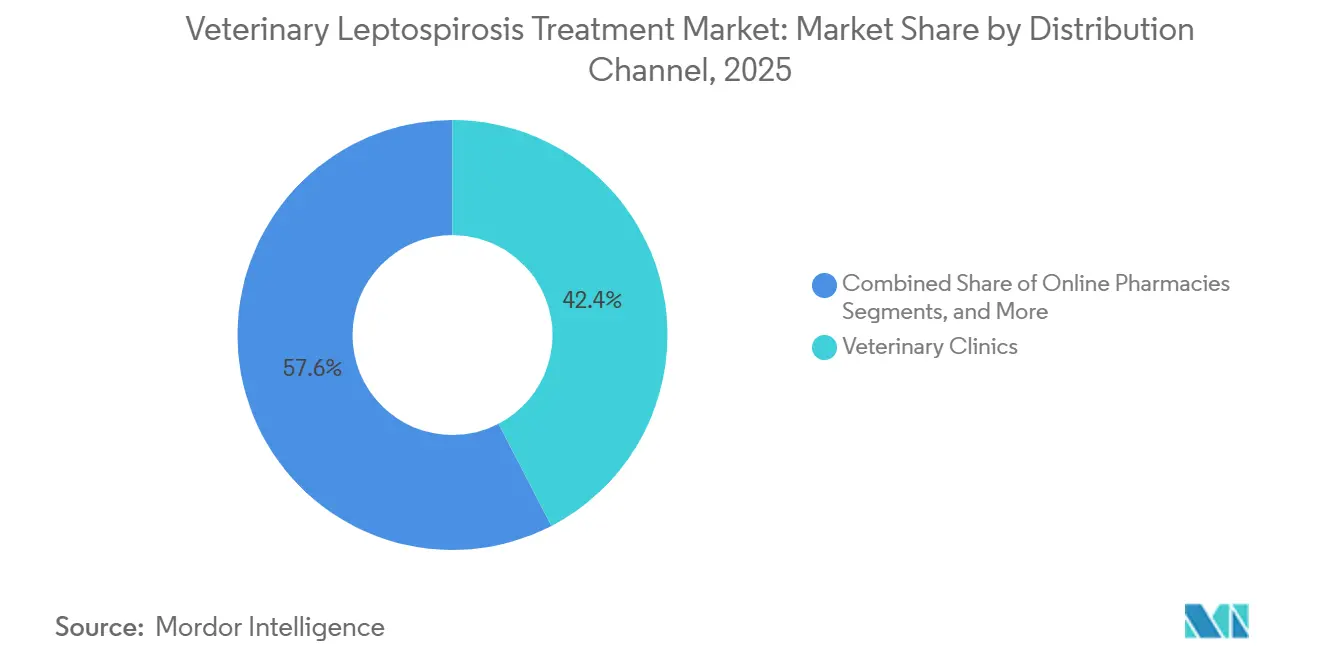
- By distribution channel, veterinary clinics captured 42.39% of revenue in 2025, and online pharmacies are forecast to grow at a 7.15% CAGR to 2031.
- By geography, North America led with 38.34% revenue share in 2025, and Asia-Pacific is on track to post a 6.75% CAGR over 2026-2031.
Note: Market size and forecast figures in this report are generated using Mordor Intelligence’s proprietary estimation framework, updated with the latest available data and insights as of January 2026.
Global Veterinary Leptospirosis Treatment Market Trends and Insights
Drivers Impact Analysis*
| DRIVER | (~) % IMPACT ON CAGR FORECAST | GEOGRAPHIC RELEVANCE | IMPACT TIMELINE |
|---|---|---|---|
| Rising incidence linked to climate change and flooding | +1.2% | Global, with acute spikes in South America, Southeast Asia, Oceania | Medium term (2-4 years) |
| Growth in pet ownership and veterinary spend | +1.0% | North America, Europe, urban Asia-Pacific | Short term (≤ 2 years) |
| Government and One-Health vaccination initiatives | +0.8% | APAC, Latin America | Medium term (2-4 years) |
| Advancements in rapid veterinary diagnostics | +0.7% | Global, early adoption in North America and Europe | Short term (≤ 2 years) |
| Long-acting fluoroquinolone formulations gaining traction | +0.5% | APAC livestock markets, selective Latin America use | Long term (≥ 4 years) |
| Digital vaccine-compliance platforms boosting boosters | +0.6% | North America, Western Europe | Short term (≤ 2 years) |
| Source: Mordor Intelligence | |||
Climate Change and Flooding Drive Rising Incidence
Extreme rainfall is reducing transmission cycles, leading veterinarians to adjust booster intervals. In 2024, livestock infections significantly increased following heavy rainfall events. In Australia, the southward migration of rodent reservoirs is expanding vaccination coverage into previously unaffected regions.[1]ABC News Staff, “Leptospirosis: The Disease Spreading South with Climate Change,” ABC News Australia, abc.net.au Flooding in Brazil’s Rio Grande do Sul in 2024 caused a substantial rise in cases, prompting the implementation of a federal pre-flood vaccination mandate. These developments are driving demand for multivalent vaccines targeting locally emergent serovars, thereby supporting growth in the veterinary leptospirosis treatment market.
Surge in Pet Ownership and Veterinary Expenditure
In 2024, U.S. veterinary spending grew by 15.7% to reach USD 41.26 billion, despite a 3-4% annual decline in clinic visits between 2022 and 2025. Pet owners are consolidating care into fewer appointments, with average costs of USD 220 for dogs and USD 202 for cats, often combining leptospirosis boosters with wellness panels. Emergency visits increased by 12% in 2026, with a notable share attributed to leptospirosis-related acute kidney injuries.[2]American Veterinary Medical Association, “U.S. Pet Ownership and Expenditure Statistics 2025,” avma.org In Europe, insurers are waiving deductibles for core vaccines, creating financial incentives that drive recurring demand. These trends are collectively boosting revenues in the veterinary leptospirosis treatment market.
Vaccination Initiatives by Governments and One-Health Programs
In Indonesia, the government subsidizes 50% of cattle vaccine costs in flood-prone areas, increasing coverage among smallholders.[3]Indonesia Ministry of Agriculture, “Flood-Prone District Vaccination Program 2024,” pertanian.go.id Thailand employs a real-time bovine database to automatically distribute vaccines to provinces when coverage drops below 70%. Singapore mandates vaccination for all imported working dogs. These One-Health initiatives are institutionalizing annual or biannual boosters, strengthening demand and expanding the veterinary leptospirosis treatment market.
Rapid Advancements in Veterinary Diagnostics
Innovations in diagnostics are enhancing the veterinary leptospirosis treatment market. IDEXX’s SNAP Lepto delivers results in 10 minutes with high sensitivity and specificity. Cost-effective LAMP-based gold-nanoparticle biosensors provide results in 45 minutes at a low cost per test. Recombinase polymerase assays process samples in 30 minutes without requiring laboratory infrastructure. These rapid diagnostic tools enable clinicians to quickly isolate patients and initiate targeted antibiotic treatments, reducing renal damage and improving survival rates, thereby increasing the perceived value of veterinary leptospirosis treatments.
Restraints Impact Analysis*
| RESTRAINT | (~) % IMPACT ON CAGR FORECAST | GEOGRAPHIC RELEVANCE | IMPACT TIMELINE |
|---|---|---|---|
| Regulatory curbs on critical antimicrobials and AMR concerns | −0.9% | Global, strictest in EU and North America | Medium term (2-4 years) |
| Adverse-event litigation dampening uptake of multivalent vaccines | −0.6% | North America, Western Europe | Short term (≤ 2 years) |
| Low awareness and affordability in smallholder livestock segments | −0.5% | Sub-Saharan Africa, South Asia, rural Latin America | Long term (≥ 4 years) |
| Fragile BSL-2/3 antigen manufacturing supply chain | −0.8% | Global, acute in Africa and Eastern Europe | Medium term (2-4 years) |
| Source: Mordor Intelligence | |||
Regulatory Measures Tighten on Key Antimicrobials Amid AMR Worries
The U.S. FDA has implemented restrictions on the extra-label use of fluoroquinolones in food animals. Similarly, the European Medicines Agency has categorized fluoroquinolones as Category B, allowing their use only when no alternatives are available. Global guidelines emphasize reserving critically important antimicrobials exclusively for human medicine. While streptomycin and penicillin remain the primary drugs of choice, their requirement for daily injections increases labor costs. With national targets aiming to reduce antimicrobial sales by 50% by 2030, producers are shifting focus toward prophylactic vaccinations, reducing the reliance on antibiotics within the veterinary leptospirosis treatment market.
Litigation Over Adverse Events Stifles Adoption of Multivalent Vaccines
A 2024 retrospective study in the U.S. indicated that dogs receiving 4-valent vaccines experienced injection-site reactions at a rate 2.8 times higher than those given 2-valent alternatives. Additionally, systemic reactions were observed in 1.2% of doses, with rare cases of anaphylaxis prompting lawsuits over insufficient warnings for small-breed dogs. In 2025, multivalent leptospirosis vaccines were placed under enhanced pharmacovigilance measures in Europe. In response, some clinics have adopted a practice of splitting multivalent doses across multiple visits. This approach reduces per-dose revenue and complicates scheduling, thereby limiting growth in the veterinary leptospirosis treatment market.
*Our forecasts treat driver/restraint impacts as directional, not additive. The impact forecasts reflect baseline growth, mix effects, and variable interactions.
Segment Analysis
By Treatment Modality: Preventive Vaccines Stay Dominant While Supportive Care Gains Momentum
In 2025, vaccines dominated the veterinary leptospirosis treatment market, holding a 55.0% share. They continue to be the primary choice for both companion animals and livestock. Urban pet clinics and dairy farms consistently generate revenue through annual single-dose boosters, which target four to six serovars.
Adjunctive and supportive therapies in the veterinary leptospirosis treatment market are witnessing a robust expansion, growing at a 6.25% CAGR and projected to continue until 2031. This growth is largely driven by the increasing adoption of intravenous fluids, hepatoprotectants, renal-support drugs, and antibiotics. In Brazil, post-flood protocols showcased the efficacy of layered therapy, as CattleMaster GOLD FP 5/L5 was combined with streptomycin, leading to a swift restoration of herd productivity. Such integrated treatments are elevating emergency care into premium treatment packages.



By Animal Species: Companion-Animal Revenue Leads as Livestock Adoption Accelerates
In 2025, companion animals accounted for 48.0% of the veterinary leptospirosis treatment market, bolstered by vaccination rates surpassing 60% for canines in U.S. and European cities. Digital compliance tools play a pivotal role, alerting owners 30 days prior to booster lapses, ensuring consistent adherence.
Livestock adoption is on an upswing, projected to grow at a 7.96% CAGR through 2031. Dairy and beef producers, especially in flood-prone areas, are emphasizing annual whole-herd vaccinations to prevent abortion storms. Additionally, trials of long-acting antibiotics in Indonesia are enhancing the value of each treatment course. Significant regional investments, exemplified by Hester Biosciences’ USD 120 million capacity expansion, are bridging access disparities in the Asia-Pacific region.
By Distribution Channel: Clinics Maintain the Lead While E-Commerce Scales
In 2025, veterinary clinics secured 42.39% of the market revenue, skillfully bundling vaccines with wellness examinations and utilizing on-site diagnostics. With each annual visit averaging USD 220 for dogs, clinics have established a reliable service foundation.
Online pharmacies are on the rise, charting a 7.15% CAGR. They entice tech-savvy pet owners with auto-ship features and competitive pricing. While clinics administer the initial doses, they're also collaborating with e-commerce platforms for refill alerts, seamlessly integrating the two channels.
Geography Analysis
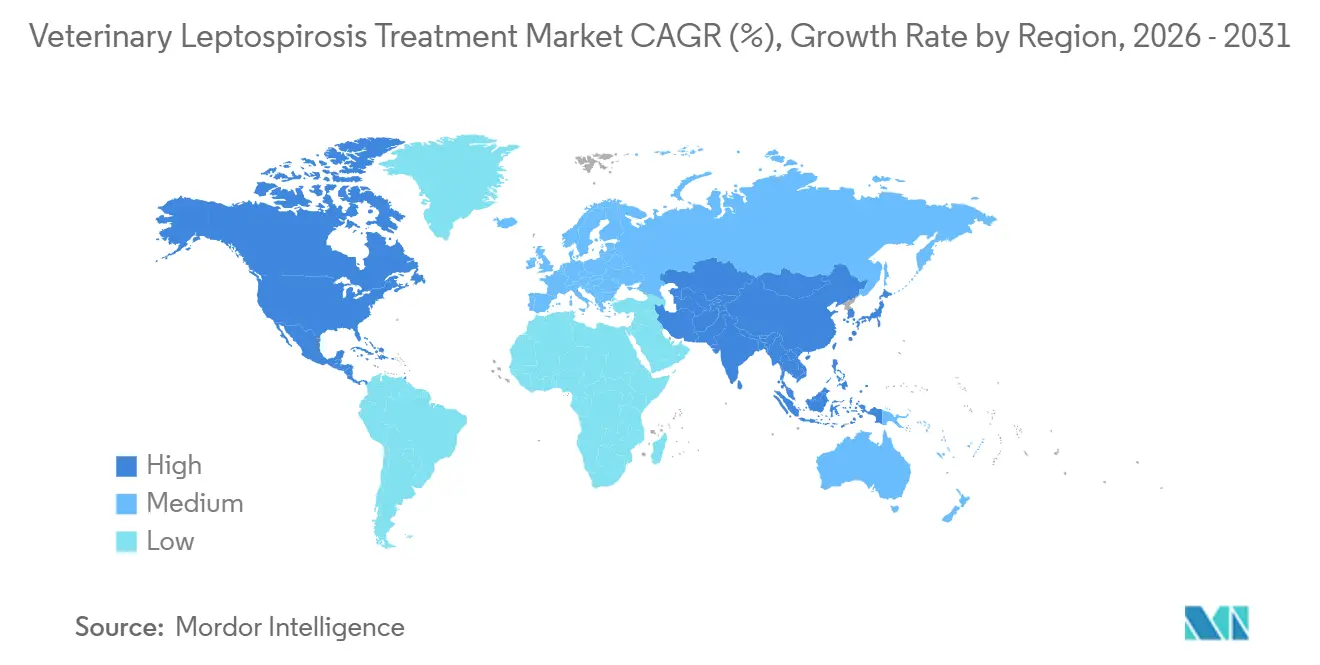
In 2025, North America accounted for 38.34% of the veterinary leptospirosis treatment market share, driven by high pet ownership levels, strong consumer willingness to pay, and premium pricing strategies. Additionally, a well-established emergency care network further supports demand, particularly during acute outbreaks.
Asia-Pacific is projected to achieve a 6.75% CAGR from 2026 to 2031, supported by government regulations, increased dairy farming activities, and local vaccine production. Investments by regional players position the market to address rising livestock demand while reducing dependency on imports. This growth not only strengthens the region's market presence but also diversifies global revenue streams for the veterinary leptospirosis treatment market. The region's growth is primarily focused on livestock, with countries such as Indonesia, Thailand, and India allocating public funds to vaccination programs under the One-Health initiative. Local manufacturers enhance accessibility by reducing lead times and offering prices 30-40% lower than imports, facilitating adoption among small-scale farmers. Additionally, urban pet markets in China and South Korea are shifting toward premium multivalent formulations, expanding the companion-animal segment.
In Europe, demand remains strong due to strict welfare regulations and pharmacovigilance systems that mandate detailed reporting of adverse events. While efforts to combat antimicrobial resistance are reducing antibiotic usage, vaccine adoption is increasing simultaneously. Germany and France are leading the region with significant growth in pet insurance enrollments, which include coverage for preventive care.

Competitive Landscape
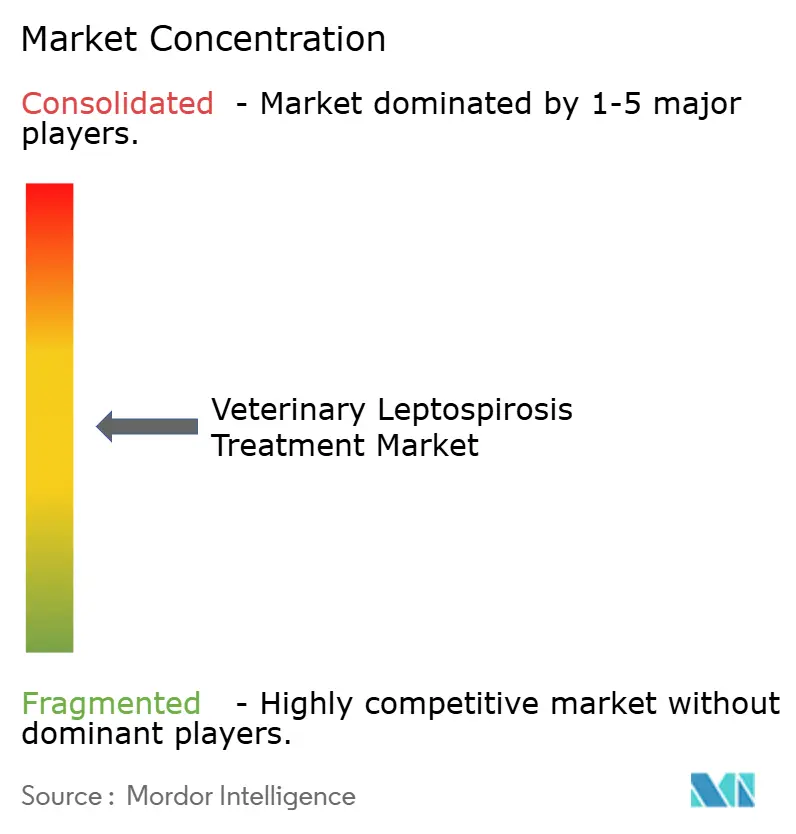
The veterinary leptospirosis treatment market exhibits moderate fragmentation. Leading global companies, including Zoetis, Boehringer Ingelheim, and Elanco, capitalize on their scale advantages in research, manufacturing, and diverse product portfolios. Regional players such as Biogénesis Bagó in South America, Indian Immunologicals in India, and HIPRA in Europe focus on localized serovar coverage and competitive pricing strategies.
Technology serves as a critical differentiator. In 2025, Merck Animal Health introduced a digital herd-management suite that combines inventory tracking with weather-based risk alerts, reducing wastage and improving reorder accuracy. Emerging firms like Bioveta and NeoTech are gaining market share in Eastern Europe and South Asia by securing government tenders through strategic local partnerships.
Supply reliability significantly impacts market share. During the 2023-2024 period, South Africa’s Onderstepoort Biological Products experienced a facility shutdown, resulting in a loss of regional market presence. Multinational companies filled the supply gap; however, the increasing demand highlights the risks associated with reliance on a limited number of BSL-3 plants globally. Investments in additional biocontainment capacity are expected to reshape competitive dynamics over the next decade.
Veterinary Leptospirosis Treatment Industry Leaders
Boehringer Ingelheim Animal Health
Elanco Animal Health
Virbac
Zoetis
Ceva Santé Animale
- *Disclaimer: Major Players sorted in no particular order

Recent Industry Developments
- January 2026: Virbac introduced Canixin L, a bivalent canine leptospirosis vaccine in Europe designed to cut clinical signs and urinary shedding from eight weeks of age.
- December 2025: Boehringer Ingelheim launched EURICAN L4, providing extended protection against four leptospira serogroups in dogs.
- June 2025: The European Medicines Agency’s CVMP issued a positive opinion for NOBIVAC L6 and LoVo L6, positioning them as the first vaccines targeting six serovars.


Global Veterinary Leptospirosis Treatment Market Report Scope
As per the scope of the report, veterinary leptospirosis is a serious zoonotic infectious disease in animals, primarily dogs, caused by Leptospira bacteria, which attacks the kidneys and liver. Treatment involves immediate antibiotic therapy (typically doxycycline or penicillin derivatives) paired with intensive supportive care like intravenous fluids to manage acute kidney or liver injury.
The veterinary leptospirosis treatment market is segmented by product category, therapeutic modality, application, end-user, and geography. By product category, the market includes devices such as laser systems (CO₂ lasers, Er:YAG lasers, fractional lasers), radiofrequency devices (RF microneedling systems, RF resurfacing platforms), microdermabrasion units, and combination platforms (e.g., laser + RF). By therapeutic modality, the market is segmented into laser therapy, chemical peels, microdermabrasion therapy, radiofrequency therapy, and combination therapy (e.g., laser + peel + RF). By application, the market is categorized into wrinkles & fine lines, acne & other scars, pigmentation disorders, skin laxity/tightening, and photo-damage/sun damage. By end-user, the market is segmented into dermatology & aesthetic clinics, hospitals & ambulatory surgery centers, medical spas, and home-use/OTC devices. By geography, the market is analyzed across North America, Europe, Asia-Pacific, the Middle East and Africa, and South America. The report also covers the estimated market sizes and trends for 17 countries across major regions globally. The report offers the market sizes and forecasts in terms of value (USD) for the above segments.
| Vaccines |
| Antibiotics & Antimicrobials |
| Adjunctive & Supportive Therapies |
| Companion Animals | Dogs |
| Cats | |
| Livestock | Cattle |
| Small Ruminants | |
| Others |
| Veterinary Hospitals |
| Veterinary Clinics |
| Retail & Veterinary Pharmacies |
| Online Pharmacies |
| On-Farm / Mobile Veterinarians |
| North America | United States |
| Canada | |
| Mexico | |
| Europe | Germany |
| United Kingdom | |
| France | |
| Italy | |
| Spain | |
| Rest of Europe | |
| Asia-Pacific | China |
| Japan | |
| India | |
| Australia | |
| South Korea | |
| Rest of Asia-Pacific | |
| Middle East & Africa | GCC |
| South Africa | |
| Rest of Middle East & Africa | |
| South America | Brazil |
| Argentina | |
| Rest of South America |
| By Treatment Modality | Vaccines | |
| Antibiotics & Antimicrobials | ||
| Adjunctive & Supportive Therapies | ||
| By Animal Species | Companion Animals | Dogs |
| Cats | ||
| Livestock | Cattle | |
| Small Ruminants | ||
| Others | ||
| By Distribution Channel | Veterinary Hospitals | |
| Veterinary Clinics | ||
| Retail & Veterinary Pharmacies | ||
| Online Pharmacies | ||
| On-Farm / Mobile Veterinarians | ||
| By Geography | North America | United States |
| Canada | ||
| Mexico | ||
| Europe | Germany | |
| United Kingdom | ||
| France | ||
| Italy | ||
| Spain | ||
| Rest of Europe | ||
| Asia-Pacific | China | |
| Japan | ||
| India | ||
| Australia | ||
| South Korea | ||
| Rest of Asia-Pacific | ||
| Middle East & Africa | GCC | |
| South Africa | ||
| Rest of Middle East & Africa | ||
| South America | Brazil | |
| Argentina | ||
| Rest of South America | ||


Key Questions Answered in the Report
How big is the Veterinary leptospirosis treatment market in 2026?
The Veterinary leptospirosis treatment market size reached USD 0.90 billion in 2026 with a forecast to hit USD 1.20 billion by 2031.
Which segment leads revenue within Veterinary leptospirosis treatment?
Vaccines held 55.0% of the veterinary leptospirosis treatment market share in 2025, underpinning their role as the primary preventive tool.
What CAGR is expected for Asia-Pacific sales?
Asia-Pacific revenue is projected to rise at a 6.75% CAGR between 2026 and 2031, driven by government mandates and local manufacturing gains.
Why are online pharmacies gaining traction?
Online pharmacies offer auto-ship refills and digital reminders, fueling a 7.15% CAGR to 2031 while clinics continue administering first doses.
How do climate events influence demand?
Floods compress transmission windows, spiking cases by up to tenfold, which pushes producers to adopt biannual boosters and stockpile antibiotics.
Are multivalent vaccines facing any hurdles?
Higher adverse-event rates and related litigation have made some veterinarians cautious, prompting dose-splitting strategies that can lower revenue growth.
Page last updated on:


 Your data is secure and never sold or shared.


