
Ureteral Catheters Market Size and Share
Market Overview
| Study Period | 2020 - 2031 |
|---|---|
| Market Size (2026) | USD 2.09 Billion |
| Market Size (2031) | USD 2.77 Billion |
| Growth Rate (2026 - 2031) | 5.86 % |
| Fastest Growing Market | Asia-Pacific |
| Largest Market | North America |
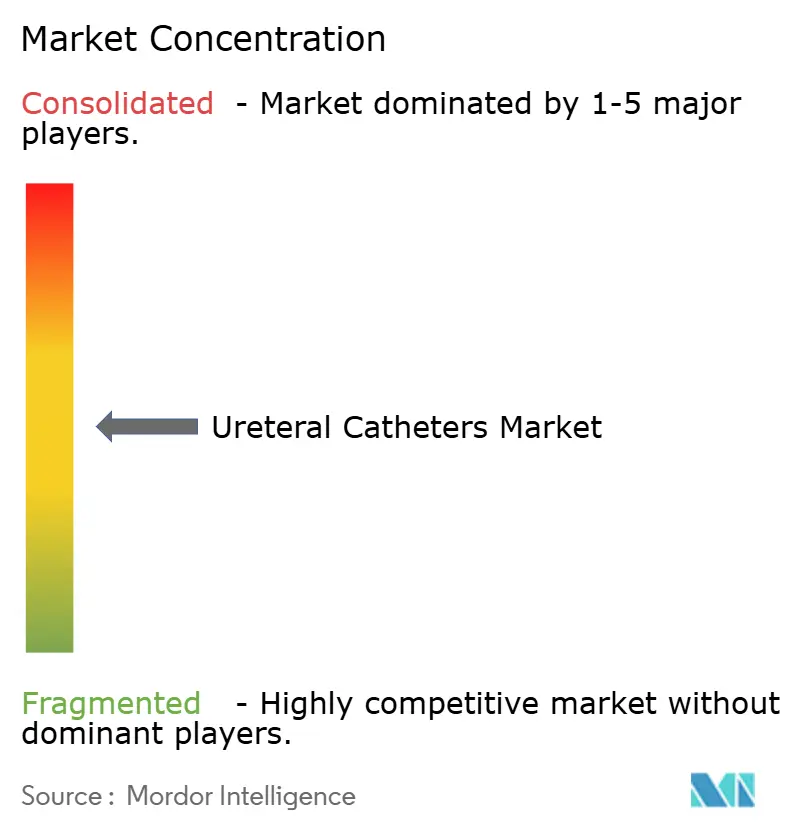
| Market Concentration | Medium |
Major Players *Disclaimer: Major Players sorted in no particular order Image © Mordor Intelligence. Reuse requires attribution under CC BY 4.0. | |
Ureteral Catheters Market Analysis by Mordor Intelligence
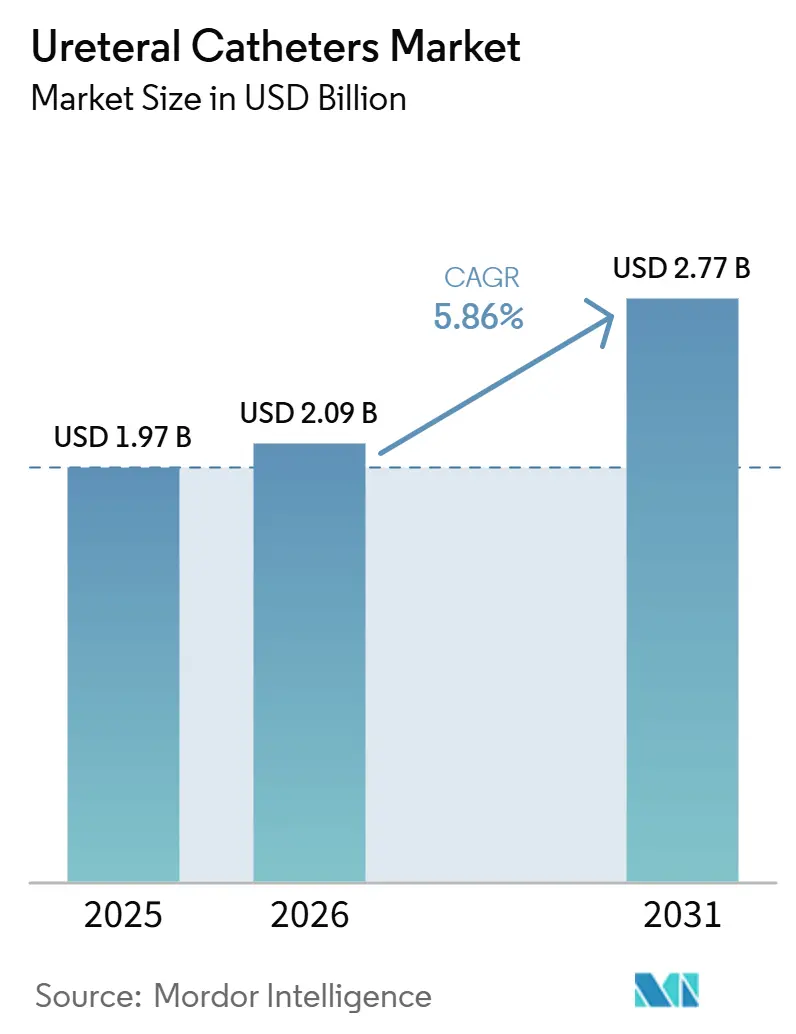
The Ureteral Catheters Market size is expected to increase from USD 1.97 billion in 2025 to USD 2.09 billion in 2026 and reach USD 2.77 billion by 2031, growing at a CAGR of 5.86% over 2026-2031.
Demand is linked to the growing clinical burden of urolithiasis and ureteral obstruction, which increases the number of patients needing access, drainage, imaging, and stenting procedures. A December 2025 meta-analysis covering 22 studies and 1,276,826 (1.28 million) participants reported a global urolithiasis prevalence of 10.85%, with prevalence at 11.8% in Asia and 8.3% in North America. The ureteral catheters market is also changing as providers move more procedures to outpatient settings and adopt single-use devices to support infection control and faster room turnover. Product selection is increasingly tied to the performance of the broader ureteroscopy procedure, including scopes, access sheaths, irrigation systems, and post-procedure stents. This favors suppliers that can support a consistent clinical workflow while managing procurement pressure on standard catheter formats.
Key Report Takeaways
- By product type, open-end ureteral catheters led with 26.84% revenue share in 2025, while ureteral access catheters are projected to grow at a 7.14% CAGR through 2031.
- By material, polyurethane held 38.57% revenue share in 2025, while PTFE-based catheter materials are forecast to expand at a 6.68% CAGR through 2031.
- By application, ureteroscopy and stone management accounted for 31.46% revenue share in 2025, while ureteral stenting is projected to advance at a 6.91% CAGR through 2031.
- By end user, hospitals held 55.72% revenue share in 2025, while ambulatory surgical centers are forecast to grow at a 6.78% CAGR through 2031.
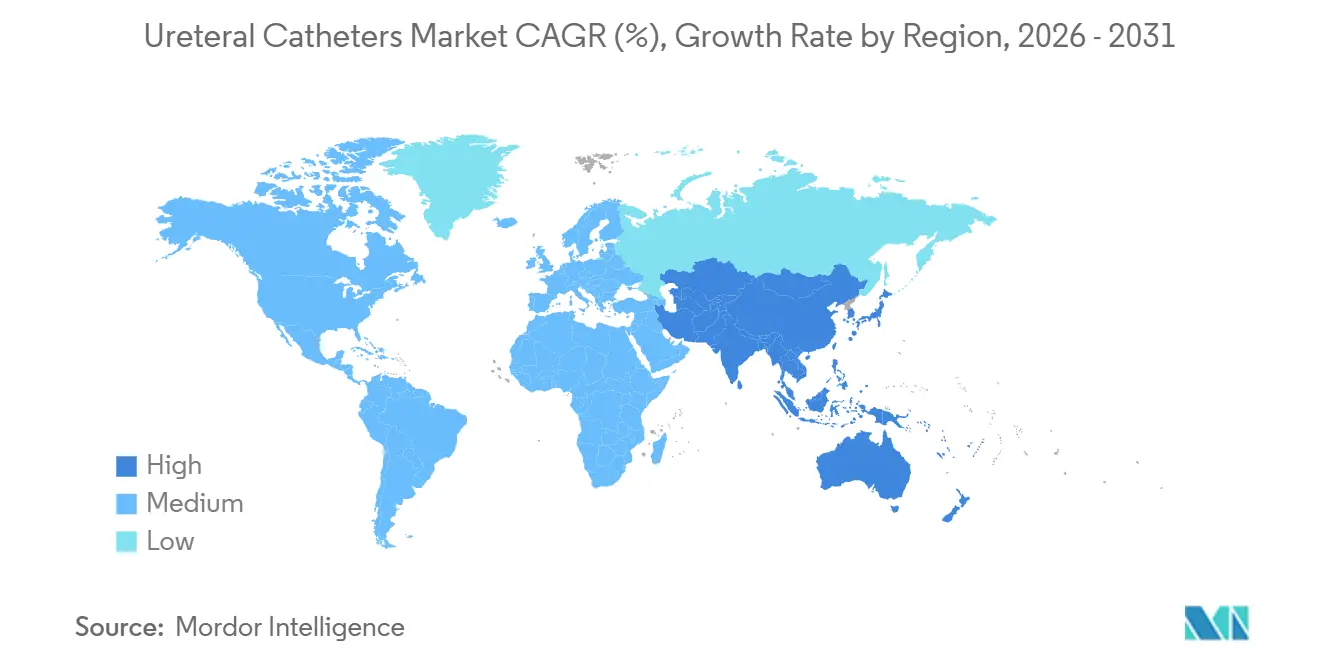
- By geography, North America held 37.94% of revenue in 2025, while Asia-Pacific is projected to grow at a 7.22% CAGR through 2031.
Note: Market size and forecast figures in this report are generated using Mordor Intelligence’s proprietary estimation framework, updated with the latest available data and insights as of January 2026.
Market Trends and Insights
Drivers Impact Analysis of Ureteral Catheters Market*
| Driver | % Impact on CAGR Forecast | Geographic Relevance | Impact Timeline |
|---|---|---|---|
| Rising Burden of Urolithiasis and Ureteral Obstruction | +1.7% | Global, concentrated in Asia, Central Europe, and Latin America | Long term (≥ 4 years) |
| Increasing Adoption of Minimally Invasive Urological Procedures | +1.3% | North America & EU; spill-over to APAC core | Medium term (2–4 years) |
| Growth of Single-Use and Infection-Controlled Catheter Workflows | +0.9% | Global, fastest adoption in North America and Northern Europe | Short term (≤ 2 years) |
| Expansion of Ambulatory Urology and Same-Day Surgery | +0.8% | North America & EU; early gains in South Korea, Japan, Australia | Medium term (2–4 years) |
| Demand for Biocompatible and Hydrophilic Catheter Materials | +0.6% | Global; premium uptake in Germany, UK, France | Long term (≥ 4 years) |
| Procedure-Level Integration of Catheters with Ureteroscopy and Stone-Removal Systems | +0.8% | North America, APAC core; spill-over to MEA private hospitals | Medium term (2–4 years) |
| Source: Mordor Intelligence | |||
Rising Burden of Urolithiasis and Ureteral Obstruction
The clinical burden of urolithiasis provides a durable base of demand for the ureteral catheters market. The December 2025 meta-analysis estimated a pooled global prevalence of 10.85% across 1,276,826 (1.28 million) participants in 22 studies. It reported a prevalence of 12.93% among males and 8.91% among females, a difference that affects the mix of stone-management access procedures used by care providers. Asia recorded 11.8% prevalence, compared with 8.3% in North America, which points to substantial unmet procedural capacity in high-burden regions.[1]Source: “Global Prevalence of Urolithiasis: A Meta-Analysis Accounting for Methodological Heterogeneity,” Frontiers in Urology, frontiersin.org Greater use of ureteroscopy and retrograde intrarenal surgery expands the patient base for catheter procedures. It also increases the addressable patient base across the ureteral catheters market as treatment pathways become more accessible.
Increasing Adoption of Minimally Invasive Urological Procedures
Flexible ureteroscopy and retrograde intrarenal surgery have raised the functional requirements for catheter systems used for access and working channels. A 2025 systematic review and meta-analysis found that flexible and navigable suction ureteral access sheaths achieved a day-1 stone-free rate relative risk of 2.12 against standard sheaths, with p=0.019.[2]Source: “Comparison Between Flexible and Navigable Suction Ureteral Access Sheath and Standard Ureteral Access Sheath During Flexible Ureteroscopy: Systematic Review and Meta-Analysis,” BMC Urology, springer.com The same analysis reported 59% lower overall postoperative complications, with a relative risk of 0.41 and p<0.001. These results make suction capability and navigable tip performance more important in procurement decisions across the ureteral catheters market. The move toward disposable ureteroscopes also supports demand because each procedure requires a compatible access catheter within the procedural kit. The ureteral catheters market benefits when providers view the catheter as a necessary part of a single-use endourology workflow rather than as an isolated supply item.
Growth of Single-Use and Infection-Controlled Catheter Workflows
Infection prevention supports the shift toward individually sterile-packed catheter formats throughout the ureteral catheters market. The International Society for Infectious Diseases reported a catheter-associated urinary tract infection rate of 8.9 per 1,000 urinary catheter days in its 2024 update. The association also described catheter-associated urinary tract infection as an independent mortality risk factor. APIC stated in March 2025 that indwelling urinary catheters are used in up to 16% of hospitalized patients. A 2024 study across 299 intensive care units in 32 countries reported an 89% reduction in catheter-associated urinary tract infection rates after a multicomponent intervention, from 14.89 to 1.71 per 1,000 catheter days. These findings strengthen the case for short-duration, single-use protocols, although hospitals still weigh the higher per-procedure cost of advanced systems against budget limits.
Expansion of Ambulatory Urology and Same-Day Surgery
The movement of urological procedures from inpatient settings to outpatient facilities supports higher catheter use in standardized, high-volume settings. MedPAC reported 5,744 Medicare-certified ambulatory surgical centers in the United States in March 2025, including 152 single-specialty centers focused on urology. The total Medicare-certified ambulatory surgical center count had increased 25% over the prior decade. These facilities depend on ready-to-use products that can support predictable case flow and short room turnover times. Management service organizations that operate several urology facilities can also standardize purchasing and direct volume to preferred suppliers. This gives suppliers with a reliable outpatient product range an opportunity in the ureteral catheters market, while also increasing pressure on unit prices through consolidated purchasing.
Restraints Impact Analysis of Ureteral Catheters Market*
| Restraint | (~) % Impact on CAGR Forecast | Geographic Relevance | Impact Timeline |
|---|---|---|---|
| Catheter-Related Infection, Trauma, and Encrustation Risk | -0.3% | Global, concentrated in low- and middle-income countries with high catheter dwell duration | Medium term (2-4 years) |
| Reimbursement and Hospital Cost-Containment Pressure | -0.3% | North America and EU, notably Germany’s G-DRG system | Medium term (2-4 years) |
| Difficult Follow-Up for Temporary Devices and Forgotten Indwelling Products | -0.1% | Global, acute in Asia-Pacific secondary care settings | Long term (≥ 4 years) |
| Dependence on Specialized Urological Skills and Procedure Infrastructure | -0.1% | Middle East and Africa, South America, and tier-2 Asia-Pacific markets | Long term (≥ 4 years) |
| Source: Mordor Intelligence | |||
Catheter-Related Infection, Trauma, and Encrustation Risk
Encrustation, biofilm formation, and insertion trauma limit use in long-indwelling and repeat-use scenarios across the ureteral catheters market. A 2025 in vitro study found a mean encrustation weight gain of 0.76±0.45 mg/mm for silicon-covered metallic ureteral stents and 1.30±0.81 mg/mm for PTFE-covered alternatives, with p=0.004. The result shows that material performance can differ substantially and can complicate procurement decisions. A separate 2025 randomized study found lower calcium and magnesium adherence on stents using Percushield and pHreeCoat technologies than on Hydroplus-coated controls. Material improvements can address some risks, but they also add cost and complicate product selection. Placement and retrieval can also cause ureteral trauma in patients with fragile tissue, which may limit the case for frequent exchanges.
Reimbursement and Hospital Cost-Containment Pressure
Bundled reimbursement structures can constrain spending on premium catheter products in the ureteral catheter market. In Germany, the 2025 Hybrid DRG framework included ureteral stone removal among the covered procedures, which kept catheter costs within a fixed case payment. This encourages providers to select lower-cost alternatives when clinical outcome data do not clearly justify a premium. In the United States, payment penalties associated with elevated catheter-associated urinary tract infection rates create a separate financial pressure on hospitals. Providers must control infection-related costs while also limiting the per-procedure spend on catheter systems. This tension can slow uptake of higher-specification designs even when their clinical rationale is strong.
*Our forecasts treat driver/restraint impacts as directional, not additive. The impact forecasts reflect baseline growth, mix effects, and variable interactions.
Ureteral Catheters Market Segment Analysis
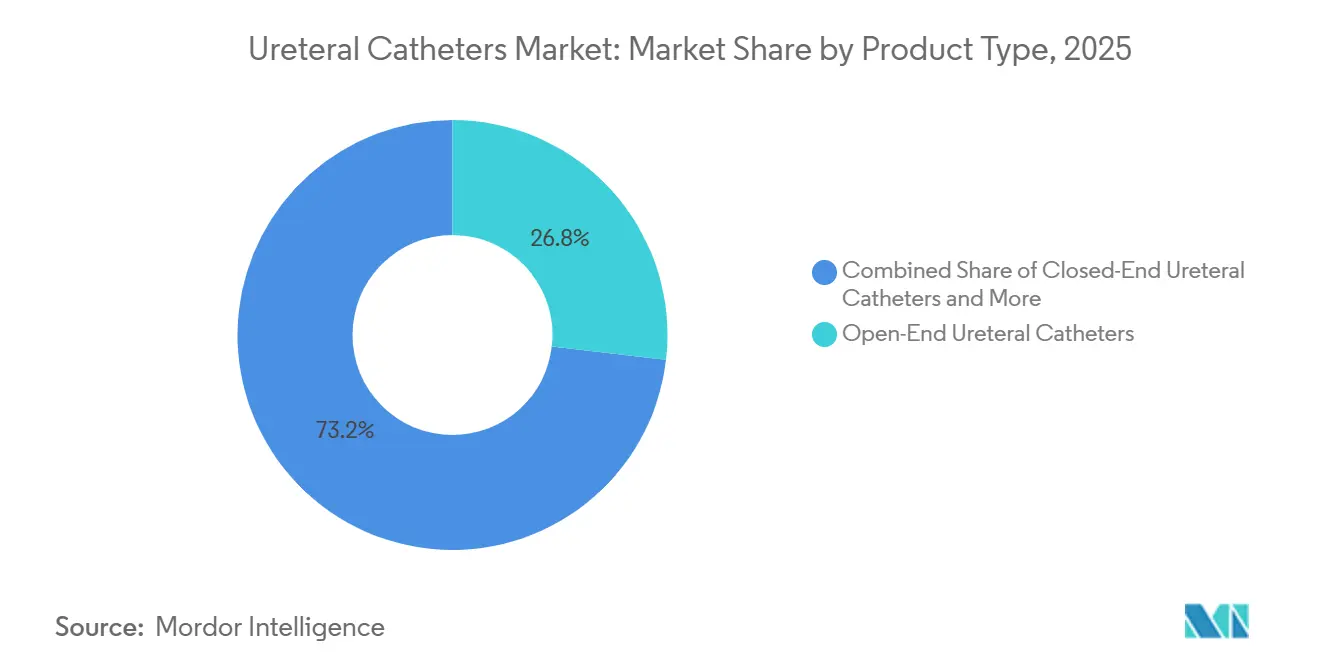
Open-end ureteral catheters held 26.84% of the ureteral catheters market share in 2025, the largest share among product configurations. Their broad use in retrograde pyelography, ureter drainage, and pre-ureteroscopy catheterization supports steady procedural demand. Availability in several French sizes and from many suppliers supports clinical flexibility while sustaining competitive pricing and limiting revenue per unit. Ureteral access catheters are projected to record a 7.14% CAGR through 2031. Their growth reflects increased use of disposable flexible ureteroscopy and suction-enabled sheath systems across the ureteral catheters market.
Cook Medical commercially launches the Syfonix suction ureteral access sheath in March 2026 for the United States and Canada. The single-use sheath has inner diameters from 9 Fr to 12 Fr and provides fingertip suction control during ureteroscopic kidney stone management. Cook Medical also launches the 7.5 Fr Ascend single-use flexible ureteroscope with the product line. Closed-end and dual-lumen products retain defined roles in contrast injection and complex drainage, while balloon catheters remain linked to ureteral stricture dilation. Diagnostic and retrograde pyelography products continue to support imaging-oriented procedures in the ureteral catheters market.



By Material:
PTFE Gains Share on Encrustation PerformancePolyurethane accounted for 38.57% of revenue in 2025 and remained the leading material type. Its pushability, tensile strength, memory effect, and kink resistance support use across many ureteral catheter designs. Hydrophilic or PTFE surface coatings can help polyurethane products address long-indwelling use while retaining their role against newer materials. PTFE-based materials are forecast to grow at a 6.68% CAGR through 2031. Their chemical inertness, low insertion friction, and resistance to biofilm adhesion support their uptake in the ureteral catheters market.
A 2025 study described water-dispersible antibacterial polyurethane coatings based on a piperazine formulation for medical catheters.[3]Source: “1,4-Bis(2-hydroxyethyl)piperazine-derived Water-Dispersible and Antibacterial Polyurethane Coatings for Medical Catheters,” Journal of Materials Chemistry B, rsc.orgThis work showed that material choice and surface technology are becoming more closely linked. Silicone remains relevant for long-term stenting applications where biocompatibility and infection resistance are prioritized over column strength. Polyvinyl chloride and polyethylene continue to serve cost-sensitive purchasing environments, while nylon provides a more rigid alternative for diagnostic catheterization requiring consistent contrast delivery. The ureteral catheters industry, therefore, has material demand that varies by procedure duration, clinical need, and tender conditions.
By Application:
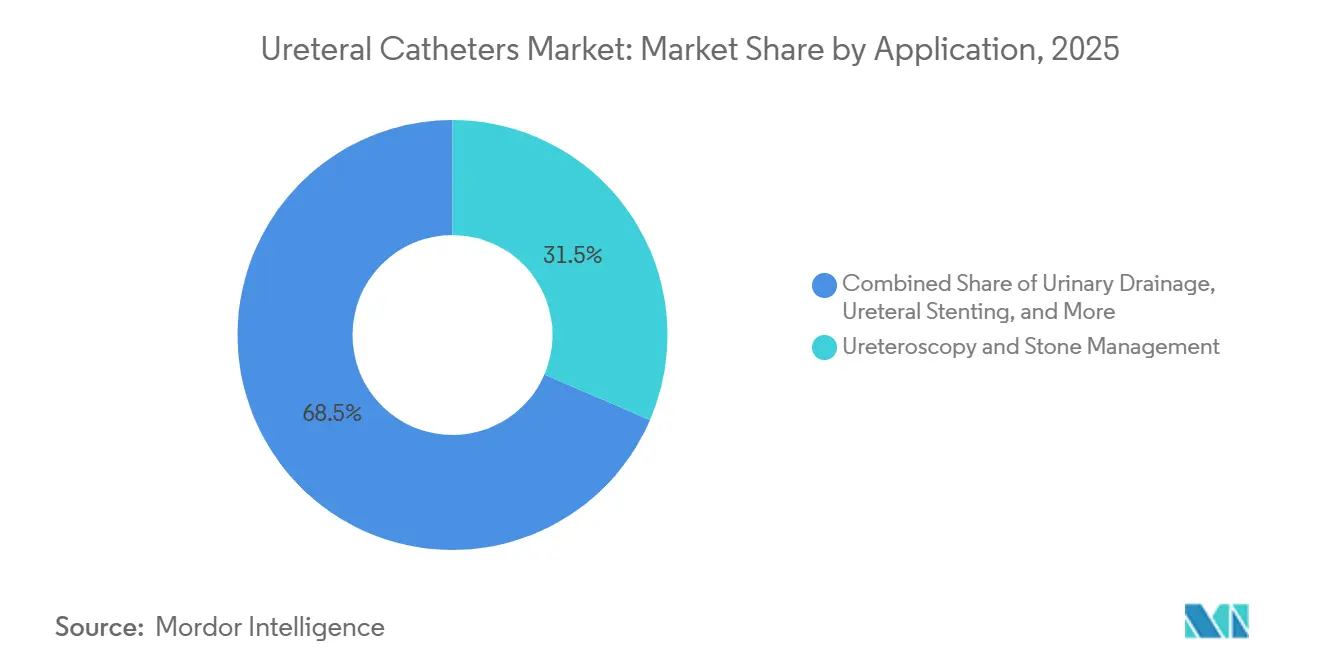
Stone Management Integration Expands System-Level Catheter DemandUreteroscopy and stone management accounted for 31.46% of the ureteral catheters market size in 2025. This position reflects the need for catheterization at several stages of flexible ureteroscopy. A single case can involve an access sheath, a working-channel catheter, and a post-procedure double-J stent. The increasing use of disposable devices raises catheter consumption per procedure. Boston Scientific received FDA clearance for its Asurys Fluid Management System in March 2026, which regulates irrigation inflow in real time to help maintain intrarenal pressure during ureteroscopy with the LithoVue Elite single-use digital flexible ureteroscope.
Ureteral stenting is the fastest-growing application, with a projected CAGR of 6.91% through 2031. More frequent prophylactic post-ureteroscopy stenting can increase device use even after complete stone clearance. Urinary drainage remains a large and stable application in oncology, obstetric surgery, and pelvic surgery. These procedures need ureteral patency management and may require repeated catheterization, while diagnostic imaging and retrograde pyelography remain persistent applications in the ureteral catheters market. Clinical outcomes associated with suction access sheaths also affect stone management protocols, with the 2025 meta-analysis reporting 67% fewer postoperative fevers than standard sheaths, with a relative risk of 0.33 and p<0.001.
By End User:
Hospitals Dominate Volume While ASCs Capture the Fastest Procedural GrowthHospitals held 55.72% of end-user revenue in 2025. They remain the principal location for high-complexity urological care, including obstructive uropathy management, oncology-related stenting, and emergency catheterization after surgery. Group purchasing agreements and annual supply contracts create switching barriers for suppliers in the ureteral catheters market. These arrangements favor brands with validated products and dependable service. Specialty urology clinics and diagnostic or interventional radiology centers represent smaller but growing sources of demand when image-guided placement is needed for obstructed oncology patients.
Ambulatory surgical centers are forecast to grow at a 6.78% CAGR through 2031. Their expansion is supported by more outpatient capacity and broader reimbursement inclusion for urology procedures. MedPAC’s 2025 count of 152 Medicare-certified urology-only ambulatory surgical centers highlights the scale of this setting in the United States.[4]Source: “Ambulatory Surgical Center Services: Status Report,” Medicare Payment Advisory Commission, medpac.gov These centers prefer ready-to-use single-use products that fit standardized operating processes. Urology management service organizations can concentrate stone-management volumes in affiliated centers, creating recurring purchasing patterns for preferred suppliers in the ureteral catheters market.
Geography Analysis
North America Ureteral Catheters Market
North America accounted for 37.94% of global revenue in 2025 and held the largest regional position in the ureteral catheters market. The United States supports high per-capita stone management procedure volumes and a developed reimbursement structure for urology services. The shift of procedures to ambulatory surgical centers is increasing catheter use at outpatient sites, and CMS issued a July 2025 payment system update for that setting. Canada maintains tertiary urology volumes through provincial health systems and tends to favor competitively priced disposable formats. Mexico is expanding through private-hospital capacity and broader insured population coverage under health system reform programs.
APAC, Middle East and South America Ureteral Catheters Market
Asia-Pacific is projected to grow at a 7.22% CAGR through 2031, making it the fastest-growing region in the ureteral catheters market. Demographic aging, healthcare investment, and local manufacturing capacity support this trajectory. China benefits from expanding infrastructure, wider insurance coverage, stronger imaging access, and wider availability of advanced urology procedures beyond top-tier hospitals. Volume-based procurement can reduce prices for standard catheter formats while preserving interest in advanced coated and single-use designs that meet tender requirements. India is expanding urology infrastructure in tier-2 cities, while South Korea, Japan, GCC countries, Brazil, and Argentina add demand through advanced endourology, older populations, private hospitals, and tertiary care.
Europe Ureteral Catheters Market
Europe contributed a significant share of revenue in 2025, with Germany, the United Kingdom, and France as major volume markets. Germany’s bundled payment structure for ureteral stone removal constrains premium device adoption when benefits are not clearly differentiated. NICE guidance on the Memokath 051 Ureter recommended prospective collection of data on patient selection, stent choice, and adverse events for ureteric obstruction management, supporting closer assessment of stent procedure outcomes. Italy, Spain, and the Nordic countries offer growing public-sector procedure volumes, while reimbursement limits and EU medical device rules affect the ureteral catheters market in Europe.

Competitive Landscape
The ureteral catheters market has a moderate-to-fragmented concentration, with no company holding a dominant majority share. Becton, Dickinson and Company, Boston Scientific Corporation, Cook Medical LLC, Olympus Corporation, and Teleflex Incorporated compete with cost-competitive Chinese manufacturers and specialized European firms. Incumbents are broadening their offerings across access sheaths, flexible ureteroscopes, fluid management systems, and post-procedure stents. This helps them offer a more complete endourology workflow to hospitals and ambulatory surgical centers. A broader portfolio can make purchasing more consistent for customers who prefer fewer suppliers and can increase the importance of proven device compatibility.
Teleflex entered definitive agreements in December 2025 to sell its Acute Care, Interventional Urology, and OEM businesses for USD 2.03 billion in a combined transaction. The agreement includes the sale of the Interventional Urology business to Intersurgical Ltd for USD 530 million. The transaction is expected to close in the second half of 2026, subject to regulatory approvals. The ownership change may create opportunities for competitors in the ureteral catheters market, while standard-specification alternatives keep pressure on open-end and retrograde pyelography catheter formats.
Competitive differentiation is centered on surface coatings, single-use design, and procedural ecosystem integration. Hydrophilic, PTFE, and anti-encrustation approaches can improve device performance in clinically demanding cases. Olympus agrees in May 2026 to acquire BioProtect Ltd. for USD 270 million to extend its urological technology portfolio into oncology spacing solutions. The move illustrates the interest of endoscopy platform companies in adjacent technologies that can expand the value of a procedural bundle. Biodegradable and drug-eluting stent designs could reduce retrieval needs and encrustation concerns, while the ureteral catheters industry still depends on validated safety, biocompatibility, and sterilization performance.
Ureteral Catheters Industry Leaders
Becton, Dickinson and Company
Boston Scientific Corporation
Cook Medical LLC
Olympus Corporation
Teleflex Incorporated
- *Disclaimer: Major Players sorted in no particular order
Ureteral Catheters Market Companies Covered in this Report
- Advin Health Care
- Allium Medical Solutions Ltd.
- B. Braun
- Beckton Dickinson
- Boston Scientific
- Coloplast
- Cook Group
- Merit Medical Systems
- Olympus
- optimed Medizinische Instrumente GmbH
- PNN Medical A/S
- ROCAMED
- Teleflex
- UROMED Kurt Drews KG
- UROTECH GmbH
- Well Lead Medical Co., Ltd.
- Zhejiang Chuangxiang Medical Technology Co., Ltd.

Recent Industry Developments in Ureteral Catheters Market
- March 2026: Cook Medical commercially launched the Syfonix suction ureteral access sheath and the 7.5 Fr Ascend single-use flexible ureteroscope in the United States and Canada. The Syfonix is a single-use access sheath with inner diameters from 9 Fr to 12 Fr. It is designed for ureteroscopic kidney stone management and uses fingertip suction control.
- December 2025: Teleflex Incorporated entered definitive agreements to sell its Acute Care and Interventional Urology businesses to Intersurgical Ltd. for USD 530 million. The sale formed part of a combined USD 2.03 billion transaction and is expected to close in the second half of 2026, subject to regulatory approval.


Global Ureteral Catheters Market Report Scope
According to the report's scope, ureteral catheters are minimally invasive urology devices used to access, drain, dilate, and facilitate diagnostic or therapeutic procedures within the ureter and upper urinary tract. These devices are commonly used in urinary drainage, ureteroscopy, stone management, retrograde pyelography, and ureteral stenting procedures.
The ureteral catheters market is segmented by product type, material, application, end user, and geography. By product type, the market is segmented into open-end ureteral catheters, closed-end ureteral catheters, dual-lumen ureteral catheters, balloon ureteral catheters, ureteral access catheters, diagnostic and retrograde pyelography catheters, and other ureteral catheters. By material, the market is segmented into silicone, polyurethane, polyvinyl chloride, polyethylene, polytetrafluoroethylene, nylon, and other materials. By application, the market is segmented into urinary drainage, ureteroscopy and stone management, ureteral stenting, diagnostic imaging and retrograde pyelography, and other applications. By end user, the market is segmented into hospitals, ambulatory surgical centers, specialty urology clinics, diagnostic and interventional radiology centers, and other end users. Geographically, the market is analyzed across North America, Europe, Asia-Pacific, the Middle East and Africa, and South America. The market report also covers the estimated market sizes and trends for 17 countries across major regions globally. For each segment, the market size and forecast are provided in terms of value (USD).
| Open-End Ureteral Catheters |
| Closed-End Ureteral Catheters |
| Dual-Lumen Ureteral Catheters |
| Balloon Ureteral Catheters |
| Ureteral Access Catheters |
| Diagnostic and Retrograde Pyelography Catheters |
| Other Ureteral Catheters |
| Silicone |
| Polyurethane |
| Polyvinyl Chloride |
| Polyethylene |
| Polytetrafluoroethylene |
| Nylon |
| Other Materials |
| Urinary Drainage |
| Ureteroscopy and Stone Management |
| Ureteral Stenting |
| Diagnostic Imaging and Retrograde Pyelography |
| Other Applications |
| Hospitals |
| Ambulatory Surgical Centers |
| Specialty Urology Clinics |
| Diagnostic and Interventional Radiology Centers |
| Other End Users |
| North America | United States |
| Canada | |
| Mexico | |
| Europe | Germany |
| United Kingdom | |
| France | |
| Italy | |
| Spain | |
| Rest of Europe | |
| Asia-Pacific | China |
| Japan | |
| India | |
| Australia | |
| South Korea | |
| Rest of Asia-Pacific | |
| Middle East and Africa | GCC |
| South Africa | |
| Rest of Middle East and Africa | |
| South America | Brazil |
| Argentina | |
| Rest of South America |
| By Product Type | Open-End Ureteral Catheters | |
| Closed-End Ureteral Catheters | ||
| Dual-Lumen Ureteral Catheters | ||
| Balloon Ureteral Catheters | ||
| Ureteral Access Catheters | ||
| Diagnostic and Retrograde Pyelography Catheters | ||
| Other Ureteral Catheters | ||
| By Material | Silicone | |
| Polyurethane | ||
| Polyvinyl Chloride | ||
| Polyethylene | ||
| Polytetrafluoroethylene | ||
| Nylon | ||
| Other Materials | ||
| By Application | Urinary Drainage | |
| Ureteroscopy and Stone Management | ||
| Ureteral Stenting | ||
| Diagnostic Imaging and Retrograde Pyelography | ||
| Other Applications | ||
| By End User | Hospitals | |
| Ambulatory Surgical Centers | ||
| Specialty Urology Clinics | ||
| Diagnostic and Interventional Radiology Centers | ||
| Other End Users | ||
| By Geography | North America | United States |
| Canada | ||
| Mexico | ||
| Europe | Germany | |
| United Kingdom | ||
| France | ||
| Italy | ||
| Spain | ||
| Rest of Europe | ||
| Asia-Pacific | China | |
| Japan | ||
| India | ||
| Australia | ||
| South Korea | ||
| Rest of Asia-Pacific | ||
| Middle East and Africa | GCC | |
| South Africa | ||
| Rest of Middle East and Africa | ||
| South America | Brazil | |
| Argentina | ||
| Rest of South America | ||


Key Questions Answered in the Report
What is the projected value of the ureteral catheters market by 2031?
The market is projected to reach USD 2.77 billion by 2031, from USD 2.09 billion in 2026, at a 5.86% CAGR. The outlook is supported by demand for stone management, urinary drainage, diagnostic procedures, and ureteral stenting.
Which ureteral catheter product type is growing fastest?
Ureteral access catheters are projected to grow at a 7.14% CAGR through 2031 as single-use flexible ureteroscopy and suction-enabled systems gain use. These products support procedural access and can be paired with disposable endourology tools.
Why are single-use ureteral catheters gaining acceptance?
Single-use formats support infection-control protocols and predictable outpatient workflows. APIC reported that indwelling urinary catheters are placed in up to 16% of hospitalized patients in 2025. Providers also value sterile, ready-to-use products in high-throughput settings.
Which material category is projected to expand fastest?
PTFE-based catheter materials are projected to grow at a 6.68% CAGR through 2031 because of their inert surface, low friction, and resistance to biofilm adhesion. These features are relevant in tortuous or strictured ureters and in longer-duration applications.
Which application uses the largest share of ureteral catheter revenue?
Ureteroscopy and stone management held 31.46% of revenue in 2025 because catheter systems are used during access, treatment, and post-procedure stenting. A single flexible ureteroscopy case can require several catheter components.
Which region is expected to grow fastest through 2031?
Asia-Pacific is forecast to grow at a 7.22% CAGR through 2031, supported by aging populations, healthcare investment, and expanding urology capacity. China and India are important contributors because they are increasing procedure capacity and access to urology services.
Page last updated on:


 Your data is secure and never sold or shared.


