
United States Office-Based Labs Market Size and Share
Market Overview
| Study Period | 2020 - 2031 |
|---|---|
| Forecast Data Period | 2026 - 2031 |
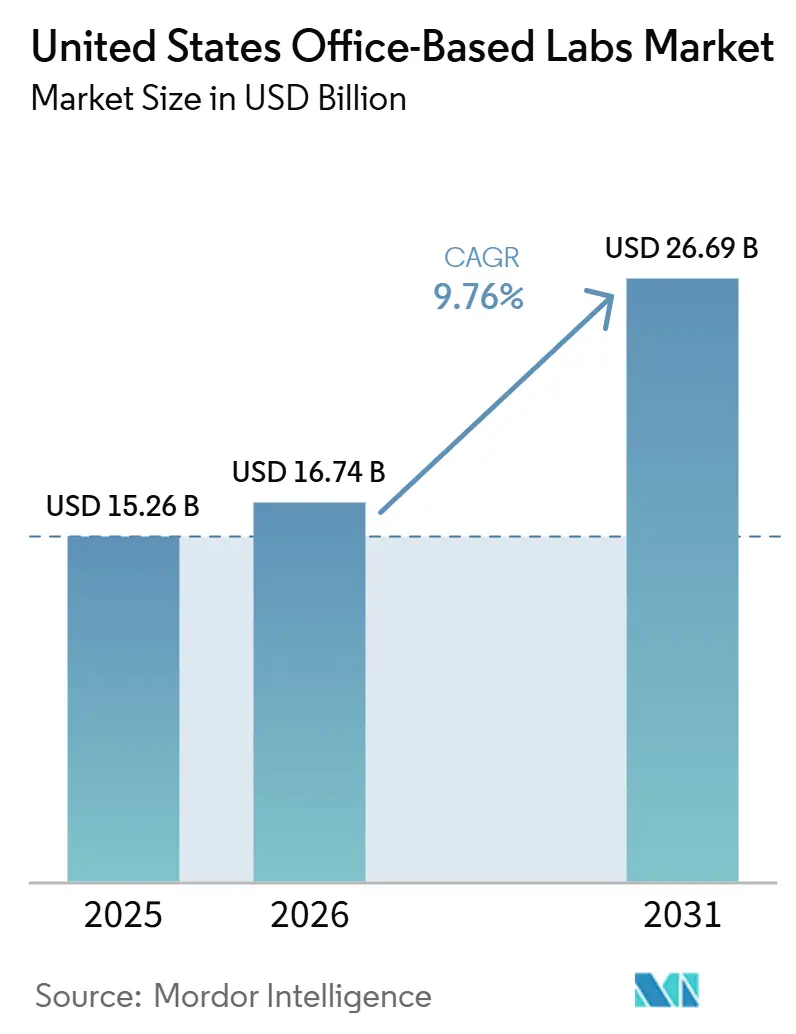
| Base Year Market Size (2025) | USD 15.26 Billion |
| Market Size (2026) | USD 16.74 Billion |
| Market Size (2031) | USD 26.69 Billion |
| Growth Rate (2026 - 2031) | 9.76 % |
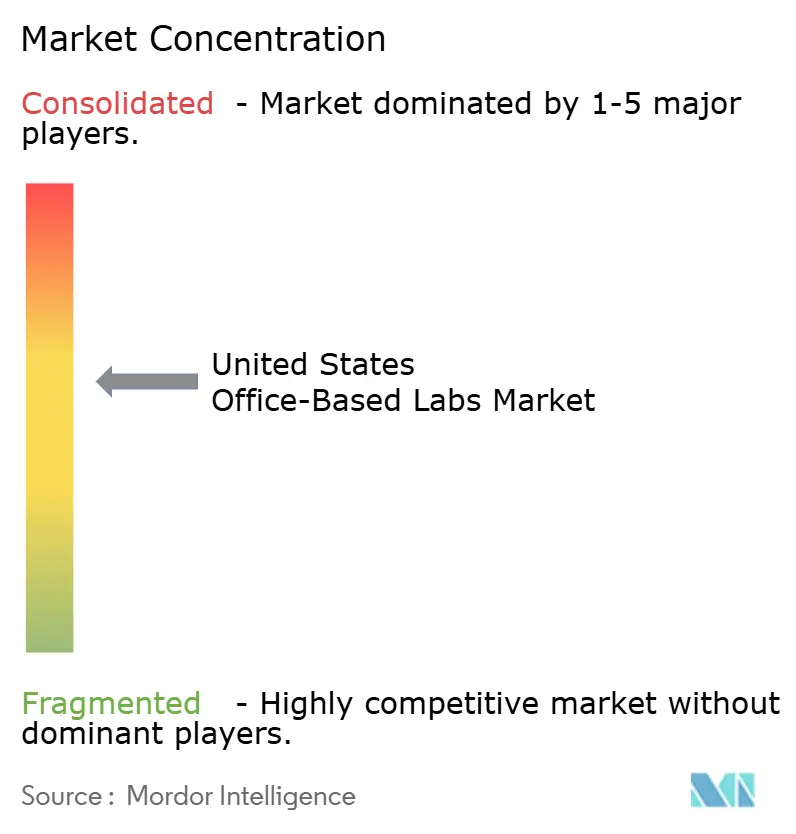
| Market Concentration | Low |
Major Players *Disclaimer: Major Players sorted in no particular order Image © Mordor Intelligence. Reuse requires attribution under CC BY 4.0. | |
United States Office-Based Labs Market Analysis by Mordor Intelligence
The United States Office-Based Labs Market size was valued at USD 15.26 billion in 2025 and is estimated to grow from USD 16.74 billion in 2026 to reach USD 26.69 billion by 2031, at a CAGR of 9.76% during the forecast period (2026-2031).
The United States office-based labs market is shaped by the continued movement of appropriate outpatient procedures from hospital outpatient departments into physician-led settings. Medicare data showed that the office-based share of peripheral vascular interventions rose while the hospital outpatient share declined between 2019 and 2023, which supports this change in care delivery. The 2026 Medicare Physician Fee Schedule revised the indirect practice expense allocation, which makes the payment environment more relevant for practices that provide care in offices. Demand is also supported by cardiovascular and peripheral artery disease care, where timely assessment and treatment are important. The United States office-based labs market must still manage changing reimbursement, compliance review, staffing shortages, and state-level facility rules.
Key Report Takeaways
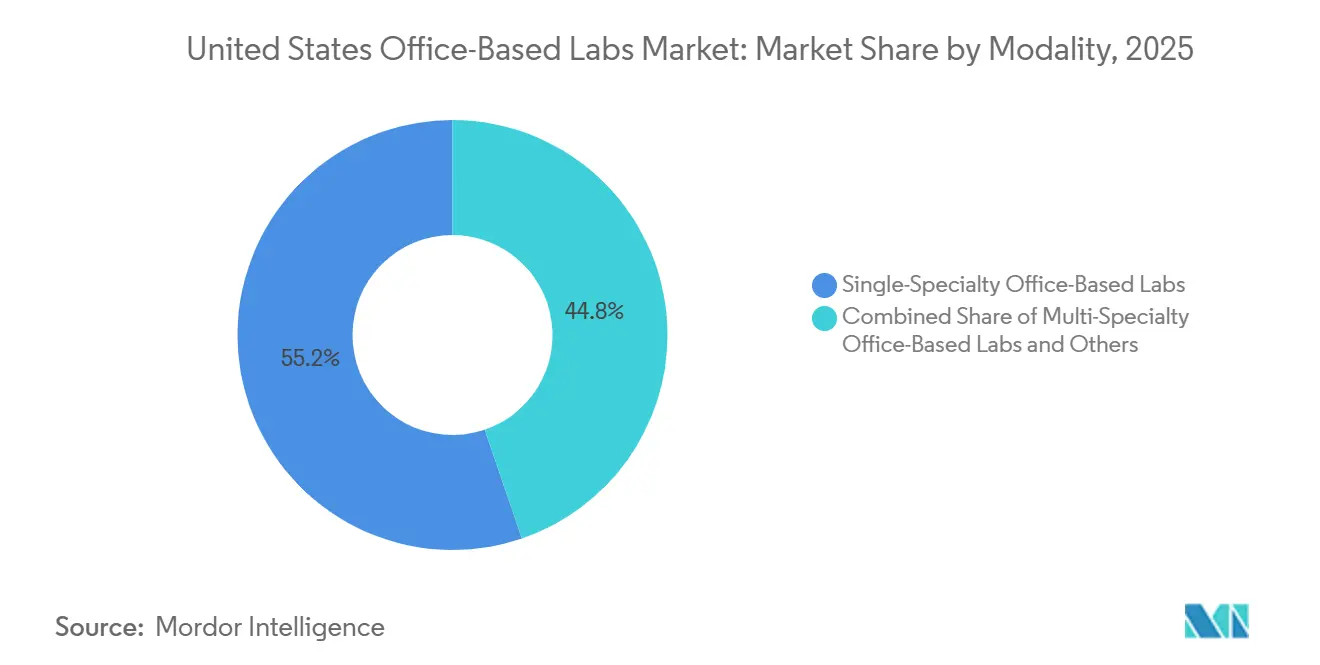
By modality, single-specialty office-based labs held 55.24% of revenue in 2025, while hybrid office-based labs are forecast to grow at an 11.34% CAGR through 2031.
By service type, peripheral vascular intervention accounted for 44.68% of revenue in 2025, while venous intervention is projected to grow at an 11.48% CAGR through 2031.
By facility type, physician-owned facilities held 41.83% of revenue in 2025, while private-equity-backed platforms are expected to expand at an 11.42% CAGR through 2031.
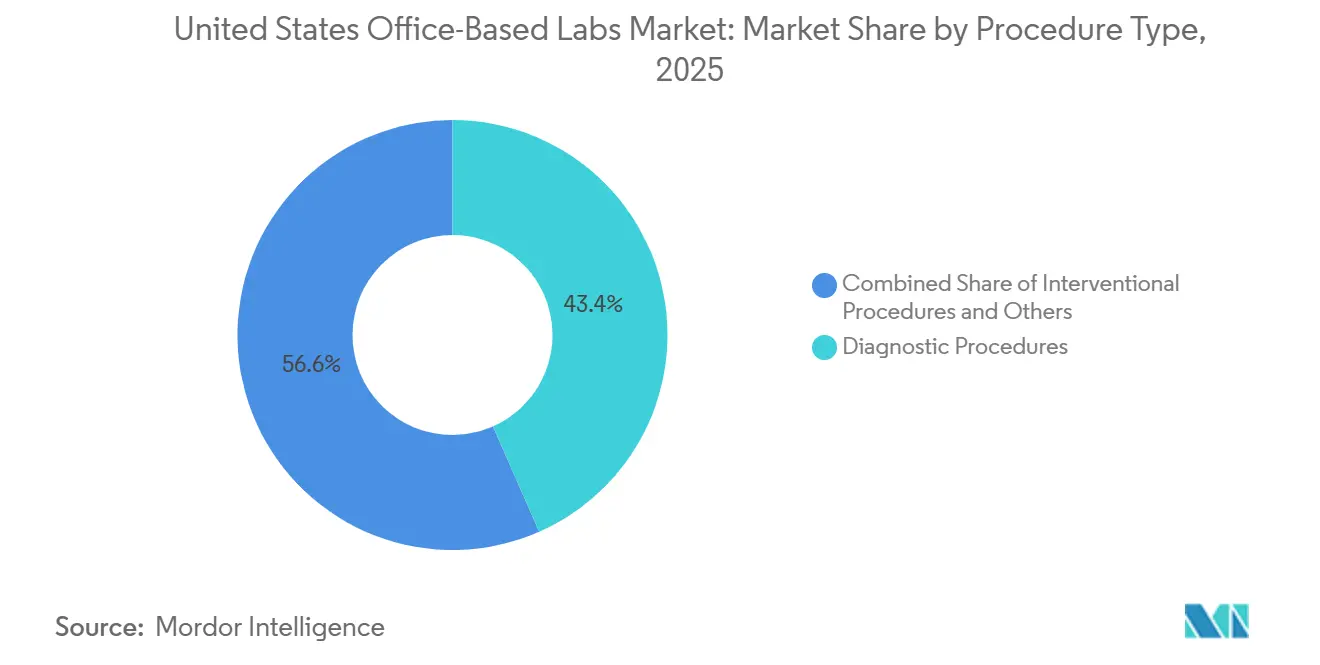
By procedure type, diagnostic procedures held 43.38% of revenue in 2025, while interventional procedures are forecast to grow at a 10.88% CAGR through 2031.
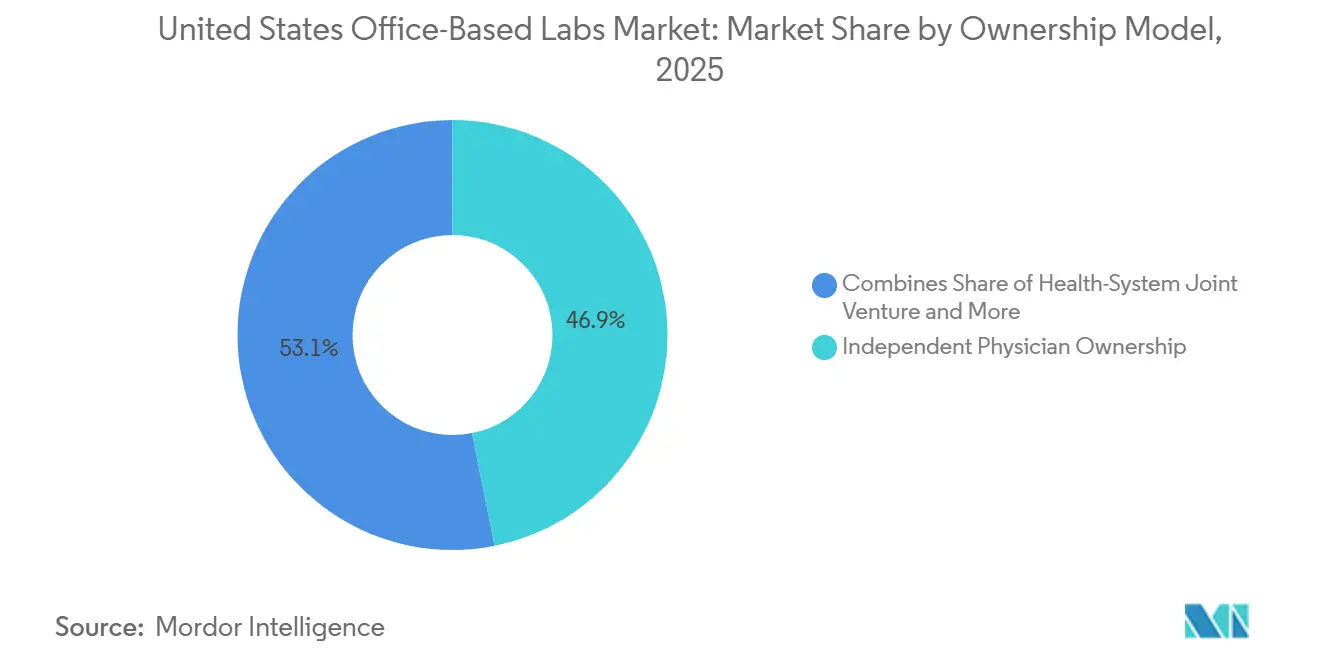
By ownership model, independent physician ownership accounted for 46.87% of revenue in 2025, while corporate and private-equity ownership is projected to grow at a 10.65% CAGR through 2031.
Note: Market size and forecast figures in this report are generated using Mordor Intelligence’s proprietary estimation framework, updated with the latest available data and insights as of January 2026.
United States Office-Based Labs Market Trends and Insights
Drivers Impact Analysis*
| Driver | (~) % Impact on CAGR Forecast | Geographic Relevance | Impact Timeline |
|---|---|---|---|
| Migration from Hospital Outpatient Departments to Office-Based Labs | +2.5% | National, with concentration in Texas, Florida, and Arizona | Long term (≥ 4 years) |
| Demand for Lower-Cost and Convenient Outpatient Care | +2.0% | National, strongest in high-density metropolitan markets | Short term (≤ 2 years) |
| Peripheral Artery Disease and Cardiovascular Conditions | +1.8% | National, with a higher burden in the Southeast, Sun Belt, and aging Rust Belt areas | Long term (≥ 4 years) |
| Point-of-Care Diagnostics and Hybrid OBL-ASC Models | +1.2% | National, with greater use in primary-care-dense states and states without CON restrictions | Medium term (2-4 years) |
| Private-Equity-Backed Specialty Practice Consolidation | +0.8% | National, concentrated in large metropolitan physician markets | Short term (≤ 2 years) |
| Hybrid Office-Based Lab and Ambulatory Surgery Center Models | +0.9% | Texas, Florida, Tennessee, Georgia, and adjacent markets | Medium term (2-4 years) |
| Source: Mordor Intelligence | |||
Migration of Procedures from Hospital Outpatient Departments to Office-Based Labs
The move of suitable vascular and interventional procedures into office settings is a central driver for the United States office-based labs market. The Medicare share of peripheral vascular interventions performed in office-based labs increased from 37.80% in 2019 to 46.50% in 2023. Over the same period, the hospital outpatient department share declined from 35.10% to 27.60%.[1]U.S. Department of Health and Human Services Office of Inspector General, “Medicare Part B Billing and Utilization Trends for Office-Based Peripheral Vascular Procedures, 2019–2023,” U.S. Department of Health and Human Services Office of Inspector General, oig.hhs.gov. This pattern shows that the site of care has continued to change even when total payment conditions have been uneven. CMS added 547 procedures to the 2026 ASC Covered Procedures List, expanding the range of outpatient work that can be considered in ambulatory settings as safety standards permit. The phaseout of the inpatient-only list also gives providers a longer path for evaluating procedures outside the hospital when clinical requirements are met. The United States office-based labs market benefits when physicians can plan patient pathways around the most suitable setting rather than a facility model alone.
Lower-Cost Care, Convenient Access, and Point-of-Care Diagnostics
The cost difference between hospital outpatient departments and office or independent laboratory settings remains important for the United States office-based labs market. A 2024 analysis found that the same clinical laboratory tests in hospital outpatient departments cost 3 to 5 times more than tests delivered in physician offices or independent laboratories. The lower-cost setting can also make access more practical when patients need assessment, testing, and follow-up within a shorter care pathway. A 2025 study of Medicare beneficiaries with peripheral artery disease found a median time to treatment of 56 days in office-based settings, compared with 84 days in hospital settings. CLIA-waived point-of-care testing allows qualifying practices to add selected diagnostic services after meeting certificate requirements. This capability can support same-visit clinical decisions without changing the need for appropriate oversight. Hybrid OBL and ASC models add flexibility because operators can use separate reimbursement and operating frameworks on different days, although they cannot operate both models in the same space at the same time.
Peripheral Artery Disease and Cardiovascular Conditions
Peripheral artery disease and cardiovascular conditions provide a substantial clinical base for the United States office-based laboratories market. The American Heart Association reported that coronary heart disease accounted for 39.50% of cardiovascular disease deaths in the United States in 2022. A 2025 primary care analysis covering 2.3 million patients found that individuals aged 60 to 79 accounted for 64.00% of documented peripheral artery disease diagnoses.[2]“Peripheral Artery Disease in US Primary Care Practices: A Retrospective EHR-Based Analysis from 2018 to 2022,” Journal of General Internal Medicine, link.springer.com. This age group includes many Medicare beneficiaries who use vascular services. In 2022, office-based laboratories performed 57.20% of peripheral vascular interventions for Medicare beneficiaries with peripheral artery disease, up from 48.30% in 2017. The ongoing need for vascular assessment, imaging, and treatment continues to support procedure demand. The United States office-based laboratories market also relies on clear referral, eligibility, and follow-up processes for these patients.
Specialty Practice Consolidation and Hybrid Operating Models
The United States office-based labs market is also affected by the consolidation of procedure-intensive specialty practices. Management services organizations can provide billing support, technology, purchasing coordination, and payer contracting while physicians retain their practice ownership. These services can be useful for groups that need more administrative capacity but do not want full employment by a health system. The hybrid OBL and ASC approach provides another option for groups with varied procedure mixes. It allows a site to use its space under different certified models on designated days, subject to separate licensure and operational requirements. State rules remain decisive because facility entry barriers differ widely across the country. A 2026 study found that office-based lab prevalence in vascular surgery varied with state regulatory permissiveness, showing why local policy shapes the pace of expansion.
Restraints Impact Analysis*
| Restraint | (~) % Impact on CAGR Forecast | Geographic Relevance | Impact Timeline |
|---|---|---|---|
| Reimbursement Pressure and Physician Fee Schedule Volatility | -1.5% | National, most acute in high-volume Medicare markets across the Southeast and Sun Belt | Short term (≤ 2 years) |
| High Capital Requirements and Utilization Risk | -1.0% | National, especially rural and small-market entrants without institutional capital access | Medium term (2-4 years) |
| State Facility and Certificate-of-Need Requirements | -0.8% | States with active CON programs, including New York, Virginia, North Carolina, Massachusetts, and Florida | Long term (≥ 4 years) |
| Limited Availability of Qualified Laboratory and Procedural Staff | -0.7% | National, with greater pressure in rural areas and states with fewer training programs | Long term (≥ 4 years) |
| Source: Mordor Intelligence | |||
Reimbursement Pressure, Capital Needs, and State Requirements
Reimbursement volatility is an immediate operating constraint for the United States office-based labs market. Total Medicare Part B payments for peripheral vascular procedures fell 33% from USD 1.40 billion in 2019 to USD 970 million in 2023, even as office-based procedure activity increased. This result shows that rising volumes do not always protect revenue per case when payment rates change. The 2026 Medicare Physician Fee Schedule changed the indirect practice expense methodology, but future payment updates can still alter practice economics. New facilities also face equipment, staffing, compliance, and utilization costs before achieving stable volumes. Certificate-of-need requirements and other state facility rules can add time and uncertainty, particularly in states with active review programs. These barriers can favor established providers with capital, operating experience, and established referral relationships.
Limited Availability of Qualified Laboratory and Procedural Staff
Workforce availability is a longer-term restraint on the United States office-based labs market. The American Society for Clinical Laboratory Science reported an estimated shortage of 20,000 to 25,000 laboratory professionals in U.S. and Canadian laboratories. The Bureau of Labor Statistics projects 13% growth in demand for medical laboratory technologists and technicians, while accredited programs produce 5,000 graduates annually. The American Society for Clinical Pathology reported a 25% laboratory vacancy rate in its 2024 survey, with salary competitiveness and career progression identified as recruitment concerns.[3]American Society for Clinical Laboratory Science, “Invisible Hands, Essential Work,” American Society for Clinical Laboratory Science, ascls.org. Staffing gaps can restrict operating hours, delay service additions, and raise labor costs for smaller facilities. Federal workforce proposals may help the training pipeline, but the effect on operating capacity will take time. Providers therefore need to align service expansion with the availability of laboratory and procedural teams.
*Our forecasts treat driver/restraint impacts as directional, not additive. The impact forecasts reflect baseline growth, mix effects, and variable interactions.
Segment Analysis
By Modality: Single-Specialty Labs Maintain the Broadest Revenue Base
Single-specialty office-based labs held 55.24% of the United States office-based labs market share in 2025. Their position reflects the established presence of vascular and endovascular labs, cardiology-focused labs, and pain management labs. These settings commonly align equipment, staff training, referral patterns, and care protocols around a defined procedure area. The 2026 Physician Fee Schedule changes increased the relevance of office-based cardiology practice expenses for providers that have made these investments. Ophthalmology-focused and gastroenterology-focused facilities can also fit the single-specialty model when procedure volume is sufficient. Orthopedic and spine services are developing as minimally invasive procedures move into suitable outpatient settings. The focused model can simplify clinical governance because the facility operates around a narrower service range.
Hybrid office-based labs are projected to grow at an 11.34% CAGR through 2031. These facilities operate as office-based labs on selected days and as Medicare-certified ASCs on other days through a block-lease arrangement. The approach offers access to distinct operating and reimbursement structures. CMS rules prevent concurrent OBL and ASC use in the same space, so scheduling and licensure must be managed carefully. Multi-specialty models give provider groups a way to broaden their procedure mix and reduce reliance on a single service line. Their success depends on whether local demand and staffing can support several specialties within the same operating structure.



By Service Type: Peripheral Vascular Intervention Is the Largest Service Line
Peripheral vascular intervention represented 44.68% of United States office-based labs market share by service type in 2025. The service line is linked to the established use of office-based care for peripheral artery disease among Medicare beneficiaries. In 2022, 57.20% of peripheral vascular interventions for this population were performed in office-based labs. Vascular specialists can use the setting for assessment, imaging, intervention, and follow-up when a patient meets clinical criteria. Cardiovascular and cardiac services are also gaining attention as more outpatient procedures are reviewed for safe delivery outside hospitals. The expansion of appropriate codes and technology does not remove the need for careful patient selection. It instead gives providers more service-line options within the United States office-based labs market.
Venous intervention is expected to record the fastest service-type growth at an 11.48% CAGR through 2031. The service mix includes radiofrequency ablation, endovenous laser therapy, and sclerotherapy for appropriate patients with chronic venous insufficiency. Endovascular intervention and interventional radiology also benefit from the broader availability of percutaneous and image-guided outpatient procedures. CMS added 547 procedures to the 2026 ASC Covered Procedures List, which supports the continued review of such work in ambulatory care environments. Non-vascular procedures include pain management injections, minor orthopedic interventions, and diagnostic imaging. These services can diversify revenue, although operators must maintain the clinical capabilities required for each procedure category.
By Facility Type: Physician-Owned Facilities Remain the Leading Model
Physician-owned facilities accounted for 41.83% of the United States office-based labs market in 2025. This model lets physicians combine professional care delivery with facility operations for qualifying office-based procedures. It has remained important because physicians can organize workflow, equipment, staffing, and scheduling around their own specialty practice. The model also allows closer coordination between the treating physician and the facility team. Physician-group facilities provide a related option for groups that want shared infrastructure without moving immediately to a larger corporate platform. Health-system-affiliated facilities are another route for organizations that want to retain outpatient procedural volume. Their role can increase where hospital systems seek a formal relationship with physicians serving ambulatory patients.
Private-equity-backed platforms are forecast to expand at an 11.42% CAGR through 2031. These platforms often use management services organizations to provide revenue cycle support, procurement, technology, and payer contracting. Imaging-center-affiliated facilities may also build interventional capabilities where imaging equipment and referral pathways already exist. Academic and research institutions can participate through models that combine clinical care with device evaluation and real-world evidence work. The United States office-based labs industry will continue to include several facility types because local capital access and referral networks differ. The balance is likely to shift toward larger structures where independent practices face higher administrative costs or financing needs.
By Procedure Type: Diagnostic Procedures Form the Entry Point
Diagnostic procedures held 43.38% of the United States office-based labs market size by procedure type in 2025. Vascular imaging, Doppler assessment, and point-of-care testing can form the first part of a patient’s care pathway. These services help determine whether an intervention is clinically appropriate and whether it can be completed in the same setting. CLIA-waived testing can be added by practices that obtain the required certificate and follow applicable requirements. Diagnostic capability can improve scheduling and care coordination when it is matched with clear physician oversight. It also gives providers a way to develop patient relationships before a higher-complexity procedure is considered.
Interventional procedures are projected to grow at a 10.88% CAGR through 2031. Atherectomy, angioplasty, and endovascular stenting are becoming more practical in office-based settings as devices and imaging systems evolve. OIG data showed that 75.00% of peripheral vascular procedures in office-based labs included atherectomy in 2023, compared with 22.00% in hospital outpatient departments. This difference shows that office-based providers can attract complex intervention volumes. It also makes documentation, clinical governance, and appropriate-use controls more important. Other procedures include minor surgical and rehabilitative services in orthopedic, pain management, and post-vascular care settings.
By Ownership Model: Independent Physicians Hold the Largest Position
Independent physician ownership represented 46.87% of the United States office-based labs market in 2025. The model has been sustained by physician control over patient care, facility operations, and procedure scheduling. It can be particularly effective where a practice has consistent specialty volumes and established referrals. Independent groups, however, must manage payer contracting, compliance, staffing, technology, and capital planning on their own. Those responsibilities become more demanding as procedure volumes grow. The United States office-based labs industry, therefore includes both fully independent facilities and groups seeking outside administrative support.
Corporate and private-equity ownership is expected to grow at a 10.65% CAGR through 2031. These structures can offer group purchasing, revenue cycle management, technology infrastructure, and broader payer relationships. Health-system joint ventures are an alternative for physicians who want capital access and referral alignment while retaining a degree of autonomy. Management services organizations provide an intermediate structure because they can manage administrative functions while physicians continue to own the practice. State restrictions on investor influence in medical practices can affect how these models are organized. The ownership model selected by each group will depend on its specialty mix, capital needs, local regulation, and preferred level of operating control.
Geography Analysis
The United States office-based labs market has national demand, while state rules create wide differences in facility entry and service mix. Texas, Florida, and Arizona have been identified as areas where lower regulatory barriers support the movement of procedures into office-based settings. Florida and other Sun Belt markets also have large Medicare populations that use vascular and cardiovascular services. The Southeast and Sun Belt have a higher burden of peripheral artery disease and cardiovascular conditions than many other regions. These population and policy conditions can support demand for office-based vascular assessment and intervention. States with fewer facility restrictions may allow providers to respond more quickly when specialty practices seek to expand outpatient capacity.
High-density metropolitan areas are important for the United States office-based labs market because they have commercially insured populations, larger referral networks, and more specialty physicians. Private-equity-backed and corporate platforms are especially concentrated in these markets because they can assemble several practices within a shared administrative structure. Mid-sized markets can offer opportunities where independent physicians lack management-services support and certificate-of-need barriers are limited. In these locations, access to trained laboratory and procedural staff can be as important as local patient demand. Regional operators may compete by offering shorter treatment pathways for patients who would otherwise wait for hospital capacity. A 2025 study reported a 56-day median time to treatment in office-based settings for Medicare beneficiaries with peripheral artery disease, compared with 84 days in hospital settings.
States with active certificate-of-need programs can experience slower facility development. New York, Virginia, North Carolina, Massachusetts, and Florida are identified in the supplied assessment as markets where these rules are relevant. New York updated its certificate-of-need regulations in 2025, including changes to review thresholds and a self-certification path for some capital projects. Rural areas face a different barrier because staffing shortages can limit the operating hours and service range of a new facility. The geographic outcome is not a single national pattern. It is a combination of disease burden, payer mix, physician density, workforce availability, and the state rules that govern facilities.
Competitive Landscape
The United States office-based labs market is fragmented, with no single operator described as having dominant national scale. Competition includes independent physician-owned labs, multisite specialty platforms, health-system-affiliated centers, and corporate ambulatory surgery operators with related outpatient capabilities. Providers compete through physician recruitment, reliable scheduling, specialty equipment, clinical quality, and payer relationships. The competitive field is also shaped by whether a provider can build administrative support without taking control away from the treating physician. Larger organizations can bring established systems for billing, procurement, compliance, and data management. Smaller operators can remain competitive where they have strong referral relationships and a focused specialty service line.
Surgery Partners' strategy shows how larger outpatient operators can expand through physician alignment and facility acquisition. The company also operates 74 surgical robots, which shows the importance of technology access in the broader ambulatory setting. These capabilities are adjacent to office-based care and can influence physician expectations for outpatient partnerships.
Compliance is becoming a clearer competitive requirement in the United States office-based labs market. The OIG identified USD 105 million in concerning billing patterns among 139 physicians for office-based peripheral vascular procedures in 2023. CMS agreed with OIG recommendations for monitoring and follow-up, which increases the value of clear coding, documentation, and clinical governance. Providers with strong compliance systems may be better positioned to protect payer relationships as scrutiny increases. Providers that rely on high-volume patterns without adequate controls face a greater risk of audit and payment disruption. The result is competition based not only on service capacity but also on whether the organization can demonstrate appropriate care and reliable oversight.
United States Office-Based Labs Industry Leaders
SCA Health
Surgery Partners, Inc.
United Surgical Partners International
Vascular Surgery Associates, LLC
Ascension
- *Disclaimer: Major Players sorted in no particular order

Recent Industry Developments
- May 2026: The US DHHS OIG released a Medicare data snapshot identifying USD 105 million in concerning billing patterns among 139 OBL physicians for peripheral vascular procedures in 2023. CMS concurred with both OIG recommendations to implement monitoring and follow-up protocols, signaling a heightened compliance environment for OBL billing practices.
- March 2026: Surgery Partners reported full-year 2025 revenues of USD 3.30 billion, a 6.20% year-over-year increase, and guided 2026 revenues of USD 3.35 billion to USD 3.45 billion, committing at least USD 200 million to acquisitions. The company also authorized a USD 200 million share repurchase program.


United States Office-Based Labs Market Report Scope
The United States office-based labs (OBL) market covers the industry for outpatient laboratories that provide diagnostic and interventional procedures outside traditional hospital settings. These labs support the delivery of minimally invasive procedures in a controlled outpatient environment. They help improve patient access to specialized care while reducing reliance on hospital-based facilities. The market reflects the growing shift toward cost-effective, patient-centric care delivery models in the United States. It also includes facilities that enable physicians to perform select procedures with greater scheduling flexibility and operational control.
The United States office-based labs market is segmented by modality, service type, facility type, procedure type, and ownership model. By modality, it is further divided into single-specialty labs, multi-specialty office-based labs, and hybrid office-based labs. By service type, it is segmented into peripheral vascular intervention, endovascular intervention, cardiovascular and cardiac services, interventional radiology, venous intervention, and non-vascular office-based procedures. By facility type, the market is segmented into physician-owned facilities, physician-group facilities, health-system-affiliated facilities, imaging-center-affiliated facilities, private-equity-backed platforms, and academic & research institutions. By procedure type, it is segmented into diagnostic procedures, intervention procedures, and others. By ownership model, it is further segmented into independent physician ownership, health-system joint venture, management-services organization model, and corporate and private-equity ownership. The report offers the market size and forecasts in value (USD) for the above segments.
| Single-Specialty Office-Based Labs | Vascular and Endovascular Labs |
| Cardiology-Focused Labs | |
| Ophthalmology-Focused Labs | |
| Pain Management Labs | |
| Gastroenterology-Focused Labs | |
| Orthopedic and Spine Labs | |
| Other Office-based Labs (Urology Labs, ENT Labs, etc.) | |
| Multi-Specialty Office-Based Labs | |
| Hybrid Office-Based Labs |
| Peripheral Vascular Intervention |
| Endovascular Intervention |
| Cardiovascular and Cardiac Services |
| Interventional Radiology |
| Venous Intervention |
| Non-Vascular Office-Based Procedures |
| Physician-Owned Facilities |
| Physician-Group Facilities |
| Health-System-Affiliated Facilities |
| Imaging-Center-Affiliated Facilities |
| Private-Equity-Backed Platforms |
| Academic and Research Institutions |
| Diagnostic Procedures |
| Interventional Procedures |
| Others (Minor Surgical Procedures, Rehabilitative Procedures, etc.) |
| Independent Physician Ownership |
| Health-System Joint Venture |
| Management-Services Organization Model |
| Corporate and Private-Equity Ownership |
| By Modality | Single-Specialty Office-Based Labs | Vascular and Endovascular Labs |
| Cardiology-Focused Labs | ||
| Ophthalmology-Focused Labs | ||
| Pain Management Labs | ||
| Gastroenterology-Focused Labs | ||
| Orthopedic and Spine Labs | ||
| Other Office-based Labs (Urology Labs, ENT Labs, etc.) | ||
| Multi-Specialty Office-Based Labs | ||
| Hybrid Office-Based Labs | ||
| By Service Type | Peripheral Vascular Intervention | |
| Endovascular Intervention | ||
| Cardiovascular and Cardiac Services | ||
| Interventional Radiology | ||
| Venous Intervention | ||
| Non-Vascular Office-Based Procedures | ||
| By Facility Type | Physician-Owned Facilities | |
| Physician-Group Facilities | ||
| Health-System-Affiliated Facilities | ||
| Imaging-Center-Affiliated Facilities | ||
| Private-Equity-Backed Platforms | ||
| Academic and Research Institutions | ||
| By Procedure Type | Diagnostic Procedures | |
| Interventional Procedures | ||
| Others (Minor Surgical Procedures, Rehabilitative Procedures, etc.) | ||
| By Ownership Model | Independent Physician Ownership | |
| Health-System Joint Venture | ||
| Management-Services Organization Model | ||
| Corporate and Private-Equity Ownership |


Key Questions Answered in the Report
What is the 2026 value of the United States office-based labs market?
The United States office-based labs market is estimated at USD 16.74 billion in 2026 and is projected to reach USD 26.79 billion by 2031.
What is driving growth in office-based labs in the United States?
Procedure migration from hospital outpatient departments, demand for lower-cost care, cardiovascular disease burden, and outpatient diagnostic capability support growth.
Which modality leads office-based lab revenue?
Single-specialty office-based labs led with 55.24% of revenue in 2025.
Which service type is growing fastest through 2031?
Venous intervention is projected to grow at an 11.48% CAGR through 2031.
What is the largest restraint on office-based lab expansion?
Reimbursement volatility is a major restraint, while staffing shortages, capital requirements, and state facility rules can also slow expansion.
How concentrated is competition among office-based lab providers?
The supplied assessment describes a fragmented field with no dominant national operator, where independent practices and larger outpatient platforms compete.
Page last updated on:





