
Tissue Scaffolds Market Size and Share
Market Overview
| Study Period | 2020 - 2031 |
|---|---|
| Market Size (2026) | USD 1.78 Billion |
| Market Size (2031) | USD 2.83 Billion |
| Fastest Growing Market | Asia-Pacific |
| Largest Market | North America |
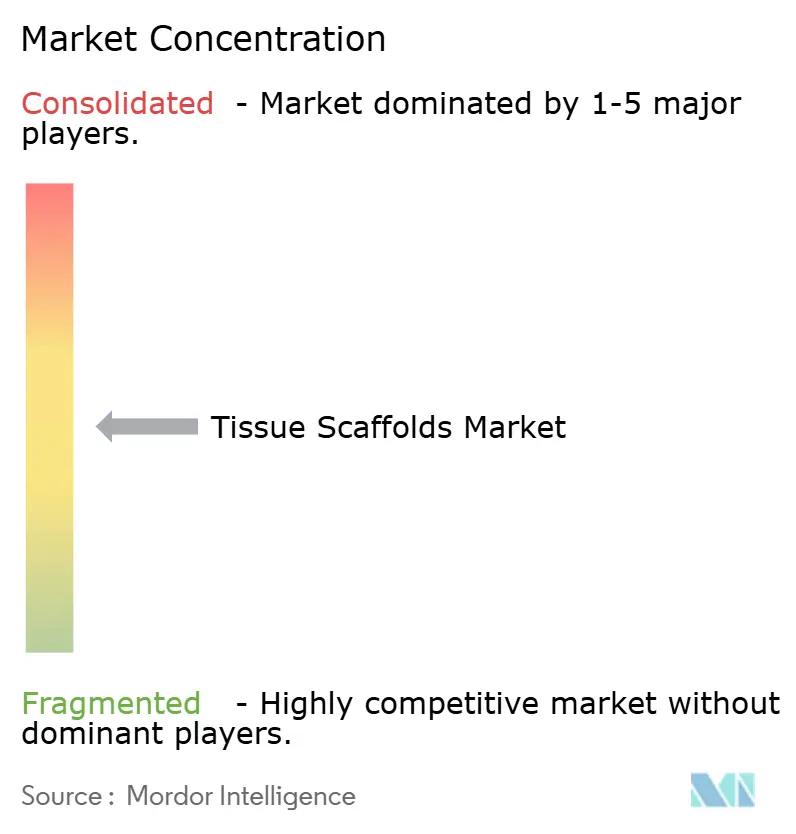
| Market Concentration | Medium |
Major Players *Disclaimer: Major Players sorted in no particular order Image © Mordor Intelligence. Reuse requires attribution under CC BY 4.0. | |
Tissue Scaffolds Market Analysis by Mordor Intelligence
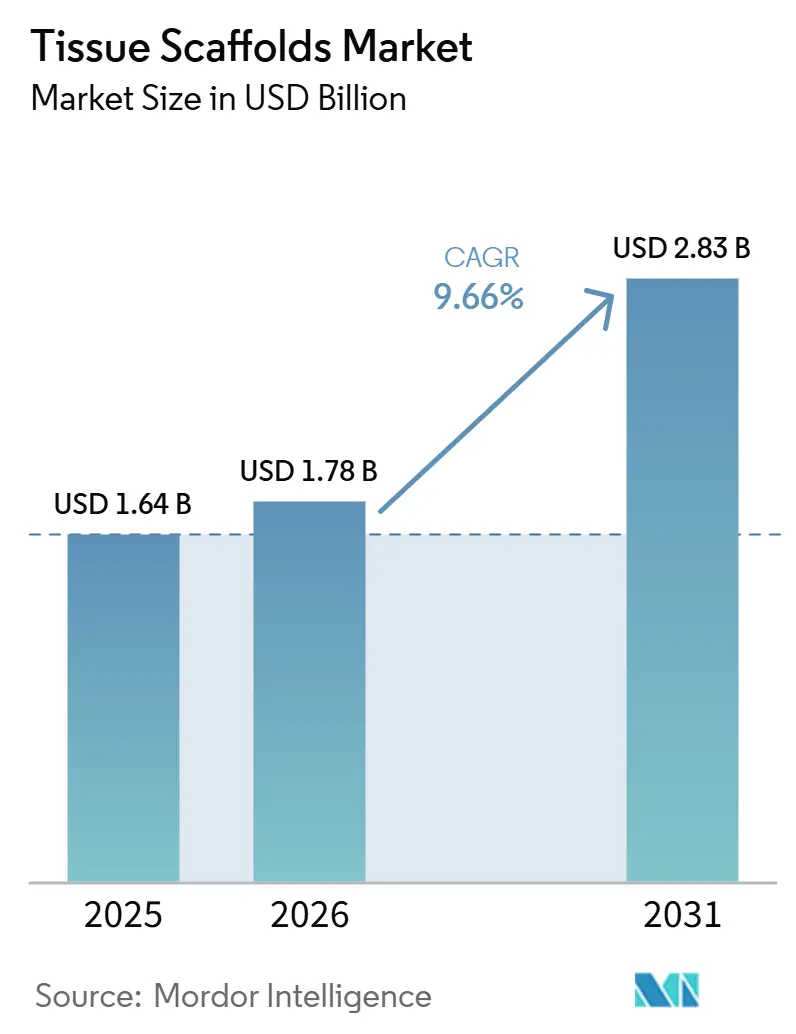
The Tissue Scaffolds Market size was valued at USD 1.64 billion in 2025 and is estimated to grow from USD 1.78 billion in 2026 to reach USD 2.83 billion by 2031, at a CAGR of 9.66% during the forecast period (2026-2031).
The tissue scaffolds market is supported by chronic tissue loss, trauma care, and more complex reconstructive procedures. Additive manufacturing is widening the use of patient-matched implants and is moving selected programs from research settings into regulated manufacturing. Specialized contract manufacturers are also shortening the path from academic development to GMP production. Competitive positioning increasingly depends on material processing, manufacturing consistency, clinical evidence, and regulatory capability. Reimbursement changes and constrained supplies of clinical-grade inputs may favor companies with integrated sourcing and products supported by stronger regulatory evidence.
Key Report Takeaways
- By material type, natural scaffolds held 44.43% of the tissue scaffolds market share in 2025, while decellularized extracellular matrix scaffolds are forecast to grow at a 14.60% CAGR through 2031.
- By fabrication technique, 3D printing accounted for 39.52% of the tissue scaffolds market size in 2025 and is projected to expand at an 11.26% CAGR through 2031.
- By tissue type, bone scaffolds commanded 46.34% of the tissue scaffolds market share in 2025, while neural scaffolds are forecast to record a 12.24% CAGR through 2031.
- By application, orthopedics held 57.47% share in 2025, while cardiovascular applications are projected to advance at a 17.01% CAGR through 2031.
- By end user, hospitals and clinics accounted for 49.58% share in 2025, while specialty regenerative medicine centers are forecast to grow at a 12.93% CAGR through 2031.
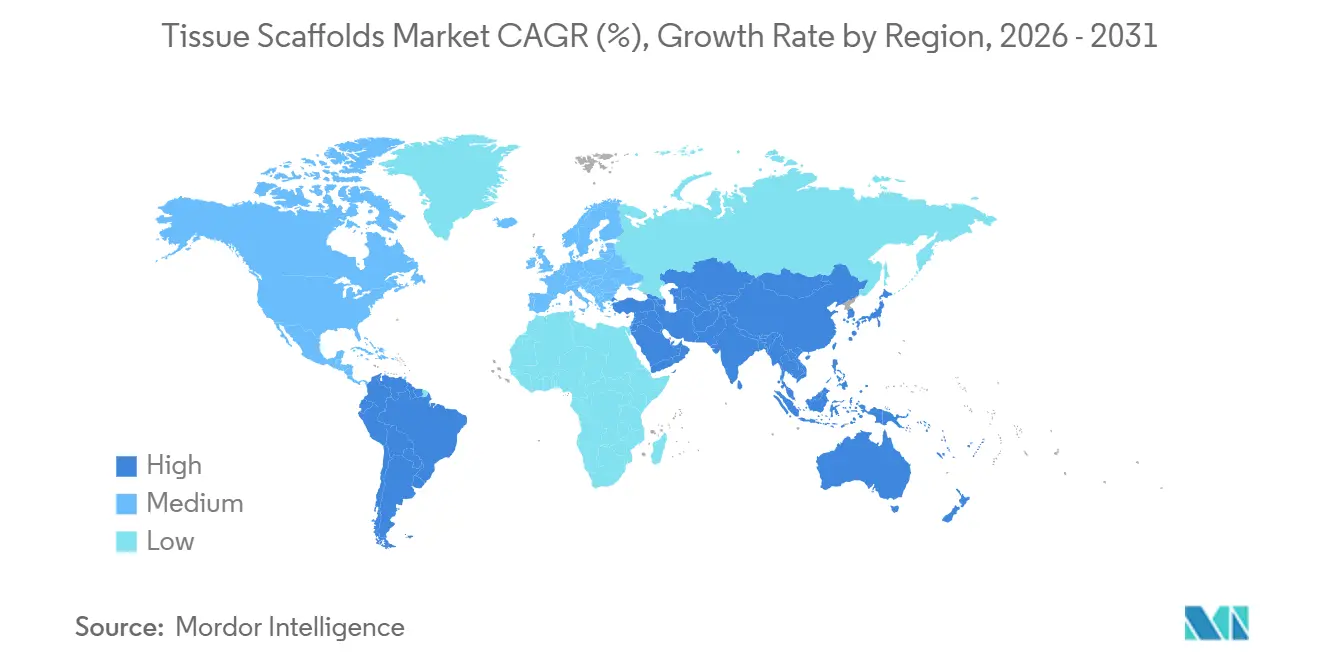
- By geography, the North America region accounted for 41.72% share in 2025, while the Asia-Pacific region is forecast to grow at a 13.48% CAGR through 2031.
Note: Market size and forecast figures in this report are generated using Mordor Intelligence’s proprietary estimation framework, updated with the latest available data and insights as of January 2026.
Market Trends and Insights
Drivers Impact Analysis of Tissue Scaffolds Market*
| Driver | (~) % Impact on CAGR Forecast | Geographic Relevance | Impact Timeline |
|---|---|---|---|
| 3D Bioprinting And Advanced Fabrication Adoption | +2.8% | Global, with early intensity in North America, Europe, and East Asia | Medium term (2-4 years) |
| Rising Burden of Chronic Tissue Loss and Trauma | +2.0% | Global, with the highest absolute burden in North America and Asia-Pacific | Long term (≥ 4 years) |
| Shift Toward Personalized Regenerative Implants | +1.3% | North America, Europe, and Japan | Long term (≥ 4 years) |
| Faster Translation of Bioactive and Smart Scaffold Platforms | +0.9% | North America and Europe, with spillover to South Korea and Australia | Medium term (2-4 years) |
| Demand from Under-Reported Niche Indications, Oral Maxillofacial, Pediatric, and Revision Reconstruction | +0.6% | North America and Europe, with early gains in the GCC and India | Short term (≤ 2 years) |
| Regulated Outsourcing to Specialized CDMOs | +0.5% | Global, concentrated in North America, South Korea, and Germany | Medium term (2-4 years) |
| Source: Mordor Intelligence | |||
3D Bioprinting and Advanced Fabrication Adoption
3D bioprinting is becoming a commercial fabrication option for implantable scaffolds rather than remaining only a research tool. A 2025 scientific review identified bioink quality, standardized production protocols, and scalable cell expansion as key barriers to wider clinical translation[1]Tarun Agarwal et al., “3D Bioprinting in Tissue Engineering: Current State-of-the-Art and Challenges Towards System Standardization and Clinical Translation,” Biofabrication, iopscience.iop.org.. These gaps create demand for material suppliers and contract manufacturers that can validate repeatable processes. A clinical framework for patient-specific 3D-printed PEEK implants showed that a hospital-based pathway can comply with EU MDR Article 5(5) requirements for craniomaxillofacial reconstruction. The framework also indicated that digital design and manufacturing can support end-to-end timelines of less than 1 week. The tissue scaffolds market may therefore shift toward fabrication partners that can manage complex geometries, clinical documentation, and controlled production together.
Rising Burden of Chronic Tissue Loss and Trauma
The tissue scaffolds market is tied to the number and severity of defects requiring structural repair. Chronic wounds affected 10.5 million Medicare beneficiaries in the United States and generated USD 22.5 billion in annual Medicare spending in the 2025 wound-care compendium. Global incident cases of plastic surgery-related conditions are projected to rise from 930.17 million in 2022 to 1.35 billion by 2050. Mastectomy reconstruction, tumor resection, and radiation-related tissue damage can require scaffold-supported repair when conventional grafts are unsuitable. Biomaterial approaches for volumetric muscle loss also address trauma from blast exposure, crush injuries, and open fractures. Aging may extend treatment cycles because wound healing capacity declines with age.
Shift Toward Personalized Regenerative Implants
The tissue scaffolds market is moving from standard geometries toward patient-matched implants that combine digital design with cell and biomaterial platforms. A Phase 1 study in 4 patients reported no tumor formation or graft-related adverse events after iPSC-derived neural progenitor cell transplantation for subacute spinal cord injury. This safety finding gives scaffold-integrated neural repair programs a clinical reference point as they develop. Columbia University’s NOVAKnee program uses biodegradable 3D-printed scaffolds seeded with cartilage and bone progenitors, and Made Scientific was selected in June 2026 for GMP manufacturing. Hospital manufacturing pathways can reduce the lead time for custom implants to less than 1 week when imaging, design, and production are integrated. These workflows may make personalized implants more practical for specialty hospitals and ambulatory surgical settings.
Faster Translation of Bioactive and Smart Scaffold Platforms
Bioactive and smart scaffolds are designed to provide functions beyond passive structural support. These constructs may release growth factors in a controlled way, conduct electrical signals, or respond to local physiological conditions. Regentis reported that its GelrinC FDA pivotal study for focal knee cartilage repair had passed 50% enrollment in 2026. Humacyte’s SYMVESS received FDA approval as an acellular tissue-engineered vessel, providing a regulatory example for advanced vascular constructs. Products that reduce the number of applications per healing episode may be better aligned with the payer's focus on utilization. The tissue scaffolds market is also shaped by ISO 10993 biocompatibility and ISO 11135 sterilization validation, which remain important commercialization requirements for novel constructs.
Restraints Impact Analysis of Tissue Scaffolds Market*
| Restraint | (~) % Impact on CAGR Forecast | Geographic Relevance | Impact Timeline |
|---|---|---|---|
| High GMP Validation and Sterility Assurance Costs | -1.3% | Global, most acute in North America and Europe | Long term (≥ 4 years) |
| Reimbursement Uncertainty for Advanced Scaffold Procedures | -1.6% | North America, with spillover risk to Europe and Asia-Pacific | Medium term (2-4 years) |
| Lot-to-Lot Variability and Cross-Lab Reproducibility Gaps | -0.8% | Global, especially in decellularized and biologic scaffold categories | Long term (≥ 4 years) |
| Limited Scalable Supply of Clinical-Grade Biomaterials | -0.6% | Global, with supply-chain concentration risk in North America and Europe | Medium term (2-4 years) |
| Source: Mordor Intelligence | |||
High GMP Validation and Sterility Assurance Costs
GMP compliance is a durable barrier for smaller participants in the tissue scaffolds market. Biological scaffolds must be validated for sterility and safety without damaging the matrix features needed for clinical performance. Decellularization must remove residual cellular material while retaining important bioactive components. Repeating this validation across lots and production scales requires significant capital and specialized quality systems. Integrated medical technology companies can maintain a broader validation infrastructure than smaller scaffold manufacturers. This difference can encourage acquisition activity and make scale a more important competitive advantage.
Reimbursement Uncertainty for Advanced Scaffold Procedures
Reimbursement policy in the United States is affecting clinical adoption and revenue planning for cellular, acellular, and matrix-like products. More than 200 such products were available in the United States in 2025, while Medicare spending on the category was projected to exceed USD 15 billion by year-end 2025. Organogenesis stated that payment changes were materially affecting the first half of 2026 and did not expect normalized growth until 2027. The policy direction may influence payer criteria beyond the United States because other health systems monitor U.S. coverage practices. The tissue scaffolds market, therefore, faces an uneven near-term demand environment, particularly in advanced wound care.
*Our forecasts treat driver/restraint impacts as directional, not additive. The impact forecasts reflect baseline growth, mix effects, and variable interactions.
Tissue Scaffolds Market Segment Analysis
By Material Type:
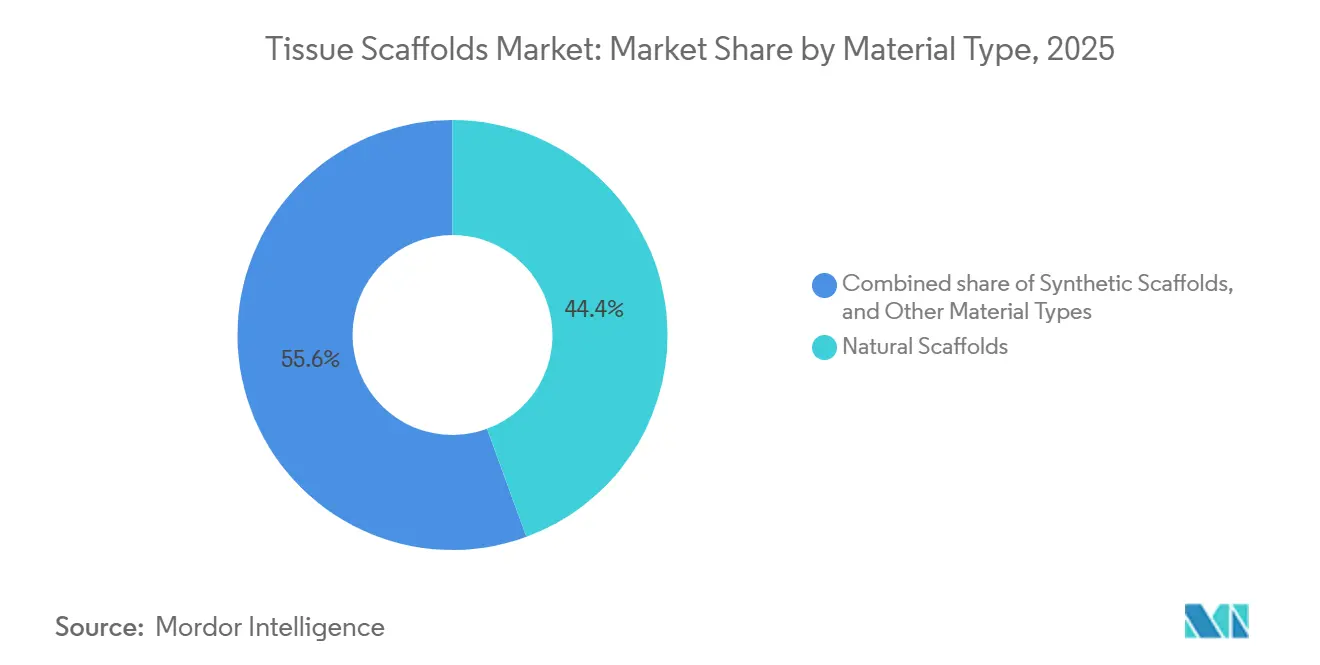
Natural Scaffolds Lead While dECM Gains MomentumNatural scaffolds held 44.43% share in 2025. Collagen and hyaluronic acid products have established biocompatibility profiles and familiar use across wound care, orthopedics, and dental reconstruction. Their clinical familiarity supports continued use in procedures where surgeons value known handling properties. Natural products also provide a practical option for providers that need well-understood materials across several indications. Demand for these materials remains tied to broad procedural volumes rather than a single specialty.
Decellularized extracellular matrix scaffolds are projected to grow at a 14.60% CAGR through 2031. Their appeal comes from preserving native tissue architecture, growth factor gradients, and cell-adhesion features that are difficult to recreate with synthetic materials. Active clinical research is evaluating dECM approaches across cardiac, dermal, and neural uses[2]“Acellular Extracellular Matrix Scaffolds in Regenerative Medicine: Advances in Decellularization and Clinical Applications,” PubMed, pubmed.ncbi.nlm.nih.gov.. Synthetic scaffolds compete through cost and mechanical control, especially in bone gap filling and load-bearing reinforcement. Composite scaffolds combine material properties where biological and mechanical requirements must be balanced. The tissue scaffolds industry increasingly values manufacturers that can deliver lot consistency as clinical procurement teams place greater emphasis on reproducibility.



By Fabrication Technique:
3D Printing Combines Scale With Growth3D printing accounted for 39.52% of the tissue scaffolds market size in 2025 and is forecast to grow at an 11.26% CAGR through 2031. It can produce porous bone scaffolds that support vascularization as well as patient-matched implants that require detailed geometry. This range of uses explains why the technique holds both the largest share and the highest growth rate among fabrication methods. The tissue scaffolds market is benefiting from manufacturing models that connect university programs to regulated production. Made Scientific’s June 2026 selection for the NOVAKnee program illustrates the role of specialized manufacturing partners in bringing complex constructs into GMP pipelines. Continued adoption depends on validated materials, workflow control, and evidence that supports clinical use.
Electrospinning remains important for neural, vascular, and wound-healing applications that need nanofibrous structures similar to native extracellular matrix fibers. It is suited to programs where surface architecture and controlled porosity matter more than complex patient-specific geometry. Freeze drying serves a narrower range of hydrogel and drug-loaded scaffold uses. Self-assembly is also relevant where thermal or chemical response properties are part of the product design. These methods are unlikely to disappear because application needs vary widely across the tissue scaffolds market. Their position is more specialized than 3D printing, but they retain value where a simpler fabrication approach meets clinical requirements.
By Tissue Type:
Bone Remains Largest While Neural Uses AccelerateBone scaffolds held 46.34% share in 2025. This position reflects the volume of fracture non-unions, traumatic bone defects, and tissue loss after tumor resection. Clinical pathways for bone repair are well established, and collagen and synthetic materials are already used in several defect-management settings. The tissue scaffolds market benefits from the recurring need for structural support in musculoskeletal care. Load-bearing applications also require products with consistent mechanical performance. These clinical needs support bone scaffolds as the largest tissue-type category.
Neural scaffolds are forecast to advance at a 12.24% CAGR through 2031. Peripheral nerve injury remains underserved, while cell-based neural platforms are increasing the scope for biomaterial delivery systems. The Phase 1 iPSC neural progenitor study in spinal cord injury provides a safety foundation for future scaffold-integrated approaches. Cartilage scaffolds are also gaining interest as acellular hydrogel products move through clinical development. Skin scaffolds remain tied to chronic wound and burn care, while vascular scaffolds benefit from maturing acellular processing methods. SYMVESS offers an example of an approved acellular vascular product that other vascular scaffold developers can study.
By Application:
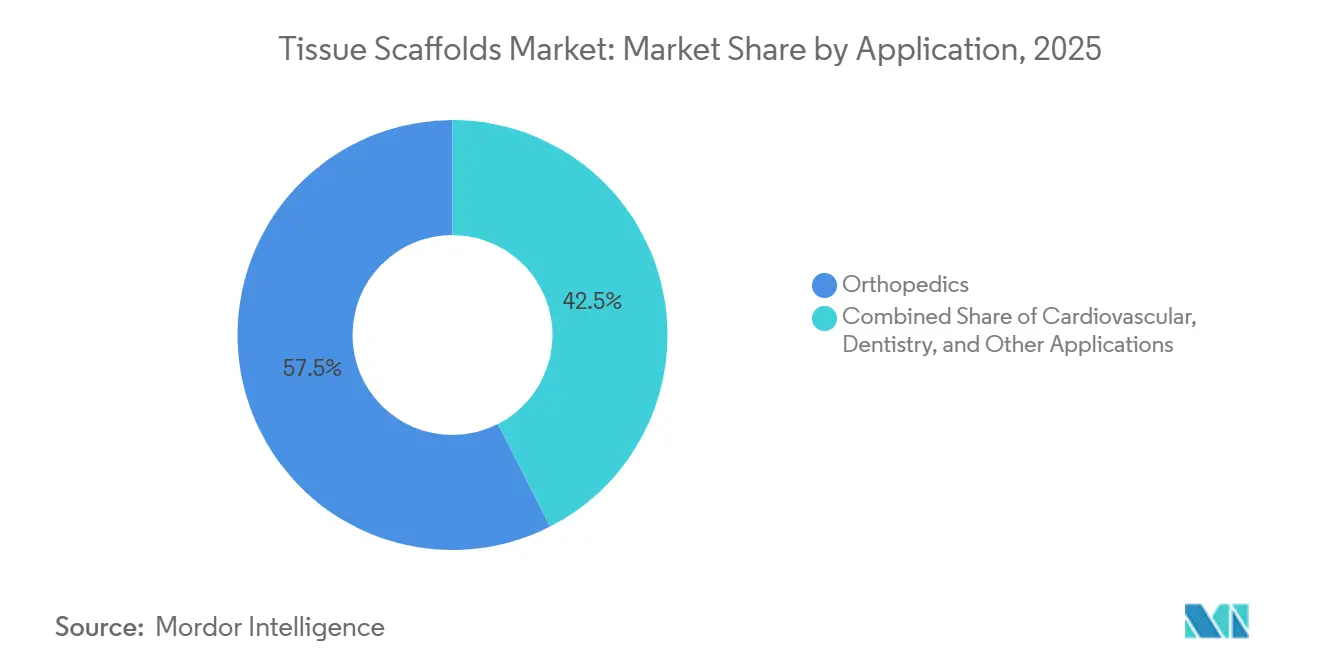
Orthopedics Provides Scale While Cardiovascular Expands FastestOrthopedics accounted for 57.47% share in 2025, making it the largest application within the tissue scaffolds market. The category is supported by the high volume of musculoskeletal procedures and the established use of collagen and synthetic scaffolds in bone and soft-tissue repair. Personalized joint constructs have reached commercial availability, which broadens the range of solutions available for complex joint procedures. Orthopedic demand includes structural bone repair and soft-tissue reconstruction. It also draws on clinical familiarity with scaffold-based repair methods. These factors provide a stable revenue base despite changes in other applications.
Cardiovascular applications are forecast to grow at a 17.01% CAGR through 2031. Growth is connected to the need for off-the-shelf conduits in vascular trauma and dialysis access. Humacyte submitted a Marketing Authorization Application for SYMVESS in Israel in March 2026 after its FDA approval, showing how evidence from vascular programs can support multi-market development. Dentistry and dermatology are benefiting from digital fabrication in oral maxillofacial reconstruction and tissue repair. Wound healing remains strategically important because national provider access can influence product uptake. Established providers continue to prioritize wound-healing channel coverage, particularly where hospital networks can support broader product access.
By End User:
Hospitals Lead Procedures While Specialty Centers Grow FasterHospitals and clinics held 49.58% of the tissue scaffolds market size in 2025. They remain the principal location for orthopedic, cardiovascular, and reconstructive scaffold implantation. These facilities can support the surgical, imaging, and follow-up requirements associated with complex cases. Hospitals also have established purchasing and quality processes for regulated implantable products. Their broad clinical role ensures that they remain the largest end-user category. Larger systems may also be better positioned to adopt products that require coordinated multidisciplinary care.
Specialty regenerative medicine centers are projected to grow at a 12.93% CAGR through 2031. Complex neural repair, oral maxillofacial reconstruction, and multi-tissue cases often require specialized postoperative management. Biotechnology and pharmaceutical companies are expanding from research customers to clinical-stage developers, especially for dECM and bioprinted products. Research institutes remain important sources of early platform innovation. The NOVAKnee program shows how public research initiatives can bridge academic development and GMP manufacturing through specialist partners. Ambulatory surgical centers are a growing channel, although reimbursement changes may direct some complex procedures to specialty facilities with more suitable economics.
Geography Analysis
North America Tissue Scaffolds Market
North America held 41.72% share in 2025. The United States combines high healthcare spending, a substantial concentration of regenerative medicine trials, and an established commercial infrastructure for matrix-based products. These features support demand across wound care, orthopedics, vascular repair, and reconstruction. Integra LifeSciences guided 2026 revenue of USD 1.662 billion to USD 1.702 billion and reported 6.4% organic growth in tissue reconstruction in the first quarter of 2026, indicating continued demand despite reimbursement pressure. Canada and Mexico participate through cross-border product flows and developing manufacturing investment. The tissue scaffolds market in the region remains exposed to changes in U.S. coverage policy.
Europe and APAC Tissue Scaffolds Market
Europe holds the second-largest regional position, led by Germany, the United Kingdom, and France. The EU MDR framework is increasing compliance requirements while creating an advantage for manufacturers with validated quality systems. The published point-of-care framework for craniomaxillofacial implants demonstrated a route for hospital-based production that meets EU MDR Article 5(5) requirements. Asia-Pacific is forecast to grow at a 13.48% CAGR through 2031, the fastest regional rate in the tissue scaffolds market. Government manufacturing policies, regulatory development, and large demographic demand support this trajectory. China’s National Drug Standards Library published YY/T 1995-2025 for evaluating cellular biological effects of cartilage scaffolds, effective in November 2026.
MEA and South America Tissue Scaffolds Market
The Middle East and Africa are led by GCC countries, where healthcare investment and trauma and diabetes-related wound care needs are expanding demand. Humacyte’s March 2026 application for SYMVESS in Israel showed how real-world vascular experience can support entry into regional markets. South Africa and other markets remain at an earlier stage because reimbursement and cold-chain logistics limit broader use of biologic scaffolds. South America is concentrated in Brazil and Argentina, where aging populations and private healthcare growth are supporting early demand. Regulatory harmonization can improve product access and quality expectations over time. Across these regions, adoption depends on the ability to match advanced products with local payment pathways and clinical infrastructure.

Competitive Landscape
The tissue scaffolds market has a moderately concentrated structure among larger participants. Diversified medical technology companies use hospital sales networks and regulatory capability to compete in high-volume applications. Specialized biologics companies focus on proprietary materials and manufacturing processes. Competitive strategy increasingly centers on regulatory support, manufacturing scale, and clinical evidence. Companies with vertically integrated biomaterial sourcing may have more control over supply and lot consistency. The absence of top-player combined share data prevents the assignment of a numeric concentration estimate within the competitive discussion.
Several company actions illustrate the direction of competition. Made Scientific was selected in June 2026 to manufacture Columbia University’s NOVAKnee program, reflecting demand for specialized partners that can produce living, patient-focused constructs under GMP conditions. Humacyte advanced SYMVESS through FDA approval and then filed an application in Israel, using its regulatory evidence to support broader commercialization. Regentis reported that the GelrinC pivotal study passed 50% enrollment, a key development in its clinical evidence strategy. These actions show that development, manufacturing, and market access must advance together. The tissue scaffolds market rewards companies that can convert technical platforms into a reliable clinical supply.
Pediatric reconstruction, oral maxillofacial repair, and neural constructs remain less developed areas where personalized approaches may have room to expand. Platform extracellular matrix capabilities are being used to address the geometric limitations of flat sheet products. Intellectual property around decellularization, bioinks, and printing parameters is important for products pursuing higher regulatory standards. Contract manufacturing relationships are also becoming more relevant as academic and small-company programs enter clinical development. Evidence-generation capacity may determine which platforms can withstand tighter payer review. The tissue scaffolds industry is therefore likely to remain divided between scaled incumbents and specialized innovators with defensible technical platforms.
Tissue Scaffolds Industry Leaders
Medtronic plc
Johnson and Johnson
Stryker Corporation
Integra LifeSciences Holdings Corporation
Smith and Nephew plc
- *Disclaimer: Major Players sorted in no particular order
Tissue Scaffolds Market Companies Covered in this Report
- 3D Biotek LLC
- Anika Therapeutics
- Arthrex
- Baxter
- Beckton Dickinson
- Collagen Matrix, Inc.
- Cook Group
- Corning
- DSM-Firmenich AG
- Evonik Industries
- Integra LifeSciences
- Johnson & Johnson
- Medtronic
- MiMedx Group Inc.
- Organogenesis
- Smiths Group
- Stryker
- Tissue Regenix
- Zimmer Biomet

Recent Industry Developments in Tissue Scaffolds Market
- July 2026: Made Scientific was selected as CDMO partner to manufacture Columbia University’s NOVAKnee program, a biodegradable 3D-printed total knee replacement seeded with iPSC-derived cartilage and bone progenitors, under the ARPA-H NITRO initiative, with Phase 1 trials anticipated in 2028. The partnership demonstrates the growing role of specialized CDMOs in translating academic scaffold innovations into GMP clinical manufacturing.
- March 2026: Humacyte submitted a Marketing Authorization Application for Symvess to the Israel Ministry of Health for arterial trauma repair, leveraging FDA BLA approval and humanitarian program clinical data to support expedited multi-market commercialization.
- November 2025: Tiger Aesthetics Medical made a strategic investment in GenesisTissue Inc., a company developing personalized 3D bioprinted scaffolds for breast reconstruction, following the 2025 launch of alloClae, a ready-to-use structural adipose tissue product for body contouring.


Global Tissue Scaffolds Market Report Scope
As per the report’s scope, a tissue scaffold is a three-dimensional, porous structural framework used in tissue engineering to replicate the natural extracellular matrix (ECM). It serves as a physical template that enables cell attachment, proliferation, migration, and differentiation, supporting the regeneration of damaged tissues and organs.
The tissue scaffolds market is segmented by material type, fabrication technique, tissue type, application, end user, and geography. By material type, the market is segmented into natural scaffolds, synthetic scaffolds, composite scaffolds, and decellularized ecm scaffolds. By fabrication technique, the market is segmented into electrospinning, 3d printing, freeze drying, and self-assembly. By tissue type, the market is segmented into bone scaffolds, cartilage scaffolds, skin scaffolds, vascular scaffolds, and neural scaffolds.
By application, the market is segmented into orthopedics, cardiovascular, dentistry, dermatology, plastic surgery, wound healing, and other applications. By end user, the market is segmented into hospitals and clinics, ambulatory surgical centers, research and academic institutes, biotechnology and pharmaceutical companies, and specialty regenerative medicine centers. Geographically, the market is segmented across North America, Europe, the Asia-Pacific region, the Middle East and Africa, and South America. The market report also covers the estimated market sizes and trends for 17 countries across major regions globally. For each segment, the market size and forecast are provided in terms of value (USD).
| Natural Scaffolds |
| Synthetic Scaffolds |
| Composite Scaffolds |
| Decellularized ECM Scaffolds |
| Electrospinning |
| 3D Printing |
| Freeze Drying |
| Self-Assembly |
| Bone Scaffolds |
| Cartilage Scaffolds |
| Skin Scaffolds |
| Vascular Scaffolds |
| Neural Scaffolds |
| Orthopedics |
| Cardiovascular |
| Dentistry |
| Dermatology |
| Plastic Surgery |
| Wound Healing |
| Other Applications |
| Hospitals and Clinics |
| Ambulatory Surgical Centers |
| Research and Academic Institutes |
| Biotechnology and Pharmaceutical Companies |
| Specialty Regenerative Medicine Centers |
| North America | United States |
| Canada | |
| Mexico | |
| Europe | Germany |
| United Kingdom | |
| France | |
| Italy | |
| Spain | |
| Rest of Europe | |
| Asia-Pacific | China |
| Japan | |
| India | |
| Australia | |
| South Korea | |
| Rest of Asia-Pacific | |
| Middle East and Africa | GCC |
| South Africa | |
| Rest of Middle East and Africa | |
| South America | Brazil |
| Argentina | |
| Rest of South America |
| By Material Type | Natural Scaffolds | |
| Synthetic Scaffolds | ||
| Composite Scaffolds | ||
| Decellularized ECM Scaffolds | ||
| By Fabrication Technique | Electrospinning | |
| 3D Printing | ||
| Freeze Drying | ||
| Self-Assembly | ||
| By Tissue Type | Bone Scaffolds | |
| Cartilage Scaffolds | ||
| Skin Scaffolds | ||
| Vascular Scaffolds | ||
| Neural Scaffolds | ||
| By Application | Orthopedics | |
| Cardiovascular | ||
| Dentistry | ||
| Dermatology | ||
| Plastic Surgery | ||
| Wound Healing | ||
| Other Applications | ||
| By End User | Hospitals and Clinics | |
| Ambulatory Surgical Centers | ||
| Research and Academic Institutes | ||
| Biotechnology and Pharmaceutical Companies | ||
| Specialty Regenerative Medicine Centers | ||
| By Geography | North America | United States |
| Canada | ||
| Mexico | ||
| Europe | Germany | |
| United Kingdom | ||
| France | ||
| Italy | ||
| Spain | ||
| Rest of Europe | ||
| Asia-Pacific | China | |
| Japan | ||
| India | ||
| Australia | ||
| South Korea | ||
| Rest of Asia-Pacific | ||
| Middle East and Africa | GCC | |
| South Africa | ||
| Rest of Middle East and Africa | ||
| South America | Brazil | |
| Argentina | ||
| Rest of South America | ||


Key Questions Answered in the Report
What is the projected size of the tissue scaffolds market by 2031?
It is forecast to reach USD 2.83 billion by 2031, from USD 1.78 billion in 2026, at a 9.7% CAGR.
Which material category is growing fastest in tissue scaffolds?
Decellularized extracellular matrix scaffolds are projected to grow at a 14.60% CAGR through 2031 because they retain native tissue architecture and cell-adhesion features.
Why is 3D printing important for scaffold development?
3D printing held 39.52% share in 2025 and is forecast to grow at an 11.26% CAGR because it supports porous structures and patient-matched implant designs.
Which application has the highest projected growth?
Cardiovascular applications are forecast to grow at a 17.01% CAGR through 2031, supported by demand for off-the-shelf vascular conduits.
What is the main reimbursement risk for advanced scaffold procedures?
U.S. coverage reforms for cellular, acellular, and matrix-like products may limit eligible products and the number of applications covered per wound.
Which region is growing fastest for tissue scaffold adoption?
Asia-Pacific is forecast to expand at a 13.48% CAGR through 2031, supported by manufacturing policies, regulatory development, and demographic demand.
Page last updated on:





