
Ticagrelor Market Size and Share
Market Overview
| Study Period | 2020 - 2031 |
|---|---|
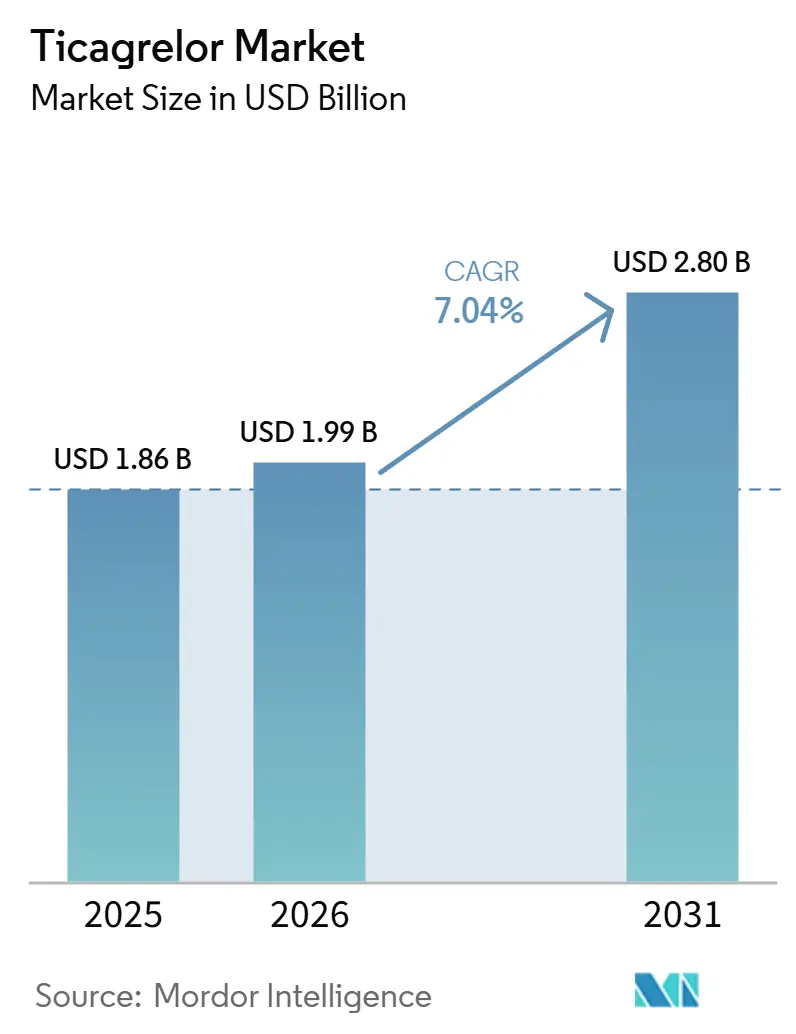
| Market Size (2026) | USD 1.99 Billion |
| Market Size (2031) | USD 2.80 Billion |
| Growth Rate (2026 - 2031) | 7.04 % |
| Fastest Growing Market | Asia-Pacific |
| Largest Market | North America |
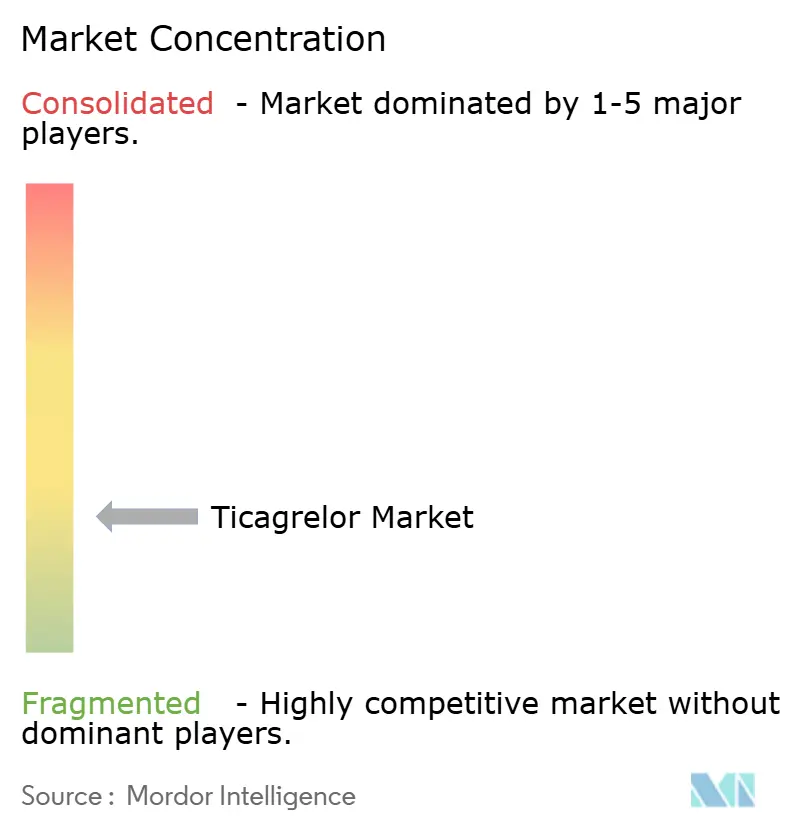
| Market Concentration | Low |
Major Players *Disclaimer: Major Players sorted in no particular order Image © Mordor Intelligence. Reuse requires attribution under CC BY 4.0. | |
Ticagrelor Market Analysis by Mordor Intelligence
The Ticagrelor Market size is projected to be USD 1.86 billion in 2025, USD 1.99 billion in 2026, and reach USD 2.80 billion by 2031, growing at a CAGR of 7.04% from 2026 to 2031.
The ticagrelor market is supported by the continuing burden of cardiovascular disease, which keeps the need for acute treatment and secondary prevention high. The 2025 global disease assessment reported 626 million prevalent cardiovascular disease cases and 239 million prevalent ischemic heart disease cases in 2023, showing the large patient base behind antiplatelet use.[1]Journal of the American College of Cardiology, “Global, Regional, and National Burden of Cardiovascular Diseases and Risk Factors in 204 Countries and Territories, 1990–2023,” Journal of the American College of Cardiology, jacc.org Improved survival after acute coronary events also increases the number of patients who require follow-up treatment, including those who may remain on antiplatelet therapy after discharge. Generic entry is widening access but is also reducing the value retained by branded products, which shifts competition toward cost, supply reliability, and formulary access. The ticagrelor market also has room to expand through stroke and transient ischemic attack care, where clinical evidence and reimbursement decisions are bringing more attention to treatment outside conventional coronary settings.
Key Report Takeaways
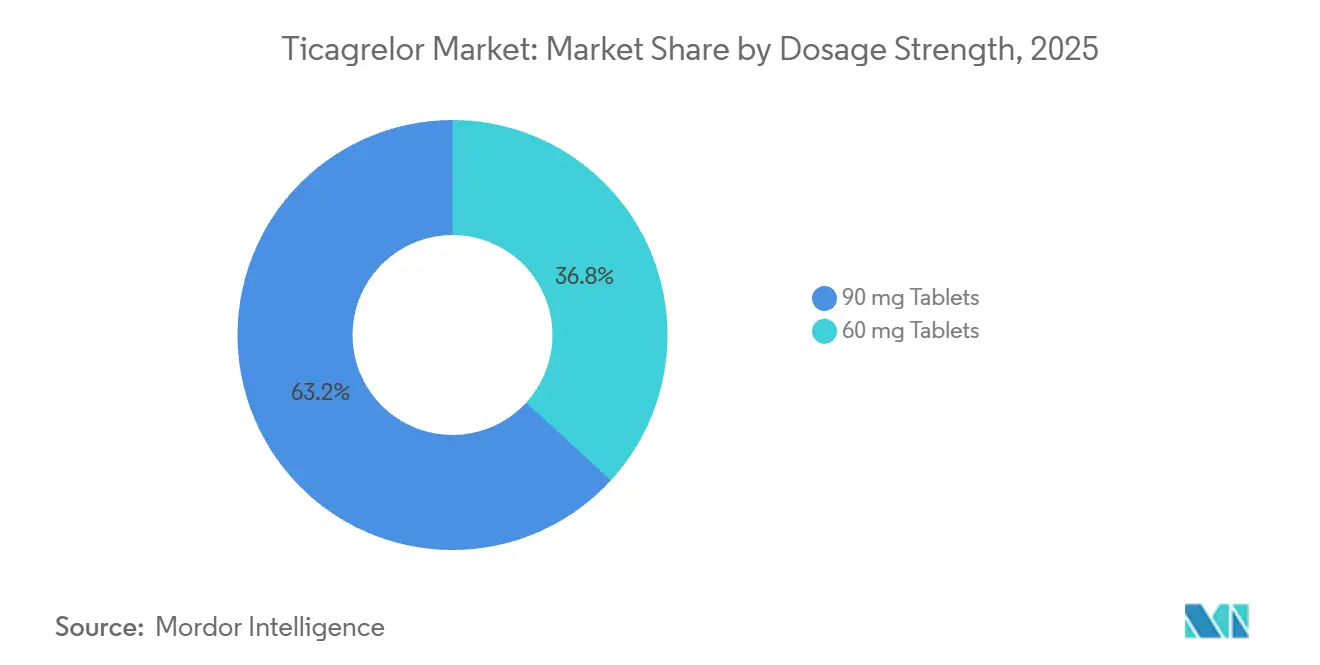
- By dosage strength, 90 mg tablets held 63.18% of the ticagrelor market share in 2025, while 60 mg tablets are forecast to grow at an 8.5% CAGR through 2031.
- By indication, acute coronary syndrome accounted for 59.31% of the ticagrelor market size in 2025, while ischemic stroke is forecast to expand at an 8.6% CAGR through 2031.
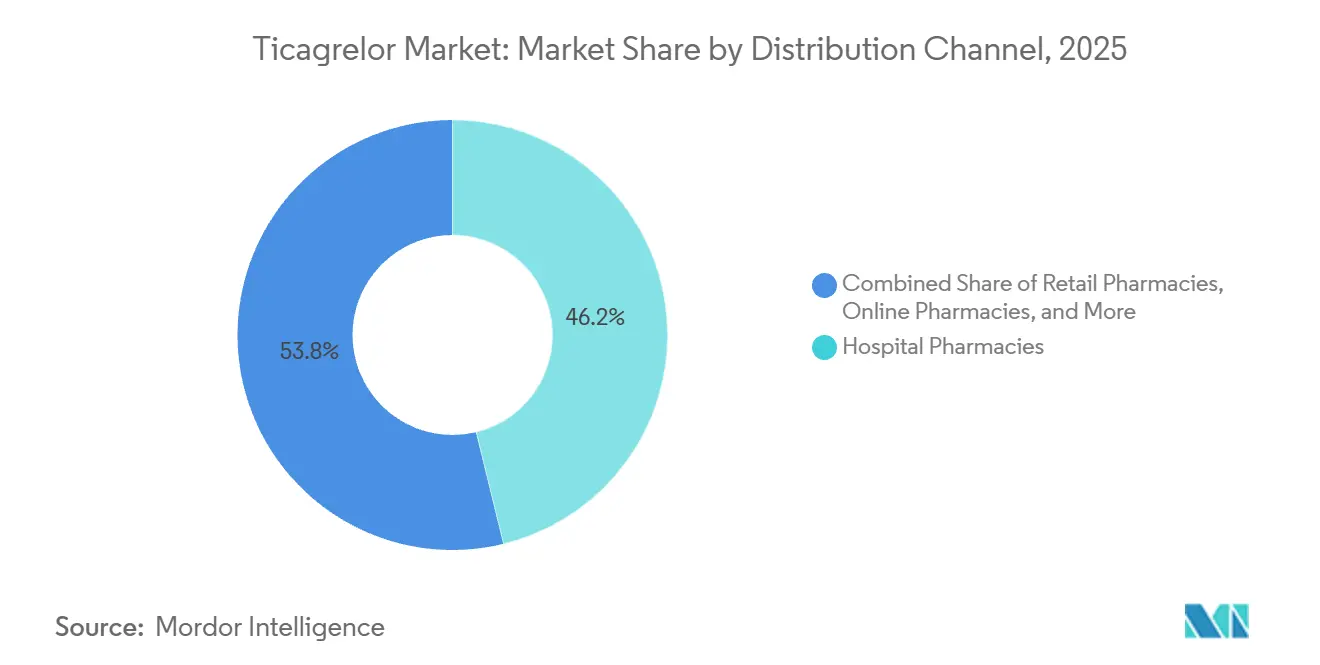
- By distribution channel, hospital pharmacies held 46.18% of the distribution value in 2025, while online pharmacies are forecast to grow at an 8.5% CAGR through 2031.
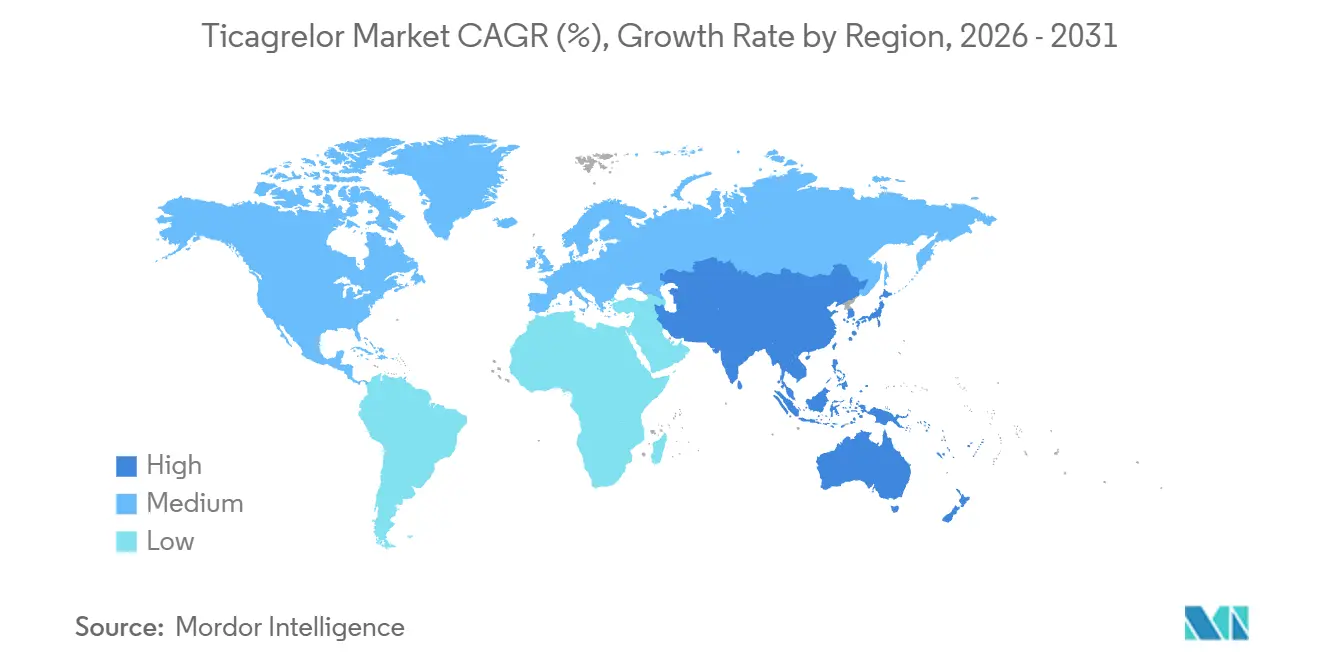
- By geography, North America held 43.18% of global value in 2025, while Asia-Pacific is forecast to grow at an 8.8% CAGR through 2031.
Note: Market size and forecast figures in this report are generated using Mordor Intelligence’s proprietary estimation framework, updated with the latest available data and insights as of January 2026.
Global Ticagrelor Market Trends and Insights
Drivers Impact Analysis*
| Driver | (~) % Impact on CAGR Forecast | Geographic Relevance | Impact Timeline |
|---|---|---|---|
| Cardiovascular Event Burden and Secondary Prevention Demand | +2.1% | Global | Long term (≥ 4 years) |
| Guideline Preference for Potent P2Y12 Inhibition | +1.8% | North America and Europe, with expanding influence in Asia-Pacific | Medium term (2-4 years) |
| Generic Access and Hospital Procurement Modernization | +1.9% | North America and Europe, with spillover to Asia-Pacific, Middle East and Africa, and South America | Short term (≤ 2 years) |
| Stroke, TIA, and Extended Post-MI Treatment Protocols | +1.2% | Global, with early uptake in North America, Europe, and Oceania | Medium term (2-4 years) |
| Dose-transition protocols extend post-MI treatment duration | +0.8% | North America & Western Europe | Medium term (2–4 years) |
| Emerging-market hospital procurement modernization | +1.1% | Asia-Pacific, MEA, South America | Long term (≥ 4 years) |
| Source: Mordor Intelligence | |||
Persistent Cardiovascular Event Burden Sustains Baseline Demand
Ischemic heart disease remained the leading cause of cardiovascular mortality in 2023. This substantial disease burden provides the ticagrelor market with a stable clinical foundation, as acute coronary events require prompt antiplatelet therapy. Improved access to reperfusion care may increase the number of patients who survive acute events and subsequently require secondary prevention. Global cardiovascular deaths accounted for 20.5 million in 2025, despite a decline in age-standardized mortality rates, indicating continued growth in the absolute need for treatment.[2]European PMC, “Global Burden of Cardiovascular Diseases: Projections From 2025 to 2050,” Europe PMC, europepmc.org By 2050, ischemic heart disease is expected to remain the leading cause of cardiovascular deaths, accounting for 20 million deaths. High systolic blood pressure is projected to be the leading cardiovascular risk factor driving mortality, contributing to 18.9 million deaths. Therefore, the ticagrelor market relies on both initial hospital-based treatment and ongoing post-event care. This treatment pattern makes demand less dependent on a single acute dispensing episode.
Guideline-Led Preference Embeds Ticagrelor in Standard ACS Protocols
The 2025 ACC, AHA, ACEP, NAEMSP, and SCAI guideline recommends ticagrelor or prasugrel over clopidogrel for patients with acute coronary syndrome undergoing percutaneous coronary intervention. That recommendation supports ticagrelor use in hospital pathways where treatment choices are often set through clinical protocols. The same guideline supports a switch to ticagrelor monotherapy 1 month or later after percutaneous coronary intervention in suitable patients to lower bleeding risk while preserving ischemic protection. This approach can extend treatment beyond the earliest stage of dual antiplatelet therapy. European clinical guidance also discusses personalized antithrombotic treatment and ticagrelor-based de-escalation for selected patients. The shared direction of North American and European guidance helps maintain a clinical role for ticagrelor even when lower-priced products enter formularies.
Generic Access and Hospital Procurement Modernization Broaden Availability
Generic availability has changed the ticagrelor market from one centered on an originator brand to one with stronger price competition. Lower prices can make ticagrelor more accessible in hospital formularies and outpatient settings where treatment cost previously favored clopidogrel. This effect is important in procurement systems that select products through tenders and emphasize unit cost. The shift does not remove the need for clinical review because patients still require assessment of bleeding risk, dyspnea, and potential drug interactions. The ticagrelor market can benefit when hospital purchasing systems make potent antiplatelet therapy more affordable and available.
Stroke, TIA, and Extended Post-MI Protocols Expand Treatment Pathways
Ticagrelor plus aspirin reduced the combined risk of stroke or death within 30 days by 17% compared with aspirin alone in patients with acute ischemic stroke or high-risk transient ischemic attack in the THALES evidence base. The evidence gives the ticagrelor market a pathway into stroke care that is separate from its established cardiology use. New Zealand proposed public funding for ticagrelor for minor stroke and high-risk transient ischemic attack from November 2025, providing an early reimbursement example for this use. Extended therapy after myocardial infarction is another source of demand, particularly for the 60 mg dose. A 2024 study of a virtual ticagrelor service described a structured method for identifying eligible patients after myocardial infarction. These protocols require clinicians to identify suitable patients and manage continuation carefully, which links growth to clinical workflow as well as prescribing volume.
Restraints Impact Analysis*
| Restraint | (~) % Impact on CAGR Forecast | Geographic Relevance | Impact Timeline |
|---|---|---|---|
| Bleeding, Dyspnea, and Treatment Complexity | -1.3% | Global, with greater prescribing friction in South and Southeast Asia | Short term (≤ 2 years) |
| Generic Price Erosion and Uneven Follow-Up Capacity | -1.8% | North America and Western Europe, with follow-up constraints in rural Asia-Pacific, Middle East and Africa, and South America | Long term (≥ 4 years) |
| Aspirin-dose and drug-interaction complexity increases prescribing friction | −0.7% | Global, more pronounced in South/Southeast Asia | Medium term (2–4 years) |
| Uneven diagnostic and follow-up capacity restricts continuation therapy | −0.6% | Asia-Pacific (rural), MEA, South America | Long term (≥ 4 years) |
| Source: Mordor Intelligence | |||
Bleeding, Dyspnea, and Treatment Complexity Limit Persistence
Bleeding and dyspnea can limit patient selection and continuation in the ticagrelor market. A 2024 study found dyspnea during the first month of ticagrelor-based dual antiplatelet therapy in 20.6% of patients.[3]Thrombosis and Haemostasis, “Clinical Impact of Dyspnea After Ticagrelor Treatment and the Effect of Switching to Clopidogrel in Patients With Myocardial Infarction,” Thrombosis and Haemostasis, thieme-connect.com Adherence was lower among patients who continued ticagrelor than among those de-escalated to clopidogrel, especially for patients with dyspnea, at 81.1% and 91.5%, respectively. A 2024 network meta-analysis also reported the highest risk of premature discontinuation for ticagrelor among the major P2Y12 inhibitors. These issues narrow the eligible patient group and make counseling, follow-up, and individualized risk assessment necessary. Aspirin dose considerations and drug interactions add further complexity when clinicians choose and monitor therapy.
Generic Price Erosion and Uneven Follow-Up Capacity Constrain Value
Generic competition can increase use while reducing the value captured in the ticagrelor market. AstraZeneca reported Brilinta revenue of USD 823 million in fiscal year 2025, down 38% from the prior year, as generic competition affected the franchise. The price effect is strongest where hospital and payer formularies switch quickly among therapeutically equivalent alternatives. It can reduce branded revenue without signaling a comparable decline in the number of treated patients. Uneven access to diagnosis, specialist follow-up, and medication review can also interrupt continuation of treatment in rural areas and in developing health systems. The ticagrelor market is consequently shaped by the ability of providers to sustain therapy after discharge, not only by their ability to start it during an acute event.
*Our forecasts treat driver/restraint impacts as directional, not additive. The impact forecasts reflect baseline growth, mix effects, and variable interactions.
Segment Analysis
By Dosage Strength: 90 mg Retains Scale While 60 mg Expands in Extended Care
The 90 mg formulation accounted for 63.18% of the segment value in 2025. Its position reflects its central use in acute and post-acute coronary syndrome treatment and in the stroke and transient ischemic attack setting. A loading dose followed by 90 mg twice daily during the first year after an acute coronary syndrome event supports regular hospital and outpatient replenishment. The formulation remains relevant where clinicians use guideline-based acute coronary care pathways. Price pressure is therefore more likely to change supplier choice than the clinical need for treatment.
The 60 mg formulation is forecast to grow at an 8.5% CAGR from 2026 to 2031, the highest rate within dosage strength. Extended dual antiplatelet therapy with ticagrelor 60 mg twice daily reduced cardiovascular death, myocardial infarction, or stroke in eligible patients with prior myocardial infarction in the PEGASUS evidence base.[4]Frontiers in Cardiovascular Medicine, “Supporting Appropriate Use of Extended Dual Antiplatelet Therapy Post-Myocardial Infarction Based on an Innovative 12-Month Ticagrelor Virtual Service,” Frontiers in Cardiovascular Medicine, frontiersin.org European guidance favors the 60 mg dose for extended therapy after 12 months in suitable patients with prior myocardial infarction, while real-world persistence can still be affected by adverse effects and patient-led discontinuation. Electronic health record screening and pharmacist reviews can help identify patients who meet treatment criteria. Demand for 60 mg tablets, therefore, depends on consistent patient identification and support after the initial acute treatment period.


By Indication: ACS Remains the Largest Use While Ischemic Stroke Advances
Acute coronary syndrome represented 59.31% of the ticagrelor market size in 2025. It remains the largest indication because ticagrelor was established in coronary care and is supported by treatment guidance for patients undergoing percutaneous coronary intervention. The 2025 ACC, AHA, ACEP, NAEMSP, and SCAI guideline gives a Class I recommendation for ticagrelor or prasugrel over clopidogrel in this setting. It also supports ticagrelor monotherapy for selected patients after an initial period of dual therapy. Coronary artery disease prevention and extended treatment after myocardial infarction provide further use beyond the first acute episode.
Ischemic stroke is forecast to grow at an 8.6% CAGR from 2026 to 2031, making it the fastest-growing indication. The THALES evidence supports ticagrelor plus aspirin when treatment is initiated promptly after minor-to-moderate ischemic stroke or high-risk transient ischemic attack. A 2025 CHANCE-2 post hoc analysis assessed the groups that may benefit from aspirin and ticagrelor treatment, including patients without symptomatic carotid artery stenosis. The shorter 30-day treatment period differs from longer acute coronary syndrome maintenance courses and may reduce the discontinuation challenge. The ticagrelor market can serve neurologists and stroke services as reimbursement and clinical pathways develop.
By Distribution Channel: Hospital Pharmacies Lead While Online Pharmacies Grow
Hospital pharmacies held 46.18% of distribution value in 2025. This channel leads because ticagrelor is often initiated in emergency departments, catheterization laboratories, and coronary care units. Hospital pharmacists and clinical teams can provide counseling and assess bleeding, dyspnea, and concomitant medicines when treatment begins. The channel supports timely access to loading doses and initial dual antiplatelet therapy packs. Retail pharmacies, institutional supply, and tenders then support ongoing treatment after discharge.
Online pharmacies are forecast to grow at an 8.5% CAGR from 2026 to 2031. Digital refill platforms and electronic prescribing can support continuity for patients receiving longer-term 60 mg maintenance treatment. The channel gives patients clearer visibility of generic availability and price, but it remains focused on refills rather than acute treatment initiation. Online growth does not replace hospital oversight when a patient first receives ticagrelor. The ticagrelor market can grow through both channels because they support different points in the treatment journey.

Geography Analysis
North America accounted for 43.18% of the ticagrelor market share in 2025. High percutaneous coronary intervention volumes, clinical guideline use, and historically higher branded prices supported its leading position. Generic competition has lowered the price per unit while preserving access to treatment, and the 2025 acute coronary syndrome guideline continues to support ticagrelor use in appropriate patients undergoing percutaneous coronary intervention.[5]Sunil V. Rao et al., “2025 ACC/AHA/ACEP/NAEMSP/SCAI Guideline for the Management of Patients With Acute Coronary Syndromes: Guideline-at-a-Glance,” Journal of the American College of Cardiology, jacc.org Canada has entered a more active generic substitution phase following patent expiry. Mexico adds demand through expanded healthcare infrastructure and treatment of acute coronary syndrome in urban hospitals.
Europe is the second-largest contributor to ticagrelor revenues, and generic competition emerged in several countries before the U.S. shift. AstraZeneca reported that generic erosion in Europe contributed to the Brilinta decline reported for fiscal year 2024. Germany, the United Kingdom, and France remain major markets by volume, while Spain and Italy retain meaningful hospital use. European treatment guidance supports personalized antithrombotic approaches, including ticagrelor-based strategies for selected patients. South America grows through private hospital networks and public procurement, with Brazil and Argentina leading the region.
Asia-Pacific is forecast to grow at an 8.8% CAGR from 2026 to 2031, the fastest rate among regions. Rising cardiovascular incidence, hospital procurement modernization, and generic affordability support the ticagrelor market in this region. India recorded a 50% increase in cardiac drug sales between June 2021 and June 2025, indicating stronger institutional demand for cardiovascular medicines. China uses centralized procurement that can lower branded prices and favor suppliers that can fulfill large hospital tenders.

Competitive Landscape
The ticagrelor market has moved from a structure centered on the originator to a more fragmented field of generic suppliers. Price, distribution coverage, and reliable manufacturing have become more important competitive factors. AstraZeneca remains associated with the Brilinta brand, although generic competition has reduced the value of its branded franchise. AstraZeneca reported that Brilinta revenue fell 38% to USD 823 million in fiscal year 2025. The company also expected generic competition to affect its cardiovascular portfolio in 2026.
Indian pharmaceutical companies have become important suppliers as generic availability expands. Alembic Pharmaceuticals obtained approval for ticagrelor 60 mg tablets in October 2025, adding a product that also carries the stroke and transient ischemic attack labeling. The company also launched generic ticagrelor 90 mg in the United States in May 2025. Dr. Reddy’s Laboratories, Aurobindo Pharma, Cipla, Sun Pharmaceutical Industries, Teva Pharmaceutical Industries, and Apotex compete through product availability, cost, and distribution reach. Suppliers with active pharmaceutical ingredient capacity and finished-dose manufacturing can compete for hospital tenders and retail demand.
The ischemic stroke indication creates an opening for companies that can establish relationships with stroke services and neurologists. Digital refill systems can help suppliers support adherence among patients receiving long-term 60 mg therapy. Hospital and online channels are complementary because one starts treatment and the other supports maintenance refills. Competitive success in the ticagrelor market depends on cost discipline, dependable supply, clinical channel access, and support for treatment persistence.
Ticagrelor Industry Leaders
AstraZeneca plc
Dr. Reddy's Laboratories Limited
Sun Pharmaceutical Industries Ltd.
Teva Pharmaceutical Industries Ltd.
Viatris Inc.
- *Disclaimer: Major Players sorted in no particular order

Recent Industry Developments
- November 2025: New Zealand's Pharmac proposed to fund ticagrelor for patients with acute minor stroke or high-risk TIA from November 1, 2025, representing one of the first government reimbursement decisions to extend ticagrelor access beyond the ACS indication.
- October 2025: Alembic Pharmaceuticals received USFDA final approval for ticagrelor 60 mg tablets, completing its two-strength ticagrelor portfolio. The approval also carried the FDA-approved TIA/stroke indication labeling, broadening Alembic's commercial reach across indications.
- May 2025: Alembic Pharmaceuticals initiated the commercial launch of generic ticagrelor 90 mg in the United States, having been among the first ANDA filers with Paragraph IV certification.


Global Ticagrelor Market Report Scope
The ticagrelor market refers to the global industry focused on the commercialization of ticagrelor, an oral antiplatelet medication used primarily to reduce the risk of cardiovascular events, such as heart attacks and strokes, in patients with acute coronary syndrome or a history of myocardial infarction. The market includes branded and generic formulations, clinical applications across cardiovascular care settings, and ongoing research into expanded therapeutic uses.
The ticagrelor market is segmented by dosage strength, indication, distribution channel, and geography. By dosage strength, it is further divided into 60 mg tablets and 90 mg tablets. By indication, it is segmented into acute coronary syndrome and ischemic stroke. By distribution channel, the market is segmented into hospital pharmacies, retail pharmacies, online pharmacies, and institutional and tender supply. The geography segment is further divided into North America, Europe, Asia-Pacific, the Middle East and Africa, and South America. The report also covers the estimated market sizes and trends for 17 countries across major regions globally. The report offers the market size and forecasts in value (USD) for the above segments.
| 60 mg Tablets |
| 90 mg Tablets |
| Acute Coronary Syndrome |
| Ischemic Stroke |
| Hospital Pharmacies |
| Retail Pharmacies |
| Online Pharmacies |
| Institutional and Tender Supply |
| North America | United States |
| Canada | |
| Mexico | |
| Europe | Germany |
| United Kingdom | |
| France | |
| Italy | |
| Spain | |
| Rest of Europe | |
| Asia-Pacific | China |
| Japan | |
| India | |
| Australia | |
| South Korea | |
| Rest of Asia-Pacific | |
| Middle East and Africa | GCC |
| South Africa | |
| Rest of Middle East and Africa | |
| South America | Brazil |
| Argentina | |
| Rest of South America |
| By Dosage Strength | 60 mg Tablets | |
| 90 mg Tablets | ||
| By Indication | Acute Coronary Syndrome | |
| Ischemic Stroke | ||
| By Distribution Channel | Hospital Pharmacies | |
| Retail Pharmacies | ||
| Online Pharmacies | ||
| Institutional and Tender Supply | ||
| By Geography | North America | United States |
| Canada | ||
| Mexico | ||
| Europe | Germany | |
| United Kingdom | ||
| France | ||
| Italy | ||
| Spain | ||
| Rest of Europe | ||
| Asia-Pacific | China | |
| Japan | ||
| India | ||
| Australia | ||
| South Korea | ||
| Rest of Asia-Pacific | ||
| Middle East and Africa | GCC | |
| South Africa | ||
| Rest of Middle East and Africa | ||
| South America | Brazil | |
| Argentina | ||
| Rest of South America | ||


Key Questions Answered in the Report
What is the forecast market value of the ticagrelor market in 2031?
The ticagrelor market is forecast to reach USD 2.80 billion by 2031, growing at a 7.04% CAGR from 2026. Cardiovascular disease and ischemic heart disease keep demand high for the ticagrelor market.
Which ticagrelor dosage is growing fastest?
The 60 mg dosage is forecast to grow at an 8.5% CAGR through 2031 because it supports extended treatment after myocardial infarction.
What is the largest therapeutic use for ticagrelor?
Acute coronary syndrome represented 59.31% of value in 2025, supported by use in patients undergoing percutaneous coronary intervention.
Why are generic ticagrelor products changing competition?
Generics can widen access and reduce treatment cost, but they also reduce branded pricing and make supply reliability and formulary access more important.
Which region is expanding fastest for ticagrelor?
Asia-Pacific is forecast to expand at an 8.8% CAGR through 2031, supported by cardiovascular care growth, procurement modernization, and generic affordability.
How does ticagrelor fit into stroke treatment?
Evidence for ticagrelor plus aspirin in minor ischemic stroke and high-risk transient ischemic attack is expanding use beyond coronary care, subject to local reimbursement and clinical pathways.
Page last updated on:





