
Thoracolumbar Spine Devices Market Size and Share
Market Overview
| Study Period | 2020 - 2031 |
|---|---|
| Market Size (2026) | USD 5.81 Billion |
| Market Size (2031) | USD 8.13 Billion |
| Growth Rate (2026 - 2031) | 6.91 % |
| Fastest Growing Market | Asia-Pacific |
| Largest Market | North America |
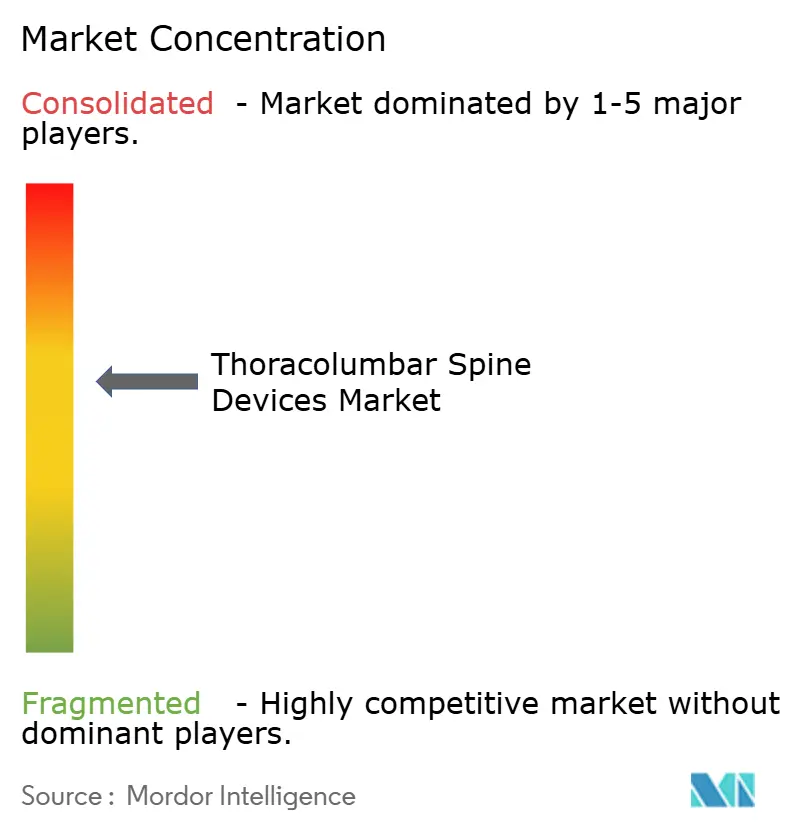
| Market Concentration | Medium |
Major Players
*Disclaimer: Major Players sorted in no particular order Image © Mordor Intelligence. Reuse requires attribution under CC BY 4.0. |
|
Thoracolumbar Spine Devices Market Analysis by Mordor Intelligence
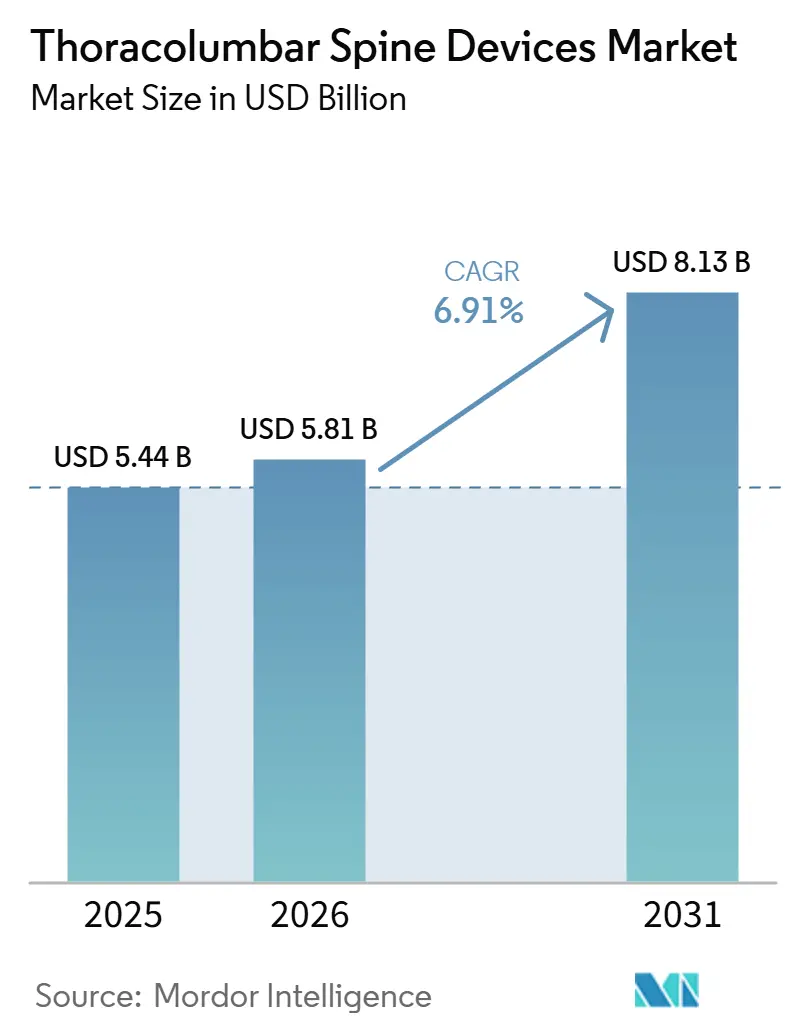
The Thoracolumbar Spine Devices Market size is expected to grow from USD 5.44 billion in 2025 to USD 5.81 billion in 2026 and is forecast to reach USD 8.13 billion by 2031 at 6.91% CAGR over 2026-2031.
The Thoracolumbar Spine Devices Market is supported by an expanding procedure base as aging, obesity, degenerative disease, trauma, and deformity increase the need for stabilization and reconstruction. Device suppliers are shifting from implant-only sales toward connected systems that combine implants, navigation, robotics, imaging, and biologics. This approach can increase revenue per procedure and make it harder for hospitals to change suppliers, although it also favors companies with broad product portfolios. Outpatient migration is changing product design and commercial models because ASCs need smaller instrument sets, simpler workflows, and affordable capital equipment. Reimbursement controls, implant pricing pressure, and the clinical cost of revisions remain important limits on the Thoracolumbar Spine Devices Market.
Key Report Takeaways
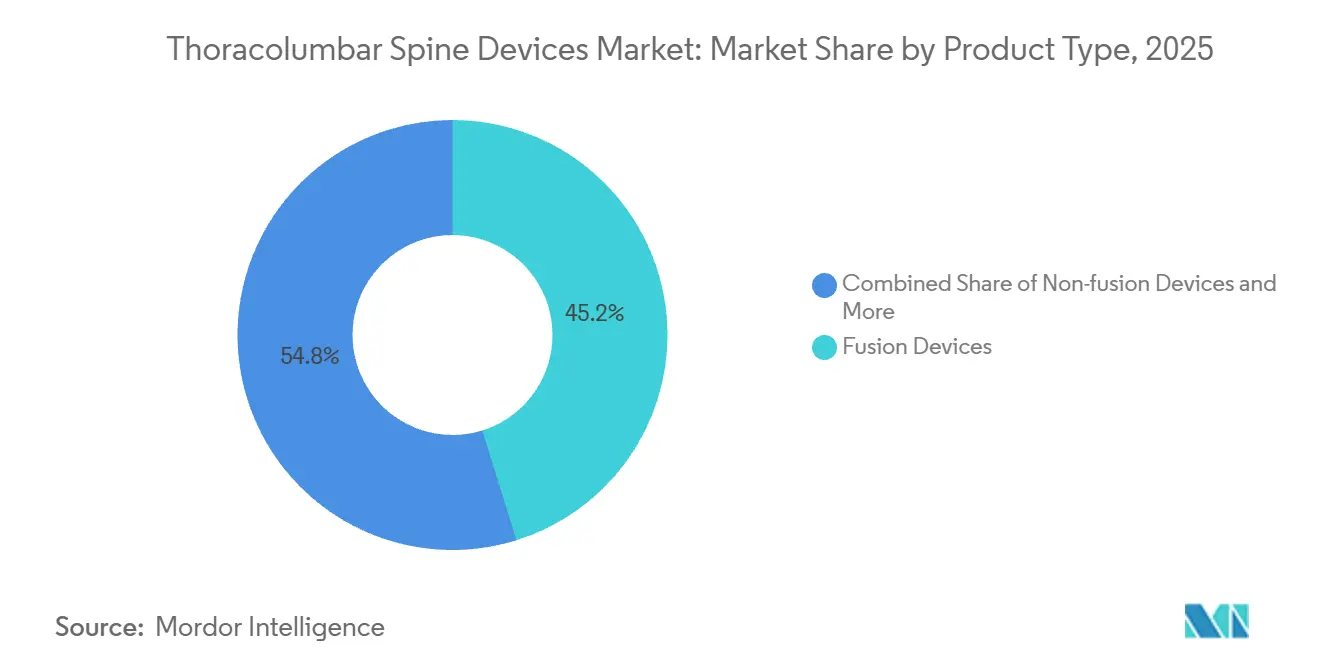
- By product type, fusion devices held 45.19% of the Thoracolumbar Spine Devices Market share in 2025, while non-fusion devices are forecast to grow at a 7.93% CAGR through 2031.
- By material, titanium and titanium alloys held 38.19% of the Thoracolumbar Spine Devices Market share in 2025, while PEEK and radiopaque PEEK are forecast to grow at a 7.52% CAGR through 2031.
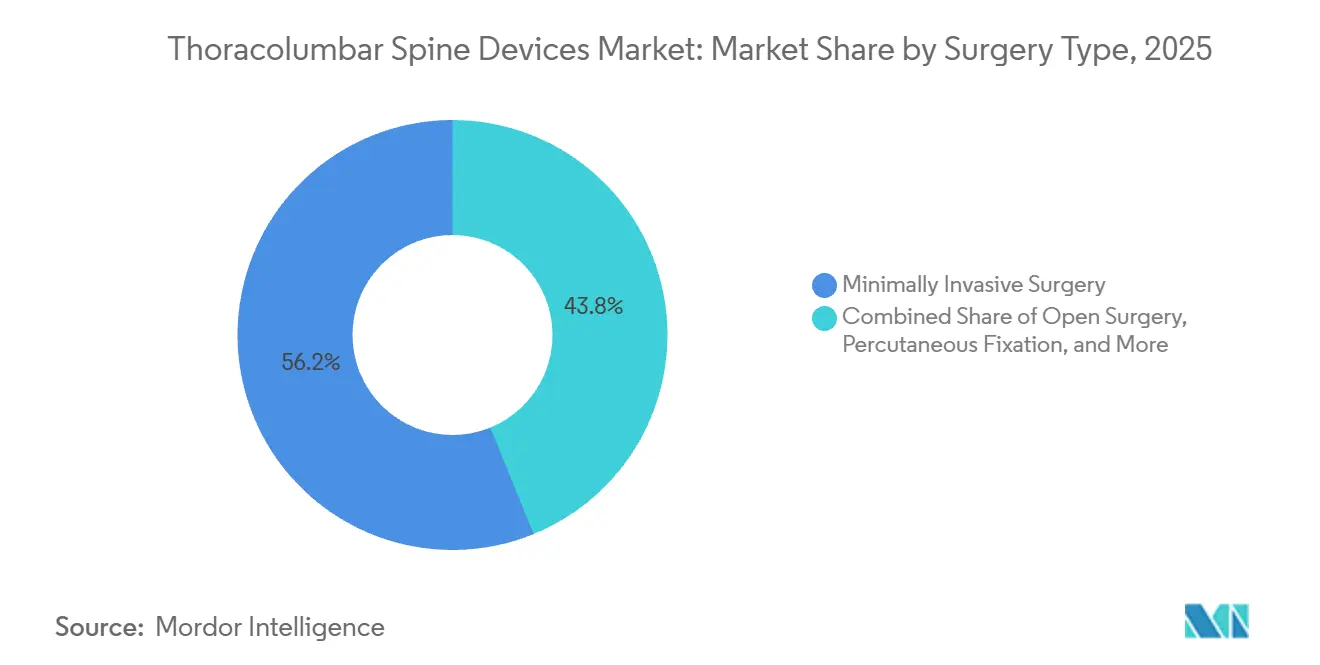
- By surgery type, minimally invasive surgery held 56.16% of the market in 2025, while robotic-assisted surgery is forecast to grow at a 10.68% CAGR through 2031.
- By indication, degenerative spine disease held 46.13% of the market in 2025, while adult and juvenile spinal deformity is forecast to grow at an 8.11% CAGR through 2031.
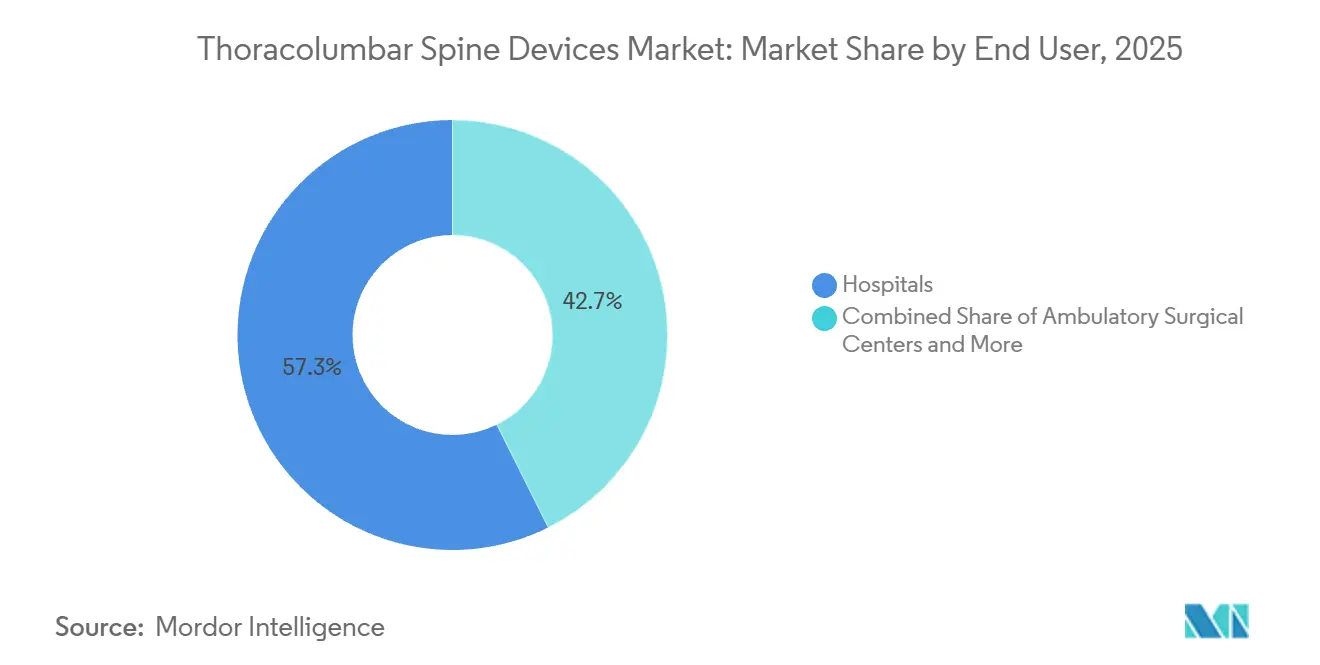
- By end user, hospitals held 57.34% of the market in 2025, while ambulatory surgical centers are forecast to grow at an 8.32% CAGR through 2031.
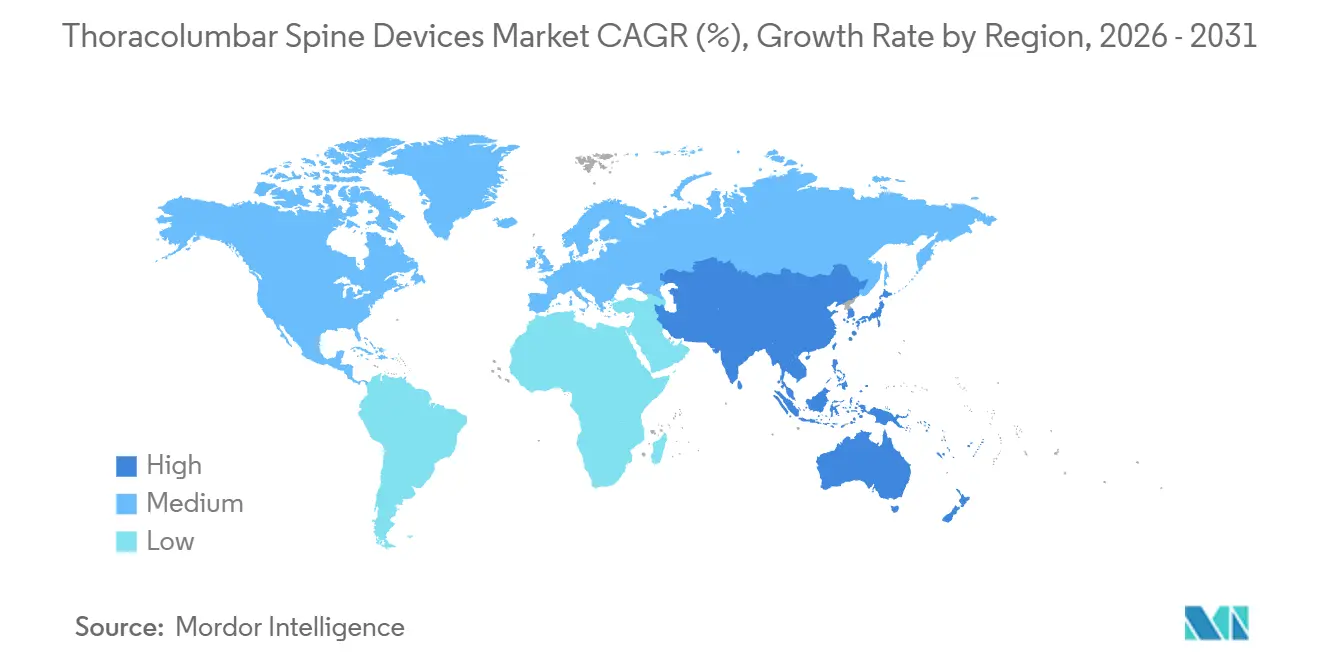
- By geography, North America held 42.15% of the market in 2025, while Asia-Pacific is forecast to grow at a 7.84% CAGR through 2031.
Note: Market size and forecast figures in this report are generated using Mordor Intelligence’s proprietary estimation framework, updated with the latest available data and insights as of January 2026.
Global Thoracolumbar Spine Devices Market Trends and Insights
Drivers Impact Analysis*
| Driver | (~) % Impact on CAGR Forecast | Geographic Relevance | Impact Timeline |
|---|---|---|---|
| Aging Population and Degenerative Spine Disease | +2.1% | Global, with greatest intensity in North America, Western Europe, Japan, China, and South Korea | Long term (≥ 4 years) |
| Spinal Trauma and Vertebral Compression Fractures | +1.0% | Global, with a high burden in China and high-SDI regions | Medium term (2-4 years) |
| Minimally Invasive, Navigation-Assisted, and Robotic Surgery | +1.5% | North America and core Europe, expanding to South Korea, Japan, and tier-1 Chinese hospitals | Medium term (2-4 years) |
| Outpatient Spine Surgery and Ambulatory Surgical Centers | +0.8% | United States, with earlier adoption in Western Europe and Australia | Short term (≤ 2 years) |
| Patient-Specific and Additively Manufactured Constructs | +0.6% | North America and Europe, emerging in South Korea and tier-1 Chinese hospitals | Long term (≥ 4 years) |
| Integrated Implant, Navigation, and Imaging Systems | +0.5% | North America and Europe, with expansion into GCC and premium Asia-Pacific settings | Medium term (2-4 years) |
| Source: Mordor Intelligence | |||
Aging Population and Rising Degenerative Spine Disease Burden
Demographic change provides a durable base of demand for the Thoracolumbar Spine Devices Market. Global vertebral fracture incidence reached 7.5 million cases in 2021, and the number of cases is expected to continue rising through 2035 despite lower age-standardized rates in many regions. The United States records 1 million to 1.5 million vertebral compression fractures each year, and 60% to 75% occur at the T12-L2 thoracolumbar junction.[1]National Center for Biotechnology Information, “Vertebral Compression Fractures,” StatPearls, ncbi.nlm.nih.gov These cases create a recurring need for augmentation, fixation, cages, and revision procedures within the Thoracolumbar Spine Devices Market. Osteoporotic and metastatic spine tumor procedures together account for nearly half of spinal procedures in high-income health systems, which broadens demand beyond routine fusion. China also adds to global demand because its age-standardized vertebral fracture prevalence increased by 0.53% annually from 1990 to 2021, while the global rate declined by 0.73% annually.
Increasing Spinal Trauma and Vertebral Compression Fracture Volume
Trauma and osteoporotic fractures expand the number of patients who may need thoracolumbar stabilization. Adults aged 55 and older experienced 2.02 million new fall-related vertebral fractures worldwide in 2021, and the age-standardized incidence rate rose at an average annual rate of 0.27 from 1990 to 202. High-income, high-SDI, and densely populated regions carry much of the absolute burden, which aligns demand with areas that can support advanced constructs. Kyphoplasty and vertebroplasty can create related demand for fixation when instability or neurological compromise is present. Expandable cages and pedicle screw variants can be cleared through the FDA 510(k) process, supporting product refinement for fracture treatment. The EU Medical Device Regulation requires stronger clinical evidence for many devices, which can raise the cost of participation for smaller suppliers.
Adoption of Minimally Invasive, Navigation-Assisted and Robotic Spine Surgery
Robotic-assisted surgery is the fastest-growing surgery type in the Thoracolumbar Spine Devices Market, with a projected 10.68% CAGR through 2031. Medtronic received FDA clearance for Stealth AXiS in February 2026, bringing planning, navigation, and robotic guidance together in one spine platform. Its LiveAlign feature provides continuous anatomical alignment information without repeated imaging, which may simplify intraoperative decisions. The system received CE Mark in April 2026 and is intended for hospital and ASC use. Stryker also introduced Mako Spine under the Mako 4 platform during 2025, extending its robotics portfolio into spine procedures. Clinical work from Germany found that robotic pedicle screw placement improved accuracy in complex anatomy, particularly in hybrid operating rooms with 3D navigation.
Expansion of Outpatient Spine Surgery and Ambulatory Surgical Centers
The movement of selected procedures to ASCs is reshaping the near-term purchasing requirements of the thoracolumbar spine devices market. United States ASC spine procedures rose nearly 8% annually from 2021 to 2024, and nearly 900,000 outpatient spine procedures were performed in ASCs between 2018 and 2024. The study also found that ASC procedures cost 45% to 60% less than similar inpatient cases. CMS added posterior lumbar interbody fusion and combined posterior and interbody fusion to the ASC Covered Procedures List for 2026, enabling facility payment for major thoracolumbar procedures. Suppliers, therefore, need compact sterile sets, modular instruments, and financing suited to lower-volume sites. This care setting can favor Thoracolumbar Spine Devices Market systems that are quick to deploy and do not rely on large hospital utilization commitments.
Restraints Impact Analysis*
| Restraint | (~) % Impact on CAGR Forecast | Geographic Relevance | Impact Timeline |
|---|---|---|---|
| Implant, Navigation, and Robotic-Platform Costs | -1.2% | Global, most acute in cost-sensitive emerging markets and ASCs | Medium term (2-4 years) |
| Reimbursement Pressure and Procedure Coverage Variation | -1.0% | North America and Western Europe, with effects on Asia-Pacific tender markets | Short term (≤ 2 years) |
| Revision Risk from Construct Failure and Adjacent-Segment Disease | -0.5% | Global, with strong registry documentation in Scandinavia and Germany | Long term (≥ 4 years) |
| Limited Surgeon Training for Complex and Percutaneous Fixation | -0.4% | South Asia, the Middle East and Africa, Latin America, and early-adoption Asia-Pacific centers | Medium term (2-4 years) |
| Source: Mordor Intelligence | |||
High Implant, Navigation and Robotic-Platform Costs
High capital and per-case costs can restrict access to the Thoracolumbar Spine Devices Market. Robotic spine platforms range from USD 0.50 million for smaller systems to USD 1.50 million or more for full-suite configurations. Premium titanium constructs, patient-specific 3D-printed cages, and augmented fixation systems also face scrutiny from procurement teams. U.S. inpatient lumbar fusion hospital costs reached USD 14.10 billion in 2023, rising from USD 3.86 billion in 2002, while per-procedure costs rose from USD 25,849 to USD 45,458.[2]Alexander S. Ke et al., “Inpatient National Trends and Aggregate Costs of Primary and Revision Lumbar Fusion in the United States,” JAMA Network Open, jamanetwork.com Payers are responding through value-based payment models, creating pressure to demonstrate lower total episode costs. EU MDR recertification adds documentation and compliance spending that can be difficult for specialty implant suppliers to absorb.
Reimbursement Pressure and Variation in Procedure Coverage
Reimbursement is a short-term limit on procedure volume and supplier pricing in the Thoracolumbar Spine Devices Market. CMS finalized a 2.5% efficiency adjustment for surgical services in the 2026 Physician Fee Schedule. The WISeR prior authorization model began in January 2026 in Arizona, New Jersey, Ohio, Oklahoma, Texas, and Washington for selected services, including certain spine procedures. China’s volume-based procurement program puts downward pressure on average selling prices for standardized thoracolumbar implants. As a result, unit growth can be stronger than revenue growth in the country. Different European DRG tariffs also prevent a uniform premium-pricing strategy across the region.
*Our forecasts treat driver/restraint impacts as directional, not additive. The impact forecasts reflect baseline growth, mix effects, and variable interactions.
Segment Analysis
By Product Type: Fusion Devices Retain the Largest Base While Non-Fusion Devices Expand
Fusion devices accounted for 45.19% of the Thoracolumbar Spine Devices Market size in 2025. Pedicle screw-rod constructs and TLIF or PLIF interbody cages remain established options for degenerative and traumatic indications. A large base of fusion-trained surgeons and familiar procurement codes supports continued use in the United States and Western Europe. Stimulation devices and other categories complement fusion and non-fusion products. Bone-growth stimulators are particularly relevant in complex reconstruction, revisions, and deformity correction, where fusion success is uncertain.
Non-fusion devices are forecast to grow at a 7.93% CAGR from 2026 to 2031. Motion-preserving dynamic stabilization and total disc replacement address patients under 65 who want to reduce the risk of adjacent-segment disease. A 2025 finite element study found that PEEK rod dynamic stabilization reduced stress concentration at the screw-rod junction compared with rigid titanium rods in multilevel fixation.[3]"Lumbar Fusion Using a Carbon-Fiber PEEK Pedicle Screw System Combined with a Carbon-Fiber PEEK TLIF Cage: A Prospective, Multicenter Study." BMC Musculoskeletal Disorders. Springer Nature, 2025. This biomechanical result supports selective use in elective cases in the Thoracolumbar Spine Devices Market, although clinical adoption remains limited. Orthofix discontinued its M6 artificial disc lines in 2025, showing that non-fusion products still face clinical and commercial constraints.



By Material: Titanium Leads While PEEK Materials Support Imaging and Bioactivity Needs
Titanium and titanium alloys commanded 38.19% of the material segment in 2025. Their position reflects established osseointegration, familiar surgical handling, and compatibility with navigation and robotic instruments. Cobalt-chromium alloys serve high-load deformity correction cases. Stainless steel remains relevant in value-oriented settings where cost is a primary concern. Bioresorbable materials remain small but continue to attract development work.
PEEK and radiopaque PEEK are forecast to grow at a 7.52% CAGR through 2031. Their appeal comes from MRI compatibility and reduced imaging interference after surgery. A prospective multicenter study found that carbon-fiber PEEK lumbar constructs achieved fusion rates comparable to metal systems while preserving MRI image quality. Medtronic acquired nano-surface technology assets from Nanovis in February 2025 to support bioactive PEEK interbody device development. A 2026 review also identified 3D-printable PEEK-HA-Mg2SiO4 composites as a route to combine bioactivity, mechanical performance, and imaging compatibility for patient-specific constructs.
By Surgery Type: Minimally Invasive Surgery Leads While Robotics Gains Momentum
Minimally invasive surgery accounted for 56.16% of the surgery-type segment in 2025. The result shows that MIS has become the standard approach for many elective thoracolumbar procedures. Open surgery still has an essential role in complex deformity correction and trauma cases that need wider exposure. Percutaneous fixation and navigation-assisted surgery support different points along the MIS pathway. Navigation-compatible systems can help surgeons place implants through smaller access routes with less reliance on conventional fluoroscopy.
Robotic-assisted surgery is forecast to grow at a 10.68% CAGR from 2026 to 2031. Medtronic, Stryker, Alphatec, and DePuy Synthes have competing platforms that combine robotics with navigation and implant systems. More installations can increase training access and reduce barriers to conversion in community hospitals and ASCs. The 2025 German clinical review reported higher pedicle screw placement accuracy in complex anatomical settings when robotic systems were used with cone-beam CT and 3D navigation. These capabilities support the premium segment of the Thoracolumbar Spine Devices Market, but capital costs and workflow training will affect the pace of adoption.
By Indication: Degenerative Disease Provides Scale While Deformity Raises Procedure Complexity
Degenerative spine disease accounted for 46.13% of the indication segment in 2025. It provides the largest routine procedure base because disc degeneration, stenosis, and instability are common in older adults. U.S. lumbar fusion admissions totaled 5,033,772 from 2002 to 2023, and the outpatient share increased from 2.1% in 2016 to 9.8% in 2022. The care setting is changing, but the need for implants is not disappearing. Regulatory compliance under FDA 510(k), ISO 13485, and EU MDR remains important across indications.
Adult and juvenile spinal deformity is projected to grow at an 8.11% CAGR through 2031. Broader surgical eligibility and the growing evidence base for corrective treatment in older patients are increasing the need for long and complex constructs. A 2025 Medicare study found that adult spinal deformity correction volume grew by 23.2%, while neurosurgeon participation rose by 55.6%. Spinal tumors have lower procedure volume but often require custom cages and extended posterior fixation. These cases create higher device complexity and larger revenue per procedure in the Thoracolumbar Spine Devices Market.
By End User: Hospitals Remain Central While ASCs Gain Share
Hospitals held 57.34% of the end-user segment in 2025. They retain complex deformity, trauma, and tumor procedures that require intensive perioperative resources and multilevel planning. Longer robotics setup times can also fit more easily within hospital operating models. Specialty spine clinics serve high-throughput elective cases. Academic and research hospitals remain important for clinical studies, training, and the first use of new technologies.
Ambulatory surgical centers are forecast to grow at an 8.32% CAGR through 2031. The shift reflects payer incentives, wider procedure eligibility, and patient interest in same-day discharge. CMS finalized the Ambulatory Specialty Model in October 2025, and it became effective in January 2027, linking part of Medicare Part B payment to episode cost performance. This policy can favor lower-cost sites for appropriate Thoracolumbar Spine Devices Market procedures. Suppliers serving ASCs will need efficient implant sets and simple, reliable technology support.
Geography Analysis
North America held 42.15% of the global market in 2025. The region benefits from high surgical rates, established reimbursement codes, and a concentrated base of major technology suppliers. U.S. inpatient lumbar fusion hospital costs reached USD 14.10 billion in 2023, demonstrating the size of the regional procedure base. CMS expanded the ASC Covered Procedures List in 2026 and continued to shift suitable musculoskeletal procedures away from inpatient settings. Canada and Mexico add to regional demand, with private hospital capacity and medical travel supporting growth in Mexico.
Europe is the second-largest regional market, supported by demand in Germany, the United Kingdom, France, Italy, and Spain. Aging populations, high procedure penetration, and German purchasing groups support demand for established titanium and interbody systems with clear DRG reimbursement. A 2025 report from Vivantes described robotic-assisted neurosurgery in Berlin, illustrating the uptake of advanced navigation in academic hospitals. Scandinavian registries generate long-term outcome evidence that can influence clinical practice across Europe. EU MDR requirements raise evidence standards and add market-access complexity for implant makers.
Asia-Pacific is forecast to expand at a 7.84% CAGR through 2031, making it the fastest-growing regional part of the Thoracolumbar Spine Devices Market. China has the largest volume base, but volume-based procurement places pressure on prices for standardized posterior thoracolumbar constructs. South Korea and Japan are premium adopters of navigation and robotic technology, while Japan provides a growing need for degenerative spine treatment in older patients. A Korean national cohort study covering 278,815 patients documented lumbar fusion and reoperation patterns in an aging population. India has fast procedure growth but relies heavily on imported systems, which makes pricing and domestic production incentives important. The Middle East and Africa and South America remain smaller markets, with premium adoption centered on GCC hospitals and private care in Brazil and Argentina. Asia-Pacific is forecast to expand at a 7.84% CAGR through 2031, making it the fastest-growing regional part of the Thoracolumbar Spine Devices Market. China has the largest volume base, but volume-based procurement places pressure on prices for standardized posterior thoracolumbar constructs. South Korea and Japan are premium adopters of navigation and robotic technology, while Japan provides a growing need for degenerative spine treatment in older patients. A Korean national cohort study covering 278,815 patients documented lumbar fusion and reoperation patterns in an aging population. India has fast procedure growth but relies heavily on imported systems, which makes pricing and domestic production incentives important.

Competitive Landscape
The Thoracolumbar Spine Devices Market is moderately consolidated at the premium end. Medtronic, DePuy Synthes, Globus Medical, Stryker, and Zimmer Biomet are major competitors in implants, navigation, and robotics—their strategy centers on proprietary systems that connect capital equipment with recurring implant demand. Medtronic’s Stealth AXiS, Stryker’s Mako Spine, DePuy Synthes’s VELYS Spine, and Globus Medical’s ExcelsiusGPS demonstrate this platform-based approach. Such systems can increase switching costs for hospital customers because workflows, training, and implants are connected.
The ASC channel is an important opening for smaller and specialized suppliers. Full-scale hospital robotic systems can be expensive and operationally demanding for ambulatory sites. Alphatec positions Valence for community hospitals and ASCs through an integrated robotic-navigation approach. Medtronic’s February 2025 purchase of Nanovis surface technology assets illustrates how large suppliers are strengthening biologic fixation within PEEK-based implants. Globus Medical completed its USD 250 million acquisition of Nevro in April 2025, adding spinal cord stimulation and sacroiliac solutions to its musculoskeletal portfolio. These moves extend product coverage across fixation, pain management, and digital surgery.
Mid-tier competitors include Orthofix Medical, Ulrich Medical, Neo Medical, and Spineart. Orthofix uses its 7D FLASH Machine-Vision Navigation System to offer navigation without radiation-dependent fluoroscopy. Additive manufacturing, smart-screw sensors, and RFID-enabled instrument tracking are also attracting investment. These technologies will require compliance with ISO 13485, EU MDR, and unique device identification requirements before reaching scale. Competitive success in the Thoracolumbar Spine Devices Market will depend on clinical support, workflow fit, and the ability to show value to hospital and ASC customers. The market remains competitive because no single company controls every implant, enabling technology, and care-setting requirement.
Thoracolumbar Spine Devices Industry Leaders
-
Globus Medical, Inc.
-
Johnson and Johnson Services, Inc.
-
Medtronic plc
-
Stryker Corporation
-
Zimmer Biomet Holdings, Inc.
- *Disclaimer: Major Players sorted in no particular order

Recent Industry Developments
- July 2026: DePuy Synthes acquired Expanding Innovations, Inc., adding the X-PAC TLIF and X-PAC LLIF expandable interbody cage systems and the N-GAGE Lumbar Plate System to its portfolio.
- April 2026: Medtronic received CE Mark for Stealth AXiS, following the U.S. FDA clearance obtained in February 2026. The system, the first integrated planning, navigation, and robotics platform cleared in both markets, is now eligible for deployment across European hospitals and ASCs, expanding Medtronic's AiBLE ecosystem to international spine surgery settings.
- February 2026: Medtronic received FDA clearance for Stealth AXiS, the first system to unify pre-operative planning, intraoperative navigation, and robotic guidance in a single platform for spine surgery.
- April 2025: Globus Medical completed USD 250 million all-cash acquisition of Nevro Corp., integrating Nevro's HFX spinal cord stimulation platform and sacroiliac joint fusion solutions into Globus's musculoskeletal portfolio.


Global Thoracolumbar Spine Devices Market Report Scope
The thoracolumbar spine devices market comprises medical devices designed to stabilize, support, and treat conditions affecting the thoracic and lumbar regions of the spine, which connect the upper and lower back and play a critical role in load bearing, mobility, and spinal alignment. It includes implants, fixation systems, and surgical instruments used to manage trauma, degenerative disorders, deformities, and spinal injuries. These devices support procedures such as spinal fusion, fracture stabilization, deformity correction, and decompression by helping restore spinal stability, reduce pain, and improve patient mobility.
The thoracolumbar spine devices market is segmented by product type, material, surgery type, indication, end user, and geography. By product type, it is further divided into fusion devices, non-fusion devices, stimulation devices, and others. By material, it is segmented into titanium and titanium alloys, stainless steel, Peek and radiopaque Peek, cobalt-chromium alloys, and bioresorbable materials. By surgery type, the market is segmented into open surgery, minimally invasive surgery, percutaneous fixation, robotic-assisted surgery, and navigation-assisted surgery. By indication, the market is segmented into degenerative spine disease, spinal trauma and fractures, adult and juvenile spinal deformity, spinal tumors, and others. By end user, the market is segmented into hospitals, ambulatory surgical centers, specialty spine clinics, and academic and research hospitals. The geography segment is further divided into North America, Europe, Asia-Pacific, the Middle East and Africa, and South America. The report also covers the estimated market sizes and trends for 17 countries across major regions globally. The report offers the market size and forecasts in value (USD) for the above segments.
| Fusion Devices |
| Non-Fusion Devices |
| Stimulation Devices |
| Others |
| Titanium and Titanium Alloys |
| Stainless Steel |
| PEEK and Radiopaque PEEK |
| Cobalt-Chromium Alloys |
| Bioresorbable Materials |
| Open Surgery |
| Minimally Invasive Surgery |
| Percutaneous Fixation |
| Robotic-Assisted Surgery |
| Navigation-Assisted Surgery |
| Degenerative Spine Disease |
| Spinal Trauma and Fractures |
| Adult and Juvenile Spinal Deformity |
| Spinal Tumors |
| Others |
| Hospitals |
| Ambulatory Surgical Centers |
| Specialty Spine Clinics |
| Academic and Research Hospitals |
| North America | United States |
| Canada | |
| Mexico | |
| Europe | Germany |
| United Kingdom | |
| France | |
| Italy | |
| Spain | |
| Rest of Europe | |
| Asia-Pacific | China |
| Japan | |
| India | |
| Australia | |
| South Korea | |
| Rest of Asia-Pacific | |
| Middle East and Africa | GCC |
| South Africa | |
| Rest of Middle East and Africa | |
| South America | Brazil |
| Argentina | |
| Rest of South America |
| By Product Type | Fusion Devices | |
| Non-Fusion Devices | ||
| Stimulation Devices | ||
| Others | ||
| By Material | Titanium and Titanium Alloys | |
| Stainless Steel | ||
| PEEK and Radiopaque PEEK | ||
| Cobalt-Chromium Alloys | ||
| Bioresorbable Materials | ||
| By Surgery Type | Open Surgery | |
| Minimally Invasive Surgery | ||
| Percutaneous Fixation | ||
| Robotic-Assisted Surgery | ||
| Navigation-Assisted Surgery | ||
| By Indication | Degenerative Spine Disease | |
| Spinal Trauma and Fractures | ||
| Adult and Juvenile Spinal Deformity | ||
| Spinal Tumors | ||
| Others | ||
| By End User | Hospitals | |
| Ambulatory Surgical Centers | ||
| Specialty Spine Clinics | ||
| Academic and Research Hospitals | ||
| By Geography | North America | United States |
| Canada | ||
| Mexico | ||
| Europe | Germany | |
| United Kingdom | ||
| France | ||
| Italy | ||
| Spain | ||
| Rest of Europe | ||
| Asia-Pacific | China | |
| Japan | ||
| India | ||
| Australia | ||
| South Korea | ||
| Rest of Asia-Pacific | ||
| Middle East and Africa | GCC | |
| South Africa | ||
| Rest of Middle East and Africa | ||
| South America | Brazil | |
| Argentina | ||
| Rest of South America | ||


Key Questions Answered in the Report
What is the forecast for thoracolumbar spine devices through 2031?
The Thoracolumbar Spine Devices Market is forecast to reach USD 8.13 billion by 2031, growing at a 6.91% CAGR from 2026.
Which product type has the largest position in thoracolumbar spine devices?
Fusion devices led with 45.19% in 2025, supported by established use in degenerative disease and trauma procedures.
Why are robotic spine systems gaining adoption?
Robotic-assisted surgery is forecast to grow at a 10.68% CAGR through 2031 as hospitals pursue better navigation, implant placement accuracy, and connected workflows.
How are ASCs changing thoracolumbar surgery purchasing?
ASCs are the fastest-growing end-user group at an 8.32% CAGR, increasing demand for compact instruments, efficient workflows, and accessible technology financing.
Which region is growing fastest for thoracolumbar spine devices?
Asia-Pacific is forecast to grow at a 7.84% CAGR through 2031, led by expanding procedure volumes across China, India, South Korea, and Japan.
What factors limit wider use of advanced spine devices?
High robotic and navigation costs, reimbursement pressure, revision risk, and limited surgeon training can slow adoption.
Page last updated on:





