
Thermal Insulation Material Market Size and Share
Market Overview
| Study Period | 2021 - 2031 |
|---|---|
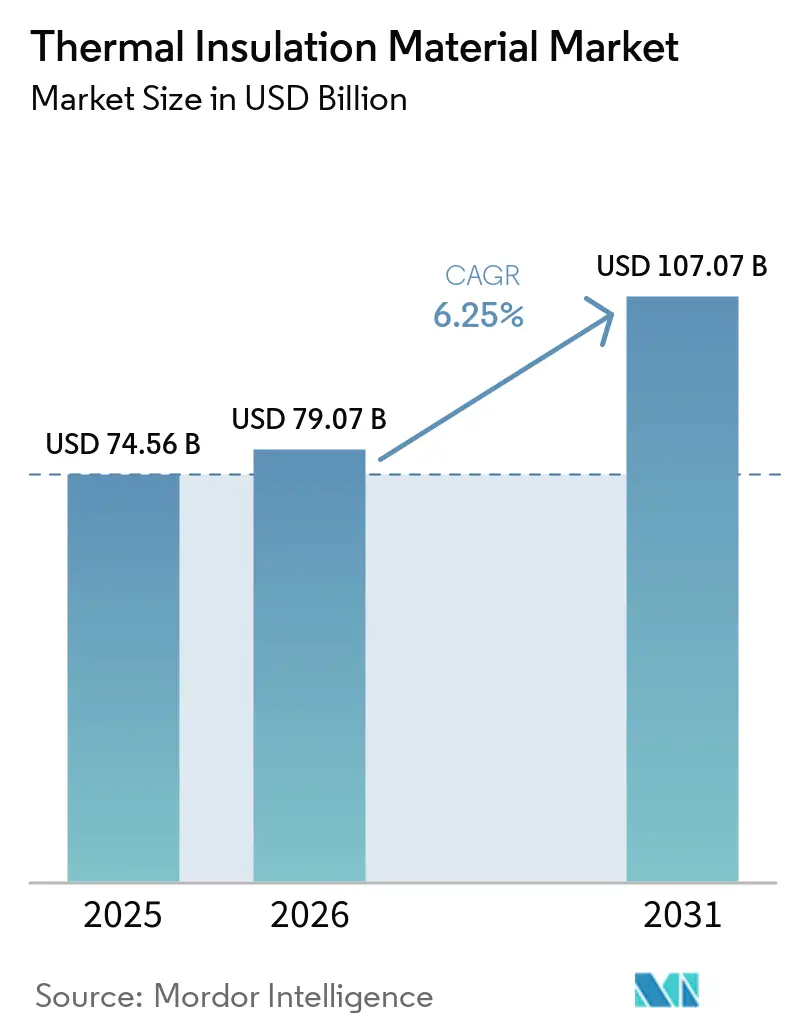
| Market Size (2026) | USD 79.07 Billion |
| Market Size (2031) | USD 107.07 Billion |
| Growth Rate (2026 - 2031) | 6.25 % |
| Fastest Growing Market | Asia-Pacific |
| Largest Market | Europe |
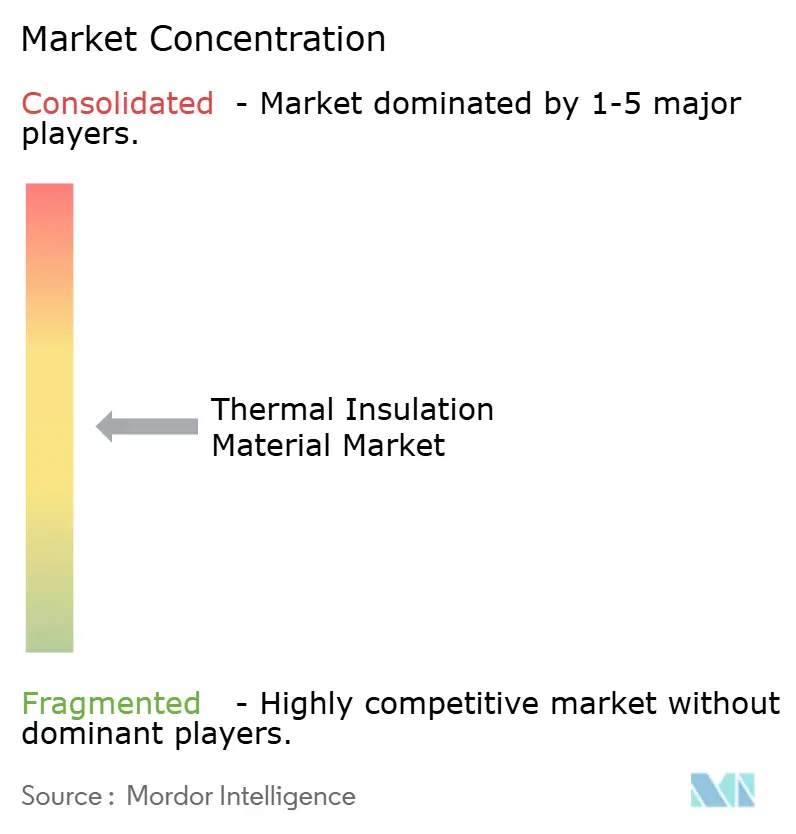
| Market Concentration | Medium |
Major Players *Disclaimer: Major Players sorted in no particular order Image © Mordor Intelligence. Reuse requires attribution under CC BY 4.0. | |
Thermal Insulation Material Market Analysis by Mordor Intelligence
The thermal insulation material market size was estimated at USD 74.56 billion in 2025 and is estimated to grow from USD 79.07 billion in 2026 to USD 107.07 billion by 2031, at a CAGR of 6.25% during the forecast period (2026-2031). Building energy codes support the thermal insulation material market by making insulation a compliance requirement. Europe was the largest regional contributor in 2025, while Asia-Pacific is expected to expand through 2031. Demand is extending beyond building envelopes to industrial energy upgrades and battery thermal management. Suppliers are increasing capacity, adopting lower-carbon production methods, and expanding certified material portfolios. Feedstock price volatility, installation capacity, and end-of-life treatment will affect the conversion of policy-driven demand into installations.
Key Report Takeaways
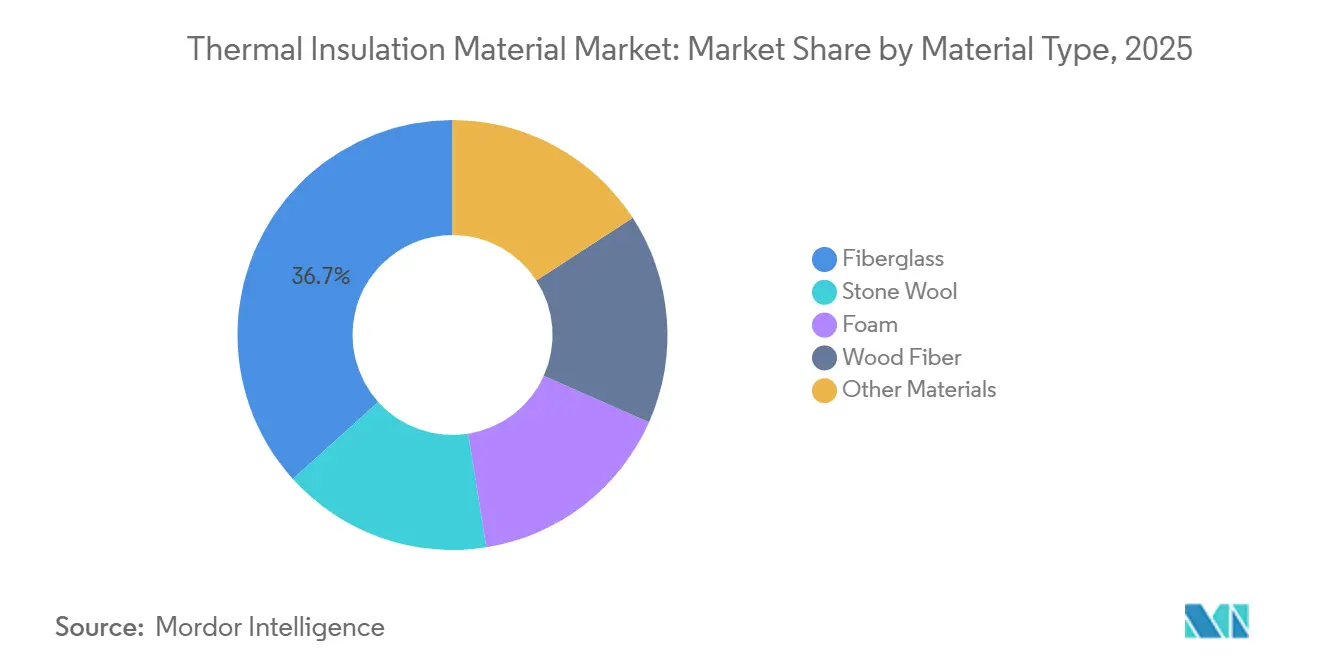
- By material type, fiberglass held 36.67% of demand in 2025, while stone wool is forecast to grow at a 6.79% CAGR through 2031.
- By temperature range, the 0-100°C segment held 45.12% of demand in 2025, while the 500°C and above segment is forecast to grow at a 6.94% CAGR through 2031.
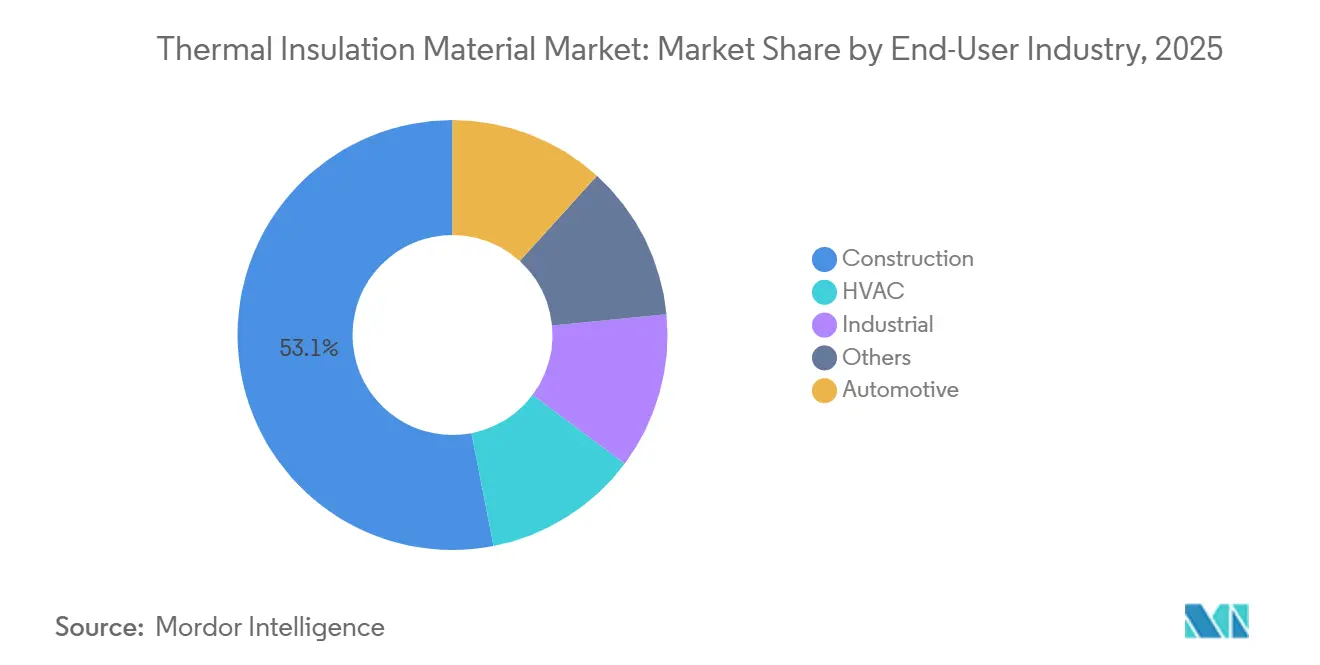
- By end-user industry, construction held 53.05% of demand in 2025, while automotive is forecast to grow at a 7.25% CAGR through 2031.
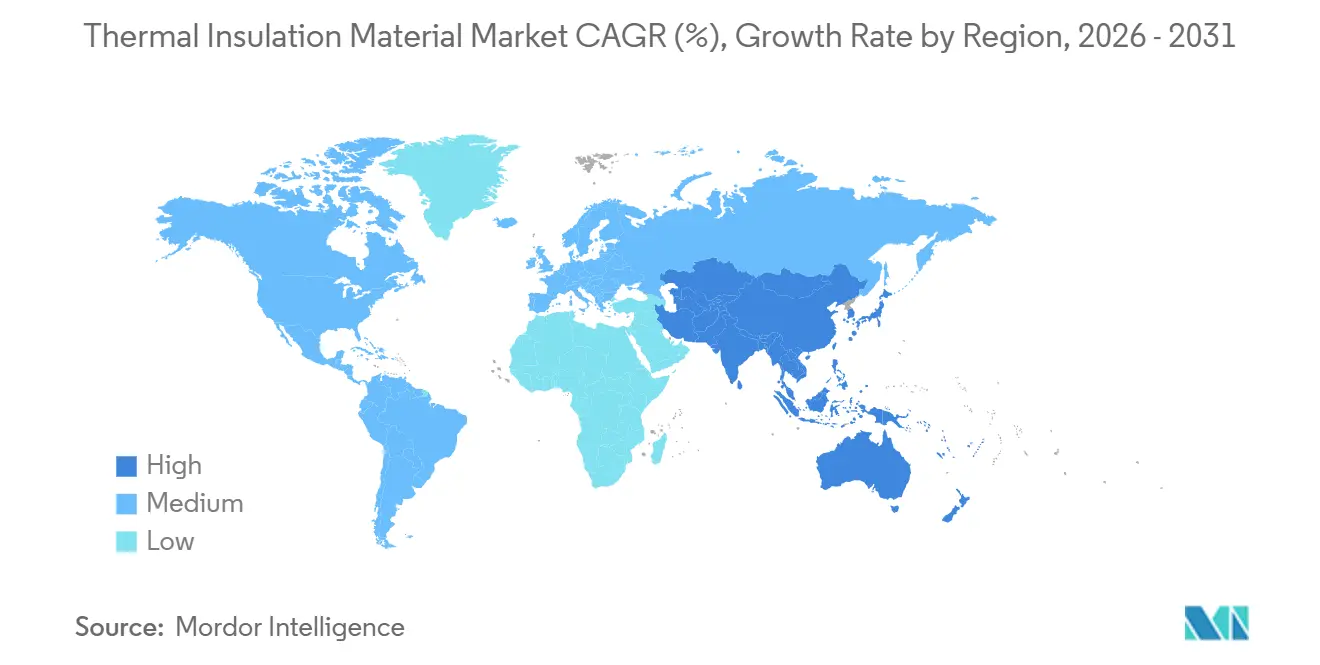
- By geography, Europe held 36.56% of demand in 2025, while Asia-Pacific is forecast to grow at a 7.03% CAGR through 2031.
Note: Market size and forecast figures in this report are generated using Mordor Intelligence’s proprietary estimation framework, updated with the latest available data and insights as of January 2026.
Market Trends and Insights
Drivers Impact Analysis of Thermal Insulation Material Market*
| Drivers | (~) % Impact on CAGR Forecast | Geographic Relevance | Impact Timeline |
|---|---|---|---|
| Tightening Building Energy-Performance Standards | +1.4% | Global, strongest in EU and North America | Medium term (2-4 years) |
| Energy-Efficient Building Retrofits and Renovation Incentives | +1.2% | EU, North America, Japan, Australia | Medium term (2-4 years) |
| Expansion of Energy-Efficient Construction in Asia-Pacific | +1.0% | APAC core, China, India, ASEAN, with spillover to MEA | Long term (≥ 4 years) |
| Growth of Electric Vehicles and Battery Thermal Management | +0.8% | Global, concentrated in China, the EU, and North America | Short term (≤ 2 years) |
| Industrial Decarbonization and Process-Energy Optimization | +0.9% | EU and North America, emerging in China and India | Medium term (2-4 years) |
| Source: Mordor Intelligence | |||
Tightening Building Energy-Performance Standards
Building codes are driving demand in the thermal insulation material market. The recast Energy Performance of Buildings Directive (EU) 2024/1275 entered into force in 2024, and member states must transpose it into national law by May 2026. The directive requires national authorities to establish minimum energy-performance thresholds, requiring higher-specification insulation for compliance. Commission Delegated Regulation (EU) 2026/52 introduces a Union framework for calculating building life-cycle global warming potential using EN 15978:2011. The framework shifts procurement criteria from standalone U-values to verified environmental performance. Suppliers with third-party Environmental Product Declarations can meet life-cycle data requirements in product selection.
Energy-Efficient Building Retrofits and Renovation Incentives
Renovation programs support demand for the thermal insulation material market beyond new-construction cycles. Germany's Federal Office for Economic Affairs and Export Control (BAFA) supports building-envelope insulation through the Federal Funding for Efficient Buildings - Individual Measures (BEG EM) program. A Worst-Performing Building bonus is expected to begin in Q1 2027 for eligible households using an Individual Refurbishment Roadmap. The program links support to a certified whole-house plan rather than a single improvement measure. Tokyo’s FY2026 program for insulation and renewable energy in rental housing has a JPY 21.8 billion (~USD 0.13 billion) budget and accepts applications from May 2026 through February 2027[1]. Germany’s energy renovation rate declined to 0.67% in 2025, while sales of thermal composite insulation systems fell by 15% to 30.5 million m² in 2024. These trends indicate that program discontinuity can affect contractor planning and inventory investment. Consistent incentives remain relevant to policy implementation.
Growth of Electric Vehicles and Battery Thermal Management
Battery thermal management supports demand for the thermal insulation material market beyond construction activity. Cell-to-pack battery designs remove module-level housings to increase energy density. Insulation must therefore operate between cells at a finer scale than conventional vehicle insulation. These designs use aerogels, ceramic composites, and other thin materials with low thermal conductivity and fire-containment properties. UNECE Regulation No. 100 requires high-voltage battery systems to maintain electrical insulation resistance of at least 100 Ω/V, increasing material qualification requirements. These requirements also support the use of insulation products in battery packs and other thermal-management applications.
Industrial Decarbonization and Process-Energy Optimization
Industrial process equipment offers demand potential for the thermal insulation material market, as many systems remain under-insulated. An EiiF analysis of 100 European industrial plants found that a EUR 50,000 investment in insulation could generate annual energy savings of 5,000 MWh and reduce CO₂ emissions by 1,000 tons. The analysis reported a 1.6-year payback period and a 520% return on investment over 10 years. More than 3,000 TIPCHECK audits conducted globally since 2010 have found that three out of four audited clients invested. ISO 18959:2025 establishes specifications for rigid nano-microporous insulation for industrial applications operating between 100°C and 1,150°C. The standard defines requirements for certified suppliers in high-temperature industrial projects.
Restraints Impact Analysis of Thermal Insulation Material Market*
| Restraints | (~) % Impact on CAGR Forecast | Geographic Relevance | Impact Timeline |
|---|---|---|---|
| Volatility in Polymer, Mineral Fiber, and Energy Input Costs | -0.8% | Global, most acute in Asia-Pacific and Europe | Short term (≤ 2 years) |
| High Installation Costs and Skilled-Installer Shortages | -0.5% | North America, the EU, the UK, and Australia | Medium term (2-4 years) |
| End-of-Life and Recycling Constraints for Composite Insulation Systems | -0.3% | EU and North America | Long term (≥ 4 years) |
| Source: Mordor Intelligence | |||
Volatility in Polymer, Mineral Fiber, and Energy Input Costs
Input cost volatility remains a margin risk for the thermal insulation materials market. Mineral wool production requires melting basalt and slag at temperatures above 1,200°C, exposing producers to fluctuations in electricity and natural gas prices. Energy represents 20-35% of mineral wool production costs. The U.S. Producer Price Index for mineral wool stood at 275.3 in June 2026, largely unchanged from February 2026, as broader energy conditions continued to influence costs[2]. Foam suppliers also depend on the availability of methylene diphenyl diisocyanate (MDI) and related feedstocks. Manufacturers with vertical integration or long-term, energy-indexed contracts have greater capacity to manage cost fluctuations than smaller regional producers.
High Installation Costs and Skilled-Installer Shortages
Installer shortages can delay policy-supported projects in the thermal insulation material market. The National Insulation Association reported that labor accounted for 40-55% of installed residential insulation costs and 45-60% of installed commercial and industrial mechanical insulation costs in 2025. It also reported that 28% of U.S. mechanical insulation workers were within 10 years of retirement. In the United Kingdom, the Construction Leadership Council identified a need for 10,700 solid-wall insulation installers by 2028, up from 451 in 2023. These constraints may limit projects supported by U.S. retrofit programs and European building-renovation incentives. Training and apprenticeship capacity must expand alongside financial incentives to meet policy targets.
*Our forecasts treat driver/restraint impacts as directional, not additive. The impact forecasts reflect baseline growth, mix effects, and variable interactions.
Thermal Insulation Material Market Segment Analysis
By Material Type:
Stone Wool Disrupting Fiberglass’s Long-Held ShareFiberglass held a 36.67% share of the thermal insulation material market in 2025, supported by its cost position and established manufacturing and distribution base in North American and European residential construction. Stone wool is expected to record the fastest growth, at a CAGR of 6.79% through 2031. It provides fire performance and acoustic control in a single product layer and can meet Euroclass A1 non-combustibility requirements under EN 13501-1. These characteristics are relevant for European multifamily buildings and commercial high-rise projects, where A2 or higher fire ratings are increasingly required.
Foam products, including polyurethane, polyiso, and EPS, remain important for below-grade and roof-deck applications. End-of-life constraints for composite systems and feedstock price exposure affect their outlook. Research published in IOP Conference Series: Earth and Environmental Science projects that annual EPS waste from External Thermal Insulation Composite Systems will increase fourfold by 2050. Wood fiber remains a smaller material category but is gaining attention in DACH and Nordic projects that prioritize biogenic carbon accounting. Research published in Resources reported that polymeric foams accounted for 48% of Germany’s insulation demand in 2019, mineral wools for 43%, and bio-based materials for 9%. Wood fiber represented 58% of the bio-based share. It serves projects where material origin and lifecycle documentation are part of the project brief. Its use remains selective because fiberglass, stone wool, and foam supply chains are well established. Circular-economy product policies may become more relevant in selected projects.
ROCKWOOL broke ground in 2026 on a USD 175 million plant in Wallula, Washington, its fifth North American facility. The plant will address stone wool supply requirements on the Pacific Coast as energy code requirements tighten. Knauf Insulation has also planned a new rock mineral wool plant in Shotton, United Kingdom, using submerged arc furnace electric melting technology. These investments direct capacity toward products that provide thermal, acoustic, fire, and environmental performance. Suppliers that document lower manufacturing emissions may be considered in projects where lifecycle reporting guides material selection.

By Temperature Range:
Industrial Demand Lifting the High-Temperature CeilingThe 0-100°C band held 45.12% of thermal insulation material demand in 2025. It is used primarily in building envelopes, including walls, roofs, floors, and HVAC ductwork, where ambient-temperature performance is the main design consideration. The 500°C-and-above range is expected to grow at a CAGR of 6.94% through 2031, supported by industrial decarbonization initiatives in steel, cement, petrochemicals, glass, and power-generation assets. ISO 18959:2025 defines requirements for rigid nano-microporous insulation for applications from 100°C to 1,150°C.
The 100-500°C range serves steam piping, process heat exchangers, and industrial kilns. EiiF TIPCHECK audit data from more than 3,000 industrial sites supports insulation upgrades with payback periods below two years. In the 0-100°C category, tighter U-value thresholds and lifecycle carbon reporting support demand for thinner, higher-performing products. This can increase revenue per ton without a comparable increase in material use. Electric vehicle (EV) batteries also operate within the 0-100°C range, as cells are typically maintained at 20-45°C. Their requirements for low thermal conductivity, compression resistance, and fire containment differ from conventional building insulation. The range includes both building products and specialized battery materials.
ISO 18959:2025 provides a product qualification framework for the high-temperature category. Buyers can use the standard to assess materials for industrial service conditions. It is relevant for plant operators that require consistent performance at elevated temperatures and can simplify technical assessment during procurement. Building applications sustain the largest installed base, while industrial applications increase the importance of certification and service performance.
By End-User Industry:
Automotive Resets the Growth Narrative Beyond ConstructionConstruction held 53.05% of thermal insulation material demand in 2025 and remains the largest end-user industry. Automotive is expected to record the highest growth, at a CAGR of 7.25% through 2031. Demand is increasingly driven by battery thermal management rather than conventional engine-bay or cabin insulation. Cell-to-pack architectures place materials between individual cells, supporting the use of aerogels, ceramic composites, and proprietary foams. These products must provide thermal control and prevent thermal runaway within compact form factors.
United Nations Economic Commission for Europe (UNECE) Regulation No. 100 requires high-voltage EV battery packs to achieve insulation resistance of at least 100 Ω/V. This requirement, along with updated International Electrotechnical Commission (IEC) thermal-interface standards, establishes a qualification baseline that some standard insulation products may not meet. Heating, ventilation, and air conditioning (HVAC) demand remains linked to construction activity and upgrades to commercial ductwork and mechanical systems. Industrial users increase demand through process-heat efficiency programs and insulation upgrades, yielding energy-saving paybacks. These end users have different purchasing requirements but value predictable thermal performance.
The other category includes marine, cold-chain, and data-center applications, which have different purchasing cycles and performance requirements. Data centers use thermal-management materials with specifications that overlap with some EV applications. Aerogel and nanoporous products can be used in battery packs and server-rack thermal enclosures. These applications require materials suitable for space-constrained equipment and differ from building-envelope demand. The thermal insulation material market is therefore less dependent on a single end-user cycle.
Geography Analysis
Europe Thermal Insulation Material Market
Europe held a 36.56% share of the thermal insulation material market in 2025. Germany, France, the United Kingdom, and the Nordic countries drove regional demand. The recast Energy Performance of Buildings Directive (EPBD) requires new buildings to be zero-emission by 2030 and sets energy-performance requirements for major renovations. Europe’s large building stock continues to support demand for insulation. Nordic building codes require low U-values for new exterior walls, increasing demand for high-performance products. This regulatory environment supports specification-led demand and the use of products with technical and environmental documentation.
Germany Thermal Insulation Material Market
Germany reflects the impact of policy continuity on installation activity. Sales of thermal composite insulation systems declined by 15% to 30.5 million m² in 2024. The energy renovation rate fell to 0.67% in 2025, primarily due to uncertainty around subsidy planning rather than underlying demand. Changes in program conditions reduce contractors' investment in training and inventory. This limits the conversion of long-term targets into completed projects and may delay the adoption of products requiring specialized installation skills.
APAC Thermal Insulation Material Market
Asia-Pacific is forecast to grow at a CAGR of 7.03% through 2031, the highest rate among regions. China, India, and ASEAN drive growth through increased construction activity and stricter energy-performance requirements. Japan’s Mirai Eco Housing 2026 program provides JPY 13,000 to JPY 62,000 per m³ for structural insulation upgrades, based on thermal performance class. These programs support demand for higher-specification materials in new construction and renovation projects.
The Americas and MEA Thermal Insulation Material Market
North America is the second-largest regional contributor. In the United States, residential retrofits, new commercial construction, data centers, and electrification-related facilities support demand despite softer single-family housing starts. South America, the Middle East, and Africa account for smaller shares. Saudi Arabia’s Vision 2030 infrastructure program includes thermal-performance criteria in public-building tenders. Brazil’s Minha Casa Minha Vida program supports demand for fiberglass and expanded polystyrene (EPS) in lower-cost housing. Limited installer availability and supply chain capacity may delay project completion despite active construction programs.
Competitive Landscape
The thermal insulation material market is moderately fragmented. ROCKWOOL, Owens Corning, Knauf Insulation, Kingspan, and Saint-Gobain supply mineral wool and rigid board products. ARMACELL, Recticel, and Huntsman operate in flexible and spray-applied foam categories. Local suppliers compete through regional production, certified products, and installer relationships. Proximity can reduce delivery times and support regional technical requirements. Regional product approvals also create barriers for suppliers without established distribution channels.
In 2025 and 2026, suppliers focused on capacity expansion, lower-carbon manufacturing, and high-performance materials. ROCKWOOL acquired ScanArc Plasma Technologies in 2026 to expand its capabilities in electric melting technology. The company stated that the technology can reach temperatures of up to 1,500°C without fossil fuels. The technology is progressing from a pilot installation in Flechtingen, Germany, toward full-scale deployment in Roermond, Netherlands. ROCKWOOL started construction of its Wallula plant in April 2026. Knauf Insulation’s planned Shotton facility is another investment in electrically melted rock mineral wool. These initiatives address supply availability, manufacturing emissions, and product performance. They also support access to specifications that include lifecycle performance.
Owens Corning reported USD 3.70 billion in insulation segment revenue for FY2025, down 6% from 2024, as demand softened. This result reflects mass-market fiberglass suppliers’ exposure to residential construction cycles. Key product areas include ISO 18959:2025-certified high-temperature products, compact EV battery barriers, and bio-based materials with lifecycle documentation. These categories differ from standard mineral wool and EPS products. The thermal insulation material market supports suppliers serving building, industrial, and electromobility customers with appropriate materials and certifications. Regional specialists may retain positions where product approvals and installer relationships are important. The competitive landscape combines global scale with local capabilities.
Thermal Insulation Material Industry Leaders
-
Kingspan
-
Saint-Gobain
-
Owens Corning
-
ROCKWOOL A/S
-
Johns Manville
- *Disclaimer: Major Players sorted in no particular order
Thermal Insulation Material Market Companies Covered in this Report
- ARMACELL
- Asahi Kasei Corporation
- BASF
- Covestro AG
- Dow
- GAF Materials LLC
- Huntsman International LLC
- Johns Manville
- Kingspan
- Knauf Insulation
- Owens Corning
- Recticel NV/SA
- ROCKWOOL A/S
- Saint-Gobain
- Sika AG
Recent Industry Developments in Thermal Insulation Material Market
- August 2026: Kingspan Group acquired data center specialist BMC Manufacturing for EUR 900 million (approximately USD 994 million). BMC manufactures low-voltage switchgear and critical power management solutions for data centers. The acquisition expanded Kingspan's thermal management portfolio into infrastructure applications, aligning with its insulated panel expertise.
- April 2026: ROCKWOOL A/S began construction of a USD 175 million stone wool manufacturing facility in Wallula, Washington. The facility is ROCKWOOL’s fifth in North America and first in the western United States. Located on 250 acres in the Wallula Gap Business Park, it is expected to create 125 local jobs and increase stone wool supply for West Coast markets with stricter energy-code enforcement.
Global Thermal Insulation Material Market Report Scope
Thermal insulation material reduces heat transfer between areas with different temperatures. It limits heat loss in cold weather and heat gain in warm weather, supporting energy efficiency and indoor temperature control.
The thermal insulation material market is segmented by material type, temperature range, end-user Industry, and geography. By material type, the market is segmented into fiberglass, stone wool, foam, wood fiber, and other materials. By temperature range, the market is segmented into 0-100°C, 100-500°C, and 500°C and above. By end-user industry, the market is segmented into construction, automotive, HVAC, industrial, and others. The report also covers market size and forecasts for thermal insulation material across 16 countries in major regions. The market sizes and forecasts are provided in terms of value (USD).
Segmentation Overview
| Fiberglass |
| Stone Wool |
| Foam |
| Wood Fiber |
| Other Materials |
| 0-100°C |
| 100-500°C |
| 500°C and Above |
| Construction |
| Automotive |
| HVAC |
| Industrial |
| Others |
| Asia-Pacific | China |
| India | |
| Japan | |
| South Korea | |
| ASEAN Countries | |
| Rest of Asia-Pacific | |
| North America | United States |
| Canada | |
| Mexico | |
| Europe | Germany |
| United Kingdom | |
| France | |
| Italy | |
| NORDIC Countries | |
| Russia | |
| Rest of Europe | |
| South America | Brazil |
| Argentina | |
| Rest of South America | |
| Middle East and Africa | Saudi Arabia |
| South Africa | |
| Rest of Middle East and Africa |
| By Material Type | Fiberglass | |
| Stone Wool | ||
| Foam | ||
| Wood Fiber | ||
| Other Materials | ||
| By Temperature Range | 0-100°C | |
| 100-500°C | ||
| 500°C and Above | ||
| By End-User Industry | Construction | |
| Automotive | ||
| HVAC | ||
| Industrial | ||
| Others | ||
| By Geography | Asia-Pacific | China |
| India | ||
| Japan | ||
| South Korea | ||
| ASEAN Countries | ||
| Rest of Asia-Pacific | ||
| North America | United States | |
| Canada | ||
| Mexico | ||
| Europe | Germany | |
| United Kingdom | ||
| France | ||
| Italy | ||
| NORDIC Countries | ||
| Russia | ||
| Rest of Europe | ||
| South America | Brazil | |
| Argentina | ||
| Rest of South America | ||
| Middle East and Africa | Saudi Arabia | |
| South Africa | ||
| Rest of Middle East and Africa | ||
Key Questions Answered in the Report
What is current market size of Thermal Insulation Material Market?
The thermal insulation material market size was estimated at USD 74.56 billion in 2025 and is estimated to grow from USD 79.07 billion in 2026 to USD 107.07 billion by 2031, at a CAGR of 6.25% during the forecast period (2026-2031).
Which material type is expected to grow fastest through 2031?
Stone wool is expected to be the fastest-growing material type, with a 6.79% CAGR through 2031.
Why is stone wool gaining demand in insulation applications?
Stone wool combines thermal performance, acoustic attenuation, and strong fire performance, including Euroclass A1 non-combustibility in relevant applications.
Which end-user sector has the highest growth outlook?
Automotive has the highest forecast growth among end users, with a 7.25% CAGR through 2031, driven by EV battery thermal management requirements.