
Spinal Stenosis Market Size and Share
Market Overview
| Study Period | 2021 - 2032 |
|---|---|
| Market Size (2027) | USD 10.83 Billion |
| Market Size (2032) | USD 14.38 Billion |
| Growth Rate (2027 - 2032) | 5.83 % |
| Fastest Growing Market | Asia Pacific |
| Largest Market | North America |
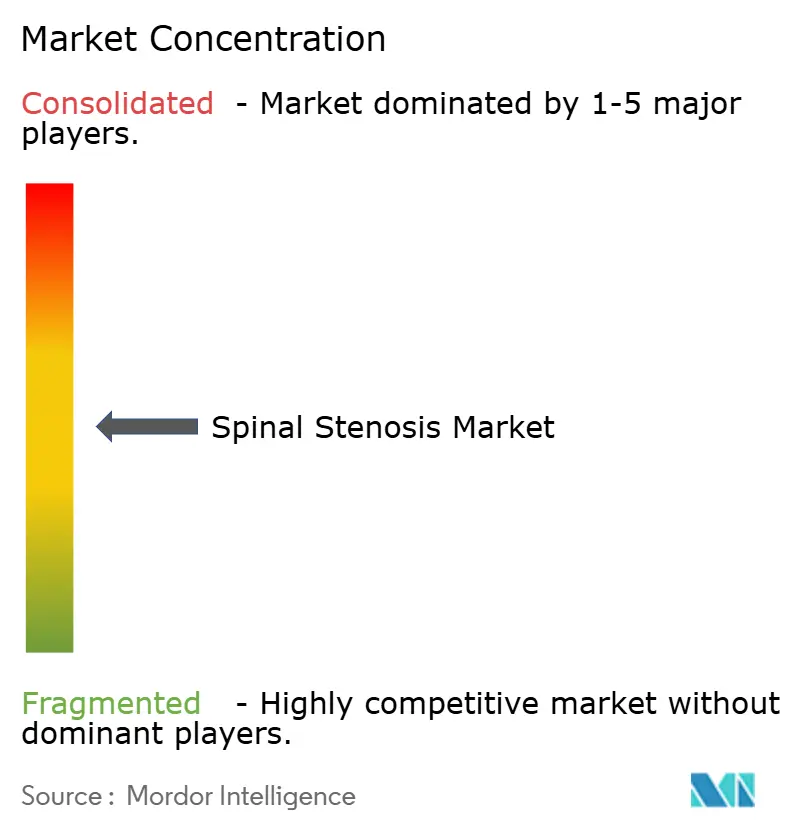
| Market Concentration | Medium |
Major Players *Disclaimer: Major Players sorted in no particular order Image © Mordor Intelligence. Reuse requires attribution under CC BY 4.0. | |
Spinal Stenosis Market Analysis by Mordor Intelligence
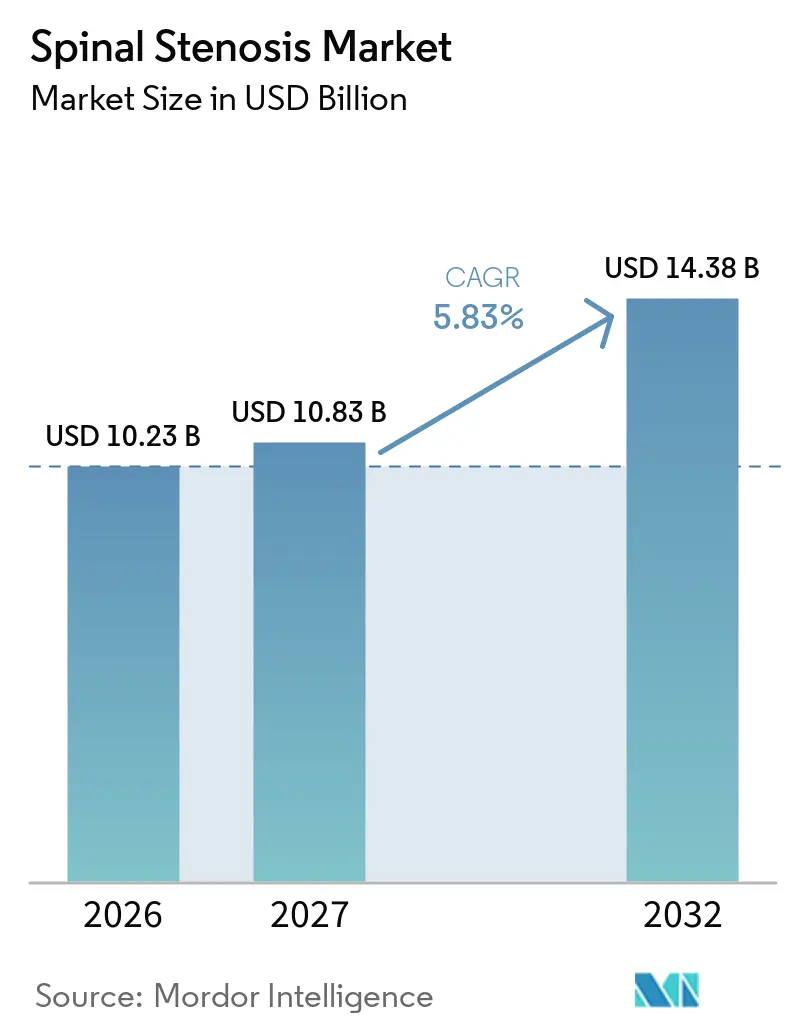
The Spinal Stenosis Market size is projected to be USD 10.23 billion in 2026, USD 10.83 billion in 2027, and reach USD 14.38 billion by 2032, growing at a CAGR of 5.83% from 2027 to 2032.
Aging populations, outpatient–friendly payment rules, and rapid implant refresh cycles anchor near-term demand, while motion-preservation platforms steadily erode the fusion stronghold. Ambulatory surgical centers (ASCs) now absorb a growing share of decompression and single-level fusion cases, compelling vendors to release implants that minimize anesthesia time and enable same-day discharge. Device makers widen portfolios with AI navigation, 3D-printed cages, and endoscopic instrumentation to satisfy surgeons who prioritize precision and speed. Competitive intensity centers on ecosystem scale rather than price, and regulatory tailwinds in Asia-Pacific invite domestic entrants that challenge Western incumbents.
Key Report Takeaways
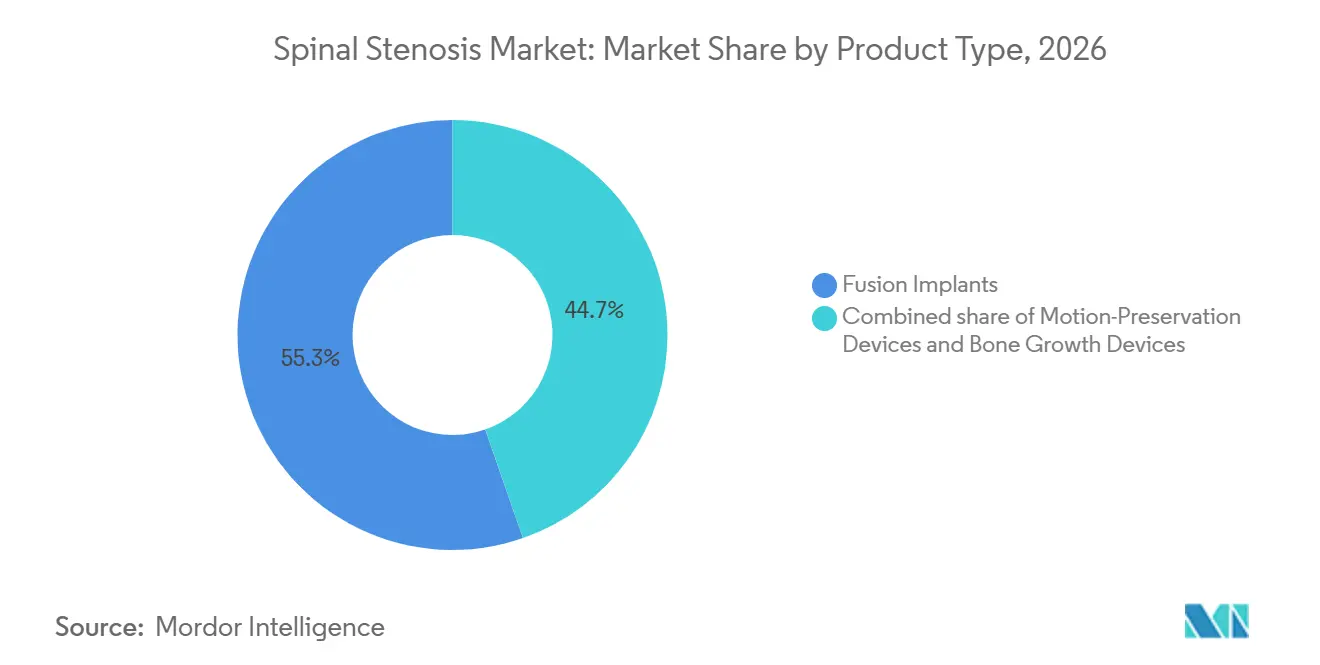
- By product type, fusion implants held 55.32% of spinal stenosis market share in 2026, while motion-preservation devices are advancing at a 9.1% CAGR through 2032.
- By anatomical region, lumbar procedures commanded 57.43% of the spinal stenosis market in 2026; cervical interventions exhibit the fastest growth at a 7.9% CAGR to 2032.
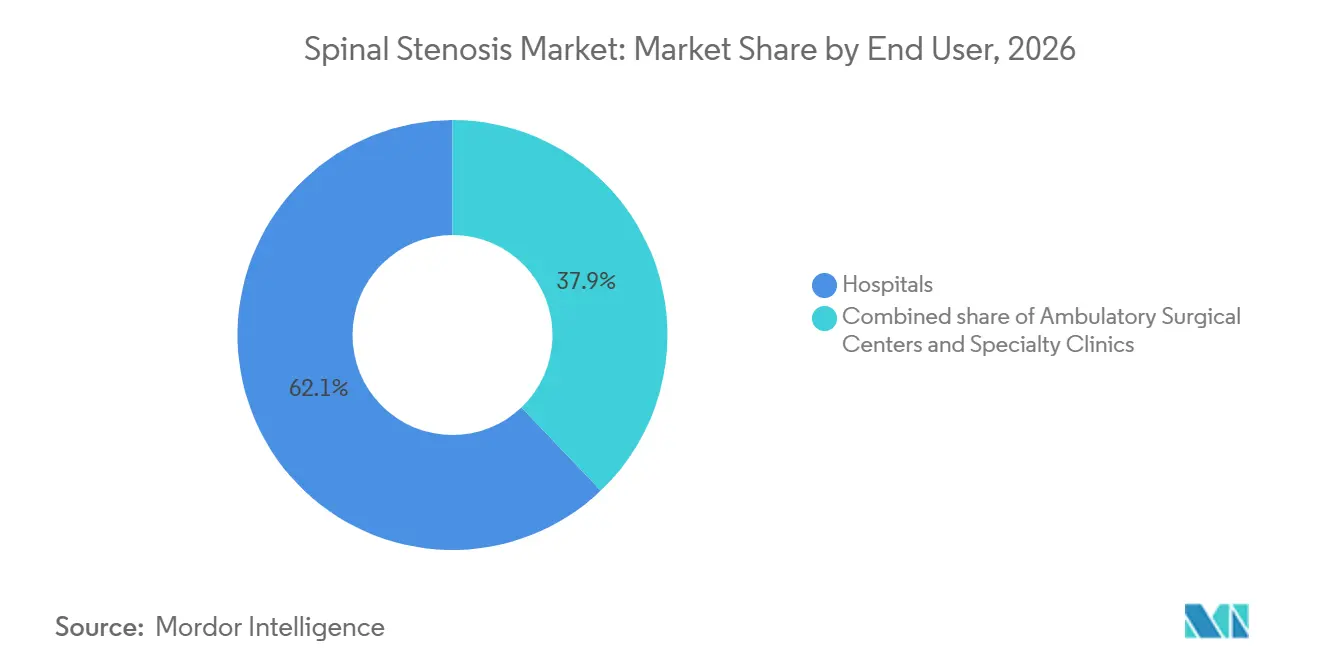
- By end user, hospitals retained 62.12% share in 2026, but ASCs are growing at an 8.4% CAGR on the back of the 2025 U.S. OPPS rule that expanded outpatient spine coverage.
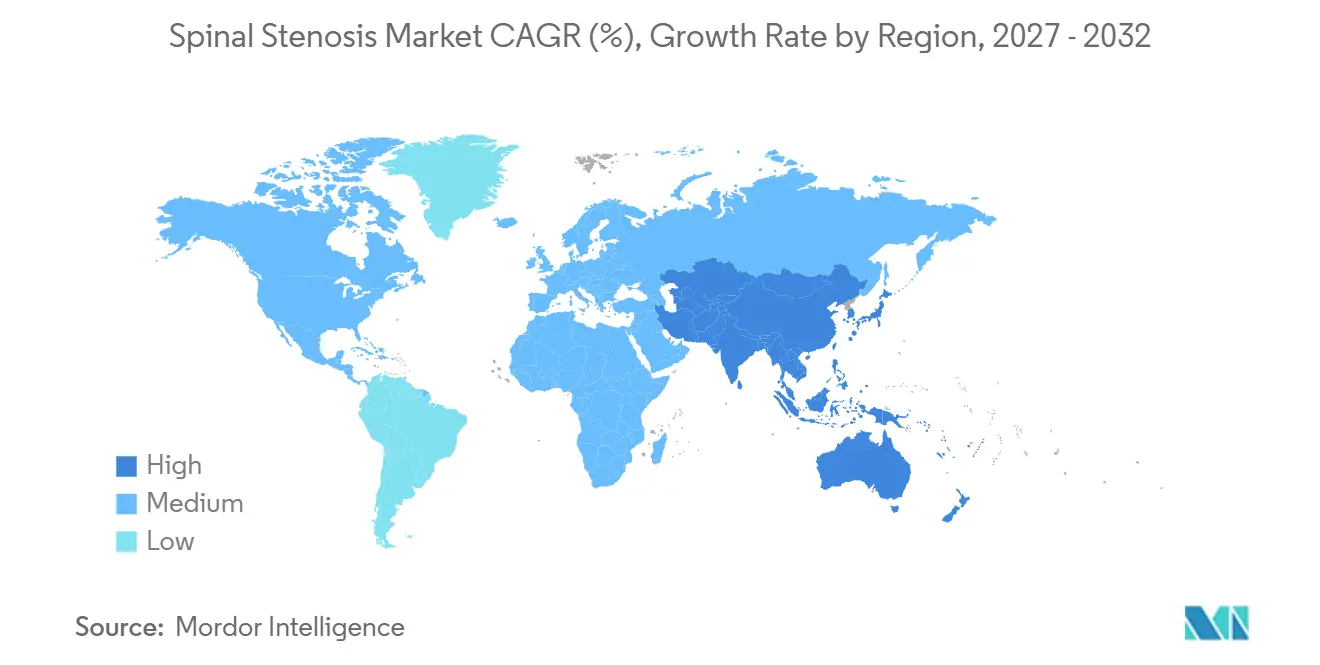
- By geography, North America represented 42% revenue in 2026; Asia-Pacific is set to expand at a 7.2% CAGR through 2032, spurred by India’s USD 50 billion device industrial policy and accelerated Chinese approvals.
Note: Market numbers in this report are based on Mordor Intelligence's proprietary estimation framework, which combines nine months of actuals with Q4 projections for base year 2026.
Market Trends and Insights
Drivers Impact Analysis of Spinal Stenosis Market*
| Driver | % Impact on CAGR Forecast | Geographic Relevance | Impact Timeline |
|---|---|---|---|
| Aging Population & Disease Prevalence Surge | +1.2% | Global, led by U.S., EU, Japan | Long term (≥ 4 years) |
| Adoption of Minimally Invasive & Endoscopic Procedures | +0.9% | North America, EU, rising in Asia-Pacific | Medium term (2-4 years) |
| Implant Technology Upgrades (3D-Printing, Biomaterials) | +0.7% | North America, Europe, early Asia-Pacific | Medium term (2-4 years) |
| Shift to Ambulatory Surgical Centers Boosts Device Refresh | +0.8% | U.S., Australia, UK | Short term (≤ 2 years) |
| Payer-Led Outpatient Incentives for Decompression Devices | +0.5% | U.S., Canada, Germany | Short term (≤ 2 years) |
| AI-Guided Navigation Widens Surgeon Adoption Base | +0.6% | U.S., Western Europe, China, India | Medium term (2-4 years) |
| Source: Mordor Intelligence | |||
Aging Population & Disease Prevalence Surge
Lumbar stenosis affects 11% of U.S. adults aged 50 plus, and prevalence rises sharply beyond age 60[1]. Older patients prefer shorter anesthesia time, pushing cases into ASCs that demand rapid-deploy implants and streamlined workflows. Cervical stenosis, though rarer, afflicts working-age adults who favor motion-preservation to avoid adjacent-segment degeneration. The demographic swell increases baseline procedure volume regardless of technology shifts and keeps the spinal stenosis market on a steady upward trajectory.
Adoption of Minimally Invasive & Endoscopic Procedures
Endoscopic decompression techniques such as biportal endoscopic spine surgery cut muscle trauma and enable same-day discharge for lumbar cases [2]. Vertos Medical’s percutaneous system removes hypertrophied ligamentum flavum in under 30 minutes, reinforcing ASC economics. Academic hospitals invest in robotics to draw complex referrals, while community centers rely on manual endoscopic tools that replicate most clinical gains at lower capital cost.
Implant Technology Upgrades (3D-Printing, Biomaterials)
Patient-matched 3D-printed titanium cages align precisely with endplate contours and reduce subsidence in osteoporotic bone. Trabecular lattice structures promote osseointegration and improve postoperative imaging clarity. Surgeon preference has shifted from PEEK to porous titanium and calcium phosphate graft extenders that deliver biologic fixation and minimize donor-site morbidity. Recombinant bone morphogenetic proteins plateaued after safety warnings, steering research toward novel osteobiologics.
Shift to Ambulatory Surgical Centers Boosts Device Refresh
The 2025 OPPS final rule lifted ASC spine payment rates by 2.9% and added single-level fusion and cervical artificial disc replacement to the covered list. ASCs operate at 40-60% lower cost than hospital outpatient departments, creating a fertile channel for implants designed with pre-assembled screw-rod systems, single-use kits, and fluoroscopy-friendly geometry. Boston Scientific’s Superion spacer demonstrates that ASC-optimized devices can move patients from incision to discharge in two hours.
Restraints Impact Analysis of Spinal Stenosis Market*
| Restraint | % Impact on CAGR Forecast | Geographic Relevance | Impact Timeline |
|---|---|---|---|
| High Implant Costs & Reimbursement Gaps | -0.7% | Global, acute in U.S. and emerging Asia | Short term (≤ 2 years) |
| Stringent Global Regulatory Timelines | -0.4% | EU, China, India | Medium term (2-4 years) |
| Payer Push-Back on Fusion Add-Ons | -0.5% | U.S., Germany, Canada | Short term (≤ 2 years) |
| High Early-Revision Rate of Some Interspinous Devices | -0.3% | North America, Europe | Medium term (2-4 years) |
| Source: Mordor Intelligence | |||
High Implant Costs & Reimbursement Gaps
Single-level lumbar fusion implants cost USD 8,000–12,000 while Medicare bundles average USD 18,000, squeezing hospital margins. Private insurers tighten approvals for expensive grafts and navigation fees, prodding surgeons toward lower-priced motion-preservation options. India’s 80% import reliance inflates prices, but its USD 50 billion domestic device policy aims to localize production and narrow affordability gaps.
Stringent Global Regulatory Timelines & High Early-Revision Rate of Interspinous Devices
EU MDR lengthens certification to 24 months and obliges costly post-market surveillance, pressuring small innovators[3]. Early-generation interspinous spacers faced 15-20% reoperation within two years, prompting FDA post-market studies and surgeon hesitancy. The burden consolidates share toward large vendors with robust regulatory budgets.
*Our forecasts treat driver/restraint impacts as directional, not additive. The impact forecasts reflect baseline growth, mix effects, and variable interactions.
Spinal Stenosis Market Segment Analysis
By Product Type:
Fusion Dominates While Motion-Preservation AcceleratesFusion implants captured 55.32% of spinal stenosis market share in 2026, supported by multi-level PLIF and TLIF procedures that demand robust biomechanical stability. Additive manufacturing allows vendors to supply patient-specific cages on-demand, trimming operating time and inventory holding costs. Hospitals adopt expandable cages that restore disc height without extensive bone removal, reducing neurologic risk.
Motion-preservation devices are forecast to grow at 9.1% CAGR, twice as fast as the overall spinal stenosis market. Cervical disc replacements such as ProDisc-C and Mobi-C preserve range of motion and lower adjacent-segment degeneration risk, making them popular among younger patients. Interspinous spacers like Superion facilitate percutaneous lumbar decompression in less than 45 minutes and allow ASC discharge within hours. Payer pressure against fusion add-ons and a cultural shift toward tissue-sparing care underpin adoption.

By Anatomical Area:
Lumbar Leads While Cervical Gains MomentumLumbar procedures accounted for 57.43% of the spinal stenosis market size in 2026, with stable mid-single-digit growth expected through 2032. Endoscopic lumbar decompressions cut hospital stays from three days to outpatient status, integrating seamlessly with ASC economics. Multilevel lumbar disease in older adults still necessitates fusion, ensuring fusion revenue remains substantial.
Cervical interventions are projected to expand at a 7.9% CAGR as total disc replacement mitigates the long-term complication profile of anterior cervical fusion. Younger, working-age patients value preserved mobility, and insurers see lower revision costs. FDA clearances for new cervical discs tripled from three in 2015 to eight in 2024, increasing surgeon choice and fostering price competition.
By End User:
ASC Migration Reshapes Device DesignHospitals maintained 62.12% of the spinal stenosis market revenue in 2026, driven by complex deformity corrections and high-risk patients requiring overnight monitoring. Academic centers lean on navigation and robotics to boost referral flow and justify million-dollar capital spend.
ASCs are growing at an 8.4% CAGR, fueled by CMS reimbursement hikes and payer mandates for outpatient pathways. Facility operators favor pre-packaged, single-use kits that cut turnaround time and minimize sterilization overhead. Vendors now design screw-rod constructs that can be implanted in under 90 minutes, satisfying same-day discharge criteria. Specialty clinics focus on nonsurgical pain management and neuromodulation, occupying a peripheral yet stable niche in the spinal stenosis industry.
Geography Analysis
North America Spinal Stenosis Market
North America commanded 42% of global demand in 2026 as mature reimbursement, high elective surgery rates, and rapid technology uptake underpin demand. The spinal stenosis market size in the region will climb with continued ASC migration and subscription-based AI navigation that lowers adoption barriers for mid-volume surgeons. Payer scrutiny on fusion add-ons, however, propels a shift toward motion-preservation.
APAC Spinal Stenosis Market
Asia-Pacific is projected to post the fastest growth at 7.2% CAGR. India’s localization push promises a USD 50 billion domestic output by 2030 and encourages price-competitive implants. China’s real-world evidence pilot in Hainan compresses approval to one year for qualified devices, accelerating Western vendor market entry while motivating local innovators. Japan’s aging population and robust national insurance add further procedural momentum.
EMEA Spinal Stenosis Market
Europe, the Middle East, and Africa exhibit mixed potential. EU MDR heightens compliance cost and slows pipeline flow, narrowing small-cap participation. Gulf Cooperation Council states invest in medical tourism, luring international patients with 40–50% lower surgery costs. Africa remains nascent, constrained by limited surgical capacity and cash-pay models, although urban centers in South Africa and Egypt present modest pockets of growth.
Competitive Landscape
The spinal stenosis market features a top-heavy profile. Medtronic, Globus Medical and Stryker emerged as major players in the industry. Stryker’s 2024 purchase of Vertos Medical added percutaneous decompression to capture ASC flow, while Orthofix–SeaSpine pooled biologics and motion-preservation expertise.
Mid-caps target niches that larger competitors under-serve. Carlsmed and EIT emerging implants exploit 3D-printing agility to supply customized cages with minimal inventory. Joimax and Richard Wolf focus on endoscopic tools that offer 80% of robotic precision at a fraction of the price. SpineGuard’s real-time haptic feedback drill democratizes safe pedicle screw placement without expensive cameras. Regulatory hurdles and ASC-centric design requirements drive consolidation as scale provides compliance leverage and R&D funding.
Start-ups with AI navigation software benefit from China’s SaMD rule that classifies algorithms as standalone products, enabling fast commercialization. Established vendors may respond through tuck-in acquisitions or licensing deals to secure data-driven features and defend platform stickiness in the spinal stenosis market.
Spinal Stenosis Industry Leaders
-
Medtronic plc
-
Johnson & Johnson
-
Stryker Corporation
-
Globus Medical, Inc.
-
ZimVie
- *Disclaimer: Major Players sorted in no particular order
Spinal Stenosis Market Companies Covered in this Report
- Abbott Laboratories
- Alphatec Spine, Inc
- Aurora Spine, Inc
- B. Braun
- Boston Scientific
- Centinel Spine
- Evergen Systems India Private Limited
- Globus Medical, Inc. (NuVasive, Inc)
- Johnson & Johnson
- Joimax
- Karl Storz
- Medtronic
- Orthofix
- Paradigm Spine GmbH
- Richard Wolf
- Spine Wave, Inc
- SpineGuard
- Stryker
- Vertiflex, Inc
- ZimVie
Recent Industry Developments in Spinal Stenosis Market
- December 2024: Carlsmed secured FDA clearance for Aprevo Cervical ACDF Interbody System. It is a patient-specific 3D-printed titanium interbody cage platform.
- July 2024: Stryker completed the acquisition of Vertos Medical, adding percutaneous lumbar decompression tools for ASC deployment.
Global Spinal Stenosis Market Report Scope
As per the scope of the report, spinal stenosis is the narrowing of the spinal canal that puts pressure on the spinal cord and nerves, causing symptoms like pain, numbness, or weakness in the back, legs, neck, or arms. Spinal stenosis surgery aims to create more space for the spinal cord and nerves by removing bone or tissue that is causing pressure. If the spine is unstable, a spinal fusion may be combined with decompression surgery to stabilize the vertebrae.
The spinal stenosis market is segmented by product type, anatomical region, end user, and geography. By product type, the market is categorized into fusion implants, interspinous spacers, motion-preservation devices and spinal stimulators and bone growth devices. By anatomical area, it is segmented into cervical, lumbar, and thoracic. By end user, the segmentation includes hospitals, ambulatory surgical centers, and specialty clinics. Geographically, the market is segmented across North America, Europe, the Asia-Pacific region, the Middle East & Africa, and South America. The market report also covers the estimated market sizes and trends for 17 countries across major regions globally. For each segment, the market size and forecast are provided in terms of value (USD).
Segmentation Overview
| Fusion Implants |
| Interspinous Spacers |
| Motion-Preservation Devices |
| Spinal Stimulators & Bone Growth Devices |
| Cervical |
| Lumbar |
| Thoracic |
| Hospitals |
| Ambulatory Surgical Centers |
| Specialty Clinics |
| North America | United States |
| Canada | |
| Mexico | |
| Europe | Germany |
| United Kingdom | |
| France | |
| Italy | |
| Spain | |
| Rest of Europe | |
| Asia-Pacific | China |
| Japan | |
| India | |
| South Korea | |
| Australia | |
| Rest of Asia-Pacific | |
| Middle East and Africa | GCC |
| South Africa | |
| Rest of Middle East and Africa | |
| South America | Brazil |
| Argentina | |
| Rest of South America |
| By Product Type | Fusion Implants | |
| Interspinous Spacers | ||
| Motion-Preservation Devices | ||
| Spinal Stimulators & Bone Growth Devices | ||
| By Anatomical Area | Cervical | |
| Lumbar | ||
| Thoracic | ||
| By End User | Hospitals | |
| Ambulatory Surgical Centers | ||
| Specialty Clinics | ||
| By Geography | North America | United States |
| Canada | ||
| Mexico | ||
| Europe | Germany | |
| United Kingdom | ||
| France | ||
| Italy | ||
| Spain | ||
| Rest of Europe | ||
| Asia-Pacific | China | |
| Japan | ||
| India | ||
| South Korea | ||
| Australia | ||
| Rest of Asia-Pacific | ||
| Middle East and Africa | GCC | |
| South Africa | ||
| Rest of Middle East and Africa | ||
| South America | Brazil | |
| Argentina | ||
| Rest of South America | ||
Key Questions Answered in the Report
How large is the spinal stenosis market in 2026?
The spinal stenosis market size stands at USD 10.23 billion in 2026.
What is the expected growth rate through 2032?
The market is forecast to expand at a 5.83% CAGR, reaching USD 14.38 billion by 2032.
Which product category is growing the fastest?
Motion-preservation devices, including cervical disc replacements and interspinous spacers, are advancing at a 9.1% CAGR.
Why are ASCs gaining share in spinal procedures?
Outpatient payment incentives, lower facility costs, and minimally invasive techniques enable same-day discharge and drive case migration.