
Southern Blotting Market Size and Share
Market Overview
| Study Period | 2021 - 2032 |
|---|---|
| Market Size (2027) | USD 2.56 Billion |
| Market Size (2032) | USD 3.30 Billion |
| Growth Rate (2027 - 2032) | 5.21 % |
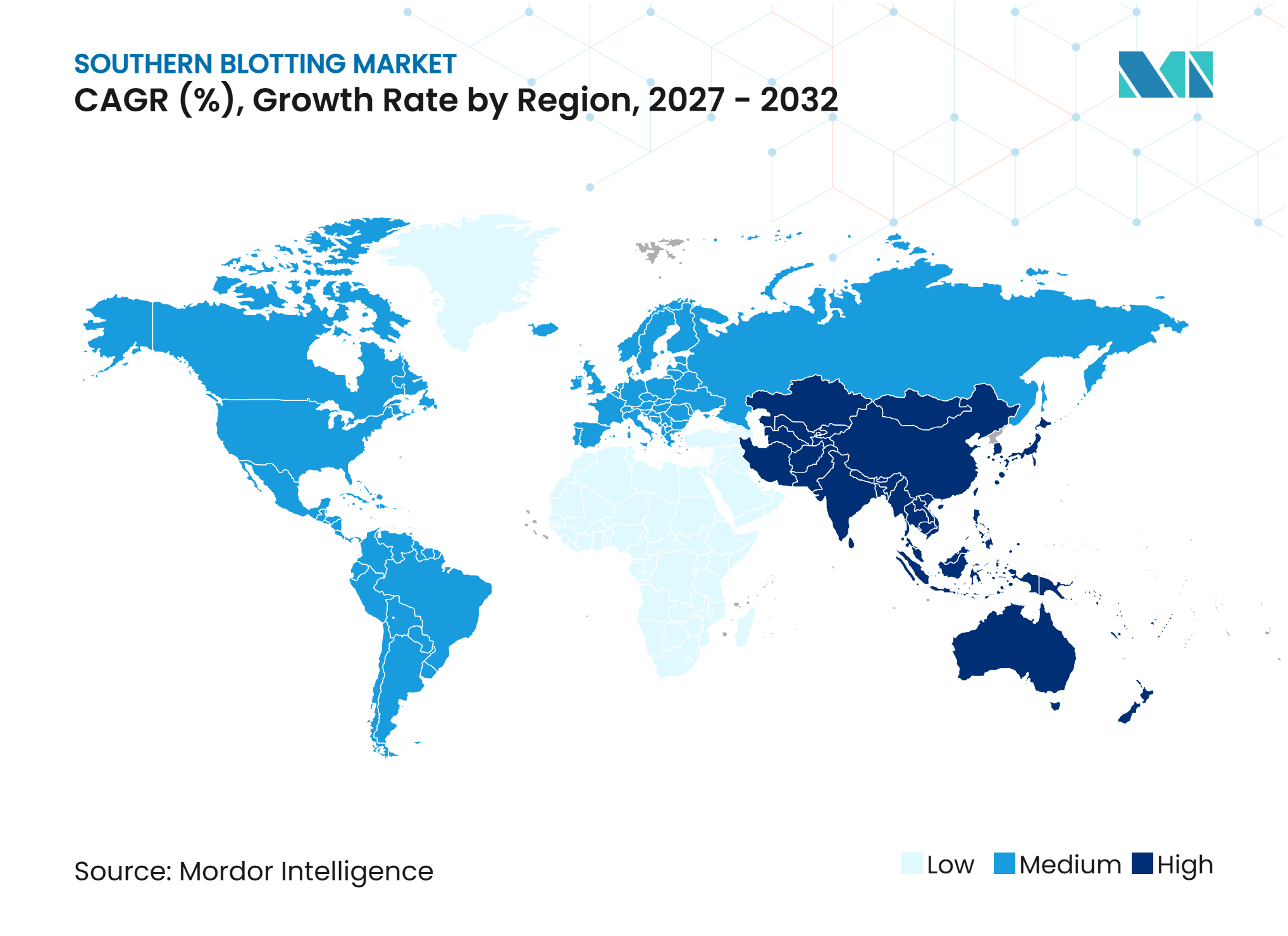
| Fastest Growing Market | Asia-Pacific |
| Largest Market | North America |
| Market Concentration | Medium |
Major Players *Disclaimer: Major Players sorted in no particular order Image © Mordor Intelligence. Reuse requires attribution under CC BY 4.0. | |
Southern Blotting Market Analysis by Mordor Intelligence
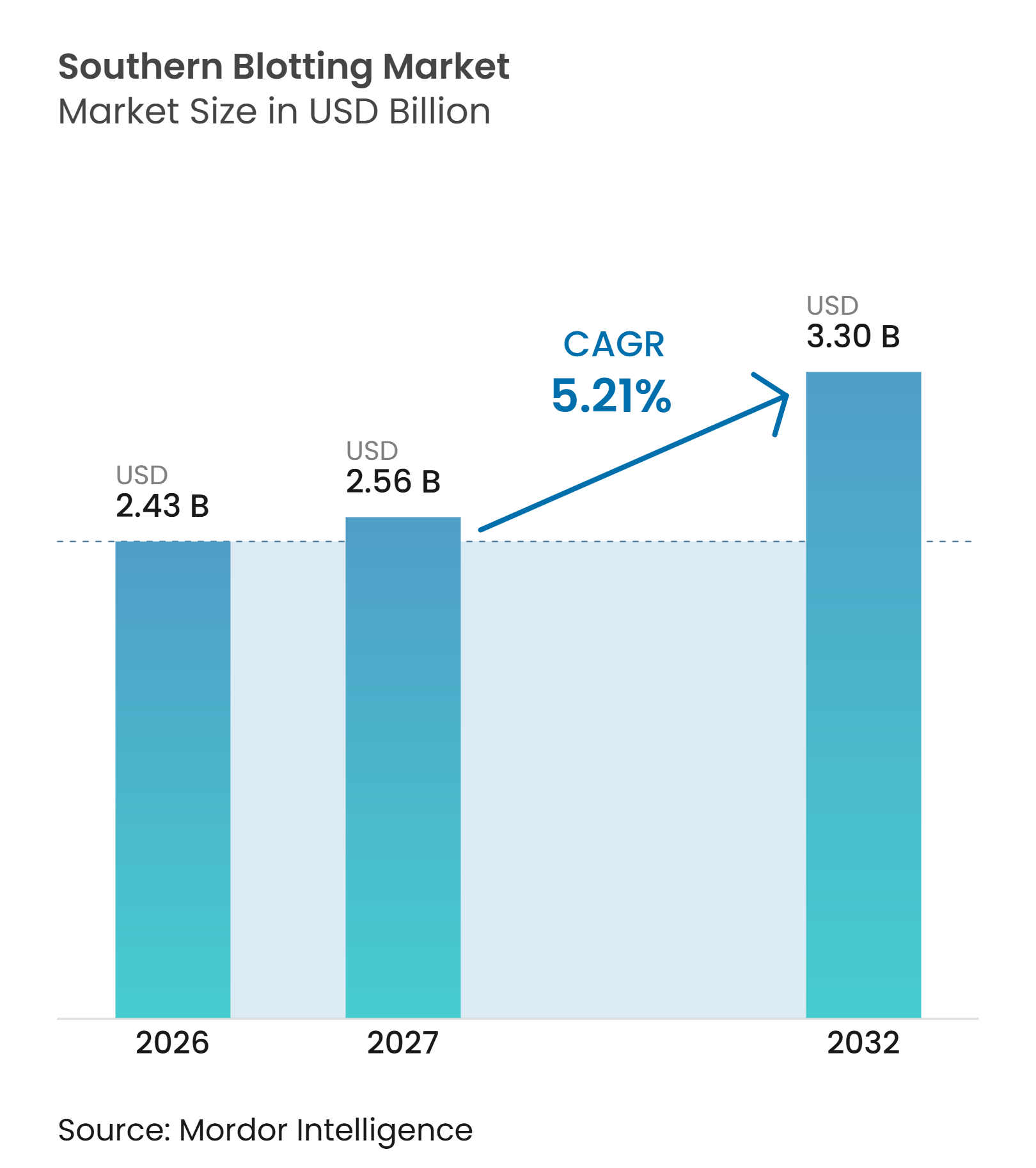
The Southern Blotting Market size is projected to expand from USD 2.43 billion in 2026 and USD 2.56 billion in 2027 to USD 3.30 billion by 2032, registering a CAGR of 5.21% between 2027 and 2032.
The southern blotting market continues to serve clinical and research workflows that need repeat-length mosaicism, high-molecular-weight DNA sizing, and methylation analysis from one assay. Short-read next-generation sequencing, or NGS, does not consistently provide all of these outputs in the same workflow. The American College of Medical Genetics and Genomics recommends confirmation of large repeat expansions found by short-read NGS through methods including southern blot, repeat-primed PCR, or long-read sequencing. This guidance supports continued use of validated instruments, membranes, probes, and detection reagents in reference laboratories and academic core facilities. The southern blotting market is therefore expected to remain concentrated in clinical confirmation and genomic validation applications where laboratory protocols require established evidence.
Key Report Takeaways
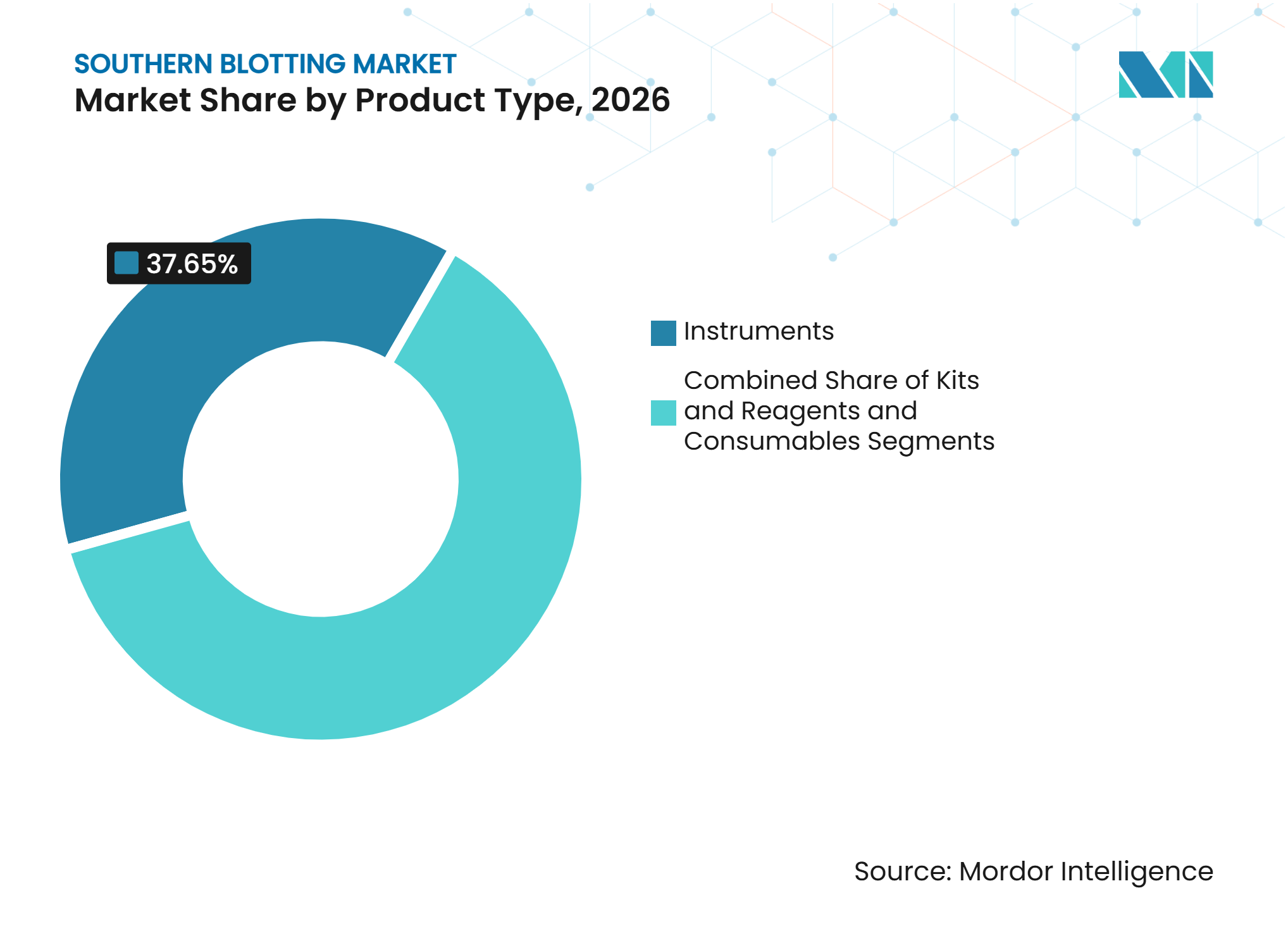
- By product type, instruments held 37.65% of total spending in 2026, while kits and reagents are forecast to grow at a 7.54% CAGR through 2032.
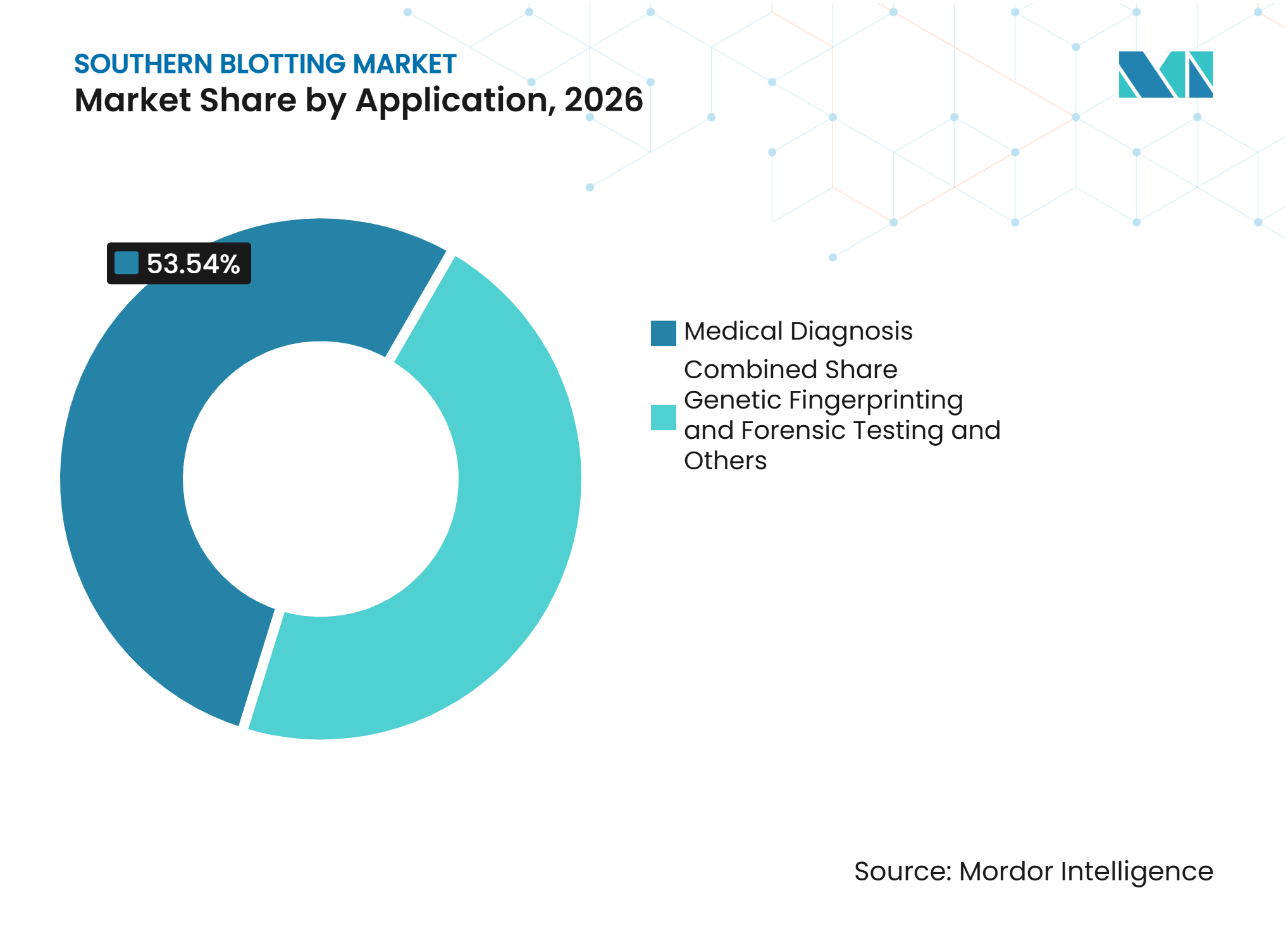
- By application, medical diagnosis accounted for 53.54% of total spending in 2026, while scientific research is forecast to expand at a 7.65% CAGR through 2032.
- By end user, academic and research institutes held 56.43% of spending in 2026, while pharmaceutical and biotechnology companies are forecast to grow at an 8.54% CAGR through 2032.
- By geography, North America accounted for 42.76% of the southern blotting market in 2026, while Asia-Pacific is forecast to grow at a 6.43% CAGR through 2032.
Note: Market numbers in this report are based on Mordor Intelligence's proprietary estimation framework, which combines nine months of actuals with Q4 projections for base year 2026.
Market Trends and Insights
Drivers Impact Analysis of Southern Blotting Market*
| Driver | (~) % Impact on CAGR Forecast | Geographic Relevance | Impact Timeline |
|---|---|---|---|
| Genomic Research and Precision Medicine Growth | 1.50% | Global, with early gains in North America, Europe, and East Asia | Long term (≥ 4 years) |
| Confirmatory Testing for Repeat Expansions and Structural Variants | 1.10% | North America and Europe, with expansion into Asia-Pacific | Medium term (2-4 years) |
| Molecular Diagnostics and Genetic Testing Expansion | 0.90% | Asia-Pacific, especially India, China, and Southeast Asia | Medium term (2-4 years) |
| Transgene, Gene Structure, and Cell Line Characterization | 0.50% | Global, strongest in North America and Europe | Long term (≥ 4 years) |
| Automated Transfer, Imaging, and Chemiluminescent Detection | 0.80% | Global | Short term (≤ 2 years) |
| High-Molecular-Weight DNA Confirmation Needs | 0.50% | North America and Europe | Long term (≥ 4 years) |
| Source: Mordor Intelligence | |||
Growth in Genomic Research and Precision Medicine
Precision medicine programs are increasing the number and variety of samples that need DNA-level characterization. Southern blotting remains useful where laboratories need both repeat size and methylation information from genomic DNA. A 2025 Human Genomics study found that germline variant diagnosis can remain incomplete when precision medicine programs rely on a single testing method. This supports a multi-method diagnostic role for the southern blotting market. Growth in research programs also increases demand for high-quality membranes, labeled probes, and reproducible detection systems.
Confirmatory Testing for Repeat Expansions and Structural Variants
Repeat expansion disorders continue to support demand in medical genetics laboratories. These disorders include fragile X syndrome, facioscapulohumeral muscular dystrophy, Huntington’s disease, and Friedreich’s ataxia. ACMG states that large repeat expansions detected by short-read NGS should ideally be confirmed with other methods, including southern blotting. An integrated 2026 FSHD workflow used single-molecule optical mapping as a first-line method and retained southern blot analysis for confirmation of contracted 4qA alleles. The South West Genomic Medicine Service paused routine FSHD1 southern blot testing during 2026 because of a supplier constraint, not because the test had become clinically unnecessary. The southern blotting market thus remains exposed to reagent availability, while its clinical role stays embedded in complex repeat expansion pathways.
Molecular Diagnostics and Genetic Testing Expansion
The expansion of genomics laboratories in Asia-Pacific is increasing the installed base for molecular diagnostics. Gene Solutions and AMPATH launched an advanced genomics laboratory in Hyderabad in October 2025, extending NGS and molecular diagnostic services across a network of more than 2,000 collection points. Apollo Hospitals reported more than 11,000 genomic consultations across 12 cities and planned expansion into additional Tier-2 centers. DKSH, PacBio, and Chulalongkorn University launched the LIFE-SEQ program in Thailand during September 2025 to support precision-health sequencing. Larger testing networks increase the number of structural variant and repeat expansion findings that laboratories may need to confirm. This expansion supports the southern blotting market through demand for multi-method validation.
Automation and Digital Detection Adoption
The southern blotting market is gaining support from automation that reduces manual handling and improves record-keeping. Capillary transfer systems reduce the burden of membrane transfer in laboratories with larger sample volumes. Digital chemiluminescent and near-infrared imaging systems replace film exposure with electronic image capture. Azure Biosystems introduced its Sapphire FL+ imager in August 2025 with interchangeable laser and filter modules supporting phosphor imaging, chemiluminescence, and fluorescence. These systems can improve consistency across operators and create auditable digital records. This capability is relevant to laboratories working under 21 CFR Part 11 documentation expectations and ISO 15189 quality requirements.
Restraints Impact Analysis of Southern Blotting Market*
| Restraint | (~) % Impact on CAGR Forecast | Geographic Relevance | Impact Timeline |
|---|---|---|---|
| Labor-Intensive and Low-Throughput Workflow | -1.5% | Global, most acute in high-cost laboratory markets in North America and Europe | Short term (≤ 2 years) |
| Displacement by PCR, Digital PCR, Microarrays, and Sequencing | -1.9% | Global, with faster displacement in high-resource Asia-Pacific and Western markets | Long term (≥ 4 years) |
| Large DNA Input and Sample-Quality Sensitivity | -0.7% | Global, especially liquid-biopsy and prenatal testing contexts | Medium term (2-4 years) |
| Specialized Skills, Validation Burden, and Reagent Availability | -0.5% | Emerging markets and smaller laboratories globally | Medium term (2-4 years) |
| Source: Mordor Intelligence | |||
Labor-Intensive and Low-Throughput Workflow
Southern blotting requires DNA extraction, restriction digestion, electrophoresis, transfer, hybridization, and detection. These steps can require 48 to 72 hours and include substantial hands-on work. High-volume laboratories can face capacity limits when the test is part of a broad diagnostic menu. A 2025 study of TCF4 repeat expansion testing characterized southern blotting as labor-intensive, low throughput, and dependent on microgram quantities of genomic DNA. Automation can reduce some handling, but it does not remove the core biochemical steps. This constraint limits broader adoption across the southern blotting market.
Displacement by PCR, Digital PCR, Microarrays, and Sequencing
Alternative molecular methods are steadily taking screening roles that once relied on southern blotting. Triplet-primed PCR and methylation-sensitive PCR offer shorter turnaround times and lower DNA input needs for routine fragile X screening. A 2025 study from Thailand reported that southern blotting remained the reference method for confirming full mutation alleles, while PCR-based methods were replacing it in routine screening. Long-read sequencing can characterize large repeat expansions and may move further into diagnostic workflows as platforms become more accessible. Optical genome mapping and digital PCR also compete for selected structural variant use cases. The southern blotting market may therefore become more dependent on specialized confirmation cases rather than high-volume first-line screening.
*Our forecasts treat driver/restraint impacts as directional, not additive. The impact forecasts reflect baseline growth, mix effects, and variable interactions.
Southern Blotting Market Segment Analysis
By Product Type:
Instruments Lead While Kits and Reagents Grow FasterInstruments held 37.65% of the southern blotting market share in 2026. This position reflects the capital requirements for electrophoresis systems, transfer equipment, hybridization ovens, and digital imaging platforms. Manual and semi-automated systems remain relevant in academic laboratories and cost-sensitive clinical settings, while automated systems command higher revenue per unit and contribute to replacement-cycle spending. Consumables form the next major product group because nylon membranes, nitrocellulose membranes, gels, blotting papers, probes, and buffers are used repeatedly. Nylon membranes are favored for high-molecular-weight DNA because they can withstand multiple hybridization cycles.
Kits and reagents are forecast to grow at a 7.54% CAGR through 2032, the highest rate within product type. Laboratories are moving from radioactive labeling toward digoxigenin probes and chemiluminescent detection substrates that fit the installed base of CCD and near-infrared imaging platforms. Thermo Fisher Scientific’s Sequential Protein/DNA/RNA Extraction Kit, launched in February 2026, supports workflows that need high-quality DNA for NGS and downstream blotting[1]. EU In Vitro Diagnostic Regulation requirements favor suppliers that provide validated quality documentation. The southern blotting industry can derive recurring revenue in the southern blotting market even where instrument purchases are less frequent.



By Application:
Medical Diagnosis Holds the Largest Position While Scientific Research ExpandsMedical diagnosis accounted for 53.54% of application spending in 2026. The result reflects the technique’s role in genetic disease diagnosis, including FSHD and fragile X syndrome. The 2025 ERN EURO-NMD guidelines retained southern blotting in the FSHD diagnostic pathway after reviewing optical genome mapping, molecular combing, and methylation analysis[2]. Alternative techniques did not replace southern blotting across the complete FSHD diagnostic spectrum, while forensic testing remained smaller because it favors short-tandem-repeat PCR. Southern blotting still has a role when complex structural variation needs further characterization.
Scientific research is forecast to expand at a 7.65% CAGR through 2032. CRISPR-Cas9 studies use southern blotting to examine transgene integration, copy number, concatemerization, and unintended vector sequence insertion. A 2025 genome-editing study found long-read nanopore sequencing could identify concatemerization events missed by standard PCR genotyping. The research placed southern blotting within the established cross-validation toolkit, and gene therapy development creates additional demand for documented genomic characterization. The southern blotting industry remains relevant where cell-line development and viral vector production need this evidence.

By End User:
Academic and Research Institutes Lead, While Pharma and Biotechnology Companies Grow FasterAcademic and research institutes held 56.43% of end-user spending in 2026. University laboratories and core genomics facilities use the technique for molecular biology, genetics, repeat expansion research, and CRISPR validation. Grant-funded projects create repeated demand for membranes, hybridization buffers, labeling reagents, and detection consumables. Academic facilities also maintain protocols that train researchers in established DNA analysis methods. Clinical laboratories represent another significant user group and face procurement pressure from validation and quality requirements. In Europe, IVDR-related revalidation can lead laboratories to prefer a smaller group of suppliers with established documentation.
Pharmaceutical and biotechnology companies are forecast to grow at an 8.54% CAGR through 2032. Biologics development and gene therapy manufacturing use genomic characterization for cell-line evaluation, viral vector integration checks, and biosafety work. FDA chemistry, manufacturing, and controls expectations for gene therapy products include molecular characterization of transgene structure, copy number, and integration sites. MilliporeSigma’s testing agreement with Genetix Biotherapeutics in May 2026 demonstrated demand for analytical and biosafety release testing for FDA-approved gene therapies. Agricultural biotechnology companies are a smaller end-user group that use genomic confirmation for edited plant and livestock lines. The southern blotting industry benefits as the southern blotting market serves established validation needs alongside newer sequencing methods.
Geography Analysis
North America
North America accounted for 42.76% of regional spending in 2026. Large reference laboratories, biopharma research campuses, and NIH-funded genomics facilities support the region’s broad use of validated genomic methods. U.S. laboratories use southern blotting in fragile X and FSHD pathways that require careful repeat expansion confirmation. College of American Pathologists accreditation expectations also support multi-method validation in molecular diagnostics. The NIH funded the 2025 NBSxWGS BEACONS initiative with up to USD 14.4 million for newborn screening through whole-genome sequencing[3]. This investment expands genomic testing infrastructure and can raise demand for downstream confirmation methods. Canada is incorporating more genetic testing for neuromuscular and neurodegenerative conditions through provincial health programs. Mexico’s urban private diagnostics networks are also adding molecular biology capability. Automation is becoming more important in North American research settings because laboratories need higher reproducibility and better digital documentation. The southern blotting market in the region benefits from protocol continuity, quality requirements, and investment in advanced diagnostics.
Asia-Pacific
Asia-Pacific is forecast to grow at a 6.43% CAGR through 2032. The region is moving from isolated genomic testing projects toward larger institutional and national genomics programs. India, China, Japan, South Korea, and Southeast Asian countries each contribute different sources of laboratory demand. QIAGEN opened a Melbourne bioinformatics data center in February 2025 to provide in-country data hosting for genomic testing laboratories in Australia. In China, Topgen Biomedical Technology operates a clinical network that spans more than 1,300 hospitals with CAP-accredited NGS capability. This scale can generate repeat expansion and structural variant findings that require confirmation in equipped laboratories. Japan and South Korea have mature genomic medicine programs and reimbursement systems that support multi-modal diagnostic pathways. Regional compliance factors include local diagnostic regulations, CAP accreditation, and health-data requirements. The southern blotting market size in Asia-Pacific is supported by growing laboratory capacity, even as newer long-read methods expand. Vendors that offer application support and reliable reagent distribution have a stronger opportunity across diverse laboratory settings.
Europe, Middle East and Africa, and South America
Europe is shaped by IVDR implementation, which extends conformity assessment timelines for some probe-based diagnostic kits. German and French laboratories are responding by emphasizing validated suppliers with documented quality systems. The United Kingdom’s NHS genomic network continues to use southern blotting for FSHD despite isolated reagent supply constraints. Germany’s university hospitals and research institutes also sustain demand for instruments and consumables. Middle East and Africa remain earlier-stage opportunities, with Saudi Arabia’s healthcare investment and South Africa’s academic medical centers supporting molecular diagnostics expansion. Brazil drives much of South American demand through rare disease diagnostics programs and academic molecular biology research. Argentina and other countries follow laboratory procurement cycles that depend on health ministry budgets. Reagent supply reliability and specialized operator availability remain common constraints across these areas. ISO 13485 and ISO 15189 documentation has growing regulatory influence in procurement decisions. Use outside North America and Asia-Pacific depends on distributors that can combine product availability with technical support.
Competitive Landscape
Market Concentration
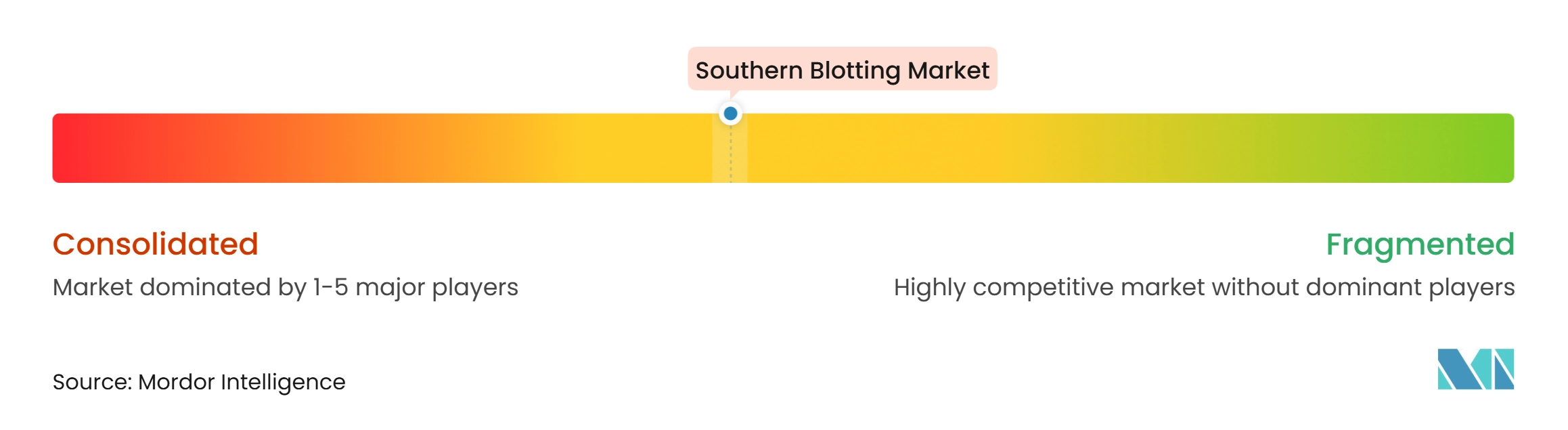
The southern blotting market is led by Thermo Fisher Scientific, Bio-Rad Laboratories, QIAGEN N.V., and Merck KGaA through MilliporeSigma. These companies offer complementary portfolios that include instruments, detection reagents, membranes, sample preparation products, and workflow software. Their position is supported by laboratory protocols that have already been validated around specific reagents and instruments. Bio-Rad links ChemiDoc imaging systems with Stain-Free gel chemistry and Image Lab software designed for 21 CFR Part 11-compliant records. Merck KGaA retains a strong installed base for Immobilon-NC nitrocellulose membranes within its life science portfolio. Competition in the southern blotting market is driven by product reliability, technical support, digital record capabilities, and compatibility across workflow steps.
QIAGEN’s QIAsymphony Connect supports automated nucleic acid extraction for genomics workflows, which can feed into downstream confirmation methods. QIAGEN also launched QIAseq xHYB Long Read Panels in July 2025 for structural variant, HLA, and repeat expansion analysis. The launch positions its sample preparation ecosystem upstream of both long-read sequencing and potential confirmatory workflows. Azure Biosystems introduced the Sapphire FL+ imaging system in 2025, adding a smaller supplier option for laboratories seeking multiple detection modes. Analytik Jena and Azure Biosystems compete with LI-COR’s Odyssey franchise in digital imaging. Lower-income markets and smaller clinical laboratories remain an opening for validated kits that have clear application support and lower acquisition costs.
The isouthern protocol combined conventional southern blotting with antibody-based detection of base modifications, expanding the analytical output available from the workflow. This approach may support more specialized research uses while retaining the basic assay structure. Promega and MilliporeSigma partnered in October 2025 to develop 3D cell-based assay technologies, showing continued collaboration across molecular biology tool suppliers. Sartorius introduced the Sartocon Q Hydrosart membrane for monoclonal antibody processing in August 2026, extending its membrane presence in adjacent life science applications. ISO 13485 for device manufacturers and ISO 15189 for diagnostic laboratories influence purchasing decisions, especially in Europe and Japan. The southern blotting market remains moderately to highly concentrated because large suppliers combine broad product portfolios with deep protocol relationships. A market concentration score of 7 out of 10 reflects the leading position of major integrated suppliers, although the draft provides no combined market-share figure for the top players and smaller imaging and consumable suppliers remain active.
Southern Blotting Industry Leaders
-
Thermo Fisher Scientific Inc.
-
Bio-Rad Laboratories, Inc.
-
Agilent Technologies, Inc.
-
Merck KGaA
-
PerkinElmer, Inc.
- *Disclaimer: Major Players sorted in no particular order
Southern Blotting Market Companies Covered in this Report
- Thermo Fisher Scientific
- Bio-Rad Laboratories
- Agilent Technologies
- Merck
- PerkinElmer
- QIAGEN
- Cleaver Scientific Ltd.
- Pall
- Promega
- Takara Bio
- Advansta
- Azure Biosystems
- LI-COR Biosciences
- Abcam
- Sartorius
- Analytik Jena GmbH
- Geno Technology, Inc.
- Enzo Biochem
- Rockland Immunochemicals
Recent Industry Developments in Southern Blotting Market
- May 2026: MilliporeSigma signed a 5-year agreement with Genetix Biotherapeutics to provide analytical and biosafety release testing for FDA-approved gene therapies, including cell-line characterization services.
- February 2026: Thermo Fisher Scientific launched the Thermo Scientific Sequential Protein/DNA/RNA Extraction Kit for high-quality DNA extraction from as few as 1,000 cells for NGS and downstream blotting workflows.
- October 2025: Gene Solutions and AMPATH launched an advanced genomics laboratory in Hyderabad, India, adding NGS-based molecular diagnostics across a network with more than 2,000 collection points.
- September 2025: Merck KGaA opened a EUR 150 million climate-neutral filter manufacturing facility in Blarney, Cork, Ireland, as part of its life science expansion program.
Global Southern Blotting Market Report Scope
According to the report’s scope, southern blotting is a laboratory technique used to detect specific DNA sequences in a sample. It separates DNA fragments by size, transfers them to a membrane, and identifies target sequences using labeled probes.
The southern blotting market is segmented into product type, application, end user, and geography. By product type, the market is segmented into instruments, kits and reagents, and consumables. By application, the market is segmented into medical diagnosis, genetic fingerprinting and forensic testing, and scientific research. By end user, the market is segmented into academic and research institutes, pharmaceutical and biotechnology companies, clinical laboratories, and other end users. By geography, the market is segmented into North America, Europe, Asia-Pacific, the Middle East and Africa, and South America. The report also covers the estimated market sizes and trends for 17 countries across major regions globally. The report offers values (USD) for all the above segments.
Segmentation Overview
| Instruments | Manual Instruments |
| Automated Instruments | |
| Semi-Automated Instruments | |
| Kits and Reagents | Probe Labeling Reagents |
| Hybridization Buffers | |
| Detection Substrates | |
| Consumables | Nylon Membranes |
| Nitrocellulose Membranes | |
| Filters and Blotting Papers | |
| Gels and Transfer Accessories |
| Medical Diagnosis |
| Genetic Fingerprinting and Forensic Testing |
| Scientific Research |
| Academic and Research Institutes |
| Pharmaceutical and Biotechnology Companies |
| Clinical Laboratories |
| Other End User |
| North America | United States |
| Canada | |
| Mexico | |
| Europe | Germany |
| United Kingdom | |
| France | |
| Italy | |
| Spain | |
| Rest of Europe | |
| Asia-Pacific | China |
| Japan | |
| India | |
| Australia | |
| South Korea | |
| Rest of Asia-Pacific | |
| Middle East and Africa | GCC |
| South Africa | |
| Rest of Middle East and Africa | |
| South America | Brazil |
| Argentina | |
| Rest of South America |
| By Product Type | Instruments | Manual Instruments |
| Automated Instruments | ||
| Semi-Automated Instruments | ||
| Kits and Reagents | Probe Labeling Reagents | |
| Hybridization Buffers | ||
| Detection Substrates | ||
| Consumables | Nylon Membranes | |
| Nitrocellulose Membranes | ||
| Filters and Blotting Papers | ||
| Gels and Transfer Accessories | ||
| By Application | Medical Diagnosis | |
| Genetic Fingerprinting and Forensic Testing | ||
| Scientific Research | ||
| By End User | Academic and Research Institutes | |
| Pharmaceutical and Biotechnology Companies | ||
| Clinical Laboratories | ||
| Other End User | ||
| Geography | North America | United States |
| Canada | ||
| Mexico | ||
| Europe | Germany | |
| United Kingdom | ||
| France | ||
| Italy | ||
| Spain | ||
| Rest of Europe | ||
| Asia-Pacific | China | |
| Japan | ||
| India | ||
| Australia | ||
| South Korea | ||
| Rest of Asia-Pacific | ||
| Middle East and Africa | GCC | |
| South Africa | ||
| Rest of Middle East and Africa | ||
| South America | Brazil | |
| Argentina | ||
| Rest of South America | ||
Key Questions Answered in the Report
What is the projected value of the Southern blotting market by 2032?
The Southern blotting market is projected to reach USD 3.30 billion by 2032, from USD 2.56 billion in 2027, at a 5.2% CAGR. The forecast reflects continued use in specialized clinical confirmation and research workflows that need genomic DNA characterization beyond routine screening methods.
Why is Southern blotting still used in genetic testing?
It provides confirmation for repeat expansions and can assess repeat size, mosaicism, and methylation in workflows where screening methods need additional validation.
Which Southern blotting application has the largest share?
Medical diagnosis held 53.54% of application spending in 2026, supported by use in FSHD, fragile X syndrome, and other repeat expansion disorders.
Which product category is expected to grow fastest in Southern blotting?
Kits and reagents are forecast to grow at a 7.54% CAGR through 2032 as laboratories adopt nonradioactive labeling and digital detection workflows.
Which region is growing fastest for Southern blotting products?
Asia-Pacific is forecast to expand at a 6.43% CAGR through 2032 as genomic testing networks and laboratory infrastructure develop.
What limits wider use of Southern blotting?
The workflow remains labor-intensive, requires high-quality DNA, and competes with PCR, digital PCR, optical mapping, and long-read sequencing methods. This is a central challenge for the Southern blotting market.