
South America Turf Protection Market Size and Share
Market Overview
| Study Period | 2021 - 2031 |
|---|---|
| Forecast Data Period | 2026 - 2031 |
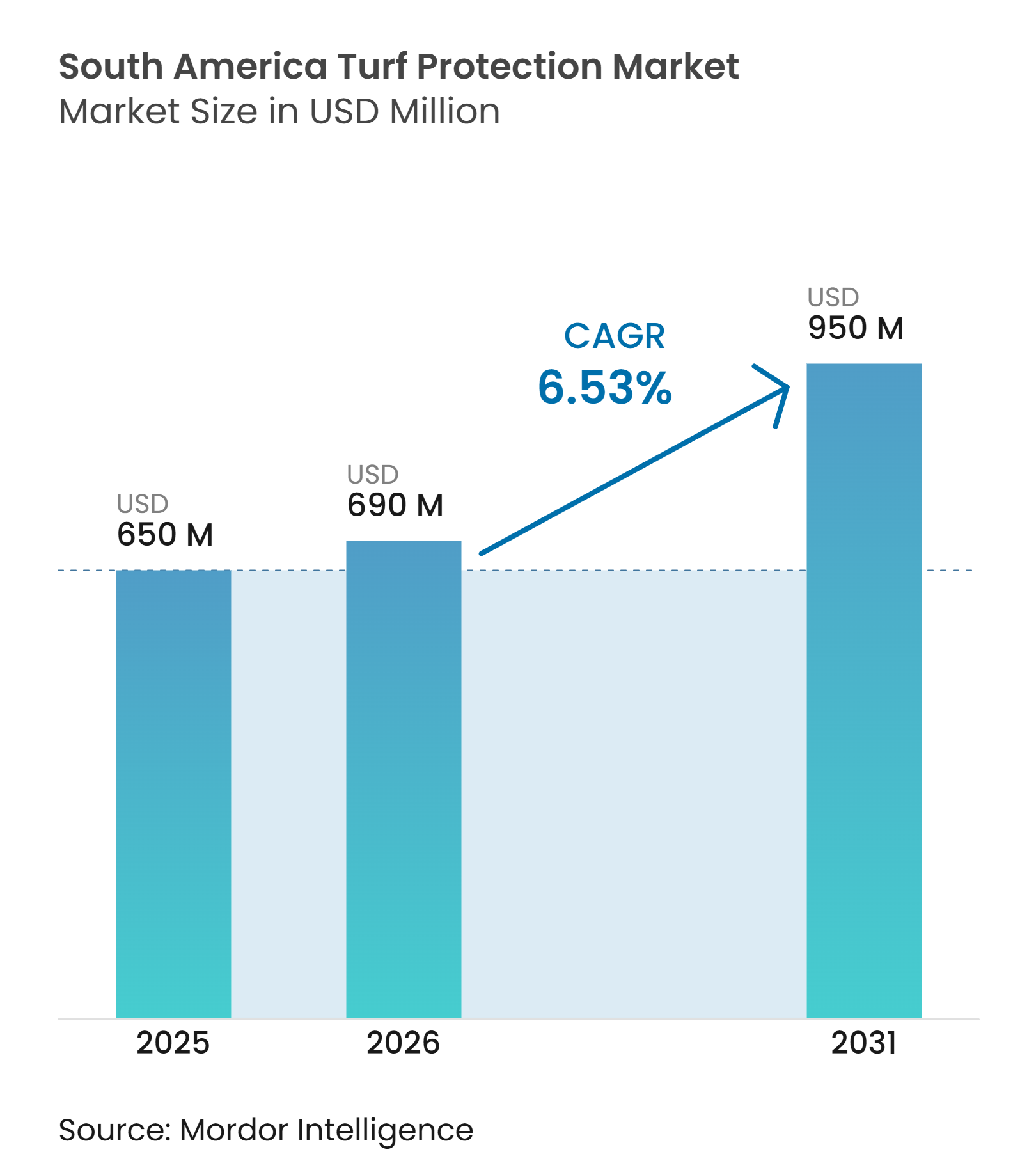
| Base Year Market Size (2025) | USD 650 Million |
| Market Size (2026) | USD 690 Million |
| Market Size (2031) | USD 950 Million |
| Growth Rate (2026 - 2031) | 6.53 % |
| Market Concentration | Medium |
Major Players *Disclaimer: Major Players sorted in no particular order Image © Mordor Intelligence. Reuse requires attribution under CC BY 4.0. | |
South America Turf Protection Market Analysis by Mordor Intelligence
The South America turf protection market was valued at USD 650.00 million in 2025 and is forecast to grow from USD 690.00 million in 2026 to USD 950.00 million by 2031, at a CAGR of 6.53% during the forecast period 2026–2031. The market covers fungicides, herbicides, insecticides, plant growth regulators (PGRs), biostimulants, and bio-fertilizers used on landscaping areas, golf courses, sports fields, and sod farms. Increasing investment in sports venues is driving demand for disease management and turf stress programs, particularly where hybrid or intensively maintained natural surfaces are installed. Brazil remains the primary demand base due to its commercial sod production, professional sports facilities, and landscaping activity. The market also benefits from the broader use of biological products alongside conventional chemistry, rather than as an immediate replacement for chemical programs. Regulatory changes, imported-input costs, and the use of artificial surfaces continue to influence purchasing decisions across the region.
Key Report Takeaways
- By product type, fungicides were the largest segment and held 36.0% of the South America turf protection market share in 2025, while biostimulants and bio-fertilizers are the fastest-growing segment and are anticipated to expand at a 10.8% CAGR between 2026 and 2031.
- By application, landscaping was the largest segment and held 34.0% of the South America turf protection market size in 2025, while sports fields are the fastest-growing segment and are anticipated to expand at a 9.3% CAGR between 2026 and 2031.
- By end user, residential customers were the largest segment and held 29.0% of the market share in 2025, while sports facility owners are the fastest-growing segment and are anticipated to expand at a 7.6% CAGR between 2026 and 2031.
- By mode of action, chemical was the largest segment and held 68.0% of the market share in 2025, while biological solutions are the fastest-growing segment and are anticipated to expand at an 8.4% CAGR between 2026 and 2031.
- By formulation, liquid concentrate was the largest segment and held 54.0% of the market share in 2025, while liquid concentrate is also the fastest-growing segment and are anticipated to expand at a 7.4% CAGR between 2026 and 2031.
Note: Market size and forecast figures in this report are generated using Mordor Intelligence’s proprietary estimation framework, updated with the latest available data and insights as of January 2026.
Market Trends and Insights
Drivers Impact Analysis of South America Turf Protection Market*
| Driver | (~) % Impact on CAGR Forecast | Geographic Relevance | Impact Timeline |
|---|---|---|---|
| Expansion of sports infrastructure and maintained natural turf | +1.5% | Brazil and Colombia | Short term (≤ 2 years) |
| Brazil’s large sod production and sports-turf base | +0.8% | Brazil, with spillover to Argentina | Medium term (2-4 years) |
| Rising disease pressure in warm-season turf | +1.2% | Brazil and Argentina | Short term (≤ 2 years) |
| Growth of professional landscaping and urban green spaces | +1% | Brazil, Colombia, Chile, and Argentina | Medium term (2-4 years) |
| Shift toward biologicals and integrated turf management | +0.9% | South America, led by Brazil | Medium term (2-4 years) |
| Digital irrigation and precision turf monitoring adoption | +0.5% | Brazil, Chile, Colombia, and Argentina | Long term (≥ 4 years) |
| Source: Mordor Intelligence | |||
Expansion of Sports Infrastructure and Maintained Natural Turf
The expansion and upgrading of sports infrastructure is supporting demand for turf protection products across South America, particularly as professional sports facilities require consistent playing-surface quality and intensive maintenance. Brazil is preparing to host the 2027 FIFA Women’s World Cup, with FIFA confirming eight stadiums across Belo Horizonte, Brasília, Fortaleza, Porto Alegre, Recife, Rio de Janeiro, Salvador, and São Paulo as tournament venues. Preparation and continued operation of these venues increase the need for maintaining high-quality natural and hybrid playing surfaces. Natural and hybrid turf requires regular management of diseases, weeds, insects, and environmental stresses under intensive use, supporting recurring demand for fungicides, herbicides, insecticides, plant growth regulators, and biostimulants. The South America turf protection market therefore benefits not only from the development and upgrading of sports facilities but also from recurring maintenance requirements at professional venues, creating opportunities for suppliers to provide integrated turf-protection programs for high-use playing surfaces.
Rising Disease Pressure in Warm-Season Turf
Warm-season turfgrasses such as bermudagrass are susceptible to diseases including dollar spot, creating recurring requirements for disease monitoring and protection in high-quality turf applications. A 2026 University of Georgia Cooperative Extension publication identifies bermudagrass as susceptible to dollar spot and reports that disease development is favored by temperatures of 60–75°F combined with prolonged leaf wetness from dew, rain, or irrigation. It also notes that dollar spot affects athletic fields, sod farms, and golf-course turf and that professional turf managers use fungicides and cultural practices for disease management[1]. A 2025 study published in the International Turfgrass Society Research Journal further found that cultural practices such as nitrogen fertilization and early dew removal can reduce dollar-spot severity on creeping bentgrass and bermudagrass, supporting integrated disease-management approaches alongside fungicide use. Across South America, the extensive use of warm-season turf and the need to maintain high-quality playing surfaces at golf courses, sports fields, and sod farms support recurring demand for fungicides, plant growth regulators, biostimulants, and other turf-protection solutions.
Growth of Professional Landscaping and Urban Green Spaces
The expansion and professional management of urban green spaces is supporting recurring demand for turf protection and maintenance products across South America. Public parks, commercial landscapes, recreational areas, and other managed green spaces require repeated mowing, landscaping, vegetation management, and maintenance activities, creating opportunities for turf-care products to be incorporated into routine service programs. According to the Municipal Secretariat for Green Areas and the Environment in 2025, São Paulo reported investments of more than BRL 63 million (USD 10.8 million) in new and requalified green and leisure areas, including five new municipal parks and the reopening of four parks, bringing the city to 120 parks[2]. Bogotá also maintained a large network of public parks through contracted and municipal service providers. In December 2025, the city reported that an integrated maintenance program covered 122 parks, with daily care of more than 55,000 square meters of gardens, green areas, sports facilities, and other park infrastructure. In 2026, Bogotá further reported that more than 179.8 million square meters of grass had been mowed across parks, medians, roundabouts, cycleways, sidewalks, and other public green areas, illustrating the scale and recurring nature of professional grass maintenance. The continued expansion and maintenance of such managed landscapes can support demand for herbicides, fungicides, plant growth regulators, biostimulants, and other turf-protection solutions, particularly where turf quality and appearance are important.
Shift Toward Biologicals and Integrated Turf Management
The expanding availability of biological inputs and increasing regulatory support for biological products are encouraging turf managers to incorporate biological solutions into integrated pest and disease-management programs. Brazil has continued to expand the range of registered biological products, while investments by biological-input manufacturers are strengthening local production and supply capabilities. In addition, a 2025 study published in Agronomy found that Trichoderma strains isolated from turf ecosystems showed inhibitory activity against Rhizoctonia solani, indicating potential for biological approaches to turf disease management. As biological solutions become more accessible, turf managers can combine biocontrol agents, biostimulants, and conventional fungicides according to disease pressure and site conditions. This broader treatment portfolio is supporting the development of integrated turf-management practices and creating opportunities for biological and biostimulant products within the South America turf protection market.
Restraints Impact Analysis of South America Turf Protection Market*
| Restraint | (~) % Impact on CAGR Forecast | Geographic Relevance | Impact Timeline |
|---|---|---|---|
| Environmental restrictions on conventional turf chemicals | -1.3% | South America, strongest in Brazil | Medium term (2-4 years) |
| Currency volatility and imported-input cost exposure | -1.1% | Argentina and Brazil, with spillover to Chile and Colombia | Short term (≤ 2 years) |
| Limited turf-specific regulatory standardization | -0.7% | South America | Long term (≥ 4 years) |
| Competition from artificial turf and alternative ground covers | -0.8% | South America, notably Bolivia, Uruguay, and Argentina | Medium term (2-4 years) |
| Source: Mordor Intelligence | |||
Environmental Restrictions on Conventional Turf Chemicals
Increasing environmental scrutiny and regulatory oversight of conventional pesticides can constrain the availability and use of chemical turf-protection products in South America. In Brazil, pesticide registration involves assessments by the Ministry of Agriculture and Livestock (MAPA), the Brazilian Health Regulatory Agency (ANVISA), and the Brazilian Institute of Environment and Renewable Natural Resources (IBAMA), covering agronomic efficacy, human-health risks, and environmental impacts. In May 2026, MAPA introduced the Unified System for Information, Petition and Electronic Evaluation (SISPA) under Portaria SDA/MAPA No. 1,631 to centralize electronic submissions and provide visibility into registration and post-registration processes across the three authorities. In parallel, Brazilian Institute of Environment and Renewable Natural Resources (IBAMA) opened a 2026 public consultation on proposed changes to the environmental assessment framework for pesticides, including stronger environmental-risk assessment and clearer criteria for unacceptable risk. These measures increase regulatory scrutiny of conventional products and can raise compliance requirements for manufacturers, potentially affecting product availability and increasing the importance of biological and lower-risk alternatives in integrated turf-management programs.
Competition From Artificial Turf and Alternative Ground Covers
Artificial turf competes with maintained natural turf by reducing the area requiring routine disease, weed, and pest management. Its durability and ability to withstand intensive use make it an alternative for sports and recreational facilities where consistent surface performance and lower routine maintenance are priorities. The substitution effect is strongest when facility owners choose artificial surfaces instead of renovating or maintaining natural grass, reducing the addressable area for fungicides, herbicides, insecticides, and biological inputs. Artificial and hybrid surfaces are gaining consideration across South American sports facilities, particularly where high usage and maintenance efficiency are important. However, natural turf remains widely used in golf courses, sod farms, landscaping sites, and professional sports facilities that require natural or hybrid playing surfaces. Continued adoption of alternative ground covers can therefore limit the expansion of the natural-turf base and constrain demand for turf-protection products in selected South American applications.
*Our forecasts treat driver/restraint impacts as directional, not additive. The impact forecasts reflect baseline growth, mix effects, and variable interactions.
South America Turf Protection Market Segment Analysis
By Product Type:
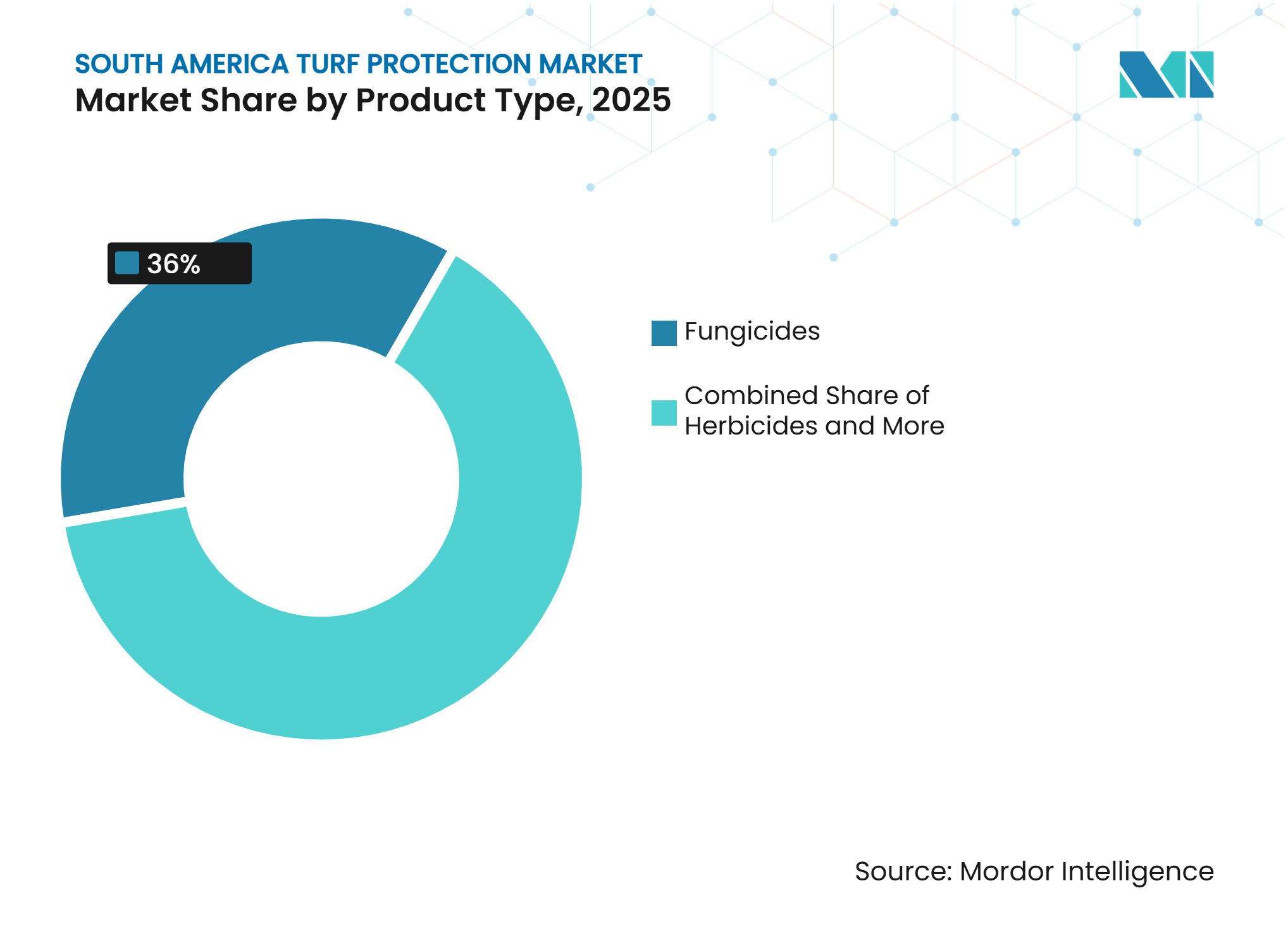
Fungicides Lead, Biologicals Support the Fastest GrowthFungicides held 36.0% of the South America turf protection market share in 2025, making them the largest product group. Their position reflects recurring disease-management requirements in Bermudagrass and Zoysia systems used across sports fields, golf courses, and sod farms, where diseases such as dollar spot and brown patch can affect turf quality and playability. A 2025 study published in Agronomy examined Trichoderma populations in turf ecosystems under different environmental and management conditions and found that fungicide-management practices influenced the diversity and antagonistic activity of Trichoderma strains, highlighting the importance of integrated disease-management approaches[3]. This supports continued interest in fungicide rotation and biological complements, while herbicides address routine weed-management requirements and insecticides protect turf from insect pests across golf, sports, and landscaped areas.
Biostimulants and bio-fertilizers are forecast to grow at a 10.8% CAGR between 2026 and 2031, representing the fastest-growing product group in the South America turf protection market. Their expansion is supported by the increasing availability of biological inputs, greater adoption of integrated turf-management practices, and continued development of microbial-based products. In Brazil, Koppert's Trichodermil contains Trichoderma harzianum strain ESALQ-1306 and is registered as a microbiological fungicide and nematicide, demonstrating the commercialization of microbial solutions for disease and soil-pest management. Suppliers require technical support because biological-product performance can vary with soil conditions, turf cultivars, environmental conditions, and application practices. Biological programs are therefore most relevant when integrated with established chemical rotations, allowing turf managers to incorporate biological solutions without immediately replacing conventional disease-management programs.



By Application:
Landscaping Leads, Sports Fields Advance FastestLandscaping held 34.0% of the South America turf protection market share in 2025, making it the largest application segment. Recurring maintenance of public parks, commercial landscapes, recreational areas, and other managed green spaces supports continuous requirements for weed, disease, and pest management rather than one-time product demand associated with site development. This creates a relatively stable consumption base for herbicides, fungicides, insecticides, and biological products, while golf courses represent a smaller but higher-intensity application where stringent turf-quality requirements support specialized protection programs. Sod farms also require disease-management products and plant growth regulators to maintain turf health and cultivar quality before harvest. Consequently, suppliers can differentiate their product portfolios and application recommendations according to turf type, maintenance intensity, disease pressure, and end-use requirements.
Sports fields are forecast to grow at a 9.3% CAGR between 2026 and 2031, representing the fastest-growing application segment in the South America turf protection market. Brazil's preparations to host the 2027 FIFA Women's World Cup are adding activity around major sports venues, with eight host cities and stadiums selected and operational preparations underway across the country. The intensive use of professional playing surfaces increases the importance of maintaining turf density, disease control, weed suppression, and surface quality, supporting demand for fungicides, herbicides, plant growth regulators, and biological solutions. Hybrid and natural-turf systems can also require application programs adapted to differences in irrigation, aeration, moisture conditions, and playing intensity. As sports facilities increasingly adopt structured turf-management practices, the segment can generate recurring demand for preventive treatments, monitoring, and technically differentiated protection programs.
By End User:
Residential Customers Lead, Sports Facility Owners Grow FastestResidential customers held 29.0% of the South America turf protection market share in 2025, making them the largest end-user group. Brazil's large urban population and widespread use of managed residential lawns support a broad customer base for turf-care products. Residential users generally apply turf-protection products at lower frequencies and smaller volumes than professional users, with purchasing decisions influenced by product accessibility, ease of application, and cost. Commercial landscape contractors represent an important channel to larger managed sites because they consolidate product demand across multiple residential, commercial, and public properties. Municipalities and schools also contribute to demand through the maintenance of lawns, recreational areas, and institutional green spaces, although budget constraints can encourage the use of cost-effective and lower-input maintenance practices. Suppliers therefore need differentiated product formats, application guidance, and distribution models to address the varying purchasing patterns across residential and institutional users.
Sports facility owners are forecast to grow at a 7.6% CAGR between 2026 and 2031, representing the fastest-growing end-user group in the South America turf protection market. The expansion and professionalization of sports infrastructure is increasing the importance of maintaining turf quality under intensive playing conditions. Stadiums, football grounds, and multisport facilities require regular management of disease, weeds, insects, moisture conditions, and turf density, creating recurring demand for fungicides, herbicides, insecticides, plant growth regulators, and biological solutions. The use of natural and hybrid playing surfaces can further increase the need for technically tailored treatment programs because maintenance requirements vary according to turf composition, usage intensity, irrigation, and growing conditions. As sports operators place greater emphasis on consistent playing quality and preventive maintenance, turf protection is increasingly incorporated into routine facility-management programs, supporting faster growth in this end-user segment.
By Mode of Action:
Chemicals Lead, Biological Solutions ScaleChemical products held 68.0% of the South America turf protection market share in 2025, making them the dominant mode of action. Triazole fungicides, synthetic pyrethroids, and selective herbicides have established applications across turf systems, supported by their established efficacy, availability, and familiarity among professional turf managers. The range of registered chemical products for turf protection is also broader than that of biological alternatives in several major South American markets, supporting continued reliance on conventional products. Integrated solutions represent an emerging approach as turf managers incorporate biological products and cultural practices into established chemical programs. A 2025 study on dollar spot management in Bermudagrass found that cultural practices, including nitrogen fertilization and early dew removal, could reduce disease severity alongside fungicide-based management, supporting the broader adoption of integrated disease-management approaches. This indicates that adoption is more likely to occur through gradual integration of complementary practices rather than an immediate shift away from chemical products.
Biological solutions are forecast to grow at an 8.4% CAGR between 2026 and 2031, representing a faster-growing mode of action within the South America turf protection market. Growth is supported by increasing availability of microbial and other biological inputs, greater interest in integrated turf management, and continued development of locally adapted biological products. In Brazil, biological-input products are subject to regulatory requirements governing registration, safety, quality, and efficacy, creating a technical and compliance threshold for manufacturers seeking market access. Biological products can also require application guidance and field validation because efficacy may vary with temperature, moisture, soil conditions, turf species, and disease pressure. As turf managers gain greater familiarity with biological products, their use is anticipated to expand primarily as complementary components of integrated programs, alongside conventional fungicides, herbicides, and insecticides rather than as immediate replacements for chemical solutions.
By Formulation:
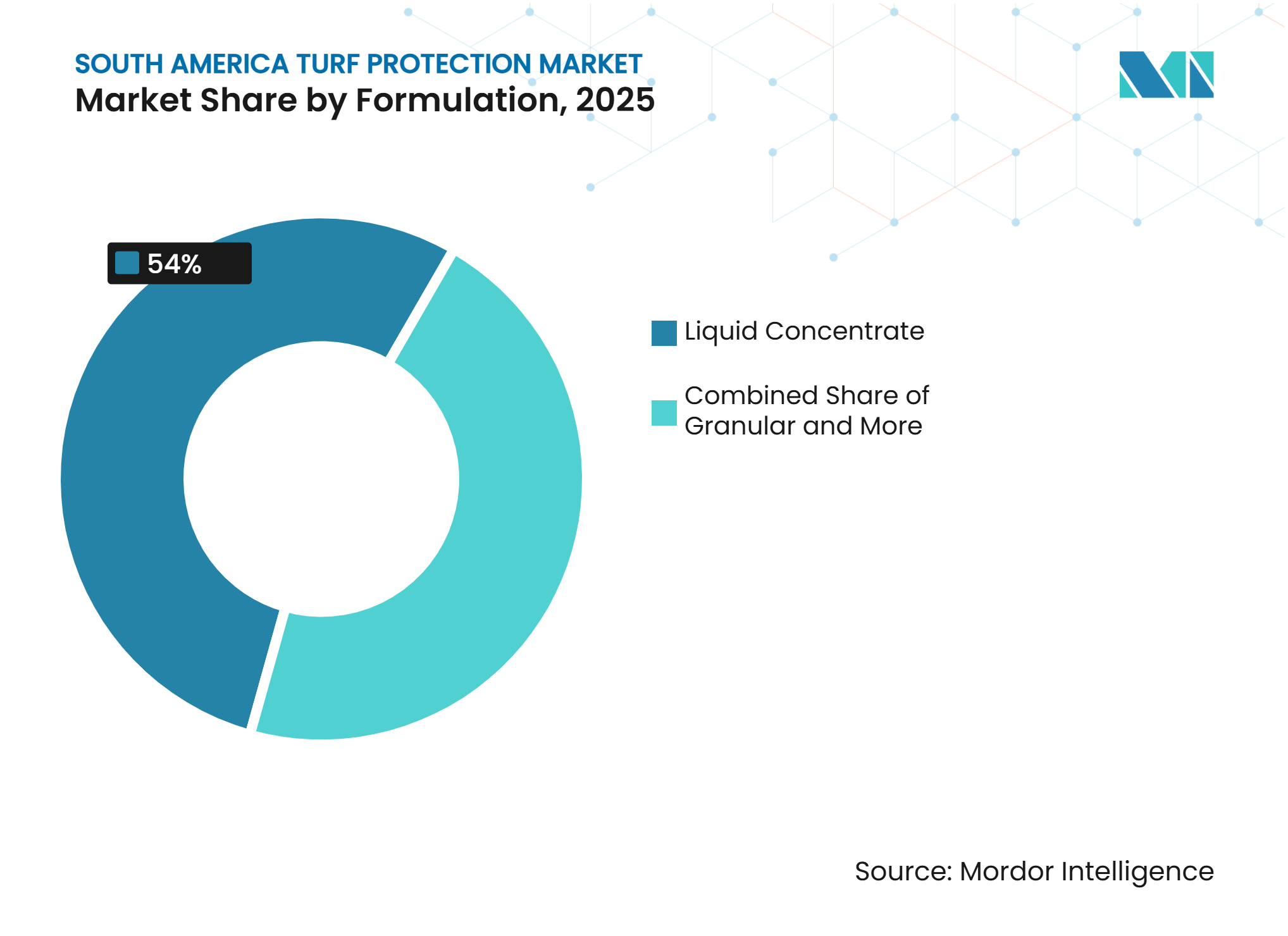
Liquid Concentrates Lead and Grow FastestLiquid concentrate held 54.0% of the South America turf protection market share in 2025, making them the largest formulation type. Their compatibility with backpack sprayers, boom sprayers, and other liquid-application equipment supports their use across golf courses, sports fields, landscaping sites, and sod farms where uniform coverage and precise application are important. Liquid formulations also allow application rates to be adjusted according to turf area, pest pressure, and treatment requirements, supporting their use in high-maintenance settings. Granular formulations remain relevant for pre-emergent weed control and products requiring slower or more localized release, while wettable powders are used in selected fungicide and biological formulations. Consequently, formulation selection is closely linked to application equipment, site size, turf-management intensity, and the required precision of product delivery.
Liquid concentrate is also forecast to grow at a 7.4% CAGR between 2026 and 2031, representing the fastest-growing formulation type in the South America turf protection market. Their growth is supported by the continued adoption of mechanized and precision-oriented application practices, as liquid products can be readily incorporated into established spraying systems. The expansion of biological products also provides opportunities for liquid formulations, particularly where microbial products are supplied as suspensions or flowable concentrates. As liquid biological products expand, distributors may require stronger handling, storage, and application-support capabilities because formulation stability and microbial viability can be affected by storage conditions and environmental exposure. These requirements increase the role of technical distribution and product stewardship alongside conventional product delivery.

Geography Analysis
Brazil is the largest and fastest-growing market in South America turf protection market, accounting for 58.0% of the regional turf protection market share in 2025 and anticipated to expand at a 6.7% CAGR between 2026 and 2031. Its dominant position is supported by the country's large base of professionally maintained sports facilities, commercial landscaping, golf courses, and sod production. The country's expanding biological-input industry and continued development of domestic production capabilities are further broadening the range of turf-protection solutions available to professional users. Regulatory developments, including the implementation of the Unified System for Information, Petition and Electronic Evaluation (SISPA) in 2026 to centralize electronic pesticide-registration and post-registration processes, are also shaping the operating environment for product suppliers.
Argentina remains an important regional market, supported by demand from sports facilities, golf courses, landscaping, recreational areas, and other professionally managed turf. Economic volatility and currency movements can influence the cost of imported turf-protection inputs, while the National Service of Agrifood Health and Quality (SENASA) oversees the registration and commercialization of phytosanitary products. These conditions can increase the importance of cost-effective formulations, locally supplied products, and biological alternatives where they meet applicable efficacy and regulatory requirements.
Chile is another established market, with demand supported by golf courses, sports facilities, landscaping, and recreational green spaces. Water availability and irrigation efficiency remain important considerations for turf management, increasing the relevance of practices and products that help maintain turf quality under water constraints. Colombia also contributes to regional demand through sports facilities, landscaping, parks, and recreational areas. The remaining South American countries collectively generate demand from residential and commercial landscaping, sports fields, golf facilities, parks, and smaller turf-production operations, with market development varying according to climate, water availability, sports infrastructure, professional maintenance intensity, and regulatory conditions.
Competitive Landscape
Market Concentration
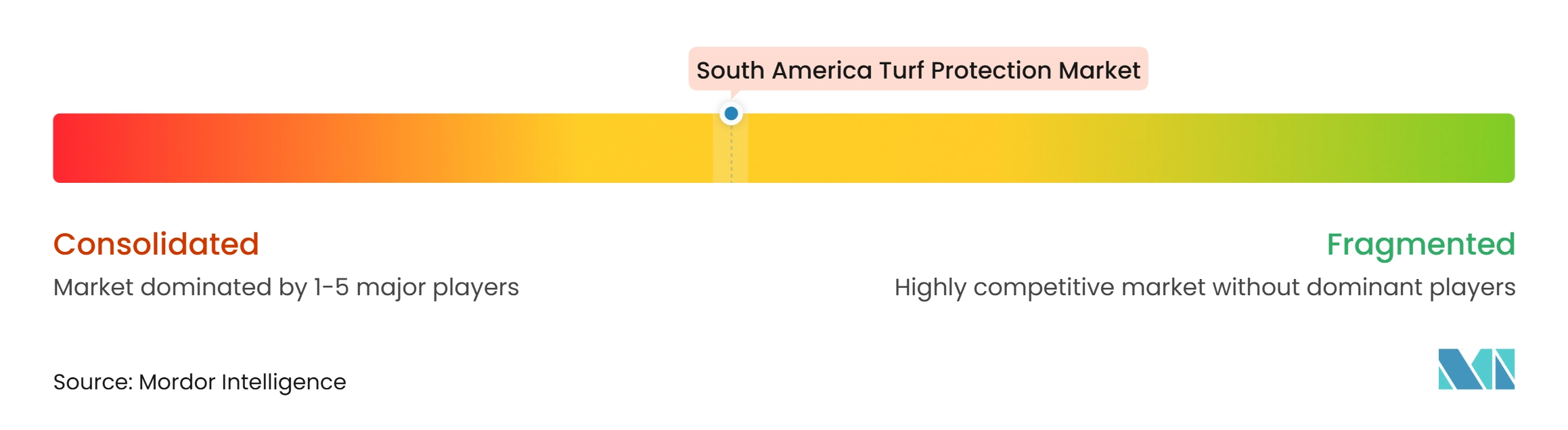
The South America turf protection market is moderately consolidated, with leading companies including Syngenta Group, Bayer S.A., BASF S.A., UPL Limited, and FMC Corporation. These players compete across fungicides, herbicides, insecticides, plant growth regulators, biostimulants, and bio-fertilizers, with competitive positioning shaped by product portfolio breadth, active ingredient capabilities, formulation technologies, regulatory expertise, biological product development, and turf-specific technical support. Leading players continue to strengthen their positions through product registrations, portfolio expansion, biological solutions, and technologies supporting more efficient turf management. Regional and specialized players also compete through biological products, specialty formulations, and targeted solutions addressing specific disease, pest, weed, and turf-health requirements.
Product innovation and portfolio expansion remain important competitive strategies. In July 2026, Envu partnered with Greencell to launch Fiata Boost, a patent-pending microbial biostimulant developed specifically for golf and sports turf and designed to improve turf resilience under drought, heat, and intensive use. The product combines bacterial and fungal microbial strains and had been evaluated in more than 40 field trials across the United States and four European countries. The development highlights the increasing focus of major turf-protection players on microbial biostimulants as complementary solutions for maintaining turf health and resilience under environmental stress. Biological product development is also expanding the range of solutions available for integrated turf management, with specialized players developing microbial-based products for disease and soil-pest management. This broadening product portfolio allows players to address turf-management requirements through combinations of conventional and biological solutions.
The competitive landscape is also evolving through precision turf-management technologies and integrated protection programs. In November 2025, Toro introduced Spatial Adjust, a golf-course irrigation software solution that uses real-time soil-moisture data to generate sprinkler-adjustment recommendations, supporting more precise irrigation management. Although the technology is not a turf-protection product, its integration of data-driven irrigation with turf management illustrates the broader shift toward technology-enabled maintenance practices. Competition is therefore extending beyond standalone chemical products toward biologicals, biostimulants, precision-management technologies, and integrated turf-care programs. Players that combine differentiated product technologies with regulatory expertise, efficacy data, technical support, and reliable distribution can address the varying requirements of golf courses, sports fields, landscaping sites, sod farms, and other managed turf applications.
South America Turf Protection Industry Leaders
-
Syngenta Proteção de Cultivos Ltda. (Syngenta Group)
-
Bayer S.A. (Bayer AG)
-
BASF S.A. (BASF SE)
-
UPL do Brasil Indústria e Comércio de Insumos Agropecuários S.A. (UPL Limited)
-
FMC Química do Brasil Ltda. (FMC Corporation)
- *Disclaimer: Major Players sorted in no particular order
South America Turf Protection Market Companies Covered in this Report
- Syngenta Proteção de Cultivos Ltda. (Syngenta Group)
- Bayer S.A. (Bayer AG)
- BASF S.A. (BASF SE)
- UPL do Brasil Indústria e Comércio de Insumos Agropecuários S.A. (UPL Limited)
- FMC Química do Brasil Ltda. (FMC Corporation)
- Corteva Agriscience do Brasil Ltda. (Corteva, Inc.)
- Bioceres Crop Solutions Corp.
- Envu Argentina S.R.L. (Envu)
- ICL Brasil Ltda. (ICL Group Ltd.)
- Koppert do Brasil Holding Ltda. (Koppert B.V.)
Recent Industry Developments in South America Turf Protection Market
- July 2026: Brazilian sports-turf company World Sports entered an exclusive partnership with SIS Pitches to introduce hybrid-turf stitching technology to Brazil. The system reinforces natural turf with synthetic fibers, while the partnership also introduces Bio-X™ Fiber to the Brazilian market.
- May 2026: Itograss held its Sports Turf Field Day 2026 at its facility in Tremembé, São Paulo, bringing together Brazilian football clubs, stadium representatives, federations, universities, and international turf specialists. The event showcased NorthBridge Bermudagrass, Celebration Hybrid, and Play OnTime technologies, highlighting continued innovation and professionalization in Brazil's sports-turf sector.
- September 2025: Syngenta Brazil's Miravis Duo fungicide was listed for gramados (turfgrass), with registered uses covering rust (Puccinia zoysia), dollar spot (Sclerotinia homoeocarpa), and brown patch (Bipolaris cynodontis).
South America Turf Protection Market Report Scope
Turf protection refers to products and solutions used to prevent, control, or manage pests, diseases, weeds, and other biological or environmental stresses affecting turfgrass, while maintaining turf health, quality, density, and appearance.
The South America Turf Protection Market Report is Segmented by Product Type (Fungicides, Herbicides, and More), Application (Landscaping, Golf Courses, Sports Fields, and More), by End-User (Residential Customers, and More), by Mode of Action (Chemical, Biological, and Integrated Solution), by Formulation (Granular, and More), and by Geography (Brazil, Argentina, and More). The Report Offers Forecasts in Terms of Value (USD).
Segmentation Overview
| Fungicides |
| Herbicides |
| Insecticides |
| Plant Growth Regulators |
| Biostimulants and Bio-fertilizers |
| Landscaping |
| Golf Courses |
| Sports Fields |
| Sod Farms |
| Residential Customers |
| Commercial Landscape Contractors |
| Sports Facility Owners |
| Municipalities and Schools |
| Chemical |
| Biological |
| Integrated Solutions |
| Granular |
| Liquid Concentrate |
| Wettable Powder |
| By Product Type | Fungicides |
| Herbicides | |
| Insecticides | |
| Plant Growth Regulators | |
| Biostimulants and Bio-fertilizers | |
| By Application | Landscaping |
| Golf Courses | |
| Sports Fields | |
| Sod Farms | |
| By End-user | Residential Customers |
| Commercial Landscape Contractors | |
| Sports Facility Owners | |
| Municipalities and Schools | |
| By Mode of Action | Chemical |
| Biological | |
| Integrated Solutions | |
| By Formulation | Granular |
| Liquid Concentrate | |
| Wettable Powder |
Key Questions Answered in the Report
What is the South America turf protection market size?
The South America turf protection market size is USD 690.00 million in 2026 and is forecasted to reach USD 950.00 million by 2031, at a 6.53% CAGR between 2026 and 2031.
Which country leads turf protection demand in South America turf protection market?
Brazil led with 58.0% share in 2025 and is forecasted to grow at a 6.7% CAGR between 2026 and 2031.
What is the largest product category in turf protection?
Fungicides led product demand with 36.0% share in 2025 because disease pressure remains high on warm-season turf.
Why are biological turf products gaining use in South America?
Biological approvals in Brazil and scientific evidence for Trichoderma-based products support use alongside conventional treatment programs.