
Market Overview
| Study Period | 2021 - 2031 |
|---|---|
| Forecast Data Period | 2026 - 2031 |
| Base Year Market Size (2025) | USD 8.88 Billion |
| Market Size (2026) | USD 9.32 Billion |
| Market Size (2031) | USD 11.92 Billion |
| Growth Rate (2026 - 2031) | 5.04 % |
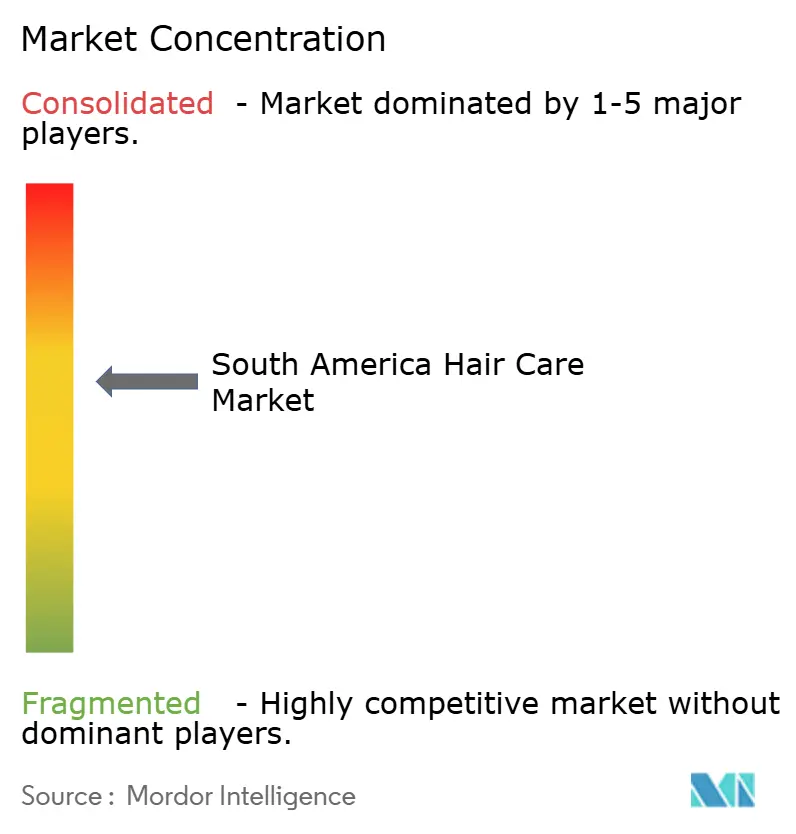
| Market Concentration | Medium |
Major Players *Disclaimer: Major Players sorted in no particular order Image © Mordor Intelligence. Reuse requires attribution under CC BY 4.0. | |
South America Hair Care Market Analysis by Mordor Intelligence
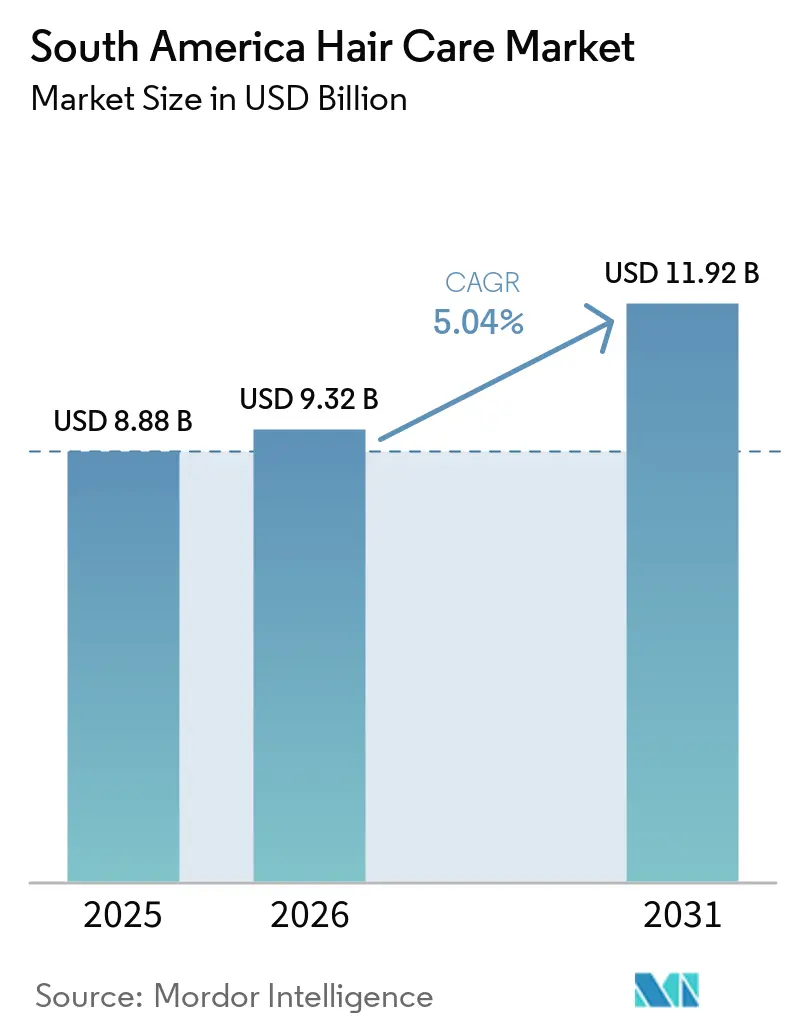
The South America hair care market was valued at USD 8.88 billion in 2025 and is projected to grow from USD 9.32 billion in 2026 to USD 11.92 billion by 2031, registering a CAGR of 5.04% during the forecast period (2026-2031). Brazil continues to account for the largest share of regional demand, supported by the frequent hair-washing routines, and consumer preferences shaped by diverse hair textures and styling needs. Demand is also expanding across Colombia, Chile, and Peru, where rising urbanization and higher disposable incomes are improving access to premium, treatment-focused, and specialized hair care products. Consumers across the region are increasingly moving beyond basic cleansing solutions and placing greater emphasis on ingredient transparency, scalp health, hair repair, and styling performance. This evolving consumer preference encourages established companies to develop formulations suited to local hair types and climatic conditions while creating opportunities for specialist brands in textured-hair, natural, and organic product segments.
Key Report Takeaways
- By product type, shampoo held 38.73% of the South America hair care market share in 2025, while hair styling products are forecast to grow at a 6.43% CAGR through 2031.
- By category, mass products accounted for 72.18% of the South America hair care market size in 2025, while premium products are projected to expand at a 6.01% CAGR through 2031.
- By ingredient type, conventional and synthetic formulations held 86.55% of the 2025 value, while natural and organic products are expected to record a 6.45% CAGR through 2031.
- By distribution channel, health and beauty stores held 45.24% of the 2025 value, while online retail stores are forecast to grow at a 6.11% CAGR through 2031.
- By country, Brazil represented 67.31% of the 2026 value, while Chile is forecast to grow at a 6.58% CAGR through 2031.
Note: Market size and forecast figures in this report are generated using Mordor Intelligence’s proprietary estimation framework, updated with the latest available data and insights as of January 2026.
South America Hair Care Market Trends and Insights
Drivers Impact Analysis*
| Driver | (~) % Impact on CAGR Forecast | Geographic Relevance | Impact Timeline |
|---|---|---|---|
| Rising beauty consciousness and personal grooming expenditure | +1.2% | Concentrated in Brazil, Colombia, Chile | Medium term (2–4 years) |
| Growing demand for textured-hair care solutions | +0.9% | Brazil (Afro-Latin core), Colombia, Venezuela | Long term (≥ 4 years) |
| Demand for multifunctional and treatment-oriented products | +0.7% | Brazil, Argentina, Chile | Medium term (2–4 years) |
| Expansion of men's hair-care and grooming | +0.5% | Brazil (leading), Colombia, Argentina | Medium term (2–4 years) |
| Growing influence of social media and beauty trends | +0.8% | Spill-over model replicated across South America; Brazil leads | Short term (≤ 2 years) |
| Increasing hair-coloring and chemical-treatment adoption | +0.6% | Brazil, Argentina, Chile | Long term (≥ 4 years) |
| Source: Mordor Intelligence | |||
Growing Demand for Textured-Hair Care Solutions
South America’s diverse hair textures continue to drive demand for specialized hair care products that address curl definition, moisture retention, scalp health, frizz control, and damage repair. According to 2024 data from the Instituto Brasileiro de Geografia e Estatística (IBGE), the self-identified Black population accounted for 9.0% in Brazil’s North region, 13.4% in the Northeast, 9.9% in the Central-West, 11.4% in the Southeast, and 5.3% in the South[1]. This demographic diversity supports the growing need for formulations designed for curly, coily, and textured hair, encouraging brands to develop targeted shampoos, conditioners, masks, leave-in treatments, and styling products. Key examples include Natura Lumina’s Curly Hair line, Salon Line’s #todecacho range, and Lola Cosmetics’ Meu Cacho Minha Vida range, which offer curl creams, conditioners, treatment masks, and styling solutions tailored to the needs of textured hair consumers.
Increasing Hair-Coloring and Chemical-Treatment Adoption
Hair coloring, smoothing, and other chemical treatments remain integral to hair-care routines across South America, particularly in key markets such as Brazil, Argentina, and Chile, where consumers increasingly seek professional-quality results at home and in salons. According to the International Monetary Fund (IMF), the region’s GDP per capita reached approximately USD 11.73 thousand in 2025, supporting discretionary spending on beauty and personal care products[2]. As purchasing power increases, consumers are allocating more of their spending to salon treatments, hair-coloring products, and specialized solutions that maintain color vibrancy, improve hydration, control frizz, and repair damage from chemical processing. This trend is expanding opportunities for hair-care brands to introduce professional-grade products through retail channels and develop targeted treatment ranges that address the evolving needs of consumers with increasingly sophisticated hair-care routines.
Growing Influence of Social Media and Beauty Trends
Social media platforms and celebrity-driven beauty trends are increasingly influencing hair-care preferences across South America by accelerating product discovery, raising awareness of specialized solutions, and encouraging consumers to adopt more personalized hair-care routines. Influencers, video tutorials, product reviews, and viral styling trends are expanding the visibility of products designed for specific needs, including curl and coil definition, damaged-hair repair, scalp care, hydration, and anti-frizz protection. Latin celebrities are also contributing to product innovation and category expansion; for example, on June 12, 2025, Colombian singer Shakira entered the hair-care category with Isima, a brand inspired by her experience with curls and the diverse hair textures within the Latin community. These developments are supporting demand for trend-led, specialized, and premium hair-care products while prompting brands to strengthen their digital marketing strategies and collaborate with influencers.
Expansion of Men's Hair-Care and Grooming
Men’s hair care and grooming are gaining momentum across South America as evolving perceptions of personal care encourage male consumers to incorporate more comprehensive hair-care routines into their daily lives. Demand is expanding beyond basic shampoos to include conditioners, styling products, hair treatments, hair colorants, and scalp-care solutions that address specific needs, such as hair loss, dandruff, damage repair, and beard-to-hair grooming. The growing presence of barbershops, salons, and male-focused grooming brands is improving product accessibility and increasing awareness of specialized hair-care offerings. Younger consumers are driving this trend through greater interest in appearance, styling, and self-care, while manufacturers are responding by introducing convenient, multifunctional, and targeted products designed for men’s distinct hair-care preferences.
Restraints Impact Analysis*
| Restraint | (~) % Impact on CAGR Forecast | Geographic Relevance | Impact Timeline |
|---|---|---|---|
| Economic volatility and fluctuating consumer purchasing power | -0.8% | Argentina, Venezuela, Peru, Brazil | Short term (≤ 2 years) |
| Counterfeit and imitation products | -0.5% | Brazil, border markets of Argentina and Paraguay | Medium term (2–4 years) |
| Import dependence and currency fluctuations | -0.6% | Argentina, Colombia, Venezuela, Chile | Long term (≥ 4 years) |
| Intense competition among domestic and international brands | -0.4% | Brazil, Chile, Colombia | Medium term (2–4 years) |
| Source: Mordor Intelligence | |||
Counterfeit and Imitation Products
Counterfeit and imitation hair-care products constrain the South American hair-care market by diverting sales from established brands, intensifying price competition, and undermining consumer confidence in branded products. These products are often sold through informal channels and online platforms at lower prices, making them particularly appealing to price-sensitive consumers. However, counterfeit products may contain unauthorized, low-quality, or potentially harmful ingredients and frequently fail to comply with established quality, labeling, and safety regulations, posing health risks and damaging brand reputations. In July 2025, Brazil’s Federal Revenue Service and Federal Police conducted Operation Queda de Dalila in Uberaba, Minas Gerais, targeting smuggled and unregistered hair-care products. The continued expansion of online retail may further complicate product authentication and enforcement efforts, increasing the need for stronger retailer oversight, supply chain traceability, and regulatory enforcement.
Import Dependence and Currency Fluctuations
South American hair-care manufacturers depend on imported ingredients, packaging materials, and finished products, which exposes them to higher production costs and supply-chain disruptions. Brazil’s beauty and personal care import structure illustrates this reliance: China accounted for 23.2% of import value and 51.6% of import volume during January–February 2025, according to ABIHPEC data[3]. This dependence on international suppliers increases manufacturers’ exposure to exchange-rate fluctuations, higher freight charges, shipping delays, trade restrictions, and volatility in global raw material prices. In particular, currency depreciation can significantly increase the local-currency cost of imported raw materials and finished goods, pressuring manufacturers’ margins and potentially leading to higher retail prices. As a result, price-sensitive consumers may reduce discretionary spending or shift toward lower-priced products, which could constrain the growth of premium and imported hair-care brands in the region.
*Our forecasts treat driver/restraint impacts as directional, not additive. The impact forecasts reflect baseline growth, mix effects, and variable interactions.
Segment Analysis
By Product Type: Shampoo Holds the Largest Base While Styling Products Lead Growth
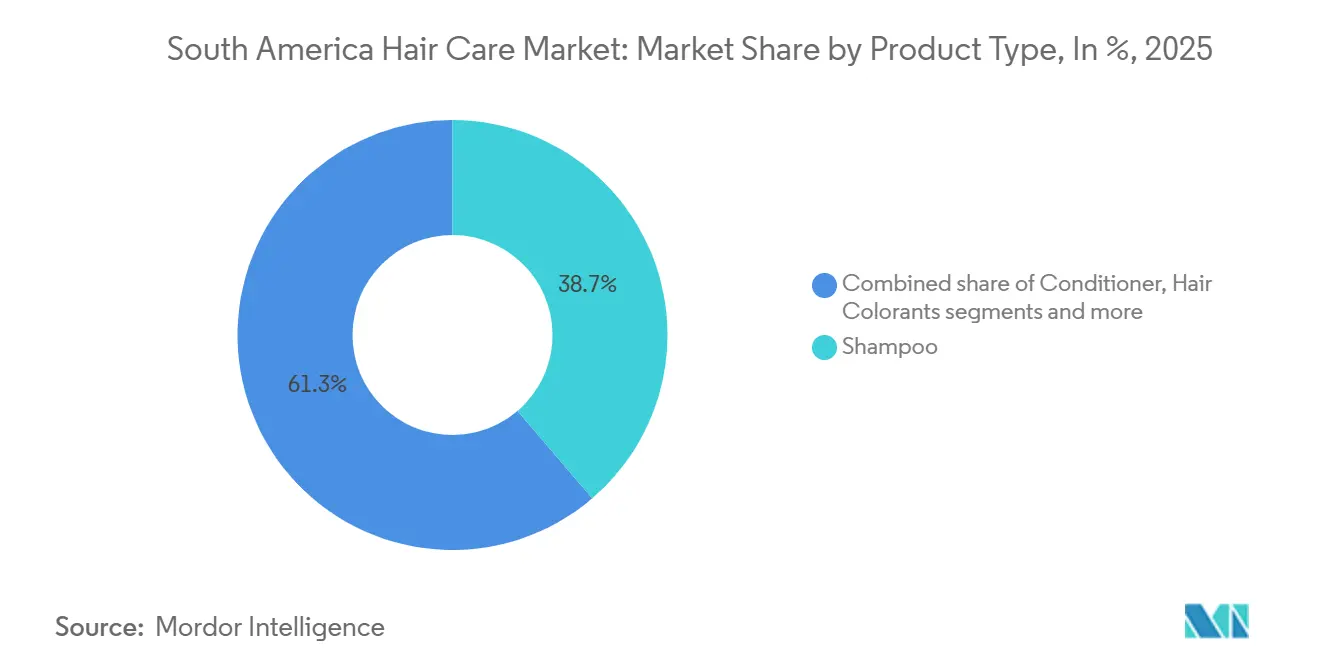
Shampoo dominated the South America hair care market in 2025, accounting for 38.73% of the total market value. The segment’s leadership reflects the high frequency of hair-washing routines and the essential role of shampoo in daily hair cleansing and maintenance. Demand for multifunctional formulations offering moisturizing, anti-dandruff, strengthening, and scalp-care benefits further supported segment growth. Consumers increasingly prefer shampoos tailored to specific hair textures, scalp conditions, and treatment requirements, encouraging manufacturers to expand their specialized product portfolios.
Hair styling products are expected to be the fastest-growing product type, registering a CAGR of 6.43% through 2031. Growth is driven by increasing consumer interest in products that provide styling, curl definition, volume, hold, and finishing benefits for diverse hair types. Wider product availability across supermarkets, health and beauty stores, and online retail platforms is improving accessibility and supporting adoption. Premium and specialized styling formulations, including products designed for textured hair and natural ingredients, are also expected to contribute to the segment’s expansion.

By Category: Mass Products Retain Scale While Premium Products Gain Ground
Mass products accounted for 72.18% of the South American hair care market in 2025, reflecting consumers’ strong preference for affordable, easily accessible hair care products. These products cater to everyday hair cleansing, conditioning, and styling needs, making them a preferred choice among a broad consumer base. Their extensive presence in supermarkets, hypermarkets, health and beauty stores, and other retail outlets supports higher product visibility and purchase convenience. Competitive pricing, frequent promotions, and a wide product assortment further reinforce the segment’s leading market position.
Premium hair care products are projected to register a CAGR of 6.01% through 2031, outpacing the overall South America hair care market's growth rate. Growth in this segment is driven by rising demand for specialized formulations addressing concerns such as hair damage, scalp health, color protection, and frizz control. Consumers are also showing greater interest in products containing high-quality, natural, and advanced ingredients that offer differentiated benefits. Rising disposable incomes and a growing willingness to invest in personalized hair care solutions are expected to support premium segment expansion.
By Ingredient Type: Conventional Formulas Lead While Natural Products Expand Faster
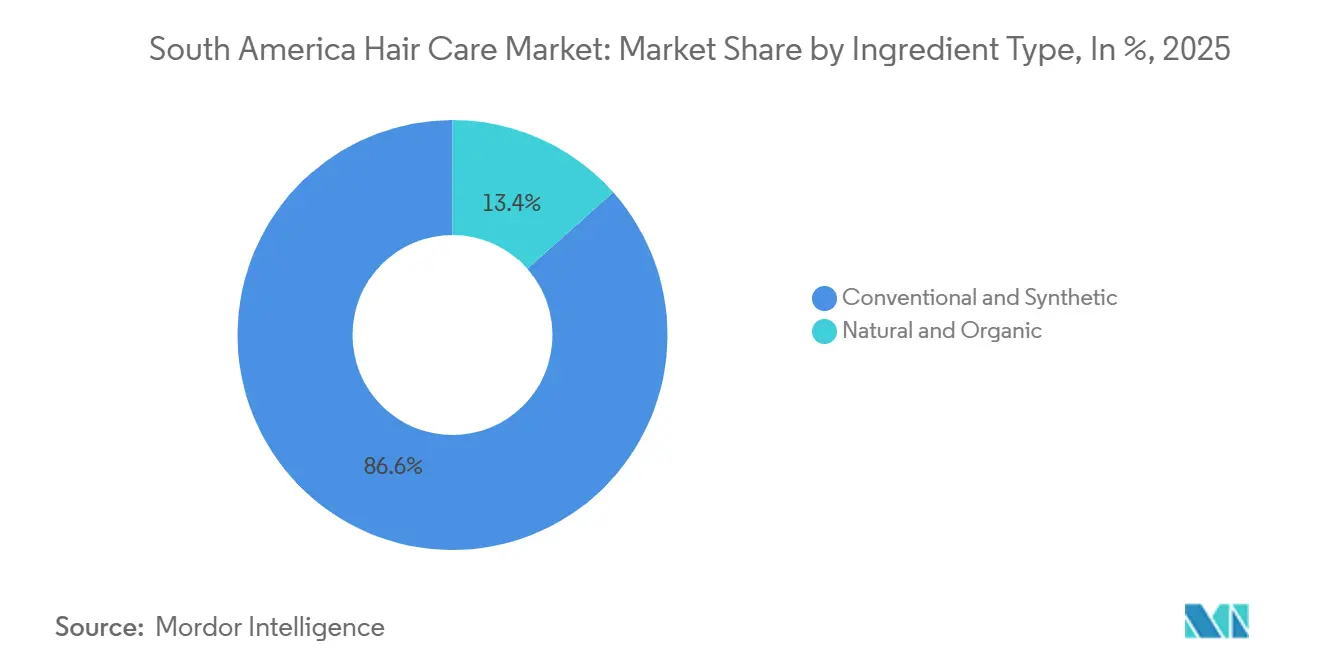
Conventional and synthetic formulations accounted for 86.55% of the South America hair care market in 2025, highlighting their strong presence across the region. Their widespread availability through various retail channels and their established consumer acceptance continue to support demand. These products offer a broad range of formulations across shampoos, conditioners, hair colorants, and styling products. Competitive pricing and familiarity with established brands further reinforce their adoption among mass-market consumers.
Natural and organic products are expected to be the fastest-growing ingredient segment, registering a CAGR of 6.45% through 2031. This growth is driven by rising consumer preference for plant-based, clean-label, and naturally derived hair care formulations. Increasing awareness of ingredient safety, hair health, and environmental sustainability is encouraging consumers to consider natural alternatives. Manufacturers are also expanding their natural and organic product portfolios to address evolving consumer preferences across South America.
By Distribution Channel: Health and Beauty Stores Lead While Online Retail Changes Access
Health and beauty stores held the leading position in the South America hair care distribution landscape in 2025, accounting for 45.24% of the market value. Consumers increasingly prefer these outlets because they offer specialized product selections and a more focused shopping experience. The channel provides access to a broad portfolio of shampoos, conditioners, styling products, and treatment-based hair care solutions. It also supports the sale of premium and professional-grade formulations through knowledgeable staff and brand-led in-store promotions. Consequently, health and beauty stores continue to serve as a key touchpoint for consumers seeking targeted hair care products.
Online retail stores are projected to grow at a CAGR of 6.11% through 2031, positioning them among the fastest-growing hair care distribution channels in South America. This growth is driven by rising internet penetration, increasing consumer comfort with digital shopping, and the convenience of home delivery. Online platforms offer extensive product assortments, competitive pricing, and easy access to product information and consumer reviews. They also enable consumers to purchase niche, premium, and specialized hair care brands that may not be widely available through physical retail outlets. As e-commerce infrastructure expands across the region, online retail is expected to play an increasingly important role in hair care product sales.
Geography Analysis
Brazil was the largest country market in the South America hair care market, accounting for 67.31% of the regional market value in 2026. Its leading position is supported by a well-established hair care culture and consistent demand for cleansing, styling, coloring, and treatment products. The country’s large consumer base and diverse hair care needs also support demand across mass and premium product categories. Furthermore, Brazil’s developed retail and e-commerce infrastructure enables brands to introduce localized products and expand their market reach effectively.
Chile is projected to be the fastest-growing country market, registering a CAGR of 6.58% during 2026–2031. This growth is driven by rising consumer demand for premium, specialized, and hair health-focused products. Consumers are increasingly seeking targeted solutions, including products for scalp care, damage repair, and specific hair types. The expansion of e-commerce platforms and modern retail channels is improving product accessibility, while growing interest in natural formulations is creating additional growth opportunities.
Argentina, Colombia, Peru, Venezuela, and the Rest of South America collectively represent important opportunities for market expansion. Demand in these countries is supported by urbanization, changing beauty preferences, digital product discovery, and the growing availability of hair care products through organized retail and online channels. However, consumer spending patterns continue to vary based on purchasing power and prevailing economic conditions across individual countries. Growth opportunities remain particularly strong for textured-hair care, natural products, specialized treatments, and affordable hair care formulations.
Competitive Landscape
The South America hair care market has a moderately consolidated competitive landscape, with multinational corporations and leading regional beauty groups competing across key product categories. L’Oréal SA, Unilever plc, The Procter & Gamble Company, Natura & Co., and Grupo Boticário are among the prominent market participants. These companies maintain strong positions through established brand equity, broad product portfolios, and extensive distribution capabilities. Their offerings span mass, premium, professional, and specialized hair care segments across the region.
Product innovation, premiumization, and the development of specialized hair care solutions are key factors shaping competition in the market. Leading companies are introducing products tailored to different hair types, textures, and concerns, including damage repair, scalp care, hair coloring, and styling. Growing consumer interest in natural, treatment-focused, and ingredient-conscious products is also influencing product development strategies. Companies are further strengthening their competitive presence through salon partnerships, targeted digital marketing, and expanded e-commerce operations.
The market remains diverse, as companies target distinct consumer groups, price points, and distribution channels across South American countries. Multinational companies leverage global research and development capabilities, international brand portfolios, and large-scale marketing investments. In contrast, regional players benefit from a stronger understanding of local beauty preferences, hair care routines, and consumer purchasing behavior. This competitive environment creates opportunities for differentiated offerings in textured hair care, natural formulations, professional products, and affordable hair care solutions.
South America Hair Care Industry Leaders
-
L'Oréal SA
-
Unilever plc
-
The Procter & Gamble Company
-
Grupo Boticário
-
Natura & Co
- *Disclaimer: Major Players sorted in no particular order
Recent Industry Developments
- December 2025: Brazil Edition introduced a high-performance haircare range that combined Amazonian ingredients with peptides to address damaged hair. The launch highlighted the brand’s focus on integrating Brazil-inspired natural ingredients with advanced haircare technology.
- September 2025: Clariant introduced its Hairmonist concept in South America, featuring personalized, sustainable haircare formulations made with renewable-based ingredients. The concept incorporated solutions for cleansing, conditioning, damage repair, and natural silicone alternatives to meet the needs of diverse hair types and concerns.
- September 2025: Unilever introduced a new Dove haircare line in Brazil, representing the brand’s first significant haircare launch in the country in nearly a decade. This launch broadened Dove’s haircare portfolio in Brazil and reinforced its presence in the country’s expanding haircare market.
- June 2025: Shakira launched isima, a premium haircare brand developed for curls and diverse Latin hair textures. The brand introduced an eight-product range that supported scalp and hair health through science-backed formulations and a holistic hair repair approach.
South America Hair Care Market Report Scope
Hair care includes products designed to cleanse, condition, color, style, protect, and maintain hair health and appearance. The South America Hair Care Market is segmented by product type into shampoo, conditioner, hair colorants, hair styling products, and others; by category into premium and mass products; by ingredient type into natural and organic products and conventional and synthetic products; and by distribution channel into supermarkets/hypermarkets, health and beauty stores, online retail stores, and other distribution channels. The market analysis covers Brazil, Argentina, Colombia, Chile, Peru, Venezuela, and the Rest of South America. Market forecasts are presented in value terms (USD).
By Product Type
| Shampoo |
| Conditioner |
| Hair Colorants |
| Hair Styling Products |
| Others |
By Category
| Premium Products |
| Mass Products |
By Ingredient Type
| Natural and Organic |
| Conventional and Synthetic |
By Distribution Channel
| Supermarkets/Hypermarkets |
| Health and Beauty Stores |
| Online Retail Stores |
| Other Distribution Channels |
By Country
| Brazil |
| Argentina |
| Colombia |
| Chile |
| Peru |
| Venezuela |
| Rest of South America |
| By Product Type | Shampoo |
| Conditioner | |
| Hair Colorants | |
| Hair Styling Products | |
| Others | |
| By Category | Premium Products |
| Mass Products | |
| By Ingredient Type | Natural and Organic |
| Conventional and Synthetic | |
| By Distribution Channel | Supermarkets/Hypermarkets |
| Health and Beauty Stores | |
| Online Retail Stores | |
| Other Distribution Channels | |
| By Country | Brazil |
| Argentina | |
| Colombia | |
| Chile | |
| Peru | |
| Venezuela | |
| Rest of South America |
Key Questions Answered in the Report
What is the forecast for South America hair care through 2031?
The South America hair care market is forecast to increase from USD 9.32 billion in 2026 to USD 11.92 billion by 2031, at a 5.04% CAGR.
Which South American country has the largest hair care opportunity?
Brazil is the largest country, accounting for 67.31% of regional value in 2026. Its frequent washing routines, and broad retail network support demand.
Which product category is growing fastest in South America?
Hair styling products are projected to grow at a 6.43% CAGR through 2031, supported by textured-hair care and demand for professional-style results.
Why are natural hair care products gaining demand in South America?
Natural and organic products are expected to grow at a 6.45% CAGR through 2031. Regional ingredients and demand for formulas suited to specific hair textures support this growth.