
Size and Share of Soil Wetting Agents Market
Market Overview
| Study Period | 2022 - 2032 |
|---|---|
| Market Size (2027) | USD 193.10 Million |
| Market Size (2032) | USD 259 Million |
| Growth Rate (2027 - 2032) | 6.05 % |
| Fastest Growing Market | North America |
| Largest Market | Asia-Pacific |
| Market Concentration | Medium |
Major Players *Disclaimer: Major Players sorted in no particular order Image © Mordor Intelligence. Reuse requires attribution under CC BY 4.0. | |
Analysis of Soil Wetting Agents Market by Mordor Intelligence
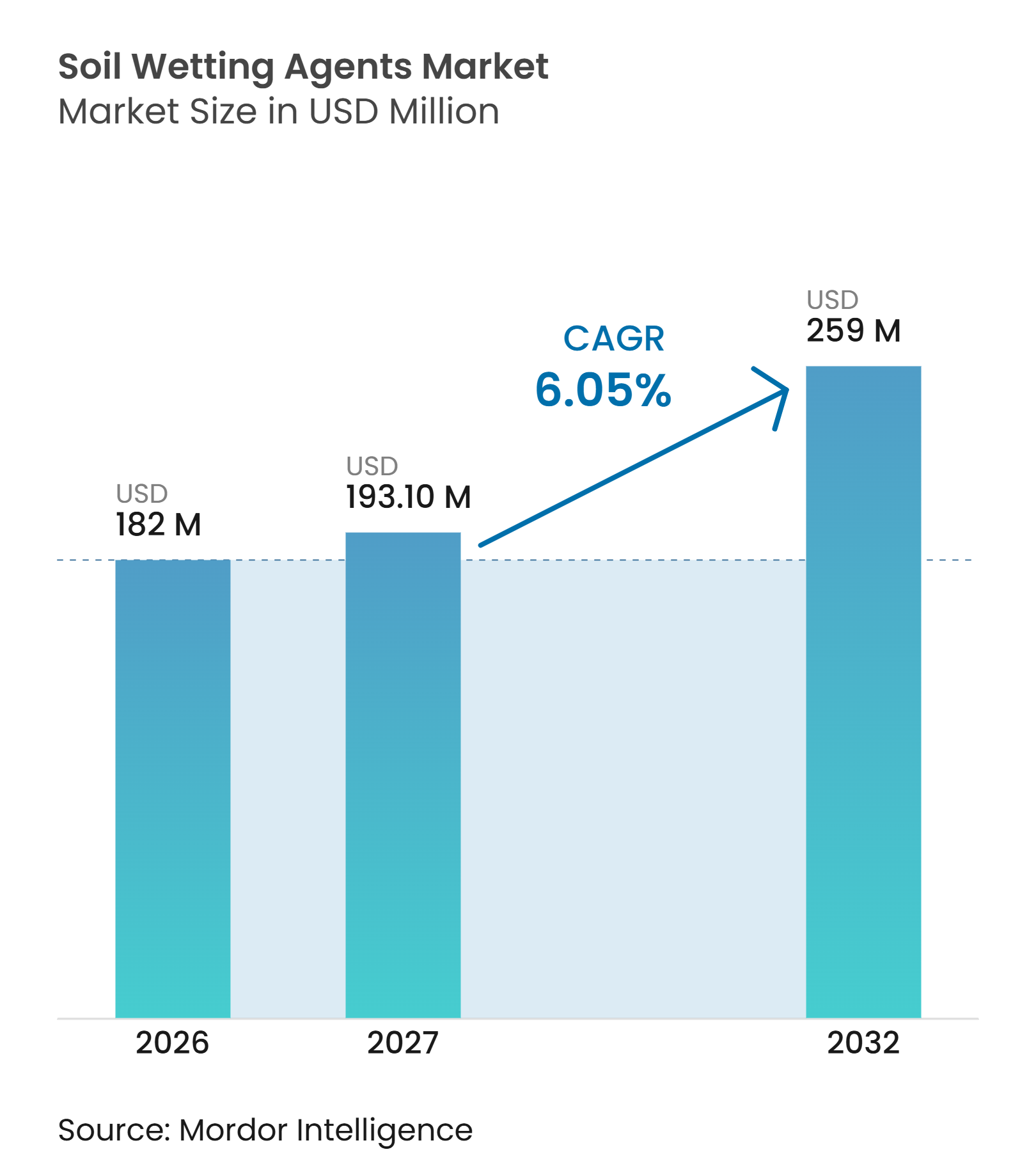
The soil wetting agents market size was valued at USD 182.00 million in 2026 and is forecast to grow from USD 193.10 million in 2027 to reach USD 259.00 million by 2032, at a CAGR of 6.05% from 2027 to 2032. Increasing water scarcity is creating a broader need for solutions that improve irrigation efficiency and minimize water losses, particularly in agriculture. The Food and Agriculture Organization of the United Nations (FAO) reported in its 2025 AQUASTAT Water Data Snapshot that renewable freshwater availability per person had declined by 7% over the preceding decade, while agriculture accounted for 72% of global freshwater withdrawal[1]. This provides a macroeconomic indication of growing pressure on agricultural water resources. Supporting the product-specific opportunity, CHS Agronomy offers H-45, an injectable soil surfactant designed for agricultural crops that improves water infiltration, soil moisture distribution, and water-holding capacity, with application through irrigation systems and agricultural sprayers. Such product offerings demonstrate how soil wetting agents are being positioned as practical water-management inputs beyond traditional turf applications. Suppliers are further differentiating their portfolios through biodegradable formulations, performance across varying soil conditions, and compatibility with fertigation and irrigation systems, creating opportunities to expand adoption across commercial agriculture and high-value horticulture.
Key Report Takeaways
- By product type, nonionic wetting agents held 51.3% of the soil wetting agents market share in 2026, while bio-based and organic wetting agents are forecast to grow at a CAGR of 8.1% from 2027 to 2032.
- By form, liquid wetting agents held 58.0% of the soil wetting agents market size in 2026, while granular wetting agents are forecast to grow at a CAGR of 7.3% from 2027 to 2032.
- By application, field crops and commercial agriculture accounted for 48.3% of the soil wetting agents market share in 2026, while golf courses and sports turf are forecast to grow at a CAGR of 7.8% from 2027 to 2032.
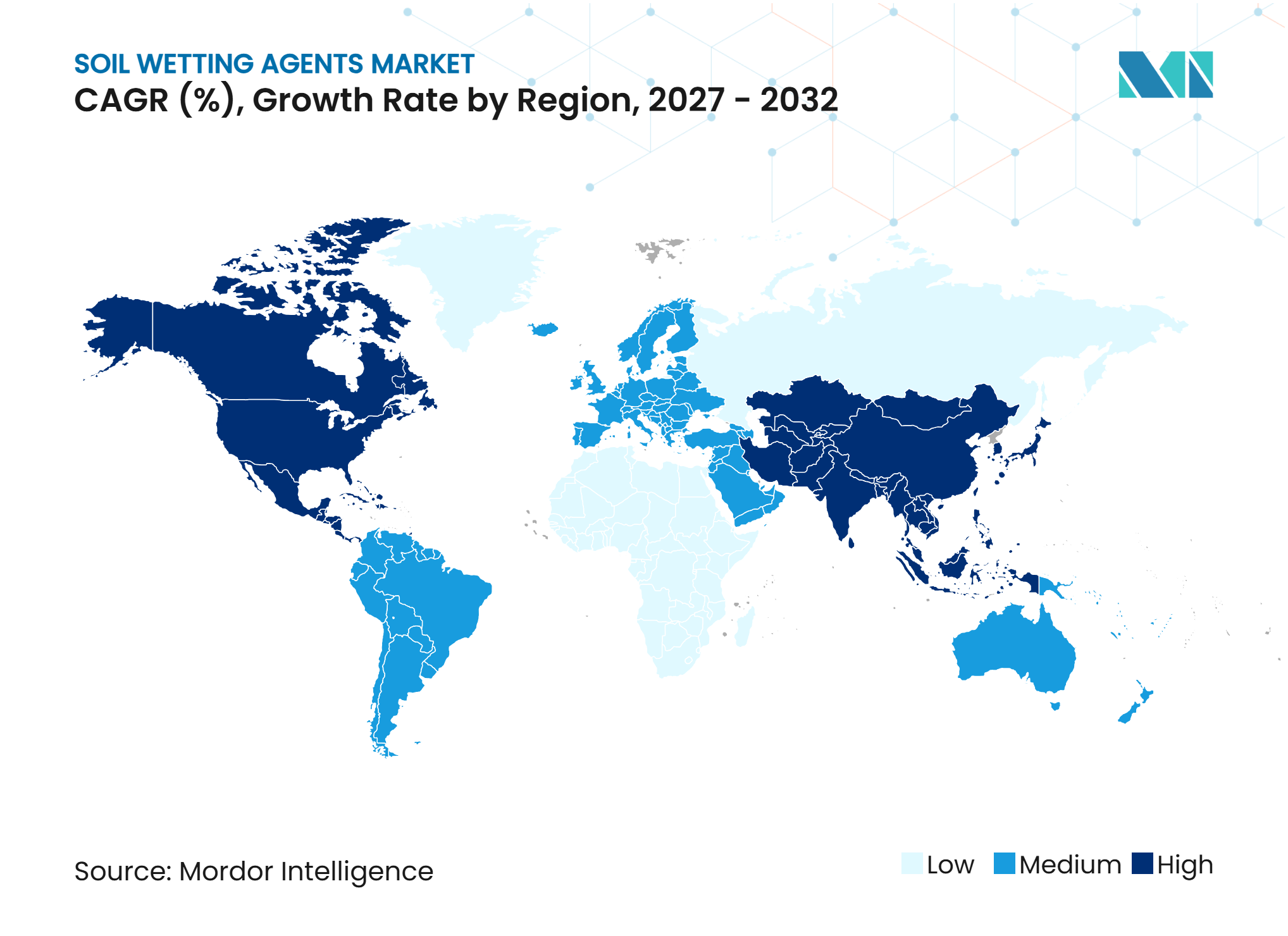
- By geography, Asia-Pacific held 24.0% of the soil wetting agents market share in 2026, while North America is forecast to grow at a CAGR of 7.4% from 2027 to 2032.
Note: Market numbers in this report are based on Mordor Intelligence's proprietary estimation framework, which combines nine months of actuals with Q4 projections for base year 2026.
Market Trends and Insights
Drivers Impact Analysis of Soil Wetting Agents Market*
| Driver | (~) % Impact on CAGR Forecast | Geographic Relevance | Impact Timeline |
|---|---|---|---|
| Water Scarcity and Irrigation-Efficiency Requirements | +1.5% | Global, with strong relevance in Asia-Pacific, the Middle East, and Africa | Long term (≥ 4 years) |
| Expansion of Precision Irrigation and Soil-Moisture Monitoring | +1.2% | North America, Europe, and core Asia-Pacific markets | Medium term (2-4 years) |
| Growth of Professional Turf and Sports-Facility Management | +0.8% | North America, Europe, and the Middle East | Medium term (2-4 years) |
| Increasing Use in Drought-Prone Agriculture and Horticulture | +1% | Asia-Pacific, South America, and Africa | Long term (≥ 4 years) |
| Integration with Fertilizer and Crop-Protection Programs | +0.7% | Global, led by North America and Europe | Medium term (2-4 years) |
| Demand for Bio-Based and Biodegradable Formulations | +0.9% | Europe and North America, with adoption extending to Asia-Pacific | Medium term (2-4 years) |
| Source: Mordor Intelligence | |||
Water Scarcity and Irrigation-Efficiency Requirements
Water scarcity is increasing the need to maximize the effectiveness of available irrigation water, particularly in regions experiencing declining freshwater availability and irregular rainfall. Soil water repellency, often associated with sandy soils, organic matter accumulation, and prolonged dry conditions, can prevent water from penetrating the soil uniformly, resulting in surface runoff, localized dry patches, and inefficient moisture retention. Soil wetting agents help overcome these limitations by reducing water repellency and improving infiltration, allowing irrigation water to spread more evenly through the soil profile. This is particularly important in water-stressed agricultural regions, where inefficient infiltration can increase irrigation requirements and affect crop establishment and productivity. Growing pressure to conserve freshwater resources is therefore encouraging the adoption of soil wetting agents across agriculture, professional turf management, and horticulture as a means of improving soil moisture distribution and making better use of limited water supplies.
Expansion of Precision Irrigation and Soil-Moisture Monitoring
Precision irrigation is creating new opportunities for the soil wetting agents market by linking irrigation decisions to measured soil conditions and improving water-use efficiency. According to the 2025 annual report of Utah's Agriculture Water Demonstration, Research, and Implementation Pilot Program (AG-DRIP), 31 farmers enrolled in 2025, bringing cumulative participation to 77 farmers since the program's launch in 2023. The program provided soil moisture sensors, flow meters, and weather stations with telemetry to support data-driven irrigation management[2]. As sensor-based monitoring expands, growers can identify areas with uneven moisture distribution and incorporate soil wetting agents into targeted irrigation practices to improve water penetration and reduce water losses. This creates opportunities for suppliers offering formulations compatible with precision irrigation systems, supported by field-performance evidence and agronomic services. Partnerships with specialist distributors further strengthen market access in precision irrigation, as demonstrated by Aquatrols Europe Ltd's appointment of Grashobber as its exclusive distributor in Germany and Austria in October 2024.
Growth of Professional Turf and Sports-Facility Management
Professional turf is a high-value application for the soil wetting agents market because moisture consistency directly affects playing surface quality and turf health. Sand-based putting greens and intensively maintained sports fields are particularly susceptible to localized dry spots and soil water repellency, requiring specialized moisture management solutions. Soil wetting agents improve water penetration and distribution while supporting uniform moisture availability across turf root zones. In August 2025, Harrell's LLC introduced SurfaceRx, a penetrant wetting agent featuring its proprietary Osmotech formulation technology, which supports the plant's natural production of osmolytes to help turf manage drought and dry-down stress while improving moisture penetration and distribution. Independent research conducted by Virginia Tech also demonstrated improvements in turf quality, leaf color, chlorophyll content, and root characteristics under drought stress. Such formulation innovations strengthen demand for specialized wetting agents in golf courses and sports facilities, while established performance in professional turf creates opportunities for suppliers to extend their product offerings into other intensively managed applications.
Increasing Use in Drought-Prone Agriculture and Horticulture
Drought-prone farming and horticulture are expanding the addressable base of the soil wetting agents market beyond the premium professional turf segment. ICL Growing Solutions reported in 2025 that drought conditions in Mexico led agronomists to recommend H2Flo for drip irrigation programs in staple and horticultural crops. The product has a 28-day residual period, which can reduce application frequency within an irrigation program. Intensive cultivation can deplete organic matter and worsen water absorption in sandy and loam soils over successive growing seasons. Horticulture operators in Mediterranean Europe and southern Africa are moving toward more systematic use where within-season soil moisture varies sharply, and crop quality depends on consistent rootzone conditions. The integration of wetting agents with fertilizer and crop protection programs can simplify field operations and improve access to existing distribution channels for commercial growers.
Restraints Impact Analysis of Soil Wetting Agents Market*
| Restraint | (~) % Impact on CAGR Forecast | Geographic Relevance | Impact Timeline |
|---|---|---|---|
| Limited Awareness and Technical Training Among Smallholders | -0.6% | Sub-Saharan Africa, South Asia, and parts of Southeast Asia | Long term (≥ 4 years) |
| Premium Product Costs and Uncertain Short-Term Farm Payback | -0.8% | Global, with stronger relevance in emerging markets | Medium term (2-4 years) |
| Raw-Material Price Volatility | -0.5% | Global | Short term (≤ 2 years) |
| Variable Performance Across Soil Chemistry and Water Quality | -0.4% | Global, especially high-salinity and alkaline soil areas | Medium term (2-4 years) |
| Source: Mordor Intelligence | |||
Limited Awareness and Technical Training Among Smallholders
Limited technical knowledge constrains adoption in the soil wetting agents market among smallholders, even in areas where water stress creates a clear need for better soil moisture management. A 2025 study in Frontiers in Sustainable Food Systems found that extension contact was a strong predictor of adoption for new soil inputs among smallholder farmers in Southern Malawi. Awareness alone did not ensure consistent use, as growers also needed repeated agronomic guidance on suitable applications and treatment practices. Public advisory systems in low-income markets are often underfunded, while private distributors may prioritize higher-margin products that require less farmer education. Suppliers can reduce this barrier by using local product formats and established fertilizer distribution channels with existing grower relationships.
Premium Product Costs and Uncertain Short-Term Farm Payback
Premium pricing and uncertainty around short-term returns can constrain adoption of soil wetting agents, particularly among growers operating under tight input budgets. Unlike fertilizers and crop-protection products, the economic benefit of wetting agents can be less immediately measurable because their effectiveness depends on factors such as soil texture, degree of water repellency, irrigation practices, and application frequency. Field evidence shows that wetting-agent performance can vary considerably with soil organic matter and formulation, making consistent return on investment more difficult to establish across different production systems. In addition, growers can allocate the same irrigation-management budget toward alternatives such as improved irrigation systems, soil amendments, or moisture-monitoring technologies, increasing the need for wetting-agent suppliers to demonstrate measurable improvements in water distribution and crop or turf performance. Consequently, higher product costs combined with uncertain payback can limit penetration beyond high-value crops, managed turf, and other applications where the economic benefits of improved soil wetting are easier to justify.
*Our forecasts treat driver/restraint impacts as directional, not additive. The impact forecasts reflect baseline growth, mix effects, and variable interactions.
Soil Wetting Agents Market Segment Analysis
By Product Type:
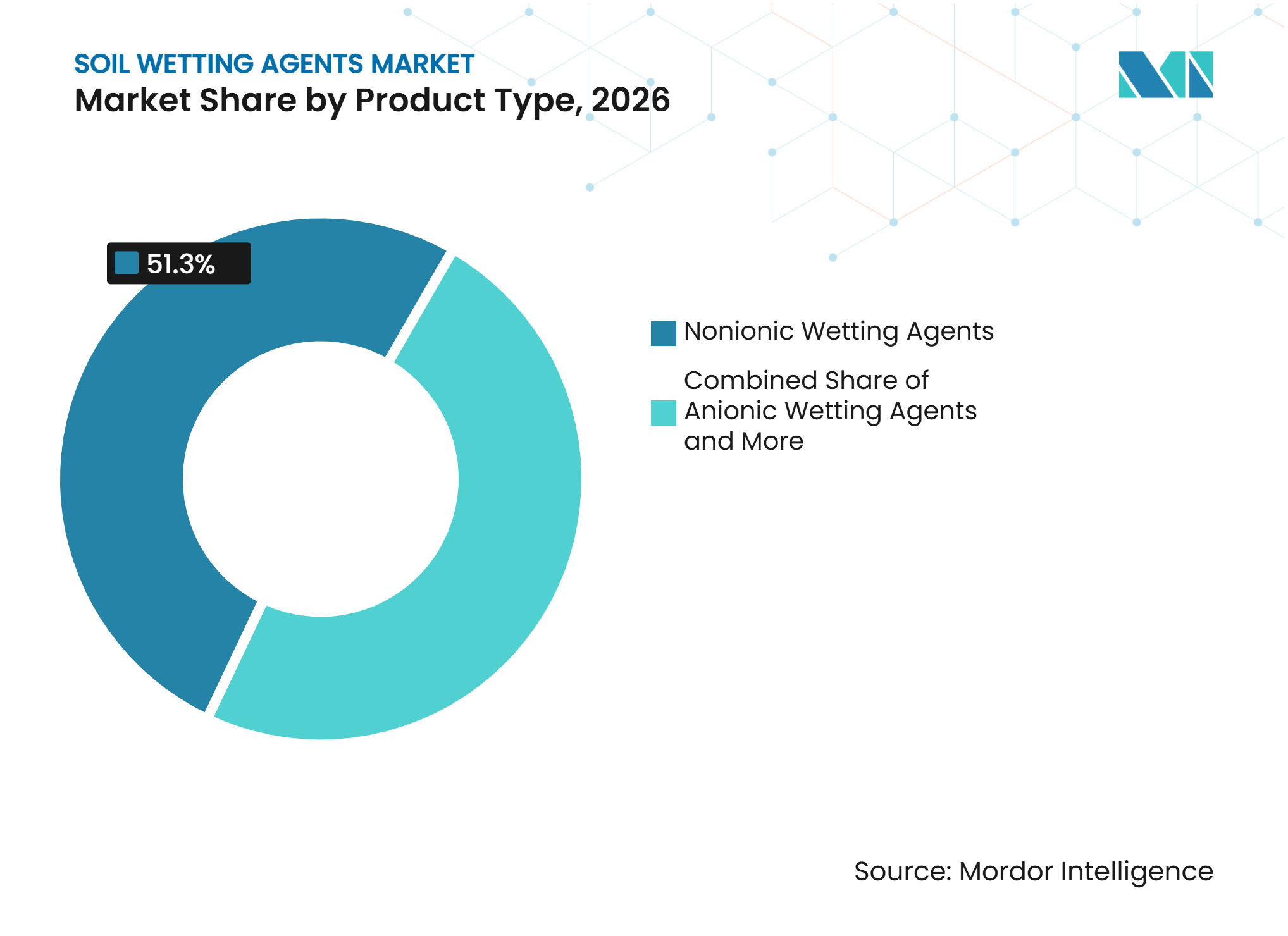
Nonionic Chemistry Leads While Bio-Based Formulations Gain PaceNonionic wetting agents held 51.3% of the soil wetting agents market share in 2026. Their leading position is supported by their broad compatibility with agricultural inputs and established use in turf and crop production. Because nonionic surfactants carry no electrical charge, they are generally less prone to interactions with ions present in irrigation water and tank mixtures than charged surfactants. University of Florida's Institute of Food and Agricultural Sciences (UF/IFAS) identifies nonionic surfactants as widely used agricultural adjuvants because of their compatibility with different pesticide products, while turf-management literature identifies nonionic surfactants as commonly used to improve infiltration and rewetting of water-repellent root zones. Their established application base across agriculture, horticulture, and turf therefore supports their continued market leadership.
Bio-based and organic wetting agents are forecast to grow at a CAGR of 8.1% from 2027 to 2032. Growth is supported by increasing interest in biodegradable and naturally derived surfactant chemistries, particularly in applications where environmental profile and compatibility with sustainability-oriented production systems influence product selection. Alkyl polyglucoside (APG)-based surfactants, which are also nonionic, for example, are derived from sugar and fatty-acid components and are being incorporated into turf wetting-agent formulations as naturally derived alternatives. Commercial product development is also moving toward biodegradable formulations. Bionema launched Soil-Jet BSP100 in 2024 as a biodegradable surfactant for sports and turf applications, designed to improve water infiltration and reduce soil water repellency. This shift creates opportunities for suppliers developing bio-based formulations that can combine environmental attributes with reliable wetting performance, although adoption will remain dependent on field efficacy, formulation stability, and cost competitiveness.



By Form:
Liquid Leads While Granular Products Gain PaceLiquid wetting agents held 58.0% of the market size in 2026. Their leading position is supported by their compatibility with conventional spray equipment, fertigation systems, and liquid fertilizer applications, enabling growers and turf managers to adjust application rates according to field conditions. Liquid formulations can also be incorporated into automated irrigation and injection systems, supporting precise and uniform application across managed root zones. Their ease of integration into existing application practices and suitability for both agricultural and professional turf programs underpin their continued dominance in the market.
Granular wetting agents are forecast to grow at a CAGR of 7.3% from 2027 to 2032. Growth is supported by their ease of storage, handling, and broadcast application, particularly across larger turf areas and agricultural fields where liquid application infrastructure may be less accessible. Granular formulations can also be incorporated into fertilizer programs, allowing wetting-agent application to be combined with routine nutrient management. Their relatively simple application requirements make them attractive for users seeking to reduce liquid handling and application complexity. However, liquids are likely to retain an advantage in precision-irrigation systems because they can be metered and injected directly into irrigation lines, while powder and granular formulations remain more suited to applications where storage stability, straightforward handling, and broadcast coverage are priorities.
By Application:
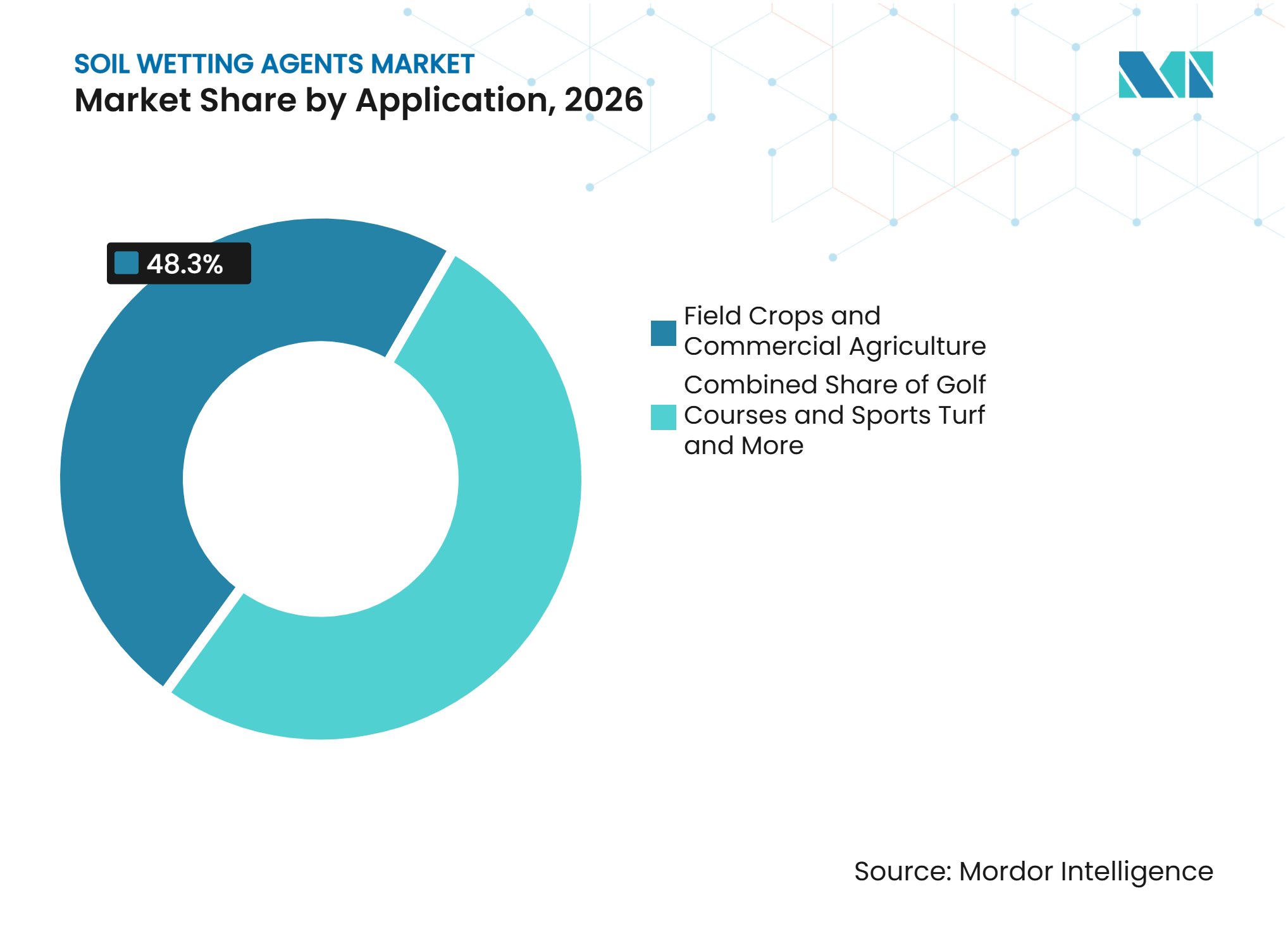
Field Crops and Commercial Agriculture Lead While Golf Courses and Sports Turf Gain PaceField crops and commercial agriculture accounted for 48.3% of the soil wetting agents market share in 2026. Demand is supported by irrigated crop production in areas where soil water repellency and uneven infiltration can affect root-zone moisture and crop performance. According to the FAO's The State of the World's Land and Water Resources for Food and Agriculture 2025, approximately 23% of global cropland was equipped for irrigation in 2023, yet these areas generated 48% of global crop value, highlighting the economic importance of irrigated agriculture and effective water management[3]. Against this backdrop, soil wetting agents offer a complementary solution for agricultural soils prone to water repellency by improving infiltration and moisture distribution. Their use in high-value horticulture and irrigated crop production creates opportunities for suppliers to address specific soil moisture management challenges and improve irrigation efficiency.
Golf courses and sports turf are forecast to grow at a CAGR of 7.8% from 2027 to 2032. Growth is supported by the intensive management requirements of golf courses, sports fields, and other professionally maintained turf, where localized dry spots and uneven root-zone moisture can affect turf quality. Soil wetting agents help improve water distribution and reduce localized dry spots in water-repellent turf soils, supporting more consistent moisture management. These benefits support continued adoption in professionally managed turf, while horticulture, ornamentals, landscaping, and residential lawns provide additional opportunities where crop value, aesthetic requirements, or localized soil-water problems justify treatment.

Geography Analysis
Asia-Pacific held 24.0% of the soil wetting agents market share in 2026. Irrigated agriculture in China, India, Australia, and Southeast Asia supports regional demand. Government-led soil improvement programs and expanding micro-irrigation networks also support commercial adoption. India's public support for drip and micro-irrigation has increased the installed base of systems where wetting agent compatibility is relevant to improve their performance. Regional growers are using these products in row crops and horticulture where soil moisture management is important.
North America is forecast to grow at a CAGR of 7.4% from 2027 to 2032, making it the fastest-growing geography in the soil wetting agents market. The region has an established professional turf industry and a large commercial farming base, where precision irrigation and soil moisture management are gaining importance. Growing adoption of water-efficient irrigation technologies and increasing emphasis on optimizing water application are creating opportunities for soil wetting agents that improve infiltration, reduce runoff, and support uniform moisture distribution. Europe is moving toward bio-based formulations as regulatory attention on persistent adjuvant chemistries increases. Aquatrols Europe and Fenaco Genossenschaft registered six premium soil surfactants in Switzerland in 2026 under the country's Fertilizer Ordinance and Chemical Product Register. South America offers growth potential through expanding soybean and maize cultivation, particularly in areas experiencing variable rainfall and uneven soil moisture conditions.
The Middle East and Africa remain smaller markets but face strong water constraints. Food and Agriculture Organisation (FAO) reported in 2025 that Kuwait and Qatar were among the countries with the lowest renewable freshwater resources per person, while Saudi Arabia's Vision 2030 supports greenhouse development and controlled-environment agriculture. Turf and landscaping use is developing in the United Arab Emirates and Israel, where sandy soils can become hydrophobic, which increases the demand for soil wetting agents. African demand remains limited by smallholder awareness and premium product prices, although Kenya, South Africa, Nigeria, and Egypt have commercial demand through horticulture export supply chains.
Competitive Landscape
Market Concentration
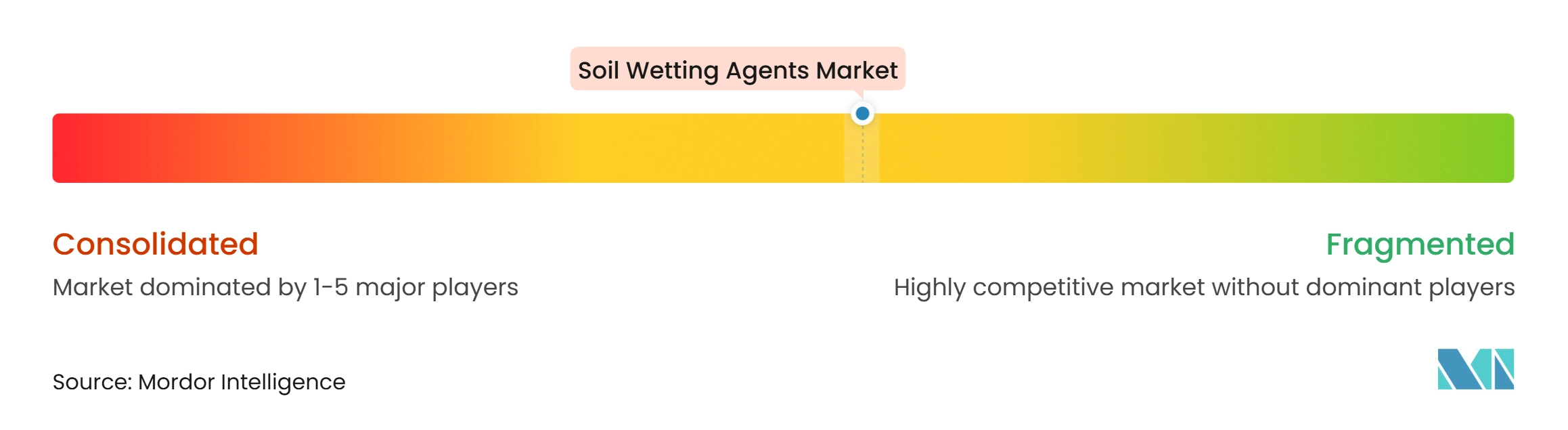
The soil wetting agents market was moderately consolidated in 2026, with BASF SE, The Aquatrols Company (Lamberti S.p.A.), Nufarm Limited, Wilbur-Ellis Company, LLC (Wilbur-Ellis Holdings, Inc.), and Milliken & Company identified as the major players. Their competitive positions are supported by specialty chemical capabilities, agricultural input portfolios, established distribution networks, and experience serving agricultural and professional turf applications. Companies compete through formulation performance, water infiltration and retention characteristics, biodegradability, product compatibility, technical support, and distribution reach. These factors encourage product innovation and portfolio development aimed at improving soil moisture management across different soil conditions, crop systems, and turf applications.
Bionema represents a smaller competitor with a differentiated focus on bio-based technologies and environmentally compatible agricultural inputs. Its emphasis on organic certifications and sustainable product development aligns with demand for alternatives to conventional chemical formulations, particularly among customers prioritizing environmental performance and regulatory compliance. This positioning allows specialized suppliers to target sustainability-focused agricultural segments, including horticulture and high-value crop production, while competing through differentiated formulations and focused market development.
Opportunities remain in lower-cost products for smallholders, long-lasting formulations for sandy soils, and services linked to irrigation data. Companies can expand market access by integrating products with fertilizer and crop protection distribution programs. Digital protocols can strengthen customer retention when a formulation is recommended within a broader agronomic program, increasing the importance of repeatable field performance and technical support. Larger companies can broaden their portfolios through acquisitions and research, while specialists can compete through focused distribution and local agronomy expertise.
Leaders of Soil Wetting Agents Market
-
BASF SE
-
The Aquatrols Company (Lamberti S.p.A.)
-
Nufarm Limited
-
Wilbur-Ellis Company, LLC (Wilbur-Ellis Holdings, Inc.)
-
Milliken & Company
- *Disclaimer: Major Players sorted in no particular order
Soil Wetting Agents Market Companies Covered in this Report
- BASF SE
- The Aquatrols Company (Lamberti S.p.A.)
- Milliken & Company
- Syngenta AG (Sinochem Holdings Corporation Ltd)
- Croda International Plc
- Clariant AG
- Grow More, Inc.
- Seasol International Pty Ltd
- Helena Agri-Enterprises, LLC
- Geoponics Corporation
- AQUA-AID Solutions
- Harrell's LLC
- Bionema Group Limited
- Wilbur-Ellis Company, LLC (Wilbur-Ellis Holdings, Inc.)
- WinField United (Land O'Lakes, Inc.)
Recent Industry Developments in Soil Wetting Agents Market
- August 2025: Harrell's LLC launched SurfaceRx, a new wetting agent within its HydroMAX portfolio, featuring its proprietary Osmotech formulation technology designed to improve moisture penetration and distribution while helping turf manage drought and dry-down stress, strengthening the company's product offering for professional turf management.
- April 2025: The Aquatrols Company launched Vivax Oro, an optimized soil-surfactant formulation designed to manage water across different soil types, turf types, and growing environments. The launch reinforces product innovation around improving soil-water management in professional turf and horticultural applications.
- January 2025: Chrysal International introduced Chrysal Surflow, an organic-silicone-based wetting agent for floriculture, nursery crops, and perennials. The product is designed to improve the performance of crop-protection treatments and had received registration from the Dutch Board for the Authorisation of Plant Protection Products and Biocides (CTGB).
Scope of Report on Soil Wetting Agents Market
Soil wetting agents are specialty chemical formulations, typically containing surfactants, that improve water infiltration, penetration, and distribution by modifying surface tension. They help manage soil water repellency, localized dry spots, and uneven moisture distribution across agricultural fields, horticultural substrates, nurseries, golf courses, and managed landscapes. The market includes products formulated for soil and growing-media applications through irrigation, drenches, or granular treatments, while excluding foliar adjuvants and pesticide spreaders intended solely to improve chemical coverage on plant surfaces.
The Soil Wetting Agents Market Report is segmented by product type (Nonionic Wetting Agents, Anionic Wetting Agents, Cationic Wetting Agents, Bio-Based and Organic Wetting Agents, and Polymer-Based Wetting Agents), by form (Liquid, Powder, and Granular), by Application (Field Crops and Commercial Agriculture, Horticulture and Nursery Production, Golf Courses and Sports Turf, Residential Lawns and Landscape Maintenance, and Other Applications), and by geography (North America, South America, Europe, Asia-Pacific, Middle East, and Africa). Market forecasts are provided in terms of value (USD).
Segmentation Overview
| Nonionic Wetting Agents |
| Anionic Wetting Agents |
| Cationic Wetting Agents |
| Bio-Based and Organic Wetting Agents |
| Polymer-Based Wetting Agents |
| Liquid |
| Powder |
| Granular |
| Field Crops and Commercial Agriculture |
| Horticulture and Nursery Production |
| Golf Courses and Sports Turf |
| Residential Lawns and Landscape Maintenance |
| Other Applications |
| North America | United States |
| Canada | |
| Mexico | |
| Rest of North America | |
| South America | Brazil |
| Argentina | |
| Rest of South America | |
| Europe | Germany |
| France | |
| United Kingdom | |
| Italy | |
| Spain | |
| Russia | |
| Rest of Europe | |
| Asia-Pacific | China |
| India | |
| Japan | |
| South Korea | |
| Australia | |
| Rest of Asia-Pacific | |
| Middle East | Saudi Arabia |
| United Arab Emirates | |
| Turkey | |
| Rest of Middle East | |
| Africa | South Africa |
| Egypt | |
| Kenya | |
| Nigeria | |
| Rest of Africa |
| By Product Type | Nonionic Wetting Agents | |
| Anionic Wetting Agents | ||
| Cationic Wetting Agents | ||
| Bio-Based and Organic Wetting Agents | ||
| Polymer-Based Wetting Agents | ||
| By Form | Liquid | |
| Powder | ||
| Granular | ||
| By Application | Field Crops and Commercial Agriculture | |
| Horticulture and Nursery Production | ||
| Golf Courses and Sports Turf | ||
| Residential Lawns and Landscape Maintenance | ||
| Other Applications | ||
| By Geography | North America | United States |
| Canada | ||
| Mexico | ||
| Rest of North America | ||
| South America | Brazil | |
| Argentina | ||
| Rest of South America | ||
| Europe | Germany | |
| France | ||
| United Kingdom | ||
| Italy | ||
| Spain | ||
| Russia | ||
| Rest of Europe | ||
| Asia-Pacific | China | |
| India | ||
| Japan | ||
| South Korea | ||
| Australia | ||
| Rest of Asia-Pacific | ||
| Middle East | Saudi Arabia | |
| United Arab Emirates | ||
| Turkey | ||
| Rest of Middle East | ||
| Africa | South Africa | |
| Egypt | ||
| Kenya | ||
| Nigeria | ||
| Rest of Africa | ||
Key Questions Answered in the Report
What is the market size of the soil wetting agents market?
The soil wetting agents market was valued at USD 182.00 million in 2026 and is estimated to grow from USD 193.10 million in 2027 to reach USD 259.00 million by 2032, at a CAGR of 6.05% during the forecast period from 2027 to 2032.
Which product type leads soil wetting agent demand?
Nonionic wetting agents led product demand with a 51.3% share in 2026 because of their broad compatibility with fertilizers, pesticides, and biological inputs.
Which soil wetting agent format is growing the fastest?
Granular products are anticipated to expand at a 7.3% CAGR between 2027 and 2032, supported by storage stability and simpler field handling.
Why are wetting agents important for irrigated agriculture?
They support more even water infiltration and can reduce runoff, which matters as agriculture accounts for 72% of global freshwater withdrawals.