
Slimming Tea Market Size and Share
Market Overview
| Study Period | 2021 - 2031 |
|---|---|
| Market Size (2026) | USD 4.81 Billion |
| Market Size (2031) | USD 7.23 Billion |
| Growth Rate (2026 - 2031) | 8.49 % |
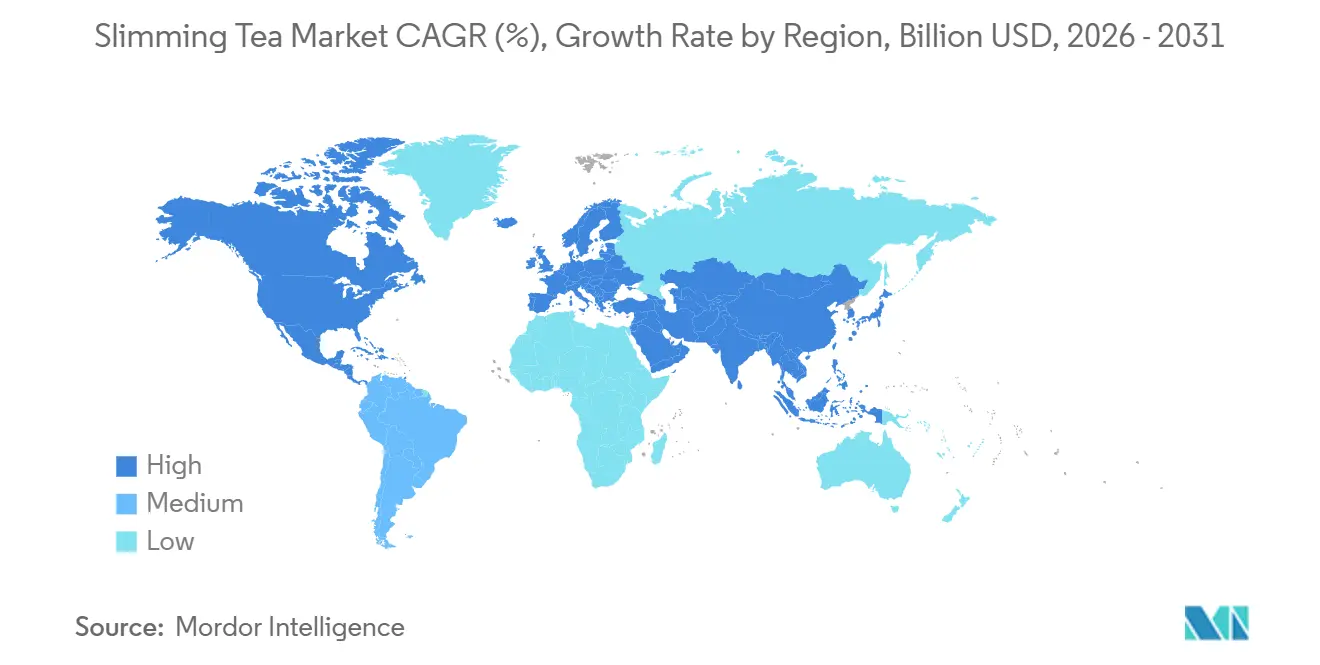
| Fastest Growing Market | North America |
| Largest Market | Asia-Pacific |
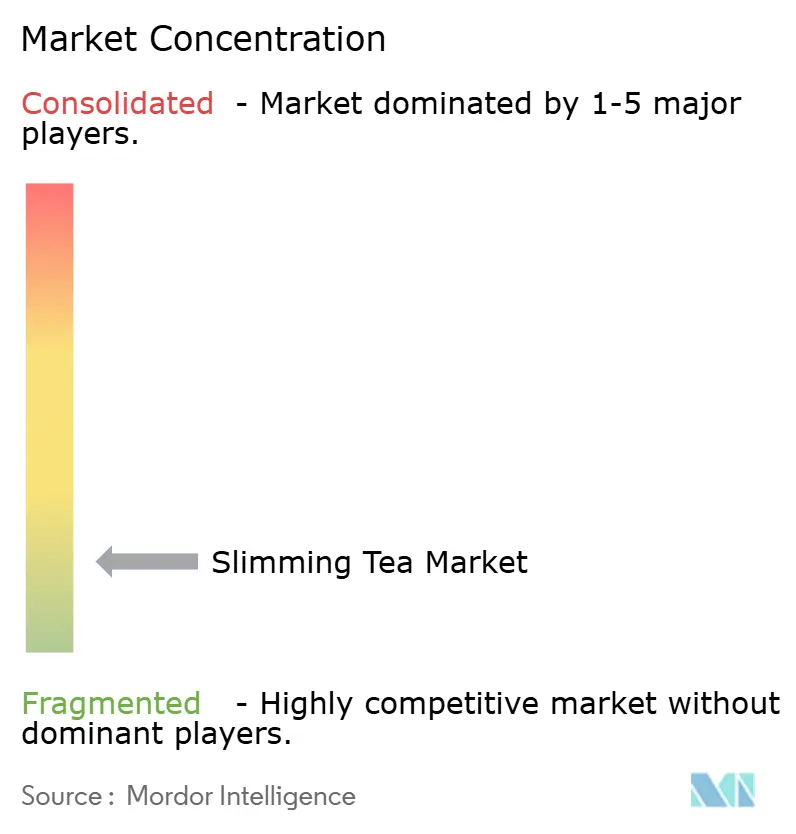
| Market Concentration | Low |
Major Players *Disclaimer: Major Players sorted in no particular order Image © Mordor Intelligence. Reuse requires attribution under CC BY 4.0. | |
Slimming Tea Market Analysis by Mordor Intelligence
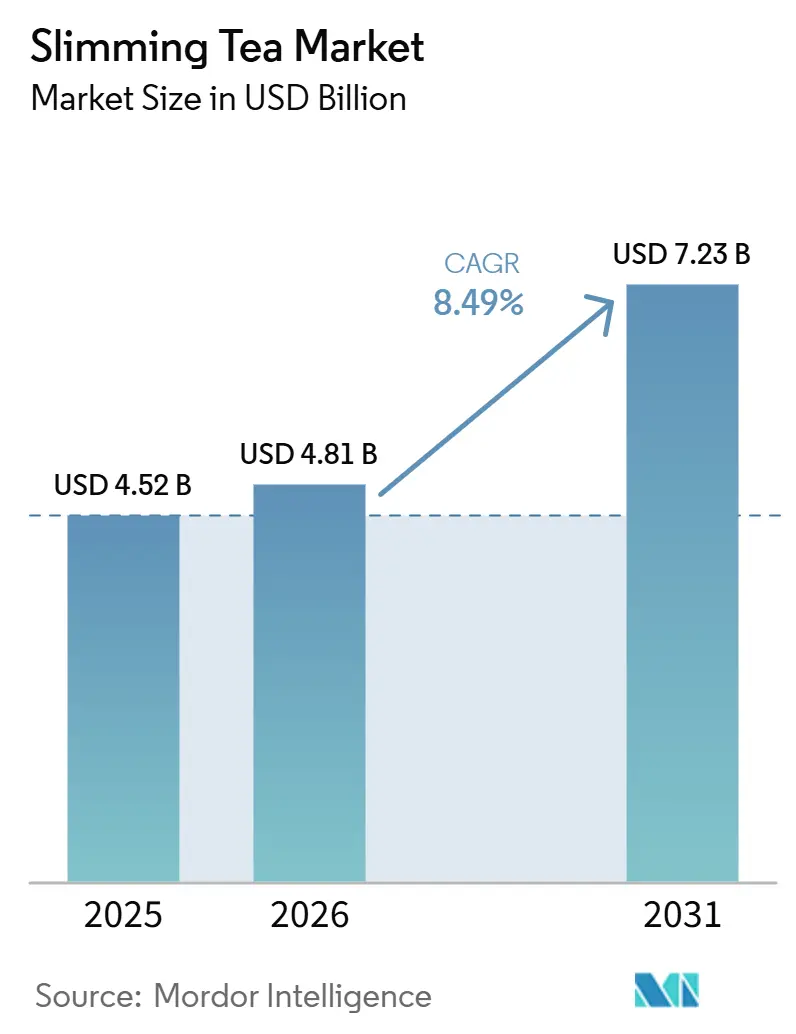
The slimming tea market size is projected to be valued at USD 4.52 billion in 2025 and is expected to grow from USD 4.81 billion in 2026 to USD 7.23 billion by 2031, registering a CAGR of 8.49% during the forecast period (2026-2031). The rising prevalence of obesity continues to keep daily weight management high on the consumer agenda, while tea remains a familiar and accessible format for many households. As a result, the slimming tea market sits between everyday beverages and more intensive weight-management interventions. Consumers increasingly prefer products with transparent ingredients, credible health positioning, and convenient routines over broad claims of rapid weight loss. Digital retail provides smaller brands with a direct route to customers, while established tea companies maintain advantages in retail distribution, sourcing, and product development. Regulatory scrutiny of weight-loss claims and ingredient safety is expected to favor suppliers that can support their labels with sound evidence and clear product information.
Key Report Takeaways
- By form, tea bags held 65.62% of the slimming tea market share in 2025, while instant tea mixes are forecast to grow at a 10.11% CAGR through 2031.
- By nature, conventional products accounted for 79.51% of the slimming tea market share in 2025, while organic products are projected to expand at a 10.88% CAGR through 2031.
- By distribution channel, supermarkets and hypermarkets held 47.13% of revenue in 2025, while online retail stores are forecast to grow at a 10.51% CAGR through 2031.
- By geography, Asia-Pacific commanded 43.90% of revenue in 2025, while North America is forecast to advance at a 9.98% CAGR through 2031.
Note: Market size and forecast figures in this report are generated using Mordor Intelligence’s proprietary estimation framework, updated with the latest available data and insights as of January 2026.
Market Trends and Insights
Drivers Impact Analysis of Slimming Tea Market*
| Driver | (~) % Impact on CAGR Forecast | Geographic Relevance | Impact Timeline |
|---|---|---|---|
| Rising health and weight-management awareness | +2.5% | Global, with concentrated demand in the Asia-Pacific and North America | Short term (≤ 2 years) |
| Shift toward natural and functional beverages | +2.0% | Asia-Pacific core, spill-over to North America and Europe | Medium term (2–4 years) |
| Expansion of e-commerce and digital-first tea brands | +1.5% | North America, China, South-East Asia | Short term (≤ 2 years) |
| Clean-label and organic product preferences | +1.2% | North America and Europe | Medium term (2–4 years) |
| Clinical substantiation as a conversion moat | +0.9% | North America, Europe, Japan | Long term (≥ 4 years) |
| Personalized blends and subscription replenishment | +0.7% | North America and the Asia-Pacific | Medium term (2–4 years) |
| Source: Mordor Intelligence | |||
Rising health and weight-management awareness
Rising global obesity rates are making weight management a mass-market priority rather than a niche consumer concern. The World Obesity Federation’s 2025 Atlas projects that nearly 3 billion adults, or roughly 50% of the global adult population, will live with a high BMI by 2030, with annual economic costs exceeding USD 3 trillion[1]Source: World Obesity Federation, “World Obesity Atlas 2025,” World Obesity Federation Global Obesity Observatory, data.worldobesity.org. The slimming tea category is benefiting disproportionately, as it offers an accessible price point and a culturally familiar format, positioned between dietary supplements and everyday beverages. An underappreciated dynamic is the role of GLP-1 agonist drugs. The WHO is expected to publish its first guideline on GLP-1 therapies for adult obesity in December 2025. While pharmaceutical interest is rising, the cost and access barriers associated with injectable treatments are inadvertently reinforcing demand for over-the-counter botanical alternatives at the lower end of the intervention spectrum. Brands that position slimming teas as supportive daily rituals alongside lifestyle interventions, rather than as standalone cures, are recording stronger repeat-purchase rates among informed consumers.
Shift toward natural and functional beverages
Consumer demand for functional ingredients is reshaping product formulation strategies across the slimming tea market, while ingredient transparency is becoming a requirement rather than an aspirational feature. In Japan, the fat-reduction health claim (脂肪低減) has remained the top-ranked functional labeling food category since the government launched its functional food labeling system in 2016. Fat-reduction tea beverages could drive market outperformance in 2025, despite a broader pullback in new product registrations following a guideline change. Oolong tea for fat burning is gaining scientific validation. A 2024 animal study showed that the aqueous extract of compound oolong tea reduced body weight and improved glucose tolerance in high-fat-diet mice through the AMPK-PPAR pathway, supporting hepatic fatty acid oxidation while modulating gut microbiota composition (Food Research International, 2024). A clinical trial on Liupao tea, published in Foods (March 2025), demonstrated significant reductions in BMI, body fat percentage, and visceral fat area across 106 overweight adults over 90 days, with a good liver safety profile. This study provides the type of peer-reviewed human evidence increasingly required to meet the FDA/FTC substantiation bar.
Expansion of e-commerce and digital-first tea brands
The distribution architecture of the slimming tea market is bifurcating, as traditional supermarket shelf space favors incumbent brands, while digital channels reward content-driven conversion. In China, the largest single-country market, Douyin and Xiaohongshu have become dominant sales channels for slimming tea through live streaming and social seeding. These platforms enable brands to bypass established retail networks and reach female consumers aged 25–40, who account for over 60% of category demand. At the same time, leading Chinese brands are exporting this model to Southeast Asia. Imports of Chinese slimming tea into the region are expected to grow nearly fivefold over the three-year period ending 2025, with profit margins approximately 60% higher than in the domestic market. Malaysian Halal certification supports this expansion by enabling access to pharmacy chains. In North America, Yogi Products is expected to launch Organic Herbal Tea Concentrates exclusively on Target.com in September 2025, highlighting how incumbent brands use platform exclusivity to test format innovation in digital-first retail without cannibalizing physical shelf turns. A less visible consequence of this channel shift is that smaller, single-origin, or Ayurvedic weight loss tea maker brands gain disproportionate access to global distribution without proportionate capital investment, structurally pressuring midtier brands caught between scale and authenticity.
Clinical substantiation as a conversion moat
Evidence quality is becoming a critical differentiator between premium and commoditized slimming teas, particularly as regulators tighten enforcement of health claims. A 2025 systematic review in Discover Food (Springer), covering 14 clinical trials, found that green tea supplementation with EGCG reduced body weight by 1.1–7.4 kg and BMI by 0.4–3.1 among participants. The results were significantly stronger when participants combined supplementation with structured exercise, as 9 of the 11 positive trials included an exercise co-intervention. This finding has a clear strategic implication: brands that position slimming teas as standalone solutions may face the highest regulatory scrutiny, while brands that position them as complementary metabolic aids alongside physical activity programs can more credibly cite the strongest evidence base. A related meta-analysis of 59 trials published in the British Journal of Nutrition in April 2024 confirmed that green tea extract supplementation significantly lowered body mass, BMI, and body fat percentage while increasing adiponectin levels, providing broader validation for catechin-based formulations[2]Source: María del Mar Bibiloni González et al., “The Effects of Green Tea Extract Supplementation on Body Composition, Obesity-Related Hormones, and Oxidative Stress Markers,” British Journal of Nutrition, cambridge.org. Brands that have invested in clinical dossiers increasingly use this evidence as a conversion tool in DTC funnels, creating a moat that generic private-label players cannot replicate at a comparable speed or cost.
Restraints Impact Analysis of Slimming Tea Market*
| Restraint | (~) % Impact on CAGR Forecast | Geographic Relevance | Impact Timeline |
|---|---|---|---|
| Health-claim scrutiny and ingredient-safety requirements | -1.5% | North America, Europe, Japan | Short term (≤ 2 years) |
| Bitter taste and gastrointestinal side-effect concerns | -0.8% | Global | Medium term (2–4 years) |
| Short repurchase cycles from fast-result expectations | -0.5% | Global | Short term (≤ 2 years) |
| Botanical traceability and climate-driven input volatility | -0.4% | The Asia-Pacific source markets, Global brands | Long term (≥ 4 years) |
| Source: Mordor Intelligence | |||
Health-claim scrutiny and ingredient-safety requirements
The regulatory environment for slimming teas is tightening on multiple fronts, creating material compliance risks for brands that use unsubstantiated benefit claims. In the United States, the FTC's Health Products Compliance Guidance requires marketers to support weight-loss claims with competent and reliable scientific evidence. The FDA's updated "Healthy" nutrient content claim, which will take effect in April 2025 after a regulatory freeze review, will also raise the baseline eligibility requirements for products using wellness descriptors[3]Source: Federal Trade Commission, “Health Products Compliance Guidance,” FTC Business Guidance, ftc.gov. More acutely, a 2026 peer-reviewed content analysis of 12 commercially available diet teas in the United States reported that 91.7% contained senna leaf, a laxative. Analytical studies also identified undeclared synthetic compounds, including sibutramine and phenolphthalein, in products marketed as entirely natural. These findings expose brands to enforcement risks under both the FTC Act and the FDA's dietary supplement adverse event reporting framework. The less visible compliance challenge comes from China's recently introduced "Technical Specifications for Quality and Safety Control of Substitute Teas," which impose blockchain-enabled traceability obligations. Other major markets are likely to adopt similar models, meaning companies that have not invested in supply chain transparency infrastructure are increasing their future exposure. Brands that proactively integrate clinical and labeling compliance into product development pipelines will manage these costs more efficiently than those that retrofit compliance measures under enforcement pressure.
Botanical traceability and climate-driven input volatility
Slimming tea formulations rely on a concentrated set of botanical inputs, including green tea (Camellia sinensis), oolong varieties, senna leaf, and functional herbs such as Garcinia cambogia and Gymnema, which grow within narrow geographic and climatic bands. Input price volatility has become a structural cost risk. Tata Consumer Products’ FY26 investor data shows North India tea prices moderating after earlier peaks, while South India prices strengthened sequentially and Kenyan prices remained range-bound with a marginal uptick at quarter-end. These trends show how geography-specific weather dynamics create unpredictable cost floors for blenders. Botanical authentication presents a second-order challenge. As demand for medicinal herbs grows faster than certified organic supply, adulteration and misidentification risks increase, particularly for herbs sourced from fragmented smallholder farms in India, Sri Lanka, and Southeast Asia. Companies without origin verification protocols face regulatory liability and erosion of brand trust if post-market testing reveals substitution or contamination. As a result, vertical integration or long-term certified supply contracts for key botanicals are becoming competitive differentiators, not merely operational preferences.
*Our forecasts treat driver/restraint impacts as directional, not additive. The impact forecasts reflect baseline growth, mix effects, and variable interactions.
Slimming Tea Market Segment Analysis
By Form:
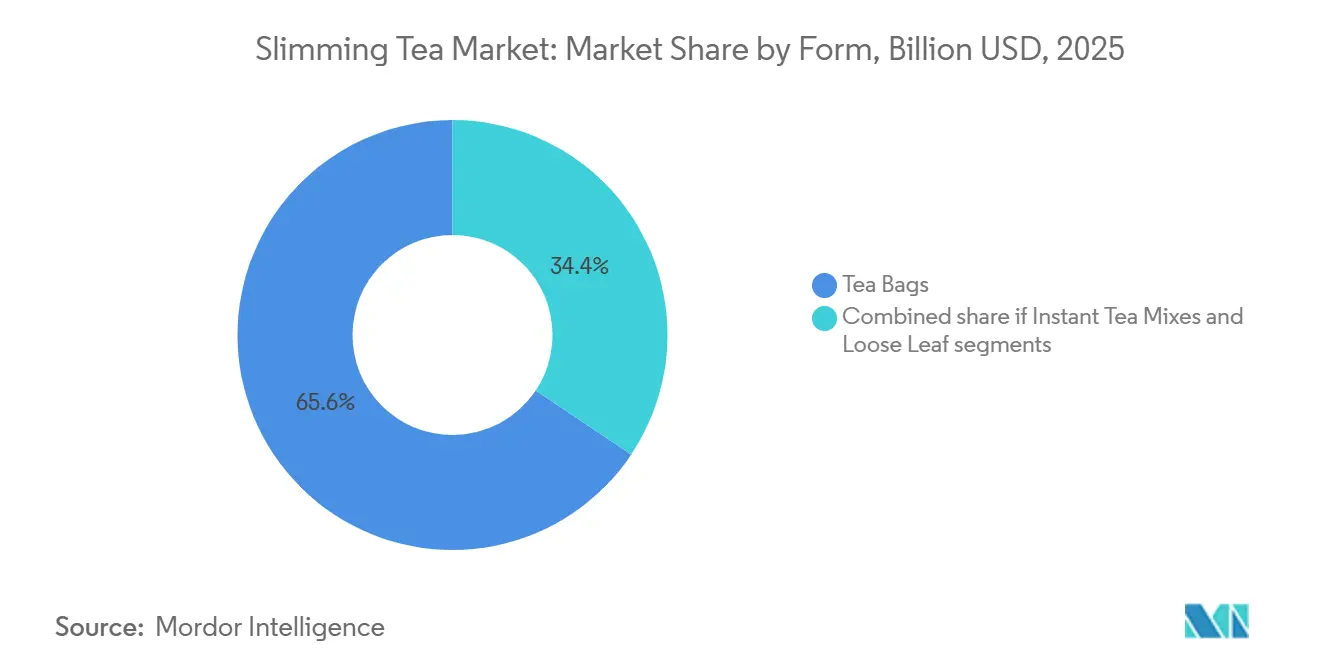
Tea Bags Dominate, but Instant Mixes Disrupt the Format HierarchyTea bags are expected to account for 65.62% of the slimming tea market in 2025, reflecting their dominance across supermarkets, mass retail, and pharmacy channels. Their familiar format reduces purchase friction for consumers entering the category. Loose-leaf teas hold a smaller premium niche and appeal to enthusiast consumers and specialty tea retailers. However, preparation complexity limits their mainstream penetration in markets where convenience remains a decisive purchase driver. Instant tea mixes represent the most structurally attractive segment. The segment is forecast to register a CAGR of 10.11% during 2026–2031, the fastest within the form segmentation. Growth is driven by their compatibility with e-commerce fulfillment, including lighter SKUs and simpler logistics, single-serve convenience trends, and emerging protein-augmented or adaptogen-enhanced blends that are gaining traction among fitness-oriented consumers.
The shift toward instant formats also reflects a broader reformulation trend. Brands are moving beyond simple leaf-and-bag formats toward functional ingredient stacking, pairing EGCG or oolong tea for fat burning with thermogenic compounds, probiotics, or collagen. These formats allow more precise dosing than loose-leaf teas. Tata Consumer Products' launch of Tetley Matcha Latte, in Classic and Mango varieties, in FY26 exemplifies how incumbent tea brands are using powder-based formats to capture both slimming-adjacent and functional beverage occasions. For brand managers, the form-factor innovation window remains narrow. Instant mixes that succeed in DTC channels but fail to secure retail placement within two to three years risk displacement by better-capitalized incumbents entering the same format with existing shelf relationships.



By Nature:
Organic Commands a Premium, Conventional Holds the MassConventional formulations are expected to retain 79.51% of the market by nature in 2025, supported by their broad availability across price-sensitive distribution channels and the sourcing cost advantages that conventional cultivation provides at scale. However, this dominance masks accelerating erosion in the premium tier. Organic slimming teas are projected to grow at a CAGR of 10.88% during 2026–2031, outpacing the overall market, as clean-label purchasing criteria move from specialty health stores into mainstream retail. USDA Organic and EU Organic certification frameworks are increasingly becoming table stakes rather than differentiators in the premium tier, as consumers in North America and Europe scrutinize third-party verification of specific botanical claims beyond base organic certification.
Yogi Products, which holds USDA Organic certification across its wellness tea range, is expected to launch its Organic Herbal Tea Concentrates in September 2025 exclusively at Target. This move signals the mainstreaming of certified organic functional tea in mass-market grocery stores rather than limiting it to health food retailers. An underappreciated margin dynamic is that organic certification supports higher average selling prices without a proportionate increase in consumer marketing spend, as third-party badges reduce the need for educational claims. Brands operating at the conventional-organic boundary face the most difficult strategic decision. Investing in full certification pipelines for sourcing and processing requires lead times of 2–5 years, which means brands that delay the organic pivot beyond 2026 will increasingly face a competitive disadvantage compared with those that began the transition during 2023–2024.
By Distribution Channel:
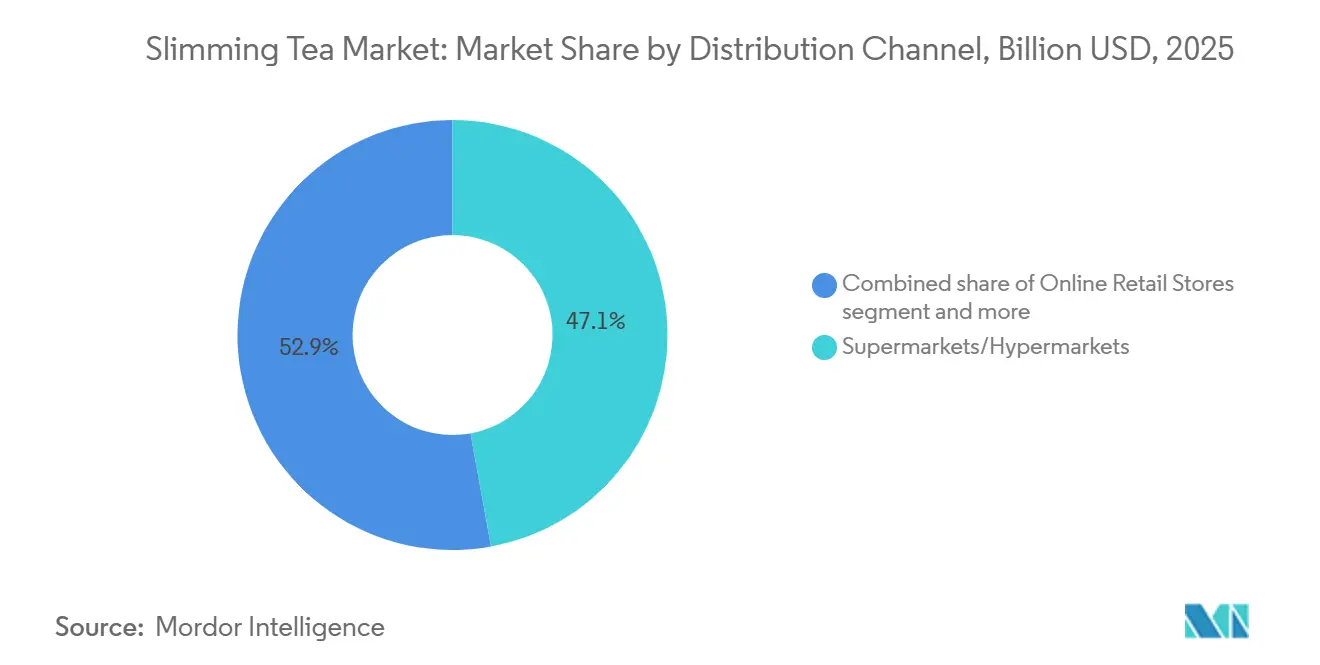
Supermarkets Lead, Digital Channels Structurally AccelerateSupermarkets and hypermarkets are expected to account for 47.13% of distribution channel revenue in 2025, supporting category accessibility for the largest consumer segments across developed and developing markets. Convenience stores and specialty stores collectively play important but smaller roles. Specialty stores support premium brand positioning and product sampling, while convenience channel placement remains critical for impulse-driven purchases in urban markets. Online retail stores represent the most strategically significant segment shift and are forecast to grow at a CAGR of 10.51% during 2026–2031. This growth reflects the structural rise of e-commerce in consumer health products and the disproportionate success of DTC subscription models in improving customer lifetime value for slimming tea brands.
The drivers behind online channel outperformance extend beyond convenience. Subscription-based slimming tea services allow brands to build recurring revenue, optimize refill timing through behavioral data, and personalize formulation recommendations, capabilities that conventional retail formats do not structurally offer. Chinese brands have operationalized this model most aggressively. Live-commerce platforms such as Douyin and Xiaohongshu enable real-time conversion funnels that combine influencer content, product education, and purchase completion in a single session. Other distribution channels, including pharmacies, health practitioners, and institutional channels, remain meaningful in markets where slimming teas are positioned closer to dietary supplements and follow physician recommendation pathways. This trend is particularly evident in Japan, where fat-reduction claims under the functional food labeling framework are actively driving category growth through the pharmacy channel.
Geography Analysis
APAC Slimming Tea Market
Asia-Pacific is projected to hold 43.9% of the slimming tea market size in 2025, supported by established tea cultures and consumer familiarity with medicinal and herbal preparations. The region benefits from large consumer populations and longstanding tea production and processing capabilities. The World Health Organization reported that nearly half of overweight children under the age of 5 lived in Asia, highlighting the region’s long-term public health challenge. China remains a key consumption center and tea production base, while India, Thailand, Indonesia, and South Korea offer growth opportunities driven by urbanization, rising incomes, and digital retail expansion.
North America Slimming Tea Market
North America is forecast to record a CAGR of 10.0% from 2026 to 2031, making it the fastest-growing region in the slimming tea market. Rising consumer interest in functional beverages, premium wellness products, and online purchasing supports this outlook. Tata Consumer Products stated that Tetley was the fastest-growing major herbal tea brand in Canada in Q4 FY26, with specialty tea revenue increasing by 8% and market share rising by 1.3 percentage points. In January 2026, Traditional Medicinals expanded its Organic Stress Soother Tension Relief Tea into national Canadian grocery, drug, and mass merchandise retail channels. The United States remains the primary regional demand center, while Canada demonstrates premium herbal tea innovation, and Mexico can attract suppliers seeking growth in functional beverages.
EMEA and South America Slimming Tea Market
Europe shows steady demand, shaped by organic standards and clean-label expectations in the United Kingdom, Germany, France, and the Netherlands. Tata Consumer Products reported that Tetley held an 18.5% value share in everyday black tea and a 10.2% share in fruit and herbal tea in the United Kingdom during FY26. These positions show how established suppliers can expand into herbal offerings while competing with direct-to-consumer brands. South America presents opportunities in Brazil, Colombia, and Peru, as consumers seek alternatives to conventional carbonated drinks. The Middle East and Africa hold longer-term relevance due to obesity concerns and favorable demographics. Suppliers entering these regions need product communication that complies with local regulations and reflects local preferences.

Competitive Landscape
The slimming tea market is moderately fragmented, with large tea suppliers competing alongside wellness-focused and digital-first companies. Unilever, through Pukka Herbs; Tata Consumer Products, through Tetley; and Associated British Foods, through Twinings, benefit from broad retail access and established sourcing operations. Their scale supports distribution, quality control, and product development. Yogi Products, Traditional Medicinals, and Numi Organic Tea compete through organic positioning, ingredient authenticity, and wellness-led product ranges. Teami Blends and FitTea rely more heavily on social media and subscription commerce, enabling them to reach consumers without extensive shelf coverage. However, this approach creates reputational exposure when health claims face closer scrutiny.
The main competitive gap lies in combining strong clinical support with individualized product experiences. No large supplier among the companies covered in the supplied material offers a fully personalized, clinically substantiated slimming tea program at scale. Research on EGCG, theaflavins, and oolong polyphenols can support differentiated formulation strategies. Tata Consumer Products’ Organic India business and its broader tea sourcing operations highlight the value of linking botanical procurement with product innovation. However, the evidence threshold may become a practical barrier for products seeking placement in regulated retail channels.
Tata Consumer Products reported 80 new product launches in FY26 and an innovation-to-sales ratio of 4.5%, indicating continued investment in new beverage offerings. Its FY26 launch of Tetley Matcha Latte in Classic and Mango formats shows its move beyond traditional tea bags. Yogi Products used Target’s retail and digital network for its September 2025 Organic Herbal Tea Concentrates launch, illustrating a retailer-supported product-testing approach. Traditional Medicinals expanded a functional herbal tea line into Canadian national retail in January 2026. These developments show that companies in the slimming tea market compete through format innovation, channel selection, functional positioning, and compliant communication.
Slimming Tea Industry Leaders
Unilever PLC
Nestlé S.A.
Tata Consumer Products Limited
ITO EN, LTD.
The Hain Celestial Group, Inc.
- *Disclaimer: Major Players sorted in no particular order
Slimming Tea Market Companies Covered in this Report
- Unilever PLC
- Nestlé S.A.
- Tata Consumer Products Limited
- ITO EN, LTD.
- Associated British Foods plc
- The Hain Celestial Group, Inc.
- Dilmah Ceylon Tea Company PLC
- Yogi Products, LLC
- Traditional Medicinals, Inc.
- Celestial Seasonings
- Bigelow Tea Company
- Twinings
- The Republic of Tea, Inc.
- Numi Organic Tea
- Pukka Herbs
- Teami Blends
- FitTea
- Harney and Sons Fine Teas
- DAVIDsTEA Inc.
- Tea Forte

Recent Industry Developments in Slimming Tea Market
- January 2026: Traditional Medicinals launched Organic Stress Soother Tension Relief Tea across national Canadian grocery, drug, and mass merchandise retail, extending its position as Canada's #1 organic tea brand and broadening the functional wellness occasion set for herbal tea consumers.
- September 2025: Yogi Products launched Organic Herbal Tea Concentrates exclusively through Target's US retail and digital platform, introducing a first-in-category ready-to-mix format delivering functional immune and digestive wellness benefits, demonstrating platform exclusivity as a launch channel for functional format innovation.
- February 2025: Endeavor Co., Ltd. (subsidiary of I-ne Corp., Japan) commercially launched the Teaflex brand, including "Slim Cleanse Green Tea," a product that carried Japan's functional food labeling (機能性表示食品) certification for visceral fat reduction in BMI-elevated adults, the first application of Japan's functional labeling framework to a dedicated slimming tea brand sold exclusively through digital channels.


Global Slimming Tea Market Report Scope
Slimming tea refers to herbal blends or traditional teas marketed to help with weight loss. The slimming tea market is segmented by form, nature, distribution channel, and geography. By form, the market is segmented into tea bags, loose leaf, and instant tea mixes. By nature, the market is segmented into conventional and organic. By distribution channel, the market is segmented into supermarkets/hypermarkets, convenience stores, specialty stores, online retail stores, and other distribution channels. By geography, the market is segmented into North America, Europe, Asia-Pacific, South America, and the Middle East and Africa. The market forecasts are provided in terms of value (USD).
| Tea Bags |
| Loose Leaf |
| Instant Tea Mixes |
| Conventional |
| Organic |
| Supermarkets/Hypermarkets |
| Convenience Stores |
| Specialty Stores |
| Online Retail Stores |
| Other Distribution Channels |
| North America | United States |
| Canada | |
| Mexico | |
| Rest of North America | |
| Europe | United Kingdom |
| Germany | |
| France | |
| Italy | |
| Spain | |
| Sweden | |
| Belgium | |
| Poland | |
| Netherlands | |
| Rest of Europe | |
| Asia-Pacific | China |
| Japan | |
| India | |
| Thailand | |
| Singapore | |
| Indonesia | |
| South Korea | |
| Australia | |
| Rest of Asia-Pacific | |
| South America | Brazil |
| Argentina | |
| Colombia | |
| Peru | |
| Chile | |
| Rest of South America | |
| Middle East and Africa | United Arab Emirates |
| South Africa | |
| Saudi Arabia | |
| Egypt | |
| Rest of Middle East and Africa |
| Form | Tea Bags | |
| Loose Leaf | ||
| Instant Tea Mixes | ||
| Nature | Conventional | |
| Organic | ||
| Distribution Channel | Supermarkets/Hypermarkets | |
| Convenience Stores | ||
| Specialty Stores | ||
| Online Retail Stores | ||
| Other Distribution Channels | ||
| Geography | North America | United States |
| Canada | ||
| Mexico | ||
| Rest of North America | ||
| Europe | United Kingdom | |
| Germany | ||
| France | ||
| Italy | ||
| Spain | ||
| Sweden | ||
| Belgium | ||
| Poland | ||
| Netherlands | ||
| Rest of Europe | ||
| Asia-Pacific | China | |
| Japan | ||
| India | ||
| Thailand | ||
| Singapore | ||
| Indonesia | ||
| South Korea | ||
| Australia | ||
| Rest of Asia-Pacific | ||
| South America | Brazil | |
| Argentina | ||
| Colombia | ||
| Peru | ||
| Chile | ||
| Rest of South America | ||
| Middle East and Africa | United Arab Emirates | |
| South Africa | ||
| Saudi Arabia | ||
| Egypt | ||
| Rest of Middle East and Africa | ||


Key Questions Answered in the Report
What is the projected value of the slimming tea market by 2031?
The slimming tea market is forecast to reach USD 7.23 billion by 2031, at an 8.49% CAGR from 2026. Growth reflects demand for convenient, transparent products across physical and digital channels, while stricter safety expectations may favor suppliers with documented quality controls.
Which form of slimming tea has the largest sales base?
Tea bags led the category with 65.62% of revenue in 2025, supported by familiar use in mass retail and pharmacy channels. Their simple preparation and wide shelf availability make them important to the slimming tea market, even as instant formats grow more quickly.
Which slimming tea format is expected to grow the fastest?
Instant tea mixes are forecast to grow at a 10.11% CAGR through 2031, driven by single-serve convenience, online fulfillment, controlled functional ingredient portions, and easy preparation.
Why are weight-loss claims for herbal tea under closer review?
The United States regulators require reliable scientific support for health claims, and a 2026 review highlighted safety and labeling concerns involving diet teas. Brands need evidence that matches the wording of their claims, as well as clear ingredient and safety information.
Page last updated on:





