
Semaglutide Weight Management Drug Market Size and Share
Market Overview
| Study Period | 2020 - 2031 |
|---|---|
| Market Size (2026) | USD 9.62 Billion |
| Market Size (2031) | USD 19.49 Billion |
| Growth Rate (2026 - 2031) | 15.17 % |
| Fastest Growing Market | Asia-Pacific |
| Largest Market | North America |
| Market Concentration | High |
Major Players *Disclaimer: Major Players sorted in no particular order Image © Mordor Intelligence. Reuse requires attribution under CC BY 4.0. | |
Semaglutide Weight Management Drug Market Analysis by Mordor Intelligence
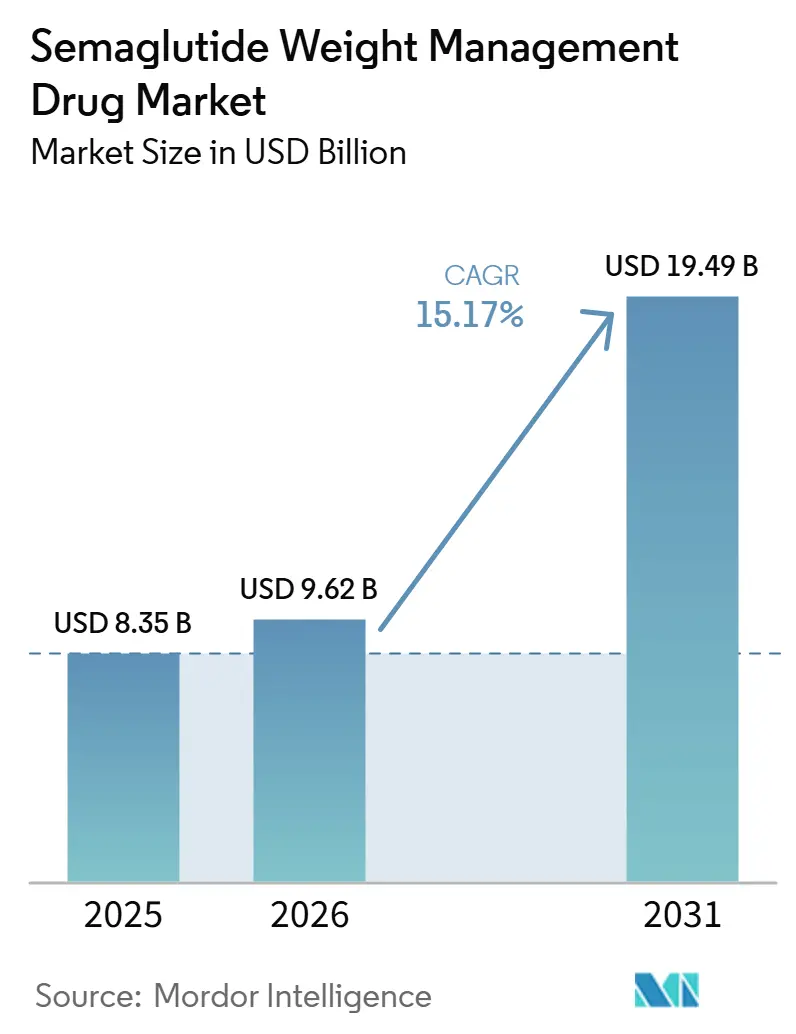
The Semaglutide Weight Management Drug Market size is expected to increase from USD 8.35 billion in 2025 to USD 9.62 billion in 2026 and reach USD 19.49 billion by 2031, growing at a CAGR of 15.17% over 2026-2031.
The semaglutide weight management drug market moved into a broader treatment phase after the FDA approved the Wegovy pill in December 2025, which made oral GLP-1 treatment available for chronic weight management and widened the patient pool beyond injection-ready users. The World Health Organization has also framed obesity care as part of a broader clinical management pathway, which supports more structured use of prescription therapies within long-term care models. A 2025 Lancet forecasting study projected a 30.7% rise in age-standardized overweight and obesity prevalence over the next 30 years, which gives the semaglutide weight management drug market a durable demand base that is not tied to short prescribing cycles[1]https://www.thelancet.com/journals/lancet/article/PIIS0140-6736(25)00355-1/. Competitive strategy in the semaglutide weight management drug market is now centered on label expansion, broader access models, and oral adoption, while pressure from tirzepatide and lower-priced post-patent entries is raising the importance of differentiation and supply control. Price compression after loss of exclusivity in parts of Asia and the ongoing risk from counterfeit or fraudulently compounded supply remain the main checks on the otherwise strong direction of the semaglutide weight management drug market.
Key Report Takeaways
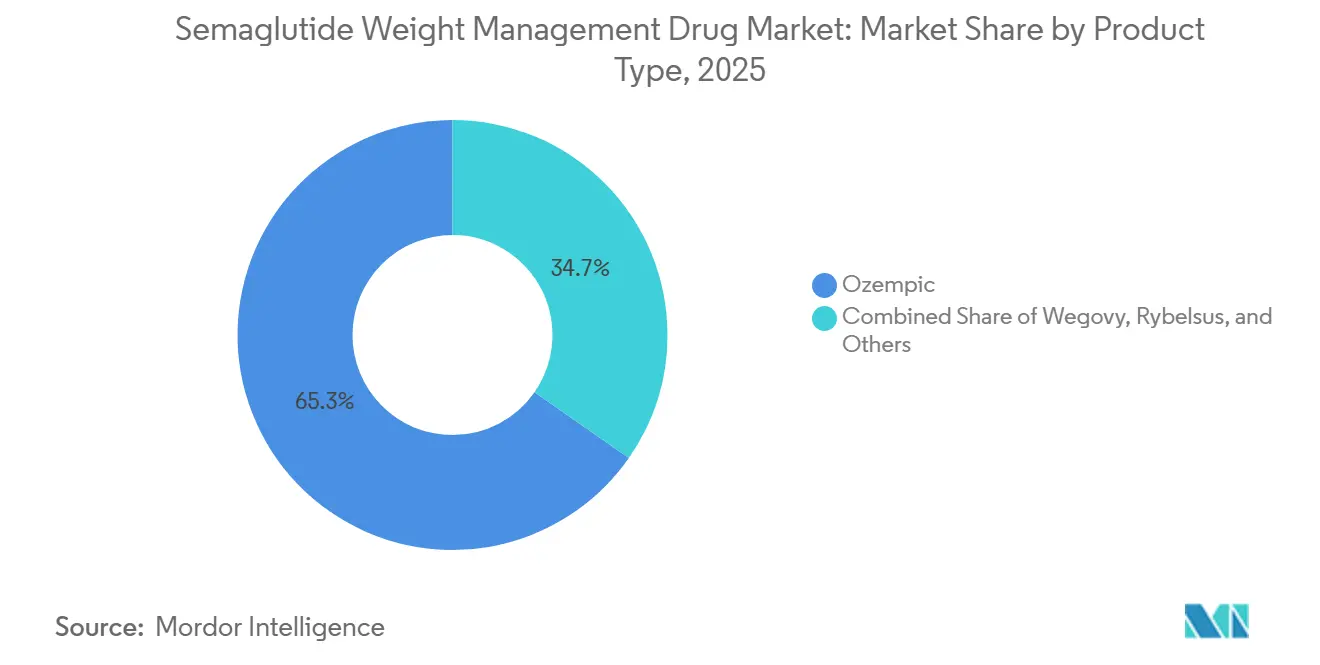
- By product type, Ozempic held 65.31% revenue share in 2025, while Wegovy is forecast to expand at a 15.13% CAGR through 2031.
- By formulation, injectable products accounted for 59.73% revenue share in 2025, while oral products are projected to grow at a 16.87% CAGR through 2031.
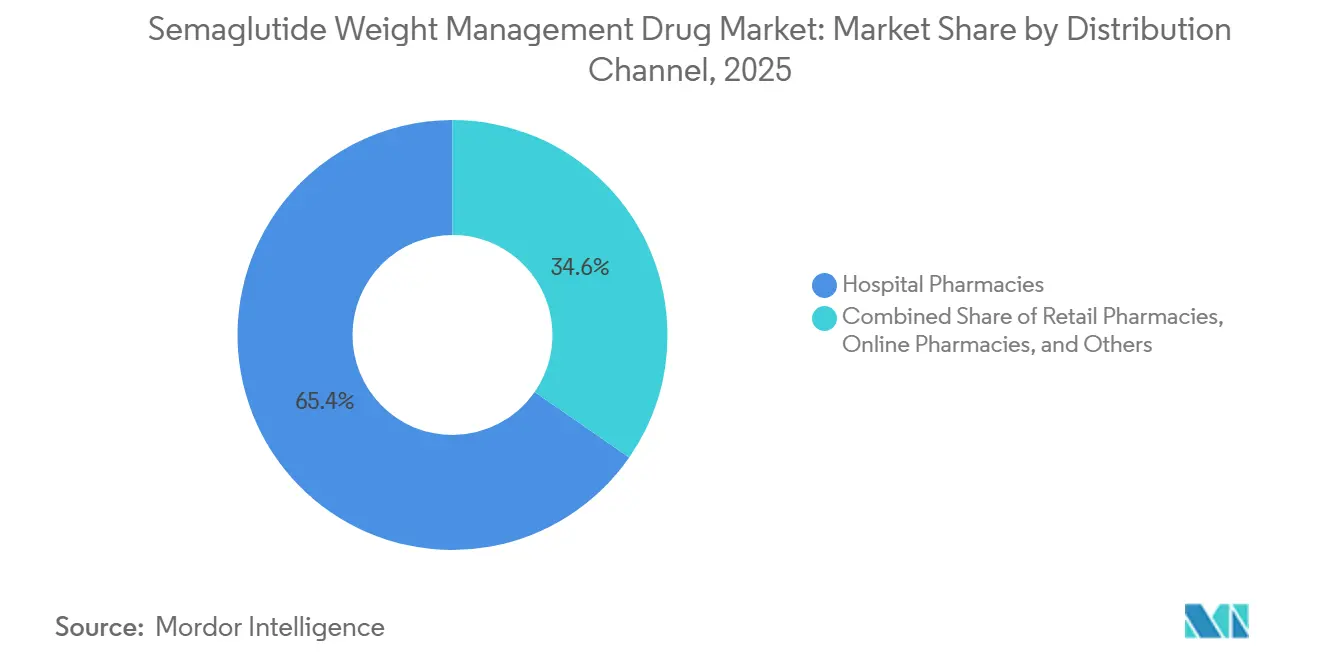
- By distribution channel, hospital pharmacies captured 65.36% revenue share in 2025, while online pharmacies are projected to advance at a 14.69% CAGR through 2031.
- By geography, North America held 46.38% revenue share in 2025, while Asia-Pacific is forecast to grow at a 17.12% CAGR through 2031.
Note: Market size and forecast figures in this report are generated using Mordor Intelligence’s proprietary estimation framework, updated with the latest available data and insights as of January 2026.
Global Semaglutide Weight Management Drug Market Trends and Insights
Drivers Impact Analysis*
| Driver | (~) % Impact on CAGR Forecast | Geographic Relevance | Impact Timeline |
|---|---|---|---|
| Rising Obesity And Type 2 Diabetes Burden | +3.2% | Global, With High Intensity In North America, Asia-Pacific, And South America | Long term (≥ 4 years) |
| Expansion Of Weight Management Indications | +2.8% | Global, Led By The United States, Europe, And High Income Asia-Pacific Markets | Medium term (2-4 years) |
| Cardiometabolic Label Expansion And Outcomes-Based Adoption | +2.4% | North America And Europe, With Spillover To The GCC And South Korea | Medium term (2-4 years) |
| Once-Weekly And Oral Dosing Convenience | +2.0% | Global, Especially In Markets With Lower Injection Acceptance Such As Japan, India, And Latin America | Short term (≤ 2 years) |
| Loss Of Exclusivity And Emerging Price-Access Expansion | +1.5% | Asia-Pacific Core, With Spillover To Brazil, Canada, And Turkey | Short term (≤ 2 years) |
| Direct-To-Consumer, Employer, And Digital Care Channel Expansion | +1.8% | North America, With Early Gains In The United Kingdom, Germany, And Australia | Medium term (2-4 years) |
| Source: Mordor Intelligence | |||
Rising Obesity and Type 2 Diabetes Burden
The semaglutide weight management drug market is drawing its strongest long-term support from the scale and persistence of obesity and metabolic disease, because the addressable patient base is rising in both developed and emerging healthcare systems. The 2025 Lancet forecasting study projected that age-standardized overweight and obesity prevalence will rise 30.7% globally over the next 30 years, which gives the semaglutide weight management drug market a demand foundation that extends well beyond short launch cycles or temporary reimbursement wins. The semaglutide weight management drug market also benefits from the overlap between obesity and type 2 diabetes, because several of the countries that hold the world’s largest overweight and obese populations also carry a high diabetes burden and therefore offer a dual treatment rationale. That overlap matters because semaglutide can be positioned inside broader cardiometabolic risk management, which makes the commercial case stronger even in systems where obesity-only reimbursement remains narrow or delayed. The semaglutide weight management drug market, therefore, keeps room for sustained volume expansion even when branded pricing comes under pressure, because patient need is broad, recurring, and spread across multiple clinical specialties rather than tied to a single prescribing pool.
Cardiometabolic Label Expansion and Outcomes-Based Adoption
The semaglutide weight management drug market gained a stronger medical and reimbursement position when the FDA approved Wegovy in March 2024 to reduce the risk of cardiovascular death, heart attack, and stroke in adults with obesity or overweight and established cardiovascular disease. That approval moved the semaglutide weight management drug market further away from a lifestyle framing and closer to a treatment model tied to serious clinical outcomes, which has direct consequences for payer discussions, physician confidence, and long-term adherence support. The SELECT trial involved more than 17,600 participants and showed that Wegovy reduced major adverse cardiovascular events by 20% versus placebo, which gave the semaglutide weight management drug market a clear evidence base for broader cardiometabolic use. A later prespecified SELECT analysis published in The Lancet in 2024 showed that the cardioprotective effect was largely independent of the amount of weight lost, which supported the view that semaglutide has a direct cardiometabolic role and not only a body weight effect. The semaglutide weight management drug market widened its clinical reach again when the FDA approved Rybelsus in October 2025 for MACE risk reduction in adults with type 2 diabetes and established cardiovascular disease, and when Wegovy’s label was updated in August 2025 to include noncirrhotic MASH with moderate-to-advanced fibrosis.
Once-Weekly and Oral Dosing Convenience
The semaglutide weight management drug market is also being driven by dosing convenience, because persistence in chronic therapy often depends on how easily patients can fit treatment into daily or weekly routines. Once-weekly injectable semaglutide already improved adherence appeal relative to daily injectable alternatives, and that helped the semaglutide weight management drug market build a strong base in specialist-led obesity and diabetes care. The December 2025 approval of the oral 25 mg Wegovy pill widened the semaglutide weight management drug market by adding a route that can attract patients who delayed or declined therapy because they did not want injections. In the OASIS 4 phase 3 trial, published in the New England Journal of Medicine in September 2025, oral semaglutide 25 mg delivered 16.6% mean weight loss at 64 weeks in the all-adherence analysis versus 2.7% for placebo, which showed that a device-free route could still support strong efficacy. Novo Nordisk Japan strengthened this convenience theme in July 2025 by launching the Wegovy MD multi-dose pen with 5 preset strengths from 0.25 mg to 2.4 mg, which helped address device handling needs in a market where patient acceptance and dosing flexibility can influence uptake.
Direct-to-Consumer, Employer, and Digital Care Channel Expansion
The semaglutide weight management drug market is no longer confined to a hospital-pharmacy-first model, because digital health, telehealth prescribing, and employer benefit design are creating a broader route to branded access. Novo Nordisk’s April 2025 partnerships with Hims & Hers, Ro, and LifeMD offered Wegovy to cash-paying patients through NovoCare Pharmacy at USD 499 per month, which showed that the semaglutide weight management drug market was moving toward a more managed self-pay channel rather than leaving demand to informal compounding pathways. In 2026, 36% of the United States employers cover GLP-1 therapies for both diabetes and weight loss, unchanged from 2025 but still above the earlier 34% level, which suggests that coverage expansion among large self-insured groups has plateaued rather than reversed. The semaglutide weight management drug market also gains a practical advantage from digital channels because telehealth-led prescribing creates more frequent follow-up touchpoints, and that makes dose escalation, refill continuity, and early persistence easier to monitor than in many brick-and-mortar settings. Over time, that feedback loop gives the semaglutide weight management drug market a more responsive commercial model, because prescription volume, patient drop-off, and starter-dose behavior can be tracked much faster than in a purely institution-led launch structure.
Restraints Impact Analysis*
| Restraint | (~) % Impact on CAGR Forecast | Geographic Relevance | Impact Timeline |
|---|---|---|---|
| High Treatment Cost And Uneven Reimbursement | -1.8% | Global, with greatest drag in South America, MEA, and Southern and Eastern Europe | Long term (≥ 4 years) |
| Gastrointestinal Tolerability And Persistence Challenges | -0.9% | Global | Medium term (2-4 years) |
| Manufacturing Capacity And Fill-Finish Bottlenecks | -0.7% | North America and EU, with emerging pressure in oral tablet scale-up | Short term (≤ 2 years) |
| Counterfeit, Compounding, And Unsupervised Use Risk | -0.5% | North America, APAC, notably India and online channels, and LATAM | Short term (≤ 2 years) |
| Source: Mordor Intelligence | |||
High Treatment Cost and Uneven Reimbursement
The semaglutide weight management drug market still faces a major access constraint because branded therapy remains expensive and reimbursement rules continue to differ sharply across countries, plans, and indications. In Germany, Section 34 of the Social Code Book V continues to classify weight management medicines as lifestyle drugs excluded from statutory reimbursement, and that position was upheld again in May 2026 by the Niedersachsen Social Court, which keeps semaglutide reimbursement centered on diabetes rather than obesity treatment. France has taken a more supportive path by allocating EUR 100 million toward GLP-1 reimbursement for patients who meet strict criteria similar to bariatric surgery thresholds, but that still leaves access limited to selected cases rather than broadly funded use. In Latin America, reimbursement remains uneven by insurer and indication, which means the semaglutide weight management drug market often depends on out-of-pocket demand even where clinical need is large and physician awareness is rising. This gap between medically eligible patients and financially treated patients keeps the semaglutide weight management drug market below its full potential, because wider need alone does not translate into sustained use when coverage is fragmented and the monthly cost remains high.
Gastrointestinal Tolerability and Persistence Challenges
The semaglutide weight management drug market is also limited by tolerability because nausea, vomiting, and other gastrointestinal events continue to be the most common reasons patients stop therapy during initiation or dose escalation. In the SELECT trial, adverse events leading to permanent discontinuation were reported in 16.6% of semaglutide-treated participants versus 8.2% in the placebo group, which shows that persistence remains a meaningful clinical and commercial issue even in closely monitored study populations. The semaglutide weight management drug market depends heavily on patients remaining on therapy long enough to complete titration and maintain treatment, because early discontinuation can quickly reduce weight outcomes and weaken payer willingness to continue authorization. A 2025 retrospective real-world study in Frontiers in Endocrinology found that after 1 year on oral semaglutide 14 mg, only around half of participants achieved clinically significant weight loss of at least 5%, which shows how real-world persistence can produce more mixed results than trial conditions. The semaglutide weight management drug market, therefore, requires more than demand creation, because long-term expansion also depends on better patient education, dose support, and follow-up systems that reduce drop-off during the period when side effects are most likely to interfere with treatment continuation
*Our forecasts treat driver/restraint impacts as directional, not additive. The impact forecasts reflect baseline growth, mix effects, and variable interactions.
Segment Analysis
By Product Type: Ozempic's Volume Lead Masks a Rapidly Shifting Brand Mix
Ozempic held 65.31% of the semaglutide weight management drug market share in 2025, and that lead reflected its long-standing presence in diabetes care, its wide physician familiarity, and its entrenched role in off-label weight management across a large existing prescriber base. The semaglutide weight management drug market continued to favor Ozempic in volume terms because Novo Nordisk’s best-performing global product remained deeply embedded in refill behavior, payer awareness, and clinical coding patterns that had been built before obesity-specific oral expansion started to change the brand mix. Rybelsus remained commercially relevant because it gave the semaglutide weight management drug industry an established oral brand, even though its United States sales slowed as prescriber preference shifted toward once-weekly GLP-1 options and obesity-focused positioning. The semaglutide weight management drug market still kept space for Rybelsus in countries where tablets carry a stronger patient preference, and the user draft specifically highlighted India as a market where oral semaglutide retained distinct relevance during 2025. Other semaglutide brands were still at an early commercial stage in 2025, but the semaglutide weight management drug market started to open for them as patent expiries in India, China, and Canada widened room for post-exclusivity entry.
Wegovy is projected to grow at a 15.13% CAGR from 2026 to 2031, and the semaglutide weight management drug market size for this brand is being strengthened by obesity-specific labeling, expansion to 52 countries as of 2025, and the January 2026 United States launch of the oral formulation. The semaglutide weight management drug market is likely to shift further toward Wegovy because the product is more clearly tied to obesity treatment, cardiovascular risk reduction, and later MASH positioning than Ozempic, which remains more closely associated with diabetes-led prescribing pathways. The semaglutide weight management drug market also gains a new adoption path from the EMA CHMP’s positive 2026 recommendation for oral Wegovy, because that signals that Europe may also move toward a more obesity-focused oral brand structure rather than relying only on injectable formats. As a result, the semaglutide weight management drug market is moving from an Ozempic-led installed base toward a more differentiated portfolio structure where Wegovy carries the faster growth case and stronger obesity-specific clinical identity.



By Formulation: Injectable Incumbency Faces Structural Pressure from Oral Innovation
Injectable formulations accounted for 59.73% of revenue in 2025, and that position reflected the way the semaglutide weight management drug market had been built around established subcutaneous protocols, pen devices, and a fill-finish infrastructure designed for branded weekly injection supply. The semaglutide weight management drug market continued to rely on injectable products because prescribers viewed subcutaneous delivery as more predictable in bioavailability and dose response, which is especially important during escalation, monitoring, and long-term persistence management. Novo Nordisk reinforced that base in 2025 with a USD 6.5 billion United States manufacturing investment and its USD 11 billion Catalent fill-finish site acquisition through Novo Holdings, showing that the semaglutide weight management drug market still depends heavily on a resilient injectable supply chain even as oral demand rises. The semaglutide weight management drug market also kept injectable products ahead because clinician familiarity, cold-chain handling, and institutional initiation pathways were already established before oral obesity therapy moved into a stronger regulatory phase. This means injectable leadership in 2025 was not only a product preference issue, but also a reflection of how commercial capacity and healthcare workflows had already been built around prefilled pen use.
The semaglutide weight management drug market size for oral formulations is projected to grow at a 16.87% CAGR from 2026 to 2031, which is the highest rate across the main segmentation structure and shows how quickly convenience is beginning to reshape route-of-administration choice. The semaglutide weight management drug market gained a major catalyst for that shift when the FDA approved oral Wegovy in December 2025 and the New England Journal of Medicine published OASIS 4 results showing weight-loss parity with injectable Wegovy in the all-adherence analysis. The semaglutide weight management drug market should see particular benefit from oral growth in countries where injection aversion, storage complexity, or routine prescribing norms have historically capped GLP-1 penetration below underlying need. Even so, the semaglutide weight management drug market cannot move all demand into tablets quickly, because oral semaglutide requires SNAC co-formulation and a different process chemistry, which means injectable capacity additions do not automatically solve oral scale-up needs.
By Distribution Channel: Hospital Pharmacy Dominance Softens as Digital Access Scales
Hospital pharmacies accounted for 65.36% of distribution-channel revenue in 2025, and that lead reflected the way the semaglutide weight management drug market still begins many patient journeys in supervised care settings where dose titration, counseling, and adverse-event monitoring can be handled closely. The semaglutide weight management drug market remained anchored to hospital-linked dispensing because initiation often occurred under endocrinology, cardiology, or primary care supervision, especially when comorbid obesity, diabetes, and cardiovascular risk had to be managed together. Specialty pharmacies retained an important support role in the semaglutide weight management drug market because they helped with prior authorization, cold-chain delivery, and adherence programs, even though they did not lead the reported revenue mix. Retail pharmacies also became more relevant as branded injectable supply normalized after the FDA resolved the semaglutide shortage in February 2025, which reduced the space for emergency substitution and improved confidence in regular store-based dispensing. This channel pattern shows that the semaglutide weight management drug market in 2025 was still clinically supervised at the front end, even while the refill and access model was beginning to broaden.
Online pharmacies are projected to grow at a 14.69% CAGR from 2026 to 2031, which makes them the fastest-growing distribution channel in the semaglutide weight management drug market and reflects the stronger pull of telehealth-led access and direct branded fulfillment. The semaglutide weight management drug market is finding a structural advantage in this route because digital pharmacy engagement can capture continuity data, refill timing, and patient contact frequency in a way that is harder to standardize across brick-and-mortar settings[2]https://www.reuters.com/bushttps://www.reuters.com/business/healthcare-pharmaceuticals/hims-hers-partners-with-novo-nordisk-sell-wegovy-its-platform-2025-04-29/iness/healthcare-pharmaceuticals/hims-hers-partners-with-novo-nordisk-sell-wegovy-its-platform-2025-04-29/. The semaglutide weight management drug market also received a volume tailwind when compounded semaglutide production wound down after the shortage resolution, because patients who had been using non-authorized compounded products were redirected toward branded digital and authorized pharmacy channels. Over the forecast period, the semaglutide weight management drug market is likely to become less concentrated in institution-led dispensing and more balanced across supervised hospital, specialty, retail, and online pathways.
Geography Analysis
North America held 46.38% of the semaglutide weight management drug market share in 2025, which made it the largest regional contributor and reflected the scale of the United States burden, the depth of specialist care infrastructure, and the quicker movement of private-payer coverage after cardiovascular outcome evidence became harder to ignore. The semaglutide weight management drug market remained strongest in the United States because employer-sponsored GLP-1 coverage, specialist prescribing networks, and NovoCare-linked access models made it easier to connect high demand with branded fulfillment. The semaglutide weight management drug market in Canada is moving into a lower-price stage because Sandoz targeted an end-of-June 2026 launch for unbranded generic semaglutide and projected a 60% to 70% price reduction relative to branded Ozempic. Mexico still channels much of its demand through private cash-pay routes, which limit scale compared with the United States, even though need remains substantial. South America presents a different access pattern, because Brazil saw strong GLP-1 demand growth after patent expiry, and Argentina already had domestic semaglutide biosimilar activity with partial insurer reimbursement for documented diabetes treatment.
Europe remains an uneven region for the semaglutide weight management drug market because regulatory progress, reimbursement rules, and practical uptake differ significantly across countries and create very different access outcomes for the same molecule. The semaglutide weight management drug market in Europe received a meaningful signal from the EMA CHMP’s positive 2026 recommendation for oral Wegovy, yet approval momentum does not guarantee volume when statutory coverage remains limited or highly selective. Germany continues to exclude obesity medicines from statutory reimbursement while France has set aside EUR 100 million for tightly defined GLP-1 obesity reimbursement, and Rybelsus became commercially available in Germany from July 15, 2025 for type 2 diabetes under AMNOG-negotiated terms. The semaglutide weight management drug market in the Middle East and Africa remains narrower, with affluent GCC patients accessing branded therapy through private channels while South Africa stays more constrained by cost and coverage limitations.
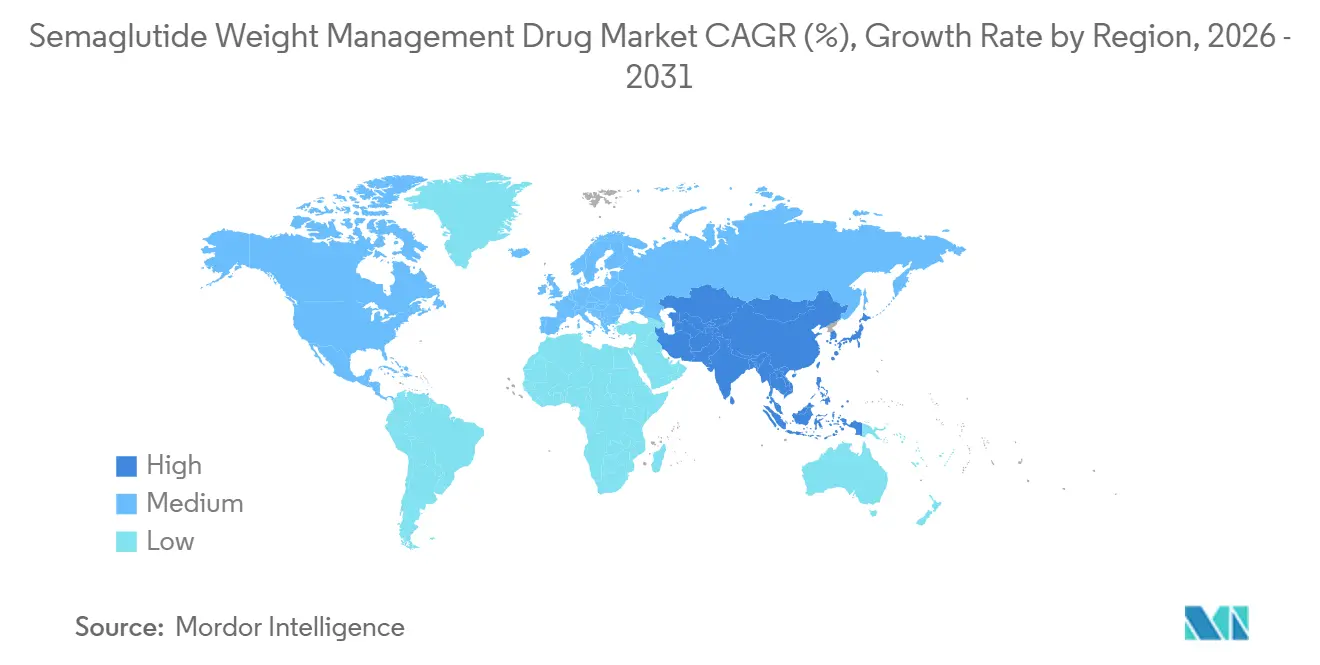
Asia-Pacific is projected to expand at a 17.12% CAGR from 2026 to 2031, which makes it the fastest-growing regional block in the semaglutide weight management drug market and reflects the combined effect of patent expiry, widening obesity burden, and aggressive local competition[3]https://pmc.ncbi.nlm.nih.gov/articles/PMC11920007/. The semaglutide weight management drug market in India accelerated after March 20, 2026, when patent expiry triggered rapid entry by more than 10 companies and included launches by Sun Pharmaceutical Industries, Dr. Reddy’s Laboratories, Zydus Lifesciences, Natco Pharma, and Alkem Laboratories in one of the most competitive generic rollouts seen in recent pharmaceutical practice. China has also pushed the semaglutide weight management drug market toward lower pricing and heavier pipeline activity, while Japan remains more controlled because Novo Nordisk’s July 2025 Wegovy MD launch operates inside strict NHI reimbursement criteria that limit volume but support pricing stability. As a result, the semaglutide weight management drug market in Asia-Pacific is combining faster patient growth with lower price floors, which gives the region a very different commercial shape from the more reimbursement-led markets in North America and Europe.

Competitive Landscape
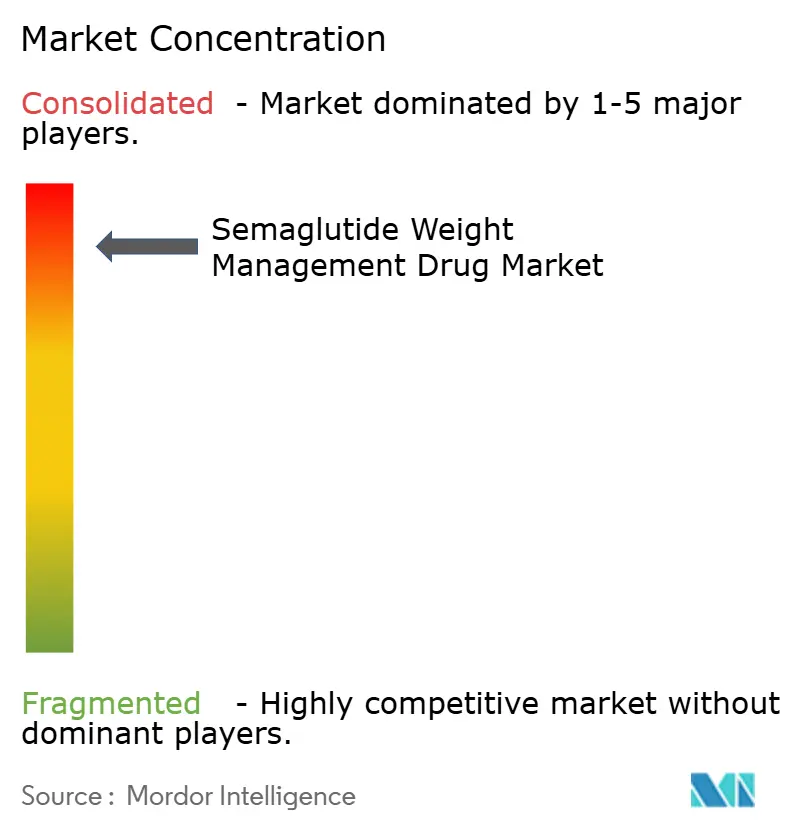
The semaglutide weight management drug market is moderately concentrated at the branded level, but it is fragmenting quickly at the generic and biosimilar tier as more countries move beyond patent protection and open the molecule to lower-cost entry. Novo Nordisk held 59.60% of the global branded GLP-1 obesity market by volume in 2025, which kept it in the leading position across brand recognition, clinical evidence, and supply chain scale inside the semaglutide weight management drug market. The semaglutide weight management drug market is still becoming more contested because Eli Lilly’s tirzepatide continues to compete for new-patient branded GLP-1 starts in the United States, while Indian and Chinese manufacturers are building lower-price supply chains that can spread into additional markets as legal barriers fall. One clear strategic response has been channel control, with Novo Nordisk using the NovoCare pharmacy network and telehealth partnerships to keep branded access visible and to capture demand that might otherwise drift toward compounded or unsupervised alternatives. Another has been supply-side reinforcement, where the USD 6.5 billion United States manufacturing investment and the Catalent site acquisition show that the semaglutide weight management drug market is increasingly rewarding companies that can protect fill-finish capacity as well as clinical positioning.
A second strategic pattern in the semaglutide weight management drug market is label expansion, because the strongest branded players are no longer relying on weight loss alone and are instead widening use into cardiovascular risk reduction, MASH, and adjacent chronic disease pathways. That matters because the semaglutide weight management drug market becomes harder to disrupt when the leading product sits inside multiple reimbursement conversations rather than a single obesity-only budget line. A third strategic pattern is format differentiation, with the oral Wegovy launch in the United States and the Wegovy MD multi-dose pen launch in Japan showing that the semaglutide weight management drug market is rewarding companies that tailor route and device choices to different patient and system needs. In that sense, the semaglutide weight management drug market is being defended not only by brand scale, but also by the ability to combine clinical breadth, route flexibility, and direct access infrastructure.
Lower-cost challengers are shaping the next phase of the semaglutide weight management drug market, especially in countries where affordability had kept a large share of the eligible population untreated. Sandoz is targeting Canada with unbranded generic semaglutide at a projected 60% to 70% discount to branded Ozempic, while Sun Pharma moved quickly in India with Noveltreat and Sematrinity immediately after patent expiry, which shows how rapidly price-led competition can appear once exclusivity ends. The semaglutide weight management drug market therefore remains led by a strong incumbent, but it is no longer a simple single-brand story because oral conversion, region-specific generic entry, and multi-channel access models are gradually widening the field. That widening does not remove Novo Nordisk’s lead in the near term, but it does mean the semaglutide weight management drug market will compete more on access, supply assurance, and disease-positioning depth than on brand presence alone.
Semaglutide Weight Management Drug Industry Leaders
Novo Nordisk A/S
Eli Lilly and Company
Dr. Reddy's Laboratories
Biocon
Sandoz Group AG
- *Disclaimer: Major Players sorted in no particular order

Recent Industry Developments
- July 2026: The EMA Committee for Medicinal Products for Human Use (CHMP) issued a positive opinion recommending authorization of the Wegovy pill (oral semaglutide 25 mg, once-daily) for obesity treatment in the EU, the first oral GLP-1 receptor agonist to receive a CHMP recommendation for weight management, materially broadening Novo Nordisk's European product footprint beyond the injectable-only category.
- June 2026: Sandoz announced a targeted end-of-June 2026 launch of unbranded generic semaglutide in Canada, projecting a 60% to 70% price reduction relative to branded Ozempic, the entry is the first generic semaglutide launch in a Western high-income market and establishes a pricing reference case for subsequent launches in Brazil, Mexico, and Turkey.
- January 2026: Novo Nordisk launched Wegovy pill (once-daily oral semaglutide 25 mg) in the United States on January 5, following its December 22, 2025, FDA approval. As of January 23, 2026, total weekly prescriptions reached approximately 50,000, driven primarily by the 1.5 mg starter dose in the self-pay channel.


Global Semaglutide Weight Management Drug Market Report Scope
As per the scope of the report, semaglutide weight management drugs refer to glucagon-like peptide-1 (GLP-1) receptor agonist therapies containing semaglutide that are indicated for chronic weight management and obesity treatment. These drugs work by mimicking the naturally occurring GLP-1 hormone to regulate appetite, increase satiety, reduce calorie intake, and support sustained weight loss in overweight and obese individuals. Semaglutide-based therapies are used in conjunction with diet, exercise, and lifestyle modifications to manage obesity and obesity-related comorbidities, such as type 2 diabetes, cardiovascular disease, and metabolic disorders.
The semaglutide weight management drug market is segmented by product type into Ozempic, Wegovy, Rybelsus, and Other Semaglutide Brands; by formulation into Injectable and Oral; by distribution channel into Hospital Pharmacies, Retail Pharmacies, Online Pharmacies, Specialty Pharmacies, and Others; and by geography into North America, Europe, Asia-Pacific, Middle East & Africa, and South America. The market report also covers the estimated market sizes and trends for 17 countries across major regions globally. For each segment, the market size and forecast are provided in terms of value (USD)
| Ozempic |
| Wegovy |
| Rybelsus |
| Other Semaglutide Brands |
| Injectable |
| Oral |
| Hospital Pharmacies |
| Retail Pharmacies |
| Online Pharmacies |
| Specialty Pharmacies |
| Others |
| North America | United States |
| Canada | |
| Mexico | |
| Europe | Germany |
| United Kingdom | |
| France | |
| Italy | |
| Spain | |
| Rest of Europe | |
| Asia-Pacific | China |
| Japan | |
| India | |
| Australia | |
| South Korea | |
| Rest of Asia-Pacific | |
| Middle East and Africa | GCC |
| South Africa | |
| Rest of Middle East and Africa | |
| South America | Brazil |
| Argentina | |
| Rest of South America |
| By Product Type | Ozempic | |
| Wegovy | ||
| Rybelsus | ||
| Other Semaglutide Brands | ||
| By Formulation | Injectable | |
| Oral | ||
| By Distribution Channel | Hospital Pharmacies | |
| Retail Pharmacies | ||
| Online Pharmacies | ||
| Specialty Pharmacies | ||
| Others | ||
| By Geography | North America | United States |
| Canada | ||
| Mexico | ||
| Europe | Germany | |
| United Kingdom | ||
| France | ||
| Italy | ||
| Spain | ||
| Rest of Europe | ||
| Asia-Pacific | China | |
| Japan | ||
| India | ||
| Australia | ||
| South Korea | ||
| Rest of Asia-Pacific | ||
| Middle East and Africa | GCC | |
| South Africa | ||
| Rest of Middle East and Africa | ||
| South America | Brazil | |
| Argentina | ||
| Rest of South America | ||


Key Questions Answered in the Report
What is the outlook for semaglutide weight management drugs through 2031?
The semaglutide weight management drug market was valued at USD 8.35 billion in 2025 and is forecast to reach USD 19.49 billion by 2031 at a 15.17% CAGR.
Which product leads current demand and which one is growing fastest?
Ozempic led 2025 revenue with a 65.31% share, while Wegovy is projected to grow fastest within product type at a 15.13% CAGR through 2031.
Why is oral semaglutide becoming more important?
Oral adoption is expanding because it addresses injection resistance and broadens access. The oral formulation is forecast to grow at a 16.87% CAGR through 2031.
Which distribution channel is changing the fastest?
Online pharmacies are changing the fastest and are projected to grow at a 14.69% CAGR, supported by telehealth prescribing and digital refill continuity.
Which region offers the fastest growth opportunity?
Asia-Pacific is the fastest-growing region with a projected 17.12% CAGR from 2026 to 2031, supported by patent expiry, wider local entry, and a large untreated population.
What is the main risk to broader long term adoption?
High treatment cost and uneven reimbursement remain the main barriers, while gastrointestinal tolerability continues to affect persistence and reauthorization in real-world care.
Page last updated on:





