
Top 5 Saudi Arabia Red Meat Companies

-

Americana Group
-
BRF S.A.
-
Tanmiah Food Company
-
The Savola Group
-
Almunajem Foods
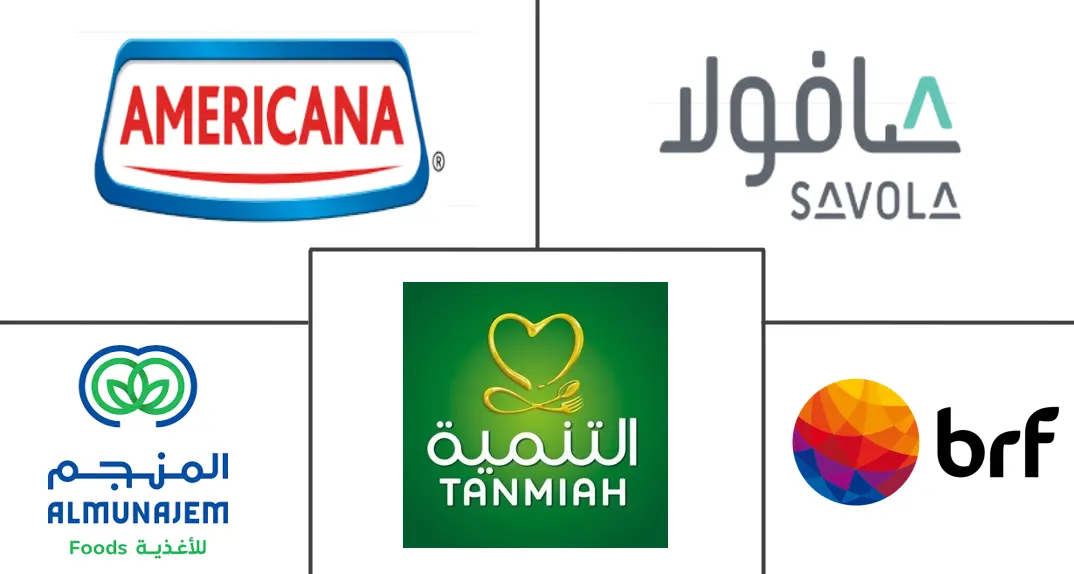
Source: Mordor Intelligence
Saudi Arabia Red Meat Companies Matrix by Mordor Intelligence
Our comprehensive proprietary performance metrics of key Saudi Arabia Red Meat players beyond traditional revenue and ranking measures
The MI Matrix can diverge from simple revenue ranking because it weights visible Saudi footprint, buyer trust, and execution signals like plants, cold chain control, and recent product moves. A firm with strong global sales can score lower if Saudi red meat commitment is less observable or mostly routed through third parties. Saudi buyers often ask two practical questions: what halal paperwork is mandatory for each shipment, and what shelf life rules apply for chilled and vacuum packed red meat. US export guidance highlights strict labeling, production and expiration date printing, and specific chilled meat expiration limits. GCC analysis also notes chilled vacuum packed beef shelf life can reach 120 days in Saudi Arabia, which directly shapes logistics choices. This MI Matrix by Mordor Intelligence is more useful than revenue tables alone because it reflects on the ground capability to supply safely, consistently, and at scale.
MI Competitive Matrix for Saudi Arabia Red Meat
The MI Matrix benchmarks top Saudi Arabia Red Meat Companies on dual axes of Impact and Execution Scale.


Analysis of Saudi Arabia Red Meat Companies and Quadrants in the MI Competitive Matrix
Comprehensive positioning breakdown
Almunajem Foods
Margin pressure has been visible as selling prices for red and white proteins fell during 2025. The company is a leading distributor in Saudi chilled and frozen proteins and still benefits from scale buying and wide retail reach, even when pricing turns against importers. Argaam filings point to weaker profitability tied to pricing pressure in red meat lines, which raises execution risk if freight and cold storage costs rise again. If SFDA tightens labeling audits, stronger compliance programs could become a meaningful differentiator. A useful what if is a larger shift toward chilled premium cuts, which would favor faster logistics.
BRF S.A.
Planned processed foods facility in Jeddah signals a deeper Saudi manufacturing posture. The firm is a leading producer of halal branded proteins across the Gulf and it is now tying growth to local output and product development. The innovation center tied to the Jeddah site suggests more tailored formulations for Saudi tastes and compliance needs. If the mid 2026 start date slips, the risk is extended dependence on imported inputs during peak demand periods. SFDA date marking and shelf life rules can also raise relabeling and detention risk when processes are inconsistent across plants.
Tanmiah Food Company
Capacity additions in 2025 show ongoing investment momentum in processing and feed assets. The company is a major supplier with a strong Saudi logistics footprint and sells chilled and frozen value added proteins into foodservice channels, including beef items. Financial disclosures show revenue growth alongside cost pressure during expansion, which is typical when new assets ramp. A notable what if is successful deal making in upstream red meat assets abroad, which could improve supply resilience for Saudi demand. Key operational risk sits in diesel and distribution cost swings, which can compress margins fast.
The Savola Group
Balance sheet actions in 2024 improved flexibility, and results referenced growth in frozen foods performance. The diversified group is a major player in Saudi food manufacturing and retail, which can translate into strong shelf access for frozen meat brands. Annual disclosures also highlight frozen foods as a growing area, which matters for processed red meat velocity in modern trade. A what if is faster online grocery growth, where brand visibility and reliable delivery slots can widen distribution. SFDA expiry date printing and storage temperature statements remain a compliance gate that can create costly rework if missed. The main risk is focus dilution across categories when proteins need tighter execution.
Sadia International
The USD 2.07 billion transaction to consolidate regional assets under a Saudi anchored halal platform signals scale and staying power. The brand is a top name in halal proteins, and the structure explicitly includes regional logistics and direct export operations that can cover beef and processed items. The what if is a successful Saudi exchange listing plan, which could fund faster cold chain and product development investment. The core risk is integration complexity across multiple GCC sites while maintaining consistent specifications for Saudi buyers. Saudi date marking and shelf life practices can also become a hidden cost if multiple plants use different controls.











Frequently Asked Questions
What halal documents matter most for red meat shipments into Saudi Arabia?
Buyers typically require a valid halal certificate and a shipment specific halal document when applicable. Import rules also demand clean, consistent labeling and clear product description and storage statements.
How should buyers think about chilled shelf life versus frozen for beef and mutton?
Chilled programs depend on remaining selling days at port arrival, not just slaughter date. GCC guidance indicates Saudi Arabia can allow up to 120 days for chilled vacuum packed beef, while other chilled formats can be much shorter.
What cold chain checks best predict supplier reliability?
Ask for temperature logging across storage and transport, plus clear procedures for unloading and short dwell times at docks. Consistent date printing and correct storage statements are basic indicators of disciplined operations.
What is the most common compliance failure that delays clearance?
Date marking and labeling issues are frequent causes of holds, especially when production and expiration dates are unclear or inconsistent. Saudi rules also restrict how dates may be applied on packs.
How can retailers evaluate organic or premium claims without relying on branding?
Request verifiable certificates, batch level traceability, and third party audit results that link the claim to specific lots. This approach also helps when composite processed items include multiple animal derived inputs.
How are health guidelines shifting protein messaging in Saudi Arabia?
Saudi dietary guidance emphasizes balanced patterns and generally points consumers toward leaner protein choices and moderation. That can increase demand for trimmed cuts and for clearer nutritional labeling on processed products.
Methodology
Research approach and analytical framework
Data sourcing prioritized company investor materials, exchange disclosures, government and standards guidance, and named journalism. Private firms were scored using observable signals like sites, product lines, and compliance readiness. When direct Saudi red meat data was limited, indicators were triangulated from Saudi operations disclosures and verifiable Saudi activities.
Cold stores, import channels, and distribution reach determine on shelf availability across Riyadh, Jeddah, and secondary cities.
Halal trust and food safety reputation matter for repeat purchase in retail and for menu risk in foodservice.
Higher Saudi red meat volumes improve negotiating leverage, forecasting accuracy, and route density for cold chain deliveries.
Saudi plants, warehouses, and compliance staffing reduce lead time and shrink spoilage risk for chilled and processed items.
New processed formats, packaging, and localized recipes since 2023 support margin and reduce substitution toward cheaper proteins.
Stable cash generation supports inventory, hedging, and quality systems needed for SFDA aligned operations.




