
Sandalwood Oil Market Size and Share
Market Overview
| Study Period | 2021 - 2031 |
|---|---|
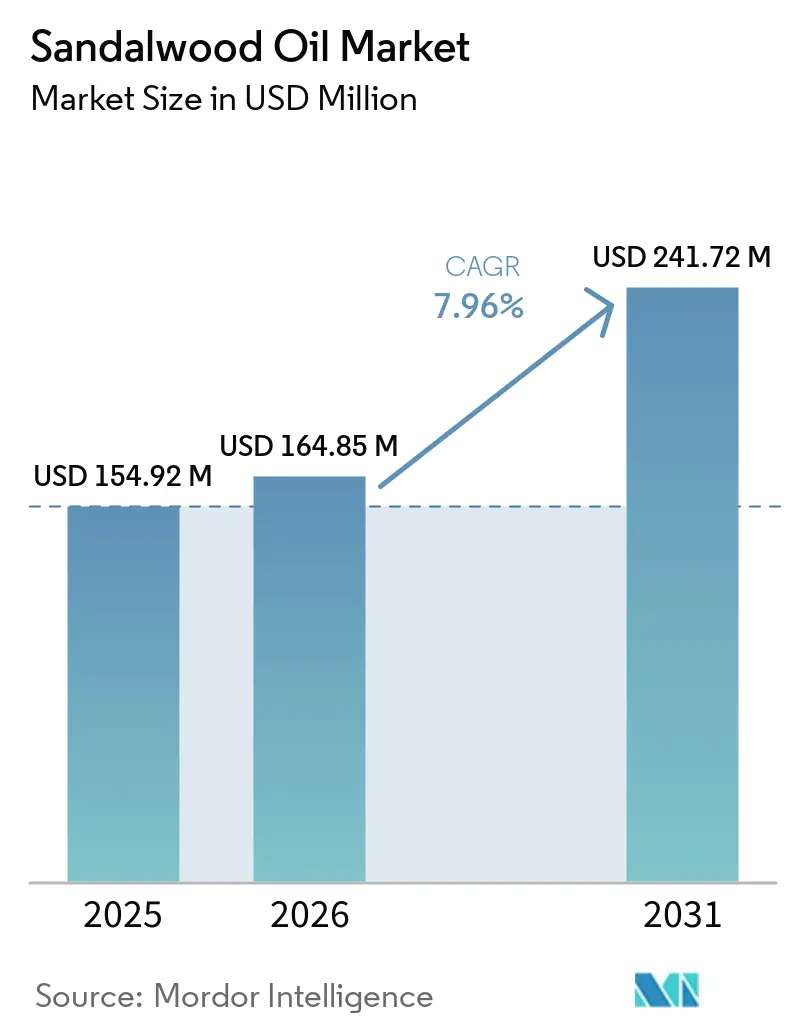
| Market Size (2026) | USD 164.85 Million |
| Market Size (2031) | USD 241.72 Million |
| Growth Rate (2026 - 2031) | 7.96 % |
| Fastest Growing Market | Asia-Pacific |
| Largest Market | Asia-Pacific |
| Market Concentration | Medium |
Major Players *Disclaimer: Major Players sorted in no particular order Image © Mordor Intelligence. Reuse requires attribution under CC BY 4.0. | |
Sandalwood Oil Market Analysis by Mordor Intelligence
The sandalwood oil market was valued at USD 154.92 million in 2025. It is estimated to grow from USD 164.85 million in 2026 to USD 241.72 million by 2031, registering a CAGR of 7.96% during 2026–2031. Market growth is supported by rising demand from fine fragrances, premium personal care products, aromatherapy, and emerging dermatological formulations, where natural sandalwood oil is valued for its distinctive santalol composition and long-lasting fragrance profile. Supply-side dynamics continue to shape the industry, as Indian sandalwood (Santalum album) requires 15–20 years to develop commercially viable heartwood, limiting rapid capacity expansion and keeping natural oil in a premium price segment. Quintis underwent a major financial restructuring in 2018, emerging from receivership in October 2018 after receiving AUD 145 million in funding from new owners. Following this recapitalization, the company continued to operate as a major Indian sandalwood plantation manager, owning and/or managing approximately 12,500 hectares of Indian sandalwood plantations across company-owned and investor-held estates. However, Quintis and several of its subsidiaries were placed into receivership again in April 2024, with receivers appointed to oversee the group's assets and operations. The subsequent restructuring and administration of the group have reinforced the importance of plantation ownership, traceability, and secure long-term access to Indian sandalwood for market participants.
Key Report Takeaways
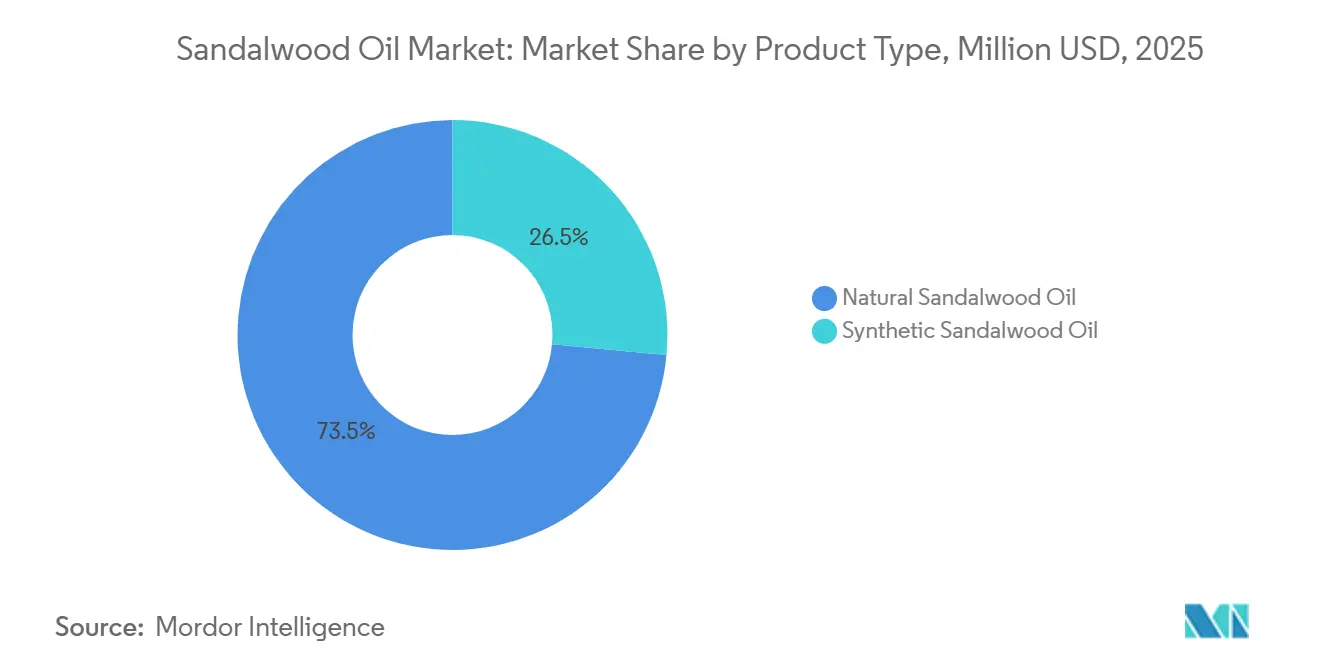
- By product type, natural oil held 73.51% of the sandalwood oil market share in 2025, while synthetic oil is forecast to grow at an 8.46% CAGR through 2031.
- By source, Indian sandalwood held 58.62% of the sandalwood oil market share in 2025, while Australian sandalwood is forecast to grow at a 9.11% CAGR through 2031.
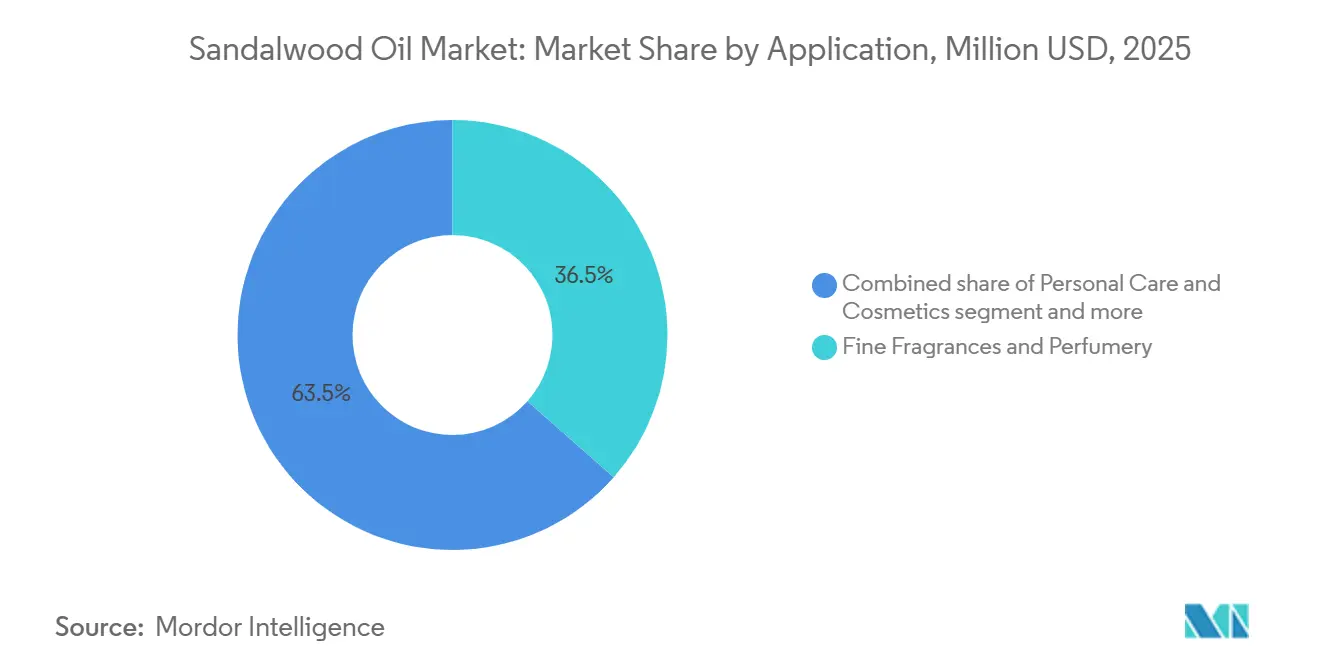
- By application, fine fragrances and perfumery accounted for 36.51% of the sandalwood oil market size in 2025, while the personal care and cosmetics segment is forecast to grow at an 8.35% CAGR through 2031.
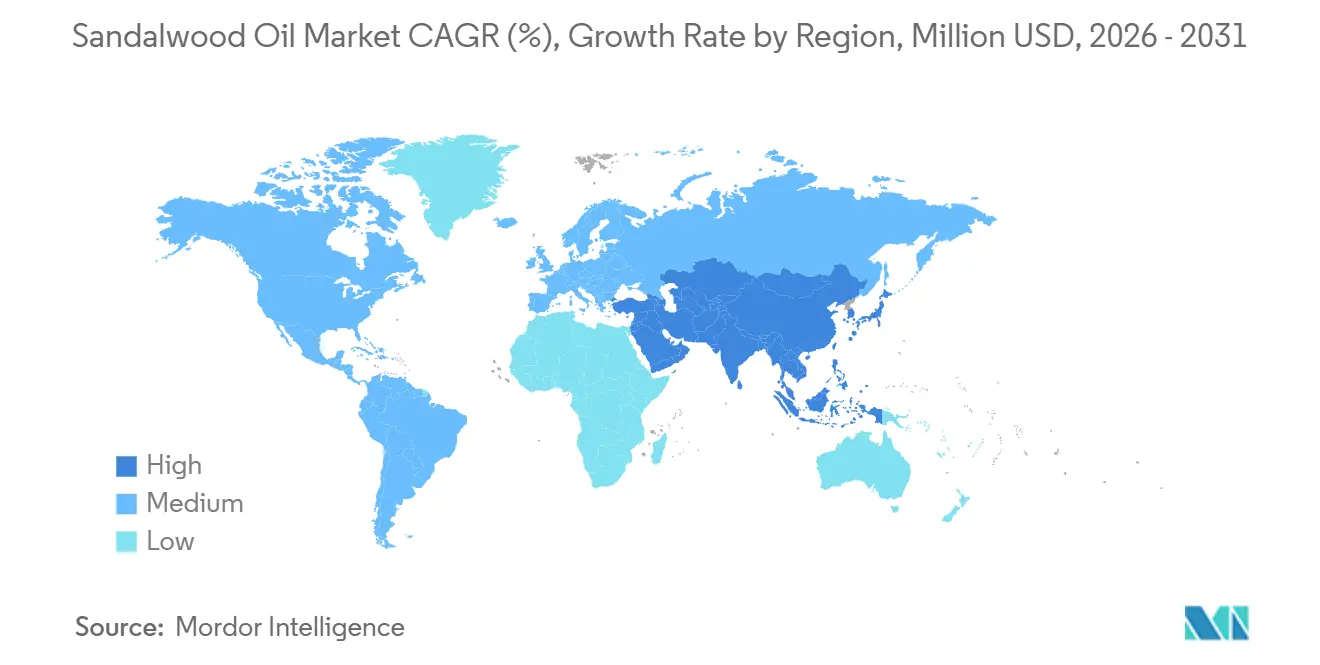
- By geography, Asia-Pacific accounted for 58.90% of the sandalwood oil market size in 2025 and is forecast to grow at a 9.98% CAGR through 2031.
Note: Market size and forecast figures in this report are generated using Mordor Intelligence’s proprietary estimation framework, updated with the latest available data and insights as of January 2026.
Market Trends and Insights
Drivers Impact Analysis of Sandalwood Oil Market*
| Driver | (~) % Impact on CAGR Forecast | Geographic Relevance | Impact Timeline |
|---|---|---|---|
| Premium natural personal care and fragrance formulations | +2.1% | Global; concentrated in North America, Europe, and the Asia-Pacific premium tiers | Short term (≤ 2 years) |
| Expansion of aromatherapy and wellness consumption | +1.8% | Global, the Asia-Pacific, and North America lead | Medium term (2-4 years) |
| Cultural and traditional medicine demand in asia-pacific | +1.5% | The Asia-Pacific core, spill-over to the Middle East and Africa | Medium term (2-4 years) |
| Growth of traceable plantation-origin supply | +0.9% | Global; supply base in Australia and India; demand in North America and Europe | Long term (≥ 4 years) |
| Increasing formulator demand for verified santalol profiles | +0.7% | North America and Europe | Medium term (2-4 years) |
| Pharmaceutical and dermatological research on alpha-santalol | +0.5% | North America and Europe, early traction in the Asia-Pacific pharma | Long term (≥ 4 years) |
| Source: Mordor Intelligence | |||
Premium Natural Personal Care and Fragrance Formulations
Growing consumer preference for premium, naturally derived personal care products and fine fragrances is driving demand for sandalwood oil, particularly in luxury skincare, perfumes, and wellness formulations. Natural sandalwood oil is valued for its rich santalol profile, fixative properties, and soothing characteristics, making it a preferred ingredient in high-end cosmetic and fragrance applications. The International Fragrance Association (IFRA) reported in its 2025 Transparency List that more than 1,000 Natural Complex Substances (NCSs) are actively used by the fragrance industry, reflecting sustained industry reliance on botanical ingredients and increasing transparency around natural raw materials[1]Source: The International Fragrance Association (IFRA), “2025 Transparency List,” International Fragrance Association, ifrafragrance.org. Furthermore, in February 2025, Pura launched a new home fragrance collection featuring ethically sourced Western Australian sandalwood supplied by Dutjahn Sandalwood Oils, highlighting growing commercial interest in traceable and sustainably sourced sandalwood ingredients for premium fragrance formulations. These developments, coupled with increasing consumer willingness to pay for authentic botanical ingredients, continue to strengthen global demand for natural sandalwood oil across premium personal care and fragrance markets.
Expansion of Aromatherapy and Wellness Consumption
The rapid expansion of the global wellness economy is increasing demand for sandalwood oil, as consumers increasingly incorporate essential oils into aromatherapy, stress management, meditation, spa therapies, and holistic wellness routines. Sandalwood oil is particularly valued for its calming aroma and grounding properties, making it a preferred ingredient in premium essential oil blends, massage oils, and diffuser formulations. According to the Global Wellness Institute (GWI), the global wellness economy reached USD 6.8 trillion in 2024 and is projected to expand to USD 9.8 trillion by 2029, highlighting robust growth in wellness-oriented consumer spending[2]Source: Global Wellness Institute (GWI), “The Global Wellness Economy,” Global Wellness Institute, globalwellnessinstitute.org. Reflecting this trend, doTERRA introduced its "Wellness Made Simple" initiative in 2025, expanding science-backed wellness solutions and reinforcing consumer engagement with essential oil-based daily wellness routines. As wellness tourism, home aromatherapy, and preventive self-care continue to gain popularity across North America, Europe, and Asia-Pacific, demand for high-quality botanical oils such as sandalwood is expected to strengthen, supporting sustained growth in the global sandalwood oil market.
Cultural and Traditional Medicine Demand in Asia-Pacific
Long-standing cultural practices and traditional medicine systems across the Asia-Pacific region continue to provide a stable demand base for natural sandalwood oil. In countries such as India, China, and several Southeast Asian markets, sandalwood oil is widely used in Ayurvedic preparations, traditional wellness therapies, religious rituals, meditation, and premium incense products, supporting consistent consumption beyond the fragrance industry. The Ministry of AYUSH, Government of India, reported that the country's Ayurveda, Yoga, and Naturopathy, Unani, Siddha, and Homeopathy (AYUSH) sector has expanded significantly through increasing domestic adoption, institutional support, and export promotion, creating greater demand for botanical raw materials used in traditional formulations[3]Source: The Ministry of AYUSH, “India's leadership role in yoga and traditional medicine at the global stage,” pib.gov.in. Reflecting continued commercial investment, Moksha Lifestyle Products expanded its portfolio in 2025 by introducing premium Australian Sandalwood Essential Oil, sourced for aromatherapy, personal care, and traditional wellness applications, strengthening the availability of sustainably sourced sandalwood oils for global customers. As governments continue promoting traditional medicine and consumers increasingly seek natural wellness products, cultural and therapeutic applications are expected to remain a long-term demand driver for the global sandalwood oil market.
Growth of Traceable Plantation-Origin Supply
The expansion of traceable plantation-origin sandalwood supply is strengthening buyer confidence and supporting broader adoption of natural sandalwood oil across premium fragrance, personal care, and wellness applications. As luxury brands increasingly prioritize responsible sourcing and supply-chain transparency, demand is shifting toward suppliers capable of demonstrating verified origin, sustainable harvesting practices, and consistent quality. This trend is particularly important given the long cultivation cycle and limited availability of mature sandalwood. In Western Australia, the Forest Products Commission (FPC) manages wild sandalwood under a regulated harvesting framework, with PEFC Chain of Custody certification and ISO 14001-certified environmental management systems, providing assurance that products originate from responsibly managed sources. The FPC also manages approximately 6,000 hectares of sandalwood plantations, complementing future supplies from plantation-grown resources. Additionally, in 2025, Silvalis (formerly WA Sandalwood Plantations) expanded its Indigenous partnerships while managing approximately 15,000 hectares of plantations and preparing for long-term export growth into Asian markets. These developments are improving supply reliability, strengthening sustainability credentials, and reinforcing demand for verified natural sandalwood oil in global markets.
Restraints Impact Analysis of Sandalwood Oil Market*
| Restraint | (~) % Impact on CAGR Forecast | Geographic Relevance | Impact Timeline |
|---|---|---|---|
| Long biological maturity cycles and limited heartwood availability | -2.8% | Global | Long term (≥ 4 years) |
| High natural oil prices and extraction costs | -2.0% | Global | Short term (≤ 2 years) |
| Illegal harvesting, adulteration, and provenance risk | -1.2% | India, Southeast Asia, and spill-over to global trade | Medium term (2-4 years) |
| Farmer security, theft exposure, and regulatory friction | -0.8% | India (Karnataka, Andhra Pradesh); early signs in East Africa | Medium term (2-4 years) |
| Source: Mordor Intelligence | |||
High Natural Oil Prices and Extraction Costs
The high cost of producing natural sandalwood oil remains a significant restraint on market growth, limiting its adoption in price-sensitive personal care, fragrance, and aromatherapy applications. Unlike many essential oils, sandalwood requires 15–20 years to develop commercially viable heartwood, resulting in substantial land, cultivation, and inventory carrying costs before harvest. In addition, steam distillation yields are relatively low, requiring large quantities of heartwood to produce small volumes of essential oil, which further elevates production costs. Consequently, manufacturers of mass-market cosmetics and fragrances often substitute natural sandalwood oil with synthetic sandalwood aroma molecules or blended formulations to maintain competitive pricing. Reflecting ongoing supply constraints, the Western Australian Government's Forest Products Commission continues to regulate commercial harvesting of native sandalwood through annual quotas and licensing requirements to ensure long-term resource sustainability, limiting the volume of natural raw material entering the market. These factors collectively increase procurement costs, constrain supply availability, and reduce the affordability of natural sandalwood oil across cost-sensitive end-use industries.
Illegal Harvesting, Adulteration, and Provenance Risk
Illegal harvesting, product adulteration, and inadequate traceability continue to restrain the global sandalwood oil market by disrupting legitimate supply chains and undermining buyer confidence in natural sandalwood products. The high commercial value of sandalwood has encouraged unauthorized logging and the circulation of adulterated oils blended with lower-cost essential oils or synthetic fragrance compounds, creating challenges for manufacturers that rely on consistent quality and authenticity. These issues increase procurement risks for premium fragrance, cosmetics, and aromatherapy brands, which increasingly require verified origin and analytical testing before sourcing raw materials. Governments have strengthened enforcement to address these concerns. In India, sandalwood harvesting, transit, and trade remain regulated by state forest authorities, while agencies continue to seize illegally harvested timber and dismantle smuggling networks to protect valuable sandalwood resources. Additionally, the International Organization for Standardization (ISO) provides quality specifications for sandalwood oil under ISO 3518, enabling manufacturers and buyers to authenticate oil composition and reduce the risk of adulteration in international trade. As compliance and verification costs increase, provenance risks continue to challenge the sustainable growth of the global sandalwood oil market.
*Our forecasts treat driver/restraint impacts as directional, not additive. The impact forecasts reflect baseline growth, mix effects, and variable interactions.
Sandalwood Oil Market Segment Analysis
By Product Type:
Natural Oil Retains Premium Demand While Synthetic Materials Expand AccessNatural sandalwood oil accounted for 73.51% of the global sandalwood oil market in 2025, owing to its superior aromatic complexity, high natural santalol content, and widespread acceptance in luxury perfumes, premium skincare, and therapeutic aromatherapy products. Its distinctive fragrance profile and natural origin make it the preferred choice for high-value formulations despite its premium pricing. Reflecting sustained commercial demand, Albert Vieille, a leading producer of natural aromatic ingredients, expanded its portfolio of sustainably sourced sandalwood essential oils for fragrance and cosmetic applications during 2025, highlighting continued investment in premium botanical ingredients as luxury brands increasingly prioritize authenticity and ingredient traceability.
Synthetic sandalwood oil is projected to register an 8.46% CAGR through 2031, supported by increasing adoption in mass-market fragrances, personal care products, home care formulations, and air fresheners, where cost consistency and reliable supply are critical. Unlike natural sandalwood oil, synthetic alternatives offer standardized fragrance performance while reducing exposure to raw material shortages and price volatility. Reflecting ongoing innovation, Kao Corporation introduced new fragrance design technologies during 2025 that optimize the use of sustainable aroma molecules in consumer products, demonstrating the industry's growing focus on scalable, high-performance woody fragrance ingredients for everyday applications.


By Source:
Indian Sandalwood Holds a Premium Position While Australian Supply ScalesIndian sandalwood accounted for 58.62% of the global sandalwood oil market in 2025, supported by its high concentration of α- and β-santalol, which delivers the rich, creamy woody aroma preferred in premium fragrances, luxury cosmetics, and traditional medicinal formulations. Its superior olfactory profile enables manufacturers to position products in the premium segment despite higher raw material costs. Reflecting continued commercial demand, Ultra International B.V. expanded its portfolio of sustainably sourced Indian Sandalwood Essential Oil for global fragrance, cosmetic, and aromatherapy manufacturers during 2025, reinforcing the industry's continued preference for authentic Santalum album oil in high-value applications.
Australian sandalwood is projected to register a 9.11% CAGR through 2031, driven by expanding commercial plantations, improved supply reliability, and increasing acceptance among fragrance and personal care manufacturers seeking sustainable alternatives to limited Indian sandalwood resources. Plantation-grown Santalum spicatum offers greater supply consistency while meeting rising demand for responsibly sourced botanical ingredients. Supporting this trend, Essentially Australia expanded the international availability of its Australian Sandalwood Essential Oil portfolio in 2025, targeting cosmetic, aromatherapy, and natural fragrance manufacturers with sustainably sourced products, highlighting growing commercial momentum for Australian-origin sandalwood in global markets.
By Application:
Fine Fragrance Leads Revenue While Personal Care Expands FasterFine fragrances and perfumery accounted for 36.51% of the global sandalwood oil market in 2025, driven by sandalwood oil's exceptional fixative properties, long-lasting woody aroma, and ability to enhance fragrance longevity. Luxury perfume manufacturers continue to favor natural sandalwood oil as a base note for premium and niche fragrance collections where ingredient authenticity is a key differentiator. Reflecting this trend, Mane expanded its portfolio of natural fragrance ingredients in 2025 by strengthening sourcing programs for premium botanical extracts, enabling perfumers to develop high-end fragrances with greater traceability and sustainable raw material sourcing, further supporting demand for natural sandalwood oil.
The personal care and cosmetics segment is projected to register an 8.35% CAGR through 2031, supported by rising consumer demand for botanical skincare, clean beauty products, and naturally derived cosmetic ingredients. Sandalwood oil is increasingly incorporated into facial serums, moisturizers, soaps, and wellness-based skincare formulations due to its fragrance profile and premium positioning. Demonstrating this trend, Lush Cosmetics expanded its 2025 range of products formulated with responsibly sourced essential oils, including sandalwood-derived ingredients across selected skincare and fragrance lines. Such developments reflect the growing emphasis on sustainably sourced botanical ingredients within the global premium beauty industry, supporting long-term demand for sandalwood oil.

Geography Analysis
APAC Sandalwood Oil Market
Asia-Pacific accounted for 58.90% of the sandalwood oil market size in 2025 and is forecast to grow at a 9.98% CAGR through 2031. The region combines major production in Australia with consumption in India, China, Japan, and other Asian markets. India’s institutional demand and domestic shortage have strengthened the role of Australian supply in regional trade. Silvalis exported material to China, India, Taiwan, Vietnam, and Malaysia as its plantation output increased. The Government of Western Australia reports that its Forest Products Commission manages sandalwood plantations alongside the declining wild harvest. This regional structure makes Asia-Pacific the key source and demand center for the sandalwood oil market.
North America and Europe Sandalwood Oil Market
North America and Europe are important premium-demand centers for luxury fragrance, clean-label personal care, and wellness products. dōTERRA and Young Living create significant essential-oil demand through direct-selling and consumer wellness channels. Young Living’s Spanish Fork laboratory received ISO/IEC 17025:2017 accreditation in January 2025, supporting its ability to conduct documented essential-oil testing. European buyers place particular value on disclosed composition and controlled sourcing because cosmetics requirements can raise the cost of poor-quality material. These conditions favor suppliers with well-documented batches and reliable quality programs. North America and Europe, therefore, influence supplier standards throughout the sandalwood oil market.
MEA and South America Sandalwood Oil Market
The Middle East and Africa have demand linked to oud blends, attars, and Ayurvedic personal care. South America remains a smaller consumption base that is supported by the wider distribution of multinational essential-oil and wellness brands. These regions do not have the scale of Asia-Pacific, but they add demand diversity across fragrance and wellness uses. Their buyers can also benefit from expanded availability of verified Australian plantation material. The sandalwood oil market can therefore reduce some dependence on a single end-use or geography. However, global supply security remains dependent on long plantation cycles and effective controls against illegal harvesting.

Competitive Landscape
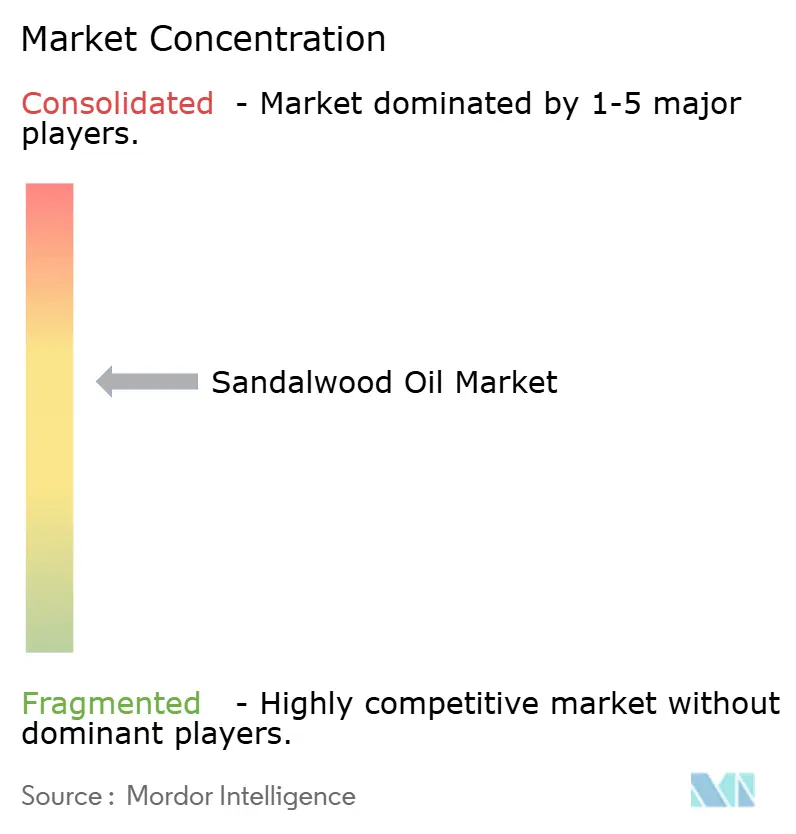
The sandalwood oil market is moderately fragmented at the supply level, although authenticated premium supply is becoming more concentrated. Quintis entered receivership again in April 2024, with receivers appointed over Quintis and several subsidiaries, including Quintis Forestry and Quintis Sandalwood. The receivership and subsequent restructuring of the group created uncertainty around the management and ownership of parts of its plantation estate, increasing the importance of suppliers with secure plantation access and established sourcing networks. Silvalis has become a prominent Australian Santalum spicatum supplier as its export volumes have increased, while KSDL is pursuing a different model by supporting cultivation through farmer arrangements and state forestry cooperation. Competition is increasingly shaped by secure access to raw material, provenance records, and quality verification rather than formulation alone.
KSDL's annual report reported FY2025-26 revenue of INR 2,016 crore (USD 240 million) and net profit of INR 507 crore (USD 60.4 million) while launching its Grow More Sandalwood initiative. The initiative targets 10,000 acres of new plantation coverage in Karnataka over 10 years. In June 2025, Karnataka announced plans to simplify harvesting and transit rules to encourage private cultivation. Silvalis also rebranded in 2025 and reported a sharp increase in plantation-grown exports. These actions show that supply expansion depends on cultivation, security, processing, and distribution rather than a single commercial measure.
Premium suppliers compete through certified sourcing, analytical documentation, and customer confidence, while lower-cost operators compete in segments with less stringent specifications. Santanol partnered with ECSA Chemicals to distribute certified organic Indian sandalwood oil in the DACH cosmetics market. dōTERRA announced David Stirling’s return as Chief Executive Officer in February 2026 and shared strategic and product updates during its leadership retreat in March 2026. These developments highlight the importance of distribution capabilities, consumer trust, and product development in meeting wellness demand. The supplied material does not identify any active supplier operating a commercial-scale, GMP-certified business with fully documented santalol assay capabilities. Therefore, the competitive landscape remains open to suppliers that can combine scale with reliable provenance and testing.
Sandalwood Oil Industry Leaders
Quintis Ltd.
Santanol Group
Karnataka Soaps and Detergents Limited
Eden Botanicals
RK-Essential Oils Company
- *Disclaimer: Major Players sorted in no particular order
Sandalwood Oil Market Companies Covered in this Report
- Quintis Ltd.
- Santanol Group
- Karnataka Soaps and Detergents Limited
- RK-Essential Oils Company
- Meena Perfumery
- Eden Botanicals
- Plant Therapy Essential Oils
- dōTERRA International LLC
- Young Living Essential Oils
- Albert Vieille SAS
- Haldin International
- Shiva Exports India
- CLIARA ESSENTIAL OILS
- Sunrise Agriland Development and Research Pvt. Ltd.
- Khadi Natural
- Vedic Vaani
- Kanta Enterprises Private Limited
- Aroma Magic
- PerfumersWorld
- Katyani Exports

Recent Industry Developments in Sandalwood Oil Market
- February 2026: Karnataka Soaps and Detergents Limited (KSDL), in collaboration with the Institute of Wood Science and Technology (IWST), established India's first sandalwood gene pool and germplasm bank. The initiative was launched to improve genetic quality, oil yield, and commercial cultivation, strengthening the long-term supply of premium Indian sandalwood oil.
- September 2025: Dutjahn Sandalwood Oils introduced an expanded portfolio of Santalum spicatum and Santalum album oils, including Fine Fragrance, Pure Australian, UEBT-certified, and Album Sandalwood Oil grades. The launch enhanced product differentiation for fragrance, cosmetics, and aromatherapy manufacturers while emphasizing provenance, traceability, and sustainability.
- February 2025: Dutjahn Sandalwood Oils supplied ethically sourced Western Australian sandalwood oil for Pura's new fragrance collection through a partnership that strengthened commercial demand for Indigenous-owned, traceable sandalwood oil. The collaboration also promoted sustainable sourcing and expanded the global visibility of Australian sandalwood oil in premium fragrance manufacturing.


Global Sandalwood Oil Market Report Scope
Sandalwood oil is a rich, aromatic, pale yellow or golden essential oil extracted via steam distillation from the heartwood of sandalwood trees (primarily Santalum album and Santalum spicatum). The sandalwood oil market is segmented by product type, source, application, and geography. By product type, the market is segmented into natural sandalwood oil and synthetic sandalwood oil. By source, the market is segmented into Indian sandalwood, Australian sandalwood, Hawaiian sandalwood, and others. By application, the market is segmented into personal care, fragrances and perfumery, aromatherapy, pharmaceuticals, food and beverage, household products, and other applications. By geography, the market is segmented into North America, Europe, Asia-Pacific, South America, and Middle East and Africa). Market Forecasts are in Value (USD).
| Natural Sandalwood Oil |
| Synthetic Sandalwood Oil |
| Indian Sandalwood (Santalum album) |
| Australian Sandalwood (Santalum spicatum) |
| Hawaiian Sandalwood (Santalum paniculatum) |
| Other Commercial Santalum Species |
| Personal Care and Cosmetics |
| Fine Fragrances and Perfumery |
| Aromatherapy |
| Pharmaceuticals |
| Food and Beverage Flavoring |
| Household Products |
| Other Industrial Applications |
| North America |
| Europe |
| Asia-Pacific |
| South America |
| Middle East and Africa |
| Product Type | Natural Sandalwood Oil |
| Synthetic Sandalwood Oil | |
| Source | Indian Sandalwood (Santalum album) |
| Australian Sandalwood (Santalum spicatum) | |
| Hawaiian Sandalwood (Santalum paniculatum) | |
| Other Commercial Santalum Species | |
| Application | Personal Care and Cosmetics |
| Fine Fragrances and Perfumery | |
| Aromatherapy | |
| Pharmaceuticals | |
| Food and Beverage Flavoring | |
| Household Products | |
| Other Industrial Applications | |
| Geography | North America |
| Europe | |
| Asia-Pacific | |
| South America | |
| Middle East and Africa |


Key Questions Answered in the Report
What is the projected growth rate for sandalwood oil through 2031?
The Sandalwood oil market is forecast to grow at a 7.96% CAGR from 2026 to 2031. Its value is expected to rise from USD 164.85 million in 2026 to USD 241.72 million in 2031.
Which product category holds the largest share?
Natural oil led with 73.51% in 2025. Premium fragrance houses, personal care brands, and buyers requiring authentic santalol profiles continue to rely on natural material.
Why is Australian sandalwood growing quickly?
Australian sandalwood is forecast to grow at a 9.11% CAGR because plantation output can offer a documented origin and more predictable contracting.
Which application is growing the fastest?
The personal care and cosmetics segment is forecast to expand at an 8.35% CAGR through 2031. The application benefits from interest in alpha-santalol for skin-related formulations and from consumer preference for premium natural ingredients.
Page last updated on:


 Your data is secure and never sold or shared.


