
Top 5 Russia Mining Equipment Companies


UZTM Kartex Gazprombank Group
Mitsubishi Corporation (Russia) LLC
Hitachi Construction Machinery
Kopeysk Machine Building Plant
Strommashina Corp.
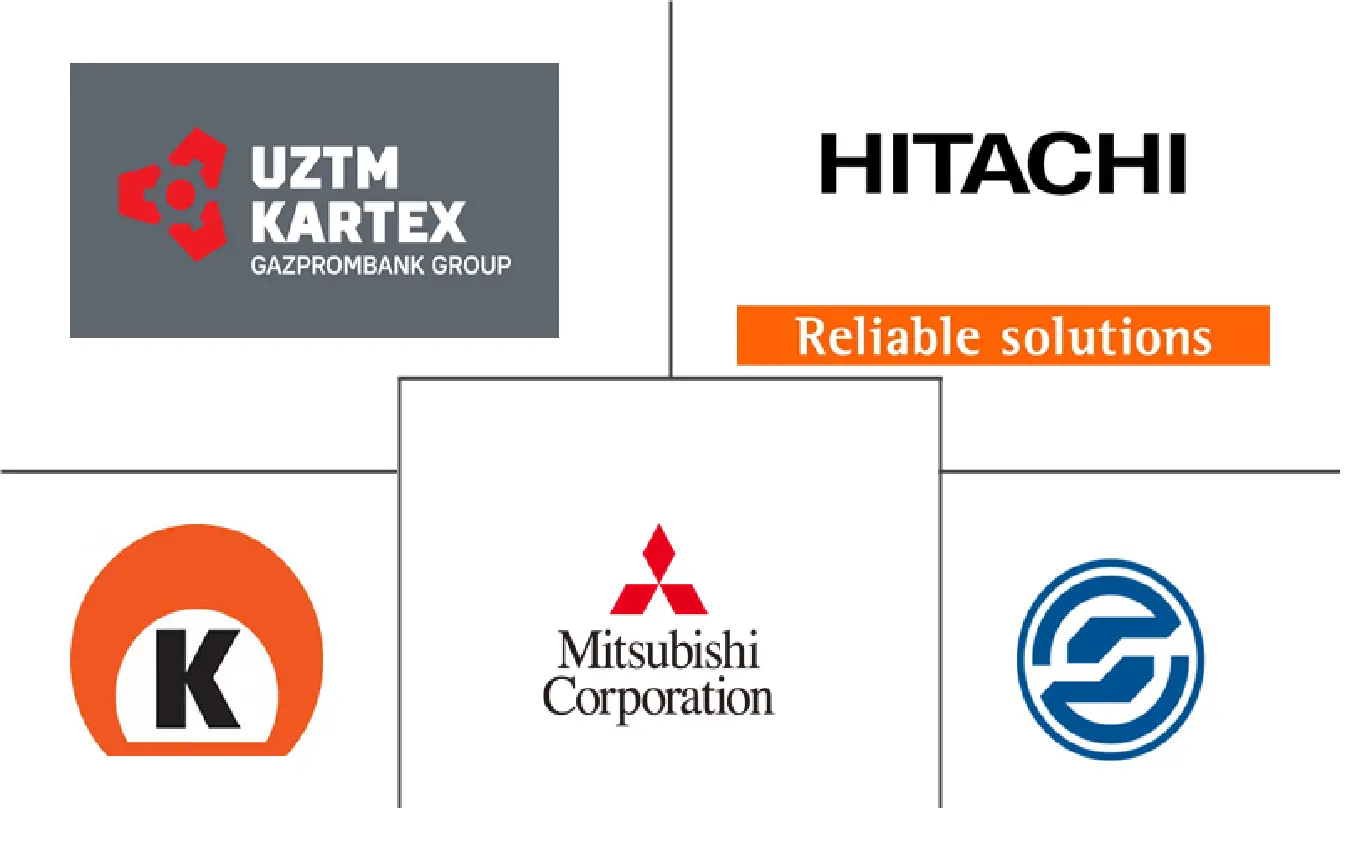
Source: Mordor Intelligence
Russia Mining Equipment Companies Matrix by Mordor Intelligence
Our comprehensive proprietary performance metrics of key Russia Mining Equipment players beyond traditional revenue and ranking measures
The MI Matrix can diverge from simple revenue rankings because it weights in country footprint, service readiness, and the pace of in scope product updates. In Russia, buyers often reward availability of parts, speed of field response, and proven cold weather performance, even when unit volumes look similar. For Russia mining equipment selection, start by mapping your highest downtime risks to service level commitments and local spares stocking. Sanctions compliance, payment routing, and logistics lead times now influence total cost as much as the machine specification. This MI Matrix by Mordor Intelligence is better for supplier and competitor evaluation than revenue tables alone because it reflects who can reliably deliver, commission, and keep fleets running inside Russia.
MI Competitive Matrix for Russia Mining Equipment
The MI Matrix benchmarks top Russia Mining Equipment Companies on dual axes of Impact and Execution Scale.


Analysis of Russia Mining Equipment Companies and Quadrants in the MI Competitive Matrix
Comprehensive positioning breakdown
UZTM Kartex Gazprombank Group
Lebedinsky GOK deployment highlights ongoing fleet renewal in Russian open pit operations. UZTM Kartex, a major OEM, leans on large excavators and supportability, which fits buyers pushing for predictable uptime under tighter import rules. If state support for locally built heavy machines expands further in 2025, its order pipeline could thicken quickly. The main risk is execution pressure from long lead components and workforce constraints, which can stretch delivery schedules. Strength comes from proven excavation lines and installed base pull through, while the weakness is exposure to capex cycles in large mines.
Uralmash
Interfax reported higher results and sizable revenue tied to mining equipment in 2023 and 2024. Uralmash, a top manufacturer, is well placed when Russian operators want large mills and plant equipment with domestic support capacity. If 2025 brings more large scale concentrator upgrades, it could convert backlog into higher service attach rates. The key operational risk is meeting schedule promises when complex castings and machining capacity get tight. Strength comes from scale and credibility, while a weakness is exposure to a few very large project cycles.











Frequently Asked Questions
Which equipment groups drive the biggest buying decisions in Russia today?
Surface excavation fleets and mineral processing lines usually set the capex envelope. Underground fleets then drive the steady replacement cycle through wear and rebuild demand.
What should buyers demand in service and spare parts terms?
Ask for named stocking locations, target lead times, and escalation paths with penalties. Require a commissioning plan and a training plan tied to uptime metrics.
What are the biggest risks when buying imported equipment for Russia?
Payment routes, export controls, and transport disruptions can delay deliveries and parts. Buyers should require substitute part lists and pre approved service procedures.
When does electric power make sense for Russian mines?
It is most attractive underground where ventilation costs are high and duty cycles are stable. The business case improves when charging, cables, and maintenance skills are funded upfront.
How can mines cut downtime from wear parts and liners?
Standardize components across sites where possible and lock in rebuild capacity early. Add condition monitoring and align shutdown windows with supplier refurbishment slots.
What contract terms best protect buyers during disruptions?
Use clear delivery milestones, defined force majeure boundaries, and verified origin documentation. Add spares kits, on site critical parts, and pricing rules for emergency air freight.
Methodology
Research approach and analytical framework
Data sourcing relied on company sites, filings and financial reporting, and reputable news sources. It works for public and private firms by using contracts, deployments, and operational disclosures. Indicators were kept Russia specific, avoiding global substitution when Russia activity was unclear. When direct figures were missing, multiple signals were triangulated before scoring.
Russia wide service points, parts reach, and evidence of active deployments at mines and processing plants.
Recognition among Russian mine operators and regulators for safety, reliability, and support performance.
Relative Russia revenue or unit proxies, including disclosed mining equipment revenues and visible large site placements.
Committed capacity for excavators, underground machines, crushers, and mills, plus ability to install and rebuild locally.
New or updated Russia relevant machines since 2023, including electrification readiness and process performance improvements.
Russia linked profitability and resilience that supports warranties, spares inventory, and multi year service obligations.




